

Puzzle Game for Kids! Create&Play! FREE
Games and Education
App
Assemble these cute forest animals out of colorful parts and watch them come to life right under...

Road to Hana Maui GyPSy Guide
Travel and Navigation
App
GyPSy Guide GPS driving tour of the Road to Hana is an excellent way to enjoy a sightseeing trip on...

Video Edit
Photo & Video and Entertainment
App
Video Edit is the FASTEST way to edit and render videos on the iPhone, iPod Touch and iPad. Now...

Kauai GyPSy Guide Driving Tour
Travel and Navigation
App
GyPSy Guide GPS driving tour of Kauai is an excellent way to enjoy a sightseeing trip to explore the...

Toca Life: School
Education and Entertainment
App
Grab your backpack— it’s time for Toca Life: School! Teach a class, pick a locker and have a...
BaM Video Delay for Coaching and Personal Training
Sports and Health & Fitness
App
Featured in the TOP 10 SPORTS apps in USA First real video delay - continuously showing what just...

Grace - Picture Exchange for Non-Verbal People
Education
App
Grace App - winner of the 2010 Irish Web Awards and United Nations World Summit Award Mobile. * * *...

Bob Mann (459 KP) rated Viceroy's House (2017) in Movies
Sep 29, 2021
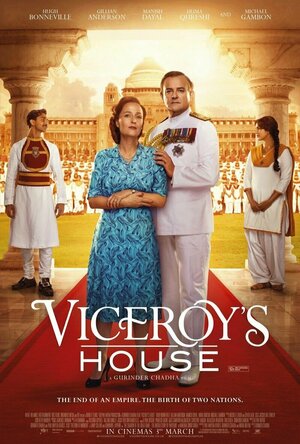

Of course, there is little tension in this plot line since we know Pakistan was indeed founded by Muhammad Ali Jinnah (played by Denzil Smith) on August 14th 1947. (In reality, Jinnah’s victory was short lived as he died of TB the following year). The rest of India went on to be ruled by Jawaharlal Nehru (played by Tanveer Ghani). What the film does remind this generation of is the extreme cost of that partition, with riots, mass abductions and rapes, over a million estimated deaths and one of the biggest migrations of populations ever seen. (All of this is largely shown through original newsreel footage, which is effectively inter-weaved with the film).
So as an educational documentary it is useful. However, as an entertaining movie night out? Not so much. After coming out of the film we needed to buy some milk at Tesco and I was put on the spot by the checkout lady to sum-up the film: “Worthy but dull” was what I came up with, which with further time to reflect still seems a good summary.
This shouldn’t have been the case, since the film is directed by the well-respected Gurinder Chadha (“Bend it like Beckham) and boasts a stellar cast, with Bonneville supported by Gillian Anderson (“The X Files”) as Lady Mountbatten; Michael Gambon (“Harry Potter”) as General Ismay (Mountbatten’s chief of staff); Simon Callow (“Four Weddings and a Funeral”) as Radcliffe (the drawer of ‘the new map’); and Om Puri (“The Hundred Foot Journey“) as former political prisoner Ali Rahim Noor. Playing Mountbatten’s daughter is Lily Travers (“Kingsman: The Secret Service“): Virginia McKenna’s granddaughter.
But unfortunately, for me at least, the film lumbers from scene to scene, seldom engaging with me. Bonneville’s Mountbatten, whilst perfectly sound, was just a re-tread of Downton with added humidity and curry; Anderson’s (probably extremely accurate) crystal-glass English accent quickly becomes tiresome; and elsewhere a lot of the acting of the broader Indian cast is, I’m sorry to comment, rather sub-par. For me, only Om Puri, who sadly died in January, delivers an effective and moving performance as the blind father (literally) unable to see that the arranged marriage for his daughter Aalia (Huma Qureshi) is heading for trouble thanks to Mountbatten’s man-servant. And no, that isn’t a euphemism…. I’m talking about his real manservant, Jeet Kumar (Manish Dayal)!!
As an aside, the late Puri (probably most famous in western cinema for “East is East”) has made over 270 feature films in his prolific career, over and above his many appearances on Indian TV. And he still has another 6 films to be released! May he rest in peace.
Probably realising that the historical plot is not enough to sustain the film, the screenwriters Paul Mayeda Berges (“Bend it like Beckham”), Moira Buffini (“Tamara Drewe”) and Gurinder Chadha try to add more substance with the illicit romance between the Hindu Jeet and the Muslim Aalia. Unfortunately this is clunky at best, with an incessant 30 minutes-worth of longing looks before anything of substance happens. Even the “Lion“-style denouement (also with a railway train connection) is unconvincing.
After that, the film just tends to peter out, with a ‘real-life photograph’ segue delivering a rather tenuous connection between a character not even featured in the film and the director!
Mrs. Chadha has clearly corralled an army of extras to deliver some of the scenes in the film, in the hope of delivering a historical epic of the scale of Attenborough’s “Gandhi”. For me, she misses by a considerable margin. But that’s just my view….. if you like historical dramas, its a film you might enjoy: as the great man himself said “Honest disagreement is often a good sign of progress”.
The New PSYCHOLOGY
Book
From the mind of genius to the suicide bombers of today’s news, from science to sex, understanding...

RəX Regent (349 KP) rated Saving Private Ryan (1998) in Movies
Feb 25, 2019 (Updated Feb 25, 2019)


Winner of five Academy Awards, including Best Director for Spielberg, Best Cinematography, and Sound, which was astonishing, even by today's standards, it failed to win Best Picture, losing out to Shakespeare In Love. Shakespeare In Love! Don't get me wrong, it's a good film, but easily forgettable compared to Ryan, only proving yet again that if you touch upon the British monarchy you get Oscars.
The film is a fictional account of four brothers, all serving in the U.S. Army, three of which were killed in action on or around the D-Day landings. The fourth, James Ryan played by Matt Damon is somewhere in Europe, and Tom Hanks with his platoon are sent to bring him home, to spare his mother anymore heartache.
Tom Hanks, who was also snubbed at the 1998 Oscars for his perfect performance as Captain Miller, the everyman who was losing himself in the horrors of war, underplayed his role perfectly. He is believable on every level, emotionally, physically and has a sense of subtly with makes him of Hollywood's greats.
The action is visceral, gritty and horrifying. But never played for crass effect. Scenes of soldiers intestines spilling out, limbs flying a sunder and brutal killing left, right and centre are recreated for one purpose. To truly demonstrate the horrors of war, and to change our perceptions of the global conflict which had almost become a joke, a setting for gung- ho action films, where the Yanks reign supreme and single-handedly win the war.
This shows troops crying, hurting and making decisions which should not be made under any moral circumstances, but you understand why, whether you agree or not. There is no doubt that Spielberg is not innocent of making an American film, but it is about as even-handed as you might expect, with the exception of Tora! Tora! Tora! or The Longest Day.
So, the action is first-rate, graphic and perfectly toned to recreate to horror of the last century's greatest and most of destructive conflicts. But that's only half the story.
The other half is the talking, reminiscing and the almost sepia tone is more than a little cloying. The U.S. General's monologues, which seem to consist almost entirely of Lincoln quotations are overly sentimental, erring on the side of sloppy patriotism rather than Jingoism, which is hardly a bad thing but it isn't good either.
The civilian scenes, such as Mrs Ryan, washing a plate as she sees the car drive down to road to inform her of her sons deaths are so sentimental that they jar against the realism of the war scenes. It's not so much contrast as it is as extreme as black and white.
The action is obviously interspersed, as all war films are, with rest stops and moments of talking, pondering etc., but the scenes drag on too long and disrupt the tone of the film. On the other hand, the direction is brilliant when explaining the situations during and around the action, but Spielberg seemed to think that we needed these sloppy and often boring moments, such as The Church, and the outside the cafe in Ramelle, to express the emotional torment of the characters, but I think that these scenes are so boring and pointless that I' can hardly remember them, as my attention drifts off during them! But I do have an understanding of the soldiers, and this was achieved, quite adorably without these scenes.
Overall, this is a film of two halves if ever there was one. The battle scenes and the journey through war-torn France are brilliant, gritty and educational, but the scenes of American sentimentality are in danger of derailing the whole film. Many feel that is the best war film of all time. I do not agree, favouring Black Hawk Down over this, but I would be remiss if I didn't acknowledge that Blank Hawk Down owes a debt to Saving Private Ryan, by opening the door to the gritty war dramas of the naughties and to the style itself.
This film is on of the most important contributions to cinema ever, and has done so much to finally show to true nature of WWII and war in general. But even though I would rate this 10/10 if it was just for the war scenes, the slop just gets in the way and devalues what should have been perfection.