
Search
Search results
Heather Cranmer (2721 KP) rated Among the Red Stars in Books
Dec 21, 2018

The Plot (2 more)
The History
The Characters
A lot of Russian names make it hard to keep up with who's who (1 more)
Lack of mention of parents
A Great Historical Read!
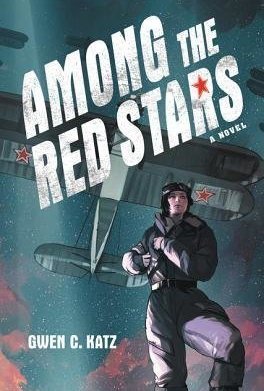
When I was offered the chance to review Among the Red Stars by Gwen C. Katz, I jumped at the chance. After reading the great reviews, I knew it was going to be a great book. Luckily, I was not disappointed.
I though the plot and world building were excellent! The story for Among the Red Stars is mostly told through letters written by Valka, the main character, and her childhood friend, Pasha. Set in Russia during World War II, Pasha was drafted and had no choice but to join, and Valka voluntarily joined because she had been wanting to be a pilot since she was young. The all female bomber regiment isn't taken seriously at first since they are all young and female, but soon enough, it because apparent that these female pilots are the real deal and just as good as their male counterparts. Among the Red Stars is also based in some fact too which made the book that much more interesting. My emotions were all over the place reading this book. I kept on hoping the outcome of the story would be a good one. Among the Red Stars answered all the questions I had, and I would suggest reading the Author's Note at the end of the book because it will give you more insight into the all female Russian bomber regiment. I found it very interesting. The only thing that bothered me was that Valka's parents weren't really mentioned throughout the book. I would have thought that Valka's parents would have written to their daughter during the war. If they didn't want to, it would have been nice to have an explanation as to why they didn't want to write to their daughter. I just found it a bit strange that Valka's parents weren't mentioned at all during the book except for briefly towards the end.
The characters were written very well in Among the Red Stars. It was interesting to learn that many of the characters mentioned in Among the Red Stars were based on actual people who served in World War II. As I've said before, a lot of the story is based on fact which made this book that much more enjoyable. I loved seeing Pasha and Valka grow throughout their letters. I was always hoping they'd be reunited soon because it was obvious how much they really cared about each other. I also loved the relationship between Valka and her cousin Iskra. It was refreshing to read about the love between them. I admired Galya's and Lilya's spirit throughout the war, and I loved how awesome Vera and Tanya were. All the females in Among the Red Stars were amazing, and I admired each and every one of them. I loved the camaraderie between all the girls. I will admit that sometimes it was hard to keep up with who was who during the book due to the Russian names, but I still thoroughly enjoyed every character. If you read the Author's Note at the end of the book, you can learn more about each character that was actually a real person. I loved that Gwen C. Katz added all that information.
The pacing for Among the Red Stars grabs you by the hand and never lets go! Never once did I grow bored of the story. The story never got too fast paced for me where I was confused with what was happening. The pacing was fantastic!
Trigger warnings for Among the Red Stars include violence, death, injuries, war, and sexism.
All in all, Among the Red Stars was a fantastic, thrilling read. I never wanted to put it down. This book had everything from a great group of characters to a fantastic plot. I would definitely recommend Among the Red Stars by Gwen C. Katz to everyone aged 14+. It's such an interesting book as well as an interesting way to learn about a piece of important history.
--
(A special thank you to the author for providing me with a paperback of Among the Red Stars in exchange for an honest and unbiased review.)
I though the plot and world building were excellent! The story for Among the Red Stars is mostly told through letters written by Valka, the main character, and her childhood friend, Pasha. Set in Russia during World War II, Pasha was drafted and had no choice but to join, and Valka voluntarily joined because she had been wanting to be a pilot since she was young. The all female bomber regiment isn't taken seriously at first since they are all young and female, but soon enough, it because apparent that these female pilots are the real deal and just as good as their male counterparts. Among the Red Stars is also based in some fact too which made the book that much more interesting. My emotions were all over the place reading this book. I kept on hoping the outcome of the story would be a good one. Among the Red Stars answered all the questions I had, and I would suggest reading the Author's Note at the end of the book because it will give you more insight into the all female Russian bomber regiment. I found it very interesting. The only thing that bothered me was that Valka's parents weren't really mentioned throughout the book. I would have thought that Valka's parents would have written to their daughter during the war. If they didn't want to, it would have been nice to have an explanation as to why they didn't want to write to their daughter. I just found it a bit strange that Valka's parents weren't mentioned at all during the book except for briefly towards the end.
The characters were written very well in Among the Red Stars. It was interesting to learn that many of the characters mentioned in Among the Red Stars were based on actual people who served in World War II. As I've said before, a lot of the story is based on fact which made this book that much more enjoyable. I loved seeing Pasha and Valka grow throughout their letters. I was always hoping they'd be reunited soon because it was obvious how much they really cared about each other. I also loved the relationship between Valka and her cousin Iskra. It was refreshing to read about the love between them. I admired Galya's and Lilya's spirit throughout the war, and I loved how awesome Vera and Tanya were. All the females in Among the Red Stars were amazing, and I admired each and every one of them. I loved the camaraderie between all the girls. I will admit that sometimes it was hard to keep up with who was who during the book due to the Russian names, but I still thoroughly enjoyed every character. If you read the Author's Note at the end of the book, you can learn more about each character that was actually a real person. I loved that Gwen C. Katz added all that information.
The pacing for Among the Red Stars grabs you by the hand and never lets go! Never once did I grow bored of the story. The story never got too fast paced for me where I was confused with what was happening. The pacing was fantastic!
Trigger warnings for Among the Red Stars include violence, death, injuries, war, and sexism.
All in all, Among the Red Stars was a fantastic, thrilling read. I never wanted to put it down. This book had everything from a great group of characters to a fantastic plot. I would definitely recommend Among the Red Stars by Gwen C. Katz to everyone aged 14+. It's such an interesting book as well as an interesting way to learn about a piece of important history.
--
(A special thank you to the author for providing me with a paperback of Among the Red Stars in exchange for an honest and unbiased review.)
Purple Phoenix Games (2266 KP) rated Sagrada in Tabletop Games
Jun 12, 2019


One of the best parts of the board gaming experience is finding a fun group of people with whom to play! Sometimes, though, coordinating a game night is easier said than done. We all must occasionally forego the group experience and face the world as the Lonely Only. But fear not! The world of solo-play is a vast and exciting realm! What follows is a chronicle of my journey into the solo-playing world – notes on gameplay, mechanics, rules, difficulty, and overall experience with solo variations of commonly multiplayer games! I hope this will provide some insight as you continue to grow your collection, or explore your already owned games!
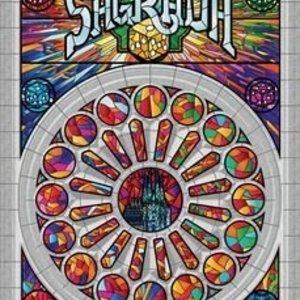
In Sagrada, you are an artist who has been tasked with creating a beautiful stained glass window. Working piece by piece, you build a masterpiece – the likes of which have never before been witnessed. Finding the perfect pieces can be tricky, but through careful use of your tools and with your artistic vision, you can create the best window in the town! The game is played over 10 rounds in which players draft dice and place them in their windows, following certain placement restrictions. A set number of tools are available for use, and can aid you in manipulating the dice to your benefit. Points are scored based on successful completion of private and public objectives, and the player with the highest score at the end of 10 drafting rounds is the winner!
My favorite part about playing Sagrada solo is that the game is essentially played the same way, regardless of player count. The only difference is how you win! In both group and solo play, each player will draft two dice every round. In group play, any leftover dice are discarded, while in solo play, the remaining two dice will be added towards the Target Score – the score you are trying to beat at the end of the game! To find the Target Score, you add all of the die values of your unused dice from each round. If, at the end of the 10 rounds, you have earned more points than the Target Score, you win! But if the Target Score is higher than your final score, you lose.
The game play differences are simple enough, but actually winning the game solo is a different story. I have played Sagrada solo quite a bit, and have won maybe 25% of the time. Depending on which window card and objectives are in play, and because of placement restrictions, I often have to sacrifice high-valued dice to the Target Score. And since there are no placement restrictions for the Target Score, and two dice are added to it each round, it is very easy for that score to sky-rocket. I either barely pull off a win, or I lose by a huge margin. Playing in a group is nicer in this regard because the other players have the same placement restrictions that I have – nobody is just getting points for free. Without the Target Score, there really is no way to play Sagrada solo, but it makes the game feel a little imbalanced to me.
Just because it is difficult to win solo does not mean that I do not like the game. It requires quite a bit of strategy, and that keeps me engaged for the entire game. There are dice placement restrictions based on color AND value, so there are two different ways in which you have to constantly be strategizing. You can’t just focus on either value or color – your strategy must always be changing based on which color dice are drawn and what values are subsequently rolled. Even with the amount of strategy required, Sagrada actually plays pretty quickly as a solo game, and I really like that. I like the challenge of this game, and often try to play until I can win. Since I can finish an entire solo game in probably 10-15 minutes, I am able to get multiple plays in a row!
Sagrada is a challenging game to play solo, but not in a way that feels futile. I don’t win a lot, but the strategic implications and the pretty dice colors are what keep me coming back to this game! If you haven’t tried Sagrada solo yet, I’d encourage you to give it a shot. But be warned – you might not always win.
https://purplephoenixgames.wordpress.com/2019/02/26/solo-chronicles-sagrada/
In Sagrada, you are an artist who has been tasked with creating a beautiful stained glass window. Working piece by piece, you build a masterpiece – the likes of which have never before been witnessed. Finding the perfect pieces can be tricky, but through careful use of your tools and with your artistic vision, you can create the best window in the town! The game is played over 10 rounds in which players draft dice and place them in their windows, following certain placement restrictions. A set number of tools are available for use, and can aid you in manipulating the dice to your benefit. Points are scored based on successful completion of private and public objectives, and the player with the highest score at the end of 10 drafting rounds is the winner!
My favorite part about playing Sagrada solo is that the game is essentially played the same way, regardless of player count. The only difference is how you win! In both group and solo play, each player will draft two dice every round. In group play, any leftover dice are discarded, while in solo play, the remaining two dice will be added towards the Target Score – the score you are trying to beat at the end of the game! To find the Target Score, you add all of the die values of your unused dice from each round. If, at the end of the 10 rounds, you have earned more points than the Target Score, you win! But if the Target Score is higher than your final score, you lose.
The game play differences are simple enough, but actually winning the game solo is a different story. I have played Sagrada solo quite a bit, and have won maybe 25% of the time. Depending on which window card and objectives are in play, and because of placement restrictions, I often have to sacrifice high-valued dice to the Target Score. And since there are no placement restrictions for the Target Score, and two dice are added to it each round, it is very easy for that score to sky-rocket. I either barely pull off a win, or I lose by a huge margin. Playing in a group is nicer in this regard because the other players have the same placement restrictions that I have – nobody is just getting points for free. Without the Target Score, there really is no way to play Sagrada solo, but it makes the game feel a little imbalanced to me.
Just because it is difficult to win solo does not mean that I do not like the game. It requires quite a bit of strategy, and that keeps me engaged for the entire game. There are dice placement restrictions based on color AND value, so there are two different ways in which you have to constantly be strategizing. You can’t just focus on either value or color – your strategy must always be changing based on which color dice are drawn and what values are subsequently rolled. Even with the amount of strategy required, Sagrada actually plays pretty quickly as a solo game, and I really like that. I like the challenge of this game, and often try to play until I can win. Since I can finish an entire solo game in probably 10-15 minutes, I am able to get multiple plays in a row!
Sagrada is a challenging game to play solo, but not in a way that feels futile. I don’t win a lot, but the strategic implications and the pretty dice colors are what keep me coming back to this game! If you haven’t tried Sagrada solo yet, I’d encourage you to give it a shot. But be warned – you might not always win.
https://purplephoenixgames.wordpress.com/2019/02/26/solo-chronicles-sagrada/
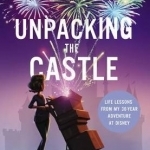
Beyond the Castle: A Guide to Discovering Your Happily Ever After
Jody Jean Dreyer and Stacy L. Windahl
Book
When the credits roll and you've left the park, when your Disney day is over, how do you take the...
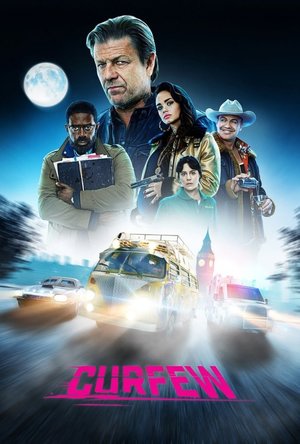

So I’ve only watched one episode so far but the premise is very good. As the title would suggest the show is about a curfew which is imposed every night in England, not sure about the rest of the world yet.
It seemed a bit slow to start introducing us to the main characters, there seems to be 3 sets so far as they prepare to take part in an illegal street race.
Every night the whole country gets locked down for curfew to save people from whatever happens when it is dark. However there is hope as every year an illegal street race is held where the winners will earn their freedom to a mysterious island where there is no curfew and they will be safe.
I imagine the series will follow the race as at the end of the first episode it looked like the race was just about to begin.
It looked to be a good series with some action and drama as well as there being a bigger storyline and the main characters all having varied backstories.
It seemed a bit slow to start introducing us to the main characters, there seems to be 3 sets so far as they prepare to take part in an illegal street race.
Every night the whole country gets locked down for curfew to save people from whatever happens when it is dark. However there is hope as every year an illegal street race is held where the winners will earn their freedom to a mysterious island where there is no curfew and they will be safe.
I imagine the series will follow the race as at the end of the first episode it looked like the race was just about to begin.
It looked to be a good series with some action and drama as well as there being a bigger storyline and the main characters all having varied backstories.
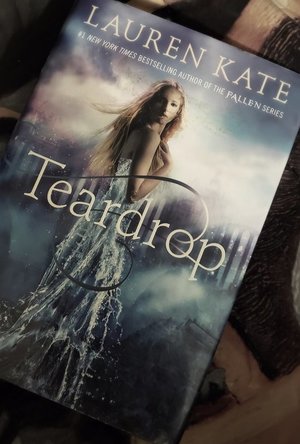
<i>This ARC was provided by the publisher via NetGalley in exchange for an honest review</i>
The end of Lauren Kate’s fantasy novel <i>Teardrop</i> saw the beginning of the destruction of the earth after teenage Eureka Boudreaux shed a tear sparking off a devastating flood. <i>Waterfall</i> continues on from this point as Eureka goes on a journey to try and save the world. Readers are reunited with the lovable characters of the previous novel such as the twins and Cat as well as the mysterious Ander.
Three quarters of the novel is full of excitement with Eureka and family swimming to Turkey to locate a lost relative of Ander’s who they hope will be able to advise them on what to do next. Solon is a great character – comes across as mean but really has everyone’s best interests at heart. Solon instructs Eureka in the tasks ahead of her all the while the threat of Atlantis rising rests heavily upon her. Meanwhile Atlas, the evil one, who is determined to make Eureka produce one final tear, has possessed Eureka’s best friend Brooks.
Up until this point the novel was even better than the first. The lack of everyday life that <i>Teardrop</i> was composed of meant that the fantasy story line could quickly develop. However the remaining quarter of <i>Waterfall</i> was largely disappointing.
The setting for the finale of the book was a complete contrast to what the characters had been exposed to previously. Whilst there was nothing wrong with this, the story became confusing and difficult to grasp. It was hard to picture the scene and it felt like the personalities of some of the characters, Eureka in particular, had suddenly changed.
Initially <i>Waterfall</i> was working towards a four star review however after the frustrating changes in writing style the novel no longer feels like the fantastic story it promised to be.
As mentioned, this is a sequel to <i>Teardrop</i> and readers would greatly benefit from reading that first, but the beginning chapters of <i>Waterfall</i> contain enough information for new readers to catch up to speed.
The end of Lauren Kate’s fantasy novel <i>Teardrop</i> saw the beginning of the destruction of the earth after teenage Eureka Boudreaux shed a tear sparking off a devastating flood. <i>Waterfall</i> continues on from this point as Eureka goes on a journey to try and save the world. Readers are reunited with the lovable characters of the previous novel such as the twins and Cat as well as the mysterious Ander.
Three quarters of the novel is full of excitement with Eureka and family swimming to Turkey to locate a lost relative of Ander’s who they hope will be able to advise them on what to do next. Solon is a great character – comes across as mean but really has everyone’s best interests at heart. Solon instructs Eureka in the tasks ahead of her all the while the threat of Atlantis rising rests heavily upon her. Meanwhile Atlas, the evil one, who is determined to make Eureka produce one final tear, has possessed Eureka’s best friend Brooks.
Up until this point the novel was even better than the first. The lack of everyday life that <i>Teardrop</i> was composed of meant that the fantasy story line could quickly develop. However the remaining quarter of <i>Waterfall</i> was largely disappointing.
The setting for the finale of the book was a complete contrast to what the characters had been exposed to previously. Whilst there was nothing wrong with this, the story became confusing and difficult to grasp. It was hard to picture the scene and it felt like the personalities of some of the characters, Eureka in particular, had suddenly changed.
Initially <i>Waterfall</i> was working towards a four star review however after the frustrating changes in writing style the novel no longer feels like the fantastic story it promised to be.
As mentioned, this is a sequel to <i>Teardrop</i> and readers would greatly benefit from reading that first, but the beginning chapters of <i>Waterfall</i> contain enough information for new readers to catch up to speed.
Merissa (14194 KP) rated The Pig Wars in Books
Jan 18, 2022
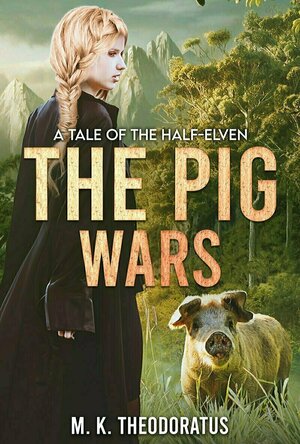
THE PIG WARS is a standalone fantasy set in a world of Elves, Half-Elves, and Humans, although it does feel as though this is a follow-on or spin-off from a previous set of stories. Our main female, Renna, is a Half-Elf and a strong warrior who has hung up her sword after a long and heart-breaking battle. Gorsfeld is human and wants to rule the Marches, either by marrying Renna or taking over her lands. He's not bothered which. Renna has a dodgy leg from birth which is used as the reason she is still alone.
As the title suggests, the whole book is about the two of them fighting over pigs. Renna is supposed to be the smart, strong, and silent type, but she is not quiet in her mind. There is always a monologue going on, usually about how upset she is because someone is riding roughshod over her, even though she makes no attempt to stand up for herself (apart from in her mind.) Gorsfeld has his fair share of monologues too, so I guess that's fair. Renna's character didn't do much for me. In fact, most of them didn't. There is a lot going on and her friends leave a lot to be desired. Because of some of the rants and situations, it makes me question if I have missed another story in this world. I felt as though I had dropped into a world already established where intrigue and political gains had already been explained.
There were some grammatical errors in the story, not enough to disrupt the flow, but enough so you notice. There is a hint of romance at the end, leading you to believe there might be another book in the making. This was a different book that I did enjoy, but I'm not sure I will be continuing if another story does come out.
** same worded review will appear elsewhere **
* A copy of this book was provided to me with no requirements for a review. I voluntarily read this book, and the comments here are my honest opinion. *
Merissa
Archaeolibrarian - I Dig Good Books!
As the title suggests, the whole book is about the two of them fighting over pigs. Renna is supposed to be the smart, strong, and silent type, but she is not quiet in her mind. There is always a monologue going on, usually about how upset she is because someone is riding roughshod over her, even though she makes no attempt to stand up for herself (apart from in her mind.) Gorsfeld has his fair share of monologues too, so I guess that's fair. Renna's character didn't do much for me. In fact, most of them didn't. There is a lot going on and her friends leave a lot to be desired. Because of some of the rants and situations, it makes me question if I have missed another story in this world. I felt as though I had dropped into a world already established where intrigue and political gains had already been explained.
There were some grammatical errors in the story, not enough to disrupt the flow, but enough so you notice. There is a hint of romance at the end, leading you to believe there might be another book in the making. This was a different book that I did enjoy, but I'm not sure I will be continuing if another story does come out.
** same worded review will appear elsewhere **
* A copy of this book was provided to me with no requirements for a review. I voluntarily read this book, and the comments here are my honest opinion. *
Merissa
Archaeolibrarian - I Dig Good Books!

Tom Turner (388 KP) rated The Magician's Apprentice (Black Magician, #0.5) in Books
Apr 30, 2021
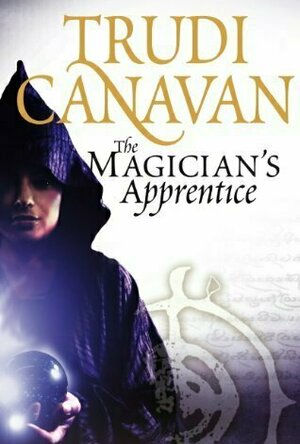
I would like to say I loved this book, but there is part of me resisting that solely because I didn't feel satisfied by its ending. It felt to me that it wasn't tied up properly. It kind of felt there should have been a couple more pages. I also thought that seeing as Tessia is the title and main character of the book that it was a shame the final scene (though mentioning her) doesn't feature her.
I have picked up copies of Trudi Canavan's books in shops a number of times over the years, but I never bought one because I didn't want to invest in a trilogy if I wasn't completely "with it". So when I realised that this book was a stand-alone novel, but was set in the world (albeit a few hundred years before!) some of her other books I jumped at the chance of reading it.
From my first paragraph you'll probably think I ended up disappointed, but you'd be wrong. Until the very end I really really enjoyed this. The characters were well formed and it was lovely to have a story of war where you see both sides of said war, and the juxtaposition of Stara and Tessia's stories was intriguing but perhaps not played to its full potential. The two different cultures were very well constructed, and by having the Stara strand meant you never fully demonised the Sachakans, making them a more fully constructed culture - one that is eerily familiar.
My mind keeps wondering while I felt disappointed, and I guess I felt I needed more, and maybe this is because Canavan is more used to writing trilogies, maybe this is what is needed, I'd love to read a story of Tessia and Jayan as they built the Guild with the others. I feel there could be a whole book in that alone. It would have been nice to have at least got a glimpse of it. Given that it is a central part of the Black Magician trilogy I feel that could have been nice. Maybe all these niggles I'm feeling will be sorted when I read said trilogy, and I certainly will do, and maybe I'd have felt more satisfied if I'd read this in publication order. Who knows I may come back one day and re- review this book after re-reading it following reading the other six book set in this world.
I'm glad to have read this book, and I am excited to read more Trudi Canavan. I guess me saying that when I don't have the butterflies in the stomach I get at the end of reading a book is something in itself.
I have picked up copies of Trudi Canavan's books in shops a number of times over the years, but I never bought one because I didn't want to invest in a trilogy if I wasn't completely "with it". So when I realised that this book was a stand-alone novel, but was set in the world (albeit a few hundred years before!) some of her other books I jumped at the chance of reading it.
From my first paragraph you'll probably think I ended up disappointed, but you'd be wrong. Until the very end I really really enjoyed this. The characters were well formed and it was lovely to have a story of war where you see both sides of said war, and the juxtaposition of Stara and Tessia's stories was intriguing but perhaps not played to its full potential. The two different cultures were very well constructed, and by having the Stara strand meant you never fully demonised the Sachakans, making them a more fully constructed culture - one that is eerily familiar.
My mind keeps wondering while I felt disappointed, and I guess I felt I needed more, and maybe this is because Canavan is more used to writing trilogies, maybe this is what is needed, I'd love to read a story of Tessia and Jayan as they built the Guild with the others. I feel there could be a whole book in that alone. It would have been nice to have at least got a glimpse of it. Given that it is a central part of the Black Magician trilogy I feel that could have been nice. Maybe all these niggles I'm feeling will be sorted when I read said trilogy, and I certainly will do, and maybe I'd have felt more satisfied if I'd read this in publication order. Who knows I may come back one day and re- review this book after re-reading it following reading the other six book set in this world.
I'm glad to have read this book, and I am excited to read more Trudi Canavan. I guess me saying that when I don't have the butterflies in the stomach I get at the end of reading a book is something in itself.
Programming Multi-Core and Many-Core Computing Systems
Book
Programming multi-core and many-core computing systems Sabri Pllana, Linnaeus University, Sweden...
Alison Pink (7 KP) rated The Mark of Athena in Books
Jan 15, 2018
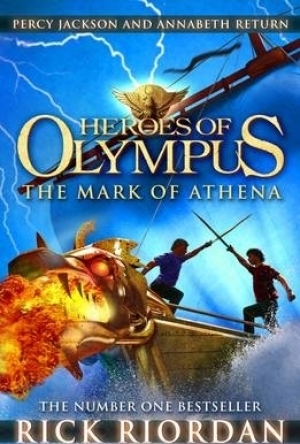
Book Three in the Heroes of Olympus series did not disappoint! I have to admit that out of all Rick Riordan's series this has been my least favorite, but I really enjoyed this installment. It is literally a cliffhanger...if that cliff is hanging over Tartarus & is under a parking lot in Rome that is!
All the characters have matured nicely and I have to say that was a pleasant surprise. Percy & Annabeth's relationship has followed the same line. But despite all the characters in the book, I have to say my favorite is Leo Valdez; the brainiac of the demigods. He was very funny in this book & easy to like. His personality was developed a lot more throughout this story so the reader gets to know him on another level.
As for the plot, a war breaks out between the Greek & Roman camps thanks to some nasty spirits taking over Leo. Despite this, the 7 demigods & Coach Hedge, the satyr, must embark on a mission to unite the 2 camps & prevent Gaea & her giants from destroying the world. Needless to say, it isn't easy & they run amok of quite a few gods & monsters on the way.
I am really looking forward to seeing how Riordan wraps up this series!! I have a sinking feeling that it may be the end of Percy Jackson though...
All the characters have matured nicely and I have to say that was a pleasant surprise. Percy & Annabeth's relationship has followed the same line. But despite all the characters in the book, I have to say my favorite is Leo Valdez; the brainiac of the demigods. He was very funny in this book & easy to like. His personality was developed a lot more throughout this story so the reader gets to know him on another level.
As for the plot, a war breaks out between the Greek & Roman camps thanks to some nasty spirits taking over Leo. Despite this, the 7 demigods & Coach Hedge, the satyr, must embark on a mission to unite the 2 camps & prevent Gaea & her giants from destroying the world. Needless to say, it isn't easy & they run amok of quite a few gods & monsters on the way.
I am really looking forward to seeing how Riordan wraps up this series!! I have a sinking feeling that it may be the end of Percy Jackson though...

The Kid by Kaitlyn Aurelia Smith
Album Watch
In 2017, the musical term 'electronic' is nearly obsolete given the ubiquity of computerized...
electronic