
Search
Search results
KalJ95 (25 KP) rated The Last of Us Part II in Video Games
Jun 23, 2020


You Won't Find A Better Game In Terms Of Presentation. (4 more)
Level Design Is Astounding.
Like The First Game, This Will Create A Conversation For Years To Come
Sound Design Is Incredible.
Takes Risks, And Some Do Pay Off.
A Flawed Sequel. (4 more)
Awful Pacing.
Structure Of Narrative Is Bad.
Some Terrible Dialogue.
Shoehorned Agenda.
The last of The Last of Us.
The video game industry doesn't get enough credit as a source of entertainment, in my humble opinion. Time and time again, the industry has proven that it can produce something magical, memorable, mesmerising to play, and even more so, something engaging to watch as someone not even holding the controller. Naughty Dog’s 2013 masterpiece, The Last of Us, became an overnight classic game because it was cinematic in presentation, and a rollercoaster of emotions in narrative. I sat and played the remastered version on my PlayStation 4 in 2017, and fell in love with the chemistry, love and heartbreak Joel and Ellie took with them, as they crossed a post-apocalyptic America. I was satisfied with the conclusion, and felt the story of these two characters was finished. I didn't need, or ever want a sequel. Then a few months pass, The Last of Us Part II is announced. Obviously, I was ecstatic, but also concerned. Trailers came and went, delays happened over and over, and leaks began to drip onto the internet. I was even more concerned with the leaks, and how this game was taking shape, but I remained open minded, and began playing the game.
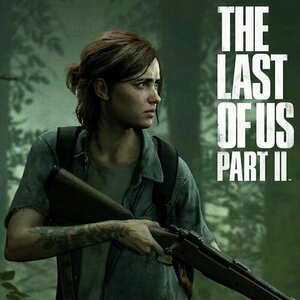
The Last of Us Part II is a strange beast. An ambitious, exquisite experience, mired by multiple flaws in structure, pacing and plot holes. I simultaneously adored and loathed the twenty five hour experience, and I’m ready to do it all again. Ellie’s thirst for revenge deals with many issues of morality and hate, and the consequences of ones actions. To coin a phrase, “violence begets violence”, and this is very violent. A flawed piece of art, that often shoehorns a political tick list so it can cater to a certain demographic of sexuality and gender. Whatever you think about Part II, it will create a conversation for years to come, for better or worse.
Narrative:
Ellie and Joel are settled in Jackson, Wyoming, living a relatively normal existence. Ellie is nineteen, and has a job, like the rest of the fighters in Jackson, by going out into the world on routes to clear out the wondering infected. When Ellie witnesses a violent event, she takes it into her own hands to take bloody revenge on the people responsible.
A big risk was taken by Naughty Dog to decide what they did for the first two hours, even the VP of the company, Neil Druckmann, said himself the game will be “divisive”, and that is probably an understatement judging by the fan backlash. I feel it worked to support the other twenty three hours, and shows the blurry line of being good and bad in this world.
Unfortunately, the narrative slogs through awful structuring and some dreadful, downright cringe-worthy dialogue. The structure goes back and forth from the present day, to months, and sometimes years previous, and this is all to cement the events that keep the narrative flowing. The flashbacks featuring Joel and Ellie give you brief moments of happiness, followed by devastating revelations. They are the best moments of the game, you can feel the warmth the characters have for each other, and the heartbreaking actions they take. It made me wonder why they simply didn't just create a game with these ideas in mind. Other flashbacks create more problems than they solve, particularly in the latter half of the game. The first half, for all its faults, really treats you to a vicious and bloodthirsty ride through Seattle, and you completely feel the motivation and drive Ellie has to complete the mission she's set out to do. Seattle is huge, and the perfect backdrop for this game.
Sadly, the second half of the game is an absolute mess. The whole experience becomes nothing more than “go to this location, collect something, go back” over and over again. Its a lazy trope that causes so much fatigue in terms of pacing, slowing down any momentum gained by the first half. The second half serves the most important purpose too, and while I did grow to understand the intention it was presenting me, I couldn't help but feel frequently bored of doing fetch quests. To remain as spoiler free as possible, the game is split into two perspectives of Ellie, and an entirely new character. Naughty Dog wants you to understand the perspectives of both sides, but the history thats been created with the original game, you cant help but sympathise with Ellie more. The fact that its half the game away from the main protagonist, and starts you fresh with a new character, with new skill sets and weapons, really feels out of place. This could of worked much better as an episodic entry, rather than just two stories, one after the other. I can understand people who love this way of storytelling, but for me it slows the pacing down.
Gameplay:
Part II is the most beautiful game I’ve ever played. Naughty Dog continue to set the bar extremely high in terms of surroundings and facial animations, and the seamless transitions from cutscene to gameplay made my jaw drop. Each facial movement shows the hurt, the honesty, the devastation the characters carry with them. It almost feels more like a film or tv series than a video game, featuring an excellent performance from Troy Baker, and a career defining show from Ashley Johnson. Unfortunately, some of the new cast members don't have enough time on screen to give a full understanding of their personality or perspective. Some are likeable, relatable even, but some are just annoying, saying some of the strangest, out of place dialogue.
In terms of its gameplay, Part II hasn't really changed anything from its predecessor. It feels the same, whether you enjoyed it first time round or not. I personally am in the middle ground, it works for what it is. The Last of Us has always been a game about surviving by any means necessary. Part II feels like multiple ideas all in one, all conflicting themselves. Let me explain:
The game actively tries to twist the act of killing people to make you seem like its an awful thing to do. This is an interesting idea that has been done many times before in games, but it works in the oddest of ways here. I have completed the game twice now, and found it almost impossible to not kill anyone, yet cutscenes display remorse within the characters after they’ve murdered someone. This conflicts the idea of the whole game, where one moment I'm slicing a persons throat with a knife, the next I do the exact same, but this time I regret that decision. Again, its adding less weight to the story, and actively contradicting everything that happens.
Extra Notes:
The environments of Part II are some of the best in a video game. A sandbox of lush greenery and worn down buildings follows the same formula that Naughty Dog designed in Uncharted: The Lost Legacy, where you can explore a massive space to do what you find the objectives, but also see the sights and collect items. The level design of the entire game is absolutely masterful, but this level astounded me graphically and structurally.
By this point, it probably feels like I utterly hated Part II. I did, and didn’t, and thats the line I'm sticking on. The Last of Us always presented a commentary as to the nature of relationships, love, life and death. At the core was Ellie and Joel, two wayward strangers forced together on a journey across America. Everyone has a reason to love that game, for me its their chemistry and progression. Joel was hardened, standoffish, only to warm to Ellie, and love her by the end. Ellie, the immune girl who's humorous, optimistic and full of life, who ultimately becomes cold, quiet and sceptical of Joel.
Part II presents a different commentary, one of revenge and hate. I firmly believe Part II is weak in most areas, a downgrade in fact compared to its counterpart, but its so beautiful and bleak, with so many incapsulated moments of joy, heartbreak, love, shock. Its uncompromising, relentless and essential for anyone with a PS4. This will be a game I will constantly change my opinion on the more I think about it. As I said at the beginning, I never felt a sequel was necessary, and I firmly believe the story must end here.
(P.S. I must mention that Naughty Dog and Sony have only themselves to blame when it comes to the reception Part II has received during its release and promotional material. Early reviewers were told that they could only go into detail about the first ten or so hours, not mentioning the other fifteen. The other fifteen hours are incredibly important to mention, and they either make or break this game, so not letting reviewers do their job feels disingenuous, and from my point of view shows that they had no faith in their product to be criticised. The promotional material is also hugely misleading. The trailers show a completely different game, and characters are swapped for others in key scenes. That is wrong, and once again, shows your audience you had zero faith in your product based on the actual plot of your game.)
The Last of Us Part II is a strange beast. An ambitious, exquisite experience, mired by multiple flaws in structure, pacing and plot holes. I simultaneously adored and loathed the twenty five hour experience, and I’m ready to do it all again. Ellie’s thirst for revenge deals with many issues of morality and hate, and the consequences of ones actions. To coin a phrase, “violence begets violence”, and this is very violent. A flawed piece of art, that often shoehorns a political tick list so it can cater to a certain demographic of sexuality and gender. Whatever you think about Part II, it will create a conversation for years to come, for better or worse.
Narrative:
Ellie and Joel are settled in Jackson, Wyoming, living a relatively normal existence. Ellie is nineteen, and has a job, like the rest of the fighters in Jackson, by going out into the world on routes to clear out the wondering infected. When Ellie witnesses a violent event, she takes it into her own hands to take bloody revenge on the people responsible.
A big risk was taken by Naughty Dog to decide what they did for the first two hours, even the VP of the company, Neil Druckmann, said himself the game will be “divisive”, and that is probably an understatement judging by the fan backlash. I feel it worked to support the other twenty three hours, and shows the blurry line of being good and bad in this world.
Unfortunately, the narrative slogs through awful structuring and some dreadful, downright cringe-worthy dialogue. The structure goes back and forth from the present day, to months, and sometimes years previous, and this is all to cement the events that keep the narrative flowing. The flashbacks featuring Joel and Ellie give you brief moments of happiness, followed by devastating revelations. They are the best moments of the game, you can feel the warmth the characters have for each other, and the heartbreaking actions they take. It made me wonder why they simply didn't just create a game with these ideas in mind. Other flashbacks create more problems than they solve, particularly in the latter half of the game. The first half, for all its faults, really treats you to a vicious and bloodthirsty ride through Seattle, and you completely feel the motivation and drive Ellie has to complete the mission she's set out to do. Seattle is huge, and the perfect backdrop for this game.
Sadly, the second half of the game is an absolute mess. The whole experience becomes nothing more than “go to this location, collect something, go back” over and over again. Its a lazy trope that causes so much fatigue in terms of pacing, slowing down any momentum gained by the first half. The second half serves the most important purpose too, and while I did grow to understand the intention it was presenting me, I couldn't help but feel frequently bored of doing fetch quests. To remain as spoiler free as possible, the game is split into two perspectives of Ellie, and an entirely new character. Naughty Dog wants you to understand the perspectives of both sides, but the history thats been created with the original game, you cant help but sympathise with Ellie more. The fact that its half the game away from the main protagonist, and starts you fresh with a new character, with new skill sets and weapons, really feels out of place. This could of worked much better as an episodic entry, rather than just two stories, one after the other. I can understand people who love this way of storytelling, but for me it slows the pacing down.
Gameplay:
Part II is the most beautiful game I’ve ever played. Naughty Dog continue to set the bar extremely high in terms of surroundings and facial animations, and the seamless transitions from cutscene to gameplay made my jaw drop. Each facial movement shows the hurt, the honesty, the devastation the characters carry with them. It almost feels more like a film or tv series than a video game, featuring an excellent performance from Troy Baker, and a career defining show from Ashley Johnson. Unfortunately, some of the new cast members don't have enough time on screen to give a full understanding of their personality or perspective. Some are likeable, relatable even, but some are just annoying, saying some of the strangest, out of place dialogue.
In terms of its gameplay, Part II hasn't really changed anything from its predecessor. It feels the same, whether you enjoyed it first time round or not. I personally am in the middle ground, it works for what it is. The Last of Us has always been a game about surviving by any means necessary. Part II feels like multiple ideas all in one, all conflicting themselves. Let me explain:
The game actively tries to twist the act of killing people to make you seem like its an awful thing to do. This is an interesting idea that has been done many times before in games, but it works in the oddest of ways here. I have completed the game twice now, and found it almost impossible to not kill anyone, yet cutscenes display remorse within the characters after they’ve murdered someone. This conflicts the idea of the whole game, where one moment I'm slicing a persons throat with a knife, the next I do the exact same, but this time I regret that decision. Again, its adding less weight to the story, and actively contradicting everything that happens.
Extra Notes:
The environments of Part II are some of the best in a video game. A sandbox of lush greenery and worn down buildings follows the same formula that Naughty Dog designed in Uncharted: The Lost Legacy, where you can explore a massive space to do what you find the objectives, but also see the sights and collect items. The level design of the entire game is absolutely masterful, but this level astounded me graphically and structurally.
By this point, it probably feels like I utterly hated Part II. I did, and didn’t, and thats the line I'm sticking on. The Last of Us always presented a commentary as to the nature of relationships, love, life and death. At the core was Ellie and Joel, two wayward strangers forced together on a journey across America. Everyone has a reason to love that game, for me its their chemistry and progression. Joel was hardened, standoffish, only to warm to Ellie, and love her by the end. Ellie, the immune girl who's humorous, optimistic and full of life, who ultimately becomes cold, quiet and sceptical of Joel.
Part II presents a different commentary, one of revenge and hate. I firmly believe Part II is weak in most areas, a downgrade in fact compared to its counterpart, but its so beautiful and bleak, with so many incapsulated moments of joy, heartbreak, love, shock. Its uncompromising, relentless and essential for anyone with a PS4. This will be a game I will constantly change my opinion on the more I think about it. As I said at the beginning, I never felt a sequel was necessary, and I firmly believe the story must end here.
(P.S. I must mention that Naughty Dog and Sony have only themselves to blame when it comes to the reception Part II has received during its release and promotional material. Early reviewers were told that they could only go into detail about the first ten or so hours, not mentioning the other fifteen. The other fifteen hours are incredibly important to mention, and they either make or break this game, so not letting reviewers do their job feels disingenuous, and from my point of view shows that they had no faith in their product to be criticised. The promotional material is also hugely misleading. The trailers show a completely different game, and characters are swapped for others in key scenes. That is wrong, and once again, shows your audience you had zero faith in your product based on the actual plot of your game.)
Daniel Boyd (1066 KP) rated the PlayStation 4 version of Red Dead Redemption 2 in Video Games
Oct 30, 2018 (Updated Nov 20, 2018)


Slow West
I have decided to do something totally different for my Red Dead 2 review; instead of just reviewing it as a whole once I am finished with it, I am going to start my review just now and then continually add to it the further through it I progress. There are a few reasons for this, firstly because this game is huge and is probably too vast to sum up in just a few paragraphs once I have completed the story. Secondly, because we would all be waiting weeks for me to review it; I am not going to be done with this thing anytime soon. Third is because it's something new, a break from my traditional structure of writing reviews. Finally, because I feel that my opinion on this game is going to change based on the different things that I experience during my playthrough, along with my score of the game. There will also most likely be spoilers as we move on through the game, so maybe just read up to where you have also played to. Once I have completed the game, I may write a summary of my thoughts at the bottom of this review, or I might just scrap this and write a whole new review from scratch, we shall see.
So far, I think I have played between 3 - 4 hours of the game and already I have been through a range of emotions. The game opened in a very cinematic fashion and I was on-board right away. The shots used and atmosphere that was present was very reminiscent of The Hateful 8. Then you get to a small group of shacks and are forced to play through the first few story missions consecutively, which act as tutorials for a lot of the games systems. This part is pretty laborious, but thankfully just as I was starting to get bored, you progress to Chapter 2 and the game opens up.
I must admit, I didn't enjoy the first few hours I spent wandering through the game's world. Arthur moves so damn slowly and every task takes an age to complete, in fact every part of the game seems slow. Horse riding to a location takes forever, the few moments of gunplay are sparse and the aiming controls are anything but smooth. Other than that, the time is spent chopping wood or doing other chores. The word CHORE, is actually adequate to describe the gameplay up to this point.
To break up this slow pace, I decided to go exploring and do some outlaw activities. The problem is that this game's witness/bounty system is ridiculous. You can't so much as lift a finger in the Valentine town centre without the lawmen hunting you and your bounty climbing higher and higher. I'm talking anything from accidently bumping someone with your horse to walking beside another citizen for too long - it is ridiculously harsh and Rockstar seem to favour 'realism,' over fun with this mechanic. So, because I am getting so much grief from the lawmen in Valentine and racking up a bounty way higher than I can afford at this early stage, I decide to go off the beaten path and look for loners to rob. The problem here is, even if you meticulously look around the area to make sure that the coast is clear and then rob your victim, someone out of the blue will appear, halfway across the map and run toward the nearest town to report you. So, naturally you hunt down that witness and kill them, then another witness sees this occur and start running to report you and the cycle continues until someone inevitably reports or shoots you. It's as if Rockstar don't want you to have fun and play the outlaw in their game about playing as an outlaw.
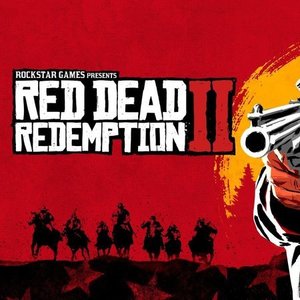
Reading back on what I've read so far, I feel like I have bashed this game pretty hard. As an aspiring game developer myself, I have an idea of what goes into a project like this and what Rockstar have achieved in that sense is truly astonishing and inspiring. The lighting work along with the cinematic camera and near photo-realistic graphics make this game a visual beauty. The world also feels genuinely alive, the voice acting is brilliant and the small touches and intricate level of detail present is insane. Presentation wise, this game is flawless.
Okay, at this point I am about 5 or 6 hours into the game. I am still on chapter 2 and have only done a couple more story missions, but I have done a good bit of exploring too. So far, I have experienced 2 bugs. One was when a story mission required me to get on a horse to take and sell at the Valentine stable and the horse was invisible during the cutscene and non-existent when it switched to gameplay. A quick restart solved this, but still the bug was present during a main story mission.
The other happened during a random stranger encounter. I was riding through an open area full of lumberjacks cutting down trees and one of the trees fell on a guy's leg. I got off my horse and ran over to help, but while doing so, I saw a bunch of bounty hunter symbols appear on the mini map. I ignored them and pressed the button prompt to help lift the tree, but while doing so, the bounty hunters appeared and fired their guns in the air. The rest of the men fled and I was left standing beside the guy that was trapped under the tree, unable to move or do anything. As I stood and spammed every button trying to make Arthur move, the bounty hunters just surrounded me and pointed their guns towards me, but none of them shot. We were left in this awkward standoff for a few minutes before I eventually gave up and had to restart. This second bug is probably the more egregious of the two I've had so far, as I now have no way of knowing if I am going to be able to get that random encounter again.
This is annoying as the random encounters are by far the best part of this game so far. I don't want to spoil too many of them here, but they range from exciting to terrifying to just plain sad and all of them are brilliant.
As I settle into Arthur as a character, I realise more and more how much I prefer and miss playing as John. John was cool where Arthur is goofy. John was smooth where Arthur is wooden. Don't get me wrong, Arthur is well written and acted, but I really think he would play better as a side character rather than a protagonist. Plus the way I play him totally contradicts his whole attitude. I'm playing him as a ruthless killer who shoots entire groups of people on sight and he is still a lovable, goofy rogue in cutscenes.
I have played a few more hours over the last few nights, I must be around 10 hours in now, (although there doesn't seem to be any way of checking that for sure.) I am still on Chapter 2 in terms of the story, but I have been doing a lot of exploring and have found/bought a decent amount of better gear and weapons for Arthur. It also turns out that there is some fast travel in this game, if you upgrade Dutch's tent via the camp ledger and then upgrade your own, (costs about $500 all in,) you can fast travel from the camp to any major location that you have previously visited. Unfortunately while I was fast travelling last night to a location, I experience the first occurrence of pop-in that I have seen so far in the game. I understand that this game is extremely vast and there is a great deal to load in, but when every other aspect of the game is so polished in terms of presentation, it stuck out like a sore thumb.
In terms of exploration, I have probably spent less than half of my 10 hours in the game so far doing story missions and instead spent the majority of my time just riding/walking around and taking in the sights, or speaking to strangers, or violently robbing and killing them at gunpoint whenever the notion takes me. Strawberry is a cool little town, it is quite similar to Valentine in terms of the size and the available shops etc. St Denis is another story. Located at the south-east corner of the map, it is a huge, bustling city with an overwhelming amount to take in. Without spoiling too much, it will also open up a few more opportunities for Arthur once you get there.
I have played a lot more of the game since I last updated this, I'd guess I am closer to 20 hours playtime than 10 at this point. I have finally progressed to Chapter 3, the gang has moved camp to near another small town called Rhodes, which has lots to see and do considering it's small size. That is one thing that Rockstar have undoubtedly nailed in this game, making these towns truly feel alive and like they continue to exist even when you are not riding through them. I'd go as far as to say that this open world feels more alive than any other one that I have spent time in.
The story missions up until this point are touch and go. Some are really fun and exciting and some are monotonous and boring and feel more like busywork than progress. I much prefer the side missions up to this point. The debt collecting missions and the bounty missions are satisfying and feel worthwhile. The robbery side missions that you do with certain gang members are also a nice, more engaging change from the slower pace of the story.
In terms of the game's characters, I am just as much of as a fan of John Marston as I was in the last game and I must admit that spending more time with Arthur has made him grow on me slightly. As for the rest of the gang though, it's a mixed bag. I like Sean, Charles, Javier and Lenny, but the rest are just annoying and a chore to be around. One major disappointment regarding the characters for me, is that I thought that this game was going to make me sympathise with Dutch and see things from his perspective, the way that MGS 3 did for Big Boss, but no. Apparently he was always an unlikable dick.
So far, I think I have played between 3 - 4 hours of the game and already I have been through a range of emotions. The game opened in a very cinematic fashion and I was on-board right away. The shots used and atmosphere that was present was very reminiscent of The Hateful 8. Then you get to a small group of shacks and are forced to play through the first few story missions consecutively, which act as tutorials for a lot of the games systems. This part is pretty laborious, but thankfully just as I was starting to get bored, you progress to Chapter 2 and the game opens up.
I must admit, I didn't enjoy the first few hours I spent wandering through the game's world. Arthur moves so damn slowly and every task takes an age to complete, in fact every part of the game seems slow. Horse riding to a location takes forever, the few moments of gunplay are sparse and the aiming controls are anything but smooth. Other than that, the time is spent chopping wood or doing other chores. The word CHORE, is actually adequate to describe the gameplay up to this point.
To break up this slow pace, I decided to go exploring and do some outlaw activities. The problem is that this game's witness/bounty system is ridiculous. You can't so much as lift a finger in the Valentine town centre without the lawmen hunting you and your bounty climbing higher and higher. I'm talking anything from accidently bumping someone with your horse to walking beside another citizen for too long - it is ridiculously harsh and Rockstar seem to favour 'realism,' over fun with this mechanic. So, because I am getting so much grief from the lawmen in Valentine and racking up a bounty way higher than I can afford at this early stage, I decide to go off the beaten path and look for loners to rob. The problem here is, even if you meticulously look around the area to make sure that the coast is clear and then rob your victim, someone out of the blue will appear, halfway across the map and run toward the nearest town to report you. So, naturally you hunt down that witness and kill them, then another witness sees this occur and start running to report you and the cycle continues until someone inevitably reports or shoots you. It's as if Rockstar don't want you to have fun and play the outlaw in their game about playing as an outlaw.
Reading back on what I've read so far, I feel like I have bashed this game pretty hard. As an aspiring game developer myself, I have an idea of what goes into a project like this and what Rockstar have achieved in that sense is truly astonishing and inspiring. The lighting work along with the cinematic camera and near photo-realistic graphics make this game a visual beauty. The world also feels genuinely alive, the voice acting is brilliant and the small touches and intricate level of detail present is insane. Presentation wise, this game is flawless.
Okay, at this point I am about 5 or 6 hours into the game. I am still on chapter 2 and have only done a couple more story missions, but I have done a good bit of exploring too. So far, I have experienced 2 bugs. One was when a story mission required me to get on a horse to take and sell at the Valentine stable and the horse was invisible during the cutscene and non-existent when it switched to gameplay. A quick restart solved this, but still the bug was present during a main story mission.
The other happened during a random stranger encounter. I was riding through an open area full of lumberjacks cutting down trees and one of the trees fell on a guy's leg. I got off my horse and ran over to help, but while doing so, I saw a bunch of bounty hunter symbols appear on the mini map. I ignored them and pressed the button prompt to help lift the tree, but while doing so, the bounty hunters appeared and fired their guns in the air. The rest of the men fled and I was left standing beside the guy that was trapped under the tree, unable to move or do anything. As I stood and spammed every button trying to make Arthur move, the bounty hunters just surrounded me and pointed their guns towards me, but none of them shot. We were left in this awkward standoff for a few minutes before I eventually gave up and had to restart. This second bug is probably the more egregious of the two I've had so far, as I now have no way of knowing if I am going to be able to get that random encounter again.
This is annoying as the random encounters are by far the best part of this game so far. I don't want to spoil too many of them here, but they range from exciting to terrifying to just plain sad and all of them are brilliant.
As I settle into Arthur as a character, I realise more and more how much I prefer and miss playing as John. John was cool where Arthur is goofy. John was smooth where Arthur is wooden. Don't get me wrong, Arthur is well written and acted, but I really think he would play better as a side character rather than a protagonist. Plus the way I play him totally contradicts his whole attitude. I'm playing him as a ruthless killer who shoots entire groups of people on sight and he is still a lovable, goofy rogue in cutscenes.
I have played a few more hours over the last few nights, I must be around 10 hours in now, (although there doesn't seem to be any way of checking that for sure.) I am still on Chapter 2 in terms of the story, but I have been doing a lot of exploring and have found/bought a decent amount of better gear and weapons for Arthur. It also turns out that there is some fast travel in this game, if you upgrade Dutch's tent via the camp ledger and then upgrade your own, (costs about $500 all in,) you can fast travel from the camp to any major location that you have previously visited. Unfortunately while I was fast travelling last night to a location, I experience the first occurrence of pop-in that I have seen so far in the game. I understand that this game is extremely vast and there is a great deal to load in, but when every other aspect of the game is so polished in terms of presentation, it stuck out like a sore thumb.
In terms of exploration, I have probably spent less than half of my 10 hours in the game so far doing story missions and instead spent the majority of my time just riding/walking around and taking in the sights, or speaking to strangers, or violently robbing and killing them at gunpoint whenever the notion takes me. Strawberry is a cool little town, it is quite similar to Valentine in terms of the size and the available shops etc. St Denis is another story. Located at the south-east corner of the map, it is a huge, bustling city with an overwhelming amount to take in. Without spoiling too much, it will also open up a few more opportunities for Arthur once you get there.
I have played a lot more of the game since I last updated this, I'd guess I am closer to 20 hours playtime than 10 at this point. I have finally progressed to Chapter 3, the gang has moved camp to near another small town called Rhodes, which has lots to see and do considering it's small size. That is one thing that Rockstar have undoubtedly nailed in this game, making these towns truly feel alive and like they continue to exist even when you are not riding through them. I'd go as far as to say that this open world feels more alive than any other one that I have spent time in.
The story missions up until this point are touch and go. Some are really fun and exciting and some are monotonous and boring and feel more like busywork than progress. I much prefer the side missions up to this point. The debt collecting missions and the bounty missions are satisfying and feel worthwhile. The robbery side missions that you do with certain gang members are also a nice, more engaging change from the slower pace of the story.
In terms of the game's characters, I am just as much of as a fan of John Marston as I was in the last game and I must admit that spending more time with Arthur has made him grow on me slightly. As for the rest of the gang though, it's a mixed bag. I like Sean, Charles, Javier and Lenny, but the rest are just annoying and a chore to be around. One major disappointment regarding the characters for me, is that I thought that this game was going to make me sympathise with Dutch and see things from his perspective, the way that MGS 3 did for Big Boss, but no. Apparently he was always an unlikable dick.

5 Minute Movie Guy (379 KP) rated Godzilla (2014) in Movies
Jun 26, 2019

Godzilla's gigantic scale is impressive. (1 more)
Bryan Cranston gives a terrific performance.
Aaron Taylor-Johnson is a horribly lifeless protagonist. (2 more)
The film repeatedly obscures our chances to see Godzilla or cuts away from him completely.
There seems to be very little sense of panic or concern despite Godzilla and MUTO's destruction.
As promising as this new Godzilla movie may appear to be, it falls far short of expectations, and dare I say, it isn’t even much better than the 1998 version.
This year marks the 60th anniversary of the original Godzilla film, when the King of the Monsters first emerged from the Pacific and terrorized Tokyo, Japan. Roughly 10 years after America dropped two atomic bombs on Japan to end World War II, Godzilla was artistically created to be a physical, living representation of the destructive force of those bombs. Even the texture of his skin is modelled after keloid scars, which were found on survivors as a result of the radiation. Godzilla’s arrival and subsequent attacks were spurred by the use of nuclear weapons, and he as a character wholly embodies the consequences of nuclear warfare.
60 years later, Godzilla remains a global icon, having spawned dozens of movie sequels, while introducing several other enormous monsters to battle with. Then 16 years ago, he was reimagined as he first came to America in Roland Emmerich’s lackluster 1998 film Godzilla, leaving many fans severely disappointed with not only the film, but also the new rendition of the famous monster. While Godzilla is visually depicted much more accurately in Gareth Edward’s new 2014 Godzilla than he was in ’98, his entire presence is surprisingly different than usual. This isn’t the angry, vengeful Godzilla of the past. He actually now seems almost entirely indifferent to humans. Unfortunately, as promising as this new Godzilla movie may appear to be, it falls far short of expectations, and dare I say, it isn’t even much better than the 1998 Godzilla.
Godzilla (2014) starts off pretty well, strengthened by the performance of Bryan Cranston, who plays Joe Brody, a nuclear power plant engineer living in Japan. Brody is present when an unknown disaster occurs at the plant, costing many innocent lives. Despite what the trailers suggest, Cranston’s Brody is not the main character of the film. Nor is it fellow all-star actor Ken Watanabe. The main character is actually only seen for about 4 seconds of the film’s original 2 and a half minute trailer. It’s Joe Brody’s son, Ford, played by Aaron Taylor-Johnson, in a performance that is decent but far from engaging. The protagonist Ford Brody is a character that is largely uninteresting, and who just casually wants to get back to his family after the monster invasion. He fails to convey any genuine sense of urgency amidst the chaos, although the same can be said for the entire cast, with the exception of Cranston’s Brody. Cranston’s performance is the only one that has any emotional weight to it, but he can’t carry the film alone. Meanwhile, Ken Watanabe is essentially reduced to being the quiet, ever-present voice of reason that no one wants to listen to. The film has a solid cast of actors, but they’re not given enough to work with in this convoluted mess of a movie.
For a movie that has so much death and destruction, the people in the film never seem all that concerned. You get no sense of global panic and hysteria. You have a 300-foot-tall monster destroying cities, with millions of people dying, and yet nobody seems all that freaked out by it. It’s almost like the situation isn’t treated as a serious threat, and there’s a major lack of suspense altogether. There’s rarely any edge-of-your-seat terror or excitement, and the lack of emotion just makes the action come off as sort of flat and dull. Not only that, the majority of the destruction that’s taking place isn’t even seen, with the movie instead opting to show you the aftermath. Throughout the first two-thirds of the movie, the camera continuously cuts away from the action you’ve been waiting for. Rather than showing you what you want to see in full-glory, the movie frequently will take you to a different location where you’ll briefly see a few seconds of the catastrophe being watched by someone on television. It feels like a cheap trick to build up to some amazing climax, but it’s incredibly frustrating. It’s like when watching a reality TV show and then the show cuts to a commercial break before revealing the winner. Perhaps it would be more forgivable if the end was enjoyable, but even though it does give you a full display of the showdown, it’s bogged down by a tiresome human story and still lacks any real emotional punch. Despite the fact that the movie tries to convey a serious tone, it’s also incredibly cheesy. To the extent that the big finale that this movie has been trying so hard to build up to ends up being almost laughable. Ultimately the movie ends up just being unsatisfying, disappointing, and overly long.
There are a lot of ways in which Godzilla goes wrong, despite the film’s great potential. One of my issues is with the musical score, which ends up coming off like a bad punchline. Music is supposed to accentuate the action and drama of a film, yet the film feels emotionless and boring. The only time the music really stood out to me was when it was being used to heighten the suspense of the climactic battle, and essentially narrate who was winning. It was done so ineffectively that it was both kind of comical and embarrassing. I also have an issue with all of the special effects, which are being touted as absolutely amazing. They’re not. However, I will say that the use of special effects in the movie is quite ambitious, but it works to the film’s detriment. There’s simply too much of them, and this excessive nature of the film is, I think, its biggest mistake. Godzilla (2014) is ridiculously CGI-heavy, and while their scope is admirable, I really think the quality would have been substantially improved if they didn’t overdo it so much. I think a less-is-more approach would have benefited the film in many ways. It’s excessive to the point of making good things turn bad. Everything is way too over the top, causing the action to lose its impact. It’s evident the filmmakers were trying so hard to make this big-budget movie as epic as possible, but this enormous scale ends up backfiring. The rampage covers two continents, multiple cities, and even traverses the length of the Pacific Ocean. I can appreciate their attempt, but the movie is trying to do too much. In other words, Godzilla (2014) bites off more than it can chew.
I also have some problems with the film’s treatment of the titular character, Godzilla. First of all, for a movie named after him, he sure doesn’t appear much in it. He’s the reason why we want to see the movie, but he’s absent for the majority of the film. Even when he’s around, he’s largely obscured by CGI smoke and storm clouds, up until the final moments of the movie. I’m also not particularly fond of his appearance. He just doesn’t quite look like Godzilla to me. It’s like looking at a T-Rex head on Godzilla’s body. I’m aware that Godzilla’s facial appearance has changed many times over 60 years, but something just doesn’t look quite right here. Additionally, I feel that Godzilla’s face is actually too expressive in this new film. I wonder if this was done to cause viewers to feel more sympathetic to him, because in the film, Godzilla is actually depicted as something of a tragic hero, rather than a colossal beast. This is my biggest concern with the movie’s handling of his character. Godzilla’s destruction in the film is treated like it’s all unintentional, and just a result of his massive size. Even though humans attack him, he’s not angry about it or anything. Never mind the movie’s claim that all of America’s nuclear bomb tests after Hiroshima and Nagasaki were actually secretive but unsuccessful attempts to kill Godzilla. He doesn’t mind. He’s just a poor gentle giant that’s misunderstood. Really, Hollywood? Give me a break!
To say that Godzilla (2014) is almost as bad of a film as Godzilla (1998) is a statement that I don’t take lightly. It’s a bold and controversial thing to say, and it may seem a bit absurd considering that this film goes in the right direction, whereas the previous film was all wrong from the beginning. Yet while the new movie has all the right pieces for greatness, it extends its reach too far and attempts to do too much, while never managing to make any of it very good. In all seriousness, I was more entertained with the ’98 film than I was with this one. I can hardly comprehend how a movie with a giant 300-foot-tall monster destroying cities can be so boring. Godzilla (2014) focuses so much on trying to build up to an epic conclusion that it forgets to worry about making the audience care, or even about keeping them entertained, and it just gets worse as it goes on. It repeatedly tries to raise the stakes, as well as our expectations, while attempting to delay gratification until the end. It’s a risky move, and unsurprisingly, it certainly doesn’t pay off. On the bright side, Godzilla (2014) is probably a pretty sweet movie if you’re a 12-year-old. There’s plenty of action, some cool special effects, and he’s still a pretty awesome monster. However, for me, I was totally pumped up for this movie, but an hour and a half into it, I had endured enough and wanted to walk out. Godzilla (2014) disappointed me on so many levels. It’s a movie without a beating heart. It’s predictable, overly long, has uninspired characters and a weak story, and the action just never hits the right note. A little more emotion and a little less CGI could have a gone a long way in making this movie better. As a fan of Godzilla, I felt frustrated, detached, and perplexed with how they were able to do so much wrong when they had the groundwork for something great. You know, perhaps I’m wrong in claiming it’s comparably bad as Godzilla (1998). After all, the last time I saw that movie was in the theaters when I was 12.
(This review was originally posted at 5mmg.com on 5.17.14.)
60 years later, Godzilla remains a global icon, having spawned dozens of movie sequels, while introducing several other enormous monsters to battle with. Then 16 years ago, he was reimagined as he first came to America in Roland Emmerich’s lackluster 1998 film Godzilla, leaving many fans severely disappointed with not only the film, but also the new rendition of the famous monster. While Godzilla is visually depicted much more accurately in Gareth Edward’s new 2014 Godzilla than he was in ’98, his entire presence is surprisingly different than usual. This isn’t the angry, vengeful Godzilla of the past. He actually now seems almost entirely indifferent to humans. Unfortunately, as promising as this new Godzilla movie may appear to be, it falls far short of expectations, and dare I say, it isn’t even much better than the 1998 Godzilla.
Godzilla (2014) starts off pretty well, strengthened by the performance of Bryan Cranston, who plays Joe Brody, a nuclear power plant engineer living in Japan. Brody is present when an unknown disaster occurs at the plant, costing many innocent lives. Despite what the trailers suggest, Cranston’s Brody is not the main character of the film. Nor is it fellow all-star actor Ken Watanabe. The main character is actually only seen for about 4 seconds of the film’s original 2 and a half minute trailer. It’s Joe Brody’s son, Ford, played by Aaron Taylor-Johnson, in a performance that is decent but far from engaging. The protagonist Ford Brody is a character that is largely uninteresting, and who just casually wants to get back to his family after the monster invasion. He fails to convey any genuine sense of urgency amidst the chaos, although the same can be said for the entire cast, with the exception of Cranston’s Brody. Cranston’s performance is the only one that has any emotional weight to it, but he can’t carry the film alone. Meanwhile, Ken Watanabe is essentially reduced to being the quiet, ever-present voice of reason that no one wants to listen to. The film has a solid cast of actors, but they’re not given enough to work with in this convoluted mess of a movie.
For a movie that has so much death and destruction, the people in the film never seem all that concerned. You get no sense of global panic and hysteria. You have a 300-foot-tall monster destroying cities, with millions of people dying, and yet nobody seems all that freaked out by it. It’s almost like the situation isn’t treated as a serious threat, and there’s a major lack of suspense altogether. There’s rarely any edge-of-your-seat terror or excitement, and the lack of emotion just makes the action come off as sort of flat and dull. Not only that, the majority of the destruction that’s taking place isn’t even seen, with the movie instead opting to show you the aftermath. Throughout the first two-thirds of the movie, the camera continuously cuts away from the action you’ve been waiting for. Rather than showing you what you want to see in full-glory, the movie frequently will take you to a different location where you’ll briefly see a few seconds of the catastrophe being watched by someone on television. It feels like a cheap trick to build up to some amazing climax, but it’s incredibly frustrating. It’s like when watching a reality TV show and then the show cuts to a commercial break before revealing the winner. Perhaps it would be more forgivable if the end was enjoyable, but even though it does give you a full display of the showdown, it’s bogged down by a tiresome human story and still lacks any real emotional punch. Despite the fact that the movie tries to convey a serious tone, it’s also incredibly cheesy. To the extent that the big finale that this movie has been trying so hard to build up to ends up being almost laughable. Ultimately the movie ends up just being unsatisfying, disappointing, and overly long.
There are a lot of ways in which Godzilla goes wrong, despite the film’s great potential. One of my issues is with the musical score, which ends up coming off like a bad punchline. Music is supposed to accentuate the action and drama of a film, yet the film feels emotionless and boring. The only time the music really stood out to me was when it was being used to heighten the suspense of the climactic battle, and essentially narrate who was winning. It was done so ineffectively that it was both kind of comical and embarrassing. I also have an issue with all of the special effects, which are being touted as absolutely amazing. They’re not. However, I will say that the use of special effects in the movie is quite ambitious, but it works to the film’s detriment. There’s simply too much of them, and this excessive nature of the film is, I think, its biggest mistake. Godzilla (2014) is ridiculously CGI-heavy, and while their scope is admirable, I really think the quality would have been substantially improved if they didn’t overdo it so much. I think a less-is-more approach would have benefited the film in many ways. It’s excessive to the point of making good things turn bad. Everything is way too over the top, causing the action to lose its impact. It’s evident the filmmakers were trying so hard to make this big-budget movie as epic as possible, but this enormous scale ends up backfiring. The rampage covers two continents, multiple cities, and even traverses the length of the Pacific Ocean. I can appreciate their attempt, but the movie is trying to do too much. In other words, Godzilla (2014) bites off more than it can chew.
I also have some problems with the film’s treatment of the titular character, Godzilla. First of all, for a movie named after him, he sure doesn’t appear much in it. He’s the reason why we want to see the movie, but he’s absent for the majority of the film. Even when he’s around, he’s largely obscured by CGI smoke and storm clouds, up until the final moments of the movie. I’m also not particularly fond of his appearance. He just doesn’t quite look like Godzilla to me. It’s like looking at a T-Rex head on Godzilla’s body. I’m aware that Godzilla’s facial appearance has changed many times over 60 years, but something just doesn’t look quite right here. Additionally, I feel that Godzilla’s face is actually too expressive in this new film. I wonder if this was done to cause viewers to feel more sympathetic to him, because in the film, Godzilla is actually depicted as something of a tragic hero, rather than a colossal beast. This is my biggest concern with the movie’s handling of his character. Godzilla’s destruction in the film is treated like it’s all unintentional, and just a result of his massive size. Even though humans attack him, he’s not angry about it or anything. Never mind the movie’s claim that all of America’s nuclear bomb tests after Hiroshima and Nagasaki were actually secretive but unsuccessful attempts to kill Godzilla. He doesn’t mind. He’s just a poor gentle giant that’s misunderstood. Really, Hollywood? Give me a break!
To say that Godzilla (2014) is almost as bad of a film as Godzilla (1998) is a statement that I don’t take lightly. It’s a bold and controversial thing to say, and it may seem a bit absurd considering that this film goes in the right direction, whereas the previous film was all wrong from the beginning. Yet while the new movie has all the right pieces for greatness, it extends its reach too far and attempts to do too much, while never managing to make any of it very good. In all seriousness, I was more entertained with the ’98 film than I was with this one. I can hardly comprehend how a movie with a giant 300-foot-tall monster destroying cities can be so boring. Godzilla (2014) focuses so much on trying to build up to an epic conclusion that it forgets to worry about making the audience care, or even about keeping them entertained, and it just gets worse as it goes on. It repeatedly tries to raise the stakes, as well as our expectations, while attempting to delay gratification until the end. It’s a risky move, and unsurprisingly, it certainly doesn’t pay off. On the bright side, Godzilla (2014) is probably a pretty sweet movie if you’re a 12-year-old. There’s plenty of action, some cool special effects, and he’s still a pretty awesome monster. However, for me, I was totally pumped up for this movie, but an hour and a half into it, I had endured enough and wanted to walk out. Godzilla (2014) disappointed me on so many levels. It’s a movie without a beating heart. It’s predictable, overly long, has uninspired characters and a weak story, and the action just never hits the right note. A little more emotion and a little less CGI could have a gone a long way in making this movie better. As a fan of Godzilla, I felt frustrated, detached, and perplexed with how they were able to do so much wrong when they had the groundwork for something great. You know, perhaps I’m wrong in claiming it’s comparably bad as Godzilla (1998). After all, the last time I saw that movie was in the theaters when I was 12.
(This review was originally posted at 5mmg.com on 5.17.14.)