
Search

Hadley (567 KP) rated Wastelands: Stories of the Apocalypse in Books
Aug 19, 2020
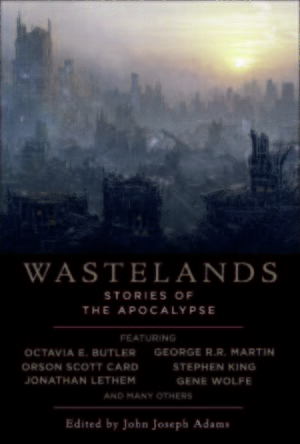

From the Book of Revelations to the Road Warrior; from A Canticle for Leibowitz to the Road, storytellers have long imagined the end of the world, weaving eschatological tales of catastrophe, chaos, and calamity. In doing so, these visionary authors have addressed one of the most challenging and enduring themes of imaginative fiction: the nature of life in the aftermath of total societal collapse.
Overall, there were a few good stories inside this book, but some of them seemed out of place, and there were ones that were just boring or not written well (like ending the story just to make it a short story). I only recommend this book to people who absolutely love dystopian stories, but for those who are just light readers of it, I don't think you'd enjoy it.
Being that this is a review for a handful of short stories, I am only going to mention the ones I really liked.
"Salvage" by Orson Scott Card
A long time after atom bombs have destroyed most of the Earth, a young man named Deaver finds out that there may be gold hidden within a Mormon temple, and he's willing to risk everything to get it.
I loved the story, the characters, and the playful banter between them.
"Bread and Bombs" by M. Rickert
During war time, children become curious about an odd neighbor who moves in. Parents demand that their children stay away from them because the neighbor's people are the reason so many people have died.
I liked that the story is through the childrens' eyes, not the adults.
"Dark, Dark Were the Tunnels" by George R. R. Martin
In the story that follows, you'll meet Greel. He is a scout of the People. He's penetrated the Oldest Tunnels, where the taletellers said the People had come from a million years ago. He is no coward, but he is afraid, and with good reason. You see, he's very used to being in the dark, but some visitors have come to the tunnels, and they've brought light with them...
I really liked the whole idea of people tunneling underground when nuclear war happens; there are not enough stories written about this!
"Never Despair" by Jack McDevitt
'Never Despair' tells the story of Chaka Milana, a woman who leaves her hometown in search of a storied place that holds the secrets of the Roadmakers, the almost-mythical builders of the concrete strips that cover the land, and the ruined cities with towers so high that a person could not ascend one in a day.
The story was so good that I wish it were a novel.
"Artie's Angels" by Catherine Wells
A post-apocalyptic society involving bicycles and young men.
This was probably my most favorite story out of the entire book!
"Inertia" by Nancy Kress
A story about the victims of a disfiguring epidemic who are interned in the modern equivalent of leper colonies.
Kress was able to make such a big picture out of very few characters, and in just a few pages. Really well-written.
"The End of the World As We Know It" by Dale Bailey
A lone survivor of an apocalypse attempts to grapple with the emotional dimension of his loss.
Just a really good story.
Overall, there were a few good stories inside this book, but some of them seemed out of place, and there were ones that were just boring or not written well (like ending the story just to make it a short story). I only recommend this book to people who absolutely love dystopian stories, but for those who are just light readers of it, I don't think you'd enjoy it.
Being that this is a review for a handful of short stories, I am only going to mention the ones I really liked.
"Salvage" by Orson Scott Card
A long time after atom bombs have destroyed most of the Earth, a young man named Deaver finds out that there may be gold hidden within a Mormon temple, and he's willing to risk everything to get it.
I loved the story, the characters, and the playful banter between them.
"Bread and Bombs" by M. Rickert
During war time, children become curious about an odd neighbor who moves in. Parents demand that their children stay away from them because the neighbor's people are the reason so many people have died.
I liked that the story is through the childrens' eyes, not the adults.
"Dark, Dark Were the Tunnels" by George R. R. Martin
In the story that follows, you'll meet Greel. He is a scout of the People. He's penetrated the Oldest Tunnels, where the taletellers said the People had come from a million years ago. He is no coward, but he is afraid, and with good reason. You see, he's very used to being in the dark, but some visitors have come to the tunnels, and they've brought light with them...
I really liked the whole idea of people tunneling underground when nuclear war happens; there are not enough stories written about this!
"Never Despair" by Jack McDevitt
'Never Despair' tells the story of Chaka Milana, a woman who leaves her hometown in search of a storied place that holds the secrets of the Roadmakers, the almost-mythical builders of the concrete strips that cover the land, and the ruined cities with towers so high that a person could not ascend one in a day.
The story was so good that I wish it were a novel.
"Artie's Angels" by Catherine Wells
A post-apocalyptic society involving bicycles and young men.
This was probably my most favorite story out of the entire book!
"Inertia" by Nancy Kress
A story about the victims of a disfiguring epidemic who are interned in the modern equivalent of leper colonies.
Kress was able to make such a big picture out of very few characters, and in just a few pages. Really well-written.
"The End of the World As We Know It" by Dale Bailey
A lone survivor of an apocalypse attempts to grapple with the emotional dimension of his loss.
Just a really good story.

Hazel (1853 KP) rated Station Eleven in Books
May 30, 2017
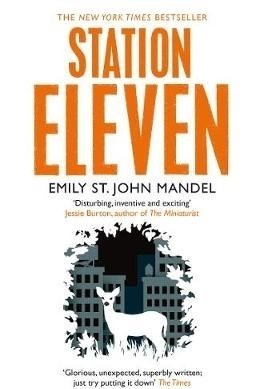


Horrifyingly Plausible
This ARC was provided by the publisher via NetGalley in exchange for an honest review
The dystopian idea of a virus wiping out most of the world’s human inhabitants is not a new concept. It has be done and retold over and over again. Emily St. John Mandel’s invention of the Georgian Flu is no different from these. Brought to Canada and the USA by a passenger on a plane from Russia, the highly contagious virus spreads quickly from person to person, town to town, and once caught you are dead within forty-eight hours.
The difference between Station Eleven and other novels of apocalyptic themes is that the story takes place primarily in two time periods – pre-Georgian Flu and twenty years post-Georgian flu – rather than during the outbreak and the immediate days after (although there are a few scenes written within that timeframe). It is difficult to explain the storyline without giving too much away. Although the death of millions of people is a vital feature, it is the lives of the characters that are important. All the significant characters are in some way linked to one man, Arthur Leander, and, particularly in the case of one individual, a graphic novel titled Station Eleven.
The book opens in Toronto with Arthur, a Hollywood actor, starring in a stage production of King Lear. Despite the quick reaction of trainee paramedic Jeevan, Arthur dies of a heart attack after suddenly collapsing during the forth act. Then suddenly, that same night, the Georgian flu makes its first appearance in Canada. Despite this occurring right at the beginning, it is not the last the reader sees of Arthur. Throughout the story the author returns to Arthur, recounting scenes of his life from acting career to his three ex-wives and only child.
Twenty years after the Georgian flu, Kirsten Raymonde, who starred as a child in the same production of King Lear, is part of the Traveling Symphony: a group of actors and musicians walking from decaying-town-to-town performing a number of Shakespeare plays as they go. With her she carries two Station Eleven comics that Arthur gave her before he died – incidentally written and drawn by his first wife. Most people that the Symphony encounter are accommodating and are trying their best to live in a world of no electricity or health care, but then they meet a man who calls himself the Prophet. Believing that he has been given a duty by God to repopulate the world he preaches to the people telling them that everything happens for a reason, likening the epidemic to Noah’s flood in the Bible. However it soon becomes clear that he is a dangerous character.
In a way it is heartening to imagine that high culture (such as Shakespeare and orchestral music) survives in a world that has been destroyed. Shakespeare was born in a time before all the modern inventions relied upon today, and now, in this novel, it is once again an electricity-less era yet these historical things live on.
One problem with Station Eleven is that it is hard to pinpoint the exact plot line. There is the life story of Arthur Leander, his wives and a close friend. Then there is Kirsten living a completely different life. Nonetheless it is still an incredibly fascinating book. Although it flits between time periods it is thankfully not as confusing as some may imagine it would be.
Even though dystopian novels of this nature have been done before, Station Eleven is definitely a book to read; and through it all it poses the question of how you, the reader, would survive in such a world.
The dystopian idea of a virus wiping out most of the world’s human inhabitants is not a new concept. It has be done and retold over and over again. Emily St. John Mandel’s invention of the Georgian Flu is no different from these. Brought to Canada and the USA by a passenger on a plane from Russia, the highly contagious virus spreads quickly from person to person, town to town, and once caught you are dead within forty-eight hours.
The difference between Station Eleven and other novels of apocalyptic themes is that the story takes place primarily in two time periods – pre-Georgian Flu and twenty years post-Georgian flu – rather than during the outbreak and the immediate days after (although there are a few scenes written within that timeframe). It is difficult to explain the storyline without giving too much away. Although the death of millions of people is a vital feature, it is the lives of the characters that are important. All the significant characters are in some way linked to one man, Arthur Leander, and, particularly in the case of one individual, a graphic novel titled Station Eleven.
The book opens in Toronto with Arthur, a Hollywood actor, starring in a stage production of King Lear. Despite the quick reaction of trainee paramedic Jeevan, Arthur dies of a heart attack after suddenly collapsing during the forth act. Then suddenly, that same night, the Georgian flu makes its first appearance in Canada. Despite this occurring right at the beginning, it is not the last the reader sees of Arthur. Throughout the story the author returns to Arthur, recounting scenes of his life from acting career to his three ex-wives and only child.
Twenty years after the Georgian flu, Kirsten Raymonde, who starred as a child in the same production of King Lear, is part of the Traveling Symphony: a group of actors and musicians walking from decaying-town-to-town performing a number of Shakespeare plays as they go. With her she carries two Station Eleven comics that Arthur gave her before he died – incidentally written and drawn by his first wife. Most people that the Symphony encounter are accommodating and are trying their best to live in a world of no electricity or health care, but then they meet a man who calls himself the Prophet. Believing that he has been given a duty by God to repopulate the world he preaches to the people telling them that everything happens for a reason, likening the epidemic to Noah’s flood in the Bible. However it soon becomes clear that he is a dangerous character.
In a way it is heartening to imagine that high culture (such as Shakespeare and orchestral music) survives in a world that has been destroyed. Shakespeare was born in a time before all the modern inventions relied upon today, and now, in this novel, it is once again an electricity-less era yet these historical things live on.
One problem with Station Eleven is that it is hard to pinpoint the exact plot line. There is the life story of Arthur Leander, his wives and a close friend. Then there is Kirsten living a completely different life. Nonetheless it is still an incredibly fascinating book. Although it flits between time periods it is thankfully not as confusing as some may imagine it would be.
Even though dystopian novels of this nature have been done before, Station Eleven is definitely a book to read; and through it all it poses the question of how you, the reader, would survive in such a world.

Smashbomb (4688 KP) created a post in Smashbomb AMA
Mar 26, 2019 (Updated Mar 26, 2019)

Hazel (1853 KP) rated Station Eleven in Books
Dec 7, 2018
<i>This ARC was provided by the publisher via NetGalley in exchange for an honest review</i>
The dystopian idea of a virus wiping out most of the world’s human inhabitants is not a new concept. It has be done and retold over and over again. Emily St. John Mandel’s invention of the Georgian Flu is no different from these. Brought to Canada and the USA by a passenger on a plane from Russia, the highly contagious virus spreads quickly from person to person, town to town, and once caught you are dead within forty-eight hours.
The difference between <i>Station Eleven</i> and other novels of apocalyptic themes is that the story takes place primarily in two time periods – pre-Georgian Flu and twenty years post-Georgian flu – rather than during the outbreak and the immediate days after (although there are a few scenes written within that timeframe). It is difficult to explain the storyline without giving too much away. Although the death of millions of people is a vital feature, it is the lives of the characters that are important. All the significant characters are in some way linked to one man, Arthur Leander, and, particularly in the case of one individual, a graphic novel titled <i>Station Eleven</i>.
The book opens in Toronto with Arthur, a Hollywood actor, starring in a stage production of <i>King Lear</i>. Despite the quick reaction of trainee paramedic Jeevan, Arthur dies of a heart attack after suddenly collapsing during the forth act. Then suddenly, that same night, the Georgian flu makes its first appearance in Canada. Despite this occurring right at the beginning, it is not the last the reader sees of Arthur. Throughout the story the author returns to Arthur, recounting scenes of his life from acting career to his three ex-wives and only child.
Twenty years after the Georgian flu, Kirsten Raymonde, who starred as a child in the same production of <i>King Lear</i>, is part of the Traveling Symphony: a group of actors and musicians walking from decaying-town-to-town performing a number of Shakespeare plays as they go. With her she carries two <i>Station Eleven</i> comics that Arthur gave her before he died – incidentally written and drawn by his first wife. Most people that the Symphony encounter are accommodating and are trying their best to live in a world of no electricity or health care, but then they meet a man who calls himself the Prophet. Believing that he has been given a duty by God to repopulate the world he preaches to the people telling them that everything happens for a reason, likening the epidemic to Noah’s flood in the Bible. However it soon becomes clear that he is a dangerous character.
In a way it is heartening to imagine that high culture (such as Shakespeare and orchestral music) survives in a world that has been destroyed. Shakespeare was born in a time before all the modern inventions relied upon today, and now, in this novel, it is once again an electricity-less era yet these historical things live on.
One problem with <i>Station Eleven</i> is that it is hard to pinpoint the exact plot line. There is the life story of Arthur Leander, his wives and a close friend. Then there is Kirsten living a completely different life. Nonetheless it is still an incredibly fascinating book. Although it flits between time periods it is thankfully not as confusing as some may imagine it would be.
Even though dystopian novels of this nature have been done before, <i>Station Eleven</i> is definitely a book to read; and through it all it poses the question of how you, the reader, would survive in such a world.
The dystopian idea of a virus wiping out most of the world’s human inhabitants is not a new concept. It has be done and retold over and over again. Emily St. John Mandel’s invention of the Georgian Flu is no different from these. Brought to Canada and the USA by a passenger on a plane from Russia, the highly contagious virus spreads quickly from person to person, town to town, and once caught you are dead within forty-eight hours.
The difference between <i>Station Eleven</i> and other novels of apocalyptic themes is that the story takes place primarily in two time periods – pre-Georgian Flu and twenty years post-Georgian flu – rather than during the outbreak and the immediate days after (although there are a few scenes written within that timeframe). It is difficult to explain the storyline without giving too much away. Although the death of millions of people is a vital feature, it is the lives of the characters that are important. All the significant characters are in some way linked to one man, Arthur Leander, and, particularly in the case of one individual, a graphic novel titled <i>Station Eleven</i>.
The book opens in Toronto with Arthur, a Hollywood actor, starring in a stage production of <i>King Lear</i>. Despite the quick reaction of trainee paramedic Jeevan, Arthur dies of a heart attack after suddenly collapsing during the forth act. Then suddenly, that same night, the Georgian flu makes its first appearance in Canada. Despite this occurring right at the beginning, it is not the last the reader sees of Arthur. Throughout the story the author returns to Arthur, recounting scenes of his life from acting career to his three ex-wives and only child.
Twenty years after the Georgian flu, Kirsten Raymonde, who starred as a child in the same production of <i>King Lear</i>, is part of the Traveling Symphony: a group of actors and musicians walking from decaying-town-to-town performing a number of Shakespeare plays as they go. With her she carries two <i>Station Eleven</i> comics that Arthur gave her before he died – incidentally written and drawn by his first wife. Most people that the Symphony encounter are accommodating and are trying their best to live in a world of no electricity or health care, but then they meet a man who calls himself the Prophet. Believing that he has been given a duty by God to repopulate the world he preaches to the people telling them that everything happens for a reason, likening the epidemic to Noah’s flood in the Bible. However it soon becomes clear that he is a dangerous character.
In a way it is heartening to imagine that high culture (such as Shakespeare and orchestral music) survives in a world that has been destroyed. Shakespeare was born in a time before all the modern inventions relied upon today, and now, in this novel, it is once again an electricity-less era yet these historical things live on.
One problem with <i>Station Eleven</i> is that it is hard to pinpoint the exact plot line. There is the life story of Arthur Leander, his wives and a close friend. Then there is Kirsten living a completely different life. Nonetheless it is still an incredibly fascinating book. Although it flits between time periods it is thankfully not as confusing as some may imagine it would be.
Even though dystopian novels of this nature have been done before, <i>Station Eleven</i> is definitely a book to read; and through it all it poses the question of how you, the reader, would survive in such a world.

The Poetry Deal
Book
"The Poetry Deal: San Francisco Poet Laureate Series No. 5 gives us di Prima's vision as she looks...
The Sister
6.0 Rate It
Book
‘I did something terrible Grace. I hope you can forgive me…’ Grace hasn't been the same...

Acanthea Grimscythe (300 KP) rated Repo! The Genetic Opera (2008) in Movies
May 12, 2018
Contains spoilers, click to show
Repo! The Genetic Opera is perhaps one of the most underrated films I’ve ever watched. The first time I watched it was at the behest of the elder of my younger brothers during my senior year of high school. At that time, I thought it was alright. The characters were hauntingly beautiful and the costumes delightfully dark, but beyond its appeal to my horror loving heart, I had little interest in re-watching it. The other day, I was browsing Shudder and came across it and decided to watch it for the sake of nostalgia. It was then that I picked up on the parody that my seventeen-year-old self missed entirely: for-profit healthcare.
Repo! takes place in 2056, where a planet-wide organ failure epidemic has led to drastic measures. In a time of need, a company by the name of GeneCo has come to the rescue. Offering payment plans to those that cannot afford their new organs, GeneCo saves the lives of those unfortunate souls. But what happens when they can’t meet their payments? Well, that’s what repo men are for, isn’t it?
So where does the parody come in? A similar system already exists in the way the American health care system is presently structured with its for-profit health insurance. Most insurance companies, like GeneCo, are not there for the benefit of their consumers, but for the filling of their pockets. As long as you can pay the premium (or the payment), your coverage remains intact and you’re able to get treatment and medication (or keep your organs in the world of Repo!). The moment you’re not able to do that, your coverage is often revoked (or your organs are repossessed). Of course, in the real world, this isn’t as brutal as it is in Repo! At least, not in most cases, but it can be just as scary. For myself, it’s often quite terrifying as I struggle to stay in remission from ulcerative pancolitis.
Moving on from the parody, there are other aspects of the movie that I feel are also accurate representations of today’s society – things that I feel Repo! was a bit ahead of its time on. The Largo family seems to represent the manner by which the wealthy feed upon the powerlessness of the poor. Also, am I the only one that, upon re-watching this film, can’t help but think of Trump when I’m looking at Rotti Largo? As a villain, Rotti is largely incompetent. He uses others to do what he can’t and often resorts to bullying to get what he wants, as can be seen in the blood contract with Blind Mag. Another example is how he manipulated Nathan and later Shiloh to break and control them, in hopes of controlling them. While it worked for the former of the two, Shiloh was not susceptible to his manipulation – yet another reference to something we’re seeing in today’s society in regards to Shiloh’s generation (that is present-day millennials) and the older generation, which is more mixed politically.
I think it’s also important that we take a moment to focus on Shiloh as a character. She is, perhaps, my least favorite character in this film. Then again, she was also in her rebellious teenage years and was, naturally, horrendously stereotyped. She loathed her father for keeping her bound to her room, even though she understood why and, even when she found out his sins and the lies he told her, she failed to turn against him – paying homage to the saying that “blood is thicker than water.” The end comics only state that she went into hiding, hinting that she was never to be heard from again – which is a shame. I’d like to think she’d become an activist, but… I guess that wasn’t her future.
One of my favorite things about this musical is the haunting and unearthly qualities that linger around Blind Mag and the Graverobber. This is a film I will watch again and again, even if others loathe it for being campy and over the top. In fact, I plan to show it to my Dad’s girlfriend’s kid.
Repo! takes place in 2056, where a planet-wide organ failure epidemic has led to drastic measures. In a time of need, a company by the name of GeneCo has come to the rescue. Offering payment plans to those that cannot afford their new organs, GeneCo saves the lives of those unfortunate souls. But what happens when they can’t meet their payments? Well, that’s what repo men are for, isn’t it?
So where does the parody come in? A similar system already exists in the way the American health care system is presently structured with its for-profit health insurance. Most insurance companies, like GeneCo, are not there for the benefit of their consumers, but for the filling of their pockets. As long as you can pay the premium (or the payment), your coverage remains intact and you’re able to get treatment and medication (or keep your organs in the world of Repo!). The moment you’re not able to do that, your coverage is often revoked (or your organs are repossessed). Of course, in the real world, this isn’t as brutal as it is in Repo! At least, not in most cases, but it can be just as scary. For myself, it’s often quite terrifying as I struggle to stay in remission from ulcerative pancolitis.
Moving on from the parody, there are other aspects of the movie that I feel are also accurate representations of today’s society – things that I feel Repo! was a bit ahead of its time on. The Largo family seems to represent the manner by which the wealthy feed upon the powerlessness of the poor. Also, am I the only one that, upon re-watching this film, can’t help but think of Trump when I’m looking at Rotti Largo? As a villain, Rotti is largely incompetent. He uses others to do what he can’t and often resorts to bullying to get what he wants, as can be seen in the blood contract with Blind Mag. Another example is how he manipulated Nathan and later Shiloh to break and control them, in hopes of controlling them. While it worked for the former of the two, Shiloh was not susceptible to his manipulation – yet another reference to something we’re seeing in today’s society in regards to Shiloh’s generation (that is present-day millennials) and the older generation, which is more mixed politically.
I think it’s also important that we take a moment to focus on Shiloh as a character. She is, perhaps, my least favorite character in this film. Then again, she was also in her rebellious teenage years and was, naturally, horrendously stereotyped. She loathed her father for keeping her bound to her room, even though she understood why and, even when she found out his sins and the lies he told her, she failed to turn against him – paying homage to the saying that “blood is thicker than water.” The end comics only state that she went into hiding, hinting that she was never to be heard from again – which is a shame. I’d like to think she’d become an activist, but… I guess that wasn’t her future.
One of my favorite things about this musical is the haunting and unearthly qualities that linger around Blind Mag and the Graverobber. This is a film I will watch again and again, even if others loathe it for being campy and over the top. In fact, I plan to show it to my Dad’s girlfriend’s kid.

Darren (1599 KP) rated 28 Weeks Later... (2007) in Movies
Jun 20, 2019
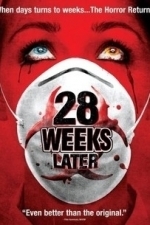
Story: 28 Weeks Later starts by having a group of survivors in a boarded up farm house with tension rising a shock visit from a young boy leads to the infected attack the house and lone survivor Don (Carlyle) escaping leaving his wife behind. We are then lead into a flash-forward telling us how Britain is attempting to rebuild after the rage virus 28 Weeks Later. With Britain still being rebuilt Don’s children Tammy (Poots) and Andy (Muggleton) are the first children to return, even though the safety zone is still run by the military.
We find out that bringing kids back was a bad idea as the two go running off into the city outside the safety zone which leads to them discovering their infected but not turned mother. The mother locked up in quarantine Don goes to visit but this only leads to the virus taking over the safety zone and all hell letting lose. We follow solider Doyle (Renner) and scientist Scarlet (Byrne) as they try to save the children from the infected.
28 Weeks Later does what many sequels fail to do, creates a fresh look at the aftermath of the epidemic without dragging our characters from the original back even though their story is complete. It also takes the idea that the outbreak is over and focusing on the rebuilding works really well too. On its down side it does fall into the same old survivors running from infected because of a stupid mistake. It doesn’t manage to bring the characters into the interesting zone because it goes into the idea of the children needing saving which takes away what was created. It is enjoy action horror but not to the same level as the original. (7/10)
Actor Review
Robert Carlyle: Don the husband who abandons his wife then brings his kids to London to help rebuild the city from within the safe zone. Robert does a solid job and everyone will remember that opening sequence. (7/10)
don
Rose Byrne: Scarlet scientist who is trying to help figure out the virus, she isn’t happy they have bought kids back because they don’t fully understand the virus and once the outbreak happens again she goes out her way to save them. Rose gives a solid performance but doesn’t shine as much as she could. (6/10)
Jeremy Renner: Doyle slick sniper who is one of the protectors of the city but once the outbreak happens he joins in the rescue attempts while the virus ends up with a shoot on site policy that orders demand. Jeremy does a good job and we get early ideas of what he will be like as Hawkeye. (7/10)
renner
Imogen Poots: Tammy daughter of Don who keeps looking after her brother and together they go into the restricted zone which ends up causing all the problems. Imogen does a good job in the early role. (7/10)
poots
Support Cast: 28 Weeks Later has a bigger supporting cast but in the end they all make the typical errors in an infected outbreak.
Director Review: Juan Carlos Fresnadillo – Juan does take the film in a slightly different direction which is good but he loses the suspense the first one had. (7/10)
Horror: 28 Weeks Later continues to use infected as its horror using survivor horror elements. (9/10)
Settings: 28 Weeks Later uses London as its setting well using the more iconic locations for the audience. (8/10)
Special Effects: 28 Weeks Later does take the effects to the next level with the helicopter scene showing how far they have come. (9/10)
Suggestion: 28 Weeks Later is one for all the horror fans to enjoy, it doesn’t quite reach the same levels as its predecessor but is still a good watch. (Horror Fans Watch)
Best Part: Opening sequences is very intense.
Worst Part: typical supporting characters.
Action Scene Of The Film: Opening sequences
Kill Of The Film: Helicopter
Scariest Scene: Locked in the basement.
Believability: No (0/10)
Chances of Tears: No (0/10)
Chances of Sequel: Left open for one but we haven’t had one yet.
Post Credits Scene: No
Oscar Chances: No
Box Office: $64 Million
Runtime: 1 Hour 40 Minutes
Tagline: The Threat Is Everywhere
Overall: Solid Sequel
https://moviesreview101.com/2015/03/15/28-weeks-later-2007/
We find out that bringing kids back was a bad idea as the two go running off into the city outside the safety zone which leads to them discovering their infected but not turned mother. The mother locked up in quarantine Don goes to visit but this only leads to the virus taking over the safety zone and all hell letting lose. We follow solider Doyle (Renner) and scientist Scarlet (Byrne) as they try to save the children from the infected.
28 Weeks Later does what many sequels fail to do, creates a fresh look at the aftermath of the epidemic without dragging our characters from the original back even though their story is complete. It also takes the idea that the outbreak is over and focusing on the rebuilding works really well too. On its down side it does fall into the same old survivors running from infected because of a stupid mistake. It doesn’t manage to bring the characters into the interesting zone because it goes into the idea of the children needing saving which takes away what was created. It is enjoy action horror but not to the same level as the original. (7/10)
Actor Review
Robert Carlyle: Don the husband who abandons his wife then brings his kids to London to help rebuild the city from within the safe zone. Robert does a solid job and everyone will remember that opening sequence. (7/10)
don
Rose Byrne: Scarlet scientist who is trying to help figure out the virus, she isn’t happy they have bought kids back because they don’t fully understand the virus and once the outbreak happens again she goes out her way to save them. Rose gives a solid performance but doesn’t shine as much as she could. (6/10)
Jeremy Renner: Doyle slick sniper who is one of the protectors of the city but once the outbreak happens he joins in the rescue attempts while the virus ends up with a shoot on site policy that orders demand. Jeremy does a good job and we get early ideas of what he will be like as Hawkeye. (7/10)
renner
Imogen Poots: Tammy daughter of Don who keeps looking after her brother and together they go into the restricted zone which ends up causing all the problems. Imogen does a good job in the early role. (7/10)
poots
Support Cast: 28 Weeks Later has a bigger supporting cast but in the end they all make the typical errors in an infected outbreak.
Director Review: Juan Carlos Fresnadillo – Juan does take the film in a slightly different direction which is good but he loses the suspense the first one had. (7/10)
Horror: 28 Weeks Later continues to use infected as its horror using survivor horror elements. (9/10)
Settings: 28 Weeks Later uses London as its setting well using the more iconic locations for the audience. (8/10)
Special Effects: 28 Weeks Later does take the effects to the next level with the helicopter scene showing how far they have come. (9/10)
Suggestion: 28 Weeks Later is one for all the horror fans to enjoy, it doesn’t quite reach the same levels as its predecessor but is still a good watch. (Horror Fans Watch)
Best Part: Opening sequences is very intense.
Worst Part: typical supporting characters.
Action Scene Of The Film: Opening sequences
Kill Of The Film: Helicopter
Scariest Scene: Locked in the basement.
Believability: No (0/10)
Chances of Tears: No (0/10)
Chances of Sequel: Left open for one but we haven’t had one yet.
Post Credits Scene: No
Oscar Chances: No
Box Office: $64 Million
Runtime: 1 Hour 40 Minutes
Tagline: The Threat Is Everywhere
Overall: Solid Sequel
https://moviesreview101.com/2015/03/15/28-weeks-later-2007/

Zombie Hunter: FPS Apocalypse
Games and Entertainment
App
The new real zombie war game with incredible 3D graphics. Your goal is to survive from the undead...

Sassy Brit (97 KP) rated Let The Dead Keep Their Secrets in Books
Jun 5, 2019
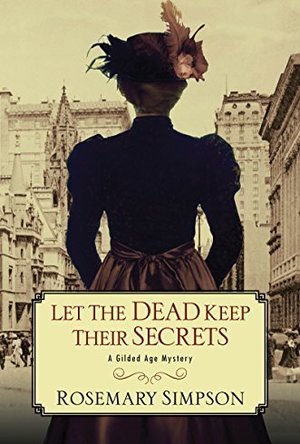
Let The DEAD Keep Their Secrets by Rosemary Simpson brings to life New York City during the 1880s in a historical mystery. It is rich in the culture of the time with a riveting Colombo type crime. Readers know who has done it and seek clues with the characters to find the proof.
The plot opens with New York opera singer Claire Buchanan calling on the investigative services of Prudence MacKenzie and her partner, Geoffrey Hunter. Claire shows up at their door begging them to find out exactly how her twin sister, Catherine, and newborn daughter died, believing it was not from natural causes. Catherine’s husband, Aaron Sorenson, is a scoundrel and appears to be marrying women, getting them pregnant, and then having baby and mother die in childbirth. Prudence and Geoffrey find that childbirth can be dangerous to one’s health as they realize that Sorenson’s current wife may also be in danger. His motive, both the late wife and the current wife would inherit a substantial estate, which will go to him upon their death. Sorensen seems to always be in need of money to pay mounting gambling debts. As the tension mounts the investigative team is putting themselves at risk in attempting to expose the murder-for-inheritance scheme.
The author noted, “Catherine was emotionally abused. Women during that time period did not have much choice. In the Gilded Age in New York women were still property of their husbands. They were very limited to what their husbands wanted.”
One of the important clues is a photograph of the late mother and child. Simpson weaves into the story a Victorian Era custom, post-mortem photography. During these scenes readers learn of the spiritualists who believe “about the possibility of capturing an image of the soul leaving a body at the moment of death.” It was during this time that Claire senses something from her twin sister. The author commented, “During my research, I read how twins separated by birth and raised by different families still have the same likes and dislikes and can sense how each other feels.”
Through the characters people learn of the Gilded Age era, with a fascinating description of the homes, the period clothing, and the city of New York. Unlike many women of the time, Prudence is very unconventional, desiring to take the bar exam and become a litigator. For now, she is content to be an amateur sleuth to her partner, ex-Pinkerton agent Geoffrey Hunter, as she learns on the job. “I wrote Prudence being raised by a widowed father who looked at her as a replacement for a son. He did not make an exception for her being a girl and made sure she had a very well developed sharp legal mind. She is determined to make her own way even though she inherited wealth. I read that the Pinkerton Agency hired a lady detective during the Civil War and knew I wanted to make my heroine an investigator who is constantly challenged by Geoffrey.”
The hero and heroine also have flaws. The author uses events that happened during the Gilded Age paralleling them with what is happening today. Simpson explained, “Geoffrey has left his southern roots, abandoning his culture and family. He has a lot of contradictions. Prudence must struggle with her addiction to the drug laudanum. She was given it by her family doctor to help her cope with her father’s passing and then her fiancé’s death. She overcame the reliance on laudanum but not without a terrible struggle and the knowledge that she would never be entirely free of it. I parallel it with the opioid epidemic today. People became accidental addicts because they were given the drugs legally to cope with physical and emotional pain.”
The antagonist, Simpson has no redeeming qualities. He is a cold and calculating thief, a swindler, and bigamist who victimizes rich women. “I wanted to write an absolute villain. He is unscrupulous, uncaring with no conscience. He had every vile habit known. I do not write cozy mysteries, but historical noirs. My bad guys are really, really bad who cause awful things to happen.”
The author definitely had done her homework. “I want to feel I live in this world for awhile and to get the reader to feel that also. I read the New York Times Archives and fall into the rhythm of the language used, how they spoke, wrote and thought. It puts me in the mindset of the character I am writing about.” With her detailed descriptions and gripping story Simpson has also drawn the reader into the time period through an exciting and action-packed mystery.
The plot opens with New York opera singer Claire Buchanan calling on the investigative services of Prudence MacKenzie and her partner, Geoffrey Hunter. Claire shows up at their door begging them to find out exactly how her twin sister, Catherine, and newborn daughter died, believing it was not from natural causes. Catherine’s husband, Aaron Sorenson, is a scoundrel and appears to be marrying women, getting them pregnant, and then having baby and mother die in childbirth. Prudence and Geoffrey find that childbirth can be dangerous to one’s health as they realize that Sorenson’s current wife may also be in danger. His motive, both the late wife and the current wife would inherit a substantial estate, which will go to him upon their death. Sorensen seems to always be in need of money to pay mounting gambling debts. As the tension mounts the investigative team is putting themselves at risk in attempting to expose the murder-for-inheritance scheme.
The author noted, “Catherine was emotionally abused. Women during that time period did not have much choice. In the Gilded Age in New York women were still property of their husbands. They were very limited to what their husbands wanted.”
One of the important clues is a photograph of the late mother and child. Simpson weaves into the story a Victorian Era custom, post-mortem photography. During these scenes readers learn of the spiritualists who believe “about the possibility of capturing an image of the soul leaving a body at the moment of death.” It was during this time that Claire senses something from her twin sister. The author commented, “During my research, I read how twins separated by birth and raised by different families still have the same likes and dislikes and can sense how each other feels.”
Through the characters people learn of the Gilded Age era, with a fascinating description of the homes, the period clothing, and the city of New York. Unlike many women of the time, Prudence is very unconventional, desiring to take the bar exam and become a litigator. For now, she is content to be an amateur sleuth to her partner, ex-Pinkerton agent Geoffrey Hunter, as she learns on the job. “I wrote Prudence being raised by a widowed father who looked at her as a replacement for a son. He did not make an exception for her being a girl and made sure she had a very well developed sharp legal mind. She is determined to make her own way even though she inherited wealth. I read that the Pinkerton Agency hired a lady detective during the Civil War and knew I wanted to make my heroine an investigator who is constantly challenged by Geoffrey.”
The hero and heroine also have flaws. The author uses events that happened during the Gilded Age paralleling them with what is happening today. Simpson explained, “Geoffrey has left his southern roots, abandoning his culture and family. He has a lot of contradictions. Prudence must struggle with her addiction to the drug laudanum. She was given it by her family doctor to help her cope with her father’s passing and then her fiancé’s death. She overcame the reliance on laudanum but not without a terrible struggle and the knowledge that she would never be entirely free of it. I parallel it with the opioid epidemic today. People became accidental addicts because they were given the drugs legally to cope with physical and emotional pain.”
The antagonist, Simpson has no redeeming qualities. He is a cold and calculating thief, a swindler, and bigamist who victimizes rich women. “I wanted to write an absolute villain. He is unscrupulous, uncaring with no conscience. He had every vile habit known. I do not write cozy mysteries, but historical noirs. My bad guys are really, really bad who cause awful things to happen.”
The author definitely had done her homework. “I want to feel I live in this world for awhile and to get the reader to feel that also. I read the New York Times Archives and fall into the rhythm of the language used, how they spoke, wrote and thought. It puts me in the mindset of the character I am writing about.” With her detailed descriptions and gripping story Simpson has also drawn the reader into the time period through an exciting and action-packed mystery.