Search

KidloLand: Kids Nursery Rhymes
Education and Games
App
KidloLand is an award-winning app for kids (1-5 yrs) with 1000+ nursery rhymes, songs, games and...

Night Reader Reviews (683 KP) rated Freiyon Fables: A Tail to Remember in Books
Jan 9, 2020

Honest Review for Free Copy of Book
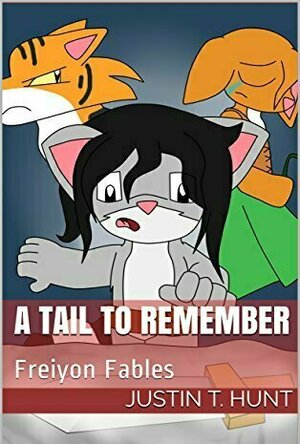
Freiyon Fables: Tail to Remember by Justin Hunt was a book that I could only compare to one other book and that would be Chronicles of Narnia by C. S. Lewis. The Prologue promises an amazing tale, yet I feel as if the book doesn't quite live up to it. So even though I compare it to Narnia in style it is nothing like it when it comes to the actual material. The complete book itself is separated into three smaller books (or parts) that is then spread out into chapters.
In A Tail to Remember a squirrel by the name of Micklang escapes from a zoo and in the process is electrocuted, giving his tail a lightning-bolt shape. He then falls into another world in an Alice in Wonderland – down the rabbit hole style. In this new world, Micklang receives dreams about his warrior-self telling hi how to become that version of himself. During his journey, Micklang makes some surprising new friends and is reunited with some he has met before in the human world. It is with these friends that Micklang travels this new world, mapping it out.
At one point Micklang comes across an island where his traveling companions are captured and must rescue them before their captors harm them. Then after abandoning ship in a bad storm Micklang finds himself on yet another island, but this one is home to only other lightning-tail animals. Towards the end, Micklang goes back to one of the first islands that he visited in this new world, now called Freiyon. It is there that Micklang and his friends fight in the first battle in a war between The Grabbers and King Karel. It is during this battle that Micklang’s story ends but it is not the end of the stories about Freiyon. This is because a little human boy is told about Freiyon by his mother and decides it is time for him to visit this land of talking animals.
What I liked best about this book is that it is a rare occasion when I can honestly say that the ending, specifically the Epilogue is my favorite part. The epilogue tied the entire story together with the prologue when frankly I originally was confused about how it all connected. This actually redeemed the entire book in some ways. What I did not like was that the talking animals and being in a different world or realm gave the book a Chronicles of Narnia feel. Normally that would be a good thing but in this case, the writing style felt simplified and rushed at the same time. Also, this book felt like it was intended for children up until book three. In Book Three: The Switch Between Stories the phrases “What the HELL” and “how the HELL” were both used and that doesn't feel kid-friendly.
It was hard for me to pick a target audience for this book. My best guess would be for early middle school students and late elementary students, age-wise anyway. This is because the length might make it difficult for some elementary students (and some parents may not be thrilled about all the violence, who knows). Yet the simplified writing style may (or may not) appeal to older readers. Most likely it would be dry and boring for anyone out of middle school. That being said I rate this book a 2 out of 4. This is because this story falls in that dangerous zone between being simple enough for young readers and having just enough detail to feel rushed. The action moves from one major event to another without much of a break in between yet the story is still interesting
https://www.facebook.com/nightreaderreviews
In A Tail to Remember a squirrel by the name of Micklang escapes from a zoo and in the process is electrocuted, giving his tail a lightning-bolt shape. He then falls into another world in an Alice in Wonderland – down the rabbit hole style. In this new world, Micklang receives dreams about his warrior-self telling hi how to become that version of himself. During his journey, Micklang makes some surprising new friends and is reunited with some he has met before in the human world. It is with these friends that Micklang travels this new world, mapping it out.
At one point Micklang comes across an island where his traveling companions are captured and must rescue them before their captors harm them. Then after abandoning ship in a bad storm Micklang finds himself on yet another island, but this one is home to only other lightning-tail animals. Towards the end, Micklang goes back to one of the first islands that he visited in this new world, now called Freiyon. It is there that Micklang and his friends fight in the first battle in a war between The Grabbers and King Karel. It is during this battle that Micklang’s story ends but it is not the end of the stories about Freiyon. This is because a little human boy is told about Freiyon by his mother and decides it is time for him to visit this land of talking animals.
What I liked best about this book is that it is a rare occasion when I can honestly say that the ending, specifically the Epilogue is my favorite part. The epilogue tied the entire story together with the prologue when frankly I originally was confused about how it all connected. This actually redeemed the entire book in some ways. What I did not like was that the talking animals and being in a different world or realm gave the book a Chronicles of Narnia feel. Normally that would be a good thing but in this case, the writing style felt simplified and rushed at the same time. Also, this book felt like it was intended for children up until book three. In Book Three: The Switch Between Stories the phrases “What the HELL” and “how the HELL” were both used and that doesn't feel kid-friendly.
It was hard for me to pick a target audience for this book. My best guess would be for early middle school students and late elementary students, age-wise anyway. This is because the length might make it difficult for some elementary students (and some parents may not be thrilled about all the violence, who knows). Yet the simplified writing style may (or may not) appeal to older readers. Most likely it would be dry and boring for anyone out of middle school. That being said I rate this book a 2 out of 4. This is because this story falls in that dangerous zone between being simple enough for young readers and having just enough detail to feel rushed. The action moves from one major event to another without much of a break in between yet the story is still interesting
https://www.facebook.com/nightreaderreviews

Purple Phoenix Games (2266 KP) rated Similo: Spookies in Tabletop Games
Mar 11, 2022

Anyone who knows my gaming preferences will tell you that I am not at all a fan of many party games. I just find them less that gratifying, with usually little to no skill or strategy involved, and also typically invites lewd and disgusting suggestions and behaviors. No thanks. However, upon seeing many reviewers that I trust showing off their hauls from recent conventions including games from the Similo series, I just had to find out why. Have I been missing out, or is this just another lame excuse for a “party game?”
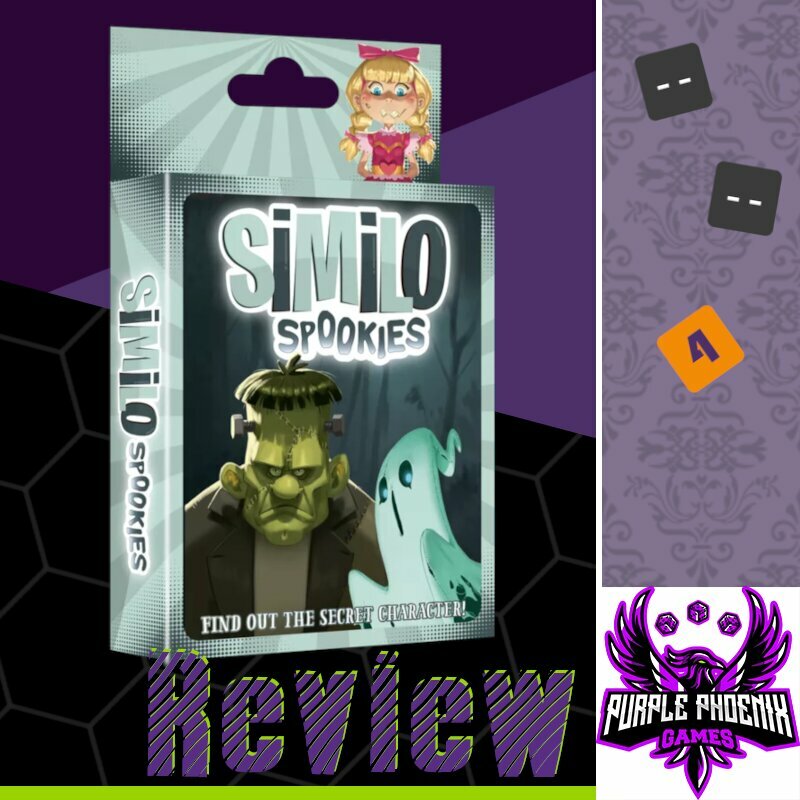
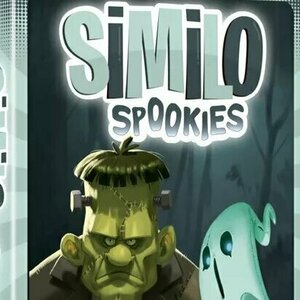
Similo: Spookies (which I will just call Similo from here on out, as they are all basically the same, but with different themes) is a party card game where one player knows information and attempts to persuade the other players to choose the correct character SILENTLY. One game lasts five rounds or less, and many times players will want to play multiple games in a row.
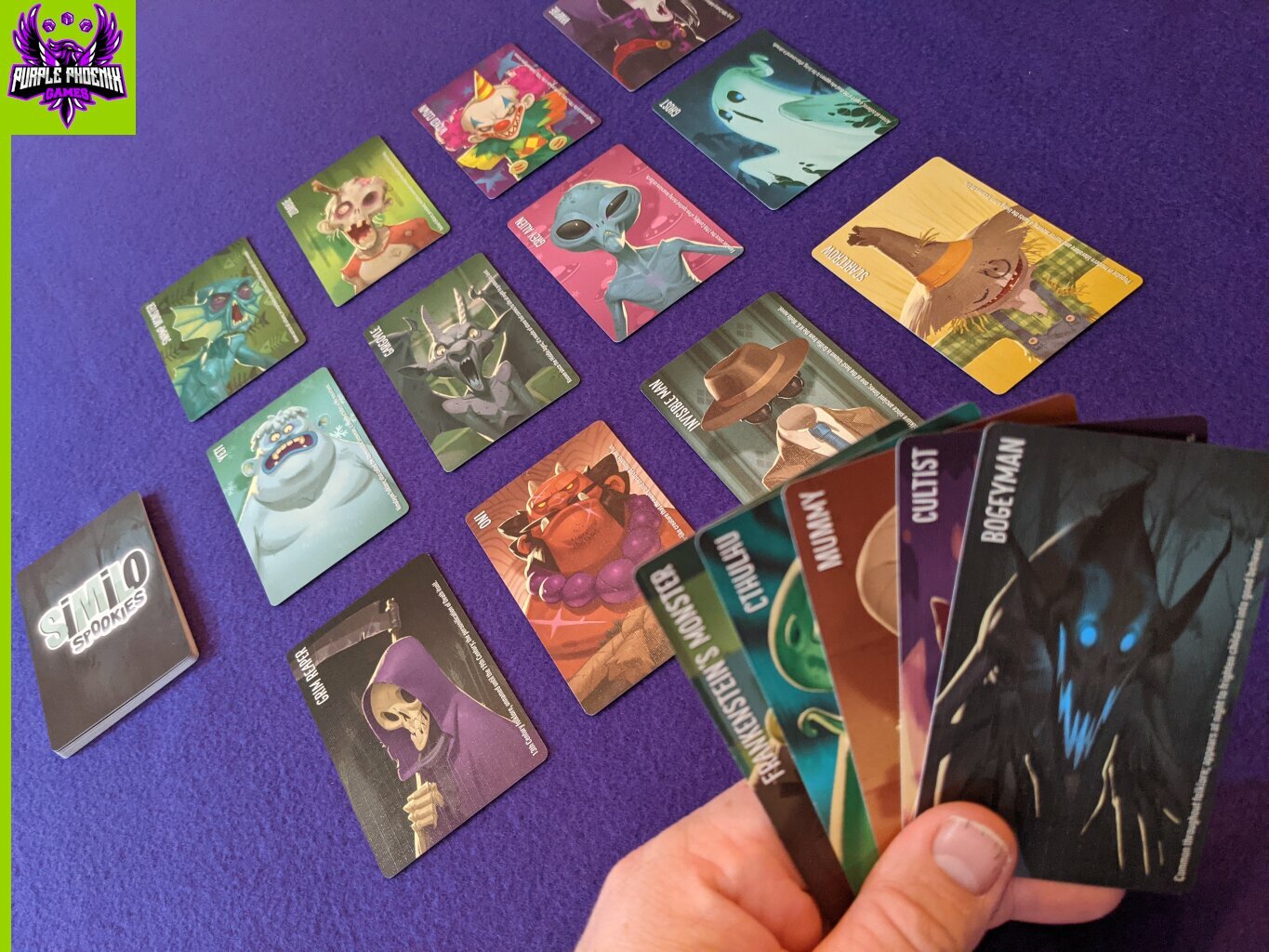
To setup, shuffle the deck of cards and place it face-down on the table. The player chosen to be the “Clue Giver” will then secretly look at the top card. This card will be the secret character for the entire game. Along with this card, the Clue Giver will draw an additional 11 cards and shuffle them. Next, lay out the 12 characters face-up in a 4×3 grid, so that all players can see. Finally, the Clue Giver draws another five cards to act as their starting hand of clues. The game may now begin in earnest!
The game lasts no more than five rounds, and each round is played mostly the same. During the first round the Clue Giver will place a card from their hand onto the table in either Portrait or Landscape mode (I know there are different words to describe these orientations, but they are failing me now). When a card is in Portrait mode, the Clue Giver is letting the players know that the secret character has similarities to the played card. Landscape placement means that the secret character has differences from the card played.
At the end of the first round, the other players must discuss and decide one card from the grid to remove from play, based on the Clue Giver’s information. If the card removed is the secret character (or at any time the secret character is removed in this way) the players all immediately lose the game. However, if the players have removed an appropriate character card, then the game moves to the second round. Each subsequent round is played exactly the same way, except the number of cards removed will match the round number being played. For example, during the third round three cards will be removed. The only exception here is the very last fifth round. During this round there will only be two cards remaining, and the players will need to choose the correct one to win the game. Win or lose, all players will most likely request to play another game with a different Clue Giver.
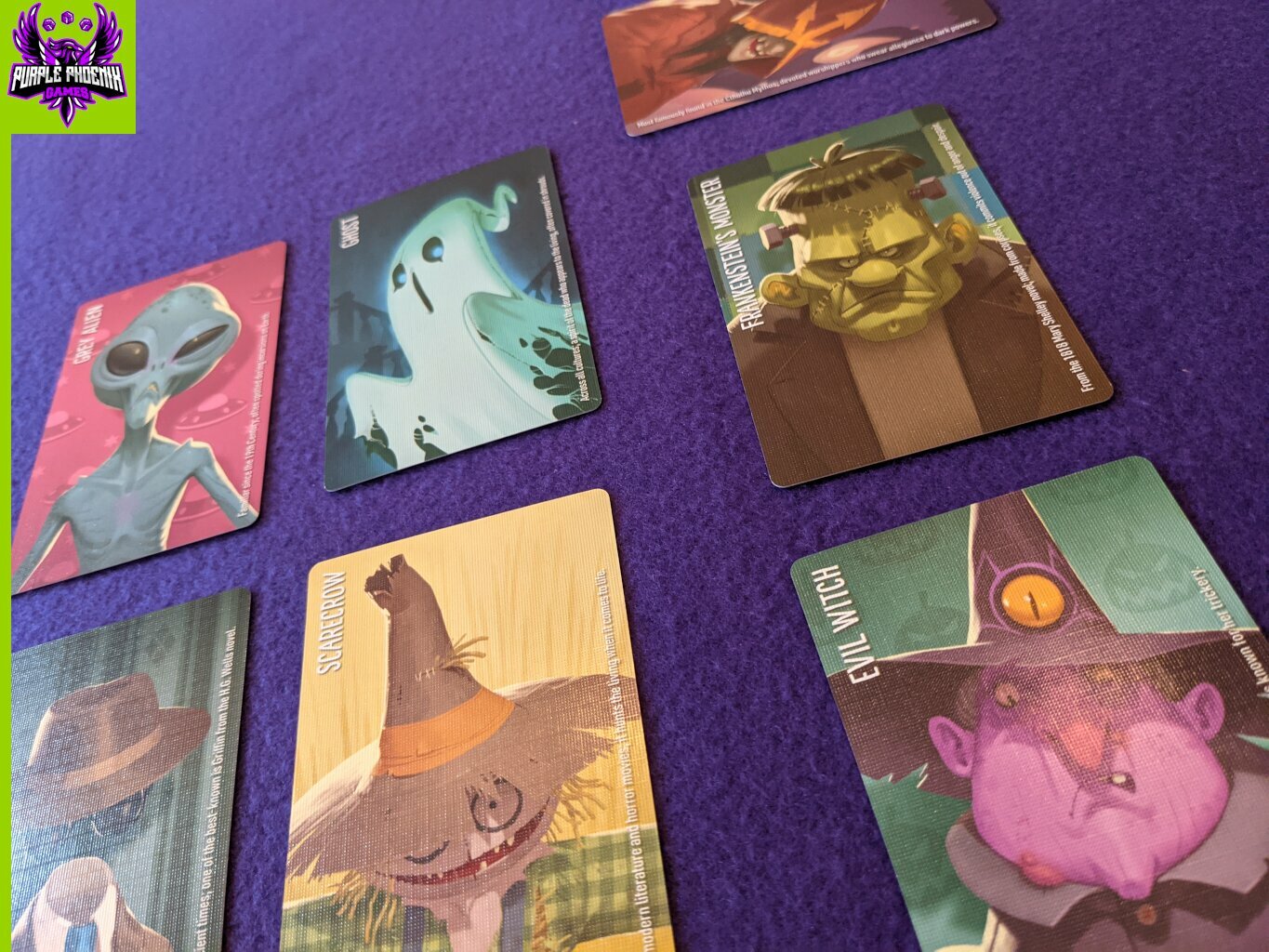
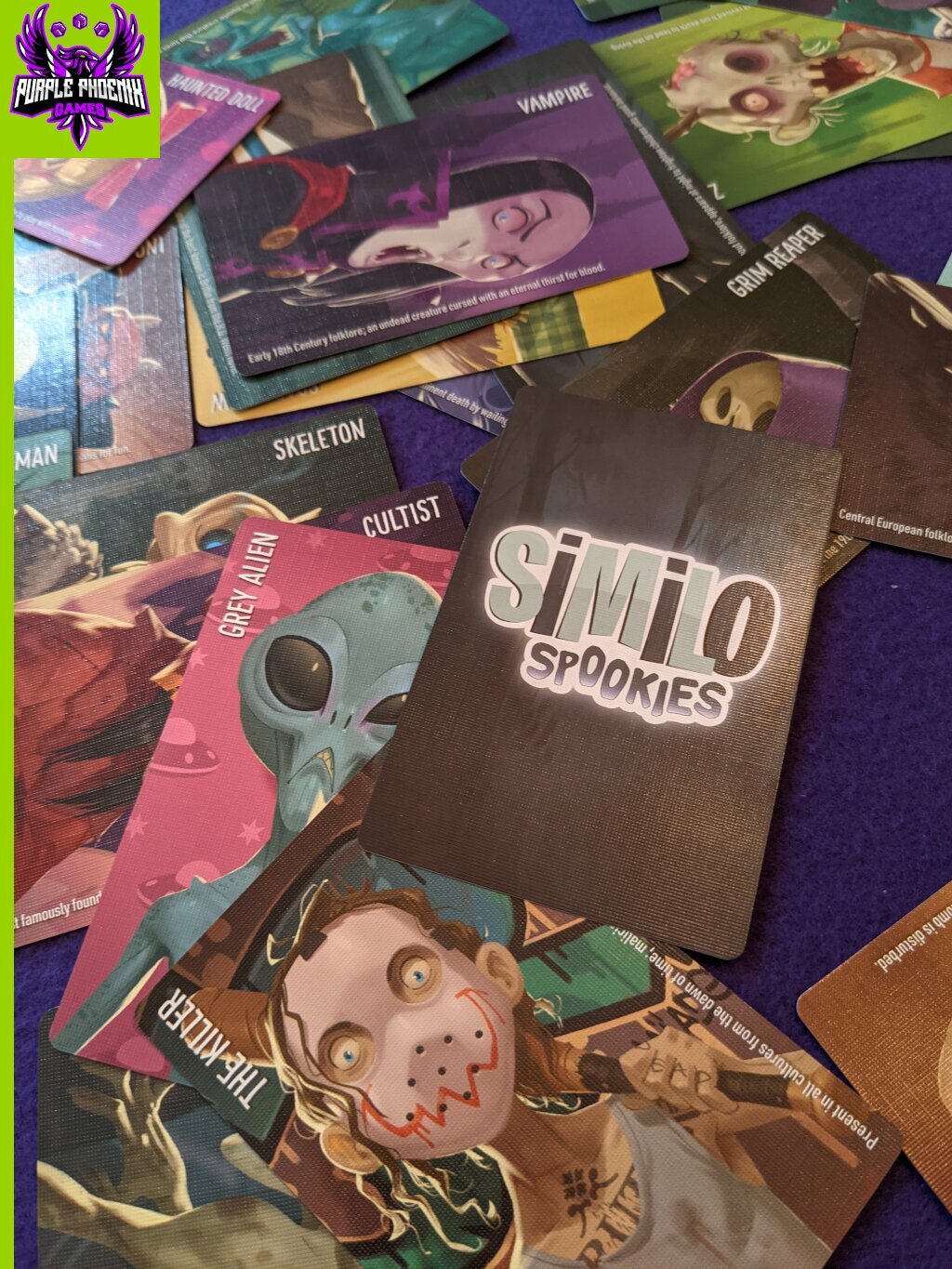
Components. This game is 30 cards in a tuckbox. The cards are all great quality with excellent linen finish. They each have the character’s name on the upper left corner and a small thematic quip on the lower right corner. The big thing here is the utterly amazing character art by Naiade (Seasons, Tokaido, Isla Dorada, etc). They are each so wonderfully illustrated, and they have to be, considering the entire game is based on the similarity or differences of each card. I was so very pleasantly surprised to see this beautiful set of cards pop out of the box when I opened it. Zero issues with components here.
This game is low-key a thinking person’s puzzle. How can I get the group to exclude one card specifically and throw away all the others? What the heck is this Clue Giver trying to tell us? What exactly is an Oni? With the right group of gamers, especially those that share many inside jokes and experiences, this could be a nightly hit. Now, determining the difference between Frankenstein’s Monster and a Zombie may be harder than you thought, so do be careful with those technicalities.
This one really reminds me of a much more compact version of Deception: Murder in Hong Kong. There is a silent Clue Giver in both trying to guide the other players to the right answer using cards. If I can get the same feeling from a game featuring 30 cards versus about 300 I might have a replacement situation on my hands here.
For its tiny table presence, excellent artwork, and overall game play, Purple Phoenix Games gives this one a bone-chilling 4 / 6. I know at this very second that my score is hanging in the balance. I want it to be a 5 so very badly, and I feel that it may actually get there, assuming I can play with larger groups of people and a variety of types of gamers. For now, I am happy with the 4 it is assigned. If you are like me and didn’t know you needed a smaller game in your collection that can give similo experiences to bigger boxes, give this one a shot.
Oh PS – You can also combine the different sets into a larger and more chaotic game. I’m not sure I have the huevos for that quite yet, but I think a good counterpart to this Halloween-themed set may be the Fables or Myths sets. Let me know if you have combined these two and if my hunch is correct. I’m going to go fanboy over Naiade’s art now.
Similo: Spookies (which I will just call Similo from here on out, as they are all basically the same, but with different themes) is a party card game where one player knows information and attempts to persuade the other players to choose the correct character SILENTLY. One game lasts five rounds or less, and many times players will want to play multiple games in a row.
To setup, shuffle the deck of cards and place it face-down on the table. The player chosen to be the “Clue Giver” will then secretly look at the top card. This card will be the secret character for the entire game. Along with this card, the Clue Giver will draw an additional 11 cards and shuffle them. Next, lay out the 12 characters face-up in a 4×3 grid, so that all players can see. Finally, the Clue Giver draws another five cards to act as their starting hand of clues. The game may now begin in earnest!
The game lasts no more than five rounds, and each round is played mostly the same. During the first round the Clue Giver will place a card from their hand onto the table in either Portrait or Landscape mode (I know there are different words to describe these orientations, but they are failing me now). When a card is in Portrait mode, the Clue Giver is letting the players know that the secret character has similarities to the played card. Landscape placement means that the secret character has differences from the card played.
At the end of the first round, the other players must discuss and decide one card from the grid to remove from play, based on the Clue Giver’s information. If the card removed is the secret character (or at any time the secret character is removed in this way) the players all immediately lose the game. However, if the players have removed an appropriate character card, then the game moves to the second round. Each subsequent round is played exactly the same way, except the number of cards removed will match the round number being played. For example, during the third round three cards will be removed. The only exception here is the very last fifth round. During this round there will only be two cards remaining, and the players will need to choose the correct one to win the game. Win or lose, all players will most likely request to play another game with a different Clue Giver.
Components. This game is 30 cards in a tuckbox. The cards are all great quality with excellent linen finish. They each have the character’s name on the upper left corner and a small thematic quip on the lower right corner. The big thing here is the utterly amazing character art by Naiade (Seasons, Tokaido, Isla Dorada, etc). They are each so wonderfully illustrated, and they have to be, considering the entire game is based on the similarity or differences of each card. I was so very pleasantly surprised to see this beautiful set of cards pop out of the box when I opened it. Zero issues with components here.
This game is low-key a thinking person’s puzzle. How can I get the group to exclude one card specifically and throw away all the others? What the heck is this Clue Giver trying to tell us? What exactly is an Oni? With the right group of gamers, especially those that share many inside jokes and experiences, this could be a nightly hit. Now, determining the difference between Frankenstein’s Monster and a Zombie may be harder than you thought, so do be careful with those technicalities.
This one really reminds me of a much more compact version of Deception: Murder in Hong Kong. There is a silent Clue Giver in both trying to guide the other players to the right answer using cards. If I can get the same feeling from a game featuring 30 cards versus about 300 I might have a replacement situation on my hands here.
For its tiny table presence, excellent artwork, and overall game play, Purple Phoenix Games gives this one a bone-chilling 4 / 6. I know at this very second that my score is hanging in the balance. I want it to be a 5 so very badly, and I feel that it may actually get there, assuming I can play with larger groups of people and a variety of types of gamers. For now, I am happy with the 4 it is assigned. If you are like me and didn’t know you needed a smaller game in your collection that can give similo experiences to bigger boxes, give this one a shot.
Oh PS – You can also combine the different sets into a larger and more chaotic game. I’m not sure I have the huevos for that quite yet, but I think a good counterpart to this Halloween-themed set may be the Fables or Myths sets. Let me know if you have combined these two and if my hunch is correct. I’m going to go fanboy over Naiade’s art now.