
Search

Ultimate Fox Simulator
Games and Entertainment
App
Dash into a brand new adventure as a wild Fox! For the first time ever, choose from THREE PLAYABLE...

Movie Metropolis (309 KP) rated War Horse (2011) in Movies
Jun 11, 2019
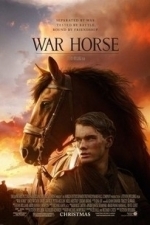


Steven Spielberg is undoubtedly one of the world’s most loved directors and is without question, the king of blockbuster cinema. He thrilled us with dinosaurs in 1993’s blockbuster Jurassic Park, had us in tears with E.T. and had our hearts pumping out of our chests with the Indiana Jones series.
However, here, the ‘king’ relaxes a little and delves into proper old fashioned story telling with the emotional rollercoaster that is War Horse. Teaming up with John Williams once again, the duo delivers a beautiful score to accompany a beautifully shot film.
Jeremy Irvine stars alongside a full roster of celebrities including Harry Potter’s David Thewlis and Thor’s Tom Hiddlestone in what can only be described as one of Spielberg’s greatest films.
The film opens with some awe inspiring shots of the Devon countryside, with Albert Narracott (Jeremy Irvine) staring, masterfully at two horses in a field. Fast forward a few years and his alcoholic father Ted, played wonderfully by Peter Mullen purchases one of them in an auction, hoping to turn it into a plough horse. This horse becomes the focus of the entire film and is nicknamed Joey by Irvine’s character.
After the usual, Spielberg sentimentality, Joey is summoned to help the English army in the First World War. Obviously, this doesn’t go down too well with Albert and he promises that one day, they will find each other. It’s hard to describe just how heart-breaking these scenes are, as Joey is led away by his new trainer (Tom Hiddlestone) and all Albert can do is watch.
After being defeated by the Germans in a deadly ambush, Albert is informed that Hiddlestone’s character, Captain Nicholls has been killed in battle. Assuming the worst, Albert starts to prepare to either reunite with his beloved steed, or discover whether or not he has perished.
Spielberg has created a shockingly beautiful film as Joey loses Captain Nicholls and roams the countryside unmanned trying to escape the clutches of the German army. Unfortunately, on occasion, he runs right into them and becomes an artillery horse, pulling canons and other weapons.
The shots of no-man’s land as the horse time and time again escapes are breath-taking and show the scale of the destruction like nothing I’ve ever seen. Spielberg has a knack for scale and in War Horse, this is exceptionally poignant; shots of a horse graveyard and the grey barren landscape are examples of fine film-making. To say you’ll be in tears is somewhat of an understatement as Joey, terrified from the ordeal he is being taken through loses comrades, crashes through barbed wire and nearly gives up on life.
This coupled with John Williams best score since Jurassic Park ensures that this is a subtle blockbuster to be enjoyed by all.
However, the film isn’t perfect. On occasion, it delves into unnecessary sentimentality and Spielberg must’ve had a book of movie clichés with him at some points during the shoot, like the cheesy sunset ending and the token pulling through in the face of adversity. These are, however, small points in a film which is a spectacle to behold.
The animals no doubt steal the show, but their human counterparts do well in their roles. Jeremy Irvine is fabulous and was an unusual but totally justified choice for the part. David Thewlis shows how versatile he really is as an actor, playing the heartless landlord, ready to ship the Narracott family out of their farm.
War Horse is a film which hits with a huge dose of emotion. John Williams and Steven Spielberg are an unstoppable combination and what the film does best is show off its directors prowess as an artist, not a film-maker. The special effects are sparse because the story doesn’t require them, but when they are there, such as in the battle scenes, they help the story along, instead of hindering it.
It may not quite match the dizzy heights of Schindler’s List and Jurassic Park as Spielberg’s best, but it fits in between excellent Spielberg and spectacular Spielberg. Take some tissues and prepare yourself and you’ll be all set.
https://moviemetropolis.net/2012/01/22/review-war-horse-2012/
However, here, the ‘king’ relaxes a little and delves into proper old fashioned story telling with the emotional rollercoaster that is War Horse. Teaming up with John Williams once again, the duo delivers a beautiful score to accompany a beautifully shot film.
Jeremy Irvine stars alongside a full roster of celebrities including Harry Potter’s David Thewlis and Thor’s Tom Hiddlestone in what can only be described as one of Spielberg’s greatest films.
The film opens with some awe inspiring shots of the Devon countryside, with Albert Narracott (Jeremy Irvine) staring, masterfully at two horses in a field. Fast forward a few years and his alcoholic father Ted, played wonderfully by Peter Mullen purchases one of them in an auction, hoping to turn it into a plough horse. This horse becomes the focus of the entire film and is nicknamed Joey by Irvine’s character.
After the usual, Spielberg sentimentality, Joey is summoned to help the English army in the First World War. Obviously, this doesn’t go down too well with Albert and he promises that one day, they will find each other. It’s hard to describe just how heart-breaking these scenes are, as Joey is led away by his new trainer (Tom Hiddlestone) and all Albert can do is watch.
After being defeated by the Germans in a deadly ambush, Albert is informed that Hiddlestone’s character, Captain Nicholls has been killed in battle. Assuming the worst, Albert starts to prepare to either reunite with his beloved steed, or discover whether or not he has perished.
Spielberg has created a shockingly beautiful film as Joey loses Captain Nicholls and roams the countryside unmanned trying to escape the clutches of the German army. Unfortunately, on occasion, he runs right into them and becomes an artillery horse, pulling canons and other weapons.
The shots of no-man’s land as the horse time and time again escapes are breath-taking and show the scale of the destruction like nothing I’ve ever seen. Spielberg has a knack for scale and in War Horse, this is exceptionally poignant; shots of a horse graveyard and the grey barren landscape are examples of fine film-making. To say you’ll be in tears is somewhat of an understatement as Joey, terrified from the ordeal he is being taken through loses comrades, crashes through barbed wire and nearly gives up on life.
This coupled with John Williams best score since Jurassic Park ensures that this is a subtle blockbuster to be enjoyed by all.
However, the film isn’t perfect. On occasion, it delves into unnecessary sentimentality and Spielberg must’ve had a book of movie clichés with him at some points during the shoot, like the cheesy sunset ending and the token pulling through in the face of adversity. These are, however, small points in a film which is a spectacle to behold.
The animals no doubt steal the show, but their human counterparts do well in their roles. Jeremy Irvine is fabulous and was an unusual but totally justified choice for the part. David Thewlis shows how versatile he really is as an actor, playing the heartless landlord, ready to ship the Narracott family out of their farm.
War Horse is a film which hits with a huge dose of emotion. John Williams and Steven Spielberg are an unstoppable combination and what the film does best is show off its directors prowess as an artist, not a film-maker. The special effects are sparse because the story doesn’t require them, but when they are there, such as in the battle scenes, they help the story along, instead of hindering it.
It may not quite match the dizzy heights of Schindler’s List and Jurassic Park as Spielberg’s best, but it fits in between excellent Spielberg and spectacular Spielberg. Take some tissues and prepare yourself and you’ll be all set.
https://moviemetropolis.net/2012/01/22/review-war-horse-2012/

Bob Mann (459 KP) rated The Front Runner (2018) in Movies
Sep 28, 2021
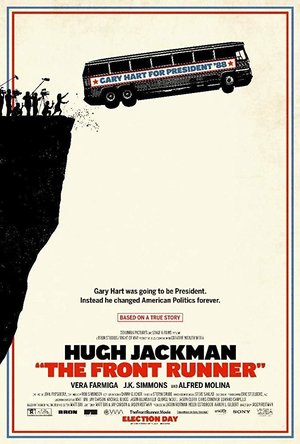


Candidate for a downfall.
We can all probably rattle off some of the classics movies with US politics as their backdrop. For me, “All the President’s Men”; “Primary Colors”; and “Frost/Nixon” might make that list. In the next tier down there are many great drama/thrillers – “Miss Sloane“; “The Post“; “The Ides of March”; “The American President”; “JFK” – and even some pretty funny comedies – “Dave” and “My Fellow Americans” for example. It’s actually quite difficult to think of many films on the subject that are outright dire, proving it remains a fertile ground for film-makers.
“The Front Runner” fortunately avoids this last category, but it’s certainly not good enough to make it into the ‘classics’ list either.
A true story.
The film is based on the true-story of US presidential hopeful Gary Hart (Hugh Jackman) and if you are NOT aware of the historical background then you might want to skip the rest of this review – and indeed all others – so you can see the film first and let the history come as a surprise to you.
Hart was younger than most candidates: good-looking, floppy-haired and refreshingly matter of fact in his dealings with the public and the press. Any interviews had to be about his politics: not about his family life with wife Lee (Vera Farmiga) and teenage daughter Andrea (Kaitlyn Dever).
Unfortunately, Hart has a weakness for a pretty face (or ten) and his marriage is rocky as a result: “Just don’t embarrass me” is Lee’s one requirement. His “nothing to hide” line to an intelligent Washington Post reporter – AJ Parker (a well cast Mamoudou Athie) – leads to a half-arsed stake-out by Miami Herald reporters and incriminating pictures linking Hart to a Miami pharmaceutical saleswoman Donna Rice (Sara Paxton). As the growing press tsunami rises, and his campaign manager (J.K. Simmons) gets more and more frustrated with him, can his candidacy survive and will his (now very much embarrassed) wife stick by him?
The turns.
Hugh Jackman is perfectly cast here; very believable as the self-centred, self-righteous and stubborn politician. But this central performance is surrounded by a strong team of supporting players. Vera Farmiga is superb as the wounded wife. Sara Paxton is heartbreaking as the intelligent college girl unfairly portrayed as a “slapper” by the media. The scenes between her and Hart-staffer Irene (Molly Ephraim), trying desperately to support her as best she can, are very nicely done. J.K Simmons as campaign manager Bill Dixon is as reliable as ever. And Alfred Molina turns up as the latest film incarnation of The Post’s Ben Bradlee – surely one of the most oft portrayed real-life journalists in film history.
“What did they just say”?
The biggest cause of dissatisfaction I have with the film is with the sound mixing. Was this a deliberate act by director Jason Reitman, to reflect the chaotic nature of political campaigning? Whether it was deliberate or not, much of the film’s dialogue – particularly in the first 30 minutes of the film – is drowned out by background noise. Sometimes I just longed for subtitles!
Just a little bit dull.
The screenplay, by Matt Bai (from his source book), Jay Carson (a Clinton staffer) and director Jason Reitman might align with the history, but the big problem is that the story’s just a little bit dull, particularly by today’s levels of scandal. This suffers the same fate as “House of Cards” (even before the Kevin Spacey allegations) in that the shocking realities of the Trump-era have progressively neutered the shock-factor of the fiction: to the point where it starts to become boring. Here, only once or twice does the screenplay hit a winning beat: for me, it was the scenes between Donna Rice and Irene Kelly and the dramatic press conference towards the end of the film. The rest of the time, the screenplay was perfectly serviceable but nothing spectacular.
When is a politician’s personal life private?
A core tenet of the film is Hart’s view that politics should be about the policies and not about the personality. Looking at the subject nowadays, it’s clearly a ridiculously idealistic viewpoint. Of course it matters. Politicians need to be trusted by their constituents (yeah, like that’s the case in the UK and the US at the moment!) and whether or not they slap their wives around or sleep with farm animals is clearly a material factor in that relationship. But this was clearly not as much the case in the 70’s as it is today, and the suggestion is that the Hart case was a turning point and a wake-up call to politicians around the world. (An interesting article by the Washington Post itself points out that this is also a simplistic view: that Hart should have been well aware of the dangerous game he was playing.)
Fidelity in politics.
Do you think that powerful politicos are driven to infidelity because they are powerful? Or that it is a characteristic of men who have the charisma to become political leaders in the first place? Such was the discussion my wife and I had in the car home after this film. Nature or political nurture? I’m still not sure.
It’s worth pointing out that to this day both Hart and Rice (interestingly, an alleged ex-girlfriend of Eagles front-man Don Henley) stick to their story that they never had sex.
Final thoughts.
The film’s perfectly watchable, has great acting, but is a little bit of a non-event. The end titles came and I thought “OK, that’s that then”…. nothing more. If you’re a fan of this style of historical political film then you probably won’t be disappointed by it; if not, probably best to wait and catch this on the TV.
“The Front Runner” fortunately avoids this last category, but it’s certainly not good enough to make it into the ‘classics’ list either.
A true story.
The film is based on the true-story of US presidential hopeful Gary Hart (Hugh Jackman) and if you are NOT aware of the historical background then you might want to skip the rest of this review – and indeed all others – so you can see the film first and let the history come as a surprise to you.
Hart was younger than most candidates: good-looking, floppy-haired and refreshingly matter of fact in his dealings with the public and the press. Any interviews had to be about his politics: not about his family life with wife Lee (Vera Farmiga) and teenage daughter Andrea (Kaitlyn Dever).
Unfortunately, Hart has a weakness for a pretty face (or ten) and his marriage is rocky as a result: “Just don’t embarrass me” is Lee’s one requirement. His “nothing to hide” line to an intelligent Washington Post reporter – AJ Parker (a well cast Mamoudou Athie) – leads to a half-arsed stake-out by Miami Herald reporters and incriminating pictures linking Hart to a Miami pharmaceutical saleswoman Donna Rice (Sara Paxton). As the growing press tsunami rises, and his campaign manager (J.K. Simmons) gets more and more frustrated with him, can his candidacy survive and will his (now very much embarrassed) wife stick by him?
The turns.
Hugh Jackman is perfectly cast here; very believable as the self-centred, self-righteous and stubborn politician. But this central performance is surrounded by a strong team of supporting players. Vera Farmiga is superb as the wounded wife. Sara Paxton is heartbreaking as the intelligent college girl unfairly portrayed as a “slapper” by the media. The scenes between her and Hart-staffer Irene (Molly Ephraim), trying desperately to support her as best she can, are very nicely done. J.K Simmons as campaign manager Bill Dixon is as reliable as ever. And Alfred Molina turns up as the latest film incarnation of The Post’s Ben Bradlee – surely one of the most oft portrayed real-life journalists in film history.
“What did they just say”?
The biggest cause of dissatisfaction I have with the film is with the sound mixing. Was this a deliberate act by director Jason Reitman, to reflect the chaotic nature of political campaigning? Whether it was deliberate or not, much of the film’s dialogue – particularly in the first 30 minutes of the film – is drowned out by background noise. Sometimes I just longed for subtitles!
Just a little bit dull.
The screenplay, by Matt Bai (from his source book), Jay Carson (a Clinton staffer) and director Jason Reitman might align with the history, but the big problem is that the story’s just a little bit dull, particularly by today’s levels of scandal. This suffers the same fate as “House of Cards” (even before the Kevin Spacey allegations) in that the shocking realities of the Trump-era have progressively neutered the shock-factor of the fiction: to the point where it starts to become boring. Here, only once or twice does the screenplay hit a winning beat: for me, it was the scenes between Donna Rice and Irene Kelly and the dramatic press conference towards the end of the film. The rest of the time, the screenplay was perfectly serviceable but nothing spectacular.
When is a politician’s personal life private?
A core tenet of the film is Hart’s view that politics should be about the policies and not about the personality. Looking at the subject nowadays, it’s clearly a ridiculously idealistic viewpoint. Of course it matters. Politicians need to be trusted by their constituents (yeah, like that’s the case in the UK and the US at the moment!) and whether or not they slap their wives around or sleep with farm animals is clearly a material factor in that relationship. But this was clearly not as much the case in the 70’s as it is today, and the suggestion is that the Hart case was a turning point and a wake-up call to politicians around the world. (An interesting article by the Washington Post itself points out that this is also a simplistic view: that Hart should have been well aware of the dangerous game he was playing.)
Fidelity in politics.
Do you think that powerful politicos are driven to infidelity because they are powerful? Or that it is a characteristic of men who have the charisma to become political leaders in the first place? Such was the discussion my wife and I had in the car home after this film. Nature or political nurture? I’m still not sure.
It’s worth pointing out that to this day both Hart and Rice (interestingly, an alleged ex-girlfriend of Eagles front-man Don Henley) stick to their story that they never had sex.
Final thoughts.
The film’s perfectly watchable, has great acting, but is a little bit of a non-event. The end titles came and I thought “OK, that’s that then”…. nothing more. If you’re a fan of this style of historical political film then you probably won’t be disappointed by it; if not, probably best to wait and catch this on the TV.