
Search
Kirk Bage (1775 KP) rated Norman F**king Rockwell by Lana Del Rey in Music
Mar 3, 2020
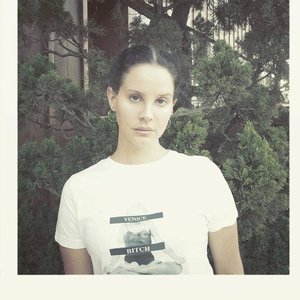


I have had a mixed relationship with the music of Lana Del Rey since her sensational debut album, Born To Die in 2010. I loved that album, and played it a lot! I still do. But always felt like it wasn’t really for me, yet I couldn’t help replaying it and humming the tunes. I also loved the lyrics, with their scathing satire of American life and values, and their downbeat vibe, always on the point of mania or depression, but never crying out for help, merely saying “look, this is our world, fuck it!” The trouble was, for the next 4 albums, despite one or two standout songs, the message and tone got mired in monotony and lack of memorable melodies – although the lyrics were still there.
I had all but given up hope of her becoming an artist of real worth by the end of the decade. It was a case of “remember when Lana Del Rey was the next big thing?” So, I was not expecting her sixth album to be not only very very good again, but potentially her best work to date, even surpassing Born To Die! You could hear it on the first listen – which for me took till December last year, despite its late August release. The reviews had been great, the award nominations rolled in and my attention was caught by this artist once again.
It took only a handful of listens before I had decided this was a great album! And now I am playing it a couple of times a week, continuing to get more out of the lyrics every time. It also plays really well as quiet background music, or loud, as a melancholy rock-out – a trick that isn’t easy to achieve. Her knowing nod to pop culture references, and the divine mixture of 50s Americana, folk and blues, can be a wonderful thing when it works. With six singles already released, there is proof this album has a more solid backbone tune-wise than the previous four efforts.
The task now is making her brand popular again in the singles market, as not one of the six released made it into the top 40, either stateside or in UK. However, the album was #3 in America and #1 in the UK, which gives me more hope that what we are seeing is the maturing of a genuine music artist, and not just an act, existing for sales. There are many, especially solo female artists, that could follow that example; worry more about making good music and less about “the product” and great things can happen.
For me, I love tracks 1-5 played in that order: they are all great tunes, and Venice Bitch at a playing time of 9:38 is an epic pop opus that makes me want to stand up and applaud! The final track, Hope is a Dangerous Thing for a Woman Like Me to Have, But I Have It, is also highly praiseworthy, summing up the message of the whole work beautifully. And it is a fine, honest, feminist, strong yet always vulnerable message. California is a long way away from my world, but I feel I know what she is talking about, somehow.
Look out also for some mesmeric retro home-movie videos on YouTube that segue some of the songs into a dreamy montage. Big fan!
I had all but given up hope of her becoming an artist of real worth by the end of the decade. It was a case of “remember when Lana Del Rey was the next big thing?” So, I was not expecting her sixth album to be not only very very good again, but potentially her best work to date, even surpassing Born To Die! You could hear it on the first listen – which for me took till December last year, despite its late August release. The reviews had been great, the award nominations rolled in and my attention was caught by this artist once again.
It took only a handful of listens before I had decided this was a great album! And now I am playing it a couple of times a week, continuing to get more out of the lyrics every time. It also plays really well as quiet background music, or loud, as a melancholy rock-out – a trick that isn’t easy to achieve. Her knowing nod to pop culture references, and the divine mixture of 50s Americana, folk and blues, can be a wonderful thing when it works. With six singles already released, there is proof this album has a more solid backbone tune-wise than the previous four efforts.
The task now is making her brand popular again in the singles market, as not one of the six released made it into the top 40, either stateside or in UK. However, the album was #3 in America and #1 in the UK, which gives me more hope that what we are seeing is the maturing of a genuine music artist, and not just an act, existing for sales. There are many, especially solo female artists, that could follow that example; worry more about making good music and less about “the product” and great things can happen.
For me, I love tracks 1-5 played in that order: they are all great tunes, and Venice Bitch at a playing time of 9:38 is an epic pop opus that makes me want to stand up and applaud! The final track, Hope is a Dangerous Thing for a Woman Like Me to Have, But I Have It, is also highly praiseworthy, summing up the message of the whole work beautifully. And it is a fine, honest, feminist, strong yet always vulnerable message. California is a long way away from my world, but I feel I know what she is talking about, somehow.
Look out also for some mesmeric retro home-movie videos on YouTube that segue some of the songs into a dreamy montage. Big fan!
Ali A (82 KP) rated Deathless Divide in Books
Mar 3, 2020

Epic Feminist Western with Zombies
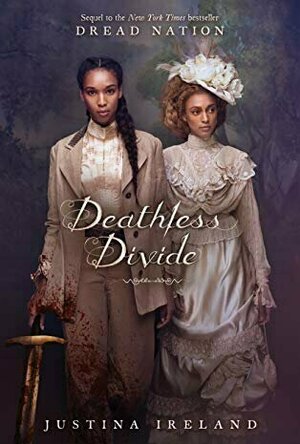
After the fall of Kansas survivalist town Summerland, Jane McKeene, Katherine Deveraux, and their group set off to what they hope is a better opportunity at life. But of course, life is never easy, especially while surviving in 1880's America with the restless dead. On the road to a protected village called Nicodermus, the group suffers a loss. Then, what appears at first to be a safe haven, Nicodermus becomes filled with lies and mystery.
The group becomes separated and Jane soon finds herself on a path filled with darkness and blood while Katherine does everything she can to continue on. Katherine never expected to be friends with Jane McKeene, but after everything she's been through, she knows friends are hard to come by; her best friend, Jane, needs her now more than ever. When the duo reach a critical point, Katherine is the one who must keep hope alive so they can survive.
I enjoyed this book so much. My heart broke for Jane and all the hardship she had to go through, but I loved the badass fighter she became. The story arc she has through this novel kept me intrigued to see it to the end. Katherine however, really stole the show for me. Just having her be there as an ace character doing her thing and surviving - all while wearing a corset - is amazing. Also her love for stubborn and sometimes unflinching Jane is heartwarming; she's loyal to Jane no matter what, even when Jane tries to push her away. I respected Jane but I admired Katherine. Both girls are such badass characters for me and I love them both so much.
I'll try not to mention anything major about the story line, but it's pretty good to say the book splits between "Nicodermus" and "After Nicodermus." "After Nicodermus" leads in directions I would have never guessed and it had me turning page after page. It's intense. New, interesting characters are also introduced, many of whom were just as interesting as Jane and Katherine (I would have loved to see more of Carolina and Katherine's friendship).
Even with the back and forth between each chapter of Jane and Katherine's POVs in Deathless Divide, it has, just like Dread Nation, such an incredible, strong narrative. The way that Justina Ireland writes blows me away. Both characters give the reader so much to connect and hold onto.
I absolutely loved the ending of this book as well. I was so concerned in the last 75 pages or so that it wouldn't end well - not because I didn't want another one (at this point, I will read anything Justina Ireland writes I just love her writing so much), but because I was worried I was going to have to wait another two years before I found out after being left with a cliff hanger. Ireland was able to write the end perfectly that I was happy with the wrap-up of Jane's story.
Deathless Divide is a book I will now always recommend (of course after one reads Dread Nation). It has strong, independent, black, female, queer characters. It addresses issues of racism, sexism, mental health, and the meaning of surviving. The story is an easy and fast-paced read with characters that, as a reader, one can fall in love with.
The group becomes separated and Jane soon finds herself on a path filled with darkness and blood while Katherine does everything she can to continue on. Katherine never expected to be friends with Jane McKeene, but after everything she's been through, she knows friends are hard to come by; her best friend, Jane, needs her now more than ever. When the duo reach a critical point, Katherine is the one who must keep hope alive so they can survive.
I enjoyed this book so much. My heart broke for Jane and all the hardship she had to go through, but I loved the badass fighter she became. The story arc she has through this novel kept me intrigued to see it to the end. Katherine however, really stole the show for me. Just having her be there as an ace character doing her thing and surviving - all while wearing a corset - is amazing. Also her love for stubborn and sometimes unflinching Jane is heartwarming; she's loyal to Jane no matter what, even when Jane tries to push her away. I respected Jane but I admired Katherine. Both girls are such badass characters for me and I love them both so much.
I'll try not to mention anything major about the story line, but it's pretty good to say the book splits between "Nicodermus" and "After Nicodermus." "After Nicodermus" leads in directions I would have never guessed and it had me turning page after page. It's intense. New, interesting characters are also introduced, many of whom were just as interesting as Jane and Katherine (I would have loved to see more of Carolina and Katherine's friendship).
Even with the back and forth between each chapter of Jane and Katherine's POVs in Deathless Divide, it has, just like Dread Nation, such an incredible, strong narrative. The way that Justina Ireland writes blows me away. Both characters give the reader so much to connect and hold onto.
I absolutely loved the ending of this book as well. I was so concerned in the last 75 pages or so that it wouldn't end well - not because I didn't want another one (at this point, I will read anything Justina Ireland writes I just love her writing so much), but because I was worried I was going to have to wait another two years before I found out after being left with a cliff hanger. Ireland was able to write the end perfectly that I was happy with the wrap-up of Jane's story.
Deathless Divide is a book I will now always recommend (of course after one reads Dread Nation). It has strong, independent, black, female, queer characters. It addresses issues of racism, sexism, mental health, and the meaning of surviving. The story is an easy and fast-paced read with characters that, as a reader, one can fall in love with.
Shock Treatment
Book
-If you haven't read this book yet--buy it, take it home, and read it now! This is the work that...

Kristy H (1252 KP) rated Trouble Girls in Books
Jun 3, 2021
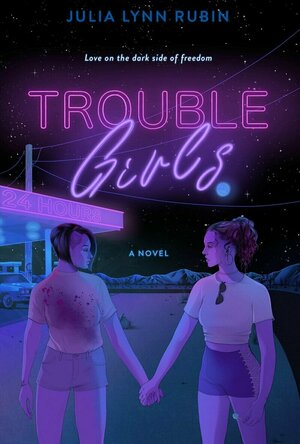

A queer Thelma & Louise that doesn't live up to its potential
High school best friends Trixie and Lux are headed for a much-needed weekend getaway. Trixie needs to forget about her depressing waitress job, where all the men are "hogs" and her sick mom, and Lux needs to escape her overbearing dad. But a horrific night of violence changes everything and Trixie and Lux find themselves fugitives, running away from their tiny West Virginia town and everything they've ever known. Before they know it, they are wanted by the police, their faces splashed across social media. The girls are scared and horrified--on an unplanned road trip where the only thing they can count on is each other.
The premise of this book sounded amazing -- a queer "Thelma & Louise." Unfortunately, it all fell apart for me. Rather than being a #MeToo rallying cry, this was a depressing and stressful read, featuring two teens who make a bunch of stupid and ill-fated decisions.
I definitely understand the overall idea for TROUBLE GIRLS and even why Trixie and Lux run, afraid that no one will believe their story. But the choices they make along the way--spending their money on junk, not trusting each other, stealing and lying... and everything else. It's maddening. They do not act like two smart girls on the run, but two idiots who do not believe in one another. Trixie's infatuation with Lux clouds everything, and Lux comes across as this adored princess with no real personality of her own.
We're (eventually) told a bit of Trixie's backstory, including why we have to read the word "hog" in what feels like every other darn sentence, but the character development here is severely lacking. Trixie has a sick mom and a dark secret. Lux... likes makeup and her camera? I think this story would have would worked so much more if we knew how and why these two teens ticked. Why, exactly, was Trixie so in love with Lux? How exactly did Lux feel back? There's a weird switch that turns at some point in the book, and it made no sense to me. If you're going to give me a queer story, give me queer characters who truly feel for one another and whose love is based in reality.
Trixie and Lux's story is supposed to have a #MeToo angle to it, and it does, in some ways, but this was not a #MeToo anthem to me. It's two girls running away, trying to figure out maps on the back roads, and making poor decisions as they flee what they've done. While, again, I understand why they run, the story I wanted to read was Trixie and Lux returning to Blue Bottle and fighting along side the Intersectional Feminist Union and the other women they supposedly "rally" with a few misplaced social media posts. It was these women and Judy, Trixie's co-worker back home, whose life I wanted to know about--I would have enjoyed that book much more!
Overall, this book can tug at your heart strings, but also frustrate you to no end. There was much to its overall premise, but most of it did not work for me. 2.5 stars (Trigger warning: sexual assault, rape)
The premise of this book sounded amazing -- a queer "Thelma & Louise." Unfortunately, it all fell apart for me. Rather than being a #MeToo rallying cry, this was a depressing and stressful read, featuring two teens who make a bunch of stupid and ill-fated decisions.
I definitely understand the overall idea for TROUBLE GIRLS and even why Trixie and Lux run, afraid that no one will believe their story. But the choices they make along the way--spending their money on junk, not trusting each other, stealing and lying... and everything else. It's maddening. They do not act like two smart girls on the run, but two idiots who do not believe in one another. Trixie's infatuation with Lux clouds everything, and Lux comes across as this adored princess with no real personality of her own.
We're (eventually) told a bit of Trixie's backstory, including why we have to read the word "hog" in what feels like every other darn sentence, but the character development here is severely lacking. Trixie has a sick mom and a dark secret. Lux... likes makeup and her camera? I think this story would have would worked so much more if we knew how and why these two teens ticked. Why, exactly, was Trixie so in love with Lux? How exactly did Lux feel back? There's a weird switch that turns at some point in the book, and it made no sense to me. If you're going to give me a queer story, give me queer characters who truly feel for one another and whose love is based in reality.
Trixie and Lux's story is supposed to have a #MeToo angle to it, and it does, in some ways, but this was not a #MeToo anthem to me. It's two girls running away, trying to figure out maps on the back roads, and making poor decisions as they flee what they've done. While, again, I understand why they run, the story I wanted to read was Trixie and Lux returning to Blue Bottle and fighting along side the Intersectional Feminist Union and the other women they supposedly "rally" with a few misplaced social media posts. It was these women and Judy, Trixie's co-worker back home, whose life I wanted to know about--I would have enjoyed that book much more!
Overall, this book can tug at your heart strings, but also frustrate you to no end. There was much to its overall premise, but most of it did not work for me. 2.5 stars (Trigger warning: sexual assault, rape)

Bob Mann (459 KP) rated Battle of the Sexes (2016) in Movies
Sep 29, 2021
Tennis and sex, but without the grunting.
Here’s a good test of someone’s age…. ask the question “Billie-Jean?”. Millennials will probably come back with “Huh?”; those in their 30’s or 40’s might come back with “Michael Jackson!”; those older than that will probably reply “King!”.
“Battle of the Sexes” (which I just managed to catch before it left cinemas) tells the true-life story of US tennis star Billie-Jean King (Emma Stone, “La La Land“). The year is 1973 and Billie-Jean is riding high as the Number 1 female tennis player. She is a feminist; she is married (to hunk Larry – no not that one – King played by Austin Stowell (“Whiplash“, “Bridge of Spies“)); …. and she is also attracted to women, not something she has yet acted on. That all changes when her path crosses with LA-hairdresser Marilyn (Andrea Riseborough, “Birdman“, “Oblivion”).
But this is a side story: the main event is a bet made by aging ex-star Bobby Riggs (Steve Carell, “Foxcatcher“); that – even at his age – as a man he could beat the leading female tennis player of the day.
The film is gloriously retro, starting with the old-school 20th Century Fox production logo. And it contains breathtakingly sexist dialogue by writer Simon Beaufoy (“Everest“, “The Full Monty”). Surely men couldn’t have been so crass and outrageous in the 70’s? Sorry ladies, but the answer is yes, and the film is testament to how far women’s rights have come in 50 years.
This is a tour de force in acting from both Emma Stone and Steve Carell, particularly the latter: a scene where Carell tries to re-engage with his estranged wife (Elisabeth Shue, “Leaving Las Vegas”) is both nuanced and heart-breaking. Stone’s performance is also praiseworthy, although it feels slightly less so as it is an impersonation of a (relatively) well-known figure: this is extremely well-studied though, right down to her strutting walk around the court which I had both forgotten and was immediately again reminded of.
One of my favourite movie awards are the Screen Actor’s Guild (SAG) “cast” awards that celebrate ensemble performances, and here is a film that should have been nominated (it unfortunately wasn’t). Andrea Riseborough; Natalie Morales (as fellow tennis player Rosie Casals); comedian Sarah Silverman (“A Million Ways to Die in the West“), almost unrecognisable as the brash publicist Gladys Heldman; Bill Pullman as LTA head Jack Kramer; the great Alan Cumming (“The Good Wife”) as the team’s flamboyant, gay, costume designer; Lewis Pullman as Riggs’s son Larry; Jessica McNamee (magnetic eyes!) as King’s Australian tennis nemesis Margaret Court. All bounce off the leads, and each other, just beautifully.
Cinematography by Linus Sandgren (“La La Land“) and editing by Pamela Martin (“Little Miss Sunshine”) unite to deliver one of the most sexually charged haircuts you are ever likely to see on the screen. For those put off by this aspect of the storyline, the “girl-on-girl action” is pretty tastefully done and not overly graphic: it’s mostly “first-base” stuff rather than “third-base”!
“What a waste of a lovely night”. Marilyn (Andrea Riseborough) and Billie-Jean (Emma Stone) get serious.
Directed with panache by the co-directors of the 2006 smash “Little Miss Sunshine” – Jonathan Dayton and Valerie Faris – all in all it’s a delight, especially for older audiences who will get a blast of nostalgia from days when sports were still played at a slightly more leisurely pace… and definitely without the grunting.
“Battle of the Sexes” (which I just managed to catch before it left cinemas) tells the true-life story of US tennis star Billie-Jean King (Emma Stone, “La La Land“). The year is 1973 and Billie-Jean is riding high as the Number 1 female tennis player. She is a feminist; she is married (to hunk Larry – no not that one – King played by Austin Stowell (“Whiplash“, “Bridge of Spies“)); …. and she is also attracted to women, not something she has yet acted on. That all changes when her path crosses with LA-hairdresser Marilyn (Andrea Riseborough, “Birdman“, “Oblivion”).
But this is a side story: the main event is a bet made by aging ex-star Bobby Riggs (Steve Carell, “Foxcatcher“); that – even at his age – as a man he could beat the leading female tennis player of the day.
The film is gloriously retro, starting with the old-school 20th Century Fox production logo. And it contains breathtakingly sexist dialogue by writer Simon Beaufoy (“Everest“, “The Full Monty”). Surely men couldn’t have been so crass and outrageous in the 70’s? Sorry ladies, but the answer is yes, and the film is testament to how far women’s rights have come in 50 years.
This is a tour de force in acting from both Emma Stone and Steve Carell, particularly the latter: a scene where Carell tries to re-engage with his estranged wife (Elisabeth Shue, “Leaving Las Vegas”) is both nuanced and heart-breaking. Stone’s performance is also praiseworthy, although it feels slightly less so as it is an impersonation of a (relatively) well-known figure: this is extremely well-studied though, right down to her strutting walk around the court which I had both forgotten and was immediately again reminded of.
One of my favourite movie awards are the Screen Actor’s Guild (SAG) “cast” awards that celebrate ensemble performances, and here is a film that should have been nominated (it unfortunately wasn’t). Andrea Riseborough; Natalie Morales (as fellow tennis player Rosie Casals); comedian Sarah Silverman (“A Million Ways to Die in the West“), almost unrecognisable as the brash publicist Gladys Heldman; Bill Pullman as LTA head Jack Kramer; the great Alan Cumming (“The Good Wife”) as the team’s flamboyant, gay, costume designer; Lewis Pullman as Riggs’s son Larry; Jessica McNamee (magnetic eyes!) as King’s Australian tennis nemesis Margaret Court. All bounce off the leads, and each other, just beautifully.
Cinematography by Linus Sandgren (“La La Land“) and editing by Pamela Martin (“Little Miss Sunshine”) unite to deliver one of the most sexually charged haircuts you are ever likely to see on the screen. For those put off by this aspect of the storyline, the “girl-on-girl action” is pretty tastefully done and not overly graphic: it’s mostly “first-base” stuff rather than “third-base”!
“What a waste of a lovely night”. Marilyn (Andrea Riseborough) and Billie-Jean (Emma Stone) get serious.
Directed with panache by the co-directors of the 2006 smash “Little Miss Sunshine” – Jonathan Dayton and Valerie Faris – all in all it’s a delight, especially for older audiences who will get a blast of nostalgia from days when sports were still played at a slightly more leisurely pace… and definitely without the grunting.

Factually Accurate
I received this book for free through Goodreads First Reads.
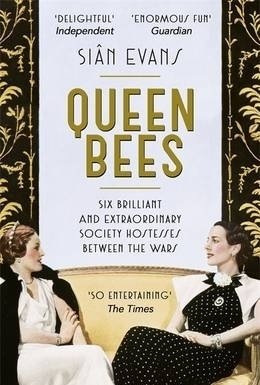
A spectacle of celebrity, talent and burning ambition, Queen Bees combines the biographical stories of six ambitious women who helped to shape the standards of British society between the two world wars. Londoner Siân Evans is a cultural historian who has previously worked with the Victoria and Albert Museum, National Trust and Design Museum, and takes great lengths to thoroughly research into her written subject in order to portray a highly accurate insight to the lives of historical figures. Due to the non-existent political status of women in the early 1900s, the women featured in this book are virtually unknown today, yet they had a great impact during the 20s and 30s and helped to shape the Britain of today.
Although not necessarily born into it, circumstances such as marriage meant these six women were regarded as upper class. In no particular order, the names impacting on the social revolution and thus featured in Queen Bees are as follows: Lady Nancy Astor, the first female MP; Lady Sybil Colefax, who became a friend of Edward VIII; Lady Emerald Cunard, also connected with the royal family; Mrs. Ronnie Greville, a rather formidable woman; Lady Edith Londonderry, the founder of the Women’s Legion; and Laura Corrigan, the youngest of the set. Evans talks the reader through these women’s careers as professional hostesses as they compete to throw the better party, entertaining famous writers and actors as well as members of royalty, both national and foreign.
What is perhaps the most interesting, and indeed the most worth learning, is the way a couple of these women altered the future of the British monarchy. Without their interference the future George VI would never have married Elizabeth Bowes-Lyon, and without their involvement in the relationship between Edward VIII and Wallis Simpson, George VI would never have come to the throne. This is such an important aspect of British history that has been widely left out and ignored. Without these hostesses influence we would all be experiencing a slightly different life.
In terms of the actual writing, Siân Evans manages fairly well to engage the reader as she relates the factual story in a more or less chronological way. A slight issue is the quick, often undetected, move from one woman to the next, resulting in a lot of confusion about who is who particularly at the beginning of the book. A lot of the narrative features other key figures from the same period and often moves away from the main characters, which, whilst interesting, is not what the reader necessarily expected from a book whose title Queen Bees suggested it was only going to be about the women’s lives.
Footnotes, quotes and extracts from letters and diaries help to make the book appear reliable, factual and believable. Some of the content, without back up, would have seemed rather fanciful or exaggerated. Queen Bees can be read as a source of entertainment or as a citation for historical research. What is found within these pages is a more unbiased account of the early twentieth century than would be found in numerous male dominated history textbooks.
Mature readers of all ages are likely to gain something from reading Queen Bees – pleasure, knowledge etc., however it is most likely to appeal to the contemporary feminist. With this in mind, be aware that the six hostesses were not feminists of their time; they were not involved in Suffragette movements and were fairly content to live off money earned by their husbands or fathers. Yet, on the other hand, they impacted on the future of Britain as much as the male politicians of the time. Highly political in content, Queen Bees is worth reading to discover our own history, but be prepared for initial confusion over who is who and rather lengthy paragraphs.
A spectacle of celebrity, talent and burning ambition, Queen Bees combines the biographical stories of six ambitious women who helped to shape the standards of British society between the two world wars. Londoner Siân Evans is a cultural historian who has previously worked with the Victoria and Albert Museum, National Trust and Design Museum, and takes great lengths to thoroughly research into her written subject in order to portray a highly accurate insight to the lives of historical figures. Due to the non-existent political status of women in the early 1900s, the women featured in this book are virtually unknown today, yet they had a great impact during the 20s and 30s and helped to shape the Britain of today.
Although not necessarily born into it, circumstances such as marriage meant these six women were regarded as upper class. In no particular order, the names impacting on the social revolution and thus featured in Queen Bees are as follows: Lady Nancy Astor, the first female MP; Lady Sybil Colefax, who became a friend of Edward VIII; Lady Emerald Cunard, also connected with the royal family; Mrs. Ronnie Greville, a rather formidable woman; Lady Edith Londonderry, the founder of the Women’s Legion; and Laura Corrigan, the youngest of the set. Evans talks the reader through these women’s careers as professional hostesses as they compete to throw the better party, entertaining famous writers and actors as well as members of royalty, both national and foreign.
What is perhaps the most interesting, and indeed the most worth learning, is the way a couple of these women altered the future of the British monarchy. Without their interference the future George VI would never have married Elizabeth Bowes-Lyon, and without their involvement in the relationship between Edward VIII and Wallis Simpson, George VI would never have come to the throne. This is such an important aspect of British history that has been widely left out and ignored. Without these hostesses influence we would all be experiencing a slightly different life.
In terms of the actual writing, Siân Evans manages fairly well to engage the reader as she relates the factual story in a more or less chronological way. A slight issue is the quick, often undetected, move from one woman to the next, resulting in a lot of confusion about who is who particularly at the beginning of the book. A lot of the narrative features other key figures from the same period and often moves away from the main characters, which, whilst interesting, is not what the reader necessarily expected from a book whose title Queen Bees suggested it was only going to be about the women’s lives.
Footnotes, quotes and extracts from letters and diaries help to make the book appear reliable, factual and believable. Some of the content, without back up, would have seemed rather fanciful or exaggerated. Queen Bees can be read as a source of entertainment or as a citation for historical research. What is found within these pages is a more unbiased account of the early twentieth century than would be found in numerous male dominated history textbooks.
Mature readers of all ages are likely to gain something from reading Queen Bees – pleasure, knowledge etc., however it is most likely to appeal to the contemporary feminist. With this in mind, be aware that the six hostesses were not feminists of their time; they were not involved in Suffragette movements and were fairly content to live off money earned by their husbands or fathers. Yet, on the other hand, they impacted on the future of Britain as much as the male politicians of the time. Highly political in content, Queen Bees is worth reading to discover our own history, but be prepared for initial confusion over who is who and rather lengthy paragraphs.
Kristy H (1252 KP) rated The Arrangement in Books
Feb 13, 2018
Lucy and Owen fled Brooklyn for the suburbs not long after their son, Wyatt, came along. In the perfect little town of Beekman, they have a beautiful old house, a yard full of chickens, and interact with a cast full of eclectic characters. Lucy also has her hands full with Wyatt, a challenging kid with autism. One evening, when some friends come over and the drinks flow freely, they mention their open marriage. At first, Lucy and Own are a bit shocked. But as the exhausted duo look around at their life, they begin to consider "the arrangement." Owen grabs a pad and a pen and they eke out some rules. It still seems like a joke, until Lucy says she wants to give the arrangement--a six-month experience where they each have an ongoing, no questions asked free pass in their marriage--a go. Surely nothing will go wrong, right?
This novel is a different, oddly intriguing read, offering an extremely realistic portrayal of marriage and raising children. Warm and fuzzy it is not, yet it's still engaging and features relatable characters. Lucy and Owen's exhaustion is palatable, as is Lucy's frustration and love for Wyatt, who is an intelligent, fun, and extremely challenging special needs kid. (You will grow to love him, even as you completely empathize with why poor Lucy might need a break--one of the definite strengths of the book.) For a good early portion of the novel, I found myself thinking I would be reading a quite grim look at parenthood and marriage. And it is, in many ways. After all, why are Lucy and Owen so willing to embark on the arrangement, you wonder? Are they bored with their life, with each other? Are they simply tired parents? What causes them to choose this? As the arrangement begins, their reactions to its ongoing presence in their lives is surprising, and Dunn does a good job at capturing some nuance in their character that you might not expect. These are real married people, with real issues.
Still, there are definitely some odd bits and pieces stuck into the story. It seems disjointed at times, and some of the characters and their stories seem to pop up at weird times, forcing you to remind yourself how they fit into Lucy and Owen's life and the town of Beekman (for we don't hear just from our main couple, but several others who live in town). The novel meanders at times, and I wouldn't call the ending closure, per se, though it falls in line with the realism of the novel.
Where Dunn shines is her humor, which slips through even some of the darker moments. Moments with Wyatt are perfectly captured. Lucy's friend, Sunny Bang, is one of the best things about this book, and you'll love every second featuring her. There's a scene at the town church with many of the local kids (and their pets) that is solely worth purchasing the entire book. Seriously, Dunn writes with a sharp wit, and it's one of the main reasons my rating upped to 3.5 stars. The book is often smartly funny and feminist, even if it has its depressing, wandering moments. It's a fascinating look at marriage, for sure, and I was certainly intrigued to see how the arrangement would play out. It was also a welcome break from all the thrillers I'd been reading lately, so thanks! If you like sharp and witty characters coupled with a psychological inside look at modern-day marriage, you'll find this one quite compelling. 3.5 stars.
I received a copy of this novel from the publisher and Netgalley (thank you) in return for an unbiased review. It is available everywhere as of 03/21/2017.
<center><a href="http://justacatandabookatherside.blogspot.com/">Blog</a>; ~ <a href="https://twitter.com/mwcmoto">Twitter</a>; ~ <a href="https://www.facebook.com/justacatandabook/">Facebook</a>; ~ <a href="https://plus.google.com/u/0/+KristyHamiltonbooks">Google+</a></center>;
This novel is a different, oddly intriguing read, offering an extremely realistic portrayal of marriage and raising children. Warm and fuzzy it is not, yet it's still engaging and features relatable characters. Lucy and Owen's exhaustion is palatable, as is Lucy's frustration and love for Wyatt, who is an intelligent, fun, and extremely challenging special needs kid. (You will grow to love him, even as you completely empathize with why poor Lucy might need a break--one of the definite strengths of the book.) For a good early portion of the novel, I found myself thinking I would be reading a quite grim look at parenthood and marriage. And it is, in many ways. After all, why are Lucy and Owen so willing to embark on the arrangement, you wonder? Are they bored with their life, with each other? Are they simply tired parents? What causes them to choose this? As the arrangement begins, their reactions to its ongoing presence in their lives is surprising, and Dunn does a good job at capturing some nuance in their character that you might not expect. These are real married people, with real issues.
Still, there are definitely some odd bits and pieces stuck into the story. It seems disjointed at times, and some of the characters and their stories seem to pop up at weird times, forcing you to remind yourself how they fit into Lucy and Owen's life and the town of Beekman (for we don't hear just from our main couple, but several others who live in town). The novel meanders at times, and I wouldn't call the ending closure, per se, though it falls in line with the realism of the novel.
Where Dunn shines is her humor, which slips through even some of the darker moments. Moments with Wyatt are perfectly captured. Lucy's friend, Sunny Bang, is one of the best things about this book, and you'll love every second featuring her. There's a scene at the town church with many of the local kids (and their pets) that is solely worth purchasing the entire book. Seriously, Dunn writes with a sharp wit, and it's one of the main reasons my rating upped to 3.5 stars. The book is often smartly funny and feminist, even if it has its depressing, wandering moments. It's a fascinating look at marriage, for sure, and I was certainly intrigued to see how the arrangement would play out. It was also a welcome break from all the thrillers I'd been reading lately, so thanks! If you like sharp and witty characters coupled with a psychological inside look at modern-day marriage, you'll find this one quite compelling. 3.5 stars.
I received a copy of this novel from the publisher and Netgalley (thank you) in return for an unbiased review. It is available everywhere as of 03/21/2017.
<center><a href="http://justacatandabookatherside.blogspot.com/">Blog</a>; ~ <a href="https://twitter.com/mwcmoto">Twitter</a>; ~ <a href="https://www.facebook.com/justacatandabook/">Facebook</a>; ~ <a href="https://plus.google.com/u/0/+KristyHamiltonbooks">Google+</a></center>;

postapocalypticplayground (27 KP) rated Heart of Thorns (Heart of Thorns #1) in Books
Aug 13, 2018
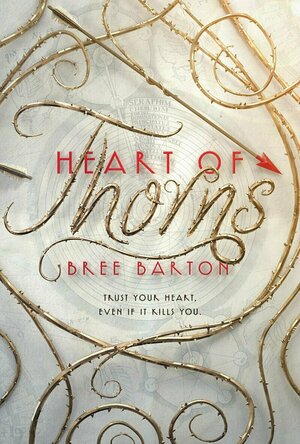
Firstly, I did enjoy Heart of Thorns, I found it an easy going read with lots going on and some twists I genuinely didn't see coming. Whilst Mia is the MC, I have to say that Quin does actually steal the show. As far as character development goes his transformation from formal and unemotional prince to what he becomes is a real joy to read with so many facets of his personality. I liked the way that the history of the world we find ourselves in is laid out conversationally rather than in one big chunk. The journey Mia and Quin find themselves on is long and for the most part without peril so it's the perfect way to fill the time. Given Quin's sheltered upbringing at the castle it's not so far fetched that given his fathers fears, he would know very little of the surrounding lands. Mia does struggle to get out her one dimension though, which I don't know if is by design to explain things later on or whether she simply needed a bit more breathing room and perhaps a different focus from time to time. Things really felt like she was too transfixed on righting the wrongs of the past to focus upon the present dangers.
The book also raises a lot about feminism, I have to say that it take a while to get to this point and to start I felt it was yet again another misrepresentation that Fighter = Feminist but thankfully all that changed. It makes much of the differences in society between men and women and how women need to fight to be anything but a pair of legs that needed to open. The origins of the magic within the story are really quite heartbreaking and born out of a necessity for self preservation which naturally becomes misrepresented and skewed over time to make magic a true evil which is feared by men. There is an element of the macabre in the King's fascination with the slaughter of those with magic and his trophy room will have your stomach clenching.
This book does misdirection well and it's all the more easier to achieve with a large supporting cast. I genuinely was left with a number of WTF moments as the story went on, I had to re-read a few pages just to confirm that the twist was as awesome as it was and this book has them in spades towards the end.
However, all this needs to be offset by some things that made it fall just short for me. It's clear that Mia has studied medicine, but her overly complex use of medical descriptions of bodily parts is unnecessary and makes for jarring reading "She dug her fingertips into the bridge of her nose. 'The sphenoid bone. It's like my whole cerebrum is on fire." Why not just say she had a headache? It's also mega tropey - I don't as a rule mind tropes in books, they exist for a reason but this book turned out so many including the ever present MC as a huntress with the sister who dreamed of marrying a nice prince, that I found my eyes rolling. There is also a lot of tick boxing going on in respect of LGBT diversity, there was a neon sign for one character as if the author was labouring the point - the disappointing thing is that this element did fit organically into the story in a really beautiful yet heartbreaking way at a later time which made me feel that the earlier depiction was somewhat unnecessary.
Whilst there are some failings, this is an enjoyable read with plenty of magic, mystery, and misdirection and if you are in the mood for an adventure you will hopefully enjoy Heart of Thorns
3*
The book also raises a lot about feminism, I have to say that it take a while to get to this point and to start I felt it was yet again another misrepresentation that Fighter = Feminist but thankfully all that changed. It makes much of the differences in society between men and women and how women need to fight to be anything but a pair of legs that needed to open. The origins of the magic within the story are really quite heartbreaking and born out of a necessity for self preservation which naturally becomes misrepresented and skewed over time to make magic a true evil which is feared by men. There is an element of the macabre in the King's fascination with the slaughter of those with magic and his trophy room will have your stomach clenching.
This book does misdirection well and it's all the more easier to achieve with a large supporting cast. I genuinely was left with a number of WTF moments as the story went on, I had to re-read a few pages just to confirm that the twist was as awesome as it was and this book has them in spades towards the end.
However, all this needs to be offset by some things that made it fall just short for me. It's clear that Mia has studied medicine, but her overly complex use of medical descriptions of bodily parts is unnecessary and makes for jarring reading "She dug her fingertips into the bridge of her nose. 'The sphenoid bone. It's like my whole cerebrum is on fire." Why not just say she had a headache? It's also mega tropey - I don't as a rule mind tropes in books, they exist for a reason but this book turned out so many including the ever present MC as a huntress with the sister who dreamed of marrying a nice prince, that I found my eyes rolling. There is also a lot of tick boxing going on in respect of LGBT diversity, there was a neon sign for one character as if the author was labouring the point - the disappointing thing is that this element did fit organically into the story in a really beautiful yet heartbreaking way at a later time which made me feel that the earlier depiction was somewhat unnecessary.
Whilst there are some failings, this is an enjoyable read with plenty of magic, mystery, and misdirection and if you are in the mood for an adventure you will hopefully enjoy Heart of Thorns
3*

Dianne Robbins (1738 KP) rated Lady Killers: Deadly Women Throughout History in Books
Sep 3, 2018


I received an uncorrected proof of a true-crime book about female serial killers by Tori Telfer called Lady Killers: Deadly Women Throughout History to peruse and review on Goodreads and Amazon. The book won’t released until October 10, 2017, by Harper Perennial, and I am so thrilled to be one of the few who get to read it first.
Some of the murderers/murderesses have been discussed on My Favorite Murder by Georgia and Karen but some are brand new to me.
From the back cover:
When you think of serial killers throughout history the names that come to mind are ones like Jack the Ripper, John Wayne Gacy and Ted Bundy but what about Tilly Klimek, Moulay Hassen and Kate Bender? The narrative we’re comfortable with is the one where women are the victims of violent crime, not the perpetrators, in fact, serial killers are thought to be so universally, overwhelmingly male that in 1998, FBI profiler Roy Hazelwood infamously declared in a homicide conference that, “There are no female serial killers.”
Lady Killers, based on the popular online series that appeared on Jezebel and The Hairpin, disputes that claim and offers 14 gruesome examples as evidence. Though largely forgotten by history, female serial killers such as Erzsebet Bathory, Nannie Doss, Mary Ann Cotton, and Darya Nikolayevna Saltykova rival their male counterparts and cunning, cruelty, and appetite for destruction.
Each chapter explores the crimes and history of a different subject and then proceeds to unpack her legacy and her portrayal in the media, as well as the stereotypes and sexist clichés that inevitably surround her. The first book to examine female serial killers through a feminist lens with a witty and dryly humorous tone lady killers dismisses explanations (she was hormonal, she did it for love, a man made her do it) and tired tropes (she was a femme fatale, a black widow, a witch) delving into the complex reality of a female aggression and predation. Featuring 14 illustrations from Dame Darcy, Lady Killers is a blood curdling, insightful, and irresistible journey into the heart of darkness.
Tori Telfer is a full-time freelance writer whose work has appeared in Salon, Vice, Jezebel, The Hairpin, Good Magazine, Bustle, barnesandnoble.com, Chicago Magazine, and elsewhere. She is a Pushcart nominee and the recipient of the Edwin L. Shuman Fiction Award. She has written, directed, and produced independent plays on both Chicago and Los Angeles.
The author’s official website is http://www.toridotgov.com.
The illustrator’s website is http://www.damedarcy.com
Table of Contents
The Blood Countess: Erzsebet Bathory
The Giggling Grandma: Nannie Doss
The Worst Woman on Earth: Lizzie Halliday
Devil in the Shape of a Saint: Elizabeth Ridgeway
Vipers: Raya and Sakina
The Wretched Woman: Mary Ann Cotton
The Tormentor: Darya Nikolayevna Saltykova
Iceberg Anna: Anna Marie Hahn
The Nightingale: Oum-El-Hassen
High Priestess of the Bluebeard Clique: Tillie Klimek
Sorceress of Kilkenny: Alice Kyteler
Beautiful Throat Cutter: Kate Bender
The Angel Makers of Nagyrev
Queen of Poisoners: Marie-Madeleine, the Marquis de Brinvilliers
It looked as if The Angel Makers of Nagyrev wasn’t included in the texts, though it is listed in the contents and notes. However, they are on the pages following the chapter and heading Beautiful Throat Cutter. I had mistakenly thought it wasn't included before. Hopefully, that oversight and will be corrected in the final copy. There were a few punctuation errors in the book and I had intended to leave them in the copy above but allowed Grammarly to correct them without thinking. But that's why they pay the editors the big bucks.
Needless to say, I can’t wait to delve deep in this book and read my little Murderino heart out. I am nearly through the book and will update with a review once I have completed it.
#SSDGM
#Stay Sexy Don't Get Murdered
#myfavoritemurder #murderino #toritelfer #harperperennial #harpercollins #damedarcy
#books #bookstagram #mfmpodcast #georgiahardstark #karenkilgariff #serialkiller #truecrime #murder #killers #ladykiller #ladykillers #serialkillers
Some of the murderers/murderesses have been discussed on My Favorite Murder by Georgia and Karen but some are brand new to me.
From the back cover:
When you think of serial killers throughout history the names that come to mind are ones like Jack the Ripper, John Wayne Gacy and Ted Bundy but what about Tilly Klimek, Moulay Hassen and Kate Bender? The narrative we’re comfortable with is the one where women are the victims of violent crime, not the perpetrators, in fact, serial killers are thought to be so universally, overwhelmingly male that in 1998, FBI profiler Roy Hazelwood infamously declared in a homicide conference that, “There are no female serial killers.”
Lady Killers, based on the popular online series that appeared on Jezebel and The Hairpin, disputes that claim and offers 14 gruesome examples as evidence. Though largely forgotten by history, female serial killers such as Erzsebet Bathory, Nannie Doss, Mary Ann Cotton, and Darya Nikolayevna Saltykova rival their male counterparts and cunning, cruelty, and appetite for destruction.
Each chapter explores the crimes and history of a different subject and then proceeds to unpack her legacy and her portrayal in the media, as well as the stereotypes and sexist clichés that inevitably surround her. The first book to examine female serial killers through a feminist lens with a witty and dryly humorous tone lady killers dismisses explanations (she was hormonal, she did it for love, a man made her do it) and tired tropes (she was a femme fatale, a black widow, a witch) delving into the complex reality of a female aggression and predation. Featuring 14 illustrations from Dame Darcy, Lady Killers is a blood curdling, insightful, and irresistible journey into the heart of darkness.
Tori Telfer is a full-time freelance writer whose work has appeared in Salon, Vice, Jezebel, The Hairpin, Good Magazine, Bustle, barnesandnoble.com, Chicago Magazine, and elsewhere. She is a Pushcart nominee and the recipient of the Edwin L. Shuman Fiction Award. She has written, directed, and produced independent plays on both Chicago and Los Angeles.
The author’s official website is http://www.toridotgov.com.
The illustrator’s website is http://www.damedarcy.com
Table of Contents
The Blood Countess: Erzsebet Bathory
The Giggling Grandma: Nannie Doss
The Worst Woman on Earth: Lizzie Halliday
Devil in the Shape of a Saint: Elizabeth Ridgeway
Vipers: Raya and Sakina
The Wretched Woman: Mary Ann Cotton
The Tormentor: Darya Nikolayevna Saltykova
Iceberg Anna: Anna Marie Hahn
The Nightingale: Oum-El-Hassen
High Priestess of the Bluebeard Clique: Tillie Klimek
Sorceress of Kilkenny: Alice Kyteler
Beautiful Throat Cutter: Kate Bender
The Angel Makers of Nagyrev
Queen of Poisoners: Marie-Madeleine, the Marquis de Brinvilliers
It looked as if The Angel Makers of Nagyrev wasn’t included in the texts, though it is listed in the contents and notes. However, they are on the pages following the chapter and heading Beautiful Throat Cutter. I had mistakenly thought it wasn't included before. Hopefully, that oversight and will be corrected in the final copy. There were a few punctuation errors in the book and I had intended to leave them in the copy above but allowed Grammarly to correct them without thinking. But that's why they pay the editors the big bucks.
Needless to say, I can’t wait to delve deep in this book and read my little Murderino heart out. I am nearly through the book and will update with a review once I have completed it.
#SSDGM
#Stay Sexy Don't Get Murdered
#myfavoritemurder #murderino #toritelfer #harperperennial #harpercollins #damedarcy
#books #bookstagram #mfmpodcast #georgiahardstark #karenkilgariff #serialkiller #truecrime #murder #killers #ladykiller #ladykillers #serialkillers
<i>I received this book for free through Goodreads First Reads.</i>
A spectacle of celebrity, talent and burning ambition, <i>Queen Bees</i> combines the biographical stories of six ambitious women who helped to shape the standards of British society between the two world wars. Londoner Siân Evans is a cultural historian who has previously worked with the <i>Victoria and Albert Museum, National Trust </i>and <i>Design Museum</i>, and takes great lengths to thoroughly research into her written subject in order to portray a highly accurate insight to the lives of historical figures. Due to the non-existent political status of women in the early 1900s, the women featured in this book are virtually unknown today, yet they had a great impact during the 20s and 30s and helped to shape the Britain of today.
Although not necessarily born into it, circumstances such as marriage meant these six women were regarded as upper class. In no particular order, the names impacting on the social revolution and thus featured in <i>Queen Bees</i> are as follows: Lady Nancy Astor, the first female MP; Lady Sybil Colefax, who became a friend of Edward VIII; Lady Emerald Cunard, also connected with the royal family; Mrs. Ronnie Greville, a rather formidable woman; Lady Edith Londonderry, the founder of the Women’s Legion; and Laura Corrigan, the youngest of the set. Evans talks the reader through these women’s careers as professional hostesses as they compete to throw the better party, entertaining famous writers and actors as well as members of royalty, both national and foreign.
What is perhaps the most interesting, and indeed the most worth learning, is the way a couple of these women altered the future of the British monarchy. Without their interference the future George VI would never have married Elizabeth Bowes-Lyon, and without their involvement in the relationship between Edward VIII and Wallis Simpson, George VI would never have come to the throne. This is such an important aspect of British history that has been widely left out and ignored. Without these hostesses influence we would all be experiencing a slightly different life.
In terms of the actual writing, Siân Evans manages fairly well to engage the reader as she relates the factual story in a more or less chronological way. A slight issue is the quick, often undetected, move from one woman to the next, resulting in a lot of confusion about who is who particularly at the beginning of the book. A lot of the narrative features other key figures from the same period and often moves away from the main characters, which, whilst interesting, is not what the reader necessarily expected from a book whose title <i>Queen Bees</i> suggested it was only going to be about the women’s lives.
Footnotes, quotes and extracts from letters and diaries help to make the book appear reliable, factual and believable. Some of the content, without back up, would have seemed rather fanciful or exaggerated. <i>Queen Bees</i> can be read as a source of entertainment or as a citation for historical research. What is found within these pages is a more unbiased account of the early twentieth century than would be found in numerous male dominated history textbooks.
Mature readers of all ages are likely to gain something from reading <i>Queen Bees</i> – pleasure, knowledge etc., however it is most likely to appeal to the contemporary feminist. With this in mind, be aware that the six hostesses were not feminists of their time; they were not involved in Suffragette movements and were fairly content to live off money earned by their husbands or fathers. Yet, on the other hand, they impacted on the future of Britain as much as the male politicians of the time. Highly political in content, <i>Queen Bees </i>is worth reading to discover our own history, but be prepared for initial confusion over who is who and rather lengthy paragraphs.
A spectacle of celebrity, talent and burning ambition, <i>Queen Bees</i> combines the biographical stories of six ambitious women who helped to shape the standards of British society between the two world wars. Londoner Siân Evans is a cultural historian who has previously worked with the <i>Victoria and Albert Museum, National Trust </i>and <i>Design Museum</i>, and takes great lengths to thoroughly research into her written subject in order to portray a highly accurate insight to the lives of historical figures. Due to the non-existent political status of women in the early 1900s, the women featured in this book are virtually unknown today, yet they had a great impact during the 20s and 30s and helped to shape the Britain of today.
Although not necessarily born into it, circumstances such as marriage meant these six women were regarded as upper class. In no particular order, the names impacting on the social revolution and thus featured in <i>Queen Bees</i> are as follows: Lady Nancy Astor, the first female MP; Lady Sybil Colefax, who became a friend of Edward VIII; Lady Emerald Cunard, also connected with the royal family; Mrs. Ronnie Greville, a rather formidable woman; Lady Edith Londonderry, the founder of the Women’s Legion; and Laura Corrigan, the youngest of the set. Evans talks the reader through these women’s careers as professional hostesses as they compete to throw the better party, entertaining famous writers and actors as well as members of royalty, both national and foreign.
What is perhaps the most interesting, and indeed the most worth learning, is the way a couple of these women altered the future of the British monarchy. Without their interference the future George VI would never have married Elizabeth Bowes-Lyon, and without their involvement in the relationship between Edward VIII and Wallis Simpson, George VI would never have come to the throne. This is such an important aspect of British history that has been widely left out and ignored. Without these hostesses influence we would all be experiencing a slightly different life.
In terms of the actual writing, Siân Evans manages fairly well to engage the reader as she relates the factual story in a more or less chronological way. A slight issue is the quick, often undetected, move from one woman to the next, resulting in a lot of confusion about who is who particularly at the beginning of the book. A lot of the narrative features other key figures from the same period and often moves away from the main characters, which, whilst interesting, is not what the reader necessarily expected from a book whose title <i>Queen Bees</i> suggested it was only going to be about the women’s lives.
Footnotes, quotes and extracts from letters and diaries help to make the book appear reliable, factual and believable. Some of the content, without back up, would have seemed rather fanciful or exaggerated. <i>Queen Bees</i> can be read as a source of entertainment or as a citation for historical research. What is found within these pages is a more unbiased account of the early twentieth century than would be found in numerous male dominated history textbooks.
Mature readers of all ages are likely to gain something from reading <i>Queen Bees</i> – pleasure, knowledge etc., however it is most likely to appeal to the contemporary feminist. With this in mind, be aware that the six hostesses were not feminists of their time; they were not involved in Suffragette movements and were fairly content to live off money earned by their husbands or fathers. Yet, on the other hand, they impacted on the future of Britain as much as the male politicians of the time. Highly political in content, <i>Queen Bees </i>is worth reading to discover our own history, but be prepared for initial confusion over who is who and rather lengthy paragraphs.