
Search
Search results


The first half of The Serpent and the Moon mainly deals with Francois I's reign as king and has little to do with the love triangle. Frankly, the whole book itself hasn't much to do with the love triangle or "one of the great love stories of all time," but more to do with the political intrigue of Henri I and his father's reigns. Oh, and lest I forget, Henri, Diane, and both of their symbols, monograms, etc. I honestly don't know what the whole fascination of that was all about, but it showed up everywhere.
On page 187 the princess tells us that it is a man's way of thinking that Diane wouldn't have become Henri's mistress if he hadn't become dauphin. I disagree, it is a realist's view, and frankly, I think it's fully possible that was how it started. Yes, maybe she was flattered by his attention too, but to consider having him as a lover in light of how much she was in his life growing up, it's a bit creepy. Oedipus comes to mind. I believe he was infatuated with her from a young age and it most likely progressed into love, for both of them. I envision her grabbing the chance at being the mistress of a king and being older, she knew how to mould and persuade him. Whether or not it was a true love story, I really don't know; I'm not sure anyone does and I don't care all that much.
As many other reviewers have stated, there is an obvious bias. The readers are warned in the introduction, but even if you know that, there's still the possibility that the work as a whole might be neutral. Unfortunately, that's not the case. Maybe if it had only been a slight bias, I wouldn't have cared so much, but when an author heaps praise on one person and how they accomplish everything, and then turn around and bash someone else for the exact same thing. Well, that's just hypocrisy.
From the book, the author would have you believe that Diane de Poitiers got to where she was merely by being a good, honest, gracious, and pious woman and Catherine de' Medici did it by being a cold, heartless, evil, spiteful person. I'm sorry but you cannot have climbed to the heights Diane did, especially in those times, without being conniving in one way or the other. I'm sure she did the same things Catherine did, so quit holding Diane up on a pedestal; she's really not a goddess, just a woman. Diane is a white light, Catherine is black as death and there isn't any grey between them for most of the book. By the end of the book I really took the "history" lightly, mainly that of these two women, more than anything else; it was just an unfair assessment. And with the author's snarky and catty remarks directed towards Catherine, saying she has a "fat little heart," well, that was just uncalled for. Then at the end, her words were so disgusting about Catherine's behavior towards Diane, saying how petty she was and she did things purely due to "feminine spite". Catherine could have done much worse to her but she didn't! Of course, Ms. Perfect D. was always so respectful and exemplary of Catherine. Give me a break. Maybe some of the things said in the book were true about both women, but then again, maybe not. Most is lost to history.
If Princess Michael of Kent's plan was for me to sympathize and idolize Diane de Poitiers, as she does, it backfired. Now I don't ever care to ever hear about her again, and I love history of all kinds. On the other hand, I have already ordered two books about Catherine de' Medici from the library. Most likely the opposite of what she wanted. I honestly don't blame Catherine if she was bitter, who wouldn't be in that situation? Even if it was a different time, circumstance, and an arranged marriage? I refuse to believe Diane was this perfect being, a goddess, virtuous as can be, a victim - nobody is all these things and I don't know why the author cannot see any imperfections and insists on romanticizing her.
Even though I hated how biased this book was, I still appreciate the amount of research this must have taken, it was fairly well-written in form, and there was loads of information. I'd only recommend this to Catherine haters, loathers, or serious dislikers. With the princess's flair for the dramatic and speculation on feelings and actions, she might want to focus on writing works of fiction instead. I have no desire to read anything by this author again.
On page 187 the princess tells us that it is a man's way of thinking that Diane wouldn't have become Henri's mistress if he hadn't become dauphin. I disagree, it is a realist's view, and frankly, I think it's fully possible that was how it started. Yes, maybe she was flattered by his attention too, but to consider having him as a lover in light of how much she was in his life growing up, it's a bit creepy. Oedipus comes to mind. I believe he was infatuated with her from a young age and it most likely progressed into love, for both of them. I envision her grabbing the chance at being the mistress of a king and being older, she knew how to mould and persuade him. Whether or not it was a true love story, I really don't know; I'm not sure anyone does and I don't care all that much.
As many other reviewers have stated, there is an obvious bias. The readers are warned in the introduction, but even if you know that, there's still the possibility that the work as a whole might be neutral. Unfortunately, that's not the case. Maybe if it had only been a slight bias, I wouldn't have cared so much, but when an author heaps praise on one person and how they accomplish everything, and then turn around and bash someone else for the exact same thing. Well, that's just hypocrisy.
From the book, the author would have you believe that Diane de Poitiers got to where she was merely by being a good, honest, gracious, and pious woman and Catherine de' Medici did it by being a cold, heartless, evil, spiteful person. I'm sorry but you cannot have climbed to the heights Diane did, especially in those times, without being conniving in one way or the other. I'm sure she did the same things Catherine did, so quit holding Diane up on a pedestal; she's really not a goddess, just a woman. Diane is a white light, Catherine is black as death and there isn't any grey between them for most of the book. By the end of the book I really took the "history" lightly, mainly that of these two women, more than anything else; it was just an unfair assessment. And with the author's snarky and catty remarks directed towards Catherine, saying she has a "fat little heart," well, that was just uncalled for. Then at the end, her words were so disgusting about Catherine's behavior towards Diane, saying how petty she was and she did things purely due to "feminine spite". Catherine could have done much worse to her but she didn't! Of course, Ms. Perfect D. was always so respectful and exemplary of Catherine. Give me a break. Maybe some of the things said in the book were true about both women, but then again, maybe not. Most is lost to history.
If Princess Michael of Kent's plan was for me to sympathize and idolize Diane de Poitiers, as she does, it backfired. Now I don't ever care to ever hear about her again, and I love history of all kinds. On the other hand, I have already ordered two books about Catherine de' Medici from the library. Most likely the opposite of what she wanted. I honestly don't blame Catherine if she was bitter, who wouldn't be in that situation? Even if it was a different time, circumstance, and an arranged marriage? I refuse to believe Diane was this perfect being, a goddess, virtuous as can be, a victim - nobody is all these things and I don't know why the author cannot see any imperfections and insists on romanticizing her.
Even though I hated how biased this book was, I still appreciate the amount of research this must have taken, it was fairly well-written in form, and there was loads of information. I'd only recommend this to Catherine haters, loathers, or serious dislikers. With the princess's flair for the dramatic and speculation on feelings and actions, she might want to focus on writing works of fiction instead. I have no desire to read anything by this author again.
CI
CCNA ICND2 640-816 Official Cert Guide
Book
New Edition of Best Selling Official Cert Guide: Updated Content, New Exercises, and Expanded...

Amanda (96 KP) rated Five Feet Apart in Books
Jul 7, 2019

I FINALLY finished this book and it took forever to do so. I remember starting this book a while back and I just had a difficult time getting through this story. I couldn't pin point as to why it was difficult to finish, and to this day, I really still can't.
This book had/has so much hype and more so when the movie was released. I almost skipped the book and watched the movie because of who was playing the Will character, but I decided against it and went for the book first.
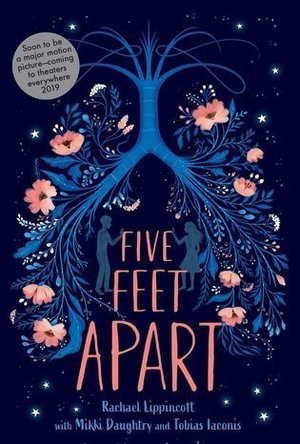
First and foremost, the cover is absolutely gorgeous! I wanted to get the book with the original cover and I sometimes just stare at it. I understand why there is a re-release of the book with the movie poster on the covers, but to me, it takes away from the author and the publisher. I try my best NOT to buy the books with the movie posters.
So we have two teenagers, Stella and Will, whom both have Cystic Fibrosis. In a nutshell, this disease affects the lungs and digestive system. The lungs fill rapidly with mucus and makes it difficult to breathe. The highly big part, and the main story of this novel, is that two people with the SAME disease have to stay a minimum of six feet apart. That is because one of them could get worse, or die, just from the others contamination.
Stella is optimistic and uploads YouTube videos and tries to keep her parents notified and tries to not think about her older sister being gone.
Will has not so much as given up, but more like kind of goes with the flow of his condition. So much so that he lets his friends use his hospital room as a 'hook up' area. Such a nice guy, don't you think?
Anyway, so these two don't really like each other at first but feelings are developed over bonding of memories and Stella getting Will to get back to doing his treatments on a regular basis. The story starts that they have to be six feet apart, but Stella pushes the boundary and keeps it at five feet apart - hence the title.
I hate to say this, but I had a hard time connecting with either one of these characters. The only one I really somewhat liked was Poe.
I can see the whole similarity with this book and The Fault in Our Stars, but I can't compare the two. Because, in TFIOS, they had cancer and didn't have to stay away from each other. And to me, those characters were easier to connect with than Will and Stella. I'm not saying I didn't like them, but I just couldn't connect.
Stella basically lives so her parents don't fall a part and Will is just kind of 'whatever' about the whole thing because he sees no future for himself, or a treatment that will help him.
I don't really see the hype in this story. It felt rushed to me as well. I'm not sure if it's because the story was kind of short for the plot. Maybe it's because we didn't get a lot of story. I'm not fond of how it was written. It was almost written like it was going to be a movie so it was scripted.
I'm not saying it was a bad story. It really wasn't. I just feel like there was something missing and I couldn't really feel much for these two characters. I couldn't fathom some of the decisions and through process that Stella has done.
All in all, not a terrible story, but I don't see what the hype was about and I don't think I'll be watching the movie.
This book had/has so much hype and more so when the movie was released. I almost skipped the book and watched the movie because of who was playing the Will character, but I decided against it and went for the book first.
First and foremost, the cover is absolutely gorgeous! I wanted to get the book with the original cover and I sometimes just stare at it. I understand why there is a re-release of the book with the movie poster on the covers, but to me, it takes away from the author and the publisher. I try my best NOT to buy the books with the movie posters.
So we have two teenagers, Stella and Will, whom both have Cystic Fibrosis. In a nutshell, this disease affects the lungs and digestive system. The lungs fill rapidly with mucus and makes it difficult to breathe. The highly big part, and the main story of this novel, is that two people with the SAME disease have to stay a minimum of six feet apart. That is because one of them could get worse, or die, just from the others contamination.
Stella is optimistic and uploads YouTube videos and tries to keep her parents notified and tries to not think about her older sister being gone.
Will has not so much as given up, but more like kind of goes with the flow of his condition. So much so that he lets his friends use his hospital room as a 'hook up' area. Such a nice guy, don't you think?
Anyway, so these two don't really like each other at first but feelings are developed over bonding of memories and Stella getting Will to get back to doing his treatments on a regular basis. The story starts that they have to be six feet apart, but Stella pushes the boundary and keeps it at five feet apart - hence the title.
I hate to say this, but I had a hard time connecting with either one of these characters. The only one I really somewhat liked was Poe.
I can see the whole similarity with this book and The Fault in Our Stars, but I can't compare the two. Because, in TFIOS, they had cancer and didn't have to stay away from each other. And to me, those characters were easier to connect with than Will and Stella. I'm not saying I didn't like them, but I just couldn't connect.
Stella basically lives so her parents don't fall a part and Will is just kind of 'whatever' about the whole thing because he sees no future for himself, or a treatment that will help him.
I don't really see the hype in this story. It felt rushed to me as well. I'm not sure if it's because the story was kind of short for the plot. Maybe it's because we didn't get a lot of story. I'm not fond of how it was written. It was almost written like it was going to be a movie so it was scripted.
I'm not saying it was a bad story. It really wasn't. I just feel like there was something missing and I couldn't really feel much for these two characters. I couldn't fathom some of the decisions and through process that Stella has done.
All in all, not a terrible story, but I don't see what the hype was about and I don't think I'll be watching the movie.

Haley Mathiot (9 KP) rated Lips Touch: Three Times in Books
Apr 27, 2018


Lips Touch: Three Times by Laini Taylor
Genre: Young Adult, paranormal/fantasy, romance
ISBN: 9780545055857
Published: October 1st 2009 by Arthur A. Levine Books
Rating: 5
Three stories. Three kisses, all with horrible—or wonderful?—consequences. Goblins hunt girls who long for what they don't have. The most beautiful voice can't be heard, even by a lover, or all who hear it will die. A young girl has been thrown into something she never chose, for a reason she doesn't know, with memories that aren't her own. Welcome to paranormal love.
These stories were fantastic. There were three things that stuck out about them:
1. None of them had happyland syndrome (description of Happyland Syndrome here: http://haleymathiot.blogspot.com/2010/06/unique-phrases-call-for-definitions.html) endings where everything wraps up perfectly. In fact only one of them ends at the end of the story: the others solve the main conflict and wrap up nicely. Taylor didn't have to write all the way to the end because I knew what was going to happen and was satisfied exploring the rest in my mind.
2. They pulled me into the story with the first sentence. There was no "I'm going to give this a try and maybe it'll be worth reading." No, it was enchanting and enticing from the first word, and it was because of the creativity in the prose and the language.
3. Great writing. Beautiful intricate descriptions that stuck with me and gave me the feelings Taylor wanted me to have—whether they be enticing and sensual, or terrifying and upsetting.
Here are my thoughts on the individual short stories:
Goblin Fruit
Really?… Wow… why was that so good even though it had a horrible ending?… and was it really that horrible? Yes, it really was. I had to double check and make sure that it really was the end! I'd been wondering for a while 'can an author write a good book with a good ending that isn't happy?' answer, Yes. Laini Taylor can.
Spicy Little Curses Such As These
This story was horrid and sweet at the same time. I had a thought of how the story would end, but the ending turned out to be much different. It wasn't perfect, but it was perfect enough to leave me smiling and feeling satisfied for the characters.
The Hatchling
I could not visualize how this story would have a happy ending, and it certainly wasn't perfect—there is one character whom I still fear for her sanity. But I was so amazed an the unwinding of the mysteries and secrets of the plot and was more pleased than I thought I would be with the conclusion.
For wonderful writing, creativity, and fantastic characters, I give this one five stars and two thumbs up—get it, first chance you can.
Content/recommendation: Ages 15+ for some language, little sensuality. No explicit violence or language, no sex.
This review is copyright Haley Mathiot and Night Owl Reviews 2010. Original Review: http://haleymathiot.blogspot.com/2010/10/review-lips-touch-three-times.html
Genre: Young Adult, paranormal/fantasy, romance
ISBN: 9780545055857
Published: October 1st 2009 by Arthur A. Levine Books
Rating: 5
Three stories. Three kisses, all with horrible—or wonderful?—consequences. Goblins hunt girls who long for what they don't have. The most beautiful voice can't be heard, even by a lover, or all who hear it will die. A young girl has been thrown into something she never chose, for a reason she doesn't know, with memories that aren't her own. Welcome to paranormal love.
These stories were fantastic. There were three things that stuck out about them:
1. None of them had happyland syndrome (description of Happyland Syndrome here: http://haleymathiot.blogspot.com/2010/06/unique-phrases-call-for-definitions.html) endings where everything wraps up perfectly. In fact only one of them ends at the end of the story: the others solve the main conflict and wrap up nicely. Taylor didn't have to write all the way to the end because I knew what was going to happen and was satisfied exploring the rest in my mind.
2. They pulled me into the story with the first sentence. There was no "I'm going to give this a try and maybe it'll be worth reading." No, it was enchanting and enticing from the first word, and it was because of the creativity in the prose and the language.
3. Great writing. Beautiful intricate descriptions that stuck with me and gave me the feelings Taylor wanted me to have—whether they be enticing and sensual, or terrifying and upsetting.
Here are my thoughts on the individual short stories:
Goblin Fruit
Really?… Wow… why was that so good even though it had a horrible ending?… and was it really that horrible? Yes, it really was. I had to double check and make sure that it really was the end! I'd been wondering for a while 'can an author write a good book with a good ending that isn't happy?' answer, Yes. Laini Taylor can.
Spicy Little Curses Such As These
This story was horrid and sweet at the same time. I had a thought of how the story would end, but the ending turned out to be much different. It wasn't perfect, but it was perfect enough to leave me smiling and feeling satisfied for the characters.
The Hatchling
I could not visualize how this story would have a happy ending, and it certainly wasn't perfect—there is one character whom I still fear for her sanity. But I was so amazed an the unwinding of the mysteries and secrets of the plot and was more pleased than I thought I would be with the conclusion.
For wonderful writing, creativity, and fantastic characters, I give this one five stars and two thumbs up—get it, first chance you can.
Content/recommendation: Ages 15+ for some language, little sensuality. No explicit violence or language, no sex.
This review is copyright Haley Mathiot and Night Owl Reviews 2010. Original Review: http://haleymathiot.blogspot.com/2010/10/review-lips-touch-three-times.html

Debbiereadsbook (1843 KP) rated Sweet Dreams (The Kihn #2) in Books
Apr 9, 2018

read the damn book, but brace yourself!
Independent reviewer for Archaeolibrarian, I was gifted my copy of this book direct from the author, that I write a review was not required.
SO!!! Do you know how long I've waited for this book?? do ya, huh, huh?? FOUR YEARS! It's been four years since I read Sweetwater so I was awaiting this one. Oh yes, waiting and waiting!
And it did not disappoint!
It picks up right where Sweetwater left off, so you cannot read this without that one first, so, go back and get it!
Sofie has discovered Lucas' secret, he's a Vampire. Not just any Vampire, either, he is head of the Guard who keep the Kihn at bay. And they are getting restless. The Kihn are pushing as the date for the gate opening gets ever closer, but they still don't know WHERE it will open. Sofie has her own secret, one that might push Lucas away.
I have to say this, being all honest, like, cos that's what this is about: being honest. I don't remember only Sofie having a say in Sweetwater. I mean, 4 years folks! But she does here. AND it's in the first. AND it's in the present tense! So stuff that in your pipe and smoke it! Yes, me! Likes a first person, present tense book! Truthfully, I knew that, cos I mentioned it in my review for Sweetwater, that it's present tense. But yeah. Loved this one!
Of course I would have loved Lucas to have a say, really I would, but I'm just greedy!
Or I was loving it! Til Ms Jacks does her thing and throws you off the bloody cliff hanger of all cliff hangers!
There we were, Lucas and Sofie all loved up, doing their things to keep the Kihn away. Things are moving against the Kihn, the supes have found a way to disrupt their communications, so gaining a upper hand. Plans are a-foot. Great plans, amazing plans.
Then poof! You're off that cliff and hurtling down the ravine and you have no idea, NOT A SINGLE clue, when you can get back up again! Because, while Sweetwater was a great cliff hanger, this one?? OH. DEAR. LORD!!! I did not see that one coming, and my poor kindle, my new-at-Christmas kindle, had it's introduction to the wardrobe door! It's already been introduced to the wall, but the wardrobe was closer!
OH!!! It just occurred to me! While Lucas is a Vampire, and he and Sofie do get lots *fans herself* of sexy time *fans some more* there was no biting! He doesn't bite her, or feed, not once! HUH! A Vampire that doesn't bite! The randomest things come to you when writing reviews!
SO! Summing up?? Read the damn book, but brace yourself folks!
Hurry, Ms Jacks, I NEEEEEEEEEEEEEEEEEEEED book three. I need to know, not only if the Kihn are dealt with, but that things for Lucas and Sofie get sorted too.
5 full stars!
**same worded review will appear elsewhere**
SO!!! Do you know how long I've waited for this book?? do ya, huh, huh?? FOUR YEARS! It's been four years since I read Sweetwater so I was awaiting this one. Oh yes, waiting and waiting!
And it did not disappoint!
It picks up right where Sweetwater left off, so you cannot read this without that one first, so, go back and get it!
Sofie has discovered Lucas' secret, he's a Vampire. Not just any Vampire, either, he is head of the Guard who keep the Kihn at bay. And they are getting restless. The Kihn are pushing as the date for the gate opening gets ever closer, but they still don't know WHERE it will open. Sofie has her own secret, one that might push Lucas away.
I have to say this, being all honest, like, cos that's what this is about: being honest. I don't remember only Sofie having a say in Sweetwater. I mean, 4 years folks! But she does here. AND it's in the first. AND it's in the present tense! So stuff that in your pipe and smoke it! Yes, me! Likes a first person, present tense book! Truthfully, I knew that, cos I mentioned it in my review for Sweetwater, that it's present tense. But yeah. Loved this one!
Of course I would have loved Lucas to have a say, really I would, but I'm just greedy!
Or I was loving it! Til Ms Jacks does her thing and throws you off the bloody cliff hanger of all cliff hangers!
There we were, Lucas and Sofie all loved up, doing their things to keep the Kihn away. Things are moving against the Kihn, the supes have found a way to disrupt their communications, so gaining a upper hand. Plans are a-foot. Great plans, amazing plans.
Then poof! You're off that cliff and hurtling down the ravine and you have no idea, NOT A SINGLE clue, when you can get back up again! Because, while Sweetwater was a great cliff hanger, this one?? OH. DEAR. LORD!!! I did not see that one coming, and my poor kindle, my new-at-Christmas kindle, had it's introduction to the wardrobe door! It's already been introduced to the wall, but the wardrobe was closer!
OH!!! It just occurred to me! While Lucas is a Vampire, and he and Sofie do get lots *fans herself* of sexy time *fans some more* there was no biting! He doesn't bite her, or feed, not once! HUH! A Vampire that doesn't bite! The randomest things come to you when writing reviews!
SO! Summing up?? Read the damn book, but brace yourself folks!
Hurry, Ms Jacks, I NEEEEEEEEEEEEEEEEEEEED book three. I need to know, not only if the Kihn are dealt with, but that things for Lucas and Sofie get sorted too.
5 full stars!
**same worded review will appear elsewhere**

The Thinking Man's Soldier: The Life and Career of General Sir Henry Brackenbury 1837-1914
Book
Sir Henry Brackenbury is a now largely forgotten but extremely important soldier, writer, and...

Rachel King (13 KP) rated Abandon (Abandon, #1) in Books
Feb 11, 2019
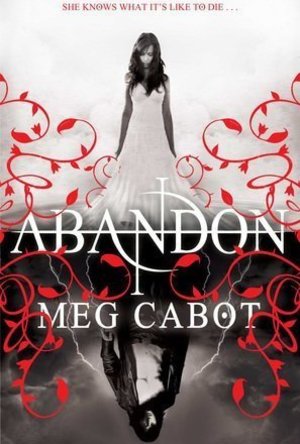

Though I have been familiar with the name of Meg Cabot for awhile, this is the first book by her that I have actually read. I am a sucker for Greek mythology, and a retelling of Hades and Persephone has great potential. With a great cover and an even better premise to the book, I had pretty high hopes for the plot itself.
The way the book begins throws me -- told through the eyes of Pierce Oliviera, which is not that great of a name for a girl (instead of Persephone?), the author refrains from giving away hardly anything about Pierce's circumstances, what happened to her, what motivates her, etc. While it can be considered good writing to hold back on the major revelations as long as possible to build the suspense and draw in the reader, for me it was rather frustrating to read almost the entire book before Pierce finally realized who and what John Hayden is(also a crummy name for a death deity). Much of the actual events of the book are Pierce's memories, and what happens in real time is the culmination of these memories.
While I disliked the way that Meg Cabot chose to string all of these separate events together, I do like what the actual events create when put together. A girl who has a Near-Death Experience, or NDE, meets for the second time the man who runs her personal Underworld, instantly making her his consort thanks to a rare diamond necklace, though she does not yet know it. Her ability to skirt death makes her a target for the bad guys in the book, the Furies (not the same as the Furies of Greek mythology), who blame John for their lot in life after death. In addition, Pierce also has a host of quirks that alternately set her up for disaster or save her life, such as her addiction to soda and her paranoia that tassels are Evil.
While Pierce has a vast array of personality and behavioral problems that make the act of living difficult for her, I do think that this book fits well in the Young Adult category. Pierce does not have everything figured out, does not always know how to handle herself, and does not even recognize when she is in love. She is protective of her feelings, can be just as detached as the next person from those around her, and has to work at not being too self-absorbed. Sometimes an imperfect heroine makes for a better book. I look forward to the next installment in the trilogy, Underworld.
The way the book begins throws me -- told through the eyes of Pierce Oliviera, which is not that great of a name for a girl (instead of Persephone?), the author refrains from giving away hardly anything about Pierce's circumstances, what happened to her, what motivates her, etc. While it can be considered good writing to hold back on the major revelations as long as possible to build the suspense and draw in the reader, for me it was rather frustrating to read almost the entire book before Pierce finally realized who and what John Hayden is(also a crummy name for a death deity). Much of the actual events of the book are Pierce's memories, and what happens in real time is the culmination of these memories.
While I disliked the way that Meg Cabot chose to string all of these separate events together, I do like what the actual events create when put together. A girl who has a Near-Death Experience, or NDE, meets for the second time the man who runs her personal Underworld, instantly making her his consort thanks to a rare diamond necklace, though she does not yet know it. Her ability to skirt death makes her a target for the bad guys in the book, the Furies (not the same as the Furies of Greek mythology), who blame John for their lot in life after death. In addition, Pierce also has a host of quirks that alternately set her up for disaster or save her life, such as her addiction to soda and her paranoia that tassels are Evil.
While Pierce has a vast array of personality and behavioral problems that make the act of living difficult for her, I do think that this book fits well in the Young Adult category. Pierce does not have everything figured out, does not always know how to handle herself, and does not even recognize when she is in love. She is protective of her feelings, can be just as detached as the next person from those around her, and has to work at not being too self-absorbed. Sometimes an imperfect heroine makes for a better book. I look forward to the next installment in the trilogy, Underworld.

Mark @ Carstairs Considers (2664 KP) rated Full Bodied Murder in Books
Jun 6, 2019
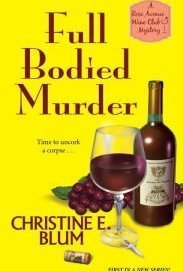

Uneven Debut
Annie “Halsey” Hall has moved from New York City to Southern California, buying a house on Rose Avenue just a couple miles south of Santa Monica. She’s excited about her new neighborhood, except for her snooping next-door neighbor, and pleased to have been invited to join the Rose Avenue Wine Club. On her way to her first meeting, Halsey and her puppy, Bardot, stumble into the wrong house and find a dead body in the backyard. Even though Halsey has never met the victim, the police consider her their prime suspect. With the help of her new friends, Halsey begins to investigate. But with everything happening in the neighborhood, will they be able to figure out what really happened in time to clear Halsey?
Even though I don’t drink wine, I decided to give this book a try after meeting the author. I wanted to like it since it is set in Southern California, and I got a kick out of seeing the characters going to places I’m familiar with. However, I found the book was just a bit too unfocused to really work well. I thought there were timeline issues early on until I began to realize that the book takes place over several months. This wasn’t obvious early on, so maybe it helped explain some of the timeline issues I thought I saw. While Halsey is developed as a main character, many of the rest are still fairly flat. They can certainly develop as the series progresses, so I’m not too concerned about that yet. The book has a couple of interesting sub-plots, but they take over at times, and too much happens in them over the course of the book. It would have been better to stretch them out over the course of several books. The mystery plot has a lot going on, but it worked to keep me guessing until the very end. However, one key piece of evidence made me shake my head. It would have made more sense if the book took place over a week instead of many months. There is quite a bit of foul language for a cozy, even compared to some of the cozies and traditional books I read that are pushing the boundaries. Overall, this reads more like an early draft that needed some polish to find the gem inside, because there is certainly a gem here. Since I already have the second book, I might find some time to read it to see if the issues resolve themselves as the series progresses.
Even though I don’t drink wine, I decided to give this book a try after meeting the author. I wanted to like it since it is set in Southern California, and I got a kick out of seeing the characters going to places I’m familiar with. However, I found the book was just a bit too unfocused to really work well. I thought there were timeline issues early on until I began to realize that the book takes place over several months. This wasn’t obvious early on, so maybe it helped explain some of the timeline issues I thought I saw. While Halsey is developed as a main character, many of the rest are still fairly flat. They can certainly develop as the series progresses, so I’m not too concerned about that yet. The book has a couple of interesting sub-plots, but they take over at times, and too much happens in them over the course of the book. It would have been better to stretch them out over the course of several books. The mystery plot has a lot going on, but it worked to keep me guessing until the very end. However, one key piece of evidence made me shake my head. It would have made more sense if the book took place over a week instead of many months. There is quite a bit of foul language for a cozy, even compared to some of the cozies and traditional books I read that are pushing the boundaries. Overall, this reads more like an early draft that needed some polish to find the gem inside, because there is certainly a gem here. Since I already have the second book, I might find some time to read it to see if the issues resolve themselves as the series progresses.

I received a complimentary copy of this book in return for an honest review and although it has taken me a while to read it, I have really enjoyed the content and style of the information provided.
This book gives a very in-depth and detailed re-telling of the Battle of Gettysburg, and more specifically the charge of Barksdale himself. A battle and time that will live forever in history, Phillip Thomas Tucker weaves the death and grim reality of war with insightful quotes, maps and ideas about how this battle really occurred.
There are several outstanding aspects of this book, however first I feel it is necessary to warn any potential readers that this book is not that easy to read. I am a frequent reader of non-fiction books, and more specifically historical non-fiction, and this is amongst one of the hardest I have read, but the effort is well worth it. At times, it is just a little over loaded with details such as names, positions in the armies etc, and with the same names appearing in both sides of the battle as well as within the same units, it can get a little hard to keep track of everyone!
On a much more positive note though, the detailed research the author must have done truly does shine through on every page. The quotes from letters, the pictures and the maps, to name but a few things, really do add a whole new dimension to the book. Personally, it made it all seem a lot more real, helping me to engage more with the trials of those poor men (and horses) stuck in the mud and terror of that day. Although knowing all the names did get slightly confusing at times, it was a great touch in helping 'bring home' the reality and enormity of the loss at that battle.
In addition, the pace with which the events were told was pitched just right. Although packed with detail, the book still had a great pace and a pull to it. The action of the battle really does pour through the pages and come alive. It's written with great skill and is one of the best 'battle recounts' that I have read in a long time.
In conclusion, I can only praise this book for summarising one of the pivotal battles of the American Civil War. Detailed, at times a little too much so, and a compelling, engaging and at times emotional read that I would recommend to anyone who has an interest in this period of history, or who is studying this.
This book gives a very in-depth and detailed re-telling of the Battle of Gettysburg, and more specifically the charge of Barksdale himself. A battle and time that will live forever in history, Phillip Thomas Tucker weaves the death and grim reality of war with insightful quotes, maps and ideas about how this battle really occurred.
There are several outstanding aspects of this book, however first I feel it is necessary to warn any potential readers that this book is not that easy to read. I am a frequent reader of non-fiction books, and more specifically historical non-fiction, and this is amongst one of the hardest I have read, but the effort is well worth it. At times, it is just a little over loaded with details such as names, positions in the armies etc, and with the same names appearing in both sides of the battle as well as within the same units, it can get a little hard to keep track of everyone!
On a much more positive note though, the detailed research the author must have done truly does shine through on every page. The quotes from letters, the pictures and the maps, to name but a few things, really do add a whole new dimension to the book. Personally, it made it all seem a lot more real, helping me to engage more with the trials of those poor men (and horses) stuck in the mud and terror of that day. Although knowing all the names did get slightly confusing at times, it was a great touch in helping 'bring home' the reality and enormity of the loss at that battle.
In addition, the pace with which the events were told was pitched just right. Although packed with detail, the book still had a great pace and a pull to it. The action of the battle really does pour through the pages and come alive. It's written with great skill and is one of the best 'battle recounts' that I have read in a long time.
In conclusion, I can only praise this book for summarising one of the pivotal battles of the American Civil War. Detailed, at times a little too much so, and a compelling, engaging and at times emotional read that I would recommend to anyone who has an interest in this period of history, or who is studying this.

Acanthea Grimscythe (300 KP) rated 100 Fathoms Below in Books
Jan 31, 2019
Contains spoilers, click to show
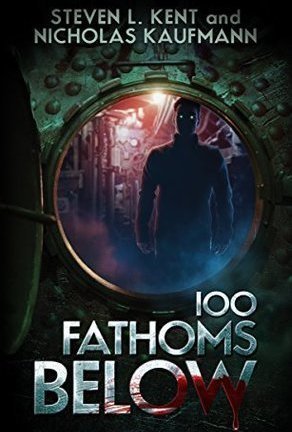
I love books that take place under the sea–particularly horror books. If you’ve read my review on Something’s Alive on the Titanic, you probably already know that. (It’s a great book by the way, and its author is Robert Serling–brother to Rod Serling.) It’s only natural that I selected 100 Fathoms Below when I read its nautical, and eerie, description.
And here’s where my spoiler comes in, because I’m about to go on a mini-rant. The synopsis hints at a mysterious, evil monster hunting the crew of the ship, but it does not say what that creature is. Therefore, I feel that revealing this is a book about vampires is, in fact, a spoiler–contrary to popular belief of other reviewers. It’s pretty obvious early on, with the first hint coming in at 8%, however if I’d known this was a vampire book before I chose it, I wouldn’t have taken the time to read it. The key word there is BEFORE. Because I had it spoiled by a straight up summary of the prologue on Goodreads, coupled with a pretty hearty description about the… well, vampires. So, now that you know that overly used trope is here, let’s take a moment to discuss what Kent and Kaufmann do right, shall we?
The vampires in 100 Fathoms Below are good ol’ classic boys, in the sense that they’re bloodthirsty and want nothing more than to maim and breed more of their kind. They aren’t romanticized, either–and that’s a great thing. In fact, they’re written well enough that, despite having been spoiled by a fellow reviewer, I enjoyed the book enough to finish it. Mostly because I wanted to see how things ended.
Something else Kent and Kaufmann excel at is creating a connection between the readers and characters. I found myself sharing the hopes and dreams of many of the figures we meet. That made some of the deaths a lot more difficult on me.
The plot is quick, making it an easy read; however, the sense of intrigue isn’t really there. The whole discovering a prototype Soviet submarine takes the back burner with an occasional mention and even when it does come back into play toward the end of the book, there’s not exactly any excitement or fear of them being caught. I found that to be a bit disappointing.
Overall, it’s an entertaining read, but I probably wouldn’t take the time to re-read it. I’d like to thank NetGalley and Blackstone Publishing for providing me with a free copy of this book in exchange for an honest review.
And here’s where my spoiler comes in, because I’m about to go on a mini-rant. The synopsis hints at a mysterious, evil monster hunting the crew of the ship, but it does not say what that creature is. Therefore, I feel that revealing this is a book about vampires is, in fact, a spoiler–contrary to popular belief of other reviewers. It’s pretty obvious early on, with the first hint coming in at 8%, however if I’d known this was a vampire book before I chose it, I wouldn’t have taken the time to read it. The key word there is BEFORE. Because I had it spoiled by a straight up summary of the prologue on Goodreads, coupled with a pretty hearty description about the… well, vampires. So, now that you know that overly used trope is here, let’s take a moment to discuss what Kent and Kaufmann do right, shall we?
The vampires in 100 Fathoms Below are good ol’ classic boys, in the sense that they’re bloodthirsty and want nothing more than to maim and breed more of their kind. They aren’t romanticized, either–and that’s a great thing. In fact, they’re written well enough that, despite having been spoiled by a fellow reviewer, I enjoyed the book enough to finish it. Mostly because I wanted to see how things ended.
Something else Kent and Kaufmann excel at is creating a connection between the readers and characters. I found myself sharing the hopes and dreams of many of the figures we meet. That made some of the deaths a lot more difficult on me.
The plot is quick, making it an easy read; however, the sense of intrigue isn’t really there. The whole discovering a prototype Soviet submarine takes the back burner with an occasional mention and even when it does come back into play toward the end of the book, there’s not exactly any excitement or fear of them being caught. I found that to be a bit disappointing.
Overall, it’s an entertaining read, but I probably wouldn’t take the time to re-read it. I’d like to thank NetGalley and Blackstone Publishing for providing me with a free copy of this book in exchange for an honest review.