

graveyardgremlin (7194 KP) rated Midsummer Magic (Magic Trilogy, #1) in Books
Feb 15, 2019


I ended up hating both the so-called heroine and hero, they just were not sympathetic, interesting, or anything other than horrible. Frances started fights, cowers, and snivels all the time, and frankly, she should have known she needed to fulfill her "wifely duty" to get with heir. Now I am not in any way saying rape is right, but back then she should have known what was going to happen, and all she does is act belligerent and righteous about it and wants to be left alone (Ha!). Then there's Hawk (ugh!), who is detestable, shows no remorse, and the author actually writes about him with his mistress! What is Ms. Coulter smoking? I can't even fathom them going from hate to love (and I do mean hate!), which apparently doesn't happen according to other Amazon reviewers.
The author says the book "is just dandy the way it is," but it totally is not. She goes on to say that we'll chuckle and may even howl with laughter because of the battle of the sexes.... Now I don't know about that because I couldn't get past how totally unlikable Hawk and Frances were, among the other things mentioned, so who knows? And frankly, I don't care to know. This book needed many rewrites and I do not recommend it at all! I wish I listened to the reviews and stayed away, but no, I had to stick with it. What can I say, I'm stubborn. To be honest I thought there was only one rape scene in the book and didn't know there were more, but I usually only skim them so I don't read any spoilers. I am so sorry I read so much of this when I could have been enjoying a much better book. I really don't think I'll ever pick up another book from Ms. Coulter if her other books are like this.
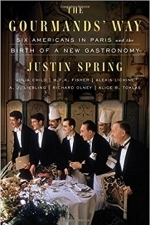
The Gourmands’ Way: Six Americans in Paris and the Birth of a New Gastronomy
Book
“In The Gourmands’ Way, Justin Spring brilliantly recounts the French odyssey of six remarkable...
Biography food
MaryAnn (14 KP) rated A Promise Forged (Ohio Brides #3) in Books
Mar 5, 2019

My Thoughts: Every girl has a dream, and this time it's Kat's turn to have hers come true! A chance to play professional baseball. Cara Putman has weaved history and fiction in an entertaining storyline; s based the all women's league that was formed during the second world war.
Kat is the youngest member on the team and as I read the book, I wanted to take her under my wing and protect her from her jealous teammates. Kat had to suffer being away from her family, the jealousy of some of her teammates, traveling, grueling schedules and falling in love for the first time.
This was a very entertaining novel. I truly enjoyed it and it was a pleasure to read. One of the things I enjoyed about the book, was that Kat wanted to make a difference. She wanted to be a light for the Lord where ever she went. Her actions actually made Jack turn back to the Lord.
Even though I hadn't read the first two books, this was easy to follow on its own. I would love to read more from Cara Putman.
The Ordeal of Elizabeth Marsh: How a Remarkable Woman Crossed Seas and Empires to Become Part of World History
Book
From the author of 'Britons', the story of the exceptional life of the intrepid Elizabeth Marsh - an...

Debbiereadsbook (1843 KP) rated Fox Tale (Sacred Emblems #0) in Books
Apr 27, 2024
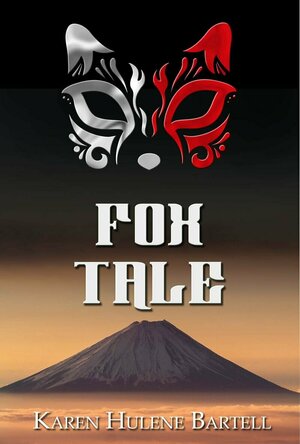

Ava is in Japan, writing a travel article. Meeting Chase, with his wonderful tales of Japanese myths and legends, helps her write a different take. But she never expected to meet up with her ex, Rafe, who left her two years ago without a word. Both men are hiking things. Can Ava choose?
I don't read reviews before I read a book, not anymore, but I will read them AFTER I've read said book, but before I write my review for one reason only: did they feel the same about this book as I did.
In this case: nope. They all loved this book and I . . . didn't.
I'm not saying I didn't like this book, I just found it hard work.
It's almost all written from Ava's point of view, in the first person. Rafe gets two very small bits, not even a chapter, in the third. I needed more from Rafe, and Chase, to be fair, to offset Ava.
There is a huge amount of repeated wording. Mostly around how Ava feels and thinks about Chase. "Apart from his silver hair, he looks young" or words to that effect are the most common. It began to get a bit much. "Seven hundred and seventy *something*, next winter" is another. The same things about the fox stories from Japanese lore pop up time and again too.
Apart from that, I liked this book. I couldn't see where it was going, nor how it was getting there, so when it did all go down, I was surprised and I liked the way it all happened.
Although there is the repetition of the lore, I did enjoy reading about the Japanese traditions and myths and legends.
There are some difficult topics here: death of a spouse, suicide, mental health issues and readers do need to be aware. Things are not how they seem, however, but the warning still needs to be made.
This is the first I've read of this author, and I always ask myself, will I read more? Not at this time. I won't say no to reading something else at a later date though.
3 good stars
*same worded review will appear elsewhere

Forbidden Match (Perfect Match Agency #6)
9.0 Rate It
Book
The Perfect Match Agency’s company policy is No dating in the workplace! Looks like Renn and...
Omegaverse MM Romance

Hazel (1853 KP) rated A City Dreaming in Books
Dec 14, 2018
<i>I received this book for free through Goodreads First Reads.</i>
“The city never sleeps, but it’s always dreaming.” And, by dreaming, Daniel Polansky clearly means nightmares. <i>A City Dreaming</i> is, for the lack of a better term, an urban fantasy novel. Embracing elements of dystopia and steampunk universes, it is difficult to determine the time period in which it is set. What can be established is that, wherever you are in the world, you are never far away from a monster.
<i>A City Dreaming</i> revolves around a semi-anonymous character known as M. M appears to be some form of magician who wishes he could spend his days listlessly staring into the bottom of his beer glass. Yet with misbehaving creatures and warring goddess living in the city of New York, peace is a rare phenomenon in M’s life. From demons to murders and mind-boggling situations, there is never a dull moment.
Each chapter of <i>A City Dreaming</i> is, in some way, an individual story. Apart from the occasional recurring character, no scenario is ever continued after the chapter concludes. This is initially a cause for confusion. With no clear direction or purpose, it is hard to remain engaged with the author’s imagination.
Readers familiar with contemporary fantasy writers, such as Neil Gaiman, may understand Polansky’s vision – think <i>Neverwhere</i> and <i>American Gods</i> combined, but weirder. M spends the majority of his time either inebriated or on drugs, and, to be frank, it would not be surprising to learn the author was on drugs at the time of writing. Imagine Neil Gaiman on drugs; that is how bizarre this book is.
Despite his penchant for recreational drugs, M is an intelligent character that can humorously talk himself out of impossible situations. However it is often a hopeless ordeal to fathom the process of his intoxicated mind. As a result, <i>A City Dreaming</i> loses its thrill and excitement.
As this is the first Daniel Polansky novel that I have read, I do not know whether this is his usual style of writing or whether it was an attempt at something new. What I did observe was the intelligence hidden behind the excess of expletives and lewd content. Polansky writes with certain aptitude, almost as if he has swallowed a thesaurus.
Fans of Neil Gaiman and Brandon Sanderson may enjoy <i>A City Dreaming</i> more than new readers, since they will already be familiar with the style of bemusing narration. <i>A City Dreaming</i> does not live up to the definition of a novel, however as short, connecting stories it provides the intended entertainment. Almost certainly, this book will be received with mixed reviews; nonetheless it will undoubtedly eventually find its fan base.

Opus 80: Oswald Mathias Ungers, Haus Belvederestrasse 60, Koln-Mungersdorf
Book
A house is a representation of the idea of the world, of life, of existence. For the Cologne...

BankofMarquis (1832 KP) rated It: Chapter Two (2019) in Movies
Sep 7, 2019
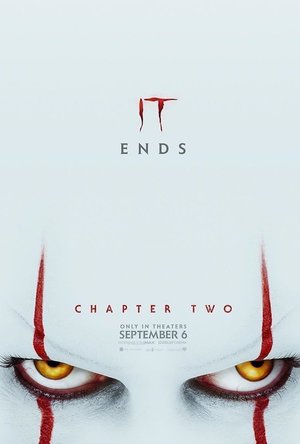

So...it should have been a "no-brainer" for Director Andy Muschietti and the filmmakers to repeat that pattern - it worked very, very well. But, somewhere along the way they forgot what made the first film good and Muschietti and new screenwriter Gary Dauberman decided to focus on the horror, gore and frights and let their talented group of adult actors inhabit the characters with little (maybe no) help from the screenplay.
And...the result is a "fine" film that wraps up the first film just "fine", but ultimately falls short of that first film and definitely falls short of what "could have been".
IT: CHAPTER TWO picks up 27 years later when Pennywise the Dancing Clown comes back (per his cycle) to terrorize the children of Derry once again. The Loser's Club from the first film band back together (per their pact at the end of the first film) to battle - and finally destroy - this dark threat.
The filmmakers pull a strong group of actors together to play the adult versions of the Loser's Club - headlined by Jessica Chastain (ZERO DARK THIRTY) as the adult Beverly Marsh and James McAvoy (Professor X in the recent run of X-MEN films) as the adult Bill Denborough. I find McAvoy to be (for the most part) a solid, if unspectacular, actor and he is true to from here. Solid, but unspectacular in a role that was written that way. Chastain, perhaps, is the biggest disappointment for me in this film as the young Beverly Marsh (as portrayed by Sophia Lillis) was the highlight of the first film but here this character is...bland and somewhat boring. I don't fault Chastain (an actress that I usually enjoy very, very much), I blame the screenplay which saddles these two characters with an underwritten "love triangle" with the adult Ben Hascombe (Jay Ryan - somewhat of a newcomer, who has smoldering good looks, but not much else going for him). It was rumored that Chris Pratt was circling this character (I would imagine he walked away when he saw the screenplay). That's too bad, for he might have brought some life to all 3 of these characters.
Faring better is the usually reliable Isiah Mustafa (TV's SHADOWHUNTERS) as the adult Mike Hanlon, the only one of the Loser's Club who stayed in Derry to keep a vigilant watch against Pennywise' return. He has a haunted air about him - certainly in keeping with the the past that only he remembers. And Andy Bean (SWAMP THING) has a nice couple of moments as the adult Stanley Uris.
The only truly interesting dynamic of the returning Loser's Club is the characters and love/hate relationship between the older Eddie Kaspbrak, the hypochondriac (played by James Ransome, TV's THE WIRE) and smart-mouth Richie Tolzier (inhabited by SNL vet Bill Hader). While Ransome's Eddie is quite a bit more interesting than he was as a youth (and that's no slight on Jack Dylan Grazer who played the younger Eddie, I just found Ransome's portrayal more nuanced and somewhat more interesting). But it is Hader who steals this film. His Richie is constantly using humor to cover his emotions building on the interesting characterization that Finn Wolfhard brought to the younger version and giving us more. Hader is a master comedian, so handles the comedy parts as deftly as you would think he would, but it is when the other emotions - fear, rage, love - come barreling out of him that Hader elevates this character (and the movie) to a higher level. I would be thrilled if Hader was nominated for an Oscar for this role - he is that good.
Also coming back are all of the "kids" from the first film to flesh out some scenes - and set up some other scenes/moments by the adults - they are a welcome addition and shine a spotlight at how weak - and underwritten - most of the adult characters are in this film.
Bill Skarsgard is seen quite a bit more as Pennywise - and that makes him less menacing and threatening (but still scary) and there are 2 fun cameos along the way by 2 prominent individuals, so that was fun.
There is a running gag throughout the film about author Bill Denborough (the surrogate for Stephen King) not being able to write a decent ending - a critique that King receives constantly - and they changed the ending of this film from the book. I am a big fan of the book, but would agree that the ending of the book was not that good, so was open to this trying a different way to end things...and...this new ending lands about as well as the original ending (oh well...).
But that's just a quibble, for by that time you've ridden with these characters for over 5 hours and while the first chapter is stronger than the first, the journey is good (enough) for an enjoyable (enough) time at the Cineplex.
Come for the Loser's Club and the scares - stay for Hader's Oscar worthy performance.
Letter Grade: B+
7 (out of 10) stars and you can take that to the Bank(ofMarquis)
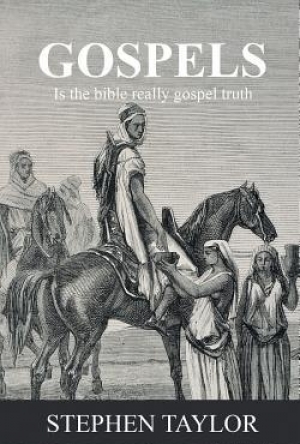

Is the Bible really gospel truth? This is the question the honourable, academic Robert Babcock aims to find out on his quest to find the earliest copies of the gospels in order to prove the reliability of the story of Jesus as recounted in the King James Bible. However, this is not the key focus of Stephen Taylor’s fictional novel, Gospels. The main character is the perfidious John Campbell-John, a rogue, imposter and swindler who flees 19th-century England in an attempt to escape from his debts.
John meets the magnanimous Robert in Venice and, despite being polar opposites, become firm friends. After being honest for the first time in his life, admitting to owing thousands of pounds in gambling debts, Robert offers John the opportunity to accompany him on his quest through the deserts of Egypt. John accepts and the pair finds themselves on an adventure of discovery and personal redemption.
John and Robert make an unlikely but excellent team. Robert’s knowledge of the Bible and ancient history is vital, however, John’s propensity for falsehoods and cunningness gets them out of a few scrapes and tricky situations. Nonetheless, it is difficult for John to give up his old ways and his insular behaviour threatens to get them in more trouble.
Fortunately, Robert’s humility begins to influence the young scoundrel, as does his penchant for historical artefacts. As the story progresses, John begins to leave his past behind and becomes interested in Robert’s work, learning new things about Egyptian culture and the origins of the Bible. However, when a new gospel comes to light that threatens the whole of Christianity, Robert does not know what to do; and only John can give him counsel.
John Campbell-John is a character that the author introduced in a previous book. However, the timelines are not sequential, therefore Gospels is a stand-alone novel. The time frame for this book needed to be set in 1835 to correspond with historical truths. Although Robert’s discovery of a Gospel of Thaddeus Jude is an invention of the author, the quest itself is based on the journeys of three 19th-century Bible hunters. Stephen Taylor has conducted an enormous amount of research, including the biographies of Robert Curzon, Constantin von Tischendorf and Émile Amélineau who, on separate occasions, sought the same knowledge as the fictional Robert Babcock.
Despite being titled Gospels, the novel, for the most part, focuses on John Campbell-John and his wicked ways. Through a first-person narrative, John explains his past, his betrayal of a friend, and his addiction to gambling. Initially, he has no qualms about his behaviour and acts only for himself and his selfish greed. Whilst Robert goes in search of knowledge, John goes on a journey of redemption, coming to terms with his previous wrongdoings. However, acknowledging these faults is not enough, he needs to turn away from these roguish ways.
It is disappointing that the narrative does not focus more on the gospels, both real and imagined. There was enormous scope for an in-depth look at the life of Jesus and the inconsistencies in the Bible. The fictitious Gospel of Thaddeus Jude evokes a similar reaction in Robert as the Non-Canonical Gospel of Thomas found in the 19th-century had on many devout Christians. There was so much potential with this direction of thought, however, the author passes over it in preference to the life of John Campbell-John.
Slow to begin but increasingly interesting as it progresses, Gospels is a book of many themes. History, both 19th-century and ancient; religion, although not a Christian story; and achievement and absolution combine together to produce a unique tale that takes the reader from the back alleys of London to the River Nile and the deserts of Sinai. A subtle clue in the prologue keeps readers alert as they await the conclusion of the adventure – an ending that ambiguously reveals whether John moves on from the follies of his past.