
Search
Search results

Bob Mann (459 KP) rated If Beale Street Could Talk (2018) in Movies
Sep 28, 2021
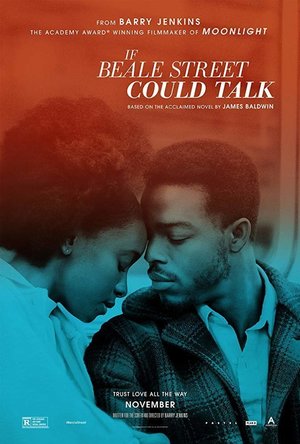

Love and Rage against the machine.
The baby asked,
‘Is there not one righteous among them?”
― James Baldwin, If Beale Street Could Talk
Beale Street refers to the jumpin’ heart of Memphis where Louis Armstrong was born. As explained in text from Baldwin’s source book (requiring a speed read!) it’s used as a metaphor for the birthplace of every black person in America. (“Every black person in America was born on Beale Street“). But the story is set in Harlem, New York, and with this intellectual stretch, before I even get past the title, I am immediately reaching for the “P-word”, of which more later.
The Plot
Tish (KiKi Layne) is 19 and in love with her lifelong friend ‘Fonny’ (Stephan James). So much in love in fact (and so careless) that Tish is now pregnant with his child. Tish must break this news to both families herself, since Fonny is inside awaiting trial for a vicious rape that he claims he didn’t commit. Tish and their joint families are trying to help, but can Fonny be released in time to see the birth of his child? Or are the institutions so set against him that release is impossible and death row might await?
Interwoven with Love and Anger
At its heart, this film portrays a truly beautiful love story. Tish and Fonny (both adorably played by the young leads) are friends becoming more than friends. We see their emerging love through flashback scenes. Some of these, particularly one on a metro train, are exquisitely done; long gazes into eyes, starting as one thing and ending as another.
In another scene, Fonny takes Tish’s virginity, and it’s done with style, taste and finesse. For younger teens this should be compulsory viewing as an antidote to all the horrible porn they are seeing on the internet: THIS is what sex, based on a foundation of true love, is all about. (The film is UK15 rated for “infrequent very strong language, strong sex” – I actually agree with the rating for the language (and actually I think an act of marital violence should also have also been referenced)…. but not for the sex, which should be 12A).
It’s a love story then? Well, yes, but offset against that, it’s a very angry film, seething with rage about how the police force and the justice system is set ‘against the black man’. Director Barry Jenkins (of – eventual – Oscar winner “Moonlight” fame) has a message to impart and he is intent on imparting it.
A great ensemble performance
The film didn’t get a SAG nomination for the ensemble cast, but it almost feels that they missed out here. As well as the two young leads being spectacular, the whole of the rest of the cast really gel well together, particularly the respective parents: Colman Domingo (“Selma“) as Tish’s father Joseph; Regina King as Tish’s mother Sharon; Michael Beach (“Patriots Day“) as Fonny’s father Frank and Aunjanue Ellis as his bible-bashing mother. A dramatic scene where they all collectively hear the news about the pregnancy is both comical and shocking in equal measure.
Poor sound mixing
If this film gets an Oscar nomination for sound, I’ll frankly be cross! There is significant use of sonorous, bass-heavy music and effects (including a lovely cello theme by Nicholas Britell) – all very effective; there is a lot of earnest and quietly spoken dialogue between the characters – also moody and effective. Unfortunately the two are mixed together in some scenes and frankly I couldn’t make out what was being said. Most frustrating.
In addition, there is voiceover narration from Tish (if you follow my blog regularly you KNOW what I think about that!). Actually, this isn’t as overly intrusive as in films like “The Hate U Give“, but it sounds like it was recorded in a dustbin! It’s a bit like that effect you get with headphones where the plug isn’t quite in the socket, and everything sounds way off and tinny. When combined with Layne’s accent the effect, again, made the dialogue difficult to comprehend.
The c-word and the n-word
There’s a degree of bad language in the film, albeit mild in comparison to “The Favourite“! Tish’s sister (Teyonah Parris) uses the c-word in one very funny dissing of Fonny’s ‘up-themselves’ sisters (Ebony Obsidian and Dominique Thorne). But the n-word is used repeatedly during the film, and that I can never get used to. I ‘get it’ (in the sense that I understand the perception) that this is a word that ‘only black people can use between themselves’. But this just feels elitist and wrong to me. At a time when Viggo Mortensen gets crucified for using it once (while being descriptive and in-context) during a press junket for “Green Book“, I just feel that if a word is taboo it should be taboo, period.
The p-word
My p-word here is “pretentious”. Barry Jenkins clearly feels he has something to prove after the success of “Moonlight“, and there are certainly moments of directorial brilliance in the film. As previously mentioned, the sex scene is one of the best I’ve seen in a long while. Also beautifully done are a birthing scene and two confrontational scenes in Puerto Rico. But there are also moments that seem to be staged, artificial and too ‘arty’ for their own good. Any hidden meaning behind them completely passed me by. (Examples are Sharon’s wig scene and a pan around Fonny’s wood sculpture). It all seems to be “trying too hard”.
Hate for the police is also writ large on the film, with every discriminatory police officer in the whole of the US embodied in the wicked sneering face of the police office Bell (Ed Skrein).
A platform that should be used for more than ranting
This is a film written and directed by an American black man (Jenkins) and largely fully cast with American black people. And I’m a white Englishman commenting on it. I’m clearly unqualified to pass judgement on how black America really feels about things! But comment I will from this fug of ignorance.
It feels to me that the “Black Lives Movement” has given, at long last, black film-makers like Jenkins a platform in cinema to present from. This is a great thing. But I’m sensing that at the moment the tone of the output from that platform (such as this film) seems to me heavily tinged with anger: a scream of frustration about the system and racial injustice over the years. It’s the film-makers right to make films about subjects dear to them. And I’m sure this summer we’ll sadly again see atrocities as previously seen in the likes of Ferguson and Dallas, fuelling the fire of hate. But I would personally really like to see someone like Jenkins use his undoubted talents to make a more uplifting film: a film reflecting the more positive strives that are happening in society, allowing for people of all races and all sexual orientations to make their way in business (not drug-running or crime!) and/or life in general. Those good news stories – the positive side of race relations – are out there and my view is that someone like Barry Jenkins should be telling them.
Final thoughts
I wasn’t as much of a fan of “Moonlight” as the Academy, and this film also left me conflicted. The film is well-made and the cast is very engaging. It also has a love story at its heart that is moody but well-done. Overall though the movie felt over-engineered and a little pretentious, and that knocked it down a few pegs for me.
‘Is there not one righteous among them?”
― James Baldwin, If Beale Street Could Talk
Beale Street refers to the jumpin’ heart of Memphis where Louis Armstrong was born. As explained in text from Baldwin’s source book (requiring a speed read!) it’s used as a metaphor for the birthplace of every black person in America. (“Every black person in America was born on Beale Street“). But the story is set in Harlem, New York, and with this intellectual stretch, before I even get past the title, I am immediately reaching for the “P-word”, of which more later.
The Plot
Tish (KiKi Layne) is 19 and in love with her lifelong friend ‘Fonny’ (Stephan James). So much in love in fact (and so careless) that Tish is now pregnant with his child. Tish must break this news to both families herself, since Fonny is inside awaiting trial for a vicious rape that he claims he didn’t commit. Tish and their joint families are trying to help, but can Fonny be released in time to see the birth of his child? Or are the institutions so set against him that release is impossible and death row might await?
Interwoven with Love and Anger
At its heart, this film portrays a truly beautiful love story. Tish and Fonny (both adorably played by the young leads) are friends becoming more than friends. We see their emerging love through flashback scenes. Some of these, particularly one on a metro train, are exquisitely done; long gazes into eyes, starting as one thing and ending as another.
In another scene, Fonny takes Tish’s virginity, and it’s done with style, taste and finesse. For younger teens this should be compulsory viewing as an antidote to all the horrible porn they are seeing on the internet: THIS is what sex, based on a foundation of true love, is all about. (The film is UK15 rated for “infrequent very strong language, strong sex” – I actually agree with the rating for the language (and actually I think an act of marital violence should also have also been referenced)…. but not for the sex, which should be 12A).
It’s a love story then? Well, yes, but offset against that, it’s a very angry film, seething with rage about how the police force and the justice system is set ‘against the black man’. Director Barry Jenkins (of – eventual – Oscar winner “Moonlight” fame) has a message to impart and he is intent on imparting it.
A great ensemble performance
The film didn’t get a SAG nomination for the ensemble cast, but it almost feels that they missed out here. As well as the two young leads being spectacular, the whole of the rest of the cast really gel well together, particularly the respective parents: Colman Domingo (“Selma“) as Tish’s father Joseph; Regina King as Tish’s mother Sharon; Michael Beach (“Patriots Day“) as Fonny’s father Frank and Aunjanue Ellis as his bible-bashing mother. A dramatic scene where they all collectively hear the news about the pregnancy is both comical and shocking in equal measure.
Poor sound mixing
If this film gets an Oscar nomination for sound, I’ll frankly be cross! There is significant use of sonorous, bass-heavy music and effects (including a lovely cello theme by Nicholas Britell) – all very effective; there is a lot of earnest and quietly spoken dialogue between the characters – also moody and effective. Unfortunately the two are mixed together in some scenes and frankly I couldn’t make out what was being said. Most frustrating.
In addition, there is voiceover narration from Tish (if you follow my blog regularly you KNOW what I think about that!). Actually, this isn’t as overly intrusive as in films like “The Hate U Give“, but it sounds like it was recorded in a dustbin! It’s a bit like that effect you get with headphones where the plug isn’t quite in the socket, and everything sounds way off and tinny. When combined with Layne’s accent the effect, again, made the dialogue difficult to comprehend.
The c-word and the n-word
There’s a degree of bad language in the film, albeit mild in comparison to “The Favourite“! Tish’s sister (Teyonah Parris) uses the c-word in one very funny dissing of Fonny’s ‘up-themselves’ sisters (Ebony Obsidian and Dominique Thorne). But the n-word is used repeatedly during the film, and that I can never get used to. I ‘get it’ (in the sense that I understand the perception) that this is a word that ‘only black people can use between themselves’. But this just feels elitist and wrong to me. At a time when Viggo Mortensen gets crucified for using it once (while being descriptive and in-context) during a press junket for “Green Book“, I just feel that if a word is taboo it should be taboo, period.
The p-word
My p-word here is “pretentious”. Barry Jenkins clearly feels he has something to prove after the success of “Moonlight“, and there are certainly moments of directorial brilliance in the film. As previously mentioned, the sex scene is one of the best I’ve seen in a long while. Also beautifully done are a birthing scene and two confrontational scenes in Puerto Rico. But there are also moments that seem to be staged, artificial and too ‘arty’ for their own good. Any hidden meaning behind them completely passed me by. (Examples are Sharon’s wig scene and a pan around Fonny’s wood sculpture). It all seems to be “trying too hard”.
Hate for the police is also writ large on the film, with every discriminatory police officer in the whole of the US embodied in the wicked sneering face of the police office Bell (Ed Skrein).
A platform that should be used for more than ranting
This is a film written and directed by an American black man (Jenkins) and largely fully cast with American black people. And I’m a white Englishman commenting on it. I’m clearly unqualified to pass judgement on how black America really feels about things! But comment I will from this fug of ignorance.
It feels to me that the “Black Lives Movement” has given, at long last, black film-makers like Jenkins a platform in cinema to present from. This is a great thing. But I’m sensing that at the moment the tone of the output from that platform (such as this film) seems to me heavily tinged with anger: a scream of frustration about the system and racial injustice over the years. It’s the film-makers right to make films about subjects dear to them. And I’m sure this summer we’ll sadly again see atrocities as previously seen in the likes of Ferguson and Dallas, fuelling the fire of hate. But I would personally really like to see someone like Jenkins use his undoubted talents to make a more uplifting film: a film reflecting the more positive strives that are happening in society, allowing for people of all races and all sexual orientations to make their way in business (not drug-running or crime!) and/or life in general. Those good news stories – the positive side of race relations – are out there and my view is that someone like Barry Jenkins should be telling them.
Final thoughts
I wasn’t as much of a fan of “Moonlight” as the Academy, and this film also left me conflicted. The film is well-made and the cast is very engaging. It also has a love story at its heart that is moody but well-done. Overall though the movie felt over-engineered and a little pretentious, and that knocked it down a few pegs for me.

Lee (2222 KP) rated Sonic the Hedgehog (2020) in Movies
Feb 17, 2020

It’s been a very long time since I played the Sonic the Hedgehog video games on my brothers SEGA Megadrive. I was, and always have been, a Nintendo guy, so since then my only experience of Sonic has been when he joins forces with Mario and Co for Mario and Sonic at the Olympic Games. I do have good memories of his solo outings though, and he is clearly an enduring and popular character, ideally suited for a CGI/live action movie.
When we first meet Sonic, he’s a young hedgehog on his home world, zipping about the place without a care in the world and being mentored by an owl called Longclaw. Before we get a chance to learn anything about Longclaw and the world that he and Sonic inhabit, some bad guy echidnas show up, looking to get their hands on Sonic and his speedy powers. Longclaw gives Sonic a bag of rings that can be used to open a portal to another world, and after opening one for him to escape through, tells him to use one whenever he is in danger of being captured.
Cut to Green Hills, Montana where we meet local sheriff Tom Wachowski (James Marsden) and his wife Maddie (Tika Sumpter). Tom has been accepted, pending background checks, into the San Francisco police department, and he and Maddie are currently in the process of looking at houses there. We also learn that a now grown up Sonic has found his way into our world and has been living in hiding in Green Hills for some time now. The local crazy old man, Crazy Carl, claims to have seen a ‘blue devil’ on a number of occasions, but otherwise Sonic has managed to stay hidden. He’s even got himself a little underground man cave, and has become quite attached to Tom and Maddie, observing and following their every day lives from afar.
When Sonic manages to cause a city-wide power outage one evening, he draws the attention of the government, who bring in mad scientist Dr Robotnik (Jim Carrey) to investigate. When the gold rings that Sonic needs to transport to another world are mislaid, and as Robotnik and his team close in on him, Sonic makes himself known to an unsuspecting Tom and asks for his help. The movie then becomes a road trip, with them both on the run, evading Dr Robotnik and searching for the gold rings.
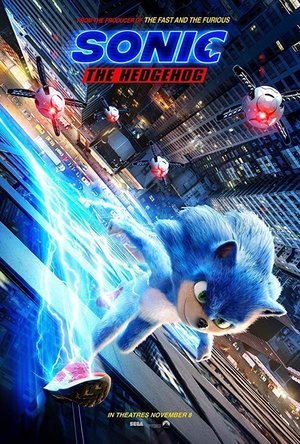
The CGI representation of Sonic had been something of a hot talking point, ever since the release of the first trailer sparked a huge online backlash. Looking more human, with smaller eyes, and longer limbs, the reaction of horror by anyone vaguely familiar with the character was enough to make director Jeff Fowler stand up and take notice, and the release date of the movie was pushed back to allow for some serious rework by the VFX team. Thankfully, when the new trailer was released, it was to a much more positive reaction, and rightfully so - Sonic was now much more aligned to his video game persona and on the receiving end of some pretty decent marketing material and promotion to back it all up. Ben Schwartz provides the voice for Sonic, giving him a wonderful childlike quality - in awe of the world around him, funny and confident in his abilities, but never really coming across as an annoying brat.
Jim Carrey brings to Robotnik the kind of madcap comedy that he we haven’t seen from him in a long time and is a delight in every scene he features. James Marsden is no stranger to appearing alongside CGI characters in children’s movies, and does his part well once again. Outside of that, the rest of the cast don’t get much to work with and kind of just fade into the background.
Overall, Sonic the Hedgehog is a fairly enjoyable movie, but it’s also instantly forgettable. It’s been a couple of days since I saw it and, apart from a couple of fun action scenes along the way, and the climactic showdown, I really don’t remember very much about it. If you’ve seen the wonderful scenes in the X-Men movies where QuickSilver zips around, interacting with characters and scenery as though time has stood still, then there are a few scenes just like that for you to enjoy. It’s a much better movie than I was expecting to see, but ultimately I think it could have been a hello a lot worse if they’d stuck to their guns with the original character design.
When we first meet Sonic, he’s a young hedgehog on his home world, zipping about the place without a care in the world and being mentored by an owl called Longclaw. Before we get a chance to learn anything about Longclaw and the world that he and Sonic inhabit, some bad guy echidnas show up, looking to get their hands on Sonic and his speedy powers. Longclaw gives Sonic a bag of rings that can be used to open a portal to another world, and after opening one for him to escape through, tells him to use one whenever he is in danger of being captured.
Cut to Green Hills, Montana where we meet local sheriff Tom Wachowski (James Marsden) and his wife Maddie (Tika Sumpter). Tom has been accepted, pending background checks, into the San Francisco police department, and he and Maddie are currently in the process of looking at houses there. We also learn that a now grown up Sonic has found his way into our world and has been living in hiding in Green Hills for some time now. The local crazy old man, Crazy Carl, claims to have seen a ‘blue devil’ on a number of occasions, but otherwise Sonic has managed to stay hidden. He’s even got himself a little underground man cave, and has become quite attached to Tom and Maddie, observing and following their every day lives from afar.
When Sonic manages to cause a city-wide power outage one evening, he draws the attention of the government, who bring in mad scientist Dr Robotnik (Jim Carrey) to investigate. When the gold rings that Sonic needs to transport to another world are mislaid, and as Robotnik and his team close in on him, Sonic makes himself known to an unsuspecting Tom and asks for his help. The movie then becomes a road trip, with them both on the run, evading Dr Robotnik and searching for the gold rings.
The CGI representation of Sonic had been something of a hot talking point, ever since the release of the first trailer sparked a huge online backlash. Looking more human, with smaller eyes, and longer limbs, the reaction of horror by anyone vaguely familiar with the character was enough to make director Jeff Fowler stand up and take notice, and the release date of the movie was pushed back to allow for some serious rework by the VFX team. Thankfully, when the new trailer was released, it was to a much more positive reaction, and rightfully so - Sonic was now much more aligned to his video game persona and on the receiving end of some pretty decent marketing material and promotion to back it all up. Ben Schwartz provides the voice for Sonic, giving him a wonderful childlike quality - in awe of the world around him, funny and confident in his abilities, but never really coming across as an annoying brat.
Jim Carrey brings to Robotnik the kind of madcap comedy that he we haven’t seen from him in a long time and is a delight in every scene he features. James Marsden is no stranger to appearing alongside CGI characters in children’s movies, and does his part well once again. Outside of that, the rest of the cast don’t get much to work with and kind of just fade into the background.
Overall, Sonic the Hedgehog is a fairly enjoyable movie, but it’s also instantly forgettable. It’s been a couple of days since I saw it and, apart from a couple of fun action scenes along the way, and the climactic showdown, I really don’t remember very much about it. If you’ve seen the wonderful scenes in the X-Men movies where QuickSilver zips around, interacting with characters and scenery as though time has stood still, then there are a few scenes just like that for you to enjoy. It’s a much better movie than I was expecting to see, but ultimately I think it could have been a hello a lot worse if they’d stuck to their guns with the original character design.
5 Minute Movie Guy (379 KP) rated Live Die Repeat: Edge of Tomorrow (2014) in Movies
Jun 26, 2019


One of the best action films of Tom Cruise's incredible career. (4 more)
Emily Blunt is a true force to be reckoned with.
The film's aliens and special effects are simply outstanding.
Unexpectedly hilarious. Who knew watching Tom Cruise die repeatedly could be so funny?
Edge of Tomorrow feels like a video game made into an unforgettably great movie.
Edge of Tomorrow is one of the best action movies of Tom Cruise’s illustrious career and might just be the most fun you'll have at the movies all year.
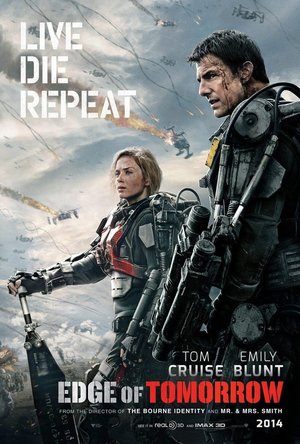
Amidst the yearly barrage of unimaginative action movies, Edge of Tomorrow is a breath of fresh air. It’s smart, funny, and full of action-packed excitement. It is a definitive summer blockbuster and is one of the best action movies of Tom Cruise’s illustrious career. Based on the graphic novel All You Need is Kill by Hiroshi Sakurazaka, Edge of Tomorrow stars Tom Cruise as Major William Cage, who has earned his rank without ever having served a day in combat. All of that quickly comes to a change when he’s put on the frontlines of a war that threatens humanity’s entire existence. Thrust into combat, Cage is cowardly, and also comically unprepared. He fearfully fights for his life, but is quickly killed in the conflict, only to reawaken at the start of the same day. Cage is given another chance at life, with the benefit of having lived the day before and fully remembering it. This is not a gift bestowed upon Tom Cruise by the power of Scientology, nor by Tom Cruise’s near-invincibility in his films, but instead his character Cage inadvertently has tapped into a divine alien power through which he is able to re-spawn from death over and over again. Trapped In this seemingly infinite loop, Cage is able to learn from his mistakes and thereby has the power to single-handedly change the outcome of this war and save the human race from complete annihilation.
The brilliance of Edge of Tomorrow is in its execution. This is a movie that could have easily been tiresome considering it replays the same day continuously on repeat, but it’s handled in a way that makes it entertaining and engaging. It is superbly edited to keep the story moving and the laughs coming. Even as a huge fan of Tom Cruise, I had a marvelous time watching him die off again and again while thoroughly laughing at his expense. What makes it so funny is that Tom is completely in on the joke and is able to generously poke fun at himself. He is perfectly cast in this role, as it allows him to act totally crazy and completely spineless, while gradually transitioning into his usual kick-ass, cool Cruise persona. Edge of Tomorrow feels both exhilarating and original, although it is clearly inspired in part by some other films, such as the comedy classic Groundhog Day, and even The Matrix trilogy. However, having these influences doesn’t take away from the film’s enormous accomplishments. To call it an action sci-fi version of Groundhog Day is only to sell it short. In fact, Edge of Tomorrow might just be the most fun you’ll have at the movies all year.
The conflict in Edge of Tomorrow is an alien invasion that is obliterating humanity. The aliens, known as Mimics, have taken over most of Europe, and with the exception of one keystone battle, have easily routed human military forces. Rita Vrataski, played by Emily Blunt, led that decisive victory at Verdun, earning herself the moniker the “Angel of Verdun” after single-handedly killing hundreds of Mimics in humanity’s first and only victory against the alien species. How was one woman able to massacre these aliens that can lay waste to an armed infantry in minutes? Well, as Cage finds out, she previously had his ability to reset in death, although she no longer possesses that power. Nevertheless, with her knowledge and skill set acquired from her nearly infinite practice, she can transform Cage into Earth’s greatest weapon.
Edge of Tomorrow is a thoroughly impressive package, complete with superb special effects, a heart-pounding musical score, and outstanding performances from its lead characters. Tom Cruise carries the film with veteran expertise, making the film fun and deeply entertaining. Emily Blunt is a powerhouse as Rita, showcasing a heroic toughness with a survivor mentality. I don’t think there are many actresses in Hollywood that could play such a role as convincingly as Blunt does here. Meanwhile, Bill Paxton is as enjoyable to watch as ever. He plays Master Sergeant Farrell, who is Cage’s cocky commanding officer that takes great pleasure in giving him a hard time. As for the aliens in the movie, they look absolutely incredible, not to mention highly original. I think they’re some of the coolest aliens I’ve ever seen, and they’re also far more threatening than your typical movie alien. They’re deathly fast and unpredictable, which makes the film’s action all the more intense. Edge of Tomorrow actually feels very much like a video game, and not just because of the respawning feature. The characters are memorable, the stakes are high, and the action is so engrossing that you feel like you’re an active participant in it. The creativity and combat at work in this film are worthy of belonging in a blockbuster game series. It rarely lets up and is an adrenaline-fueled ride from beginning to end.
I’ll admit that Edge of Tomorrow far-exceeded my expectations. It’s cool in every way imaginable, from the story and the action to the aliens and characters. It will immerse you in its desolate, doomed world that unknowingly rests on the brink of total destruction. Tom Cruise and Emily Blunt are both in top form and make this a movie you won’t want to miss. Edge of Tomorrow is certain to become an instant action classic. One that I wholly look forward to watching again and again and again.
(This review was originally posted at 5mmg.com on 6.30.14.)
The brilliance of Edge of Tomorrow is in its execution. This is a movie that could have easily been tiresome considering it replays the same day continuously on repeat, but it’s handled in a way that makes it entertaining and engaging. It is superbly edited to keep the story moving and the laughs coming. Even as a huge fan of Tom Cruise, I had a marvelous time watching him die off again and again while thoroughly laughing at his expense. What makes it so funny is that Tom is completely in on the joke and is able to generously poke fun at himself. He is perfectly cast in this role, as it allows him to act totally crazy and completely spineless, while gradually transitioning into his usual kick-ass, cool Cruise persona. Edge of Tomorrow feels both exhilarating and original, although it is clearly inspired in part by some other films, such as the comedy classic Groundhog Day, and even The Matrix trilogy. However, having these influences doesn’t take away from the film’s enormous accomplishments. To call it an action sci-fi version of Groundhog Day is only to sell it short. In fact, Edge of Tomorrow might just be the most fun you’ll have at the movies all year.
The conflict in Edge of Tomorrow is an alien invasion that is obliterating humanity. The aliens, known as Mimics, have taken over most of Europe, and with the exception of one keystone battle, have easily routed human military forces. Rita Vrataski, played by Emily Blunt, led that decisive victory at Verdun, earning herself the moniker the “Angel of Verdun” after single-handedly killing hundreds of Mimics in humanity’s first and only victory against the alien species. How was one woman able to massacre these aliens that can lay waste to an armed infantry in minutes? Well, as Cage finds out, she previously had his ability to reset in death, although she no longer possesses that power. Nevertheless, with her knowledge and skill set acquired from her nearly infinite practice, she can transform Cage into Earth’s greatest weapon.
Edge of Tomorrow is a thoroughly impressive package, complete with superb special effects, a heart-pounding musical score, and outstanding performances from its lead characters. Tom Cruise carries the film with veteran expertise, making the film fun and deeply entertaining. Emily Blunt is a powerhouse as Rita, showcasing a heroic toughness with a survivor mentality. I don’t think there are many actresses in Hollywood that could play such a role as convincingly as Blunt does here. Meanwhile, Bill Paxton is as enjoyable to watch as ever. He plays Master Sergeant Farrell, who is Cage’s cocky commanding officer that takes great pleasure in giving him a hard time. As for the aliens in the movie, they look absolutely incredible, not to mention highly original. I think they’re some of the coolest aliens I’ve ever seen, and they’re also far more threatening than your typical movie alien. They’re deathly fast and unpredictable, which makes the film’s action all the more intense. Edge of Tomorrow actually feels very much like a video game, and not just because of the respawning feature. The characters are memorable, the stakes are high, and the action is so engrossing that you feel like you’re an active participant in it. The creativity and combat at work in this film are worthy of belonging in a blockbuster game series. It rarely lets up and is an adrenaline-fueled ride from beginning to end.
I’ll admit that Edge of Tomorrow far-exceeded my expectations. It’s cool in every way imaginable, from the story and the action to the aliens and characters. It will immerse you in its desolate, doomed world that unknowingly rests on the brink of total destruction. Tom Cruise and Emily Blunt are both in top form and make this a movie you won’t want to miss. Edge of Tomorrow is certain to become an instant action classic. One that I wholly look forward to watching again and again and again.
(This review was originally posted at 5mmg.com on 6.30.14.)

Boot Camp Challenge
Health & Fitness and Sports
App
Featured by Apple as a Fitness Essential. Whether you're a first time exerciser or an extreme...

Alice (12 KP) rated Blood Bank in Books
Jul 3, 2018

<i>I received a copy of this book in exchange for an honest review</i>
Blood Bank is the first book by Zoe Markham that I’ve read and it was one of those “swallow you whole” books. It was only a short little novella but it was packed full of action and kept your interest from the get go.
From the very first page we’re drawn into a story about the paranormal like no other; it begins with a carnival and quickly transfers into the town of Swindon and vampires. Not just any vampires – we’re talking brutal business men – not the romantic kind we all know – but vampires you DO NOT FUCK with.
There’s a club in Swindon where only the down-on-their-luck can get an invitation into its depths, where, if you can’t pay in money, you pay in the next best commodity – blood. The characters we see in this book are Zack, Ben and Lucy – all three of whom eventually have a link.
Zack and Lucy are in a relationship and this is basically where the story begins, they’re out on a date and as usual Lucy ends up paying for it, Zach has got himself into some big time debt and the only way to get out of it is to donate his blood.
Ben is a vampire – 10 years converted and hating it more each day – he comes to Lucy’s rescue when something bad happens to her and they develop a relationship that seems to be healthier than Lucy and Zack’s one. Zack has got the ugliest bracelet on which was supplied to him by his new employer, the creepiest priest agoing y’all. When they call, he has to come, if he doesn’t then the debt goes to his nearest and dearest.
The writing style of this book was one that I really liked, the correct terminology was used for the enemy of the vampires which was great and there was a suitable amount of freak out on Zack’s part and it was written with that in mind. Lucy was surprisingly mature given her age and I liked that about her.
There also wasn’t a lot of unnecessary filler dialogue or descriptions which I sometimes find with novellas – as if they struggled to fill the small amount of pages novellas take up – I didn’t find this with Zoe’s Blood Bank which has kind of given me an insight into her other writing which I’d love to read.
Blood Bank is the first book by Zoe Markham that I’ve read and it was one of those “swallow you whole” books. It was only a short little novella but it was packed full of action and kept your interest from the get go.
From the very first page we’re drawn into a story about the paranormal like no other; it begins with a carnival and quickly transfers into the town of Swindon and vampires. Not just any vampires – we’re talking brutal business men – not the romantic kind we all know – but vampires you DO NOT FUCK with.
There’s a club in Swindon where only the down-on-their-luck can get an invitation into its depths, where, if you can’t pay in money, you pay in the next best commodity – blood. The characters we see in this book are Zack, Ben and Lucy – all three of whom eventually have a link.
Zack and Lucy are in a relationship and this is basically where the story begins, they’re out on a date and as usual Lucy ends up paying for it, Zach has got himself into some big time debt and the only way to get out of it is to donate his blood.
Ben is a vampire – 10 years converted and hating it more each day – he comes to Lucy’s rescue when something bad happens to her and they develop a relationship that seems to be healthier than Lucy and Zack’s one. Zack has got the ugliest bracelet on which was supplied to him by his new employer, the creepiest priest agoing y’all. When they call, he has to come, if he doesn’t then the debt goes to his nearest and dearest.
The writing style of this book was one that I really liked, the correct terminology was used for the enemy of the vampires which was great and there was a suitable amount of freak out on Zack’s part and it was written with that in mind. Lucy was surprisingly mature given her age and I liked that about her.
There also wasn’t a lot of unnecessary filler dialogue or descriptions which I sometimes find with novellas – as if they struggled to fill the small amount of pages novellas take up – I didn’t find this with Zoe’s Blood Bank which has kind of given me an insight into her other writing which I’d love to read.

Gareth von Kallenbach (980 KP) rated Taken 3 (2015) in Movies
Aug 6, 2019
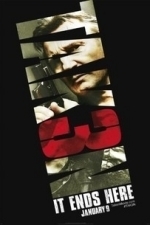
Liam Neeson may be an actor, an actor with a “particular set of skills,” some of
which entertain audiences around the world with action packed thrills on the big
screen. Was he able to do it again in his latest film Taken 3?
The film centers around Bryan Mill’s (Neeson) ex wife Lenore (Famke Janssen) and
her relationship problems with Stuart (Dougray Scott). She seeks comfort in Mills
and though he remains in love with Lenore, he would rather she figure things out
in her marriage before anything happens between them. Stuart begins to be
suspicious of the relationship between the two and decides to ask Mills to stay
away from Lenore while they work things out. Mills receives a text the following
day asking him to meet her at his place for a shoulder tho cry on. Unfortunately
upon arriving with breakfast, he discovers her lifeless body in his bed. Before
he had a moment to take everything in, the police barge in and try to arrest him
for the murder. In true Mill’s fashion, he is able to escape though only steps
behind is inspector Dotzler (Forest Whitaker) who is trying to piece together
every clue that seemingly points away from Bryan Mills as the culprit. Let us not
forget about his daughter Kim (Maggie Grace) who was the victim in the first film
and might just be in this film.
My expectations weren’t high for this installment of Taken. Some may agree with me
that as with most films that spawn sequels, the first film is usually the best. As
a huge fan of the first Taken I knew that the third one, just like the second one
would be worth seeing at least once but that would probably it. This film had far
less action than its predecessors which is a little strange if you ask me. Now
don’t get me wrong, Liam Neesen is an amazing actor in this genre however
sometimes that really isn’t enough. An actor can only do so much with what they
are given. In his case it might have been the script. The editing was a bit choppy
and the cinematography a bit sloppy.
In the case of this film, I would’ve expected a little bit more. I think it would
be wise to leave this film as the last and final one. I think that they have
milked this cow dry. As I have stated above, this film is worth seeing at least
once although you may want to leave it up to redbox and skip theatre prices.
which entertain audiences around the world with action packed thrills on the big
screen. Was he able to do it again in his latest film Taken 3?
The film centers around Bryan Mill’s (Neeson) ex wife Lenore (Famke Janssen) and
her relationship problems with Stuart (Dougray Scott). She seeks comfort in Mills
and though he remains in love with Lenore, he would rather she figure things out
in her marriage before anything happens between them. Stuart begins to be
suspicious of the relationship between the two and decides to ask Mills to stay
away from Lenore while they work things out. Mills receives a text the following
day asking him to meet her at his place for a shoulder tho cry on. Unfortunately
upon arriving with breakfast, he discovers her lifeless body in his bed. Before
he had a moment to take everything in, the police barge in and try to arrest him
for the murder. In true Mill’s fashion, he is able to escape though only steps
behind is inspector Dotzler (Forest Whitaker) who is trying to piece together
every clue that seemingly points away from Bryan Mills as the culprit. Let us not
forget about his daughter Kim (Maggie Grace) who was the victim in the first film
and might just be in this film.
My expectations weren’t high for this installment of Taken. Some may agree with me
that as with most films that spawn sequels, the first film is usually the best. As
a huge fan of the first Taken I knew that the third one, just like the second one
would be worth seeing at least once but that would probably it. This film had far
less action than its predecessors which is a little strange if you ask me. Now
don’t get me wrong, Liam Neesen is an amazing actor in this genre however
sometimes that really isn’t enough. An actor can only do so much with what they
are given. In his case it might have been the script. The editing was a bit choppy
and the cinematography a bit sloppy.
In the case of this film, I would’ve expected a little bit more. I think it would
be wise to leave this film as the last and final one. I think that they have
milked this cow dry. As I have stated above, this film is worth seeing at least
once although you may want to leave it up to redbox and skip theatre prices.

Emma @ The Movies (1786 KP) rated Spiral: From the Book of Saw (2021) in Movies
May 23, 2021
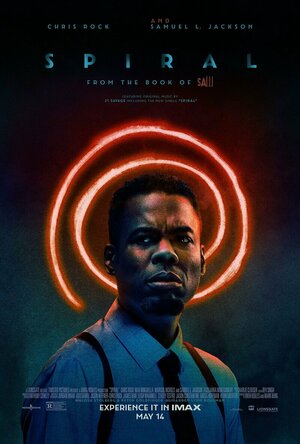
Usually I would feel the urge to watch the series of films before seeing a new one. In this instance, knowing I've only seen one film (possibly two), kept me happy enough to go with this one. I wasn't convinced I had it in me to watch the whole series.
Detective Banks works alone in his departments after standing up against a corrupt cop. Now he has to partner with a rookie cop as he's thrown into a case as a spate of horrendous murders, with more than a passing resemblance to those that lie deep in the cities past, plague the PD.
The focus on the PD and Banks really worked for me, and the partnership between Banks and Schenk was strong. It transitioned the story well from being a Saw film without being a Saw film. For me that was a bonus.
Chris Rock was an interesting choice in the lead role. There are moments where he stood out and was convincing in the part, but others that gave me flashbacks to Dogma and Lethal Weapon 4. While it was an enjoyable piece of acting, it did occasionally take me out of the story.
Dynamics between the characters were pretty solid throughout, and I'd be hard-pressed to say someone didn't fit in the cast. What did put me out a little was the tension within the police department. There are some flashbacks that give you some context, but the current day points felt... too petty? But that might just be something I don't have enough knowledge of.
Not being tied to the Saw franchise probably helps. I liked the idea of this horror breaking out into a police thriller sort of thing, and I got Bone Collector and Criminal Monds vibes as I watched. Anyone who knows me will know that's a winner.
I was very entertained as I watched, but it wasn't until I got outside and was chatting about it that I kept stumbling across flaws that had thankfully escaped me while in the cinema. I did know the ending before I got there, and that didn't bother me as much as it had in other films. I think mainly because I was engaged in finding out the why of it all. Despite both of those things, it was a good film for me, but I sense a Saw purist might not agree.
Originally posted on: https://emmaatthemovies.blogspot.com/2021/05/spiral-movie-review.html
Detective Banks works alone in his departments after standing up against a corrupt cop. Now he has to partner with a rookie cop as he's thrown into a case as a spate of horrendous murders, with more than a passing resemblance to those that lie deep in the cities past, plague the PD.
The focus on the PD and Banks really worked for me, and the partnership between Banks and Schenk was strong. It transitioned the story well from being a Saw film without being a Saw film. For me that was a bonus.
Chris Rock was an interesting choice in the lead role. There are moments where he stood out and was convincing in the part, but others that gave me flashbacks to Dogma and Lethal Weapon 4. While it was an enjoyable piece of acting, it did occasionally take me out of the story.
Dynamics between the characters were pretty solid throughout, and I'd be hard-pressed to say someone didn't fit in the cast. What did put me out a little was the tension within the police department. There are some flashbacks that give you some context, but the current day points felt... too petty? But that might just be something I don't have enough knowledge of.
Not being tied to the Saw franchise probably helps. I liked the idea of this horror breaking out into a police thriller sort of thing, and I got Bone Collector and Criminal Monds vibes as I watched. Anyone who knows me will know that's a winner.
I was very entertained as I watched, but it wasn't until I got outside and was chatting about it that I kept stumbling across flaws that had thankfully escaped me while in the cinema. I did know the ending before I got there, and that didn't bother me as much as it had in other films. I think mainly because I was engaged in finding out the why of it all. Despite both of those things, it was a good film for me, but I sense a Saw purist might not agree.
Originally posted on: https://emmaatthemovies.blogspot.com/2021/05/spiral-movie-review.html

Photon Flash Player & Private Browser for iPad
Utilities and Productivity
App
+ "Photon browser is a powerful and versatile Safari alternative that excels in its Flash...

Haley Mathiot (9 KP) rated Sundays at Tiffany's in Books
Apr 27, 2018
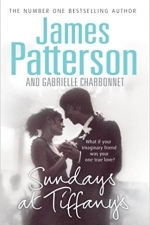
James Patterson never ceases to amaze me. I read this book in a matter of hours.
when Jane's imaginary friend, Michael, leaves and promises that she'll forget him, Jane is heartbroken. She goes through her life, seemingly in mediocrety, until one day after a terrible break-up with her crappy-boyfriend (dude, you so had it coming.), she visits her favorite childhood restaurant and is bombarded by memories of Michael.
then she looks across the room and sees him.
and then it takes off. Jane changes her life, no longer afraid to be who she really is. Michael calls into question who he is, and struggles through his own identity crisis--is he human, or angel, or something else? and why didn't Jane's "imaginary" experience go the way it was supposed to?
but then Michael realizes his mission in New York--and his whole world comes crashing down. how is he supposed to do this, and how is he supposed to live with it?
the whole time reading this book, i kept thinking questions. for the sake of keeping this review spoiler-free, I won't tell you what they were. one of them was "will he forget, like he did with all his other past experiences?" I couldn't see a way out of the climax... but the ending was all too sweet. i squealed (don't believe me? my sister was in the room at the time. ask her. it's true).
all in all, this book is a treasure to me. it's staying on my bookshelf where it belongs, i won't ever sell it or give it away (yeah, you can borrow it if you really want to. be careful of the pages.). maybe i loved it more than anyone else ever has, because of a strange connection I share with Jane Margaux. my imaginary friend's name was Michael, too.
when Jane's imaginary friend, Michael, leaves and promises that she'll forget him, Jane is heartbroken. She goes through her life, seemingly in mediocrety, until one day after a terrible break-up with her crappy-boyfriend (dude, you so had it coming.), she visits her favorite childhood restaurant and is bombarded by memories of Michael.
then she looks across the room and sees him.
and then it takes off. Jane changes her life, no longer afraid to be who she really is. Michael calls into question who he is, and struggles through his own identity crisis--is he human, or angel, or something else? and why didn't Jane's "imaginary" experience go the way it was supposed to?
but then Michael realizes his mission in New York--and his whole world comes crashing down. how is he supposed to do this, and how is he supposed to live with it?
the whole time reading this book, i kept thinking questions. for the sake of keeping this review spoiler-free, I won't tell you what they were. one of them was "will he forget, like he did with all his other past experiences?" I couldn't see a way out of the climax... but the ending was all too sweet. i squealed (don't believe me? my sister was in the room at the time. ask her. it's true).
all in all, this book is a treasure to me. it's staying on my bookshelf where it belongs, i won't ever sell it or give it away (yeah, you can borrow it if you really want to. be careful of the pages.). maybe i loved it more than anyone else ever has, because of a strange connection I share with Jane Margaux. my imaginary friend's name was Michael, too.

Marylegs (44 KP) rated Bridget Jones's Diary in Books
Aug 14, 2019
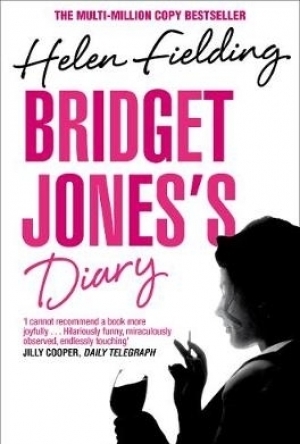
I can’t begin to imagine why it has taken me so very long to get round to reading this book. Of course I was in my mid-teens when the film came out. Obviously I have seen the film, it happens to be one of my favourite chick flick films to curl up under tons of covers to. Maybe that’s why it has taken me so long to get round to….
So unless you have been hiding under a rock for the past 10 years, most people have a rough idea what Bridget Jones’s Diary is all about.
I found Bridget less frumpy then the film portrayed her and I think she is much stronger than she believes she is. Although she was at times pretty self-centred… but this is her diary… everyone thinks about themselves when they talk to their diary and are less concerned with other people.
I could whole heartedly relate to Bridget’s constant dilemma about dieting and trying to lose weight…. And often failing due to food tasting so damn good. On the whole it was as I imagined it would be. I particularly liked the parts where Bridget makes references to fancying Mr. Darcy (ie Colin Firth) from Pride and Prejudice. Never expecting that he would one day turn out to be her Darcy in the film.
If you liked/loved the film and haven’t read the book, I would recommend it. Don’t expect anything more than the film, but you definitely don’t get less. I will read two following books as I am sure there are many other deep thoughts Bridget needs to share with me and it was a fun easy read.
So unless you have been hiding under a rock for the past 10 years, most people have a rough idea what Bridget Jones’s Diary is all about.
I found Bridget less frumpy then the film portrayed her and I think she is much stronger than she believes she is. Although she was at times pretty self-centred… but this is her diary… everyone thinks about themselves when they talk to their diary and are less concerned with other people.
I could whole heartedly relate to Bridget’s constant dilemma about dieting and trying to lose weight…. And often failing due to food tasting so damn good. On the whole it was as I imagined it would be. I particularly liked the parts where Bridget makes references to fancying Mr. Darcy (ie Colin Firth) from Pride and Prejudice. Never expecting that he would one day turn out to be her Darcy in the film.
If you liked/loved the film and haven’t read the book, I would recommend it. Don’t expect anything more than the film, but you definitely don’t get less. I will read two following books as I am sure there are many other deep thoughts Bridget needs to share with me and it was a fun easy read.