
Search

Ivana A. | Diary of Difference (1171 KP) rated The Language Of Thorns in Books
Feb 3, 2020

<a href="https://diaryofdifference.com/">Blog</a>; | <a href="https://www.facebook.com/diaryofdifference/">Facebook</a>; | <a href="https://twitter.com/DiaryDifference">Twitter</a>; | <a href="https://www.instagram.com/diaryofdifference/">Instagram</a>; | <a href="https://www.pinterest.co.uk/diaryofdifference/pins/">Pinterest</a>;
<img src="https://gipostcards.files.wordpress.com/2019/01/new-blog-banner-17.png"/>;
<b>3.8 ★, to be exact. </b>
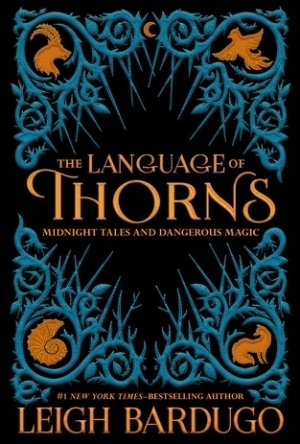
Sometimes, we enter a library, not really knowing what we are looking for. One day, I entered the library, only to return a few books. Instead, I returned with two more. The first one didn’t impress me, but the second one was this book – The Language of Thorns by Leigh Bardugo. I only picked it up, because I liked the cover. And I know, we shouldn’t judge a book by its cover, but I guess the magic worked on me this time around.
This book featured six stories, all six magical and beautiful in their own way. Some attracted me more, some a bit less, but I, overall, feel delighted to have read this book. I haven’t read Leigh’s previous books, so I didn’t know about this world before, but these are apparently the same woods featured in those books as well.
I will give a brief opinion on all stories, and the main rating will be the average from them all. Let’s go.
<b><i>1. Ayama and the Thorn Wood – ★★★★★</i></b>
<b>‘’Interesting things only happen to pretty girls.’’</b>
A beautiful tale that will show you how beauty comes from within. The King and Queen have two sons – one is a beautiful man, the future king, and the other one is a monster. They are scared and ashamed of the monster-boy, and let him live his life in the labyrinth they made for him. In the village, in a poor family, there are two daughters, one as beautiful as the sun, and the other one ugly. When the monster escapes the labyrinth and starts ruining fields and make disasters, everyone is scared to go and talk to him and beg for forgiveness, so the ugly lady is sent to her woods – quite certain she will never return…
<b>‘’This little prince was shaped a bit like a boy but more like a wolf, his body covered in slick black fur from crown to clawed foot. His eyes were red as blood, and the nubs of two budding horns protruded from his head.’’</b>
<b><i>2. The Too-Clever Fox – ★★★★★</i></b>
<b>‘’Freedom is a burden, but you will learn to bear it.’’</b>
I loved this story the most, out of all six of them. It reminded me of home, and of how we tell stories back there. The whole ‘’Once Upon a Time’’ is real, and I enjoyed every moment of it. The winter theme, the hunting, the girl and the fox. This is a story that will teach you to not be assured you can outsmart everyone. Foxes in stories have always been presented as the smart ones, outsmarting every animal in the woods. This reminds me of Aesop’s Tales, which I really loved as a little girl. But sometimes, you will get outsmarted, and it might cost you your life. The twist was definitely unexpected, but indeed satisfying.
<b><i>3. The Witch of Duva – ★★★</i></b>
A story where girls disappear, and one girl decides to go into the woods and try to figure out why. This story upset me, and I didn’t like it. But deep inside, it’s a good one. Very creepy though, and very horror-y, but worth reading. Turn the lights off, get under a blanket, turn your torch on, and only then you will be ready to know the deep secrets this story tells you.
<b><i>4. Little Knife – ★★★★</i></b>
The shortest story in the book, but by all means not the least intriguing. A story that features a woman that is too beautiful, that men lose their mind as soon as they see her. To get the chance to marry her, men will have to go through a various of tasks. The twist at the end is incredible, and I really liked it. It starts off as a usual story, but it goes wild.
<b><i>5. The Soldier Prince – ★★</i></b>
This was a story I enjoyed the least. It all screamed ‘’The Nutcracker’’ to me, and I couldn’t see it as original. It was a re-make, and it was very different that the story we know, but it just didn’t work for me. This is a story about a man who makes toys and gives them life. And when one toy sort of ‘’wakes up’’, interesting things start to happen. Quite a creepy story. I usually like those, but this one was not my cup of tea.
<b><i>6. When Water Sand Fire – ★★★★</i></b>
<b>‘’ We were not made to please princes.’’</b>
This one is the longest story in the book. It features a world of creatures living underwater, and Ulla, who can sing and create magic, but who, as the people believe, is not a true born, but a mix between the underwater world and the humans. She is asked to help the prince become a king, but when the magic price is too high to paid, it doesn’t seem like she has a choice. I truly enjoyed this story, as it’s a beautiful mix of emotions while you read it. It was a bit disappointing that it seems as a remake of the creation of the character of Ursula from The Little Mermaid, at least to me.
Have you read this book, or any of Leigh Bardugo’s books? Let me know in the comments, I love to chat with you!
<a href="https://diaryofdifference.com/">Blog</a>; | <a href="https://www.facebook.com/diaryofdifference/">Facebook</a>; | <a href="https://twitter.com/DiaryDifference">Twitter</a>; | <a href="https://www.instagram.com/diaryofdifference/">Instagram</a>; | <a href="https://www.pinterest.co.uk/diaryofdifference/pins/">Pinterest</a>;
<img src="https://gipostcards.files.wordpress.com/2019/01/new-blog-banner-17.png"/>;
<b>3.8 ★, to be exact. </b>
Sometimes, we enter a library, not really knowing what we are looking for. One day, I entered the library, only to return a few books. Instead, I returned with two more. The first one didn’t impress me, but the second one was this book – The Language of Thorns by Leigh Bardugo. I only picked it up, because I liked the cover. And I know, we shouldn’t judge a book by its cover, but I guess the magic worked on me this time around.
This book featured six stories, all six magical and beautiful in their own way. Some attracted me more, some a bit less, but I, overall, feel delighted to have read this book. I haven’t read Leigh’s previous books, so I didn’t know about this world before, but these are apparently the same woods featured in those books as well.
I will give a brief opinion on all stories, and the main rating will be the average from them all. Let’s go.
<b><i>1. Ayama and the Thorn Wood – ★★★★★</i></b>
<b>‘’Interesting things only happen to pretty girls.’’</b>
A beautiful tale that will show you how beauty comes from within. The King and Queen have two sons – one is a beautiful man, the future king, and the other one is a monster. They are scared and ashamed of the monster-boy, and let him live his life in the labyrinth they made for him. In the village, in a poor family, there are two daughters, one as beautiful as the sun, and the other one ugly. When the monster escapes the labyrinth and starts ruining fields and make disasters, everyone is scared to go and talk to him and beg for forgiveness, so the ugly lady is sent to her woods – quite certain she will never return…
<b>‘’This little prince was shaped a bit like a boy but more like a wolf, his body covered in slick black fur from crown to clawed foot. His eyes were red as blood, and the nubs of two budding horns protruded from his head.’’</b>
<b><i>2. The Too-Clever Fox – ★★★★★</i></b>
<b>‘’Freedom is a burden, but you will learn to bear it.’’</b>
I loved this story the most, out of all six of them. It reminded me of home, and of how we tell stories back there. The whole ‘’Once Upon a Time’’ is real, and I enjoyed every moment of it. The winter theme, the hunting, the girl and the fox. This is a story that will teach you to not be assured you can outsmart everyone. Foxes in stories have always been presented as the smart ones, outsmarting every animal in the woods. This reminds me of Aesop’s Tales, which I really loved as a little girl. But sometimes, you will get outsmarted, and it might cost you your life. The twist was definitely unexpected, but indeed satisfying.
<b><i>3. The Witch of Duva – ★★★</i></b>
A story where girls disappear, and one girl decides to go into the woods and try to figure out why. This story upset me, and I didn’t like it. But deep inside, it’s a good one. Very creepy though, and very horror-y, but worth reading. Turn the lights off, get under a blanket, turn your torch on, and only then you will be ready to know the deep secrets this story tells you.
<b><i>4. Little Knife – ★★★★</i></b>
The shortest story in the book, but by all means not the least intriguing. A story that features a woman that is too beautiful, that men lose their mind as soon as they see her. To get the chance to marry her, men will have to go through a various of tasks. The twist at the end is incredible, and I really liked it. It starts off as a usual story, but it goes wild.
<b><i>5. The Soldier Prince – ★★</i></b>
This was a story I enjoyed the least. It all screamed ‘’The Nutcracker’’ to me, and I couldn’t see it as original. It was a re-make, and it was very different that the story we know, but it just didn’t work for me. This is a story about a man who makes toys and gives them life. And when one toy sort of ‘’wakes up’’, interesting things start to happen. Quite a creepy story. I usually like those, but this one was not my cup of tea.
<b><i>6. When Water Sand Fire – ★★★★</i></b>
<b>‘’ We were not made to please princes.’’</b>
This one is the longest story in the book. It features a world of creatures living underwater, and Ulla, who can sing and create magic, but who, as the people believe, is not a true born, but a mix between the underwater world and the humans. She is asked to help the prince become a king, but when the magic price is too high to paid, it doesn’t seem like she has a choice. I truly enjoyed this story, as it’s a beautiful mix of emotions while you read it. It was a bit disappointing that it seems as a remake of the creation of the character of Ursula from The Little Mermaid, at least to me.
Have you read this book, or any of Leigh Bardugo’s books? Let me know in the comments, I love to chat with you!
<a href="https://diaryofdifference.com/">Blog</a>; | <a href="https://www.facebook.com/diaryofdifference/">Facebook</a>; | <a href="https://twitter.com/DiaryDifference">Twitter</a>; | <a href="https://www.instagram.com/diaryofdifference/">Instagram</a>; | <a href="https://www.pinterest.co.uk/diaryofdifference/pins/">Pinterest</a>;

Gareth von Kallenbach (980 KP) rated It: Chapter Two (2019) in Movies
Sep 13, 2019
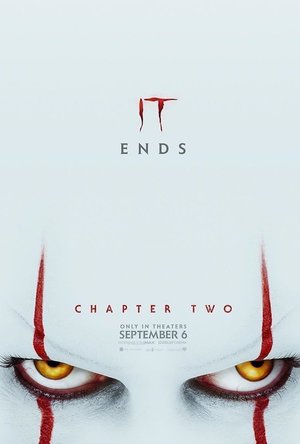

I’ve always been a fan of Stephen King movies, even some of those that were not particularly good or well received. For someone who is a fan you think that would inspire me to pick up at least one of his books to get a feel for what the author truly intended over the stripped down,
“Hollywood-ised” versions. I can’t put my finger on why I haven’t, it’s not because the size of many of his novels are daunting, it’s more that as a reader I’m just not a horror book fan. So when it comes to sitting in on a Stephen king movie I have to rely on the story by it’s modified merits then to compare and contrast what IT does well (or not).
Like many before me, my first movie experience of IT was the classic mini-series featuring an incredibly creepy (and non-CGI’d version) of Pennywise portrayed by the extremely talented Tim Curry.
I even went out and purchased the mini-series before I went to see the first chapter of the remake of IT, just to see how those two compared. IT: Chapter One introduced us in great depth to the teens of the original losers club. A group of misfits, who went on their own personal crusade to attack and kill the nefarious clown while saving one of their own. A strong pact was formed and an oath sworn that if IT ever returned to Derry that the group would once again join together to put a stop to IT for good.
IT: Chapter Two picks up 27 years later, the group has moved on with their lives, all except Mike (Isaiah Mustafa as an adult and Chosen Jacobs as a younger version) who has felt a sense of responsibility to watch over the town and research how to kill IT if IT were to ever return. A horrific killing of an adult at the fair and subsequent disappearances of children alert Mike that the plague that has befallen Derry for generations has returned to feed. Mike reaches out to each of the losers reminding them that something they have all feared has come to pass.
Each when notified experience a fear that is indescribable yet for some reason the groups memories of the past have become clouded.
The now adult losers (with several flashbacks featuring the original cast) come together to remind themselves of the past, and the pact they made to protect the future. Featuring a star studded cast, Mike, Bill (James McAvoy/Jaeden Martell), Beverly (Jessica Chastain/Sophia Lillis), Ben (Jay Ryan/Jeremy Ray Taylor), Richie (Bill Hader/Finn Wolfhard), Eddie (James Ransone/Jack Dylan Grazer) and Stanley (Andy Bean/Wyatt Oleff), must battle their lost memories, their fears and the very real danger if they are to save Derry and themselves.
IT: Chapter 2 continues the incredible character building that Chapter 1 began. Where each of the young actors were perfectly cast as their book counterparts, their adult versions could easily be mistaken for the grown-up versions. This is the area where IT shines the most, the story of the losers who have grown and moved away, yet still share the unescapable bond of friendship. While an older Bill struggles (much like Stephen King himself) to come up with good endings to his stories it’s what he writes at the end of IT: Chapter 2 that really sums up the movie as a whole. To summarize, there are no good friends or bad friends, there are only friends, and chapter 2 is an example of how you take a band of misfits and turn them into heroes.
Sadly, for all the things IT does from a character side, it tends to drag on and over CGI its monster side. Pennywise the clown (portrayed brilliantly by Bill Skarsgård) brings with him all the creepiness and fear that the movie needs, even posters of his maniacal self is promoting lawsuits in other countries due to his ability to scare small children. So, it seems a bit disheartening that the studio felt it was necessary to go overboard with their CGI budgets. Many scenes go from being creepy and scary to simply being silly when our favorite clown is turned into a giant naked hag like figure. This is where I felt the mini-series did a far better job, due to its limited budget and shorter time requirements it allowed for the viewers to imagine the evil and not see it thrown out for the world to see.
IT: Chapter 2 also drags out far longer than it needed to. Make sure you get your bathroom breaks in, because the film, not counting previews, is just about 10 minutes shy of being three hours. I’m normally not one to complain about the length of a movie, as I’d rather they tell the story they want instead of trying to compress it into a shorter run time. However, in this case, it seemed entirely wasted on an overabundance of clown mutations and an extremely drawn out final battle. It’s unfortunate, because one of the most unused (and potentially interesting characters) Henry Bowers (Teach Grant/Nicholas Hamilton) is given only a few minutes of screen time and ultimately adds nothing to the movie as a whole. As I stated earlier, I haven’t read the novel, but I have to assume that he played a far bigger role in the book.
As it stands in the movie, his character is both unnecessary and completely ineffective at whatever he was attempting to do. I think some of the time taken away from the battle scenes to flesh out his (or other supporting characters) would have be time better spent.
IT: Chapter 2 is a good movie, that with some reduced special effects and better time management is just shy of being a great movie. The story of the kids, now grown up, is one of forgiveness, bravery and love. It shows how true friendship can overcome distance and time and that those things never truly vanish, even if the particulars of what separated you in the first place is a bit fuzzy. Horror movies with outrageous budgets tend to lose the spirit of what makes a true horror movie scary…it’s rarely about the effects, and more about the imagination.
That’s what makes the books typically so much better than the movies, after all, each one of us imagines our own version of what truly scares us (although clowns tend to be scary regardless of how they are portrayed). IT: Chapter 2 provides a satisfying ending to a story that began a few years ago, it suffers a bit from its budget and its use of CGI effects, but it’s still a story of what all of us losers can accomplish if we band together.
“Hollywood-ised” versions. I can’t put my finger on why I haven’t, it’s not because the size of many of his novels are daunting, it’s more that as a reader I’m just not a horror book fan. So when it comes to sitting in on a Stephen king movie I have to rely on the story by it’s modified merits then to compare and contrast what IT does well (or not).
Like many before me, my first movie experience of IT was the classic mini-series featuring an incredibly creepy (and non-CGI’d version) of Pennywise portrayed by the extremely talented Tim Curry.
I even went out and purchased the mini-series before I went to see the first chapter of the remake of IT, just to see how those two compared. IT: Chapter One introduced us in great depth to the teens of the original losers club. A group of misfits, who went on their own personal crusade to attack and kill the nefarious clown while saving one of their own. A strong pact was formed and an oath sworn that if IT ever returned to Derry that the group would once again join together to put a stop to IT for good.
IT: Chapter Two picks up 27 years later, the group has moved on with their lives, all except Mike (Isaiah Mustafa as an adult and Chosen Jacobs as a younger version) who has felt a sense of responsibility to watch over the town and research how to kill IT if IT were to ever return. A horrific killing of an adult at the fair and subsequent disappearances of children alert Mike that the plague that has befallen Derry for generations has returned to feed. Mike reaches out to each of the losers reminding them that something they have all feared has come to pass.
Each when notified experience a fear that is indescribable yet for some reason the groups memories of the past have become clouded.
The now adult losers (with several flashbacks featuring the original cast) come together to remind themselves of the past, and the pact they made to protect the future. Featuring a star studded cast, Mike, Bill (James McAvoy/Jaeden Martell), Beverly (Jessica Chastain/Sophia Lillis), Ben (Jay Ryan/Jeremy Ray Taylor), Richie (Bill Hader/Finn Wolfhard), Eddie (James Ransone/Jack Dylan Grazer) and Stanley (Andy Bean/Wyatt Oleff), must battle their lost memories, their fears and the very real danger if they are to save Derry and themselves.
IT: Chapter 2 continues the incredible character building that Chapter 1 began. Where each of the young actors were perfectly cast as their book counterparts, their adult versions could easily be mistaken for the grown-up versions. This is the area where IT shines the most, the story of the losers who have grown and moved away, yet still share the unescapable bond of friendship. While an older Bill struggles (much like Stephen King himself) to come up with good endings to his stories it’s what he writes at the end of IT: Chapter 2 that really sums up the movie as a whole. To summarize, there are no good friends or bad friends, there are only friends, and chapter 2 is an example of how you take a band of misfits and turn them into heroes.
Sadly, for all the things IT does from a character side, it tends to drag on and over CGI its monster side. Pennywise the clown (portrayed brilliantly by Bill Skarsgård) brings with him all the creepiness and fear that the movie needs, even posters of his maniacal self is promoting lawsuits in other countries due to his ability to scare small children. So, it seems a bit disheartening that the studio felt it was necessary to go overboard with their CGI budgets. Many scenes go from being creepy and scary to simply being silly when our favorite clown is turned into a giant naked hag like figure. This is where I felt the mini-series did a far better job, due to its limited budget and shorter time requirements it allowed for the viewers to imagine the evil and not see it thrown out for the world to see.
IT: Chapter 2 also drags out far longer than it needed to. Make sure you get your bathroom breaks in, because the film, not counting previews, is just about 10 minutes shy of being three hours. I’m normally not one to complain about the length of a movie, as I’d rather they tell the story they want instead of trying to compress it into a shorter run time. However, in this case, it seemed entirely wasted on an overabundance of clown mutations and an extremely drawn out final battle. It’s unfortunate, because one of the most unused (and potentially interesting characters) Henry Bowers (Teach Grant/Nicholas Hamilton) is given only a few minutes of screen time and ultimately adds nothing to the movie as a whole. As I stated earlier, I haven’t read the novel, but I have to assume that he played a far bigger role in the book.
As it stands in the movie, his character is both unnecessary and completely ineffective at whatever he was attempting to do. I think some of the time taken away from the battle scenes to flesh out his (or other supporting characters) would have be time better spent.
IT: Chapter 2 is a good movie, that with some reduced special effects and better time management is just shy of being a great movie. The story of the kids, now grown up, is one of forgiveness, bravery and love. It shows how true friendship can overcome distance and time and that those things never truly vanish, even if the particulars of what separated you in the first place is a bit fuzzy. Horror movies with outrageous budgets tend to lose the spirit of what makes a true horror movie scary…it’s rarely about the effects, and more about the imagination.
That’s what makes the books typically so much better than the movies, after all, each one of us imagines our own version of what truly scares us (although clowns tend to be scary regardless of how they are portrayed). IT: Chapter 2 provides a satisfying ending to a story that began a few years ago, it suffers a bit from its budget and its use of CGI effects, but it’s still a story of what all of us losers can accomplish if we band together.

Purple Phoenix Games (2266 KP) rated The Road to Canterbury in Tabletop Games
Oct 4, 2021
I am not a sinless man. In fact, it’s been years since I’ve been to confession, and at this point I’m afraid I would be there for hours just spilling the beans. I know many pious people, but alas, I am not one. However, I do appreciate those that attempt to live that holy life. It takes a lot of guts and a lot of hard work. I guess I’m a little slothy when it comes to that, personally. Anyway, I know of the Seven Deadly Sins, Cardinal Sins, Capital Vices, or whatever you’d like to call them. In fact, I really like the movie Seven – I think it’s great! That said, let’s find out just “what’s in the box?”
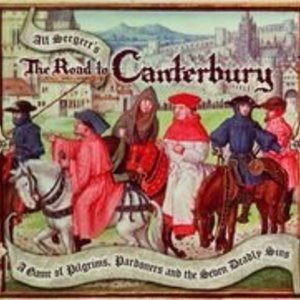
The Road To Canterbury is a game of medieval hand management and area influence. In it players are false pardoners stalking the road to the city of Canterbury as pilgrims make their way there from London. As their companies run across these pardoners, they are offered the chance to purchase pardons – salvation and forgiveness for their sins. However, these pardoners are also keen to help the pilgrims along the path of sin, thus making their faux pardons worth even more money! The pardoner who ends the game with the most money will win along The Road to Canterbury.
DISCLAIMER: We were provided a copy of the Impoverished Pilgrim Edition (2nd edition) game for the purposes of this review. This is a retail copy of the game, so what you see in these photos is exactly what would be received in your box. I do not intend to cover every single rule included in the rulebook, but will describe the overall game flow and major rule set so that our readers may get a sense of how the game plays. For more in depth rules, you may purchase a copy online or from your FLGS. -T
To setup, follow the rulebook, as there are many components to track. The main areas are the Circle of Sin mat that holds the Parson pawn, the decks area that hold the various decks of cards from which players will be drawing, and each player’s personal area where players will hide their earnings and hand of cards behind the privacy screen. Once all is setup somewhat correctly, it should look similar to the photo below. Warning: When I set this up and took the photo, I neglected to realize the red company and the map tiles were translated to the wrong spaces, so just switch those.
The Road to Canterbury is a game of rounds, and each round players will be taking similar steps: Play One Card, Redraw, Perform a Reckoning of Sin. Players will have access to three different types of cards that can be played during the Play One Card phase: Sin cards (five of which are dealt at setup), Pardon cards, and Relic cards. During this phase, the active player can play a Sin card to one of the active Pilgrims to tempt them towards committing that sin. The first time the player adds a Sin card to a Pilgrim, they place one of their corruption cubes on the matching sin on the Circle of Sin. Alternatively, they may play a powerful Relic card that offers adjustments to the rules, or has some interesting results. When a player feels that enough Sin cards of a specific type have been played on a Pilgrim, they may opt to play a matching Pardon card in order to gain precious coin to their pockets. Each Pardon card essentially pardons ALL the sins of that type on the Pilgrim, and the player then collects coins exponentially for a larger total of matching Sin cards on that Pilgrim. If the Parson is currently sitting on the matching sin, the pardoner receives extra coin for it being an especially egregious sin in the eyes of the church. Each time the Pilgrim is pardoned, the pardoner places one of their corruption cubes upon the Pilgrim.
After the active player has played their card, they must Redraw their hand back to five cards, choosing to draw from the Sin, Pardon, or Relic offerings. Some Sin cards may be drawn that are Death Approaches cards. When these surface, they are immediately attached to the Pilgrim whose color matches that of the drawn card’s border color. This essentially eats up a slot on the Pilgrim that could be used for a Sin card to be pardoned.
Once the player has redrawn cards to their hand they must next Perform a Reckoning of Sin. The active player assesses each active Pilgrim to see if they have seven or more cards attached to them. If so, that Pilgrim will perish from the “deadly” sins. Whichever player has placed the most number of corruption cubes upon the Pilgrim is considered present at time of death and will receive credit for the sending to the heavens. They move one of the cubes upon the Pilgrim to the first space on the map tile, earning bonus points and a Last Rites token. Last Rites may be performed immediately to take another turn, or may be held until the end of the game for a 3 VP bonus per token. The most interesting aspect of a Pilgrim dying is the fact that their card now becomes a permanent placeholder underneath their company’s colored banner. So the next Pilgrim to enter play for that company will need only six additional cards to kick the bucket, and so on.
Play continues in this fashion of players taking turns through their three phases. The game ends when all the spaces on the map tile are filled with cubes. Bonus points are counted, coins are added, and the player with the most money/highest score is the winner! The best temptress and pardoner this side of Yorkshire!
Components. I have no experience with the first edition of The Road to Canterbury, so unfortunately I cannot compare and contrast components. However, I have seen many photos and even checked out a review video or two. What I can say about components is that this edition has refreshed the look of nearly everything, and so much for the better. Instead of boring plain cards, there’s just a little more decoration. Not so much to be invasive or distracting, but very tasteful. The component quality throughout is quite stellar. There’s a lot of cardboard in this box, and it all looks and feels great. I do quite like the art style, even though it’s all medievall-y and too artsy for my normal preference. All in all a great quality box of game.
So like I said, I have no experience with this game prior to receiving it and playing through it now. It certainly doesn’t feel like a 10-year-old game, nor does it really feel like many of the Alf Seegert games I have played in the past. Neither of these points are bad at all, just some thoughts I had.
It should be obvious by my ratings graphic that I dig this game a lot. I have nothing like it in my collection, and I am super excited to really bring this out with different types of gamers to see how it fares (once the COVID is no longer an issue, of course). I see this being a hit with my family, who enjoys a lot of take that style games. I see this being a hit with my more thinky gamer friends, because there are just so many juicy choices to be had every turn. I can see this even being a hit with my more gateway friends, because it isn’t terribly heavy, has some humor in it, and I can see the prospect of sowing sin and killing off innocent Pilgrims being attractive to some of my more morbid friends.
For me, I love the ability to take every turn and make important decisions. I try to make every turn meaningful to my agenda, but tactical with what may be at my disposal at the time. When should I play this Relic? Why is named something ridiculous? Should I wait a while longer to pardon this sin, or should I pile on another and then pardon next turn? Ooh, but what if my opponent has the same Pardon card. Am I truly happy that this poor Wife of Bath is about to kick it? GAAHHHHH!
Now it’s no secret that I am a big fan of Dr. Seegert’s games, as I have previously reviewed Fantastiqa and Haven with very high ratings. So, I was not at all surprised that I would love this one as well. It offers so many great choices, looks great on the table, fills a unique void that was present in my collection, and can be played with various types of gamers, even though it is designed for two or three players total. Purple Phoenix Games gives this one an unapologetic 5 / 6. I don’t think it will break into my Top 10, but I certainly won’t rule it out quite yet. More plays with different types of gamers may change my mind on that statement, and I eagerly await my plateful of crow. So if you are like me in your gaming preferences, check out this version of The Road to Canterbury. Let me know how often you tend to grab Relics too, because I feel like I need to utilize them more, but it is so hard to pass up a Sin or Pardon. I Lust after them so very badly.
The Road To Canterbury is a game of medieval hand management and area influence. In it players are false pardoners stalking the road to the city of Canterbury as pilgrims make their way there from London. As their companies run across these pardoners, they are offered the chance to purchase pardons – salvation and forgiveness for their sins. However, these pardoners are also keen to help the pilgrims along the path of sin, thus making their faux pardons worth even more money! The pardoner who ends the game with the most money will win along The Road to Canterbury.
DISCLAIMER: We were provided a copy of the Impoverished Pilgrim Edition (2nd edition) game for the purposes of this review. This is a retail copy of the game, so what you see in these photos is exactly what would be received in your box. I do not intend to cover every single rule included in the rulebook, but will describe the overall game flow and major rule set so that our readers may get a sense of how the game plays. For more in depth rules, you may purchase a copy online or from your FLGS. -T
To setup, follow the rulebook, as there are many components to track. The main areas are the Circle of Sin mat that holds the Parson pawn, the decks area that hold the various decks of cards from which players will be drawing, and each player’s personal area where players will hide their earnings and hand of cards behind the privacy screen. Once all is setup somewhat correctly, it should look similar to the photo below. Warning: When I set this up and took the photo, I neglected to realize the red company and the map tiles were translated to the wrong spaces, so just switch those.
The Road to Canterbury is a game of rounds, and each round players will be taking similar steps: Play One Card, Redraw, Perform a Reckoning of Sin. Players will have access to three different types of cards that can be played during the Play One Card phase: Sin cards (five of which are dealt at setup), Pardon cards, and Relic cards. During this phase, the active player can play a Sin card to one of the active Pilgrims to tempt them towards committing that sin. The first time the player adds a Sin card to a Pilgrim, they place one of their corruption cubes on the matching sin on the Circle of Sin. Alternatively, they may play a powerful Relic card that offers adjustments to the rules, or has some interesting results. When a player feels that enough Sin cards of a specific type have been played on a Pilgrim, they may opt to play a matching Pardon card in order to gain precious coin to their pockets. Each Pardon card essentially pardons ALL the sins of that type on the Pilgrim, and the player then collects coins exponentially for a larger total of matching Sin cards on that Pilgrim. If the Parson is currently sitting on the matching sin, the pardoner receives extra coin for it being an especially egregious sin in the eyes of the church. Each time the Pilgrim is pardoned, the pardoner places one of their corruption cubes upon the Pilgrim.
After the active player has played their card, they must Redraw their hand back to five cards, choosing to draw from the Sin, Pardon, or Relic offerings. Some Sin cards may be drawn that are Death Approaches cards. When these surface, they are immediately attached to the Pilgrim whose color matches that of the drawn card’s border color. This essentially eats up a slot on the Pilgrim that could be used for a Sin card to be pardoned.
Once the player has redrawn cards to their hand they must next Perform a Reckoning of Sin. The active player assesses each active Pilgrim to see if they have seven or more cards attached to them. If so, that Pilgrim will perish from the “deadly” sins. Whichever player has placed the most number of corruption cubes upon the Pilgrim is considered present at time of death and will receive credit for the sending to the heavens. They move one of the cubes upon the Pilgrim to the first space on the map tile, earning bonus points and a Last Rites token. Last Rites may be performed immediately to take another turn, or may be held until the end of the game for a 3 VP bonus per token. The most interesting aspect of a Pilgrim dying is the fact that their card now becomes a permanent placeholder underneath their company’s colored banner. So the next Pilgrim to enter play for that company will need only six additional cards to kick the bucket, and so on.
Play continues in this fashion of players taking turns through their three phases. The game ends when all the spaces on the map tile are filled with cubes. Bonus points are counted, coins are added, and the player with the most money/highest score is the winner! The best temptress and pardoner this side of Yorkshire!
Components. I have no experience with the first edition of The Road to Canterbury, so unfortunately I cannot compare and contrast components. However, I have seen many photos and even checked out a review video or two. What I can say about components is that this edition has refreshed the look of nearly everything, and so much for the better. Instead of boring plain cards, there’s just a little more decoration. Not so much to be invasive or distracting, but very tasteful. The component quality throughout is quite stellar. There’s a lot of cardboard in this box, and it all looks and feels great. I do quite like the art style, even though it’s all medievall-y and too artsy for my normal preference. All in all a great quality box of game.
So like I said, I have no experience with this game prior to receiving it and playing through it now. It certainly doesn’t feel like a 10-year-old game, nor does it really feel like many of the Alf Seegert games I have played in the past. Neither of these points are bad at all, just some thoughts I had.
It should be obvious by my ratings graphic that I dig this game a lot. I have nothing like it in my collection, and I am super excited to really bring this out with different types of gamers to see how it fares (once the COVID is no longer an issue, of course). I see this being a hit with my family, who enjoys a lot of take that style games. I see this being a hit with my more thinky gamer friends, because there are just so many juicy choices to be had every turn. I can see this even being a hit with my more gateway friends, because it isn’t terribly heavy, has some humor in it, and I can see the prospect of sowing sin and killing off innocent Pilgrims being attractive to some of my more morbid friends.
For me, I love the ability to take every turn and make important decisions. I try to make every turn meaningful to my agenda, but tactical with what may be at my disposal at the time. When should I play this Relic? Why is named something ridiculous? Should I wait a while longer to pardon this sin, or should I pile on another and then pardon next turn? Ooh, but what if my opponent has the same Pardon card. Am I truly happy that this poor Wife of Bath is about to kick it? GAAHHHHH!
Now it’s no secret that I am a big fan of Dr. Seegert’s games, as I have previously reviewed Fantastiqa and Haven with very high ratings. So, I was not at all surprised that I would love this one as well. It offers so many great choices, looks great on the table, fills a unique void that was present in my collection, and can be played with various types of gamers, even though it is designed for two or three players total. Purple Phoenix Games gives this one an unapologetic 5 / 6. I don’t think it will break into my Top 10, but I certainly won’t rule it out quite yet. More plays with different types of gamers may change my mind on that statement, and I eagerly await my plateful of crow. So if you are like me in your gaming preferences, check out this version of The Road to Canterbury. Let me know how often you tend to grab Relics too, because I feel like I need to utilize them more, but it is so hard to pass up a Sin or Pardon. I Lust after them so very badly.

Bong Mines Entertainment (15 KP) rated Damn. by Kendrick Lamar in Music
Jun 7, 2019
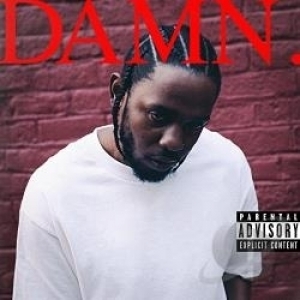

Kendrick Lamar is an iconic hip-hop artist outta Compton, California. Not too long ago, he released his fourth studio album, entitled, “DAMN.”.
1) Kendrick Lamar – “BLOOD.”
Lamar tackles the issue of life and death. He poses several questions over a melodic instrumental produced by Lamar, Bēkon, and Anthony “Top Dawg” Tiffith. One of them being, “Are we gonna live or die?” Lamar tells a brilliant story about him walking down a block, and he sees a blind lady in search of something she had lost. He goes over to help, and then he asks, “Hello, ma’am, can I be of any assistance? It seems to me that you have lost something. I would like to help you find it.” She replied, “Oh yes, you have lost something. You’ve lost your life.” And then we hear a gunshot. Lamar is shot. Did he lose his life? The dire ending answers the probing question posed in the beginning—we gonna die.
2) Kendrick Lamar – “DNA.”
Lamar explains why his DNA differs from a sucker’s DNA. His deoxyribonucleic acid consists of going through the school of hard knocks. He endured a rugged street life, prisons, money, drugs, alcohol, sex, murder, mayhem, loyalty, royalty, joy, etc. This is because his DNA comprises of things shared collectively by African-Americans who have been through the struggle. Lyrically, Lamar leaves earth, while rapping over an explosive track produced by Mike WiLL Made-It. From beginning to end, he doesn’t take a bar off and shows why conscience rap has resurrected into the new norm.
3) Kendrick Lamar – “YAH.”
Lamar let it be known that he’s diagnosed with real ni^^a conditions, and keeps it a hunnit by calling out Geraldo Rivera because of criticism Lamar received from a FOX NEWS segment. The kid Capri intro adds a classic east coast authenticity over a laid-back track produced by Bēkon, Anthony “Top Dawg” Tiffith, Sounwave, and DJ Dahi. Preconceived lies told by White slave masters to African slaves are melting like hot butter in the sun. Lamar, a descendant of those slaves, has awakened and knows himself.
4) Kendrick Lamar – “ELEMENT.”
Lamar, who Capri calls the ‘New Kung Fu Kenny’, continues his Shaolin-rap assault over a Wu-Tang-like track produced by Bēkon, Tae Beast, James Blake, Sounwave, and Ricci Riera. Lamar is simply on another level than his peers. He’s been through more sh*t than them, and he’s ready to put the Bible down and go eye for an eye for this sh*t. When he said, “I been stomped out in front of my mama / my daddy commissary made it to commas / B*tch, all my grandmas dead / So, ain’t nobody prayin’ for me, I’m on your head.”
5) Kendrick Lamar – “FEEL.”
Lamar beautifully expresses how he feels on a dope Sounwave-produced track, where Lamar raps, “I feel like the whole world want me to pray for ’em / But who the f*ck prayin’ for me?” Lamar feels that nobody ain’t prayin’ for him, and this void has him with a chip on his shoulders, looking at life from a dark, and troubled point of view. He feels pain and doesn’t see hope. Did the incident with the blind lady cause him to feel this way? Why does he feel this way? Kendrick raps, “I feel like it ain’t no tomorrow f*ck the world / The world is endin’, I’m done pretendin’… I feel like this gotta be the feelin’ what ‘Pac was…”
But Lamar knows ill-thinking is bad for his health, and he acknowledges the source of his negative thinking, “The feelin’ is toxic, I feel like I’m boxin’ demons / Monsters, false prophets schemin’,” and the list goes on and on. If no one is, just know that we are praying for you Kendrick, YAH-willing.
6) Kendrick Lamar – “LOYALTY” (FEAT. RIHANNA.)
Lamar and Rihanna explore one of the key elements in Lamar’s DNA, loyalty; and they pose a simple question—who are you loyal to? Is it your family? Friends? Or yourself? Maybe it’s money, weed, or alcoholic? Where does it begin and where does it end? Lamar and Rihanna do a wonderful job over a beautify track produced by Anthony “Top Dawg” Tiffith, Terrace Martin, Sounwave, and DJ Dahi.
7) Kendrick Lamar – “PRIDE.”
The Steve Lacy’s intro, “Love’s gonna get you killed, but pride’s gonna be the death of you and me,” fits perfect in the scheme of things. Lamar, a spiritual intellectual, understands Proverbs 16: 18, which states, “Pride goes before destruction, and a haughty spirit before a fall.” So, Lamar uses those reference points to further expound his faith. In the beginning, Lamar’s love for the blind lady got him shot. And now, will his pride, the great satisfaction he feels when he reviews all that he has achieved, will that be the death of him? Over a smooth/laid-back track produced by Bēkon, Anthony “Top Dawg” Tiffith, and Steve Lacy, Lamar states that he can’t fake being humble, just because people are insecure.
He answers the question of pride
Lamar raps, “Sick venom in men and women overcome with pride. A perfect world is never perfect, only filled with lies. Promises are broken and more resentment come alive. Race barriers make inferior of you and I. See, in a perfect world, I’ll choose faith over riches. I’ll choose work over b*tches, I’ll make schools out of prison. I’ll take all the religions and put ‘em all in one service. Just to tell ’em we ain’t sh*t, but He’s been perfect.”
If Lamar maintains his Israelite faith over riches, and keep that equation as the top priority, he won’t be a victim of pride. But the question is—can Lamar remain humble amidst all the madness?
8) Kendrick Lamar – “HUMBLE.”
Lamar shows that being humble is easier said than done. Over a bouncy-head-nodding track produced by Mike WiLL Made-It, Lamar speaks his mind and gives zero f*cks on what people think about him. He’s braggadocios, confident, and asserts himself as the king of rap music. He sends a cryptic message to his competition, “Watch my soul speak, you let the meds talk. If I kill a ni^^a, it won’t be the alcohol. I’m the realest ni^^a after all, b*tch, be humble.”
9) Kendrick Lamar – “LUST.”
Lamar tackles the issue of lust, one of the main causes that fuel what we do. He begins by creating a scene, where lust has him trying to stick the tip of his phallus inside a woman’s vagina. She agrees, causing blood to run through his favorite vein. His logic, it doesn’t matter what you do—just make it count.
So, over a chilled- track produced by BADBADNOTGOOD, Sounwave, and DJ Dahi, Lamar raps, “Hop in the shower, put on your makeup, lace your weave up. Touch on yourself, call up your ni^^a, tell him he ain’t sh*t. Credit card scam, get you a Visa, make him pay your rent. Hop on the ‘Gram, flex on the b*tches that be hatin’ on you. Pop you a pill, call up your b*tches, have ‘em waitin’ on you. Go to the club, have you some fun, make that ass bounce. It’s whatever, just make it count.”
10) Kendrick Lamar – “LOVE.” (FEAT. ZACARI.)
Lamar turns the lights down over a contemporary R&B love song, produced by Anthony “Top Dawg” Tiffith, Greg Kurstin, Sounwave, and Teddy Walton. The theme of love and lust continues, but this time, into a more unchartered direction. Zacari’s melodic cadence compliments Kung Fu Kenny’s intimate love-lyrics to the love of his life, probably his fiancé Whitney Alford, Lamar’s high school sweetheart.
11) Kendrick Lamar – “XXX.” (FEAT. U2.)
Lamar gets political over an NWA-type track produced By Bēkon, Anthony “Top Dawg” Tiffith, DJ Dahi, Sounwave, and Mike WiLL Made-It. The theme is America and the plight and strife of young African-American males trying to make ends meet. Lamar talks about a man who calls him, needing prayer and advice because his son had been murdered. He wants to know what to do and seeks advice from Lamar because he’s anointed.
But Lamar doesn’t sugarcoat his advice. He tells the man straight up, “If somebody kills my son, that means somebody’s gettin’ killed.” Then, Lamar goes on to tell the man how he would go about doing the killing. America is an eye-for-an-eye nation, and forgiveness is hardly practiced.
12) Kendrick Lamar – “FEAR.”
Lamar deeps dig into his soul to confront his fears. He does so over a conversation track produced by The Alchemist. Lamar uses Deuteronomy 28:28 to make sense of his damnation, where the title track derived from. “The Lord shall smite thee with madness, and blindness, and astonishment of heart…,” states the biblical commandment. Lamar reasons that YAH cursed the Israelites (so-called Blacks, Hispanics, and Native American Indians) because of their iniquity. So, that explains their conditions in the wilderness of North America.
Pride
So, Lamar’s fear of lose it all like the biblical character forced him or scared him to not spend a dime. Not because he is cheap, but because he didn’t want to spend money because he feared running out of money, and going back to Section 8. Lamar raps, “30 shows a month and I still won’t buy me no Lexus.” Not a lot of people can say this.
13) Kendrick Lamar – “GOD.”
Lamar talks about the success that he doesn’t want to lose. He compares it to what it was like when he didn’t have fame and fortune. Even though he chooses faith over riches, he’s still feeling good laughing to the bank like aha. Over a laid-back track produced by Bēkon, Anthony “Top Dawg” Tiffith, Cardo, Sounwave, Ricci Riera, and DJ Dahi, Lamar tells listeners, “Don’t judge me,” because this is what God feels like. Matthew 7:1 states,
14) Kendrick Lamar – “DUCKWORTH.”
Lamar uses his last name, Duckworth, as a song to explain the relationship between his father, Ducky, and Anthony Tiffith, CEO of Top Dawg Entertainment. Lamar explained if Tiffith had killed Ducky, then he would be serving life, and Lamar would’ve grown up without a father. And there would have been no Top Dawg Entertainment, and probably no Kendrick Lamar.
1) Kendrick Lamar – “BLOOD.”
Lamar tackles the issue of life and death. He poses several questions over a melodic instrumental produced by Lamar, Bēkon, and Anthony “Top Dawg” Tiffith. One of them being, “Are we gonna live or die?” Lamar tells a brilliant story about him walking down a block, and he sees a blind lady in search of something she had lost. He goes over to help, and then he asks, “Hello, ma’am, can I be of any assistance? It seems to me that you have lost something. I would like to help you find it.” She replied, “Oh yes, you have lost something. You’ve lost your life.” And then we hear a gunshot. Lamar is shot. Did he lose his life? The dire ending answers the probing question posed in the beginning—we gonna die.
2) Kendrick Lamar – “DNA.”
Lamar explains why his DNA differs from a sucker’s DNA. His deoxyribonucleic acid consists of going through the school of hard knocks. He endured a rugged street life, prisons, money, drugs, alcohol, sex, murder, mayhem, loyalty, royalty, joy, etc. This is because his DNA comprises of things shared collectively by African-Americans who have been through the struggle. Lyrically, Lamar leaves earth, while rapping over an explosive track produced by Mike WiLL Made-It. From beginning to end, he doesn’t take a bar off and shows why conscience rap has resurrected into the new norm.
3) Kendrick Lamar – “YAH.”
Lamar let it be known that he’s diagnosed with real ni^^a conditions, and keeps it a hunnit by calling out Geraldo Rivera because of criticism Lamar received from a FOX NEWS segment. The kid Capri intro adds a classic east coast authenticity over a laid-back track produced by Bēkon, Anthony “Top Dawg” Tiffith, Sounwave, and DJ Dahi. Preconceived lies told by White slave masters to African slaves are melting like hot butter in the sun. Lamar, a descendant of those slaves, has awakened and knows himself.
4) Kendrick Lamar – “ELEMENT.”
Lamar, who Capri calls the ‘New Kung Fu Kenny’, continues his Shaolin-rap assault over a Wu-Tang-like track produced by Bēkon, Tae Beast, James Blake, Sounwave, and Ricci Riera. Lamar is simply on another level than his peers. He’s been through more sh*t than them, and he’s ready to put the Bible down and go eye for an eye for this sh*t. When he said, “I been stomped out in front of my mama / my daddy commissary made it to commas / B*tch, all my grandmas dead / So, ain’t nobody prayin’ for me, I’m on your head.”
5) Kendrick Lamar – “FEEL.”
Lamar beautifully expresses how he feels on a dope Sounwave-produced track, where Lamar raps, “I feel like the whole world want me to pray for ’em / But who the f*ck prayin’ for me?” Lamar feels that nobody ain’t prayin’ for him, and this void has him with a chip on his shoulders, looking at life from a dark, and troubled point of view. He feels pain and doesn’t see hope. Did the incident with the blind lady cause him to feel this way? Why does he feel this way? Kendrick raps, “I feel like it ain’t no tomorrow f*ck the world / The world is endin’, I’m done pretendin’… I feel like this gotta be the feelin’ what ‘Pac was…”
But Lamar knows ill-thinking is bad for his health, and he acknowledges the source of his negative thinking, “The feelin’ is toxic, I feel like I’m boxin’ demons / Monsters, false prophets schemin’,” and the list goes on and on. If no one is, just know that we are praying for you Kendrick, YAH-willing.
6) Kendrick Lamar – “LOYALTY” (FEAT. RIHANNA.)
Lamar and Rihanna explore one of the key elements in Lamar’s DNA, loyalty; and they pose a simple question—who are you loyal to? Is it your family? Friends? Or yourself? Maybe it’s money, weed, or alcoholic? Where does it begin and where does it end? Lamar and Rihanna do a wonderful job over a beautify track produced by Anthony “Top Dawg” Tiffith, Terrace Martin, Sounwave, and DJ Dahi.
7) Kendrick Lamar – “PRIDE.”
The Steve Lacy’s intro, “Love’s gonna get you killed, but pride’s gonna be the death of you and me,” fits perfect in the scheme of things. Lamar, a spiritual intellectual, understands Proverbs 16: 18, which states, “Pride goes before destruction, and a haughty spirit before a fall.” So, Lamar uses those reference points to further expound his faith. In the beginning, Lamar’s love for the blind lady got him shot. And now, will his pride, the great satisfaction he feels when he reviews all that he has achieved, will that be the death of him? Over a smooth/laid-back track produced by Bēkon, Anthony “Top Dawg” Tiffith, and Steve Lacy, Lamar states that he can’t fake being humble, just because people are insecure.
He answers the question of pride
Lamar raps, “Sick venom in men and women overcome with pride. A perfect world is never perfect, only filled with lies. Promises are broken and more resentment come alive. Race barriers make inferior of you and I. See, in a perfect world, I’ll choose faith over riches. I’ll choose work over b*tches, I’ll make schools out of prison. I’ll take all the religions and put ‘em all in one service. Just to tell ’em we ain’t sh*t, but He’s been perfect.”
If Lamar maintains his Israelite faith over riches, and keep that equation as the top priority, he won’t be a victim of pride. But the question is—can Lamar remain humble amidst all the madness?
8) Kendrick Lamar – “HUMBLE.”
Lamar shows that being humble is easier said than done. Over a bouncy-head-nodding track produced by Mike WiLL Made-It, Lamar speaks his mind and gives zero f*cks on what people think about him. He’s braggadocios, confident, and asserts himself as the king of rap music. He sends a cryptic message to his competition, “Watch my soul speak, you let the meds talk. If I kill a ni^^a, it won’t be the alcohol. I’m the realest ni^^a after all, b*tch, be humble.”
9) Kendrick Lamar – “LUST.”
Lamar tackles the issue of lust, one of the main causes that fuel what we do. He begins by creating a scene, where lust has him trying to stick the tip of his phallus inside a woman’s vagina. She agrees, causing blood to run through his favorite vein. His logic, it doesn’t matter what you do—just make it count.
So, over a chilled- track produced by BADBADNOTGOOD, Sounwave, and DJ Dahi, Lamar raps, “Hop in the shower, put on your makeup, lace your weave up. Touch on yourself, call up your ni^^a, tell him he ain’t sh*t. Credit card scam, get you a Visa, make him pay your rent. Hop on the ‘Gram, flex on the b*tches that be hatin’ on you. Pop you a pill, call up your b*tches, have ‘em waitin’ on you. Go to the club, have you some fun, make that ass bounce. It’s whatever, just make it count.”
10) Kendrick Lamar – “LOVE.” (FEAT. ZACARI.)
Lamar turns the lights down over a contemporary R&B love song, produced by Anthony “Top Dawg” Tiffith, Greg Kurstin, Sounwave, and Teddy Walton. The theme of love and lust continues, but this time, into a more unchartered direction. Zacari’s melodic cadence compliments Kung Fu Kenny’s intimate love-lyrics to the love of his life, probably his fiancé Whitney Alford, Lamar’s high school sweetheart.
11) Kendrick Lamar – “XXX.” (FEAT. U2.)
Lamar gets political over an NWA-type track produced By Bēkon, Anthony “Top Dawg” Tiffith, DJ Dahi, Sounwave, and Mike WiLL Made-It. The theme is America and the plight and strife of young African-American males trying to make ends meet. Lamar talks about a man who calls him, needing prayer and advice because his son had been murdered. He wants to know what to do and seeks advice from Lamar because he’s anointed.
But Lamar doesn’t sugarcoat his advice. He tells the man straight up, “If somebody kills my son, that means somebody’s gettin’ killed.” Then, Lamar goes on to tell the man how he would go about doing the killing. America is an eye-for-an-eye nation, and forgiveness is hardly practiced.
12) Kendrick Lamar – “FEAR.”
Lamar deeps dig into his soul to confront his fears. He does so over a conversation track produced by The Alchemist. Lamar uses Deuteronomy 28:28 to make sense of his damnation, where the title track derived from. “The Lord shall smite thee with madness, and blindness, and astonishment of heart…,” states the biblical commandment. Lamar reasons that YAH cursed the Israelites (so-called Blacks, Hispanics, and Native American Indians) because of their iniquity. So, that explains their conditions in the wilderness of North America.
Pride
So, Lamar’s fear of lose it all like the biblical character forced him or scared him to not spend a dime. Not because he is cheap, but because he didn’t want to spend money because he feared running out of money, and going back to Section 8. Lamar raps, “30 shows a month and I still won’t buy me no Lexus.” Not a lot of people can say this.
13) Kendrick Lamar – “GOD.”
Lamar talks about the success that he doesn’t want to lose. He compares it to what it was like when he didn’t have fame and fortune. Even though he chooses faith over riches, he’s still feeling good laughing to the bank like aha. Over a laid-back track produced by Bēkon, Anthony “Top Dawg” Tiffith, Cardo, Sounwave, Ricci Riera, and DJ Dahi, Lamar tells listeners, “Don’t judge me,” because this is what God feels like. Matthew 7:1 states,
14) Kendrick Lamar – “DUCKWORTH.”
Lamar uses his last name, Duckworth, as a song to explain the relationship between his father, Ducky, and Anthony Tiffith, CEO of Top Dawg Entertainment. Lamar explained if Tiffith had killed Ducky, then he would be serving life, and Lamar would’ve grown up without a father. And there would have been no Top Dawg Entertainment, and probably no Kendrick Lamar.