

Sleep Cycle alarm clock
Health & Fitness and Utilities
App
Waking up made easy. An intelligent alarm clock that analyzes your sleep and wakes you in the...

Gareth von Kallenbach (980 KP) rated Overlord (2018) in Movies
Jul 2, 2019
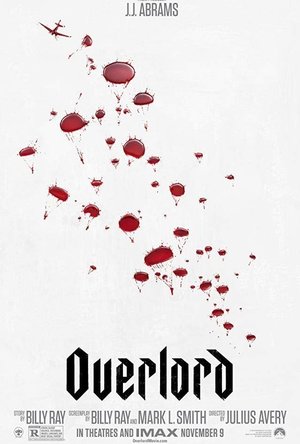


Overlord focuses on a small unit tasked to take out a radio tower atop a church in a small village in France. The unit led by Corporal Ford (Wyatt Russell) and comprised of fresh out of paratrooper training Privates Boyce (Jovan Adepo), Rosenfeld (Dominic Applewhite) and Tibbet (John Magaro) are the only survivors of the doomed mission, but understand that if they do not complete it, then the allied invasion will be without crucial air support. During their trek to the church they meet a young French woman from the village named Chloe (Mathilde Ollivier) who offers to accompany them and assist in taking out the radio tower.
When the ragtag team reach the village, it immediately becomes apparent that everything is not as it should be. They go to Chloe’s house to formulate their plan and are greeted by howling and grunting coming from a closed door down the hallway. Chloe states that her aunt also lives in the house and is very “sick” after being taken to the church by a German soldier. At the same time, through a series of unfortunate events, Private Boyce discovers a brutal laboratory where other villagers are also being made “sick”.
For those who have seen the preview of Overlord and expect it to be war-based horror movie may be a little disappointed. While there certainly are horrific events, and plenty of scenes fighting the undead, Overlord is much more about the atrocities that the Nazi regime inflicted on innocents in an effort to purse the 1000-year-old Reich. J.J. Abrams spins a tale about how a small group of dedicated soldiers can pull out the impossible, even when there are hordes of Nazi soldiers and undead monsters standing in their way and does this in a spectacular and very believable way. The movie seems far more realistic than it should considering we are talking about zombie soldiers, but the events unfold as if they could actually happen. The movie is less The Walking Dead and more Saving Private Ryan, focusing not so much on the undead creatures themselves, but more the experimentation and mad-scientist efforts to create the ultimate super soldier. The story was outstanding and how they depicted everything from the soldiers to the zombies was top notch.
The movie is beautifully shot, standing tall next to other war epics such as Saving Private Ryan or Dunkirk. Even though the main plot of the film isn’t the invasion itself, it goes to astonishing detail to show how massive the invasion truly was. The opening scene is both epic and terrifying and the horrors of war are explored throughout. The acting was also superb, leading you to immediately care about the team and root for their success in the mission.
If it is not already clear, I absolutely loved this movie! They did a masterful job of blending the war/horror genre in such a way, that it never overly feels like one versus the other. It’s an action packed, edge of your seat thriller, with just enough jump scares included to remind you that it is billed as a horror movie. Overlord is a very unique take on an unfortunate time in history and it is one of the best movies I’ve seen in 2018.

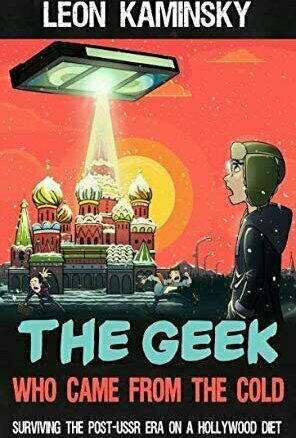
Leon is a young boy growing up in Russia at the end of the 1900s. He has a nervous problem (possibly anxiety) and has a hard time at school and with other people in general. Leon quickly falls in love with movies, specifically those from Hollywood after seeing them for the first time. Like so many other people who are not exactly social for one reason or another, he trades social interaction for watching films. His love for movies over the years borders on the edge of obsession as he knows not only actors and directors but also the Russian’s who voice over the tapes to translate them. His daily and weekly schedule revolves around what movies are being played on TV or at the theaters.
He takes readers through the difficulty of obtaining some of the popular movies that can be found just about anywhere here in the United States. This difficulty is not only because of how much Russia censored movies from just about anywhere but because the titles are often changed as well. Leon shares his excitement and the challenges he faced to get his first VCR play and to transport his VHS collection when his family moved. He even talks about when owning a VCR was illegal in Russia and when people would give anything to have one, including offering to trade a boat for a VCR.
What I liked best was that the informative quality of the book was wonderful and the author clearly did his research (I even wondered at times if the book was based on the author’s own childhood). I appreciated the human qualities of the book, such as the struggles Leon faces at school. New facts about Russia was presented to the readers in a way that prevented anything from feeling too overly informative. What I did not like was the fact that the book ends fairly abruptly. I would have liked to see at least one chapter about after the family’s move to Germany. There were also multiple sections where it would begin on one topic and end on another, seemingly unrelated topic.
Movie fans will enjoy this book but it is recommended that they be somewhat familiar with movies from the 1980s (I think was the time period of most movies mentioned in the book, I myself am far from a movie buff at all) and newer. High school students may not be able to fully appreciate the cinematic history in this book and may feel more like a history book to them. It should also be noted as VHS tapes are already a thing of the past (I am holding on to a few to show my children in the future) upcoming generations may not know what the book is talking about without asking their parents or google. Finally, I give this book a rating of 3 out of 4. This book is very informative about a topic not many people are probably aware of. Sadly this gives it a very narrow target audience. The way the book is written makes it feel like it is an autobiography about a movie lover growing up where movies are largely controlled. The plot of the book is frequently lost through during all the movie talk.
https://www.facebook.com/nightreaderreviews

SOLight - how bright is my apartment?
Business and Navigation
App
Where is the sun now – SOLight will show you the way! Find the position of the sun and its track...

Kirk Bage (1775 KP) rated Jojo Rabbit (2019) in Movies
Jan 22, 2021
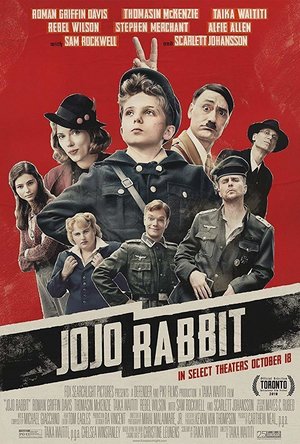
I have followed the Kiwi’s original output since way back, and always enjoyed his quirky sense of humour and childlike charm. Either Eagle vs Shark or The Flight of the Conchords would have been my first encounter; and by the time of Hunt for the Wilderpeople and Thor: Ragnarok I had become a tentative fan. Never entirely bowled over by his style and content in the same way as, say, Wes Anderson (to whom some compare his outlook on the creative world), and never rolling around on the floor in hysterics at his naivety and comedy of manners, nevertheless, I like the guy a lot.
So when I heard he had adapted a fantasy novel about Nazi Germany from the point of view of a child, and would be playing Hitler himself, I knew instantly where he would be pitching this. The idea of it being offensive in any way was not a concern or even a thought, and anyone that did react that way is just… ridiculous and deliberately missing the point for the sake of finding something to be outraged about.
Of course subjects of genocide, political repression and evil existing in the world should and must be treated with a sensitivity to a degree, and amongst the silly lampooning and most extreme moments of satire that care is evident. There are moments of real gravity and tenderness in the mix here, thanks in large to some wonderful performances from the adult actors, notably the ever reliable Sam Rockwell and the increasingly strong and impressive Scarlett Johansson, who picked up her second Oscar nomination for this, after Marriage Story ticked the box for true drama.
The film focuses and relies on young Roman Griffin Davis as the eponymous Jojo, a happy little boy who sees goodness and light in an ever darkening world around him. Waititi as director works well with kids, placing the idea of charm and likability above acting prowess per se. And that is both the strength and ultimate weakness of this premise. He is charming and likeable, and cute and sweet and very watchable, but his inexperience in front of the camera and ability to find a range of emotions is often tested beyond his tender years, and can therefore break the magic spell that is woven in the best scenes.
The humour itself also doesn’t always hit the mark. Sometimes it is merely amusing rather than something laugh out loud funny, much as an average Mel Brooks film always was. And that can lead to a feel of something uneven and rambling, as the story struggles to find what it really wants to say. In its final moments it does land on an overlying message that leaves you with a winning impression, and you leave feeling that you saw something you enjoyed, but not something you would unreservedly recommend to everyone. In fact if someone said they didn’t enjoy it, or get the joke at all, then I would respect that view.
Under a microscope of scrutiny it doesn’t hold up that well, and I wonder how a few years of distance will treat it, once our sensibilities shift again with time. There are a few moments when the heart of the film connects with it’s silly bone and resonates, but not nearly enough. I personally wanted more of that. But, sadly, whenever JoJo threatens to grow up it retreats back into childhood and shies away from commenting on anything serious or truly meaningful. But, of course, that is not the point. As an entertainment it is a wonderful, unique and lovely film. And that should really be all that it is judged by.
In conclusion, a curiosity I will look forward to watching again, but don’t think quite makes the grade as an instant classic. It only reinforced however how much I like Rockwell and Johansson, and will always be curious about what Waititi is up to next.

Lucy Buglass (45 KP) rated Jojo Rabbit (2019) in Movies
Oct 14, 2019

Whilst you might feel some apprehension about the concept of a 10-year-old boy who has Hitler as an imaginary friend, Taika Waititi has turned it into something brilliant and poignant.
As mentioned above, the film follows Johannes ‘Jojo’ Betzler, who lives in Nazi Germany. He’s a fanatic and is driven by his desire to serve Adolf Hitler in the German army during World War II, even joining a Hitler Youth Camp which is run by Captain Klenzendorf (Sam Rockwell).
Jojo is unlike any other child protagonist I’ve seen, because it’s easy to have very mixed feelings about who he is as a person. He’s a child and his everyday behaviour is indicative of someone who lacks maturity, resulting in some laugh out loud moments.
However, a lot of what he says happens to be horrendous insults towards the Jewish community. He’s fuelled by a love of Hitler (even going as far as to describe him as his ‘best friend’).
Throughout the film, he imagines scenarios in which Hitler is there with him, such as when he’s looking in the mirror and giving himself a pep-talk.
The strength of Jojo Rabbit‘s protagonist is a testament to actor Roman Griffin Davis, and I found it hard to believe that this was his first ever film performance. He’s funny, flawed, and a very well-rounded character brilliantly brought to life.
As for Jojo’s imaginary Hitler, he’s hysterically funny and not at all how you’d imagine the real man to be. Played brilliantly by director Taika Waititi, he is a caricature of a deplorable historical figure, and fuels Jojo’s delusions of how wonderful he is.
He’s simply someone’s interpretation of a political leader, created by a child who has been brainwashed into believing Nazi propaganda by adults in his life.
This bubbly oversimplification of a dictator is what you’d expect from a naive child, who isn’t fully aware of the atrocities around him.
The fact Taika Waititi plays this version of Hitler feels important, because he’s mocking him in the best possible way. As a Jewish man, it feels very appropriate that he criticises Hitler’s ideology through his satirical performance. It was brilliant.
Adding jokes to such a horrific situation is difficult, but this is where Jojo Rabbit really excels. The balance between humour and gut-punching reality checks is beautifully done, and there were times when I wasn’t sure whether my tears were from laughing or because I was genuinely sad at what I’d just seen.
Relationships are an important part of the film, particularly the one between Jojo and his mother Rosie (Scarlett Johansson). However, this becomes strained when he finds out that his mother is hiding a young Jewish woman in their home.
Jojo’s meeting with Elsa Korr (Thomasin McKenzie) is central to the story and gives us a real insight into the horrific treatment of Jewish people during this period, and the extreme lengths they’d go to keep themselves safe.
Despite Elsa’s life constantly being in jeopardy, she’s very sassy and gives young Jojo a run for his money once the two meet. The way the two characters bounce off each other is exceptional, and again, you’ll laugh and cry in equal measure.
I was also impressed by some brief appearances in the film such as Rebel Wilson as Fraulein Rahm, who I found hilarious in this film. I must admit I’m not always a fan of her work, but here she really delivered.
Stephen Merchant as Captain Deertz and Archie Yates as young Yorki are also worthy of praise, as every time they were on screen I found them delightful to watch. Much like Roman Griffin Davis, this was Archie’s first film, and he stole the show every time he was in a scene.
Jojo Rabbit is, simply put, political satire at its finest. As a result of this, it’s an emotional rollercoaster and one that I am excited to revisit whenever I get the chance.
It’s darkly funny with an important overall message of confronting ideologies, and I’d urge you to seek it out ASAP.

Baby Monitor Duo (VoIP)
Lifestyle and Health & Fitness
App
Now with live video streaming! All you need are TWO iOS-devices – iPhone / iPad / iPad Touch –...
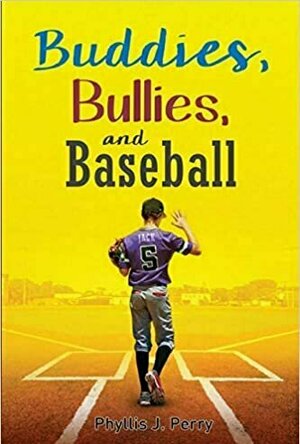
Buddies, Bullies, and Baseball
6.0 Rate It
Book
When Bullies Act Out, It’s Time for Buddies and Baseball A cloud hangs over Jack as he begins...

Carcassonne
Entertainment and Games
8.6 Rate It
App
a classic board game turned into an app. Tile laying game, where each turn you draw a tile and place...
BoardGameApp

Embark: User friendly personalised nautical charts
Navigation and Travel
App
Embark gives you FREE and updated charts, crafted on data from the Hydrographic Offices. A smooth...