
Search

Darren (1599 KP) rated For Love or Money (2019) in Movies
Jun 25, 2019


Story: For Love or Money starts when former bullied school kid Mark (Kazinsky) meets the former love of his life Connie (Barks) at her boyfriend’s funeral, when Connie and her business partner Johnny (Speleers) learn Mark might become mega rich, Connie gets involved in dating Mark hoping to get half his money once he gets it.
When Mark learns about Connie’s plan, he decides to go on his own mission to make her life a living hell until he can finally break her giving away her plan.
Thoughts on For Love or Money
Characters – Mark is the average joe, he has worked hard to get where he is, he doesn’t have much luck with the women though, he finds a way to be awkward around them, he thinks his life has turned around when he meets an old school friend, only to learn the truth about her intentions, forcing him to go out to get revenge with on her. Connie is the gold digger that is using Mark for a big payday, she is pretending to love Mark and even agrees to marry him, only she finds herself being put through the ringer, once he learns the truth. Kendra was once Connie’s best friend who was left embarrassed by Connie, she is willing to help with the revenge as she wants to be involved too, only she starts to question just how far they are going. Johnny is the business partner of Connie, he gives her the idea to use Mark for money, he is the kind of guy that you just look at and go, what an asshole, calling every single woman sugar tits. Tim is the best friend to Mark, that gets laughs of plenty through the film, along with his dog Ducky, he is dry to everything that happens in the film.
Performances – Robert Kazinsky is great in the leading role, he gets to show comic timing and enjoyment for what his character puts Connie through, in a way where we support him. Samantha Barks is great in this role, she manages to give us a character that we hate, but also sympathise for. Rachel Hurd-Wood does get plenty of strong moments in the film, with her character getting the important moments in the film. Ed Speleers does seem to have a lot of fun with his role in the film where he gets to play a complete asshole, it could be argued the Tony Way is a scene stealer in this film nailing the comedy every time in the film.
Story – The story here follows a man that starts dating his school crush, only to learn that she is only dating him to get to his money, where he decides to use this against her to get revenge. This story does put everything on the table early on which does give the story a nice spin on what we are used to seeing. It is nice to see a story where the victim gets to turn the tables, having fun knowing that the truth is only going to hurt them, seeing how far he can push things before breaking her. It would be fair the story doesn’t paint love in a very god way, though it does show how difficult it can be to move on with life when you believe somebody is perfect for you.
Comedy – The comedy in the film will give you plenty of laughs, Tim gets most of the laughs, while Johnny is the one you laugh at the most.
Settings – The film gives us an everyday setting which shows how life can keep on going even if the big plan is going on in the background, no location is used for an iconic moment.
Scene of the Movie – Camping.
That Moment That Annoyed Me – The final moments.
Final Thoughts – This is a funny romantic comedy that gets to show just how life can go in different directions, it turns a gold digger character on its head too.
Overall: Funny comedy that will leave you laughing most of the time.
https://moviesreview101.com/2019/06/24/for-love-or-money-2019/
When Mark learns about Connie’s plan, he decides to go on his own mission to make her life a living hell until he can finally break her giving away her plan.
Thoughts on For Love or Money
Characters – Mark is the average joe, he has worked hard to get where he is, he doesn’t have much luck with the women though, he finds a way to be awkward around them, he thinks his life has turned around when he meets an old school friend, only to learn the truth about her intentions, forcing him to go out to get revenge with on her. Connie is the gold digger that is using Mark for a big payday, she is pretending to love Mark and even agrees to marry him, only she finds herself being put through the ringer, once he learns the truth. Kendra was once Connie’s best friend who was left embarrassed by Connie, she is willing to help with the revenge as she wants to be involved too, only she starts to question just how far they are going. Johnny is the business partner of Connie, he gives her the idea to use Mark for money, he is the kind of guy that you just look at and go, what an asshole, calling every single woman sugar tits. Tim is the best friend to Mark, that gets laughs of plenty through the film, along with his dog Ducky, he is dry to everything that happens in the film.
Performances – Robert Kazinsky is great in the leading role, he gets to show comic timing and enjoyment for what his character puts Connie through, in a way where we support him. Samantha Barks is great in this role, she manages to give us a character that we hate, but also sympathise for. Rachel Hurd-Wood does get plenty of strong moments in the film, with her character getting the important moments in the film. Ed Speleers does seem to have a lot of fun with his role in the film where he gets to play a complete asshole, it could be argued the Tony Way is a scene stealer in this film nailing the comedy every time in the film.
Story – The story here follows a man that starts dating his school crush, only to learn that she is only dating him to get to his money, where he decides to use this against her to get revenge. This story does put everything on the table early on which does give the story a nice spin on what we are used to seeing. It is nice to see a story where the victim gets to turn the tables, having fun knowing that the truth is only going to hurt them, seeing how far he can push things before breaking her. It would be fair the story doesn’t paint love in a very god way, though it does show how difficult it can be to move on with life when you believe somebody is perfect for you.
Comedy – The comedy in the film will give you plenty of laughs, Tim gets most of the laughs, while Johnny is the one you laugh at the most.
Settings – The film gives us an everyday setting which shows how life can keep on going even if the big plan is going on in the background, no location is used for an iconic moment.
Scene of the Movie – Camping.
That Moment That Annoyed Me – The final moments.
Final Thoughts – This is a funny romantic comedy that gets to show just how life can go in different directions, it turns a gold digger character on its head too.
Overall: Funny comedy that will leave you laughing most of the time.
https://moviesreview101.com/2019/06/24/for-love-or-money-2019/

Mandy and G.D. Burkhead (26 KP) rated Banewreaker in Books
May 20, 2018
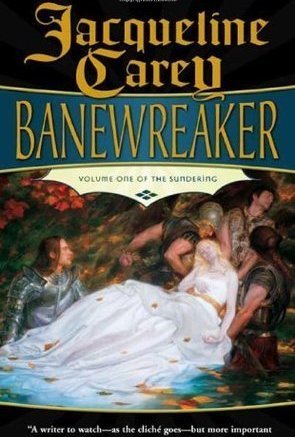


Shelf Life – Banewreaker Will Make You Feel Bad for Sauron
Contains spoilers, click to show
Very few fantasy fans can get away with admitting that they aren’t all that big into sweeping, high epic fantasy à la Lord of the Rings or the Pern stories or everything that Terry Brooks writes. Many non-fantasy fans, however, can point to these tales as examples of why they aren’t into fantasy. Like it or not, it’s hard not to see the latter group’s point, as a lot of high fantasy is riddled with confusing terminology, rehashed stories, and genre clichés. This is not to say that these stories are bad, per sé, just that they can easily turn off readers who aren’t in the right kind of crowd.
Banewreaker, the first book in Jacqueline Carey’s two-part volume The Sundering, will probably not change any opinions in this respect, then, as it’s sweeping high fantasy to the core. This, as it turns out, is both its greatest strength and its greatest weakness.
There are some reviews out there that laud Banewreaker as a masterful examination of subjective viewpoints in an epic fantasy turned into a human tragedy by a simple change of perspective. And they are absolutely correct.
There are other reviews, however, that call the book out as a heap of all of the stalest fantasy clichés piled one atop the other in a confusing and pretentious jumble with a shellacking of purple prose for good measure. And they are also absolutely correct.
Let me explain.
For starters, it would be inaccurate to say that this story is full of clichés. This story is clichés. This story is every familiar and used-up trope you would expect from a high fantasy, all of those details that have been done to death in thousands of other versions until almost nothing that happens seems original anymore.
This is what’s going to turn off a lot of people. But the thing is, Banewreaker has to be this way. It wants the reader to look at all of the things that they’ve come to expect from a fantasy epic and then, by shifting the narrative focus, realize that all of these beloved tropes are actually, when you think about it, tragic as hell.
In other words, it’s Lord of the Rings from Sauron’s point of view.
It’s not a riff, though. It’s not goofy like most of the stuff I go in for. It takes its subject just as seriously as the stories that it’s mirroring, and this is what makes the whole story ultimately so gripping and so moving.
The story starts out like many stories of this magnitude, with exposition stretching back to the Dawn of This Particular Creation. In this case, we have a protogenos world god named Uru-Alat who died and gave rise to seven smaller godlike beings called Shapers. First comes Haomane, who becomes the Lord of Thought and sets himself up as head honcho for this ensuing pantheon. Second is Arahila, the Basically a Love Goddess; and third is Satoris, whose purview was “the quickening of the flesh,” which is high fantasy speak for sexy times. Four more Shapers come after this who, for the sake of brevity, we’ll be glossing over.
To summarize the important godly exposition, the Seven Shapers set about shaping the world to the surprise of no one. Haomane creates elves (here called Ellyl, but if you’ve ever even looked at a fantasy, you know that they’re the elves here), Arahila creates humans, and Satoris doesn’t create anything because he’s busy hanging out with dragons and learning their wisdom. Satoris grants his fleshy quickening to the humans but not the elves, because Haomane didn’t want his elves to do that. Then Haomane decides he doesn’t want the humans to do that either, but Satoris refuses to take the gift away again. Conflict escalates, god wars ensue, and the world splits into two continents, with Satoris ostracized from his brethren on one and the remaining Shapers on the other. By the time the dust has settled, Satoris is scarred and burned pitch black, living in a mostly dead land thanks to Haomane’s wrath, but with a dagger in his possession that is the only weapon capable of killing any of the Shapers.
The story itself picks up thousands of years later, with Satoris as the Satan/Sauron stand-in living in a forbidding land surrounded by classically evil things like trolls, giant spiders, and insane people. Since Haomane is the head god, the rest of the world believes Satoris to be a terrible figure of evil and betrayal, while Satoris’s few allies know him as a pitiable and misunderstood figure who only ever wanted to honor his word and do right by his own sense of morality rather than the dictates of his elder brother god king.
From here the plot becomes the typical Army of Good vs. Army of Evil adventure, but with the protagonistic focus on Satoris and his allies. His trolls we see not as a mindless horde but as a simple, honorable people who happily serve their lord because he happily serves them right back. The mad individuals inhabiting his fortress are castaways from normal society with nowhere else to go. And the giant spiders just happen to live there and be bigger than normal, with no sinister intentions beyond that.
And just like that, by actually showing us the home life of the ultimate in evil fantasy tropes, we see how easily one side’s view of evil is another’s view of good. In doing so, Banewreaker becomes perhaps the first sweeping fantasy epic with no real bad guy, just two sides of an unfortunate conflict. Both sides have their likeable characters, both sides seem from their view to be in the right, and pretty soon you, as the reader, will stop cheering for either one, because whenever one person that you like succeeds it means that another person whom you also like is failing.
In fact, the closest thing that this story has to a clearly-labeled “evil” character is the sorceress Lilias, and even then, she’s not evil so much as a woman who has done some bad things for completely understandable reasons. Lilias, in fact, is one of the most pitiful characters in this whole saga of pitiable characters, with her fears and attachments closely mirroring those of most readers, only amplified by her immortality and magical powers. She is afraid of dying. She wants to be more in the grand scheme of things than just another man’s wife or another country’s momentary ruler, both of which would just be tiny moments in a long history. She likes her youth. She likes having pretty things and pretty people around her. And from her interactions with her dragon mentor and apparently only friend, Calandor, we see that she is also capable of intense affection and even love just as she is capable of indulging in self-centered self-interest that, if not particularly a good trait, is also one that she is not alone in possessing.
Banewreaker, then, is a story with a large cast of characters but very few actual heroes or innocents as well as very few outright villains, which is exactly what it sets out to be. Those who love it and those who hate it both seem to blame this quality in particular for their feelings. The biggest complaint leveled against it (that I have read, anyway) is that the people we should be rooting for do not deserve our sympathy, while the people we should be rooting against are more misguided and unwilling to see things in another light than deserving of our scorn.
This is true. But if it’s a flaw, it’s an intentional one. And if it makes you feel like you shouldn’t be cheering for either side at all in this conflict, that’s the point. This is a story of clichés, yes, but it has something that it needs to say about these clichés and, in doing so, about the subjective and impossibly nebulous quality of morality in general.
In short, here again is another fantasy story about the Forces of Good wiping out an entire nation dedicated to their “evil” enemy. And as the story points out, even if you believe in that cause, you’re still wiping out an entire nation of people. No way is there not a downside to that. Seeing things in a black-and-white morality just means crushing a whole lot of important shades of gray underfoot.
Whether or not you like Banewreaker, then, depends in large part upon how much you realize that Carey as an author is being self-aware. As someone who read and still hasn’t stopped being awed over her Kushiel series, I can’t claim complete objectivity in this area, because I came to Banewreaker already in love with her. I can say, however, that unless you have an intense and searing aversion to ornate and sweeping style, this book is worth any fantasy-lover’s time – especially if you’ve ever felt a pang of empathy for all of the poor villainous mooks that fantasy heroes tend to mow down without a thought because they were the wrong kind of ugly.
Banewreaker, the first book in Jacqueline Carey’s two-part volume The Sundering, will probably not change any opinions in this respect, then, as it’s sweeping high fantasy to the core. This, as it turns out, is both its greatest strength and its greatest weakness.
There are some reviews out there that laud Banewreaker as a masterful examination of subjective viewpoints in an epic fantasy turned into a human tragedy by a simple change of perspective. And they are absolutely correct.
There are other reviews, however, that call the book out as a heap of all of the stalest fantasy clichés piled one atop the other in a confusing and pretentious jumble with a shellacking of purple prose for good measure. And they are also absolutely correct.
Let me explain.
For starters, it would be inaccurate to say that this story is full of clichés. This story is clichés. This story is every familiar and used-up trope you would expect from a high fantasy, all of those details that have been done to death in thousands of other versions until almost nothing that happens seems original anymore.
This is what’s going to turn off a lot of people. But the thing is, Banewreaker has to be this way. It wants the reader to look at all of the things that they’ve come to expect from a fantasy epic and then, by shifting the narrative focus, realize that all of these beloved tropes are actually, when you think about it, tragic as hell.
In other words, it’s Lord of the Rings from Sauron’s point of view.
It’s not a riff, though. It’s not goofy like most of the stuff I go in for. It takes its subject just as seriously as the stories that it’s mirroring, and this is what makes the whole story ultimately so gripping and so moving.
The story starts out like many stories of this magnitude, with exposition stretching back to the Dawn of This Particular Creation. In this case, we have a protogenos world god named Uru-Alat who died and gave rise to seven smaller godlike beings called Shapers. First comes Haomane, who becomes the Lord of Thought and sets himself up as head honcho for this ensuing pantheon. Second is Arahila, the Basically a Love Goddess; and third is Satoris, whose purview was “the quickening of the flesh,” which is high fantasy speak for sexy times. Four more Shapers come after this who, for the sake of brevity, we’ll be glossing over.
To summarize the important godly exposition, the Seven Shapers set about shaping the world to the surprise of no one. Haomane creates elves (here called Ellyl, but if you’ve ever even looked at a fantasy, you know that they’re the elves here), Arahila creates humans, and Satoris doesn’t create anything because he’s busy hanging out with dragons and learning their wisdom. Satoris grants his fleshy quickening to the humans but not the elves, because Haomane didn’t want his elves to do that. Then Haomane decides he doesn’t want the humans to do that either, but Satoris refuses to take the gift away again. Conflict escalates, god wars ensue, and the world splits into two continents, with Satoris ostracized from his brethren on one and the remaining Shapers on the other. By the time the dust has settled, Satoris is scarred and burned pitch black, living in a mostly dead land thanks to Haomane’s wrath, but with a dagger in his possession that is the only weapon capable of killing any of the Shapers.
The story itself picks up thousands of years later, with Satoris as the Satan/Sauron stand-in living in a forbidding land surrounded by classically evil things like trolls, giant spiders, and insane people. Since Haomane is the head god, the rest of the world believes Satoris to be a terrible figure of evil and betrayal, while Satoris’s few allies know him as a pitiable and misunderstood figure who only ever wanted to honor his word and do right by his own sense of morality rather than the dictates of his elder brother god king.
From here the plot becomes the typical Army of Good vs. Army of Evil adventure, but with the protagonistic focus on Satoris and his allies. His trolls we see not as a mindless horde but as a simple, honorable people who happily serve their lord because he happily serves them right back. The mad individuals inhabiting his fortress are castaways from normal society with nowhere else to go. And the giant spiders just happen to live there and be bigger than normal, with no sinister intentions beyond that.
And just like that, by actually showing us the home life of the ultimate in evil fantasy tropes, we see how easily one side’s view of evil is another’s view of good. In doing so, Banewreaker becomes perhaps the first sweeping fantasy epic with no real bad guy, just two sides of an unfortunate conflict. Both sides have their likeable characters, both sides seem from their view to be in the right, and pretty soon you, as the reader, will stop cheering for either one, because whenever one person that you like succeeds it means that another person whom you also like is failing.
In fact, the closest thing that this story has to a clearly-labeled “evil” character is the sorceress Lilias, and even then, she’s not evil so much as a woman who has done some bad things for completely understandable reasons. Lilias, in fact, is one of the most pitiful characters in this whole saga of pitiable characters, with her fears and attachments closely mirroring those of most readers, only amplified by her immortality and magical powers. She is afraid of dying. She wants to be more in the grand scheme of things than just another man’s wife or another country’s momentary ruler, both of which would just be tiny moments in a long history. She likes her youth. She likes having pretty things and pretty people around her. And from her interactions with her dragon mentor and apparently only friend, Calandor, we see that she is also capable of intense affection and even love just as she is capable of indulging in self-centered self-interest that, if not particularly a good trait, is also one that she is not alone in possessing.
Banewreaker, then, is a story with a large cast of characters but very few actual heroes or innocents as well as very few outright villains, which is exactly what it sets out to be. Those who love it and those who hate it both seem to blame this quality in particular for their feelings. The biggest complaint leveled against it (that I have read, anyway) is that the people we should be rooting for do not deserve our sympathy, while the people we should be rooting against are more misguided and unwilling to see things in another light than deserving of our scorn.
This is true. But if it’s a flaw, it’s an intentional one. And if it makes you feel like you shouldn’t be cheering for either side at all in this conflict, that’s the point. This is a story of clichés, yes, but it has something that it needs to say about these clichés and, in doing so, about the subjective and impossibly nebulous quality of morality in general.
In short, here again is another fantasy story about the Forces of Good wiping out an entire nation dedicated to their “evil” enemy. And as the story points out, even if you believe in that cause, you’re still wiping out an entire nation of people. No way is there not a downside to that. Seeing things in a black-and-white morality just means crushing a whole lot of important shades of gray underfoot.
Whether or not you like Banewreaker, then, depends in large part upon how much you realize that Carey as an author is being self-aware. As someone who read and still hasn’t stopped being awed over her Kushiel series, I can’t claim complete objectivity in this area, because I came to Banewreaker already in love with her. I can say, however, that unless you have an intense and searing aversion to ornate and sweeping style, this book is worth any fantasy-lover’s time – especially if you’ve ever felt a pang of empathy for all of the poor villainous mooks that fantasy heroes tend to mow down without a thought because they were the wrong kind of ugly.

Kara Skinner (332 KP) rated The Mistletoe Bride in Books
Sep 10, 2019
Sometimes we all need a little bit of a pick-me-up during the holiday season. It’s supposed to be the most wonderful time of the year and all that, but it’s frickin’ stressful. Between the in-laws and the holiday shopping (not to mention the calories. Yikes!), December can quickly turn into a jolly nightmare. However, The Mistletoe Bride is perfect for getting into the holiday season.
You see, Eve is having her own trouble this Christmas season. Two weeks before Christmas, her fiance breaks everything off with her because he had been having an affair with his secretary and had gotten her pregnant. This leaves her single and with two tickets to paradise she had been going to surprise her husband with. And she plans to do something crazy. Instead of moping at home, or going on vacation by herself, she plans on asking a perfect stranger on going on vacation with her.
Nick Christmas is shocked when a beautiful and mysterious woman asks him to go on a trip with her, and he’s a little wary, too. But after talking with her for a few minutes in a coffee shop, he’s drawn to her. He’s more than ready to go on vacation with Eve and help her forget her sorrows, but he knows there’s more to everything than an innocent holiday when she starts hearing bells in his laugh. After all, Nick is destined to become the next Santa Claus– and it looks like Eve is destined to be his bride.
First of all, “Two Tickets to Paradise” by Eddie Money will get stuck in your head when you’re reading this. So if you know the song but hate it (but why would you hate it, unless you’re insane?), this might not be the best stress reliever. (I happen to like the song just fine, so no harm done to me.)
Like I said before, this is a great pick-me-up for the holiday season. And that’s all it is: a pick me up to enjoy that will get you in the mood for Christmas. If you like made-for-TV Christmas romances, then you’ll probably like The Mistletoe Bride. It’s adorable. Eve is all innocent and vulnerable and kind, and Nick is all strong and protective and kind. He really wants to help Eve heal from the damage done from her last relationship, and he doesn’t rush her even though he knows she’s his mistletoe bride. It’s incredibly sweet. And I really like how Scarlett Jade build the magic and myth of Santa Claus like she did. Inheriting the role of Santa, a magic suit that fits all Santas perfectly, the knowledge of everyone, as if he’s a god…. it’s pretty awesome.
But the book isn’t perfect. It was anticlimactic, honestly. Yes, there was a lot of suspense what with the Winter Elf trying to destroy Christmas and the race to the altar and everything, but it was rushed. The Winter Elf didn’t even come in until later and probably just to add a little spice to the mainly bland aftermath of Eve’s and Nick’s betrothal. The big villain in the whole book just wanted to make toys for Santa’s workshop. That’s it. I mean really? It’s a romance, not a thriller, I know, but we could have drawn it out a little bit more.
There also shouldn’t have been any sex scenes in this book. I know, this is a really strange complaint for me. After all I love sex scenes and they’re never a problem, right? (But hell is not freezing over right now because the Winter Elf is too effing busy making toys for Santa to cause some damn chaos!) The thing is, the love interest is Santa. Even if he’s young and about to marry his soul mate, he should not have sex appeal. Why? Because he’s Santa. He defined at least a third of my childhood (I really love Christmas) and he’s supposed to be a jolly gift-giver who loves cookies. Having a Santa Clause with sex appeal is like having a Mickey Mouse with sex appeal. Just. Don’t. Do it.
Even Spock thinks a sexy Santa is weird.
Since I was in the right mood for this book when I read it, I’m giving it four out of five stars. But most days I would probably only give it three.
You see, Eve is having her own trouble this Christmas season. Two weeks before Christmas, her fiance breaks everything off with her because he had been having an affair with his secretary and had gotten her pregnant. This leaves her single and with two tickets to paradise she had been going to surprise her husband with. And she plans to do something crazy. Instead of moping at home, or going on vacation by herself, she plans on asking a perfect stranger on going on vacation with her.
Nick Christmas is shocked when a beautiful and mysterious woman asks him to go on a trip with her, and he’s a little wary, too. But after talking with her for a few minutes in a coffee shop, he’s drawn to her. He’s more than ready to go on vacation with Eve and help her forget her sorrows, but he knows there’s more to everything than an innocent holiday when she starts hearing bells in his laugh. After all, Nick is destined to become the next Santa Claus– and it looks like Eve is destined to be his bride.
First of all, “Two Tickets to Paradise” by Eddie Money will get stuck in your head when you’re reading this. So if you know the song but hate it (but why would you hate it, unless you’re insane?), this might not be the best stress reliever. (I happen to like the song just fine, so no harm done to me.)
Like I said before, this is a great pick-me-up for the holiday season. And that’s all it is: a pick me up to enjoy that will get you in the mood for Christmas. If you like made-for-TV Christmas romances, then you’ll probably like The Mistletoe Bride. It’s adorable. Eve is all innocent and vulnerable and kind, and Nick is all strong and protective and kind. He really wants to help Eve heal from the damage done from her last relationship, and he doesn’t rush her even though he knows she’s his mistletoe bride. It’s incredibly sweet. And I really like how Scarlett Jade build the magic and myth of Santa Claus like she did. Inheriting the role of Santa, a magic suit that fits all Santas perfectly, the knowledge of everyone, as if he’s a god…. it’s pretty awesome.
But the book isn’t perfect. It was anticlimactic, honestly. Yes, there was a lot of suspense what with the Winter Elf trying to destroy Christmas and the race to the altar and everything, but it was rushed. The Winter Elf didn’t even come in until later and probably just to add a little spice to the mainly bland aftermath of Eve’s and Nick’s betrothal. The big villain in the whole book just wanted to make toys for Santa’s workshop. That’s it. I mean really? It’s a romance, not a thriller, I know, but we could have drawn it out a little bit more.
There also shouldn’t have been any sex scenes in this book. I know, this is a really strange complaint for me. After all I love sex scenes and they’re never a problem, right? (But hell is not freezing over right now because the Winter Elf is too effing busy making toys for Santa to cause some damn chaos!) The thing is, the love interest is Santa. Even if he’s young and about to marry his soul mate, he should not have sex appeal. Why? Because he’s Santa. He defined at least a third of my childhood (I really love Christmas) and he’s supposed to be a jolly gift-giver who loves cookies. Having a Santa Clause with sex appeal is like having a Mickey Mouse with sex appeal. Just. Don’t. Do it.
Even Spock thinks a sexy Santa is weird.
Since I was in the right mood for this book when I read it, I’m giving it four out of five stars. But most days I would probably only give it three.

Ivana A. | Diary of Difference (1171 KP) rated My Trip to Adele in Books
Oct 5, 2020

My Trip To Adele is a book unlike any other. We are introduced to three different life stories, all of them connected to Adele in a wonderful way, and every one of them will teach us many lessons, bring tears or laughs on our faces and remind us who we are and why we exist in this world. This is a book of how a singer or a song can connect so many people and touch so many hearts in a way no one else could. A book about keeping traditions and breaking them, a book about love, bravery and most of all - HOPE.
Let’s meet Elias. A Moroccan man that has lived in Rome long enough to believe he is Italian, with a Moroccan dust left in his soul. Through Elias, we will find out about how many years ago, he paid a prostitute for her services and fell in love. His love for Malika is undescribable. While other men would pay hundreds to only have her body, he would pay thousands more to have her soul, even for just one night. He would never touch her body, but they would spend hours and hours talking about meaningful and meaningless things, about what it is like outside this city, outside this country, what can the world offer…
Malika has so many wishes and hopes, she sells her body so one day she would be able to leave this town, leave her family, and explore the world. Get married and have children, and be successful, and learn the English language. When life parts them from each other for eight years, Elias goes back to the same old city to look for her, and Malika has already left town. Sharing one special singer, there is only one place where he can find her - an Adele concert in Rome.
In Las Vegas, we have Yaser and Mariam, a married couple that lost its sparkle many years ago. Both are surgeons and spend a lot of time at work. And when they come home to the kids - everything is a routine. Yaser pretends to enjoy his TV Show evenings and the Prayers that Mariam wants to attend. He pretends to believe in God just to please his wife. They are not a happy family inside the house, but Mariam makes it sound perfect on the outside - they have the perfect social media photos, and they go to the most expensive places on a holiday, what could be so bad? He feels trapped inside a routine and wants to escape, but he also believes in saving his marriage, and following his marriage counselor, they are trying to revive their happiest memories, and that is when they decide to go to an Adele concert in Rome.
On the other side of the world we will meet Nadia and her son Waleed. Nadia is a strong woman that has been coping with her now ex-husband’s betrayals. She raised her son oh her own, and the love she feels for him is indescribable. Only a mother knows how much she adores her son. When her son gets hurt on her ex husband’s third wedding - Nadia decides that she would fight for her and her son, she will no longer be trapped, and she will finally enjoy a lovely holiday with her son - going to Adele’s concert in Rome.
This book is written in an amazing, fast pace, and you will never notice how you have scrolled through the pages and hours have passed. There were times where the character's description was basic, and sometimes Adele’s presence would be too exposed, but all the characters are different in their own way, and every story has its purpose and its lesson.
Let’s meet Elias. A Moroccan man that has lived in Rome long enough to believe he is Italian, with a Moroccan dust left in his soul. Through Elias, we will find out about how many years ago, he paid a prostitute for her services and fell in love. His love for Malika is undescribable. While other men would pay hundreds to only have her body, he would pay thousands more to have her soul, even for just one night. He would never touch her body, but they would spend hours and hours talking about meaningful and meaningless things, about what it is like outside this city, outside this country, what can the world offer…
Malika has so many wishes and hopes, she sells her body so one day she would be able to leave this town, leave her family, and explore the world. Get married and have children, and be successful, and learn the English language. When life parts them from each other for eight years, Elias goes back to the same old city to look for her, and Malika has already left town. Sharing one special singer, there is only one place where he can find her - an Adele concert in Rome.
In Las Vegas, we have Yaser and Mariam, a married couple that lost its sparkle many years ago. Both are surgeons and spend a lot of time at work. And when they come home to the kids - everything is a routine. Yaser pretends to enjoy his TV Show evenings and the Prayers that Mariam wants to attend. He pretends to believe in God just to please his wife. They are not a happy family inside the house, but Mariam makes it sound perfect on the outside - they have the perfect social media photos, and they go to the most expensive places on a holiday, what could be so bad? He feels trapped inside a routine and wants to escape, but he also believes in saving his marriage, and following his marriage counselor, they are trying to revive their happiest memories, and that is when they decide to go to an Adele concert in Rome.
On the other side of the world we will meet Nadia and her son Waleed. Nadia is a strong woman that has been coping with her now ex-husband’s betrayals. She raised her son oh her own, and the love she feels for him is indescribable. Only a mother knows how much she adores her son. When her son gets hurt on her ex husband’s third wedding - Nadia decides that she would fight for her and her son, she will no longer be trapped, and she will finally enjoy a lovely holiday with her son - going to Adele’s concert in Rome.
This book is written in an amazing, fast pace, and you will never notice how you have scrolled through the pages and hours have passed. There were times where the character's description was basic, and sometimes Adele’s presence would be too exposed, but all the characters are different in their own way, and every story has its purpose and its lesson.

The Anatomical Venus: Wax / Sex / God / Death
Morbid Anatomy Museum and Joanna Ebenstein
Book
Beneath the original Venetian glass and rosewood case at La Specola in Florence lies Clemente...
MaryAnn (14 KP) rated The Psalms and Proverbs Devotional for Women in Books
Mar 5, 2019

For over 40 years Mrs. Patterson has focused on teaching women what God has to say to them. This devotional does just that. Using the books of Psalms and Proverbs Mrs. Patterson and Rhonda take us through a year of these two books. This devotional features relevant discussions for the woman today, focusing on the challenges one might find day to day. Every day women are searching for wisdom and answers that are way beyond themselves, what better books than Psalms and Proverbs hold the wisdom and answers we are looking for. to help them with daily living.
Each day's message features an application and of course the encouragement that we may need. This devotional is written by both married and single ladies all under the direction of Mrs. Patterson.
In this devotional, it teaches us how to pattern a personal quiet time, and also a Bible reading plan which will guide the reader through the books of Proverbs and Psalms every month.
Every day you will find the scripture for the day, a small, insightful message, and room to write down your thoughts.
This beautiful teal colored devotional is the perfect size to take anywhere; it has a bonded leather hardcover for stability. This means that it will hold up for many years of reading it daily.
I do like that the devotional starts as "day one" rather than January 1 st, so you can start anytime and reread as much as your heart desires.
I have had the privilege of meeting Mrs. Patterson and sitting under her teaching. She is both amazing and motivating.
I received this book free from the publisher. I was not required to write a positive review and the opinions I have expressed are my own. I am disclosing this in accordance with the Federal Trade Commission’s 16 CFR, Part 255 : “Guides Concerning the Use of Endorsements and Testimonials in Advertising.
Each day's message features an application and of course the encouragement that we may need. This devotional is written by both married and single ladies all under the direction of Mrs. Patterson.
In this devotional, it teaches us how to pattern a personal quiet time, and also a Bible reading plan which will guide the reader through the books of Proverbs and Psalms every month.
Every day you will find the scripture for the day, a small, insightful message, and room to write down your thoughts.
This beautiful teal colored devotional is the perfect size to take anywhere; it has a bonded leather hardcover for stability. This means that it will hold up for many years of reading it daily.
I do like that the devotional starts as "day one" rather than January 1 st, so you can start anytime and reread as much as your heart desires.
I have had the privilege of meeting Mrs. Patterson and sitting under her teaching. She is both amazing and motivating.
I received this book free from the publisher. I was not required to write a positive review and the opinions I have expressed are my own. I am disclosing this in accordance with the Federal Trade Commission’s 16 CFR, Part 255 : “Guides Concerning the Use of Endorsements and Testimonials in Advertising.

Bob Mann (459 KP) rated Little Women (2019) in Movies
Jan 3, 2020 (Updated Jan 3, 2020)
Saoirse Ronan - just mesmeric. What screen presence! (2 more)
Great supporting cast.
Alexandre Desplat soundtrack.
"God hasn't met my will yet"
Greta Gerwig's follow up to her Oscar-praised "Lady Bird" from 2017 looks set to repeat the job this year. For it's nothing short of a masterpiece of cinema.
Louisa M. Alcott's semi-autobiographical novel has been filmed before (in 1949 and 1994, together with a number of other TV versions). I've not seen any of these previous versions and (as a literary philistine) I've never read the book either. So the story was new to me and drew me in perfectly.
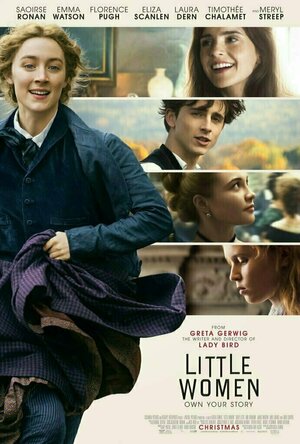
The March sisters - Jo (Saoirse Ronan), Meg (Emma Watson), Amy (Florence Pugh) and the youngest Beth (Eliza Scanlen) - are being brought up by their mother (Laura Dern) and Aunt (Meryl Streep) while their father (Bob Odenkirk) is away fighting in the Civil War. Also providing a helping hand is the rich neighbour Mr Lawrence (Chris Cooper), whose good-looking but indolent son 'Laurie' (Timothée Chalamet) has had the hots for tom-boy Jo for many years.
Each of the girls has a talent: for Jo it's writing, with her struggling to get her work past the grumpy publisher Mr Dashwood (Tracy Letts, from "Le Mans '66"); for Meg it's acting; for Amy it's painting; and for Beth it's music.
The film follows the lives, loves, successes and misfortunes of the sisters over two periods, split 7 years apart. It's a bumpy ride for some.
It struck me, as the big green BBFC certificate flashed onto the screen, how rare it is to find a "U - Suitable for all" (UK) certificate on a film these days. This is a film that the whole family *could* go and see. My only reservation here would be the way the film zips in and out of the two time periods at will. This might confuse the hell out of younger children. The subject matter of one part of the story may also disturb sensitive kids.
It's a really old-fashioned film - full of melodrama, love, unrequited love, death, charity, ambition and kindness - that builds to a feel-good ending that was totally corny but felt perfect in every way. We need more of this in our lives.
Wow. Just wow. The Oscar Best Actress categories are going to be a bloodied battlefield this year! There have been some GREAT roles for women on screen in the last year, and the Academy will have a job on their hands to narrow the long-list to the short-list this year. I would have tentatively forecast that Renée Zellweger might have had the Best Actor Oscar wrapped up for "Judy". But then here comes Saoirse Ronan. With phenomenal screen presence, she lights up every single scene she's in. Emma Watson and Florence Pugh are great actresses (and both here stand a stab at the Supporting Actress category), but your gaze always falls straight back to Ronan's reaction.
It's also a wonderful performance for newcomer Eliza Scanlen as the youngster Beth: I heard director Greta Gerwig comment (on Edith Bowman's excellent Soundtracking podcast) that Eliza needed less lighting than anyone else on set as she was "naturally luminous"!
Again lodging a cracking performance is the versatile Timothée Chalomet.... does the young chap make a bad film?
When you get to the end of the "cast bit", and you haven't mentioned Meryl Streep and Laura Dern yet, that says a lot!
What comes across more than anything else is just how apt this story is today to the 'girl power' times that we are currently living through. Jo in particular is the rebel of her day, fighting against the conformity of what it was in the time to be an independent woman, and specifically an independent working woman. Some of Alcott's words from the book could even today act as a rallying cry to those looking for greater change.
My reviewing year has certainly got off to a bang with this one. It's a glorious movie, utterly absorbing with ravishing cinematography by Yorick Le Saux and a brilliant soundtrack by Alexandre Desplat: both I suspect likely to feature in Oscar nominations. It's also likely to be nominated in other technical categories including Production Design, Costume and Hair & Makeup.
And I predict that this is inevitably going to be a Christmas favourite to match "The Sound of Music" and "It's a Wonderful Life" in future years.
Comes with a highly recommended tag from me.
(For the full graphical review, please visit the One Mann's Movies site here - https://bob-the-movie-man.com/2019/01/03/one-manns-movies-film-review-little-women-2019/. Thanks.)
Louisa M. Alcott's semi-autobiographical novel has been filmed before (in 1949 and 1994, together with a number of other TV versions). I've not seen any of these previous versions and (as a literary philistine) I've never read the book either. So the story was new to me and drew me in perfectly.
The March sisters - Jo (Saoirse Ronan), Meg (Emma Watson), Amy (Florence Pugh) and the youngest Beth (Eliza Scanlen) - are being brought up by their mother (Laura Dern) and Aunt (Meryl Streep) while their father (Bob Odenkirk) is away fighting in the Civil War. Also providing a helping hand is the rich neighbour Mr Lawrence (Chris Cooper), whose good-looking but indolent son 'Laurie' (Timothée Chalamet) has had the hots for tom-boy Jo for many years.
Each of the girls has a talent: for Jo it's writing, with her struggling to get her work past the grumpy publisher Mr Dashwood (Tracy Letts, from "Le Mans '66"); for Meg it's acting; for Amy it's painting; and for Beth it's music.
The film follows the lives, loves, successes and misfortunes of the sisters over two periods, split 7 years apart. It's a bumpy ride for some.
It struck me, as the big green BBFC certificate flashed onto the screen, how rare it is to find a "U - Suitable for all" (UK) certificate on a film these days. This is a film that the whole family *could* go and see. My only reservation here would be the way the film zips in and out of the two time periods at will. This might confuse the hell out of younger children. The subject matter of one part of the story may also disturb sensitive kids.
It's a really old-fashioned film - full of melodrama, love, unrequited love, death, charity, ambition and kindness - that builds to a feel-good ending that was totally corny but felt perfect in every way. We need more of this in our lives.
Wow. Just wow. The Oscar Best Actress categories are going to be a bloodied battlefield this year! There have been some GREAT roles for women on screen in the last year, and the Academy will have a job on their hands to narrow the long-list to the short-list this year. I would have tentatively forecast that Renée Zellweger might have had the Best Actor Oscar wrapped up for "Judy". But then here comes Saoirse Ronan. With phenomenal screen presence, she lights up every single scene she's in. Emma Watson and Florence Pugh are great actresses (and both here stand a stab at the Supporting Actress category), but your gaze always falls straight back to Ronan's reaction.
It's also a wonderful performance for newcomer Eliza Scanlen as the youngster Beth: I heard director Greta Gerwig comment (on Edith Bowman's excellent Soundtracking podcast) that Eliza needed less lighting than anyone else on set as she was "naturally luminous"!
Again lodging a cracking performance is the versatile Timothée Chalomet.... does the young chap make a bad film?
When you get to the end of the "cast bit", and you haven't mentioned Meryl Streep and Laura Dern yet, that says a lot!
What comes across more than anything else is just how apt this story is today to the 'girl power' times that we are currently living through. Jo in particular is the rebel of her day, fighting against the conformity of what it was in the time to be an independent woman, and specifically an independent working woman. Some of Alcott's words from the book could even today act as a rallying cry to those looking for greater change.
My reviewing year has certainly got off to a bang with this one. It's a glorious movie, utterly absorbing with ravishing cinematography by Yorick Le Saux and a brilliant soundtrack by Alexandre Desplat: both I suspect likely to feature in Oscar nominations. It's also likely to be nominated in other technical categories including Production Design, Costume and Hair & Makeup.
And I predict that this is inevitably going to be a Christmas favourite to match "The Sound of Music" and "It's a Wonderful Life" in future years.
Comes with a highly recommended tag from me.
(For the full graphical review, please visit the One Mann's Movies site here - https://bob-the-movie-man.com/2019/01/03/one-manns-movies-film-review-little-women-2019/. Thanks.)

Emma @ The Movies (1786 KP) rated Enola Holmes (2020) in Movies
Oct 3, 2020


There were several things that didn't make me leap at this one, but I was excited to have a "new release" to watch so...
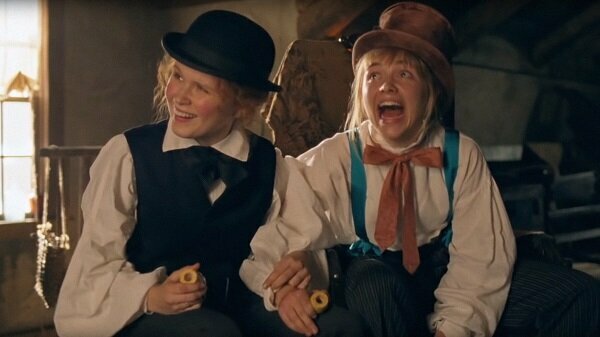
The Holmes family name is a recognisable one, Sherlock and Mycroft are taking London by storm... but did you know about their younger sister, Enola? Raised by her mother, an eccentric and strong woman with a very alternative view on education, Enola is a strong will young woman in her image. When her mother goes missing Enola sets off to find her against the wishes of her brothers, taking herself to London and crossing paths with friends and foes along the way.
When I was looking for something between Sherlock Holmes and Nancy Drew I was hoping they'd throw the stone a little further. In my notes I scribbled that there are plenty of books about teen detectives that would have adapted well... and then I discovered that this was a book, and a series no less. I understand that the association with Sherlock Holmes is a strong one to market, but I feel like we're a little Sherlocked out these days. I miss vaguely original content... sorry, that sounds bitchier than it was meant to be.
Millie Bobby Brown did a good job of bringing Enola to life, there's a strong precocious nature to the role and she adapted to every twist convincingly. At times I noticed the odd slip that felt a little pantomime-y but by the time I'd pursed my lips and frowned it had already passed.
The Holmes brothers, brought to us by Henry Cavill and Sam Claflin, where to start... Claflin as Mycroft did a pretty good job, possibly too good, every time he was on screen I wanted him to leave. However, am I the only one that thought that these actors should have been playing each other's roles? As much as I love Cavill, he is not Sherlock. Sherlock is not suave and naturally charming, and he's certainly not built like a Chippendale, well, maybe a bit of furniture. It felt like a very unnatural fit, but I could just about visualise it with the roles reversed.
Supporting actors were great, I particularly enjoyed Susan Wokoma's, Edith. But, I was pleasantly surprised to see Fiona Shaw pop up in what appeared to be a reprisal of her role from Three Men and a Little Lady, but I digress.
To a layman like myself the period setting looked amazing and I thought the costumes were excellent. In fact, everything about the film looked stunning, but here is where I part with compliments.
Enola Holmes clocks in at just over the 2 hour mark, 2 hours and 3 minutes if we're being precise. If you say "family film" I think 1 hour 30, 45 maybe, if you say "thriller" I think 2 hours+... I know there are no hard and fast rules about it, but here's the thing, there wasn't enough content to fill that time. Yes, they managed to fill the runtime, but so much of it was unnecessary. Her mother's storyline seemed entirely there to get her to London, which could easily have been done in several ways, there's one scene in particular that seemed to go nowhere. I hate to say it, but Fiona Shaw and her finishing school were completely surplus to requirements too, nothing happened there that was very relevant at all. Some of the additions to what is quite a simple story made it a little complicated, though complicated isn't quite the right word because everything was easy to grasp (when it was relevant), perhaps "fussy" would be a better choice.
When the film ended I knew we were being set up for round 2, though this one came with less of a sickening groan than Artemis Fowl's did. I don't know how the books run as a series so I'd be interested to see how they compare, but I'm not a fan of continued storyline and that will definitely be on the cards for a sequel.
While I'm fully aware I've just moaned about a lot of points, the film is definitely watchable, but for me it was too cluttered and drawn out to hold my attention. With some snipping here and there it could have been vastly improved.
(My god, I didn't even mention the 4th wall breaking or the very end... but I guess no one really wants a full essay on the subject.)
Originally posted on: https://emmaatthemovies.blogspot.com/2020/10/enola-holmes-movie-review.html
The Holmes family name is a recognisable one, Sherlock and Mycroft are taking London by storm... but did you know about their younger sister, Enola? Raised by her mother, an eccentric and strong woman with a very alternative view on education, Enola is a strong will young woman in her image. When her mother goes missing Enola sets off to find her against the wishes of her brothers, taking herself to London and crossing paths with friends and foes along the way.
When I was looking for something between Sherlock Holmes and Nancy Drew I was hoping they'd throw the stone a little further. In my notes I scribbled that there are plenty of books about teen detectives that would have adapted well... and then I discovered that this was a book, and a series no less. I understand that the association with Sherlock Holmes is a strong one to market, but I feel like we're a little Sherlocked out these days. I miss vaguely original content... sorry, that sounds bitchier than it was meant to be.
Millie Bobby Brown did a good job of bringing Enola to life, there's a strong precocious nature to the role and she adapted to every twist convincingly. At times I noticed the odd slip that felt a little pantomime-y but by the time I'd pursed my lips and frowned it had already passed.
The Holmes brothers, brought to us by Henry Cavill and Sam Claflin, where to start... Claflin as Mycroft did a pretty good job, possibly too good, every time he was on screen I wanted him to leave. However, am I the only one that thought that these actors should have been playing each other's roles? As much as I love Cavill, he is not Sherlock. Sherlock is not suave and naturally charming, and he's certainly not built like a Chippendale, well, maybe a bit of furniture. It felt like a very unnatural fit, but I could just about visualise it with the roles reversed.
Supporting actors were great, I particularly enjoyed Susan Wokoma's, Edith. But, I was pleasantly surprised to see Fiona Shaw pop up in what appeared to be a reprisal of her role from Three Men and a Little Lady, but I digress.
To a layman like myself the period setting looked amazing and I thought the costumes were excellent. In fact, everything about the film looked stunning, but here is where I part with compliments.
Enola Holmes clocks in at just over the 2 hour mark, 2 hours and 3 minutes if we're being precise. If you say "family film" I think 1 hour 30, 45 maybe, if you say "thriller" I think 2 hours+... I know there are no hard and fast rules about it, but here's the thing, there wasn't enough content to fill that time. Yes, they managed to fill the runtime, but so much of it was unnecessary. Her mother's storyline seemed entirely there to get her to London, which could easily have been done in several ways, there's one scene in particular that seemed to go nowhere. I hate to say it, but Fiona Shaw and her finishing school were completely surplus to requirements too, nothing happened there that was very relevant at all. Some of the additions to what is quite a simple story made it a little complicated, though complicated isn't quite the right word because everything was easy to grasp (when it was relevant), perhaps "fussy" would be a better choice.
When the film ended I knew we were being set up for round 2, though this one came with less of a sickening groan than Artemis Fowl's did. I don't know how the books run as a series so I'd be interested to see how they compare, but I'm not a fan of continued storyline and that will definitely be on the cards for a sequel.
While I'm fully aware I've just moaned about a lot of points, the film is definitely watchable, but for me it was too cluttered and drawn out to hold my attention. With some snipping here and there it could have been vastly improved.
(My god, I didn't even mention the 4th wall breaking or the very end... but I guess no one really wants a full essay on the subject.)
Originally posted on: https://emmaatthemovies.blogspot.com/2020/10/enola-holmes-movie-review.html

The Bandersnatch (199 KP) rated Goodnight Mister Tom in Books
Nov 7, 2019
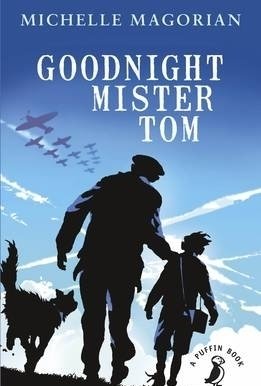
In September 1939, as Britain stands on the brink of the war, many young children from the cities are evacuated tot he countryside to escape an imminent German bombardment. Willie Beech, a boy from Deptford who is physically and emotionally abused by his mother, arrives at the home of Tom Oakley, a widower in his sixties who lives in the village of Little Weirwold. The boy is thinly clad, underfed and covered with painful bruises, and believes he is full of sin, a result of his upbringing by his mother, a domineering, insane, God-fearing widow.
"Mister Tom", as William christens his new guardian, is reclusive and bad-tempered, and as such is avoided by the community. Willie lives with him as his Mother wants him to live with someone who is either religious or lives next to a church. Though initially distant, he is touched after discovering William's home-life and treats him with kindness and understanding, helping to educate him. Under his care, William begins to thrive, forming a small circle of friends at school among his classmates including fellow-evacuee Zach. He also becomes proficient in drawing and dramatics. As William is changed by Tom, so is Tom transformed by William's presence in his home. It is revealed that Tom lost his wife and baby son to Scarlatina some 40 years previously, and he has become reclusive because of this.
The growing bond between William and Tom is threatened when William's mother requests that the boy returns to her in the city, telling him she is sick. At first, William thinks this will be a good thing, as he can be helpful to his mother. However, his mother is not pleased to learn the details of his time with Tom, feeling that he has not been disciplined properly. While William has been away, she has become pregnant and had a girl, but is neglecting the baby. After a bad reunion, where his mother becomes furious upon learning the details of her son's life with Tom, abhorring his association with the Jewish Zach among other things, she hits William and puts him in the under-stairs cupboard, chains him to the piping. William regains consciousness briefly to find himself in the cupboard – he has been stripped of his clothes, minus his underwear, and his ankle is twisted. He quietly sobs for Tom, before he falls asleep.
Back in Little Weirwold, Tom has a premonition that something is not right with William. Although he has never travelled beyond his immediate locality, he ventures into London and eventually locates William's neighbourhood of Deptford and his home. He persuades a local policeman to break down the door of the apparently empty home, to be greeted with a vile stench. They find William in the closet with the baby, who had also been locked under the stairs by William's mother and has now died. William is malnourished and badly bruised as he had been locked under the stairs for a number of days. William is hospitalised, but whilst there suffers horrific nightmares and is drugged simply to prevent his screams from disturbing other children. Tom is warned that it is likely that William will be taken to a children's home, and, unable to observe William's distress any longer, kidnaps him from the hospital and takes him back to Little Weirwold.
Back with Mister Tom, William is much damaged by his ordeal and is also blaming himself for the death of his sister as he had not been able to provide enough milk to feed her whilst locked away, and becomes very depressed. Later, when his favourite teacher Annie Hartridge has a baby, William is shocked to learn from Zach that a woman cannot conceive a child on her own, and realises that his mother was having a relationship with a man, even though she had previously told him that it was wrong for unmarried couples to live together or have children together (something which society in general had regarded as unacceptable at this time). Tom is traced by the authorities, who have come to tell William that his mother is dead, having committed suicide. They also offer him a place in a children's home, as they've been unable to trace any other relatives who may have been able to take care of him. Luckily the authorities realise that William has already found a good home and allow Tom to adopt him.
Tom, William and Zach then enjoy a holiday at the seaside village of Salmouth, where they stay in the house of a widow whose sons have been sent out to war. Zach then receives news that his father has been injured by a German bomb in London and he hurries home on the next train saying farewell to all his friends. Unfortunately this is the last time they see him. William later learns that Zach has been killed and is grief-stricken for some time, but his grief is later healed by another recluse, Geoffery Sanderton. Geoffery, a young man who had lost a leg during the war and takes William for private art lessons,recognises the signs of grief and gives William a pipe to paint along with a picture of two smiling young men. One of the men is Geoffery and he tells William about the loss of his own best friend, the other man in the picture and the owner of the pipe. This is when William starts to come to terms with Zach's death. Adding to this, Doctor Little, the village doctor, who was Zach's guardian while he was evacuated, is surprised but pleased when William asks to have Zach's bike. Through learning to ride it, William realises that Zach lives on inside him and he will never forget his wonderful companion that Zach was.
In the months following, William grows closer to Carrie, one of his friends. One night, on returning home to Tom (whom he now calls "Dad"), he thinks back on how much he has changed since arriving in Little Weirwold and realises that he is growing.
Goodnight Mr Tom Wiki.
Goodnight Mr Tom was published by Kestrel in 1981 and later on in that same year in the US by Harper and Row. The book won Author Michelle Magorian the annual Guardian Children's fiction prize. Magorian was also a runner up for the Carnegie Medal. The book has been adapted as a Movie, a play and a musical. The most recent theatrical adaption won the Laurence Olivier award for Best Entertainment.
I came across the book when I was 10/11 years old. I needed the book for English at primary school, since we needed to read the book and complete a series of assignments for our teacher. I have in the subsequent years read and re-read the book. The book is rather good and I recommand it for children from the ages of 9/10 upwards. The book is a good representation of what happened during WW2 in a fictional setting. And William and Mr Tom healing each other from what they both experienced (Tom loosing family to Scarlatina and William being abused by his mother). I give the book an 8/10.
"Mister Tom", as William christens his new guardian, is reclusive and bad-tempered, and as such is avoided by the community. Willie lives with him as his Mother wants him to live with someone who is either religious or lives next to a church. Though initially distant, he is touched after discovering William's home-life and treats him with kindness and understanding, helping to educate him. Under his care, William begins to thrive, forming a small circle of friends at school among his classmates including fellow-evacuee Zach. He also becomes proficient in drawing and dramatics. As William is changed by Tom, so is Tom transformed by William's presence in his home. It is revealed that Tom lost his wife and baby son to Scarlatina some 40 years previously, and he has become reclusive because of this.
The growing bond between William and Tom is threatened when William's mother requests that the boy returns to her in the city, telling him she is sick. At first, William thinks this will be a good thing, as he can be helpful to his mother. However, his mother is not pleased to learn the details of his time with Tom, feeling that he has not been disciplined properly. While William has been away, she has become pregnant and had a girl, but is neglecting the baby. After a bad reunion, where his mother becomes furious upon learning the details of her son's life with Tom, abhorring his association with the Jewish Zach among other things, she hits William and puts him in the under-stairs cupboard, chains him to the piping. William regains consciousness briefly to find himself in the cupboard – he has been stripped of his clothes, minus his underwear, and his ankle is twisted. He quietly sobs for Tom, before he falls asleep.
Back in Little Weirwold, Tom has a premonition that something is not right with William. Although he has never travelled beyond his immediate locality, he ventures into London and eventually locates William's neighbourhood of Deptford and his home. He persuades a local policeman to break down the door of the apparently empty home, to be greeted with a vile stench. They find William in the closet with the baby, who had also been locked under the stairs by William's mother and has now died. William is malnourished and badly bruised as he had been locked under the stairs for a number of days. William is hospitalised, but whilst there suffers horrific nightmares and is drugged simply to prevent his screams from disturbing other children. Tom is warned that it is likely that William will be taken to a children's home, and, unable to observe William's distress any longer, kidnaps him from the hospital and takes him back to Little Weirwold.
Back with Mister Tom, William is much damaged by his ordeal and is also blaming himself for the death of his sister as he had not been able to provide enough milk to feed her whilst locked away, and becomes very depressed. Later, when his favourite teacher Annie Hartridge has a baby, William is shocked to learn from Zach that a woman cannot conceive a child on her own, and realises that his mother was having a relationship with a man, even though she had previously told him that it was wrong for unmarried couples to live together or have children together (something which society in general had regarded as unacceptable at this time). Tom is traced by the authorities, who have come to tell William that his mother is dead, having committed suicide. They also offer him a place in a children's home, as they've been unable to trace any other relatives who may have been able to take care of him. Luckily the authorities realise that William has already found a good home and allow Tom to adopt him.
Tom, William and Zach then enjoy a holiday at the seaside village of Salmouth, where they stay in the house of a widow whose sons have been sent out to war. Zach then receives news that his father has been injured by a German bomb in London and he hurries home on the next train saying farewell to all his friends. Unfortunately this is the last time they see him. William later learns that Zach has been killed and is grief-stricken for some time, but his grief is later healed by another recluse, Geoffery Sanderton. Geoffery, a young man who had lost a leg during the war and takes William for private art lessons,recognises the signs of grief and gives William a pipe to paint along with a picture of two smiling young men. One of the men is Geoffery and he tells William about the loss of his own best friend, the other man in the picture and the owner of the pipe. This is when William starts to come to terms with Zach's death. Adding to this, Doctor Little, the village doctor, who was Zach's guardian while he was evacuated, is surprised but pleased when William asks to have Zach's bike. Through learning to ride it, William realises that Zach lives on inside him and he will never forget his wonderful companion that Zach was.
In the months following, William grows closer to Carrie, one of his friends. One night, on returning home to Tom (whom he now calls "Dad"), he thinks back on how much he has changed since arriving in Little Weirwold and realises that he is growing.
Goodnight Mr Tom Wiki.
Goodnight Mr Tom was published by Kestrel in 1981 and later on in that same year in the US by Harper and Row. The book won Author Michelle Magorian the annual Guardian Children's fiction prize. Magorian was also a runner up for the Carnegie Medal. The book has been adapted as a Movie, a play and a musical. The most recent theatrical adaption won the Laurence Olivier award for Best Entertainment.
I came across the book when I was 10/11 years old. I needed the book for English at primary school, since we needed to read the book and complete a series of assignments for our teacher. I have in the subsequent years read and re-read the book. The book is rather good and I recommand it for children from the ages of 9/10 upwards. The book is a good representation of what happened during WW2 in a fictional setting. And William and Mr Tom healing each other from what they both experienced (Tom loosing family to Scarlatina and William being abused by his mother). I give the book an 8/10.
Motherless Child: The Definitive Biography of Eric Clapton
Book
Timed for release around Clapton's 70th birthday, MOTHERLESS CHILD will be the ultimate celebration...