
Search
Search results

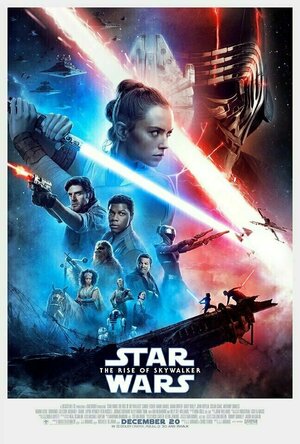
Versusyours (757 KP) rated Star Wars: Episode IX - The Rise of Skywalker (2019) in Movies
Dec 30, 2019 (Updated Dec 30, 2019)


Another film ruined by Endgame's splendour
Contains spoilers, click to show
The Rise of Skywalker
Some endings are welcomed whilst others are heart-breaking and sudden, then there is this movie that closes a curtain that’s older than my very bones. In the time from 1977 there has been highs, lows and Jar Jar Binks a plenty and lots and lots of toys, lunchboxes and soap sets in all shapes of droids. The film itself opens and quickly reintroduces all the main characters and sets up the plot lines for each person and they embark on a path that is destined for them all to meet later. Kylo Ren is on a solo Gooniesesque mission to retrieve something darker than One Eyed Willies rich stuff with the aid of a Toblerone shaped virtual map. Helmetless and emotionless he encounters the Emperor you in fact is not dead but just chilling out with many engineers, Sith corpses and a big evil throne that he may use to do dark side Sudoku. Kylo Ren must kill Rey and then he and Palpatine might both crack a smile and take turns on the evil throne as all powerful rulers.
Is it a bird? Is it plane? Well its half bird in name alone it’s the Millennium Falcon doing what it does best and being chased and escaping for the numerous time but this time they are light speed jumping even though they are told not to, naughty naughty. Po and Finn get some gossip and head to the planet the Rebels are all hiding on to share their news. Enter the heroine its Rey in a new outfit and floating up high but failing to entice the Jedi spirits to appear but why would they this early on in a film. The hero’s all use the gossip from the Empire spy and Rey, Finn, Poe, Chewbacca, BB-8, and C-3PO depart in the Millennium Falcon. Space trip!!!
They head for a Space desert that is like Mardi Gras with sand, it’s so lucky that these sandy terrains are common in space like they are common on Earth as Star Wars loves these arid landscapes. They get into a scrape as they always seem to do but with Stormtroopers being inept and despite being airborne, they now fail on both land and air to do anything other than being a source for explosions. C3-PO finally gets the chance to be of actual use but in his golden and splendid way he is unable to translate a Sith message orally and it remains unheard and unseen in his memory banks. Kylo Ren mentally Skype calls Rey and she forgets to turn off her location settings and he turns up. In the ensuing melee Rey turns up the bad ass levels and destroys an Empire ship containing the Wookie we all fell in love with Chewbacca. In a big fiery furball of fire he is gone, Rey is beside herself with regret and they all escape on board Not the Millennium Falcon. Another planet another mission to add to the collection sees the group hoping to find a brain surgeon to extract the Sith message from C3-PO. On planet Jim Henson we see a large collection of weird and wonderful puppets and cosplay experts. The downside of the brain surgery is it will format C3-PO to the factory settings so he can learn to be annoying to everyone all over again. A little shaved Mogwai turns out to be the master surgeon and he completes the job easily enough and they retrieve the message, but the worst fears are realised as C3-PO remembers no one.
From the furry flames Chewbacca, we find out is not dead but merely being pampered in the Empires many hair and nail bars. Sensing this fashion disaster waiting to happen Rey organises a rescue mission and they break into the Star Destroyer with relative ease until Poe, Finn are caught and assigned to death. Rey is on her own mission and breaks into Kylo Ren’s bachelor pad and has a look around and gets the Sith dagger and another Skype call from Kylo Ren is taken where he tells her some missing parts of her childhood and about her true lineage as a pesky Palpatine. The age-old Star Wars family is not who you think it is trope is wheeled out once more. Learning from her previous failures of her location services she refuses to tell Kylo but when the melted helmet of the original absent father Darth Vader falls at Kylo’s feet he knows she is in his room. Enraged in case he left any interspace porn lying around his room he quickly makes a run for his awesome ship.
With certain execution facing Poe, Finn and the now unlucky Chewie and the blasters set to wipe them out General Hux turns Rouge One and saves the heroes at the last second. With his turncoat and spy status ensured he shows his true childish colours and he wants Kylo Ren to lose because he has longer and hair on the darker side of black (maybe). Before allowing them to escape he asked for a blaster wound to give his story of them overpowering the guards some weight, surely a fool proof plan with your boss being able to mind read. He takes a blaster to the knee before hobbling to explain himself before being shot as the traitorous Rebel scum he is. If only he had lived long enough, he may have seen his wish come true. They well-travelled hero’s travel to space Astoria for another Goonies part of the quest where they see the remnants of the second Death Star and use the dagger doubloon to perfectly line up where the way finder is located. A big source of luck as the waves that engulf the planet and are crashing all around the wreck of the Deathstar have avoided any damage over the years. It’s deemed impossible to traverse the giant waves until morning but when Rey sees her opportunity she sails over the waves with relative ease while the rest of the heroes are chatting to a local about zero hour Strom trooper contracts and a lack of a good sickness benefit policy. As Rey makes it to the wreckage, she is met with Kylo Ren and they have a lightsaber battle after he smashes the way finder and asks her to join him in getting rid of Papa Palpatine and being the Sith power couple. Kylo seems to be building up the anger in Rey and trying to temp her to give in to her rage. Some great action shots and some force leaps make this a memorable fight scene until Leia ‘force times’ Kylo distracting him enough for Rey to become the victor. This is the last stand for Leia as she gives up the ghost and therefore becomes one of those ghost Jedi figures. With a sudden change of heart and with the wound barely open Rey uses her force healing abilities to fill Kylo’s hole right up before stealing his ship and leaving him stranded on Goonieland. With all this free time Kylo throws away his lightsaber and becomes Ben Solo once more and squeezes in a catch up with his old dad Han in dreamworld or memoryland.
Rey is now on a mission to destroy the Sith and the Emperor on the hidden planet now she has the map but only after setting Kylo’s sweet spaceship on fire and then realising her error. This impulsive nature may be leading to the dark side!! She heads to Exegol the Sith planet just as Palpatine is setting his sights on getting on with ending the Rebellion once and for all. If a job is worth doing its worth doing it yourself and orders the destruction of planet by a weapon that’s on each Star Destroyer. When Rey catches up with the Emperor, he is happy to see her and he invites her to strike him down, probably to become more powerful than we can imagine. Rey leaves a trail of cosmic breadcrumbs and she is followed by the resistance and they have a plan to take on the Final Order by destroying a central communication tower, so again a rather simple way to stop some heavy duty weaponry; the old classics are the best!!! It becomes a bit Star Wars of the Rings with space horses appearing and galloping to the rescue, not since the ill-fated days of the Phantom Menace has wildlife shocked me in such a manner. Back to the will she, won’t she, Rey and the Emperor are still wanting different things and Palpatine has invited the ghosts of Sith past to witness his greatest triumph. Rey has a choice of lightsaber’s due to Leia giving her an extra, maybe there was a reason for this!! Oh, wait Ben Solo has arrived lightsaberless what a stroke of luck!! Palpatine has had enough and he decides to drain both the Jedi’s of their life force and levels ups and gets back to rage mode and gets his lightning on. He dispatches Ben and then takes out the full resistance fleet with an impressive lightning show. Rey in her weakened state finally perfects the connection with the Jedi spirits that she failed at early in the film. Armed with the x-factor of crossed lightsabers she pushes the Emperor back and turns his own electricity and his face is melted off Raiders of the Lost Ark style. Ben then comes back into the mix and repays the force healing from earlier and gives Rey the gift of life followed by a kiss. This is a kiss of death literally and he fades away into nothingness. In scenes not seen since the Avengers help arrives when all hope is gone, and the fight is won by the good guys again.
I felt that this film was too fast paced and had too many storylines that were quickly explored and this was at a detriment to what could have been. Maybe on repeat viewing there will be the chance to slow down and explore the potential of the film. Some scenes were for the older generation and some were for the newbies to the galaxy far, far away and this again was at a cost to the whole experience. This all being said the watch was enjoyable and had its genuine emotional moments and humour was used to break the tension at times with C3-PO having a few choice lines for once.
Some endings are welcomed whilst others are heart-breaking and sudden, then there is this movie that closes a curtain that’s older than my very bones. In the time from 1977 there has been highs, lows and Jar Jar Binks a plenty and lots and lots of toys, lunchboxes and soap sets in all shapes of droids. The film itself opens and quickly reintroduces all the main characters and sets up the plot lines for each person and they embark on a path that is destined for them all to meet later. Kylo Ren is on a solo Gooniesesque mission to retrieve something darker than One Eyed Willies rich stuff with the aid of a Toblerone shaped virtual map. Helmetless and emotionless he encounters the Emperor you in fact is not dead but just chilling out with many engineers, Sith corpses and a big evil throne that he may use to do dark side Sudoku. Kylo Ren must kill Rey and then he and Palpatine might both crack a smile and take turns on the evil throne as all powerful rulers.
Is it a bird? Is it plane? Well its half bird in name alone it’s the Millennium Falcon doing what it does best and being chased and escaping for the numerous time but this time they are light speed jumping even though they are told not to, naughty naughty. Po and Finn get some gossip and head to the planet the Rebels are all hiding on to share their news. Enter the heroine its Rey in a new outfit and floating up high but failing to entice the Jedi spirits to appear but why would they this early on in a film. The hero’s all use the gossip from the Empire spy and Rey, Finn, Poe, Chewbacca, BB-8, and C-3PO depart in the Millennium Falcon. Space trip!!!
They head for a Space desert that is like Mardi Gras with sand, it’s so lucky that these sandy terrains are common in space like they are common on Earth as Star Wars loves these arid landscapes. They get into a scrape as they always seem to do but with Stormtroopers being inept and despite being airborne, they now fail on both land and air to do anything other than being a source for explosions. C3-PO finally gets the chance to be of actual use but in his golden and splendid way he is unable to translate a Sith message orally and it remains unheard and unseen in his memory banks. Kylo Ren mentally Skype calls Rey and she forgets to turn off her location settings and he turns up. In the ensuing melee Rey turns up the bad ass levels and destroys an Empire ship containing the Wookie we all fell in love with Chewbacca. In a big fiery furball of fire he is gone, Rey is beside herself with regret and they all escape on board Not the Millennium Falcon. Another planet another mission to add to the collection sees the group hoping to find a brain surgeon to extract the Sith message from C3-PO. On planet Jim Henson we see a large collection of weird and wonderful puppets and cosplay experts. The downside of the brain surgery is it will format C3-PO to the factory settings so he can learn to be annoying to everyone all over again. A little shaved Mogwai turns out to be the master surgeon and he completes the job easily enough and they retrieve the message, but the worst fears are realised as C3-PO remembers no one.
From the furry flames Chewbacca, we find out is not dead but merely being pampered in the Empires many hair and nail bars. Sensing this fashion disaster waiting to happen Rey organises a rescue mission and they break into the Star Destroyer with relative ease until Poe, Finn are caught and assigned to death. Rey is on her own mission and breaks into Kylo Ren’s bachelor pad and has a look around and gets the Sith dagger and another Skype call from Kylo Ren is taken where he tells her some missing parts of her childhood and about her true lineage as a pesky Palpatine. The age-old Star Wars family is not who you think it is trope is wheeled out once more. Learning from her previous failures of her location services she refuses to tell Kylo but when the melted helmet of the original absent father Darth Vader falls at Kylo’s feet he knows she is in his room. Enraged in case he left any interspace porn lying around his room he quickly makes a run for his awesome ship.
With certain execution facing Poe, Finn and the now unlucky Chewie and the blasters set to wipe them out General Hux turns Rouge One and saves the heroes at the last second. With his turncoat and spy status ensured he shows his true childish colours and he wants Kylo Ren to lose because he has longer and hair on the darker side of black (maybe). Before allowing them to escape he asked for a blaster wound to give his story of them overpowering the guards some weight, surely a fool proof plan with your boss being able to mind read. He takes a blaster to the knee before hobbling to explain himself before being shot as the traitorous Rebel scum he is. If only he had lived long enough, he may have seen his wish come true. They well-travelled hero’s travel to space Astoria for another Goonies part of the quest where they see the remnants of the second Death Star and use the dagger doubloon to perfectly line up where the way finder is located. A big source of luck as the waves that engulf the planet and are crashing all around the wreck of the Deathstar have avoided any damage over the years. It’s deemed impossible to traverse the giant waves until morning but when Rey sees her opportunity she sails over the waves with relative ease while the rest of the heroes are chatting to a local about zero hour Strom trooper contracts and a lack of a good sickness benefit policy. As Rey makes it to the wreckage, she is met with Kylo Ren and they have a lightsaber battle after he smashes the way finder and asks her to join him in getting rid of Papa Palpatine and being the Sith power couple. Kylo seems to be building up the anger in Rey and trying to temp her to give in to her rage. Some great action shots and some force leaps make this a memorable fight scene until Leia ‘force times’ Kylo distracting him enough for Rey to become the victor. This is the last stand for Leia as she gives up the ghost and therefore becomes one of those ghost Jedi figures. With a sudden change of heart and with the wound barely open Rey uses her force healing abilities to fill Kylo’s hole right up before stealing his ship and leaving him stranded on Goonieland. With all this free time Kylo throws away his lightsaber and becomes Ben Solo once more and squeezes in a catch up with his old dad Han in dreamworld or memoryland.
Rey is now on a mission to destroy the Sith and the Emperor on the hidden planet now she has the map but only after setting Kylo’s sweet spaceship on fire and then realising her error. This impulsive nature may be leading to the dark side!! She heads to Exegol the Sith planet just as Palpatine is setting his sights on getting on with ending the Rebellion once and for all. If a job is worth doing its worth doing it yourself and orders the destruction of planet by a weapon that’s on each Star Destroyer. When Rey catches up with the Emperor, he is happy to see her and he invites her to strike him down, probably to become more powerful than we can imagine. Rey leaves a trail of cosmic breadcrumbs and she is followed by the resistance and they have a plan to take on the Final Order by destroying a central communication tower, so again a rather simple way to stop some heavy duty weaponry; the old classics are the best!!! It becomes a bit Star Wars of the Rings with space horses appearing and galloping to the rescue, not since the ill-fated days of the Phantom Menace has wildlife shocked me in such a manner. Back to the will she, won’t she, Rey and the Emperor are still wanting different things and Palpatine has invited the ghosts of Sith past to witness his greatest triumph. Rey has a choice of lightsaber’s due to Leia giving her an extra, maybe there was a reason for this!! Oh, wait Ben Solo has arrived lightsaberless what a stroke of luck!! Palpatine has had enough and he decides to drain both the Jedi’s of their life force and levels ups and gets back to rage mode and gets his lightning on. He dispatches Ben and then takes out the full resistance fleet with an impressive lightning show. Rey in her weakened state finally perfects the connection with the Jedi spirits that she failed at early in the film. Armed with the x-factor of crossed lightsabers she pushes the Emperor back and turns his own electricity and his face is melted off Raiders of the Lost Ark style. Ben then comes back into the mix and repays the force healing from earlier and gives Rey the gift of life followed by a kiss. This is a kiss of death literally and he fades away into nothingness. In scenes not seen since the Avengers help arrives when all hope is gone, and the fight is won by the good guys again.
I felt that this film was too fast paced and had too many storylines that were quickly explored and this was at a detriment to what could have been. Maybe on repeat viewing there will be the chance to slow down and explore the potential of the film. Some scenes were for the older generation and some were for the newbies to the galaxy far, far away and this again was at a cost to the whole experience. This all being said the watch was enjoyable and had its genuine emotional moments and humour was used to break the tension at times with C3-PO having a few choice lines for once.

Gareth von Kallenbach (980 KP) rated Climax (2018) in Movies
Jul 2, 2019
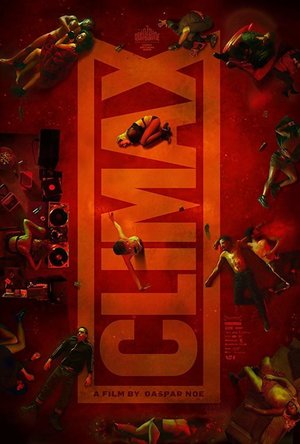
If you’re going to see this film, it likely won’t be a huge surprise to you. Those that will buy a ticket already know who Gaspar Noé is and what he’s all about. Films like Irreversible and Enter the Void have defined him as an artist of scandal, evil and the extreme. Climax follows directly in the footsteps of those films, but at this point it does leave us wondering if there’s any room for growth in this writer/director or if we’ll just continue to get more of the same until we’re sufficiently numb to his offerings.
The setting for Noé’s latest tour of human horrors is the final rehearsal of a French dance troupe set to tour internationally. The film begins with the final scene of the movie and the ending credits. Then, just as your confusion has built to appropriate levels, things actually begin with videotaped interviews of all 22 members in an attempt to give you some semblance of character introduction. Shown on an older TV, the screen is surrounded by books and plays focused on ultra-negative philosophical views and subjects such as schizophrenia and suicide. So, despite the rather upbeat and optimistic responses of the prospective dancers, the tone is already being set for the madness that is about to commence.
From there we are taken to the big dance number. A ten-minute single shot involving the entire cast choreographed to 90’s EDM music. While this scene felt a little bit long, it did nearly as much to introduce the characters as the audition tapes shown earlier. Each dancer has a unique style and flair that executes a certain character development. Once the dance is complete it feels like the movie finally begins and the cast starts their post-rehearsal party. The soiree involves dancing (of course), drinking (homemade sangria) and some minor cocaine use. But it mostly consists of quick shots between different cast members taking part in some intergroup gossip. We are treated to one more (non-choreographed) dance scene with each individual showing their talents in a circle of their comrades, then we break again for more conversation. As the party continues on everyone starts to feel a little bit funny. They quickly deduce that the sangria has been spiked with LSD, but cannot determine who drugged them.
And this is where the hour-long journey into hell embarks from. The realization that they have been drugged seems to worry them very little, but does instantly turn them all against each other. The effects of the LSD ramp up rather quickly and as the cast members descend into madness the audience is treated to a myriad of trauma and depravity including: rape, incest, self-mutilation, child electrocution and an attempted abortion via a swift kick to the stomach. None of this should be any surprise to someone familiar with Noé’s work. But if this is your first experience with his particular brand of filmmaking, then be prepared to leave no perverted stone unturned.
One of the most impressive things about this film is how little preparation actually went into it. The entire film was shot in 15 days and edited to completion in only 3 months after that in order to meet the Cannes festival deadline. In addition, it was shot with a mere 5 pages of script. The majority of the film consists of both dancing and psychotic undulations inspired by web videos of people high on crack, ecstasy and acid which were hand-selected by Noé. So, despite the assumed need for structure that comes with extended tracking shots such as these, the whole movie is (surprisingly) mostly ad-libbed. Only the opening dance scene is choreographed with all of the remaining ones being the result of the how the dancers chose to express themselves through dance.
In the end you’ll be left wondering if all of the shock and awe that’s been served to you actually meant something, or if it was simply sensory overload for the sake of itself. And that’s where the movie really falls short. If Noé had meant for any sort of deeper meaning in this film, it was ultimately lost to extreme subtlety. I did my best to find the clever allegory here (French history and culture, biblical stories, etc.) and I admittedly fell short. “Birth is a unique opportunity. Life is an impossible collective. Death is an extraordinary experience,” read three title cards which flash throughout the journey of Climax. Although these sayings are poetic and beautiful, they seem to have little or loose application to the actual storyline.
The strongest feelings in this film are not evoked from any sort of meaning or fable-style lesson. They come from the distress and disgust brought about by the actions of the characters and, more so, the beautifully executed cinematography. Every filming technique meant to cause discomfort is present here including: long tracking shots, inverted imagery, black screen with nonlinear sounds and subliminal images. The application and combination of all of these effects means that much credit for this film should most likely go to Noé’s DP, Benoit Debie.
Fundamentally, the judgement for a Gaspar Noé film exists on a different scale than any other film. And while that concept can be new and exciting when the first shocking film debuts, you quickly realize that subsequent ones have to continue to push the boundaries that were originally broken. Otherwise you run the risk of becoming stale. We may have gotten to that point now with Noé. Climax brings very little new shock to the table for a director who has developed his reputation as a purveyor of wickedness. Those who attend this movie will be looking for him to push their horror to new levels, but will likely end up unfulfilled. Although the lack of a new frontier doesn’t remove all of the value for the film, Noé has made implicit promises through his other work which he has failed to deliver upon with Climax.
The setting for Noé’s latest tour of human horrors is the final rehearsal of a French dance troupe set to tour internationally. The film begins with the final scene of the movie and the ending credits. Then, just as your confusion has built to appropriate levels, things actually begin with videotaped interviews of all 22 members in an attempt to give you some semblance of character introduction. Shown on an older TV, the screen is surrounded by books and plays focused on ultra-negative philosophical views and subjects such as schizophrenia and suicide. So, despite the rather upbeat and optimistic responses of the prospective dancers, the tone is already being set for the madness that is about to commence.
From there we are taken to the big dance number. A ten-minute single shot involving the entire cast choreographed to 90’s EDM music. While this scene felt a little bit long, it did nearly as much to introduce the characters as the audition tapes shown earlier. Each dancer has a unique style and flair that executes a certain character development. Once the dance is complete it feels like the movie finally begins and the cast starts their post-rehearsal party. The soiree involves dancing (of course), drinking (homemade sangria) and some minor cocaine use. But it mostly consists of quick shots between different cast members taking part in some intergroup gossip. We are treated to one more (non-choreographed) dance scene with each individual showing their talents in a circle of their comrades, then we break again for more conversation. As the party continues on everyone starts to feel a little bit funny. They quickly deduce that the sangria has been spiked with LSD, but cannot determine who drugged them.
And this is where the hour-long journey into hell embarks from. The realization that they have been drugged seems to worry them very little, but does instantly turn them all against each other. The effects of the LSD ramp up rather quickly and as the cast members descend into madness the audience is treated to a myriad of trauma and depravity including: rape, incest, self-mutilation, child electrocution and an attempted abortion via a swift kick to the stomach. None of this should be any surprise to someone familiar with Noé’s work. But if this is your first experience with his particular brand of filmmaking, then be prepared to leave no perverted stone unturned.
One of the most impressive things about this film is how little preparation actually went into it. The entire film was shot in 15 days and edited to completion in only 3 months after that in order to meet the Cannes festival deadline. In addition, it was shot with a mere 5 pages of script. The majority of the film consists of both dancing and psychotic undulations inspired by web videos of people high on crack, ecstasy and acid which were hand-selected by Noé. So, despite the assumed need for structure that comes with extended tracking shots such as these, the whole movie is (surprisingly) mostly ad-libbed. Only the opening dance scene is choreographed with all of the remaining ones being the result of the how the dancers chose to express themselves through dance.
In the end you’ll be left wondering if all of the shock and awe that’s been served to you actually meant something, or if it was simply sensory overload for the sake of itself. And that’s where the movie really falls short. If Noé had meant for any sort of deeper meaning in this film, it was ultimately lost to extreme subtlety. I did my best to find the clever allegory here (French history and culture, biblical stories, etc.) and I admittedly fell short. “Birth is a unique opportunity. Life is an impossible collective. Death is an extraordinary experience,” read three title cards which flash throughout the journey of Climax. Although these sayings are poetic and beautiful, they seem to have little or loose application to the actual storyline.
The strongest feelings in this film are not evoked from any sort of meaning or fable-style lesson. They come from the distress and disgust brought about by the actions of the characters and, more so, the beautifully executed cinematography. Every filming technique meant to cause discomfort is present here including: long tracking shots, inverted imagery, black screen with nonlinear sounds and subliminal images. The application and combination of all of these effects means that much credit for this film should most likely go to Noé’s DP, Benoit Debie.
Fundamentally, the judgement for a Gaspar Noé film exists on a different scale than any other film. And while that concept can be new and exciting when the first shocking film debuts, you quickly realize that subsequent ones have to continue to push the boundaries that were originally broken. Otherwise you run the risk of becoming stale. We may have gotten to that point now with Noé. Climax brings very little new shock to the table for a director who has developed his reputation as a purveyor of wickedness. Those who attend this movie will be looking for him to push their horror to new levels, but will likely end up unfulfilled. Although the lack of a new frontier doesn’t remove all of the value for the film, Noé has made implicit promises through his other work which he has failed to deliver upon with Climax.
Gareth von Kallenbach (980 KP) rated Savages (2012) in Movies
Aug 7, 2019
Over the past 15 years, Oliver Stone’s films have been kind of hit or miss to me. It’s as if Stone is still trying to make the same controversial films he became popular for in the 80’s and early 90’s. Only, as an audience, we have become keen to his filmmaking style and therefore his more recent work suffers from the apathy of a “show me something new” culture. Still, despite his failures, Stone does not makes apologies for his work while he continues in his quest to make films about controversial subjects. This time around Stone strives to take us into the violent world of the Mexican drug cartels though a film adaptation of the novel Savages by Don Winslow.
As the film opens we are introduced to “O” (Blake Lively) who, as our narrator, acquaints us with the open yet loving relationship she shares with our two protagonists, Chon and Ben. Chon (Taylor Kitsch), an ex-Navy SEAL, is unquestionably the muscle of the trio’s operation. Chon was the original financier for his high school friend Ben, (Aaron Johnson) the peaceful, charitable, botany genius who has created the most potent marijuana in the world. Together these two embody the perfect man for O, while the three of them enjoy the spoils of the small marijuana empire they created in southern California.
That is until they gain the attention from a Mexican cartel intent on creating a stronger foothold in the southern California area. The cartel offers them a partnership and explains that by teaming up their business will triple in three years. But when the trio refuse the offer, the ruthless head of the cartel, Elena (Selma Hayek), instructs her enforcer, Lado (Benicio Del Toro), to kidnap O and hold her hostage so the boys will cooperate. Soon our heroes use their network of connections, like crooked DEA agent Dennis (John Travolta) and financial broker Spin (Emile Hirsch), to battle the cartel in a series of savage maneuvers to get back their one “shared” love.
Stone has been known to inspire his actors to give Oscar worthy performances. Sadly, you will not find any such performances here. That is not to say that the acting was terrible. It just seemed that the characters themselves are uninspired which is a shame because I would have liked to have seen some growth in this young cast, especially from Taylor Kitsch.
I feel that many critics will be hard on Taylor Kitsch because of his previous epic fails of 2012 (John Carter and Battleship) however I am surprised to admit that, for this movie at least, he gets a pass in my book. Not because he delivers a fantastic performance that makes me believe he’s truly an up and coming talent, but rather because he is convincing in his portrayal of Chon. When O describes our protagonists as each being one half of the perfect man, she refers to Chon as “Hard Steel,” which is exactly what Kitsch plays him as, a one-dimensional, emotionally devoid character with no growth or any real redeeming qualities other than the ability to go to war. Regardless of whether or not Kitsch has any additional acting range not showcased in this film, I cannot penalize him for his performance in this movie. He fit the part that he was cast in fine.
Blake Lively (Gossip Girl, Sisterhood of the Traveling Pants) plays O, short for Ophelia. And yes she channels the mad, love-struck, melancholic character from Hamlet after whom she is named. And while it is easy to make those comparisons to the character of this film, they only appear to be on the surface, if anything. And herein lies the problem. Regardless of how you feel about her open relationship with Ben and Chon, the more I learned about her, the less I cared. Like Kitsch’s character, O is boring and one dimensional. She is the product of being a pretty little rich girl whose mother is off somewhere with husband number twelve. She has been getting stoned every day since she was young and the only place she finds herself loved is in with the company of Chon and Ben. Tragic, I know. While watching the film I honestly thought to myself, if I was Ben or Chon, I would say, “Fuck it. Cut her loose and let’s go to Asia.” She has no redeeming qualities other than being good looking and a good lay. So why would they go through so much trouble for her? The trio’s relationship is weakly tied together by her telling us through narration but never really materializes on screen. At times you get some of a feeling that Ben actually loves her but that love is never really reciprocated from O. It is safe to say that that I did not derive any loving connection from Lively’s performance, though her deliver as a narrator was tolerable.
Aaron Johnson (Kick-Ass) is the one redeeming performance from this young cast. In contrast to Chon, O describes Ben as “Soft Wood” which makes him the better half. Ben is the one character who actually goes through some kind of character arc and growth. Using the wood analogy, we watch him bend from the peaceful Buddhist businessman to the man who will sacrifice everything, to get back this woman he loves. Nowhere is this better embodied than when Ben is faced with the tough choice of sticking to his peaceful beliefs or incinerating a man in cold blood during one of their moves against the cartel. I found myself actually curious about what Ben would do next. Unlike Chon and O, Ben has some depth and struggles with his personal beliefs, his love for O and what needs to be done. Needless to say, Johnson delivers a believable performance that actually helps move along the action and was the only protagonist that kept me interested in their battle.
In addition to Johnson, the film is littered with several strong supporting cast members who all deliver solid performances. Selma Hayek is strong as Elena, the leader of the cartel that challenges Ben and Chon. She is a ruthless and shrewd businesswoman and yet has a better “sense of morality” as she explains during her interactions with O and her own daughter. Her enforcer Lado is played by Benicio Del Toro who, with the help of an uncomfortable rapist mustache, comes off as an extremely menacing character. Del Toro solidifies himself on screen by being down right creepy and yet intelligent in his own savage way. During every moment of screen time you expect him to kill someone just because it is good for business.
A needed bit of change of pace is provided by an unexpected performance by Emile Hirsch (Into the Wild) as Ben and Chon’s witty financial broker, Spin. As well as by John Travolta who plays Dennis, the dirty DEA agent who’s in Ben and Chon’s pocket. In fact, even though Travolta’s screen time is maybe a total of 12 minutes, his performance steals the show with his sole bit of comic relief, for lack of a better explanation. Perhaps the strongest acted moment of this film is during a standoff scene between Del Toro and Travolta that in many ways makes me want to know more about those characters. And what that movie would be about.
In typical Stone fashion the movie is shot in a variety of film angles and stylistic devices used to foreshadow and at times create a foreboding presence. Visually the movie provides a strong and believable feeling for the world these characters live in and the way that they operate their business. In addition, narration is used at points to move along the action and provide the audience with insight that otherwise would not have been possible on performances alone. I personally have no problem with narration as long as it is set up from the beginning and used to advance the story, which it is. However in the final act, the movie introduces a film device from left field that completely kills the already weak pacing of the movie. I cannot get into it without giving away the story, but I can see how this device could completely ruin the movie for those patrons who are already disinterested by the time the final act rolls around. Especially for those who do not find any connection to any of the characters. In which case, the pacing of this film will seem slow and drawn out.
I am torn about my review of this film. Savages is something that I wanted to like more than I did. Two of the three protagonists are one dimensional and if it was not for Johnson and the strong supporting cast I might have found the movie boring. It was also completely different from the expectations set by the commercials. Those looking for an action movie will feel misled and will more than likely be disappointed with the film. Not that there is not any action, only it comes between very long periods of dialogue and slow pacing. By the end of the movie, you are either invested in these characters or just waiting for the lights to come up in the theater. And in typical Oliver Stone fashion the movie tries to make us question our own perception of just what it means to be a savage.
As the film opens we are introduced to “O” (Blake Lively) who, as our narrator, acquaints us with the open yet loving relationship she shares with our two protagonists, Chon and Ben. Chon (Taylor Kitsch), an ex-Navy SEAL, is unquestionably the muscle of the trio’s operation. Chon was the original financier for his high school friend Ben, (Aaron Johnson) the peaceful, charitable, botany genius who has created the most potent marijuana in the world. Together these two embody the perfect man for O, while the three of them enjoy the spoils of the small marijuana empire they created in southern California.
That is until they gain the attention from a Mexican cartel intent on creating a stronger foothold in the southern California area. The cartel offers them a partnership and explains that by teaming up their business will triple in three years. But when the trio refuse the offer, the ruthless head of the cartel, Elena (Selma Hayek), instructs her enforcer, Lado (Benicio Del Toro), to kidnap O and hold her hostage so the boys will cooperate. Soon our heroes use their network of connections, like crooked DEA agent Dennis (John Travolta) and financial broker Spin (Emile Hirsch), to battle the cartel in a series of savage maneuvers to get back their one “shared” love.
Stone has been known to inspire his actors to give Oscar worthy performances. Sadly, you will not find any such performances here. That is not to say that the acting was terrible. It just seemed that the characters themselves are uninspired which is a shame because I would have liked to have seen some growth in this young cast, especially from Taylor Kitsch.
I feel that many critics will be hard on Taylor Kitsch because of his previous epic fails of 2012 (John Carter and Battleship) however I am surprised to admit that, for this movie at least, he gets a pass in my book. Not because he delivers a fantastic performance that makes me believe he’s truly an up and coming talent, but rather because he is convincing in his portrayal of Chon. When O describes our protagonists as each being one half of the perfect man, she refers to Chon as “Hard Steel,” which is exactly what Kitsch plays him as, a one-dimensional, emotionally devoid character with no growth or any real redeeming qualities other than the ability to go to war. Regardless of whether or not Kitsch has any additional acting range not showcased in this film, I cannot penalize him for his performance in this movie. He fit the part that he was cast in fine.
Blake Lively (Gossip Girl, Sisterhood of the Traveling Pants) plays O, short for Ophelia. And yes she channels the mad, love-struck, melancholic character from Hamlet after whom she is named. And while it is easy to make those comparisons to the character of this film, they only appear to be on the surface, if anything. And herein lies the problem. Regardless of how you feel about her open relationship with Ben and Chon, the more I learned about her, the less I cared. Like Kitsch’s character, O is boring and one dimensional. She is the product of being a pretty little rich girl whose mother is off somewhere with husband number twelve. She has been getting stoned every day since she was young and the only place she finds herself loved is in with the company of Chon and Ben. Tragic, I know. While watching the film I honestly thought to myself, if I was Ben or Chon, I would say, “Fuck it. Cut her loose and let’s go to Asia.” She has no redeeming qualities other than being good looking and a good lay. So why would they go through so much trouble for her? The trio’s relationship is weakly tied together by her telling us through narration but never really materializes on screen. At times you get some of a feeling that Ben actually loves her but that love is never really reciprocated from O. It is safe to say that that I did not derive any loving connection from Lively’s performance, though her deliver as a narrator was tolerable.
Aaron Johnson (Kick-Ass) is the one redeeming performance from this young cast. In contrast to Chon, O describes Ben as “Soft Wood” which makes him the better half. Ben is the one character who actually goes through some kind of character arc and growth. Using the wood analogy, we watch him bend from the peaceful Buddhist businessman to the man who will sacrifice everything, to get back this woman he loves. Nowhere is this better embodied than when Ben is faced with the tough choice of sticking to his peaceful beliefs or incinerating a man in cold blood during one of their moves against the cartel. I found myself actually curious about what Ben would do next. Unlike Chon and O, Ben has some depth and struggles with his personal beliefs, his love for O and what needs to be done. Needless to say, Johnson delivers a believable performance that actually helps move along the action and was the only protagonist that kept me interested in their battle.
In addition to Johnson, the film is littered with several strong supporting cast members who all deliver solid performances. Selma Hayek is strong as Elena, the leader of the cartel that challenges Ben and Chon. She is a ruthless and shrewd businesswoman and yet has a better “sense of morality” as she explains during her interactions with O and her own daughter. Her enforcer Lado is played by Benicio Del Toro who, with the help of an uncomfortable rapist mustache, comes off as an extremely menacing character. Del Toro solidifies himself on screen by being down right creepy and yet intelligent in his own savage way. During every moment of screen time you expect him to kill someone just because it is good for business.
A needed bit of change of pace is provided by an unexpected performance by Emile Hirsch (Into the Wild) as Ben and Chon’s witty financial broker, Spin. As well as by John Travolta who plays Dennis, the dirty DEA agent who’s in Ben and Chon’s pocket. In fact, even though Travolta’s screen time is maybe a total of 12 minutes, his performance steals the show with his sole bit of comic relief, for lack of a better explanation. Perhaps the strongest acted moment of this film is during a standoff scene between Del Toro and Travolta that in many ways makes me want to know more about those characters. And what that movie would be about.
In typical Stone fashion the movie is shot in a variety of film angles and stylistic devices used to foreshadow and at times create a foreboding presence. Visually the movie provides a strong and believable feeling for the world these characters live in and the way that they operate their business. In addition, narration is used at points to move along the action and provide the audience with insight that otherwise would not have been possible on performances alone. I personally have no problem with narration as long as it is set up from the beginning and used to advance the story, which it is. However in the final act, the movie introduces a film device from left field that completely kills the already weak pacing of the movie. I cannot get into it without giving away the story, but I can see how this device could completely ruin the movie for those patrons who are already disinterested by the time the final act rolls around. Especially for those who do not find any connection to any of the characters. In which case, the pacing of this film will seem slow and drawn out.
I am torn about my review of this film. Savages is something that I wanted to like more than I did. Two of the three protagonists are one dimensional and if it was not for Johnson and the strong supporting cast I might have found the movie boring. It was also completely different from the expectations set by the commercials. Those looking for an action movie will feel misled and will more than likely be disappointed with the film. Not that there is not any action, only it comes between very long periods of dialogue and slow pacing. By the end of the movie, you are either invested in these characters or just waiting for the lights to come up in the theater. And in typical Oliver Stone fashion the movie tries to make us question our own perception of just what it means to be a savage.