
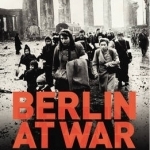
Berlin at War: Life and Death in Hitler's Capital, 1939-45
Book
Berlin was the nerve-centre of Hitler's Germany - the backdrop for the most lavish ceremonies, it...
ClareR (6256 KP) rated The German House in Books
Dec 30, 2019
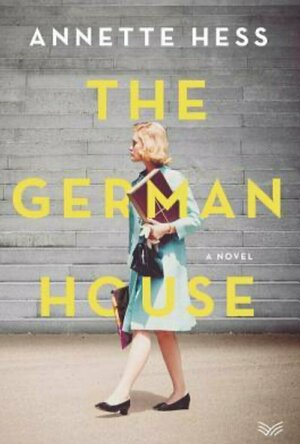

I really enjoyed this novel. It was hard-going at times, and it did read like a translated novel. It did however, catch the spirit of the time. Eva’s longing to break out of the societal restrictions of the time (for example when she refers to how much she likes a new Beatles song that Jürgen can’t understand, he doesn’t like pop music) and Jürgen’s wish that she stops work as soon as she gets engaged (as a modern woman, I was positively fuming at this point!!).
I was fascinated by the trip the Court makes to Auschwitz - somewhere I’ve never been, and after a trip to Oranienburg (a camp for political prisoners outside Berlin), I feel that I would struggle to go. This was one of the most emotional parts of the book.
The side story involving Eva’s older sister is also fascinating, and I feel portrays the effect of seeing so much violence and hatred as a young child (no spoilers here!).
All in all, after I got used to the writing style, I really enjoyed this. It was an interesting insight into the post-war years, and West Germany’s reaction to the damage and destruction that the Nazis had caused during the Holocaust.
This is well worth a read.
Many thanks to NetGalley and the publisher for my copy of this book to read and honestly review.
Suswatibasu (1703 KP) rated In the Darkroom in Books
Jul 28, 2017
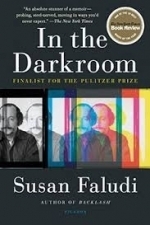

Her father's confusion over what she believed to be 'female', at the same time denying an abusive past and surviving the holocaust, highlights the troubles of adopting another identity as a form of escape.
Faludi's attempt to understand her father, however, is deeply moving - trying to process her previous actions with her past and her present is an account that many can relate to. Her passion to find out the enigma that is her father is commendable and there were many times I shed a tear listening to this tale of much sorrow.
It really is a masterpiece of writing and will go down as an important piece of literature for this decade.

Jessica Erdas (463 KP) rated The Book Thief in Books
May 16, 2018

Hidden in Plain Sight: Jews and Jewishness in British Film, Television, and Popular Culture
Nathan Abrams and Phyllis Lassner
Book
Hidden in Plain Sight: Jews and Jewishness in British Film, Television, and Popular Culture is the...

Mr Sammler's Planet
Saul Bellow and Stanley Crouch
Book
Mr. Artur Sammler, Holocaust survivor, intellectual, and occasional lecturer at Columbia University...

The Chocolate Lady (94 KP) rated Lilac Girls in Books
Oct 5, 2020
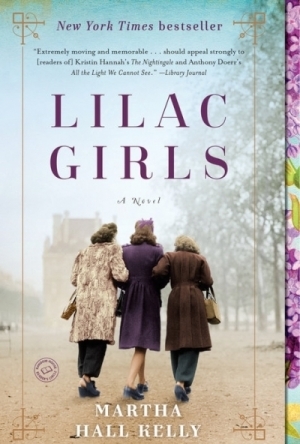

In addition - and I hope this doesn't sound racist or snobbish - as a Jew, I have a hard time with Holocaust novels that seem to outwardly ignore how the Nazis treated the Jews, and only focuses on the other "undesirables." I realize that the Nazis didn't only kill Jews, but they were their primary target, and to avoid that altogether was disingenuous, to say the least. However, I was glad that this book didn't focus on any overtly Christian themes, even though I believe that there is a market for Holocaust stories within the Christian Fiction genre (see my review of the novel The Butterfly and the Violin by Kristy Cambron here http://drchazan.blogspot.com/2014/07/beauty-out-of-ugliness.html for more on my feelings about this).
Furthermore, the only Jewish reference I found in this novel was a passing reference to visiting the Ghetto and a remembrance of eating a Hanukkah delicacy. Unfortunately, the author didn't do her research properly, and the character said she remembered eating a type of doughnut that the Jewish bakers made for the holiday. Those doughnuts - known as "sufganiot" were never part of any Eastern European Hanukkah celebration at that time. In fact, sufganiot that are popular among Jews today, come from the Jews of North Africa and Arab countries. The word, sufganiot, comes from the Arabic and Hebrew words that mean sponge. While Jews in Poland did make something similar, their popularity as a particularly Hanukkah delicacy among Easter European Jews only coincided after Ashkenazi and Mizrahi Jews came together in Israel (i.e., post-1948). All of this is why I cannot give this book a rating of more than two and a half stars out of five, but I'm certain that it will find a much more sympathetic audience among non-Jewish readers.
Hazel (2934 KP) rated The Choice: Escape Your Past and Embrace the Possible in Books
Oct 21, 2018

Oh my goodness, I can't even begin to tell you how good this book is. It's not just another Holocaust survivors life-story, it's so much more than that ... it's extraordinary!
Dr Eger is now 90 years old and what an amazing woman she is ... this book tells the story of being a teenager and her relationship with her parents and sisters, the truly horrific time she spent being a prisoner of the Nazis, her astonishing strength and bravery before, during and after the war and of her life once freedom had been achieved.
Once again, I can't tell you how good this book is. It's beautifully written and flows exceptionally well. Highly recommended.
My thanks go to the publisher, Penguin Random House UK, Ebury Publishing via NetGalley for my copy in return for an honest review.
A Matter of Life and Death: 60 Voices Share Their Wisdom
Rosalind Bradley and Desmond Tutu
Book
A Holocaust survivor whose mother collapsed and died only moments after they both registered as...
Alicia
Book
Alicia Jurman is five-years-old when her story begins. It is 1935 and she is living in the East...