

Erased: Vanishing Traces of Jewish Galicia in Present-Day Ukraine
Book
In Erased, Omer Bartov uncovers the rapidly disappearing vestiges of the Jews of western Ukraine,...

Eleanor Luhar (47 KP) rated Batman the Killing Joke in Books
Jun 24, 2019
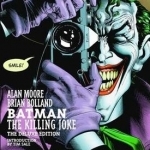


The edition I read included an introduction by Tim Sales, an afterword by Brian Bolland, and a final scene written and illustrated by Bolland.
This is one of the most famous and successful novels - and I can see why. The story is just fantastic - the Joker tries to prove that anyone can go insane after just one bad day, using Jim Gordon as his example. The colour palettes are so cleverly thought out, giving an eerie, creepy tone to most scenes, while the Joker's (possible) origin story is mostly black and white with just small details in red.
Batman is obviously included, but is not a massive character in this story. The focus is on the Gordons and the Joker.
I really loved this. The origin story for the Joker that's included can be taken as true or false - the Joker makes a comment about not actually remembering his past, and liking it to be "multiple choice". This gives the reader the choice of believing it or not. And the Joker's ways of putting Jim Gordon through hell are definitely in line with his character.
The Joker always fascinates me, and I would love to read all his stories. But whether you're a "fan" of his or not, this book is definitely worth the read. 5 stars; an fantastic novel.


Bill O'Reilly's Legends and Lies: The Real West
Bill O'Reilly and David Fisher
5.0 Rate It
Book
The must-have companion to Bill O'Reilly's historic series Legends and Lies: The Real West, a...
Wild West History

Salt Fat Acid Heat
Book Watch
In the tradition of The Joy of Cooking and How to Cook Everything comes SALT FAT ACID HEAT, an...
Food and Drink
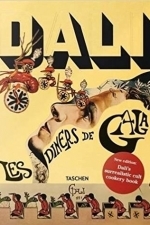
Dali: Les Diners de Gala
Book
“Les diners de Gala is uniquely devoted to the pleasures of taste … If you are a disciple of one...
Art food
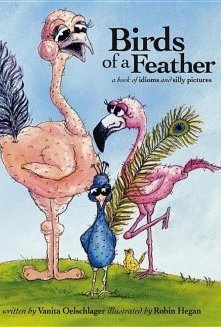
Birds of a Feather
8.0 Rate It
Book
Children are innately curious about words, especially phrases that make them laugh ("Ants in your...
Children's Fiction Humour

ClareR (6256 KP) rated The Unravelling in Books
Feb 23, 2022
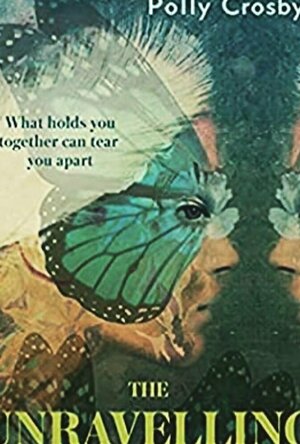
Marianne is a difficult woman to get to know: she’s short tempered, doesn’t really want to share any of herself with Tartelin - and she has a lot of secrets to share.
Tartelin is mourning the death of her mother. She’s a young woman, alone in the world. She probably chooses the job with Marianne because it’s somewhere so different from her childhood home and her mother’s art studio.
I do think that Dohhalund goes some way to helping Tartelin begin the grieving process. It sounds like a stark, beautiful place. At one end is a military base, and at the other is Marianne’s house and land. Her family had lived on Dohhalund for generations, until the military had ordered them to leave. After her return, it’s evident that many of the buildings have started to fall into the sea. This reflects to some extent, Marianne’s physical and Tartelin’s mental states. Both women are deeply affected by what has happened in their pasts.
This is such an emotive, beautifully descriptive book. It’s a slow burner, a story of friendship and love, where secrets are revealed, people are reunited and new friendships forged.
This gorgeous book had me in tears by the end, with characters I really cared for. As the Pearl Women in the book often said: “The sea is made up of unspeakable sadness”, and whilst this novel was sad, there was also hope.
Highly recommended (as is Polly Crosby’s first book “The Illustrated Child”).

Jamie (131 KP) rated Uzumaki (3-in-1, Deluxe Edition): Includes Vols. 1, 2 & 3: Vols. 1, 2 & 3 in Books
Jun 4, 2017
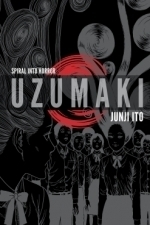
What makes Uzumaki so brilliant is that it takes something so abstract and transforms it into pure nightmare fuel, utterly corrupting one of nature's most beautiful shapes: the spiral. When I had first started reading this comic I was skeptical, how could a geometic shape be scary? There is nothing inherently sinister about a shape, just as there is nothing all that unusual about the town.
Uzumaki challenged my perception of horror in it’s twisting narrative, starting slow as the madness began to spread, spiraling out like a flower in bloom. As the story reached a fever pitch, it quickly descends, like a whirlpool sucking everything underneath it’s surface. Pure genius.
The art is also a wonder in itself, with extremely detailed drawings depicting some of the best examples of body horror that I’ve ever seen. While this is of course up for debate, many fans and critics have chosen Uzumaki as Ito’s magnum opus, and after reading a couple of his other comics I would have to agree. Uzumaki is one of the best works of horror I’ve ever had the pleasure of reading. I highly recommend this for any fan of horror, but especially for fans of the works of H.P. Lovecraft, whose books greatly influenced Ito in his creation of the series.

Goddess in the Stacks (553 KP) rated The Edible Front Yard in Books
Sep 8, 2017


Her chapters range from “Curb Appeal” – WHY should we care what our yard looks like, and what actually looks good? – to “The New Front Yard Plant Palette” which is all about classic edibles that also look great. Another chapter is about helper plants – plants that aren’t necessarily edible (though some of them are), but that serve other purposes in the garden, such as pest repellant or predatory bug attractants. Both of these chapters list a TON of plants, with short descriptions about why they’re on the list, how to take care of them, and what to use them for. EXTREMELY useful.
Soler has her own blog – The Germinatrix – but unfortunately it doesn’t look like it’s been updated since 2012. Her Twitter seems to have died about the same time, and her Facebook hasn’t seen a post since early 2013. I’m still hoping to find her presence online, as I love her writing style and would love to find more of her work.
You can find all my reviews at http://goddessinthestacks.wordpress.com