

Gareth von Kallenbach (980 KP) rated No Escape (2015) in Movies
Aug 6, 2019
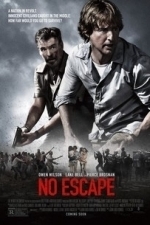

Surprisingly, I enjoyed him in this performance greatly. Wilson plays a father who uproots his wife Annie (Lake Bell) and their two little girls and moves them to Southeast Asia to work on a project to bring clean drinking water to the country and provide a better life for his family. However shortly after arrival, the family finds themselves in the middle of a violent political uprising they do not understand nor have any idea why it is happening and must somehow find sanctuary and escape this foreign city where Americans are being executed on sight. The film is intense. As soon as the coup begins, we are taken on a ride of constant tension and emotion, broken up with quiet moments where Wilson uses “dad humor” to comfort his family. Wilson shines in these moments because his “lame Dad humor” is not only believable, but his demeanor throughout the film is realistic and loving. His chemistry with his cast mates is stellar as the family all deliver solid performances and you can believe they are an actual family.
As they are moving through the city they come across a familiar face in Pierce Brosnan who plays some kind of mercenary ex-agent type. Brosnan’s screen time is short but he steals every scene he is in. He also gives an explanation, though simple, of what is going on and how the family can find safety. Critics of this film may fault it for glossing over a real world issue of western colonialism and no attempt to humanize the plight of the locals, however for me at least, this film isn’t trying to tell a giant story, but rather a far simpler one which is about family. Additionally, the trailers for this film present it as more of an action film, which it is not.
In the end we are left with a frightening atmosphere where we constantly might ask ourselves what we would do in that situation. The strength of this film is the family dynamic and the strong performances that give them life. Though the film mostly ignores a real world issue, it delivers a thrilling fast paced ride from almost start to finish.
Gareth von Kallenbach (980 KP) rated Furious 7 (2015) in Movies
Aug 6, 2019
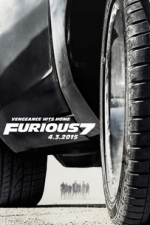

Furious 7 tries to tie together the storylines of its predecessors. At least that was the original intent. But with only a couple weeks of filming left, the movie lost one of its leading men, Paul Walker in a horrifically ironic car accident. When the cast and crew, as well as Universal and Walker’s family agreed to finish filming, the movie became more about giving his character, Brian O’Connor, his last hurrah, a final dance with bullets he told his wife he missed before he finally accepted a more domesticated existence.
As much as I enjoyed Furious 7, it was hard to watch on so many levels. The fans will love the intense fight scenes, some wincingly brutal, some intricately choreographed. There are plenty of jaw-dropping stunts and heart-racing car chases, and plenty of one-liners to laugh or groan at, mainly from Dwayne Johnson’s character, Hobbs. This movie also had two villains, Jason Statham’s Deckard Shaw and Djimon Honsou’s Jakande; one intent on avenging his brother, the other bent on getting his hands on “God’s Eye”, a device that would essentially give Jakande control of the world, of course. The movie also introduced a new character named Mr. Nobody, played by an amusing Kirk Russell.
With the aid of CGI and Walker’s brothers, Cody and Caleb, as stand-ins, director James Wan was able to keep Brian in most of the film. That’s where I found some difficulty in watching the movie. Wan and his staff combed through footage that normally would’ve ended on the cutting room floor to find usable shots that Wan came to refer to as “Walker Gold” because each shot became more and more precious. I understood that sentiment as each of Walker’s scenes, especially with Vin Diesel and Jordana Brewster, became even more poignant knowing they were some of his last. Wan didn’t try to make the audience forget that Walker was gone, instead he made Furious 7 the satisfying closing chapter for the character Walker brought to life, effectively paying tribute to Walker himself.
Afghanistan '11
Games
App Watch
The year is 2011, you are commanding the US army operations in Afghanistan. But contrary to the...
games
1st to Die (Women's Murder Club, #1)
7.9 Rate It
Book
James Patterson, bestselling author of the Alex Cross novels Along Came a Spider, Kiss the Girls,...

CHAOS Combat Copters -‐ #1 Multiplayer Helicopter Simulator 3D
Games and Entertainment
App
"ENJOY WHAT IS SIMPLY THE BEST MULTIPLAYER HELICOPTER ARCADE ON SMARTPHONES C.H.A.O.S - Combat...

Colossatron: Massive World Threat
Games
App
AN EXPLOSIVE NEW GAME FROM THE CREATORS OF FRUIT NINJA AND JETPACK JOYRIDE! Colossatron: Massive...
The Moorad Choudhry Anthology: Past, Present and Future Principles of Banking and Finance + Website
Book
The definitive and timeless guide to the principles of banking and finance, addressing and meeting...

The Alex Crow
Book
From the critically acclaimed author of cult teen novel Grasshopper Jungle, Andrew Smith, comes a...

Nothing is Sacrosanct: No One Can Hide from Their Sins Forever
Book
Nothing is Sacrosanct: Intense, Raw Novel Takes Calculated Revenge on Child Abuse Aggressors;...

Duncan MacMillan: Plays One
Book
Monster: "He's got zero empathy. You could be having a conversation and start choking to death and...