Search

Search only in certain items:

    50in1 Piano

    50in1 Piano

    Music

    (0 Ratings) Rate It

    App

    Learn to play the piano, create your own songs and even sing to your compositions! 50in1 Piano lets...

    Dote Shopping

    Dote Shopping

    Shopping and Lifestyle

    (0 Ratings) Rate It

    App

    Dote has all of your favorite stores for clothes and make-up. Get all the best deals—Dote lets you...

    Jellynote

    Jellynote

    Music and Education

    (0 Ratings) Rate It

    App

    Join Jellynote to play and learn your favourite songs and meet other musicians who love playing...

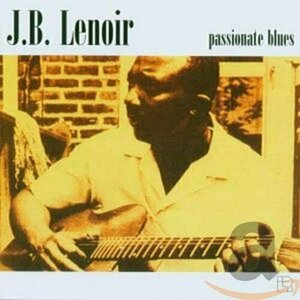
Alabama Blues/Passionate Blues by JB Lenoir
(0 Ratings)
Album Favorite

"In 1962/3 German promoters Fritz Rau and Horst Lippmann booked a number of American blues and jazz artists to come over to tour Europe [The American Folk Blues Festival]. It was kind of the first time these blues musicians weren’t playing places like the south side of Chicago for $25 a night. They were playing in Europe’s finest concert halls to an audience that listened spellbound to every nuance and every word of a language they didn’t understand, from a people whose colour they didn’t understand and whose musical history they didn’t understand. They were enraptured by the emotion and individuality of these different blues musicians. So as a 16-year-old I went to the Manchester Free Trade Hall to see one of these shows, and one of the characters who stood out for me was J.B. Lenoir. He was alone on stage with an acoustic guitar and sang songs in this amazing bell-like high tenor that was quite unlike most of his compatriots, and he made a great impact on me. In the same year I heard him singing ‘Alabama Blues’ and was later given by Rau an album they recorded with Lenoir of the same name, repackaged and remarketed today as Passionate Blues. ‘Alabama Blues’ was the album’s key track, a very brave song for a black man to sing in 1963, with the race riots, lynch mobs, bombs and brutality. Almost the only clarion voice of protest and political awareness I was aware of was J.B. Lenoir. He sang about Vietnam, he sang about the wars in the street, he sang about police and the lynch mobs, and he did so in a very articulate and responsible way – he wasn’t a rabble-rouser. He reflected what was going on and how it impacted on him and his life, if not in an uncomplaining way, certainly not in a vitriolic way. When we think about it these are perfect sentiments for the blues. I heard some really rather tiresome man on breakfast television this morning, Michael Buble I think it was, talking about his latest single. He took great pains to explain how it was about the break-up of a relationship and said, “all my songs are about being in love or out of love, that’s what I do.” I thought to myself: “How incredibly interesting. Not.” How incredibly dull and boring, but it’s the stuff of so much. Shakespeare’s sonnets probably should have got it out of the system for planet earth and its population for all time. I don’t have a problem with a good love song but very few of them are, they’re really incredibly trite and employ the same tiresome, limiting vocabulary and expressions. It’s almost as if people’s brains can only go as far as their gonads. J.B. Lenoir proved that you can be passionate about the lynchings in Alabama. That’s the stuff we need to know about and blues, simple and direct and emotionless as it is, is the perfect form for that."

Source
  
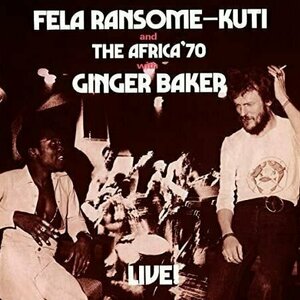
Afrodisiac by Fela Ransome-Kuti & The Africa '70
(0 Ratings)
Album Favorite

"I found a very interesting thing out about Tony Allen. I was thinking, ""How did he get to that music?"" In my opinion, Afrobeat really grew out of his drumming more than anything else. I mean, Fela was of course totally important to it and realised what you could build around that, but I think there was nothing else you could find that sounds like Tony at that time. So I was asking a friend of mine about this, Joe Boyd, the record producer, and he said that the story with Tony was that he was the only subscriber to Downbeat magazine in West Africa when he was about 18 or 19. In one edition there was a supplement by Max Roach, the jazz drummer, about hi-hat technique and Tony got completely fascinated by this article about how you balance the hi-hat with the rest of the kit. So Tony came from the history of Nigerian drumming and then he saw this article by Max Roach and that was the sort of thing that galvanised him really. Afrodisiac has four songs and they're all absolutely brilliant. There's no disappointment on the album at all. On later records there's quite a lot of fat, the pieces go on and on and sometimes they're a bit aimless, but Afrodisiac I suppose was being made as an attempt to push Fela over here, so instead of a piece taking a whole side it takes only half a side. I used to go to this record shop just off Tottenham Court Road called Sterns and that was a place where you could buy records from other countries, so a lot of Africans went there because you could buy West African records there. I used to sniff around there as I was just fascinated by all the covers. All these people with amazing headdresses on and you think, ""Christ, I really want to hear that record, I wonder what that sounds like."" So I saw that cover and bought it entirely on that. I thought, that sounds good, it's got the cheesiest title you could have. I took it home and just thought, fuck, the vigour of it and the Nigerian strength [laughs], the rudeness of it. The horns, when I heard them, I had this picture of these huge trucks on the Trans-African Highway and they have these enormous compressed air horns and that is what the horns on the record sounded like to me. They were so un-glamourised. They didn't have that kind of 'jazzy' soft, smoochy sound, they were just ""fucking get out of my fucking way!"" When I first met Talking Heads, the first meeting I ever had with them, they had been playing in London and they came over to my flat to talk about me working on their next album. So I said, ""This is the future of music"", and I played them Afrodisiac, and to their credit they were incredibly impressed by it. If you listen to the third album we did together (Remain In Light) it's so influenced by that. It's sort of shameful in a way."

Source