
Search
Search results

Chris Sawin (602 KP) rated Zombieland (2009) in Movies
Jun 22, 2019
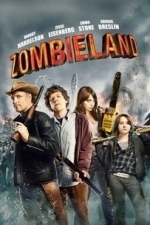

Columbus is a loner in every sense of the word. He usually spent his nights indoors playing World of Warcraft, so it's safe to say he probably didn't get out much. He wasn't even all that close to his family. So when the zombie apocalypse finally began to spread across the globe, Columbus already had an advantage over the majority of the population. In addition to that, Columbus had a lot of weird phobias (like clowns and those wet towels they use to wipe down tables at big restaurants). As his experience with the undead grew, so did his list of rules on how to survive in Zombieland. Columbus is on his way to Ohio, where his parents reside, hoping that by some miracle they're still alive. Before he can get very far, he runs into the first human face he's seen since the outbreak, Tallahassee. Tallahassee seems to be fearless, lives life in the moment, and worries about consequences later. His hatred for zombies bleeds through so much that his zombie killing ways are practically down to a fine art. What starts out as a potential ride to get him to his final destination could wind up being everything Columbus has ever wanted and that's a family that he feels comfortable with.
Zombieland somehow managed to breathe life into an aspect of horror I thought dried up along with George A. Romero's career and that's zombies. What started out as a fairly fresh idea has been milked dry with every situation going in every possibly way you could think of. You know Zombieland is going to be a bit different as soon as the movie begins. Columbus does a rundown of some of the most important rules he's learned while living in Zombieland leading up to the credits playing over slow-motion scenes of people being chased and eaten by zombies with "For Whom the Bell Tolls" by Metallica playing the entire time. The cinematography and the way the characters on screen interact with the letters in the opening credits is incredible. Blood splattering on the screen, glass shattering, and the way everything seems to be jumping out at you. To be honest, it's probably one of my favorite openings to any film ever.
Jesse Eisenberg's character Columbus immediately made me think of Michael Cera when I first saw the trailer. It's a role that's so similar to the roles he's played in the past and I found it kinda funny that a new trailer of Cera's was attached to this film. After that first reaction though, it didn't really bother me. In fact, the entire cast does an incredible job with the roles they play. Woody Harrelson is fantastic and steals a good portion of scenes as Tallahassee. With everything else going on, Tallahassee is on this quest to find a Twinkie and it's pretty hilarious watching him lose it whenever he can't find them. Emma Stone and Abigail Breslin as Wichita and Little Rock add more to the film when they're acting as a sisterly team rather than when they have scenes separately later on. Their cons are pretty spectacular and priceless in execution.
One of the most interesting factors of the film was something that made its way online two weeks before the film was even released. Zombieland originally started as a TV pilot. Before the cast we're familiar with now was set, Patrick Swayze was going to cameo as a zombie and there were several moments paying homage to Ghost that just sounded amazing and comical. They actually had several people in mind to cameo in the film. The actor they wound up going with is wonderful in their own right, gets plenty of screen time, and manages to steal quite a few laughs, but the Patrick Swayze zombie would've been just as good if not a bit better considering the circumstances.
The finale of the film that takes place in an amusement park is one of the best closing sequences to a zombie film ever. It's surprising no other zombie film has gone that route. The way the rides and carnival attractions are incorporated into zombie execution is marvelous in itself.
Zombieland is witty horror entertainment with a great cast and clever cinematography. A roller coaster ride you immediately want to ride again as soon as its over. What's surprising is it might just wind up being the best all around horror film to come out this year. As the tagline says, I strongly urge each and every one of you to "nut up or shut up."
Zombieland somehow managed to breathe life into an aspect of horror I thought dried up along with George A. Romero's career and that's zombies. What started out as a fairly fresh idea has been milked dry with every situation going in every possibly way you could think of. You know Zombieland is going to be a bit different as soon as the movie begins. Columbus does a rundown of some of the most important rules he's learned while living in Zombieland leading up to the credits playing over slow-motion scenes of people being chased and eaten by zombies with "For Whom the Bell Tolls" by Metallica playing the entire time. The cinematography and the way the characters on screen interact with the letters in the opening credits is incredible. Blood splattering on the screen, glass shattering, and the way everything seems to be jumping out at you. To be honest, it's probably one of my favorite openings to any film ever.
Jesse Eisenberg's character Columbus immediately made me think of Michael Cera when I first saw the trailer. It's a role that's so similar to the roles he's played in the past and I found it kinda funny that a new trailer of Cera's was attached to this film. After that first reaction though, it didn't really bother me. In fact, the entire cast does an incredible job with the roles they play. Woody Harrelson is fantastic and steals a good portion of scenes as Tallahassee. With everything else going on, Tallahassee is on this quest to find a Twinkie and it's pretty hilarious watching him lose it whenever he can't find them. Emma Stone and Abigail Breslin as Wichita and Little Rock add more to the film when they're acting as a sisterly team rather than when they have scenes separately later on. Their cons are pretty spectacular and priceless in execution.
One of the most interesting factors of the film was something that made its way online two weeks before the film was even released. Zombieland originally started as a TV pilot. Before the cast we're familiar with now was set, Patrick Swayze was going to cameo as a zombie and there were several moments paying homage to Ghost that just sounded amazing and comical. They actually had several people in mind to cameo in the film. The actor they wound up going with is wonderful in their own right, gets plenty of screen time, and manages to steal quite a few laughs, but the Patrick Swayze zombie would've been just as good if not a bit better considering the circumstances.
The finale of the film that takes place in an amusement park is one of the best closing sequences to a zombie film ever. It's surprising no other zombie film has gone that route. The way the rides and carnival attractions are incorporated into zombie execution is marvelous in itself.
Zombieland is witty horror entertainment with a great cast and clever cinematography. A roller coaster ride you immediately want to ride again as soon as its over. What's surprising is it might just wind up being the best all around horror film to come out this year. As the tagline says, I strongly urge each and every one of you to "nut up or shut up."

Ivana A. | Diary of Difference (1171 KP) rated Dear Edward in Books
Feb 3, 2020


<a href="https://amzn.to/2Wi7amb">Wishlist</a>; | <a
<a href="https://diaryofdifference.com/">Blog</a>; | <a href="https://www.facebook.com/diaryofdifference/">Facebook</a>; | <a href="https://twitter.com/DiaryDifference">Twitter</a>; | <a href="https://www.instagram.com/diaryofdifference/">Instagram</a>; | <a href="https://www.pinterest.co.uk/diaryofdifference/pins/">Pinterest</a>;
<img src="https://diaryofdifference.com/wp-content/uploads/2019/11/Book-Review-Banner-28.png"/>;
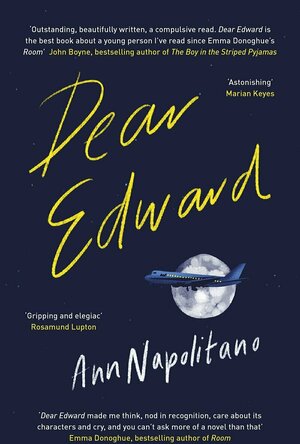
<b><i>Dear Edward by Ann Napolitano is one of the few books that instantly captures your heart, then shatters it into hundred pieces and teaches you many life lessons at the same time.</i></b>
"A reporter holds up a copy of The New York Times to a camera, to show a huge block headline, the kind normally reserved for presidential elections and moonwalks. It reads:
191 DIE IN PLANE CRASH; 1 SURVIVOR
The relatives have only one question when the press briefing comes to close; they all lean toward it like a window in a dark room:
"How is the boy?"</i>
Dear Edward features a boy called Edward, who is flying with his family to move across states. This is their chance of a new life, a brand new start. When the plane crashes, he is the only survivor.
The author tells the story through two different timelines; during the flight and after the plane crash. We follow Edward's life and how he is coping with the loss of everything he knew. We also see how he is struggling to cope with the unwanted celebrity title he has now.
I have always been intrigued by planes and plane crashes. I used to watch every single episode of the documentary on Discovery Channel back in the days. And today, I like to listen to the Plane Crash Podcast by Michael Bauer. I have had some bad experiences while flying, and have always wanted to understand what exactly happens when a plane crashes, and what aviation does to prevent this from happening in the future. This book contains amazing details about the crash, and my hidden mystery person inside me was deeply satisfied by all those pilot dialogues and explanations.
Edward's grief and growing up journey is so painful. He survived, but everyone he loved and cared about in his life died. He is lucky to have survived, but why does he then feel guilty? Why did he swap places with his brother on the flight? If they didn't - his brother would still be alive now. The brother relationship was written so perfectly. The love and the bond they shared for each other was so strong.
Despite the fact that Edward is the main character in this story, we also get to meet so many other characters, the people who lost their lives in the crash. Through flashbacks and "during flight" scenes, as well as encounters from their families, we get to see all the wishes that will never come through, all the hopes and dreams buried under the plane ash.
And that is why Edward's journey is so difficult. He doesn't have to only carry to guilt for his own family, but all those other lives as well. Edward receives letters from the families asking him to do all these things that these people would do. He is asked to become a musician, a doctor, a teacher, to travel around the world, learn knitting, etc, and Edward feels obligated to do all of these things, to give peace to the families.
<a href="https://www.instagram.com/p/B5QrV56gmZi/">View this post on Instagram</a>
<img src="https://scontent.flhr4-1.fna.fbcdn.net/v/t1.0-9/78070730_2837573906254210_1110262175731023872_o.jpg?_nc_cat=107&_nc_ohc=i_DJ97h122QAQkKa2ZjxLPKo29PJKCSylYSTgWVXCvjS6YCTQzZ35Wt8g&_nc_ht=scontent.flhr4-1.fna&oh=baa75c6360fd9a085bce261040b8a027&oe=5E836DB6"/>;
<b><i>I knew this book would stay with me forever from the moment I started reading the first few pages. It is so harshly real and painful, but what it does it remind us how every day is special and we should be thankful for it! We may not get a tomorrow, but that's why we have today. Let's make the best of it!</i></b>
Thank you to the team at Penguin Random House for sending me a copy of this book in exchange for my honest review. Also thank you to the team at LoveReading UK, for allowing me to be their Super Ambassador of this book for the month of November.
<a href="https://amzn.to/2Wi7amb">Wishlist</a>; | <a
<a href="https://diaryofdifference.com/">Blog</a>; | <a href="https://www.facebook.com/diaryofdifference/">Facebook</a>; | <a href="https://twitter.com/DiaryDifference">Twitter</a>; | <a href="https://www.instagram.com/diaryofdifference/">Instagram</a>; | <a href="https://www.pinterest.co.uk/diaryofdifference/pins/">Pinterest</a>;
<a href="https://diaryofdifference.com/">Blog</a>; | <a href="https://www.facebook.com/diaryofdifference/">Facebook</a>; | <a href="https://twitter.com/DiaryDifference">Twitter</a>; | <a href="https://www.instagram.com/diaryofdifference/">Instagram</a>; | <a href="https://www.pinterest.co.uk/diaryofdifference/pins/">Pinterest</a>;
<img src="https://diaryofdifference.com/wp-content/uploads/2019/11/Book-Review-Banner-28.png"/>;
<b><i>Dear Edward by Ann Napolitano is one of the few books that instantly captures your heart, then shatters it into hundred pieces and teaches you many life lessons at the same time.</i></b>
"A reporter holds up a copy of The New York Times to a camera, to show a huge block headline, the kind normally reserved for presidential elections and moonwalks. It reads:
191 DIE IN PLANE CRASH; 1 SURVIVOR
The relatives have only one question when the press briefing comes to close; they all lean toward it like a window in a dark room:
"How is the boy?"</i>
Dear Edward features a boy called Edward, who is flying with his family to move across states. This is their chance of a new life, a brand new start. When the plane crashes, he is the only survivor.
The author tells the story through two different timelines; during the flight and after the plane crash. We follow Edward's life and how he is coping with the loss of everything he knew. We also see how he is struggling to cope with the unwanted celebrity title he has now.
I have always been intrigued by planes and plane crashes. I used to watch every single episode of the documentary on Discovery Channel back in the days. And today, I like to listen to the Plane Crash Podcast by Michael Bauer. I have had some bad experiences while flying, and have always wanted to understand what exactly happens when a plane crashes, and what aviation does to prevent this from happening in the future. This book contains amazing details about the crash, and my hidden mystery person inside me was deeply satisfied by all those pilot dialogues and explanations.
Edward's grief and growing up journey is so painful. He survived, but everyone he loved and cared about in his life died. He is lucky to have survived, but why does he then feel guilty? Why did he swap places with his brother on the flight? If they didn't - his brother would still be alive now. The brother relationship was written so perfectly. The love and the bond they shared for each other was so strong.
Despite the fact that Edward is the main character in this story, we also get to meet so many other characters, the people who lost their lives in the crash. Through flashbacks and "during flight" scenes, as well as encounters from their families, we get to see all the wishes that will never come through, all the hopes and dreams buried under the plane ash.
And that is why Edward's journey is so difficult. He doesn't have to only carry to guilt for his own family, but all those other lives as well. Edward receives letters from the families asking him to do all these things that these people would do. He is asked to become a musician, a doctor, a teacher, to travel around the world, learn knitting, etc, and Edward feels obligated to do all of these things, to give peace to the families.
<a href="https://www.instagram.com/p/B5QrV56gmZi/">View this post on Instagram</a>
<img src="https://scontent.flhr4-1.fna.fbcdn.net/v/t1.0-9/78070730_2837573906254210_1110262175731023872_o.jpg?_nc_cat=107&_nc_ohc=i_DJ97h122QAQkKa2ZjxLPKo29PJKCSylYSTgWVXCvjS6YCTQzZ35Wt8g&_nc_ht=scontent.flhr4-1.fna&oh=baa75c6360fd9a085bce261040b8a027&oe=5E836DB6"/>;
<b><i>I knew this book would stay with me forever from the moment I started reading the first few pages. It is so harshly real and painful, but what it does it remind us how every day is special and we should be thankful for it! We may not get a tomorrow, but that's why we have today. Let's make the best of it!</i></b>
Thank you to the team at Penguin Random House for sending me a copy of this book in exchange for my honest review. Also thank you to the team at LoveReading UK, for allowing me to be their Super Ambassador of this book for the month of November.
<a href="https://amzn.to/2Wi7amb">Wishlist</a>; | <a
<a href="https://diaryofdifference.com/">Blog</a>; | <a href="https://www.facebook.com/diaryofdifference/">Facebook</a>; | <a href="https://twitter.com/DiaryDifference">Twitter</a>; | <a href="https://www.instagram.com/diaryofdifference/">Instagram</a>; | <a href="https://www.pinterest.co.uk/diaryofdifference/pins/">Pinterest</a>;

Hadley (567 KP) rated The Graveyard Book in Books
Sep 30, 2019
A different look at ghosts (1 more)
Flow of writing is great
Questions left unanswered (1 more)
There won't be a sequel
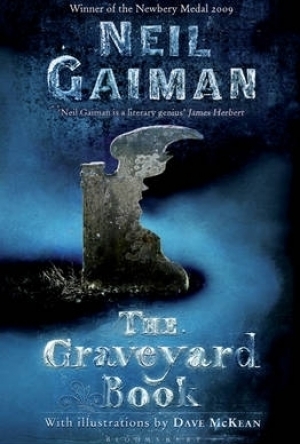
Neil Gaiman knows how to turn an innocent childhood into a terror-filled one. 'The Graveyard Book' revolves around a young boy named Nobody Owens. What makes him different from everyone else is that he lives in a graveyard where he's being raised by the ghostly residents. Nobody, or Bod (as his friends call him), ended up here after his family was brutally murdered, which actually doesn't seem to bother him too much throughout the story. Right from the beginning, readers get to follow the murderer as he makes his way through Bod's house, killing all the members of the family except for Bod, who fortunately manages to get away.
Yet, when Bod showed up at the graveyard, not all the residents wanted to keep the boy, but when a woman in grey appears, she settles the argument by telling them to keep him - - - bringing in the woman in grey seemed as though it only happened to introduce the character, which, unfortunately she is only seen one other time throughout the entire novel; this character really wasn't necessary. When Bod is kept, he is given the "Freedom of the Graveyard," which gives him the ability to see and talk to ghosts, as well as other things. This makes for a very intriguing adventure for us readers.
This book is almost flawless with the concept being very original. I honestly have nothing bad to say about the story. Gaiman doesn't use the usual horror tropes, instead he describes horrific events through the eyes of Bod, as he becomes more familiar with the world outside of the graveyard. Gaiman explains all of Bod's natural needs effortlessly within a graveyard, such as Bod learning to read and spell by using the letters on headstones. This book will surely change the way you look at graveyards for the rest of your life, if you hadn't already seen them in this way. 'The Graveyard Book' is a different type of ghost story, where the reader isn't afraid of the spirits, but rather of the living.
Later on in 'the Graveyard Book,' we meet a character named Scarlett. She is one of the only friends that Bod makes who is alive. For the majority of the book, Scarlett believes that Bod is just her imaginary friend, as her mother brings her to the graveyard every day to play (by this time, it is a claimed nature reserve) . But later on, when Scarlett returns as a teenager, she realizes that Bod is actually a real person. My only complaint about Scarlett's character is that the reader gets to see her dream walk- - - something we have been told only ghosts, supernatural creatures and Bod can do- - - yet, this is never explained why she is able to do this. It leaves one to wonder if Scarlett is a supernatural being or just a human with a particular ability?
" One grave in every graveyard belongs to the ghouls. Wander any graveyard long enough and you will find it- - - waterstained and bulging, with cracked or broken stone, scraggly grass or rank weeds about it, and a feeling, when you reach it, of abandonment. It may be colder than the other gravestones, too, and the name on the stone is all too often impossible to read. If there is a statue on the grave it will be headless or so scabbed with fungus and lichens as to look like a fungus itself. If one grave in a graveyard looks like a target for petty vandals, that is the ghoul-gate. If the grave makes you want to be somewhere else, that is the ghoul-gate. " The ghoul-gate has it's own entire scene in the book, but I wish the ghouls had been in the story quite a bit more. Overall, Gaiman wrote a very pleasing book that looks at ghosts in a different light. He brings up real life fears and fictional ones as well. Unfortunately, the book was written in 2008, and it doesn't seem that Gaiman is working on a sequel, so some questions may never be answered for the readers.
I really liked this book, and I think readers who enjoy paranormal aspects will love this story, too. As far as a ghost story goes, this one I highly recommend, but if you are looking for scares, I suggest you look elsewhere.
Yet, when Bod showed up at the graveyard, not all the residents wanted to keep the boy, but when a woman in grey appears, she settles the argument by telling them to keep him - - - bringing in the woman in grey seemed as though it only happened to introduce the character, which, unfortunately she is only seen one other time throughout the entire novel; this character really wasn't necessary. When Bod is kept, he is given the "Freedom of the Graveyard," which gives him the ability to see and talk to ghosts, as well as other things. This makes for a very intriguing adventure for us readers.
This book is almost flawless with the concept being very original. I honestly have nothing bad to say about the story. Gaiman doesn't use the usual horror tropes, instead he describes horrific events through the eyes of Bod, as he becomes more familiar with the world outside of the graveyard. Gaiman explains all of Bod's natural needs effortlessly within a graveyard, such as Bod learning to read and spell by using the letters on headstones. This book will surely change the way you look at graveyards for the rest of your life, if you hadn't already seen them in this way. 'The Graveyard Book' is a different type of ghost story, where the reader isn't afraid of the spirits, but rather of the living.
Later on in 'the Graveyard Book,' we meet a character named Scarlett. She is one of the only friends that Bod makes who is alive. For the majority of the book, Scarlett believes that Bod is just her imaginary friend, as her mother brings her to the graveyard every day to play (by this time, it is a claimed nature reserve) . But later on, when Scarlett returns as a teenager, she realizes that Bod is actually a real person. My only complaint about Scarlett's character is that the reader gets to see her dream walk- - - something we have been told only ghosts, supernatural creatures and Bod can do- - - yet, this is never explained why she is able to do this. It leaves one to wonder if Scarlett is a supernatural being or just a human with a particular ability?
" One grave in every graveyard belongs to the ghouls. Wander any graveyard long enough and you will find it- - - waterstained and bulging, with cracked or broken stone, scraggly grass or rank weeds about it, and a feeling, when you reach it, of abandonment. It may be colder than the other gravestones, too, and the name on the stone is all too often impossible to read. If there is a statue on the grave it will be headless or so scabbed with fungus and lichens as to look like a fungus itself. If one grave in a graveyard looks like a target for petty vandals, that is the ghoul-gate. If the grave makes you want to be somewhere else, that is the ghoul-gate. " The ghoul-gate has it's own entire scene in the book, but I wish the ghouls had been in the story quite a bit more. Overall, Gaiman wrote a very pleasing book that looks at ghosts in a different light. He brings up real life fears and fictional ones as well. Unfortunately, the book was written in 2008, and it doesn't seem that Gaiman is working on a sequel, so some questions may never be answered for the readers.
I really liked this book, and I think readers who enjoy paranormal aspects will love this story, too. As far as a ghost story goes, this one I highly recommend, but if you are looking for scares, I suggest you look elsewhere.

Bob Mann (459 KP) rated Green Book (2018) in Movies
Sep 28, 2021
“Vacation without Aggravation.”
The “Green Book” was a handbook (now, thankfully, out of print) for blacks travelling in the southern states of the US , who want to stay in or dine in places they will be welcomed rather than abused. It is of course 1962 and Bobby Kennedy as Attorney General has racial equality strongly in his firing line.
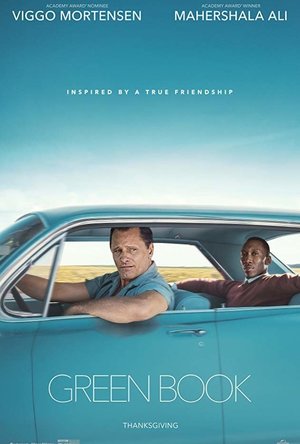
The ever-flexible (and here, after piling a lot of weight on, almost unrecognisable) Viggo Mortensen plays Tony ‘Lip’ Vallelonga – a racist Italian-American living in The Bronx and working as a bouncer at “The Copacabana” club. Oscar-winner Mahershala Ali plays Dr Don Shirley – a black virtuoso pianist of high acclaim. How this odd couple meet and interact on a journey from Titsburg (sic) to Birmingham is the heart of the film.
I’m actually loathe to say ANY more about the plot of this film. I saw this at a Cineworld “Secret Screening” and so went into the film completely blind about the content: which was just BRILLIANT! For this, for me, is as near a perfect road-movie as I am likely to see this or any other decade. To say it is a feelgood Christmas classic to approach “It’s a Wonderful Life” is not – I think – putting it too strongly.
Oh… dammit… I’ve already given away my rating haven’t I….?
The turns
The film has apparently had Oscar buzz since winning the Toronto Film Festival’s “People’s Choice” award, and the chemistry that builds up between Ali and Mortensen is just fantastic. While I’m a fan of Mortensen (“Captain Fantastic” was a minor classic), it is Ali’s performance as the gentle and mannered Shirley which impresses most, and would be my pick for the Oscar nomination if I had to choose between them.
Also truly impressive is ER’s Linda Cardllini as Tony’s wife Dolores: her reactions to “Tony’s” letters home are just exquisite. I wonder whether a Supporting Actress nomination might be deserved here also.
And what a script
The screenplay by Brian Hayes Currie, Peter Farrelly and Nick Vallelonga (Tony’s son…. yes, this is based on a true story), sizzles with fantastic one-liners and wordplay. It breathes life into the 1962 setting by not shying away from using what, today, are highly offensive racial slurs: these might offend some, but they are essential for a film that lampoons racist behaviour so wonderfully.
Above all, it’s a film with genuine heart. A story that lifts the spirit and paints onto the screen in technicolour glory the struggle (albeit you feel a rather sanitised one) that lifted America out of the dark ages in terms of equality.
It is perhaps this degree of “Oscar baitedness” – (if that’s not a word then it is now) – that might be its biggest weakness in garnering support among the voters at Oscar time. It is though perhaps worth bearing in mind that it was “Driving Miss Daisy” – an odd-couple inter-racial chauffeur-based movie – that won the Best Film Oscar for 1989!
Farrelly? What THAT Farrelly?
This is a film of subtlety and nuance that makes it all the more surprising that the director is Peter Farrelly. Yes, he of the Farrelly brothers of such crass, unsubtle and hilarious films like “There’s Something about Mary” and “Dumb and Dumber” and such crass, unsubtle and totally awful films like “Me, Myself and Irene” and “Dumb and Dumber To”! It’s like asking Mr Bean to direct a performance of Swan Lake at the Royal Opera House! Yet, here it just plain works. The comedy injected into the film (and there are a number of times I laughed out loud) is perfectly balanced with the story.
Final thoughts
What I wanted to say here was:
“Go see this film. No, REALLY. It will leave you with a warm Christmas glow in your heart to last you through the holidays. Well, it should – it did me.”
However, although the States already had this for Thanksgiving, it looks as if the UK general release of this film is not set to happen until the 1st of February next year. Which is a great shame and a missed opportunity. (It’s as if they made a Christmas film like “Die Hard” and then released it in July! #sarcasm #yesiknowtheydid).
I really hope that’s a mistake and you guys can get to see it before then. When you can, go see it (No, REALLY!). Seldom have two hours flown by with such joy at the cinema. At this late stage in the year, my “Films of the Year” draft list is going to need another shake up!
The ever-flexible (and here, after piling a lot of weight on, almost unrecognisable) Viggo Mortensen plays Tony ‘Lip’ Vallelonga – a racist Italian-American living in The Bronx and working as a bouncer at “The Copacabana” club. Oscar-winner Mahershala Ali plays Dr Don Shirley – a black virtuoso pianist of high acclaim. How this odd couple meet and interact on a journey from Titsburg (sic) to Birmingham is the heart of the film.
I’m actually loathe to say ANY more about the plot of this film. I saw this at a Cineworld “Secret Screening” and so went into the film completely blind about the content: which was just BRILLIANT! For this, for me, is as near a perfect road-movie as I am likely to see this or any other decade. To say it is a feelgood Christmas classic to approach “It’s a Wonderful Life” is not – I think – putting it too strongly.
Oh… dammit… I’ve already given away my rating haven’t I….?
The turns
The film has apparently had Oscar buzz since winning the Toronto Film Festival’s “People’s Choice” award, and the chemistry that builds up between Ali and Mortensen is just fantastic. While I’m a fan of Mortensen (“Captain Fantastic” was a minor classic), it is Ali’s performance as the gentle and mannered Shirley which impresses most, and would be my pick for the Oscar nomination if I had to choose between them.
Also truly impressive is ER’s Linda Cardllini as Tony’s wife Dolores: her reactions to “Tony’s” letters home are just exquisite. I wonder whether a Supporting Actress nomination might be deserved here also.
And what a script
The screenplay by Brian Hayes Currie, Peter Farrelly and Nick Vallelonga (Tony’s son…. yes, this is based on a true story), sizzles with fantastic one-liners and wordplay. It breathes life into the 1962 setting by not shying away from using what, today, are highly offensive racial slurs: these might offend some, but they are essential for a film that lampoons racist behaviour so wonderfully.
Above all, it’s a film with genuine heart. A story that lifts the spirit and paints onto the screen in technicolour glory the struggle (albeit you feel a rather sanitised one) that lifted America out of the dark ages in terms of equality.
It is perhaps this degree of “Oscar baitedness” – (if that’s not a word then it is now) – that might be its biggest weakness in garnering support among the voters at Oscar time. It is though perhaps worth bearing in mind that it was “Driving Miss Daisy” – an odd-couple inter-racial chauffeur-based movie – that won the Best Film Oscar for 1989!
Farrelly? What THAT Farrelly?
This is a film of subtlety and nuance that makes it all the more surprising that the director is Peter Farrelly. Yes, he of the Farrelly brothers of such crass, unsubtle and hilarious films like “There’s Something about Mary” and “Dumb and Dumber” and such crass, unsubtle and totally awful films like “Me, Myself and Irene” and “Dumb and Dumber To”! It’s like asking Mr Bean to direct a performance of Swan Lake at the Royal Opera House! Yet, here it just plain works. The comedy injected into the film (and there are a number of times I laughed out loud) is perfectly balanced with the story.
Final thoughts
What I wanted to say here was:
“Go see this film. No, REALLY. It will leave you with a warm Christmas glow in your heart to last you through the holidays. Well, it should – it did me.”
However, although the States already had this for Thanksgiving, it looks as if the UK general release of this film is not set to happen until the 1st of February next year. Which is a great shame and a missed opportunity. (It’s as if they made a Christmas film like “Die Hard” and then released it in July! #sarcasm #yesiknowtheydid).
I really hope that’s a mistake and you guys can get to see it before then. When you can, go see it (No, REALLY!). Seldom have two hours flown by with such joy at the cinema. At this late stage in the year, my “Films of the Year” draft list is going to need another shake up!

Haley Mathiot (9 KP) rated Anything But Typical in Books
Apr 27, 2018

nything but Typical by Nora Raleigh Baskin anything-but-typical
Rating: 4.5/5
<b> My Summary: </b> <i> Jason is Autistic. Letters define his life, and he thinks in full complete sentences, no contractions, and perfect grammar. Every morning, a word pops into his head. He says it out loud while he brushes his teeth. He has been able to spell any word he has ever seen perfectly since the age of four, but he has no control over his body. When he gets stressed out, his hands start to fly away from his body, and his head begins to buzz, and feels like it’s going to fly away. He can’t keep his body together. He can’t talk to people very well, if at all. He can’t look at people’s faces, and he doesn’t respond to questions. He has no social skills. But, his mind is full of everything in the room—the sound of the air conditioner, the smell of his teacher’s shampoo, the light in the room, the echo of slamming doors… Jason has permission to come home from school when he needs too if he can’t handle it. Jason’s outlet is writing. He writes stories online at storyboard. He meets a girl named PhoenixBird online, and she loves his stories. They become friends. That’s a huge thing for Jason—they start talking about things like school drama and pets instead of grades and story ideas. She tells him that her name is Rebecca. They’re real friends now. But then Jason finds out that he has to meet his friend at the storyboard convention, and he’s afraid Rebecca won’t like him anymore because she will think he’s weird, just like everyone else who has met him. It’s the end of his world. Boy meets girl. Boy gets girl. Boy looses girl. Isn’t that the way all the stories go? </i>
<b> My Thoughts: </b> My brother is Autistic. Or rather, he has Aspergers syndrome, which is on the Autism spectrum. I thought I understood autistic kids pretty well. I was wrong.
From the first page I could hear Jason’s voice, the way he spoke, the way he thought. It was all very clear—and fascinating. I can’t really say much about this book, simply because it’s something you have to read for yourself and understand. You have to get inside Jason’s head and listen to what he has to say, and learn from him. He’s a brilliant person, and personally I think he understands some things better than most “normal” people.
<b> The Characters: </b> the characters were the most important aspect of this book. I could feel Jason’s confusion over little things that set him off and his stress about meeting his would-be girlfriend, and his wandering mind that went from one thought to another. Most people wouldn’t connect thoughts the way Jason did. But while I was inside his head, I understood that connection a little better. All the characters were very well developed and strong, too. Mother had her quirks and was technology-illiterate. Dad was quiet but wanted everyone to be happy. Little brother worshiped the ground Jason walked on and had his own little compulsions. Jason was my favorite character, though.
<b> The Plot: </b> the plot didn’t really matter in this book. Although it was very well thought out and executed, the point of this book was Jason and his mind, not what happened. With that in mind—the plot was very plausible, realistic, and easy to follow. There was a little bit of jumping around, from past tense to present, telling a story from his earlier experiences, but not much. Jason’s life is very interesting, because every day things mean different things to him than they do to us. Every little thing that we experience is special or different or scary or exhilarating for Jason.
<b> Writing: </b> This book is written in first person, so I was able to get inside Jason’s head from the very first sentence: “Most people like to talk in their own language.” The words were beautiful, and I was wrapped up in the immediately. I loved it.
<b> Recommendation: </b> I would want everyone to read this book—everyone. If you can read, you should read it. If your kid can’t read, read it out loud to them. If your grandma is blind, buy the audio book. It’s fantastic, enjoyable, and perfect for any age group.
<u> This is one of my favorite books that I’ve read in a long time. I’m going to make my mom read it, and all my friends read it, because it was so fantastic. Maybe now I can understand my autistic brother just a little bit more. </u>
<i> Thank you to Krissy at NPCCPL for providing this ARC for review. I did not receive any compensation in exchange for this review. Please see my disclaimer for more information. </i>
~Haleyknitz
Rating: 4.5/5
<b> My Summary: </b> <i> Jason is Autistic. Letters define his life, and he thinks in full complete sentences, no contractions, and perfect grammar. Every morning, a word pops into his head. He says it out loud while he brushes his teeth. He has been able to spell any word he has ever seen perfectly since the age of four, but he has no control over his body. When he gets stressed out, his hands start to fly away from his body, and his head begins to buzz, and feels like it’s going to fly away. He can’t keep his body together. He can’t talk to people very well, if at all. He can’t look at people’s faces, and he doesn’t respond to questions. He has no social skills. But, his mind is full of everything in the room—the sound of the air conditioner, the smell of his teacher’s shampoo, the light in the room, the echo of slamming doors… Jason has permission to come home from school when he needs too if he can’t handle it. Jason’s outlet is writing. He writes stories online at storyboard. He meets a girl named PhoenixBird online, and she loves his stories. They become friends. That’s a huge thing for Jason—they start talking about things like school drama and pets instead of grades and story ideas. She tells him that her name is Rebecca. They’re real friends now. But then Jason finds out that he has to meet his friend at the storyboard convention, and he’s afraid Rebecca won’t like him anymore because she will think he’s weird, just like everyone else who has met him. It’s the end of his world. Boy meets girl. Boy gets girl. Boy looses girl. Isn’t that the way all the stories go? </i>
<b> My Thoughts: </b> My brother is Autistic. Or rather, he has Aspergers syndrome, which is on the Autism spectrum. I thought I understood autistic kids pretty well. I was wrong.
From the first page I could hear Jason’s voice, the way he spoke, the way he thought. It was all very clear—and fascinating. I can’t really say much about this book, simply because it’s something you have to read for yourself and understand. You have to get inside Jason’s head and listen to what he has to say, and learn from him. He’s a brilliant person, and personally I think he understands some things better than most “normal” people.
<b> The Characters: </b> the characters were the most important aspect of this book. I could feel Jason’s confusion over little things that set him off and his stress about meeting his would-be girlfriend, and his wandering mind that went from one thought to another. Most people wouldn’t connect thoughts the way Jason did. But while I was inside his head, I understood that connection a little better. All the characters were very well developed and strong, too. Mother had her quirks and was technology-illiterate. Dad was quiet but wanted everyone to be happy. Little brother worshiped the ground Jason walked on and had his own little compulsions. Jason was my favorite character, though.
<b> The Plot: </b> the plot didn’t really matter in this book. Although it was very well thought out and executed, the point of this book was Jason and his mind, not what happened. With that in mind—the plot was very plausible, realistic, and easy to follow. There was a little bit of jumping around, from past tense to present, telling a story from his earlier experiences, but not much. Jason’s life is very interesting, because every day things mean different things to him than they do to us. Every little thing that we experience is special or different or scary or exhilarating for Jason.
<b> Writing: </b> This book is written in first person, so I was able to get inside Jason’s head from the very first sentence: “Most people like to talk in their own language.” The words were beautiful, and I was wrapped up in the immediately. I loved it.
<b> Recommendation: </b> I would want everyone to read this book—everyone. If you can read, you should read it. If your kid can’t read, read it out loud to them. If your grandma is blind, buy the audio book. It’s fantastic, enjoyable, and perfect for any age group.
<u> This is one of my favorite books that I’ve read in a long time. I’m going to make my mom read it, and all my friends read it, because it was so fantastic. Maybe now I can understand my autistic brother just a little bit more. </u>
<i> Thank you to Krissy at NPCCPL for providing this ARC for review. I did not receive any compensation in exchange for this review. Please see my disclaimer for more information. </i>
~Haleyknitz
Kara Skinner (332 KP) rated Witches Gone Wicked in Books
Jun 11, 2019
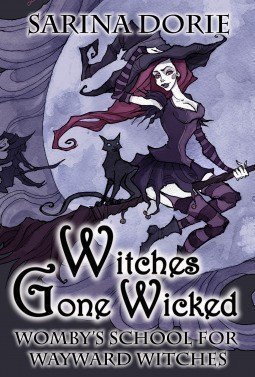

All Clarissa wants to do is become a powerful witch, learn about her mother, and find her high school sweetheart, Derrick.
But it’s not that simple when she’s all but banned from using her volatile magic, her mother was apparently an evil dictator, and her high school sweetheart was swept away in a tornado. Oh, and she caused the tornado.
But, now that she’s a teacher at Womby’s School for Wayward Witches, she might have a chance to actually become part of the Witchkin community and achieve her goals.
Despite everyone despising her because of her mother, she’s making new friends like Josie, a video-gaming witch who loves all life, and Khaba, a Djinn with a kilt fetish. She’s also getting attention from the very sexy Julien Thistledown.
If only that jerk Felix Thatch would stop patronizing her and let her learn about her mother.
Witches Gone Wicked is essentially Harry Potter fanfiction,which had me skeptical at first, but it was really entertaining at the same time.
Womby’s is the Title I version of Hogwarts. It’s for witchkin too poor to afford other schools as well as ones who were kicked out of other schools. Clarissa, being an art teacher, feels the strain of this with an annual budget of $20. The previous art teacher apparently had the students make mud pie art because of lack of supplies. I really liked the idea of a Title I Hogwarts and found the entire school and the staff really interesting.
Josie and Khaba are really funny and entertaining. Khaba is a bit of a stereotype, but I didn’t mind it that much. Josie was fantastic. Gotta love someone who loves all life and has the guts to treat spiders like puppies.
My favorite character is perhaps Felix Thatch. He’s very sexy and funny and I love almost every scene including him. He’s definitely not a people person by any stretch, but he has a lot of integrity as a teacher and a person that Clarissa just refuses to see.
Clarissa is actually one of my least favorite characters. Her dislike and suspicion of Thatch is near identical to Harry Potter’s dislike of Snape. The only problem is she’s a full-grown woman!
Clarissa has a tendency to blindly trust everyone nice to her, not thinking for a second that anyone has ulterior motives. And she despises Thatch for being brutally honest with her despite proving time and time again that he has integrity as a person and a teacher.
Felix Thatch does the following:
Trains Clarissa to use her magic (granted, the principal ordered him to)
Emphasizes the importance of people wanting to take advantage of her
Makes students write apology letters to her
Lets one of his students read in his classroom during lunchtime
Expresses concern over said student’s habit of hugging male teachers because someone might try to take advantage of her friendly nature.
Meanwhile, Clarissa thinks Thatch:
is secretly trying to kill her
might be trying to enslave her using sex magic
condones student and teacher relationships
It’s completely insane! Hey, who’s the most likely to take advantage of you? Maybe not the guy who keeps warning you about people taking advantage of you.
Clarissa is sometimes funny and relatable. I like how much she cares about her students and her patience with the troublemakers in her class. That’s actually really admirable.
But half the time she’s juvenile and irrational and I just want to shake some sense into her.
She’s the daughter of a powerful witch who apparently terrorized the Witchkin community with evil and forbidden magic. Clarissa never knew her birth mother personally, but she’s treated with suspicion and fear because her mother killed and ruined the lives of basically everyone.
Because of her lineage and her volatile magic, Clarissa is under constant threat of being fired from Womby’s, drained of her magic, and turned into a Morty (Muggle).
So you think she would be really careful, right?
Lol no.
Clarissa goes around saying she wants to be the most powerful witch ever, uses magic when she’s not supposed to, and makes plans to break into the library’s restricted section. It’s a freaking miracle that she didn’t get drained and turned into a Morty.
Here’s another thing: why doesn’t she want to be drained? I really don’t get it. Because of her magic and her mother:
everyone hates her
her sister died
her high school sweetheart blew away in a tornado
Womby’s almost burned down
anyone can turn her into a sex slave
As far as I can tell, there are very few benefits to her having magic and a staggering amount of drawbacks. Call me a defeatist, but if I was Clarissa I would be begging to be drained. Her conviction that magic is her true identity isn’t good enough for me.
All in all, this book is definitely three out of five stars. I enjoyed the worldbuilding and really like Thatch. Some of the magic concepts are surprisingly sexy, which I definitely enjoyed. I just don’t like Clarissa.
But it’s not that simple when she’s all but banned from using her volatile magic, her mother was apparently an evil dictator, and her high school sweetheart was swept away in a tornado. Oh, and she caused the tornado.
But, now that she’s a teacher at Womby’s School for Wayward Witches, she might have a chance to actually become part of the Witchkin community and achieve her goals.
Despite everyone despising her because of her mother, she’s making new friends like Josie, a video-gaming witch who loves all life, and Khaba, a Djinn with a kilt fetish. She’s also getting attention from the very sexy Julien Thistledown.
If only that jerk Felix Thatch would stop patronizing her and let her learn about her mother.
Witches Gone Wicked is essentially Harry Potter fanfiction,which had me skeptical at first, but it was really entertaining at the same time.
Womby’s is the Title I version of Hogwarts. It’s for witchkin too poor to afford other schools as well as ones who were kicked out of other schools. Clarissa, being an art teacher, feels the strain of this with an annual budget of $20. The previous art teacher apparently had the students make mud pie art because of lack of supplies. I really liked the idea of a Title I Hogwarts and found the entire school and the staff really interesting.
Josie and Khaba are really funny and entertaining. Khaba is a bit of a stereotype, but I didn’t mind it that much. Josie was fantastic. Gotta love someone who loves all life and has the guts to treat spiders like puppies.
My favorite character is perhaps Felix Thatch. He’s very sexy and funny and I love almost every scene including him. He’s definitely not a people person by any stretch, but he has a lot of integrity as a teacher and a person that Clarissa just refuses to see.
Clarissa is actually one of my least favorite characters. Her dislike and suspicion of Thatch is near identical to Harry Potter’s dislike of Snape. The only problem is she’s a full-grown woman!
Clarissa has a tendency to blindly trust everyone nice to her, not thinking for a second that anyone has ulterior motives. And she despises Thatch for being brutally honest with her despite proving time and time again that he has integrity as a person and a teacher.
Felix Thatch does the following:
Trains Clarissa to use her magic (granted, the principal ordered him to)
Emphasizes the importance of people wanting to take advantage of her
Makes students write apology letters to her
Lets one of his students read in his classroom during lunchtime
Expresses concern over said student’s habit of hugging male teachers because someone might try to take advantage of her friendly nature.
Meanwhile, Clarissa thinks Thatch:
is secretly trying to kill her
might be trying to enslave her using sex magic
condones student and teacher relationships
It’s completely insane! Hey, who’s the most likely to take advantage of you? Maybe not the guy who keeps warning you about people taking advantage of you.
Clarissa is sometimes funny and relatable. I like how much she cares about her students and her patience with the troublemakers in her class. That’s actually really admirable.
But half the time she’s juvenile and irrational and I just want to shake some sense into her.
She’s the daughter of a powerful witch who apparently terrorized the Witchkin community with evil and forbidden magic. Clarissa never knew her birth mother personally, but she’s treated with suspicion and fear because her mother killed and ruined the lives of basically everyone.
Because of her lineage and her volatile magic, Clarissa is under constant threat of being fired from Womby’s, drained of her magic, and turned into a Morty (Muggle).
So you think she would be really careful, right?
Lol no.
Clarissa goes around saying she wants to be the most powerful witch ever, uses magic when she’s not supposed to, and makes plans to break into the library’s restricted section. It’s a freaking miracle that she didn’t get drained and turned into a Morty.
Here’s another thing: why doesn’t she want to be drained? I really don’t get it. Because of her magic and her mother:
everyone hates her
her sister died
her high school sweetheart blew away in a tornado
Womby’s almost burned down
anyone can turn her into a sex slave
As far as I can tell, there are very few benefits to her having magic and a staggering amount of drawbacks. Call me a defeatist, but if I was Clarissa I would be begging to be drained. Her conviction that magic is her true identity isn’t good enough for me.
All in all, this book is definitely three out of five stars. I enjoyed the worldbuilding and really like Thatch. Some of the magic concepts are surprisingly sexy, which I definitely enjoyed. I just don’t like Clarissa.
Sophia (Bookwyrming Thoughts) (530 KP) rated The Leveller (The Leveller, #1) in Books
Jan 23, 2020
<b>I really enjoyed <i>The Leveller</i> on two things: the concept and the writing.</b> But of course, the concept is why I actually read many books. Whether it's good or bad, I have no clue until I actually crack open the book and actually read it.
In a virtual reality gaming world called MEEP, Nixy Bauer helps parents get their wayward kids back from spending too much time in the MEEP quickly and efficiently. Soon enough, she gets a job from the developer and founder of MEEP himself, whose only son has disappeared in the gaming world for several days, leaving behind a suicide note and world filled with horrifying challenges.
I will fully admit <b>I'm a huge fan of technology and cool gadgets</b>, and I honestly loved the technology <i>The Leveller</i> uses. It's <b>quite similar to <i><a title="Grid Seekers by Logan Byrne" href="https://bookwyrmingthoughts.com/2015/07/dnf-review-grid-seekers-by-logan-byrne/"; target="_blank" rel="noopener">Grid Seekers</a></i> but in a gaming direction rather than an everyday-use direction.</b> Durango explains MEEP simply and straightforward: it's a virtual reality where players can create their own worlds with their minds. Like any game, there are little cheats and codes. <b>Durango's explanation of how MEEP works isn't <a title="A Thousand Pieces of You by Claudia Gray" href="http://www.bookwyrmingthoughts.com/audiobook-review-a-thousand-pieces-of-you-by-claudia-gray"; target="_blank" rel="noopener">written in a complicated and really scientific way</a></b> helpful for all of us who haven't actually taken physics (or ever will/did).
I am, however, still confused. <b>What is the Black, and what is levelling? I have an idea, but I think I want an official definition of what the Black is, and what levelling is.</b> Especially on levelling, because <b>if I formulate my own definition, I'm pretty sure I'll butcher it</b> and Durango will facepalm.
<b>Her writing is also quite entertaining</b> it's fun, but it has puns in there that are sometimes so bad (read: common), it's good. There's <b>not really a dull moment</b> in <i>The Leveller</i>. It's not completely action, action, action, but I just like Durango's writing (then again, <a title="Released by Megan Duncan" href="https://bookwyrmingthoughts.com/dnf-review-released-by-megan-duncan/"; target="_blank" rel="noopener">nonstop action can totally backfire</a> unless you have breathers. You'll have to be like <a title="Killer of Enemies by Joseph Bruchac" href="https://bookwyrmingthoughts.com/review-killer-of-enemies-by-joseph-bruchac/"; target="_blank" rel="noopener">Joseph Bruchac</a>.).
<div class="separator" style="clear: both; text-align: center;"><img src="http://bookwyrmingthoughts.bookblog.io/wp-content/uploads/sites/317/2015/07/giphy28129.gif"; border="0" /></div>
<b>But the names. I'm quite horrified.</b> It might be as bad as making <a title="Princess of Thorns by Stacey Jay" href="https://bookwyrmingthoughts.com/review-princess-of-thorns-by-stacey-jay/"; target="_blank" rel="noopener">a sad effort of being creative by drawing out letters</a> (except that one you could literally tell it was a sad effort).
<b>What kind of name is MEEP?</b> MeaParadisus isn't exactly complicated (though it's a mouthful), but <b>while MEEP sounds all adorable, it just... doesn't sound like something you would name a virtual reality gaming world unless there's a really cute world. I'm expecting chibi people now.</b>
<b>Nixy. Why Nixy?</b> <a href="https://www.goodreads.com/review/show/1251670967?book_show_action=false&from_review_page=1"; target="_blank" rel="nofollow noopener">Contrary to what Ella thinks (she thinks it's lizard-like)</a>, <b>Nixy sounds like Trixie.</b> What does Trixie sound like? A cute dog name that does cute tricks. Oh, and that dog had better be oozing in cuteness.
<div class="separator" style="clear: both; text-align: center;"><img src="http://bookwyrmingthoughts.bookblog.io/wp-content/uploads/sites/317/2015/07/giphy.gif"; width="320" height="179" border="0" /></div>
There are <b>so many nicknames used here by Durango I swear I need a notebook to keep track of who's who at this rate.</b> I mean, there's Nixy, Moose, Chang, Mama Beti, etc. Since <i>The Leveller</i> is the first in a series, <b>there are bound to be more nicknames in the future</b> as Durango introduces us to more characters. I'll have to <b>keep track what's not a nickname, what's a nickname and who it belongs to, blah blah blah.</b>
<b>The ending was a bit of a downfall.</b> It wouldn't be a downfall if I didn't read this in one day, but <b>Durango throws in hints early on in the book that she uses in the end.</b> Everything was going pretty well, but how the story plays out in the very end is <b>predictable if you pay an ounce of attention.</b> How the second book will play out, on the other hand, isn't too predictable yet. <i>The Leveller</i> ends on a solid note, so I'm looking forward to what Durango actually comes up with in the sequel.
<a href="https://bookwyrmingthoughts.com/review-the-leveller-by-julia-durango/"; target="_blank">This review was originally posted on Bookwyrming Thoughts</a>
In a virtual reality gaming world called MEEP, Nixy Bauer helps parents get their wayward kids back from spending too much time in the MEEP quickly and efficiently. Soon enough, she gets a job from the developer and founder of MEEP himself, whose only son has disappeared in the gaming world for several days, leaving behind a suicide note and world filled with horrifying challenges.
I will fully admit <b>I'm a huge fan of technology and cool gadgets</b>, and I honestly loved the technology <i>The Leveller</i> uses. It's <b>quite similar to <i><a title="Grid Seekers by Logan Byrne" href="https://bookwyrmingthoughts.com/2015/07/dnf-review-grid-seekers-by-logan-byrne/"; target="_blank" rel="noopener">Grid Seekers</a></i> but in a gaming direction rather than an everyday-use direction.</b> Durango explains MEEP simply and straightforward: it's a virtual reality where players can create their own worlds with their minds. Like any game, there are little cheats and codes. <b>Durango's explanation of how MEEP works isn't <a title="A Thousand Pieces of You by Claudia Gray" href="http://www.bookwyrmingthoughts.com/audiobook-review-a-thousand-pieces-of-you-by-claudia-gray"; target="_blank" rel="noopener">written in a complicated and really scientific way</a></b> helpful for all of us who haven't actually taken physics (or ever will/did).
I am, however, still confused. <b>What is the Black, and what is levelling? I have an idea, but I think I want an official definition of what the Black is, and what levelling is.</b> Especially on levelling, because <b>if I formulate my own definition, I'm pretty sure I'll butcher it</b> and Durango will facepalm.
<b>Her writing is also quite entertaining</b> it's fun, but it has puns in there that are sometimes so bad (read: common), it's good. There's <b>not really a dull moment</b> in <i>The Leveller</i>. It's not completely action, action, action, but I just like Durango's writing (then again, <a title="Released by Megan Duncan" href="https://bookwyrmingthoughts.com/dnf-review-released-by-megan-duncan/"; target="_blank" rel="noopener">nonstop action can totally backfire</a> unless you have breathers. You'll have to be like <a title="Killer of Enemies by Joseph Bruchac" href="https://bookwyrmingthoughts.com/review-killer-of-enemies-by-joseph-bruchac/"; target="_blank" rel="noopener">Joseph Bruchac</a>.).
<div class="separator" style="clear: both; text-align: center;"><img src="http://bookwyrmingthoughts.bookblog.io/wp-content/uploads/sites/317/2015/07/giphy28129.gif"; border="0" /></div>
<b>But the names. I'm quite horrified.</b> It might be as bad as making <a title="Princess of Thorns by Stacey Jay" href="https://bookwyrmingthoughts.com/review-princess-of-thorns-by-stacey-jay/"; target="_blank" rel="noopener">a sad effort of being creative by drawing out letters</a> (except that one you could literally tell it was a sad effort).
<b>What kind of name is MEEP?</b> MeaParadisus isn't exactly complicated (though it's a mouthful), but <b>while MEEP sounds all adorable, it just... doesn't sound like something you would name a virtual reality gaming world unless there's a really cute world. I'm expecting chibi people now.</b>
<b>Nixy. Why Nixy?</b> <a href="https://www.goodreads.com/review/show/1251670967?book_show_action=false&from_review_page=1"; target="_blank" rel="nofollow noopener">Contrary to what Ella thinks (she thinks it's lizard-like)</a>, <b>Nixy sounds like Trixie.</b> What does Trixie sound like? A cute dog name that does cute tricks. Oh, and that dog had better be oozing in cuteness.
<div class="separator" style="clear: both; text-align: center;"><img src="http://bookwyrmingthoughts.bookblog.io/wp-content/uploads/sites/317/2015/07/giphy.gif"; width="320" height="179" border="0" /></div>
There are <b>so many nicknames used here by Durango I swear I need a notebook to keep track of who's who at this rate.</b> I mean, there's Nixy, Moose, Chang, Mama Beti, etc. Since <i>The Leveller</i> is the first in a series, <b>there are bound to be more nicknames in the future</b> as Durango introduces us to more characters. I'll have to <b>keep track what's not a nickname, what's a nickname and who it belongs to, blah blah blah.</b>
<b>The ending was a bit of a downfall.</b> It wouldn't be a downfall if I didn't read this in one day, but <b>Durango throws in hints early on in the book that she uses in the end.</b> Everything was going pretty well, but how the story plays out in the very end is <b>predictable if you pay an ounce of attention.</b> How the second book will play out, on the other hand, isn't too predictable yet. <i>The Leveller</i> ends on a solid note, so I'm looking forward to what Durango actually comes up with in the sequel.
<a href="https://bookwyrmingthoughts.com/review-the-leveller-by-julia-durango/"; target="_blank">This review was originally posted on Bookwyrming Thoughts</a>

We Have Your Daughter: The Unsolved Murder of Jonbenet Ramsey Twenty Years Later
Book
New information from We Have Your Daughter has been revealed. Here is some of it. The Family As a...

Purple Phoenix Games (2266 KP) rated Baby Dragon Bedtime in Tabletop Games
Nov 19, 2020
You know, I never really considered the childhood of dragons. I saw a version of what it COULD be whilst watching A Game of Thrones, but I’m sure not all dragons are brought up that way. In fact, it turns out that baby dragons are quite similar to my children: they never really want to go to bed. Most of the time it’s really okay, but there are moments Mommy and Daddy just need SLEEP. So when we call up to the kids to get ready for bed, they scramble to get everything cleaned up (well, in my fantasy world, anyway), and so do dragons. But they clean up their hoards of gold and treasure, whereas my kids just need to pick up four Paw Patrol figures… and that’s still too much…
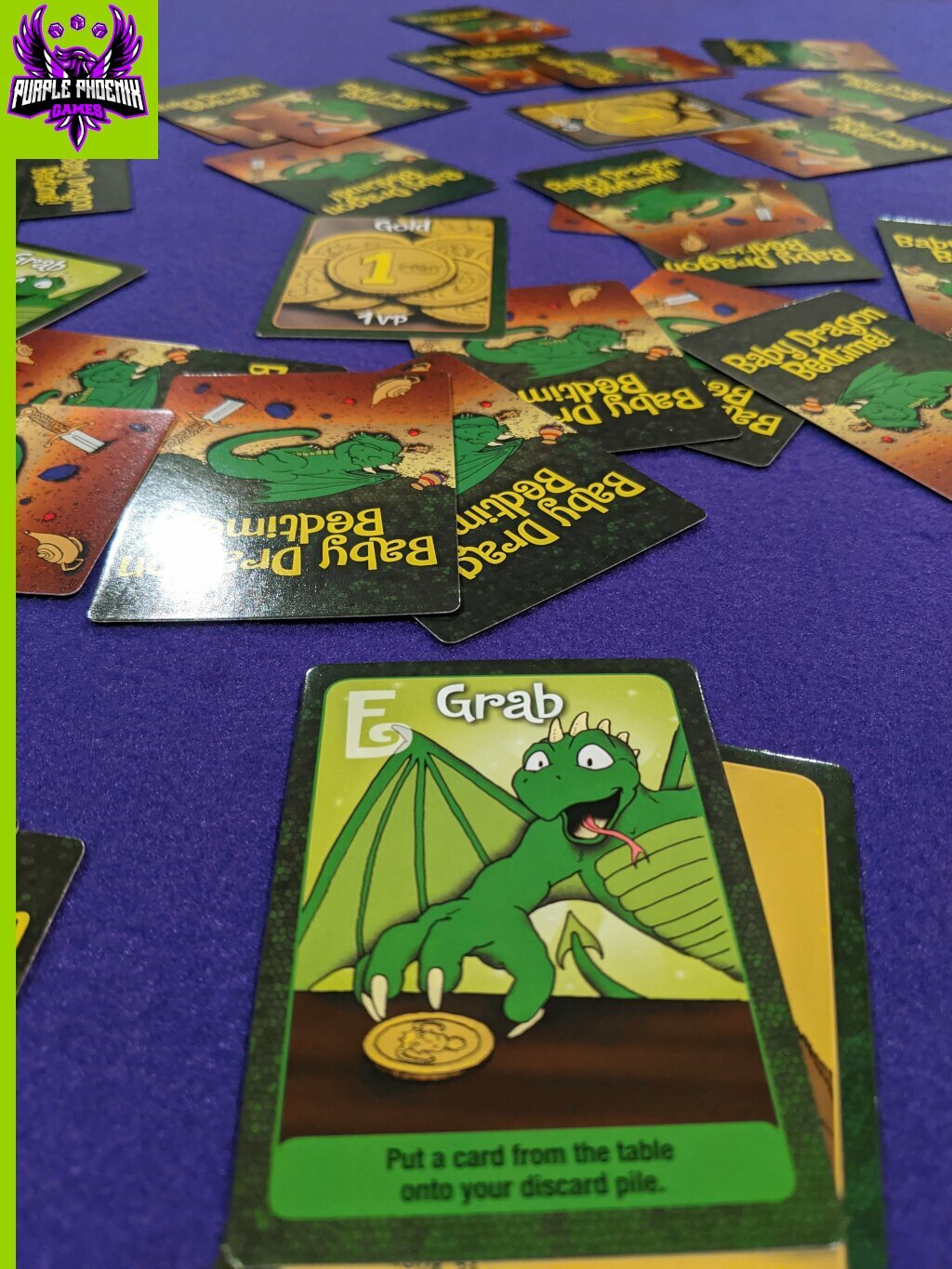
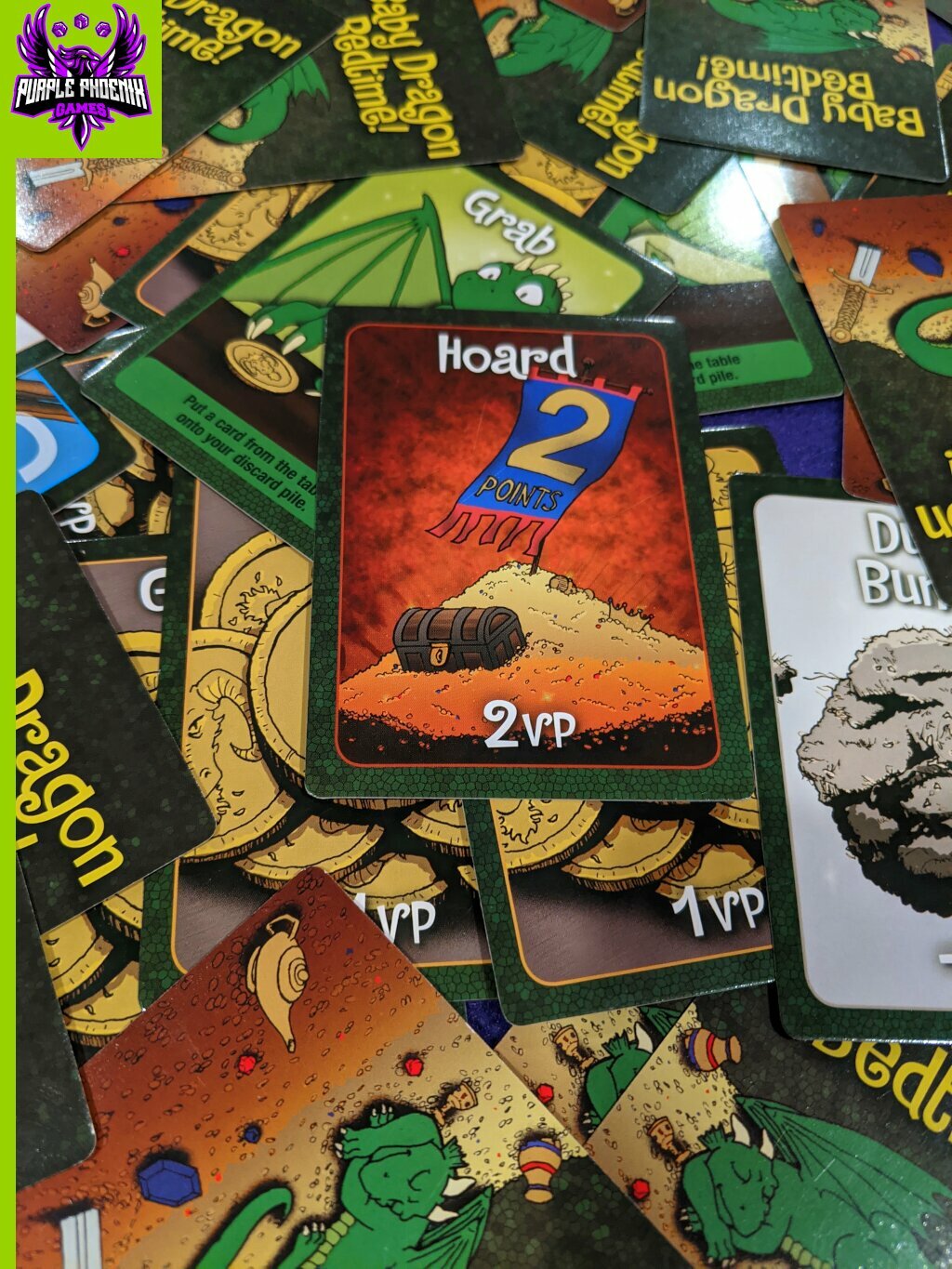
In Baby Dragon Bedtime (here forward known as BDB) players will begin the game with a hand of five cards: 2xPeek, 2xGrab, and a Flip. Using these cards during the game will allow players to pick up and Peek at a card on the table, Grab one for their discard pile, or just Flip a card from face-up to face-down or vice versa. Players will be grabbing more action-type cards, Gold cards and Hoard cards, and dreaded Dust Bunnies and Chewing Gum cards.
DISCLAIMER: We were provided a copy of this game for the purposes of this review. This is a retail copy of the game, so what you see in these photos is exactly what would be received in your box. I do not intend to cover every single rule included in the rulebook, but will describe the overall game flow and major rule set so that our readers may get a sense of how the game plays. For more in depth rules, you may purchase a copy online or from your FLGS. -T
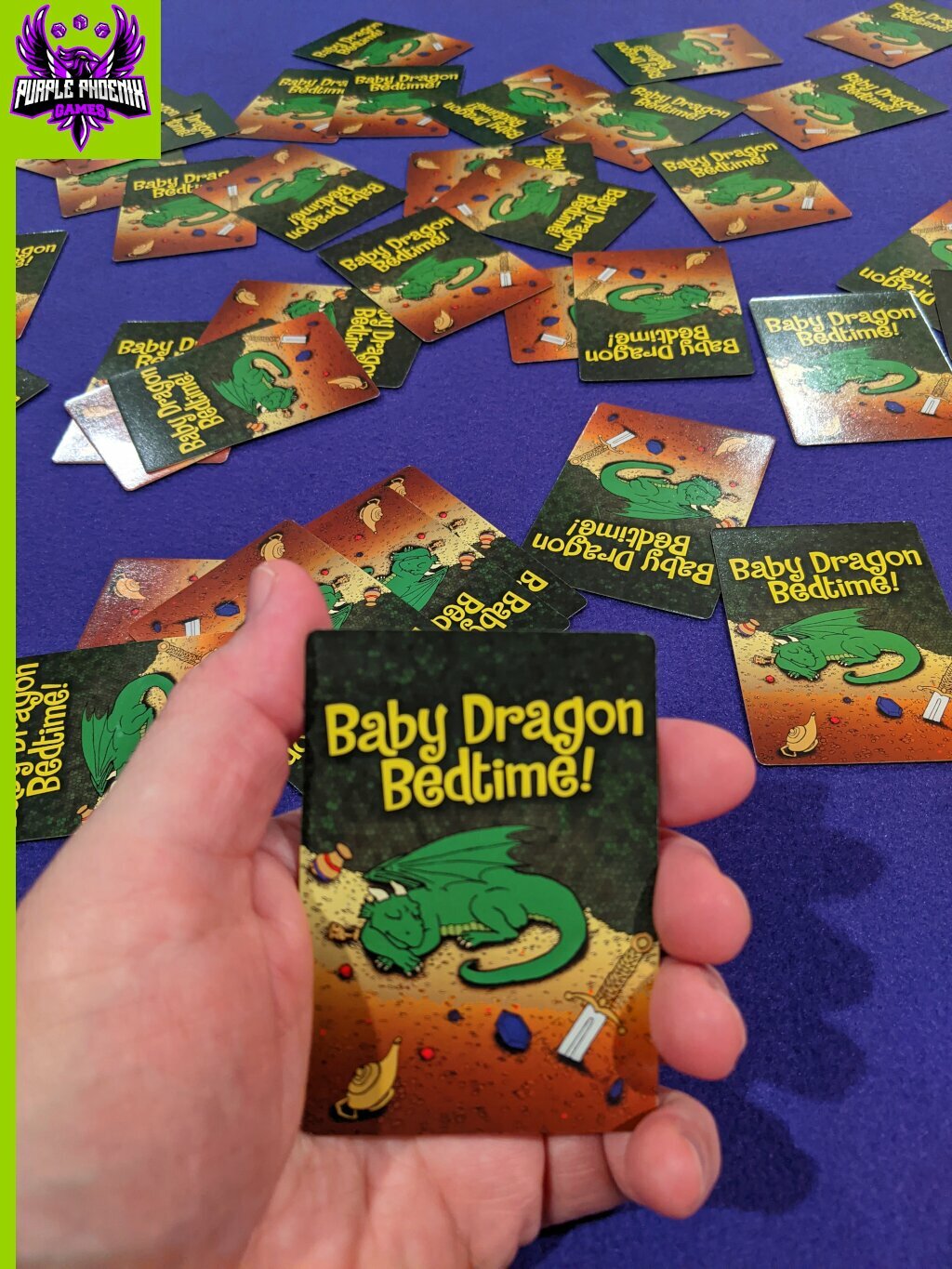
To setup, give each player a deck of five starting cards with matching letters printed on the corner (A-G). Shuffle the rest of the cards (if playing with adults) and throw them on the table as shown below. Play will begin when someone counts down or says, “Go!,” or whatever signal is decided.
There are no turns in BDB in an adult game, and players are flipping over their cards from their decks to complete the actions on them. All players are playing simultaneous and games can last one minute or up to five. Anyone may stop playing at any time and “go to sleep,” thus protecting their treasure piles from negative VP cards. Once a player’s deck has run out of cards to draw they may simply flip over their deck, or give a shuffle and draw as normal. In this way a player’s hand is steadily growing, but being bogged down with dead VP (positive or negative) cards. Players may end up Grabbing more action cards and be able to do more actions going through their deck, or it may be simply comprised of VP cards and starting actions, though that seems highly unlikely. Once all players have taken the turns they wish to take, or the game ends via the Mama! card a player has played, players will add up their points from their decks and the winner may then challenge the players to another round.
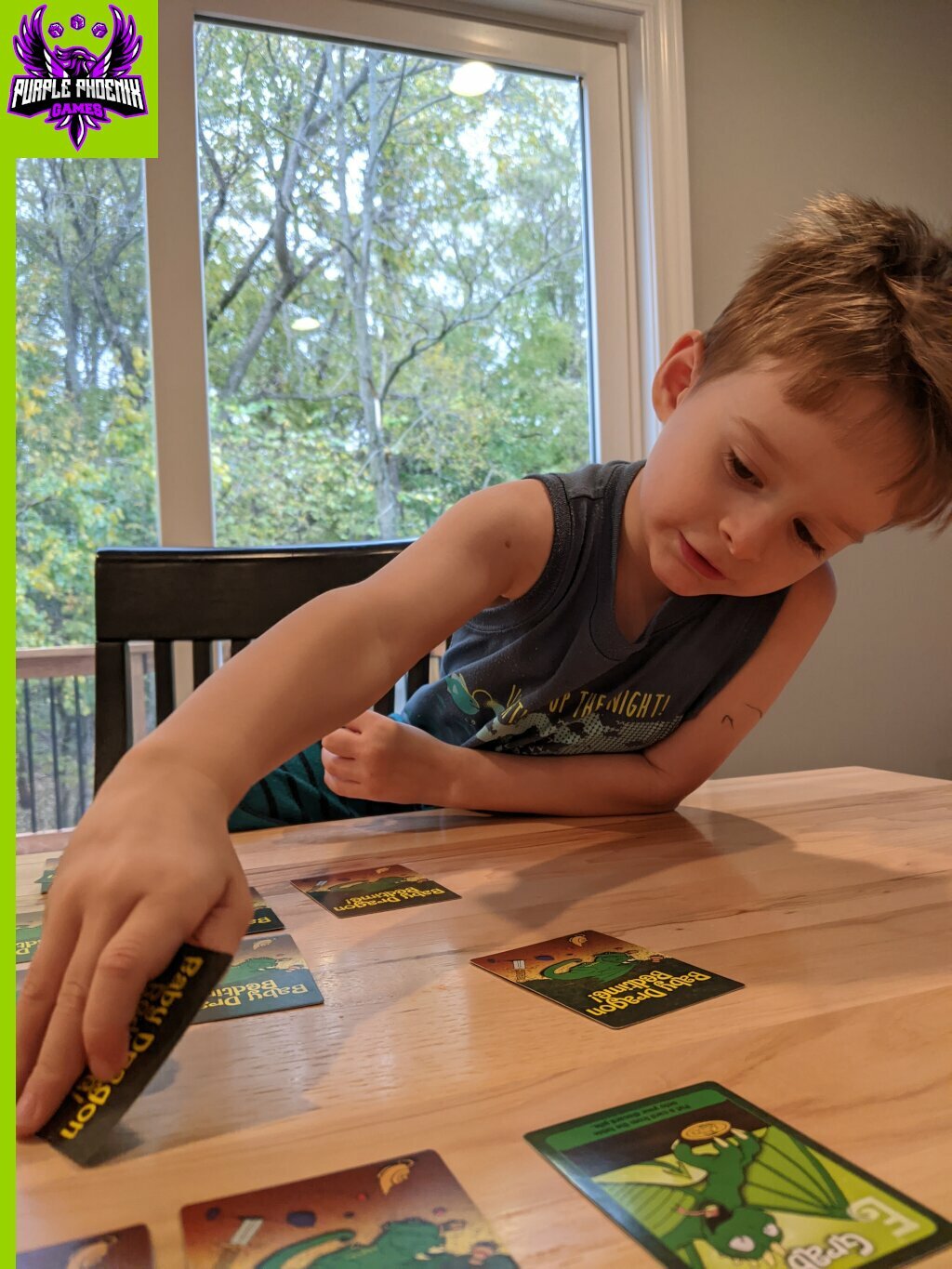
The game changes a bit when playing with children or if the players wish to have a less frantic experience. In this case, instead of randomly throwing out the cards on the table, a 6×6 grid will be formed on the table and players will take turns revealing their cards from the their decks and choosing cards to Flip, Peek, or Grab. Though the game is suggested for ages 6 or 7+ I was able to have a fun time playing with my 4-year-old son (see below). In fact, BDB is now his favorite game of all time, and I’m completely cool with that. We even were able to play with his grandparents and have a good time… when he wasn’t crying because I Grabbed the Gold card he wanted.
Components. This game is a bunch of cards. They are all fine quality and feature cartoony, non-scary, and colorful dragon art. For a children’s game the art is perfect. For an adult’s game it is lacking. But, I cannot really see much that would satisfy both sides. All in all, the cards are good and should hold up to a fair amount of play. The box is packed pretty tight, though, so be careful not to damage the cards when packing back up.
Like I mentioned, I was able to play this with my 4-year-old son, and he loves it. Any true hobby game I can play with my son at that age is a winner for me. Baby Dragon Bedtime is not a strategic game, but more based on memory and luck of the draw. So if you are searching for a uniquely-themed real-time deck-builder that can be played with children AND/OR adults, then check out Baby Dragon Bedtime. It is quick and simple, and rewards players who allow the youngsters to win. Purple Phoenix Games gives this a 15 / 18 for versatility and gameplay.
In Baby Dragon Bedtime (here forward known as BDB) players will begin the game with a hand of five cards: 2xPeek, 2xGrab, and a Flip. Using these cards during the game will allow players to pick up and Peek at a card on the table, Grab one for their discard pile, or just Flip a card from face-up to face-down or vice versa. Players will be grabbing more action-type cards, Gold cards and Hoard cards, and dreaded Dust Bunnies and Chewing Gum cards.
DISCLAIMER: We were provided a copy of this game for the purposes of this review. This is a retail copy of the game, so what you see in these photos is exactly what would be received in your box. I do not intend to cover every single rule included in the rulebook, but will describe the overall game flow and major rule set so that our readers may get a sense of how the game plays. For more in depth rules, you may purchase a copy online or from your FLGS. -T
To setup, give each player a deck of five starting cards with matching letters printed on the corner (A-G). Shuffle the rest of the cards (if playing with adults) and throw them on the table as shown below. Play will begin when someone counts down or says, “Go!,” or whatever signal is decided.
There are no turns in BDB in an adult game, and players are flipping over their cards from their decks to complete the actions on them. All players are playing simultaneous and games can last one minute or up to five. Anyone may stop playing at any time and “go to sleep,” thus protecting their treasure piles from negative VP cards. Once a player’s deck has run out of cards to draw they may simply flip over their deck, or give a shuffle and draw as normal. In this way a player’s hand is steadily growing, but being bogged down with dead VP (positive or negative) cards. Players may end up Grabbing more action cards and be able to do more actions going through their deck, or it may be simply comprised of VP cards and starting actions, though that seems highly unlikely. Once all players have taken the turns they wish to take, or the game ends via the Mama! card a player has played, players will add up their points from their decks and the winner may then challenge the players to another round.
The game changes a bit when playing with children or if the players wish to have a less frantic experience. In this case, instead of randomly throwing out the cards on the table, a 6×6 grid will be formed on the table and players will take turns revealing their cards from the their decks and choosing cards to Flip, Peek, or Grab. Though the game is suggested for ages 6 or 7+ I was able to have a fun time playing with my 4-year-old son (see below). In fact, BDB is now his favorite game of all time, and I’m completely cool with that. We even were able to play with his grandparents and have a good time… when he wasn’t crying because I Grabbed the Gold card he wanted.
Components. This game is a bunch of cards. They are all fine quality and feature cartoony, non-scary, and colorful dragon art. For a children’s game the art is perfect. For an adult’s game it is lacking. But, I cannot really see much that would satisfy both sides. All in all, the cards are good and should hold up to a fair amount of play. The box is packed pretty tight, though, so be careful not to damage the cards when packing back up.
Like I mentioned, I was able to play this with my 4-year-old son, and he loves it. Any true hobby game I can play with my son at that age is a winner for me. Baby Dragon Bedtime is not a strategic game, but more based on memory and luck of the draw. So if you are searching for a uniquely-themed real-time deck-builder that can be played with children AND/OR adults, then check out Baby Dragon Bedtime. It is quick and simple, and rewards players who allow the youngsters to win. Purple Phoenix Games gives this a 15 / 18 for versatility and gameplay.
Bob Mann (459 KP) rated Rear Window (1954) in Movies
Sep 29, 2021
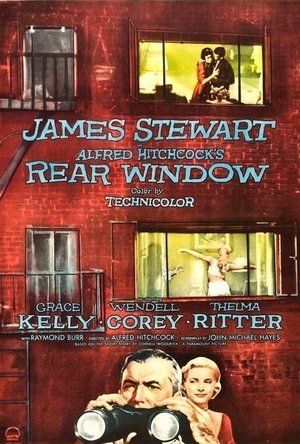
“Hmm… must have splattered a lot”.
Maddy at Maddy Loves Her Classic Films is hosting The Alfred Hitchcockblogathon. A fine idea, celebrating the life and works of the “Master of Suspense”. My contribution comes from his 1954 masterpiece “Rear Window” starring James Stewart and Grace Kelly.
rw-poster
In one pan around his small apartment, and without a word of dialogue required, Hitchcock deftly fills in all the back-story you need: Stewart plays ace photo-journalist L.B. Jefferies, laid up from jetting the world to worn-torn regions by a broken leg in a full-cast with only his courtyard view to entertain him. In sweltering summer temperatures all the apartments are open to the elements, so he can be well entertained by the menagerie before him: “Miss Torso”, the scantily-clad and frequently showering ballerina; a sculptress with an eye towards Henry Moore; a struggling composer (who has his clock wound by someone very familiar!); a newly-wedded bride threatening to wear out the groom; a salesman and his bed-ridden wife; a dog-loving and balcony-sleeping couple; and “Miss Lonelyhearts” – a hard-drinking spinster forced to create imaginary male dinner-guests.
Stewart plays his usual ‘Mr Ordinary’ watching perfectly ordinary goings on in a perfectly ordinary apartment block.
Or not. Jefferies is drawn to some odd-events in the apartment of the salesman (Raymond Burr, still 13 years before his career-defining role in TV’s “Ironside”). His rampant suspicions infect not only his cranky middle-aged physiotherapist Stella (Thelma Ritter) but also his perfect (“too perfect”) girlfriend, the fashion expert Lisa (Grace Kelly). Of course his police friend Doyle (Wendell Corey) is having none of it… there is no evidence of any crime being committed. And the “murdered” wife has been seen being put on a train by her husband, and is sending him letters from the countryside.
Is Jefferies just going stir-crazy? Or is there really something to it?
The set for this film is masterly. Although depicting a genuine location in New York’s Greenwich village the huge set was constructed on the Paramount lot in Hollywood, and you can just imagine the army of carpenters and artists building the multi-layered structure.
It’s one of the stars of the film, allowing for a wealth of detail to be populated: in the apartments; in the street behind; even in the cafe over the other side of the street. And it’s this detail that really makes what could be a highly static film come alive. There are a half dozen films-within-the-film going on at once, with Stewart’s character – and you as the fellow-voyeur – having a multi-pass to watch them all simultaneously.
And watch he does. As what could be perceived as a seriously pervy character – something he is called out on by Stella – Jeffries gets to see an eyeful in particular of the shapely and scantily-clad ballerina (Georgine Darcy, agent-less and only paid $350 for the role!). These scenes must have been deemed quite risque for the year of release.
Where the film rather falters is in the bickering romance between Stewart and Kelly. As a hot-blooded man, I will declare that even today Kelly’s first dream-like appearance (with Vaseline lightly coating the lens) is breathtaking. She’s just the ‘girl-next-door’: if you live next to a palace that is! And yet (with Kelly 21 years Stewart’s junior) she’s just “too perfect” for L.B. , who feels (against her protestations) that she’s ‘too girly’ to hack the life of a war photographer on the road. The mysogeny, common for the day, is gasp-making: “If a girl’s pretty enough, she just has to ‘be'” intones Stewart, to no howls of protest or throwing of saucepans! In fact Kelly is greatly encouraged: “Preview of coming attractions” purrs Kelly, flaunting what she has around the apartment in a negligee.
These scenes though are rather overlong and somewhat get in the way of the murder mystery plot-line. Things really start to warm up when a death occurs, to piercing screams in the night: “Which one of you did it?” shouts a woman to the neighbourhood, as everything – momentarily – stops. “WHICH ONE OF YOU DID IT?”. Given your emotional involvement in the ongoing voyeurism, it’s hard as a viewer not to feel discomforted…. (“well, it wasn’t me”…. shifts uneasily in the seat).
From then on, Hitchcock proceeds to pile on suspenseful jolt after jolt, with first Lisa and then L.B. placed in harms way. While the perpetrator may seem clueless and incompetent, as most murderers of passion probably are, the denouement is satisfying, with a great trial use of green-screen ‘falling’ that would be perfected by Hitchcock for “Vertigo” four years later.
What’s curious for such as classic is that there are a number of fluffed lines in the piece: with two notable ones by Stewart and Kelly. Hitchcock was the master of long and uninterrupted takes, but did he not believe in re-shooting scenes when such errors occurred? Most odd.
Although tighter and more claustrophobic that some of his better known films, this is a firm favourite of mine. If you’ve never seen it, its well worth you checking out.
rw-poster
In one pan around his small apartment, and without a word of dialogue required, Hitchcock deftly fills in all the back-story you need: Stewart plays ace photo-journalist L.B. Jefferies, laid up from jetting the world to worn-torn regions by a broken leg in a full-cast with only his courtyard view to entertain him. In sweltering summer temperatures all the apartments are open to the elements, so he can be well entertained by the menagerie before him: “Miss Torso”, the scantily-clad and frequently showering ballerina; a sculptress with an eye towards Henry Moore; a struggling composer (who has his clock wound by someone very familiar!); a newly-wedded bride threatening to wear out the groom; a salesman and his bed-ridden wife; a dog-loving and balcony-sleeping couple; and “Miss Lonelyhearts” – a hard-drinking spinster forced to create imaginary male dinner-guests.
Stewart plays his usual ‘Mr Ordinary’ watching perfectly ordinary goings on in a perfectly ordinary apartment block.
Or not. Jefferies is drawn to some odd-events in the apartment of the salesman (Raymond Burr, still 13 years before his career-defining role in TV’s “Ironside”). His rampant suspicions infect not only his cranky middle-aged physiotherapist Stella (Thelma Ritter) but also his perfect (“too perfect”) girlfriend, the fashion expert Lisa (Grace Kelly). Of course his police friend Doyle (Wendell Corey) is having none of it… there is no evidence of any crime being committed. And the “murdered” wife has been seen being put on a train by her husband, and is sending him letters from the countryside.
Is Jefferies just going stir-crazy? Or is there really something to it?
The set for this film is masterly. Although depicting a genuine location in New York’s Greenwich village the huge set was constructed on the Paramount lot in Hollywood, and you can just imagine the army of carpenters and artists building the multi-layered structure.
It’s one of the stars of the film, allowing for a wealth of detail to be populated: in the apartments; in the street behind; even in the cafe over the other side of the street. And it’s this detail that really makes what could be a highly static film come alive. There are a half dozen films-within-the-film going on at once, with Stewart’s character – and you as the fellow-voyeur – having a multi-pass to watch them all simultaneously.
And watch he does. As what could be perceived as a seriously pervy character – something he is called out on by Stella – Jeffries gets to see an eyeful in particular of the shapely and scantily-clad ballerina (Georgine Darcy, agent-less and only paid $350 for the role!). These scenes must have been deemed quite risque for the year of release.
Where the film rather falters is in the bickering romance between Stewart and Kelly. As a hot-blooded man, I will declare that even today Kelly’s first dream-like appearance (with Vaseline lightly coating the lens) is breathtaking. She’s just the ‘girl-next-door’: if you live next to a palace that is! And yet (with Kelly 21 years Stewart’s junior) she’s just “too perfect” for L.B. , who feels (against her protestations) that she’s ‘too girly’ to hack the life of a war photographer on the road. The mysogeny, common for the day, is gasp-making: “If a girl’s pretty enough, she just has to ‘be'” intones Stewart, to no howls of protest or throwing of saucepans! In fact Kelly is greatly encouraged: “Preview of coming attractions” purrs Kelly, flaunting what she has around the apartment in a negligee.
These scenes though are rather overlong and somewhat get in the way of the murder mystery plot-line. Things really start to warm up when a death occurs, to piercing screams in the night: “Which one of you did it?” shouts a woman to the neighbourhood, as everything – momentarily – stops. “WHICH ONE OF YOU DID IT?”. Given your emotional involvement in the ongoing voyeurism, it’s hard as a viewer not to feel discomforted…. (“well, it wasn’t me”…. shifts uneasily in the seat).
From then on, Hitchcock proceeds to pile on suspenseful jolt after jolt, with first Lisa and then L.B. placed in harms way. While the perpetrator may seem clueless and incompetent, as most murderers of passion probably are, the denouement is satisfying, with a great trial use of green-screen ‘falling’ that would be perfected by Hitchcock for “Vertigo” four years later.
What’s curious for such as classic is that there are a number of fluffed lines in the piece: with two notable ones by Stewart and Kelly. Hitchcock was the master of long and uninterrupted takes, but did he not believe in re-shooting scenes when such errors occurred? Most odd.
Although tighter and more claustrophobic that some of his better known films, this is a firm favourite of mine. If you’ve never seen it, its well worth you checking out.