Search
Search results

Alicia S (193 KP) rated Untamed (Thoughtless, #4) in Books
Sep 28, 2018
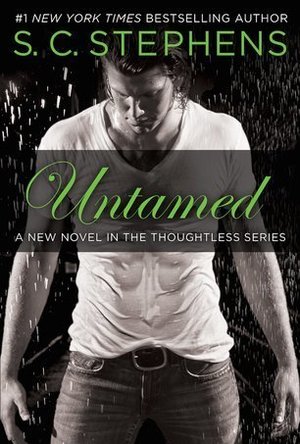

Oh, Griffin... (smh). First off, I am a HUGE fan of the Thoughtless series. This is one of my all-time TOP favorite series. SC Stephens has a way of writing that brings you so close to the characters that you feel as if you know them personally. I was completely caught up emotionally in this series from day one and I still carry it with me. It's almost scary his much this series affected me... I was so overly sensitive to their thoughts and feelings, it was as if I was experiencing it firsthand. This most recent addition was no exception. On a personal note, this was a very tough book for me to read as the overall theme hit very close to home for me. Watching the lies and deceit flow so easily from Griffin was very hard to stomach. His snowball of bad decisions was painful to watch, for him, Anna and the girls and for the rest of the band and family. I love the D-Bags but always saw Griffin as that annoying friend that you just can't help but love and hate. I found him incredibly annoying at times and hearing it all from his POV was interesting as you saw that he did truly justify his actions.. in his own Griffin kinda way. As frustrating as it was at times, making me want to smack the $hit out of him, he was easier to understand. In the end, he rectified himself in a way that I never thought Id seem, nor did anyone else!? We all got to finally see out Hulk grown up. He's still there, just in controlled doses.. ;-) His relationship with Anna and the girls was beautiful to witness.. we really got to see a whole other side to him. This book tore me up, left me hanging at moment, scared to death and made me bawl my eyes out... Yet another masterpiece form SC Stephens.. surely not to be missed!

Carma (21 KP) rated Untamed Cowboy (Gold Valley, #2) in Books
Jun 17, 2019
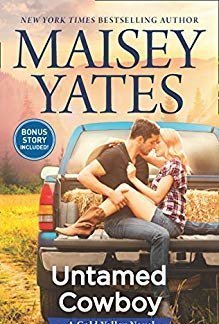
4.5 stars of out 5 for Untamed Cowboy by Maisey Yates
Kaylee Capshaw has loved Bennett Dodge for 17 years. Ever since he took pity on the new shy girl and became her friend. She spends her days saying WWBD (What would Bennett do) and really has no idea how to act otherwise. She needs to get him out of her head once and for all. But with his recent breakup with Olivia, could this finally be her time?
Bennett Dodge likes lists and plans. He had his life planned out, wife, kids, ranch all with Olivia. Then one day she falls in love with his friend Luke and his plan goes to hell. He was never in love with Olivia though, just the idea of her and the life he thought he wanted. His best friend Kaylee is there for him as always but something about her is making him look at her differently now. A surprise on his doorstep helps knock any other plans hed made right out the window.
Kaylee needs to go all in. Going all in with Bennett or all in with someone to take his place. She cant continue on this roller coaster of emotions where he is concerned. She doesnt want to lose their decades old friendship above anything though. When he calls in a panic she rushes to him ready to help him through whatever obstacle lies ahead.
As usual, Ms Yates blends the perfect tale of 2 people and their HEA. Throw in the obligatory family meddling, a 15-year-old Say What moment, and a casual offer for sex and you have the perfect mix of fun, love and family, Dodge Style.
Gold Valley continues on where Copper Ridge left off. A good, homegrown, family centered town, with Hot Cowboys of course. I cant wait to read the next chapter in Gold Valley, Good Time Cowboy!!
Kaylee Capshaw has loved Bennett Dodge for 17 years. Ever since he took pity on the new shy girl and became her friend. She spends her days saying WWBD (What would Bennett do) and really has no idea how to act otherwise. She needs to get him out of her head once and for all. But with his recent breakup with Olivia, could this finally be her time?
Bennett Dodge likes lists and plans. He had his life planned out, wife, kids, ranch all with Olivia. Then one day she falls in love with his friend Luke and his plan goes to hell. He was never in love with Olivia though, just the idea of her and the life he thought he wanted. His best friend Kaylee is there for him as always but something about her is making him look at her differently now. A surprise on his doorstep helps knock any other plans hed made right out the window.
Kaylee needs to go all in. Going all in with Bennett or all in with someone to take his place. She cant continue on this roller coaster of emotions where he is concerned. She doesnt want to lose their decades old friendship above anything though. When he calls in a panic she rushes to him ready to help him through whatever obstacle lies ahead.
As usual, Ms Yates blends the perfect tale of 2 people and their HEA. Throw in the obligatory family meddling, a 15-year-old Say What moment, and a casual offer for sex and you have the perfect mix of fun, love and family, Dodge Style.
Gold Valley continues on where Copper Ridge left off. A good, homegrown, family centered town, with Hot Cowboys of course. I cant wait to read the next chapter in Gold Valley, Good Time Cowboy!!

Bong Mines Entertainment (15 KP) rated Lie to Me - Single by Veronica Fusaro in Music
Jun 17, 2019


Veronica Fusaro is a 22-year-old singer-songwriter from Thun, Switzerland. Not too long ago, she released a music video for her “lie to me” single.
“If I told you not to leave would you turn and look back to me? And maybe if you’d stay, we could try to dream away the day is way too bright, it’s fulfilled with lies anyway. Have another drink, you could show me how you wink all of your sorrows away. Something is telling me that you’re my escape.” – lyrics
‘lie to me’ tells an adorable tale of a young woman who is in a foggy room at night with someone who she desires to be with.
Apparently, she doesn’t care if this person tells her stories which aren’t necessarily true. All she wants is for him to keep talking for a few more months until July comes.
Later, she admits that she wants to frame his face just in case he disappears outside into the cold weather.
‘lie to me’ contains a relatable storyline and ear-welcoming vocals. Also, the likable tune possesses guitar-driven instrumentation scented with a lovely commercial pop fragrance.
“‘lie to me’ is “inspired by a Friday night out, but talks about much more than just a weekend. It addresses the rapidity of the world we live in and our desperate cry to find real emotions.” – Veronica Fusaro
Veronica Fusaro stepped into the spotlight in 2016 with her self-produced EP, entitled, “Lost In Thought”.
Shortly afterward, she surprised the Swiss music industry by winning the “Demo of the Year” at the M4Music-Festival.
Since then, she has toured small and large stages, from New Zealand to London and all the way back to Switzerland. With the experience of 136 shows in 2018, this year is set to be even more exciting for Fusaro.
https://www.bongminesentertainment.com/veronica-fusaro-lie-to-me/
“If I told you not to leave would you turn and look back to me? And maybe if you’d stay, we could try to dream away the day is way too bright, it’s fulfilled with lies anyway. Have another drink, you could show me how you wink all of your sorrows away. Something is telling me that you’re my escape.” – lyrics
‘lie to me’ tells an adorable tale of a young woman who is in a foggy room at night with someone who she desires to be with.
Apparently, she doesn’t care if this person tells her stories which aren’t necessarily true. All she wants is for him to keep talking for a few more months until July comes.
Later, she admits that she wants to frame his face just in case he disappears outside into the cold weather.
‘lie to me’ contains a relatable storyline and ear-welcoming vocals. Also, the likable tune possesses guitar-driven instrumentation scented with a lovely commercial pop fragrance.
“‘lie to me’ is “inspired by a Friday night out, but talks about much more than just a weekend. It addresses the rapidity of the world we live in and our desperate cry to find real emotions.” – Veronica Fusaro
Veronica Fusaro stepped into the spotlight in 2016 with her self-produced EP, entitled, “Lost In Thought”.
Shortly afterward, she surprised the Swiss music industry by winning the “Demo of the Year” at the M4Music-Festival.
Since then, she has toured small and large stages, from New Zealand to London and all the way back to Switzerland. With the experience of 136 shows in 2018, this year is set to be even more exciting for Fusaro.
https://www.bongminesentertainment.com/veronica-fusaro-lie-to-me/

BookwormMama14 (18 KP) rated The Evaporation of Sofi Snow (The Evaporation of Sofi Snow, #1) in Books
Jan 2, 2019

Talk about a book hangover! I have spent the last few days trying to sort through all the emotions and feelings this book evoked in me.
Sofi Snow is a young woman with a lot of confusion about her self worth. She has had her fair share of rejection in life. Miguel had been satisfied with his life...that is until he met Sofi. As their lives get thrown into a web of lies, deceit, blackmail, and hidden agendas. Will Sofi and Miguel be able to push their past aside and work together for the future of Earth and all of its inhabitants?
There is SO MUCH that happens in this book. It started off fast paced and ended with a major cliff hanger in the middle of a VERY INTENSE scene. (We do get a little breather from all the action in the middle of the book.) Between Sofi's struggle to find herself, Miguel's determination to be a "new man", and the whole mess with Shiloh...My brain was on overload. There were a few aspects to the story that still sit uneasy with me regarding Sofi and Miguel's past. I do think the situation calls for the background our characters have and I am curious to see how Mary Weber addresses this and where she takes them in the next book.
One of the main themes in this story is Human Trafficking. I commend Mary for addressing the very real and very serious issue that has been swept under the rug for too long. To hear her heart, you will want to read this book! I look forward to reading more from Mary and finding out how Sofi's story ends.
I received a complimentary copy of The Evaporation of Sofi Snow from Thomas Nelson through NetGalley. I was not required to write a positive review. All opinions expressed are mine alone.
Sofi Snow is a young woman with a lot of confusion about her self worth. She has had her fair share of rejection in life. Miguel had been satisfied with his life...that is until he met Sofi. As their lives get thrown into a web of lies, deceit, blackmail, and hidden agendas. Will Sofi and Miguel be able to push their past aside and work together for the future of Earth and all of its inhabitants?
There is SO MUCH that happens in this book. It started off fast paced and ended with a major cliff hanger in the middle of a VERY INTENSE scene. (We do get a little breather from all the action in the middle of the book.) Between Sofi's struggle to find herself, Miguel's determination to be a "new man", and the whole mess with Shiloh...My brain was on overload. There were a few aspects to the story that still sit uneasy with me regarding Sofi and Miguel's past. I do think the situation calls for the background our characters have and I am curious to see how Mary Weber addresses this and where she takes them in the next book.
One of the main themes in this story is Human Trafficking. I commend Mary for addressing the very real and very serious issue that has been swept under the rug for too long. To hear her heart, you will want to read this book! I look forward to reading more from Mary and finding out how Sofi's story ends.
I received a complimentary copy of The Evaporation of Sofi Snow from Thomas Nelson through NetGalley. I was not required to write a positive review. All opinions expressed are mine alone.
BookwormMama14 (18 KP) rated The Lost Girl of Astor Street in Books
Jan 2, 2019
Oh.My.Goodness! I don't even know where to start with this one. First of all, I am not overly attracted to books that are suspenseful and cause me to jump out of my skin when my REFRIGERATOR makes noises. However, Rachel McMillan keeps talking about this book, and I decided that I just had to read it! THAT being said, The Lost Girl of Astor Street is a must read!
This book is written in first person, but it is nothing like other books with this point of view. Most of the time when I read a book written as first person, I feel like I am simply inside the character's head, getting a front row seat to the way they think and the way they process information that comes their way. With The Lost Girl of Astor Street, Stephanie Morrill takes the first person voice to a whole new level. A level where I felt as though I became Piper Sail. I was processing the way Piper was processing, her thoughts were my thoughts...This added such a deep level of intimacy with the character that I feel like I know Piper like I know myself.
Set in 1920s Chicago, you will be swept into the Jazz Age and will be tempted to dance the night away with Piper and a certain Italian detective. Having grown up in what Piper Sail thought was a safe neighborhood, she soon comes to realize that nothing is as it appears. Has she placed her trust in the wrong people? Will she ever discover what has happened to Lydia? And will the unlikeliest of people, become her greatest champion? Follow "Detective" Sail through the underbelly of Chicago. Uproot lies, reveal truth, and fight for justice for those who can not fight for themselves.
I borrowed The Lost Girl of Astor Street from my local library. I was not required to write a review. All opinions expressed are mine alone.ull review to come.
This book is written in first person, but it is nothing like other books with this point of view. Most of the time when I read a book written as first person, I feel like I am simply inside the character's head, getting a front row seat to the way they think and the way they process information that comes their way. With The Lost Girl of Astor Street, Stephanie Morrill takes the first person voice to a whole new level. A level where I felt as though I became Piper Sail. I was processing the way Piper was processing, her thoughts were my thoughts...This added such a deep level of intimacy with the character that I feel like I know Piper like I know myself.
Set in 1920s Chicago, you will be swept into the Jazz Age and will be tempted to dance the night away with Piper and a certain Italian detective. Having grown up in what Piper Sail thought was a safe neighborhood, she soon comes to realize that nothing is as it appears. Has she placed her trust in the wrong people? Will she ever discover what has happened to Lydia? And will the unlikeliest of people, become her greatest champion? Follow "Detective" Sail through the underbelly of Chicago. Uproot lies, reveal truth, and fight for justice for those who can not fight for themselves.
I borrowed The Lost Girl of Astor Street from my local library. I was not required to write a review. All opinions expressed are mine alone.ull review to come.

Little Ray Of Sunshine (41 KP) rated A Good Catch in Books
Jan 11, 2019 (Updated Feb 10, 2019)
Book Review | A Good Catch by Fern Britton
This book is written by TV presenter Fern Britton. She as wrote seven books go check them out. I have already read 'Hidden Treasures' once I read this book I went on the seach for more of her books they are that good.
I found this book 'A Good Catch' wow what a amazing book it grabbed me from the first chapter. I just didn't want to put down the book as this is a heartwarming and down-to-earth book.
I was drawn to the characters, the story involves four friends Jesse, Greer, Loveday and Mickey they all grew up in a little fishing village of Trevay. They all thought their lives where mapped out for them. Jesse would be working at hes father's fishing company, Greer will marry Jesse as Greer loved Jesse but he only liked her but their fathers wanted them to marry so they can merge their businesses into one. While Loveday loved Jesse and Jesse had feelings for her. Mickey is Jesse's best friend and is in love with Loveday but she aint got the same feelings. But not everything goes to plan like the night before Jesse and Greer get married Jesse gets drunk and sleeps with Loveday. So Loveday tells Jesse that he loves him and she tells him if he loves her back he shouldn't go through the wedding but that doesn't go to plan and Jesse get stuck in a loveless marriage and Loveday marries Mickey.
They keep the secret and lies from Greer and Mickey as it would wreck their relationship and friendship. So through the book you see them grow up and start a family but they still have this big secret will Jesse get Loveday and live happily ever after?
You will have to buy the book and read for yourself I wont give away spoilers but it's worth the read.
This review will automatically be on my blog xxlittlerayofsunshinexx.blogspot.co.uk (Please check it out)
I found this book 'A Good Catch' wow what a amazing book it grabbed me from the first chapter. I just didn't want to put down the book as this is a heartwarming and down-to-earth book.
I was drawn to the characters, the story involves four friends Jesse, Greer, Loveday and Mickey they all grew up in a little fishing village of Trevay. They all thought their lives where mapped out for them. Jesse would be working at hes father's fishing company, Greer will marry Jesse as Greer loved Jesse but he only liked her but their fathers wanted them to marry so they can merge their businesses into one. While Loveday loved Jesse and Jesse had feelings for her. Mickey is Jesse's best friend and is in love with Loveday but she aint got the same feelings. But not everything goes to plan like the night before Jesse and Greer get married Jesse gets drunk and sleeps with Loveday. So Loveday tells Jesse that he loves him and she tells him if he loves her back he shouldn't go through the wedding but that doesn't go to plan and Jesse get stuck in a loveless marriage and Loveday marries Mickey.
They keep the secret and lies from Greer and Mickey as it would wreck their relationship and friendship. So through the book you see them grow up and start a family but they still have this big secret will Jesse get Loveday and live happily ever after?
You will have to buy the book and read for yourself I wont give away spoilers but it's worth the read.
This review will automatically be on my blog xxlittlerayofsunshinexx.blogspot.co.uk (Please check it out)

Hazel (1853 KP) rated The Stars Never Rise (The Stars Never Rise, #1) in Books
Dec 17, 2018


<i>This ARC was provided by the publisher via NetGalley in exchange for an honest
The Stars Never Rise</i> is the first book in an exciting new dystopian series. Since the war, the rise of soul sucking demons has been reduced, but instead of worrying about the remaining few, Nina Kane spends her time trying to provide food and clothing for herself and her younger sister Melanie. That is until she comes face to face with a demon – a degenerate – that she barely escapes from. Believing that it was a one off encounter and that she is safe within the walled in town of New Temperance run by the Unified Church, Nina turns her focus back to her sister who has her own troubles.
Before Nina gets the chance to help Melanie try to resolve her problem she encounters her second demon in the physical form of someone she has known all her life. While trying to protect herself, Nina unleashes a power she never knew she had. She is an exorcist who can rid bodies of demons, however the Church paints her as a wanted person with suspicions of being possessed.
The story gets exciting when Nina meets Finn, a fugitive, and his friends who help her to escape from the clutches of the Church. The mysterious Finn reveals the truth about Nina’s abilities and the lies the Church want people to believe. Within twenty-four hours the world is no longer the place Nina knew it to be.
Rachel Vincent has filled this book with lots of original ideas from her interpretation of demons to the character Finn, who is not human in the traditional sense. Not only does the story have fantasy/supernatural themes, it also deals with other more realistic issues such as poverty and teenage pregnancy.
<i>The Stars Never Rise</i> is bound to make an impression in the young adult market and become popular with dystopian lovers of all ages. Those who love this book will be eagerly awaiting the next in the series.
The Stars Never Rise</i> is the first book in an exciting new dystopian series. Since the war, the rise of soul sucking demons has been reduced, but instead of worrying about the remaining few, Nina Kane spends her time trying to provide food and clothing for herself and her younger sister Melanie. That is until she comes face to face with a demon – a degenerate – that she barely escapes from. Believing that it was a one off encounter and that she is safe within the walled in town of New Temperance run by the Unified Church, Nina turns her focus back to her sister who has her own troubles.
Before Nina gets the chance to help Melanie try to resolve her problem she encounters her second demon in the physical form of someone she has known all her life. While trying to protect herself, Nina unleashes a power she never knew she had. She is an exorcist who can rid bodies of demons, however the Church paints her as a wanted person with suspicions of being possessed.
The story gets exciting when Nina meets Finn, a fugitive, and his friends who help her to escape from the clutches of the Church. The mysterious Finn reveals the truth about Nina’s abilities and the lies the Church want people to believe. Within twenty-four hours the world is no longer the place Nina knew it to be.
Rachel Vincent has filled this book with lots of original ideas from her interpretation of demons to the character Finn, who is not human in the traditional sense. Not only does the story have fantasy/supernatural themes, it also deals with other more realistic issues such as poverty and teenage pregnancy.
<i>The Stars Never Rise</i> is bound to make an impression in the young adult market and become popular with dystopian lovers of all ages. Those who love this book will be eagerly awaiting the next in the series.

Andy K (10826 KP) rated Predestination (2015) in Movies
Nov 8, 2019

A story about a girl named Jane
It seems I've been watching a fair amount of Ethan Hawke lately, total coincidence. I have to say he is probably one of my favorite current actors as he always seems to select smart scripts. His recent film First Reformed was amazing as was another recent Hawke watch, Daybreakers. The directors of Daybreakers recast Hawke as a time traveling policeman of sorts trying to track down one last killer before hanging up his hat.
His current status as a lonely barkeep is interrupted when a stranger walks in, sits down and begins telling their story. Intrigued, Hawke sits down and listens to the tale of an unwanted orphan, a unique person misunderstood by society but maybe destined for great things. They try not to let the hardships of their life get them down, but disappointment lies around every turn. The interactions they have in their life may seem adrift and random, but maybe they have some deeper meaning about the meaning of life or at least their place in it.
Ok, this is kind of a vague description; however, if you take the time to watch this film (I sure wish you would) you will thank me for not saying too much
It is easy to get caught up in all the time paradox stuff when writing or watching a time travel film. What would happen if Marty McFly meets his future self or disrupts the meeting of his parents? Themes are a lot deeper here and the mystery continues to weave itself into a knot before slowly unraveling as the film reaches its end.
Hawke and Australian actress Sarah Snook are captivating together onscreen as their characters interact and their true feelings and motivations are revealed. Both are flawed in their own way, but also looking for redemption and validation that their time on Earth has meaning.
I was totally blown away by the smart, completely interesting story and hope I can convince others to view. Mesmerizing!
His current status as a lonely barkeep is interrupted when a stranger walks in, sits down and begins telling their story. Intrigued, Hawke sits down and listens to the tale of an unwanted orphan, a unique person misunderstood by society but maybe destined for great things. They try not to let the hardships of their life get them down, but disappointment lies around every turn. The interactions they have in their life may seem adrift and random, but maybe they have some deeper meaning about the meaning of life or at least their place in it.
Ok, this is kind of a vague description; however, if you take the time to watch this film (I sure wish you would) you will thank me for not saying too much
It is easy to get caught up in all the time paradox stuff when writing or watching a time travel film. What would happen if Marty McFly meets his future self or disrupts the meeting of his parents? Themes are a lot deeper here and the mystery continues to weave itself into a knot before slowly unraveling as the film reaches its end.
Hawke and Australian actress Sarah Snook are captivating together onscreen as their characters interact and their true feelings and motivations are revealed. Both are flawed in their own way, but also looking for redemption and validation that their time on Earth has meaning.
I was totally blown away by the smart, completely interesting story and hope I can convince others to view. Mesmerizing!

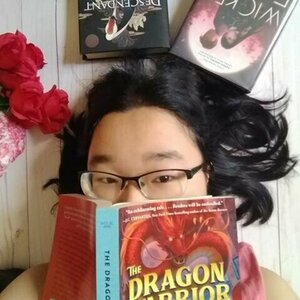
Sophia (Bookwyrming Thoughts) (530 KP) rated The Winner's Crime (The Winner's Trilogy, #2) in Books
Jan 23, 2020
Dear <i>The Winner's Crime</i>,
You remind me of <i>Revenge.</i> Just... more fun.
Lady Kestrel is like Emily and the emperor is like Victoria or Veronica or whats-her-face, and her words are so carefully plotted, her moves so masterfully calculated - I've pretty much decided to not make an attempt to predict you. I find that not predicting sometimes is more fun and more enjoyable.
You are like any other movie or TV show consisting of royalty - espionage, drama, tension, gossip, the like. But I like you, and I enjoyed reading you. Kestrel is clever, but so is the prince and Arin and almost all the other characters in this novel. Yet, I still enjoy it. I enjoy the lies and deception, the drama and tension in the palace as Kestrel's wedding day gets closer and closer.
Thus, I find you more a guilty pleasure read. I find you such a guilty pleasure, I don't want to rate you, because if I do, it'll be a high one for sure. I can't high-five you - you're on a hold shelf already and that's just a fatal flaw of libraries, but it's a great feeling because someone else can enjoy the fabulousness of what you are. Then you'll be placed on a shelf somewhere else, or on a hold shelf again, traveling to another reader and then another, and your older sibling will repeat the same process.
And when your younger sibling comes around, s/he will be doing the same thing. In fact, it'll be your fault - you left everyone at a cliffhanger and all of us are demanding to know how this story will unfold.
<div style="text-align: right;">Sincerely,</div>
<div style="text-align: right;">Sophia</div>
<a href="https://bookwyrmingthoughts.com/review-the-winners-crime-by-marie-rutkoski/"; target="_blank">This review was originally posted on Bookwyrming Thoughts</a>
You remind me of <i>Revenge.</i> Just... more fun.
Lady Kestrel is like Emily and the emperor is like Victoria or Veronica or whats-her-face, and her words are so carefully plotted, her moves so masterfully calculated - I've pretty much decided to not make an attempt to predict you. I find that not predicting sometimes is more fun and more enjoyable.
You are like any other movie or TV show consisting of royalty - espionage, drama, tension, gossip, the like. But I like you, and I enjoyed reading you. Kestrel is clever, but so is the prince and Arin and almost all the other characters in this novel. Yet, I still enjoy it. I enjoy the lies and deception, the drama and tension in the palace as Kestrel's wedding day gets closer and closer.
Thus, I find you more a guilty pleasure read. I find you such a guilty pleasure, I don't want to rate you, because if I do, it'll be a high one for sure. I can't high-five you - you're on a hold shelf already and that's just a fatal flaw of libraries, but it's a great feeling because someone else can enjoy the fabulousness of what you are. Then you'll be placed on a shelf somewhere else, or on a hold shelf again, traveling to another reader and then another, and your older sibling will repeat the same process.
And when your younger sibling comes around, s/he will be doing the same thing. In fact, it'll be your fault - you left everyone at a cliffhanger and all of us are demanding to know how this story will unfold.
<div style="text-align: right;">Sincerely,</div>
<div style="text-align: right;">Sophia</div>
<a href="https://bookwyrmingthoughts.com/review-the-winners-crime-by-marie-rutkoski/"; target="_blank">This review was originally posted on Bookwyrming Thoughts</a>



I have to admit, when I first started reading this book I did stop several times, look at the cover and the blurb and think “What the heck am I reading?”
This is the first Max Porter novel I have read. He has a very interesting way of laying out his prose which baffles the brain at first, but once you adapt to the flow you just float along with the story. The book is broken up into three parts, and each part is told in a different but distinctive way.
Lanny is a young boy with a gift, a very peculiar gift that his parents can’t quite figure out. So Lanny’s mother enlists the help of ‘Pete’ a local grizzled artist to teach the boy and harness some of his ‘eccentricities’. However, a mysterious event soon throws the lives of Lanny’s parents, Pete, and indeed the whole village in to utter chaos. Questions are asked, relationships are closely examined, but what really lies beneath all that goes on in this little village just outside of London.
One aspect of the book I admired was in part two, after the main turning point of the story. This part of the book is told in sporadic paragraphs of peoples thoughts and deeds during the event. It’s not always clear whose thought or deed you’re reading (and it’s not always necessary to know) but through this episodic storytelling you build up a picture not only of what is happening but how the people involved are feeling about it.
This was very cleverly written and the way that Porter plays with words builds up a very vivid image of the events happening in ‘Lanny’. What Porter has shown us is that in order to tell a good story you don’t necessarily have to write in a smooth and progressive way, sometimes you just have to throw words at the pages and see what sticks!
This is the first Max Porter novel I have read. He has a very interesting way of laying out his prose which baffles the brain at first, but once you adapt to the flow you just float along with the story. The book is broken up into three parts, and each part is told in a different but distinctive way.
Lanny is a young boy with a gift, a very peculiar gift that his parents can’t quite figure out. So Lanny’s mother enlists the help of ‘Pete’ a local grizzled artist to teach the boy and harness some of his ‘eccentricities’. However, a mysterious event soon throws the lives of Lanny’s parents, Pete, and indeed the whole village in to utter chaos. Questions are asked, relationships are closely examined, but what really lies beneath all that goes on in this little village just outside of London.
One aspect of the book I admired was in part two, after the main turning point of the story. This part of the book is told in sporadic paragraphs of peoples thoughts and deeds during the event. It’s not always clear whose thought or deed you’re reading (and it’s not always necessary to know) but through this episodic storytelling you build up a picture not only of what is happening but how the people involved are feeling about it.
This was very cleverly written and the way that Porter plays with words builds up a very vivid image of the events happening in ‘Lanny’. What Porter has shown us is that in order to tell a good story you don’t necessarily have to write in a smooth and progressive way, sometimes you just have to throw words at the pages and see what sticks!