Search

Emma @ The Movies (1786 KP) rated The Suicide Squad (2021) in Movies
Aug 15, 2021
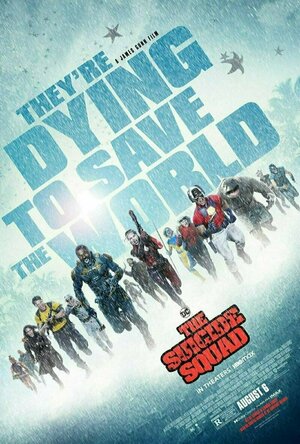


Much like the recent Justice League redo we have Suicide Squad... sorry, The Suicide Squad.
The bad guys (and gals) club together to protect America... and by default, the world.
So it's not really a sequel, it's not really a reboot, but it's sort of a rebooted sequel while being a standalone film in the same universe. I've got no idea, but what we've got doesn't really bring out the same character dynamics as we've had previously.
Harley, Flag, Boomerang and Waller make repeat visits to the franchise. Harley and Boomerang are their usual, slightly off the wall, selves to bring the outlandish humour element. But Flag and Waller aren't anywhere near the versions they were in their last outing. Flag isn't sceptical, and that could be acceptance after the previous missions, but he's less of a leader and altogether more... bland. Waller on the other hand is still a hardass, but on a much different level. Before, she was sinister evil with a smidge of understated terrifying. Now... she's just shouty. It didn't make for a good viewing experience.
The dynamic change also left me cold. Harley and Boomerang have great chemistry together, what they did to her and Flag though, that was an odd mood. At least last time he was firm and decisive, now we're getting lingering camera shots that feel like they have romantic undertones. They also took Harley out of a lot of group activity, for a storyline that could easily have been summed up in another way.
Supporting the old familiars are a lot of new faces. In fact, there are over a dozen new named characters in The Suicide Squad.
Idris Elba is obviously a big pull in the advertising of this. Bloodsport isn't a character I know well, but it's handy that there are several, almost identical, characters they could swap in for Deadshot in case they want to bring Will Smith back later. But whether or not the comic book characters are the same, the story on the screen comes across almost identical.
And then there's Peacemaker, played by John Cena... another highly trained marksman. But this one with a penchant for tighty-whities. With this and F9, I'm not sure I have enough words. This is the last in a string of roles for him that I really haven't enjoyed. I'm even more distressed now that I know there's an 8 episode Peacemaker series coming in 2022. Heavy "do not want" vibes.
I couldn't go through this review without talking about King Shark... that would be criminal. Sylvester Stallone did this perfectly. Nanaue has humour, vulnerability, anger, wonder... and that was all conveyed with animation and a minimal script. I will not apologise for saying he was the best thing about the whole movie.
The rest of the characters are a steep learning curve. There was a lot of opportunity, but some rash decisions meant there was also a lot of wasted IP.
Our bad guys were a little all over the place. Front and centre we had Peter Capaldi as Thinker. He's not exactly a force to be reckoned with though, and honestly, I kind of expected more considering his prominence in the trailer. Starro was more of a challenger as a baddie, but they did ignore a lot of his abilities and left him as more of a novelty... and those armpits... *shudder*
Effects were as you'd expect for a DC film, not bad, but nothing that blows your mind. Animating a giant starfish is never going to look all that believable though, so there's a certain amount of leeway you need to give them for that.
The vibrant colours felt very on brand for James Gunn, and almost made this a bit of a companion piece to Birds of Prey... but those flowers... Yes, Harley has her hallucinatory moments, those flowers felt entirely pointless and out of place.
While The Suicide Squad was watchable, I really didn't find it to be the redemption that a lot of people are praising it to be. In fact, it felt like a solid step back for some characters and an excessive waste of others. Had they made the entire movie from King Shark's point of view then this obviously would have been a 5 star film, but as it was I didn't like the tone it had, and a lot of the action felt way too lighthearted for me. This wasn't an improvement on the previous iteration.
Originally posted on: https://emmaatthemovies.blogspot.com/2021/08/the-suicide-squad-movie-review.html
The bad guys (and gals) club together to protect America... and by default, the world.
So it's not really a sequel, it's not really a reboot, but it's sort of a rebooted sequel while being a standalone film in the same universe. I've got no idea, but what we've got doesn't really bring out the same character dynamics as we've had previously.
Harley, Flag, Boomerang and Waller make repeat visits to the franchise. Harley and Boomerang are their usual, slightly off the wall, selves to bring the outlandish humour element. But Flag and Waller aren't anywhere near the versions they were in their last outing. Flag isn't sceptical, and that could be acceptance after the previous missions, but he's less of a leader and altogether more... bland. Waller on the other hand is still a hardass, but on a much different level. Before, she was sinister evil with a smidge of understated terrifying. Now... she's just shouty. It didn't make for a good viewing experience.
The dynamic change also left me cold. Harley and Boomerang have great chemistry together, what they did to her and Flag though, that was an odd mood. At least last time he was firm and decisive, now we're getting lingering camera shots that feel like they have romantic undertones. They also took Harley out of a lot of group activity, for a storyline that could easily have been summed up in another way.
Supporting the old familiars are a lot of new faces. In fact, there are over a dozen new named characters in The Suicide Squad.
Idris Elba is obviously a big pull in the advertising of this. Bloodsport isn't a character I know well, but it's handy that there are several, almost identical, characters they could swap in for Deadshot in case they want to bring Will Smith back later. But whether or not the comic book characters are the same, the story on the screen comes across almost identical.
And then there's Peacemaker, played by John Cena... another highly trained marksman. But this one with a penchant for tighty-whities. With this and F9, I'm not sure I have enough words. This is the last in a string of roles for him that I really haven't enjoyed. I'm even more distressed now that I know there's an 8 episode Peacemaker series coming in 2022. Heavy "do not want" vibes.
I couldn't go through this review without talking about King Shark... that would be criminal. Sylvester Stallone did this perfectly. Nanaue has humour, vulnerability, anger, wonder... and that was all conveyed with animation and a minimal script. I will not apologise for saying he was the best thing about the whole movie.
The rest of the characters are a steep learning curve. There was a lot of opportunity, but some rash decisions meant there was also a lot of wasted IP.
Our bad guys were a little all over the place. Front and centre we had Peter Capaldi as Thinker. He's not exactly a force to be reckoned with though, and honestly, I kind of expected more considering his prominence in the trailer. Starro was more of a challenger as a baddie, but they did ignore a lot of his abilities and left him as more of a novelty... and those armpits... *shudder*
Effects were as you'd expect for a DC film, not bad, but nothing that blows your mind. Animating a giant starfish is never going to look all that believable though, so there's a certain amount of leeway you need to give them for that.
The vibrant colours felt very on brand for James Gunn, and almost made this a bit of a companion piece to Birds of Prey... but those flowers... Yes, Harley has her hallucinatory moments, those flowers felt entirely pointless and out of place.
While The Suicide Squad was watchable, I really didn't find it to be the redemption that a lot of people are praising it to be. In fact, it felt like a solid step back for some characters and an excessive waste of others. Had they made the entire movie from King Shark's point of view then this obviously would have been a 5 star film, but as it was I didn't like the tone it had, and a lot of the action felt way too lighthearted for me. This wasn't an improvement on the previous iteration.
Originally posted on: https://emmaatthemovies.blogspot.com/2021/08/the-suicide-squad-movie-review.html

Lee (2222 KP) rated Shazam! (2019) in Movies
Apr 8, 2019 (Updated Apr 8, 2019)


Shazam is the latest DC superhero to land himself a standalone movie and continues to highlight the fact that these self contained DC offerings really do seem to be a lot better than their rushed ensemble movie output. It also shows how much better they can be when straying from the traditional dark DC gloom and deciding to inject a bit more humour and fun into it all. Aquaman recently showed just how much of a box office success that formula can be, Wonder Woman before it to a certain extent, and although Shazam does certainly have some dark themes and moments, it’s ultimately a lot more fun than either of those.
Shazam does take it’s time in introducing our superhero though, not to mention our super-villain, and the result is a much more grounded and believable movie. We begin with young boy Thaddeus Sivana, traveling by car with his elder brother and father. It’s the first of a number of dark scenes involving the Sivana family, really helping us to get a better understanding and appreciation of the man he later becomes and the motivation that drives him. We then head to present day Philadelphia, where 15 year old Billy Batson is using whatever means possible, legal or otherwise, to try and locate the birth mother he became separated from as a young boy while at a crowded funfair. Since then, Billy has been in the foster care system, and now finds himself in the care of Victor and Rosa – former foster kids themselves, who now run a home for a small group of foster children. Billy is sharing a room with Freddy, a disabled boy with an interest in superheroes and the proud owner of some pretty cool superhero memorabilia, including a batarang from Batman and a genuine bullet, flattened from having bounced off the man of steel himself! The foster home is a pretty close knit group and Billy initially struggles to fit into this large new ready made family.
And then one day, while on the run after standing up to a couple of older kids who were bullying Freddy, Billy finds himself transported to a dark mysterious cave where he inherits the powers of aged wizard Shazam (Djimon Hounsoul). The wizard is the last Shazam, currently protecting the world from an invasion of the Seven Deadly Sins, but now so weak that he must transfer his powers to someone who is true of heart. Absorbing his power, Billy becomes a grown up superhero (Zachari Levy), but by saying the word Shazam he is able to alternate between his teen body and that of the mighty superhero whenever he wants.
Once he manages to convince Freddy that he is in fact Billy and not some crazy guy in a suit, they have a lot of fun trying to work out which powers Shazam actually has and how to best make use of them. If you’ve seen the trailer, you’ll know that this is where a lot of the fun lies within the movie and it’s definitely very entertaining. But Billy eventually begins having a little too much fun for Freddy’s liking, and when all he is doing is skipping school to go shoot off lightning bolts for a gathered crowd, Freddy becomes frustrated that he is wasting his gift. With great power comes great responsibility and all that. Meanwhile, young Thaddeus Sivana has now become Dr Sivana (Mark Strong), acquiring some pretty impressive powers of his own and forging his own dark path in a scene which really pushes the 12A age rating for the movie. All his life, Sivana has been seeking the power that Billy has now acquired, so when this larger than life hero shows up, goofing around and not really taking that power seriously, Dr Sivana goes after Shazam to try and take the power for himself.
From there, the rest of the movie is pretty much a cat and mouse chase between Sivana and Shazam across the city, up in the sky and down on the streets as they smash through shopping malls and buildings before culminating in a fairground showdown. It’s actually a lot more fun than it sounds, although the whole movie could probably benefit from having about 10-15 minutes cut from it. Also, the dark threat introduced so shockingly earlier on in the movie, suddenly doesn’t become so shocking or menacing towards the end. It’s indicative of the tone of the movie as a whole really, trying to remain rooted in the traditional DC gloom, but striving for family friendly box office success. These are all very minor negatives for me though – overall Shazam is a lot of fun and very lighthearted, with a lot to say about the importance of family. And the Boardman family had an absolute blast watching it!
Shazam does take it’s time in introducing our superhero though, not to mention our super-villain, and the result is a much more grounded and believable movie. We begin with young boy Thaddeus Sivana, traveling by car with his elder brother and father. It’s the first of a number of dark scenes involving the Sivana family, really helping us to get a better understanding and appreciation of the man he later becomes and the motivation that drives him. We then head to present day Philadelphia, where 15 year old Billy Batson is using whatever means possible, legal or otherwise, to try and locate the birth mother he became separated from as a young boy while at a crowded funfair. Since then, Billy has been in the foster care system, and now finds himself in the care of Victor and Rosa – former foster kids themselves, who now run a home for a small group of foster children. Billy is sharing a room with Freddy, a disabled boy with an interest in superheroes and the proud owner of some pretty cool superhero memorabilia, including a batarang from Batman and a genuine bullet, flattened from having bounced off the man of steel himself! The foster home is a pretty close knit group and Billy initially struggles to fit into this large new ready made family.
And then one day, while on the run after standing up to a couple of older kids who were bullying Freddy, Billy finds himself transported to a dark mysterious cave where he inherits the powers of aged wizard Shazam (Djimon Hounsoul). The wizard is the last Shazam, currently protecting the world from an invasion of the Seven Deadly Sins, but now so weak that he must transfer his powers to someone who is true of heart. Absorbing his power, Billy becomes a grown up superhero (Zachari Levy), but by saying the word Shazam he is able to alternate between his teen body and that of the mighty superhero whenever he wants.
Once he manages to convince Freddy that he is in fact Billy and not some crazy guy in a suit, they have a lot of fun trying to work out which powers Shazam actually has and how to best make use of them. If you’ve seen the trailer, you’ll know that this is where a lot of the fun lies within the movie and it’s definitely very entertaining. But Billy eventually begins having a little too much fun for Freddy’s liking, and when all he is doing is skipping school to go shoot off lightning bolts for a gathered crowd, Freddy becomes frustrated that he is wasting his gift. With great power comes great responsibility and all that. Meanwhile, young Thaddeus Sivana has now become Dr Sivana (Mark Strong), acquiring some pretty impressive powers of his own and forging his own dark path in a scene which really pushes the 12A age rating for the movie. All his life, Sivana has been seeking the power that Billy has now acquired, so when this larger than life hero shows up, goofing around and not really taking that power seriously, Dr Sivana goes after Shazam to try and take the power for himself.
From there, the rest of the movie is pretty much a cat and mouse chase between Sivana and Shazam across the city, up in the sky and down on the streets as they smash through shopping malls and buildings before culminating in a fairground showdown. It’s actually a lot more fun than it sounds, although the whole movie could probably benefit from having about 10-15 minutes cut from it. Also, the dark threat introduced so shockingly earlier on in the movie, suddenly doesn’t become so shocking or menacing towards the end. It’s indicative of the tone of the movie as a whole really, trying to remain rooted in the traditional DC gloom, but striving for family friendly box office success. These are all very minor negatives for me though – overall Shazam is a lot of fun and very lighthearted, with a lot to say about the importance of family. And the Boardman family had an absolute blast watching it!

Purple Phoenix Games (2266 KP) rated Mysterium in Tabletop Games
Jul 6, 2019
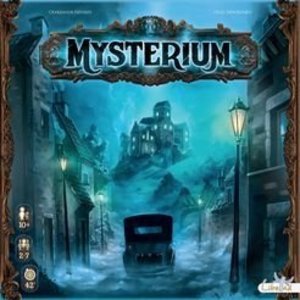

Murder! A poor soul has been murdered in this house, and the homeowner has hired a group of mediums to solve the crime and give the spirit peace. One problem – the ghost can’t remember for sure who did it! Through a seance, the ghost sends visions to the mediums to lead them to potential suspects, crime scenes, and murder weapons. It is up to the mediums to work together and decipher the visions, narrow down the field, and find the criminal! Time is limited however – unless the culprit is caught in 7 hours, the magic of the seance will run out and the crime will remain a mystery!
DISCLAIMER: There are several expansions to this game, but we are not reviewing them at this time. Should we review them in the future we will either update this review or post a link to the new material here. -T
Mysterium is a cooperative game of deduction in which players take on the roles of mediums trying to solve the murder, and one player takes on the role of the ghost who is haunting the estate. Every turn, the ghost sends Visions (in the form of illustrated cards) to each medium in an attempt to guide them to investigate different suspects, locations, and potential murder weapons. The visions are not always clear, however, so the mediums must use their imaginations and deduction skills to decipher any hidden hints or clues contained in the visions. If all mediums are able to identify their suspects/locations/weapons before the 7th hour has passed, the ghost then sends one final Vision to all mediums to guide them to the true culprit. After receiving and deciphering this final Vision, the mediums must all vote on whom they believe the culprit to be. If the majority of the mediums select the correct culprit, the mystery has been solved and the ghost can be laid to rest! If not, however, the mystery remains and the ghost must wait an entire year before the magic ritual can be performed again…
I love Mysterium. I seriously think it’s a great game. One reason why I love it is because it’s a deduction game that is cooperative. Most of the deduction games I’ve played before are competitive or involve some form of bluffing. And I’m pretty terrible at lying, so I never really do well in those. What I like about Mysterium is that you’re still trying to figure out your own cards, but you’re allowed (and encouraged!) to ask your fellow mediums for their thoughts. It’s cool to see how everyone interprets the Vision cards because someone might notice or see something on your Vision card in a way you didn’t think of on your own. Your friends may be able to provide insight to help you through the game, just as you can help them decipher their clues. Especially since the game can’t be won unless everyone has found their cards, it really is in your best interest to cooperate and help everyone out.
Another thing I love about Mysterium is that it can be played with up to 7 players. I’ve probably mentioned this before, but I have 4 siblings, and sometimes finding engaging games for 5+ people can be pretty hard. Not an issue at all with Mysterium. It’s actually a favorite of my siblings to play, so I always bring it with me for holidays and family gatherings! I personally think Mysterium works better at higher player counts, so that really bodes well for me and my family!
One final thing I really like about Mysterium is the dynamic created between the mediums and the ghost player. The ghost is allowed to communicate with the mediums through visions only – no verbal communication at all! That means that as the ghost player, you’re trying to anticipate how each medium will interpret different visions so you can give them the one that will guide them to their specific card. When you’re a medium, you’re trying to think how the ghost player thinks – why did they give me this card and what did they want me to notice? In either role, you’re trying to get in the mind of your counterpart, and that just adds a fun little bonus twist for me.
I think Mysterium is a great game. Deduction drives the game and it keeps you constantly engaged, questioning every card you see. It’s an entertaining and lighthearted cooperative game for any player count, and it thrives with great non-confrontational player interaction. Mysterium was one of the first games in my collection – I was in my FLGS, picked it up off the shelf, and having done no research on it at all, I bought it. And boy oh boy am I glad I did. Definitely give Mysterium a try – it’s a good blend of mystery and fun! Purple Phoenix Games gives it an ethereal 11 / 12.
DISCLAIMER: There are several expansions to this game, but we are not reviewing them at this time. Should we review them in the future we will either update this review or post a link to the new material here. -T
Mysterium is a cooperative game of deduction in which players take on the roles of mediums trying to solve the murder, and one player takes on the role of the ghost who is haunting the estate. Every turn, the ghost sends Visions (in the form of illustrated cards) to each medium in an attempt to guide them to investigate different suspects, locations, and potential murder weapons. The visions are not always clear, however, so the mediums must use their imaginations and deduction skills to decipher any hidden hints or clues contained in the visions. If all mediums are able to identify their suspects/locations/weapons before the 7th hour has passed, the ghost then sends one final Vision to all mediums to guide them to the true culprit. After receiving and deciphering this final Vision, the mediums must all vote on whom they believe the culprit to be. If the majority of the mediums select the correct culprit, the mystery has been solved and the ghost can be laid to rest! If not, however, the mystery remains and the ghost must wait an entire year before the magic ritual can be performed again…
I love Mysterium. I seriously think it’s a great game. One reason why I love it is because it’s a deduction game that is cooperative. Most of the deduction games I’ve played before are competitive or involve some form of bluffing. And I’m pretty terrible at lying, so I never really do well in those. What I like about Mysterium is that you’re still trying to figure out your own cards, but you’re allowed (and encouraged!) to ask your fellow mediums for their thoughts. It’s cool to see how everyone interprets the Vision cards because someone might notice or see something on your Vision card in a way you didn’t think of on your own. Your friends may be able to provide insight to help you through the game, just as you can help them decipher their clues. Especially since the game can’t be won unless everyone has found their cards, it really is in your best interest to cooperate and help everyone out.
Another thing I love about Mysterium is that it can be played with up to 7 players. I’ve probably mentioned this before, but I have 4 siblings, and sometimes finding engaging games for 5+ people can be pretty hard. Not an issue at all with Mysterium. It’s actually a favorite of my siblings to play, so I always bring it with me for holidays and family gatherings! I personally think Mysterium works better at higher player counts, so that really bodes well for me and my family!
One final thing I really like about Mysterium is the dynamic created between the mediums and the ghost player. The ghost is allowed to communicate with the mediums through visions only – no verbal communication at all! That means that as the ghost player, you’re trying to anticipate how each medium will interpret different visions so you can give them the one that will guide them to their specific card. When you’re a medium, you’re trying to think how the ghost player thinks – why did they give me this card and what did they want me to notice? In either role, you’re trying to get in the mind of your counterpart, and that just adds a fun little bonus twist for me.
I think Mysterium is a great game. Deduction drives the game and it keeps you constantly engaged, questioning every card you see. It’s an entertaining and lighthearted cooperative game for any player count, and it thrives with great non-confrontational player interaction. Mysterium was one of the first games in my collection – I was in my FLGS, picked it up off the shelf, and having done no research on it at all, I bought it. And boy oh boy am I glad I did. Definitely give Mysterium a try – it’s a good blend of mystery and fun! Purple Phoenix Games gives it an ethereal 11 / 12.

Gareth von Kallenbach (980 KP) rated Jimmy's Hall (2015) in Movies
Aug 6, 2019

It’s not to often that we folks in America have the opportunity to catch any movies from Ireland.
The few that do come along almost certainly rate high on the scale of exceptional movies that one would want to see. I myself can’t remember a ‘bad’ Irish film. Perhaps one of the reasons for that is the fact that this country has a solid history of countless Irish immigrants coming here and helping to build the foundations for America. Well, today’s film for your consideration doesn’t go back THAT far. It doesn’t even take place in America. However, the history of Irish immigrants (specifically one immigrant) does play a role. Only it involves an Irish immigrant how came to America and then several years later returned to Ireland only to be forcibly deported back to America. I know I know. That explanation makes it sound like a comedy and although the film has many lighthearted moments, I can assure you it’s NOT a comedy. In fact, it deals with an influential figure in one of the more politically turbulent periods in Ireland’s history just before the beginning of the Second World War.
‘Jimmy’s Hall’ is a 2014 Irish-British drama directed by English television and film director Kenneth ‘Ken’ Loach. The film focuses on the events leading up to the deportation from Ireland of Jimmy Gralton, who led a precursor to Ireland’s communist party in the county Leitrim.
Starring Barry Ward, Simone Kirby, and Irish character actor Jim Norton, the film opens in 1932. Jimmy (Ward) has just returned to his home to help his mother tend the family farm after spending 10 years in the United States in the midst of the Great Depression coinciding with the establishment of a new government in the aftermath of the Civil War between pro-British and anti-British forces.
Reluctant to anger his old enemies, the church and the landowners who forced him to leave Ireland, but eager to meet the needs of the people of Leitrim, Jimmy (Ward) decides to reopen the ‘Hall’, a center for young people where they can meet to study, talk, dance, play music, learn to read, debate issues of the day. Free to all and open to anyone who wishes to learn while respecting the views and opinions of others, the ‘Hall’ is an immediate success. Not everyone is pleased to see Jimmy resuming his old activities. In particular the church and local priest (Norton) who see Gralton as not only a ‘bad influence’, but also as a follower of Stalin who as history knows sent countless millions (including religious leaders) to their deaths.
Despite the complaints and at times violent reactions on the part of the supporters of the church and the landowners, Gralton tries desperately to make them realize he has absolutely no connection to Stalin and has no desire to bring down the church. Only to better the situation for everyone. Jimmy even invites the local priest to take a leadership role in the Hall’s committee. In the end though, the fears of the church and the state go unchanged. Jimmy is a communist and although he has no connection Stalin the church and the government see them as one in the same. The police take Jimmy into custody at his family’s farm and forcibly deport him back to America even so much as denying him on last chance to see his ailing mother.
In education systems there are books and films which are considered ‘required reading’ or in this case ‘required viewing’. This film should be required viewing. It is not just an excellent film about a historical Irish political figure or as I mentioned earlier a film about a turbulent point in Irish history. It’s an example of the greater ‘world conflict’ between what became the western bloc and the eastern bloc. Both sides in that grater conflict saw each other the same way the two sides in the Irish countryside of the 1930s saw each other. The ones that meant well and only wanted to better the situation for everyone including themselves inspired fear in those who had power and those who had the power inspired fear in those who meant well. This movie showed that not all political figures are evil … nor are all religious figures. It’s the individual or several individuals within those groups that are reluctant to change.
I would highly recommend this film. Regardless of the content it’s an excellent film. If this film is as good as most films made in Ireland, they definitely need to start exporting them on a grander scale. I’d give this film 4 out of 5 stars.
This is your friendly neighborhood photographer ‘The CameraMan’ and on behalf of my fellows at ‘Skewed & Reviewed’ I’d like to say thanks for reading and we’ll see you at the movies
The few that do come along almost certainly rate high on the scale of exceptional movies that one would want to see. I myself can’t remember a ‘bad’ Irish film. Perhaps one of the reasons for that is the fact that this country has a solid history of countless Irish immigrants coming here and helping to build the foundations for America. Well, today’s film for your consideration doesn’t go back THAT far. It doesn’t even take place in America. However, the history of Irish immigrants (specifically one immigrant) does play a role. Only it involves an Irish immigrant how came to America and then several years later returned to Ireland only to be forcibly deported back to America. I know I know. That explanation makes it sound like a comedy and although the film has many lighthearted moments, I can assure you it’s NOT a comedy. In fact, it deals with an influential figure in one of the more politically turbulent periods in Ireland’s history just before the beginning of the Second World War.
‘Jimmy’s Hall’ is a 2014 Irish-British drama directed by English television and film director Kenneth ‘Ken’ Loach. The film focuses on the events leading up to the deportation from Ireland of Jimmy Gralton, who led a precursor to Ireland’s communist party in the county Leitrim.
Starring Barry Ward, Simone Kirby, and Irish character actor Jim Norton, the film opens in 1932. Jimmy (Ward) has just returned to his home to help his mother tend the family farm after spending 10 years in the United States in the midst of the Great Depression coinciding with the establishment of a new government in the aftermath of the Civil War between pro-British and anti-British forces.
Reluctant to anger his old enemies, the church and the landowners who forced him to leave Ireland, but eager to meet the needs of the people of Leitrim, Jimmy (Ward) decides to reopen the ‘Hall’, a center for young people where they can meet to study, talk, dance, play music, learn to read, debate issues of the day. Free to all and open to anyone who wishes to learn while respecting the views and opinions of others, the ‘Hall’ is an immediate success. Not everyone is pleased to see Jimmy resuming his old activities. In particular the church and local priest (Norton) who see Gralton as not only a ‘bad influence’, but also as a follower of Stalin who as history knows sent countless millions (including religious leaders) to their deaths.
Despite the complaints and at times violent reactions on the part of the supporters of the church and the landowners, Gralton tries desperately to make them realize he has absolutely no connection to Stalin and has no desire to bring down the church. Only to better the situation for everyone. Jimmy even invites the local priest to take a leadership role in the Hall’s committee. In the end though, the fears of the church and the state go unchanged. Jimmy is a communist and although he has no connection Stalin the church and the government see them as one in the same. The police take Jimmy into custody at his family’s farm and forcibly deport him back to America even so much as denying him on last chance to see his ailing mother.
In education systems there are books and films which are considered ‘required reading’ or in this case ‘required viewing’. This film should be required viewing. It is not just an excellent film about a historical Irish political figure or as I mentioned earlier a film about a turbulent point in Irish history. It’s an example of the greater ‘world conflict’ between what became the western bloc and the eastern bloc. Both sides in that grater conflict saw each other the same way the two sides in the Irish countryside of the 1930s saw each other. The ones that meant well and only wanted to better the situation for everyone including themselves inspired fear in those who had power and those who had the power inspired fear in those who meant well. This movie showed that not all political figures are evil … nor are all religious figures. It’s the individual or several individuals within those groups that are reluctant to change.
I would highly recommend this film. Regardless of the content it’s an excellent film. If this film is as good as most films made in Ireland, they definitely need to start exporting them on a grander scale. I’d give this film 4 out of 5 stars.
This is your friendly neighborhood photographer ‘The CameraMan’ and on behalf of my fellows at ‘Skewed & Reviewed’ I’d like to say thanks for reading and we’ll see you at the movies
Lee (2222 KP) rated Spider-Man: Far From Home (2019) in Movies
Jul 3, 2019
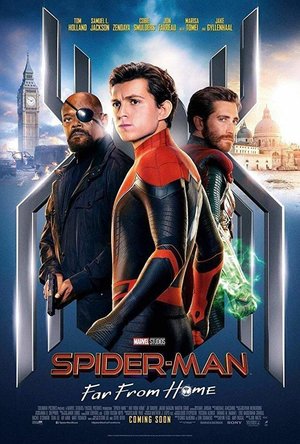
I think I was one of the few people that was ultimately disappointed by Spider-Man: Homecoming. After Spider-Man's impressive and thrilling introduction to the Marvel universe during Captain America: Civil War, I felt Homecoming to be somewhat lacking - set pieces that had already been shown in the trailer, bigger set pieces that were difficult to follow on screen and, to quote my review, "too much awkward teen, not enough action hero". I even used the phrase "superhero fatigue", which funnily enough is a phrase currently being bandied around by some for this next Spider-Man venture, Far From Home, particularly in the wake of the intense Avengers: Endgame earlier this year. So, let's just say I was cautiously optimistic heading in to see this movie.
We kick off with a brief introduction to what will dominate the rest of the movie - Nick Fury and Maria Hill arrive in Mexico, where "a cyclone with a face" has completely destroyed a small town. As this new threat returns to wreak even more havoc, a mysterious new hero arrives to face it square on in battle, dramatically declaring to the startled S.H.I.E.L.D agents, "you don't want any part of this". From there, we switch to a lighthearted wrap up of the devastating events surrounding Infinity War/Endgame, in the form of an amateur high school news report. Mourning the loss of fallen heroes (accompanied by Whitney Houston singing 'I Will Always Love You'!), the report goes on to explain how "The Blip" - the term many are using to describe the effects of the 5 year period where half of the population were wiped from existence. Having the population age 5 years while the returning half haven't aged at all naturally has humorous consequences when it comes to students and their school life, but essentially humanity has managed to move on and has learnt to deal with it. Someone who is struggling to move on though, particularly from the loss of mentor/surrogate father, Tony Stark, is young Peter Parker. Desperately in need of a summer vacation, and a break from being Spider-Man, Parker cannot wait to join the rest of his friends, and crucially MJ (Zendaya), on an upcoming school trip which will take them to various European destinations.
But there's no chance of any kind of break for Spider-Man just yet, as Nick Fury has other plans for him. Peter does the unthinkable though and ignores the many phone calls from Fury, until he eventually tracks him down for a face to face meeting in his Venice hotel room. Since the incident in Mexico, S.H.I.E.L.D have been working with the mysterious new hero, Quentin Beck, or 'Mysterio' as he has now been dubbed, and Peter (along with us) are now brought up to speed on the origins of Quentin and these new global threats. Quentin actually comes from an alternate Earth where these creatures, known as The Elementals (monstrous versions of wind, fire, water and air), were responsible for the destruction of not only his world but his entire family too. The most powerful Elemental, fire, is yet to appear on our Earth and Mysterio, along with the help of S.H.I.E.L.D and Spider-Man, need to locate and stop it before it becomes too powerful for them to defeat.
Peter isn't initially interested though, being more concerned about jeopardising his school trip and exposing his identity, not to mention ruining his chances of finally hooking up with MJ. So, the rest of the movie nicely splits itself between teen high school banter/comedy drama and international superhero action. Happy Hogan (Jon Favreau) features prominently throughout the movie, helping to guide and mentor Peter in the absence of his old boss Tony Stark, and providing plenty of comic relief along the way too. He also passes onto Peter, a gift from Tony Stark - a pair of Jarvis-like talking shades called EDITH (Even Dead I'm The Hero!) - which initially act as a funny and poignant accessory for Peter, but proves to be a hugely important part of how the rest of the movie plays out.
Beyond that, I'm struggling to avoid spoilers. And there are a lot of them. If you're familiar with the comics though (and despite having some vague familiarity with them, I'd completely forgotten everything!), you'll be able to predict a lot of what comes next anyway. But, once again, I have to say how amazed I am that Marvel managed to produce trailers for this movie which not only mislead you into believing that you know exactly which direction this movie is heading in, but also feature scenes which aren't in the final movie! As a result, I found Far From Home to be a truly wonderful surprise, and even if you know how it's all going to play out, you should still manage to get a huge amount of enjoyment from seeing the masters of storytelling at work yet again. This movie gave me Endgame-level thrills and goose-bump moments, over and over again throughout. Visually, it's outstanding - with impressive action scenes and trippy sequences the likes of which we haven't seen since Doctor Strange. Jake Gyllenhaal is perfect as Mysterio too, really bringing the character to life, and by the end of it all I was just completely blown away. So when the mid credit sequence hit, opening up some shocking possibilities for future movies, I was almost hyperventilating with excitement!
We kick off with a brief introduction to what will dominate the rest of the movie - Nick Fury and Maria Hill arrive in Mexico, where "a cyclone with a face" has completely destroyed a small town. As this new threat returns to wreak even more havoc, a mysterious new hero arrives to face it square on in battle, dramatically declaring to the startled S.H.I.E.L.D agents, "you don't want any part of this". From there, we switch to a lighthearted wrap up of the devastating events surrounding Infinity War/Endgame, in the form of an amateur high school news report. Mourning the loss of fallen heroes (accompanied by Whitney Houston singing 'I Will Always Love You'!), the report goes on to explain how "The Blip" - the term many are using to describe the effects of the 5 year period where half of the population were wiped from existence. Having the population age 5 years while the returning half haven't aged at all naturally has humorous consequences when it comes to students and their school life, but essentially humanity has managed to move on and has learnt to deal with it. Someone who is struggling to move on though, particularly from the loss of mentor/surrogate father, Tony Stark, is young Peter Parker. Desperately in need of a summer vacation, and a break from being Spider-Man, Parker cannot wait to join the rest of his friends, and crucially MJ (Zendaya), on an upcoming school trip which will take them to various European destinations.
But there's no chance of any kind of break for Spider-Man just yet, as Nick Fury has other plans for him. Peter does the unthinkable though and ignores the many phone calls from Fury, until he eventually tracks him down for a face to face meeting in his Venice hotel room. Since the incident in Mexico, S.H.I.E.L.D have been working with the mysterious new hero, Quentin Beck, or 'Mysterio' as he has now been dubbed, and Peter (along with us) are now brought up to speed on the origins of Quentin and these new global threats. Quentin actually comes from an alternate Earth where these creatures, known as The Elementals (monstrous versions of wind, fire, water and air), were responsible for the destruction of not only his world but his entire family too. The most powerful Elemental, fire, is yet to appear on our Earth and Mysterio, along with the help of S.H.I.E.L.D and Spider-Man, need to locate and stop it before it becomes too powerful for them to defeat.
Peter isn't initially interested though, being more concerned about jeopardising his school trip and exposing his identity, not to mention ruining his chances of finally hooking up with MJ. So, the rest of the movie nicely splits itself between teen high school banter/comedy drama and international superhero action. Happy Hogan (Jon Favreau) features prominently throughout the movie, helping to guide and mentor Peter in the absence of his old boss Tony Stark, and providing plenty of comic relief along the way too. He also passes onto Peter, a gift from Tony Stark - a pair of Jarvis-like talking shades called EDITH (Even Dead I'm The Hero!) - which initially act as a funny and poignant accessory for Peter, but proves to be a hugely important part of how the rest of the movie plays out.
Beyond that, I'm struggling to avoid spoilers. And there are a lot of them. If you're familiar with the comics though (and despite having some vague familiarity with them, I'd completely forgotten everything!), you'll be able to predict a lot of what comes next anyway. But, once again, I have to say how amazed I am that Marvel managed to produce trailers for this movie which not only mislead you into believing that you know exactly which direction this movie is heading in, but also feature scenes which aren't in the final movie! As a result, I found Far From Home to be a truly wonderful surprise, and even if you know how it's all going to play out, you should still manage to get a huge amount of enjoyment from seeing the masters of storytelling at work yet again. This movie gave me Endgame-level thrills and goose-bump moments, over and over again throughout. Visually, it's outstanding - with impressive action scenes and trippy sequences the likes of which we haven't seen since Doctor Strange. Jake Gyllenhaal is perfect as Mysterio too, really bringing the character to life, and by the end of it all I was just completely blown away. So when the mid credit sequence hit, opening up some shocking possibilities for future movies, I was almost hyperventilating with excitement!

Purple Phoenix Games (2266 KP) rated Kleptokittens! in Tabletop Games
Jun 21, 2021
Growing up, I didn’t really have pets. We had a couple hamsters, fish, and even a turtle for a bit, but nothing that lived outside of a cage/tank. My cousins had cats, and I remember I loved going to visit them and play with the kitties! Many a time, a small item (be it a sock, shoe, Beanie Baby, you name it) would be ‘misplaced’ by its human owner, only to later be found in one of the cat beds. So when I heard about Kleptokittens!, it was a hilariously real theme that I knew I had to try out. Keep reading to see if this game has been missing from your life!
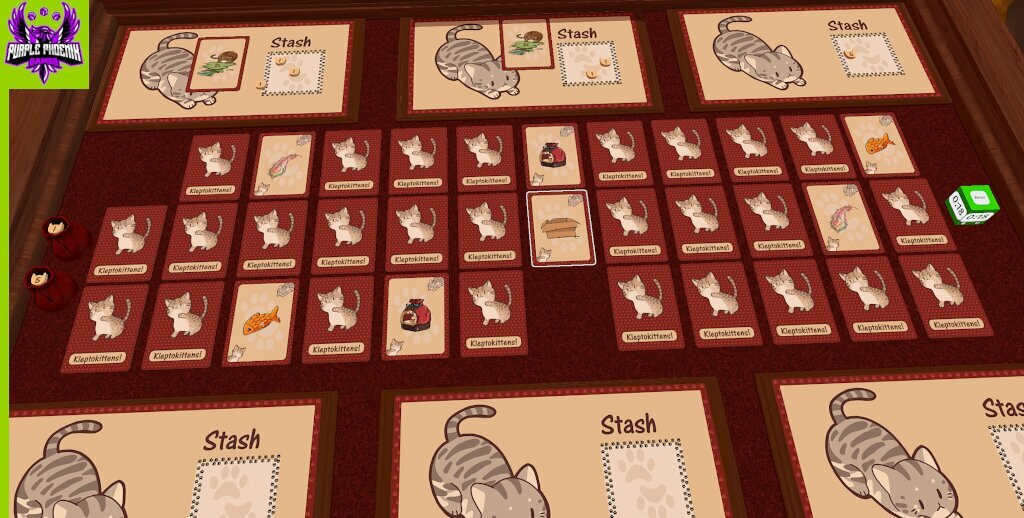
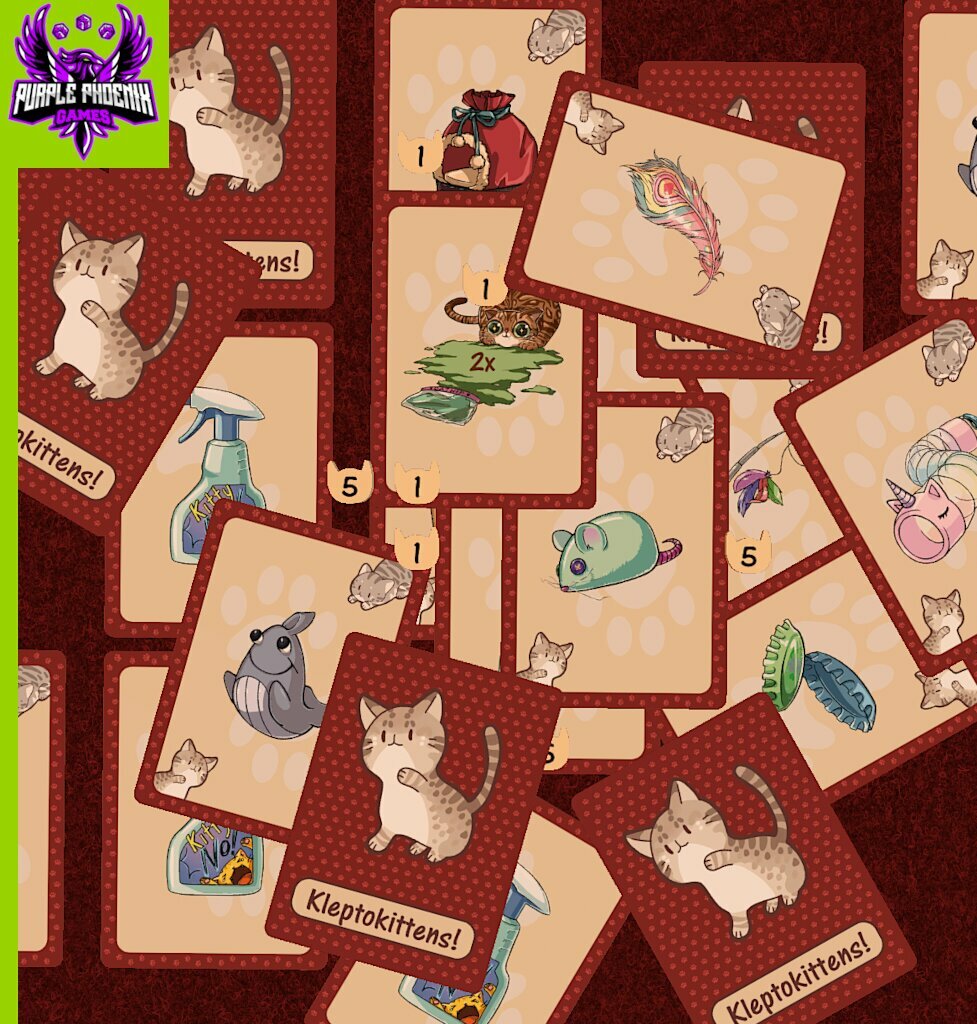
Disclaimer: We were provided with a Tabletop Simulator version of this game for the purposes of this preview. The images below are screenshots from my plays. The components may not be finalized and could change after a successful Kickstarter campaign. -L
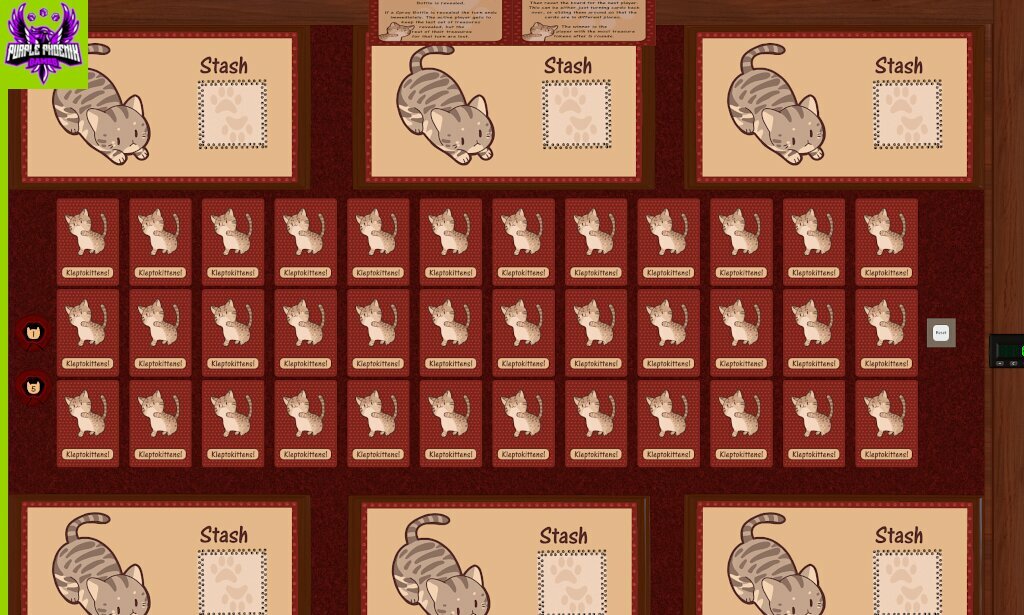
Kleptokittens! is a memory game of push your luck in which players are trying to amass the most points over the course of 5 rounds. Setup is simple – shuffle the deck of cards, and then lay them out face-down in a grid. Each player receives a Stash player mat, and the point tokens are set off to the side. Grab a timer, choose a starting player, and you are good to go!
On your turn, you will have 30 seconds to flip over cards and match as many pairs as possible. If you turn over a match, leave them face-up, and continue flipping cards. If the 2 cards you revealed do not match, flip them back face-down and keep looking for a pair. At the end of the 30 seconds, count up the number of matches you found, and take as many treasure tokens to your Stash. The game then moves to the next player, the cards are reset (either flipped back facedown, or shuffled and placed anew for an added challenge) and the game continues until all players have had a turn. That signifies the end of the first round. A new round commences as before, and the game keeps going until 5 rounds have been completed. The player who has amassed the most treasure tokens is named the winner!
Seems simple enough, right? Well, there are a couple of twists. If, at any point in your turn, you reveal a Spray Bottle, your turn immediately ends, regardless of how much time is remaining on your timer. You will then only score your last match made, and any previous matches this turn are lost! How much are you willing to push your luck to make matches? Or should you play it safe and quit while you’re ahead? It’s ultimately up to you! Conversely, you could also flip over a Catnip card. Catnip cards are collected to your Stash and are score multipliers at the end of the game! Put your memory to the test, and see how far you are willing to push your luck in hopes of coming out victorious.
At its core, Kleptokittens! is a matching/memory game, and the gameplay is pretty straightforward. The Spray Bottle and Catnip cards add that small element of push your luck that really helps elevate it beyond a simple matching game. You’ve got 3 matches – should you risk going for a 4th, and thus take the lead? Or should you play it safe, since you can’t remember exactly where you last saw that Spray Bottle card? There are some real stakes in this game, and that keeps the gameplay engaging for everyone. Another great thing about Kleptokittens? It’s really accessible for younger gamers! Matching and memory games are great for development in children. And it’s not every day that you find a game fun for adults that can also be played by the littles. The gameplay can be tailored to the group as well. Got a bunch of junior gamers? Maybe take out the Spray Bottle and Catnip cards for now and extend that timer to 1 full minute. Playing with a bunch of adult friends? Try re-shuffling the deck after every player so nobody can rely on the previous player’s grid for their memory of card placements. You can play this game with just about anyone, and that is the sign of a good game to me.
As mentioned earlier, this was a Tabletop Simulator version of the game, so I can’t really talk too much about component quality. I will say however that the art style is cute and fun, and matches the lighthearted feel of the game. The digital version of the game looks great, and I can’t wait to see how the physical version turns out!
Overall, I think that Kleptokittens! is a fun little filler game. A memory/matching game isn’t that novel these days, but the addition of the push your luck element makes for a unique gameplay that feels fun and fresh. The theme is cute, the gameplay is straightforward and simple to understand, and it can be played with gamers of all ages – so what’s not to love? If you’re in the market for something light and fun, I would recommend checking out Kleptokittens! It hits Kickstarter on June 23, 2021, so be sure to snatch it up like kittens snatch up little treasures in this game!
Disclaimer: We were provided with a Tabletop Simulator version of this game for the purposes of this preview. The images below are screenshots from my plays. The components may not be finalized and could change after a successful Kickstarter campaign. -L
Kleptokittens! is a memory game of push your luck in which players are trying to amass the most points over the course of 5 rounds. Setup is simple – shuffle the deck of cards, and then lay them out face-down in a grid. Each player receives a Stash player mat, and the point tokens are set off to the side. Grab a timer, choose a starting player, and you are good to go!
On your turn, you will have 30 seconds to flip over cards and match as many pairs as possible. If you turn over a match, leave them face-up, and continue flipping cards. If the 2 cards you revealed do not match, flip them back face-down and keep looking for a pair. At the end of the 30 seconds, count up the number of matches you found, and take as many treasure tokens to your Stash. The game then moves to the next player, the cards are reset (either flipped back facedown, or shuffled and placed anew for an added challenge) and the game continues until all players have had a turn. That signifies the end of the first round. A new round commences as before, and the game keeps going until 5 rounds have been completed. The player who has amassed the most treasure tokens is named the winner!
Seems simple enough, right? Well, there are a couple of twists. If, at any point in your turn, you reveal a Spray Bottle, your turn immediately ends, regardless of how much time is remaining on your timer. You will then only score your last match made, and any previous matches this turn are lost! How much are you willing to push your luck to make matches? Or should you play it safe and quit while you’re ahead? It’s ultimately up to you! Conversely, you could also flip over a Catnip card. Catnip cards are collected to your Stash and are score multipliers at the end of the game! Put your memory to the test, and see how far you are willing to push your luck in hopes of coming out victorious.
At its core, Kleptokittens! is a matching/memory game, and the gameplay is pretty straightforward. The Spray Bottle and Catnip cards add that small element of push your luck that really helps elevate it beyond a simple matching game. You’ve got 3 matches – should you risk going for a 4th, and thus take the lead? Or should you play it safe, since you can’t remember exactly where you last saw that Spray Bottle card? There are some real stakes in this game, and that keeps the gameplay engaging for everyone. Another great thing about Kleptokittens? It’s really accessible for younger gamers! Matching and memory games are great for development in children. And it’s not every day that you find a game fun for adults that can also be played by the littles. The gameplay can be tailored to the group as well. Got a bunch of junior gamers? Maybe take out the Spray Bottle and Catnip cards for now and extend that timer to 1 full minute. Playing with a bunch of adult friends? Try re-shuffling the deck after every player so nobody can rely on the previous player’s grid for their memory of card placements. You can play this game with just about anyone, and that is the sign of a good game to me.
As mentioned earlier, this was a Tabletop Simulator version of the game, so I can’t really talk too much about component quality. I will say however that the art style is cute and fun, and matches the lighthearted feel of the game. The digital version of the game looks great, and I can’t wait to see how the physical version turns out!
Overall, I think that Kleptokittens! is a fun little filler game. A memory/matching game isn’t that novel these days, but the addition of the push your luck element makes for a unique gameplay that feels fun and fresh. The theme is cute, the gameplay is straightforward and simple to understand, and it can be played with gamers of all ages – so what’s not to love? If you’re in the market for something light and fun, I would recommend checking out Kleptokittens! It hits Kickstarter on June 23, 2021, so be sure to snatch it up like kittens snatch up little treasures in this game!
Purple Phoenix Games (2266 KP) rated Hamsters vs. Hippos in Tabletop Games
Oct 1, 2021

Deeply consider this question: what is your natural predator? We are the top of the food chain, right? Right? And what we all learned in school is that some animals are herbivores, some are carnivores, and some are omnivores. At least in the Midwest, that’s what we were taught. Now, I don’t remember ever being taught that hippopotamuses (hippopotami?) eat anything other than grass. However, I have been wrong so many times in my life that I am interested to find out why they would snack on fleeing hamsters. Perhaps a board game can help me!
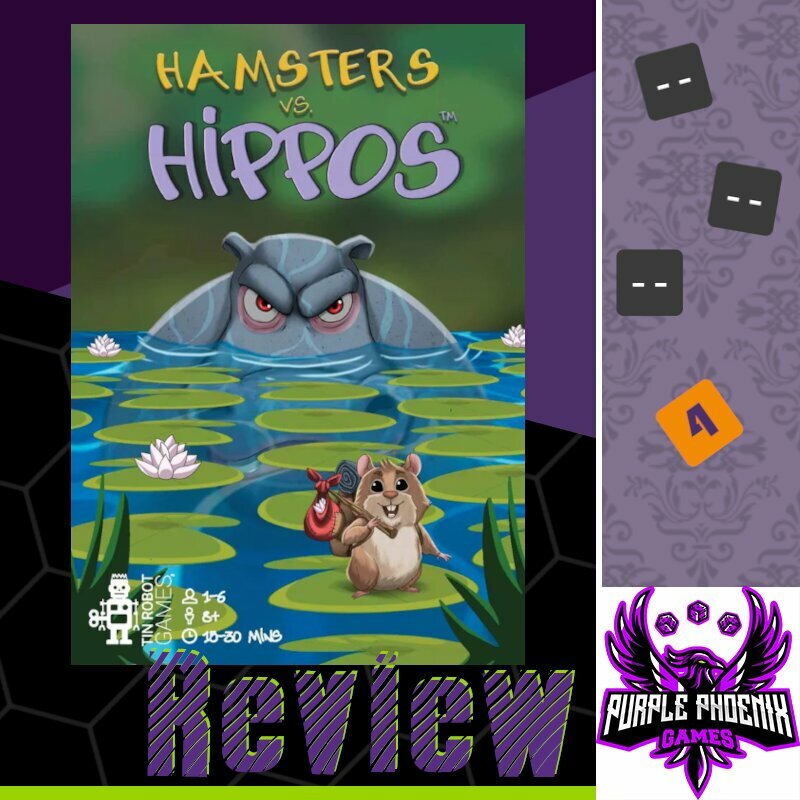
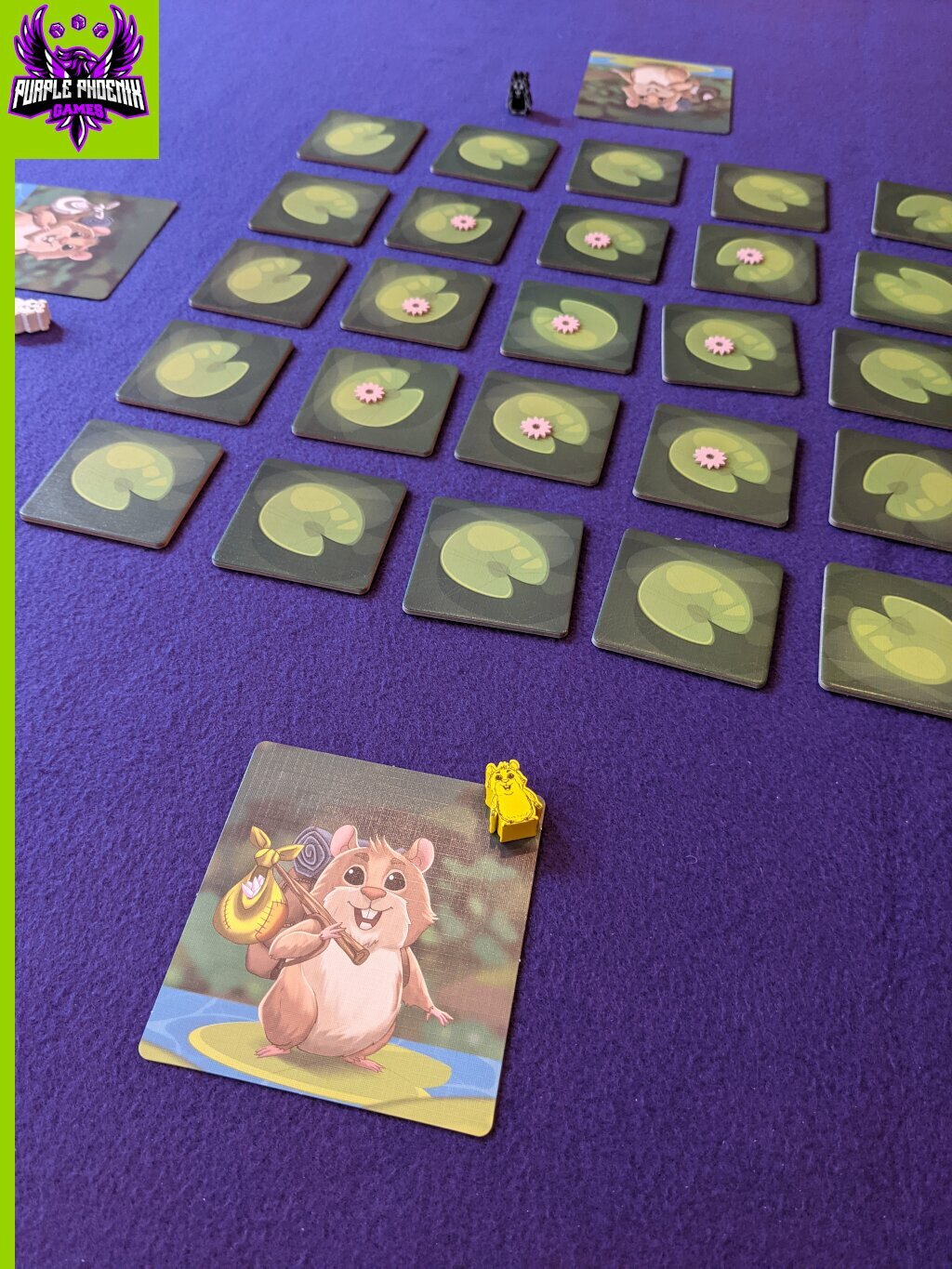
Hamsters vs. Hippos is a press-your-luck tile flipping game where players are cute little hamsterinos escaping the zoo and nearing freedom. However, along the way they must traverse the hippo enclosure. Typically hippos only eat grass, but in this game universe they are attracted to the delectable little rodents and are as hangry as my kids after a day at the playground. The hamster who can collect the most lotus flowers from the hippo lily pads at the end of the game will be the winner and be able to escape the zoo in peace. All other players will be snacked.
DISCLAIMER: We were provided a copy of this game for the purposes of this review. This is a retail copy of the game, so what you see in these photos is exactly what would be received in your box. I do not intend to cover every single rule included in the rulebook, but will describe the overall game flow and major rule set so that our readers may get a sense of how the game plays. For more in depth rules, you may purchase a copy online or from your FLGS. -T
To setup, determine the appropriate grid size for the number of players per the rulebook. Shuffle all the lily pad tiles face-down, place them in the grid, then place upon them nine lotus flower tokens. Each player will select their hamsteeple and mat and the game may now begin!
Hamsters vs. Hippos is played over four rounds and each turn players will have two actions they must complete. For the first action, each hamster must move onto the grid to explore a face-down tile, or explore another face-down tile if already on the grid. For the second action the hamster may continue exploring new tiles or be taken off the grid to score their collected lotus flowers. Movement can be orthogonally or diagonally, but every time they move, the hamsters must move to an unexplored tile. Flipping these tiles will reveal empty lily pads, some special actions to be taken, lotus flowers to be collected, or hippos that end the hamster’s round and makes the hamster forfeit their collected lotus flowers this round.
The game continues in this fashion over four rounds where hamsters are moving onto and off the grid, moving around the grid, collecting flowers, and possibly being eaten. At the end of the fourth round players total their lotus flowers they were able to keep and the hamster with the most lotus flowers wins!
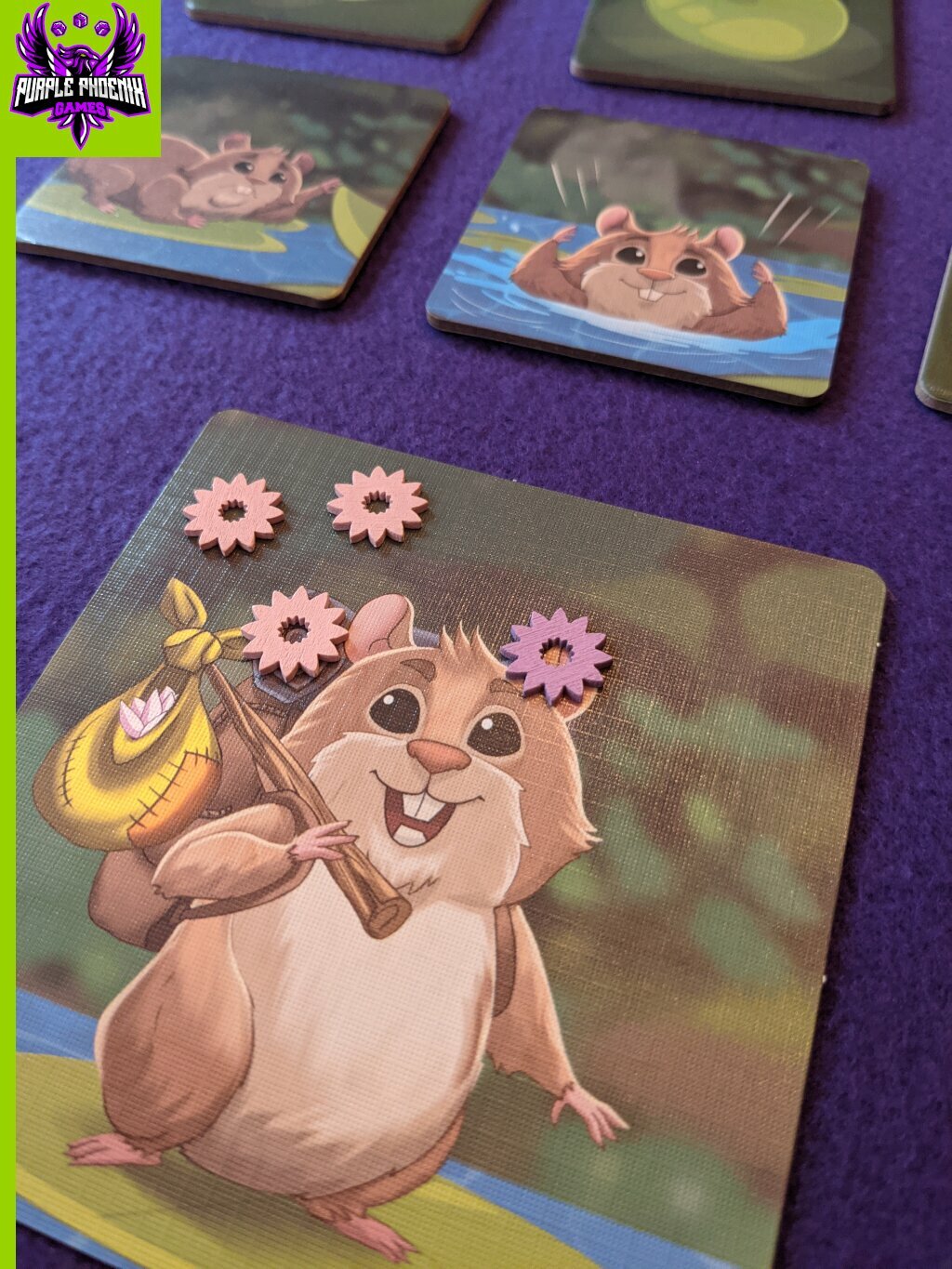
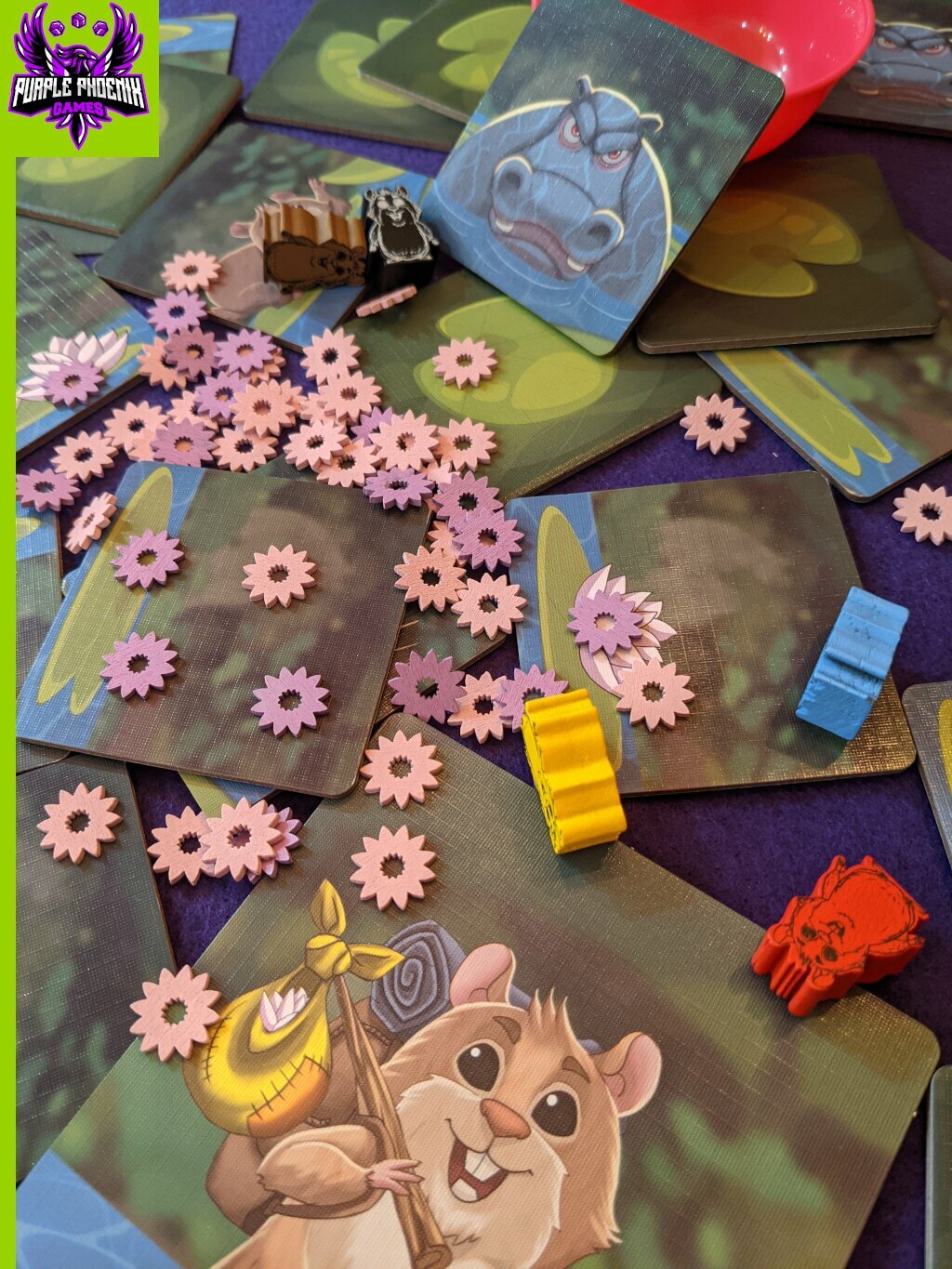
Components. This one is easy. This game is a bunch of lily pad tiles, some cardstock player mats, wooden lotus flower tokens, and cute little hamsteeples. The tiles are good quality, the player mats are big and nice, and the hamsteeples are precious. I enjoy the lighthearted art style quite a bit – even the angry-looking hippo tiles. My only issue lies with the lotus flower tokens. They are very thin painted wooden tokens in two colors – pastel pink (worth 1 VP)and slightly darker pastel purple (worth 3 VP). I am not colorblind, but I like to make mention of items I would think are not colorblind friendly. The difference in color is not great enough, even for me of acceptable color differentiation. Another thing about these is they are very thin and delicate. Normally this isn’t an issue for me, but this is clearly a game my children want to play. When they play this with me I am always holding my breath just waiting for them to break a lotus flower. It hasn’t happened yet, but I might see about adding sturdier components to my copy when I play with little ones.
Game play is very very light. This is purely a press-your-luck game of deciding to move to a tile, flipping it over, and hoping for the best. There are a few special action tiles that can help mitigate the luck factor a little, but most of the time it’s a leap before you look scenario. That may turn off a large faction of gamers, but I will be playing this primarily with my children (who are nowhere near the suggested age of 8+). I could have reviewed this under our Kids Table series, but it doesn’t seem to be marketed specifically to children. As a game for adults, this is novelty at best, but for children it’s a decent press-your-luck style game. Purple Phoenix Games gives this one a 4 / 6, but only because it works so well with kids. If I didn’t have children I couldn’t see myself playing it a whole lot at all. Consider this when you look at the amazing cover art and intriguing theme. It’s good for what it is, but will not be for all collections and play groups.
Hamsters vs. Hippos is a press-your-luck tile flipping game where players are cute little hamsterinos escaping the zoo and nearing freedom. However, along the way they must traverse the hippo enclosure. Typically hippos only eat grass, but in this game universe they are attracted to the delectable little rodents and are as hangry as my kids after a day at the playground. The hamster who can collect the most lotus flowers from the hippo lily pads at the end of the game will be the winner and be able to escape the zoo in peace. All other players will be snacked.
DISCLAIMER: We were provided a copy of this game for the purposes of this review. This is a retail copy of the game, so what you see in these photos is exactly what would be received in your box. I do not intend to cover every single rule included in the rulebook, but will describe the overall game flow and major rule set so that our readers may get a sense of how the game plays. For more in depth rules, you may purchase a copy online or from your FLGS. -T
To setup, determine the appropriate grid size for the number of players per the rulebook. Shuffle all the lily pad tiles face-down, place them in the grid, then place upon them nine lotus flower tokens. Each player will select their hamsteeple and mat and the game may now begin!
Hamsters vs. Hippos is played over four rounds and each turn players will have two actions they must complete. For the first action, each hamster must move onto the grid to explore a face-down tile, or explore another face-down tile if already on the grid. For the second action the hamster may continue exploring new tiles or be taken off the grid to score their collected lotus flowers. Movement can be orthogonally or diagonally, but every time they move, the hamsters must move to an unexplored tile. Flipping these tiles will reveal empty lily pads, some special actions to be taken, lotus flowers to be collected, or hippos that end the hamster’s round and makes the hamster forfeit their collected lotus flowers this round.
The game continues in this fashion over four rounds where hamsters are moving onto and off the grid, moving around the grid, collecting flowers, and possibly being eaten. At the end of the fourth round players total their lotus flowers they were able to keep and the hamster with the most lotus flowers wins!
Components. This one is easy. This game is a bunch of lily pad tiles, some cardstock player mats, wooden lotus flower tokens, and cute little hamsteeples. The tiles are good quality, the player mats are big and nice, and the hamsteeples are precious. I enjoy the lighthearted art style quite a bit – even the angry-looking hippo tiles. My only issue lies with the lotus flower tokens. They are very thin painted wooden tokens in two colors – pastel pink (worth 1 VP)and slightly darker pastel purple (worth 3 VP). I am not colorblind, but I like to make mention of items I would think are not colorblind friendly. The difference in color is not great enough, even for me of acceptable color differentiation. Another thing about these is they are very thin and delicate. Normally this isn’t an issue for me, but this is clearly a game my children want to play. When they play this with me I am always holding my breath just waiting for them to break a lotus flower. It hasn’t happened yet, but I might see about adding sturdier components to my copy when I play with little ones.
Game play is very very light. This is purely a press-your-luck game of deciding to move to a tile, flipping it over, and hoping for the best. There are a few special action tiles that can help mitigate the luck factor a little, but most of the time it’s a leap before you look scenario. That may turn off a large faction of gamers, but I will be playing this primarily with my children (who are nowhere near the suggested age of 8+). I could have reviewed this under our Kids Table series, but it doesn’t seem to be marketed specifically to children. As a game for adults, this is novelty at best, but for children it’s a decent press-your-luck style game. Purple Phoenix Games gives this one a 4 / 6, but only because it works so well with kids. If I didn’t have children I couldn’t see myself playing it a whole lot at all. Consider this when you look at the amazing cover art and intriguing theme. It’s good for what it is, but will not be for all collections and play groups.
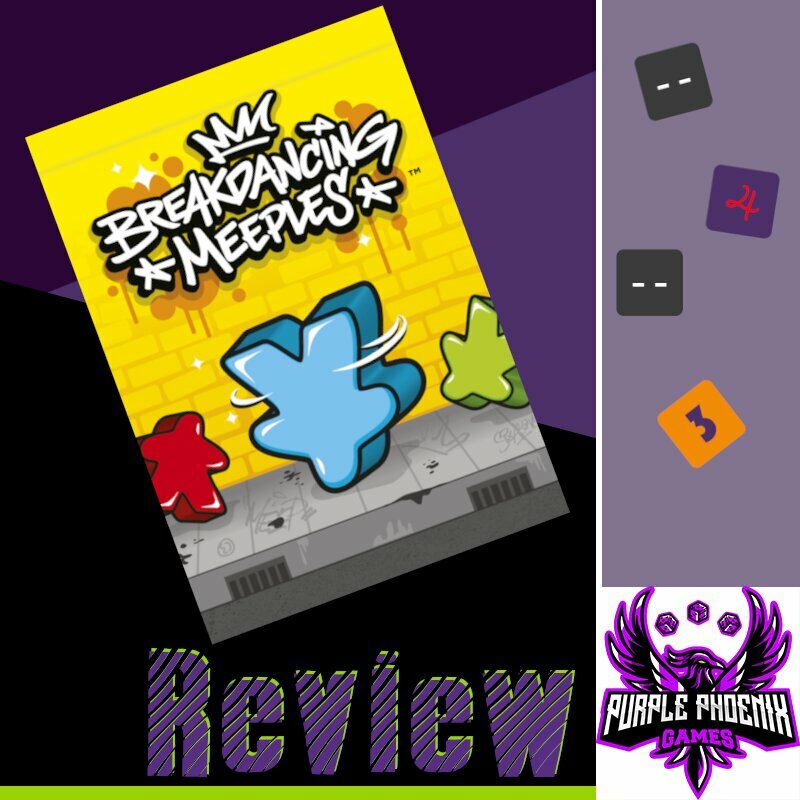
Purple Phoenix Games (2266 KP) rated Breakdancing Meeples in Tabletop Games
Oct 18, 2021
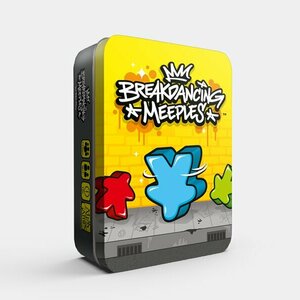
I think that I’ve mentioned in some of my previous reviews that I rarely buy games without first having played and/or researched them beforehand. Enter Breakdancing Meeples. One fine day, I was perusing the fine stock at my FLGS. While I was wandering and debating whether I should buy Reef or 7 Wonders Duel, my gaze fell upon a small tin with some funny artwork – a game titled Breakdancing Meeples. It was a small and fairly inexpensive game, so I figured, why not? I picked it up (along with 7 Wonders Duel this time) and brought it home to my collection. Was my faith misplaced, or does the game deliver on its first impression of simple fun? Keep reading to find out.
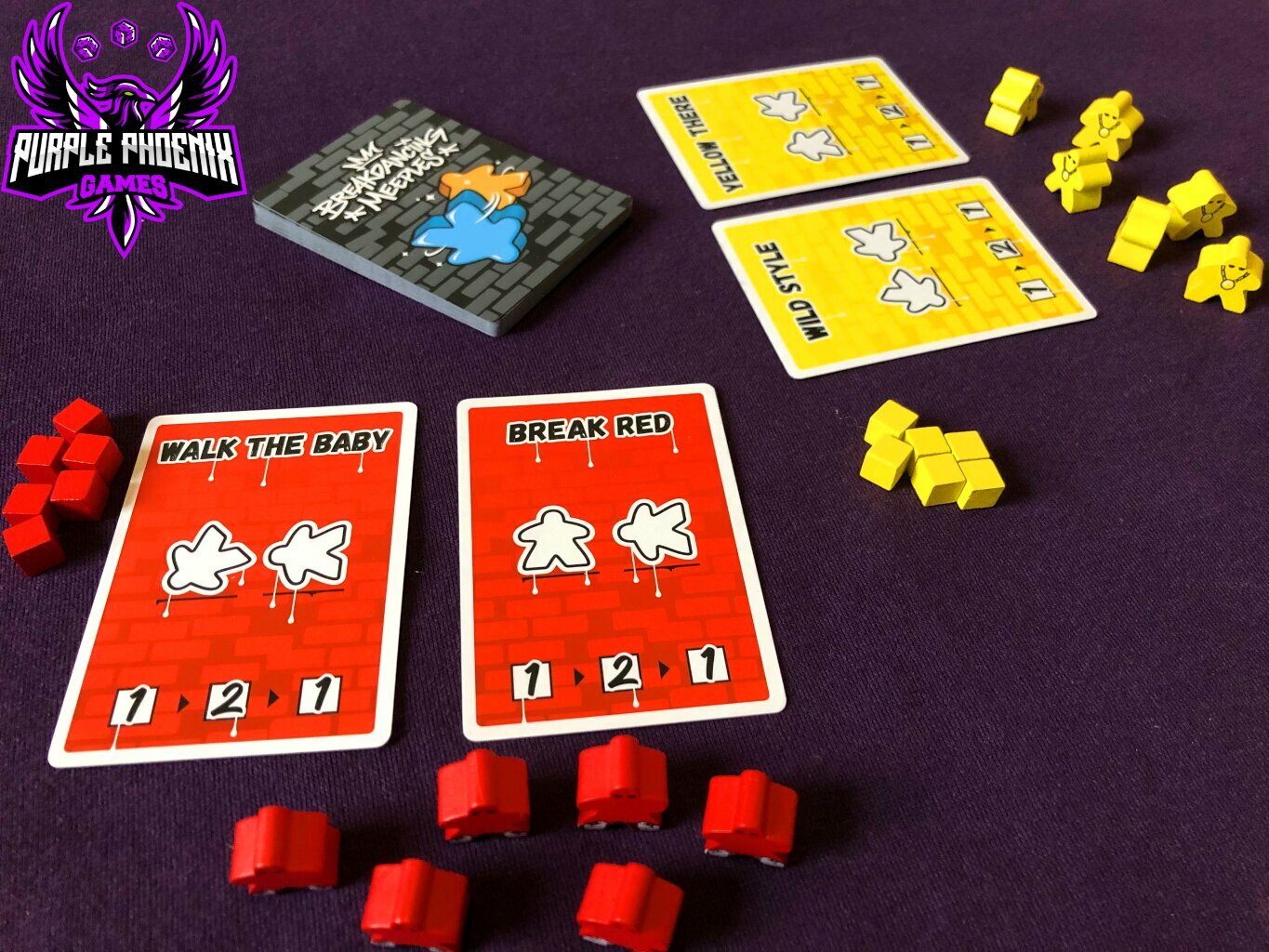
Breakdancing Meeples is a real-time game in which players are trying to amass the most Crowd Appeal (VP) by directing their dance crews to perform the baddest and most impressive dance routines of all time. To setup the game, give each player 6 Meeples, 6 cubes, and their starting Routine cards in their chosen color. Shuffle the remaining Routine cards to form a draw pile, open up the Breakdancing Meeples app (or just get a one-minute timer ready) and the dance battle is set to begin!
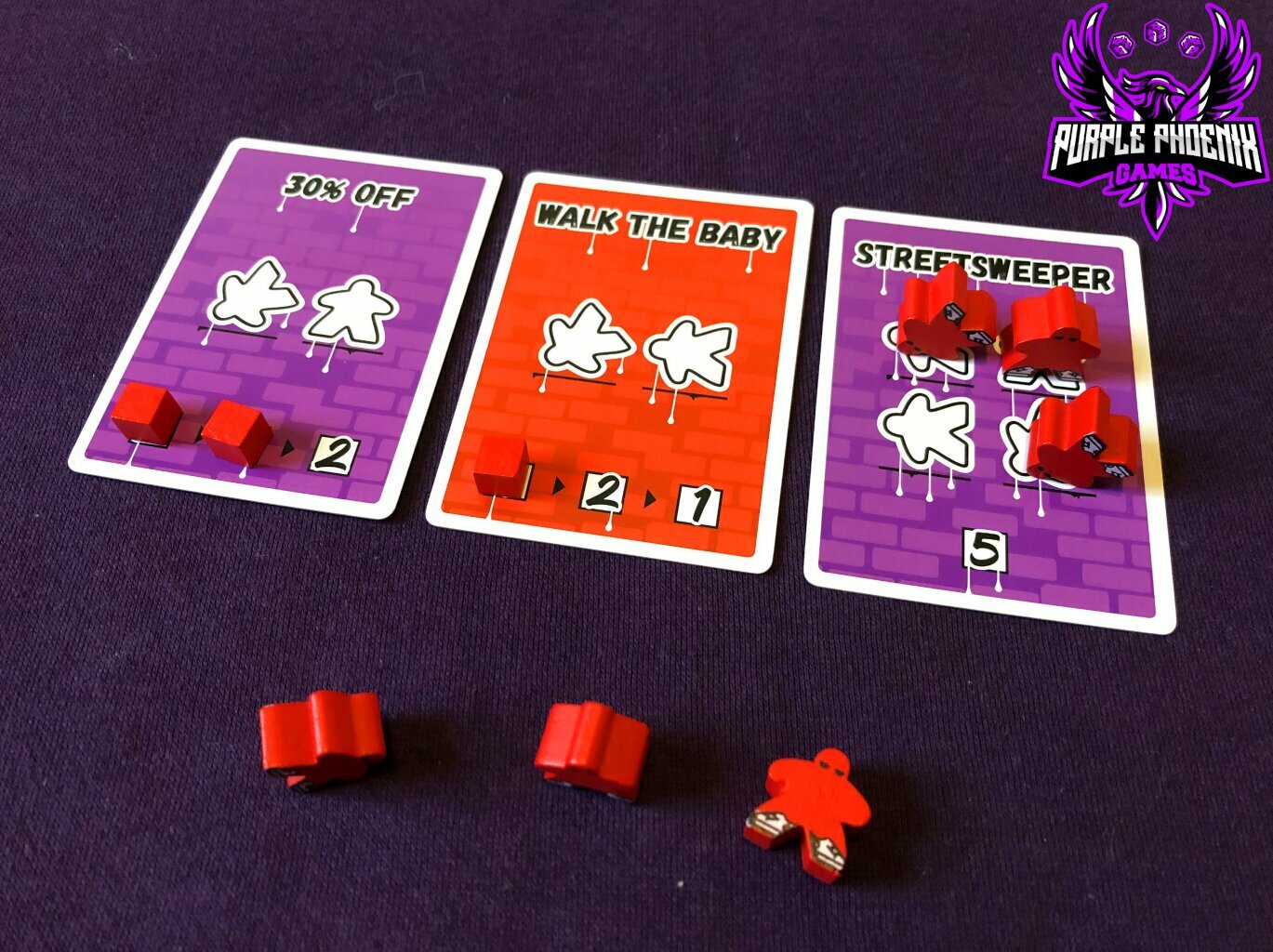
Each round is broken into two phases – Dance Off, and Remix. In the Dance Off, players will have one minute to roll their Meeples (yes, you read that correctly – rolling Meeples) to complete as their crew’s Routines as many times as they can to earn Crowd Appeal. When rolling Meeples, there are 4 stances in which the Meeples can land: Feet, Side, Head, or Back. These positions correspond to stances on your Routine cards. If you roll a Meeple in a stance that matches one on your card, you may place that Meeple on that card, moving you closer to completing that Routine. Once all stances have been filled on a Routine, you earn a Crowd Appeal cube, placing it on the leftmost available square at the bottom of that Routine card. You may then pick up all the Meeples from that card, and they are back in play. It is important to note that once a Meeple has been placed on a Routine, it may not be removed until the Routine is finished! If you are unable, or unwilling, to place a Meeple on a Routine card, you may reroll any unused Meeples. Continue rolling and placing your Meeples in this fashion until the one-minute timer runs out. When time has been called, all players will count up their Crowd Appeal – the points listed at the bottom of their Routine cards that are covered by cubes, signifying a successful rep of that Routine. The Dance Off phase is now over.
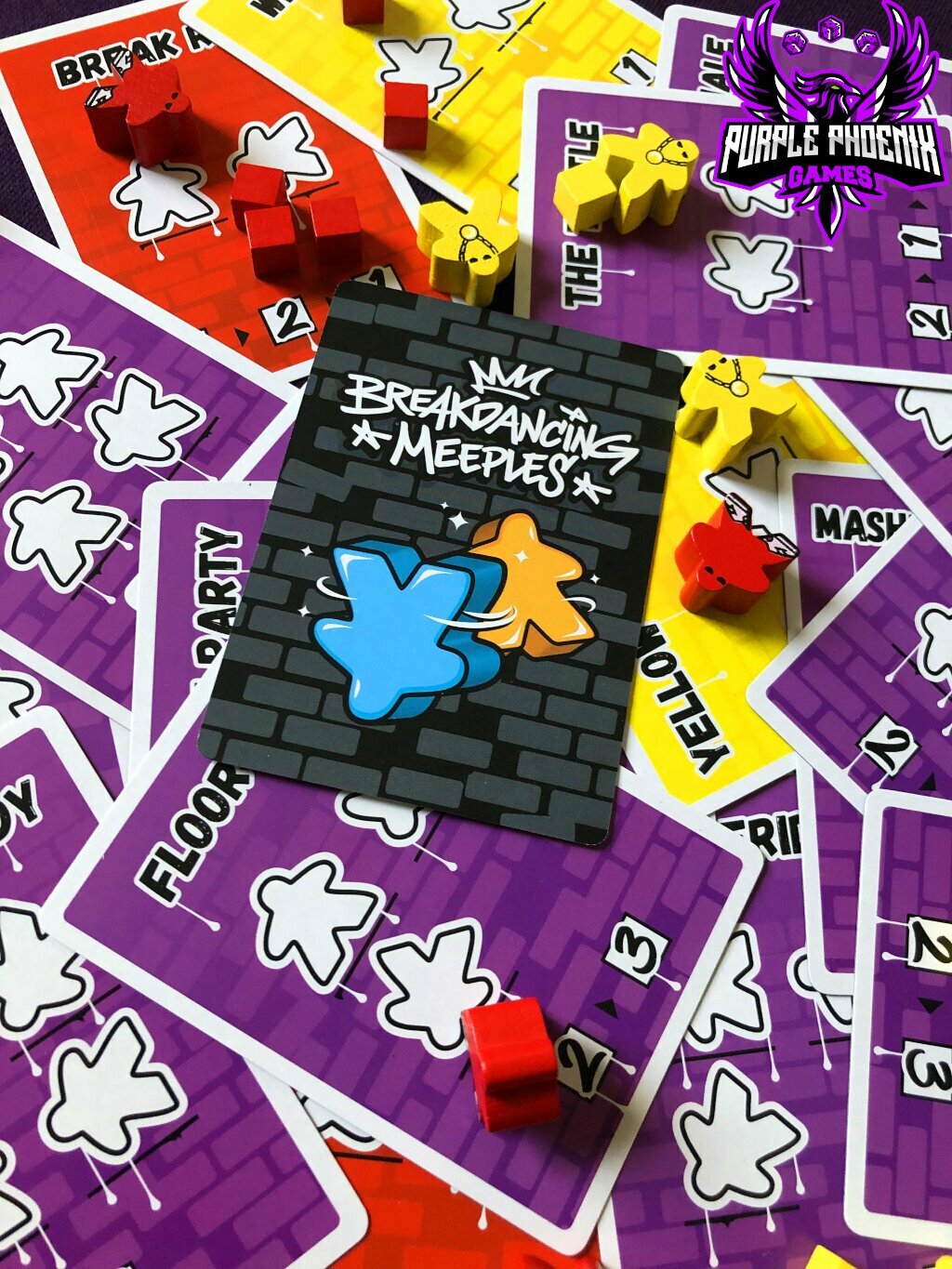
Now comes the Remix phase. Reveal as many face-up cards from the Draw deck as there are players plus one. Beginning with the player who has the lowest Crowd Appeal, players will take turns selecting a new Routine card to add to their repertoire for the next round. Players may only ever have 3 Routine cards, so in future rounds, players can choose to discard from their play area in favor of a new card. A new round now begins with another Dance Off, and continues as above until the fourth Dance Off has been completed. Players then tally their total Crowd Appeal, and the player with the highest score is the winner! Dare I say, the Dancing Queen? No? Ok…
With a fun theme and simple gameplay, does Breakdancing Meeples hold up? I would have to say yes. First let’s talk about the simplicity of gameplay. All you have to do is roll Meeples and match stances to cards. It may not sound exciting when stated that way, but add in the one-minute timer and suddenly you’ve got a more engaging and action-based game. Throw the Meeples into the mix (literally, in this game) and their disproportionate limbs and unique silhouettes provide an extra challenge in getting them to roll and land exactly as you want them to.
Another neat element of this game is the addition of Rally and Special cards to the Draw deck. Rally cards are purchased (with Crowd Appeal) in the Remix phase, and are then attached to one of your existing Routines. In the next Dance Off, when rolling your Meeples, Rally cards can provide extra Crowd Appeal points once their conditions have been met. These cards may cost some end-game points, but they could earn you much more if the conditions are right. It’s a risk, and adds some suspense to the gameplay. Special cards grant the player a ‘wild’ dancer. If you roll 2 Meeples in the same stance, you may exchange them to a single dancer in your chosen stance. Rally and Special cards can be removed from the game for a more simple gameplay, if playing with younger players for example, but add in an extra twist to the chaos of the real-time limitations.
Is Breakdancing Meeples my favorite game? Nope. But it’s a cute, fun, and fast little game that I can see myself pulling out often as a filler, or even a game to introduce newer gamers to the hobby. It is lighthearted in nature, with a unique theme, and it just is fun to play. I am glad that I bought this game on a whim, and I definitely will be keeping it in my collection. With that said, Purple Phoenix Games gives it a hoppin’ 7 / 12. Check it out, you might be surprised!
Breakdancing Meeples is a real-time game in which players are trying to amass the most Crowd Appeal (VP) by directing their dance crews to perform the baddest and most impressive dance routines of all time. To setup the game, give each player 6 Meeples, 6 cubes, and their starting Routine cards in their chosen color. Shuffle the remaining Routine cards to form a draw pile, open up the Breakdancing Meeples app (or just get a one-minute timer ready) and the dance battle is set to begin!
Each round is broken into two phases – Dance Off, and Remix. In the Dance Off, players will have one minute to roll their Meeples (yes, you read that correctly – rolling Meeples) to complete as their crew’s Routines as many times as they can to earn Crowd Appeal. When rolling Meeples, there are 4 stances in which the Meeples can land: Feet, Side, Head, or Back. These positions correspond to stances on your Routine cards. If you roll a Meeple in a stance that matches one on your card, you may place that Meeple on that card, moving you closer to completing that Routine. Once all stances have been filled on a Routine, you earn a Crowd Appeal cube, placing it on the leftmost available square at the bottom of that Routine card. You may then pick up all the Meeples from that card, and they are back in play. It is important to note that once a Meeple has been placed on a Routine, it may not be removed until the Routine is finished! If you are unable, or unwilling, to place a Meeple on a Routine card, you may reroll any unused Meeples. Continue rolling and placing your Meeples in this fashion until the one-minute timer runs out. When time has been called, all players will count up their Crowd Appeal – the points listed at the bottom of their Routine cards that are covered by cubes, signifying a successful rep of that Routine. The Dance Off phase is now over.
Now comes the Remix phase. Reveal as many face-up cards from the Draw deck as there are players plus one. Beginning with the player who has the lowest Crowd Appeal, players will take turns selecting a new Routine card to add to their repertoire for the next round. Players may only ever have 3 Routine cards, so in future rounds, players can choose to discard from their play area in favor of a new card. A new round now begins with another Dance Off, and continues as above until the fourth Dance Off has been completed. Players then tally their total Crowd Appeal, and the player with the highest score is the winner! Dare I say, the Dancing Queen? No? Ok…
With a fun theme and simple gameplay, does Breakdancing Meeples hold up? I would have to say yes. First let’s talk about the simplicity of gameplay. All you have to do is roll Meeples and match stances to cards. It may not sound exciting when stated that way, but add in the one-minute timer and suddenly you’ve got a more engaging and action-based game. Throw the Meeples into the mix (literally, in this game) and their disproportionate limbs and unique silhouettes provide an extra challenge in getting them to roll and land exactly as you want them to.
Another neat element of this game is the addition of Rally and Special cards to the Draw deck. Rally cards are purchased (with Crowd Appeal) in the Remix phase, and are then attached to one of your existing Routines. In the next Dance Off, when rolling your Meeples, Rally cards can provide extra Crowd Appeal points once their conditions have been met. These cards may cost some end-game points, but they could earn you much more if the conditions are right. It’s a risk, and adds some suspense to the gameplay. Special cards grant the player a ‘wild’ dancer. If you roll 2 Meeples in the same stance, you may exchange them to a single dancer in your chosen stance. Rally and Special cards can be removed from the game for a more simple gameplay, if playing with younger players for example, but add in an extra twist to the chaos of the real-time limitations.
Is Breakdancing Meeples my favorite game? Nope. But it’s a cute, fun, and fast little game that I can see myself pulling out often as a filler, or even a game to introduce newer gamers to the hobby. It is lighthearted in nature, with a unique theme, and it just is fun to play. I am glad that I bought this game on a whim, and I definitely will be keeping it in my collection. With that said, Purple Phoenix Games gives it a hoppin’ 7 / 12. Check it out, you might be surprised!
Purple Phoenix Games (2266 KP) rated King of the Castle in Tabletop Games
Jul 2, 2020
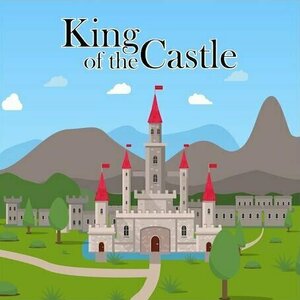

The King is dead! As the kingdom reels from this sudden turn of events, those eager for power see their opportunity to pounce. Amassing personal armies, the war for the throne begins! Storm the castle, collect potions, capture towers, and conquer your opponents to claim the throne for yourself. Which tactic will lead to success – brute strength or sly strategy? Only one way to find out!
Disclaimer: We were provided a prototype copy of this game for the purposes of this preview. The components pictured are not final. Also, I do not plan to detail the entire rulebook in this review, but rather discuss the main rules and overall flow of the game. Keep an eye out for the Kickstarter launching later this fall! -L
King of the Castle is a game of hand management, grid movement, and take that in which players are battling to be the first to capture and hold the throne. Played over a series of turns, players will move around the board, draw cards, and battle opponents to hinder their progress. To setup, each player is given a Character card at random, selects a Meeple in their chosen color, and places it on one of the various Start spaces on the game board. Shuffle all other cards and place them in a draw deck. Select a player to be the first player, and you are ready to begin!
On your turn, you will take a combination of 2 actions. Those combos are: Move 1 space and draw 1 card, Move 2 spaces, or Draw 2 cards. It is important to note that diagonal movement is not allowed! There are 2 types of cards that can be drawn: Potion cards (special powers/abilities) and Army cards (strength points for duels). Once you have performed your 2 actions, and played any Potion cards from your hand that you want, your turn ends. The game moves on to the next player. If you land on the same space as an opponent, you must duel each other. The dueling players will select as many Army cards from their hand as they wish to play, and will lay them down simultaneously. They may then play up to 3 Potion cards from their hand to influence the strength points of either player, as stated on the Potion cards. Whomever has the most strength points wins the duel, and gets to remain on that space. The loser must discard a card, and is knocked back to the nearest Exit space (depending on their current placement on the board).
In the center of the board are 2 Tower spaces. You must ‘capture’ a Tower in order to fulfill the win conditions. To capture a Tower, you must land on that space and occupy it for one full turn. Once you have captured a Tower, you may move to capture the Throne. The centermost space of the board is the Throne. To capture the Throne, you must first have captured a Tower, and you must enter the Throne space and occupy it for 3 complete and consecutive turns. When you are capturing a Tower or the Throne, you can still be attacked by opponents – so it is important to have a strong hand of cards to ward off enemies and continue your occupation of these valuable spaces. Once a player has occupied the Throne space for 3 consecutive turns, the game ends and that player is named King!
So with all of that said, how does King of the Castle play? Overall, I would say it’s a nice and simple little game. The concept itself is easy to comprehend – draw cards, duel opponents, capture a Tower, and ultimately, the Throne. There is a decent amount of strategy required for success. Not only are you racing to the center of the board, but you also need to amass a strong hand of cards with which you can hinder your opponents. Choosing when to use your Potion cards can affect not only your strategy, but those of your enemies as well. Is your strategy to skirt around your opponents and try to sneak by unnoticed? Or will you duel enemies at every opportunity, building up your Army and continually kicking the other players to the Exit spaces on the board? The idea of having to ‘capture’ certain spaces by occupying them for consecutive turns is an interesting one, and adds a unique twist to this game. You must be able to defend yourself in those spaces, or risk being kicked back to an Exit, requiring you to start that journey over again. It is a simple game to play, but not necessarily one that is easy to win, and I really like that.
Components. As I stated earlier, this is only a prototype version of the game, and I anticipate that there will be some changes for final production. That being said, the board in this prototype is nice and sturdy, the cards are easy to manipulate, and the Meeples are your standard wooden bits. So overall, these prototype components are off to a great start. The artwork and overall style of the game are a different story. The current artwork is pretty childish and unrefined. Again, this being only a prototype, I anticipate that the artwork will be overhauled and revised for final production. The artwork on the board is pretty basic as well, which is not necessarily a bad thing, it just doesn’t feel immersive or engaging for players. The spaces of the board are different colors to denote different areas of play, but nothing is labeled on the board, which can create some confusion at first as to the flow of movement around the board. The rules themselves need to be revised and edited for clarity. There is just a bit of ambiguity that leaves questions unanswered, but nothing that cannot be fixed.
All in all, the concept of King of the Castle is a solid one. It combines hand management, grid movement, and take that in a way that all 3 mechanics complement and work well with each other. The gameplay is lighthearted and relatively simple, which results in a fun and fast game. With some refining of the style and editing of the rules, I am sure that this game will truly shine. I look forward to following its progress, and am eager to see the Kickstarter campaign later this year. Keep your eyes on King of the Castle, because it’s shaping up to be a solid game.
Disclaimer: We were provided a prototype copy of this game for the purposes of this preview. The components pictured are not final. Also, I do not plan to detail the entire rulebook in this review, but rather discuss the main rules and overall flow of the game. Keep an eye out for the Kickstarter launching later this fall! -L
King of the Castle is a game of hand management, grid movement, and take that in which players are battling to be the first to capture and hold the throne. Played over a series of turns, players will move around the board, draw cards, and battle opponents to hinder their progress. To setup, each player is given a Character card at random, selects a Meeple in their chosen color, and places it on one of the various Start spaces on the game board. Shuffle all other cards and place them in a draw deck. Select a player to be the first player, and you are ready to begin!
On your turn, you will take a combination of 2 actions. Those combos are: Move 1 space and draw 1 card, Move 2 spaces, or Draw 2 cards. It is important to note that diagonal movement is not allowed! There are 2 types of cards that can be drawn: Potion cards (special powers/abilities) and Army cards (strength points for duels). Once you have performed your 2 actions, and played any Potion cards from your hand that you want, your turn ends. The game moves on to the next player. If you land on the same space as an opponent, you must duel each other. The dueling players will select as many Army cards from their hand as they wish to play, and will lay them down simultaneously. They may then play up to 3 Potion cards from their hand to influence the strength points of either player, as stated on the Potion cards. Whomever has the most strength points wins the duel, and gets to remain on that space. The loser must discard a card, and is knocked back to the nearest Exit space (depending on their current placement on the board).
In the center of the board are 2 Tower spaces. You must ‘capture’ a Tower in order to fulfill the win conditions. To capture a Tower, you must land on that space and occupy it for one full turn. Once you have captured a Tower, you may move to capture the Throne. The centermost space of the board is the Throne. To capture the Throne, you must first have captured a Tower, and you must enter the Throne space and occupy it for 3 complete and consecutive turns. When you are capturing a Tower or the Throne, you can still be attacked by opponents – so it is important to have a strong hand of cards to ward off enemies and continue your occupation of these valuable spaces. Once a player has occupied the Throne space for 3 consecutive turns, the game ends and that player is named King!
So with all of that said, how does King of the Castle play? Overall, I would say it’s a nice and simple little game. The concept itself is easy to comprehend – draw cards, duel opponents, capture a Tower, and ultimately, the Throne. There is a decent amount of strategy required for success. Not only are you racing to the center of the board, but you also need to amass a strong hand of cards with which you can hinder your opponents. Choosing when to use your Potion cards can affect not only your strategy, but those of your enemies as well. Is your strategy to skirt around your opponents and try to sneak by unnoticed? Or will you duel enemies at every opportunity, building up your Army and continually kicking the other players to the Exit spaces on the board? The idea of having to ‘capture’ certain spaces by occupying them for consecutive turns is an interesting one, and adds a unique twist to this game. You must be able to defend yourself in those spaces, or risk being kicked back to an Exit, requiring you to start that journey over again. It is a simple game to play, but not necessarily one that is easy to win, and I really like that.
Components. As I stated earlier, this is only a prototype version of the game, and I anticipate that there will be some changes for final production. That being said, the board in this prototype is nice and sturdy, the cards are easy to manipulate, and the Meeples are your standard wooden bits. So overall, these prototype components are off to a great start. The artwork and overall style of the game are a different story. The current artwork is pretty childish and unrefined. Again, this being only a prototype, I anticipate that the artwork will be overhauled and revised for final production. The artwork on the board is pretty basic as well, which is not necessarily a bad thing, it just doesn’t feel immersive or engaging for players. The spaces of the board are different colors to denote different areas of play, but nothing is labeled on the board, which can create some confusion at first as to the flow of movement around the board. The rules themselves need to be revised and edited for clarity. There is just a bit of ambiguity that leaves questions unanswered, but nothing that cannot be fixed.
All in all, the concept of King of the Castle is a solid one. It combines hand management, grid movement, and take that in a way that all 3 mechanics complement and work well with each other. The gameplay is lighthearted and relatively simple, which results in a fun and fast game. With some refining of the style and editing of the rules, I am sure that this game will truly shine. I look forward to following its progress, and am eager to see the Kickstarter campaign later this year. Keep your eyes on King of the Castle, because it’s shaping up to be a solid game.
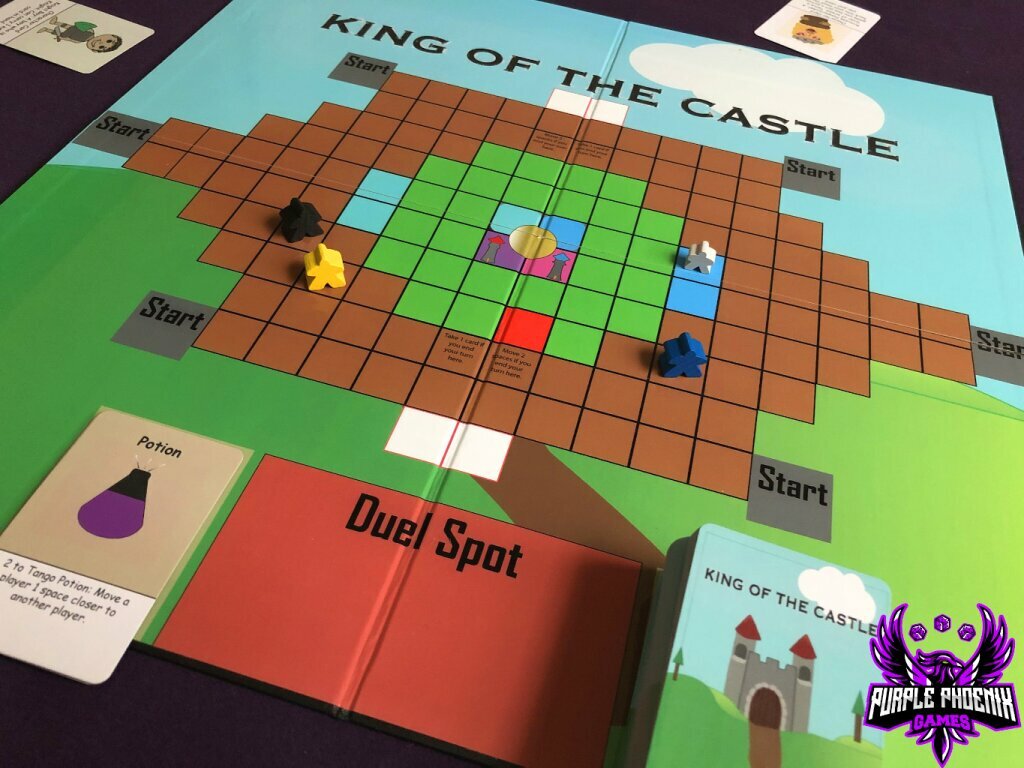
Purple Phoenix Games (2266 KP) rated Dungeon Drop in Tabletop Games
Feb 15, 2022
Replayability is always something I consider when deciding whether or not to purchase a game. And as much as I like Unlock! puzzles or Exit games, the fact that they are a one-and-done play is a bummer. So when I was perusing the game store and saw a game that boasted essentially infinite possibilities, I was intrigued. The box was small, the artwork was cute, and the gameplay sounded unique, so I bought it. Is Dungeon Drop really infinitely replayable? Keep reading to decide for yourself.
Dungeon Drop is a game of set collection, area enclosure, and dexterity (to a degree) in which players take on the roles of dungeon-delving adventurers trying to gather treasure, defeat monsters, and complete quests. To setup for a game, each player is randomly dealt a Race card and a Class card – each with a special ability for use during the game. Turn Order tokens are distributed based on the Initiative on your Race card, starting with the lowest number. All players are dealt a Quest card that will dictate some end-game scoring for the player, and Quests are kept secret from opponents. Now it’s time to setup the dungeon. Separate all the Small cubes from the Larger ones – purely based on size, the color of the cube does not matter. All the Larger cubes are placed into the game box, for use later. The starting player will gather all of the Small cubes (plus the giant Dragon cube) and literally drop them onto the center of the table. The rulebook suggests dropping the cubes from a height of 6-12 inches, to ensure the cubes spread evenly across the table. And bam – there’s your dungeon.
The game is played over 3 rounds during which each player will take a turn. Turns are broken down into 3 steps: Explore, Act, and Loot. To Explore, the active player will take a set number of the Larger cubes from the game box (at random, without looking), and will add them to the dungeon by dropping them onto the table. The next step is to Act. Each Race and Class card has a special ability, and during this step you will choose to activate one of those abilities to use this turn. The final step is Loot, and this is where the crux of the gameplay is. The cubes of the dungeon consist of Treasure cubes, Monster cubes, and Pillar cubes. Pillar cubes are what form the ‘rooms’ of the dungeon. When it is your time to Loot, you will form a room by selecting 3 Pillar cubes. These cubes will essentially form a triangle, and the inside area of that triangle represents the room in which you are in. Once you form a room, you will collect all cubes from within that space – whether they be Treasure or Monster cubes. Treasure cubes go into your Stash and are saved for end-game scoring, and Monster cubes will deal Damage to your Hero. All Heroes have a finite amount of Health, and you can never collect a Monster cube that would cause you to lose your last Health point.
When you are done Looting, flip over your Turn Order token to indicate that your turn is done. When all players have completed their turns in the round, Turn Order tokens are redistributed based on Weight – the number of Treasure cubes each player possesses. The player with the least Treasure is considered the ‘lightest’ and receives the 1st Turn Order token for the new round, and the rest are distributed likewise. A new round will then begin, and the game continues until 3 complete rounds have been played. At that point, players will add up their points earned from Treasure cubes and their secret Quests. The player with the highest score is declared the winner!
In theory, this game is really awesome. Players can create unique rooms by selecting specific Pillars, and collect different combinations of cubes each turn. AND since each player drops more cubes into play each turn, the dungeon is constantly changing, with new cubes, and because the cubes may knock others around. In actual practice, though, this game is kind of frustrating to me. For starters, when dropping all the Small cubes to form the initial dungeon, be prepared for them to go everywhere. The rules say to drop from 6-12 inches, but that means that you’re going to get quite a huge play area going on. And for me, that means cubes flying off the table, knocking into player components, and just wreaking havoc in general. Phase Shift Games does sell a set of Dungeon Walls for use during this game – to help define the play area and keep the cubes from going rogue – but I just wonder why they aren’t included in every copy of the base game.
Another problem I have had in my plays of Dungeon Drop is that the layout of the dungeon is usually very limiting. For some reason, all my Pillar cubes will end up clumped together and severely affects what you can do on your turn. Yes, more cubes are being added by each player every turn, but the Pillars are what you use to create rooms – if they’re all too close together, you get small rooms, or basically all Treasure lays outside of any possible room configurations. The solution that I’ve come up with for this issue is to drop all Treasure and Monster cubes as described in the rules, but then ‘sprinkle’ the Pillar cubes across the play area. It just helps even things out and create a bigger playing field.
When it comes to components, I have to say that Dungeon Drop is pretty nice. The cards are oversized, sturdy, and easy to read. The artwork itself is cute and I just enjoy looking at it! The cubes are nice and chunky, and easily identifiable as to what type of cube they are. Again, I wish the Dungeon Walls were included in the base game, instead of being an up-sell, but overall the production quality of the game itself is pretty decent.
You can probably tell by my comments that I’m not really a huge fan of this game. The concept is cool, but in all actuality, it’s what makes this game frustrating for me. This game isn’t supposed to be a super serious game, and is supposed to be more lighthearted and silly. I think it hits the mark in that regard, but overall as a complete game, it falls a little flat for me. I might pull this one out if I need a filler/small party-type game during a game night, but it’s one that probably won’t be making it to my table too often. I wanted to like this game so badly, but it just doesn’t quite reach that level for me. Purple Phoenix Games gives this one a stagnant 3 / 6.
Dungeon Drop is a game of set collection, area enclosure, and dexterity (to a degree) in which players take on the roles of dungeon-delving adventurers trying to gather treasure, defeat monsters, and complete quests. To setup for a game, each player is randomly dealt a Race card and a Class card – each with a special ability for use during the game. Turn Order tokens are distributed based on the Initiative on your Race card, starting with the lowest number. All players are dealt a Quest card that will dictate some end-game scoring for the player, and Quests are kept secret from opponents. Now it’s time to setup the dungeon. Separate all the Small cubes from the Larger ones – purely based on size, the color of the cube does not matter. All the Larger cubes are placed into the game box, for use later. The starting player will gather all of the Small cubes (plus the giant Dragon cube) and literally drop them onto the center of the table. The rulebook suggests dropping the cubes from a height of 6-12 inches, to ensure the cubes spread evenly across the table. And bam – there’s your dungeon.
The game is played over 3 rounds during which each player will take a turn. Turns are broken down into 3 steps: Explore, Act, and Loot. To Explore, the active player will take a set number of the Larger cubes from the game box (at random, without looking), and will add them to the dungeon by dropping them onto the table. The next step is to Act. Each Race and Class card has a special ability, and during this step you will choose to activate one of those abilities to use this turn. The final step is Loot, and this is where the crux of the gameplay is. The cubes of the dungeon consist of Treasure cubes, Monster cubes, and Pillar cubes. Pillar cubes are what form the ‘rooms’ of the dungeon. When it is your time to Loot, you will form a room by selecting 3 Pillar cubes. These cubes will essentially form a triangle, and the inside area of that triangle represents the room in which you are in. Once you form a room, you will collect all cubes from within that space – whether they be Treasure or Monster cubes. Treasure cubes go into your Stash and are saved for end-game scoring, and Monster cubes will deal Damage to your Hero. All Heroes have a finite amount of Health, and you can never collect a Monster cube that would cause you to lose your last Health point.
When you are done Looting, flip over your Turn Order token to indicate that your turn is done. When all players have completed their turns in the round, Turn Order tokens are redistributed based on Weight – the number of Treasure cubes each player possesses. The player with the least Treasure is considered the ‘lightest’ and receives the 1st Turn Order token for the new round, and the rest are distributed likewise. A new round will then begin, and the game continues until 3 complete rounds have been played. At that point, players will add up their points earned from Treasure cubes and their secret Quests. The player with the highest score is declared the winner!
In theory, this game is really awesome. Players can create unique rooms by selecting specific Pillars, and collect different combinations of cubes each turn. AND since each player drops more cubes into play each turn, the dungeon is constantly changing, with new cubes, and because the cubes may knock others around. In actual practice, though, this game is kind of frustrating to me. For starters, when dropping all the Small cubes to form the initial dungeon, be prepared for them to go everywhere. The rules say to drop from 6-12 inches, but that means that you’re going to get quite a huge play area going on. And for me, that means cubes flying off the table, knocking into player components, and just wreaking havoc in general. Phase Shift Games does sell a set of Dungeon Walls for use during this game – to help define the play area and keep the cubes from going rogue – but I just wonder why they aren’t included in every copy of the base game.
Another problem I have had in my plays of Dungeon Drop is that the layout of the dungeon is usually very limiting. For some reason, all my Pillar cubes will end up clumped together and severely affects what you can do on your turn. Yes, more cubes are being added by each player every turn, but the Pillars are what you use to create rooms – if they’re all too close together, you get small rooms, or basically all Treasure lays outside of any possible room configurations. The solution that I’ve come up with for this issue is to drop all Treasure and Monster cubes as described in the rules, but then ‘sprinkle’ the Pillar cubes across the play area. It just helps even things out and create a bigger playing field.
When it comes to components, I have to say that Dungeon Drop is pretty nice. The cards are oversized, sturdy, and easy to read. The artwork itself is cute and I just enjoy looking at it! The cubes are nice and chunky, and easily identifiable as to what type of cube they are. Again, I wish the Dungeon Walls were included in the base game, instead of being an up-sell, but overall the production quality of the game itself is pretty decent.
You can probably tell by my comments that I’m not really a huge fan of this game. The concept is cool, but in all actuality, it’s what makes this game frustrating for me. This game isn’t supposed to be a super serious game, and is supposed to be more lighthearted and silly. I think it hits the mark in that regard, but overall as a complete game, it falls a little flat for me. I might pull this one out if I need a filler/small party-type game during a game night, but it’s one that probably won’t be making it to my table too often. I wanted to like this game so badly, but it just doesn’t quite reach that level for me. Purple Phoenix Games gives this one a stagnant 3 / 6.