

Hazel (2934 KP) rated A Link To Kill (Hawthorne & Horowitz Mystery #3) in Books
Aug 29, 2021
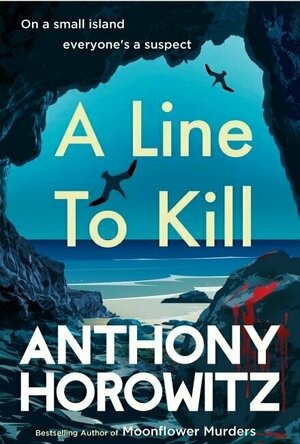
I have never read a book where the author puts himself as one of the main characters in a book but here he is joining up with an ex-Detective Inspector Hawthorne and, I must say, it really worked for me. Mr Horowitz doesn't take himself too seriously and he comes across as a Dr Watson-type character to Hawthorne's Sherlock Holmes - which, let's face it, isn't a bad thing at all. How much the fictional Horowitz is like the real Horowitz, I don't know but I like him!
Anyway, Horowitz and Hawthorne have been invited to take part in a literary festival on the island of Alderney. A murder ensues and Hawthorne is asked to assist the local constabulary to investigate with Horowitz in tow. The relationship between the two is a complex one ... do they really like each other or do they just tolerate each other for the purposes of writing books? I am still working that one out but I am liking it.
This is a proper old-style mystery with a cast of excellent characters many of whom have their own secrets which creates multiple suspects and I for one must have said "I knew it was them all along" numerous times and was wrong! There is a lot of humour and tongue-in-cheek moments which make this a fun and enjoyable read with a very satisfying ending.
I thoroughly enjoyed this book and it was quite nice to read a murder/mystery without a plethora of violence for once and I am very much looking forward to more "adventures" from Hawthorne and Horowitz.
A thank you must go to Penguin Random House UK / Cornerstone via NetGalley for my copy in return for an unbiased and unedited review.
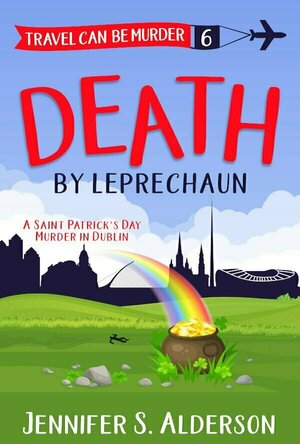
Death by Leprechaun: A Saint Patrick’s Day Murder in Dublin (Travel Can Be Murder Cozy Mystery #6)
9.0 Rate It
Book
When an old friend is arrested in Dublin, tour guide Lana Hansen will need the luck of the Irish to...
Cozy Mystery Travel Cozy

Leaving Winter for a Desert Sky
Book
Erin has spent the last six years abroad, teaching English in Spain, France, Japan. Now, she’s...
Literary LGBTQ+
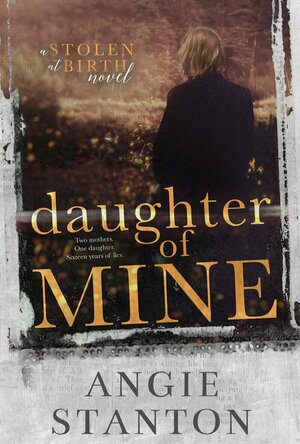
Daughter of Mine (A Stolen at Birth Novel)
Book
Two mothers. One infant. An unforgivable crime. Five minutes. That’s all it took for Melissa...
Crime Literary Fiction Women's Fiction Domestic Suspense Psychological Thriller


Lessons is the story of Roland Baines’ life. His successes, loves, losses - all set against an historical background of the 20th and 21st centuries: World War 2, the Cuban Missile Crisis, Chernobyl and Covid 19 (and others besides, but there are too many to mention them all!).
I was completely engrossed, and it’s a book that you don’t want to race through. I love McEwans writing - so much is said in each sentence.
I’ll admit it now, a lot of what really kept my attention were the details about Germany: WW2 and it’s aftermath, Roland’s trips beyond the Berlin Wall and it’s fall.
The future is set for Alissa (Roland’s wife) when her English mother presents her with her journals, written when she travelled to Germany after the war. She had wanted to write articles about German Resistance during the war, and specifically the Scholls White Rose movement. These journals remained unpublished and unread 40 years later. And so when Alissa walks away from Roland and their baby to ensure her own dreams of literary success, it’s unsurprising even if it’ll ears callous.
The book is told from Roland’s point of view, first person, so we hear his inner voice throughout. What stood out most for me, was that his voice doesn’t change through the years. Yes, I know this is obvious - it’s the same book. What I mean is that what younger people often forget, is that the 72 year old man at the end of the book is the same as the 11 year old boy - just with 61 years experience. His experiences as an 11-14 year old with his piano teacher have a lasting and life-changing impact.
I loved this book and would highly recommend it. It’s a book to be savoured.
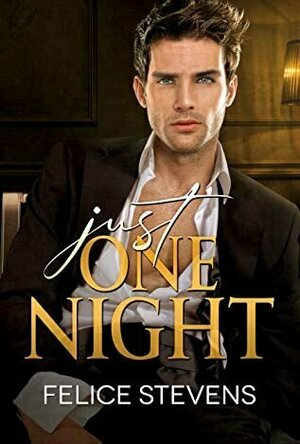
Just One Night
10.0 Rate It
Book
In the rough and tumble world of New York City, these men don't mind getting down and dirty—in...
Contemporary Romance MM
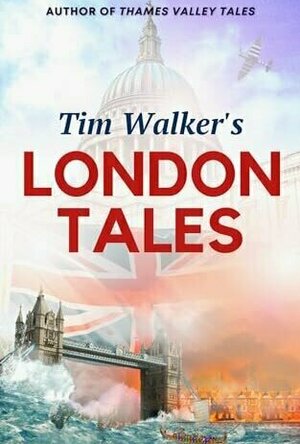
London Tales (Short Stories #2)
8.0 Rate It
Book
This collection of eleven tales offers dramatic pinpricks in the rich tapestry of London’s...
Short Stories Historical Fiction
A School of Daughters
Book
It’s funny how things sneak up on you… Kate Willoughby is a champion for...
Literary Fiction Women's Fiction
Moving On
9.0
Rate It
Book
When his roof caves in, Sean Lovett thinks things can't get any worse. Until he loses his job,...
Contemporary MM Romance

David McK (3906 KP) rated Quantum Leap: Carny Knowledge in Books
Jul 23, 2023

Recently, I've started watching the Paramount+ revival of one of my favourite 'tweenage' years shows.
I'm not yet - as of the time of writing - sold on it.
Having watched an episode or two, I thought I would revisit the original, albeit in literary rather than audiovisual form - I know that, in the past, I had read Quantum Leap 00: Too Close for Comfort and Knights of the Morningstar, but I had never read this one. When I cam across it, therefore, I thought I would give it a go.
I have to say, also, that - unfortunately - I just wasn't really all that impressed by it. I don't know whether that's because this was #1 in the book series, or because of the subject matter - being from the UK, carnivals (and the people who run them, known as Carnies (or so I've heard) ) aren't really all that much of a thing here! Nor do I particularly like roller-coasters ...
In this, Sam finds himself in the body of one such 1950 Carnie, a childhood polio survivor, who seems to have visions of the future in which people die after a roller-coaster derails on its maiden run, with all the hopes and dreams of the Carnival workers pinned on that roller coaster. This, I found, was bit slow in starting, although it did pick up towards the end! There's also segments in the (1990s!) future, showing what is missing from the revival in the Waiting Room, and explains a bit better than that revival does why Al is Sam's hologram as opposed to Addison being Ben's.
Worth a read for nostalgia factor, maybe.