
Search
Search results

BankofMarquis (1832 KP) rated The Holdovers (2023) in Movies
Dec 31, 2023

Emotional Rich...and Real
The last time Paul Giamatti starred in an Alexander Payne film (2004’s SIDEWAYS), Payne won the Oscar for Best Adapted Screenplay.
Reunited for THE HOLDOVERS, it might be time for Giamatti to win the Oscar.
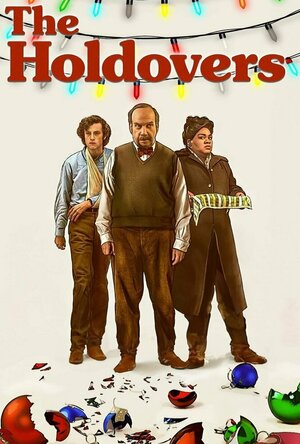
THE HOLDOVERS tells a well-worn story of a cranky older guy, all-Male Prep School teacher Paul Hunham (Giamatti) who is forced to spend the Christmas holidays sometime in the early 1970’s with arrogant, intelligent, student, Angus Tully (Dominic Sessa). Will they learn to tolerate - and then respect - each other by the time school is back in session? Of course they are.
But it is the journey and not the destination that this film is about - and, boy, what a journey.
Director Payne (working off a screenplay by David Hemingson - WHISKEY CAVALIER) infuses his usual human style into the HOLDOVERS focusing on the characters and driving strong, emotional performances. Sometimes this works (SIDEWAYS, NEBRASKA), sometimes it doesn’t (DOWNSIZING) but in a Payne film it all depends on the strength of the script - and performances - in the film.
Payne was wise to turn over the central character of Paul “Walleye” Hunham to Giamatti who rides the line of curmudgeonly without becoming evil. From the start you can see some sort of humanity under the cranky surface of Paul and when the facade starts to fade away you see a real human being under there. It is, perhaps, the finest performance of Giamatti’s career and expect to see Giamatti’s name called come Oscar Nomination time.
Of course, Giamatti’s performance is only as good as the other actors that he is working against and in newcomer Sessa, Payne has given Giamatti a very good counterpoint indeed - especially since this is Sessa’s Major Motion Picture screen debut. He imbues Tulley with the requisite youthful arrogance but you can sense the vulnerability underneath from a young man who just wants to be accepted - and loved - for who he is.
A joyful surprise of this film is the work of Da’Vine Joy Randolph (ONLY MURDERS IN THE BUILDING) as the cafeteria worker (with a secret tragedy of her own) who volunteers to stay behind to cook for these two. She provides a welcome 3rd leg to this stool and counterbalances both Giamatti’s and Sessa’s performance in a strong - and real - way.
All of this, of course, is due to the fine direction of Payne and the smart, funny and emotionally rich script by Hemingson. They wisely set this piece in the early 1970’s - so there are no cell phones or Internet to draw these people away from each other. They are trapped with one another and must deal with each other in an emotionally satisfying manner.
One of the best films of 2023 (expect to see it in my Top 5 of the year), THE HOLDOVERS is the type of film that the Academy loves - so expect more than 1 Oscar nomination and, just maybe, an Oscar win for Giamatti.
All would be well deserved.
Letter Grade: A
9 Stars (out of 10) and you can take that to the Bank(ofMarquis)
Reunited for THE HOLDOVERS, it might be time for Giamatti to win the Oscar.
THE HOLDOVERS tells a well-worn story of a cranky older guy, all-Male Prep School teacher Paul Hunham (Giamatti) who is forced to spend the Christmas holidays sometime in the early 1970’s with arrogant, intelligent, student, Angus Tully (Dominic Sessa). Will they learn to tolerate - and then respect - each other by the time school is back in session? Of course they are.
But it is the journey and not the destination that this film is about - and, boy, what a journey.
Director Payne (working off a screenplay by David Hemingson - WHISKEY CAVALIER) infuses his usual human style into the HOLDOVERS focusing on the characters and driving strong, emotional performances. Sometimes this works (SIDEWAYS, NEBRASKA), sometimes it doesn’t (DOWNSIZING) but in a Payne film it all depends on the strength of the script - and performances - in the film.
Payne was wise to turn over the central character of Paul “Walleye” Hunham to Giamatti who rides the line of curmudgeonly without becoming evil. From the start you can see some sort of humanity under the cranky surface of Paul and when the facade starts to fade away you see a real human being under there. It is, perhaps, the finest performance of Giamatti’s career and expect to see Giamatti’s name called come Oscar Nomination time.
Of course, Giamatti’s performance is only as good as the other actors that he is working against and in newcomer Sessa, Payne has given Giamatti a very good counterpoint indeed - especially since this is Sessa’s Major Motion Picture screen debut. He imbues Tulley with the requisite youthful arrogance but you can sense the vulnerability underneath from a young man who just wants to be accepted - and loved - for who he is.
A joyful surprise of this film is the work of Da’Vine Joy Randolph (ONLY MURDERS IN THE BUILDING) as the cafeteria worker (with a secret tragedy of her own) who volunteers to stay behind to cook for these two. She provides a welcome 3rd leg to this stool and counterbalances both Giamatti’s and Sessa’s performance in a strong - and real - way.
All of this, of course, is due to the fine direction of Payne and the smart, funny and emotionally rich script by Hemingson. They wisely set this piece in the early 1970’s - so there are no cell phones or Internet to draw these people away from each other. They are trapped with one another and must deal with each other in an emotionally satisfying manner.
One of the best films of 2023 (expect to see it in my Top 5 of the year), THE HOLDOVERS is the type of film that the Academy loves - so expect more than 1 Oscar nomination and, just maybe, an Oscar win for Giamatti.
All would be well deserved.
Letter Grade: A
9 Stars (out of 10) and you can take that to the Bank(ofMarquis)
Debbiereadsbook (1843 KP) rated Blood of the Damned - Thorn (Vaughn Winery #1) in Books
Oct 15, 2025

I liked that it doesn't focus so much on the Divergent part of Ledger.
Independent reviewer for Archaeolibrarian, I was gifted my copy of this book.
This book is set in the Divergent Omegaverse world, but spins off. You don't need to read those books before this one, you can pick it straight up. However, I personally recommend you read at least Alpha's Divergent Omega. It will give you a better picture of this world, and what it means to be Divergent here. Lane and Derick make a visit here.
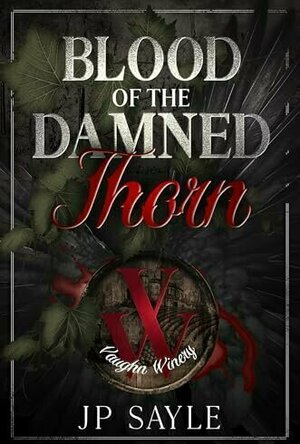
Ledger is Divergent: He has an inner animal, a squirrel, but he cannot shift. He runs to the Vaugn Winery to get away from a break up. Meeting his mate was never in the plan, finding out that mate is his new boss AND a vampire?? Mind blowing but Ledger and Thorn run with it, until Thorn discovers just how vampire babies are born.
I love Ms Sayle, you know I do, but this book takes me back to the very beginning of her author career and I'm left with questions!
So many bloody questions and feelings!! And, as is par for the course with this author, I cannot voice all of them and that is so frustrating!! My book brain is doing overtime, while battling a nasty cold and I can't get them all out.
I can voice some though!
I liked this a lot. It doesn't focus so much on the divergent part of Ledger and more on the vampire part of Thorn, and his brothers: Calvert and Dacian. There is a sister, Elouise, but she is only talked about and to on the phone but doesn't really play a part, other than to tell Thorn just how vampire babies are born!
I found the relationship between the others amusing, Dacian takes great pleasure in winding Thorn up, but Calvert is more subdued. His feelings about Thorn and Ledger become known through the book and I wonder if Ms Sayle will make him wait til last to find his dhampir, his fated mate.
It's steamy, and that steam runs right through the book.
so, questions! What was the thing with the increased wine order?? That was mentioned and left hanging. And I wanna know!
Who is next?? Will each vampire be mated to a Divergent? Or will there be some surprises? OOOH Will Elouise get a book too??
Feelings?? You should know this is an m-preg world, and there is a male pregnancy in this book AND a vampire birth. (which was slightly faded to grey and I'm so glad it was! But now I know, I can prepare myself for next time, cos I have a feeling that the next one might not be quite so simple as using thrall!)
I feel this has been deliberately left sort of open ended. While there is the birth of Ledger's babies, the book ends there. And that is my biggest and strongest feeling: There is more to come for Thorn and Ledger.
And I want to be front and centre!!
4 very VERY good stars
*same worded review will appear elsewhere
This book is set in the Divergent Omegaverse world, but spins off. You don't need to read those books before this one, you can pick it straight up. However, I personally recommend you read at least Alpha's Divergent Omega. It will give you a better picture of this world, and what it means to be Divergent here. Lane and Derick make a visit here.
Ledger is Divergent: He has an inner animal, a squirrel, but he cannot shift. He runs to the Vaugn Winery to get away from a break up. Meeting his mate was never in the plan, finding out that mate is his new boss AND a vampire?? Mind blowing but Ledger and Thorn run with it, until Thorn discovers just how vampire babies are born.
I love Ms Sayle, you know I do, but this book takes me back to the very beginning of her author career and I'm left with questions!
So many bloody questions and feelings!! And, as is par for the course with this author, I cannot voice all of them and that is so frustrating!! My book brain is doing overtime, while battling a nasty cold and I can't get them all out.
I can voice some though!
I liked this a lot. It doesn't focus so much on the divergent part of Ledger and more on the vampire part of Thorn, and his brothers: Calvert and Dacian. There is a sister, Elouise, but she is only talked about and to on the phone but doesn't really play a part, other than to tell Thorn just how vampire babies are born!
I found the relationship between the others amusing, Dacian takes great pleasure in winding Thorn up, but Calvert is more subdued. His feelings about Thorn and Ledger become known through the book and I wonder if Ms Sayle will make him wait til last to find his dhampir, his fated mate.
It's steamy, and that steam runs right through the book.
so, questions! What was the thing with the increased wine order?? That was mentioned and left hanging. And I wanna know!
Who is next?? Will each vampire be mated to a Divergent? Or will there be some surprises? OOOH Will Elouise get a book too??
Feelings?? You should know this is an m-preg world, and there is a male pregnancy in this book AND a vampire birth. (which was slightly faded to grey and I'm so glad it was! But now I know, I can prepare myself for next time, cos I have a feeling that the next one might not be quite so simple as using thrall!)
I feel this has been deliberately left sort of open ended. While there is the birth of Ledger's babies, the book ends there. And that is my biggest and strongest feeling: There is more to come for Thorn and Ledger.
And I want to be front and centre!!
4 very VERY good stars
*same worded review will appear elsewhere
Lyndsey Gollogly (2893 KP) rated Resilience ( Rise of Iliri book 6) in Books
Jan 5, 2023

Contains spoilers, click to show
4 of 235
Kindle
Resilience ( Rise of Iliri book 6)
By Auryn Hadley
⭐️⭐️⭐️⭐️⭐️
Auryn Hadley's sixth action-adventure in The Rise of the Iliri fantasy series asks how far mankind will go to protect their pride. Because it seems they'll guard it at the expense of all else. Reminiscent of a futuristic Lord of the Rings, this epic fantasy romance traces not only the personal journey of its heroine and her family - a reverse harem made up of nine indomitable warriors who comprise an elite military force called the Black Blades - but also the liberation of a people and a new way of thinking for the whole world. For the source of iliri power is not domination, but connection. They seek it, cultivate it, and use it to defeat their enemies.
It's the iliri - now a rising, formidable race of underdogs - who must decide whether to risk their lives for the ungracious human race. Unbeknownst to humans, their fate lies in the capable hands of the iliri leader, the powerful Salryc Luxx. And she's no longer willing to be yanked around at any price.
Sal and the Black Blades have been summoned to a meeting with Parliament representatives of the Conglomerate of Free Citizens. But this time, she's not serving as their slave. Nor is she about to be captured and brought to trial again. Now the ruler of all iliri in her adopted country of Anglia - and de facto queen - she knows she has the upper hand.
The enemy Terrans have besieged Eastward, engaging in brutal guerrilla tactics throughout the country - hitting without mercy and killing all in their path. The world of humans is desperate.
"Tell me why I should send my brothers and sisters to die for humans that care so little for us?" Sal asks. The answer she's searching for comes from a frail iliri servant, whose telltale snow-colored skin is almost as light as Sal's: If she leaves the humans to die by the Terrans, war and enslavement will continue. History will repeat itself. But if it's the iliri and their allies who manage to defeat evil, perhaps humans can learn to respect them.
She knows she isn't finished fighting. Iliri warriors haven't yet "done enough." Not while so many of their brothers are still enslaved.
Alongside her faithful friends and leaders--and the tireless Black Blades - Sal must choose whether to surrender to her role as their leader and contend with The Emperor's murderous army - as well as the treacherous pride of the human race.
!!! Has a spoiler for book 5!!!
Every time I pick one of these books up I say it’s the best one yet and yes I’m saying it again! After the tears at the end of Book 5 we catch up with Sal and the blades dealing with the aftermath of losing Blaec and finding her feet with her new role and new male. This is non stop from the first word to the last. Brilliantly written it has to be one of my favourite series. Highly recommended for the fantasy readers!
Kindle
Resilience ( Rise of Iliri book 6)
By Auryn Hadley
⭐️⭐️⭐️⭐️⭐️
Auryn Hadley's sixth action-adventure in The Rise of the Iliri fantasy series asks how far mankind will go to protect their pride. Because it seems they'll guard it at the expense of all else. Reminiscent of a futuristic Lord of the Rings, this epic fantasy romance traces not only the personal journey of its heroine and her family - a reverse harem made up of nine indomitable warriors who comprise an elite military force called the Black Blades - but also the liberation of a people and a new way of thinking for the whole world. For the source of iliri power is not domination, but connection. They seek it, cultivate it, and use it to defeat their enemies.
It's the iliri - now a rising, formidable race of underdogs - who must decide whether to risk their lives for the ungracious human race. Unbeknownst to humans, their fate lies in the capable hands of the iliri leader, the powerful Salryc Luxx. And she's no longer willing to be yanked around at any price.
Sal and the Black Blades have been summoned to a meeting with Parliament representatives of the Conglomerate of Free Citizens. But this time, she's not serving as their slave. Nor is she about to be captured and brought to trial again. Now the ruler of all iliri in her adopted country of Anglia - and de facto queen - she knows she has the upper hand.
The enemy Terrans have besieged Eastward, engaging in brutal guerrilla tactics throughout the country - hitting without mercy and killing all in their path. The world of humans is desperate.
"Tell me why I should send my brothers and sisters to die for humans that care so little for us?" Sal asks. The answer she's searching for comes from a frail iliri servant, whose telltale snow-colored skin is almost as light as Sal's: If she leaves the humans to die by the Terrans, war and enslavement will continue. History will repeat itself. But if it's the iliri and their allies who manage to defeat evil, perhaps humans can learn to respect them.
She knows she isn't finished fighting. Iliri warriors haven't yet "done enough." Not while so many of their brothers are still enslaved.
Alongside her faithful friends and leaders--and the tireless Black Blades - Sal must choose whether to surrender to her role as their leader and contend with The Emperor's murderous army - as well as the treacherous pride of the human race.
!!! Has a spoiler for book 5!!!
Every time I pick one of these books up I say it’s the best one yet and yes I’m saying it again! After the tears at the end of Book 5 we catch up with Sal and the blades dealing with the aftermath of losing Blaec and finding her feet with her new role and new male. This is non stop from the first word to the last. Brilliantly written it has to be one of my favourite series. Highly recommended for the fantasy readers!
Chris Sawin (602 KP) rated Transformers Revenge of the Fallen (2009) in Movies
Jun 22, 2019
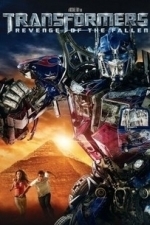

In 2009, I saw Transformers: Revenge of the Fallen in theaters during a midnight screening on its day of release. Somehow I managed to sit through a two and a half hour movie, drive home, write a review, post it, and promote it all before I went to bed that morning at 5am. Looking back, I still have no idea how something like that was accomplished while also juggling a full-time job. Needless to say, I've been eager to revisit Revenge of the Fallen ever since. Delirium begins to set in at that hour and midnight screenings are rarely ever not fun. Not to mention my skills as a movie critic have evolved greatly since then and my tastes have altered. The movie deserved a proper review with a sober state of mind. And yes, thankfully, the trip was worth taking because I'm not quite as enthusiastic about Revenge of the Fallen being such a great piece of cinema as its glaring flaws tend to overshadow what little good it had going for it.
The writing is obviously the sequel's biggest flaw and not just the storyline, but the dialogue as well. The Fallen touched down on earth all the way back in 17,000 B.C. and while we've been able to uncover the likes of cavemen existing thereabouts during that time period, there's no evidence of autobots or decepticons existing in that point in history. With the way they fight and their vast numbers, that seems pretty hard to believe. Oh, and look, Sam has held onto the shirt he wore when the world almost came to an end in the last movie and apparently hasn't ever washed it. A sliver of the allspark has just been sitting in that thing this entire time. Alice actually being a decepticon didn't feel right either. Probable maybe, but it just didn't seem to fit with all other transformers being vehicles of some kind. Meanwhile Soundwave is a satellite in this movie, but walks around on earth with some crazy worm thing in Dark of the Moon with no reason of him evolving between films.
The movie has a thing about humping, too. We see two male dogs humping on more than one occasion and Wheelie also humps the crap out of Megan Fox's leg, but that's not the only time male genitalia comes into play. We also get a good glimpse at the testicles of the Sun Harvester as John Turturro spits out a one-liner about its scrotum. Leo and his freaking out over absolutely everything is also really annoying and makes Shia LaBeouf's "BUM-BULL-BEE!!!" and "OP-TIM-US!!!" squawks feel like a breath of fresh air. Sam's parents are practically the kryptonite of the movie as they're featured way too much and in the worst of times. Sam's mom has the lamest dialogue while also overreacting to everything while his dad can't decide to let Sam go or protect him. Why they were ever even Egypt is a boggling question in itself. Why are there autobots in heaven? If Megatron's master was The Fallen and he took orders from Sentinel Prime in Dark of the Moon, just how many other Decepticons does he answer to? The questions and plot holes just seem endless.
The atrocious dialogue practically echoes through your bones. It starts with Ironhide saying, "Punk ass decepticon," and never really lets up. Between Sam's parents "smelling" a "$40,000 education," and Simmons telling everyone that what he was about to show them was "top secret" and "do not tell my mother," the bases are pretty much covered. Military sergeants listening to a kid in college seems outlandish anyway, but throwing their absolute blind faith in him seems really outrageous. I realize the cast of the movie had the writer's strike to deal with, but two of the three writers for Revenge of the Fallen also wrote Star Trek which showed none of the same problems that this movie had. The writing in a Michael Bay movie is already secondary. Throw in a writer's strike and you've got something as apocalyptic behind the camera as what's taking place on screen.
There is something entertaining deep within the loins of this cinematic abomination though. The special effects are more than satisfying and pretty much outshine the special effects in the first movie. Onscreen battles are more extraordinary, explosions are bigger, and the numbers are more massive. It feels more like an actual war this time around. Bumblebee also gets his time to shine in the sequel. His scene in the garage with Sam at the start of the movie is one of the better calm scenes in the entire thing and then there are his fight scenes. Several of the fight scenes seem inspired by Mortal Kombat; Bumblebee's spine-rip sequence and Optimus’ face ripping and hand bursting through the chest of The Fallen with its villainous heart. Optimus feels very scarcely used in the two Transformers sequels. He has a few scenes where he gets to be awesome and then spends a good portion of the movie being incapacitated. At least he was dead in this one, that's a liable excuse. In Dark of the Moon, he's basically just hanging out upside down for thirty to forty minutes while hundreds of people die. Even though The Fallen is dealt with in a matter of minutes, he is kind of cool. He teleports a lot like Nightcrawler and is voiced by Tony Todd. Unfortunately, he's only appealing on the surface, kind of sucks as a main villain, and is a total embarrassment to the decepticons.
Michael Bay needs to learn that more explosions and more destructive mayhem don't automatically make a film better than its predecessor. There are more battles between the autobots and decepticons, the stakes are higher, and the special effects are more impressive, but it's essentially just eye candy or like giving reconstructive facial surgery to a really hideous person; they're still ugly but their appearance is at least nice to look at now. With a storyline that jumps all over the place for no rhyme or reason, really terrible dialogue being spewed from just about every major character, and The Twins probably being more offensive than they are humorous, Revenge of the Fallen falls short of being half as good as Bay's original effort and is quite difficult to think of as anything more than a guilty pleasure.
The writing is obviously the sequel's biggest flaw and not just the storyline, but the dialogue as well. The Fallen touched down on earth all the way back in 17,000 B.C. and while we've been able to uncover the likes of cavemen existing thereabouts during that time period, there's no evidence of autobots or decepticons existing in that point in history. With the way they fight and their vast numbers, that seems pretty hard to believe. Oh, and look, Sam has held onto the shirt he wore when the world almost came to an end in the last movie and apparently hasn't ever washed it. A sliver of the allspark has just been sitting in that thing this entire time. Alice actually being a decepticon didn't feel right either. Probable maybe, but it just didn't seem to fit with all other transformers being vehicles of some kind. Meanwhile Soundwave is a satellite in this movie, but walks around on earth with some crazy worm thing in Dark of the Moon with no reason of him evolving between films.
The movie has a thing about humping, too. We see two male dogs humping on more than one occasion and Wheelie also humps the crap out of Megan Fox's leg, but that's not the only time male genitalia comes into play. We also get a good glimpse at the testicles of the Sun Harvester as John Turturro spits out a one-liner about its scrotum. Leo and his freaking out over absolutely everything is also really annoying and makes Shia LaBeouf's "BUM-BULL-BEE!!!" and "OP-TIM-US!!!" squawks feel like a breath of fresh air. Sam's parents are practically the kryptonite of the movie as they're featured way too much and in the worst of times. Sam's mom has the lamest dialogue while also overreacting to everything while his dad can't decide to let Sam go or protect him. Why they were ever even Egypt is a boggling question in itself. Why are there autobots in heaven? If Megatron's master was The Fallen and he took orders from Sentinel Prime in Dark of the Moon, just how many other Decepticons does he answer to? The questions and plot holes just seem endless.
The atrocious dialogue practically echoes through your bones. It starts with Ironhide saying, "Punk ass decepticon," and never really lets up. Between Sam's parents "smelling" a "$40,000 education," and Simmons telling everyone that what he was about to show them was "top secret" and "do not tell my mother," the bases are pretty much covered. Military sergeants listening to a kid in college seems outlandish anyway, but throwing their absolute blind faith in him seems really outrageous. I realize the cast of the movie had the writer's strike to deal with, but two of the three writers for Revenge of the Fallen also wrote Star Trek which showed none of the same problems that this movie had. The writing in a Michael Bay movie is already secondary. Throw in a writer's strike and you've got something as apocalyptic behind the camera as what's taking place on screen.
There is something entertaining deep within the loins of this cinematic abomination though. The special effects are more than satisfying and pretty much outshine the special effects in the first movie. Onscreen battles are more extraordinary, explosions are bigger, and the numbers are more massive. It feels more like an actual war this time around. Bumblebee also gets his time to shine in the sequel. His scene in the garage with Sam at the start of the movie is one of the better calm scenes in the entire thing and then there are his fight scenes. Several of the fight scenes seem inspired by Mortal Kombat; Bumblebee's spine-rip sequence and Optimus’ face ripping and hand bursting through the chest of The Fallen with its villainous heart. Optimus feels very scarcely used in the two Transformers sequels. He has a few scenes where he gets to be awesome and then spends a good portion of the movie being incapacitated. At least he was dead in this one, that's a liable excuse. In Dark of the Moon, he's basically just hanging out upside down for thirty to forty minutes while hundreds of people die. Even though The Fallen is dealt with in a matter of minutes, he is kind of cool. He teleports a lot like Nightcrawler and is voiced by Tony Todd. Unfortunately, he's only appealing on the surface, kind of sucks as a main villain, and is a total embarrassment to the decepticons.
Michael Bay needs to learn that more explosions and more destructive mayhem don't automatically make a film better than its predecessor. There are more battles between the autobots and decepticons, the stakes are higher, and the special effects are more impressive, but it's essentially just eye candy or like giving reconstructive facial surgery to a really hideous person; they're still ugly but their appearance is at least nice to look at now. With a storyline that jumps all over the place for no rhyme or reason, really terrible dialogue being spewed from just about every major character, and The Twins probably being more offensive than they are humorous, Revenge of the Fallen falls short of being half as good as Bay's original effort and is quite difficult to think of as anything more than a guilty pleasure.
Hazel (1853 KP) rated A Song for Issy Bradley in Books
May 30, 2017
Heart Wrenching
I received this book for free through Goodreads First Reads.
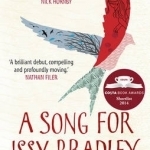
A Song for Issy Bradley is the captivating debut novel of talented author Carys Bray. Set in modern day Britain this heart-breaking story shows a family’s struggle to overcome the loss of their youngest child whilst also adhering to the strict rules of their Mormon religion.
It begins with seven-year-old Jacob’s birthday and Mum, Claire, is rushing around with last minute party preparations, whilst her husband, Bishop Ian, is off attending to his religious duties. Although Claire is aware that Issy is feeling poorly she does not realize how serious it is until much later - too much later. After being rushed to hospital with meningitis Issy’s prognosis is not good. Despite Ian’s blessings and prayers no miracle occurs and Issy passes away the following day.
The main storyline is about how the characters cope with this shockingly sudden loss. Claire hides herself away from everyone by remaining in bed for weeks and ignoring her duties and her family’s pleas. Ian, worried that Claire is not grieving in the proper Mormon way, throws himself even deeper into religion by focusing on what is expected of him as a Bishop rather than concentrating on his children’s needs.
Zipporah, the eldest, is expected to become the woman of the house until Claire returns to “normal”. As well as studying for her exams and doing the housework, Ian insists she attend all church events for people her age. Alone she worries about love, marriage and falling into sin; she would really like to be able to talk to her Mum. Alma, on the other hand, is becoming more and more rebellious. Not only does he have a stupid name (Alma was named after a prophet in the book of Mormon) his ambition to become a professional footballer is not conducive to living the gospel. Although he makes jokes and rude remarks about religious ideas there is still a part of him that believes, and despite his attitude it is clear he is deeply affected by Issy’s death.
Jacob’s reaction is the most heart wrenching of all. Being so young he believes everything he is told especially the bible stories he hears at church. If Jesus can bring people back to life, perhaps Issy can live again? He puts his faith in God and waits in vain for his sister’s miraculous return.
The story is shown through each of these five character’s point of views, which is interesting as the reader gets a chance to see how each person’s actions affect the others and gives a greater insight into character developments. It is gratifying to witness, albeit slowly, the family pick themselves up and begin to work together and carry on.
As to be expected with a story about Mormons there is a large amount of bible quotation. Many are from the Book of Mormon but there are numerous biblical references that Christians of all denominations will appreciate. The author was raised as a Mormon so it can only be assumed that all the details are accurate. Non-believers, however, should not be put off from reading this beautiful book: it is the way in which people deal with loss that is important and there is no preaching at the reader or attempts to convert.
This novel is highly recommended for female and male readers alike, particularly those who enjoy emotionally charged stories; and, of course, those interested in religion will love this book too.
A Song for Issy Bradley is the captivating debut novel of talented author Carys Bray. Set in modern day Britain this heart-breaking story shows a family’s struggle to overcome the loss of their youngest child whilst also adhering to the strict rules of their Mormon religion.
It begins with seven-year-old Jacob’s birthday and Mum, Claire, is rushing around with last minute party preparations, whilst her husband, Bishop Ian, is off attending to his religious duties. Although Claire is aware that Issy is feeling poorly she does not realize how serious it is until much later - too much later. After being rushed to hospital with meningitis Issy’s prognosis is not good. Despite Ian’s blessings and prayers no miracle occurs and Issy passes away the following day.
The main storyline is about how the characters cope with this shockingly sudden loss. Claire hides herself away from everyone by remaining in bed for weeks and ignoring her duties and her family’s pleas. Ian, worried that Claire is not grieving in the proper Mormon way, throws himself even deeper into religion by focusing on what is expected of him as a Bishop rather than concentrating on his children’s needs.
Zipporah, the eldest, is expected to become the woman of the house until Claire returns to “normal”. As well as studying for her exams and doing the housework, Ian insists she attend all church events for people her age. Alone she worries about love, marriage and falling into sin; she would really like to be able to talk to her Mum. Alma, on the other hand, is becoming more and more rebellious. Not only does he have a stupid name (Alma was named after a prophet in the book of Mormon) his ambition to become a professional footballer is not conducive to living the gospel. Although he makes jokes and rude remarks about religious ideas there is still a part of him that believes, and despite his attitude it is clear he is deeply affected by Issy’s death.
Jacob’s reaction is the most heart wrenching of all. Being so young he believes everything he is told especially the bible stories he hears at church. If Jesus can bring people back to life, perhaps Issy can live again? He puts his faith in God and waits in vain for his sister’s miraculous return.
The story is shown through each of these five character’s point of views, which is interesting as the reader gets a chance to see how each person’s actions affect the others and gives a greater insight into character developments. It is gratifying to witness, albeit slowly, the family pick themselves up and begin to work together and carry on.
As to be expected with a story about Mormons there is a large amount of bible quotation. Many are from the Book of Mormon but there are numerous biblical references that Christians of all denominations will appreciate. The author was raised as a Mormon so it can only be assumed that all the details are accurate. Non-believers, however, should not be put off from reading this beautiful book: it is the way in which people deal with loss that is important and there is no preaching at the reader or attempts to convert.
This novel is highly recommended for female and male readers alike, particularly those who enjoy emotionally charged stories; and, of course, those interested in religion will love this book too.

Goddess in the Stacks (553 KP) rated Beasts Made of Night in Books
Apr 19, 2018


Terrible characters (3 more)
Lack of explanation of terms
Stupid cliffhanger
Confusing geography
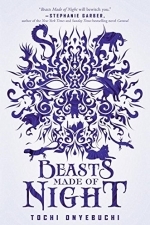
So this Nigerian-influenced fantasy made enough of a splash when it was released in October that I JUST got it in my hands from the library. That long wait....was not actually justified, sadly. The cover is GORGEOUS and the concept is really, really cool - the execution is lacking. I can tell that the author had the world pretty fleshed out in his mind, from the geography to the vocabulary - but he didn't actually pass that knowledge on to the reader. Kos is a walled city, but I'm not sure whether the Palace is within the walls or not? In one scene our protagonist LEAPS out of the castle and runs back the city - but in another scene he mentions that looking out the castle wall, Kos fits behind his fingernail. Kos is made up of several neighborhood plus a market - it's not small. So either his fingernail is HUGE or Kos is a pretty decent distance away. But it's written as if it only takes him about ten minutes to run there? Not to mention that he cracked a rib in the room that he leaped from (which is never mentioned again).
Oh and he winds up landing in an ivy maze out of nowhere - he couldn't see it from the palace? Let's see....the King regularly bombards neighborhoods with catapults in what's called a "baptism" but the people haven't revolted against this, for some reason. They talk about something called a "kanselo" but never define it. I -think- it's like an organized group or coalition, but I'm really not entirely sure.
The male protagonist treats every woman his age as a potential love interest, debating whether to give them his heart-stone, or whether people will think he's already given one girl or another his heart-stone - but never stops to ask if the girls are interested in HIM that way. Because of COURSE they would be, right? He's the Sky-Fist! The Lightbringer! The one whose tattoos never fade! (Eating sin-beasts causes a black tattoo to appear on your skin - on most sin-eaters these fade eventually.) Also he's just DUMB. He recalls that the sin-eater who ate his mother's sin had a certain tattoo, and when he runs across her years later, it takes him three or four encounters before realizing it's the same sin-eater. (The tattoo is a spider. Covering her FACE. It hasn't faded.) He makes stupid decisions - after nightmares of one love-interest being attacked by sin-beasts, he LEAVES HER SURROUNDED BY THEM to go run out into the city. He has at least FIVE love interests in this book. And only ONE of them seems interested in him in return.
I really wanted to like this book. The concept of sin-eating is great. But the main character and all the one-dimensional characters that surrounded him, along with the confusing geography, just turned me off. And I'm not even getting into the "ending." Yeah. Definitely throwing quotes on that because that was not an ending. The book just stops.
Skip this. It was a terrible book wrapped in a deceptively pretty package.
You can find all my reviews at http://goddessinthestacks.wordpress.com
Oh and he winds up landing in an ivy maze out of nowhere - he couldn't see it from the palace? Let's see....the King regularly bombards neighborhoods with catapults in what's called a "baptism" but the people haven't revolted against this, for some reason. They talk about something called a "kanselo" but never define it. I -think- it's like an organized group or coalition, but I'm really not entirely sure.
The male protagonist treats every woman his age as a potential love interest, debating whether to give them his heart-stone, or whether people will think he's already given one girl or another his heart-stone - but never stops to ask if the girls are interested in HIM that way. Because of COURSE they would be, right? He's the Sky-Fist! The Lightbringer! The one whose tattoos never fade! (Eating sin-beasts causes a black tattoo to appear on your skin - on most sin-eaters these fade eventually.) Also he's just DUMB. He recalls that the sin-eater who ate his mother's sin had a certain tattoo, and when he runs across her years later, it takes him three or four encounters before realizing it's the same sin-eater. (The tattoo is a spider. Covering her FACE. It hasn't faded.) He makes stupid decisions - after nightmares of one love-interest being attacked by sin-beasts, he LEAVES HER SURROUNDED BY THEM to go run out into the city. He has at least FIVE love interests in this book. And only ONE of them seems interested in him in return.
I really wanted to like this book. The concept of sin-eating is great. But the main character and all the one-dimensional characters that surrounded him, along with the confusing geography, just turned me off. And I'm not even getting into the "ending." Yeah. Definitely throwing quotes on that because that was not an ending. The book just stops.
Skip this. It was a terrible book wrapped in a deceptively pretty package.
You can find all my reviews at http://goddessinthestacks.wordpress.com

Sassy Brit (97 KP) rated Forever Fudge in Books
Jun 5, 2019
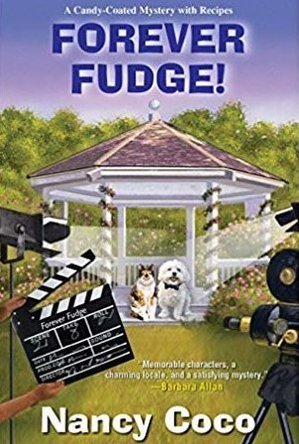

Forever Fudge by Nancy Coco is a sweet cozy mystery. Readers will salivate with the fudge recipes, be charmed on the Mackinac Island, and attempt to crack the murder mystery along with the main character Allie McMurphy.
Coco is a great pseudonym for the Fudge series. “I really enjoy writing these cozy mysteries with the humor and solving the puzzle. While writing my first series, I would put recipes on my blog. Then a friend of mine suggested I should write in this genre with a gluten free bakery. My last name was specifically chosen for this series. I love fudge, actually anything chocolate. The person in the apartment next to us said it always smells like chocolate in my house. Not only does it smell good but tastes good as well.”
Allie is an amateur sleuth. She and her dog Mal have an uncanny ability to find dead bodies. In the past, she has helped the police solve cases. As the owner of a delightful hotel and fudge shop on Mackinac Island, Allie’s excitement has grown after a television crew arrives on the island to film a television pilot for a mystery series. Throwing a wrench into the enthusiasm is the dead body found by Allie’s adorable Bichon-Poo puppy, Mal. Shot in the head, the body discovered has a letter with clues from chess moves. As the killings mount up, the murderer continues to taunt Allie, trying to get her to play his game.
The island plays a role in the story. “I have a huge family living in Michigan, which is where the island is located. If you ever saw the movie, “Somewhere in Time” starring Christopher Reeve, you can picture the setting. The island does not allow cars so people travel by foot, horse and carriage, or bicycle. It is a cool touristy place.”
There is also a love triangle. Allie is being wooed by two courters. She broke up with Trent Jessup because a long-distance relationship is not working, with him spending a lot of time in Chicago. The other beau is police chief Rex Manning who is being persistent in pursuing her, yet, willing to give her time and space.
“I thought it is interesting to compare ‘in love versus loving someone.’ I love my male friends but being ‘in love’ has excitement, a commitment, and intimacy. Allie is starting to build connections but some old timers see her as an outsider. One of those who accept her as part of the community is Rex who sees it as his responsibility to protect her and the community.”
Actual recipes are dispersed throughout the story. “I purposely did it this way to show what Allie is working on. I sprinkle it throughout to give the feel and flavor to what she is actually making. I try to relate it to the story when possible. I remember my first contract with Kensington Books required me to write ten recipes per book. Luckily, they downsized that amount. Since they had to be originals it was a relief.”
This story has an intriguing mystery, some romance, and humor. It is a fun who done it plot that has no shortage of suspects. Readers will be looking forward to the next installment, Fudge Bits, out next fall, a Halloween plot. It will highlight her cat instead of her dog that finds a Zombie body.
Coco is a great pseudonym for the Fudge series. “I really enjoy writing these cozy mysteries with the humor and solving the puzzle. While writing my first series, I would put recipes on my blog. Then a friend of mine suggested I should write in this genre with a gluten free bakery. My last name was specifically chosen for this series. I love fudge, actually anything chocolate. The person in the apartment next to us said it always smells like chocolate in my house. Not only does it smell good but tastes good as well.”
Allie is an amateur sleuth. She and her dog Mal have an uncanny ability to find dead bodies. In the past, she has helped the police solve cases. As the owner of a delightful hotel and fudge shop on Mackinac Island, Allie’s excitement has grown after a television crew arrives on the island to film a television pilot for a mystery series. Throwing a wrench into the enthusiasm is the dead body found by Allie’s adorable Bichon-Poo puppy, Mal. Shot in the head, the body discovered has a letter with clues from chess moves. As the killings mount up, the murderer continues to taunt Allie, trying to get her to play his game.
The island plays a role in the story. “I have a huge family living in Michigan, which is where the island is located. If you ever saw the movie, “Somewhere in Time” starring Christopher Reeve, you can picture the setting. The island does not allow cars so people travel by foot, horse and carriage, or bicycle. It is a cool touristy place.”
There is also a love triangle. Allie is being wooed by two courters. She broke up with Trent Jessup because a long-distance relationship is not working, with him spending a lot of time in Chicago. The other beau is police chief Rex Manning who is being persistent in pursuing her, yet, willing to give her time and space.
“I thought it is interesting to compare ‘in love versus loving someone.’ I love my male friends but being ‘in love’ has excitement, a commitment, and intimacy. Allie is starting to build connections but some old timers see her as an outsider. One of those who accept her as part of the community is Rex who sees it as his responsibility to protect her and the community.”
Actual recipes are dispersed throughout the story. “I purposely did it this way to show what Allie is working on. I sprinkle it throughout to give the feel and flavor to what she is actually making. I try to relate it to the story when possible. I remember my first contract with Kensington Books required me to write ten recipes per book. Luckily, they downsized that amount. Since they had to be originals it was a relief.”
This story has an intriguing mystery, some romance, and humor. It is a fun who done it plot that has no shortage of suspects. Readers will be looking forward to the next installment, Fudge Bits, out next fall, a Halloween plot. It will highlight her cat instead of her dog that finds a Zombie body.
Re-Read Update:
I am in love with this series, all over again. I have been wanting to re-read this series for a while and my recent-ish read of Wires and Nerve reignited my love of this series. It had been a while since I was in the world and I had forgotten how much I loved these books.
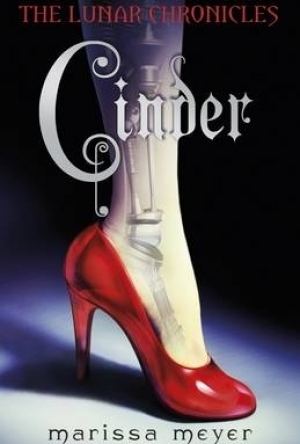
I love fairytales and Marissa Meyer’s retellings of the classic tales we’ve all grown up with are fantastic. She turns the mousey girl from the original fairytale into a relatable character that we fall in love with. Cinderella is not one of my favourite fairytales because I prefer my heroines to have a little more spunk and backbone, but Cinder is just perfect.
Kai is one of those characters that is just so good. He is incredibly kind to Cinder, even when he believes that she is just a mechanic with a grease mark on her forehead, despite his station in life generally lending itself to an air of superiority. Prince Kai only wants what is best for his people and the Commonwealth, willing to sacrifice himself for their well-being if need be. He is definitely one of my favourite male characters, although if I’m being honest I probably have a lot of those.
Most importantly, we meet Iko the droid with the faulty personality chip that we couldn’t fall in love with more. Her loyalty and pure desire to just be a person are heartwarming. (And also sad, because she is a droid and not treated like a person by anyone but Cinder.)
We don’t see much of the world that Cinder lives in beyond New Beijing aside from small, throwaway comments. The world building that is done though is vivid and allows the reader to see the city grow in their mind. As this is a re-read, I am also aware that the world building is expanded extensively over the course of the novels and can understand the more rudimentary foundation being laid here.
I appreciated the effortless melding of elements from the classic fairytale into this unique science fiction world. It is wonderfully done and the story is well written. I would highly recommend this series to young adult/teen readers who enjoy fairytale retellings, science fiction, and intricate, interconnected stories.
_
This is one of the books that I saw on display at my local library and completely judged the book by its cover. I didn't know what it was about, but it looked interesting and I put it on my mental TBR list. Many years later, I have finally gotten a chance to read it (and the rest of the series.) This book was completely worth the wait. As a fan of fairytale retellings, like Beastly by Alex Flinn, I had high hopes for this book. It gave the reader wonderful little homages to the classic fairytale while weaving the story through a world and characters all its own.
The world building in this novel, while not expansive was wonderfully done. As a reader, I could imagine Cinder meandering down the dingy, packed streets of New Beijing while Kai fretted over his father in the ornate, sprawling palace. There were a number of important characters and none of them were overlooked. You were able to learn about their personalities, histories, or relationships in a way that gave each depth.
Recommended for anyone who liked YA, romance, fairytales, sci-fi, or good books.
I am in love with this series, all over again. I have been wanting to re-read this series for a while and my recent-ish read of Wires and Nerve reignited my love of this series. It had been a while since I was in the world and I had forgotten how much I loved these books.
I love fairytales and Marissa Meyer’s retellings of the classic tales we’ve all grown up with are fantastic. She turns the mousey girl from the original fairytale into a relatable character that we fall in love with. Cinderella is not one of my favourite fairytales because I prefer my heroines to have a little more spunk and backbone, but Cinder is just perfect.
Kai is one of those characters that is just so good. He is incredibly kind to Cinder, even when he believes that she is just a mechanic with a grease mark on her forehead, despite his station in life generally lending itself to an air of superiority. Prince Kai only wants what is best for his people and the Commonwealth, willing to sacrifice himself for their well-being if need be. He is definitely one of my favourite male characters, although if I’m being honest I probably have a lot of those.
Most importantly, we meet Iko the droid with the faulty personality chip that we couldn’t fall in love with more. Her loyalty and pure desire to just be a person are heartwarming. (And also sad, because she is a droid and not treated like a person by anyone but Cinder.)
We don’t see much of the world that Cinder lives in beyond New Beijing aside from small, throwaway comments. The world building that is done though is vivid and allows the reader to see the city grow in their mind. As this is a re-read, I am also aware that the world building is expanded extensively over the course of the novels and can understand the more rudimentary foundation being laid here.
I appreciated the effortless melding of elements from the classic fairytale into this unique science fiction world. It is wonderfully done and the story is well written. I would highly recommend this series to young adult/teen readers who enjoy fairytale retellings, science fiction, and intricate, interconnected stories.
_
This is one of the books that I saw on display at my local library and completely judged the book by its cover. I didn't know what it was about, but it looked interesting and I put it on my mental TBR list. Many years later, I have finally gotten a chance to read it (and the rest of the series.) This book was completely worth the wait. As a fan of fairytale retellings, like Beastly by Alex Flinn, I had high hopes for this book. It gave the reader wonderful little homages to the classic fairytale while weaving the story through a world and characters all its own.
The world building in this novel, while not expansive was wonderfully done. As a reader, I could imagine Cinder meandering down the dingy, packed streets of New Beijing while Kai fretted over his father in the ornate, sprawling palace. There were a number of important characters and none of them were overlooked. You were able to learn about their personalities, histories, or relationships in a way that gave each depth.
Recommended for anyone who liked YA, romance, fairytales, sci-fi, or good books.
Kyera (8 KP) rated A Court of Wings and Ruin in Books
Jan 31, 2018
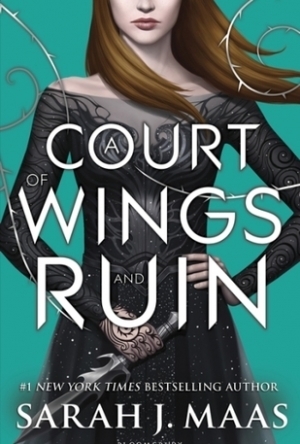

A Court of Wings and Ruin further expands the fantastic world that Sarah J. Maas has built for us. We predominantly saw Feyre’s life in the human world and Tamlin’s Spring Court in A Court of Thorns and Roses. Then we were given a look into the mysterious Night Court and some time to explore the Summer Court in A Court of Mist and Fury. We are finally able to experience the other Courts in the third book, beyond brief mentions.
The first Court we are given more information about is the Autumn Court, where Lucien hails from. Lucien is developed much further in this book, although we have gotten to know him fairly well throughout the first two books – it was nice to get more backstory and an explanation about why he is the male that he is. We also get to experience more of his father’s personality, as well as his eldest brother Eris’.
She describes each palace, forest and street in Prythian with such vivid detail that the entire land comes to life in your mind. The strongest part of this series is the world building, although that does not mean that any of the other aspects of the series are lacking. I personally believe that her strong suit is illustrating such fantastic lands and that shines in this book.
Each Court has its own way of ruling and they tend to keep to themselves. Although they have relations with one another, their alliances and communication are generally not very strong. This makes convincing them to all join together to face Hybern’s threat much more difficult, especially when all of the Courts don’t even agree that the King is a threat.
Although the main characters were well developed over the course of the first two novels, they continue to grow in the third. Elain and Nesta especially take a more central role in the storyline than they did before, which allows the reader to get to know them better. More of Amren’s backstory is also revealed, which was honestly not something I ever expected to learn about because I didn’t think any of the characters were brave enough to question her – despite desperately wanting to know more about her.
As you’re reading, you actually get chills as big actions are taken or decisions are made. You are that invested in the story, the characters, and the world that it physically affects you. I never felt that the pacing was slow, rather each event and scene built the narrative towards the final, explosive climax. It was a steady, enticing pace that pulled me in and never let go. If the book wasn’t as long as it is (and I didn’t have to leave my house to go to school), I would have sat there for ten hours straight reading.
Each character, good or bad has become real so their struggles, triumphs and pain resonate within you. It is the book that makes an impact like this that will stay with you. I cheered and cried in equal measure reading this book.
The stunning conclusion to this series left me breathless, and glad that though this story might be done the world of Prythian still had more tales to tell us.
The first Court we are given more information about is the Autumn Court, where Lucien hails from. Lucien is developed much further in this book, although we have gotten to know him fairly well throughout the first two books – it was nice to get more backstory and an explanation about why he is the male that he is. We also get to experience more of his father’s personality, as well as his eldest brother Eris’.
She describes each palace, forest and street in Prythian with such vivid detail that the entire land comes to life in your mind. The strongest part of this series is the world building, although that does not mean that any of the other aspects of the series are lacking. I personally believe that her strong suit is illustrating such fantastic lands and that shines in this book.
Each Court has its own way of ruling and they tend to keep to themselves. Although they have relations with one another, their alliances and communication are generally not very strong. This makes convincing them to all join together to face Hybern’s threat much more difficult, especially when all of the Courts don’t even agree that the King is a threat.
Although the main characters were well developed over the course of the first two novels, they continue to grow in the third. Elain and Nesta especially take a more central role in the storyline than they did before, which allows the reader to get to know them better. More of Amren’s backstory is also revealed, which was honestly not something I ever expected to learn about because I didn’t think any of the characters were brave enough to question her – despite desperately wanting to know more about her.
As you’re reading, you actually get chills as big actions are taken or decisions are made. You are that invested in the story, the characters, and the world that it physically affects you. I never felt that the pacing was slow, rather each event and scene built the narrative towards the final, explosive climax. It was a steady, enticing pace that pulled me in and never let go. If the book wasn’t as long as it is (and I didn’t have to leave my house to go to school), I would have sat there for ten hours straight reading.
Each character, good or bad has become real so their struggles, triumphs and pain resonate within you. It is the book that makes an impact like this that will stay with you. I cheered and cried in equal measure reading this book.
The stunning conclusion to this series left me breathless, and glad that though this story might be done the world of Prythian still had more tales to tell us.
Becca Major (96 KP) rated The Irregular at Magic High School: Vol. 1: Enrollment Arc, Part 1 in Books
Feb 5, 2018

Interesting premise (3 more)
Tatsuya
Mystery surrounding the Shiba siblings
Most of the side-characters
Information dumps (3 more)
General editing mistakes
Miyuki
Lack of male characters (that aren’t antagonists)
The Setup
The Irregular at Magic High School
Book by Tsutomu Sato
Review by Rip Major
The Irregular at Magic High School is about siblings Tatsuya and Miyuki and their experiences at First High. The school is split into two main groups, the Blooms, who are gifted with the ability to use and control magic, and Weeds, who can use magic, but aren’t as strong with it as the Blooms are. Miyuki, who is a prodigy with magic and has the brains to back it up, is placed with the Blooms. Tatsuya, on the other hand, is not as gifted with magic, so he is placed with the Weeds.
The plot is pretty anime-standard. Boy and girl go to a new school and participate in shenanigans. The majority of the book follows the day to day misadventures of Tatsuya and Miyuki as they deal with the fact that, while they are extremely close, they are essentially in different hierarchical classes. This culminates in Miyuki joining the Student Council and Tatsuya joining the Disciplinary Committee, even though both are reluctant about the whole thing.
Tatsuya is a very interesting character because he is constantly annoyed by his classmates and their shenanigans, most of which he gets drawn into. He seems like the type of character that would prefer to be in the background and be left to his own devices, but his status as main character simply won’t let him. It is actually quite amusing to read his inner monologue while things happen to and around him. He is actually quite smart, being able to work on CADs (the in-universe way to cast magic) with exceptional skill and speed. He is also a skilled martial artist, apparently knowing ninjutsu, or something similar. Additionally, he also has a very mechanical way of thinking, which includes shutting down parts of himself that would ordinarily be considered normal. For instance, there is a scene where he realizes his older classmate is arousing him, and he shuts it down. Basically, in a book where the POV changes often and usually without meaning, Tatsuya is a very interesting character to be in the head of.
Unfortunately, Miyuki isn’t nearly as interesting as her brother. She is beautiful, smart, and gifted; all of which makes her a little too perfect for me to really connect with. Her major flaw is that she has an unusual and uncomfortable obsession with her brother. Also, she just feels a lot flatter than most of the side characters. And I officially have nothing else to say about her.
In all honesty, most of what I found interesting about this book was certain aspects of Sato’s world-building, specifically the pseudo-science/magic marriage and how it is explained. I also like how mysterious the history of the siblings is. Very little about their relationships with their parents is revealed, or why they are living alone in their apartment. In fact, other than the basic setup of the plot and characteristics of the two, not much else is explored in this book. I am curious to see if the next book will reveal more.
Book by Tsutomu Sato
Review by Rip Major
The Irregular at Magic High School is about siblings Tatsuya and Miyuki and their experiences at First High. The school is split into two main groups, the Blooms, who are gifted with the ability to use and control magic, and Weeds, who can use magic, but aren’t as strong with it as the Blooms are. Miyuki, who is a prodigy with magic and has the brains to back it up, is placed with the Blooms. Tatsuya, on the other hand, is not as gifted with magic, so he is placed with the Weeds.
The plot is pretty anime-standard. Boy and girl go to a new school and participate in shenanigans. The majority of the book follows the day to day misadventures of Tatsuya and Miyuki as they deal with the fact that, while they are extremely close, they are essentially in different hierarchical classes. This culminates in Miyuki joining the Student Council and Tatsuya joining the Disciplinary Committee, even though both are reluctant about the whole thing.
Tatsuya is a very interesting character because he is constantly annoyed by his classmates and their shenanigans, most of which he gets drawn into. He seems like the type of character that would prefer to be in the background and be left to his own devices, but his status as main character simply won’t let him. It is actually quite amusing to read his inner monologue while things happen to and around him. He is actually quite smart, being able to work on CADs (the in-universe way to cast magic) with exceptional skill and speed. He is also a skilled martial artist, apparently knowing ninjutsu, or something similar. Additionally, he also has a very mechanical way of thinking, which includes shutting down parts of himself that would ordinarily be considered normal. For instance, there is a scene where he realizes his older classmate is arousing him, and he shuts it down. Basically, in a book where the POV changes often and usually without meaning, Tatsuya is a very interesting character to be in the head of.
Unfortunately, Miyuki isn’t nearly as interesting as her brother. She is beautiful, smart, and gifted; all of which makes her a little too perfect for me to really connect with. Her major flaw is that she has an unusual and uncomfortable obsession with her brother. Also, she just feels a lot flatter than most of the side characters. And I officially have nothing else to say about her.
In all honesty, most of what I found interesting about this book was certain aspects of Sato’s world-building, specifically the pseudo-science/magic marriage and how it is explained. I also like how mysterious the history of the siblings is. Very little about their relationships with their parents is revealed, or why they are living alone in their apartment. In fact, other than the basic setup of the plot and characteristics of the two, not much else is explored in this book. I am curious to see if the next book will reveal more.