Search

Purple Phoenix Games (2266 KP) rated Fantastiqa in Tabletop Games
Jul 30, 2021
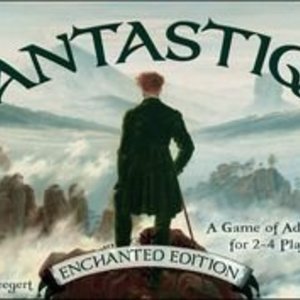


Ahh yes, Fantastiqa. Another to add to the list of, “I once owned, then I got rid of it, then missed it so much I had to reacquire it.” My wife loves when I do that… In any case, Fantastiqa gives players a very strange slant on deck building adventure games. Some would say the theme and its implementation will make or break it for players. Upon which side of the line do we fall?
Fantastiqa is a fantasy rock-paper-scissors style deck building adventure game. Now each of those mechanics individually can make for a wonderful children’s game. Looking upon the art in Fantastiqa will also nudge players towards that of a children’s game. Alas, Fantastiqa is not a children’s game and players will be scratching their heads for multiple reasons whilst playing it.
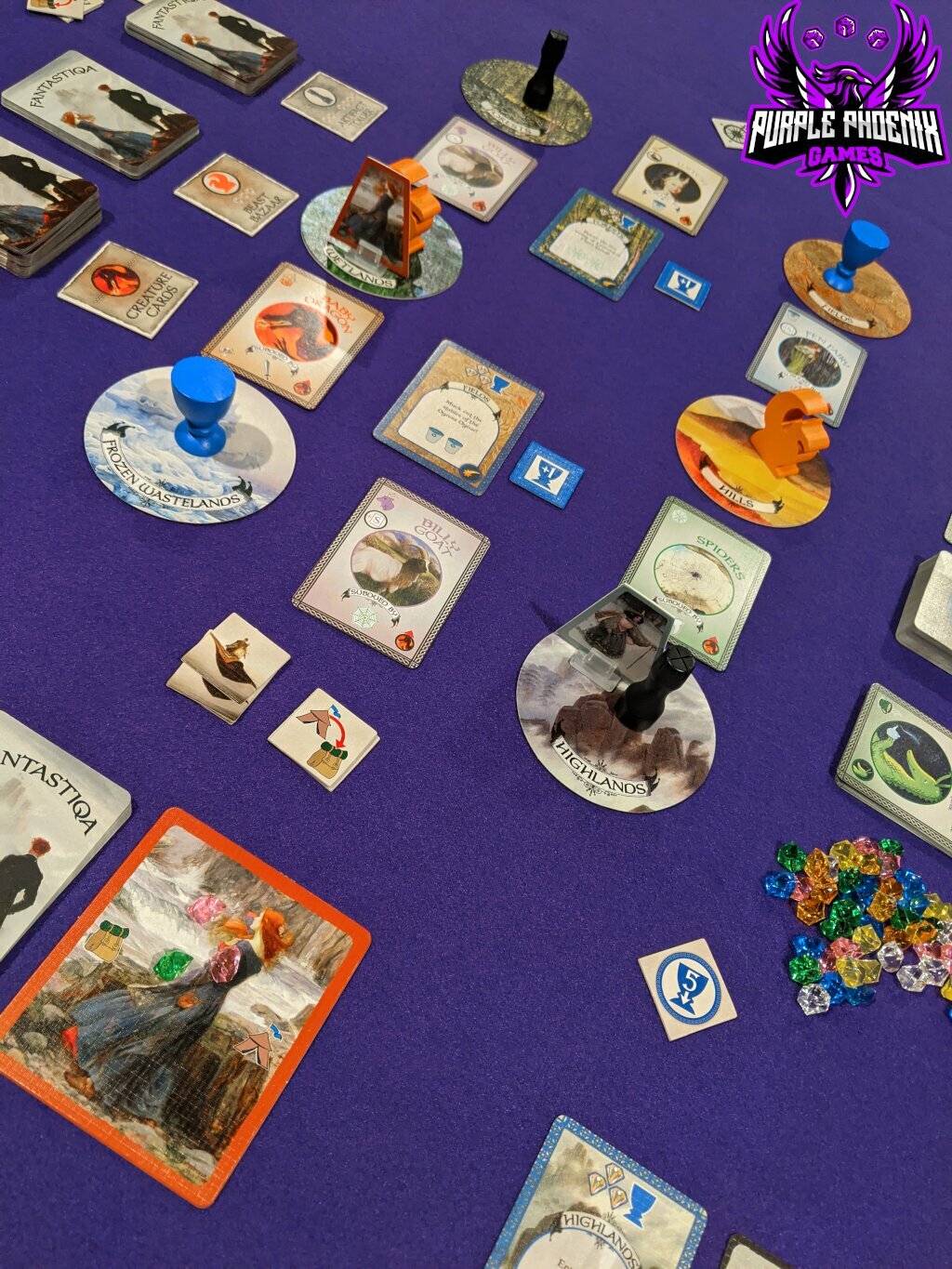
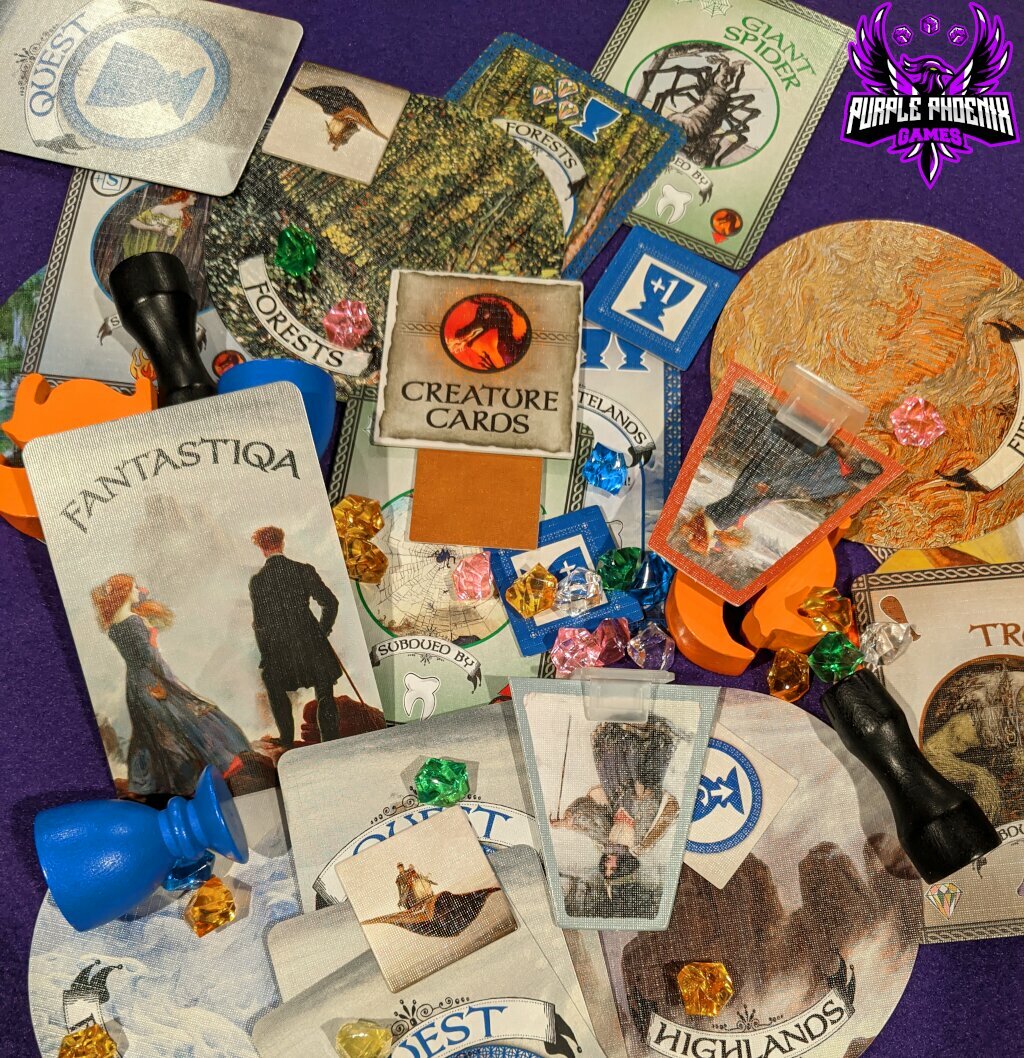
To setup, follow the instructions of the rulebook. There are just too many to list and explain here. Once setup, the game should look something like the photo above. Each player will have their draw decks identical to those of their opponents, and the play area is essentially a map of six locations with a statue at each location and decks of cards from which players will be drawing on their turns.
A typical turn will allow players to complete one of three different actions: Go Adventuring (where players will be using cards from their decks to subdue and recruit creatures between locations), Visit a Statue (where players can draw cards from the different decks for Beast, Artifact, and Quest cards to add to their discard piles, or pay gems to exile cards from their hands out of the game, or even pay gems to teleport to the matching statue on the other side of the board), or Complete a Quest (by discarding their appropriate cards that fulfill the quest requirements).
Turns can be very quick, or long and drawn out as players carefully choose which tactics to apply to the board on the table, while weighing the need for more powerful cards in their decks, and keeping up with the Joneses as they compete for VP on Quest cards. This is a deck builder, after all, so improving one’s deck is always the first consideration, but should a player oust those dang tea-drinking lazy dragon cards, or attempt to commit cards to a quest? The choices are quite numerous as play continues, and players realize that, again, this is no child’s game. Play continues in this fashion of players taking turns completing actions and quests until one player gains enough VP through completed quests to win the game.
Components. Every component in Fantastiqa is Fantastiq! I feel like the entire game is linen-finished, save for the little plastic gems and large statueeples. This game feels quite deluxe, and that will always be a big stamp of approval from me. One thing that can jar some players is the choice of art used between the player placards, card art, token art, and other components. They certainly don’t match at all, but I believe this tracks with the quirky nature of the theme and game overall, so I quite enjoy it. I can indeed understand why some would be opposed, but that is not how I feel at all.
I kinda bled into my final thoughts there, but I do love Fantastiqa. The theme is super weird: players answer a Help Wanted ad and long story short they meet a crazy old man who gives them a rucksack full of ordinary items: toothbrush, helmet, bat, and a dog. The dog runs away across the street and players find themselves in another world where these ordinary items are now transformed into magic wands, rams (the animals), clubs, and a dog, among other items. Players I have played with cannot accept that a spatula is a sword in the game and that just breaks immersion for them. I quite like it and the game’s wacky theme.
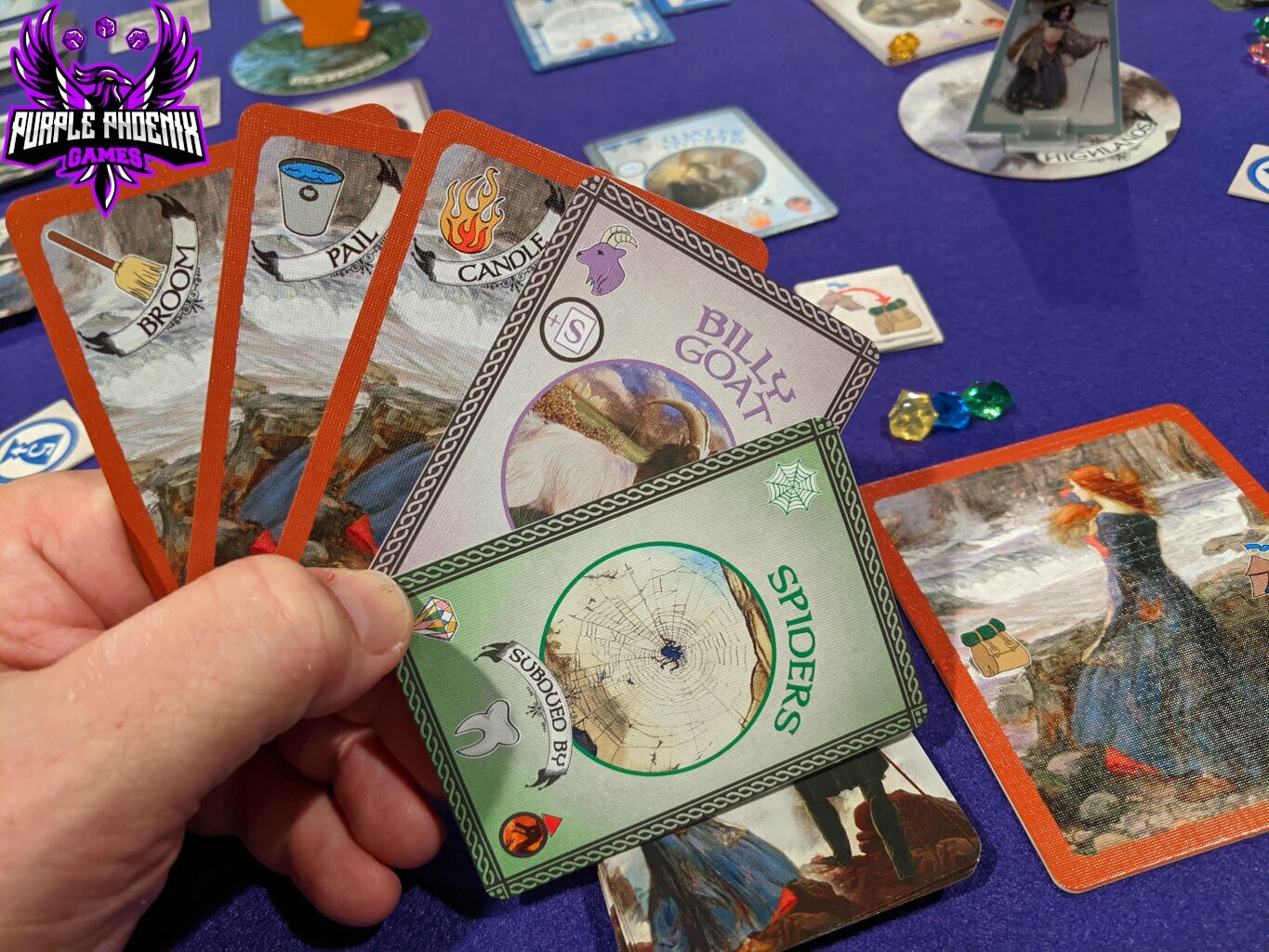
But the gameplay itself is also quite engaging. Traveling all over this new world subduing (and subsequently recruiting to your cause) Knights with spatulae and Giant Spiders with cat’s teeth is interesting and a fresh way to incorporate a theme into a deck builder as opposed to simply generating purchasing power and buying the cards that are wanted. The statue interactions are great ways to build up your deck as well, and keeping an eye on what quests others are gunning for as well as their personal hidden quests adds a bit of race-game feeling that some other deck builders lack. I can’t say enough great things about Fantastiqa, but completely understand how the theme may break the game for others’ enjoyment. That said, Purple Phoenix Games give this one a well-traveled 10 / 12. It’s weird, I’ll give you that, but it’s a good kind of weird. Check it out.
Fantastiqa is a fantasy rock-paper-scissors style deck building adventure game. Now each of those mechanics individually can make for a wonderful children’s game. Looking upon the art in Fantastiqa will also nudge players towards that of a children’s game. Alas, Fantastiqa is not a children’s game and players will be scratching their heads for multiple reasons whilst playing it.
To setup, follow the instructions of the rulebook. There are just too many to list and explain here. Once setup, the game should look something like the photo above. Each player will have their draw decks identical to those of their opponents, and the play area is essentially a map of six locations with a statue at each location and decks of cards from which players will be drawing on their turns.
A typical turn will allow players to complete one of three different actions: Go Adventuring (where players will be using cards from their decks to subdue and recruit creatures between locations), Visit a Statue (where players can draw cards from the different decks for Beast, Artifact, and Quest cards to add to their discard piles, or pay gems to exile cards from their hands out of the game, or even pay gems to teleport to the matching statue on the other side of the board), or Complete a Quest (by discarding their appropriate cards that fulfill the quest requirements).
Turns can be very quick, or long and drawn out as players carefully choose which tactics to apply to the board on the table, while weighing the need for more powerful cards in their decks, and keeping up with the Joneses as they compete for VP on Quest cards. This is a deck builder, after all, so improving one’s deck is always the first consideration, but should a player oust those dang tea-drinking lazy dragon cards, or attempt to commit cards to a quest? The choices are quite numerous as play continues, and players realize that, again, this is no child’s game. Play continues in this fashion of players taking turns completing actions and quests until one player gains enough VP through completed quests to win the game.
Components. Every component in Fantastiqa is Fantastiq! I feel like the entire game is linen-finished, save for the little plastic gems and large statueeples. This game feels quite deluxe, and that will always be a big stamp of approval from me. One thing that can jar some players is the choice of art used between the player placards, card art, token art, and other components. They certainly don’t match at all, but I believe this tracks with the quirky nature of the theme and game overall, so I quite enjoy it. I can indeed understand why some would be opposed, but that is not how I feel at all.
I kinda bled into my final thoughts there, but I do love Fantastiqa. The theme is super weird: players answer a Help Wanted ad and long story short they meet a crazy old man who gives them a rucksack full of ordinary items: toothbrush, helmet, bat, and a dog. The dog runs away across the street and players find themselves in another world where these ordinary items are now transformed into magic wands, rams (the animals), clubs, and a dog, among other items. Players I have played with cannot accept that a spatula is a sword in the game and that just breaks immersion for them. I quite like it and the game’s wacky theme.
But the gameplay itself is also quite engaging. Traveling all over this new world subduing (and subsequently recruiting to your cause) Knights with spatulae and Giant Spiders with cat’s teeth is interesting and a fresh way to incorporate a theme into a deck builder as opposed to simply generating purchasing power and buying the cards that are wanted. The statue interactions are great ways to build up your deck as well, and keeping an eye on what quests others are gunning for as well as their personal hidden quests adds a bit of race-game feeling that some other deck builders lack. I can’t say enough great things about Fantastiqa, but completely understand how the theme may break the game for others’ enjoyment. That said, Purple Phoenix Games give this one a well-traveled 10 / 12. It’s weird, I’ll give you that, but it’s a good kind of weird. Check it out.

Chris Sawin (602 KP) rated Hotel Transylvania 4 (2021) in Movies
Jan 22, 2022



The transformation sequences. (1 more)
The 2D animated end credits
Genndy Tartakovsky not directing (2 more)
Humor exchanged for annoying behavior
Feels almost like a soft reboot for a final film.
A Monstrous Monstrosity
Hotel Transylvania: Tranformania is the final film in the Hotel Transylvania franchise. With Genndy Tartakavsky no longer directing (he co-writes and executive produces this time around) and Adam Sandler and Kevin James not returning (Brian Hull and Brad Abrell now voice Dracula and Frankenstein), Transformania takes an awkward step back from the previous three films.
Despite some character designs (Bela in the second film, the Kraken in the third) and some tremendous end credit animations that are done in a very recognizable Tartakavsky style (think Dexter’s Lab or Powerpuff Girls), the films are mediocre at best and yet became a billion dollar franchise.
Hull and Abrell do a decent job matching their voices to the Drac and Frank characters. You may not have noticed the characters were voiced by someone else if you hadn’t known beforehand. However, the animation looks noticeably different. Maybe new directors Jennifer Kluska and Derek Drymon are to credit for that. Kluska was a storyboard artist on Hotel Transylvania 2 and 3 while Drymon was an executive producer of Adventure Time and was a storyboard artist on The Spongebob Squarepants Movie.
The film was also moved around several times thanks to COVID and the pandemic. Sony Pictures Releasing eventually nixed the film’s theatrical run and sold distribution rights to Amazon Studios. This is the only Hotel Transylvania film to be released directly to a streaming platform.
Considering that this is the fourth film, Transformania basically rewrites several characters to an extent that it ignores key details from other films. Johnny is now akin to Homer Simpson since he is dumber than he has ever been here. He had a stoner or frat boy with a heart of gold kind of vibe about him originally. He was very mellow by nature, but had seen a good chunk of the world and knew more than his behavior let on. He had stories even though he was young and he was likeable. Transformania turns him into a dumb and unfunny dork that is borderline offensive due to how annoying he is.
Dracula has lost whatever made him somewhat charming in the previous three films, as well. In Transformania, he’s looking to settle down with Ericka and retire from running the hotel. The intention is to give the hotel to Mavis and Johnny, but all of a sudden Dracula hates Johnny. The first three films are built around how close Johnny and Dracula become. Now Dracula just finds Johnny unbearable.
After establishing in the second film that Dennis is part vampire and has powers, that concept is totally erased in Transformania. Dracula hypnotizes Dennis in the beginning of the film and he remains that way for the bulk of the film without ever utilizing any sort of power or doing anything remotely relevant.
Instead of downright telling Johnny that he can’t stand him, Dracula lies and says that he can’t leave the hotel in the hands of a human; it can only be inherited by monsters. Johnny then discusses the matter with Abraham Van Helsing who uses his Monsterfication Ray to turn Johnny into a giant lizard-like monster. But the ray can also turn monsters into humans. Once Dracula discovers what Johnny has done, he attempts to turn Johnny back before Mavis finds out. The plan backfires and Dracula gets hit with the ray and is turned human. His friends Wayne, Griffin, Murray, and Frankenstein are also turned human. If a cure isn’t found, the results may be permanent.
The highlight of the film is the transformation sequences since they are noticeably inspired by the horror film genre; specifically An American Werewolf in London. The end credits sequence is also done in a similar style to the first three films, so that sequence is fairly entertaining as well.
Transformania otherwise feels like a downgrade all around and the bar wasn’t all the high to begin with. As expected, there is a dancing sequence that may or may not be something you look forward to. None of the gags come off as humorous as every character mostly seems to be aiming to be more obnoxious than the other. The “fun” lies within seeing the monster characters as humans. The most notable is Griffin who has been totally invisible until now.
Hotel Transylvania: Transformania had a lot of obstacles relating to its release and after viewing the film you can understand why. It’s a lukewarm sendoff that mostly feels like a lethargic attempt to recapture its former glory. It’s built around an entertaining concept that it doesn’t fully capitalize on. It ultimately obliterates character traits for trite gags and cliché punch lines.
Despite some character designs (Bela in the second film, the Kraken in the third) and some tremendous end credit animations that are done in a very recognizable Tartakavsky style (think Dexter’s Lab or Powerpuff Girls), the films are mediocre at best and yet became a billion dollar franchise.
Hull and Abrell do a decent job matching their voices to the Drac and Frank characters. You may not have noticed the characters were voiced by someone else if you hadn’t known beforehand. However, the animation looks noticeably different. Maybe new directors Jennifer Kluska and Derek Drymon are to credit for that. Kluska was a storyboard artist on Hotel Transylvania 2 and 3 while Drymon was an executive producer of Adventure Time and was a storyboard artist on The Spongebob Squarepants Movie.
The film was also moved around several times thanks to COVID and the pandemic. Sony Pictures Releasing eventually nixed the film’s theatrical run and sold distribution rights to Amazon Studios. This is the only Hotel Transylvania film to be released directly to a streaming platform.
Considering that this is the fourth film, Transformania basically rewrites several characters to an extent that it ignores key details from other films. Johnny is now akin to Homer Simpson since he is dumber than he has ever been here. He had a stoner or frat boy with a heart of gold kind of vibe about him originally. He was very mellow by nature, but had seen a good chunk of the world and knew more than his behavior let on. He had stories even though he was young and he was likeable. Transformania turns him into a dumb and unfunny dork that is borderline offensive due to how annoying he is.
Dracula has lost whatever made him somewhat charming in the previous three films, as well. In Transformania, he’s looking to settle down with Ericka and retire from running the hotel. The intention is to give the hotel to Mavis and Johnny, but all of a sudden Dracula hates Johnny. The first three films are built around how close Johnny and Dracula become. Now Dracula just finds Johnny unbearable.
After establishing in the second film that Dennis is part vampire and has powers, that concept is totally erased in Transformania. Dracula hypnotizes Dennis in the beginning of the film and he remains that way for the bulk of the film without ever utilizing any sort of power or doing anything remotely relevant.
Instead of downright telling Johnny that he can’t stand him, Dracula lies and says that he can’t leave the hotel in the hands of a human; it can only be inherited by monsters. Johnny then discusses the matter with Abraham Van Helsing who uses his Monsterfication Ray to turn Johnny into a giant lizard-like monster. But the ray can also turn monsters into humans. Once Dracula discovers what Johnny has done, he attempts to turn Johnny back before Mavis finds out. The plan backfires and Dracula gets hit with the ray and is turned human. His friends Wayne, Griffin, Murray, and Frankenstein are also turned human. If a cure isn’t found, the results may be permanent.
The highlight of the film is the transformation sequences since they are noticeably inspired by the horror film genre; specifically An American Werewolf in London. The end credits sequence is also done in a similar style to the first three films, so that sequence is fairly entertaining as well.
Transformania otherwise feels like a downgrade all around and the bar wasn’t all the high to begin with. As expected, there is a dancing sequence that may or may not be something you look forward to. None of the gags come off as humorous as every character mostly seems to be aiming to be more obnoxious than the other. The “fun” lies within seeing the monster characters as humans. The most notable is Griffin who has been totally invisible until now.
Hotel Transylvania: Transformania had a lot of obstacles relating to its release and after viewing the film you can understand why. It’s a lukewarm sendoff that mostly feels like a lethargic attempt to recapture its former glory. It’s built around an entertaining concept that it doesn’t fully capitalize on. It ultimately obliterates character traits for trite gags and cliché punch lines.
Purple Phoenix Games (2266 KP) rated Port Royal in Tabletop Games
Jun 12, 2019
Port Royal looks and sounds like a pirate-y game, but be warned – it’s not. It’s more about what gets done behind the scenes, in the port as you prepare to cast off on an adventure! You’ve got to hire a crew and trade with others to gather necesssry supplies. Put your bookkeeping to the test, and SEA if you’ve got what it takes. (See what I did there?)
Port Royal is the central hub for trading and commerce in the kingdom. Ships from distant countries come in to trade, and crew-members-for-hire wander the docks looking for work. Do you have what it takes to make a name for yourself in this bustling port? Put your bargaining skills to the test to find out!
DISCLAIMER: There are several expansions to this game, but we are not reviewing them at this time. Should we review them in the future we will either update this review or post a link to the new material here. -T
Port Royal is a card drafting game of press-your-luck in which players are trying to amass 12 or more Influence Points. Each turn is played in two phases: the Discovery Phase and the Trade and Hire Phase. During the Discovery Phase, the active player draws cards one at a time to create the Harbor for that turn. The cards revealed will either be Characters, Ships, Missions, or Tax cards. The active player can draw as many or as few cards as they would like, with one catch – if you reveal a ship with a flag matching one already in the Harbor, the turn is a bust and all cards are discarded! Think wisely before trying to push your luck when creating the Harbor! If you’re too risky, you could bust, but if you play it too safe, you won’t have many card choices for the next phase. During the Trade and Hire Phase, players interact with cards in the harbor. The number of cards players can take depends on the number of different ships in the Harbor. Players can hire characters by paying their hiring cost in gold, can discard ship cards and collect gold for performing a “trade,” or can complete Mission cards if they have the required symbols on their hired cards. The Discovery Phase is performed by the active player alone, but the Trade and Hire Phase can be performed by each player, in order, after the active player. If you decide to act on another player’s turn, you must pay them one gold coin. The game ends at the end of a round in which one player has amassed 12 or more Influence Points, collected from Character and Mission cards. The player with the most points wins!
One thing that I really like about Port Royal is that it’s a competitive game, but not a confrontational game. Besides paying to act on another player’s turn, there’s not a lot of player interaction, and as someone who can get pretty competitive, I really appreciate that. Yes, we are competing against each other, but with so little interaction, I’m more focused on my own strategy and cards than I am in trying to sabotage my fellow players. Another thing I like about Port Royal is the push-your-luck aspect of the Discovery Phase. I like it more than other push-your-luck games because all decisions are made by the active player – you’re not having to bluff or directly compete with another player when drawing your Harbor cards. It’s still a game of chicken, but against yourself. There’s still the element of push-your-luck, but it feels a little more safe than nerve-wracking.
All that being said, what I don’t like about Port Royal is the actual gameplay. Since there’s so little player interaction and the entire Discovery Phase is performed by one player alone, it feels like there’s a bit of downtime. Unless you’re the active player, you only get to act during half of every turn, so time is spent just sitting and watching other players. It ultimately all comes down to how quickly everyone performs their turns, but there’s just not a ton of engagement in my opinion. Don’t get me wrong – it’s a neat game. It just feels a little boring to play sometimes. It also takes some time to build up momentum to successfully execute a strategy. Everyone starts with 3 gold coins, but most cards cost more, and depending on when you get to act in the Trade and Hire Phase, any cards you could have afforded may already have been taken. So it might take several rounds before you’re able to really begin implementing a solid strategy, with the first few rounds just being a card-grab.
For the most part, I enjoy playing Port Royal. It’s mildly strategic, but the lack of interaction can make it feel a little stale sometimes. It’s not a game I pull out every single game night, but it’s one that I would most likely play if someone suggested it. Purple Phoenix Games gives Port Royal a buccaneer’s 7 / 12.
https://purplephoenixgames.wordpress.com/2019/04/16/port-royal-review/
Port Royal is the central hub for trading and commerce in the kingdom. Ships from distant countries come in to trade, and crew-members-for-hire wander the docks looking for work. Do you have what it takes to make a name for yourself in this bustling port? Put your bargaining skills to the test to find out!
DISCLAIMER: There are several expansions to this game, but we are not reviewing them at this time. Should we review them in the future we will either update this review or post a link to the new material here. -T
Port Royal is a card drafting game of press-your-luck in which players are trying to amass 12 or more Influence Points. Each turn is played in two phases: the Discovery Phase and the Trade and Hire Phase. During the Discovery Phase, the active player draws cards one at a time to create the Harbor for that turn. The cards revealed will either be Characters, Ships, Missions, or Tax cards. The active player can draw as many or as few cards as they would like, with one catch – if you reveal a ship with a flag matching one already in the Harbor, the turn is a bust and all cards are discarded! Think wisely before trying to push your luck when creating the Harbor! If you’re too risky, you could bust, but if you play it too safe, you won’t have many card choices for the next phase. During the Trade and Hire Phase, players interact with cards in the harbor. The number of cards players can take depends on the number of different ships in the Harbor. Players can hire characters by paying their hiring cost in gold, can discard ship cards and collect gold for performing a “trade,” or can complete Mission cards if they have the required symbols on their hired cards. The Discovery Phase is performed by the active player alone, but the Trade and Hire Phase can be performed by each player, in order, after the active player. If you decide to act on another player’s turn, you must pay them one gold coin. The game ends at the end of a round in which one player has amassed 12 or more Influence Points, collected from Character and Mission cards. The player with the most points wins!
One thing that I really like about Port Royal is that it’s a competitive game, but not a confrontational game. Besides paying to act on another player’s turn, there’s not a lot of player interaction, and as someone who can get pretty competitive, I really appreciate that. Yes, we are competing against each other, but with so little interaction, I’m more focused on my own strategy and cards than I am in trying to sabotage my fellow players. Another thing I like about Port Royal is the push-your-luck aspect of the Discovery Phase. I like it more than other push-your-luck games because all decisions are made by the active player – you’re not having to bluff or directly compete with another player when drawing your Harbor cards. It’s still a game of chicken, but against yourself. There’s still the element of push-your-luck, but it feels a little more safe than nerve-wracking.
All that being said, what I don’t like about Port Royal is the actual gameplay. Since there’s so little player interaction and the entire Discovery Phase is performed by one player alone, it feels like there’s a bit of downtime. Unless you’re the active player, you only get to act during half of every turn, so time is spent just sitting and watching other players. It ultimately all comes down to how quickly everyone performs their turns, but there’s just not a ton of engagement in my opinion. Don’t get me wrong – it’s a neat game. It just feels a little boring to play sometimes. It also takes some time to build up momentum to successfully execute a strategy. Everyone starts with 3 gold coins, but most cards cost more, and depending on when you get to act in the Trade and Hire Phase, any cards you could have afforded may already have been taken. So it might take several rounds before you’re able to really begin implementing a solid strategy, with the first few rounds just being a card-grab.
For the most part, I enjoy playing Port Royal. It’s mildly strategic, but the lack of interaction can make it feel a little stale sometimes. It’s not a game I pull out every single game night, but it’s one that I would most likely play if someone suggested it. Purple Phoenix Games gives Port Royal a buccaneer’s 7 / 12.
https://purplephoenixgames.wordpress.com/2019/04/16/port-royal-review/

Gareth von Kallenbach (980 KP) rated Motherless Brooklyn (2019) in Movies
Oct 31, 2019

With all the recent big action blockbuster movie releases recently, there is a genre that has been overlooked for some time, a good detective story. Most movies that take place in the 50’s tend to focus more on mob related backdrops and ruthless hits to draw in audiences. Motherless Brooklyn written, directed and starring Edward Norton looks to tell a story that harkens back to the day where gumshoes spoke to key individuals and followed the clues to get to the bottom of the case. This is long before forensics was a thing, and there were no fancy computer databases or DNA matching to utilize to narrow down the suspect pool. This was when it took the skills and abilities of the individual themselves to follow the clues and piece them together like a puzzle to solve each and every case.
Lionel Essrog (Edward Norton) is a private detective who works at a small P.I. firm trying to eek out a living in the streets of New York back in the late 50’s. Lionel along with his fellow gumshoes grew up in a Catholic orphanage that cemented the bond between them all as both friends and family. Lionel suffers from Tourette’s syndrome causing him to tick and burst out in unusual statements which only gets worse as he gets nervous or excited, however he also possesses a photographic memory, able to recall specific conversations and repeat them verbatim when asked.
On what begins as a seemingly routine job, things quickly turn deadly when Frank Minna (Bruce Willis) the lead private investigator (and owner) of the firm is gunned down in an alley. With very little information to go on and forced to confront each suspect while attempting to maintain his composure, Lionel must use his smarts and the help of his friends to piece together what Frank was involved in and unravel the mystery before anyone else gets hurt. His investigation will take him throughout the streets of New York at a time where racial tensions were bubbling over, and the lure of power and money was more than folks could ignore.
Edward Norton does an outstanding job with his portrayal of an average Joe who must overcome a debilitating mental condition to find those who killed his friend. He does such a believable job with his portrayal of Tourette’s that at times it’s hard to believe that he doesn’t suffer from it in his real life. Much the same way Jack Nicholson brought Obsessive-Compulsive Disorder into the public conscious in As Good as it Gets, Norton portrays his Tourette’s in a somewhat comical, but still respectable manner. In a way, his condition disappears into the background allowing his skills and smarts to come across first.
Norton is joined by a star-studded cast featuring Bruce Willis as his best friend Frank Minna, a seemingly well-intentioned man who has stood up and protected Lionel since child-hood. Alec Baldwin portrays a powerful and ruthless city official, looking to extend his power in the city while making a small fortune in the process. Willem DaFoe, fresh off of another Oscar worthy performance in The Lighthouse, once again brings his acting pedigree to the mix and last, but certainly not least Gugu Mbatha-Raw brings a smart and extremely strong female character with what should be an Oscar winning performance.
Motherless Brooklyn is a long movie (chalking in a bit over two and a half hours) and does take some time to gather its footing. This is a detective movie after all, and much of the action takes place speaking with suspects and researching in the library. It certainly brings an authentic feel to detective work in the 50’s and is a surprisingly refreshing detour from the onslaught of action and superhero movies which have dominated the screens in 2019. New York in the 50’s comes to life with the incredible costumes, vehicles and just overall feel of what the city must have been like back in the day. It’s a testament to how much wardrobe and attention to detail can take the viewers back in time. For those who lack the sort of patience that this movie will certainly require, it may seem a bit overwhelming to consider, however once the viewers settle in, they are in for a treat as they join Lionel in piecing the puzzle together, to sort out what led to the death of his friend.
Motherless Brooklyn was exactly the type of movie I was hoping for, a gritty detective movie that isn’t overly concerned with outrageous plots or frantic gun play. It’s a movie about gathering the clues, investigating the leads, and seeing where it takes you. The star-studded cast is outstanding, and I certainly cannot over emphasize the pivotal role that Norton brings to the screen. If old crime novels and private investigator stories are your cup of tea, you’ll find that Motherless Brooklyn checks off all the boxes. In a sea of superhero movies and high action thrillers, it’s refreshing to come across a film that brings some realism back to the cinema.
Lionel Essrog (Edward Norton) is a private detective who works at a small P.I. firm trying to eek out a living in the streets of New York back in the late 50’s. Lionel along with his fellow gumshoes grew up in a Catholic orphanage that cemented the bond between them all as both friends and family. Lionel suffers from Tourette’s syndrome causing him to tick and burst out in unusual statements which only gets worse as he gets nervous or excited, however he also possesses a photographic memory, able to recall specific conversations and repeat them verbatim when asked.
On what begins as a seemingly routine job, things quickly turn deadly when Frank Minna (Bruce Willis) the lead private investigator (and owner) of the firm is gunned down in an alley. With very little information to go on and forced to confront each suspect while attempting to maintain his composure, Lionel must use his smarts and the help of his friends to piece together what Frank was involved in and unravel the mystery before anyone else gets hurt. His investigation will take him throughout the streets of New York at a time where racial tensions were bubbling over, and the lure of power and money was more than folks could ignore.
Edward Norton does an outstanding job with his portrayal of an average Joe who must overcome a debilitating mental condition to find those who killed his friend. He does such a believable job with his portrayal of Tourette’s that at times it’s hard to believe that he doesn’t suffer from it in his real life. Much the same way Jack Nicholson brought Obsessive-Compulsive Disorder into the public conscious in As Good as it Gets, Norton portrays his Tourette’s in a somewhat comical, but still respectable manner. In a way, his condition disappears into the background allowing his skills and smarts to come across first.
Norton is joined by a star-studded cast featuring Bruce Willis as his best friend Frank Minna, a seemingly well-intentioned man who has stood up and protected Lionel since child-hood. Alec Baldwin portrays a powerful and ruthless city official, looking to extend his power in the city while making a small fortune in the process. Willem DaFoe, fresh off of another Oscar worthy performance in The Lighthouse, once again brings his acting pedigree to the mix and last, but certainly not least Gugu Mbatha-Raw brings a smart and extremely strong female character with what should be an Oscar winning performance.
Motherless Brooklyn is a long movie (chalking in a bit over two and a half hours) and does take some time to gather its footing. This is a detective movie after all, and much of the action takes place speaking with suspects and researching in the library. It certainly brings an authentic feel to detective work in the 50’s and is a surprisingly refreshing detour from the onslaught of action and superhero movies which have dominated the screens in 2019. New York in the 50’s comes to life with the incredible costumes, vehicles and just overall feel of what the city must have been like back in the day. It’s a testament to how much wardrobe and attention to detail can take the viewers back in time. For those who lack the sort of patience that this movie will certainly require, it may seem a bit overwhelming to consider, however once the viewers settle in, they are in for a treat as they join Lionel in piecing the puzzle together, to sort out what led to the death of his friend.
Motherless Brooklyn was exactly the type of movie I was hoping for, a gritty detective movie that isn’t overly concerned with outrageous plots or frantic gun play. It’s a movie about gathering the clues, investigating the leads, and seeing where it takes you. The star-studded cast is outstanding, and I certainly cannot over emphasize the pivotal role that Norton brings to the screen. If old crime novels and private investigator stories are your cup of tea, you’ll find that Motherless Brooklyn checks off all the boxes. In a sea of superhero movies and high action thrillers, it’s refreshing to come across a film that brings some realism back to the cinema.
Purple Phoenix Games (2266 KP) rated Ticket to Ride in Tabletop Games
Jan 9, 2020
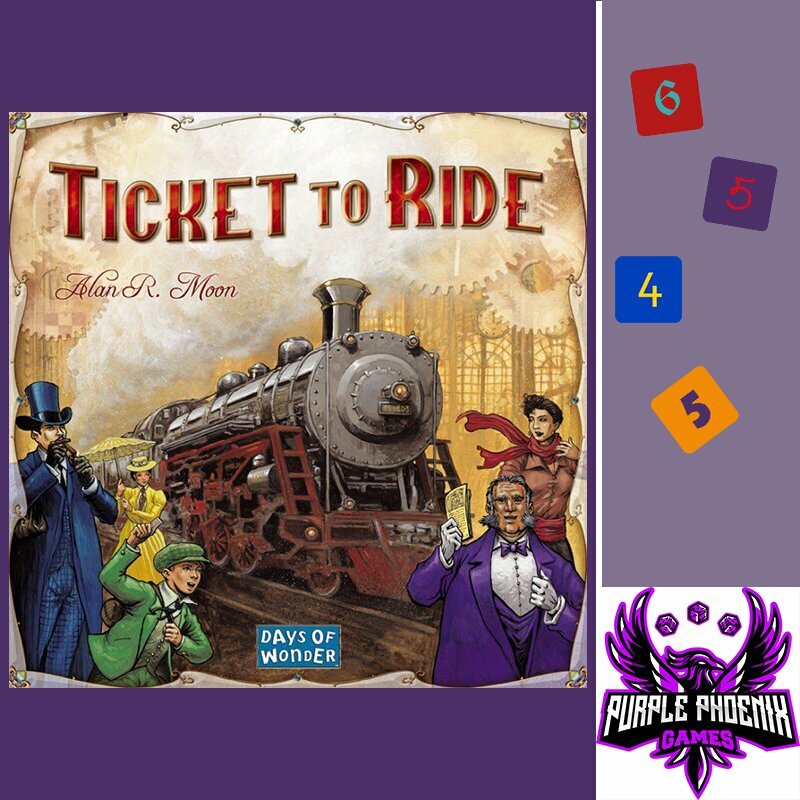
I am one of the remaining few who reviewers who haven’t put in their two cents on Ticket to Ride. Why? Is it bad? No. Am I lazy? No. It’s really because I don’t think I have anything new to say about it that hasn’t already been said a hundred times. So this review on this game will be a little different from me. Instead of going over the rules and such (however truncated they typically are from me) I will question how well this game has aged for me.
Ticket to Ride is one of those games that has really hit it big in the mass market. You can find it all over in big box stores, in FLGS, online, secondary market, just everywhere. But why? And for this long? Ticket to Ride (TTR) came out in 2004. A mere 15 years ago. While that doesn’t really sound like a long time, in contrast to today’s game industry it is an eternity. With thousands upon thousands of games being released into the market through direct publish, Kickstarter/crowd funding, and big releases at conventions it’s hard to believe that you can still find this hanging with the exciting, fresh new games.
What I truly believe is magical about this game is its simplicity. “You have two main options: take some cards or play some cards.” When you can start a teach of a game by saying that, your players are invested right away because they know you aren’t going to bog them down with rules upon rules. “If you decide to take cards you can take these colored train cards or you can take new route ticket cards.” So now players have two choices from gaining cards. “If you decide to play cards you need to play cards of a color and number matching whichever route between two connecting cities on the map you like.” Done. The game is explained. Yeah, you can fight me about the endgame scoring stuff like longest route and whatnot, but for new gamers, you have explained this classic in three sentences. It’s so beautiful when a game allows you to teach it so quickly.
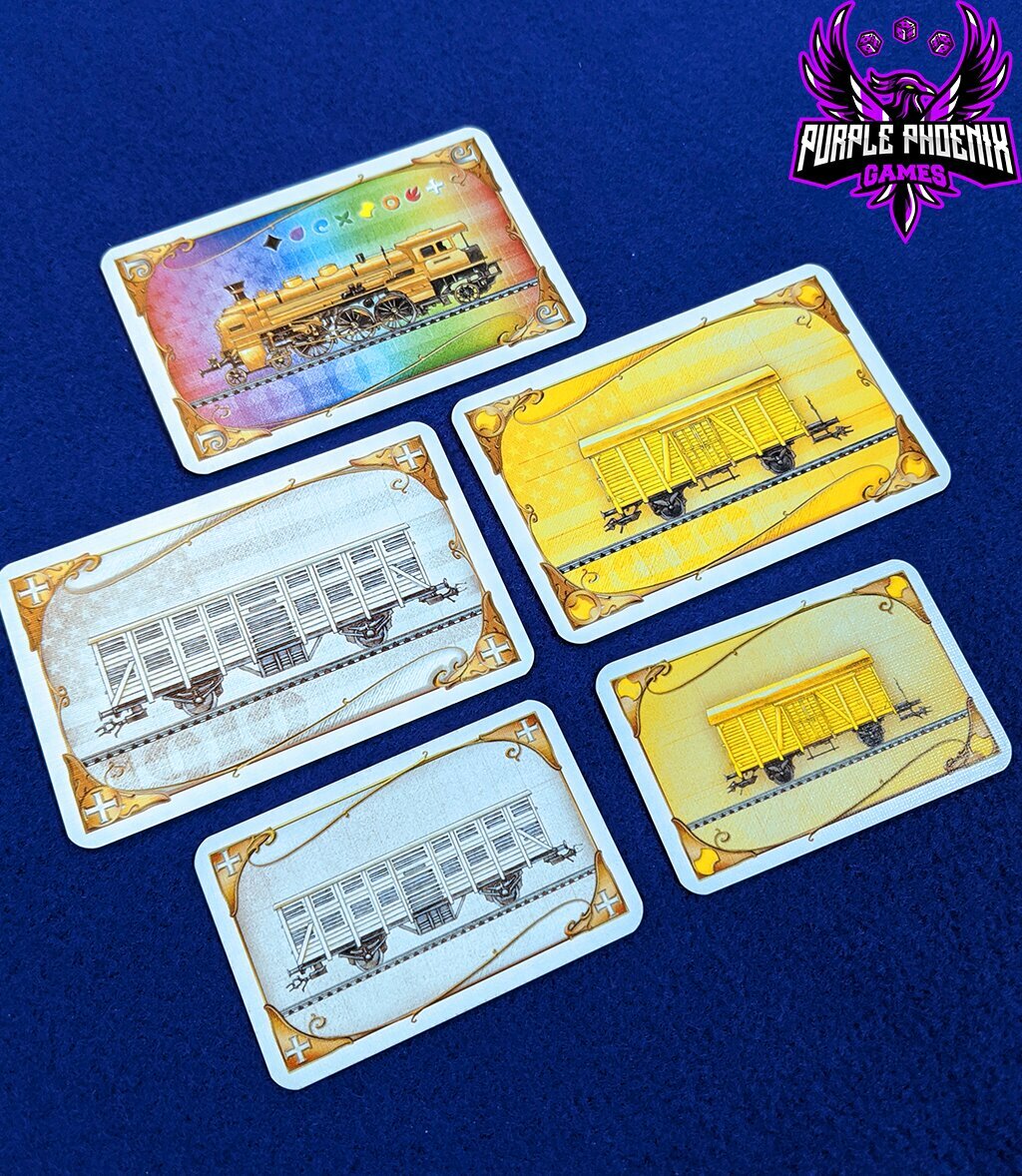
But that surely means that this is an easy game, right? With so few rules and such. Well, no. It’s not really “easy” at all. While your main rules are light, the strategy and tactics during play can cause feelings of joy and delight as well as frustration and concern as you see someone claim the route you need to connect to two cities on the map. Of course, you can’t explain that to your new players right away. You want them to experience these feelings organically and fully. It’s what makes TTR a really great game: having your well-laid plans just shot to smithereens by the guy who can’t tell the difference between the white train cars and the wild rainbow train cars.
DISCLAIMER: I play with the 1910 expansion, which is a MUST. The larger cards are way easier to play with. See photo below with comparisons from base game on bottom with the larger 1910 cards above. YMMV, but I will always play using this expansion. -T
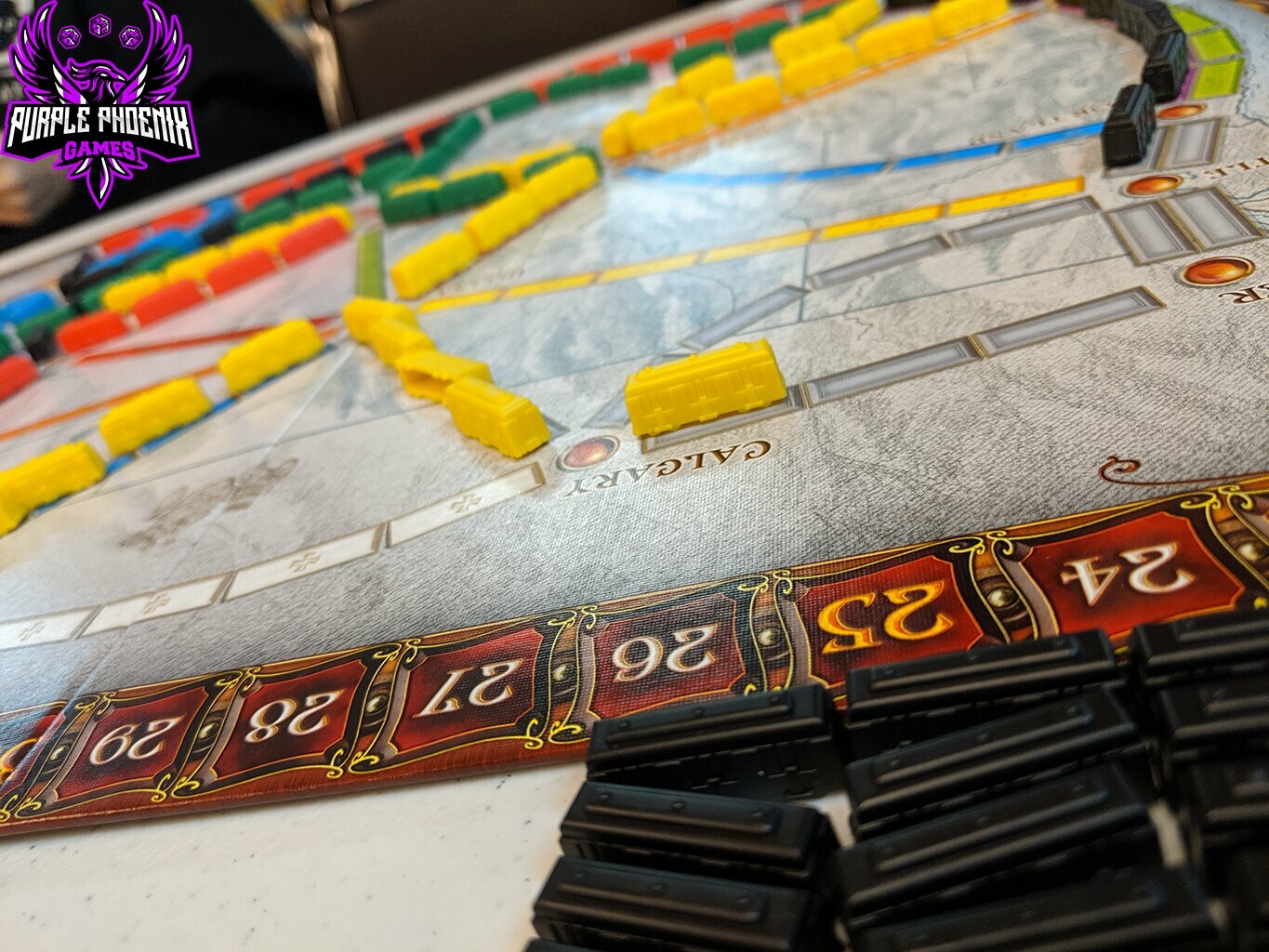
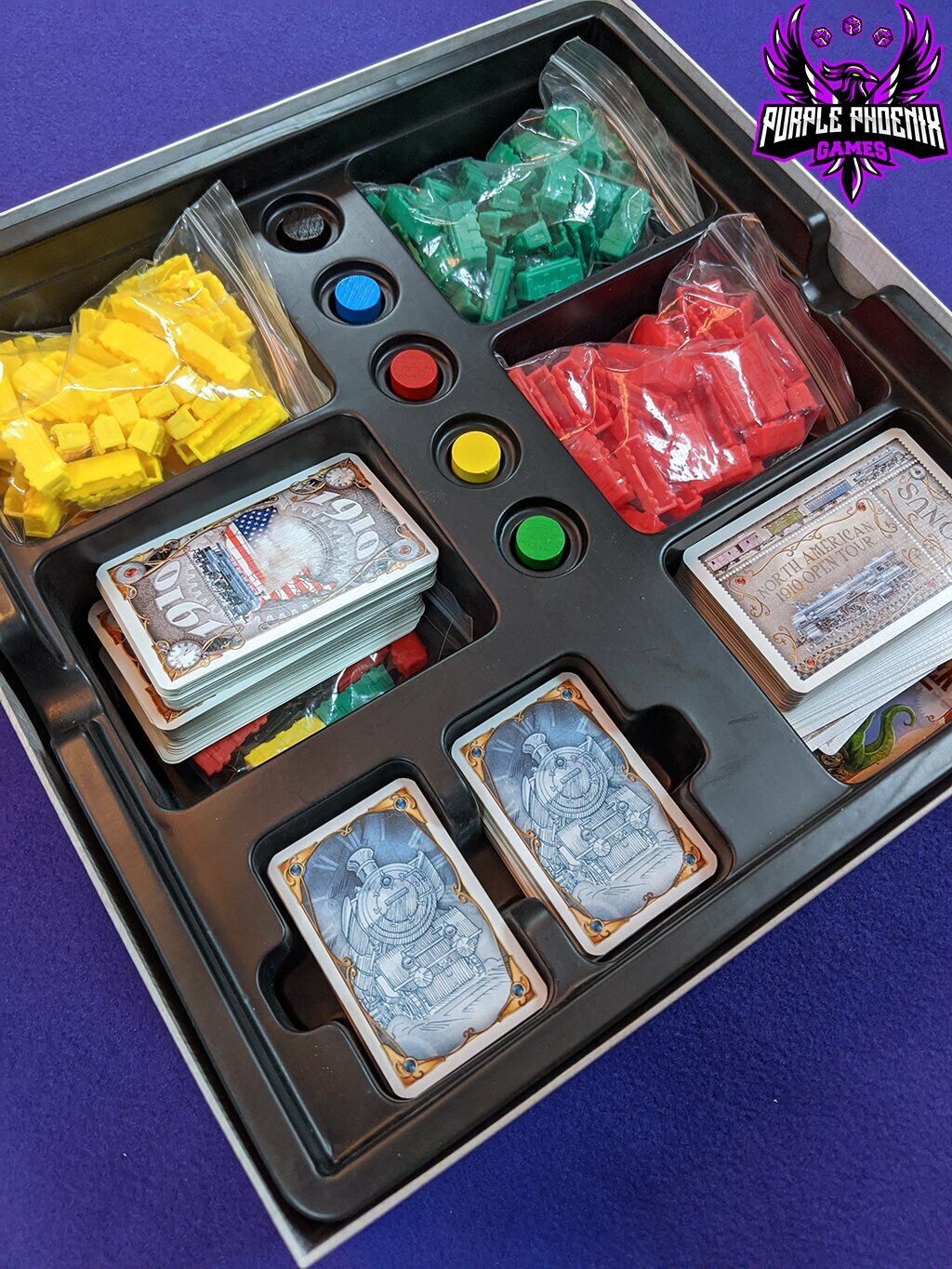
Components. Let’s compare components to some current or newer games. The game board is laid out really well, and the artwork is sparse and not over-busy on the board. This is a HUGE plus for me. I like nothing more than for the board to offer thematic elements and feeling without pelting my eyes with too much distraction. The cards were a bad choice. Not because the art or the quality on them is bad – because that’s not what I am saying. The size of the cards was a poor choice. I did purchase the 1910 expansion and simply will not play my copy without it. I recently played TTR for GenCan’t 2019 at my FLGS with OG base cards and found myself dreaming of the 1910 cards. The score tracker discs are of industry-standard quality for scoring discs. The plastic train car pieces are still just as wonderful to handle and play with as are many other more modern components. Seriously just as good. TTR components (and really, most of the time Days of Wonder components in general) are really great.
So do I still enjoy playing it? You betcha, don’tcha know. I still love seeing the board in front of me, agonizing over the route tickets I am dealt, and trying to decide if I should go for the New York to Los Angeles, or keep it simple with multiple routes along the Mississippi River. I still love the panic that ensues when I see people hoarding train cards, just knowing that they will soon be on the attack and their train car collection will dwindle to almost endgame levels in too few rounds for me to complete my masterpiece. I guess I still really love it.
Is Ticket to Ride my favorite game? No. But I’ll tell you what. I hadn’t played it in a couple years, and after this weekend’s play, it has moved up on my list by several spaces. It still holds a special place in my heart, and also the hearts of my team. That’s why Purple Phoenix Games gives Ticket to Ride a retrospective 20 / 24. It’s still great!
Ticket to Ride is one of those games that has really hit it big in the mass market. You can find it all over in big box stores, in FLGS, online, secondary market, just everywhere. But why? And for this long? Ticket to Ride (TTR) came out in 2004. A mere 15 years ago. While that doesn’t really sound like a long time, in contrast to today’s game industry it is an eternity. With thousands upon thousands of games being released into the market through direct publish, Kickstarter/crowd funding, and big releases at conventions it’s hard to believe that you can still find this hanging with the exciting, fresh new games.
What I truly believe is magical about this game is its simplicity. “You have two main options: take some cards or play some cards.” When you can start a teach of a game by saying that, your players are invested right away because they know you aren’t going to bog them down with rules upon rules. “If you decide to take cards you can take these colored train cards or you can take new route ticket cards.” So now players have two choices from gaining cards. “If you decide to play cards you need to play cards of a color and number matching whichever route between two connecting cities on the map you like.” Done. The game is explained. Yeah, you can fight me about the endgame scoring stuff like longest route and whatnot, but for new gamers, you have explained this classic in three sentences. It’s so beautiful when a game allows you to teach it so quickly.
But that surely means that this is an easy game, right? With so few rules and such. Well, no. It’s not really “easy” at all. While your main rules are light, the strategy and tactics during play can cause feelings of joy and delight as well as frustration and concern as you see someone claim the route you need to connect to two cities on the map. Of course, you can’t explain that to your new players right away. You want them to experience these feelings organically and fully. It’s what makes TTR a really great game: having your well-laid plans just shot to smithereens by the guy who can’t tell the difference between the white train cars and the wild rainbow train cars.
DISCLAIMER: I play with the 1910 expansion, which is a MUST. The larger cards are way easier to play with. See photo below with comparisons from base game on bottom with the larger 1910 cards above. YMMV, but I will always play using this expansion. -T
Components. Let’s compare components to some current or newer games. The game board is laid out really well, and the artwork is sparse and not over-busy on the board. This is a HUGE plus for me. I like nothing more than for the board to offer thematic elements and feeling without pelting my eyes with too much distraction. The cards were a bad choice. Not because the art or the quality on them is bad – because that’s not what I am saying. The size of the cards was a poor choice. I did purchase the 1910 expansion and simply will not play my copy without it. I recently played TTR for GenCan’t 2019 at my FLGS with OG base cards and found myself dreaming of the 1910 cards. The score tracker discs are of industry-standard quality for scoring discs. The plastic train car pieces are still just as wonderful to handle and play with as are many other more modern components. Seriously just as good. TTR components (and really, most of the time Days of Wonder components in general) are really great.
So do I still enjoy playing it? You betcha, don’tcha know. I still love seeing the board in front of me, agonizing over the route tickets I am dealt, and trying to decide if I should go for the New York to Los Angeles, or keep it simple with multiple routes along the Mississippi River. I still love the panic that ensues when I see people hoarding train cards, just knowing that they will soon be on the attack and their train car collection will dwindle to almost endgame levels in too few rounds for me to complete my masterpiece. I guess I still really love it.
Is Ticket to Ride my favorite game? No. But I’ll tell you what. I hadn’t played it in a couple years, and after this weekend’s play, it has moved up on my list by several spaces. It still holds a special place in my heart, and also the hearts of my team. That’s why Purple Phoenix Games gives Ticket to Ride a retrospective 20 / 24. It’s still great!
Purple Phoenix Games (2266 KP) rated Crazier Eights: Olympus in Tabletop Games
Feb 25, 2020

War. Old Maid. Go Fish. Crazy Eights. These are classic card games we probably all grew up playing. There have been many re-themes and new difficulty layers spread upon them to make them even more interesting. While UNO certainly has cornered the market on the Crazy Eights base, we have a new contender: Crazier Eights. Recoculous has published several versions of this card game with different themes: Camelot, Avalon, One Thousand & One Nights, and Shahrzad. Today we are taking a preview of Crazier Eights: Olympus.
You HAVE played Crazy Eights right? The card game where you attempt to be the first to exhaust your hand of cards, but you can only play down if you can match the suit or number on top of the discard pile? And if you can’t, you throw down an 8 as a wild and call the color to be played next? Well there you have the easy rules. Crazier Eights: Olympus (which I will from here call C8O) holds basically the same rule-set with a few new mechanics and a theme. The win condition is still the same: be the first to exhaust your hand of cards, but to win you will need to play your hand strategically against your opponents.
DISCLAIMER: We were provided a prototype copy of this game for the purposes of this review. These are preview copy components, and I do not know for sure if the final components will be any different from these shown. Also, it is not my intention to detail every rule in the game. You are invited to back the game through the Kickstarter campaign, or purchase it through any retailers stocking it after fulfillment. -T
To setup, shuffle the large deck of cards and place the deck in the middle of the table. Flip the top card to begin the discard pile and dictate the first card play. Deal each player seven cards and you are ready to begin!
The turn structure is familiar: check for any “start of turn” effects and apply them, draw a card, play and/or discard a card, then resolve any “end of turn” effects. The deck is comprised of Events and Assets in different colors (suits) and numbers like in a typical deck of playing cards. After checking and resolving start of turn effects on Asset cards in your personal tableau, you must draw a card from the deck. This is where C8O strays from OG Crazy Eights a bit. You may play a card from your hand (Assets and Events) and discard a card to the discard pile (matching the suit/number/or an Eight), or simply play a card from your hand without discarding. Cards played from your hand can be Event cards that are played, resolved, and then discarded to the bottom of the discard pile, or an Asset card that is played to your tableau that cause chain reactions or other abilities on future turns. Next, resolve any end of turn effects from Assets in your tableau before the next player begins their turn.
Play continues in this fashion until one player has rid themselves of their hand and is crowned the Master of Olympus! Or at least, the winner of the game.
Components. This game is a box full of cards. Again, as I do not know if these components will be altered at all, I will comment on what we were provided. The cards are fine. The layout makes sense, and the art on the faces of the cards remind me of very classic art depicting ancient Grecian scenes. I am no art historian, so I do not know if they are existing art pieces or new ones crafted for this game, but either way, they are a joy to behold… if you can spend the time appreciating the art instead of tracking what cards you need to play and what effects you can chain together (that was me). Extra points to the Recoculous team for associating symbols with the different suit colors for our colorblind friends. This is something that unfortunately goes unaddressed far too often.
This implementation is the first Crazier Eights we have had the chance to try, and I can say that we really enjoyed our plays of it. The game comes with many interesting and varied effects to craft an ingenious strategy, and the art is stellar. Beware of playing with AP-prone gamers, as there is a lot going on and it is more than just a skinned Crazy Eights. However, now having played this several times, I can say that it is my favorite Crazy Eights derivative and certainly worthy of a look. If your game collection is sorely lacking in ancient Greek-themed card games, or if you want a hybrid game of old school rules with interesting twists, then do consider backing this one or purchasing one of its predecessors.
PS – Don’t worry if, while you are playing, you have all your Assets stolen or destroyed. I have won the game with zero Assets in front of me while opponents have had eight, ironically. Assets are great, but you still need to shed your hand.
You HAVE played Crazy Eights right? The card game where you attempt to be the first to exhaust your hand of cards, but you can only play down if you can match the suit or number on top of the discard pile? And if you can’t, you throw down an 8 as a wild and call the color to be played next? Well there you have the easy rules. Crazier Eights: Olympus (which I will from here call C8O) holds basically the same rule-set with a few new mechanics and a theme. The win condition is still the same: be the first to exhaust your hand of cards, but to win you will need to play your hand strategically against your opponents.
DISCLAIMER: We were provided a prototype copy of this game for the purposes of this review. These are preview copy components, and I do not know for sure if the final components will be any different from these shown. Also, it is not my intention to detail every rule in the game. You are invited to back the game through the Kickstarter campaign, or purchase it through any retailers stocking it after fulfillment. -T
To setup, shuffle the large deck of cards and place the deck in the middle of the table. Flip the top card to begin the discard pile and dictate the first card play. Deal each player seven cards and you are ready to begin!
The turn structure is familiar: check for any “start of turn” effects and apply them, draw a card, play and/or discard a card, then resolve any “end of turn” effects. The deck is comprised of Events and Assets in different colors (suits) and numbers like in a typical deck of playing cards. After checking and resolving start of turn effects on Asset cards in your personal tableau, you must draw a card from the deck. This is where C8O strays from OG Crazy Eights a bit. You may play a card from your hand (Assets and Events) and discard a card to the discard pile (matching the suit/number/or an Eight), or simply play a card from your hand without discarding. Cards played from your hand can be Event cards that are played, resolved, and then discarded to the bottom of the discard pile, or an Asset card that is played to your tableau that cause chain reactions or other abilities on future turns. Next, resolve any end of turn effects from Assets in your tableau before the next player begins their turn.
Play continues in this fashion until one player has rid themselves of their hand and is crowned the Master of Olympus! Or at least, the winner of the game.
Components. This game is a box full of cards. Again, as I do not know if these components will be altered at all, I will comment on what we were provided. The cards are fine. The layout makes sense, and the art on the faces of the cards remind me of very classic art depicting ancient Grecian scenes. I am no art historian, so I do not know if they are existing art pieces or new ones crafted for this game, but either way, they are a joy to behold… if you can spend the time appreciating the art instead of tracking what cards you need to play and what effects you can chain together (that was me). Extra points to the Recoculous team for associating symbols with the different suit colors for our colorblind friends. This is something that unfortunately goes unaddressed far too often.
This implementation is the first Crazier Eights we have had the chance to try, and I can say that we really enjoyed our plays of it. The game comes with many interesting and varied effects to craft an ingenious strategy, and the art is stellar. Beware of playing with AP-prone gamers, as there is a lot going on and it is more than just a skinned Crazy Eights. However, now having played this several times, I can say that it is my favorite Crazy Eights derivative and certainly worthy of a look. If your game collection is sorely lacking in ancient Greek-themed card games, or if you want a hybrid game of old school rules with interesting twists, then do consider backing this one or purchasing one of its predecessors.
PS – Don’t worry if, while you are playing, you have all your Assets stolen or destroyed. I have won the game with zero Assets in front of me while opponents have had eight, ironically. Assets are great, but you still need to shed your hand.

Bob Mann (459 KP) rated Eurovision Song Contest: The Story of Fire Saga (2020) in Movies
Jun 27, 2020


Rachel McAdams and Dan Stevens steal most of the scenes (1 more)
A real feelgood movie that spoofs the unspoofable pretty well
My lovely farce
Will Ferrell's output over the last few years has been decidedly patchy. I have to go back to "Get Hard" to find one of his movies that really got to my funny bone. But this latest Netflix offering hits the spot for me.
We start with the song recently voted the number one Eurovision song of all time by UK viewers: "Waterloo" by Abba. Young Lars Erickssong (LOL) (Alfie Melia) is transfixed watching the 1974 Eurovision winner with his recently bereaved father and local Lothario Erick (Pierce Brosnan). (Mental note to women: never marry Brosnan on screen... he gets through wives faster than you can murder "S.O.S."). Also present are his friends and young Sigrit ("probably not by sister") Ericksdottir (Sophia-Grace Donnelly). Lars vows to one day stand on that stage and make his father and his remote Icelandic fishing village proud.
Now all grown up, Lars (now Will Ferrell) and Sigrit (now Rachel McAdams) are still pursuing their dream of representing Iceland in the upcoming Eurovision Song Contest. They are, of course, dreadful - - so they should fit right in! But their way is blocked by the immensely talented Katiana (Demi Lovato) and all seems hopeless. Will Sigrit's faith in the power of the Elves see them through?
There's an obvious problem here. The Eurovision Song Contest is in itself so bat-s**t bonkers that it is almost impossible to spoof. (If anyone is not on this wavelength, checkout the genuine Russian entry in this year's (cancelled) contest on Youtube). But the team here (writers Will Ferrell and Andrew Steele and director David "The Judge" Dobkin) do a really great job. I'd love to know what a US audience - who I guess will mostly be unfamiliar with Eurovision - make of this. Since Australia are now honorary Europeans in the contest.... wouldn't it be great if there was a Mexican mariachi band attending and a country and western act from the States? (Brits would love the US to be involved.... as spoofed in the film, there's only one country European's hate more than the UK.... be nice to have someone else to join us in the "nul points" club!)
Wherever you may be on the "Ferrell-funny-or-not-ometer", there's one thing I hope we can all agree on here, and that is that Rachel McAdams continues to shine as a comic lead. She was fantastic in "Game Night" - one of my favourite comedies of recent years - and here she is both gorgeous and hilarious. She knocks it out of the park playing the elf-loving Icelandic pixie with the golden voice. (McAdams "sings" but is significantly "helped" in the mix by Swedish pop star Molly Sandén (aka My Marianne)).
Here she even gets to almost reprise her wonderful "YEESSSSS! Oh no, he died!" line from "Game Night".
Almost matching her in the scene-stealing stakes though is Downton's Dan Stevens as Lemtov: a Russian 'Tom Jones'-like contestant singing "Lion of Love" ("Let's get together; I'm a lion lover; And I hunt for love!"). He's DEFINITELY not gay ("There are no gays in Russia") but are his multi-millions enough to turn Sigrit's head?
For those who love their annual Eurovision parties, there are also an impressive array of nice cameos that will delight.
But where the film-makers really score (no pun intended) is making the music so fitting. Some of the tracks make you think "Yeah, if this was the real content, this might have got my vote". Director Dobkin is quoted as saying "It's okay if it's funny, but it has to be really good music. It has to still be great and just kitschy enough to be Eurovision, because that's part of what's fun about Eurovision" (Source: Vulture). Very true. This success is down to the involvement of pop writer/producer Savan Kotecha on the project: the man behind hits by Katy Petty, Ariana Grande and Ellie Goulding.
A comedy needs to make me laugh, and this one really did - numerous times. It's not just the dialogue. Some of the cut-away scenes are priceless and perfectly executed: jumping whales; a collapsing glacier; a small slamming door!
Sure, it borrows from a number of other sources in its plot: most notably THAT episode of "Father Ted" and the rap-battle scenes from "Pitch Perfect". And sure, some of the outRAGEOUS Icelandic accents sometimes swerve into an alarming mix of Indian, Welsh and Caribbean dialects! But above all, this is movie with real heart. The plot is pretty well signposted, but the finale still packs a (surprisingly) hefty emotional punch, and it leaves you with a really nice afterglow.
As we struggle out of Covid lockdown, it may not be a vaccine, but it is a pretty good medicine for the side-effects. Did I love this? Jaja Ding Dong!
(For the full graphical review, please check out One Mann's Movies here - https://bob-the-movie-man.com/2020/06/27/one-manns-movies-film-review-eurovision-song-contest-the-story-of-fire-saga-2020/ ).
We start with the song recently voted the number one Eurovision song of all time by UK viewers: "Waterloo" by Abba. Young Lars Erickssong (LOL) (Alfie Melia) is transfixed watching the 1974 Eurovision winner with his recently bereaved father and local Lothario Erick (Pierce Brosnan). (Mental note to women: never marry Brosnan on screen... he gets through wives faster than you can murder "S.O.S."). Also present are his friends and young Sigrit ("probably not by sister") Ericksdottir (Sophia-Grace Donnelly). Lars vows to one day stand on that stage and make his father and his remote Icelandic fishing village proud.
Now all grown up, Lars (now Will Ferrell) and Sigrit (now Rachel McAdams) are still pursuing their dream of representing Iceland in the upcoming Eurovision Song Contest. They are, of course, dreadful - - so they should fit right in! But their way is blocked by the immensely talented Katiana (Demi Lovato) and all seems hopeless. Will Sigrit's faith in the power of the Elves see them through?
There's an obvious problem here. The Eurovision Song Contest is in itself so bat-s**t bonkers that it is almost impossible to spoof. (If anyone is not on this wavelength, checkout the genuine Russian entry in this year's (cancelled) contest on Youtube). But the team here (writers Will Ferrell and Andrew Steele and director David "The Judge" Dobkin) do a really great job. I'd love to know what a US audience - who I guess will mostly be unfamiliar with Eurovision - make of this. Since Australia are now honorary Europeans in the contest.... wouldn't it be great if there was a Mexican mariachi band attending and a country and western act from the States? (Brits would love the US to be involved.... as spoofed in the film, there's only one country European's hate more than the UK.... be nice to have someone else to join us in the "nul points" club!)
Wherever you may be on the "Ferrell-funny-or-not-ometer", there's one thing I hope we can all agree on here, and that is that Rachel McAdams continues to shine as a comic lead. She was fantastic in "Game Night" - one of my favourite comedies of recent years - and here she is both gorgeous and hilarious. She knocks it out of the park playing the elf-loving Icelandic pixie with the golden voice. (McAdams "sings" but is significantly "helped" in the mix by Swedish pop star Molly Sandén (aka My Marianne)).
Here she even gets to almost reprise her wonderful "YEESSSSS! Oh no, he died!" line from "Game Night".
Almost matching her in the scene-stealing stakes though is Downton's Dan Stevens as Lemtov: a Russian 'Tom Jones'-like contestant singing "Lion of Love" ("Let's get together; I'm a lion lover; And I hunt for love!"). He's DEFINITELY not gay ("There are no gays in Russia") but are his multi-millions enough to turn Sigrit's head?
For those who love their annual Eurovision parties, there are also an impressive array of nice cameos that will delight.
But where the film-makers really score (no pun intended) is making the music so fitting. Some of the tracks make you think "Yeah, if this was the real content, this might have got my vote". Director Dobkin is quoted as saying "It's okay if it's funny, but it has to be really good music. It has to still be great and just kitschy enough to be Eurovision, because that's part of what's fun about Eurovision" (Source: Vulture). Very true. This success is down to the involvement of pop writer/producer Savan Kotecha on the project: the man behind hits by Katy Petty, Ariana Grande and Ellie Goulding.
A comedy needs to make me laugh, and this one really did - numerous times. It's not just the dialogue. Some of the cut-away scenes are priceless and perfectly executed: jumping whales; a collapsing glacier; a small slamming door!
Sure, it borrows from a number of other sources in its plot: most notably THAT episode of "Father Ted" and the rap-battle scenes from "Pitch Perfect". And sure, some of the outRAGEOUS Icelandic accents sometimes swerve into an alarming mix of Indian, Welsh and Caribbean dialects! But above all, this is movie with real heart. The plot is pretty well signposted, but the finale still packs a (surprisingly) hefty emotional punch, and it leaves you with a really nice afterglow.
As we struggle out of Covid lockdown, it may not be a vaccine, but it is a pretty good medicine for the side-effects. Did I love this? Jaja Ding Dong!
(For the full graphical review, please check out One Mann's Movies here - https://bob-the-movie-man.com/2020/06/27/one-manns-movies-film-review-eurovision-song-contest-the-story-of-fire-saga-2020/ ).

Purple Phoenix Games (2266 KP) rated Baby Dragon Bedtime in Tabletop Games
Nov 19, 2020

You know, I never really considered the childhood of dragons. I saw a version of what it COULD be whilst watching A Game of Thrones, but I’m sure not all dragons are brought up that way. In fact, it turns out that baby dragons are quite similar to my children: they never really want to go to bed. Most of the time it’s really okay, but there are moments Mommy and Daddy just need SLEEP. So when we call up to the kids to get ready for bed, they scramble to get everything cleaned up (well, in my fantasy world, anyway), and so do dragons. But they clean up their hoards of gold and treasure, whereas my kids just need to pick up four Paw Patrol figures… and that’s still too much…
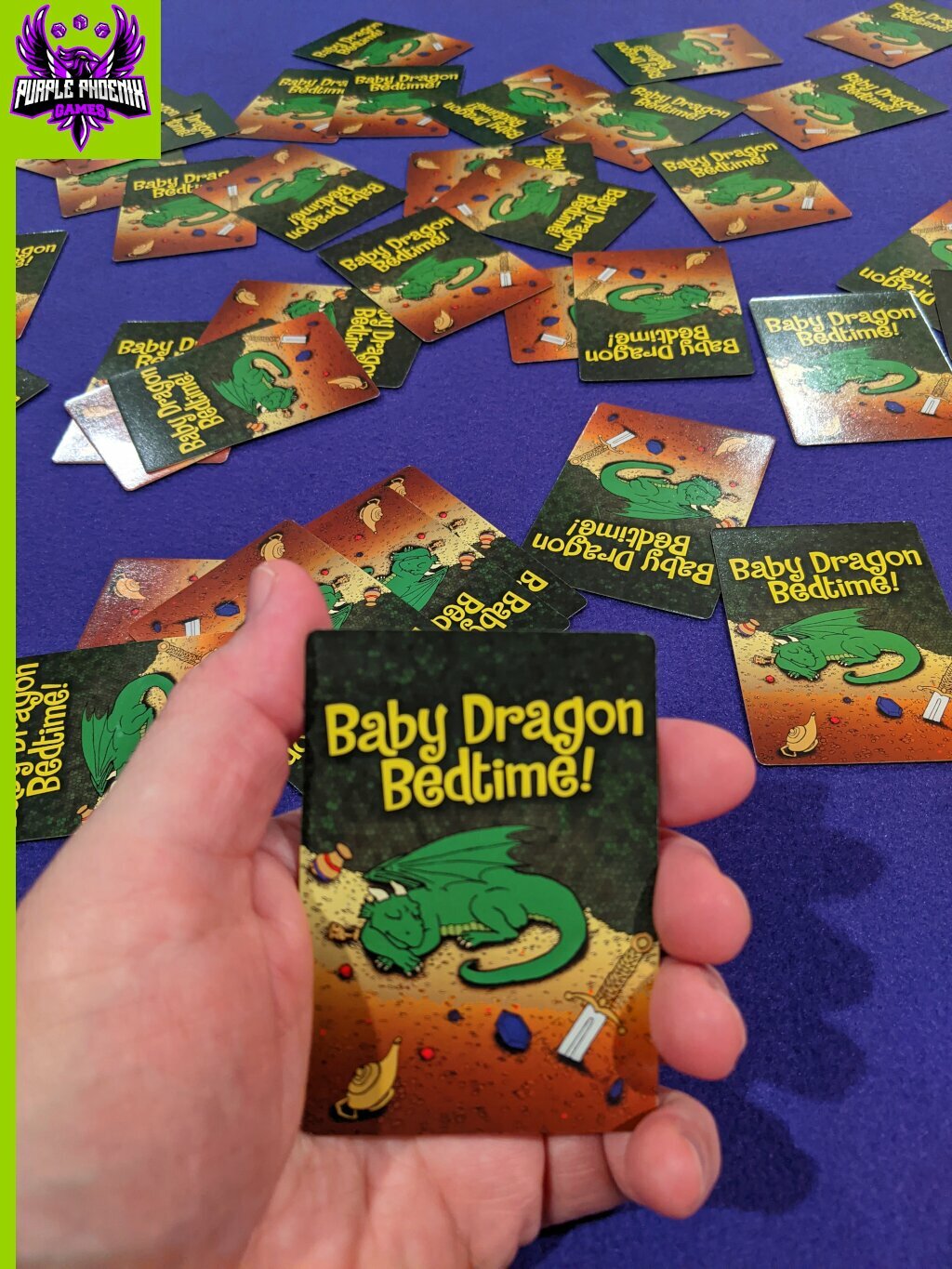
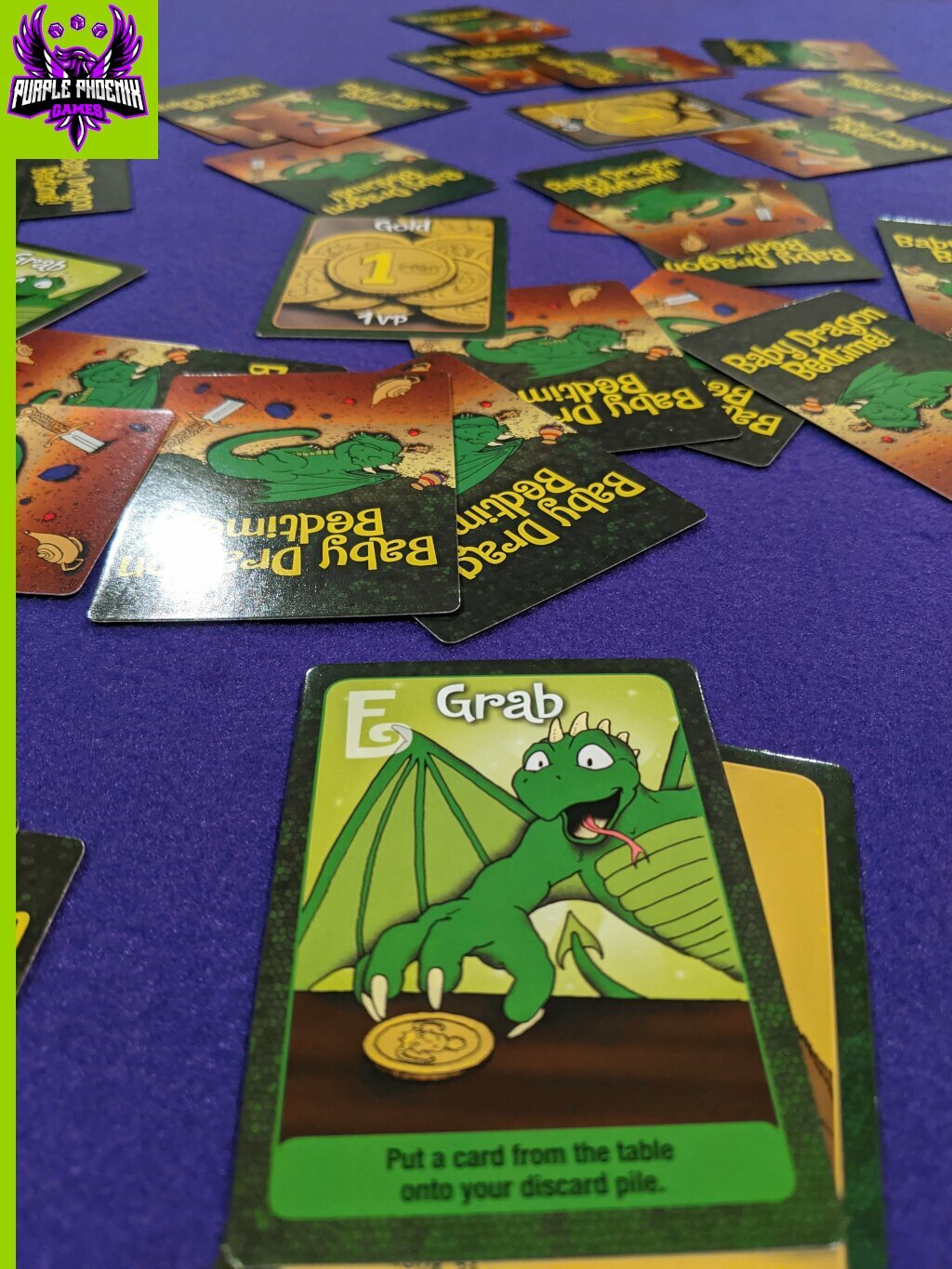
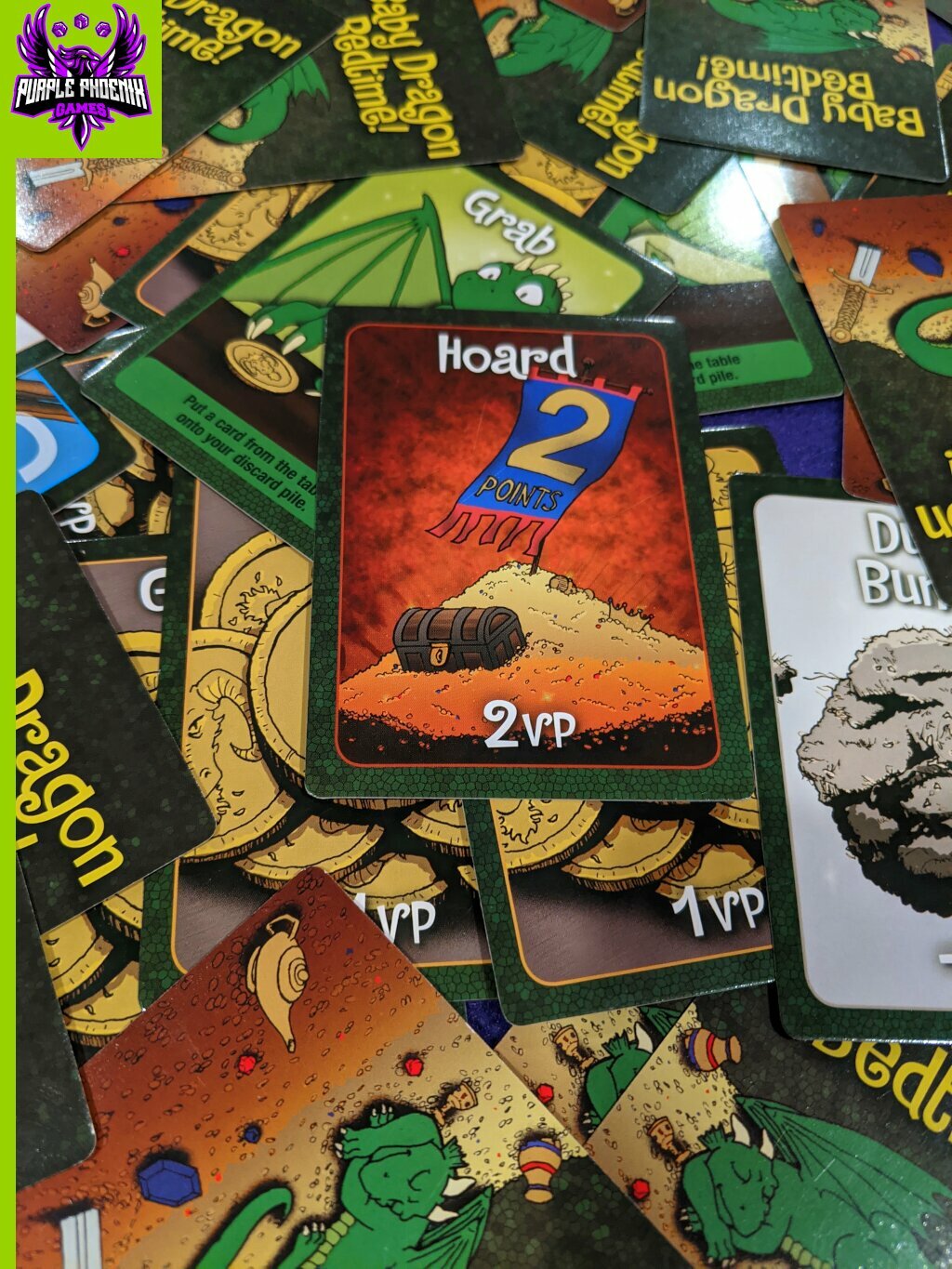
In Baby Dragon Bedtime (here forward known as BDB) players will begin the game with a hand of five cards: 2xPeek, 2xGrab, and a Flip. Using these cards during the game will allow players to pick up and Peek at a card on the table, Grab one for their discard pile, or just Flip a card from face-up to face-down or vice versa. Players will be grabbing more action-type cards, Gold cards and Hoard cards, and dreaded Dust Bunnies and Chewing Gum cards.
DISCLAIMER: We were provided a copy of this game for the purposes of this review. This is a retail copy of the game, so what you see in these photos is exactly what would be received in your box. I do not intend to cover every single rule included in the rulebook, but will describe the overall game flow and major rule set so that our readers may get a sense of how the game plays. For more in depth rules, you may purchase a copy online or from your FLGS. -T
To setup, give each player a deck of five starting cards with matching letters printed on the corner (A-G). Shuffle the rest of the cards (if playing with adults) and throw them on the table as shown below. Play will begin when someone counts down or says, “Go!,” or whatever signal is decided.
There are no turns in BDB in an adult game, and players are flipping over their cards from their decks to complete the actions on them. All players are playing simultaneous and games can last one minute or up to five. Anyone may stop playing at any time and “go to sleep,” thus protecting their treasure piles from negative VP cards. Once a player’s deck has run out of cards to draw they may simply flip over their deck, or give a shuffle and draw as normal. In this way a player’s hand is steadily growing, but being bogged down with dead VP (positive or negative) cards. Players may end up Grabbing more action cards and be able to do more actions going through their deck, or it may be simply comprised of VP cards and starting actions, though that seems highly unlikely. Once all players have taken the turns they wish to take, or the game ends via the Mama! card a player has played, players will add up their points from their decks and the winner may then challenge the players to another round.
The game changes a bit when playing with children or if the players wish to have a less frantic experience. In this case, instead of randomly throwing out the cards on the table, a 6×6 grid will be formed on the table and players will take turns revealing their cards from the their decks and choosing cards to Flip, Peek, or Grab. Though the game is suggested for ages 6 or 7+ I was able to have a fun time playing with my 4-year-old son (see below). In fact, BDB is now his favorite game of all time, and I’m completely cool with that. We even were able to play with his grandparents and have a good time… when he wasn’t crying because I Grabbed the Gold card he wanted.
Components. This game is a bunch of cards. They are all fine quality and feature cartoony, non-scary, and colorful dragon art. For a children’s game the art is perfect. For an adult’s game it is lacking. But, I cannot really see much that would satisfy both sides. All in all, the cards are good and should hold up to a fair amount of play. The box is packed pretty tight, though, so be careful not to damage the cards when packing back up.
Like I mentioned, I was able to play this with my 4-year-old son, and he loves it. Any true hobby game I can play with my son at that age is a winner for me. Baby Dragon Bedtime is not a strategic game, but more based on memory and luck of the draw. So if you are searching for a uniquely-themed real-time deck-builder that can be played with children AND/OR adults, then check out Baby Dragon Bedtime. It is quick and simple, and rewards players who allow the youngsters to win. Purple Phoenix Games gives this a 15 / 18 for versatility and gameplay.
In Baby Dragon Bedtime (here forward known as BDB) players will begin the game with a hand of five cards: 2xPeek, 2xGrab, and a Flip. Using these cards during the game will allow players to pick up and Peek at a card on the table, Grab one for their discard pile, or just Flip a card from face-up to face-down or vice versa. Players will be grabbing more action-type cards, Gold cards and Hoard cards, and dreaded Dust Bunnies and Chewing Gum cards.
DISCLAIMER: We were provided a copy of this game for the purposes of this review. This is a retail copy of the game, so what you see in these photos is exactly what would be received in your box. I do not intend to cover every single rule included in the rulebook, but will describe the overall game flow and major rule set so that our readers may get a sense of how the game plays. For more in depth rules, you may purchase a copy online or from your FLGS. -T
To setup, give each player a deck of five starting cards with matching letters printed on the corner (A-G). Shuffle the rest of the cards (if playing with adults) and throw them on the table as shown below. Play will begin when someone counts down or says, “Go!,” or whatever signal is decided.
There are no turns in BDB in an adult game, and players are flipping over their cards from their decks to complete the actions on them. All players are playing simultaneous and games can last one minute or up to five. Anyone may stop playing at any time and “go to sleep,” thus protecting their treasure piles from negative VP cards. Once a player’s deck has run out of cards to draw they may simply flip over their deck, or give a shuffle and draw as normal. In this way a player’s hand is steadily growing, but being bogged down with dead VP (positive or negative) cards. Players may end up Grabbing more action cards and be able to do more actions going through their deck, or it may be simply comprised of VP cards and starting actions, though that seems highly unlikely. Once all players have taken the turns they wish to take, or the game ends via the Mama! card a player has played, players will add up their points from their decks and the winner may then challenge the players to another round.
The game changes a bit when playing with children or if the players wish to have a less frantic experience. In this case, instead of randomly throwing out the cards on the table, a 6×6 grid will be formed on the table and players will take turns revealing their cards from the their decks and choosing cards to Flip, Peek, or Grab. Though the game is suggested for ages 6 or 7+ I was able to have a fun time playing with my 4-year-old son (see below). In fact, BDB is now his favorite game of all time, and I’m completely cool with that. We even were able to play with his grandparents and have a good time… when he wasn’t crying because I Grabbed the Gold card he wanted.
Components. This game is a bunch of cards. They are all fine quality and feature cartoony, non-scary, and colorful dragon art. For a children’s game the art is perfect. For an adult’s game it is lacking. But, I cannot really see much that would satisfy both sides. All in all, the cards are good and should hold up to a fair amount of play. The box is packed pretty tight, though, so be careful not to damage the cards when packing back up.
Like I mentioned, I was able to play this with my 4-year-old son, and he loves it. Any true hobby game I can play with my son at that age is a winner for me. Baby Dragon Bedtime is not a strategic game, but more based on memory and luck of the draw. So if you are searching for a uniquely-themed real-time deck-builder that can be played with children AND/OR adults, then check out Baby Dragon Bedtime. It is quick and simple, and rewards players who allow the youngsters to win. Purple Phoenix Games gives this a 15 / 18 for versatility and gameplay.

Purple Phoenix Games (2266 KP) rated Relic Runners in Tabletop Games
Jun 24, 2021
YES! More adventuring games! I do love adventure games. Relic Runners has players, well, running all over the board searching for, well, relics to add to their collections to bring back to their homelands and become renowned elite adventuristas! One of my wife’s favorite games, a Days of Wonder title, and one for which I have lukewarm feelings. But why?
Relic Runners is a route-building, pick-up-and-deliver, set collection game that puts players in a central camp and has them exploring outward and around the jungle building familiar pathways and exploiting riches from temples and ruins searching for those sweet sweet relics. The winner is the player who collects the most amount of VP from coins, temple pieces, and relics. So let’s get exploring!
To setup, populate the board with toolboxes, shrines, and ruins per the rulebook. Give each player a playmat and all components of matching color. The explorer bust will begin the game in the camp in the middle of the board along with two rations per player. On each playmat place the pathways and rations in their spots, and the toolbox tokens in their spot with one (or more depending on player special power) at the bottom of the Progression Table. The game can now begin!
The game ends when, depending on player count, a specific number of relics have been claimed by the players. Relics are claimed by completing Relic Expeditions, though we always call them Relic Runs, because that’s kinda the title of the game. In order to make a Relic Run players will need to have explored ruins and removed layers of shrines in order to reveal the relics. Movement is unique in Relic Runners because players may move from one location to the next for free if it is a “familiar” path marked with a pathway token in their color plus one space either before or after the familiar pathways. So a player can effectively run through five or six spots on the board if they had previously been able to place pathway tokens on the paths between the spots. This is how effective Relic Runs are accomplished.
When players pass along water trails they may encounter toolboxes. When these toolboxes are flipped to their inactive side the player will be able to move one of their toolbox tokens up the Progression Table to add effectiveness to their player. These tech tree increments could include increased ability to explore and find additional supplies, improve movement, or even give players more actions and bonuses.
Players will be running all around the board trying to uncover shrine tiles for points and abilities, upgrading their characters for efficiency, and attempting multiple Relic Runs as often as possible to bring the game’s end. The player with the most coin, combinations of relics, and temple layers is the winner!
Components. I mentioned in my opener that this is a Days of Wonder game. So? Well, Days of Wonder only produce ONE new title every year, and they seem to put all their eggs into that one big game (not including expansions for other titles throughout the year). Relic Runners is no different. The components are truly wonderful. The board and cardboard bits are great. The temples are unique and interesting. The plastic bits that begin on playmats and the base camp are quite fine. The relics, however, are simply spectacular. There are four types of relics in the game and 20 relics are included in the box. It’s all very impressive and I have had no issues with the components here nor with any Days of Wonder game. They really know what they’re doing.
The gameplay, to me, is just not my thing. Like I mentioned earlier, my wife absolutely adores this game. I can see why she does, but I feel there are other adventure style games that I would prefer to play. Now, Relic Runners is a good game. Josh rated it a six, so he loves it too. For me some of the movement mechanics are weird in that you have to move every turn so that you can’t just travel to a shrine and dismantle it over three turns. I get it. I do, but I just don’t like it. It doesn’t make thematic sense that an explorer would run to a shrine, begin work, then leave it unattended for other explorers to finish the job. So there’s a disconnect for me.
Also, I would have loved to have seen more variation in the player Progression Table. Make each character truly unique to appeal to replayability and different players’ play styles. Obviously I’m no designer, but that would have made a difference for me.
I love the components, am just okay with the art style, and am okay or less with the gameplay. But, Josh and Kristin both love it, and it will certainly appeal to many gamers. I won’t be getting rid of it, but I also won’t be suggesting we play it very often at all. However, if your collection needs a unique adventure style game featuring some interesting movement mechanics and superb components, pick up a copy of Relic Runners. Purple Phoenix Games gives it a 14 / 18. I was hoping for more Indiana Jones but I got cross-country Dora the Explorer.
Relic Runners is a route-building, pick-up-and-deliver, set collection game that puts players in a central camp and has them exploring outward and around the jungle building familiar pathways and exploiting riches from temples and ruins searching for those sweet sweet relics. The winner is the player who collects the most amount of VP from coins, temple pieces, and relics. So let’s get exploring!
To setup, populate the board with toolboxes, shrines, and ruins per the rulebook. Give each player a playmat and all components of matching color. The explorer bust will begin the game in the camp in the middle of the board along with two rations per player. On each playmat place the pathways and rations in their spots, and the toolbox tokens in their spot with one (or more depending on player special power) at the bottom of the Progression Table. The game can now begin!
The game ends when, depending on player count, a specific number of relics have been claimed by the players. Relics are claimed by completing Relic Expeditions, though we always call them Relic Runs, because that’s kinda the title of the game. In order to make a Relic Run players will need to have explored ruins and removed layers of shrines in order to reveal the relics. Movement is unique in Relic Runners because players may move from one location to the next for free if it is a “familiar” path marked with a pathway token in their color plus one space either before or after the familiar pathways. So a player can effectively run through five or six spots on the board if they had previously been able to place pathway tokens on the paths between the spots. This is how effective Relic Runs are accomplished.
When players pass along water trails they may encounter toolboxes. When these toolboxes are flipped to their inactive side the player will be able to move one of their toolbox tokens up the Progression Table to add effectiveness to their player. These tech tree increments could include increased ability to explore and find additional supplies, improve movement, or even give players more actions and bonuses.
Players will be running all around the board trying to uncover shrine tiles for points and abilities, upgrading their characters for efficiency, and attempting multiple Relic Runs as often as possible to bring the game’s end. The player with the most coin, combinations of relics, and temple layers is the winner!
Components. I mentioned in my opener that this is a Days of Wonder game. So? Well, Days of Wonder only produce ONE new title every year, and they seem to put all their eggs into that one big game (not including expansions for other titles throughout the year). Relic Runners is no different. The components are truly wonderful. The board and cardboard bits are great. The temples are unique and interesting. The plastic bits that begin on playmats and the base camp are quite fine. The relics, however, are simply spectacular. There are four types of relics in the game and 20 relics are included in the box. It’s all very impressive and I have had no issues with the components here nor with any Days of Wonder game. They really know what they’re doing.
The gameplay, to me, is just not my thing. Like I mentioned earlier, my wife absolutely adores this game. I can see why she does, but I feel there are other adventure style games that I would prefer to play. Now, Relic Runners is a good game. Josh rated it a six, so he loves it too. For me some of the movement mechanics are weird in that you have to move every turn so that you can’t just travel to a shrine and dismantle it over three turns. I get it. I do, but I just don’t like it. It doesn’t make thematic sense that an explorer would run to a shrine, begin work, then leave it unattended for other explorers to finish the job. So there’s a disconnect for me.
Also, I would have loved to have seen more variation in the player Progression Table. Make each character truly unique to appeal to replayability and different players’ play styles. Obviously I’m no designer, but that would have made a difference for me.
I love the components, am just okay with the art style, and am okay or less with the gameplay. But, Josh and Kristin both love it, and it will certainly appeal to many gamers. I won’t be getting rid of it, but I also won’t be suggesting we play it very often at all. However, if your collection needs a unique adventure style game featuring some interesting movement mechanics and superb components, pick up a copy of Relic Runners. Purple Phoenix Games gives it a 14 / 18. I was hoping for more Indiana Jones but I got cross-country Dora the Explorer.

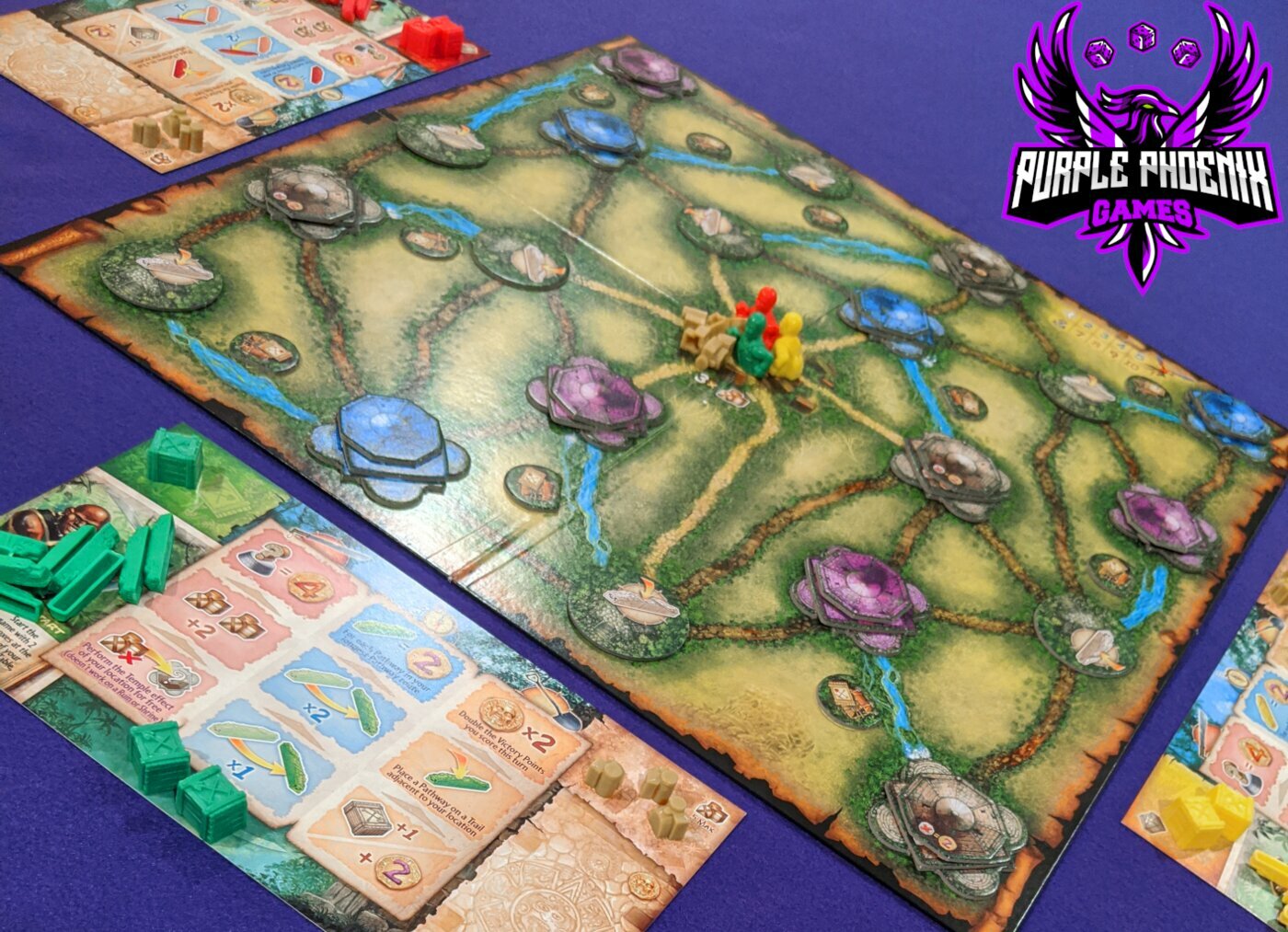
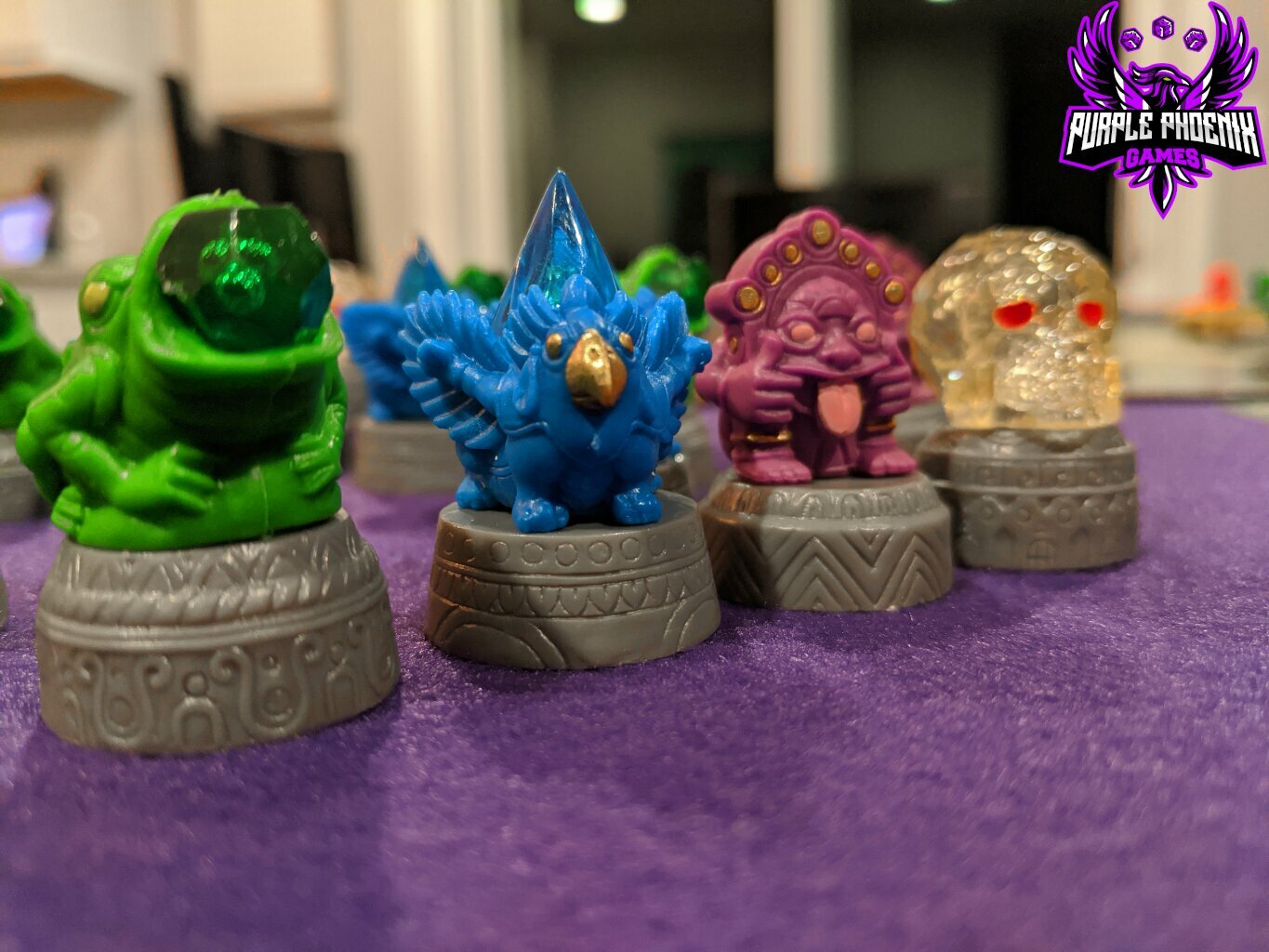
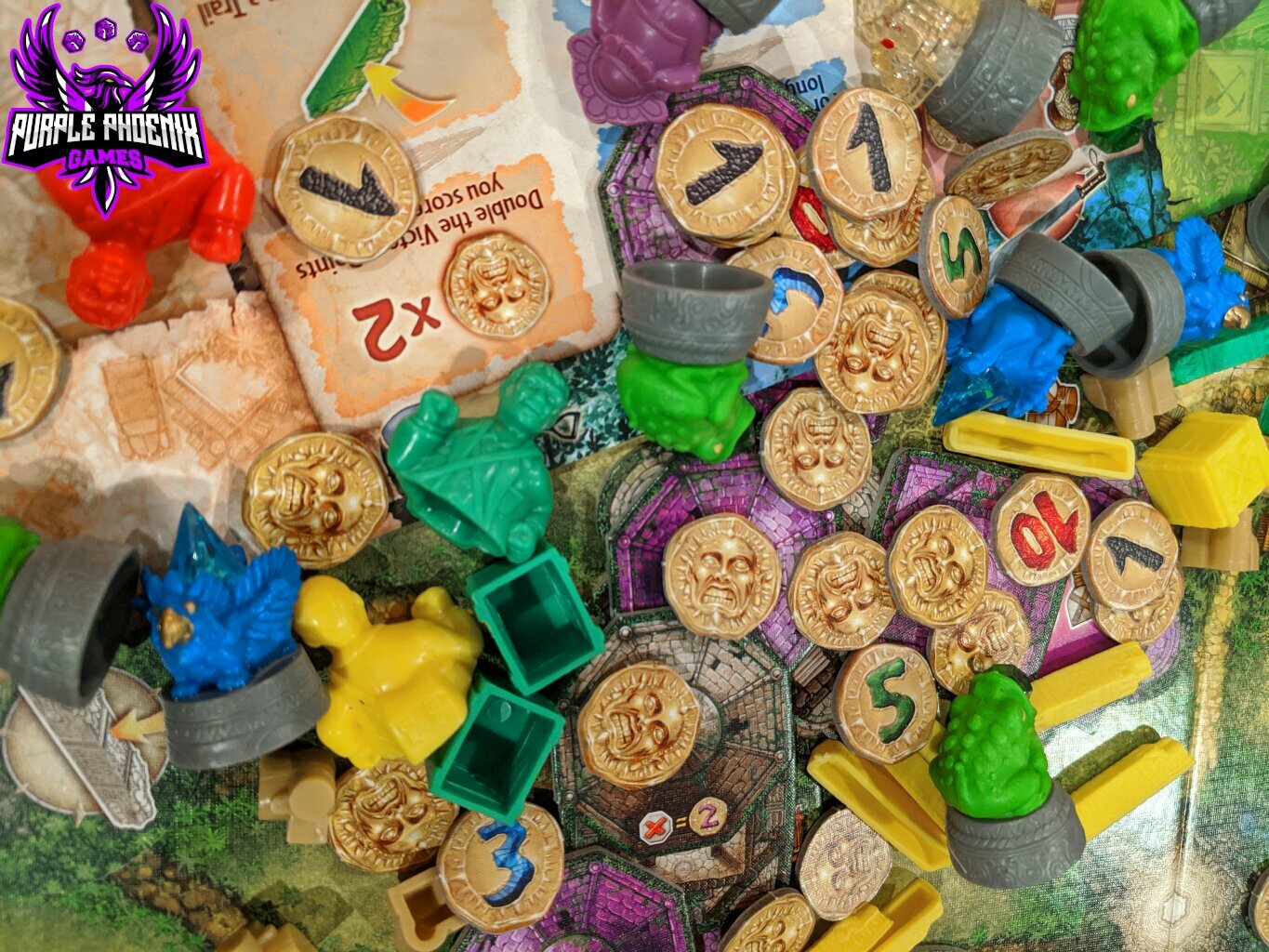
Purple Phoenix Games (2266 KP) rated Shadow Hunters in Tabletop Games
Jul 24, 2021
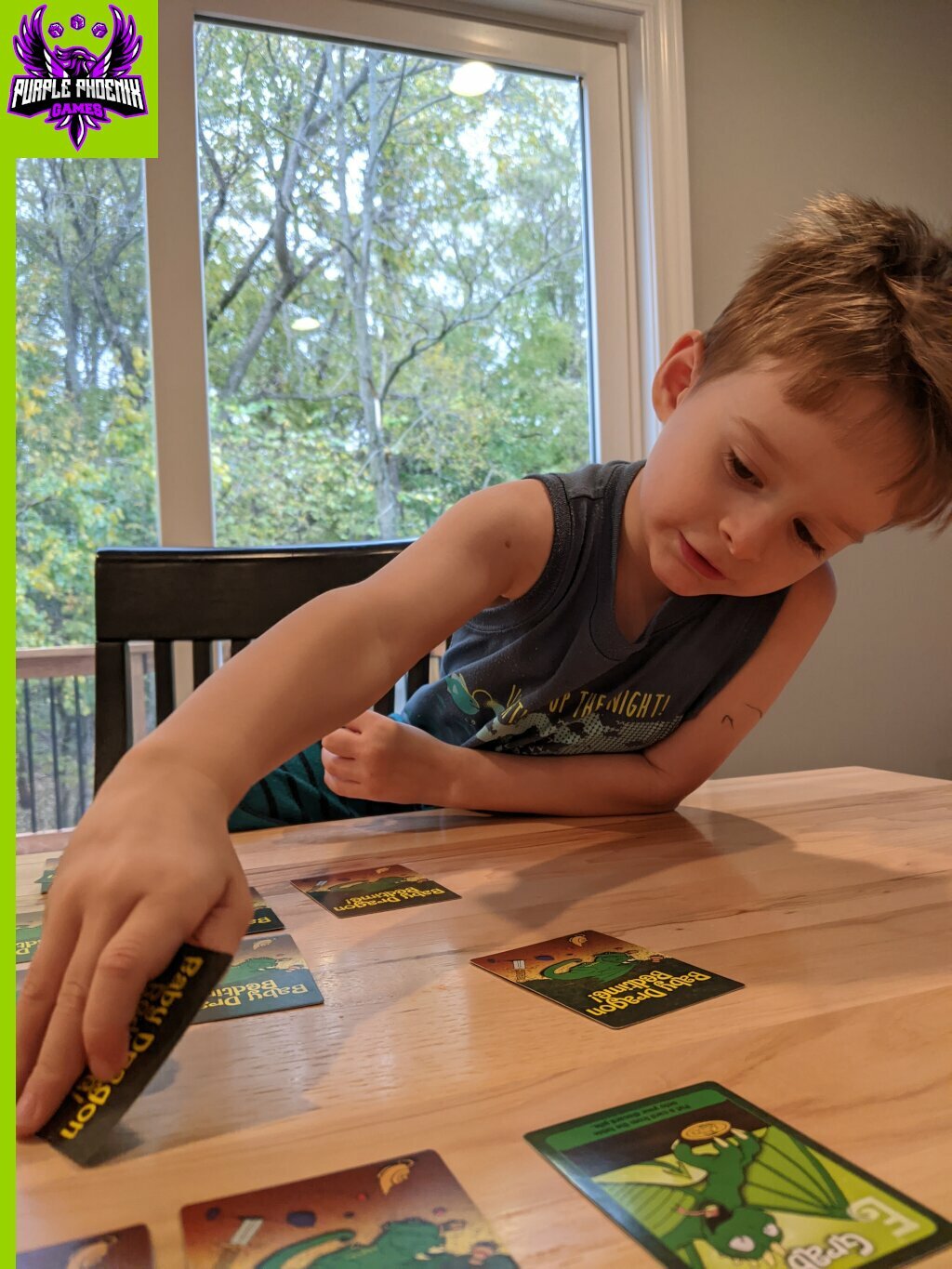
Playing board games has enlightened me so much and given me wishes to follow career paths I would not have considered otherwise. One career I would NOT want to take on is that of a Shadow Hunter: the warriors who seek out and destroy beings from the demon realms walking in our midst. I’d rather stay blissfully ignorant to their existence and simply hope we can be friends. However, in board game worlds I will seek and destroy like a good little Shadow Hunter does.
Shadow Hunters is a hidden identity survival card game for groups of 4-8 players. Each player’s drawn persona will belong to the Shadows, the Hunters, or Neutrals (common bystanders). The goals of the players may all be completely different and the game may end at any time due to fulfilling personal agendas. Players may even win when their characters are dead!
To setup place the board on the table and randomly populate the card spaces on the board with the Area Cards. Shuffle the White Cards, Black Cards, and Hermit Cards (why didn’t they just name these the Green Cards?) into their own stacks and place them on the side of the board in their slots. Players choose their preferred colors, take the boards and pieces with that color, and place one of their wooden markers on the No Damage space on the board. The other wooden marker will be used for movement on the board Area cards. Shuffle and deal each player one Character Card to be kept secret from the other players. Determine start player and the game is ready to begin!
On a player’s turn they will be completing at least one task and then possible other tasks. First, the active player will roll both the 1d6 and 1d4 together to arrive at a number between two and 10. The player will place their marker on the matching Area card on the board. Should a player roll a seven they may choose any location other than the space they are on and move. Each location will have an action printed on its card that a player may choose to complete. These could be drawing cards from the White, Black, or Hermit decks, damaging other players, or stealing equipment cards from them. Lastly, the active player may straight up attack another player within the same Area range (the three different areas are two cards linked together, so either the card the marker shares or the one that is linked).
As soon as a character has suffered damage equal to or greater than the HP shown on their Character Card, that character dies. Once a character dies, the owning player flips the Character Card over to reveal the character and, more importantly, their faction to which they belong. If this causes one player to fulfill their character’s goals, they must announce that the game is over. If not, play continues in this fashion until a player’s goal has been achieved to end the game. This could mean the Shadow team or Hunter team wins as a group, or that one player wins alone.
Components. Oddly, this edition of Shadow Hunters is now almost 10 years old, so it fall within the “older games” group. That said, the components are still excellent quality, even by today’s standards. The cards have a faint linen finish, the cardboard components are all thick and matte finished, the wooden player markers are chunky and fun to move around. The only issues I have with components are that I wish the colors matched more on the wooden markers and the player boards. Not a huge deal, but something that makes me cringe just a little inside. The other issue I have is most definitely a personal preference: the numbers on the d4 are on the bottom and I prefer them on the top. I know, purely personal preference and I’m dumb for even mentioning it.
This is a game I love but irks my wife. And not even because she doesn’t like the game. It irks her because of how I play it. Until I use the Hermit Cards to try to help figure out which player is on my team I will certainly be attacking everyone I can every chance I get. That’s not the best way to make friends, and I get it, but I’m not taking that chance of allowing a potential opponent to get a leg up on me. That bothers my wife because many times I’m attacking my teammates. Oh well.
I have played this game so many times with different groups and have had great success with it almost every single time. It’s an easy teach, the theme makes sense, and having different end goals is something that many people can rally behind. I know there are about 3,000 hidden identity games out there, but I consider this one of the best. Even 10 years later it sill holds that sheen and gives us a little different experience than just spamming The Resistance: Avalon every time. Purple Phoenix Games gives this one a hot 17 / 24. Pick this one up if you find it in the wild and want a different feel for your hidden identity collection. I love it and you might too.
Shadow Hunters is a hidden identity survival card game for groups of 4-8 players. Each player’s drawn persona will belong to the Shadows, the Hunters, or Neutrals (common bystanders). The goals of the players may all be completely different and the game may end at any time due to fulfilling personal agendas. Players may even win when their characters are dead!
To setup place the board on the table and randomly populate the card spaces on the board with the Area Cards. Shuffle the White Cards, Black Cards, and Hermit Cards (why didn’t they just name these the Green Cards?) into their own stacks and place them on the side of the board in their slots. Players choose their preferred colors, take the boards and pieces with that color, and place one of their wooden markers on the No Damage space on the board. The other wooden marker will be used for movement on the board Area cards. Shuffle and deal each player one Character Card to be kept secret from the other players. Determine start player and the game is ready to begin!
On a player’s turn they will be completing at least one task and then possible other tasks. First, the active player will roll both the 1d6 and 1d4 together to arrive at a number between two and 10. The player will place their marker on the matching Area card on the board. Should a player roll a seven they may choose any location other than the space they are on and move. Each location will have an action printed on its card that a player may choose to complete. These could be drawing cards from the White, Black, or Hermit decks, damaging other players, or stealing equipment cards from them. Lastly, the active player may straight up attack another player within the same Area range (the three different areas are two cards linked together, so either the card the marker shares or the one that is linked).
As soon as a character has suffered damage equal to or greater than the HP shown on their Character Card, that character dies. Once a character dies, the owning player flips the Character Card over to reveal the character and, more importantly, their faction to which they belong. If this causes one player to fulfill their character’s goals, they must announce that the game is over. If not, play continues in this fashion until a player’s goal has been achieved to end the game. This could mean the Shadow team or Hunter team wins as a group, or that one player wins alone.
Components. Oddly, this edition of Shadow Hunters is now almost 10 years old, so it fall within the “older games” group. That said, the components are still excellent quality, even by today’s standards. The cards have a faint linen finish, the cardboard components are all thick and matte finished, the wooden player markers are chunky and fun to move around. The only issues I have with components are that I wish the colors matched more on the wooden markers and the player boards. Not a huge deal, but something that makes me cringe just a little inside. The other issue I have is most definitely a personal preference: the numbers on the d4 are on the bottom and I prefer them on the top. I know, purely personal preference and I’m dumb for even mentioning it.
This is a game I love but irks my wife. And not even because she doesn’t like the game. It irks her because of how I play it. Until I use the Hermit Cards to try to help figure out which player is on my team I will certainly be attacking everyone I can every chance I get. That’s not the best way to make friends, and I get it, but I’m not taking that chance of allowing a potential opponent to get a leg up on me. That bothers my wife because many times I’m attacking my teammates. Oh well.
I have played this game so many times with different groups and have had great success with it almost every single time. It’s an easy teach, the theme makes sense, and having different end goals is something that many people can rally behind. I know there are about 3,000 hidden identity games out there, but I consider this one of the best. Even 10 years later it sill holds that sheen and gives us a little different experience than just spamming The Resistance: Avalon every time. Purple Phoenix Games gives this one a hot 17 / 24. Pick this one up if you find it in the wild and want a different feel for your hidden identity collection. I love it and you might too.