
Search



An imperfect perfect future
October 2014 Book of the Month
I received this book for free through Goodreads First Reads.
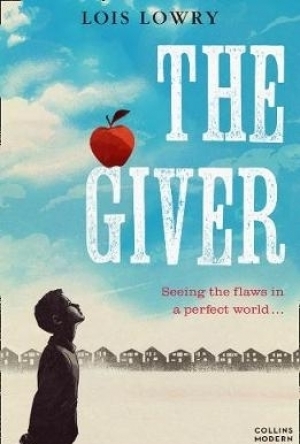
It has been over twenty years since Lois Lowry’s controversial children’s story The Giver was published and it certainly deserves its status as an essential modern classic. Jonas has grown up in the perfect world of the Community whose survival relies on strict rules and rituals. Adults are assigned spouses and children (one boy and one girl) as they take up their role within the society. At the beginning of the book Jonas is approaching then end of his eleventh year and feeling apprehensive about the Ceremony of Twelve where he will be assigned a job for him to do for the rest of his adult life. Jonas gets selected as the Receiver of Memory – a very rare position – and begins to experience memories from humans who lived a long time ago. For Jonas this is exciting until he begins to see the flaws in his perfect world.
Dystopian literature has become popular over the past few years and it would not be surprising if it were The Giver that inspired these contemporary works. Lowry claims that she did not intend for The Giver to have a sinister feel about it; she was writing an adventure story and exploring the concept of the importance of memory, but it turned out to be something much more thought provoking. As the children’s novelist Margaret Mahy (The Haunting) pointed out, up until the publication of this novel in 1993 Lowry was best known for her funny stories about Anastasia Krupnik resulting in The Giver being even more shocking and unexpected.
The Giver highlights that attempting to produce perfection can often result in the loss of good things as well as the bad. The notion of the ideal world may seem like a wonderful proposal, but in order to achieve it humans would have to do away with free choice as in ironing out the inequalities and injustices of the present world would result in everything becoming the same for each individual.
This is a difficult concept to grasp, particularly for a child. Although intended as a children’s series, The Giver and its following installments are more suitable for young adults and older. The only issue with this is that the writing style was target at a younger audience meaning that the overall story is short and lacks depth. If it were to have been written for older readers then there would have been the scope for it to become a much lengthier novel.
There are a lot of mixed reviews surrounding this book although they have changed greatly since the original publication. To begin with The Giver was banned in some areas however the dystopian theme has become accepted in today’s society. What many people comment on now is the oversimplification of such strong ideas. Then again, as already mentioned, it needs to be emphasized that this book was aimed at children, thus the language reflects the reading skills of its target audience.
The Giver is a gem of a book that not only is enjoyable but also can educate the reader on the dangers of attempting a utopian society and why it is important to retain human memories – even the bad – in order that wisdom can exist. Those who have become fans of contemporary dystopian novels, for example Divergent by Veronica Roth or Delirium by Lauren Oliver, will be sure to love this series.
I received this book for free through Goodreads First Reads.
It has been over twenty years since Lois Lowry’s controversial children’s story The Giver was published and it certainly deserves its status as an essential modern classic. Jonas has grown up in the perfect world of the Community whose survival relies on strict rules and rituals. Adults are assigned spouses and children (one boy and one girl) as they take up their role within the society. At the beginning of the book Jonas is approaching then end of his eleventh year and feeling apprehensive about the Ceremony of Twelve where he will be assigned a job for him to do for the rest of his adult life. Jonas gets selected as the Receiver of Memory – a very rare position – and begins to experience memories from humans who lived a long time ago. For Jonas this is exciting until he begins to see the flaws in his perfect world.
Dystopian literature has become popular over the past few years and it would not be surprising if it were The Giver that inspired these contemporary works. Lowry claims that she did not intend for The Giver to have a sinister feel about it; she was writing an adventure story and exploring the concept of the importance of memory, but it turned out to be something much more thought provoking. As the children’s novelist Margaret Mahy (The Haunting) pointed out, up until the publication of this novel in 1993 Lowry was best known for her funny stories about Anastasia Krupnik resulting in The Giver being even more shocking and unexpected.
The Giver highlights that attempting to produce perfection can often result in the loss of good things as well as the bad. The notion of the ideal world may seem like a wonderful proposal, but in order to achieve it humans would have to do away with free choice as in ironing out the inequalities and injustices of the present world would result in everything becoming the same for each individual.
This is a difficult concept to grasp, particularly for a child. Although intended as a children’s series, The Giver and its following installments are more suitable for young adults and older. The only issue with this is that the writing style was target at a younger audience meaning that the overall story is short and lacks depth. If it were to have been written for older readers then there would have been the scope for it to become a much lengthier novel.
There are a lot of mixed reviews surrounding this book although they have changed greatly since the original publication. To begin with The Giver was banned in some areas however the dystopian theme has become accepted in today’s society. What many people comment on now is the oversimplification of such strong ideas. Then again, as already mentioned, it needs to be emphasized that this book was aimed at children, thus the language reflects the reading skills of its target audience.
The Giver is a gem of a book that not only is enjoyable but also can educate the reader on the dangers of attempting a utopian society and why it is important to retain human memories – even the bad – in order that wisdom can exist. Those who have become fans of contemporary dystopian novels, for example Divergent by Veronica Roth or Delirium by Lauren Oliver, will be sure to love this series.

Dianne Robbins (1738 KP) rated Still Alice in Books
Sep 3, 2018
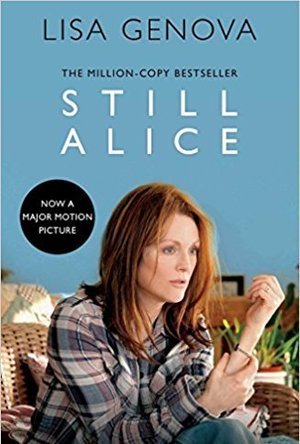
I just finished reading a novel called Still Alice by Lisa Genova about Alice, who is diagnosed with early onset Alzheimer's disease in her early fifties. It's written from the point of view of the woman with the disease instead of the usual POV of a caretaker. With every page, as she fell deeper into the grips of the disease, I was convinced that I had early onset Alzheimer's. The phrases, it's a real page-turner or I couldn't put it down, are used so often that we forget that there are books that are actually like that. This one is. I had physical reaction to the book. I gasped in awe and terror. I laughed. I was fascinated by its beauty and terrified of the disease becoming a reality in my life someday. I cried. I got angry. I sighed with relief. I went through a whirlwind of emotion. It took my breath away. It should be required reading for everyone.
The novel is written so well that I become consumed by the author's thoughts and feelings and it really drew me in. After I finished the book, it took maybe a few days for me to realize it was just a book and not me losing my memory and my mind. I highly recommend the book, even if the subject matter may be scary to you, because you get a sense of how Alzheimer's robs a person of their thoughts and abilities and it will give you insight into how to treat loved one's and other victims of dementia and Alzheimer's. It was fascinating to learn how Alzheimer's ravages the different areas of the brain and what effect it has on the person. It explained what I always wondered, how can a person die from Alzheimer's. This IS NOT a spoiler. I am not saying that Alice dies in the book. Just that the mechanics of the disease is explain very well. It isn't just a novel for entertainment and enjoyment. It tells you about Alzheimer's inside out and as both Alice and her husband are scientists and Harvard professors, it doesn't dumb it down to the audience. It is not vague details but explicit facts that you will remember, that will change the way you think of Alzheimer's and aging and, dare I say, will change your life.
The character is a professor of psychology at Harvard (the author is also is a neuropsychologist or neuropsychiatrist. I forget which, oh, the irony! So she knows her stuff) and although at a few points, I thought it was far above my head, but when I really dug in and read the sentences a few times, it started to make sense and I think I learned something from it. I have fibromyalgia and arthritis so I have memory loss and cognitive thought issues and deal with so much pain in my life that it's difficult to understand new concepts, especially in the realm of academia. Other people may not have as much difficulty as I did getting through the scientific aspects of the disease and the vast influx of new information.
Sidenote: I was very happy to discover that the book has been made into a movie being released soon with Julianne Moore as the title character. That is one I will definitely see in the theater.
I'm so glad that the movie is made and will reach more people and expose them to early onset Alzheimer's.
Bravo to the author for taking us down the path, pain and beauty, yes, beauty of Alzheimer's.
The novel is written so well that I become consumed by the author's thoughts and feelings and it really drew me in. After I finished the book, it took maybe a few days for me to realize it was just a book and not me losing my memory and my mind. I highly recommend the book, even if the subject matter may be scary to you, because you get a sense of how Alzheimer's robs a person of their thoughts and abilities and it will give you insight into how to treat loved one's and other victims of dementia and Alzheimer's. It was fascinating to learn how Alzheimer's ravages the different areas of the brain and what effect it has on the person. It explained what I always wondered, how can a person die from Alzheimer's. This IS NOT a spoiler. I am not saying that Alice dies in the book. Just that the mechanics of the disease is explain very well. It isn't just a novel for entertainment and enjoyment. It tells you about Alzheimer's inside out and as both Alice and her husband are scientists and Harvard professors, it doesn't dumb it down to the audience. It is not vague details but explicit facts that you will remember, that will change the way you think of Alzheimer's and aging and, dare I say, will change your life.
The character is a professor of psychology at Harvard (the author is also is a neuropsychologist or neuropsychiatrist. I forget which, oh, the irony! So she knows her stuff) and although at a few points, I thought it was far above my head, but when I really dug in and read the sentences a few times, it started to make sense and I think I learned something from it. I have fibromyalgia and arthritis so I have memory loss and cognitive thought issues and deal with so much pain in my life that it's difficult to understand new concepts, especially in the realm of academia. Other people may not have as much difficulty as I did getting through the scientific aspects of the disease and the vast influx of new information.
Sidenote: I was very happy to discover that the book has been made into a movie being released soon with Julianne Moore as the title character. That is one I will definitely see in the theater.
I'm so glad that the movie is made and will reach more people and expose them to early onset Alzheimer's.
Bravo to the author for taking us down the path, pain and beauty, yes, beauty of Alzheimer's.

Sarah (7800 KP) rated Memento (2000) in Movies
Nov 29, 2020

One of my favourite films
Film #5 on the 100 Movies Bucket List: Memento
I have to admit, I may be a little biased when it comes to Memento. Christopher Nolan is my favourite director and Memento is both one of my favourite films of his and one of my favourite films of all time. For me, this undoubtedly deserves its place on this bucket list.
Memento is a 2000 psychological thriller starring Guy Pearce as Leonard Shelby, a man suffering from anterograde amnesia searching for the person responsible for the death of his wife, using notes and tattoos to organise his thoughts.
One of the most noticeable features of Memento is the fact that half of the narrative is told backwards. The movie begins at the end, focusing on a rather gruesome Polaroid photograph that fades rather than develops and a victim of a shooting coming back to life. The rest of the film jumps backwards a few minutes at a time, each scene ending where the last one started. For a film about memory loss and amnesia, this mechanism of telling the story really helps put us in Leonard’s shoes. It makes you feel as confused as he is. On the original dvd release, there was a hidden feature that allowed you to play the film in chronological order and this just didn’t have the same impact. These reverse scenes are interspersed with black and white flashbacks of Leonard earlier in his wife’s murder investigation and his life as an insurance investigator, which really help with the exposition. These paired together alongside a haunting score make for an intriguing and not your run of the mill murder mystery.
There are some great performances in this that also help increase the intrigue. Carrie-Anne Moss as the apparently helpful Natalie and Joe Pantoliano as the questionable sidekick appear new to Leonard every time they meet yet their loyalties and motives waver for us as the viewers throughout the film. And Guy Pearce manages to portray the frustrated and not as innocent as he first appears Leonard incredibly well, and holds this film on his own for most of the run time. They’re helped by a clever and smart script that flawlessly blends the sinister and rather dark criminal aspects of this with some surprisingly funny lines.
This story starts at the end so you don’t have to worry about how it turns out, but despite this Memento still comes up with a rather cracking twist and denouement. This entire film is about time and memory and how unreliable it is, and the lies we tell ourselves about our own identities. Even during this, what we thought we knew about Leonard as the black and white flashback meets the backwards story, is revealed to be completely unreliable and quite shocking. Without revealing too much, the outcome of this film is both surprising, sinister and rather emotional, and features some of the best dialogue of the entire movie. Leonard’s actions and motives revealed here and the final voiceover as he drives off makes for a hugely satisfying ending.
I first watched Memento in a psychology class at college around 17 years ago. I loved it then and in the years since, it hasn’t lost its appeal. Watching it back now still evokes the same emotion and feelings when the credits roll as it did all those years ago and will always be one of my favourite films, even possibly my all time favourite.
I have to admit, I may be a little biased when it comes to Memento. Christopher Nolan is my favourite director and Memento is both one of my favourite films of his and one of my favourite films of all time. For me, this undoubtedly deserves its place on this bucket list.
Memento is a 2000 psychological thriller starring Guy Pearce as Leonard Shelby, a man suffering from anterograde amnesia searching for the person responsible for the death of his wife, using notes and tattoos to organise his thoughts.
One of the most noticeable features of Memento is the fact that half of the narrative is told backwards. The movie begins at the end, focusing on a rather gruesome Polaroid photograph that fades rather than develops and a victim of a shooting coming back to life. The rest of the film jumps backwards a few minutes at a time, each scene ending where the last one started. For a film about memory loss and amnesia, this mechanism of telling the story really helps put us in Leonard’s shoes. It makes you feel as confused as he is. On the original dvd release, there was a hidden feature that allowed you to play the film in chronological order and this just didn’t have the same impact. These reverse scenes are interspersed with black and white flashbacks of Leonard earlier in his wife’s murder investigation and his life as an insurance investigator, which really help with the exposition. These paired together alongside a haunting score make for an intriguing and not your run of the mill murder mystery.
There are some great performances in this that also help increase the intrigue. Carrie-Anne Moss as the apparently helpful Natalie and Joe Pantoliano as the questionable sidekick appear new to Leonard every time they meet yet their loyalties and motives waver for us as the viewers throughout the film. And Guy Pearce manages to portray the frustrated and not as innocent as he first appears Leonard incredibly well, and holds this film on his own for most of the run time. They’re helped by a clever and smart script that flawlessly blends the sinister and rather dark criminal aspects of this with some surprisingly funny lines.
This story starts at the end so you don’t have to worry about how it turns out, but despite this Memento still comes up with a rather cracking twist and denouement. This entire film is about time and memory and how unreliable it is, and the lies we tell ourselves about our own identities. Even during this, what we thought we knew about Leonard as the black and white flashback meets the backwards story, is revealed to be completely unreliable and quite shocking. Without revealing too much, the outcome of this film is both surprising, sinister and rather emotional, and features some of the best dialogue of the entire movie. Leonard’s actions and motives revealed here and the final voiceover as he drives off makes for a hugely satisfying ending.
I first watched Memento in a psychology class at college around 17 years ago. I loved it then and in the years since, it hasn’t lost its appeal. Watching it back now still evokes the same emotion and feelings when the credits roll as it did all those years ago and will always be one of my favourite films, even possibly my all time favourite.

Gareth von Kallenbach (980 KP) rated The Hangover (2009) in Movies
Aug 9, 2019
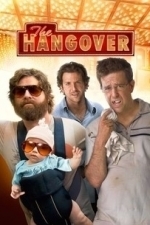

The road trip gone awry has been a staple of Hollywood comedies for years. Bing Crosby and Bob Hope provided tons of laughs with their “Road To” films which have continued with films ranging from “Road Trip” to the Chevy Chase “Vacation” film series. In the new movie “The Hangover”, Director Todd Phillips follows upon his many successes which include “Old School”, and “Starsky and Hutch” to create one of the funniest films in recent memory.
When Doug (Justin Bartha) is about to be married, his friends Stu (Ed Helms) and Phil (Bradley Cooper) decide to give Doug a bachelor party. With his eccentric future brother-in-law Alan (Zach Galifinakis) in tow, the guys hit the town for a night to remember. Or maybe not.
After a rooftop toast overlooking the scenic Las Vegas strip, Stu, Phil, and Alan awaken to find their lavish suite at Ceasar’s Palace destroyed and everything from a tiger to a chicken sharing their room. Henpecked Stu panics, having told his girlfriend they were going to wine country and is at a loss to explain the state of the room as well as his missing tooth. With all three men nursing a severe hangover and Doug nowhere to be found, things take a turn for the worse when a baby is discovered in the closet of their suite. Desperate to get to the bottom of the previous night and locate Doug, the guys try to piece together their lost night.
As the plot unfolds, the guys go from a wedding chapel to a hospital and police station, and trying to stay ahead of new threats and complications that arise. With Doug’s wedding looming in a few hours, the group takes extreme measures to find their friend and get him to the alter on time.
What follows is a hysterical and highly enjoyable comedy that rarely lets up long enough for you to stop laughing before unleashing even more comedy. The ensemble cast is strong and have great camaraderie and chemistry. The film loses some momentum in the final act but rebounds nicely with the final segments. Make sure you stay for the credits for some hysterical stuff and some great celebrity cameos. While some may find the humor crude and sophomoric, if you are not easily offended, you will laugh loud and often at this comedic delight.
When Doug (Justin Bartha) is about to be married, his friends Stu (Ed Helms) and Phil (Bradley Cooper) decide to give Doug a bachelor party. With his eccentric future brother-in-law Alan (Zach Galifinakis) in tow, the guys hit the town for a night to remember. Or maybe not.
After a rooftop toast overlooking the scenic Las Vegas strip, Stu, Phil, and Alan awaken to find their lavish suite at Ceasar’s Palace destroyed and everything from a tiger to a chicken sharing their room. Henpecked Stu panics, having told his girlfriend they were going to wine country and is at a loss to explain the state of the room as well as his missing tooth. With all three men nursing a severe hangover and Doug nowhere to be found, things take a turn for the worse when a baby is discovered in the closet of their suite. Desperate to get to the bottom of the previous night and locate Doug, the guys try to piece together their lost night.
As the plot unfolds, the guys go from a wedding chapel to a hospital and police station, and trying to stay ahead of new threats and complications that arise. With Doug’s wedding looming in a few hours, the group takes extreme measures to find their friend and get him to the alter on time.
What follows is a hysterical and highly enjoyable comedy that rarely lets up long enough for you to stop laughing before unleashing even more comedy. The ensemble cast is strong and have great camaraderie and chemistry. The film loses some momentum in the final act but rebounds nicely with the final segments. Make sure you stay for the credits for some hysterical stuff and some great celebrity cameos. While some may find the humor crude and sophomoric, if you are not easily offended, you will laugh loud and often at this comedic delight.

Calcium Pro
Medical and Health & Fitness
App
Blood calcium, vitamin D, and osteoporosis are important health issues. The consequences of abnormal...
Maximus Draughts
Games and Education
1.0 Rate It
App
Enjoy the game of international draughts (or 10x10 checkers) at a yet unprecedented level for...
<a href="http://fuzzysparrow.tumblr.com/post/101435382283/review">October 2014 Book of the Month</a>
<i>I received this book for free through Goodreads First Reads.</i>
It has been over twenty years since Lois Lowry’s controversial children’s story <i>The Giver</i> was published and it certainly deserves its status as an essential modern classic. Jonas has grown up in the perfect world of the Community whose survival relies on strict rules and rituals. Adults are assigned spouses and children (one boy and one girl) as they take up their role within the society. At the beginning of the book Jonas is approaching then end of his eleventh year and feeling apprehensive about the Ceremony of Twelve where he will be assigned a job for him to do for the rest of his adult life. Jonas gets selected as the Receiver of Memory – a very rare position – and begins to experience memories from humans who lived a long time ago. For Jonas this is exciting until he begins to see the flaws in his perfect world.
Dystopian literature has become popular over the past few years and it would not be surprising if it were <i>The Giver</i> that inspired these contemporary works. Lowry claims that she did not intend for The Giver to have a sinister feel about it; she was writing an adventure story and exploring the concept of the importance of memory, but it turned out to be something much more thought provoking. As the children’s novelist Margaret Mahy (<i>The Haunting</i>) pointed out, up until the publication of this novel in 1993 Lowry was best known for her funny stories about Anastasia Krupnik resulting in <i>The Giver</i> being even more shocking and unexpected.
<i>The Giver</i> highlights that attempting to produce perfection can often result in the loss of good things as well as the bad. The notion of the ideal world may seem like a wonderful proposal, but in order to achieve it humans would have to do away with free choice as in ironing out the inequalities and injustices of the present world would result in everything becoming the same for each individual.
This is a difficult concept to grasp, particularly for a child. Although intended as a children’s series, <i>The Giver</i> and its following installments are more suitable for young adults and older. The only issue with this is that the writing style was target at a younger audience meaning that the overall story is short and lacks depth. If it were to have been written for older readers then there would have been the scope for it to become a much lengthier novel.
There are a lot of mixed reviews surrounding this book although they have changed greatly since the original publication. To begin with <i>The Giver</i> was banned in some areas however the dystopian theme has become accepted in today’s society. What many people comment on now is the oversimplification of such strong ideas. Then again, as already mentioned, it needs to be emphasized that this book was aimed at children, thus the language reflects the reading skills of its target audience.
<i>The Giver</i> is a gem of a book that not only is enjoyable but also can educate the reader on the dangers of attempting a utopian society and why it is important to retain human memories – even the bad – in order that wisdom can exist. Those who have become fans of contemporary dystopian novels, for example <i>Divergent</i> by Veronica Roth or <i>Delirium</i> by Lauren Oliver, will be sure to love this series.
<i>I received this book for free through Goodreads First Reads.</i>
It has been over twenty years since Lois Lowry’s controversial children’s story <i>The Giver</i> was published and it certainly deserves its status as an essential modern classic. Jonas has grown up in the perfect world of the Community whose survival relies on strict rules and rituals. Adults are assigned spouses and children (one boy and one girl) as they take up their role within the society. At the beginning of the book Jonas is approaching then end of his eleventh year and feeling apprehensive about the Ceremony of Twelve where he will be assigned a job for him to do for the rest of his adult life. Jonas gets selected as the Receiver of Memory – a very rare position – and begins to experience memories from humans who lived a long time ago. For Jonas this is exciting until he begins to see the flaws in his perfect world.
Dystopian literature has become popular over the past few years and it would not be surprising if it were <i>The Giver</i> that inspired these contemporary works. Lowry claims that she did not intend for The Giver to have a sinister feel about it; she was writing an adventure story and exploring the concept of the importance of memory, but it turned out to be something much more thought provoking. As the children’s novelist Margaret Mahy (<i>The Haunting</i>) pointed out, up until the publication of this novel in 1993 Lowry was best known for her funny stories about Anastasia Krupnik resulting in <i>The Giver</i> being even more shocking and unexpected.
<i>The Giver</i> highlights that attempting to produce perfection can often result in the loss of good things as well as the bad. The notion of the ideal world may seem like a wonderful proposal, but in order to achieve it humans would have to do away with free choice as in ironing out the inequalities and injustices of the present world would result in everything becoming the same for each individual.
This is a difficult concept to grasp, particularly for a child. Although intended as a children’s series, <i>The Giver</i> and its following installments are more suitable for young adults and older. The only issue with this is that the writing style was target at a younger audience meaning that the overall story is short and lacks depth. If it were to have been written for older readers then there would have been the scope for it to become a much lengthier novel.
There are a lot of mixed reviews surrounding this book although they have changed greatly since the original publication. To begin with <i>The Giver</i> was banned in some areas however the dystopian theme has become accepted in today’s society. What many people comment on now is the oversimplification of such strong ideas. Then again, as already mentioned, it needs to be emphasized that this book was aimed at children, thus the language reflects the reading skills of its target audience.
<i>The Giver</i> is a gem of a book that not only is enjoyable but also can educate the reader on the dangers of attempting a utopian society and why it is important to retain human memories – even the bad – in order that wisdom can exist. Those who have become fans of contemporary dystopian novels, for example <i>Divergent</i> by Veronica Roth or <i>Delirium</i> by Lauren Oliver, will be sure to love this series.

Kristy H (1252 KP) rated Black-Eyed Susans in Books
Feb 13, 2018
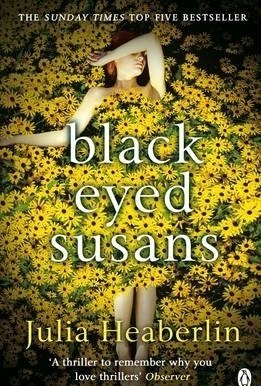
When she was sixteeen, young Tessa "Tessie" Cartwright was found, hanging on to life, in a field of Black-Eyed Susans. The other girls "dumped" with Tessa did not survive (in fact, some were just bones), and Tessa is doomed to live her life as the surviving "Black-Eyed Susan" in the press. Justifiably, the event haunts her life and her nightmares. Further, she is tormented by the fact that her testimony about what happened helped put the suspect, Terrell, on death row.
Now, a grown woman and mother, Tessa is working with the Terrell's legal team to exonerate him. This includes a forensic scientist (the forensics in the book are detailed and excellent). Her main reason? It seems wherever she lives, a patch of Black-Eyed-Susans follows, forcing her to live in fear, and to wonder if the sentenced killer truly is guilty. But if he isn't, are Tessa and her daughter safe? Why can't she remember what happened nearly 20 years ago? Tessa fears she is going insane, but also can't live with herself if she doesn't try to find out what happened so long ago.
This was a wonderful book; the subject matter is frightening, but the book itself was a captivating page-turner. The mystery is extremely well-plotted and riveting. Even when I was pretty sure I had things figured out, I was rapidly turning pages, still guessing and eagerly awaiting to find out what had happened to Tessa (and the other "Susans," as she calls them) back then. The book flips between present-day Tessa's point of view and to "Tessie," as a younger Tessa was known, talking about events leading up to and right after Terrell's trial. It's a suspenseful plot device that works well here; I was up late turning pages, desperate to know what happened.
Tessa is a well-formed character, even with her angst and anxieties resulting from her horrific past. Her supporting cast - her daughter, Terrell's lead lawyer, the forensic scientist, a quirky neighbor, her best friend from her youth - are all well-done, too. At times, the book is confusing due to Tessa's unreliable narration; she is suffering from memory loss and anxiety, after all, but it only adds to the book's suspense and intrigue. Perhaps the only thing I can find to complain about is that the ending is a bit too pat: it pops up suddenly to resolve things, but there's still a door left open, and it does nothing to diminish how enjoyable the book and the story is. Overall, an excellent thriller and a worthy read.
Now, a grown woman and mother, Tessa is working with the Terrell's legal team to exonerate him. This includes a forensic scientist (the forensics in the book are detailed and excellent). Her main reason? It seems wherever she lives, a patch of Black-Eyed-Susans follows, forcing her to live in fear, and to wonder if the sentenced killer truly is guilty. But if he isn't, are Tessa and her daughter safe? Why can't she remember what happened nearly 20 years ago? Tessa fears she is going insane, but also can't live with herself if she doesn't try to find out what happened so long ago.
This was a wonderful book; the subject matter is frightening, but the book itself was a captivating page-turner. The mystery is extremely well-plotted and riveting. Even when I was pretty sure I had things figured out, I was rapidly turning pages, still guessing and eagerly awaiting to find out what had happened to Tessa (and the other "Susans," as she calls them) back then. The book flips between present-day Tessa's point of view and to "Tessie," as a younger Tessa was known, talking about events leading up to and right after Terrell's trial. It's a suspenseful plot device that works well here; I was up late turning pages, desperate to know what happened.
Tessa is a well-formed character, even with her angst and anxieties resulting from her horrific past. Her supporting cast - her daughter, Terrell's lead lawyer, the forensic scientist, a quirky neighbor, her best friend from her youth - are all well-done, too. At times, the book is confusing due to Tessa's unreliable narration; she is suffering from memory loss and anxiety, after all, but it only adds to the book's suspense and intrigue. Perhaps the only thing I can find to complain about is that the ending is a bit too pat: it pops up suddenly to resolve things, but there's still a door left open, and it does nothing to diminish how enjoyable the book and the story is. Overall, an excellent thriller and a worthy read.

Dana (24 KP) rated The Winner's Kiss in Books
Mar 23, 2018
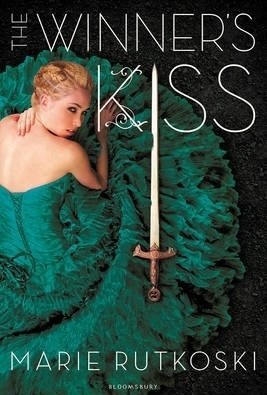
So my rating for this is actually a 3.5 stars instead of a 4 stars, but I rounded up. Oh and there will be spoilers in this review, so you have been warned.
This was an okay ending for the series-it wasn't bad but it wasn't bad either.
The characters got whiny and I only understood some of their motivations for what they did. Kestrel and Arin were very angsty throughout the series, and they did not disappoint in this book either.
I understand Kestrel had to forget herself in the work camp to be able to survive the camp and to become a better person afterwards, but to me, it was kinda pointless. Yes, she gets to start a new relationship with Arin and everyone else, but it seemed like a cover for the story to be able to go on without as many hitches. She was still able to retain some of herself, but most of her memories were gone? That just didn't make much sense to me. With that, how would she remember how to play the games so well if her mind was gone? I'm pretty sure that war strategy doesn't stay with you longer than your core memories, but hey, that's just my opinion. Another convenient thing that came with Kestrel's memory loss was that some of the previous novels' subplots were not touched on because she couldn't remember them. Again, not really my favorite thing in the world when it comes to writing.
Because of these couple of things, I did see quite a few plot holes that were too big for me not to notice.
I liked Arin the tiger. I want a tiger friend because that would be awesome.
I also really liked the clever way Kestrel took down the emperor. That was a brilliant move and I was actually really worried for her when I was reading that part of the book.
Overall, it was paced quite well, it was a very quick read, but there were plot and characterization problems that kept me from absolutely loving it. I am glad that I finished reading this series and that I waited to be able to binge read them all in one summer, but it was also kind of a let down from what I had expected.
If you like books with interesting concepts, lands, and politics, definitely pick this series up because, like I said before, I didn't dislike it! Not by a long shot!
This was an okay ending for the series-it wasn't bad but it wasn't bad either.
The characters got whiny and I only understood some of their motivations for what they did. Kestrel and Arin were very angsty throughout the series, and they did not disappoint in this book either.
I understand Kestrel had to forget herself in the work camp to be able to survive the camp and to become a better person afterwards, but to me, it was kinda pointless. Yes, she gets to start a new relationship with Arin and everyone else, but it seemed like a cover for the story to be able to go on without as many hitches. She was still able to retain some of herself, but most of her memories were gone? That just didn't make much sense to me. With that, how would she remember how to play the games so well if her mind was gone? I'm pretty sure that war strategy doesn't stay with you longer than your core memories, but hey, that's just my opinion. Another convenient thing that came with Kestrel's memory loss was that some of the previous novels' subplots were not touched on because she couldn't remember them. Again, not really my favorite thing in the world when it comes to writing.
Because of these couple of things, I did see quite a few plot holes that were too big for me not to notice.
I liked Arin the tiger. I want a tiger friend because that would be awesome.
I also really liked the clever way Kestrel took down the emperor. That was a brilliant move and I was actually really worried for her when I was reading that part of the book.
Overall, it was paced quite well, it was a very quick read, but there were plot and characterization problems that kept me from absolutely loving it. I am glad that I finished reading this series and that I waited to be able to binge read them all in one summer, but it was also kind of a let down from what I had expected.
If you like books with interesting concepts, lands, and politics, definitely pick this series up because, like I said before, I didn't dislike it! Not by a long shot!

JT (287 KP) rated The Bourne Legacy (2012) in Movies
Mar 10, 2020
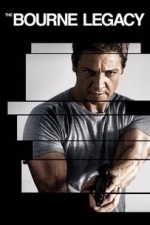

When Matt Damon and Paul Greengrass distanced themselves from another trip into the Bourne-verse it was hard to see if any film would ever make it into production. Then, along came Tony Gilroy, writer of the first three films he seemed to be the logical choice to co-write and direct the fourth installment in this ever popular action franchise.
The Bourne Legacy runs almost parallel with the events of The Bourne Ultimatum, but in this film the only time we get to see Matt Damon’s Jason Bourne is from the odd photograph and his name etched into wood on the underside of a bunk bed.
It’s time for a stare off!
For this outing Renner plays Aaron Cross an ‘outcome’ agent who finds himself on the run when the powers that be realize that Bourne has broken through and passed vital information about Treadstone and Black Briar to Pam Landy, who in turn passes it onto the media. So Retired Col. Eric Byer, USAF ( Norton) part of the sinister hierarchy decides it’s time to shut down and eradicate all other ops, including Cross.
It’s fraught with the occasional plot hole, (just how did Cross know where Shearing lived) here and there but that does little damage to the overall story which is actually quite good. Renner, who is already well equipped for these types of action films fills the void left by Damon very well. When he’s not battling wolves and shooting drones out of the sky he’s driving a motorbike through the streets of Manila, as well as running through every back street and staircase he can find. And he’s more than capable at hand to hand combat.
He’s joined on his adventure by Dr. Marta Shearing (Weisz) who worked with Cross in the beginning and was tasked with providing the agents with a specific set of medication to take, of which it seems Cross is no longer required but is desperately dependent on. Whereas Bourne tried to piece together parts of his life, Cross is like a crackhead desperate for the next fix and so his motives are different.
Gilroy manages the story well and there are some brief cameos from the likes of Scott Glenn, David Strathairn and Albert Finney to provide a reminder to us all about what has happened previously, just in case we are dealing with our own bout of memory loss. It’s disappointing not to see Damon reprise one of the best roles of his career but Renner does an admirable job and there is no question that there will be more life in him yet.
The Bourne Legacy runs almost parallel with the events of The Bourne Ultimatum, but in this film the only time we get to see Matt Damon’s Jason Bourne is from the odd photograph and his name etched into wood on the underside of a bunk bed.
It’s time for a stare off!
For this outing Renner plays Aaron Cross an ‘outcome’ agent who finds himself on the run when the powers that be realize that Bourne has broken through and passed vital information about Treadstone and Black Briar to Pam Landy, who in turn passes it onto the media. So Retired Col. Eric Byer, USAF ( Norton) part of the sinister hierarchy decides it’s time to shut down and eradicate all other ops, including Cross.
It’s fraught with the occasional plot hole, (just how did Cross know where Shearing lived) here and there but that does little damage to the overall story which is actually quite good. Renner, who is already well equipped for these types of action films fills the void left by Damon very well. When he’s not battling wolves and shooting drones out of the sky he’s driving a motorbike through the streets of Manila, as well as running through every back street and staircase he can find. And he’s more than capable at hand to hand combat.
He’s joined on his adventure by Dr. Marta Shearing (Weisz) who worked with Cross in the beginning and was tasked with providing the agents with a specific set of medication to take, of which it seems Cross is no longer required but is desperately dependent on. Whereas Bourne tried to piece together parts of his life, Cross is like a crackhead desperate for the next fix and so his motives are different.
Gilroy manages the story well and there are some brief cameos from the likes of Scott Glenn, David Strathairn and Albert Finney to provide a reminder to us all about what has happened previously, just in case we are dealing with our own bout of memory loss. It’s disappointing not to see Damon reprise one of the best roles of his career but Renner does an admirable job and there is no question that there will be more life in him yet.