
Search
Search results
Brother iPrint&Scan
Utilities and Photo & Video
App
Brother iPrint&Scan is a free app that enables you to print from and scan to your iOS device (iPhone...

Maps Pro with Google Maps
Navigation and Travel
App
The advanced Google Maps app with unique customisation features! *Please note* This release fixes...

DaveySmithy (107 KP) rated Fight Club (1999) in Movies
Dec 3, 2024
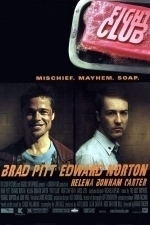
An Explosive and Provocative Journey
Few films have managed to spark as much debate and cultural impact as David Fincher’s Fight Club. Released in 1999, this dark and audacious psychological thriller quickly evolved from a divisive box office release to a bona fide cult classic. Based on Chuck Palahniuk’s novel of the same name, Fight Club is more than just a movie—it’s an exploration of identity, consumerism, and the hidden chaos lurking within us all. Fincher’s meticulous direction, coupled with outstanding performances by Edward Norton and Brad Pitt, makes Fight Club a visceral and thought-provoking cinematic ride that lingers long after the credits roll.
The story is told through the eyes of the unnamed narrator (Norton), a white-collar worker trapped in a monotonous life. Crippled by insomnia and a desperate longing for purpose, his mundane existence takes a dramatic turn when he crosses paths with Tyler Durden (Pitt), a magnetic, anarchic soap maker. Together, they form the titular fight club—a raw, underground outlet for men to vent their frustrations by literally beating them out of each other. What begins as an unconventional form of therapy soon spirals into a chaotic and dangerous movement, leading the narrator down a path of self-destruction and shocking revelations.
Edward Norton delivers a career-best performance as the narrator, capturing the character’s descent into madness with unnerving precision. His dry wit and self-deprecating humor make him relatable, even as his actions become increasingly unhinged. But it’s Brad Pitt who truly steals the show as Tyler Durden. Charismatic, unpredictable, and dripping with swagger, Pitt embodies the fantasy of rebellion and freedom that so many viewers secretly crave. Together, the two actors create a mesmerizing dynamic, with Tyler representing everything the narrator wants to be—and fears he might become.
Helena Bonham Carter rounds out the core cast as Marla Singer, a nihilistic wildcard who both disrupts and grounds the narrator’s chaotic journey. Her chemistry with Norton is as compelling as it is unconventional, adding a layer of emotional complexity to an otherwise hyper-masculine narrative.
What sets Fight Club apart is its fearless critique of modern society. It skewers consumerism, masculinity, and the emptiness of the so-called “American Dream,” forcing viewers to confront uncomfortable truths about their own lives. Fincher’s direction is sharp and unrelenting, with the film’s gritty visual style perfectly complementing its nihilistic tone. The innovative use of CGI, fourth-wall-breaking moments, and hauntingly effective cinematography by Jeff Cronenweth keep the audience on edge, unsure of what to expect next.
Yet, Fight Club is not without flaws. Its provocative themes can feel overly blunt at times, and some viewers might find its violent and anarchistic undertones alienating. Additionally, while the infamous plot twist is masterfully executed, it risks overshadowing the film’s deeper messages upon rewatch.
The soundtrack, anchored by The Dust Brothers’ industrial score and the unforgettable use of The Pixies’ “Where Is My Mind?” in the climax, elevates the film to iconic status. These elements, combined with razor-sharp dialogue and endlessly quotable lines, solidify Fight Club as a masterpiece of late-90s cinema.
While it may not be for everyone, Fight Club is a bold, daring, and unforgettable experience that challenges societal norms and forces introspection. It’s an audacious 9/10 film—flawed but brilliant, much like the chaos it portrays.

The story is told through the eyes of the unnamed narrator (Norton), a white-collar worker trapped in a monotonous life. Crippled by insomnia and a desperate longing for purpose, his mundane existence takes a dramatic turn when he crosses paths with Tyler Durden (Pitt), a magnetic, anarchic soap maker. Together, they form the titular fight club—a raw, underground outlet for men to vent their frustrations by literally beating them out of each other. What begins as an unconventional form of therapy soon spirals into a chaotic and dangerous movement, leading the narrator down a path of self-destruction and shocking revelations.
Edward Norton delivers a career-best performance as the narrator, capturing the character’s descent into madness with unnerving precision. His dry wit and self-deprecating humor make him relatable, even as his actions become increasingly unhinged. But it’s Brad Pitt who truly steals the show as Tyler Durden. Charismatic, unpredictable, and dripping with swagger, Pitt embodies the fantasy of rebellion and freedom that so many viewers secretly crave. Together, the two actors create a mesmerizing dynamic, with Tyler representing everything the narrator wants to be—and fears he might become.
Helena Bonham Carter rounds out the core cast as Marla Singer, a nihilistic wildcard who both disrupts and grounds the narrator’s chaotic journey. Her chemistry with Norton is as compelling as it is unconventional, adding a layer of emotional complexity to an otherwise hyper-masculine narrative.
What sets Fight Club apart is its fearless critique of modern society. It skewers consumerism, masculinity, and the emptiness of the so-called “American Dream,” forcing viewers to confront uncomfortable truths about their own lives. Fincher’s direction is sharp and unrelenting, with the film’s gritty visual style perfectly complementing its nihilistic tone. The innovative use of CGI, fourth-wall-breaking moments, and hauntingly effective cinematography by Jeff Cronenweth keep the audience on edge, unsure of what to expect next.
Yet, Fight Club is not without flaws. Its provocative themes can feel overly blunt at times, and some viewers might find its violent and anarchistic undertones alienating. Additionally, while the infamous plot twist is masterfully executed, it risks overshadowing the film’s deeper messages upon rewatch.
The soundtrack, anchored by The Dust Brothers’ industrial score and the unforgettable use of The Pixies’ “Where Is My Mind?” in the climax, elevates the film to iconic status. These elements, combined with razor-sharp dialogue and endlessly quotable lines, solidify Fight Club as a masterpiece of late-90s cinema.
While it may not be for everyone, Fight Club is a bold, daring, and unforgettable experience that challenges societal norms and forces introspection. It’s an audacious 9/10 film—flawed but brilliant, much like the chaos it portrays.
Hazel (1853 KP) rated Paper Towns in Books
May 30, 2017
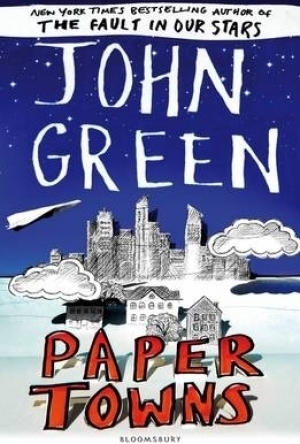
John Green is such a good writer
Paper Towns is a brilliantly written novel by John Green. Having only previously read The Fault in our Stars I have little to compare it to and cannot say whether it is his best. I am writing this less that half an hour after finishing Paper Towns therefore it is still fresh in my mind, which may explain my slight preference over TFIOS. However the story lines are so different that it is not really fair to compare them.
Set in Orlando, Florida, Paper Towns is narrated by eighteen-year-old Quentin Jacobson (often referred to as Q). It begins with a flash back to when he and next door neighbour, Margo Roth Spiegelman, were nine and discovered a dead body in the park. It is here that the differences in character are pointed out: “As I took those two steps back, Margo took two equally small and quiet steps forward.” Q is an anxious boy, whereas Margo comes across as very confident.
Despite their childhood relationship, for the main bulk of the story Q and Margo have grown apart. They belong to different social circles: Margo to the popular crowd and Q with the gamers, band members and social outcasts. But things take a turn when one night Margo climbs through Q’s bedroom window and insists he accompany her on a nighttime adventure, going around righting wrongs and wronging rights.
But the next day Margo runs away telling no one where she is going, except it appears that she has left clues to her whereabouts. Clues only intended for Q to discover. With the help of his prom-obsessed friend, Ben; Radar, the guy whose parents own the world’s largest collection of black Santas (seriously, where does Green come up with this stuff?); and Lacey, Margo’s best friend and Ben’s soon to be girlfriend; Q struggles to understand the clues and uncover Margo’s hiding place.
To begin with it is exciting to read about Q and his friends unscrambling the hidden messages but as the story goes on and Margo is yet to be found a sense of dread creeps up on us and Q begins to think the worst.
The final section, however, is fast past and thrilling to read as the characters travel across states, with a rather short time limit, in Q’s mini van in a final attempt to find Margo. What will they find when they arrive? Will Margo still be there?
At first I was not sure that I would like this book. Chapter one is mostly about Quentin, Ben and Radar fooling around as boys do, but once everything kicks off with Margo it is really exciting. Similarly to The Fault in our Stars, Green has filled Paper Towns with clever metaphors with paper, string, balloons and grass being used to represent life. It is a very witty narrative containing lots of humour, yet also manages to convey important ideas about the way we see the world, and the people in it.
Paper Towns can be described as a contemporary, coming-of-age story. As mentioned already, Margo was portrayed as a confident girl whereas Quentin was the opposite. Despite Q stating “I wanted Margo’s disappearance to change me; but it hasn’t, not really” I think Green has shown major character developments, and possibly even role reversals. Q may never completely get rid of his anxieties and does not totally become a different person, but he does gain more confidence as he is forced out of his comfort zone, and his perception of other people also begins to alter. Margo on the other hand may not be all that she seems. The real Margo may in fact be a quiet, rather lost teen in a world she feels trapped in. I think this story and Q’s development has the potential to inspire others of similar ages and make all readers question things about themselves.
Overall, an exceptionally good read.

Set in Orlando, Florida, Paper Towns is narrated by eighteen-year-old Quentin Jacobson (often referred to as Q). It begins with a flash back to when he and next door neighbour, Margo Roth Spiegelman, were nine and discovered a dead body in the park. It is here that the differences in character are pointed out: “As I took those two steps back, Margo took two equally small and quiet steps forward.” Q is an anxious boy, whereas Margo comes across as very confident.
Despite their childhood relationship, for the main bulk of the story Q and Margo have grown apart. They belong to different social circles: Margo to the popular crowd and Q with the gamers, band members and social outcasts. But things take a turn when one night Margo climbs through Q’s bedroom window and insists he accompany her on a nighttime adventure, going around righting wrongs and wronging rights.
But the next day Margo runs away telling no one where she is going, except it appears that she has left clues to her whereabouts. Clues only intended for Q to discover. With the help of his prom-obsessed friend, Ben; Radar, the guy whose parents own the world’s largest collection of black Santas (seriously, where does Green come up with this stuff?); and Lacey, Margo’s best friend and Ben’s soon to be girlfriend; Q struggles to understand the clues and uncover Margo’s hiding place.
To begin with it is exciting to read about Q and his friends unscrambling the hidden messages but as the story goes on and Margo is yet to be found a sense of dread creeps up on us and Q begins to think the worst.
The final section, however, is fast past and thrilling to read as the characters travel across states, with a rather short time limit, in Q’s mini van in a final attempt to find Margo. What will they find when they arrive? Will Margo still be there?
At first I was not sure that I would like this book. Chapter one is mostly about Quentin, Ben and Radar fooling around as boys do, but once everything kicks off with Margo it is really exciting. Similarly to The Fault in our Stars, Green has filled Paper Towns with clever metaphors with paper, string, balloons and grass being used to represent life. It is a very witty narrative containing lots of humour, yet also manages to convey important ideas about the way we see the world, and the people in it.
Paper Towns can be described as a contemporary, coming-of-age story. As mentioned already, Margo was portrayed as a confident girl whereas Quentin was the opposite. Despite Q stating “I wanted Margo’s disappearance to change me; but it hasn’t, not really” I think Green has shown major character developments, and possibly even role reversals. Q may never completely get rid of his anxieties and does not totally become a different person, but he does gain more confidence as he is forced out of his comfort zone, and his perception of other people also begins to alter. Margo on the other hand may not be all that she seems. The real Margo may in fact be a quiet, rather lost teen in a world she feels trapped in. I think this story and Q’s development has the potential to inspire others of similar ages and make all readers question things about themselves.
Overall, an exceptionally good read.
Haley Mathiot (9 KP) rated Blind Sight in Books
Apr 27, 2018

Thomas lost his family in a terrible accident two years ago. He’s been living as a hermit, rejecting God, ever since. When he starts getting mysterious e-mails and phone messages from some nut saying that he needs him to save his children, Thomas at first doesn’t believe it. But on a whim he goes to the air port. And there are two children there, waiting for him, calling him “uncle Thomas.”
Thomas is dragged (by the hand of God no less) into this insane mission to save these children from a cult, bring them to their mother who has been living undercover for three years, and expose the lies that the cult has been feeding to the world. But how is he going to keep his sanity when every time he sees the kids, he thinks about his own children and his wife who died at what he sees as his own hand? And what about his forsaken relationship with God?
I’m having a very hard time trying to think of words that describe Blind Sight. It is an incredible story about a terrible loss, but more than a loss of family—a loss of a relationship with Christ, but one that is rekindled to an absolute trust in His sovereignty. Blind Sight had my adrenalin racing through all 400-pages, yet parts of it were so peaceful and uplifting that I went back and read them again.
My favorite character was Micah, the little boy. He and Michelle were twins. He was so trusting, so brave, and so fragile. He couldn’t see, so he learned to rely completely on Michelle’s guidance, and had to learn to trust a man he’d never met before (Thomas). My heart ached for him through the story.
On that note, all the characters had some sort of major flaw that made them definite real people. My heart ached (almost physically) for each of them in a different way.
The writing was contemporary prose, easy to read, fluid, but simple. It wasn’t what made the book a 5-star book, but it didn’t take away from the overall enjoyment.
The narration alternated between several different view points, and left you hanging, making it a compelling page-turner. The viewpoints were not confusing, however, because it was all from third-person perspective. Also because each character was so real, so distinct, it was easy to get inside their heads.
Because of the different view points, there were some sections where I was reading what was going on during the cult’s worship service. It was amazing in a repulsive, nerve-wracking way that sent shivers of disgust down my spine. I hated the cult with a passion, and because of that I related to Justine, the mother, very well.
The ending was peculiar. Most books leave you with a satisfied smile on your face. This one, not so much. That satisfied smile comes after you’ve set it down and thought about it for a while—and it does stick with you. Pence doesn’t really “finish” the story in the sense that everything is wrapped up completely. You know what will happen in the future, and because of that he doesn’t have to spell it out for you. Once I sat back and thought about what God had in store for these characters and watched it play out in my head, I grinned. It’s wonderful!
Content: 100% Clean!
Recommendation: Anyone ages 10+ would enjoy this! It would be a wonderful read for a family to share, or for an adult looking for a good clean Christian-thriller, or a teenager with the weekend off of homework.
Thomas is dragged (by the hand of God no less) into this insane mission to save these children from a cult, bring them to their mother who has been living undercover for three years, and expose the lies that the cult has been feeding to the world. But how is he going to keep his sanity when every time he sees the kids, he thinks about his own children and his wife who died at what he sees as his own hand? And what about his forsaken relationship with God?
I’m having a very hard time trying to think of words that describe Blind Sight. It is an incredible story about a terrible loss, but more than a loss of family—a loss of a relationship with Christ, but one that is rekindled to an absolute trust in His sovereignty. Blind Sight had my adrenalin racing through all 400-pages, yet parts of it were so peaceful and uplifting that I went back and read them again.
My favorite character was Micah, the little boy. He and Michelle were twins. He was so trusting, so brave, and so fragile. He couldn’t see, so he learned to rely completely on Michelle’s guidance, and had to learn to trust a man he’d never met before (Thomas). My heart ached for him through the story.
On that note, all the characters had some sort of major flaw that made them definite real people. My heart ached (almost physically) for each of them in a different way.
The writing was contemporary prose, easy to read, fluid, but simple. It wasn’t what made the book a 5-star book, but it didn’t take away from the overall enjoyment.
The narration alternated between several different view points, and left you hanging, making it a compelling page-turner. The viewpoints were not confusing, however, because it was all from third-person perspective. Also because each character was so real, so distinct, it was easy to get inside their heads.
Because of the different view points, there were some sections where I was reading what was going on during the cult’s worship service. It was amazing in a repulsive, nerve-wracking way that sent shivers of disgust down my spine. I hated the cult with a passion, and because of that I related to Justine, the mother, very well.
The ending was peculiar. Most books leave you with a satisfied smile on your face. This one, not so much. That satisfied smile comes after you’ve set it down and thought about it for a while—and it does stick with you. Pence doesn’t really “finish” the story in the sense that everything is wrapped up completely. You know what will happen in the future, and because of that he doesn’t have to spell it out for you. Once I sat back and thought about what God had in store for these characters and watched it play out in my head, I grinned. It’s wonderful!
Content: 100% Clean!
Recommendation: Anyone ages 10+ would enjoy this! It would be a wonderful read for a family to share, or for an adult looking for a good clean Christian-thriller, or a teenager with the weekend off of homework.
Debbiereadsbook (1611 KP) rated Keeping a Warrior (Loving a Warrior #2) in Books
Jun 18, 2019
stunning foloow up!
Independent reviewer for Archaeolibrarian, I was gifted my copy of this book.
This is book 2 in the Loving a Warrior series, but you don’t NEED to have read book one, Loving a Warrior, for this to make sense. But personally, I would recommend you do. Cos I loved that book, and Matt and Shane play a huge part here.
Devon is trailing a path through a man’s world, a path she will not be veered from. But meeting Rhys, and how she connects with him on a very primal level, scares her a bit. When Devon’s full history comes clear, and Rhys’ too, their relationship takes the next step. Temporary, but NOT casual, right?
I loved this book, but equally I struggled with it. I shall attempt to voice why!
At times, I wanted to slap Rhys, I really did! He KNEW he was stringing his ex along, deep down he knew it, but he did nothing to stop it. He answered her calls, her messages, her crying down the phone, and pulled the string along a bit more. He KNEW he had to let her go. But then Devon comes into his life again. They met some 4 years before during an op. And here they are, working together again. And he doesn’t shut Lani down IMMEDIATELY! And I wanted to slap him some more.
He DOES care for Devon, right from the start though, and that makes him really question what he had been doing.
Devon’s trauma doesn’t come clear immediately, it kinda creeps out along the way. And it’s shocking, the level of betrayal she suffered, and it appears MANY women in the armed forces suffer. And I think this is what I found most difficult to deal with. How high up the food chain the covering up goes.
Oh, no, this bit, THIS is what I struggled with the most! Matt and Shane play a HUGE part here. Granted, they spend most of the book either fighting or ignoring each other, trying to find what they really feel for each other but failing miserably. Matt, apparently, said something to Shane. WHAT was said was never explained, and I’ve been trying to recall if this happened in their book, but short of going back to reread (I don’t, nor do I have the time!) I will never know, and I wanted to!
I loved the way Hanssen melds Loving a Warrior into Keeping a Warrior, not just because of Shane and Matt’s part here, but because of that other thing, the thing that I did NOT see coming! Had I read the two books back to back, I might have picked it up way WAAAAAAAAAAAAAAAAAAAAY right back at the beginning of the book, but I didn’t, and I was blown away by that little revelation!
Both Devon and Rhys have a say, in the third person. I did not see any spelling or editing to spoil my reading, and I read this book in one sitting, not an easy or short read, but I could NOT put it down!
Who is next? I dunno. Are there more in this series? I hope so! Oh please tell me there will be! It would be great if Matt, Shane, Devon and Rhys all take part too!
Ms Hansen has 9 books (according to Goodreads) and now I’ve read 3. 3 very different, but still amazing books. I want to read the rest of them. I want to start at the beginning and work my way through. I want to follow the path of this author, cos she is on my hit list now!!
5 stars
**same worded review will appear elsewhere**
This is book 2 in the Loving a Warrior series, but you don’t NEED to have read book one, Loving a Warrior, for this to make sense. But personally, I would recommend you do. Cos I loved that book, and Matt and Shane play a huge part here.
Devon is trailing a path through a man’s world, a path she will not be veered from. But meeting Rhys, and how she connects with him on a very primal level, scares her a bit. When Devon’s full history comes clear, and Rhys’ too, their relationship takes the next step. Temporary, but NOT casual, right?
I loved this book, but equally I struggled with it. I shall attempt to voice why!
At times, I wanted to slap Rhys, I really did! He KNEW he was stringing his ex along, deep down he knew it, but he did nothing to stop it. He answered her calls, her messages, her crying down the phone, and pulled the string along a bit more. He KNEW he had to let her go. But then Devon comes into his life again. They met some 4 years before during an op. And here they are, working together again. And he doesn’t shut Lani down IMMEDIATELY! And I wanted to slap him some more.
He DOES care for Devon, right from the start though, and that makes him really question what he had been doing.
Devon’s trauma doesn’t come clear immediately, it kinda creeps out along the way. And it’s shocking, the level of betrayal she suffered, and it appears MANY women in the armed forces suffer. And I think this is what I found most difficult to deal with. How high up the food chain the covering up goes.
Oh, no, this bit, THIS is what I struggled with the most! Matt and Shane play a HUGE part here. Granted, they spend most of the book either fighting or ignoring each other, trying to find what they really feel for each other but failing miserably. Matt, apparently, said something to Shane. WHAT was said was never explained, and I’ve been trying to recall if this happened in their book, but short of going back to reread (I don’t, nor do I have the time!) I will never know, and I wanted to!
I loved the way Hanssen melds Loving a Warrior into Keeping a Warrior, not just because of Shane and Matt’s part here, but because of that other thing, the thing that I did NOT see coming! Had I read the two books back to back, I might have picked it up way WAAAAAAAAAAAAAAAAAAAAY right back at the beginning of the book, but I didn’t, and I was blown away by that little revelation!
Both Devon and Rhys have a say, in the third person. I did not see any spelling or editing to spoil my reading, and I read this book in one sitting, not an easy or short read, but I could NOT put it down!
Who is next? I dunno. Are there more in this series? I hope so! Oh please tell me there will be! It would be great if Matt, Shane, Devon and Rhys all take part too!
Ms Hansen has 9 books (according to Goodreads) and now I’ve read 3. 3 very different, but still amazing books. I want to read the rest of them. I want to start at the beginning and work my way through. I want to follow the path of this author, cos she is on my hit list now!!
5 stars
**same worded review will appear elsewhere**
Gareth von Kallenbach (980 KP) rated Non-Stop (2014) in Movies
Jun 19, 2019
Bill Marks (Liam Neeson) is a man with demons. After his daughter fell seriously ill, the former New York police officer began a long descent into alcoholism and emotional distress. His fall was so great; Bill ended up losing his job and fortunately was able to find work as an Air Marshall providing in flight security for commercial routes.
In the new film Non-Stop, Bill is about to take a trans-Atlantic flight to London, and despite his dislike of flying and desire not to have a three day layover in London, reports for duty.
To say Bill is on edge would be an understatement as not only does he top off his coffee with a shot of spirits, he disables the airline smoke alarms so he can sneak a smoke to help calm himself and gather his thoughts.
Despite his issues, Bill is committed to his job and reports for duty and finds himself seated next to a charismatic lady named Jen (Julianne Moore), after she swaps seats with a passenger. Jen is a frequent traveler and noting that Bill seems on edge during takeoff, does her best to help calm him which Bill says will happen once they are airborne as he dislikes take offs.
True to his word, Bill is alert and ready to do his job once the plane is leveled off and en route to London. When a mysterious text arrives telling Bill that unless he deposits 150 million into an account, a passenger will be killed every twenty minutes, Bill swings into action and is determined to get to the bottom of the threat.
The flight crew is eager to put it off as a hoax as they state that a person cannot kill people on a crowded flight without being seen and it is likely just an elaborate hoax. Not convinced, Bill begins to investigate and asks for the passenger manifest to be rechecked and wants the account number he was given traced.
With the first deadline approaching Bill believes he has eliminated the threat when he uncovers a traitor in the midst in the guise of a fellow Air Marshall.
However text messages continue to arrive with instructions and Bill learns from his superiors that the account number given is in Bill’s name. Convinced that there is a viable threat Bill must fight to save the day when the crew, his bosses, and passengers believe he is deranged and actually hijacking the plane himself via an elaborate ruse.
While the film at times stretches credibility, it is for the most part a very tight and suspenseful and enjoyable film. My only issues were the final act at times seemed a bit to Hollywood and conventional for me but thanks to Neeson the film works.
The premise was engaging as was the cast and I was kept guessing as to the true nature of the threat as the film was good at casting suspicions then redirecting them throughout.
Like with the “Taken” films, Neeson is able to take a film that could be a mess in the hands of another actor but through his charisma and strong presence is able to give a character that although flawed is one that an audience can support.
French director Jaume Collet-Serra knows suspense from his part work with films such as “Orphan” and “Mindscape” and he wisely lets the film be a character driven story with action rather than an action film that happens to have characters.
As I said earlier, the final act was what kept the film from being a classic for me, but as it is, there is still plenty of good stuff to make this a film worth catching.
http://sknr.net/2014/02/28/non-stop/
In the new film Non-Stop, Bill is about to take a trans-Atlantic flight to London, and despite his dislike of flying and desire not to have a three day layover in London, reports for duty.
To say Bill is on edge would be an understatement as not only does he top off his coffee with a shot of spirits, he disables the airline smoke alarms so he can sneak a smoke to help calm himself and gather his thoughts.
Despite his issues, Bill is committed to his job and reports for duty and finds himself seated next to a charismatic lady named Jen (Julianne Moore), after she swaps seats with a passenger. Jen is a frequent traveler and noting that Bill seems on edge during takeoff, does her best to help calm him which Bill says will happen once they are airborne as he dislikes take offs.
True to his word, Bill is alert and ready to do his job once the plane is leveled off and en route to London. When a mysterious text arrives telling Bill that unless he deposits 150 million into an account, a passenger will be killed every twenty minutes, Bill swings into action and is determined to get to the bottom of the threat.
The flight crew is eager to put it off as a hoax as they state that a person cannot kill people on a crowded flight without being seen and it is likely just an elaborate hoax. Not convinced, Bill begins to investigate and asks for the passenger manifest to be rechecked and wants the account number he was given traced.
With the first deadline approaching Bill believes he has eliminated the threat when he uncovers a traitor in the midst in the guise of a fellow Air Marshall.
However text messages continue to arrive with instructions and Bill learns from his superiors that the account number given is in Bill’s name. Convinced that there is a viable threat Bill must fight to save the day when the crew, his bosses, and passengers believe he is deranged and actually hijacking the plane himself via an elaborate ruse.
While the film at times stretches credibility, it is for the most part a very tight and suspenseful and enjoyable film. My only issues were the final act at times seemed a bit to Hollywood and conventional for me but thanks to Neeson the film works.
The premise was engaging as was the cast and I was kept guessing as to the true nature of the threat as the film was good at casting suspicions then redirecting them throughout.
Like with the “Taken” films, Neeson is able to take a film that could be a mess in the hands of another actor but through his charisma and strong presence is able to give a character that although flawed is one that an audience can support.
French director Jaume Collet-Serra knows suspense from his part work with films such as “Orphan” and “Mindscape” and he wisely lets the film be a character driven story with action rather than an action film that happens to have characters.
As I said earlier, the final act was what kept the film from being a classic for me, but as it is, there is still plenty of good stuff to make this a film worth catching.
http://sknr.net/2014/02/28/non-stop/
Lucy Buglass (45 KP) rated Dead In A Week (Or Your Money Back) (2018) in Movies
Jun 20, 2019
Dark comedy at its finest
This review discusses dark topics such as death and suicide. Reader discretion advised.
Getting comedy right is difficult enough, let alone trying to do it with sensitive topics. But Dead In A Week (or your money back) hits the nail on the head. After several failed suicide attempts, William (Aneurin Barnard) signs a contract with veteran assassin Leslie (Tom Wilkinson), who promises he’ll be dead within the week. This simple concept results in 1 hour and 30 mins of pure entertainment.
Though explicit in the way it discusses suicide, there is a reason for this. Right from the start, William is positioned as an incredibly depressed, isolated failed writer, who is struggling to see the point in living. He is very open about this fact, and spends a lot of time planning ways he could do it, accompanied by a darkly funny montage of the ways he’s tried. He is a troubled character that you can’t help but feel sorry for.
What makes this film even more interesting is the way it makes you sympathise with both target and killer. Leslie is trying his best to avoid retirement, and sees William as an answer to his prayers. If he kills him, he’ll fill his quota, and all will be well. This creates a paradox where you want both men to succeed, but you know that’s impossible.
William changes his mind about the contract when a publisher takes interest in his novel, and he begins to fall in love with Ellie (Freya Mavor), the assistant who called him regarding his latest story. This encounter comes with some rather frank and heartwarming messages about life, reminding us how precious life can be if you give it a chance.
Of course, the film doesn’t just end there. After William’s 360, Leslie is having none of it, and for the rest of the film we see this young writer trying to outrun a seasoned assassin. Leslie’s boss Harvey (Christopher Eccleston) is hot on his tail as well, tired of giving the old man too many chances. It’s a classic tale of a failed assassin, flipped entirely on its head.
Filled with some brilliant twists and turns, the script is formulaic yet hugely entertaining, with some laugh out loud moments throughout. It will certainly appeal to those who like their humour a little darker, with its use of comedic timing and deadpan delivery. It addresses so much in a short space of time, adding depth where needed.
Leslie’s wife Penny (Marion Bailey) adds her own comic relief to the situation, with a delightful satire on middle-class culture. Whilst her husband is trying to keep a dangerous job he loves so much, she’s more concerned about beating her church rivals in a cushion competition. The parallels between the couple are simultaneously heartwarming and awkward, and I enjoyed the way they bounced off each other throughout.
This was a thoroughly enjoyable film, with some unexpectedly touching moments. I really connected with certain characters and loathed others, allowing me to become fully invested in the film. The encounter between these two men should have ended one way, but the two embark on a journey that changes their lives for the better. Underneath all the humour comes an understanding of mental health issues, and sympathy for those who struggle.
This was Tom Edmund’s feature length debut, after directing a few short films. It’s an impressive first film with good pacing, solid characters, and a well-polished look throughout. It was an ambitious first feature length, but it certainly delivered.
https://lucygoestohollywood.com/2019/05/06/dark-comedy-at-its-finest-my-thoughts-on-dead-in-a-week-or-your-money-back/
Getting comedy right is difficult enough, let alone trying to do it with sensitive topics. But Dead In A Week (or your money back) hits the nail on the head. After several failed suicide attempts, William (Aneurin Barnard) signs a contract with veteran assassin Leslie (Tom Wilkinson), who promises he’ll be dead within the week. This simple concept results in 1 hour and 30 mins of pure entertainment.
Though explicit in the way it discusses suicide, there is a reason for this. Right from the start, William is positioned as an incredibly depressed, isolated failed writer, who is struggling to see the point in living. He is very open about this fact, and spends a lot of time planning ways he could do it, accompanied by a darkly funny montage of the ways he’s tried. He is a troubled character that you can’t help but feel sorry for.
What makes this film even more interesting is the way it makes you sympathise with both target and killer. Leslie is trying his best to avoid retirement, and sees William as an answer to his prayers. If he kills him, he’ll fill his quota, and all will be well. This creates a paradox where you want both men to succeed, but you know that’s impossible.
William changes his mind about the contract when a publisher takes interest in his novel, and he begins to fall in love with Ellie (Freya Mavor), the assistant who called him regarding his latest story. This encounter comes with some rather frank and heartwarming messages about life, reminding us how precious life can be if you give it a chance.
Of course, the film doesn’t just end there. After William’s 360, Leslie is having none of it, and for the rest of the film we see this young writer trying to outrun a seasoned assassin. Leslie’s boss Harvey (Christopher Eccleston) is hot on his tail as well, tired of giving the old man too many chances. It’s a classic tale of a failed assassin, flipped entirely on its head.
Filled with some brilliant twists and turns, the script is formulaic yet hugely entertaining, with some laugh out loud moments throughout. It will certainly appeal to those who like their humour a little darker, with its use of comedic timing and deadpan delivery. It addresses so much in a short space of time, adding depth where needed.
Leslie’s wife Penny (Marion Bailey) adds her own comic relief to the situation, with a delightful satire on middle-class culture. Whilst her husband is trying to keep a dangerous job he loves so much, she’s more concerned about beating her church rivals in a cushion competition. The parallels between the couple are simultaneously heartwarming and awkward, and I enjoyed the way they bounced off each other throughout.
This was a thoroughly enjoyable film, with some unexpectedly touching moments. I really connected with certain characters and loathed others, allowing me to become fully invested in the film. The encounter between these two men should have ended one way, but the two embark on a journey that changes their lives for the better. Underneath all the humour comes an understanding of mental health issues, and sympathy for those who struggle.
This was Tom Edmund’s feature length debut, after directing a few short films. It’s an impressive first film with good pacing, solid characters, and a well-polished look throughout. It was an ambitious first feature length, but it certainly delivered.
https://lucygoestohollywood.com/2019/05/06/dark-comedy-at-its-finest-my-thoughts-on-dead-in-a-week-or-your-money-back/
Gareth von Kallenbach (980 KP) rated Team America: World Police (2004) in Movies
Aug 14, 2019
With world tensions at an all time high with the very real threat of terrorism, the creators of South Park, Trey Parker and Matt Stone, have rushed to the rescue with a biting political and social satire named “Team America: World Police”.
The film is a puppet movie based upon the old Thunderbirds television show about a team of specialists who fight to save the world from all manner of threats both real and imagined. The story is told entirely by puppets and miniatures which allows Stone and Parker to push the boundaries much further than they would be allowed to with live actors and in doing so, give the audience some of the deepest albeit raunchiest laughs seen in a long time.
The story opens with Team America battling the terrorists in Paris. Ever quick on the trigger, the team is able to stop the deployment of a weapon of mass destruction but in the process much of the cities famed landmarks fall from collateral damage.
Forced to find a new team member, the leader of Team America, Spottswoode recruits a stage actor named Gary Johnston to join the team and infiltrate the terrorist organization to learn what new attacks are being planned.
While this is seen as a good move by the team, there are parts of the team that are unsure of this as one in particular does not trust actors and thinks that he will escalate an already volatile situation. Undaunted, the team sets off for Cairo Egypt and eventually leaves a trail of mayhem and destruction in their path.
It is at this point that the real story of the films kicks into gear. It is learned that North Korean leader Kim Jong Il is working with the terrorists to plot the ultimate attack and have convinced a cadre of Hollywood actors to attend a peace conference with other world leaders in an attempt to undermine Team America.
In between battles, Team America has plenty of time to take on other concerns such as love, self-doubt, personal issues, and suspicions, some of which result in a side-splitting sex scene that will soon become legend, as even though it involved puppets, it has to be severely edited in order to avoid an NC-17 rating. As it stands, it is one of the funniest moments in cinematic history and worth the price of admission alone.
The film does a good job of mixing comedy and commentary without ever drawing a line and saying this is how it is. We see Team America as a gun happy bunch, but we are also shown that they are true patriots who are willing to do what it takes to keep the country safe. Such is the genius of Parker and Stone as they are able to create a biting social commentary that makes you aware of issues without pounding the audience over their heads with the creator’s viewpoints. Instead the audience is given a situation and watch things taken to highly comical levels in an effort to entertain. People are free to draw their own conclusions and interpretations of the messages in the film as despite your beliefs or political leanings, we all laugh. There will be those that take umbrage to the crude humor and language, and others will not like what they may call a right-wing message. Instead I looked at the film as a very funny comedy with solid social commentary.
The only fault I had with the film is that it does drag a bit about ¾ in before getting to the final confrontations but those are well worth the wait. The film also parodies many action films and it is fun to try to try to uncover which film is being parodied. The puppets themselves are very impressive as their movements and facial expressions are easily the best ever captured on film.
The film is a puppet movie based upon the old Thunderbirds television show about a team of specialists who fight to save the world from all manner of threats both real and imagined. The story is told entirely by puppets and miniatures which allows Stone and Parker to push the boundaries much further than they would be allowed to with live actors and in doing so, give the audience some of the deepest albeit raunchiest laughs seen in a long time.
The story opens with Team America battling the terrorists in Paris. Ever quick on the trigger, the team is able to stop the deployment of a weapon of mass destruction but in the process much of the cities famed landmarks fall from collateral damage.
Forced to find a new team member, the leader of Team America, Spottswoode recruits a stage actor named Gary Johnston to join the team and infiltrate the terrorist organization to learn what new attacks are being planned.
While this is seen as a good move by the team, there are parts of the team that are unsure of this as one in particular does not trust actors and thinks that he will escalate an already volatile situation. Undaunted, the team sets off for Cairo Egypt and eventually leaves a trail of mayhem and destruction in their path.
It is at this point that the real story of the films kicks into gear. It is learned that North Korean leader Kim Jong Il is working with the terrorists to plot the ultimate attack and have convinced a cadre of Hollywood actors to attend a peace conference with other world leaders in an attempt to undermine Team America.
In between battles, Team America has plenty of time to take on other concerns such as love, self-doubt, personal issues, and suspicions, some of which result in a side-splitting sex scene that will soon become legend, as even though it involved puppets, it has to be severely edited in order to avoid an NC-17 rating. As it stands, it is one of the funniest moments in cinematic history and worth the price of admission alone.
The film does a good job of mixing comedy and commentary without ever drawing a line and saying this is how it is. We see Team America as a gun happy bunch, but we are also shown that they are true patriots who are willing to do what it takes to keep the country safe. Such is the genius of Parker and Stone as they are able to create a biting social commentary that makes you aware of issues without pounding the audience over their heads with the creator’s viewpoints. Instead the audience is given a situation and watch things taken to highly comical levels in an effort to entertain. People are free to draw their own conclusions and interpretations of the messages in the film as despite your beliefs or political leanings, we all laugh. There will be those that take umbrage to the crude humor and language, and others will not like what they may call a right-wing message. Instead I looked at the film as a very funny comedy with solid social commentary.
The only fault I had with the film is that it does drag a bit about ¾ in before getting to the final confrontations but those are well worth the wait. The film also parodies many action films and it is fun to try to try to uncover which film is being parodied. The puppets themselves are very impressive as their movements and facial expressions are easily the best ever captured on film.
Gareth von Kallenbach (980 KP) rated Two for the Money (2005) in Movies
Aug 14, 2019
The fall often brings the changing of the leaves and cooler weather, but for many men, fall is the start of Football season. For many, this time honored tradition that has given rise to terms such as “Football Widow”, “tailgating”, and “Super Bowl Party”, is a welcome diversion from the week, and something that is looked forward to all week.
There are also those who look forward to the games for other reasons, such as gambling. In a multi-billion dollar industry, gamblers spend hours looking over the injury reports, betting lines, and handicapping reports in an effort to gain any edge they can find.
In the new film Two for the Money, viewers are shown the highs, lows, and manipulations that can come from high stakes gambling. Brandon Lang (Matthew Mc Conaughey), a star Quarterback whose dreams of playing as a professional end due to a knee injury.
Reduced, to recording messages for a 900 service to make a living, Brandon is given the chance to record his projections for the coming weekend’s games. In no time, Brandon is racking up a very impressive win/loss record which draws the attention of Walter Abrams, (Al Pacino), who whisks Brandon to New York and wants to make him the cornerstone of his advising service.
In no time, Brandon is given a new look, a new stage name, and is center stage making the predictions. The wins start to pile up as does the money which causes bitterness amongst certain staff members who resent the lavish amounts of attention that Brandon is getting from Walter.
Brandon becomes caught up in the life of money, a fast car, and lavish living, and soon finds himself losing touch with his true self. It is at this point that things start to change in Brandon’s fortunes and he must find a way to get himself back on track, before his life spins horribly out of control.
The catchy premise of the film and strong cast starts out strong but looses its way as the film unfolds. Pacino is as effective as always, but his portrayal of Walter as a man obsessed with winning at all costs and his family is often sharply contrasted. In one scene we see him in a menacing light when things are going very well for him, yet when you think he should be going over the top in a time of crisis, he is restrained and unconcerned.
While the above is a good portrayal of the duality of the character, it does not make for high drama as he never does explode. The shoe never does drop, he shows menace, you wait for the moment, where he will turn on those around him, yet it never fully arises.
Rene Russo does a good job as the loyal wife who has mixed feelings about her life. She loves Walter and their daughter but hates gambling, and urges Brandon to walk away from it all. She is good in her scenes but she is not given enough to allow her to shine.
Mc Conaughey is good in his part as his character seems to be an interesting contrast in duality. He has no problem in asking people to bet thousands of dollars on his picks, yet his is unwilling to gamble. He likes the money and fame that comes with his position yet frets over not getting calls from his mother. The part starts strong but the character ultimately comes off bland and unsympathetic.
While not a bad film, Two for the Money ultimately is hindered by the pacing of the film which tends to drag, uneven characters, and a lack of tension. This becomes very clear and towards the last half of the film as much of the interest in the characters and their situations are lost.
There are also those who look forward to the games for other reasons, such as gambling. In a multi-billion dollar industry, gamblers spend hours looking over the injury reports, betting lines, and handicapping reports in an effort to gain any edge they can find.
In the new film Two for the Money, viewers are shown the highs, lows, and manipulations that can come from high stakes gambling. Brandon Lang (Matthew Mc Conaughey), a star Quarterback whose dreams of playing as a professional end due to a knee injury.
Reduced, to recording messages for a 900 service to make a living, Brandon is given the chance to record his projections for the coming weekend’s games. In no time, Brandon is racking up a very impressive win/loss record which draws the attention of Walter Abrams, (Al Pacino), who whisks Brandon to New York and wants to make him the cornerstone of his advising service.
In no time, Brandon is given a new look, a new stage name, and is center stage making the predictions. The wins start to pile up as does the money which causes bitterness amongst certain staff members who resent the lavish amounts of attention that Brandon is getting from Walter.
Brandon becomes caught up in the life of money, a fast car, and lavish living, and soon finds himself losing touch with his true self. It is at this point that things start to change in Brandon’s fortunes and he must find a way to get himself back on track, before his life spins horribly out of control.
The catchy premise of the film and strong cast starts out strong but looses its way as the film unfolds. Pacino is as effective as always, but his portrayal of Walter as a man obsessed with winning at all costs and his family is often sharply contrasted. In one scene we see him in a menacing light when things are going very well for him, yet when you think he should be going over the top in a time of crisis, he is restrained and unconcerned.
While the above is a good portrayal of the duality of the character, it does not make for high drama as he never does explode. The shoe never does drop, he shows menace, you wait for the moment, where he will turn on those around him, yet it never fully arises.
Rene Russo does a good job as the loyal wife who has mixed feelings about her life. She loves Walter and their daughter but hates gambling, and urges Brandon to walk away from it all. She is good in her scenes but she is not given enough to allow her to shine.
Mc Conaughey is good in his part as his character seems to be an interesting contrast in duality. He has no problem in asking people to bet thousands of dollars on his picks, yet his is unwilling to gamble. He likes the money and fame that comes with his position yet frets over not getting calls from his mother. The part starts strong but the character ultimately comes off bland and unsympathetic.
While not a bad film, Two for the Money ultimately is hindered by the pacing of the film which tends to drag, uneven characters, and a lack of tension. This becomes very clear and towards the last half of the film as much of the interest in the characters and their situations are lost.