
Search
Search results

KalJ95 (25 KP) rated Final Fantasy VII Remake in Video Games
Jun 10, 2020 (Updated Jun 10, 2020)
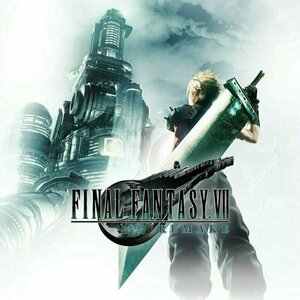


Combat Is Fluid, Weighty And Satisfying. (2 more)
The Protagonists Are Well Thought Out.
I Can't Wait For The Next Part.
Side missions Are Tedious And Boring (2 more)
The Middle Is A Slog To Go Through,
Parts Of The Story Needed Removing
A Classic Reborn.
I understand the impact FFVII has had on both video game narratives, and storytelling itself. It remains a staple mark on video games, and as such is held so highly amongst developers as the standard of how great a narrative can be, and its hard to argue. I haven't even played the original 1997 release, but I know the story beats and main moments. Its an incredible journey, with fascinating characters, rolled into moments of twists and turns. Once a remake was announced, it obviously was met with massive anticipation, and worrying doubt. Could you possibly pull off a remake of classic and make fans old and new fall in love all over again?
The answer is a yes, but only just. I played FFVIIR as a brand new player, knowing nothing of the characters or story of what happens in Midgar, and began being completely enthralled. The opening is a chapter of fast edged combat and moral dilemmas of actions taken by our heroes. Its explosive, bursting with huge set pieces and cheesy dialogue. I loved every moment, and this was only the tutorial. The implications ride high throughout the whole experience when you see the environment change around you, and questions begin to arise from NPC’s, and yourself. Is their really any good guys amongst this world of soldiers, eco-terrorists and corrupt authority figures?
From then the game takes different directions, and things become problematic, specifically once you fade from the Avalanche crew.
Although the story still remains as engaging to a certain point, the experience takes a wayward nosedive. Side missions are introduced, and while you don't have to complete them, you feel the need to once characters start asking you to. This becomes a major issue because they are all so boring and stiff. The characters you talk to are all robotic, the dialogue seems overdramatised, and the reward itself just isn't worth it. The main aspect of buying a game for me is for immersion, and consistently I was being pulled from the experience because of lacklustre moments, and this is the same for most of the game. As I said, the opening to the story is a perfect way to begin your stay in Midgar, but once you drift away from the Avalanche crew, the story becomes stale. The game feels more like a twenty five hour experience rather than thirty five, and cutting certain sections would boost the story significantly. I understand wanting to add more and retain the great moments from the original, but sometimes cutting the fat can also be a good thing.
While moments in the original game could last around one hour, FFVIIR stretches it further to gain more insight into side characters and exploration. Don’t get wrong, it works in certain areas, for example Wall Market and Sector 7 as a whole are fantastic places to spend hours in, which I did. They burst with details that provide back story to their presence only thought about by the player. The slums are cramped, lifeless in colour, and shows the class divide within Midgar’s people.
However, in these moments they are only boosted further by the best feature of the game; Combat.
The combat is sublime, crunchy and weighty, and requires excellent skill the more you progress. Each of the protagonists has unique fighting styles, and customisation with materials gives you even more edge over your opponents. Fighting your standard monsters and creatures becomes a breeze once you know their weaknesses, but Boss fights are where the real challenge happens. Boss fights are the highlight of the entire game, especially the likes of a Giant House and the Final confrontation, and encapsulate the work and progression within the characters you play as. At first, I just wanted to play as Cloud, but knowing each characters skills, then switching between them to fight, and help other members of your party, becomes a juggling act thats so damn good. Speaking of which, our Heroes. At first, I thought I was dealing with generic anime characters who all boast the same attributes, and how wrong I was. Cloud is defensive, standoffish and blunt, who's primarily in the job for the money. Cloud is suffering, from what I can gather, with amnesia, and as the game’s questions begin to reveal the answers, he sets aside the hard edged exterior he carries with him, and opens up to warm to this band of wacky eco-terrorists. Even with this just being the first part of however many they are planning to release, Cloud is so interesting to me, a nut you want to crack and see what is inside, and his past becomes the focal point of the finale. He has become one of my favourite characters in a video game.
FFVIIR is a conundrum I only further want to figure out. Its both an incredible video game, but also bogged down with clear issues, which I personally feel either didn’t need to be in the game, or could of spent more time being fleshed out. Would I recommend it? Absolutely. Its a game I feel everyone should play, for gorgeous spectacle and mesmerising vision. I can’t wait for the second part.
The answer is a yes, but only just. I played FFVIIR as a brand new player, knowing nothing of the characters or story of what happens in Midgar, and began being completely enthralled. The opening is a chapter of fast edged combat and moral dilemmas of actions taken by our heroes. Its explosive, bursting with huge set pieces and cheesy dialogue. I loved every moment, and this was only the tutorial. The implications ride high throughout the whole experience when you see the environment change around you, and questions begin to arise from NPC’s, and yourself. Is their really any good guys amongst this world of soldiers, eco-terrorists and corrupt authority figures?
From then the game takes different directions, and things become problematic, specifically once you fade from the Avalanche crew.
Although the story still remains as engaging to a certain point, the experience takes a wayward nosedive. Side missions are introduced, and while you don't have to complete them, you feel the need to once characters start asking you to. This becomes a major issue because they are all so boring and stiff. The characters you talk to are all robotic, the dialogue seems overdramatised, and the reward itself just isn't worth it. The main aspect of buying a game for me is for immersion, and consistently I was being pulled from the experience because of lacklustre moments, and this is the same for most of the game. As I said, the opening to the story is a perfect way to begin your stay in Midgar, but once you drift away from the Avalanche crew, the story becomes stale. The game feels more like a twenty five hour experience rather than thirty five, and cutting certain sections would boost the story significantly. I understand wanting to add more and retain the great moments from the original, but sometimes cutting the fat can also be a good thing.
While moments in the original game could last around one hour, FFVIIR stretches it further to gain more insight into side characters and exploration. Don’t get wrong, it works in certain areas, for example Wall Market and Sector 7 as a whole are fantastic places to spend hours in, which I did. They burst with details that provide back story to their presence only thought about by the player. The slums are cramped, lifeless in colour, and shows the class divide within Midgar’s people.
However, in these moments they are only boosted further by the best feature of the game; Combat.
The combat is sublime, crunchy and weighty, and requires excellent skill the more you progress. Each of the protagonists has unique fighting styles, and customisation with materials gives you even more edge over your opponents. Fighting your standard monsters and creatures becomes a breeze once you know their weaknesses, but Boss fights are where the real challenge happens. Boss fights are the highlight of the entire game, especially the likes of a Giant House and the Final confrontation, and encapsulate the work and progression within the characters you play as. At first, I just wanted to play as Cloud, but knowing each characters skills, then switching between them to fight, and help other members of your party, becomes a juggling act thats so damn good. Speaking of which, our Heroes. At first, I thought I was dealing with generic anime characters who all boast the same attributes, and how wrong I was. Cloud is defensive, standoffish and blunt, who's primarily in the job for the money. Cloud is suffering, from what I can gather, with amnesia, and as the game’s questions begin to reveal the answers, he sets aside the hard edged exterior he carries with him, and opens up to warm to this band of wacky eco-terrorists. Even with this just being the first part of however many they are planning to release, Cloud is so interesting to me, a nut you want to crack and see what is inside, and his past becomes the focal point of the finale. He has become one of my favourite characters in a video game.
FFVIIR is a conundrum I only further want to figure out. Its both an incredible video game, but also bogged down with clear issues, which I personally feel either didn’t need to be in the game, or could of spent more time being fleshed out. Would I recommend it? Absolutely. Its a game I feel everyone should play, for gorgeous spectacle and mesmerising vision. I can’t wait for the second part.

Bob Mann (459 KP) rated Miss Sloane (2016) in Movies
Sep 29, 2021
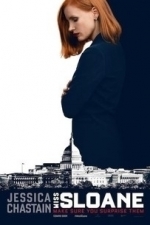

“I never know where the line is”.
In a roller-coaster year for political intrigue on both sides of the Atlantic, and with all hell breaking loose again between Trump and ‘The Hill’, here comes “Miss Sloane”.
Jessica Chastain ( “The Martian“, “Interstellar“) plays the titular heroine (I use the term loosely): a pill-popping insomniac who is working herself into an early grave as a top-Washington lobbyist. The game of lobbying is, as she describes, staying one step of the competition and “playing your trump card just after your opponent has played theirs”. But all is not going well for Elizabeth Sloane. For the film opens with her being on trial for corruption in front of a congressional hearing, chaired by Senator Sperling (John Lithgow, “The Accountant“).
Through flashback we see how she got to that point, moving from one firm headed by George Dupont (Sam Waterston, “The Killing Fields”) to another headed by Rodolfo Schmidt (Mark Strong, “Kick Ass”, “Kingsman: The Secret Service“) against the backdrop of the high-stakes lobbying around a new gun-control bill. Her fanatical drive to ‘win at all costs’, and the trail of destruction, through her cutthroat work ethic, that she leaves behind her, digs her an ever-deeper hole as the political and legal net closes in around her.
Jessica Chastain has played strong and decisive women before, most notably in “Zero Dark Thirty”, but probably never to this extreme degree. Here she is like Miranda Priestly from “The Devil Wears Prada”, but not played for laughs. Miss Sloane is an emotionally and physically damaged woman, but a formidable one who takes charge both in the boardroom and in the bedroom, through the unashamed use of male escorts (in the well-muscled form of Jake Lacy, “Their Finest“). As such her character is not remotely likable, but one the I could certainly relate to from past business dealings I’ve had. (And no, I don’t mean as a male prostitute!)
I found Sloane to be one of the more fascinating characters in this year’s releases: I was never being sure whether her actions are being powered from a background of strong moral conviction (fuelled by a devastating childhood incident perhaps?) or through pure greed and lust for power. I thought Chastain excelled in the role, but for balance the illustrious Mrs Mann thought she rather overplayed her hand at times.
Outside of Chastain’s central performance though, this is a very strong ensemble cast. Mark Strong – not with an English accent for once and not playing a heavy – is great as the frustrated boss, as is the seldom-seen Sam Waterston (who, by the way, is the father of Katherine Waterston of current “Alien: Covenant” fame). Christine Baranski (so good in “The Good Wife” and now “The Good Fight”) pops up in a cameo as a flinty Senator. But the outstanding turn for me was Oxford-born Gugu Mbatha-Raw (“Belle”, “Beauty and the Beast” – and yes, I’m aware of the irony in this pairing!). Playing Sloane’s colleague Esme Manucharian – both a lady with a secret in her past as well as possessing a great name – Mbatha-Raw is just riveting and deserving of a Supporting Actress nomination in my book.
What binds the whole two hours together is an extraordinarily skillful script by debut writer Jonathan Perera, which has both a gripping and ever-twisting story as well as a host of quotable lines. Ladies and gentlemen, we may have a new Aaron Sorkin on the block! It’s a brave script, dealing as it does with 2nd amendment issues, since there seems to be nothing that stirs up American comment like gun-control. For those living in the UK (where gun deaths are over 50 times less per capita than in the US) the whole topic is both fascinating and perplexing and there were a lot of nodding heads during Sloane’s TV rant about it being an archaic ‘Wild West’ throwback that should no longer be set in stone. (But it’s not our country any more, so you Americans can do what you like!)
The marvelous Cinematography is by Sebastian Blenkov – the second time this gentleman has come to my attention within a month (the first time being “Their Finest“).
The director is Portsmouth-born Brit John Madden (“Shakespeare in Love”, “The Best Exotic Marigold Hotel”) and he does a great job in sustaining the tension and energy throughout the running time. This all makes it a great shame that the film has not done well at the US box office, perhaps because ( the film was released in December 2016) the public had more than their fill of politics after a bruising and divisive election. (I’m not sure the UK release date now – just before our own General Election – is wise either).
But for me, this was a memorable film, and come the end of the year it might well be up there in my top 10 for the year. I’m a sucker for a good political thriller with “All the President’s Men” and “Primary Colors” in my personal list as some of my favourite ever films. If you like those films, “House of Cards” or remember fondly TV series like “The West Wing” or (for those with even longer memories) “Washington Behind Closed Doors” then I would strongly recommend you get out and watch this.
Jessica Chastain ( “The Martian“, “Interstellar“) plays the titular heroine (I use the term loosely): a pill-popping insomniac who is working herself into an early grave as a top-Washington lobbyist. The game of lobbying is, as she describes, staying one step of the competition and “playing your trump card just after your opponent has played theirs”. But all is not going well for Elizabeth Sloane. For the film opens with her being on trial for corruption in front of a congressional hearing, chaired by Senator Sperling (John Lithgow, “The Accountant“).
Through flashback we see how she got to that point, moving from one firm headed by George Dupont (Sam Waterston, “The Killing Fields”) to another headed by Rodolfo Schmidt (Mark Strong, “Kick Ass”, “Kingsman: The Secret Service“) against the backdrop of the high-stakes lobbying around a new gun-control bill. Her fanatical drive to ‘win at all costs’, and the trail of destruction, through her cutthroat work ethic, that she leaves behind her, digs her an ever-deeper hole as the political and legal net closes in around her.
Jessica Chastain has played strong and decisive women before, most notably in “Zero Dark Thirty”, but probably never to this extreme degree. Here she is like Miranda Priestly from “The Devil Wears Prada”, but not played for laughs. Miss Sloane is an emotionally and physically damaged woman, but a formidable one who takes charge both in the boardroom and in the bedroom, through the unashamed use of male escorts (in the well-muscled form of Jake Lacy, “Their Finest“). As such her character is not remotely likable, but one the I could certainly relate to from past business dealings I’ve had. (And no, I don’t mean as a male prostitute!)
I found Sloane to be one of the more fascinating characters in this year’s releases: I was never being sure whether her actions are being powered from a background of strong moral conviction (fuelled by a devastating childhood incident perhaps?) or through pure greed and lust for power. I thought Chastain excelled in the role, but for balance the illustrious Mrs Mann thought she rather overplayed her hand at times.
Outside of Chastain’s central performance though, this is a very strong ensemble cast. Mark Strong – not with an English accent for once and not playing a heavy – is great as the frustrated boss, as is the seldom-seen Sam Waterston (who, by the way, is the father of Katherine Waterston of current “Alien: Covenant” fame). Christine Baranski (so good in “The Good Wife” and now “The Good Fight”) pops up in a cameo as a flinty Senator. But the outstanding turn for me was Oxford-born Gugu Mbatha-Raw (“Belle”, “Beauty and the Beast” – and yes, I’m aware of the irony in this pairing!). Playing Sloane’s colleague Esme Manucharian – both a lady with a secret in her past as well as possessing a great name – Mbatha-Raw is just riveting and deserving of a Supporting Actress nomination in my book.
What binds the whole two hours together is an extraordinarily skillful script by debut writer Jonathan Perera, which has both a gripping and ever-twisting story as well as a host of quotable lines. Ladies and gentlemen, we may have a new Aaron Sorkin on the block! It’s a brave script, dealing as it does with 2nd amendment issues, since there seems to be nothing that stirs up American comment like gun-control. For those living in the UK (where gun deaths are over 50 times less per capita than in the US) the whole topic is both fascinating and perplexing and there were a lot of nodding heads during Sloane’s TV rant about it being an archaic ‘Wild West’ throwback that should no longer be set in stone. (But it’s not our country any more, so you Americans can do what you like!)
The marvelous Cinematography is by Sebastian Blenkov – the second time this gentleman has come to my attention within a month (the first time being “Their Finest“).
The director is Portsmouth-born Brit John Madden (“Shakespeare in Love”, “The Best Exotic Marigold Hotel”) and he does a great job in sustaining the tension and energy throughout the running time. This all makes it a great shame that the film has not done well at the US box office, perhaps because ( the film was released in December 2016) the public had more than their fill of politics after a bruising and divisive election. (I’m not sure the UK release date now – just before our own General Election – is wise either).
But for me, this was a memorable film, and come the end of the year it might well be up there in my top 10 for the year. I’m a sucker for a good political thriller with “All the President’s Men” and “Primary Colors” in my personal list as some of my favourite ever films. If you like those films, “House of Cards” or remember fondly TV series like “The West Wing” or (for those with even longer memories) “Washington Behind Closed Doors” then I would strongly recommend you get out and watch this.
Mandy and G.D. Burkhead (26 KP) rated Flightless Falcon in Books
May 20, 2018
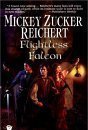
Shelf Life – Flightless Falcon Still Glides Pretty Well
Flightless Falcon is a light DAW fantasy by Mickey Zucker Reichert that first came out in paperback in July of 2001. Set in your typical fantasy land – lightly coated in magic but sans any fantastical creatures such as dragons, elves, dwarves, and the like – it follows the sad, luckless exploits of an ex-miner named Tamison made useless after a cave in kills his father and brother and leaves him trapped deep in the mine for a few days.
Afterwards, with a debilitating fear of both the dark and being underground, he’s unable to continue as a miner, yet too unskilled to get any other job. As such, he and his family live in dirt poverty for a decade or so until he finally decides to try stealing what they need instead of earning the money to buy it. Unfortunately he’s just as horrible at this as anything else he tries and ends up in jail for two years.
When he finally gets out, his family’s disappeared, so he adopts a stray dog and lives on the streets for a while. Then one day a guard finds him and tells him, “Hey, I know where your family is, and it’s bad, man, we should go save ’em.” So Tamison saves a fortune teller from some different guards, just for good measure, and the three of them go off to get his family back.
The plot evolves from there – I won’t go into much greater detail because I don’t want to give anything away. And while it’s an entertaining read, it does have its share of snags, though not often or strong enough to derail the overall experience. Still, might was well talk about ’em.
The majority of these moments occur due to the protagonist himself; Tamison’s constant suffering and depression and worthlessness gets a bit irritating after a while (and not a very long while). But you do end up genuinely sympathizing with him, at least for the most part – his self-pitying and constant sobbing are offset, personality-wise, by his intense love and devotion to his family’s welfare (though apparently it still isn’t strong enough for him to suck up his phobia and go back to working in the mines). The end result is a character that, while whiny enough that you want to reach into the pages and smack him, is still believable. The fact that a lot of his misfortune is brought on by bad luck and the overwhelming apathy of the world around him, instead of just his own sad uselessness, also helps save what might have been an otherwise excruciatingly sad-sack protagonist.
But ignore what Miss Reichert and the back cover of the book say – the real star of this story isn’t Tamison, the guard (Dallan), or the fortune teller (Rifkah). It’s the weasely bastard of a con man that Tamison can’t stop running into, the aptly-named Con. This guy’s selfish lack of a moral compass and unwillingness to sugarcoat anything for anyone is a breath of fresh air amidst the hopeful optimism and general boyscout do-goodery of the rest of the starring party, and his quick wit and blunt, sarcastic dialogue are at once impressive and entertaining to read in the circumstances. His back story’s also far more interesting than anything Tamison, Dallan, and Rifkah can come up with.
The story itself also grows past a simple “save some good guys from some bad guys” fetch quest to envelope a degree of political intrigue, subterfuge, loyalty dilemmas, and good ol’ fashion backstabbery. I won’t say anything more past the obvious (there’s a twist, you know there’s gonna be a twist, there’s always a twist) other than to say that the generic good-guy-bad-guy feeling the book’s own synopsis offers slips slowly into a more realistic, more satisfying realm of uncertain grayness that accompanies all conflicts between the world’s two rival governments, the one Tamison belongs to and the one he’s told is harboring his missing family.
Basically, each time you think this book is going to march the plot or one of the characters into Generic Land (and you will occasionally think this multiple times), the direction skews off at the last moment to surprise you. The result is that you end up reading the book in two minds: one for soaking up the story and being entertained, and one with a critical eye turned always on the author’s style, to see where it threatens to stray into unimpressiveness and how it keeps saving itself.
But don’t focus overly much on my criticisms – that’s just how I’ve been trained to talk about good writing, to search for the roughest spots and pick at them in order to see how the whole thing might be polished even more. The reason this book is so easy to criticize is because its weak spots are few and manageable and therefor easy to cover and be done with in the length of a blog post. The overall impression I came away with is still one of a fun, thoughtful, imaginative tale, at times suspenseful, at times moving, and always deeply visual. I didn’t mention the detailed visual descriptions did I? Oh well, I just did. Now you know they’re there.
It’s not going to turn into the next blockbuster fantasy franchise, but if you find it in your used book store, there are less-enjoyable ways to spend your reading time. I recommend Flightless Falcon to anyone who enjoys well-written, character-driven fantasy and doesn’t need it to last through a dozen sequels.
Afterwards, with a debilitating fear of both the dark and being underground, he’s unable to continue as a miner, yet too unskilled to get any other job. As such, he and his family live in dirt poverty for a decade or so until he finally decides to try stealing what they need instead of earning the money to buy it. Unfortunately he’s just as horrible at this as anything else he tries and ends up in jail for two years.
When he finally gets out, his family’s disappeared, so he adopts a stray dog and lives on the streets for a while. Then one day a guard finds him and tells him, “Hey, I know where your family is, and it’s bad, man, we should go save ’em.” So Tamison saves a fortune teller from some different guards, just for good measure, and the three of them go off to get his family back.
The plot evolves from there – I won’t go into much greater detail because I don’t want to give anything away. And while it’s an entertaining read, it does have its share of snags, though not often or strong enough to derail the overall experience. Still, might was well talk about ’em.
The majority of these moments occur due to the protagonist himself; Tamison’s constant suffering and depression and worthlessness gets a bit irritating after a while (and not a very long while). But you do end up genuinely sympathizing with him, at least for the most part – his self-pitying and constant sobbing are offset, personality-wise, by his intense love and devotion to his family’s welfare (though apparently it still isn’t strong enough for him to suck up his phobia and go back to working in the mines). The end result is a character that, while whiny enough that you want to reach into the pages and smack him, is still believable. The fact that a lot of his misfortune is brought on by bad luck and the overwhelming apathy of the world around him, instead of just his own sad uselessness, also helps save what might have been an otherwise excruciatingly sad-sack protagonist.
But ignore what Miss Reichert and the back cover of the book say – the real star of this story isn’t Tamison, the guard (Dallan), or the fortune teller (Rifkah). It’s the weasely bastard of a con man that Tamison can’t stop running into, the aptly-named Con. This guy’s selfish lack of a moral compass and unwillingness to sugarcoat anything for anyone is a breath of fresh air amidst the hopeful optimism and general boyscout do-goodery of the rest of the starring party, and his quick wit and blunt, sarcastic dialogue are at once impressive and entertaining to read in the circumstances. His back story’s also far more interesting than anything Tamison, Dallan, and Rifkah can come up with.
The story itself also grows past a simple “save some good guys from some bad guys” fetch quest to envelope a degree of political intrigue, subterfuge, loyalty dilemmas, and good ol’ fashion backstabbery. I won’t say anything more past the obvious (there’s a twist, you know there’s gonna be a twist, there’s always a twist) other than to say that the generic good-guy-bad-guy feeling the book’s own synopsis offers slips slowly into a more realistic, more satisfying realm of uncertain grayness that accompanies all conflicts between the world’s two rival governments, the one Tamison belongs to and the one he’s told is harboring his missing family.
Basically, each time you think this book is going to march the plot or one of the characters into Generic Land (and you will occasionally think this multiple times), the direction skews off at the last moment to surprise you. The result is that you end up reading the book in two minds: one for soaking up the story and being entertained, and one with a critical eye turned always on the author’s style, to see where it threatens to stray into unimpressiveness and how it keeps saving itself.
But don’t focus overly much on my criticisms – that’s just how I’ve been trained to talk about good writing, to search for the roughest spots and pick at them in order to see how the whole thing might be polished even more. The reason this book is so easy to criticize is because its weak spots are few and manageable and therefor easy to cover and be done with in the length of a blog post. The overall impression I came away with is still one of a fun, thoughtful, imaginative tale, at times suspenseful, at times moving, and always deeply visual. I didn’t mention the detailed visual descriptions did I? Oh well, I just did. Now you know they’re there.
It’s not going to turn into the next blockbuster fantasy franchise, but if you find it in your used book store, there are less-enjoyable ways to spend your reading time. I recommend Flightless Falcon to anyone who enjoys well-written, character-driven fantasy and doesn’t need it to last through a dozen sequels.

Sass Perilla (36 KP) rated The Master and Margarita in Books
Aug 9, 2019
Worth a read? Yes. Worth a reread? Maybe not.
Contains spoilers, click to show
The Master and Magarita: Mikhail Bulgakov
Firstly, I didn’t intend to write an essay on this novel. However, once started I found I had a lot to say, and the more I thought about the plot and characters, the more ideas and parallels were sparked, so I am hopeful that the verbosity of this review can be forgiven.
At the risk of sounding both ignorant and uncultured, I found this novel (at least at first) bloody hard slog; not least because the Russian characters have three names, plus a nickname, plus a pun on their name (none of which work particularly well in translation and all of which sound rather similar to the English untrained ear). As an example- Ivan Nikolaevich Ponyrev (who seems to be referred to by any and all of these names) is also known as “Homeless” and “the poet” is a key character in the opening section of the novel. To further demonstrate: there are 17 different names that start with A that are used to refer to 15 different characters with Andreyevich used as the middle name of a bereaved uncle, who makes a journey from Kiev after his nephew is beheaded in a freak tram accident- and Andrey the buffet manager at a Moscow theatre. Clear as mud right? And that is before starting on similarly named characters with the initials M, P, L and S! At my last count there were 45 distinct characters, and I am fairly sure there will be some that I have missed. Hence, I did a lot of re-reading to work out exactly who was doing what to whom.
Additionally, I would suggest you need to be wary of the different translations. The distinct changes in meaning are subtle but important. To triangulate I had three versions at my disposal: Hugh Aplin’s translation (available for free on Kindle), the audiobook version translated by Richard Pevear and Larissa Volokhonsky (which I listened to simultaneously when reading the book to come to my own interpretation, and the subtitles for the Russian TV miniseries from 2005 when I gave up trying to work out who was who from name alone!
So those were my “technical” issues (if you like) with engaging with this novel, and this lack of clarity and understanding (and my own lack of contextual knowledge of Stalinist Russia) meant I missed many of the (what I am sure are hysterically funny to those in the know) satirical jokes in the opening section. That said, the random action and quick changes of focus, undercurrent of chaos in Moscow despite entrenched hierarchal structures and clear threat that (any) one could go missing at any time, for an unclear reason gave a clear insight into the mind and fears of a 1930s Russian citizen. No wonder it was available only in censored form for so long.
Despite these hardships, there were some genuinely laugh out loud moments in the first Moscow based part of the novel. The citizens have not lost their individuality, as they scrabble and fight for bank notes in the theatre, which are later revealed to be worthless. Nor have they lost their sense of pride and vanity, which we see in the female theatre goers, so desperate to attain the fashionable French couture (which later literally disappears from their bodies leaving semi-naked citizenesses desperately trying to cover themselves in a scene reminiscent of “Allo Allo” meets “Benny Hill”). When Professor Woland says his show will “expose” what the locals have failed to realise is that it is their (moral) shortcomings that are about to be revealed. The message is clearly, that no government can successfully legislate against human nature.
Oooh- and another fun fact, apparently Woland (later revealed- or perhaps is implied- to be Satan) was the inspiration to the Rolling Stones 1968 hit “Sympathy for the Devil”, well at least that is what my Google-Fu tells me.
Obviously, there were substantial hurdles to leap, however, I found by the second half of the novel, when we finally meet the eponymous characters, I had got in to the swing of things and begun to embrace the farcical surrealism of the novel.
The second “book” marks a change in tone, although it continues to cut away to scenes of Jesus’ sentencing by Pilate and execution (here known in the Aramaic form Yeshua). Ironically it is these scenes that are the most “real” and substantially human, as Pilate’s decision weighs head achingly heavily on him throughout. The Master and Margarita seem to be the only two characters fully invested in the authenticity of literature, and serve as a counterpoint to the heavily censored “monstrous” writing of Ivan and the rest of the writers’ union Massolit, more interested in fine dining and what their positions can do for them then the production of quality writing.
And it is Margarita’s journey of discovery and liberation from the stodgy, miserable societal expectations of that leads her back to her Master. Bulgakov mixes classical myth, Russian folklore and Bible stories to give us an impression of the timelessness of the central romance. As the worlds of communist Moscow and the inner worlds of the Master and Margarita collide, we are informed of the former’s desire to excuse all magic (and mischief) as the product of mass hypnosis, when the latter (and the reader) are fully aware of the spiritual significance and dimension of the events.
Clever, astute and in places laugh out loud funny, this novel none-the-less requires a level of dedication from the non-Russian speaking reader. Worth a read? Yes. Worth a re-read? Maybe not.
Firstly, I didn’t intend to write an essay on this novel. However, once started I found I had a lot to say, and the more I thought about the plot and characters, the more ideas and parallels were sparked, so I am hopeful that the verbosity of this review can be forgiven.
At the risk of sounding both ignorant and uncultured, I found this novel (at least at first) bloody hard slog; not least because the Russian characters have three names, plus a nickname, plus a pun on their name (none of which work particularly well in translation and all of which sound rather similar to the English untrained ear). As an example- Ivan Nikolaevich Ponyrev (who seems to be referred to by any and all of these names) is also known as “Homeless” and “the poet” is a key character in the opening section of the novel. To further demonstrate: there are 17 different names that start with A that are used to refer to 15 different characters with Andreyevich used as the middle name of a bereaved uncle, who makes a journey from Kiev after his nephew is beheaded in a freak tram accident- and Andrey the buffet manager at a Moscow theatre. Clear as mud right? And that is before starting on similarly named characters with the initials M, P, L and S! At my last count there were 45 distinct characters, and I am fairly sure there will be some that I have missed. Hence, I did a lot of re-reading to work out exactly who was doing what to whom.
Additionally, I would suggest you need to be wary of the different translations. The distinct changes in meaning are subtle but important. To triangulate I had three versions at my disposal: Hugh Aplin’s translation (available for free on Kindle), the audiobook version translated by Richard Pevear and Larissa Volokhonsky (which I listened to simultaneously when reading the book to come to my own interpretation, and the subtitles for the Russian TV miniseries from 2005 when I gave up trying to work out who was who from name alone!
So those were my “technical” issues (if you like) with engaging with this novel, and this lack of clarity and understanding (and my own lack of contextual knowledge of Stalinist Russia) meant I missed many of the (what I am sure are hysterically funny to those in the know) satirical jokes in the opening section. That said, the random action and quick changes of focus, undercurrent of chaos in Moscow despite entrenched hierarchal structures and clear threat that (any) one could go missing at any time, for an unclear reason gave a clear insight into the mind and fears of a 1930s Russian citizen. No wonder it was available only in censored form for so long.
Despite these hardships, there were some genuinely laugh out loud moments in the first Moscow based part of the novel. The citizens have not lost their individuality, as they scrabble and fight for bank notes in the theatre, which are later revealed to be worthless. Nor have they lost their sense of pride and vanity, which we see in the female theatre goers, so desperate to attain the fashionable French couture (which later literally disappears from their bodies leaving semi-naked citizenesses desperately trying to cover themselves in a scene reminiscent of “Allo Allo” meets “Benny Hill”). When Professor Woland says his show will “expose” what the locals have failed to realise is that it is their (moral) shortcomings that are about to be revealed. The message is clearly, that no government can successfully legislate against human nature.
Oooh- and another fun fact, apparently Woland (later revealed- or perhaps is implied- to be Satan) was the inspiration to the Rolling Stones 1968 hit “Sympathy for the Devil”, well at least that is what my Google-Fu tells me.
Obviously, there were substantial hurdles to leap, however, I found by the second half of the novel, when we finally meet the eponymous characters, I had got in to the swing of things and begun to embrace the farcical surrealism of the novel.
The second “book” marks a change in tone, although it continues to cut away to scenes of Jesus’ sentencing by Pilate and execution (here known in the Aramaic form Yeshua). Ironically it is these scenes that are the most “real” and substantially human, as Pilate’s decision weighs head achingly heavily on him throughout. The Master and Margarita seem to be the only two characters fully invested in the authenticity of literature, and serve as a counterpoint to the heavily censored “monstrous” writing of Ivan and the rest of the writers’ union Massolit, more interested in fine dining and what their positions can do for them then the production of quality writing.
And it is Margarita’s journey of discovery and liberation from the stodgy, miserable societal expectations of that leads her back to her Master. Bulgakov mixes classical myth, Russian folklore and Bible stories to give us an impression of the timelessness of the central romance. As the worlds of communist Moscow and the inner worlds of the Master and Margarita collide, we are informed of the former’s desire to excuse all magic (and mischief) as the product of mass hypnosis, when the latter (and the reader) are fully aware of the spiritual significance and dimension of the events.
Clever, astute and in places laugh out loud funny, this novel none-the-less requires a level of dedication from the non-Russian speaking reader. Worth a read? Yes. Worth a re-read? Maybe not.

Natalia (73 KP) rated Detroit: Become Human in Video Games
Dec 17, 2018

Story (4 more)
Characters
Art direction
Soundtrack
Controls
More Than Just a Video Game
I'll admit that hearing the initial premise of Detroit, it seemed to me cliche: a future in which technology has advanced to the point that androids exist, and how these androids themselves gain sentience. This, sprinkled in with messages of how we must improve how we treat the planet, and how we need to have a more consistent moral compass. All this I had expected from the game, but it ended up being so much more than that.
While the messages weaved into the game may not be ones people wanted or enjoyed, it can't be denied that the high-risk choices and the way we see glimpses into a wider world around these certainly engage any player. All of your choices seem high stake. Choices you make are timed, and there's no telling if they will have a completely unexpected outcome in the long-run of the story, and even if they don't, at the moment they feel like the most important choices you will ever make. Sure, some choices end up being, ultimately, pointless, but that seems to be a way that reflects life - you will make choices that seem incredibly important, but in the end, have no major result.
The game also follows three separate storylines - all of which do cross at some point within the game - and each has its charms. The most known story is the one following Connor, an android working in the DPD, but the other two focus on characters of seemingly varying importance: Kara, an android in charge of taking care of her owns daughter Alice, and Markus, an android who is charged with helping an elderly man live his day-to-day life as an artist. Within the game, however, these characters hold a similar kind of importance, perhaps due to the fact you play from their perspectives, or perhaps because you will personally gain an attachment to each characters bonds, motivations and lives as androids in a pivotal point in time for this fictional universe.
It's virtually impossible for me to review this game without mentioning the artistic efforts that went into it. Primarily, I mean the art direction and soundtrack. I'm a fan of 2D Indie games as much as the next person, just as I am a fan of the stylized graphics of the Borderlands universe and the art styles of visual novels, but something about how Detroit teeters on the edge of the uncanny valley in the best way possible speaks to how it's trying to reflect the real world. The depth of field in the game is fantastic, and small details are given their deserved attention to make a player feel as though they are watching a real-world story going on in front of them as they play. The music is certainly something that never fails for me in video games (looking at the Sonic games for influencing my love for video game music) but it completely excels in Detroit. Each story has its own collection of songs and a theme - musical loops that repeat throughout the majority of the songs in their sections to boot - and this truly helps with the experience. The way the music helps create an atmosphere, and how it fits almost perfectly into the actions going on, moves you. I don't know how else I can say this, really. Tempo changes, intensity and volume all come together to immerse you into what is happening on screen and have yet to jar me at all from my experience.
I've already mentioned the effect of the music on your mood, but what links well into this is the representation in the game - literally and symbolically. Literally, you see a diverse cast of characters that, despite most of them being androids, provide more proportional race-representation than actual films. Symbolically though, there is a much deeper idea of the past, present and future shown in the game. Perhaps this is me digging a whole lot further than necessary. I wouldn't be surprised. To avoid making this reviews very much filled with spoilers I'll have to talk in a vaguely cryptic way. Throughout Kara's story, there is a sense of being attached to the past, and this is amplified by the tracks that pair with the gameplay, truly making me cry no matter how many times I've seen a similar scene play out before me in a previous run of the game. This same link is shown with Connor and Markus, who link into the present and the past respectively. Unless I want to give away major plot points, I'll have to end my exploration of that little theory there, but if you are planning on playing through, or perhaps doing it again, it may be a good idea to look out for these themes. When you keep them in mind, they seem to pop up all over.
I know plenty of people have a problem with the pacing of the game, which can be quite understandable. Some scenes are long, some bursts of action seem unnecessary and stick around for a while longer than you may want them to, but this doesn't put as much of a damper on playing as it would seem. Pacing is an issue plenty of games have, and it seems perfectly fine to me in Detroit.
This is certainly turning into a much longer review than I had expected to give. I think to wrap this all up I can say that I have an overwhelmingly positive view of this game. Certainly, if you have enough interest in the game to be looking at reviews, this game is for you. I would recommend this for anyone looking for a unique gaming experience.
While the messages weaved into the game may not be ones people wanted or enjoyed, it can't be denied that the high-risk choices and the way we see glimpses into a wider world around these certainly engage any player. All of your choices seem high stake. Choices you make are timed, and there's no telling if they will have a completely unexpected outcome in the long-run of the story, and even if they don't, at the moment they feel like the most important choices you will ever make. Sure, some choices end up being, ultimately, pointless, but that seems to be a way that reflects life - you will make choices that seem incredibly important, but in the end, have no major result.
The game also follows three separate storylines - all of which do cross at some point within the game - and each has its charms. The most known story is the one following Connor, an android working in the DPD, but the other two focus on characters of seemingly varying importance: Kara, an android in charge of taking care of her owns daughter Alice, and Markus, an android who is charged with helping an elderly man live his day-to-day life as an artist. Within the game, however, these characters hold a similar kind of importance, perhaps due to the fact you play from their perspectives, or perhaps because you will personally gain an attachment to each characters bonds, motivations and lives as androids in a pivotal point in time for this fictional universe.
It's virtually impossible for me to review this game without mentioning the artistic efforts that went into it. Primarily, I mean the art direction and soundtrack. I'm a fan of 2D Indie games as much as the next person, just as I am a fan of the stylized graphics of the Borderlands universe and the art styles of visual novels, but something about how Detroit teeters on the edge of the uncanny valley in the best way possible speaks to how it's trying to reflect the real world. The depth of field in the game is fantastic, and small details are given their deserved attention to make a player feel as though they are watching a real-world story going on in front of them as they play. The music is certainly something that never fails for me in video games (looking at the Sonic games for influencing my love for video game music) but it completely excels in Detroit. Each story has its own collection of songs and a theme - musical loops that repeat throughout the majority of the songs in their sections to boot - and this truly helps with the experience. The way the music helps create an atmosphere, and how it fits almost perfectly into the actions going on, moves you. I don't know how else I can say this, really. Tempo changes, intensity and volume all come together to immerse you into what is happening on screen and have yet to jar me at all from my experience.
I've already mentioned the effect of the music on your mood, but what links well into this is the representation in the game - literally and symbolically. Literally, you see a diverse cast of characters that, despite most of them being androids, provide more proportional race-representation than actual films. Symbolically though, there is a much deeper idea of the past, present and future shown in the game. Perhaps this is me digging a whole lot further than necessary. I wouldn't be surprised. To avoid making this reviews very much filled with spoilers I'll have to talk in a vaguely cryptic way. Throughout Kara's story, there is a sense of being attached to the past, and this is amplified by the tracks that pair with the gameplay, truly making me cry no matter how many times I've seen a similar scene play out before me in a previous run of the game. This same link is shown with Connor and Markus, who link into the present and the past respectively. Unless I want to give away major plot points, I'll have to end my exploration of that little theory there, but if you are planning on playing through, or perhaps doing it again, it may be a good idea to look out for these themes. When you keep them in mind, they seem to pop up all over.
I know plenty of people have a problem with the pacing of the game, which can be quite understandable. Some scenes are long, some bursts of action seem unnecessary and stick around for a while longer than you may want them to, but this doesn't put as much of a damper on playing as it would seem. Pacing is an issue plenty of games have, and it seems perfectly fine to me in Detroit.
This is certainly turning into a much longer review than I had expected to give. I think to wrap this all up I can say that I have an overwhelmingly positive view of this game. Certainly, if you have enough interest in the game to be looking at reviews, this game is for you. I would recommend this for anyone looking for a unique gaming experience.
Bob Mann (459 KP) rated Wordslingers: The Story of Self-Publishing (2021) in Movies
Sep 28, 2021
They say that everyone has a book in them. I guess the key question is whether anyone else wants to read it. Such is the subject of this new documentary from A. Brooks Bennett. As a publisher says at one point “Writing a book is a creative act; publishing a book is a business”.
The democratization of publishing
The internet has brought many advantages to modern life, but perhaps one of the most interesting is the democratization of publishing. No longer is control in the hands of publishing houses, who might glance at and immediately dismiss new ideas in literature. It’s worth remembering that 12 publishing houses turned down J.K. Rowling’s draft for Harry Potter! Now anyone can be creative in writing and self-publish on the web. My own wife – Sue Mann – did just this, self-publishing the WW1 poems and reminiscences of two of her great-uncles. (It’s available from all good bookshops… oh, no…. actually just from here!) Are the poems artistically any good? I have no idea! Will it sell many copies? Clearly not! Was it a personal goal achieved in honouring their memory? Absolutely! Different people want different things from the medium.
Very ‘American’.
It’s probably down to the pioneer spirit, but as a generalisation Americans seem far more ambitious than Brits: or at least, more OPENLY ambitious. Whereas most Brits will quietly get on with building their careers, some Americans will go hell-for-leather towards their vision of “success” no matter the cost: no guts; no glory; and be noisy about it!
But for every J.K. Rowling or Bill Bryson there are several thousand writers who have ‘failed to launch’.
Here we follow two budding authors – one from California; the other from North Carolina – self-publishing their work and seeking sales.
One – Giles A (“Andy”) Anderson – has self-published a seemingly disturbing work called “Vidu” – the first of what he hopes will be a five-part series. He first talks from a ghoulish bookstore, speaking psycho-babble with the requisite hyperbole of an ‘artiste’. (It suggests how the books might read… but perhaps that’s misjudging). It comes then as a surprise when we find he doesn’t live alone in a coffin playing video games on his own, but has a lovely wife and two young and perfectly normal children. So his book is an “off the beaten track kinda book”, but the man seems well-grounded and following his dream in bite-size pieces.
Moral: Avoid the Travel Books
As is often the case though, the documentary homes in on, and spends most of its time with, the other author – Adam Shephard. Shephard is struggling to launch as an author and also – in parallel – wrestling with the Green Card process for his supportive and vivacious Croatian wife Ivana. The problem is that Shephard has written an extended travel blog: ten-a-penny on sites like WordPress.
I read a Forbes article last year that reported that – astonishingly – in a survey 11% of American respondents had never travelled outside of their home state and 40% had never left the country. For such a well-heeled country, the US is incredibly insular. So Shephard’s vision is to encourage youngsters to step outside of their comfort zone and jump on that plane to Guatemala. It’s a fine objective. But does anyone want to listen? And – crucially – is the book any good and commercial enough? As the famous ‘founder of self-publishing’, the late Dan Poynter (to who the film is dedicated) says “You can’t make any money off a travel book”.
The film never goes as far as having either of the featured books critically reviewed: that might have added some extra spice to the story (and possibly provoked some painful reactions). But the piles of unopened boxes in Adam’s clinically white storage facility rather speaks for itself. Since Shephard never seems to do anything by halves, the boxes are piled high and thus the fall from grace is hard, long…. and absolutely riveting. (Ivana’s support and love in such difficult circumstances is commendable: he is a truly blessed man).
Jaw-dropping Walmart scene
At least at the start of the film, Adam’s self-belief and confidence in himself is infectious. The peak of his bravado, and a jaw-dropping highpoint in the movie for me, was a scene filmed in Walmart. Shephard, in a case of “reverse shoplifting”, sneaks HIS books onto the bookshelves of Walmart. What happens when they then try to buy one? It’s a real eye-opener and worth watching the documentary for in its own right.
It’s an interesting legal position: if Walmart were to be upset about this scene, what on earth could they charge them with!? Littering?
Highs and lows.
Shephard seems to have talent as a speaker, and it struck me that he would be genuinely suited to a job in sales. In the movie we see him performing self-confidence-building pitches to young people (and, boy, could we sometimes use that in the UK post-Brexit). A few books sold. But another event barely breaking even. The pattern becomes familiar and, in a way, rather tragic.
There are unexpected highs and lows for Adam and Ivana along the way though, unrelated to the publishing story, and the filmmaker skillfully weaves them into the narrative to good effect.
Thought-provoking.
I watched this on a whim and thought I’d probably switch off after 10 minutes. Documentaries normally are not my thing! But no. It had me gripped to see how things would turn out – like watching a slow-motion car crash! The journey was well-worth the ride: a real page-turner you might say.
The democratization of publishing
The internet has brought many advantages to modern life, but perhaps one of the most interesting is the democratization of publishing. No longer is control in the hands of publishing houses, who might glance at and immediately dismiss new ideas in literature. It’s worth remembering that 12 publishing houses turned down J.K. Rowling’s draft for Harry Potter! Now anyone can be creative in writing and self-publish on the web. My own wife – Sue Mann – did just this, self-publishing the WW1 poems and reminiscences of two of her great-uncles. (It’s available from all good bookshops… oh, no…. actually just from here!) Are the poems artistically any good? I have no idea! Will it sell many copies? Clearly not! Was it a personal goal achieved in honouring their memory? Absolutely! Different people want different things from the medium.
Very ‘American’.
It’s probably down to the pioneer spirit, but as a generalisation Americans seem far more ambitious than Brits: or at least, more OPENLY ambitious. Whereas most Brits will quietly get on with building their careers, some Americans will go hell-for-leather towards their vision of “success” no matter the cost: no guts; no glory; and be noisy about it!
But for every J.K. Rowling or Bill Bryson there are several thousand writers who have ‘failed to launch’.
Here we follow two budding authors – one from California; the other from North Carolina – self-publishing their work and seeking sales.
One – Giles A (“Andy”) Anderson – has self-published a seemingly disturbing work called “Vidu” – the first of what he hopes will be a five-part series. He first talks from a ghoulish bookstore, speaking psycho-babble with the requisite hyperbole of an ‘artiste’. (It suggests how the books might read… but perhaps that’s misjudging). It comes then as a surprise when we find he doesn’t live alone in a coffin playing video games on his own, but has a lovely wife and two young and perfectly normal children. So his book is an “off the beaten track kinda book”, but the man seems well-grounded and following his dream in bite-size pieces.
Moral: Avoid the Travel Books
As is often the case though, the documentary homes in on, and spends most of its time with, the other author – Adam Shephard. Shephard is struggling to launch as an author and also – in parallel – wrestling with the Green Card process for his supportive and vivacious Croatian wife Ivana. The problem is that Shephard has written an extended travel blog: ten-a-penny on sites like WordPress.
I read a Forbes article last year that reported that – astonishingly – in a survey 11% of American respondents had never travelled outside of their home state and 40% had never left the country. For such a well-heeled country, the US is incredibly insular. So Shephard’s vision is to encourage youngsters to step outside of their comfort zone and jump on that plane to Guatemala. It’s a fine objective. But does anyone want to listen? And – crucially – is the book any good and commercial enough? As the famous ‘founder of self-publishing’, the late Dan Poynter (to who the film is dedicated) says “You can’t make any money off a travel book”.
The film never goes as far as having either of the featured books critically reviewed: that might have added some extra spice to the story (and possibly provoked some painful reactions). But the piles of unopened boxes in Adam’s clinically white storage facility rather speaks for itself. Since Shephard never seems to do anything by halves, the boxes are piled high and thus the fall from grace is hard, long…. and absolutely riveting. (Ivana’s support and love in such difficult circumstances is commendable: he is a truly blessed man).
Jaw-dropping Walmart scene
At least at the start of the film, Adam’s self-belief and confidence in himself is infectious. The peak of his bravado, and a jaw-dropping highpoint in the movie for me, was a scene filmed in Walmart. Shephard, in a case of “reverse shoplifting”, sneaks HIS books onto the bookshelves of Walmart. What happens when they then try to buy one? It’s a real eye-opener and worth watching the documentary for in its own right.
It’s an interesting legal position: if Walmart were to be upset about this scene, what on earth could they charge them with!? Littering?
Highs and lows.
Shephard seems to have talent as a speaker, and it struck me that he would be genuinely suited to a job in sales. In the movie we see him performing self-confidence-building pitches to young people (and, boy, could we sometimes use that in the UK post-Brexit). A few books sold. But another event barely breaking even. The pattern becomes familiar and, in a way, rather tragic.
There are unexpected highs and lows for Adam and Ivana along the way though, unrelated to the publishing story, and the filmmaker skillfully weaves them into the narrative to good effect.
Thought-provoking.
I watched this on a whim and thought I’d probably switch off after 10 minutes. Documentaries normally are not my thing! But no. It had me gripped to see how things would turn out – like watching a slow-motion car crash! The journey was well-worth the ride: a real page-turner you might say.

Hazel (1853 KP) rated My Sister's Keeper in Books
Dec 7, 2018
“If you use one of your children to save the life of another, are you being a good mother or a very bad one?”
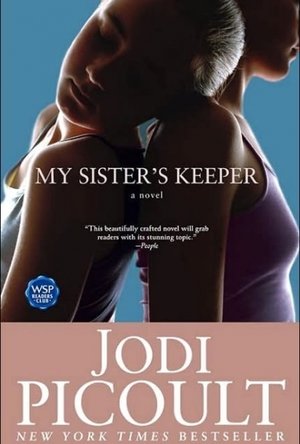
<i>My Sister’s Keeper </i>was the first Jodi Picoult novel I read. (I have since read all Picoult’s books to date) I was not expecting much when I first picked it up, especially as I was reading it for a medical ethics module at college. Yet this book rekindled my love of reading and suddenly, after only reading one story, I was asking for Jodi Picoult books for my birthday.
Many people may be familiar with the storyline, even if they have not read the book, as <i>My Sister’s Keeper</i> shot to fame when the film version hit the cinemas. Thirteen-year-old Anna Fitzgerald was Rhode Islands first genetically engineered baby, created with the purpose of providing her older sister Kate with the means to survive acute promyelocytic leukemia. However over the next few years Kate relapses resulting in Anna going under numerous procedures, such as bone marrow extraction, in order to save Kate’s life. Now things have got so bad that Kate will die unless Anna gives up one of her kidneys, yet unwilling to do this Anna hires a lawyer, Campbell Alexander, to sue her parents for the rights of her own body.
From reading a synopsis the reader can already see that <i>My Sister’s Keeper</i> is going to be an emotional story, but what was it that made me love the author so much?
The story was told from six points of view: Anna, Jesse (older brother), Sara (mother), Brian (father), Campbell and Julie (guardian ad litem). Notice that Kate was not one of the narrators, which leads us to speculate from the very start that Anna wins the case and Kate dies. Despite the six main characters there is no antagonist – unless you count cancer – and in all of them the reader can find something relatable.
In one of the chapters, Jesse pronounces that Kate is the martyr, Anna the peacekeeper and himself the lost cause. With Anna we can recognize the struggle to follow the decisions laid down for us by other people – a time when we have no choice of our own. Jesse represents the times when we have been ignored and forgotten because of bigger or more important events, thus resulting in attention seeking behaviour. Brian, the firefighter, the man who wants to save everyone, cannot put out the metaphorical fire that is his family. Sara, whose narrative starts in the past rather than present day, shows us how easy it is to get wrapped up in one problem (or daughter), ignoring everything (or everyone) else.
One thing that is great about all Picoult’s novels is that they are not focused on one storyline. Granted this book is focused on the trial and Kate’s illness, but the inclusion of Campbell and Julia’s voices provide an interesting subplot. Julia is not exactly thrilled to discover that she will be working alongside Campbell, a person she knew from school that she had a difficult past with. Since then Julia has found herself unlucky in love and blames Campbell for this. Campbell on the other hand has been having trouble of his own and now needs a service dog with him at all times. Yet he is self conscious about people knowing the true reason behind this and often comes up with creative lies to stop people from asking questions. “Maybe if God gives you a handicap, he makes sure you’ve got a few extra doses of humor to take the edge off.”
Another reason Picoult’s books are so great is that the reader learns something every time. <i>My Sister’s Keeper</i> is full of medical and legal jargon, which may go over some people’s heads, but it is also bursting with random bits of knowledge, for example the way a fire should be treated, facts about astronomy and many other interesting details that the characters use as metaphors to describe their experiences.
Without taking into account Picoult’s novels and writing style as a whole, <i>My Sister’s Keeper</i> is a story that will stay in people’s hearts and minds for a long time. It is never revealed who the narrator of the prologue was, but we immediately assume that it is Anna and that she wants Kate to die. By the end, we are still unsure who the character was but if it was Anna we see it in a completely different light. This is not a book about whether it is ethical for Anna to be Kate’s donor; it is not a story about cancer. Instead it is a message about the right for each person to have choices in regards to their lives.
A warning to potential readers: this book could break your heart, shock you or leave you in tears. <i>My Sister’s Keeper</i> is full of irony. Some of that makes up part of the story line, for instance Jesse’s experimentation with arson – fires that are then put out by his father. But the biggest sense of irony, the biggest shock is the ending (FYI this is the complete opposite to the film ending). After everything that has been achieved, devastating circumstances result in the same conclusion that it would have had Anna sat back and done nothing. Yet this does not make it a pointless story, despite Anna’s actions almost tearing the family apart, it also wakes them from the stupor that Kate’s illness has put them in and makes them realise how precious everything else in their life is too.
I highly recommend this book to everyone, and if you have not read a Jodi Picoult novel before I strongly suggest you begin with this one. It is suitable for adult and adolescent readers, especially those who like to think about hypothetical, moral questions. <i>My Sister’s Keeper</i> definitely gets you questioning your own choices and actions within your own life and may even make you view the world slightly differently.
<i>My Sister’s Keeper </i>was the first Jodi Picoult novel I read. (I have since read all Picoult’s books to date) I was not expecting much when I first picked it up, especially as I was reading it for a medical ethics module at college. Yet this book rekindled my love of reading and suddenly, after only reading one story, I was asking for Jodi Picoult books for my birthday.
Many people may be familiar with the storyline, even if they have not read the book, as <i>My Sister’s Keeper</i> shot to fame when the film version hit the cinemas. Thirteen-year-old Anna Fitzgerald was Rhode Islands first genetically engineered baby, created with the purpose of providing her older sister Kate with the means to survive acute promyelocytic leukemia. However over the next few years Kate relapses resulting in Anna going under numerous procedures, such as bone marrow extraction, in order to save Kate’s life. Now things have got so bad that Kate will die unless Anna gives up one of her kidneys, yet unwilling to do this Anna hires a lawyer, Campbell Alexander, to sue her parents for the rights of her own body.
From reading a synopsis the reader can already see that <i>My Sister’s Keeper</i> is going to be an emotional story, but what was it that made me love the author so much?
The story was told from six points of view: Anna, Jesse (older brother), Sara (mother), Brian (father), Campbell and Julie (guardian ad litem). Notice that Kate was not one of the narrators, which leads us to speculate from the very start that Anna wins the case and Kate dies. Despite the six main characters there is no antagonist – unless you count cancer – and in all of them the reader can find something relatable.
In one of the chapters, Jesse pronounces that Kate is the martyr, Anna the peacekeeper and himself the lost cause. With Anna we can recognize the struggle to follow the decisions laid down for us by other people – a time when we have no choice of our own. Jesse represents the times when we have been ignored and forgotten because of bigger or more important events, thus resulting in attention seeking behaviour. Brian, the firefighter, the man who wants to save everyone, cannot put out the metaphorical fire that is his family. Sara, whose narrative starts in the past rather than present day, shows us how easy it is to get wrapped up in one problem (or daughter), ignoring everything (or everyone) else.
One thing that is great about all Picoult’s novels is that they are not focused on one storyline. Granted this book is focused on the trial and Kate’s illness, but the inclusion of Campbell and Julia’s voices provide an interesting subplot. Julia is not exactly thrilled to discover that she will be working alongside Campbell, a person she knew from school that she had a difficult past with. Since then Julia has found herself unlucky in love and blames Campbell for this. Campbell on the other hand has been having trouble of his own and now needs a service dog with him at all times. Yet he is self conscious about people knowing the true reason behind this and often comes up with creative lies to stop people from asking questions. “Maybe if God gives you a handicap, he makes sure you’ve got a few extra doses of humor to take the edge off.”
Another reason Picoult’s books are so great is that the reader learns something every time. <i>My Sister’s Keeper</i> is full of medical and legal jargon, which may go over some people’s heads, but it is also bursting with random bits of knowledge, for example the way a fire should be treated, facts about astronomy and many other interesting details that the characters use as metaphors to describe their experiences.
Without taking into account Picoult’s novels and writing style as a whole, <i>My Sister’s Keeper</i> is a story that will stay in people’s hearts and minds for a long time. It is never revealed who the narrator of the prologue was, but we immediately assume that it is Anna and that she wants Kate to die. By the end, we are still unsure who the character was but if it was Anna we see it in a completely different light. This is not a book about whether it is ethical for Anna to be Kate’s donor; it is not a story about cancer. Instead it is a message about the right for each person to have choices in regards to their lives.
A warning to potential readers: this book could break your heart, shock you or leave you in tears. <i>My Sister’s Keeper</i> is full of irony. Some of that makes up part of the story line, for instance Jesse’s experimentation with arson – fires that are then put out by his father. But the biggest sense of irony, the biggest shock is the ending (FYI this is the complete opposite to the film ending). After everything that has been achieved, devastating circumstances result in the same conclusion that it would have had Anna sat back and done nothing. Yet this does not make it a pointless story, despite Anna’s actions almost tearing the family apart, it also wakes them from the stupor that Kate’s illness has put them in and makes them realise how precious everything else in their life is too.
I highly recommend this book to everyone, and if you have not read a Jodi Picoult novel before I strongly suggest you begin with this one. It is suitable for adult and adolescent readers, especially those who like to think about hypothetical, moral questions. <i>My Sister’s Keeper</i> definitely gets you questioning your own choices and actions within your own life and may even make you view the world slightly differently.

Cody Cook (8 KP) rated A Black Theology of Liberation in Books
Jun 29, 2018


James Cone is considered to be the founder of Black Liberation Theology, a variant of the Liberation Theology movement most widely connected with South American theologian Gustavo Gutierrez. Liberation Theology emphasizes those biblical concerns that white European flavored Christianity has often looked over– concerns like justice and liberation for the oppressed and downtrodden (Luke 4:16-21, Matthew 25:31-45, etc.). Though these emphases are quite important, in Liberation movements, they can often drown out other, extremely vital, elements of the Christian faith, as they clearly do in Cone’s Black Liberation Theology.
One major issue for Cone is one of authority. The experience of one group of people (the oppressed) becomes equivalent with universal truth, and not simply an important concern in Christian theology. In other words, Cone makes his own experience the judge of who God is and what God is for. While “white” (a term used by Cone not so much to reflect skin color but an oppressor mentality) Christianity commits this grave error without realizing it, Cone does so with full knowledge. So, for instance, while a conservative “white” theologian would say that his own views and actions *should* be directed by the scripture (whether or not he does in fact direct them by this standard), Cone makes the judgement of the oppressed black community the ultimate truth for them– and if mass violence against whites is decided by the group as the best means to effect their liberation, so be it. Cone explicitly distances himself from the approach of King, identifying more with the violence-prone philosophy of the Nation of Islam as propounded by Malcolm X. If someone criticizes his approach, he seems to assume that they’re doing so as a “white” oppressor and should be ignored– an oppressor has no moral right to question the rightness or wrongness of the actions of the people he is oppressing. This of course ignores the criticisms of violence, even from the oppressed, of black Christians like Martin Luther King Jr., Desmond Tutu, etc. Cone is also unfortunately either unfamiliar with or unconvinced by pacifist Christian claims to be committed to peaceful action, since he equates non-violence with inaction and acquiescence. While he is absolutely correct in seeing liberation as an important theme in the Christian faith, he, like “white” religionists, allows his own experience and emotions to determine what is right and wrong to the point of supporting evil in the interest of what he feels is best for his community. However, what can’t be said of Cone’s position on violence is that it is radical, because it is emphatically not. The political heroes of most white Americans are men who used violence to gain political autonomy. Thus, it is not radical for black men and women to look up to figures like Malcolm X and James Cone who advocate doing the same thing if it seems necessary for freedom and self-determination; it is merely status quo. The problem is that Jesus calls all men and women, regardless of color, to rise above the status quo and the myth of redemptive violence.
Seizing on that point, one major problem with Cone’s view of violent revolution is that when oppressed people rise up through violence, they become the oppressor– co-opting the tools of oppression and dehumanization. “Blacks” become “white” through the use of violence. Cone seems unaware of (doubtful) or unaffected by the history of the Bolshevik, Cuban, or French revolutions, wherein the oppressed quickly became the oppressors and became twofold more a child of hell than their oppressors. His view also reshapes Nat Turner, the slave who claimed to have been directed by God to murder white women and children, into an unqualified hero. Cone’s system re-establishes and re-affirms oppression– it does not end it.
For Cone, God is black and the devil is white, because God supports the oppressed and the devil supports the oppressor. But in so closely identifying God with blackness, the actions of those in the black community are now above being questioned, just like the actions of white enslavers were, according to them, above being questioned because they aligned themselves with God and those whom they oppressed with the devil.
What Cone is really trying to get at is that since Jesus supports the cause of the oppressed, the oppressor must so distance himself from his oppressor identity that he becomes indistinguishable from the oppressed– willing to suffer along with them– if he is to be Christ-like. In other words, the “white” must become “black.” Cone says that God can’t be colorless where people suffer for their color. So, where blacks suffer God is black. Taking this logic, which is indeed rooted in Scripture, where the poor suffer, God is poor. Where babies are killed in the womb, God is an aborted baby. Where gay people are bullied, God is gay. It is our obligation to identify with the downtrodden, because that’s what Jesus did. Paul, quoting a hymn of the church about Jesus, puts it this way:
“In your relationships with one another, have the same mindset as Christ Jesus:
‘Who, being in very nature God,
did not consider equality with God something to be used to his own advantage;
rather, he made himself nothing
by taking the very nature of a servant,
being made in human likeness.
And being found in appearance as a man,
he humbled himself
by becoming obedient to death—
even death on a cross!'”
–Philippians 2:5-8
Jesus not only gives up his power to express love to the powerless by identifying with them, He also takes on their sin and suffers with and for them. This is the essence of the gospel, and it often gets lost when we translate it into our daily lives. For Cone, this important truth gets lost in the banner of black militantism and the cycle of violence. For so many American Christians, it gets lost when they reduce the political nature of Christianity to scolding those whose private expression of morality doesn’t line up with theirs. We refuse to identify with sinners (which is a category we all fit into) in love.
One major issue for Cone is one of authority. The experience of one group of people (the oppressed) becomes equivalent with universal truth, and not simply an important concern in Christian theology. In other words, Cone makes his own experience the judge of who God is and what God is for. While “white” (a term used by Cone not so much to reflect skin color but an oppressor mentality) Christianity commits this grave error without realizing it, Cone does so with full knowledge. So, for instance, while a conservative “white” theologian would say that his own views and actions *should* be directed by the scripture (whether or not he does in fact direct them by this standard), Cone makes the judgement of the oppressed black community the ultimate truth for them– and if mass violence against whites is decided by the group as the best means to effect their liberation, so be it. Cone explicitly distances himself from the approach of King, identifying more with the violence-prone philosophy of the Nation of Islam as propounded by Malcolm X. If someone criticizes his approach, he seems to assume that they’re doing so as a “white” oppressor and should be ignored– an oppressor has no moral right to question the rightness or wrongness of the actions of the people he is oppressing. This of course ignores the criticisms of violence, even from the oppressed, of black Christians like Martin Luther King Jr., Desmond Tutu, etc. Cone is also unfortunately either unfamiliar with or unconvinced by pacifist Christian claims to be committed to peaceful action, since he equates non-violence with inaction and acquiescence. While he is absolutely correct in seeing liberation as an important theme in the Christian faith, he, like “white” religionists, allows his own experience and emotions to determine what is right and wrong to the point of supporting evil in the interest of what he feels is best for his community. However, what can’t be said of Cone’s position on violence is that it is radical, because it is emphatically not. The political heroes of most white Americans are men who used violence to gain political autonomy. Thus, it is not radical for black men and women to look up to figures like Malcolm X and James Cone who advocate doing the same thing if it seems necessary for freedom and self-determination; it is merely status quo. The problem is that Jesus calls all men and women, regardless of color, to rise above the status quo and the myth of redemptive violence.
Seizing on that point, one major problem with Cone’s view of violent revolution is that when oppressed people rise up through violence, they become the oppressor– co-opting the tools of oppression and dehumanization. “Blacks” become “white” through the use of violence. Cone seems unaware of (doubtful) or unaffected by the history of the Bolshevik, Cuban, or French revolutions, wherein the oppressed quickly became the oppressors and became twofold more a child of hell than their oppressors. His view also reshapes Nat Turner, the slave who claimed to have been directed by God to murder white women and children, into an unqualified hero. Cone’s system re-establishes and re-affirms oppression– it does not end it.
For Cone, God is black and the devil is white, because God supports the oppressed and the devil supports the oppressor. But in so closely identifying God with blackness, the actions of those in the black community are now above being questioned, just like the actions of white enslavers were, according to them, above being questioned because they aligned themselves with God and those whom they oppressed with the devil.
What Cone is really trying to get at is that since Jesus supports the cause of the oppressed, the oppressor must so distance himself from his oppressor identity that he becomes indistinguishable from the oppressed– willing to suffer along with them– if he is to be Christ-like. In other words, the “white” must become “black.” Cone says that God can’t be colorless where people suffer for their color. So, where blacks suffer God is black. Taking this logic, which is indeed rooted in Scripture, where the poor suffer, God is poor. Where babies are killed in the womb, God is an aborted baby. Where gay people are bullied, God is gay. It is our obligation to identify with the downtrodden, because that’s what Jesus did. Paul, quoting a hymn of the church about Jesus, puts it this way:
“In your relationships with one another, have the same mindset as Christ Jesus:
‘Who, being in very nature God,
did not consider equality with God something to be used to his own advantage;
rather, he made himself nothing
by taking the very nature of a servant,
being made in human likeness.
And being found in appearance as a man,
he humbled himself
by becoming obedient to death—
even death on a cross!'”
–Philippians 2:5-8
Jesus not only gives up his power to express love to the powerless by identifying with them, He also takes on their sin and suffers with and for them. This is the essence of the gospel, and it often gets lost when we translate it into our daily lives. For Cone, this important truth gets lost in the banner of black militantism and the cycle of violence. For so many American Christians, it gets lost when they reduce the political nature of Christianity to scolding those whose private expression of morality doesn’t line up with theirs. We refuse to identify with sinners (which is a category we all fit into) in love.

Emma @ The Movies (1786 KP) rated My Hero Academia: Heroes Rising (2020) in Movies
Mar 12, 2020
It was very exciting to finally get an anime screening at my local Cineworld. We don't seem to get considered for these different screenings very often so it made a nice change to see something a little unusual.
A class of superheroes-in-training are sent to an island where the resident hero has retired. Getting experience is the best way to learn and getting to know the people around them will help them learn what they're fighting for.
The day to day hero life is hum-drum but fulfilling and most of the trainees are settling in well. Things are about to change, a spate of superpower robberies take place and it seems the culprits are heading for the island.
I've read manga in the past and have seen snippets of anime from time to time but I don't think I've ever sat down to a whole film of it apart from Pokemon. Possibly I shouldn't have started with something fairly deep in an existing franchise but I wasn't aware of it beforehand, and actually, I would have said it could have been a standalone after watching it.
It was really nice to see so many people there for it, there were about 30 others which felt like quite a lot for our cinema, more than I was expecting... and by the look of it there were all young enough to be my kids, so that was a fun experience.
I'm not going to lie, I was very confused at the beginning. It opens on a chase sequence and with no idea who these characters were or what was happening, I was lost. It doesn't take too long to get the gist of everything after this but it really threw me for a while.
On the advice of Twitter peeps I went and saw the subtitled release rather than the dubbed, this would have been my personal choice too as I find dubbing a rather hit and miss format. I'm not sure what might be lost in translation but some of the dialogue didn't seem natural, it might be an interesting experience to see it again with a dubbed track over it for the comparison.
You know when you're driving and looking for a turning so you can see where you're going better? During that first chase scene in particular the music is quite loud and the voices were hardly audible... I know I didn't need to head the audio as I wouldn't have understood it anyway but reading the subtitles without hearing the pacing was quite tricky and felt like it was partly why the scene was confusing to me. (This brings up all sorts of questions about subtitles when people HAVE to use them that I'd never even considered before.) The sound issue did get a little better as it progressed, but there was still a discrepancy through the film.
One good guy has to be virtuous and self-sacrificing, one has to be overly aggressive with a hidden soft side, another has to be adorably cute. Is that how they all work or just this one? Oh, and for the most part, everyone has to have great hair. I found either end of the scale of characters to be frustrating, Mahoro and Bakugo (I hope I'm getting these character names right) were on the aggressive side and the outbursts of screaming didn't make a lot of sense. There are several of the heroes that have a rather saccharine demeanour that also grated at me. Within the ensemble though there were characters like Deku and Katsuma who felt much more balanced, and Katsuma was so adorable to boot.
The story for the film seemed simple enough, bad guys want something, good guys have to protect it and stop them. Classic. But the back story to it seemed very complicated with a whole section of the film verging on unnecessary. This could be something that makes more sense with it combined with the series, but it's not something I'm going to know for now.
That may or may not have contributed to me struggling through the first 40 minutes of the film. I'm sure a little advanced knowledge might have helped, for example, I don't know whether Nine's motivations were established in the series. As it was it took me a while to work out.
Once we hit the confrontation of the film everything really picks up and I was a lot more engaged. As it progresses there's quite a strong moral compass that becomes evident and a lot of teachable moments are thrown at us, by the end I was really moved by some of the characters and their actions. Emotions were surprisingly well handled and the sense of right and wrong with them come across well.
I did have fun watching the film but there were things that held me back. The fact that the villain is well matched by a group of unattended school kids with only a partial grasp on their powers being one. Essentially the heroes come back for round two with nothing more than determination, but I get the sense that that all just helps with the sense that anyone can triumph over evil. I could rant on about this until the cows come home.
The biggest thing that held this back is not really a negative to the film, it's more that I'm a newbie to it. Anime is made up of several different styles, realistic, cartoonish, fantastical, that's a lot to deal with when you're not familiar with something. In a bad comparison for you it's like watching Who Framed Roger Rabbit? without knowing half the characters, you don't know why they look the way they do and you don't know what their function is. The only way that's going to make more sense to me is by watching more of it.
My Hero Academia: Heroes Rising is probably a good place for me to pick up some anime knowledge, once the film got going it was an enjoyable ride. As a nice surprise this also attracted the best audience I've had in quite a while.
Originally posted on: https://emmaatthemovies.blogspot.com/2020/03/my-hero-academia-heroes-rising-movie.html
A class of superheroes-in-training are sent to an island where the resident hero has retired. Getting experience is the best way to learn and getting to know the people around them will help them learn what they're fighting for.
The day to day hero life is hum-drum but fulfilling and most of the trainees are settling in well. Things are about to change, a spate of superpower robberies take place and it seems the culprits are heading for the island.
I've read manga in the past and have seen snippets of anime from time to time but I don't think I've ever sat down to a whole film of it apart from Pokemon. Possibly I shouldn't have started with something fairly deep in an existing franchise but I wasn't aware of it beforehand, and actually, I would have said it could have been a standalone after watching it.
It was really nice to see so many people there for it, there were about 30 others which felt like quite a lot for our cinema, more than I was expecting... and by the look of it there were all young enough to be my kids, so that was a fun experience.
I'm not going to lie, I was very confused at the beginning. It opens on a chase sequence and with no idea who these characters were or what was happening, I was lost. It doesn't take too long to get the gist of everything after this but it really threw me for a while.
On the advice of Twitter peeps I went and saw the subtitled release rather than the dubbed, this would have been my personal choice too as I find dubbing a rather hit and miss format. I'm not sure what might be lost in translation but some of the dialogue didn't seem natural, it might be an interesting experience to see it again with a dubbed track over it for the comparison.
You know when you're driving and looking for a turning so you can see where you're going better? During that first chase scene in particular the music is quite loud and the voices were hardly audible... I know I didn't need to head the audio as I wouldn't have understood it anyway but reading the subtitles without hearing the pacing was quite tricky and felt like it was partly why the scene was confusing to me. (This brings up all sorts of questions about subtitles when people HAVE to use them that I'd never even considered before.) The sound issue did get a little better as it progressed, but there was still a discrepancy through the film.
One good guy has to be virtuous and self-sacrificing, one has to be overly aggressive with a hidden soft side, another has to be adorably cute. Is that how they all work or just this one? Oh, and for the most part, everyone has to have great hair. I found either end of the scale of characters to be frustrating, Mahoro and Bakugo (I hope I'm getting these character names right) were on the aggressive side and the outbursts of screaming didn't make a lot of sense. There are several of the heroes that have a rather saccharine demeanour that also grated at me. Within the ensemble though there were characters like Deku and Katsuma who felt much more balanced, and Katsuma was so adorable to boot.
The story for the film seemed simple enough, bad guys want something, good guys have to protect it and stop them. Classic. But the back story to it seemed very complicated with a whole section of the film verging on unnecessary. This could be something that makes more sense with it combined with the series, but it's not something I'm going to know for now.
That may or may not have contributed to me struggling through the first 40 minutes of the film. I'm sure a little advanced knowledge might have helped, for example, I don't know whether Nine's motivations were established in the series. As it was it took me a while to work out.
Once we hit the confrontation of the film everything really picks up and I was a lot more engaged. As it progresses there's quite a strong moral compass that becomes evident and a lot of teachable moments are thrown at us, by the end I was really moved by some of the characters and their actions. Emotions were surprisingly well handled and the sense of right and wrong with them come across well.
I did have fun watching the film but there were things that held me back. The fact that the villain is well matched by a group of unattended school kids with only a partial grasp on their powers being one. Essentially the heroes come back for round two with nothing more than determination, but I get the sense that that all just helps with the sense that anyone can triumph over evil. I could rant on about this until the cows come home.
The biggest thing that held this back is not really a negative to the film, it's more that I'm a newbie to it. Anime is made up of several different styles, realistic, cartoonish, fantastical, that's a lot to deal with when you're not familiar with something. In a bad comparison for you it's like watching Who Framed Roger Rabbit? without knowing half the characters, you don't know why they look the way they do and you don't know what their function is. The only way that's going to make more sense to me is by watching more of it.
My Hero Academia: Heroes Rising is probably a good place for me to pick up some anime knowledge, once the film got going it was an enjoyable ride. As a nice surprise this also attracted the best audience I've had in quite a while.
Originally posted on: https://emmaatthemovies.blogspot.com/2020/03/my-hero-academia-heroes-rising-movie.html
Bob Mann (459 KP) rated The Nutcracker and the Four Realms (2018) in Movies
Sep 28, 2021

A fantasy that’s glossy and beautiful to look at.
Before the heavyweight juggernaut of “Mary Poppins Returns” arrives at Christmas, here’s another Disney live action feature to get everyone in the festive spirit.
The Plot.
It’s Victorian London and Young Clara (Mackenzie Foy) lives with her father (Matthew Macfadyen), her older sister Louise (Ellie Bamber) and her younger brother Fritz (Tom Sweet). It’s Christmas and the family are having a hard time as they are grieving the recent death of wife and mother Marie (Anna Madeley). Like her mother, Clara has an astute mind with an engineering bias and is encouraged in this pursuit by her quirky inventor godfather, Drosselmeyer (Morgan Freeman). At his fabled Christmas ball, Clara asks for his help in accessing a gift Clara’s mother has bequeathed to her. This leads Clara on a magical adventure to a parallel world with four realms, where everything is not quite peace and harmony.
The Review.
This is a film that visually delights from the word go. The film opens with a swooping tour of Victorian London (who knew the Disney castle was in the capital’s suburbs?!) via Westminster bridge and into the Stahlbaum’s attic. It’s a spectacular tour-de-force of special-effects wizardry and sets up the expectation of what’s to come. For every scene that follows is a richly decorated feast for the eyes. Drosselmeyer’s party is a glorious event, full of extras, strong on costume design and with a rich colour palette as filmed by Linus Sandgren (“La La Land“). When we are pitched into the Four Realms – no wardrobe required – the magical visions continue.
The film represents a Narnia-esque take on the four compass-point lands of Oz, and on that basis it’s a bit formulaic. But the good vs evil angles are more subtley portrayed. Of the Four Realms leaders, Keira Knightley as Sugar Plum rather steals the show from the others (played by Richard E. Grant, Eugenio Derbez and Helen Mirren). Mirren in particular is given little to do.
What age kids would this be suitable for? Well, probably a good judge would be the Wizard of Oz. If your kids are not completely freaked out by the Wicked Witch of the West and the flying monkeys, then they will probably cope OK with the scary bits of the “Realm of Entertainment”. Although those who suffer from either musophobia or (especially) coulrophobia might want to give it a miss! All kids are different though, and the “loss of the mother” is also an angle to consider: that might worry and upset young children. It is definitely a “PG” certificate rather than a “U” certificate.
Young people who also enjoy ballet (I nearly fell into a sexist trap there!) will also get a kick out of some of the dance sequences, which are “Fantasia-esque” in their presentation and feature Misty Copeland, famously the first African American Female Principal Dancer with the American Ballet Theatre. (I have no appreciation at all for ballet, but I’m sure it was brilliant!)
As for the moral tone of the film, the female empowerment message is rather ladled on with a trowel, but as it’s a good message I have no great problem with that. I am often appalled at how lacking in confidence young people are in their own abilities. Here is a young lady (an engineer!) learning self-resilience and the confidence to be able to do anything in life she puts her mind to. Well said.
The story is rather generic – child visits a magical other world – but the screenplay is impressive given its the first-feature screenplay for Ashleigh Powell: there is an article on her approach to screenwriting that you might find interesting here.
The film is credited with two directors. This – particularly if there is also an army of screenwriters – is normally a warning sign on a film. (As a case in point, the chaotic 1967 version of “Casino Royale” had six different directors, and it shows!). Here, there clearly were issues with the filming since Disney insisted on reshoots for which the original director, Lasse Hallström, was not available. This is where the “Captain America” director Joe Johnston stepped in.
The turns.
I really enjoyed Mackenzie Foy‘s performance as Clara. Now 18, she is a feisty and believable Disney princess for the modern age. (If, like me, you are struggling to place where you’ve heard her name before, she was the young Murph in Nolan’s “Interstellar“).
Another name I was struggling with was Ellie Bamber as her sister. Ellie was excellent in the traumatic role of the daughter in the brilliant “Nocturnal Animals“, one of my favourite films of 2016. (Hopefully the therapy has worked and Ellie can sleep at night again!).
A newcomer with a big role is Jayden Fowora-Knight as the Nutcracker soldier: Jayden had a bit part in “Ready Player One” but does a great job here in a substantial role in the film. He stands out as a black actor in a Disney feature: notwithstanding the Finn character in “Star Wars”, this is a long-overdue and welcome approach from Disney.
British comedians Omid Djalili and Jack Whitehouse turn up to add some light relief, but the humour seems rather forced and not particularly fitting.
Final thoughts
I wasn’t expecting to enjoy this one much, but I did. Prinicipally because it is such a visual feast and worth going to see just for that alone: I have a prediction that this film will be nominated for production design, costume design and possible special effects.
I think kids of the right age – I would have thought 6 to 10 sort of range – will enjoy this a lot, particularly if they like dance. Young girls in particular will most relate to the lead character. For such kids, I’d rate this a 4*. The rating below reflects my rating as an adult: so I don’t think ‘drag-a-long’ parents in the Christmas holidays (if it is still on by then) will not be totally bored.
The Plot.
It’s Victorian London and Young Clara (Mackenzie Foy) lives with her father (Matthew Macfadyen), her older sister Louise (Ellie Bamber) and her younger brother Fritz (Tom Sweet). It’s Christmas and the family are having a hard time as they are grieving the recent death of wife and mother Marie (Anna Madeley). Like her mother, Clara has an astute mind with an engineering bias and is encouraged in this pursuit by her quirky inventor godfather, Drosselmeyer (Morgan Freeman). At his fabled Christmas ball, Clara asks for his help in accessing a gift Clara’s mother has bequeathed to her. This leads Clara on a magical adventure to a parallel world with four realms, where everything is not quite peace and harmony.
The Review.
This is a film that visually delights from the word go. The film opens with a swooping tour of Victorian London (who knew the Disney castle was in the capital’s suburbs?!) via Westminster bridge and into the Stahlbaum’s attic. It’s a spectacular tour-de-force of special-effects wizardry and sets up the expectation of what’s to come. For every scene that follows is a richly decorated feast for the eyes. Drosselmeyer’s party is a glorious event, full of extras, strong on costume design and with a rich colour palette as filmed by Linus Sandgren (“La La Land“). When we are pitched into the Four Realms – no wardrobe required – the magical visions continue.
The film represents a Narnia-esque take on the four compass-point lands of Oz, and on that basis it’s a bit formulaic. But the good vs evil angles are more subtley portrayed. Of the Four Realms leaders, Keira Knightley as Sugar Plum rather steals the show from the others (played by Richard E. Grant, Eugenio Derbez and Helen Mirren). Mirren in particular is given little to do.
What age kids would this be suitable for? Well, probably a good judge would be the Wizard of Oz. If your kids are not completely freaked out by the Wicked Witch of the West and the flying monkeys, then they will probably cope OK with the scary bits of the “Realm of Entertainment”. Although those who suffer from either musophobia or (especially) coulrophobia might want to give it a miss! All kids are different though, and the “loss of the mother” is also an angle to consider: that might worry and upset young children. It is definitely a “PG” certificate rather than a “U” certificate.
Young people who also enjoy ballet (I nearly fell into a sexist trap there!) will also get a kick out of some of the dance sequences, which are “Fantasia-esque” in their presentation and feature Misty Copeland, famously the first African American Female Principal Dancer with the American Ballet Theatre. (I have no appreciation at all for ballet, but I’m sure it was brilliant!)
As for the moral tone of the film, the female empowerment message is rather ladled on with a trowel, but as it’s a good message I have no great problem with that. I am often appalled at how lacking in confidence young people are in their own abilities. Here is a young lady (an engineer!) learning self-resilience and the confidence to be able to do anything in life she puts her mind to. Well said.
The story is rather generic – child visits a magical other world – but the screenplay is impressive given its the first-feature screenplay for Ashleigh Powell: there is an article on her approach to screenwriting that you might find interesting here.
The film is credited with two directors. This – particularly if there is also an army of screenwriters – is normally a warning sign on a film. (As a case in point, the chaotic 1967 version of “Casino Royale” had six different directors, and it shows!). Here, there clearly were issues with the filming since Disney insisted on reshoots for which the original director, Lasse Hallström, was not available. This is where the “Captain America” director Joe Johnston stepped in.
The turns.
I really enjoyed Mackenzie Foy‘s performance as Clara. Now 18, she is a feisty and believable Disney princess for the modern age. (If, like me, you are struggling to place where you’ve heard her name before, she was the young Murph in Nolan’s “Interstellar“).
Another name I was struggling with was Ellie Bamber as her sister. Ellie was excellent in the traumatic role of the daughter in the brilliant “Nocturnal Animals“, one of my favourite films of 2016. (Hopefully the therapy has worked and Ellie can sleep at night again!).
A newcomer with a big role is Jayden Fowora-Knight as the Nutcracker soldier: Jayden had a bit part in “Ready Player One” but does a great job here in a substantial role in the film. He stands out as a black actor in a Disney feature: notwithstanding the Finn character in “Star Wars”, this is a long-overdue and welcome approach from Disney.
British comedians Omid Djalili and Jack Whitehouse turn up to add some light relief, but the humour seems rather forced and not particularly fitting.
Final thoughts
I wasn’t expecting to enjoy this one much, but I did. Prinicipally because it is such a visual feast and worth going to see just for that alone: I have a prediction that this film will be nominated for production design, costume design and possible special effects.
I think kids of the right age – I would have thought 6 to 10 sort of range – will enjoy this a lot, particularly if they like dance. Young girls in particular will most relate to the lead character. For such kids, I’d rate this a 4*. The rating below reflects my rating as an adult: so I don’t think ‘drag-a-long’ parents in the Christmas holidays (if it is still on by then) will not be totally bored.