
Search
Search results
Kirk Bage (1775 KP) rated The Expanse in TV
Sep 4, 2020 (Updated Feb 11, 2021)
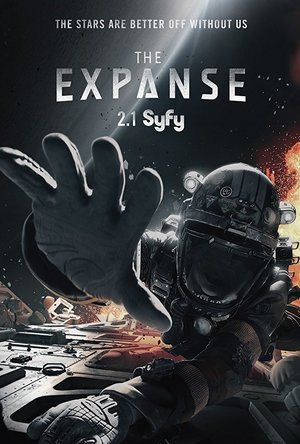

In this particular future, where there exists a cold war tension between the splintered factions of humanity across the solar system, all is not well. Earthers, Dusters (Martians) and Skinnies (Belters) compete for resources and political strength in an ever shifting landscape of trust and betrayal. It is a sci-fi geek’s paradise, full of believable tech, an extensive character list and jargon coming out of the wazoo! It’s all very complicated… and season five just finished airing on Amazon Prime on Wednesday 3rd Feb, so I thought it a good time to talk about it in detail.
Based on the novel series by James S. A. Corey (actually the assumed name of collaborators Ty Franck and Daniel Abraham), which began in 2011 and has produced one book a year since, the TV version has been on the go since 2015, first at SyFy and then at Amazon after being cancelled unfairly, and to mass uproar from the fans, after Season three. It isn’t something you watch casually – either you are into it and make a point of obsessing about it, or you watch a few, feel completely lost and admit it isn’t for you; although you suspect it is good and you just didn’t make the effort to engage enough. Sci-fi this earnest can be like that: a little unforgiving to tourists and passers-by.
Personally, I went through 2 phases with it. The first was watching it late at night with autoplay on, falling in and out of sleep depending on how exciting what was happening was, missing a lot of the detail and feeling largely lost in space. The second was coming back to Season 4 recently (about 3 weeks ago), after taking in a full recap of the story, and becoming a true fan that couldn’t get enough of the complex web of storylines, motives and personalities. Catching up enough to have to wait a week between episodes for the last 4 weeks, which has been tremendously rewarding.
Not that I had a major problem with it from the start. I thought it had a great look and a great mood about it, but lacked some star quality in the cast and was fairly opaque storywise. It always had potential. It was a question of whether you could be bothered to invest in that, knowing that it may go nowhere or even get cancelled very quickly – the TV universe is not known for being kind to sci-fi, as die-hard fans of Firefly still weep about regularly, and quite correctly.
In season one you watch it for the only person onboard that you have heard of, namely Thomas Jane (from The Mist and The Punisher) as det. Joe Miller, a cynical sleuth complete with a great anachronistic hat, who gets wrapped up in a mystery so mysterious it is often hard to work out what he is doing at all, and why… he literally comes and goes, for reasons that become apparent in later seasons. A frustrating and yet fascinating entity that must have been a real test to get right.
The show’s main cast also take a lot of time to warm up, to the point where you wonder who they are and whether they will be in it for long? Steven Strait, Dominique Tipper, Wes Chatham and Cas Anvar, as the ragtag collective of a small ship (they eventually name The Rocinante) that finds itself at the centre of a huge political shitstorm as the last bastion of impartial hope and moral reasoning, exude such little charisma at first it all seems doomed to fail. But, something magical begins to happen, by virtue of being in their presence a lot – you start to care. And the more you care the more the subsequent events have the power to stun you sideways!
More than anything else I can think of in recent years, this is a show that rewards patient investment. You will have definite moments of wanting to quit or take a long break, but the more faith you show in it, the more it will reward you in the long run. For me it was the climax of season 3 when I realised I was 100% into it, and that everything that had happened to that point was now starting to make sense in a larger context. Basically, what you think this is and what you assume it is about early doors, is not where it ends up. It goes somewhere way better!
Perhaps because it has the support of the book series as inspiration, the writing and story arc feels stronger and stronger in time. There are to date 9 books, so there is still scope to let this run for a good few years. And it does start to feel like there is a point where it will all completely tie together. Anyway, I am rambling as much as an average episode seems to do here. The point is, there is something right on the tightrope edge of classic or near miss going on with this. The cast have all really grown into their skins and personalities, and there are some moments in seasons 4 & 5 that left me jaw dropped at their dramatic weight!
Look, this isn’t going to be for everyone. It is very easy to say “I don’t get it” and move on with this show, but I am a sci-fi veteran , if not full geek, and I now absolutely love it. Cult status then is what we are talking about here. There will be a good wait for season six now, but the cliffhanger is mouth-watering, so I am in! It’s far from impossible they will ruin the vibe at some point and it will all fall flat… or, it could become the stuff of legend. I’ll be there to find out either way. No chance I am doing 5 seasons of something to drop out at that point.
Take away the space and the spaceships and this is a story about division and rights, and the hard work it takes to meet a diplomatic solution to the many differences and grievances that exist between different tribes and factions. What will some do to gain power? What will others do to ensure freedom and justice? How easy is it to waste life in the name of a cause? Oh, yeah and there’s also the little detail of an ancient alien civilisation that have been leaving tech and artifacts all over the solar system for us to fight over and try to control. As I say, the main story element of it all still feels like a partial mystery, and I love that!
Based on the novel series by James S. A. Corey (actually the assumed name of collaborators Ty Franck and Daniel Abraham), which began in 2011 and has produced one book a year since, the TV version has been on the go since 2015, first at SyFy and then at Amazon after being cancelled unfairly, and to mass uproar from the fans, after Season three. It isn’t something you watch casually – either you are into it and make a point of obsessing about it, or you watch a few, feel completely lost and admit it isn’t for you; although you suspect it is good and you just didn’t make the effort to engage enough. Sci-fi this earnest can be like that: a little unforgiving to tourists and passers-by.
Personally, I went through 2 phases with it. The first was watching it late at night with autoplay on, falling in and out of sleep depending on how exciting what was happening was, missing a lot of the detail and feeling largely lost in space. The second was coming back to Season 4 recently (about 3 weeks ago), after taking in a full recap of the story, and becoming a true fan that couldn’t get enough of the complex web of storylines, motives and personalities. Catching up enough to have to wait a week between episodes for the last 4 weeks, which has been tremendously rewarding.
Not that I had a major problem with it from the start. I thought it had a great look and a great mood about it, but lacked some star quality in the cast and was fairly opaque storywise. It always had potential. It was a question of whether you could be bothered to invest in that, knowing that it may go nowhere or even get cancelled very quickly – the TV universe is not known for being kind to sci-fi, as die-hard fans of Firefly still weep about regularly, and quite correctly.
In season one you watch it for the only person onboard that you have heard of, namely Thomas Jane (from The Mist and The Punisher) as det. Joe Miller, a cynical sleuth complete with a great anachronistic hat, who gets wrapped up in a mystery so mysterious it is often hard to work out what he is doing at all, and why… he literally comes and goes, for reasons that become apparent in later seasons. A frustrating and yet fascinating entity that must have been a real test to get right.
The show’s main cast also take a lot of time to warm up, to the point where you wonder who they are and whether they will be in it for long? Steven Strait, Dominique Tipper, Wes Chatham and Cas Anvar, as the ragtag collective of a small ship (they eventually name The Rocinante) that finds itself at the centre of a huge political shitstorm as the last bastion of impartial hope and moral reasoning, exude such little charisma at first it all seems doomed to fail. But, something magical begins to happen, by virtue of being in their presence a lot – you start to care. And the more you care the more the subsequent events have the power to stun you sideways!
More than anything else I can think of in recent years, this is a show that rewards patient investment. You will have definite moments of wanting to quit or take a long break, but the more faith you show in it, the more it will reward you in the long run. For me it was the climax of season 3 when I realised I was 100% into it, and that everything that had happened to that point was now starting to make sense in a larger context. Basically, what you think this is and what you assume it is about early doors, is not where it ends up. It goes somewhere way better!
Perhaps because it has the support of the book series as inspiration, the writing and story arc feels stronger and stronger in time. There are to date 9 books, so there is still scope to let this run for a good few years. And it does start to feel like there is a point where it will all completely tie together. Anyway, I am rambling as much as an average episode seems to do here. The point is, there is something right on the tightrope edge of classic or near miss going on with this. The cast have all really grown into their skins and personalities, and there are some moments in seasons 4 & 5 that left me jaw dropped at their dramatic weight!
Look, this isn’t going to be for everyone. It is very easy to say “I don’t get it” and move on with this show, but I am a sci-fi veteran , if not full geek, and I now absolutely love it. Cult status then is what we are talking about here. There will be a good wait for season six now, but the cliffhanger is mouth-watering, so I am in! It’s far from impossible they will ruin the vibe at some point and it will all fall flat… or, it could become the stuff of legend. I’ll be there to find out either way. No chance I am doing 5 seasons of something to drop out at that point.
Take away the space and the spaceships and this is a story about division and rights, and the hard work it takes to meet a diplomatic solution to the many differences and grievances that exist between different tribes and factions. What will some do to gain power? What will others do to ensure freedom and justice? How easy is it to waste life in the name of a cause? Oh, yeah and there’s also the little detail of an ancient alien civilisation that have been leaving tech and artifacts all over the solar system for us to fight over and try to control. As I say, the main story element of it all still feels like a partial mystery, and I love that!
Daniel Boyd (1066 KP) rated the PlayStation 4 version of Injustice 2 in Video Games
Oct 17, 2017 (Updated Oct 3, 2018)

Technically sound (1 more)
Good online functionality
Naff character redesigns (1 more)
Lack of character motivations
Gods & Monsters
Quick disclaimer before I start the review, I am not a huge online gamer. Whilst playing through Injustice 2, I dabbled in a few online fights and played a few co op games with my better half, but for the most part, this is a review of the single player story portion of the game.
I was so pleasantly surprised when I played the first Injustice game. I am a big DC fan, but fighting games aren’t one of my preferred genres in gaming, yet this fighting game set in the DC universe blew me away. The story was intriguing, the characters were diverse and it was a unique taste on a beloved universe. Therefore, the sequel had a fair amount to live up to and while it is still a fun fighting game with a multitude of colourful characters, it doesn’t feel anywhere near as special as Gods Among Us did.
The setup this time around revolves around Brainiac descending upon the earth in search of Kal-El and Kara, the last two remaining Kryptonians and eliminating them. Since the events of the last game, Batman has been keeping Superman in a special prison that suppresses his powers and the world has remained relatively free of crime, however Brainaic’s arrival changes all this. From here onwards we have our superhero story, which sees epic battles occur and mortal enemies being forced to work together against a common evil.
Most importantly, the game is fun. Gameplay feels pretty tight, which is both a positive and a negative when compared to Gods Among Us. The controls feel more solid and purposeful, but also feel more restrictive and less forgiving since the last time. This makes button bashing a void method and forces you to learn intricate button sequences if you want to pull off a decent combo. Thankfully, the super-moves are really fun to watch and make you feel awesome when you manage to successfully pull them off.
I’m going to delve deeper into the game’s story mode, so if you want to avoid spoilers, I would skip this paragraph. I was so looking forward to the story mode in this game, I loved the story mode in the first game and was relying on this one to deliver also, unfortunately I found it jarring and hard to swallow, even as a lifelong comic book fan. The story in Gods Among Us was controversial amongst DC fans, as it turned a number of iconic characters on their head, causing them to fight on the opposing side from what we are used to seeing. In that game though, I thought it worked, character motivations were clear and there was context given for the heroes and villains who switched sides. This time around, characters switch sides faster than a tennis ball at Wimbledon and half the time, there is no apparent reason for it. The most jarring moment came when Wonder Woman turned on Kara. In the mission that preceded it, Wonder Woman inhales Scarecrow’s toxin and through a hallucination and it is revealed that her worst fear is turning on her friends, yet in the mission immediately after this sequence, she turns on her friends in reality! With no apparent motive to do so other than she is unconditionally on Superman’s side, making no moral decisions for herself. It came across so awkwardly and felt lazy, it’s as if the writers totally forgot about the last scene that illustrated that the last thing that Wonder Woman wants to do is turn on her friends.
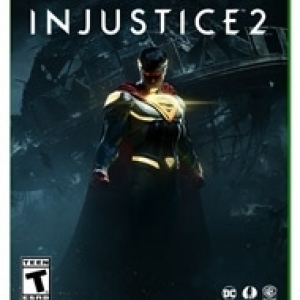
I did appreciate the graphics in the game. Netherealm have really stepped up their game since the first Injustice and there are some truly stunning moments throughout Injustice 2 and I don’t just mean the cut-scenes. The area transitions are gorgeous to look at, the super-moves are very visually impressive and the detailed locations where the fights take place are also effective. The multiple unique environmental hazards present in each environment add an extra layer of unpredictability and opportunity to the fights and they do a good job of helping a player on the back foot start a comeback against their opponent. Facial animations and voice acting across the stable of characters are also solid.
Although the game is technically sound and the graphics are good looking, I wasn’t a fan of the character design overall this time around. The last game updated a few character designs, but for the most part followed the traditional style that the characters are portrayed in. This time, a lot of the character’s costumes look goofy and come off looking like toy armour rather than something a superhero would realistically wear. Also the redesign of the Joker makes no sense. Not only did it look like they were trying too hard to make him look edgy, but in this universe, Joker was killed at the beginning of the first Injustice game and he didn’t look like that when he died. In this game he appears to Harley through one of Scarecrow’s hallucinations and looks similar to the Jared Leto version of the character, but why? As far as we know, he has never looked like that in this universe during the time he was alive and if you are going to redesign him, don’t base it on Leto’s Joker, (AKA the worst version of the character.)
The co-op is as much fun as you would expect and certain matchups are more interesting than others. As with the first Injustice, pulling off combos and super-moves on someone that is physically sitting next to you is a lot more satisfying than doing it to some AI or an online player thousands of miles away. There is nothing quite like the couch co-op experience when it comes to a fighting game. Injustice 2 is a lot of fun to play in a group as well, setting up a tournament and throwing in real life forfeits also makes things more interesting.
As for the online play, the few matches I did play ran pretty well, there were no sudden glitches present throughout my time, the lag time between the player pressing a button and the character executing the corresponding move wasn’t that noticeable and matchmaking was fairly quick.
In summary, other than some jarring moments in the story, unclear character motivations and some naff character redesigns, there is a fun fighting game here buried underneath all of the nonsense, it’s just a pity that you have to put up with all of these hindrances to get to it. If you are a fan of the first game, then sure, I would recommend you picking this up and playing through it, but if you aren’t familiar with the series and are looking to jump into it and are considering grabbing the latest entry, I would highly encourage you to avoid it. You would be much better served picking up the first game. It will be a great deal cheaper than the latest version, the character designs are better and it’s a lot simpler and more fun overall.
I was so pleasantly surprised when I played the first Injustice game. I am a big DC fan, but fighting games aren’t one of my preferred genres in gaming, yet this fighting game set in the DC universe blew me away. The story was intriguing, the characters were diverse and it was a unique taste on a beloved universe. Therefore, the sequel had a fair amount to live up to and while it is still a fun fighting game with a multitude of colourful characters, it doesn’t feel anywhere near as special as Gods Among Us did.
The setup this time around revolves around Brainiac descending upon the earth in search of Kal-El and Kara, the last two remaining Kryptonians and eliminating them. Since the events of the last game, Batman has been keeping Superman in a special prison that suppresses his powers and the world has remained relatively free of crime, however Brainaic’s arrival changes all this. From here onwards we have our superhero story, which sees epic battles occur and mortal enemies being forced to work together against a common evil.
Most importantly, the game is fun. Gameplay feels pretty tight, which is both a positive and a negative when compared to Gods Among Us. The controls feel more solid and purposeful, but also feel more restrictive and less forgiving since the last time. This makes button bashing a void method and forces you to learn intricate button sequences if you want to pull off a decent combo. Thankfully, the super-moves are really fun to watch and make you feel awesome when you manage to successfully pull them off.
I’m going to delve deeper into the game’s story mode, so if you want to avoid spoilers, I would skip this paragraph. I was so looking forward to the story mode in this game, I loved the story mode in the first game and was relying on this one to deliver also, unfortunately I found it jarring and hard to swallow, even as a lifelong comic book fan. The story in Gods Among Us was controversial amongst DC fans, as it turned a number of iconic characters on their head, causing them to fight on the opposing side from what we are used to seeing. In that game though, I thought it worked, character motivations were clear and there was context given for the heroes and villains who switched sides. This time around, characters switch sides faster than a tennis ball at Wimbledon and half the time, there is no apparent reason for it. The most jarring moment came when Wonder Woman turned on Kara. In the mission that preceded it, Wonder Woman inhales Scarecrow’s toxin and through a hallucination and it is revealed that her worst fear is turning on her friends, yet in the mission immediately after this sequence, she turns on her friends in reality! With no apparent motive to do so other than she is unconditionally on Superman’s side, making no moral decisions for herself. It came across so awkwardly and felt lazy, it’s as if the writers totally forgot about the last scene that illustrated that the last thing that Wonder Woman wants to do is turn on her friends.
I did appreciate the graphics in the game. Netherealm have really stepped up their game since the first Injustice and there are some truly stunning moments throughout Injustice 2 and I don’t just mean the cut-scenes. The area transitions are gorgeous to look at, the super-moves are very visually impressive and the detailed locations where the fights take place are also effective. The multiple unique environmental hazards present in each environment add an extra layer of unpredictability and opportunity to the fights and they do a good job of helping a player on the back foot start a comeback against their opponent. Facial animations and voice acting across the stable of characters are also solid.
Although the game is technically sound and the graphics are good looking, I wasn’t a fan of the character design overall this time around. The last game updated a few character designs, but for the most part followed the traditional style that the characters are portrayed in. This time, a lot of the character’s costumes look goofy and come off looking like toy armour rather than something a superhero would realistically wear. Also the redesign of the Joker makes no sense. Not only did it look like they were trying too hard to make him look edgy, but in this universe, Joker was killed at the beginning of the first Injustice game and he didn’t look like that when he died. In this game he appears to Harley through one of Scarecrow’s hallucinations and looks similar to the Jared Leto version of the character, but why? As far as we know, he has never looked like that in this universe during the time he was alive and if you are going to redesign him, don’t base it on Leto’s Joker, (AKA the worst version of the character.)
The co-op is as much fun as you would expect and certain matchups are more interesting than others. As with the first Injustice, pulling off combos and super-moves on someone that is physically sitting next to you is a lot more satisfying than doing it to some AI or an online player thousands of miles away. There is nothing quite like the couch co-op experience when it comes to a fighting game. Injustice 2 is a lot of fun to play in a group as well, setting up a tournament and throwing in real life forfeits also makes things more interesting.
As for the online play, the few matches I did play ran pretty well, there were no sudden glitches present throughout my time, the lag time between the player pressing a button and the character executing the corresponding move wasn’t that noticeable and matchmaking was fairly quick.
In summary, other than some jarring moments in the story, unclear character motivations and some naff character redesigns, there is a fun fighting game here buried underneath all of the nonsense, it’s just a pity that you have to put up with all of these hindrances to get to it. If you are a fan of the first game, then sure, I would recommend you picking this up and playing through it, but if you aren’t familiar with the series and are looking to jump into it and are considering grabbing the latest entry, I would highly encourage you to avoid it. You would be much better served picking up the first game. It will be a great deal cheaper than the latest version, the character designs are better and it’s a lot simpler and more fun overall.
Mandy and G.D. Burkhead (26 KP) rated Sir Apropos of Nothing in Books
May 20, 2018
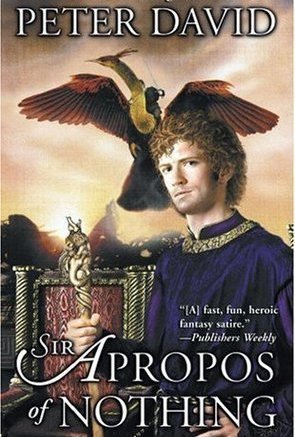

Shelf Life – Sir Apropos of Nothing Skewers the Hero’s Journey
Contains spoilers, click to show
Fantasy and satire are two of my favorite genres in any medium, but especially so in books. Satirical fantasy, then, holds a special place on my shelves. I grew up on Sir Terry Pratchett’s Discworld series, and desire to imitate him and his style is what led me in middle school to begin writing in earnest, for fun, and for myself rather than just for my teachers and their assignments.
So when I picked up Sir Apropos of Nothing, I did so based on the title pun and the back-of-the-book synopsis that promised “a berserk phoenix, murderous unicorns, mutated harpies, homicidal warrior kings, and – most problematic of all – a princess who may or may not be a psychotic arsonist.” I expected another lighthearted riff on the familiar archetypes. Murderous unicorns? Unicorns are not typically described as such! Oh teehee, how unexpectedly humorous!
Sir Apropos of Nothing is a satirical fantasy, just like it promised, though at times it’s hard to tell how much of the story is played for laughs and how much is played straight. See, the thing about satire that’s easy to forget at times is that it’s not synonymous with buffoonery. Make no mistake – Apropos is a funny book, full of witty dialogue and groan-inducing puns. It’s a book that takes great delight in lampshading traditional fantasy tropes and archetypes, as well as the entirety of Joseph Campbell’s Hero’s Journey idea. But it is not always a silly lampshade; sometimes a cliche or trope is pointed out to have its inherit ridiculousness laughed at, and sometimes it is pointed out because it is causing real and lasting pain or damage, either to the society in which it is set or, more often, to the titular Apropos himself and his ever-degrading esteem of both the people around him and himself.
The tone, at first, is hard to pin down. The story starts in media res with the main character being caught by a knight while in mid-coitus with that knight’s wife and escalates from there. The second chapter opens with a fourth wall-breaking narrative admission by Apropos himself that this was done with the express purpose of catching your attention, and now we’re going back to cover Apropos’s childhood, which ends up being equal parts dark, tragic, punny, and conveniently trope-filled – all of which Apropos, as narrator, approaches with the same resigned, blasé outlook.
If this sounds a bit jarring, well, it kind of is. Early on, I wasn’t sure what to think of where the story was trying to go or what I was expected to feel about it. After the first turn from cliché to dark and visceral to light and punny, all within a few pages, I caught myself thinking, “Crap, is this book gonna try and mix goofy jokes with serious drama and thoughtful moral quandary?”
The answer is yes. And it pulls it off fantastically.
This is due in large part to the interesting depths of the antihero, Apropos, who seems to be so named purely for the joke in the title. In Apropos we see a deep sense of justice and rightness that is entirely eclipsed by an even deeper cynicism and an unshakeable instinct for self-preservation. His life is objectively terrible, but rather than brood and lament, he adjusts. He keeps his head down when he can, weathers abuse when he can’t, and learns to deal with the constant shit storm, all the while bottling his growing anger and resentment at a world that would allow such amounts of suffering and hypocrisy to go unchecked. The fact that he himself becomes a selfish, hypocritical, and generally awful person is not lost on him, and the result is a flawed, unheroic, pathetic coward of a protagonist, a magnificently multifaceted bastard who doesn’t spare even himself from his vast and withering contempt.
And it’s a blast. It really is. Apropos is refreshingly pragmatic and unabashedly pessimistic, a welcome change from the typical righteous-yet-humble heroes of traditional fantasy, or even the loveable and untalented everyman in over his head of traditional fantasy spoofs. Despite a portentous birthmark (on his ass, no less) and beginnings that are not “humble” so much as “poverty of the dirtiest kind,” Apropos is everything a hero should not be short of outright evil.
And this, as it turns out, is entirely the point. This is where the satire, funny or otherwise, really shines through. This is the crux that elevates Sir Apropos of Nothing from a generically self-aware fantasy story to an original and memorable subversion of storytelling as a whole.
Without giving too much away, there comes a point in the plot where Apropos realizes that the events surrounding his miserable life are part of a heroic tale that has been preordained by Fate and is now being epically written out by Destiny. And despite his birthmark, his tragic past, and his mother’s constant reassurances that he has some sort of great destiny hovering over him, he is not the hero. He is only a minor character. A walk-on role on the hero’s stage. A brief pit-stop along the hero’s journey. An NPC whose dreams, desires, and continued existence are so far below importance to the story as to be utterly negligible.
And once this finally clicks with him, he violently, brazenly rebels against it. He gives an emphatic middle finger to Fate’s ideas and sets about making Destiny sit up and take notice of him again. He momentarily and violently overcomes his own abject cowardice just long enough to find a way to completely wreck the traditional heroic ballad in which he lives, all on the basis that, dammit, the world owes him more than this, and nobody should be so miserably cursed as to live their entire life as a foil character.
At this point in my own reading, I didn’t know whether to cheer him on or worry about the repercussions of his actions, because he doesn’t suddenly become heroic when this happens. He’s exactly as much of a selfish, lying bastard as before, and however bad you feel for him, you can completely understand why he was never cast for this role in the first place. Add to this the complete disregard of the author for following what seems to be the obvious progression of events in favor of twists that take you completely by surprise, but still make complete sense and arise organically from the story itself, and you eventually give up thinking that you have any sense of where the story’s going or how any event is going to play out. From beginning to end, it feeds you familiar ideas and then completely subverts them, introduces clichés and then proceeds to tear them apart, and you laugh and pity and feel something the entire way through.
In short, Sir Apropos of Nothing is a book that will keep you turning page after page – not necessarily because of the gripping drama (although it has that) or because of any breezy humor (although it has that too), or because the narration itself oozes suspense (although it often does), but because, with the rapid infusion of new and creative ideas and the hidden depths of character constantly bubbling to the surface in everyone involved, you honestly never know what’s going to happen next. If you like fantasy and can stand to have your expectations messed with, Apropos is certainly apropos.
So when I picked up Sir Apropos of Nothing, I did so based on the title pun and the back-of-the-book synopsis that promised “a berserk phoenix, murderous unicorns, mutated harpies, homicidal warrior kings, and – most problematic of all – a princess who may or may not be a psychotic arsonist.” I expected another lighthearted riff on the familiar archetypes. Murderous unicorns? Unicorns are not typically described as such! Oh teehee, how unexpectedly humorous!
Sir Apropos of Nothing is a satirical fantasy, just like it promised, though at times it’s hard to tell how much of the story is played for laughs and how much is played straight. See, the thing about satire that’s easy to forget at times is that it’s not synonymous with buffoonery. Make no mistake – Apropos is a funny book, full of witty dialogue and groan-inducing puns. It’s a book that takes great delight in lampshading traditional fantasy tropes and archetypes, as well as the entirety of Joseph Campbell’s Hero’s Journey idea. But it is not always a silly lampshade; sometimes a cliche or trope is pointed out to have its inherit ridiculousness laughed at, and sometimes it is pointed out because it is causing real and lasting pain or damage, either to the society in which it is set or, more often, to the titular Apropos himself and his ever-degrading esteem of both the people around him and himself.
The tone, at first, is hard to pin down. The story starts in media res with the main character being caught by a knight while in mid-coitus with that knight’s wife and escalates from there. The second chapter opens with a fourth wall-breaking narrative admission by Apropos himself that this was done with the express purpose of catching your attention, and now we’re going back to cover Apropos’s childhood, which ends up being equal parts dark, tragic, punny, and conveniently trope-filled – all of which Apropos, as narrator, approaches with the same resigned, blasé outlook.
If this sounds a bit jarring, well, it kind of is. Early on, I wasn’t sure what to think of where the story was trying to go or what I was expected to feel about it. After the first turn from cliché to dark and visceral to light and punny, all within a few pages, I caught myself thinking, “Crap, is this book gonna try and mix goofy jokes with serious drama and thoughtful moral quandary?”
The answer is yes. And it pulls it off fantastically.
This is due in large part to the interesting depths of the antihero, Apropos, who seems to be so named purely for the joke in the title. In Apropos we see a deep sense of justice and rightness that is entirely eclipsed by an even deeper cynicism and an unshakeable instinct for self-preservation. His life is objectively terrible, but rather than brood and lament, he adjusts. He keeps his head down when he can, weathers abuse when he can’t, and learns to deal with the constant shit storm, all the while bottling his growing anger and resentment at a world that would allow such amounts of suffering and hypocrisy to go unchecked. The fact that he himself becomes a selfish, hypocritical, and generally awful person is not lost on him, and the result is a flawed, unheroic, pathetic coward of a protagonist, a magnificently multifaceted bastard who doesn’t spare even himself from his vast and withering contempt.
And it’s a blast. It really is. Apropos is refreshingly pragmatic and unabashedly pessimistic, a welcome change from the typical righteous-yet-humble heroes of traditional fantasy, or even the loveable and untalented everyman in over his head of traditional fantasy spoofs. Despite a portentous birthmark (on his ass, no less) and beginnings that are not “humble” so much as “poverty of the dirtiest kind,” Apropos is everything a hero should not be short of outright evil.
And this, as it turns out, is entirely the point. This is where the satire, funny or otherwise, really shines through. This is the crux that elevates Sir Apropos of Nothing from a generically self-aware fantasy story to an original and memorable subversion of storytelling as a whole.
Without giving too much away, there comes a point in the plot where Apropos realizes that the events surrounding his miserable life are part of a heroic tale that has been preordained by Fate and is now being epically written out by Destiny. And despite his birthmark, his tragic past, and his mother’s constant reassurances that he has some sort of great destiny hovering over him, he is not the hero. He is only a minor character. A walk-on role on the hero’s stage. A brief pit-stop along the hero’s journey. An NPC whose dreams, desires, and continued existence are so far below importance to the story as to be utterly negligible.
And once this finally clicks with him, he violently, brazenly rebels against it. He gives an emphatic middle finger to Fate’s ideas and sets about making Destiny sit up and take notice of him again. He momentarily and violently overcomes his own abject cowardice just long enough to find a way to completely wreck the traditional heroic ballad in which he lives, all on the basis that, dammit, the world owes him more than this, and nobody should be so miserably cursed as to live their entire life as a foil character.
At this point in my own reading, I didn’t know whether to cheer him on or worry about the repercussions of his actions, because he doesn’t suddenly become heroic when this happens. He’s exactly as much of a selfish, lying bastard as before, and however bad you feel for him, you can completely understand why he was never cast for this role in the first place. Add to this the complete disregard of the author for following what seems to be the obvious progression of events in favor of twists that take you completely by surprise, but still make complete sense and arise organically from the story itself, and you eventually give up thinking that you have any sense of where the story’s going or how any event is going to play out. From beginning to end, it feeds you familiar ideas and then completely subverts them, introduces clichés and then proceeds to tear them apart, and you laugh and pity and feel something the entire way through.
In short, Sir Apropos of Nothing is a book that will keep you turning page after page – not necessarily because of the gripping drama (although it has that) or because of any breezy humor (although it has that too), or because the narration itself oozes suspense (although it often does), but because, with the rapid infusion of new and creative ideas and the hidden depths of character constantly bubbling to the surface in everyone involved, you honestly never know what’s going to happen next. If you like fantasy and can stand to have your expectations messed with, Apropos is certainly apropos.
Kirk Bage (1775 KP) rated Knives Out (2019) in Movies
Jan 22, 2021
Murder mystery films tend to be more fun in theory and anticipation than they are to watch. It’s a genre that I very much enjoy and have indulged in over the years. Yet, if I look back in detail at it, I find that it is the books, especially those of Agatha Christie, that I like much more than anything lasting a couple of hours on the screen. There’s something about the mystery being rushed and squeezed into the cinema artform that is usually anti-climactic or even a full on let down.
Perhaps my favourite of the entire genre is a film that refuses to take itself seriously and is at once a pastiche of the multiple cliches that have accumulated over the years. And that film is, of course, the wonderfully camp, funny and charming 1985 romp Clue, starring Tim Curry and a slough of 80s B stars having the time of their lives. It isn’t a “good” film, it is a cult film, it’s joy being in its absolute lack of pretension or moral judgement. Like the board game that inspired it, it isn’t overly complicated or long, but has just enough cleverness, mirth and ambiance about it to always be a winner.
Rian Johnson’s take on the genre, Knives Out, is aware of these elements at all times, being above all things colourful, playful, arch and glib, but never convoluted or cerebral in an alienating way. He is something of a master at subverting a genre and wringing new life into it; take the invention of the teen noir in Brick, or the blend of assassin time travel sci-fi in Looper. He even gave an entire franchise a new breath of life by re-examining the use of humour and self referencing in Star Wars: The Last Jedi.
All of those previous films have as many detractors as mega fans, proving his style is devisive, for its audacity and its irreverence towards any idea of purism within an established model. And Knives Out is no exception to that. However, it may be the film of his that most people can agree on that they enjoyed, for one reason or another. I think it’s as interesting to ask why that is as it is to talk about the film itself… so, I will. At least, I’ll try to do both without losing my train of thought.
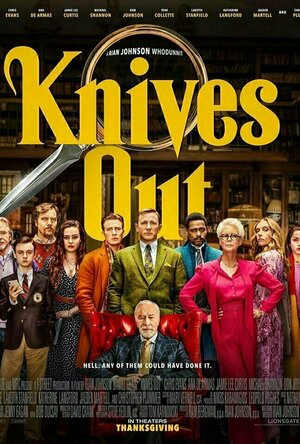
Firstly, it looks stunning; the palate of rich colours used in the poster and all marketing just make it look like something you want to immerse yourself in – every jacket, tie, dress, or piece of furniture is designed to precision, and it works like a dream of the genre you may have once had, as if it had been plucked directly from your subconscious. As in all good murder mysteries, the location, props and costumes should hold as much character as the actors, and the stately home of the Thrombey family certainly provides plenty of atmosphere in every texture and material on display.
Of course, the cast of characters is wonderfully put together with some inspired casting of familiar faces and actors you trust, such as Toni Collette and Michael Shannon, together with a few we don’t see enough of these days, such as Jamie Lee Curtis and Don Johnson, who both manage to create something as memorable as anything they did in their golden days. Add to the mix two bone fide action film superstars in Daniel Craig and Chris Evans, who leave the baggage of their most famous characters far behind and manage to convince you they are real actors again, the former with the aide of a jarring but hilarious Southern drawl, that grates at first but is a perfect choice on reflection.
Then there are the two lynchpins of this film’s ultimate success and joy: the exceptional legendary gravitas of 90 year old Christopher Plummer as the patriarch and victim at the centre of the intrigue, and the quite glorious revelation of Ana de Armas, whose charisma, beauty and skill in this delicately balanced role was the most impressive thing for me about the whole production. It may be Craig who is the ever present focus, as the detective tasked with solving the “crime”, but it is de Armas that you will remember most long after the credits roll.
As for the plot, well… I obviously can’t talk about it without ruining the whole thing. But, I can say that it isn’t far into the intricate web of motives, alibis and secrets before you start to sense this is going somewhere different, even unique. The examination of the relationships and personalities, and the extent to which they each demonstrate greed and selfishness is fascinating, superceding the crime that exists on the surface with a swamp of far seedier and unpleasant goings-on. Craig’s suave Benoit Blanc isn’t so much a detective here as a family therapist, or perhaps a supernatural presence in the style of the old classic, An Inspector Calls. Perhaps, it is suggested, no one completely escapes guilt and shame here… or do they? Are we looking for a murderer, or the only morally good person amidst a pack of dogs?
Another key element is how modern and unstuffy it feels, despite the country house and riches this is no play of manners, quite the opposite – no one here is on their best behaviour for the sake of decorum, and being upper class is an idea played with rather than enforced. The tea and cakes of the classic Christie, such as Murder on the Orient Express is replaced by smartphones and similar trappings, that identify it as definitely 2019 and no period piece. The concerns and themes are very much rooted in our present problems, and for that it engages and resonates in ways a costume drama just can’t do.
Upon finishing it for the first time, you may be thinking “sure, OK, I enjoyed that… but I’m not blown away here”. Then, as it sinks in over coming weeks, you find yourself recommending it to people, and thinking about how good it is in ways you didn’t initially think about. And that is surely why it was so embraced by the critics and paying public alike; it is a likeable, fun film, that can also stand some artistic scrutiny. It isn’t the smartest, or prettiest, or most meaningful film ever made, but it is enough of all three to make it an instant mini-classic, in my opinion.
I feel like there is maybe more to say about it, which is always a good sign, but that will do for now. I’d be happy to discuss it with anyone that feels the need. Or hear from anyone that didn’t like it! It would be interesting to hear that side of it, because I haven’t heard many negative comments on it at all. I don’t think I would defend it as a masterpiece to the end of the Earth, ‘cos it ain’t that good. I’m just hard pressed to find a serious fault. And it’s great when one of those sneaks up on you!
Perhaps my favourite of the entire genre is a film that refuses to take itself seriously and is at once a pastiche of the multiple cliches that have accumulated over the years. And that film is, of course, the wonderfully camp, funny and charming 1985 romp Clue, starring Tim Curry and a slough of 80s B stars having the time of their lives. It isn’t a “good” film, it is a cult film, it’s joy being in its absolute lack of pretension or moral judgement. Like the board game that inspired it, it isn’t overly complicated or long, but has just enough cleverness, mirth and ambiance about it to always be a winner.
Rian Johnson’s take on the genre, Knives Out, is aware of these elements at all times, being above all things colourful, playful, arch and glib, but never convoluted or cerebral in an alienating way. He is something of a master at subverting a genre and wringing new life into it; take the invention of the teen noir in Brick, or the blend of assassin time travel sci-fi in Looper. He even gave an entire franchise a new breath of life by re-examining the use of humour and self referencing in Star Wars: The Last Jedi.
All of those previous films have as many detractors as mega fans, proving his style is devisive, for its audacity and its irreverence towards any idea of purism within an established model. And Knives Out is no exception to that. However, it may be the film of his that most people can agree on that they enjoyed, for one reason or another. I think it’s as interesting to ask why that is as it is to talk about the film itself… so, I will. At least, I’ll try to do both without losing my train of thought.
Firstly, it looks stunning; the palate of rich colours used in the poster and all marketing just make it look like something you want to immerse yourself in – every jacket, tie, dress, or piece of furniture is designed to precision, and it works like a dream of the genre you may have once had, as if it had been plucked directly from your subconscious. As in all good murder mysteries, the location, props and costumes should hold as much character as the actors, and the stately home of the Thrombey family certainly provides plenty of atmosphere in every texture and material on display.
Of course, the cast of characters is wonderfully put together with some inspired casting of familiar faces and actors you trust, such as Toni Collette and Michael Shannon, together with a few we don’t see enough of these days, such as Jamie Lee Curtis and Don Johnson, who both manage to create something as memorable as anything they did in their golden days. Add to the mix two bone fide action film superstars in Daniel Craig and Chris Evans, who leave the baggage of their most famous characters far behind and manage to convince you they are real actors again, the former with the aide of a jarring but hilarious Southern drawl, that grates at first but is a perfect choice on reflection.
Then there are the two lynchpins of this film’s ultimate success and joy: the exceptional legendary gravitas of 90 year old Christopher Plummer as the patriarch and victim at the centre of the intrigue, and the quite glorious revelation of Ana de Armas, whose charisma, beauty and skill in this delicately balanced role was the most impressive thing for me about the whole production. It may be Craig who is the ever present focus, as the detective tasked with solving the “crime”, but it is de Armas that you will remember most long after the credits roll.
As for the plot, well… I obviously can’t talk about it without ruining the whole thing. But, I can say that it isn’t far into the intricate web of motives, alibis and secrets before you start to sense this is going somewhere different, even unique. The examination of the relationships and personalities, and the extent to which they each demonstrate greed and selfishness is fascinating, superceding the crime that exists on the surface with a swamp of far seedier and unpleasant goings-on. Craig’s suave Benoit Blanc isn’t so much a detective here as a family therapist, or perhaps a supernatural presence in the style of the old classic, An Inspector Calls. Perhaps, it is suggested, no one completely escapes guilt and shame here… or do they? Are we looking for a murderer, or the only morally good person amidst a pack of dogs?
Another key element is how modern and unstuffy it feels, despite the country house and riches this is no play of manners, quite the opposite – no one here is on their best behaviour for the sake of decorum, and being upper class is an idea played with rather than enforced. The tea and cakes of the classic Christie, such as Murder on the Orient Express is replaced by smartphones and similar trappings, that identify it as definitely 2019 and no period piece. The concerns and themes are very much rooted in our present problems, and for that it engages and resonates in ways a costume drama just can’t do.
Upon finishing it for the first time, you may be thinking “sure, OK, I enjoyed that… but I’m not blown away here”. Then, as it sinks in over coming weeks, you find yourself recommending it to people, and thinking about how good it is in ways you didn’t initially think about. And that is surely why it was so embraced by the critics and paying public alike; it is a likeable, fun film, that can also stand some artistic scrutiny. It isn’t the smartest, or prettiest, or most meaningful film ever made, but it is enough of all three to make it an instant mini-classic, in my opinion.
I feel like there is maybe more to say about it, which is always a good sign, but that will do for now. I’d be happy to discuss it with anyone that feels the need. Or hear from anyone that didn’t like it! It would be interesting to hear that side of it, because I haven’t heard many negative comments on it at all. I don’t think I would defend it as a masterpiece to the end of the Earth, ‘cos it ain’t that good. I’m just hard pressed to find a serious fault. And it’s great when one of those sneaks up on you!
Kirk Bage (1775 KP) rated Tales from the Loop in TV
Jan 22, 2021
Such is the competition for our attention on the major streaming services, and such is the daunting depth of choice, that sometimes something of real quality can slip through the net for a while. I like to think that eventually, everything gets the audience it deserves, because eventually enough people that appreciated it will find it and pass it on. But it is apparent that good things can go under the radar very easily for one reason or another.
Everything about the production and presentation of Amazon’s Tales From the Loop suggests they thought it might be a bigger hit, or at least they had enough faith in it to let it be different from the mass appeal conventions that apply to sci-fi shows. They have proved this many times in recent years, with shows like The Man In the High Castle and The Expanse favouring patient and mature story-telling over interminable flashbangs and whizzpops usually found in the more action based sci-fi on Netflix and others (The Handmaid’s Tale being another notable exception).
Having raised myself auto-didactically on the oldest traditions of science fiction writing in novel and short story form since my teenage years, I can say with some amateur authority that the point of using sci-fi ideas was always about the people and the parallels to social reality and politics that could be highlighted by putting them in a “what-if” situation. The lazer guns and spaceships and evil aliens were much more a product of Hollywood, and still are. Great science fiction writing can and usually does revolve around a very simple change to the world we know, an inversion or a convention or a technology that turns how we live on its head. At its best it is philosophical and moral poetry.
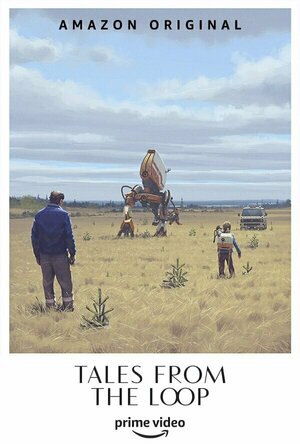
Tales From the Loop, inspired by the beguiling paintings of Swedish Artist Simon Stålenhag aspires to return to these principles, eschewing breakneck pace and unnecessary exposition at every turn – it is entirely content to confuse and sometimes even bore you with its patient, melancholy approach, testing almost if you are worthy to reach the prize of deeper meaning buried away in the final few episodes.
The idea of Stålenhag’s work is to juxtapose a familiar and mundane landscape with a detail of technology that does not exist in our reality. Often it is something broken, run-down or neglected, leaving a strange sadness and beauty behind that has you wondering who once made this and what was it for, and why is it no longer loved? The untold stories objects and hidden lives, secrets and desires that have been lost, is what this sensitive and delicate show is about. It is about the interconnection of lives caught in time, and the sci-fi / tech conceit is only the hanger that coat is put on. Which… I love.
The surface idea is that we are looking at the inhabitants of a small American town that once relied on farming and community, but now has been changed by the presence of an underground facility that deals with experimental physics and finding ways to make impossible things possible. They call it The Loop. It is never fully explained where it came from, or why, or what it is truly capable of – the mystery is always allowed to remain mostly a mystery – which, again, I love!
Many people in the town work at The Loop and rely on it for their livelihoods and collective economy, including Jonathon Pryce and Rebecca Hall, who are ostensibly the show’s main characters. But most folk have no idea what is really going on. Each episode focuses on one or two members of the community that interweave with one another; several important people begin as background dressing and become more prevalent as the full story of their lives and connections unfolds. But no one character is in every episode… which, you know, I love.
Their lives, that seem simple at first glance, are revealed to be complex tapestries of emotion and personal history, revolving around how The Loop has affected them and the things they love. The progression and unfolding of the detail is so deliberate and usually under-explained that very often you don’t realise the effect the full image will have. And when it does catch up with you it becomes a very moving and meaningful experience. Characters that you don’t understand or even like at first come into sharper focus as we reach the climax of the season and grow to learn why they are the way they are. The story arcs of Pryce and Hall in particular are very satisfying, tragic yet utterly beautiful to comprehend.
A lot of the criticism you will see about the show will concentrate on how slow it all is. I am totally convinced this is a deliberate artistic choice to weed out the thrill junkies. They are very welcome to go elsewhere, and it sounds as if many of them did, basing their reviews on one or two half watched episodes they couldn’t be bothered to engage with or wonder at. Which is why I think in time the respect for this as a work of art will come back around.
There is nothing to fault in the production at all. From the opening credits to the end of each episode, what you get is a very highly polished and considered look and feel, designed to evoke certain feelings over others – a wistfulness, an ennui, a bittersweet smile of knowing, perhaps. It invites you to watch patiently and relate, not to watch eagerly and expect… which, you know, I love.
The photography is crisp and well framed always; the music is subtle but effective; the dialogue is often sparing and well chosen (no detail is merely thrown away); and the direction is of a remarkably uniform vision, considering each episode is a different guest professional, including such prestigious names as Jodie Foster, Mark Romanek and Andrew Stanton.
I absolutely urge anyone that isn’t put off by a little sentiment to give this one a try. Sadness and regret in life is not something to shun and be afraid of, they are parts of human experience, and I love art that explores them as concepts. Put that art in a science fiction context and I am bound to love it even more. Like the final moments of Blade Runner, we know that one day all these moments will be lost in time, like tears in rain. We have to take time to see the beauty while we can, even if that beauty is painful.
It may not be for you – I don’t think it is better or worse than other things, just more… me. There is every chance that if it isn’t you… you will hate it. If you do begin, however, please see it to the finish before casting judgement – the final episode directed by Jodie Foster is truly wonderful: a pay-off of such emotion after your investment of seven previous stories, tying it all together perfectly. Rarely have I felt so stupid for not understanding the point of something sooner, or been more pleased that I hadn’t. The final moment of the season is literally unforgettable, and gets richer in my imagination by the day.
Will there be a second season? There certainly could be. Was it enough of a success to justify the investment? Hmm, not sure. Either way, it either sits as a perfect self contained collection of fine, old-fashioned sci-fi stories, or I’d be happy to see it expand, as long as the temptation isn’t to listen to the negative reviews and pander to the fast-food mentality that has already rejected it without fully understanding it. Because nothing needs to change here. A thing of beauty, recommended to those who like beautiful and delicate things.
Everything about the production and presentation of Amazon’s Tales From the Loop suggests they thought it might be a bigger hit, or at least they had enough faith in it to let it be different from the mass appeal conventions that apply to sci-fi shows. They have proved this many times in recent years, with shows like The Man In the High Castle and The Expanse favouring patient and mature story-telling over interminable flashbangs and whizzpops usually found in the more action based sci-fi on Netflix and others (The Handmaid’s Tale being another notable exception).
Having raised myself auto-didactically on the oldest traditions of science fiction writing in novel and short story form since my teenage years, I can say with some amateur authority that the point of using sci-fi ideas was always about the people and the parallels to social reality and politics that could be highlighted by putting them in a “what-if” situation. The lazer guns and spaceships and evil aliens were much more a product of Hollywood, and still are. Great science fiction writing can and usually does revolve around a very simple change to the world we know, an inversion or a convention or a technology that turns how we live on its head. At its best it is philosophical and moral poetry.
Tales From the Loop, inspired by the beguiling paintings of Swedish Artist Simon Stålenhag aspires to return to these principles, eschewing breakneck pace and unnecessary exposition at every turn – it is entirely content to confuse and sometimes even bore you with its patient, melancholy approach, testing almost if you are worthy to reach the prize of deeper meaning buried away in the final few episodes.
The idea of Stålenhag’s work is to juxtapose a familiar and mundane landscape with a detail of technology that does not exist in our reality. Often it is something broken, run-down or neglected, leaving a strange sadness and beauty behind that has you wondering who once made this and what was it for, and why is it no longer loved? The untold stories objects and hidden lives, secrets and desires that have been lost, is what this sensitive and delicate show is about. It is about the interconnection of lives caught in time, and the sci-fi / tech conceit is only the hanger that coat is put on. Which… I love.
The surface idea is that we are looking at the inhabitants of a small American town that once relied on farming and community, but now has been changed by the presence of an underground facility that deals with experimental physics and finding ways to make impossible things possible. They call it The Loop. It is never fully explained where it came from, or why, or what it is truly capable of – the mystery is always allowed to remain mostly a mystery – which, again, I love!
Many people in the town work at The Loop and rely on it for their livelihoods and collective economy, including Jonathon Pryce and Rebecca Hall, who are ostensibly the show’s main characters. But most folk have no idea what is really going on. Each episode focuses on one or two members of the community that interweave with one another; several important people begin as background dressing and become more prevalent as the full story of their lives and connections unfolds. But no one character is in every episode… which, you know, I love.
Their lives, that seem simple at first glance, are revealed to be complex tapestries of emotion and personal history, revolving around how The Loop has affected them and the things they love. The progression and unfolding of the detail is so deliberate and usually under-explained that very often you don’t realise the effect the full image will have. And when it does catch up with you it becomes a very moving and meaningful experience. Characters that you don’t understand or even like at first come into sharper focus as we reach the climax of the season and grow to learn why they are the way they are. The story arcs of Pryce and Hall in particular are very satisfying, tragic yet utterly beautiful to comprehend.
A lot of the criticism you will see about the show will concentrate on how slow it all is. I am totally convinced this is a deliberate artistic choice to weed out the thrill junkies. They are very welcome to go elsewhere, and it sounds as if many of them did, basing their reviews on one or two half watched episodes they couldn’t be bothered to engage with or wonder at. Which is why I think in time the respect for this as a work of art will come back around.
There is nothing to fault in the production at all. From the opening credits to the end of each episode, what you get is a very highly polished and considered look and feel, designed to evoke certain feelings over others – a wistfulness, an ennui, a bittersweet smile of knowing, perhaps. It invites you to watch patiently and relate, not to watch eagerly and expect… which, you know, I love.
The photography is crisp and well framed always; the music is subtle but effective; the dialogue is often sparing and well chosen (no detail is merely thrown away); and the direction is of a remarkably uniform vision, considering each episode is a different guest professional, including such prestigious names as Jodie Foster, Mark Romanek and Andrew Stanton.
I absolutely urge anyone that isn’t put off by a little sentiment to give this one a try. Sadness and regret in life is not something to shun and be afraid of, they are parts of human experience, and I love art that explores them as concepts. Put that art in a science fiction context and I am bound to love it even more. Like the final moments of Blade Runner, we know that one day all these moments will be lost in time, like tears in rain. We have to take time to see the beauty while we can, even if that beauty is painful.
It may not be for you – I don’t think it is better or worse than other things, just more… me. There is every chance that if it isn’t you… you will hate it. If you do begin, however, please see it to the finish before casting judgement – the final episode directed by Jodie Foster is truly wonderful: a pay-off of such emotion after your investment of seven previous stories, tying it all together perfectly. Rarely have I felt so stupid for not understanding the point of something sooner, or been more pleased that I hadn’t. The final moment of the season is literally unforgettable, and gets richer in my imagination by the day.
Will there be a second season? There certainly could be. Was it enough of a success to justify the investment? Hmm, not sure. Either way, it either sits as a perfect self contained collection of fine, old-fashioned sci-fi stories, or I’d be happy to see it expand, as long as the temptation isn’t to listen to the negative reviews and pander to the fast-food mentality that has already rejected it without fully understanding it. Because nothing needs to change here. A thing of beauty, recommended to those who like beautiful and delicate things.

Hadley (567 KP) rated In Cold Blood: A True Account of a Multiple Murder and Its Consequences in Books
Aug 2, 2020
The writing (1 more)
The flow
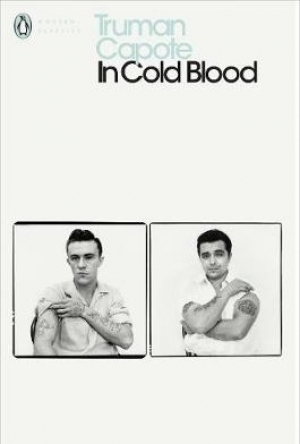
In the 'Introduction' of Capote's true crime novel In Cold Blood, American writer Bob Colacello states: "Capote was one of the first who dared to elevate journalism to the level of art. In Cold Blood is a work of great discipline and even greater restraint, a tale of fate, as spare and elegiac as a Greek tragedy, as rich in its breadth and depth as the classic French novels of Stendhal and Flaubert. 'We all have our souls and we all have facades,' Truman Capote told his friend Kay Meehan a year or so before he came upon the news that would inspire his masterpiece, 'and then there's something in between that makes us function as people. That's what I have the ability to communicate.' "
The novel, which was published in 1965, is an eyewitness account of Capote's visitation to the scene of the murder as well as meetings with the murderers and townspeople- - - a retelling of the crime and aftermath, mostly from the eyes of those affected, by hundreds of hours of interviews and interrogations. The novel, ultimately, was the end of Capote which led him to alcoholism that took his life in 1984.
Like most small-town murders, a tension between residences is created when a well-known and well-liked family of four is brutally murdered, and everyone begins to point a finger at the other: "But afterward the townspeople, theretofore sufficiently unfearful of each other to seldom trouble to lock their doors, found fantasy re-creating them over and again - - - those somber explosions that stimulated fires of mistrust in the glare of which many old neighbors viewed each other strangely, and as strangers." Fortunately, the KBI (Kansas Bureau of Investigation) didn't allow these accusations to keep them from finding the real killers.
" 'Deep down,' Perry continued, 'way, way rock bottom, I never thought I could do it. A thing like that.' " Perry Smith, one of the murderers, confesses to his cohort and partner-in-crime, Richard Hickock, about murdering the Clutter family. "Presently, he said, 'Know what it is that really bugs me? About that other thing[Clutter murder]? It's just I don't believe it- - - that anyone can get away with a thing like that.' And he suspected that Dick [Richard] didn't, either. For Dick was at least partly inhabited by Perry's mystical-moral apprehensions. Thus: 'Now, just shut up!' "
Capote writes clearly of the impact that Smith's and Hickock's past may have played leading up to the murders, mostly focusing on Smith's traumatic childhood. During the trial portion of the book, a psychologist is brought in to point out how the two murderers may not have been responsible for their actions due-to instances in their past - - - a horrific car crash in Hickock's that left him with a lop-sided face and black-out spells, as well as Smith being physically and emotional abused by his alcoholic mother and father. In exploring these traumas, In Cold Blood leaves the impression that these two men were merely ticking time bombs and that the Clutter family, unfortunately, had to pay for it.
The trauma shared by Hickock and Smith help to shape the two murderers into actual human beings rather than monsters throughout the novel: one scene, where we get to read a letter to Smith from his last living sister, readers get to see how he was perceived by his family members, as his sister goes on to degrade him to the maturity level of a child and that she is above him because of that- - -but she also reveals her jealousy of their father loving him more than he ever loved her (despite the excessive abuse). A close friend of Smith's tells him to be careful writing her anymore because he believes that: 'they can only serve to increase your already dangerous anti-social instincts.'
Part of the narrative, too, is the KBI agent in-charge of the Clutter murder, Alvin Dewey: One day while visiting Holcomb's well-known cafe (Hartman's) where Dewey is told he looks awful from weight loss and fatigue - - - Dewey recalls that he had spent: 'two wearying and wasted days trying to trace that phantom pair, the Mexicans sworn by Paul Helm to have visited Mr. Clutter on the eve of the murders.' And then he gets heckled by a local, who wants to know why he hasn't found the people responsible yet,but Dewey simply smiles and walks away, having put up with numerous people being angry that the murders were taking so long to solve.
But it wasn't footwork that got the pair arrested, it was an old cellmate who had given Hickock the idea that there was $10,000 in a safe at the Clutter farm that came forward: (read this on my blog because I had to cut it out since my review was too long!).
Meanwhile, readers also get to experience Hickock and Smith's troubles as they are on the run after the murders which is done masterfully by Capote. And although one would assume that the killers would stay as far away from Kansas as possible, the two end up back there, only to miraculously get out before the police can catch up with them. The pair decide to head to Florida, where, on December 19, 1959, an entire family was murdered in the exact same way as the Clutters; Hickock and Smith both adamantly denied that they were involved with it - - - and back in 2012- - - Hickock and Smith's bodies were exhumed to compare their DNA with a profile found on one of the victim's clothing: they were not a match. The case remains unsolved til this day.
" Presently he[Smith] came across an inner-page story that won his entire attention. It concerned murder, the slaying of a Florida family, a Mr. and Mrs. Clifford Walker, their four-year-old son, and their two-year-old daughter. Each of the victims, though not bound or gagged, had been shot through the head with a .22 weapon. The crime, clueless and apparently motiveless, had taken place Saturday night, December 19, at the Walker home, on a cattle-raising ranch not far from Tallahassee."
Not soon after the pair leave the Florida beaches, they are arrested on what they believe to be parole violations, but it's clear, when the arresting officers are KBI agents that they had been caught for the Clutter murders. " 'Listen good, Perry. Because Mr. Duntz[KBI agent] is going to tell you where you really were...' Midway in the questioning, after he'd[Smith] begun to notice the number of allusions to a particular November weekend, he'd nerved himself for what he knew was coming, yet when it did, when the big cowboy with the sleepy voice said, 'You were killing the Clutter family' - - - well, he'd damn near died. That's all. "
The confession that follows is the most intense part of the book, given in it's entirety, readers finally get to know what happened to the Clutter family that cold night in November, 1959. Smith reveals that he never had the intention to kill anyone in the home, and that when the safe hadn't been found, he had fully intended to leave, even without Hickock, but what kept him there was Hickock threatening to rape Nancy Clutter. Smith states that he hates people who can't control themselves sexually, and that he didn't allow his partner to touch her at all. He also reveals that he thought about killing Hickock afterwards,stating: " no witnesses."
Capote didn't write 'In Cold Blood' until after Hickock and Smith were executed. The amount of interviews, court room appearances, and even witnessing the executions of both murderers shines through in this novel. But the book has also brought about doubters; a handful of people have since come forward to state that Capote's masterpiece is either 'not the full story' or 'completely wrong.' Just as recent as 2017, a man came forward with a 'manuscript' of a book that Hickock was writing, that contained a different confession on how and why the murders took place- - - Hickock states in this unpublished manuscript that a man by the name 'Roberts' had hired him and Smith to kill the Clutters.
Whether or not you believe that Capote wrote the whole truth or some of the truth, this novel is flawless and beautiful. The writing is poetic and the flow of the story keeps moving, page after page, never stopping long enough to bore the reader. I highly recommend this book as a MUST READ for anyone who loves the True Crime genre.
The novel, which was published in 1965, is an eyewitness account of Capote's visitation to the scene of the murder as well as meetings with the murderers and townspeople- - - a retelling of the crime and aftermath, mostly from the eyes of those affected, by hundreds of hours of interviews and interrogations. The novel, ultimately, was the end of Capote which led him to alcoholism that took his life in 1984.
Like most small-town murders, a tension between residences is created when a well-known and well-liked family of four is brutally murdered, and everyone begins to point a finger at the other: "But afterward the townspeople, theretofore sufficiently unfearful of each other to seldom trouble to lock their doors, found fantasy re-creating them over and again - - - those somber explosions that stimulated fires of mistrust in the glare of which many old neighbors viewed each other strangely, and as strangers." Fortunately, the KBI (Kansas Bureau of Investigation) didn't allow these accusations to keep them from finding the real killers.
" 'Deep down,' Perry continued, 'way, way rock bottom, I never thought I could do it. A thing like that.' " Perry Smith, one of the murderers, confesses to his cohort and partner-in-crime, Richard Hickock, about murdering the Clutter family. "Presently, he said, 'Know what it is that really bugs me? About that other thing[Clutter murder]? It's just I don't believe it- - - that anyone can get away with a thing like that.' And he suspected that Dick [Richard] didn't, either. For Dick was at least partly inhabited by Perry's mystical-moral apprehensions. Thus: 'Now, just shut up!' "
Capote writes clearly of the impact that Smith's and Hickock's past may have played leading up to the murders, mostly focusing on Smith's traumatic childhood. During the trial portion of the book, a psychologist is brought in to point out how the two murderers may not have been responsible for their actions due-to instances in their past - - - a horrific car crash in Hickock's that left him with a lop-sided face and black-out spells, as well as Smith being physically and emotional abused by his alcoholic mother and father. In exploring these traumas, In Cold Blood leaves the impression that these two men were merely ticking time bombs and that the Clutter family, unfortunately, had to pay for it.
The trauma shared by Hickock and Smith help to shape the two murderers into actual human beings rather than monsters throughout the novel: one scene, where we get to read a letter to Smith from his last living sister, readers get to see how he was perceived by his family members, as his sister goes on to degrade him to the maturity level of a child and that she is above him because of that- - -but she also reveals her jealousy of their father loving him more than he ever loved her (despite the excessive abuse). A close friend of Smith's tells him to be careful writing her anymore because he believes that: 'they can only serve to increase your already dangerous anti-social instincts.'
Part of the narrative, too, is the KBI agent in-charge of the Clutter murder, Alvin Dewey: One day while visiting Holcomb's well-known cafe (Hartman's) where Dewey is told he looks awful from weight loss and fatigue - - - Dewey recalls that he had spent: 'two wearying and wasted days trying to trace that phantom pair, the Mexicans sworn by Paul Helm to have visited Mr. Clutter on the eve of the murders.' And then he gets heckled by a local, who wants to know why he hasn't found the people responsible yet,but Dewey simply smiles and walks away, having put up with numerous people being angry that the murders were taking so long to solve.
But it wasn't footwork that got the pair arrested, it was an old cellmate who had given Hickock the idea that there was $10,000 in a safe at the Clutter farm that came forward: (read this on my blog because I had to cut it out since my review was too long!).
Meanwhile, readers also get to experience Hickock and Smith's troubles as they are on the run after the murders which is done masterfully by Capote. And although one would assume that the killers would stay as far away from Kansas as possible, the two end up back there, only to miraculously get out before the police can catch up with them. The pair decide to head to Florida, where, on December 19, 1959, an entire family was murdered in the exact same way as the Clutters; Hickock and Smith both adamantly denied that they were involved with it - - - and back in 2012- - - Hickock and Smith's bodies were exhumed to compare their DNA with a profile found on one of the victim's clothing: they were not a match. The case remains unsolved til this day.
" Presently he[Smith] came across an inner-page story that won his entire attention. It concerned murder, the slaying of a Florida family, a Mr. and Mrs. Clifford Walker, their four-year-old son, and their two-year-old daughter. Each of the victims, though not bound or gagged, had been shot through the head with a .22 weapon. The crime, clueless and apparently motiveless, had taken place Saturday night, December 19, at the Walker home, on a cattle-raising ranch not far from Tallahassee."
Not soon after the pair leave the Florida beaches, they are arrested on what they believe to be parole violations, but it's clear, when the arresting officers are KBI agents that they had been caught for the Clutter murders. " 'Listen good, Perry. Because Mr. Duntz[KBI agent] is going to tell you where you really were...' Midway in the questioning, after he'd[Smith] begun to notice the number of allusions to a particular November weekend, he'd nerved himself for what he knew was coming, yet when it did, when the big cowboy with the sleepy voice said, 'You were killing the Clutter family' - - - well, he'd damn near died. That's all. "
The confession that follows is the most intense part of the book, given in it's entirety, readers finally get to know what happened to the Clutter family that cold night in November, 1959. Smith reveals that he never had the intention to kill anyone in the home, and that when the safe hadn't been found, he had fully intended to leave, even without Hickock, but what kept him there was Hickock threatening to rape Nancy Clutter. Smith states that he hates people who can't control themselves sexually, and that he didn't allow his partner to touch her at all. He also reveals that he thought about killing Hickock afterwards,stating: " no witnesses."
Capote didn't write 'In Cold Blood' until after Hickock and Smith were executed. The amount of interviews, court room appearances, and even witnessing the executions of both murderers shines through in this novel. But the book has also brought about doubters; a handful of people have since come forward to state that Capote's masterpiece is either 'not the full story' or 'completely wrong.' Just as recent as 2017, a man came forward with a 'manuscript' of a book that Hickock was writing, that contained a different confession on how and why the murders took place- - - Hickock states in this unpublished manuscript that a man by the name 'Roberts' had hired him and Smith to kill the Clutters.
Whether or not you believe that Capote wrote the whole truth or some of the truth, this novel is flawless and beautiful. The writing is poetic and the flow of the story keeps moving, page after page, never stopping long enough to bore the reader. I highly recommend this book as a MUST READ for anyone who loves the True Crime genre.
Daniel Boyd (1066 KP) rated The Last of Us Part II in Video Games
Jun 30, 2020 (Updated Jul 1, 2020)

Gameplay (2 more)
Graphics
Sound
I'm Not Mad, I'm Just Disappointed
Contains spoilers, click to show
It's been a while since I've written anything, but I couldn't let this one go by without saying anything about it.
The Last Of Us Part 2 is the biggest disappointment of 2020.
I finished the game a few days ago and have been letting it process in my mind in the hopes that it will somehow make more sense to me. So far that hasn't been the case.
Let me provide you with some context, I wanted to like this game more than anyone. The first Last Of Us is one of my favourite games of all time and because of the spectacular writing and performances in that first game, I was really excited to see what would happen to these characters. This was definitely one of my most anticipated releases in recent years and I'm genuinely in awe at how much of a let down it was, especially after the 10/10 reviews I had been reading leading up to the game's release.
Spoilers will follow from this point on as it's pretty difficult to discuss my reasoning for being let down by the game without getting in depth, so please tread carefully if you have yet to play through the game.
First off, I don't normally like to bring up my personal politics when discussing fictional media, but I do feel that it's necessary to mention that I am pro LGBTQ+ and none of my issues with this game stem from any sort of political bias that I may have.
The game opens slowly, juxtaposing the intense opening of the first game. However these slow opening few hours really allow you to drink in the breathtaking visuals and fantastic sound design. These elements really help to sell the cinematic nature of the game, along with consistently stellar performances.
Then we are shown the main conflict that will propel the story for the sequel. Joel is unceremoniosly murdered by Abby, a new character that we know nothing about at this point.
Now I don't have a problem with main characters being killed off in a story, in fact as a Tarantino fan, I relish it when it's done properly. The problem with Joel's death is the way that it was executed. First off, Joel and Tommy would never in a million years have blindly trusted this random faction that they've just bumped into enough to give them their names so quickly. They've both survived 25 years in the apocalypse and yet the writers still expect you to believe that they would be this naïve and stupid. Then, there's the fact that this is how they choose to introduce this new group that you are later expected to sympathize with and this character that they will later force you to play as for half the game. Why would anyone who is a fan of this world and these characters want to play and learn about this random ruthless killer?
Now, what you might be asking is "aren't Joel and Ellie ruthless killers at this point?" And you would be right, they are. However the point is that we were already invested in these characters before we seen them ruthlessly murdering infected and humans alike and therefore are able to put it down to them having to do what they had to in order to survive. With Abby you are introduced to her killing a beloved character from the first game for the sake of pure shock value.
The first game came out during an oversaturation period of zombie stories across media and yet because of it's stellar writing, it managed to stand out from the crowd and actually become one of the most unique games of the last generation in terms of the story it told. The story in this game feels so generic by comparison. I remember watching interviews with Neil Druckman in the lead up to the game's release where he would talk about how the main hurdle of writing this game was justifying it's existence after the first one ended so well. Really? You had seven years and another generic revenge plot was the best thing that you could come up with?
Another highlight from the first game was the fleshed out side characters that all felt deep and like they really existed in the world. Characters like Tess, Bill and Marlene all naturally fitted into the plot and felt necessary to the overall story being told. The same cannot be said for the side characters in this game. I have already mentioned how it is made impossible to sympathize with Abby and her crew after seeing what they did to Joel. There are two other new characters introduced called Yara and Lev. They are siblings, which put me in mind of Henry and Sam from the first game, but where Henry and Sam felt layered and genuine, Yara and Lev feel shallow and shoehorned in to give Abby's plotline some narrative weight.
Then there is the strange pacing of the story. I feel like I must reiterate, they introduce a character that murders the beloved protagonist from the first game and later expect you to sympathize with her. Then there is the fact that you play as Ellie for the next 8 hours or so before they present you with a shocking cliffhanger, only to then force you to play as Abby for the next 10 hours. Not only are they making you play as the character that murdered Joel and Jessie in cold blood, but every extra hour that they unsuccessfully attempt to make you feel sorry for Abby is another hour before you can get back to see how the cliffhanger, (that was introduced 10 hours ago,) is resolved. And then, they bafflingly make you fight Ellie while playing as Abby. Why would the game expect me to want to hurt this character that I care about as this brand new random stranger?
You are then eventually given control back as Ellie and the game lulls you into a false sense of thinking that you are finally done playing as Abby. Then Ellie makes the totally nonsensical decision to abandon a nice, cushty, quiet farm life that she's carved out for herself, to go after Abby yet again.
After that, you guessed it! You are forced to play as Abby yet again. Thankfully it's only briefly as we then at long last get to properly play as Ellie again. Not sure if you remember her at this point, she's the one that's in all of the trailers and posters and on the cover of the damn game?
Then we get what is probably the most anticlimactic ending in the history of gaming. Ellie lets Abby go. After Abby killed Joel and Jessie and crippled Tommy and after Ellie murdered all of Abby's friends and after Ellie abandoned her girlfriend and step-son and had her fingers bitten off, she's just like, "nah fam, I'm good."
I'm sorry, what?
You are going to break your promise to Tommy and let the person that murdered your father figure get away? Why?
If getting your revenge wasn't worth it, you should have really realized that back on the farm when you were surrounded by people you love and a chance at a family life. If you chose to leave that behind you must be committed enough to see it through, otherwise it is all for nothing. There is subverting audience expectations and then there is having your characters make nonsensical decisions and I feel like TLOU2 was full of the latter.
On a positive note, the gameplay is extremely fun and satisfying. Every blow lands with more force and every bullet seems to strike even harder than in the first game. It does get a bit repetitive after a while and the actual function of taking out a group of enemies hasn't evolved a great deal since the first game, but I still really enjoyed it. The upgrading and crafting systems have also been fleshed out. This, along with the immaculate graphical presentation, tight, fluid animations, brilliant audio and expectedly phenomenal performances make for something with so much potential, with only the writing and direction letting it down. Unfortunately, writing and directing are both pretty essential in a story driven game.
Before I summarise, I'd like to highlight that I am not against stories that explore the moral grey area and don't have clear heroes and villains. For example, Metal Gear Solid is my favourite franchise in gaming and the whole point of that series is to show that there is no black and white, but we all do things for our own reasons. A good story should be able to make you see the things from the "villain's" point of view without being like, "look see what you did to them? That is why they are the way they are! Look see, she is a good person because she plays fetch with dogs!" In TLOU2 it all just feels so forced and unnatural. A good storyteller should show a character's motivations and then show their actions and leave it up to audience to decide if it's justified, instead of strictly saying, "this character is 100% justified in the heinous act that you just seen her commit, now you must be on her side!"
I think that's all that I've got to say and I guess at the very least, this game has got people talking. You cannot accuse it of playing it safe, but there are a ton of different ways that the plot could have went that probably would have been a lot more satisfying for fans of the series like myself. 6/10
The Last Of Us Part 2 is the biggest disappointment of 2020.
I finished the game a few days ago and have been letting it process in my mind in the hopes that it will somehow make more sense to me. So far that hasn't been the case.
Let me provide you with some context, I wanted to like this game more than anyone. The first Last Of Us is one of my favourite games of all time and because of the spectacular writing and performances in that first game, I was really excited to see what would happen to these characters. This was definitely one of my most anticipated releases in recent years and I'm genuinely in awe at how much of a let down it was, especially after the 10/10 reviews I had been reading leading up to the game's release.
Spoilers will follow from this point on as it's pretty difficult to discuss my reasoning for being let down by the game without getting in depth, so please tread carefully if you have yet to play through the game.
First off, I don't normally like to bring up my personal politics when discussing fictional media, but I do feel that it's necessary to mention that I am pro LGBTQ+ and none of my issues with this game stem from any sort of political bias that I may have.
The game opens slowly, juxtaposing the intense opening of the first game. However these slow opening few hours really allow you to drink in the breathtaking visuals and fantastic sound design. These elements really help to sell the cinematic nature of the game, along with consistently stellar performances.
Then we are shown the main conflict that will propel the story for the sequel. Joel is unceremoniosly murdered by Abby, a new character that we know nothing about at this point.
Now I don't have a problem with main characters being killed off in a story, in fact as a Tarantino fan, I relish it when it's done properly. The problem with Joel's death is the way that it was executed. First off, Joel and Tommy would never in a million years have blindly trusted this random faction that they've just bumped into enough to give them their names so quickly. They've both survived 25 years in the apocalypse and yet the writers still expect you to believe that they would be this naïve and stupid. Then, there's the fact that this is how they choose to introduce this new group that you are later expected to sympathize with and this character that they will later force you to play as for half the game. Why would anyone who is a fan of this world and these characters want to play and learn about this random ruthless killer?
Now, what you might be asking is "aren't Joel and Ellie ruthless killers at this point?" And you would be right, they are. However the point is that we were already invested in these characters before we seen them ruthlessly murdering infected and humans alike and therefore are able to put it down to them having to do what they had to in order to survive. With Abby you are introduced to her killing a beloved character from the first game for the sake of pure shock value.
The first game came out during an oversaturation period of zombie stories across media and yet because of it's stellar writing, it managed to stand out from the crowd and actually become one of the most unique games of the last generation in terms of the story it told. The story in this game feels so generic by comparison. I remember watching interviews with Neil Druckman in the lead up to the game's release where he would talk about how the main hurdle of writing this game was justifying it's existence after the first one ended so well. Really? You had seven years and another generic revenge plot was the best thing that you could come up with?
Another highlight from the first game was the fleshed out side characters that all felt deep and like they really existed in the world. Characters like Tess, Bill and Marlene all naturally fitted into the plot and felt necessary to the overall story being told. The same cannot be said for the side characters in this game. I have already mentioned how it is made impossible to sympathize with Abby and her crew after seeing what they did to Joel. There are two other new characters introduced called Yara and Lev. They are siblings, which put me in mind of Henry and Sam from the first game, but where Henry and Sam felt layered and genuine, Yara and Lev feel shallow and shoehorned in to give Abby's plotline some narrative weight.
Then there is the strange pacing of the story. I feel like I must reiterate, they introduce a character that murders the beloved protagonist from the first game and later expect you to sympathize with her. Then there is the fact that you play as Ellie for the next 8 hours or so before they present you with a shocking cliffhanger, only to then force you to play as Abby for the next 10 hours. Not only are they making you play as the character that murdered Joel and Jessie in cold blood, but every extra hour that they unsuccessfully attempt to make you feel sorry for Abby is another hour before you can get back to see how the cliffhanger, (that was introduced 10 hours ago,) is resolved. And then, they bafflingly make you fight Ellie while playing as Abby. Why would the game expect me to want to hurt this character that I care about as this brand new random stranger?
You are then eventually given control back as Ellie and the game lulls you into a false sense of thinking that you are finally done playing as Abby. Then Ellie makes the totally nonsensical decision to abandon a nice, cushty, quiet farm life that she's carved out for herself, to go after Abby yet again.
After that, you guessed it! You are forced to play as Abby yet again. Thankfully it's only briefly as we then at long last get to properly play as Ellie again. Not sure if you remember her at this point, she's the one that's in all of the trailers and posters and on the cover of the damn game?
Then we get what is probably the most anticlimactic ending in the history of gaming. Ellie lets Abby go. After Abby killed Joel and Jessie and crippled Tommy and after Ellie murdered all of Abby's friends and after Ellie abandoned her girlfriend and step-son and had her fingers bitten off, she's just like, "nah fam, I'm good."
I'm sorry, what?
You are going to break your promise to Tommy and let the person that murdered your father figure get away? Why?
If getting your revenge wasn't worth it, you should have really realized that back on the farm when you were surrounded by people you love and a chance at a family life. If you chose to leave that behind you must be committed enough to see it through, otherwise it is all for nothing. There is subverting audience expectations and then there is having your characters make nonsensical decisions and I feel like TLOU2 was full of the latter.
On a positive note, the gameplay is extremely fun and satisfying. Every blow lands with more force and every bullet seems to strike even harder than in the first game. It does get a bit repetitive after a while and the actual function of taking out a group of enemies hasn't evolved a great deal since the first game, but I still really enjoyed it. The upgrading and crafting systems have also been fleshed out. This, along with the immaculate graphical presentation, tight, fluid animations, brilliant audio and expectedly phenomenal performances make for something with so much potential, with only the writing and direction letting it down. Unfortunately, writing and directing are both pretty essential in a story driven game.
Before I summarise, I'd like to highlight that I am not against stories that explore the moral grey area and don't have clear heroes and villains. For example, Metal Gear Solid is my favourite franchise in gaming and the whole point of that series is to show that there is no black and white, but we all do things for our own reasons. A good story should be able to make you see the things from the "villain's" point of view without being like, "look see what you did to them? That is why they are the way they are! Look see, she is a good person because she plays fetch with dogs!" In TLOU2 it all just feels so forced and unnatural. A good storyteller should show a character's motivations and then show their actions and leave it up to audience to decide if it's justified, instead of strictly saying, "this character is 100% justified in the heinous act that you just seen her commit, now you must be on her side!"
I think that's all that I've got to say and I guess at the very least, this game has got people talking. You cannot accuse it of playing it safe, but there are a ton of different ways that the plot could have went that probably would have been a lot more satisfying for fans of the series like myself. 6/10
Mandy and G.D. Burkhead (26 KP) rated The Grey Bastards in Books
May 20, 2018
Shelf Life – The Grey Bastards Exemplifies Grimdark Fantasy at Its Damn Finest
Contains spoilers, click to show
The Grey Bastards is a fun, foul-mouthed read. If you’re turned off by bad language, steamy sex, or a good plot with plenty of action and twists, then this book isn’t for you. The Grey Bastards falls into the fantasy sub-genre known as grimdark. Where high fantasy has your Tolkien beautiful and noble elves, dwarves, humans, and wizards with epic battles between good and evil, grimdark takes all of that and covers it in shit, pus, and blood. Notice how in high fantasy nobody ever takes a piss or fucks? In grimdark, everyone does.
But don’t be fooled into thinking this book will be any less intelligent, epic, or heartfelt for it. The Grey Bastards is all of that and more. The novel follows Jackal, a half-breed orc living in the Lot Lands, the barren desert wasteland of Hispartha. He is a Grey Bastard, one of many half-orc hoofs, each protecting its own small town in the Lots. Members of a hoof are elite warriors that ride out on their Barbarians—giant warthogs—and slaughter invading bands of orcs.
Hispartha is a vibrant world, with a mix of fantastical species (orcs, half-orcs, elves, humans, halflings, and centaurs) with unique cultures and religions. Hispartha itself takes influences from Reconquista Spain, which is especially noticeable in the nomenclature, geography, and architecture.
The primarily atheistic half-orcs recently won their freedom from slavery at the hands of humans. Humans treat the half-orcs like second-class citizens, but tolerate them because of their strength, using them as a shield from the orcs. The elves are beautiful, reclusive, and probably the most cliché; there is one important elf character, but for the most part, we don’t get a good look into their culture in the first book. The centaurs worship Romanesque deities and go on crazed, Bacchanalian killing sprees during the blood moon.
Besides the half-orcs, the halflings are perhaps the most interesting. I still have a hard time visualizing them, trying to figure out if they are thin, pixie-like creatures or more stocky like dwarves. Their small stature and black skin makes me think of pygmies. They worship a god they expect will reincarnate someday, (view spoiler)
One thing that has always annoyed me about fantasy is that many authors feel that the characters of their world, being pre-industrial and thus “medieval,” must all be white, straight, Christian (or proto-Christian), cisgender males. If a woman appears at all is to act as the damsel, prize, or, if she’s lucky, a mystical enchantress to guide the heroes or provide a maguffin. It has come to the point in which this has become a tired and accepted baseline for fantasy. I don’t necessarily think that these fantasy authors are intentionally trying to be uninclusive, so much as they just seem to forget that other groups of people can exist in fantasy thanks to its fathers, Tolkien and Lewis.
But enough with my rant, the purpose of which is to highlight why I am often drawn to grimdark fantasy: at the very least I know that women, people of color, lgbt people, and other religions will be present, even if they are often victimized. This is because grimdark fantasy honestly depicts the horrors of rape, war, murder, slavery, and racism (or rather, speciesism in most cases) and has heroes and villains that are morally grey.
However, many authors describe these atrocities and then leave it at that, assuming that simply depicting them is enough to make a book mature and meaningful. They often fail to make any sort of statement on evil, and thus can seem to be, at best, blindly accepting it and, at worst, glorifying it (this often happens in the cases of magnificent bastard characters, who are absolute monsters but are so charming you almost respect or like them).
Jonathan French, however, does not fall short of the mark as many authors do, and for two main reasons: humor and humanity.
Let’s start with the humor. This book is hilarious. I mean in the I literally laughed out loud while reading it way. Sure, the jokes are often crass, but I have a dirty mind, so inappropriate humor is my favorite kind. The dialogue is especially top-notch, and the interactions between Jackal and his friends Fetching and Oats feel genuine, full of in-jokes, insults, and sexually-charged humor, all of which are exactly how I interact with my own close friends. And every major character in this book is so damn witty that I’m honestly jealous of them. If I could be quick enough to make even one of their zingers at the right time in a conversation, I would feel proud of myself for the rest of the day.
Humor is necessary to prevent any grimdark fantasy from becoming too over-the-top or depressing. And honestly, humor is needed most when the world is a dark and frightening place. But too much humor could accidentally downplay the point of grimdark: the brutally honest depiction of the atrocities that people are capable of.
And this is where it is important to have an element of humanity. By this I mean that the “good guys” must make some action or statement on those atrocities. Too often I read or watch hardened badass characters with no emotion who can watch a person get tortured and killed without flinching (maybe even do it themselves) and who never stop to question the nature of their society (even as part of their character growth), and I have difficulty finding them at all relatable or even the least bit interesting.
Now, often for this type of character, he or she is dead inside as a coping mechanism and part of their character arc is learning to allow themselves to feel their repressed emotions: heartbreak, anger, fear, etc. This can be done very well (see The Hunger Games for a great example—dystopian scifi and grimdark fantasy have very similar undertones). But most times it just ends up falling flat.
But Jackal already starts out with more personality than most grimdark protagonists. He is a humorous and light-hearted person. Sure, he lives in a desert wasteland, his race is entirely created by rape, he’s treated as a second-class citizen, and his life and the lives of those around him are in constant danger of rape and/or murder by invading orcs or blood-crazed centaurs. But despite all of that, he still has a sense of humor, people he loves, a community, ambitions, moral code, and all of the other things that these protagonists are often lacking.
Don’t get me wrong, he can be an asshole, and he’s often acts rashly before he thinks. But the scene that really stuck with me the most was [when Jackal and the wizard Crafty come across an unconscious elf sex-slave. I was expecting him to say something along the lines of “There’s nothing we can do for her, we have to save ourselves” or “This isn’t any of our business” or “It would be best to just put her out of her mercy.” These are the typical lines that a grimdark protagonist might utter while their companion—accused of being a bleeding heart—frees the slave. But this was not the case. Jackal and Crafty both immediately set out to free the girl and steal her away from her owner, despite the danger to themselves. And when he comes across an entire castle-full of these women, Jackal again sets about freeing them without a moment’s hesitation. (hide spoiler)]
And it’s no surprise that Jackal has a serious problem with rape. As I’ve mentioned before, half-orcs are entirely the product of roving bands of orcs raping human, elven, or even half-orc women. [When Jackal learns that Starling, the elf slave he rescued, is pregnant with a half-orc baby, he is not only furious with the orcs that gang-raped her, but also disturbed by the fact that elven society shuns any of their women who have been raped, and that these victims often end up taking their own lives rather than give birth to an impure half-elf. (hide spoiler)]
Furthermore, Jackal, unlike many people in Hispartha, does not buy into misogyny or sexism. His best friend Fetching is the first female half-orc to have joined a group of riders. Not only does Jackal respect Fetching, he understands the emotional turmoil that she is dealing with being the first female rider and how she overcompensates as a result to earn the respect of the other men.
While there is quite a bit of speciesism (pretty much none of the species get along with one another), the inhabitants of Hispartha come in every skin color and nobody gives a damn. Furthermore, sexuality is primarily treated as each person’s individual preference and nobody else’s business. While characters may make jokes about acting “backy” (gay), these are made in good humor between friends, and nobody gets particularly offended by them. Fetching is herself openly bisexual (though she seems to suppress her heterosexual desires more than her homosexual ones out of that same need to be “one of the boys”), and Oats and Jackal are one of my favorite bromantic pairings.
Grimdark fantasy can often be depressing to read. But Jonathan French does an excellent job of infusing hope into his narrative. The story actually has a happier ending than I was expecting. [I was especially pleased when Jackal chooses Fetching to be the new leader of the hoof (she is voted in unanimously by the other riders). I find it incredibly annoying in books and movies when revolutionaries/usurpers decide to appoint themselves leaders, as the former does not qualify you for the latter. Part of Jackal’s arc is realizing that he is not meant to lead the hoof like he’d once desired. (hide spoiler)]
For the sequel, The True Bastards, I’m hoping to see [if a cure can be found for the thrice-blood child now infected with plague, how Fetching is doing leading the hoof, and what the mysterious Starling is up to (I don’t buy for a second that she’s killed herself). And of course, I fully expect that Jackal is going to have to fulfill his empty promise to the halfling’s resurrected god, Belico.
But don’t be fooled into thinking this book will be any less intelligent, epic, or heartfelt for it. The Grey Bastards is all of that and more. The novel follows Jackal, a half-breed orc living in the Lot Lands, the barren desert wasteland of Hispartha. He is a Grey Bastard, one of many half-orc hoofs, each protecting its own small town in the Lots. Members of a hoof are elite warriors that ride out on their Barbarians—giant warthogs—and slaughter invading bands of orcs.
Hispartha is a vibrant world, with a mix of fantastical species (orcs, half-orcs, elves, humans, halflings, and centaurs) with unique cultures and religions. Hispartha itself takes influences from Reconquista Spain, which is especially noticeable in the nomenclature, geography, and architecture.
The primarily atheistic half-orcs recently won their freedom from slavery at the hands of humans. Humans treat the half-orcs like second-class citizens, but tolerate them because of their strength, using them as a shield from the orcs. The elves are beautiful, reclusive, and probably the most cliché; there is one important elf character, but for the most part, we don’t get a good look into their culture in the first book. The centaurs worship Romanesque deities and go on crazed, Bacchanalian killing sprees during the blood moon.
Besides the half-orcs, the halflings are perhaps the most interesting. I still have a hard time visualizing them, trying to figure out if they are thin, pixie-like creatures or more stocky like dwarves. Their small stature and black skin makes me think of pygmies. They worship a god they expect will reincarnate someday, (view spoiler)
One thing that has always annoyed me about fantasy is that many authors feel that the characters of their world, being pre-industrial and thus “medieval,” must all be white, straight, Christian (or proto-Christian), cisgender males. If a woman appears at all is to act as the damsel, prize, or, if she’s lucky, a mystical enchantress to guide the heroes or provide a maguffin. It has come to the point in which this has become a tired and accepted baseline for fantasy. I don’t necessarily think that these fantasy authors are intentionally trying to be uninclusive, so much as they just seem to forget that other groups of people can exist in fantasy thanks to its fathers, Tolkien and Lewis.
But enough with my rant, the purpose of which is to highlight why I am often drawn to grimdark fantasy: at the very least I know that women, people of color, lgbt people, and other religions will be present, even if they are often victimized. This is because grimdark fantasy honestly depicts the horrors of rape, war, murder, slavery, and racism (or rather, speciesism in most cases) and has heroes and villains that are morally grey.
However, many authors describe these atrocities and then leave it at that, assuming that simply depicting them is enough to make a book mature and meaningful. They often fail to make any sort of statement on evil, and thus can seem to be, at best, blindly accepting it and, at worst, glorifying it (this often happens in the cases of magnificent bastard characters, who are absolute monsters but are so charming you almost respect or like them).
Jonathan French, however, does not fall short of the mark as many authors do, and for two main reasons: humor and humanity.
Let’s start with the humor. This book is hilarious. I mean in the I literally laughed out loud while reading it way. Sure, the jokes are often crass, but I have a dirty mind, so inappropriate humor is my favorite kind. The dialogue is especially top-notch, and the interactions between Jackal and his friends Fetching and Oats feel genuine, full of in-jokes, insults, and sexually-charged humor, all of which are exactly how I interact with my own close friends. And every major character in this book is so damn witty that I’m honestly jealous of them. If I could be quick enough to make even one of their zingers at the right time in a conversation, I would feel proud of myself for the rest of the day.
Humor is necessary to prevent any grimdark fantasy from becoming too over-the-top or depressing. And honestly, humor is needed most when the world is a dark and frightening place. But too much humor could accidentally downplay the point of grimdark: the brutally honest depiction of the atrocities that people are capable of.
And this is where it is important to have an element of humanity. By this I mean that the “good guys” must make some action or statement on those atrocities. Too often I read or watch hardened badass characters with no emotion who can watch a person get tortured and killed without flinching (maybe even do it themselves) and who never stop to question the nature of their society (even as part of their character growth), and I have difficulty finding them at all relatable or even the least bit interesting.
Now, often for this type of character, he or she is dead inside as a coping mechanism and part of their character arc is learning to allow themselves to feel their repressed emotions: heartbreak, anger, fear, etc. This can be done very well (see The Hunger Games for a great example—dystopian scifi and grimdark fantasy have very similar undertones). But most times it just ends up falling flat.
But Jackal already starts out with more personality than most grimdark protagonists. He is a humorous and light-hearted person. Sure, he lives in a desert wasteland, his race is entirely created by rape, he’s treated as a second-class citizen, and his life and the lives of those around him are in constant danger of rape and/or murder by invading orcs or blood-crazed centaurs. But despite all of that, he still has a sense of humor, people he loves, a community, ambitions, moral code, and all of the other things that these protagonists are often lacking.
Don’t get me wrong, he can be an asshole, and he’s often acts rashly before he thinks. But the scene that really stuck with me the most was [when Jackal and the wizard Crafty come across an unconscious elf sex-slave. I was expecting him to say something along the lines of “There’s nothing we can do for her, we have to save ourselves” or “This isn’t any of our business” or “It would be best to just put her out of her mercy.” These are the typical lines that a grimdark protagonist might utter while their companion—accused of being a bleeding heart—frees the slave. But this was not the case. Jackal and Crafty both immediately set out to free the girl and steal her away from her owner, despite the danger to themselves. And when he comes across an entire castle-full of these women, Jackal again sets about freeing them without a moment’s hesitation. (hide spoiler)]
And it’s no surprise that Jackal has a serious problem with rape. As I’ve mentioned before, half-orcs are entirely the product of roving bands of orcs raping human, elven, or even half-orc women. [When Jackal learns that Starling, the elf slave he rescued, is pregnant with a half-orc baby, he is not only furious with the orcs that gang-raped her, but also disturbed by the fact that elven society shuns any of their women who have been raped, and that these victims often end up taking their own lives rather than give birth to an impure half-elf. (hide spoiler)]
Furthermore, Jackal, unlike many people in Hispartha, does not buy into misogyny or sexism. His best friend Fetching is the first female half-orc to have joined a group of riders. Not only does Jackal respect Fetching, he understands the emotional turmoil that she is dealing with being the first female rider and how she overcompensates as a result to earn the respect of the other men.
While there is quite a bit of speciesism (pretty much none of the species get along with one another), the inhabitants of Hispartha come in every skin color and nobody gives a damn. Furthermore, sexuality is primarily treated as each person’s individual preference and nobody else’s business. While characters may make jokes about acting “backy” (gay), these are made in good humor between friends, and nobody gets particularly offended by them. Fetching is herself openly bisexual (though she seems to suppress her heterosexual desires more than her homosexual ones out of that same need to be “one of the boys”), and Oats and Jackal are one of my favorite bromantic pairings.
Grimdark fantasy can often be depressing to read. But Jonathan French does an excellent job of infusing hope into his narrative. The story actually has a happier ending than I was expecting. [I was especially pleased when Jackal chooses Fetching to be the new leader of the hoof (she is voted in unanimously by the other riders). I find it incredibly annoying in books and movies when revolutionaries/usurpers decide to appoint themselves leaders, as the former does not qualify you for the latter. Part of Jackal’s arc is realizing that he is not meant to lead the hoof like he’d once desired. (hide spoiler)]
For the sequel, The True Bastards, I’m hoping to see [if a cure can be found for the thrice-blood child now infected with plague, how Fetching is doing leading the hoof, and what the mysterious Starling is up to (I don’t buy for a second that she’s killed herself). And of course, I fully expect that Jackal is going to have to fulfill his empty promise to the halfling’s resurrected god, Belico.