
Search
Search results

News Break: Local & World News
News and Weather
App
Stay up-to-date on global and local news while saving time with the newly designed News Break app...

Luxy -#1 Millionaire Dating
Dating, Finance and Social Networking
1.0 Rate It
App
Luxy has been featured extensively on CNN, BBC, Business Insider, CNBC, ABC, The New York Times, The...

Darren (1599 KP) rated The Amazing Spider-Man 2 (2014) in Movies
Jun 20, 2019
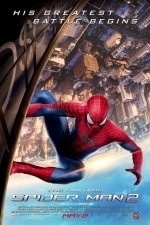


Story: This follows up from the first one so we have to remember unlike the Avengers and Dark Knight we are dealing with a teenage superhero. He has different problems like whether he wants a girlfriend or whether to go to college, you know the serious stuff. We have him putting out all the cheesy lines against the person he fights not taking anything seriously. While Peter is trying to figure out what his life holds next, the people against him start their own stories. We have the generic loner scientist who ends up having an accident, gaining powers and using them for evil, been there seen that in every Spider-man film. We also have the Harry Osborn who wants Spider-Man’s blood to cure his sickness and when he can’t have it he goes on a rampage against Spider-Man. It would be fair this is a slow moving film and it really is building up for the next chapter. (7/10)
Actor Review
Andrew Garfield: Spider-Man/Peter Parker while trying to figure out what to do with his life he carries on fighting crime, he has to decide whether to keep with his girlfriend when her father’s dying wish was to leave her so she couldn’t get caught up in trouble. He does ends up having to face the biggest battle of his life after his battles with Electro and Green Goblin. Good performance in a character that develops as the film unfolds. (8/10)
spide
Emma Stone: Gwen Stacy ambitious girlfriend of Peter, who wants to excel in her studies and gets that chance to but with Peter in her life she will always be in danger. Good supporting performance, but I always find relationships for superheroes only get in the way and annoy. (7/10)
emma
Jamie Foxx: Electro lonely scientist who has helped the city design a better power source. He feels like everyone is against him but when Spider-Man saves him he gets a boost of confidence. Just when things look good for Max he ends up having an accident at work and turning into Electro, who starts off just wanting help but when he feels betrayed by Spider-Man he wants to take out the web-slinger and the city. Good performance playing a very difficult character that really looks the part. (8/10)
eletrco
Dane DeHaan: Green Goblin/Harry Osborn an old friend of Peter who wants him to find Spider-Man so he can use his blood to cure his terminal illness. After both Peter and Spider-Man refuse for safety reason he finds out his company secretly has some stored away and he uses it and becomes the Green Goblin out to stop Spider-Man. Good performance from the always solid Dane. (8/10)
harry
Director Review: Marc Webb – Great direction creating a story that really is building to something bigger, creating some very memorable fight scenes and a villain in Electro like nothing we have seen before. (8/10)
Action: When the action happens it is all very good, with some great camera spinning shots of Spider-Man in battle. (8/10)
Superhero: A solid entry in the superhero genre. (8/10)
Settings: New York makes a great setting because without all the building Spider-Man couldn’t swing as much. (9/10)
Special Effects: Great special effects used throughout the film. (10/10)
Suggestion: This must be watch by all the superhero fans out there, it is creating a big picture without having to use separate films to add to one of franchise. (Superhero Fans Watch)
Best Part: Spider-Man battles Electro round two.
Worst Part: It does start slow, nearly an hour before we meet Electro.
Action Scene Of The Film: The final battles
Believability: No (0/10)
Chances of Tears: No (0/10)
Chances of Sequel: Has one planned
Post Credits Scene: No
Oscar Chances: No
Box Office: $708 Million
Budget: $200 Million
Runtime: 2 Hours 22 Minutes
Tagline: His greatest battle begins
Overall: Solid Addition to Spider-Man Franchise
https://moviesreview101.com/2014/09/01/the-amazing-spider-man-2-2014/
Actor Review
Andrew Garfield: Spider-Man/Peter Parker while trying to figure out what to do with his life he carries on fighting crime, he has to decide whether to keep with his girlfriend when her father’s dying wish was to leave her so she couldn’t get caught up in trouble. He does ends up having to face the biggest battle of his life after his battles with Electro and Green Goblin. Good performance in a character that develops as the film unfolds. (8/10)
spide
Emma Stone: Gwen Stacy ambitious girlfriend of Peter, who wants to excel in her studies and gets that chance to but with Peter in her life she will always be in danger. Good supporting performance, but I always find relationships for superheroes only get in the way and annoy. (7/10)
emma
Jamie Foxx: Electro lonely scientist who has helped the city design a better power source. He feels like everyone is against him but when Spider-Man saves him he gets a boost of confidence. Just when things look good for Max he ends up having an accident at work and turning into Electro, who starts off just wanting help but when he feels betrayed by Spider-Man he wants to take out the web-slinger and the city. Good performance playing a very difficult character that really looks the part. (8/10)
eletrco
Dane DeHaan: Green Goblin/Harry Osborn an old friend of Peter who wants him to find Spider-Man so he can use his blood to cure his terminal illness. After both Peter and Spider-Man refuse for safety reason he finds out his company secretly has some stored away and he uses it and becomes the Green Goblin out to stop Spider-Man. Good performance from the always solid Dane. (8/10)
harry
Director Review: Marc Webb – Great direction creating a story that really is building to something bigger, creating some very memorable fight scenes and a villain in Electro like nothing we have seen before. (8/10)
Action: When the action happens it is all very good, with some great camera spinning shots of Spider-Man in battle. (8/10)
Superhero: A solid entry in the superhero genre. (8/10)
Settings: New York makes a great setting because without all the building Spider-Man couldn’t swing as much. (9/10)
Special Effects: Great special effects used throughout the film. (10/10)
Suggestion: This must be watch by all the superhero fans out there, it is creating a big picture without having to use separate films to add to one of franchise. (Superhero Fans Watch)
Best Part: Spider-Man battles Electro round two.
Worst Part: It does start slow, nearly an hour before we meet Electro.
Action Scene Of The Film: The final battles
Believability: No (0/10)
Chances of Tears: No (0/10)
Chances of Sequel: Has one planned
Post Credits Scene: No
Oscar Chances: No
Box Office: $708 Million
Budget: $200 Million
Runtime: 2 Hours 22 Minutes
Tagline: His greatest battle begins
Overall: Solid Addition to Spider-Man Franchise
https://moviesreview101.com/2014/09/01/the-amazing-spider-man-2-2014/

SIMON - Malls, Mills & Premium Outlets Shopping
Shopping and Lifestyle
App
SIMON, NOW FOR YOUR iPHONE. A must-have smartphone app for every savvy shopper that visits one of...

Movie Metropolis (309 KP) rated The First Purge (2018) in Movies
Jun 10, 2019
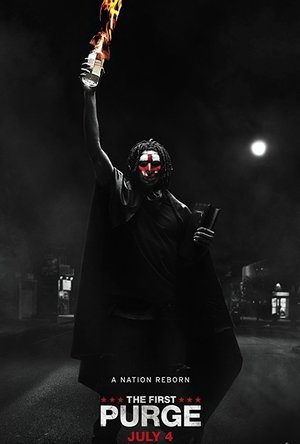


Yet another wasted opportunity
Yes! Get in! Finally, the producers over at Platinum Dunes and Blumhouse realised that what fans of the Purge series were wanting was a look at how the night of legalised crime came to be. It’s all we’ve been asking for since 2013 after all.
After three films of decent quality in which the second, Purge: Anarchy is the highlight, The First Purge promises to shake up the formula by introducing a prequel into the horror franchise. But does it do enough to stop the series from feeling stale or are we looking at yet another paint-by-numbers horror flick?
No. That’s the short answer anyway. Director Gerard McMurray falls into all the usual horror movie clichés with a film that is definitely Purge-like in its construction, but once again plays it all frustratingly safe.
To push the crime rate below one percent for the rest of the year, the New Founding Fathers of America test a sociological theory that vents aggression for one night in one isolated New York community. But when the violence of oppressors meets the rage of the others, the contagion will explode from the trial-city borders and spread across the nation.
The cast of characters in this instalment is possibly the most unlikeable of the bunch, apart from a few exceptions. Marisa Tomei is hideously underused as the experiment’s creator, Dr. May Updale, when in fact she should and could be the most interesting part of the movie. The rest of the cast are one-dimensional characters that you could cut and paste into any horror film of the last decade. Y’Ian Noel as Dmitri is probably the only one who leaves any lasting impression.
Subtlety has never been the series’ strong point. One of the leaders of the New Founding Fathers is called Donald T for heaven’s sake, but that was always part of its dark charm. It has never been afraid to show us an America that, for now at least, doesn’t feel that too far into the future but the political side-swiping in this instalment bashes us over the head with what feels like a brick. It’s so on the nose.
The premise has always been the best part, and the Achilles heel, of the series and so it continues with The First Purge. Fans waiting to get a really intricate look at how the night of crime came to be will be disappointed as we’re treated to barely 10 minutes of exposition before we’re slung head-first into the same killing-fest that the last three films descended into after their first acts.
This gets old quickly, even more so in this instalment as the repetitive jump scares come thick and fast with uninspiring camerawork, dreadful dialogue and lethargic kills. The use of contact lenses to create some striking neon visuals aren’t enough to lift anything in the film above average.
Thankfully, the final act in a dimly lit tower block shows the audience the type of film it could have been. Slickly shot and nicely styled, it’s a much-improved finale that is only let down by some truly dreadful CGI blood splatter. However, the use of strobe lighting is an inspired choice in this sequence as we follow two groups of people each trying to dispatch the other.
Unfortunately, this highlight isn’t enough to lift the rest of The First Purge above the mundane. Where the first in the series was a film testing the waters regarding its premise and the second improved on that ten-fold taking the action out onto the streets, this tries to use a hybrid of both but it comes across as stale as a ten day old loaf.
The pacing too is an issue. The first 20 minutes or so are excruciatingly slow as the film tries to set-up as many of its plot-points as possible. Now, 20 minutes might not sound too bad, but this is a 97 minute film – that’s a fifth of the time gone with nothing achieved.
If we must get a fifth film, and from the box-office figures, it bafflingly looks like we will, all we can do is hope they take the cheap jump scares and replace them with a thrilling look at the people who brought the purge to life in the first place. Until then, save your money and wait for the network premiere when it comes to television in a couple of years.
When the best part of your film is the purge announcement that has featured in every instalment, you know you’ve run into some trouble.
https://moviemetropolis.net/2018/07/12/the-first-purge-review-yet-another-wasted-opportunity/
After three films of decent quality in which the second, Purge: Anarchy is the highlight, The First Purge promises to shake up the formula by introducing a prequel into the horror franchise. But does it do enough to stop the series from feeling stale or are we looking at yet another paint-by-numbers horror flick?
No. That’s the short answer anyway. Director Gerard McMurray falls into all the usual horror movie clichés with a film that is definitely Purge-like in its construction, but once again plays it all frustratingly safe.
To push the crime rate below one percent for the rest of the year, the New Founding Fathers of America test a sociological theory that vents aggression for one night in one isolated New York community. But when the violence of oppressors meets the rage of the others, the contagion will explode from the trial-city borders and spread across the nation.
The cast of characters in this instalment is possibly the most unlikeable of the bunch, apart from a few exceptions. Marisa Tomei is hideously underused as the experiment’s creator, Dr. May Updale, when in fact she should and could be the most interesting part of the movie. The rest of the cast are one-dimensional characters that you could cut and paste into any horror film of the last decade. Y’Ian Noel as Dmitri is probably the only one who leaves any lasting impression.
Subtlety has never been the series’ strong point. One of the leaders of the New Founding Fathers is called Donald T for heaven’s sake, but that was always part of its dark charm. It has never been afraid to show us an America that, for now at least, doesn’t feel that too far into the future but the political side-swiping in this instalment bashes us over the head with what feels like a brick. It’s so on the nose.
The premise has always been the best part, and the Achilles heel, of the series and so it continues with The First Purge. Fans waiting to get a really intricate look at how the night of crime came to be will be disappointed as we’re treated to barely 10 minutes of exposition before we’re slung head-first into the same killing-fest that the last three films descended into after their first acts.
This gets old quickly, even more so in this instalment as the repetitive jump scares come thick and fast with uninspiring camerawork, dreadful dialogue and lethargic kills. The use of contact lenses to create some striking neon visuals aren’t enough to lift anything in the film above average.
Thankfully, the final act in a dimly lit tower block shows the audience the type of film it could have been. Slickly shot and nicely styled, it’s a much-improved finale that is only let down by some truly dreadful CGI blood splatter. However, the use of strobe lighting is an inspired choice in this sequence as we follow two groups of people each trying to dispatch the other.
Unfortunately, this highlight isn’t enough to lift the rest of The First Purge above the mundane. Where the first in the series was a film testing the waters regarding its premise and the second improved on that ten-fold taking the action out onto the streets, this tries to use a hybrid of both but it comes across as stale as a ten day old loaf.
The pacing too is an issue. The first 20 minutes or so are excruciatingly slow as the film tries to set-up as many of its plot-points as possible. Now, 20 minutes might not sound too bad, but this is a 97 minute film – that’s a fifth of the time gone with nothing achieved.
If we must get a fifth film, and from the box-office figures, it bafflingly looks like we will, all we can do is hope they take the cheap jump scares and replace them with a thrilling look at the people who brought the purge to life in the first place. Until then, save your money and wait for the network premiere when it comes to television in a couple of years.
When the best part of your film is the purge announcement that has featured in every instalment, you know you’ve run into some trouble.
https://moviemetropolis.net/2018/07/12/the-first-purge-review-yet-another-wasted-opportunity/

Gareth von Kallenbach (980 KP) rated Watchmen (2009) in Movies
Aug 14, 2019
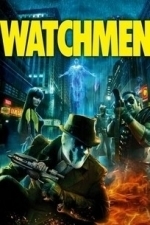

In an alternate 1985, where Nixon is president, The U.S. won the Vietnam War, and costumed heroes have been banned by an act of the Senate, a superhero is killed. The death of the mercurial entity known as The Comedian (Jeffrey Dean Morgan) sets a string of events into motion that will soon see the world poised on the edge of nuclear annihilation, and the few remaining heroes locked in a life or death race against time to save the world. In the gritty and compelling new movie “Watchmen” by Director Zack Snyder, a clever blend of film noir and gumshoe style films of old combined with action and adventure as well as a deep examination of human frailties to create a film like no other.
No sooner has the death of the Comedian hit the streets (literally), when the edgy vigilante Rorschach (Jackie Earle Haley), begins to suspect that there is a larger and far more sinister plot in effect, one that has targeted the few remaining costumed avengers of New York City. Rorschach’s theory is disbelieved by his former associate Dan (Patrick Wilson), who prowled the streets as Night Owl and is now content to keep to himself, with his days of costumed glory behind him. He keeps his social circle limited to the first Night Owl and visiting with Laurie Jupiter ( Malin Akerman), and her husband, Dr. Manhattan (Billy Crudup).
With his concerns being dismissed, Rorschach is left to do the legwork on the mystery which soon shifts into high gear when he is framed for a murder he actually did not commit and an attempt is made on the life of the other former Watchmen, Ozymandias (Matthew Goode). With Rorschach in prison and surrounded by enemies, Dr. Manhattan, the all powerful and blue skinned being, is forced to take refuge on Mars after Laurie leaves him and a series of accusations are levied against him at a press conference .
It soon becomes clear to all that the death of The Comedian was not a random act of violence or a simple act of revenge, but rather the first salvo in a war against costumed heroes. With the former team in chaos, Laurie to take up residence with Dan, who has long held a torch for her, to defy the government order and suit up again. After saving a group of people from a fire, Laurie and Dan find the passion and purpose that has been missing from their post-hero lives and passionately unite and set out to free Rorschach and get to the bottom of the conspiracy before it is to late.
The film is an amazing mix of comic book action and mystery that includes a suprising amount of mature material that examines everything from humanity’s ultimate destiny to the inner psyche of tortured and flawed individuals. The characters all have their flaws and traumas and compensate by donning masks and taking on new personas. The deeply troubled Rorschach is filled in by some horrific and disturbing flashbacks that show how he became the disturbed and deeply dangerous crusader for justice that he is, so extreme in his measures that he is wanted by the police for his actions. Dan and Laurie try to move on from their past, but find that they are more comfortable in their costumed personas than they are in their day-to-day lives. Dr. Manhattan is perhaps the most dysfunctional of all as he has shut himself off from his wife, humanity, and joy. He has evolved beyond caring for anything but his experiments.
Snyder keeps the nearly three hour film moving at a brisk pace and deftly captures the look and tone of the graphic novel on which the film is based. The opening segment that shows alternate versions of great moments in history is amazing, as is the well choreographed action sequences. Despite being a superhero film, “Watchmen” is a superb mystery and drama that is loaded with interesting characters and clever social commentary. The cast is very strong, and Haley is remarkable as Rorschach. He is utterly captivating whenever he is on the screen and has crafted a true modern anti-hero for the masses.
Some may find the graphic violence and sex in the film a bit extreme, but in order to fully capture the duality of the characters and the dark world that they dwell in, it was in many ways restrained from what is actually implied by the source material. “Watchmen”, is a true marvel and is one of the most entertaining, diverse, and original action films in memory.
No sooner has the death of the Comedian hit the streets (literally), when the edgy vigilante Rorschach (Jackie Earle Haley), begins to suspect that there is a larger and far more sinister plot in effect, one that has targeted the few remaining costumed avengers of New York City. Rorschach’s theory is disbelieved by his former associate Dan (Patrick Wilson), who prowled the streets as Night Owl and is now content to keep to himself, with his days of costumed glory behind him. He keeps his social circle limited to the first Night Owl and visiting with Laurie Jupiter ( Malin Akerman), and her husband, Dr. Manhattan (Billy Crudup).
With his concerns being dismissed, Rorschach is left to do the legwork on the mystery which soon shifts into high gear when he is framed for a murder he actually did not commit and an attempt is made on the life of the other former Watchmen, Ozymandias (Matthew Goode). With Rorschach in prison and surrounded by enemies, Dr. Manhattan, the all powerful and blue skinned being, is forced to take refuge on Mars after Laurie leaves him and a series of accusations are levied against him at a press conference .
It soon becomes clear to all that the death of The Comedian was not a random act of violence or a simple act of revenge, but rather the first salvo in a war against costumed heroes. With the former team in chaos, Laurie to take up residence with Dan, who has long held a torch for her, to defy the government order and suit up again. After saving a group of people from a fire, Laurie and Dan find the passion and purpose that has been missing from their post-hero lives and passionately unite and set out to free Rorschach and get to the bottom of the conspiracy before it is to late.
The film is an amazing mix of comic book action and mystery that includes a suprising amount of mature material that examines everything from humanity’s ultimate destiny to the inner psyche of tortured and flawed individuals. The characters all have their flaws and traumas and compensate by donning masks and taking on new personas. The deeply troubled Rorschach is filled in by some horrific and disturbing flashbacks that show how he became the disturbed and deeply dangerous crusader for justice that he is, so extreme in his measures that he is wanted by the police for his actions. Dan and Laurie try to move on from their past, but find that they are more comfortable in their costumed personas than they are in their day-to-day lives. Dr. Manhattan is perhaps the most dysfunctional of all as he has shut himself off from his wife, humanity, and joy. He has evolved beyond caring for anything but his experiments.
Snyder keeps the nearly three hour film moving at a brisk pace and deftly captures the look and tone of the graphic novel on which the film is based. The opening segment that shows alternate versions of great moments in history is amazing, as is the well choreographed action sequences. Despite being a superhero film, “Watchmen” is a superb mystery and drama that is loaded with interesting characters and clever social commentary. The cast is very strong, and Haley is remarkable as Rorschach. He is utterly captivating whenever he is on the screen and has crafted a true modern anti-hero for the masses.
Some may find the graphic violence and sex in the film a bit extreme, but in order to fully capture the duality of the characters and the dark world that they dwell in, it was in many ways restrained from what is actually implied by the source material. “Watchmen”, is a true marvel and is one of the most entertaining, diverse, and original action films in memory.
Movie Metropolis (309 KP) rated Pixels (2015) in Movies
Jun 11, 2019

Where's the off switch
When was the last time you went to the cinema to see something original? It’s probably a question a lot of film fans ask themselves and in the last few years, perhaps proved rather difficult to answer.
However, with 2015 being the year of the reboot and the sequel, it’s nice to see a film like Pixels showcasing something completely different. But is it worth a go?
Directed by Chris Columbus of Mrs. Doubtfire and Harry Potter fame, Pixels stars Adam Sandler, Josh Gad, Peter Dinklage and a woefully miscast Kevin James in a film that doesn’t do enough with its fascinating premise, descending into painfully unfunny slapstick instead.
Sandler stars as Sam Brenner, a video game lover who, after a brief scene showing his history, is tasked with saving the world as aliens infiltrate Earth and begin to attack using some of our most-loved classic arcade games.
Alongside him for the ride are fellow video-game champs Josh Gad (Frozen), Peter Dinklage (X:Men – Days of Future Past) and Kevin James (Paul Blart: Mall Cop). The latter also happens to play the US President.
Unfortunately, none of the cast are particularly likeable with the usually on-point James playing one of the worst Presidential roles ever put to film. He is simply unbelievable as the leader of the United States and provides Pixels with some of its more cringe-worthy moments.
Once the film gets going, there are a few standout moments including a Pac-Man rampage through New York City but this has been so heavily marketed in the trailers that there is practically no suspense or joy in watching it unfold.
The finale is also very good, with a Donkey Kong showdown rendered in some stunning CGI and ridiculously clever set building and it’s great fun seeing so many classic arcade games being brought to life on the big screen.
Pac-Man, Q*Bert , Centipede and Donkey Kong are just a few to appear and look glorious with their 21st Century upgrades. Q*Bert in particular is a little cutie and is a major character throughout the last third of the film.
It’s unfortunate then that Chris Columbus’ usually reliable direction takes such a knock here. There’s none of the clever generation-bending humour of Mrs. Doubtfire or the laugh-out-loud slapstick of Home Alone, and the visual style he brought to Harry Potter is nowhere to be seen. In the end, Pixels just comes across as a brilliant concept that seems wasted.
Perhaps this can be blamed somewhat on poor casting choices. Adam Sandler hasn’t been hot property for a while after numerous box-office bombs and Peter Dinklage is still establishing himself as a major movie star. With Kevin James also proving a disappointment, it’s only Josh Gad who comes out on top – just.
Ultimately, Pixels is fun while it lasts and has some absolutely brilliant set pieces but once the credits roll, it’s apparent that it won’t be memorable like the wonderful arcade games it parodies.
https://moviemetropolis.net/2015/08/16/wheres-the-start-button-pixels-review/
However, with 2015 being the year of the reboot and the sequel, it’s nice to see a film like Pixels showcasing something completely different. But is it worth a go?
Directed by Chris Columbus of Mrs. Doubtfire and Harry Potter fame, Pixels stars Adam Sandler, Josh Gad, Peter Dinklage and a woefully miscast Kevin James in a film that doesn’t do enough with its fascinating premise, descending into painfully unfunny slapstick instead.
Sandler stars as Sam Brenner, a video game lover who, after a brief scene showing his history, is tasked with saving the world as aliens infiltrate Earth and begin to attack using some of our most-loved classic arcade games.
Alongside him for the ride are fellow video-game champs Josh Gad (Frozen), Peter Dinklage (X:Men – Days of Future Past) and Kevin James (Paul Blart: Mall Cop). The latter also happens to play the US President.
Unfortunately, none of the cast are particularly likeable with the usually on-point James playing one of the worst Presidential roles ever put to film. He is simply unbelievable as the leader of the United States and provides Pixels with some of its more cringe-worthy moments.
Once the film gets going, there are a few standout moments including a Pac-Man rampage through New York City but this has been so heavily marketed in the trailers that there is practically no suspense or joy in watching it unfold.
The finale is also very good, with a Donkey Kong showdown rendered in some stunning CGI and ridiculously clever set building and it’s great fun seeing so many classic arcade games being brought to life on the big screen.
Pac-Man, Q*Bert , Centipede and Donkey Kong are just a few to appear and look glorious with their 21st Century upgrades. Q*Bert in particular is a little cutie and is a major character throughout the last third of the film.
It’s unfortunate then that Chris Columbus’ usually reliable direction takes such a knock here. There’s none of the clever generation-bending humour of Mrs. Doubtfire or the laugh-out-loud slapstick of Home Alone, and the visual style he brought to Harry Potter is nowhere to be seen. In the end, Pixels just comes across as a brilliant concept that seems wasted.
Perhaps this can be blamed somewhat on poor casting choices. Adam Sandler hasn’t been hot property for a while after numerous box-office bombs and Peter Dinklage is still establishing himself as a major movie star. With Kevin James also proving a disappointment, it’s only Josh Gad who comes out on top – just.
Ultimately, Pixels is fun while it lasts and has some absolutely brilliant set pieces but once the credits roll, it’s apparent that it won’t be memorable like the wonderful arcade games it parodies.
https://moviemetropolis.net/2015/08/16/wheres-the-start-button-pixels-review/
Gareth von Kallenbach (980 KP) rated I Feel Pretty (2018) in Movies
Jul 8, 2019
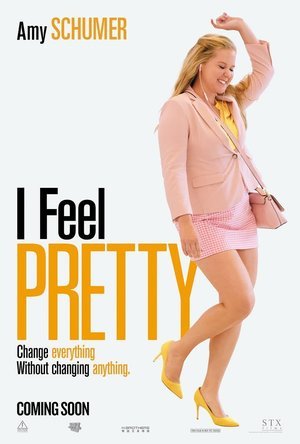
Renee (Amy Schumer), a later, twenty something who lives in New York City. She works in a small division Lily LeClaire, a high end beauty product company. From a tiny ramshackle office, she dreams and one day working at the glamorous HQ in downtown Manhattan. She finds out that there is a position available, but she does not think that she is good enough to get the job.
In her quest to look better and feel better, she enrolls in Soul Cycle class at her neighborhood gym. Within minutes, she had injured herself and her pride. Smarting from the injury, we see her looking into the mirror with disdain and self loathing. Schumer conveys the discomfort, embarrassment and self-doubt that every one of us have felt at some point in our lives.
Renee does not give up, going to class the second day. In her enthusiasm, she forgets to tighten a bolt and is taken down by the bike. The event immediately changes how she looks at herself, immediately seeing her visage as everything she would want. The film highlights the all human issue of self-confidence, struggles of imperfection with our bodies and our overall self image, how our own perceptions are our own mental constructs than reality.
Schumer is able to convey the negative thoughts we all have felt about ourselves when we don’t like how we look. However, externally, the self negativity is not noticed.. We can be own worst critic and take down our own self esteem without the help of bullies. Even though Renee’s self image is altered by an accident, her humor, intelligence doesn’t change, her extraverted confidence shines the light directly on her attitude.
There were some moments where I expected a makeover montage. Cause, good 80’s alternative soundtrack and it’s a film about a woman’s lack of self esteem. Surprisingly, it was devoid of any fancy changing room quick changes. The movie addressed how we all have moments where our levels of self confidence and self esteem are reduced due to our own ideas because we all can be our own worst critic.
The story had its moments where I would have liked to see more depth and connection in Renee’s relationships with her best friends Vivian (Aidy Bryant) and Jane (Busy Phillips). These are friends that have known each other for years and I would have like to see a little of the psychic shorthand friends develop over years of knowing each other. I did like how Vivian and Jane didn’t let Renee get away with behaving as an ass. They are not mean in their rejection which is more true to honest friendships.
Amy Schumer’s humor at times can make us a bit uncomfortable because she holds the mirror up to us to teach us how to laugh at ourselves and to show that we are not alone in all these feelings. I enjoyed the movie, even though it would have been good to see more depth in the relationships. It is a perfect Girls Night Out film
In her quest to look better and feel better, she enrolls in Soul Cycle class at her neighborhood gym. Within minutes, she had injured herself and her pride. Smarting from the injury, we see her looking into the mirror with disdain and self loathing. Schumer conveys the discomfort, embarrassment and self-doubt that every one of us have felt at some point in our lives.
Renee does not give up, going to class the second day. In her enthusiasm, she forgets to tighten a bolt and is taken down by the bike. The event immediately changes how she looks at herself, immediately seeing her visage as everything she would want. The film highlights the all human issue of self-confidence, struggles of imperfection with our bodies and our overall self image, how our own perceptions are our own mental constructs than reality.
Schumer is able to convey the negative thoughts we all have felt about ourselves when we don’t like how we look. However, externally, the self negativity is not noticed.. We can be own worst critic and take down our own self esteem without the help of bullies. Even though Renee’s self image is altered by an accident, her humor, intelligence doesn’t change, her extraverted confidence shines the light directly on her attitude.
There were some moments where I expected a makeover montage. Cause, good 80’s alternative soundtrack and it’s a film about a woman’s lack of self esteem. Surprisingly, it was devoid of any fancy changing room quick changes. The movie addressed how we all have moments where our levels of self confidence and self esteem are reduced due to our own ideas because we all can be our own worst critic.
The story had its moments where I would have liked to see more depth and connection in Renee’s relationships with her best friends Vivian (Aidy Bryant) and Jane (Busy Phillips). These are friends that have known each other for years and I would have like to see a little of the psychic shorthand friends develop over years of knowing each other. I did like how Vivian and Jane didn’t let Renee get away with behaving as an ass. They are not mean in their rejection which is more true to honest friendships.
Amy Schumer’s humor at times can make us a bit uncomfortable because she holds the mirror up to us to teach us how to laugh at ourselves and to show that we are not alone in all these feelings. I enjoyed the movie, even though it would have been good to see more depth in the relationships. It is a perfect Girls Night Out film

Lucy Buglass (45 KP) rated Marriage Story (2019) in Movies
Nov 7, 2019
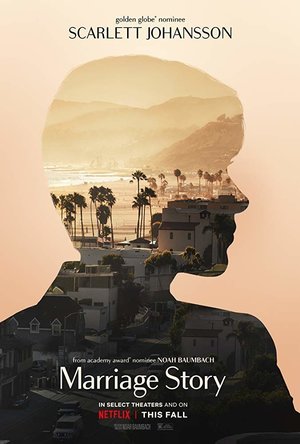

Divorce has been depicted many times onscreen, as it’s one of those difficult realities about adult relationships. There’s still a lot of stigma around the breakdown of a marriage, but Marriage Story deals with the topic in a very raw and unique way.
The film follows Nicole (Scarlett Johansson) and Charlie (Adam Driver) as they’re going through the turbulent divorce period. The couple share a young son Henry, who naturally causes complications for the two when it comes to custodial agreements.
Marriage Story opens with two gorgeous monologues about what the two characters love about each other, both of which are enough to make you cry a mere few minutes into the film. This contrasts very well with the present day, where they’re both struggling to make their marriage work.
It would have been very easy for Noah Baumbach to encourage the audience to pick sides, leaving them to subconsciously ‘root’ for either party to do well in the scenario. But remarkably that’s not the case, as it’s a very unbiased film that lays everything out on the table for us to see. Each messy, complicated detail is shown to us, and we end up sympathising with both.
One thing I really enjoyed about Marriage Story is the way Baumbach criticises some of the ridiculousness associated with divorce, especially when it comes to legal battles. Nicole reluctantly turns to ruthless lawyer Nora Fanshaw (Laura Dern), who is honest about the lies that have to be told in order to get through this.
Dern’s performance is hilarious but also highlights some of the inequalities and utterly baffling scenarios that happen when picking up a legal case. I wasn’t aware of any of them so it was quite a shock.
Watching the film is excruciating in places, but that’s a compliment on how raw and honest it is. It seems wrong for Charlie and Nicole to have to say and do certain things, all dictated by their respective lawyers. A clean break just isn’t possible when a child is involved.
It becomes even more complicated for the couple when Nicole decides to move back to Los Angeles, 2,789 miles away from New York City where she and Charlie used to reside. This creates a very literal distance between them, and causes problems with the battle for custody and Henry’s wellbeing.
Whilst there are many scenes which will reduce you to tears, Marriage Story has some comedic elements to lighten the mood, especially when it comes to Nicole’s family and how they react to the news of the divorce.
The two central performances in Marriage Story really are exceptional, and you become invested in the lives of people you don’t even know. One dramatic scene between Charlie and Nicole in particular had me openly sobbing, as it was full of contempt instead of love. Many of us can react to that exchange in a failing relationship, and it hurts.
If you want a very honest look at what it’s like to go through a divorce, then Marriage Story is just that. This isn’t the kind of film that sugarcoats anything and instead takes its audience on an emotional rollercoaster from start to finish.
The film follows Nicole (Scarlett Johansson) and Charlie (Adam Driver) as they’re going through the turbulent divorce period. The couple share a young son Henry, who naturally causes complications for the two when it comes to custodial agreements.
Marriage Story opens with two gorgeous monologues about what the two characters love about each other, both of which are enough to make you cry a mere few minutes into the film. This contrasts very well with the present day, where they’re both struggling to make their marriage work.
It would have been very easy for Noah Baumbach to encourage the audience to pick sides, leaving them to subconsciously ‘root’ for either party to do well in the scenario. But remarkably that’s not the case, as it’s a very unbiased film that lays everything out on the table for us to see. Each messy, complicated detail is shown to us, and we end up sympathising with both.
One thing I really enjoyed about Marriage Story is the way Baumbach criticises some of the ridiculousness associated with divorce, especially when it comes to legal battles. Nicole reluctantly turns to ruthless lawyer Nora Fanshaw (Laura Dern), who is honest about the lies that have to be told in order to get through this.
Dern’s performance is hilarious but also highlights some of the inequalities and utterly baffling scenarios that happen when picking up a legal case. I wasn’t aware of any of them so it was quite a shock.
Watching the film is excruciating in places, but that’s a compliment on how raw and honest it is. It seems wrong for Charlie and Nicole to have to say and do certain things, all dictated by their respective lawyers. A clean break just isn’t possible when a child is involved.
It becomes even more complicated for the couple when Nicole decides to move back to Los Angeles, 2,789 miles away from New York City where she and Charlie used to reside. This creates a very literal distance between them, and causes problems with the battle for custody and Henry’s wellbeing.
Whilst there are many scenes which will reduce you to tears, Marriage Story has some comedic elements to lighten the mood, especially when it comes to Nicole’s family and how they react to the news of the divorce.
The two central performances in Marriage Story really are exceptional, and you become invested in the lives of people you don’t even know. One dramatic scene between Charlie and Nicole in particular had me openly sobbing, as it was full of contempt instead of love. Many of us can react to that exchange in a failing relationship, and it hurts.
If you want a very honest look at what it’s like to go through a divorce, then Marriage Story is just that. This isn’t the kind of film that sugarcoats anything and instead takes its audience on an emotional rollercoaster from start to finish.

BankofMarquis (1832 KP) rated GoodFellas (1990) in Movies
Jun 26, 2020
LIKE A FINE WINE - gets better with age
I have to admit, when I first watched GOODFELLAS 30 years ago, I thought it was "good" but not "great".
The years and subsequent viewings of this epic masterpiece has slowly changed my mind.
Directed by one of the finest Directors of all-time, GOODFELLAS is based on the real-life experience of former "Wiseguy" Nicholas Pileggi (from his book) and depicts mob life in New York City in the 1960's and the 1970's.
Scorcese knows this world and it's looks & feels and you can sense that world while watching this movie. Whether it's the clothing, the set decorations, the vocal inflections or the music choices, Scorcese meticulously blends all of the minutiae of these eras and these people extremely effectively to draw a vivid picture of people - and gangsters - of another era.
It helps tremendously that he has an "A" cast to inherit the characters. Robert DeNiro shows his ferocious personae as a "force to be reckoned with" as legendary (their word) mobster Jimmy Conway. He has a danger to him that could erupt at any time, but he also has something else - probably even more dangerous - he's smart and wily and will meticulously plan his crimes out. This makes him stand out in a world where most are acting out of impulse. Joe Pesci, rightfully, won the Oscar for Best Supporting Actor for his take on psychopathic gangster Tommy DeVito. What struck me on this viewing of the film was how small a role in this film that Tommy is. Pesci is not on-screen all that much, but for the scenes that he is in, he is incredibly powerful. You can see that Tommy is dangerous and needs to be handled with "kit gloves".
Scorcese took a chance by centering this film on an unknown actor on who's shoulders that this film will stand or fall - and he chose wisely - for Ray Liotta's performance as Henry Hill is fascinating to watch. He has a charisma and charm to him that draws you in, but there is also an air about him that repels you away at the same time. Scorcese cast another unknown, Lorraine Bracco as Henry's wife, Karen Hill, who is drawn towards the power and danger of Henry (and his world). Bracco was nominated for an Oscar and Liotta never came close to this level of performance for the rest of his career.
Credit, therefore, must be given to the Directorial job that Scorcese put in on this film. This is his masterpiece (despite what the Oscars say). Years from now when scholars look back on his career, this (along with Raging Bull) will be the films that are shown (not THE DEPARTED - the film that he, finally, won his Oscar for).
I find more and more nuance and richness to this film upon subsequent re-watches, and I drank those in on this viewing. GOODFELLAS is like a fine wine, it gets better with age.
Letter Grade: A
9 stars out of 10 (and you can take that to the Bank(OfMarquis)
The years and subsequent viewings of this epic masterpiece has slowly changed my mind.
Directed by one of the finest Directors of all-time, GOODFELLAS is based on the real-life experience of former "Wiseguy" Nicholas Pileggi (from his book) and depicts mob life in New York City in the 1960's and the 1970's.
Scorcese knows this world and it's looks & feels and you can sense that world while watching this movie. Whether it's the clothing, the set decorations, the vocal inflections or the music choices, Scorcese meticulously blends all of the minutiae of these eras and these people extremely effectively to draw a vivid picture of people - and gangsters - of another era.
It helps tremendously that he has an "A" cast to inherit the characters. Robert DeNiro shows his ferocious personae as a "force to be reckoned with" as legendary (their word) mobster Jimmy Conway. He has a danger to him that could erupt at any time, but he also has something else - probably even more dangerous - he's smart and wily and will meticulously plan his crimes out. This makes him stand out in a world where most are acting out of impulse. Joe Pesci, rightfully, won the Oscar for Best Supporting Actor for his take on psychopathic gangster Tommy DeVito. What struck me on this viewing of the film was how small a role in this film that Tommy is. Pesci is not on-screen all that much, but for the scenes that he is in, he is incredibly powerful. You can see that Tommy is dangerous and needs to be handled with "kit gloves".
Scorcese took a chance by centering this film on an unknown actor on who's shoulders that this film will stand or fall - and he chose wisely - for Ray Liotta's performance as Henry Hill is fascinating to watch. He has a charisma and charm to him that draws you in, but there is also an air about him that repels you away at the same time. Scorcese cast another unknown, Lorraine Bracco as Henry's wife, Karen Hill, who is drawn towards the power and danger of Henry (and his world). Bracco was nominated for an Oscar and Liotta never came close to this level of performance for the rest of his career.
Credit, therefore, must be given to the Directorial job that Scorcese put in on this film. This is his masterpiece (despite what the Oscars say). Years from now when scholars look back on his career, this (along with Raging Bull) will be the films that are shown (not THE DEPARTED - the film that he, finally, won his Oscar for).
I find more and more nuance and richness to this film upon subsequent re-watches, and I drank those in on this viewing. GOODFELLAS is like a fine wine, it gets better with age.
Letter Grade: A
9 stars out of 10 (and you can take that to the Bank(OfMarquis)