

Audio Books by Audiobooks
Book and Entertainment
App
Wish you could read more but don’t have the time? You’ll love audiobooks! Audiobooks.com is the...

Kyera (8 KP) rated The Knowing (The Forgetting #2) in Books
Jan 31, 2018
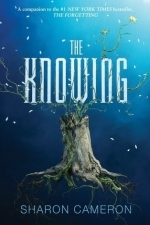


Samara is one of the Knowing, the gifted people of New Canaan who are unable to forget anything. This is a unique premise, but soon the reader realizes that being unable to forget anything is not always a positive. Pain and bad memories can be relived perfectly, so forgiveness and healing are not entirely possible. On a positive side, someone could read non-fiction books and never forget their contents.
She is an interesting character and it was nice to see the plot from both her and Beck's points of view. As she is one of the Knowing, that identity and ability influenced everything she did in the book and how she reacted to situations - whereas Beck is from Earth and found himself in a completely foreign (yet fascinating) situation when he landed on the planet in search of the Lost City of Canaan. I enjoyed both of their portrayals, although I think I enjoyed Beck a little bit more as a character.
Going into the book, I didn't realize that it was set hundreds of years in the future of the Forgetting. It was a slight adjustment to get used to an entirely new word and way of thinking (the Forgetting versus the Knowing) and the pacing did not help. The first time I started the book, I put it down after a few chapters and decided to read other books. Once it got a few more chapters into the story, it was much more engaging and I really enjoyed the story.
BookblogbyCari (345 KP) rated When Hitler Took Cocaine and Lenin Lost His Brain in Books
Aug 14, 2018
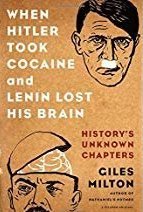

If only all events in history could be taught this way! This is his hands down one of the most entertaining history books you’ll ever read! The book is composed of 50 chapters depicting from lesser known points in history. The stories are dramatic, compelling, and often shocking. There are tales of heroism, injustice, conspiracy and cannibalism.
Each chapter is it's own little, well written, real-life story. And each is rounded off with a profound sentence or two to summarise. I gained an appreciation of the role of pigeons and dogs in the war, I learned why the Dodo bird became extinct, and I discovered that it’s possible to survive 2 nuclear bombs.
Normally with non-fiction book with so many isolated sections, I'd be tempted to skip sections, but that was not the case this time - I enjoyed every single one! I’ve noticed there are more books in the series, and I intend to read them all!
The best way to convey how well written the stories are, is to leave you with an excerpt:
“There was a sickening crunch and a violent jerk. The right wing of the plane was ripped off by the mountain peak and flung backwards into the rear of the fuselage. The plane, wildly out of control, smashed into a second peak, which tore off the left wing.
Inside the cabin, the terrified passengers expected the shattered plane to plunge them to their deaths. But the plane’s crash-landing miraculously spared some of those on board. The fuselage hit a snow-covered mountain slope and slid downwards before coming to a halt in a deep drift.
As a wall of silence descended over the wreckage, the injured and groaning survivors came to their senses. They were lost in the wilds of the High Andes. But they were alive!”
For more of my reviews, check out www.bookblogbycari.com
Frank Lowy: A Second Life
Book
The brand new second volume of the biography of one of Australia's richest, most active and most...
Doing & Writing Qualitative Research
Book
With a strong focus on using less traditional forms of data, Doing & Writing Qualitative Research...
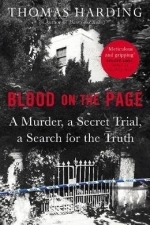
Blood on the Page
Book
'Meticulous and gripping' Philippe Sands, author of East West Street A groundbreaking examination of...
Brain Burps About Books: How to Create Your Author Platform, Adult and Children's Book Publishing, Book Marketing Podcast
Podcast
Go to http://www.howtocreateyourauthorplatform.com or text the code KATIED to 33444 to get video...
Talking Metal
10.0 Rate It
Podcast
Hosts Mark Strigl and John Ostronomy, talk and play METAL with special guests, headbangers, and...
The Death of King Arthur: The Immortal Legend
2.0 Rate It
Book
A gripping retelling of the timeless epic of romance, enchantment and adventure, Peter Ackroyd's The...
The Lower River
Book
Award-winning writer Paul Theroux draws upon personal experience of living in Malawi in his...