Search

Search only in certain items:

The Things We Learn When We're Dead
Charlie Laidlaw | 2017 | Fiction & Poetry
8
8.0 (1 Ratings)
Book Rating
Lorna Love is dead. After an evening out at a dinner party, she stumbles into the road in front of an oncoming car and is killed.

She finds herself on a spaceship called HVN, where she can do what she wants, be anyone she wants, and have anything she wants. The novel follows Lorna looking back on her life while she is in ‘heaven’, going through every decision and mistake she’s made.

I’m a bit unsure of what genre I would place this in as it’s both science fiction and general fiction. Only a small fraction of the novel takes place on the spaceship, the majority of it is Lorna looking back on her life. However, I feel like the science fiction element overcomes everything, but I don’t want to spoil the plot by going into too much detail about that.

Charlie Laidlaw sent me a copy of his novel in return for an honest review. If it wasn’t for him offering to send me the novel, I don’t think I would have been tempted to read it. Since I’m not usually a fan of sci-fi, the cover was definitely offputting because of the spaceship. But having read it now and knowing that the majority of the book wasn’t even set in space, I’m really glad I did read it.

The Things We Learn When We’re Dead is heartwarming and is completely different from everything I’ve read before. It’s such an original idea for a book and although, to begin with, I did struggle to get into the book, I’m glad I held on because it really was an enjoyable book.

Lorna is a brilliant protagonist as she’s believable. She has her own faults and problems and definitely isn’t a perfect character. I loved that she was so realistic and not a fake persona.
  
Dragon Pearl
Dragon Pearl
Yoon Ha Lee | 2019 | Children, Science Fiction/Fantasy
8
8.0 (2 Ratings)
Book Rating
<b><i>I received this book for free from Disney-Hyperion in exchange for an honest review. This does not affect my opinion of the book or the content of my review.</b></i>

<i>Dragon Pearl</i> by Yoon Ha Lee is the latest in Rick Riordan Presents, an imprint under Disney that “highlights cultures and mythologies from around the world,” selected by author Rick Riordan. An #ownvoices novel based on Korean mythology and folklore, Lee’s novel follows a fox spirit named Min who runs off on a space adventure to find her missing brother and instead finds the highly sought-after Dragon Pearl to save the Thousand Worlds.

I found myself struggling with <i>Dragon Pearl</i> at times. There are moments the novel slows from the pace of the action, which could potentially drag the reader’s attention away from Min’s journey. Min’s quest to find her brother is easy, but it is expected as the novel is aimed at a middle-grade audience.

Ignore the slowness and the ease of the journey, however, and the story is a magical ride through the Thousand Worlds. I loved seeing Min encountering obstacles and working her way around them while figuring out her own magic. Most importantly, I enjoyed seeing how valuable her relationships are, both with her brother and with the developing friendships with the other cadets.

Fans of Rick Riordan’s novels who enjoy a journey through space with touches of mythology will love going on an adventure of their own with Min through Yoon Ha Lee’s <i>Dragon Pearl</i>.

<a href="https://60secondsmag.com/dragon-pearl-review/">This review is originally posted on 60 Seconds Online Magazine</a>
  
War of the Worlds: Global Dispatches
Connie Willis, Kevin J. Anderson | 1996 | Science Fiction/Fantasy
8
8.0 (2 Ratings)
Book Rating
Diverse collection of short stories all revisiting the Martian invasion of 1898 (as originally detailed by H.G. Wells). Most (but not all) of the stories are narrated by notables from the period, most (but not all) of these are famous writers: Henry James, Samuel Clemens, Rudyard Kipling, and so on. The collection kind of overlooks the implication that the Martians only actually invade southern England in Wells' novel, but then most adaptations do the same thing, and the stories here aren't even consistent with each other (the fate of Paris varies significantly in the Jules Verne and Pablo Picasso entries).

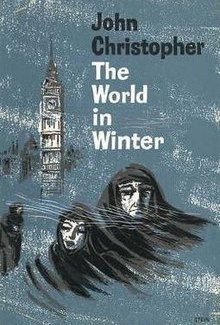
A bit of a mixed bag, to be honest: some of the stories just restage elements of Wells with a different backdrop, others treat the Martians as a backdrop for more introspective tales, still others indulge in literary pastiche. Unlikely juxtapositions and in-jokes abound - Rudyard Kipling meets Gandhi, Tolstoy meets Stalin, Samuel Clemens (d. 1910) makes reference to John Christopher (b. 1922). The best stories are mostly the ones which recognise the political/satirical subtext powering the Wells novel and attempt to do something similar - so Barbara Hambly's story concerns British imperialism in India, and the effect of the Martians on the situation there, while another looks at the consequences for pre-revolutionary Russia. That said, Connie Willis' Hugo-winning contribution sends the whole conceit of the novel up with a predictable mixture of tongue-in-cheek drollery and sheer absurd silliness, as the unlikely effect of a Martian encounter on the poetry of Emily Dickinson is revealed (especially considering Dickinson died twelve years before the coming of the Martians). The good stories are very good indeed, the less good ones merely a bit tedious. A worthy and worthwhile tribute to the original novel.
  
The Cactus
The Cactus
Sarah Haywood | 2018 | Fiction & Poetry
8
8.5 (2 Ratings)
Book Rating
I'm genuinely surprised at how much I enjoyed this book. At the start of this novel, I hated Susan. Like I firmly wanted to punch her square in the face. I thought she was annoying, self-righteous, stuck on her high horse, just rude. I can't say that that changed much over the course of the novel, but the light in which she was shaded in changed. As you move through the story and you learn about her life, who she is and where she came from, her relationship with her mother before her death and after, it becomes apparent that her coldness, her vehement desire to push people away, and her intensity for control are all coping mechanisms stemmed from her childhood. I related a lot to Susan, even though I found myself wanting to scream at her in some parts of the book.

As for the story itself, the plotline, the characters, I really thought it was well put together. The twist towards the end and even the ending itself wasn't one that I thought of when I initially started reading or even as I made it to the halfway point and beyond. It wasn't a novel that kept me on the edge of my seat, by any means, but it was one that just pulled you in and you were encompassed in Susan's world - in her thoughts, however rude they might be. I relate a lot to who she was and who she becomes and I was surprised to find myself rooting for her by the end, even as I, again, wanted to punch her. I also appreciated that not every conflict needed to be wrapped up in a bow and solved. That's not real life and this book felt like real life.

A debut novel, well done.
  
40x40

Erika (17789 KP) rated Phasma in Books

Jul 11, 2019 (Updated Jul 11, 2019)  
Phasma
Phasma
Delilah S. Dawson | 2017 | Science Fiction/Fantasy
1
6.4 (5 Ratings)
Book Rating
The last chapter (0 more)
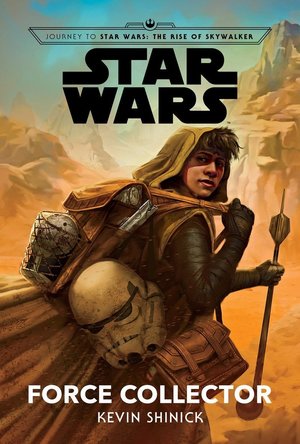
I was pumped to read more about Phasma, after Rian Johnson did her character dirty (well, he did every character dirty in TLJ). Luckily for me, I had read the 4 issue comic run from Kelly Thompson. Protip: Read Thompson's Phasma run and skip this novel.
Firstly, this novel was not told from Phasma's point of view until the last chapter. The story is coming out to Cardinal, a Captain in the First Order that wears red armor (didn't know cardinals or chickens existed in the SW universe), from a Resistance spy, Vi. Basically, dude is jelly that he was technically demoted when Phasma arrived to the First Order. Vi rambles on the story of Phasma from the character Siv, who was a member of Phasma's band of warriors. Guess what? Phasma's from a backwater planet, color me shocked. All of the characters were bland, boring, and unlikable. I was done with the book when Siv revealed that she was pregnant, and kept rambling on about the baby and crap. Unless the baby was Rey, no one cares. Where was the editor? Also, the going on and on about how different the accents were between Brendol Hux/the First Order people and the warriors from the hell planet was so annoying.
The story was predictable, and boring. The option to tell the story of Phasma with 2 degrees of separation was ineffectual. This makes me leery about reading any other SW novel by this author. I was going to purchase Black Spire, but I'm definitely just going to get it at the library. So, not only did TLJ do Phasma a disservice, so did this novel. This is definitely one of the worst books in the new canon.
  
The Girl Before
The Girl Before
J.P. Delaney | 2017 | Fiction & Poetry
7
7.7 (25 Ratings)
Book Rating
Suspenseful and different novel
Two wounded women reeling from personal issues are looking for a new apartment. For Emma, she requires a safe place after being the victim of a break-in while her loyal boyfriend, Simon, was out. For Jane, it is a new place that holds no reminders of the baby she lost. For each woman, the house at One Folgate Street seems to offer exactly what they are looking for. It is designed by well-known architect, Edward Monkford, and comes with a set of rules created by the inscrutable man himself. In fact, to live at One Folgate Streets means signing off on over 200 rules, ranging from no books or personal mementos, to total tidiness, to agreeing to showing the house on architectural tours, to accepting to the intense technology that it comes with, including the house monitoring your well-being and moods. At first, the rules and clarity that come with One Folgate Street seem comforting to Emma and Jane. But as they spend more time in the house--and learn about its past, including its mysterious builder--they become terrifying and stifling.

THE GIRL BEFORE is a fascinating novel told solely from the point of view of Emma, One Folgate Street's previous tenant, and Jane, its current tenant. All activities are filtered through the lens of these two women. The novel effectively builds suspense with the parallel nature of the two women's stories, but it also can get a little repetitive at times (and sometimes a little confusing, as you have to remind yourself, mostly in the beginning, who is talking). The book starts off exciting, as you are drawn into both Emma and Jane's tales while they acclimate to the house and all the oddities it offers. The house itself almost becomes another character in the novel. It starts to drag a bit halfway through as you wonder what will happen in the next half (people living in a technologically advanced house can only be so exciting, right?). But then, suddenly, the novel takes some odd turns (there are some interesting sexual plot twists) and eventually grows quite interesting again with some psychological and thrilling revelations. Perhaps my favorite part about this book is that many of these developments truly surprised me, which isn't always easy to do in a thriller.

Overall, this is an interesting novel. It's certainly suspenseful and different. To enjoy it, you really have to set your disbelief aside at the actual conditions of living at One Folgate Street (no books, what?!) and accept that the two women are so broken (and perhaps broke, as the house apparently comes at a great discount) that they will go along with anything. It has a lot of varied plot threads and some of them aren't always fully explored or truly necessary, which can be a little frustrating. Still, the book truly surprised me with its twists and kept me entertained, with a deep desire to get to the end. Overall, 3.5+ stars.

I received a copy of this novel from the publisher and Netgalley (thank you!) in return for an unbiased review.