Search
Search results
David McK (3838 KP) rated Death on the Nile (2022) in Movies
Apr 10, 2022
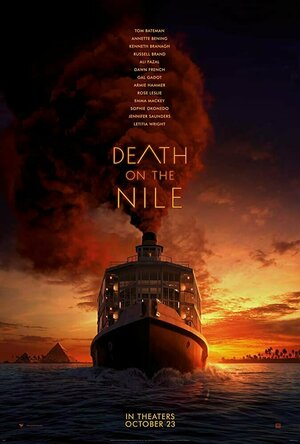
The second of Kenneth Branagh's outing as Agatha Christie's sleuth Poirot, apparently much delayed by the Covid-19 pandemic, and set after The Murder on the Orient Express.
I've never seen that movie.
I have read the book on which it (Murder on Orient Express) is based, though.
As I'm not that big a fan of murder mysteries, I hadn't, however, read the story on which this is based.
Why does that matter?
Simply because it meant I was going into this with no preconceptions; no real idea of what would happen (other than there would be a murder which Poirot has to solve)!
I'm not sure whether the rest of Agatha Christie's Poirot novels are all like this or not - I've only read Murder on Orient Express and Murder of Roger Ackroyd, but I did find heavy similarities between the plots, with both Orient Express and is film largely taking place in a confined location, where there is a limited pool of suspects and where Poirot has to sit down and methodically think his way through.
This movie takes a while to get going, with the first hour or so in particular - I found - dragging quite a bit. I've also heard that there was extensive use of Green screen throughout, which might also explain why some of the Nile scenes just didn't sit quite right.
On the other hand, there is a veritable list of who's who acting talent on the screen: aside from Branagh himself, we have Gal Gadot (as the key victim), Emma Mackey, Arnie Hammer, Russel Brand (surprisingly understated), Annette Benning, Dawn French, Jennifer Saunders (yes, that French and Saunders!), Letitia Wright and Sophie Okonedo - nearly all of whom would have their own motives for the murder.
I've never seen that movie.
I have read the book on which it (Murder on Orient Express) is based, though.
As I'm not that big a fan of murder mysteries, I hadn't, however, read the story on which this is based.
Why does that matter?
Simply because it meant I was going into this with no preconceptions; no real idea of what would happen (other than there would be a murder which Poirot has to solve)!
I'm not sure whether the rest of Agatha Christie's Poirot novels are all like this or not - I've only read Murder on Orient Express and Murder of Roger Ackroyd, but I did find heavy similarities between the plots, with both Orient Express and is film largely taking place in a confined location, where there is a limited pool of suspects and where Poirot has to sit down and methodically think his way through.
This movie takes a while to get going, with the first hour or so in particular - I found - dragging quite a bit. I've also heard that there was extensive use of Green screen throughout, which might also explain why some of the Nile scenes just didn't sit quite right.
On the other hand, there is a veritable list of who's who acting talent on the screen: aside from Branagh himself, we have Gal Gadot (as the key victim), Emma Mackey, Arnie Hammer, Russel Brand (surprisingly understated), Annette Benning, Dawn French, Jennifer Saunders (yes, that French and Saunders!), Letitia Wright and Sophie Okonedo - nearly all of whom would have their own motives for the murder.
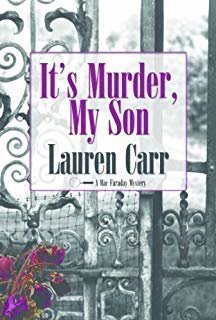
It's Murder, My Son (Mac Faraday Mystery #1)
Book
“An exciting mystery with plenty of intriguing and enigmatic characters, It's Murder, My Son...
Murder Audiobook Ebook Kindle Murder Mystery Mystery
Mark @ Carstairs Considers (2603 KP) rated The Self-Working Trick (and Other Stories) in Books
Feb 2, 2022
Eli Faces Crime in This Short Story Collection
For the eighth book in the Eli Marks series, author John Gaspard decided to present a short story collection. While two have been previously released, the rest of the twelve stories here are new. Over the course of this collection, Eli must help his ex-wife and her new husband figure out what happened in a bizarre murder/suicide case. Eli finds himself being questioned by the police when someone who gave him a one-star review is found dead. Eli finds himself being sent in by the police to perform magic for a man who refuses to come out of his house. And Eli and his uncle Harry figure out what happened to a man shot in front of a crowd on Halloween night.
While a couple of the stories don’t feature a crime, they still give us a great chance to see Eli in action and let us get some insight into his character. The rest of the stories feature a crime, often with a perfect puzzle that only makes sense when Eli uses his knowledge of the principles of magic to solve it. If you want to be fooled by magic, you’ll be happy to know that these principles are discussed in such a way that the solution to the mystery makes sense, but the specifics of how a trick works aren’t ruined. I love that. Fans will love getting these small glimpses of what else Eli has been up to between the big cases we’ve already read about. If you are new to the character, you’ll find the information you need to follow these cases with nothing from the regular novels spoiled. Most importantly, these stories are fun, with a few laughs along the way as well. This is a completely enjoyable short story collection.
David McK (3838 KP) rated The First Chronicles of Druss the Legend (The Drenai Saga #6) in Books
Aug 25, 2023
Legend, by David Gemmell, was the first novel of his I ever read.
It proved to be a good place to start: although it's no longer the earliest set (that would be Waylander, it was also actually the first he wrote in what would later become known as the Drenai saga.
And perhaps the breakout character from that novel (Legend was Druss the Axeman, who arrived fully formed and already a legend within the confines of the tale, with a backstory only really hinted at in the novel.
It's probably no surprise, thus, that Druss would go on to be a key figure in several of the other Drenai novels, popping up either in person or mentioned by characters in reverential tones that the tale in question is following.
This novel is actually a prequel to the events of Legend, showing how Druss became the man he is later shown to be: as the story starts, he is instead a teenaged woodsman felling trees in the mountain passes. That is, until his village is attacked and slavers make off with his wife Rowena ...
And so off Druss sets in pursuit, in the eventual company of the poet Sieben; a pursuit that will last many years and across a different (and war-torn) continent and which sees his legend start to grow, thanks in no small part to that poet.
The novel is split into 4 parts; the first three all dealing with that pursuit and the (many) events that befall Druss, while the last part is the defence of Skeln past oft talked about in Legend, and in which Druss cements his legend whilst losing friends along the way.
This is well worth a read; however I would advise actually reading the later-set Legend first!
It proved to be a good place to start: although it's no longer the earliest set (that would be Waylander, it was also actually the first he wrote in what would later become known as the Drenai saga.
And perhaps the breakout character from that novel (Legend was Druss the Axeman, who arrived fully formed and already a legend within the confines of the tale, with a backstory only really hinted at in the novel.
It's probably no surprise, thus, that Druss would go on to be a key figure in several of the other Drenai novels, popping up either in person or mentioned by characters in reverential tones that the tale in question is following.
This novel is actually a prequel to the events of Legend, showing how Druss became the man he is later shown to be: as the story starts, he is instead a teenaged woodsman felling trees in the mountain passes. That is, until his village is attacked and slavers make off with his wife Rowena ...
And so off Druss sets in pursuit, in the eventual company of the poet Sieben; a pursuit that will last many years and across a different (and war-torn) continent and which sees his legend start to grow, thanks in no small part to that poet.
The novel is split into 4 parts; the first three all dealing with that pursuit and the (many) events that befall Druss, while the last part is the defence of Skeln past oft talked about in Legend, and in which Druss cements his legend whilst losing friends along the way.
This is well worth a read; however I would advise actually reading the later-set Legend first!
Merissa (14068 KP) rated The Devil's Glove (Salem #1) in Books
May 29, 2023
THE DEVIL'S GLOVE is the first book in the Salem series and is the start of the tale, beginning and ending before Resolve/Susannah arrives in Salem. She lives with her mother (Rachel/Deliverance) in the Eastward, a small village far away from Boston and their machinations.
Deliverance is a healer, taught by the Native Americans when they lived in The Greening, under Ashawonks' care. They also have their own gift that grows stronger over time. Deliverance and Resolve don't exactly fit in with the village for a number of reasons, including the fact they originally came from Jersey, Deliverance is a healer who deals with life and death, and they are friendly towards the 'savages', to name just a few. As the story unfolds, you meet with numerous characters, both 'good' and 'bad' who may just change your mind as you carry on reading.
There is layer upon layer to this story, each one taking you a little deeper, and I loved that! It is a slow story; giving time to the build-up, to the story and characters, which is sometimes lost in faster-paced novels. There were twists I never saw coming, plus sad things I did. I loved the ending, how it gave closure to this part and yet left me wanting more immediately.
In a world where even knowing how to swim can be enough to be called a witch, delve into the life of Resolve and let her take you back to where it began. HIGHLY recommended by me.
** same worded review will appear elsewhere **
* A copy of this book was provided to me with no requirements for a review. I voluntarily read this book; the comments here are my honest opinion. *
Merissa
Archaeolibrarian - I Dig Good Books!
May 24, 2023
Deliverance is a healer, taught by the Native Americans when they lived in The Greening, under Ashawonks' care. They also have their own gift that grows stronger over time. Deliverance and Resolve don't exactly fit in with the village for a number of reasons, including the fact they originally came from Jersey, Deliverance is a healer who deals with life and death, and they are friendly towards the 'savages', to name just a few. As the story unfolds, you meet with numerous characters, both 'good' and 'bad' who may just change your mind as you carry on reading.
There is layer upon layer to this story, each one taking you a little deeper, and I loved that! It is a slow story; giving time to the build-up, to the story and characters, which is sometimes lost in faster-paced novels. There were twists I never saw coming, plus sad things I did. I loved the ending, how it gave closure to this part and yet left me wanting more immediately.
In a world where even knowing how to swim can be enough to be called a witch, delve into the life of Resolve and let her take you back to where it began. HIGHLY recommended by me.
** same worded review will appear elsewhere **
* A copy of this book was provided to me with no requirements for a review. I voluntarily read this book; the comments here are my honest opinion. *
Merissa
Archaeolibrarian - I Dig Good Books!
May 24, 2023
Hazel (1853 KP) rated Station Eleven in Books
May 30, 2017
Horrifyingly Plausible
This ARC was provided by the publisher via NetGalley in exchange for an honest review
The dystopian idea of a virus wiping out most of the world’s human inhabitants is not a new concept. It has be done and retold over and over again. Emily St. John Mandel’s invention of the Georgian Flu is no different from these. Brought to Canada and the USA by a passenger on a plane from Russia, the highly contagious virus spreads quickly from person to person, town to town, and once caught you are dead within forty-eight hours.
The difference between Station Eleven and other novels of apocalyptic themes is that the story takes place primarily in two time periods – pre-Georgian Flu and twenty years post-Georgian flu – rather than during the outbreak and the immediate days after (although there are a few scenes written within that timeframe). It is difficult to explain the storyline without giving too much away. Although the death of millions of people is a vital feature, it is the lives of the characters that are important. All the significant characters are in some way linked to one man, Arthur Leander, and, particularly in the case of one individual, a graphic novel titled Station Eleven.
The book opens in Toronto with Arthur, a Hollywood actor, starring in a stage production of King Lear. Despite the quick reaction of trainee paramedic Jeevan, Arthur dies of a heart attack after suddenly collapsing during the forth act. Then suddenly, that same night, the Georgian flu makes its first appearance in Canada. Despite this occurring right at the beginning, it is not the last the reader sees of Arthur. Throughout the story the author returns to Arthur, recounting scenes of his life from acting career to his three ex-wives and only child.
Twenty years after the Georgian flu, Kirsten Raymonde, who starred as a child in the same production of King Lear, is part of the Traveling Symphony: a group of actors and musicians walking from decaying-town-to-town performing a number of Shakespeare plays as they go. With her she carries two Station Eleven comics that Arthur gave her before he died – incidentally written and drawn by his first wife. Most people that the Symphony encounter are accommodating and are trying their best to live in a world of no electricity or health care, but then they meet a man who calls himself the Prophet. Believing that he has been given a duty by God to repopulate the world he preaches to the people telling them that everything happens for a reason, likening the epidemic to Noah’s flood in the Bible. However it soon becomes clear that he is a dangerous character.
In a way it is heartening to imagine that high culture (such as Shakespeare and orchestral music) survives in a world that has been destroyed. Shakespeare was born in a time before all the modern inventions relied upon today, and now, in this novel, it is once again an electricity-less era yet these historical things live on.
One problem with Station Eleven is that it is hard to pinpoint the exact plot line. There is the life story of Arthur Leander, his wives and a close friend. Then there is Kirsten living a completely different life. Nonetheless it is still an incredibly fascinating book. Although it flits between time periods it is thankfully not as confusing as some may imagine it would be.
Even though dystopian novels of this nature have been done before, Station Eleven is definitely a book to read; and through it all it poses the question of how you, the reader, would survive in such a world.
The dystopian idea of a virus wiping out most of the world’s human inhabitants is not a new concept. It has be done and retold over and over again. Emily St. John Mandel’s invention of the Georgian Flu is no different from these. Brought to Canada and the USA by a passenger on a plane from Russia, the highly contagious virus spreads quickly from person to person, town to town, and once caught you are dead within forty-eight hours.
The difference between Station Eleven and other novels of apocalyptic themes is that the story takes place primarily in two time periods – pre-Georgian Flu and twenty years post-Georgian flu – rather than during the outbreak and the immediate days after (although there are a few scenes written within that timeframe). It is difficult to explain the storyline without giving too much away. Although the death of millions of people is a vital feature, it is the lives of the characters that are important. All the significant characters are in some way linked to one man, Arthur Leander, and, particularly in the case of one individual, a graphic novel titled Station Eleven.
The book opens in Toronto with Arthur, a Hollywood actor, starring in a stage production of King Lear. Despite the quick reaction of trainee paramedic Jeevan, Arthur dies of a heart attack after suddenly collapsing during the forth act. Then suddenly, that same night, the Georgian flu makes its first appearance in Canada. Despite this occurring right at the beginning, it is not the last the reader sees of Arthur. Throughout the story the author returns to Arthur, recounting scenes of his life from acting career to his three ex-wives and only child.
Twenty years after the Georgian flu, Kirsten Raymonde, who starred as a child in the same production of King Lear, is part of the Traveling Symphony: a group of actors and musicians walking from decaying-town-to-town performing a number of Shakespeare plays as they go. With her she carries two Station Eleven comics that Arthur gave her before he died – incidentally written and drawn by his first wife. Most people that the Symphony encounter are accommodating and are trying their best to live in a world of no electricity or health care, but then they meet a man who calls himself the Prophet. Believing that he has been given a duty by God to repopulate the world he preaches to the people telling them that everything happens for a reason, likening the epidemic to Noah’s flood in the Bible. However it soon becomes clear that he is a dangerous character.
In a way it is heartening to imagine that high culture (such as Shakespeare and orchestral music) survives in a world that has been destroyed. Shakespeare was born in a time before all the modern inventions relied upon today, and now, in this novel, it is once again an electricity-less era yet these historical things live on.
One problem with Station Eleven is that it is hard to pinpoint the exact plot line. There is the life story of Arthur Leander, his wives and a close friend. Then there is Kirsten living a completely different life. Nonetheless it is still an incredibly fascinating book. Although it flits between time periods it is thankfully not as confusing as some may imagine it would be.
Even though dystopian novels of this nature have been done before, Station Eleven is definitely a book to read; and through it all it poses the question of how you, the reader, would survive in such a world.
tapestry100 (306 KP) rated Star Wars: Lords of the Sith in Books
Aug 8, 2017
Contains spoilers, click to show
I've been a huge Star Wars fan since I was a kid (I can remember going to see the very first Star Wars film in the theater), but I have never read one of the novels before. By the time that I realized there were SW novels out there, there were already so many published that I didn't know where to start to get caught up on them, so I just let them slide, and continued on enjoying the movies. With the establishment of the new Lucasfilm official canon, I decided to try giving some of the new books a try, as it seemed much more manageable this way, and Lords of the Sith had recently been released, so it seemed as good a place to start as any.
The planet of Ryloth is integral to the Empire as both a source of slave labor and the substance known as "spice" (this does bug me a little bit - come up with something that a little more original that doesn't sound like you lifted it directly from Dune), but the inhabitants of Ryloth want to be free. The "Free Ryloth" movement is created for that purpose; led by Cham and Isval, the movement has simply been trying to be a thorn in the Empire's side, but when they learn that both the Emperor and Darth Vader are personally coming to the planet, they see an opportunity to assassinate them both and watch the Empire dissolve as a result.
Of course, without even reading the book, you know that the Emperor and Vader are going to survive this story since they appear in Episodes IV-VI, so it's no surprise that they do survive the attack. What makes this book interesting is seeing their relationship and how they deal with being thrust into a situation that neither were anticipating. It's also interesting seeing a book written more from the point of view of the villains that the heroes. Kemp does a great job in fleshing out all of the characters, tho; Cham, Isval, and the other freedom fighters are just as realized as the Emperor and Vader, even tho they are not the main focus of the story. However, it's the relationship between the Emperor and Vader that is the real highlight of the book; seeing their interactions throughout the book and how that relationship is tested, it the real essence of the story, and Kemp does a great job making that relationship feel real.
The only true drawback that I would have to the book is actually getting to the main action of the book. We know that the Emperor and Vader are going to be trying to survive on Ryloth (this isn't spoilers, it's the whole point of the book), but actually getting them to the planet seems to take way too long. Practically half of the book is taken up with explaining aspects of the resistance unit, getting the Emperor and Vader to the planet, and finally the battle that forces them to crash land on the planet. I just kept wanting to jump ahead to when they finally arrive on the planet, as I knew that's when the story would really start moving. Once the action finally got going, however, the book was fantastic. It was interesting to see the Emperor and Vader's relationship in Vader's early days as a Sith.
I know a lot of people are discouraged by the decision to basically do away with the previously established Extended Universe books, but if this is what the future of the Star Wars fictional universe is going to look like, I'm OK with it.
Recommended, especially for Star Wars fans!
The planet of Ryloth is integral to the Empire as both a source of slave labor and the substance known as "spice" (this does bug me a little bit - come up with something that a little more original that doesn't sound like you lifted it directly from Dune), but the inhabitants of Ryloth want to be free. The "Free Ryloth" movement is created for that purpose; led by Cham and Isval, the movement has simply been trying to be a thorn in the Empire's side, but when they learn that both the Emperor and Darth Vader are personally coming to the planet, they see an opportunity to assassinate them both and watch the Empire dissolve as a result.
Of course, without even reading the book, you know that the Emperor and Vader are going to survive this story since they appear in Episodes IV-VI, so it's no surprise that they do survive the attack. What makes this book interesting is seeing their relationship and how they deal with being thrust into a situation that neither were anticipating. It's also interesting seeing a book written more from the point of view of the villains that the heroes. Kemp does a great job in fleshing out all of the characters, tho; Cham, Isval, and the other freedom fighters are just as realized as the Emperor and Vader, even tho they are not the main focus of the story. However, it's the relationship between the Emperor and Vader that is the real highlight of the book; seeing their interactions throughout the book and how that relationship is tested, it the real essence of the story, and Kemp does a great job making that relationship feel real.
The only true drawback that I would have to the book is actually getting to the main action of the book. We know that the Emperor and Vader are going to be trying to survive on Ryloth (this isn't spoilers, it's the whole point of the book), but actually getting them to the planet seems to take way too long. Practically half of the book is taken up with explaining aspects of the resistance unit, getting the Emperor and Vader to the planet, and finally the battle that forces them to crash land on the planet. I just kept wanting to jump ahead to when they finally arrive on the planet, as I knew that's when the story would really start moving. Once the action finally got going, however, the book was fantastic. It was interesting to see the Emperor and Vader's relationship in Vader's early days as a Sith.
I know a lot of people are discouraged by the decision to basically do away with the previously established Extended Universe books, but if this is what the future of the Star Wars fictional universe is going to look like, I'm OK with it.
Recommended, especially for Star Wars fans!
KittyMiku (138 KP) rated Playing Games in Books
May 23, 2019
Playing Games by Liliana Rhodes is a romance novel that is short and quick to read. Cassie Monroe needs a job and when her roommate helps get her into her dream job, she finds herself falling for her boss. Torn between her dream and her heart, Cassie has to find a happy medium to get all that she wants, but will it be as easy as that? Especially since there is another woman already in his life, will Cassie be able to overcome that or will she have to back down? Cassie will have to realize that love is unpredictable and sometimes has a few strings attached.
Rhodes is able to give the reader a great romance story that won’t take forever to read. However, I found it very anticlimactic and would have loved the extra drama that could be introduced but never was. Though the book was short and only a couple hours if that of reading and lacked the drama most good romance novels have, it does introduce characters that seem to be a part of Rhodes Billionaire novels that she has created and released as a series. If this book is any foreshadowing, I feel that the other books will be a bit disappointing.
I believe I found the part revolving around the other woman and the situation the Cassie’s lover is in to be extremely relatable. After all not, not everyone can enter a relationship without something for the past being there. To see how hard it is to trust someone else with something that means the world to you, made the book feel like it was speaking from the heart. Then you get to see how something that could seem so major to others would not be a huge deal to the person who loves you. I would have loved to read more about the family Cassie adopts as her own instead of it ending only to move onto the next couple in the series. I believe that there could be more added onto this book by adding some additional details and maybe adding a little more conflict to the characters instead of having that love at first sight situation.
The details in the book were well enough that it was able to be easily followed, however with lack of a major conflict and drama that could have kept it completely entertaining; I would not recommend this book to many people. In fact, I believe the book only made 2 stars on my 4 star rating lists. Yes it satisfied my weird need of romance, but it also left something to be desired. I really would have loved more in the book and feel that maybe it was rushed or not well thought about. The idea was great, but the execution wasn’t all that it could have been. I am even now finding it difficult to write this review as the review itself isn’t as long as I would like it to be.
However, even with these flaws, that make it low in my own tastes, I believe Playing Games could be a good book to those who don’t like to read for long session. If you are looking for a quick book to read that has that romantic air to it, the Playing Games is right up your alley. It doesn’t take more than a couple hours to read, has the romantic gestures and the idea of love being unpredictable, and pretty straightforward without the drama. If this sounds like the perfect book to you, please feel free to go grab it. I got my copy on Amazon for my kindle.
Rhodes is able to give the reader a great romance story that won’t take forever to read. However, I found it very anticlimactic and would have loved the extra drama that could be introduced but never was. Though the book was short and only a couple hours if that of reading and lacked the drama most good romance novels have, it does introduce characters that seem to be a part of Rhodes Billionaire novels that she has created and released as a series. If this book is any foreshadowing, I feel that the other books will be a bit disappointing.
I believe I found the part revolving around the other woman and the situation the Cassie’s lover is in to be extremely relatable. After all not, not everyone can enter a relationship without something for the past being there. To see how hard it is to trust someone else with something that means the world to you, made the book feel like it was speaking from the heart. Then you get to see how something that could seem so major to others would not be a huge deal to the person who loves you. I would have loved to read more about the family Cassie adopts as her own instead of it ending only to move onto the next couple in the series. I believe that there could be more added onto this book by adding some additional details and maybe adding a little more conflict to the characters instead of having that love at first sight situation.
The details in the book were well enough that it was able to be easily followed, however with lack of a major conflict and drama that could have kept it completely entertaining; I would not recommend this book to many people. In fact, I believe the book only made 2 stars on my 4 star rating lists. Yes it satisfied my weird need of romance, but it also left something to be desired. I really would have loved more in the book and feel that maybe it was rushed or not well thought about. The idea was great, but the execution wasn’t all that it could have been. I am even now finding it difficult to write this review as the review itself isn’t as long as I would like it to be.
However, even with these flaws, that make it low in my own tastes, I believe Playing Games could be a good book to those who don’t like to read for long session. If you are looking for a quick book to read that has that romantic air to it, the Playing Games is right up your alley. It doesn’t take more than a couple hours to read, has the romantic gestures and the idea of love being unpredictable, and pretty straightforward without the drama. If this sounds like the perfect book to you, please feel free to go grab it. I got my copy on Amazon for my kindle.
Kristy H (1252 KP) rated Small Great Things in Books
Feb 1, 2018
Ruth Jefferson is a successful labor and delivery nurse with over twenty years of experience. She has a nice home and a college-bound seventeen-year-old son, Edison. She also happens to be African American. When Ruth takes over for a colleague at shift change, she is simply doing a checkup on newborn baby boy Davis. But after his checkup, she's told Davis' parents don't want her touching their child. A post-it note in his file states that no African American staff should be touching the patient. Ruth is shocked-- and angry. The next day, when Davis has a medical emergency, Ruth is faced with a choice. Does she help the baby--defying the order of the parents and her supervisor? Ruth's decision leads her on a path that involves the police and being charged with a serious crime. Police come into her home, handcuffing her and her son. Her public defender, Kennedy McQuarrie, recommends that Ruth's defense not involve race: a lightning rod for juries, she says. But Ruth is angry and humiliated and wants to clear her name, at whatever the cost.
This is a touching and powerful novel. Told from the varying points of view of Ruth, Kennedy, and Turk--baby Davis' father-- it is a compelling look at how race and family history shapes the person we become. It is a poignant story at points: it is amazing what people can rationalize when it comes to hatred. I found the novel very fitting right now, with what's going on in the U.S. Honestly, it's very frightening at times and hits a little too close to home.
Picoult's characters are well-formed and dynamic, and you find yourself drawn into parts of each.
Turk, obviously, despite the loss of his child, is not a sympathetic character, but he is a complex one; his progression over the course of the novel is intriguing, and it's amazing how Picoult did not make him a one dimensional white supremacist. The book is extremely well-researched; both from the side of white supremacy, as well as racism and the medical aspects of Davis' case. Kennedy is likeable and her struggle with Ruth's case, as she realizes the depth of both the visible and latent racism her client faces on a daily basis, is real and relatable. I applaud Picoult for tackling such a difficult subject with such honesty. It's almost as if, through Kennedy, she's admitting exactly what she doesn't know. (I highly recommend reading Picoult's afterword, as well.)
For me, the hardest parts of the book was that it gets a little too poetic in the Jodi Picoult way (those who frequently read her novels will identify), with her waxing on about race and parents and being brought together, versus letting the story tell itself. At points the book just goes on and on a bit, versus getting to the story and the point. There are lots of little subplots that go off, detracting at times from the main story and frustrating the reader. And, of course, there are some weird twists and plot points in the typical Picoult style, though they don't seem to pack the punch of her older novels. It all wraps up a little too smoothly, though I have to confess I sort of enjoyed the ending. It may have been a bit trite, but I am often a sucker for such things.
Overall, I was impressed with how Picoult approached this novel, and I enjoyed the storyline for the most part (I was certainly invested), though it dawdled at times and ended a bit too easily. I'd rate this a strong 3.5 - 3.75 stars. Certainly worth reading, especially if you're a Picoult fan.
I received a copy of this novel from the publisher and Netgalley; is available everywhere as of 10/11/2016.
This is a touching and powerful novel. Told from the varying points of view of Ruth, Kennedy, and Turk--baby Davis' father-- it is a compelling look at how race and family history shapes the person we become. It is a poignant story at points: it is amazing what people can rationalize when it comes to hatred. I found the novel very fitting right now, with what's going on in the U.S. Honestly, it's very frightening at times and hits a little too close to home.
Picoult's characters are well-formed and dynamic, and you find yourself drawn into parts of each.
Turk, obviously, despite the loss of his child, is not a sympathetic character, but he is a complex one; his progression over the course of the novel is intriguing, and it's amazing how Picoult did not make him a one dimensional white supremacist. The book is extremely well-researched; both from the side of white supremacy, as well as racism and the medical aspects of Davis' case. Kennedy is likeable and her struggle with Ruth's case, as she realizes the depth of both the visible and latent racism her client faces on a daily basis, is real and relatable. I applaud Picoult for tackling such a difficult subject with such honesty. It's almost as if, through Kennedy, she's admitting exactly what she doesn't know. (I highly recommend reading Picoult's afterword, as well.)
For me, the hardest parts of the book was that it gets a little too poetic in the Jodi Picoult way (those who frequently read her novels will identify), with her waxing on about race and parents and being brought together, versus letting the story tell itself. At points the book just goes on and on a bit, versus getting to the story and the point. There are lots of little subplots that go off, detracting at times from the main story and frustrating the reader. And, of course, there are some weird twists and plot points in the typical Picoult style, though they don't seem to pack the punch of her older novels. It all wraps up a little too smoothly, though I have to confess I sort of enjoyed the ending. It may have been a bit trite, but I am often a sucker for such things.
Overall, I was impressed with how Picoult approached this novel, and I enjoyed the storyline for the most part (I was certainly invested), though it dawdled at times and ended a bit too easily. I'd rate this a strong 3.5 - 3.75 stars. Certainly worth reading, especially if you're a Picoult fan.
I received a copy of this novel from the publisher and Netgalley; is available everywhere as of 10/11/2016.
I am honestly not completely sure about my thoughts on this play. I was so excited when it was announced that they would be releasing the script, especially since I will most likely not be able to see the stage production any time soon, but it left me in a weird mental state after reading it. Warning, there may be plot spoilers in this review, so read at your own peril. If you do not want to be spoiled, read the play first, then come back to my review.
I know that a play will never really be the same as reading a novel by good old JK, but it still felt so different from the rest of the Harry Potter series. I found myself wanting more out of it than I got. There was a lot of nostalgia for the other books that I felt when I was reading it. And I loved this play for that reason.
Now don't get me wrong, I really enjoyed the play. It was different, we got to see our Golden Trio all grown up, and see their interactions with other characters, including their children. I did, however, find myself getting angry at the characters--Harry and Ginny in particular. These two characters know, probably more than anyone else in this series, what it is like to be an outsider and to feel ostracized from other people. Yet they let their son feel the same way they did. To me, that sucks. They gave him huge shoes to fill in naming Albus what they did, but it seems that they never explained to him the meaning behind it. They let him hear all of the glorious stories of Dumbledore and Snape, but never let him in on the truth that both of those men were flawed individuals who messed up a lot. In not knowing that truth, Albus was made to think that he was not good enough. Again, super crappy thing to do to a child. Harry, you should know this!!
The plot itself was interesting. I think having to look at the past and see what changing any part of it could do to the future is something Albus, and even Harry, needed to understand. They must acknowledge the past, but still have the hope to look at the future. (Boom. Dumbledore style wisdom right there.) Even Scorpius needed to see what could happen. (By the way, I love Scorpius. I think he is my favorite of all of the children characters because he is adorable and so sassy.)
Just one question: WHERE WAS MY BOY TEDDY LUPIN?!?!?!?! I was looking for him the whole freaking play because I needed to see some of Remus and Tonks in another form, but we got NOTHING and I am upset. I was thinking of taking off another half star just for that fact alone, but I need to be not as bitter about it.
I cried while reading this. Whenever Albus was being self-deprecating, my heart broke even more. And Act 4 killed me. (SPOILERS) I sobbed when they were watching Voldy kill Lily and James. Straight up sobbed like a child.
I loved all of the stage directions and I think it would be very interesting to see how it all plays out on the stage. I honestly have no idea how they would do some of the effects.
Overall, it was a good addition to the Harry Potter novels. Was it as good or give me as many emotions as the novels did? No. But I enjoyed it for what it was.
I know that a play will never really be the same as reading a novel by good old JK, but it still felt so different from the rest of the Harry Potter series. I found myself wanting more out of it than I got. There was a lot of nostalgia for the other books that I felt when I was reading it. And I loved this play for that reason.
Now don't get me wrong, I really enjoyed the play. It was different, we got to see our Golden Trio all grown up, and see their interactions with other characters, including their children. I did, however, find myself getting angry at the characters--Harry and Ginny in particular. These two characters know, probably more than anyone else in this series, what it is like to be an outsider and to feel ostracized from other people. Yet they let their son feel the same way they did. To me, that sucks. They gave him huge shoes to fill in naming Albus what they did, but it seems that they never explained to him the meaning behind it. They let him hear all of the glorious stories of Dumbledore and Snape, but never let him in on the truth that both of those men were flawed individuals who messed up a lot. In not knowing that truth, Albus was made to think that he was not good enough. Again, super crappy thing to do to a child. Harry, you should know this!!
The plot itself was interesting. I think having to look at the past and see what changing any part of it could do to the future is something Albus, and even Harry, needed to understand. They must acknowledge the past, but still have the hope to look at the future. (Boom. Dumbledore style wisdom right there.) Even Scorpius needed to see what could happen. (By the way, I love Scorpius. I think he is my favorite of all of the children characters because he is adorable and so sassy.)
Just one question: WHERE WAS MY BOY TEDDY LUPIN?!?!?!?! I was looking for him the whole freaking play because I needed to see some of Remus and Tonks in another form, but we got NOTHING and I am upset. I was thinking of taking off another half star just for that fact alone, but I need to be not as bitter about it.
I cried while reading this. Whenever Albus was being self-deprecating, my heart broke even more. And Act 4 killed me. (SPOILERS) I sobbed when they were watching Voldy kill Lily and James. Straight up sobbed like a child.
I loved all of the stage directions and I think it would be very interesting to see how it all plays out on the stage. I honestly have no idea how they would do some of the effects.
Overall, it was a good addition to the Harry Potter novels. Was it as good or give me as many emotions as the novels did? No. But I enjoyed it for what it was.