
Search
Search results

BookwormMama14 (18 KP) rated The Reluctant Duchess (Ladies of the Manor, #2) in Books
Jan 2, 2019

I have been looking forward to The Reluctant Duchess since the moment I finished book one, The Lost Heiress! As the mystery of the Fire Eyes continues, we will follow Lady Rowena on her journey of faith and love.
About the Book
By the year 1912, Lady Rowena has suffered much and is determined to flee the terrors of her life in the Highlands of Scotland. Yet she reluctant to submit to the schemes designed for her escape. In a rather unconventional way, Brice Myerston, the Duke of Nottingham, sweeps in and saves her from a daunting future. With the Duke, Lady Rowena has the chance of a new life, new love and a new hope that she never thought possible. (Please tell me I am not the only one who started humming the Star Wars theme song just now.) Yet she is plagued with nightmares of the past. Afraid that she will never be worthy, convinced that no one could care about her. Rowena also discovers that Brice is involved with a treasure that brings sorrow wherever it goes. Will Brice be able to help her see the true worth and the beauty that lies within her? Will she find her confidence, her voice and maybe fall in love along the way? Can they overcome the "curse" of the Fire Eyes, together?
"Be whoever you want to be, and be it with confidence."
- The Reluctant Duchess (page 156)
My Thoughts
While I have no personal understanding of the exact situation that Lady Rowena experiences, I know full well the horror of emotional trauma. I avoid talking about our experience in my reviews because, books are my escape. I didn't want the stress, the
trauma, to slip into my posts. But after reading this book, I felt that I needed to share just a little bit. We have been through a lot with our son (medically) since he was born two years ago. He underwent a lifesaving Bone Marrow Transplant (non cancerous diagnosis) at 9 weeks old and everything that goes along with that: being isolated because he is immune suppressed, constant doctor visits, being hospitalized with even the slightest hint of a fever and so much more. Thankfully we are now at the tail end of our journey. He made it through his first cold and was not hospitalized! (Although he had a quick visit to the E.R. per his protocol.) But the effects of the last two years remain. For me, the thought of having to spend the night in the hospital with my son has brought on severe anxiety. Going shopping alone is a real challenge for me as well. While this may seem trivial to some, it is very real for me. What Rowena undergoes, and what I have experienced ( although different triggers) can be explained as PTSD. Because of this, I feel it only fair to give a heads up that separate from Rowena's experience, there is a heart wrenching circumstance near the end of the book that involves a child. I was caught quite off guard with it and know that can be a sensitive subject. This book was a very hard read for me emotionally. It is not a comedy, however I did laugh out loud a couple of times. Love, faith, hope and joy can be found in The Reluctant Duchess as well. I love Brice's faith, that he is actively listening to God in every situation. He acts on the voice he hears, and even though he may misinterpret the words on occasion, he does not let the condensation of his peers sway his faith. Overall, I really enjoyed this second book in Ladies of the Manor. Because it helped me to see myself in a new light. Roseanna captured the essence of the story beautifully. I absolutely LOVE her use of accents throughout the dialogue. All through the story we are reminded of the truth: Where LIGHT is, darkness cannot abide. Do not let the fear of the past distort your view of the future. I understand first hand the effects that can linger after a traumatic experience. But please, do not suffer in silence. Reach out to those who love you. And find hope for the future.
Brice ducked his head a bit, caught her gaze.
"And if you really want to spite them, do you know what you should do?"
He leaned closer, pitched his voice low.
"Thrive. Be happy."
- The Reluctant Duchess (page 156)
I received a free print copy of The Reluctant Duchess from Bethany House Publishers, through Celebrate Lit, in exchange for my honest review. All opinions expressed are mine alone.
About the Book
By the year 1912, Lady Rowena has suffered much and is determined to flee the terrors of her life in the Highlands of Scotland. Yet she reluctant to submit to the schemes designed for her escape. In a rather unconventional way, Brice Myerston, the Duke of Nottingham, sweeps in and saves her from a daunting future. With the Duke, Lady Rowena has the chance of a new life, new love and a new hope that she never thought possible. (Please tell me I am not the only one who started humming the Star Wars theme song just now.) Yet she is plagued with nightmares of the past. Afraid that she will never be worthy, convinced that no one could care about her. Rowena also discovers that Brice is involved with a treasure that brings sorrow wherever it goes. Will Brice be able to help her see the true worth and the beauty that lies within her? Will she find her confidence, her voice and maybe fall in love along the way? Can they overcome the "curse" of the Fire Eyes, together?
"Be whoever you want to be, and be it with confidence."
- The Reluctant Duchess (page 156)
My Thoughts
While I have no personal understanding of the exact situation that Lady Rowena experiences, I know full well the horror of emotional trauma. I avoid talking about our experience in my reviews because, books are my escape. I didn't want the stress, the
trauma, to slip into my posts. But after reading this book, I felt that I needed to share just a little bit. We have been through a lot with our son (medically) since he was born two years ago. He underwent a lifesaving Bone Marrow Transplant (non cancerous diagnosis) at 9 weeks old and everything that goes along with that: being isolated because he is immune suppressed, constant doctor visits, being hospitalized with even the slightest hint of a fever and so much more. Thankfully we are now at the tail end of our journey. He made it through his first cold and was not hospitalized! (Although he had a quick visit to the E.R. per his protocol.) But the effects of the last two years remain. For me, the thought of having to spend the night in the hospital with my son has brought on severe anxiety. Going shopping alone is a real challenge for me as well. While this may seem trivial to some, it is very real for me. What Rowena undergoes, and what I have experienced ( although different triggers) can be explained as PTSD. Because of this, I feel it only fair to give a heads up that separate from Rowena's experience, there is a heart wrenching circumstance near the end of the book that involves a child. I was caught quite off guard with it and know that can be a sensitive subject. This book was a very hard read for me emotionally. It is not a comedy, however I did laugh out loud a couple of times. Love, faith, hope and joy can be found in The Reluctant Duchess as well. I love Brice's faith, that he is actively listening to God in every situation. He acts on the voice he hears, and even though he may misinterpret the words on occasion, he does not let the condensation of his peers sway his faith. Overall, I really enjoyed this second book in Ladies of the Manor. Because it helped me to see myself in a new light. Roseanna captured the essence of the story beautifully. I absolutely LOVE her use of accents throughout the dialogue. All through the story we are reminded of the truth: Where LIGHT is, darkness cannot abide. Do not let the fear of the past distort your view of the future. I understand first hand the effects that can linger after a traumatic experience. But please, do not suffer in silence. Reach out to those who love you. And find hope for the future.
Brice ducked his head a bit, caught her gaze.
"And if you really want to spite them, do you know what you should do?"
He leaned closer, pitched his voice low.
"Thrive. Be happy."
- The Reluctant Duchess (page 156)
I received a free print copy of The Reluctant Duchess from Bethany House Publishers, through Celebrate Lit, in exchange for my honest review. All opinions expressed are mine alone.
Midge (525 KP) rated Salvation in Death (In Death, #27) in Books
Dec 17, 2018


Lovely portrayal of the relationship between the two lead characters (1 more)
Some hilarious moments
Gripping And Very Interesting!
Immediately after drinking the wine during a Catholic funeral mass, Father Miguel Flores is dead on the altar. Detective Lieutenant Eve Dallas confirms that the consecrated wine contained potassium cyanide. Though the East Harlem neighbourhood is a long way from the stone mansion she shares with her billionaire husband Roarke, she knows she's looking for a murderer.
The autopsy reveals faint scars of knife wounds, a removed tattoo and evidence of plastic surgery, suggesting “Father Flores” may not be the man his parishioners thought. Now, as Eve pieces together clues that suggest identity theft, gang connections, and a deeply personal act of revenge, she hopes to track down whoever committed this unholy act. Then a second murder takes place, in front of an even larger crowd of worshippers. Are the homicides linked?
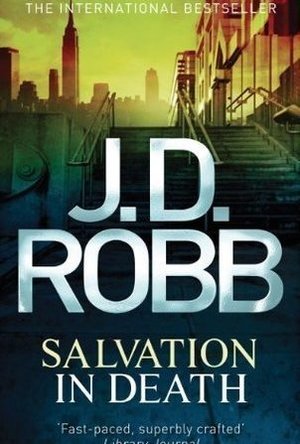
Salvation in Death is the 27th book of the "In Death" series, with Eve and Roarke as the lead characters.
Salvation in Death begins with the poisoning of a Catholic priest during mass. The priest, a passionate, dedicated and energetic member of the community, seems to have no enemies. He cared especially about young people, was not depressed, stressed or troubled and every member of the church looked up to him. But when his autopsy reveals some old scars and a covered tattoo, Eve realises that the priest must have some dark secrets in his past. When the tattoo points to a ruthless badass gang, Eve is not convinced that the priest is the person he purports to be. When another religious leader is also killed, Eve and her team have to investigate whether there is a serial killer on the loose or if the cases are coincidental in their timing.
This is the first book I have read from the "In Death" series by J. D. Robb, the pseudonym of Nora Roberts. I loved the portrayal of the relationship between the two lead characters, Eve and Roarke, particularly,
"Everything and all things. That was Eve for him. Nothing he'd ever dreamed of, even in secret in the dirty alleys of Dublin, approached the reality of her. Nothing he possessed could ever be as precious. The taste of her in the cool night, in the pale light, stirred a craving he understood would never be fully sated."
There is an impressive number of characters in this crime novel which I have to say made it a little difficult to follow at times. Others that I found an affinity with were Peabody and her significant other and work colleague, McNab.
"They were a good ten feet from the Homicide bullpen when Peabody's nose went up like a hound on the hunt. "I smell doughnuts." When Peabody increased her pace, Eve started to roll her eyes, but then she smelled them, too."
I also liked the following quote including McNab:-
"We got a snag. One of the sons-in-law's a lawyer." "Shit." "Ain't that always the way?" ......."So. He's making lawyer noises. It's after two A.M., and people have been held here for over four hours, yaddah-blah-blah." "Did you get anything from the interviews?" "Nothing that buzzed and popped......"
Eve is really out of her comfort zone investigating murders that have taken place in Catholic churches. She obviously has a past that she has to come to terms with which she seems to make some progress in Salvation in Death. Roarke and she have a great deal of chemistry between them and are very hot together and Roarke has some hilarious moments that make him adorable. He is there for her when certain aspects of the case trouble her and she is needing clarity, but she is by his side when he is struggling with some bad memories of his own. They make a brilliant team and I can't wait to read more of them.
I really surprised myself in that I chose to read this crime novel at all as I don't generally go for books relating to Catholicism. However, I thought it was very nicely written and I found it thoroughly enjoyable. The ending was a surprise to me, and I loved the way the book was concluded. Reading Salvation in Death has inspired me to read other "In Deaths" and also other Nora Roberts novels.
Overall, Salvation in Death is a gripping and very interesting read.
The autopsy reveals faint scars of knife wounds, a removed tattoo and evidence of plastic surgery, suggesting “Father Flores” may not be the man his parishioners thought. Now, as Eve pieces together clues that suggest identity theft, gang connections, and a deeply personal act of revenge, she hopes to track down whoever committed this unholy act. Then a second murder takes place, in front of an even larger crowd of worshippers. Are the homicides linked?
Salvation in Death is the 27th book of the "In Death" series, with Eve and Roarke as the lead characters.
Salvation in Death begins with the poisoning of a Catholic priest during mass. The priest, a passionate, dedicated and energetic member of the community, seems to have no enemies. He cared especially about young people, was not depressed, stressed or troubled and every member of the church looked up to him. But when his autopsy reveals some old scars and a covered tattoo, Eve realises that the priest must have some dark secrets in his past. When the tattoo points to a ruthless badass gang, Eve is not convinced that the priest is the person he purports to be. When another religious leader is also killed, Eve and her team have to investigate whether there is a serial killer on the loose or if the cases are coincidental in their timing.
This is the first book I have read from the "In Death" series by J. D. Robb, the pseudonym of Nora Roberts. I loved the portrayal of the relationship between the two lead characters, Eve and Roarke, particularly,
"Everything and all things. That was Eve for him. Nothing he'd ever dreamed of, even in secret in the dirty alleys of Dublin, approached the reality of her. Nothing he possessed could ever be as precious. The taste of her in the cool night, in the pale light, stirred a craving he understood would never be fully sated."
There is an impressive number of characters in this crime novel which I have to say made it a little difficult to follow at times. Others that I found an affinity with were Peabody and her significant other and work colleague, McNab.
"They were a good ten feet from the Homicide bullpen when Peabody's nose went up like a hound on the hunt. "I smell doughnuts." When Peabody increased her pace, Eve started to roll her eyes, but then she smelled them, too."
I also liked the following quote including McNab:-
"We got a snag. One of the sons-in-law's a lawyer." "Shit." "Ain't that always the way?" ......."So. He's making lawyer noises. It's after two A.M., and people have been held here for over four hours, yaddah-blah-blah." "Did you get anything from the interviews?" "Nothing that buzzed and popped......"
Eve is really out of her comfort zone investigating murders that have taken place in Catholic churches. She obviously has a past that she has to come to terms with which she seems to make some progress in Salvation in Death. Roarke and she have a great deal of chemistry between them and are very hot together and Roarke has some hilarious moments that make him adorable. He is there for her when certain aspects of the case trouble her and she is needing clarity, but she is by his side when he is struggling with some bad memories of his own. They make a brilliant team and I can't wait to read more of them.
I really surprised myself in that I chose to read this crime novel at all as I don't generally go for books relating to Catholicism. However, I thought it was very nicely written and I found it thoroughly enjoyable. The ending was a surprise to me, and I loved the way the book was concluded. Reading Salvation in Death has inspired me to read other "In Deaths" and also other Nora Roberts novels.
Overall, Salvation in Death is a gripping and very interesting read.
Ivana A. | Diary of Difference (1171 KP) rated The Temple House Vanishing in Books
Feb 3, 2020
<a href="https://amzn.to/2Wi7amb">Wishlist</a>; | <a
<a href="https://diaryofdifference.com/">Blog</a>; | <a href="https://www.facebook.com/diaryofdifference/">Facebook</a>; | <a href="https://twitter.com/DiaryDifference">Twitter</a>; | <a href="https://www.instagram.com/diaryofdifference/">Instagram</a>; | <a href="https://www.pinterest.co.uk/diaryofdifference/pins/">Pinterest</a>;
<img src="https://i1.wp.com/diaryofdifference.com/wp-content/uploads/2019/11/Book-Review-Banner-29.png?resize=768%2C432&ssl=1"/>;
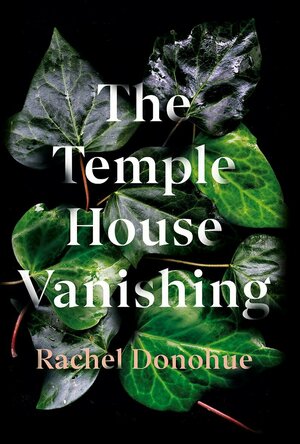
<b><i>Twenty-five years ago, a sixteen-year-old schoolgirl and her charismatic teacher disappeared without trace…</i></b>
The Temple House Vanishing left me with a tiny scar in my soul after reading it. It is intriguing and mysterious, it is real and delusional. The next time when I mention a special mystery, with a cruel end – this will be the first book that pops in my mind.
Louisa and Victoria are two friends that study in a Catholic girls’ boarding school. Both of them have something unique about themselves. They can both see the world in a different light and disobey the rules slightly.
They both also manage to become intrigued with their young, bohemian teacher and act in silly ways when they are around him. Until, one night, he and Louisa suddenly disappear.
Twenty-five years later, one journalist dives into the story again, hoping to finally find out the truth. The search for truth will uncover many buried secrets and a suppressed desire. It will break hearts and lay a lost soul to rest.
This novel might be the most intense novel I have read in 2019, right next to The Silent Patient. And The Devil Aspect. To witness the life of Louisa, and be aware of what is happening around her is quite intense. As soon as she meets Victoria, they click, and they both know they will become best friends. But even Louisa can feel that there is something odd about Victoria. After all, her last best friend left the school and no one knows what happened.
<b><i>On that subject – why didn’t we find out what happened to this girl?</i></b>
One friendship, and a very interestingly weird love triangle. I felt so bad for Louisa, because all she ever cared about was Victoria. And all she ever wanted to do is to help in any way. She loved Victoria, but she should’ve said something. If she spoke – everything would now be different.
The teacher reminded me of one of my high-school teachers. The type of person that will show you that the world isn’t how you’ve always known it. There is a meaning behind it all, and there is a purpose for everything. My teacher, she could make me feel like I was able to achieve everything. Anything was possible, if we only followed the right path. Mr Lavelle made all the girls feel like this, and counting his beautiful face as well, it’s no surprise that most of them fell in love with him. But he encouraged them, in his own subtle way. Sweet look in the eyes, gentle touch on the shoulder, and that is all it takes to confuse a teenage girl.
What I loved most in this book was the fact that I had so many theories whilst reading it. I was certain I knew how it all ended. But I was wrong. I didn’t have a clue on what was actually happening until the very end, and I was still surprised. After finishing the book and having a little think, as I always do with books that amaze me – I realised something. The clues were there from the very beginning. But unless you already know the ending I doubt you will notice them. And that is the great masterpiece of writing. And for that, I salute you, Rachel Donohue.
<b><i>If you love mysteries, thrillers, disappearances and unpredictable endings – I will guarantee you will love this book. And not only that, but you will also devour it in a day!</i></b>
<img src="https://i0.wp.com/diaryofdifference.com/wp-content/uploads/2019/11/The-Temple-House-Vanishing.jpg?resize=768%2C432&ssl=1"/>;
<b><i>Thank you to the team at LoveReading UK, for letting me part of the Ambassador Book Buzz and sending me an ARC copy of this book in exchange for an honest review. Check out the other amazing bloggers too! </i></b>
<a href="https://amzn.to/2Wi7amb">Wishlist</a>; | <a
<a href="https://diaryofdifference.com/">Blog</a>; | <a href="https://www.facebook.com/diaryofdifference/">Facebook</a>; | <a href="https://twitter.com/DiaryDifference">Twitter</a>; | <a href="https://www.instagram.com/diaryofdifference/">Instagram</a>; | <a href="https://www.pinterest.co.uk/diaryofdifference/pins/">Pinterest</a>;
<a href="https://diaryofdifference.com/">Blog</a>; | <a href="https://www.facebook.com/diaryofdifference/">Facebook</a>; | <a href="https://twitter.com/DiaryDifference">Twitter</a>; | <a href="https://www.instagram.com/diaryofdifference/">Instagram</a>; | <a href="https://www.pinterest.co.uk/diaryofdifference/pins/">Pinterest</a>;
<img src="https://i1.wp.com/diaryofdifference.com/wp-content/uploads/2019/11/Book-Review-Banner-29.png?resize=768%2C432&ssl=1"/>;
<b><i>Twenty-five years ago, a sixteen-year-old schoolgirl and her charismatic teacher disappeared without trace…</i></b>
The Temple House Vanishing left me with a tiny scar in my soul after reading it. It is intriguing and mysterious, it is real and delusional. The next time when I mention a special mystery, with a cruel end – this will be the first book that pops in my mind.
Louisa and Victoria are two friends that study in a Catholic girls’ boarding school. Both of them have something unique about themselves. They can both see the world in a different light and disobey the rules slightly.
They both also manage to become intrigued with their young, bohemian teacher and act in silly ways when they are around him. Until, one night, he and Louisa suddenly disappear.
Twenty-five years later, one journalist dives into the story again, hoping to finally find out the truth. The search for truth will uncover many buried secrets and a suppressed desire. It will break hearts and lay a lost soul to rest.
This novel might be the most intense novel I have read in 2019, right next to The Silent Patient. And The Devil Aspect. To witness the life of Louisa, and be aware of what is happening around her is quite intense. As soon as she meets Victoria, they click, and they both know they will become best friends. But even Louisa can feel that there is something odd about Victoria. After all, her last best friend left the school and no one knows what happened.
<b><i>On that subject – why didn’t we find out what happened to this girl?</i></b>
One friendship, and a very interestingly weird love triangle. I felt so bad for Louisa, because all she ever cared about was Victoria. And all she ever wanted to do is to help in any way. She loved Victoria, but she should’ve said something. If she spoke – everything would now be different.
The teacher reminded me of one of my high-school teachers. The type of person that will show you that the world isn’t how you’ve always known it. There is a meaning behind it all, and there is a purpose for everything. My teacher, she could make me feel like I was able to achieve everything. Anything was possible, if we only followed the right path. Mr Lavelle made all the girls feel like this, and counting his beautiful face as well, it’s no surprise that most of them fell in love with him. But he encouraged them, in his own subtle way. Sweet look in the eyes, gentle touch on the shoulder, and that is all it takes to confuse a teenage girl.
What I loved most in this book was the fact that I had so many theories whilst reading it. I was certain I knew how it all ended. But I was wrong. I didn’t have a clue on what was actually happening until the very end, and I was still surprised. After finishing the book and having a little think, as I always do with books that amaze me – I realised something. The clues were there from the very beginning. But unless you already know the ending I doubt you will notice them. And that is the great masterpiece of writing. And for that, I salute you, Rachel Donohue.
<b><i>If you love mysteries, thrillers, disappearances and unpredictable endings – I will guarantee you will love this book. And not only that, but you will also devour it in a day!</i></b>
<img src="https://i0.wp.com/diaryofdifference.com/wp-content/uploads/2019/11/The-Temple-House-Vanishing.jpg?resize=768%2C432&ssl=1"/>;
<b><i>Thank you to the team at LoveReading UK, for letting me part of the Ambassador Book Buzz and sending me an ARC copy of this book in exchange for an honest review. Check out the other amazing bloggers too! </i></b>
<a href="https://amzn.to/2Wi7amb">Wishlist</a>; | <a
<a href="https://diaryofdifference.com/">Blog</a>; | <a href="https://www.facebook.com/diaryofdifference/">Facebook</a>; | <a href="https://twitter.com/DiaryDifference">Twitter</a>; | <a href="https://www.instagram.com/diaryofdifference/">Instagram</a>; | <a href="https://www.pinterest.co.uk/diaryofdifference/pins/">Pinterest</a>;

Bob Mann (459 KP) rated Jojo Rabbit (2019) in Movies
Jan 16, 2020 (Updated Jan 16, 2020)
Cutting satire (1 more)
Great ensemble cast
Don't be stupid, be a smarty
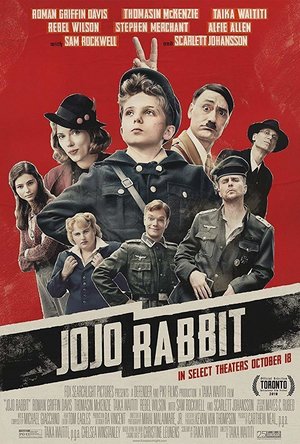
Taika Waititi's much discussed movie is an odd beast. Set in a small German town towards the end of the war, Jojo (Roman Griffith Davis), is a young boy indoctrinated with Nazi fervour as a member of the Hitler youth. Together with his rotund and bespectacled friend Yorki (Archie Yates), they are not likely to spread fear into the approaching Allied forces: they are a pair that would be likely to get picked last for 'sides' in a school football match.
Perhaps to bolster his flagging self-esteem, Jojo has an imaginary friend - - Adolf Hitler (played by director Taika Waititi). Hitler provides him with sage - and sometimes foolish - advice. His mother (Scarlett Johansson), as well as obviously being hot and thus obtaining lustful looks from returning troops, is also kindly. She makes up for the absence of Jojo's father, due to the war, with the help of some play-acting and a sooty beard.
But, when alone in the house, Jojo hears noises from upstairs, his world - and his whole belief system - begins to unravel.
Comedies have tip-toed around the sensibilities of World War II in the past, most famously with Mel Brook's "The Producers". I don't think anyone's previously been brave enough to introduce the holocaust into the comedy mix. And - to a degree... we are NOT talking excessive bad taste here - the movie goes there. There's an underlying sharpness to some of the dialogue that - despite not being Jewish myself - nevertheless put my sensibilities on edge: the pit in hell 'set aside for Jews', for example, is filled with not only piranhas... but also bacon.
As a satire lampooning Antisemitism, much of the comedy is slapstick and the anti-Jewish sentiments expressed are deliberately ludicrous. And it's one of my issues I guess with the film. There are some good lines (Rebel Wilson's fanatical Nazi screaming "Let's burn some books" at the students) but some of the slapstick farce just didn't work for me. Sam Rockwell is great as a one-eyed ex-war hero looking for new challenges and exuberant costumes! But a lame gag from him about German Shepherds made me go "What? Really?". And this lessens the impact for me of the satire.
The second half of the film for me was far better, taking a much darker and edgier tone. There's a sudden turn in the film - brilliantly executed - that is truly shocking. This scene is somewhat reminiscent of one in that other great Holocaust comedy, "Schindler's List". It's understated, yet devastating. (Now, before seeing the film I'd heard from other reviews that the film "turned darker" and - based on the trailer - I'd kind of set in my mind what that would be. But I was wrong! So take this comment not as a spoiler, but as an anti-spoiler!).
As the war unravels for Germany, a late re-appearance by the imaginary Hitler is also memorable.
As the young star, Welsh kid Roman Griffith Davis - with no previous acting experience - turns in a star performance. Though to say that the performance ranks alongside the top 5 male performances of 2019 is, I think, overstepping the mark. Scarlett Johansson got a Best Supporting Actress nomination for her role. And I think this is deserved.
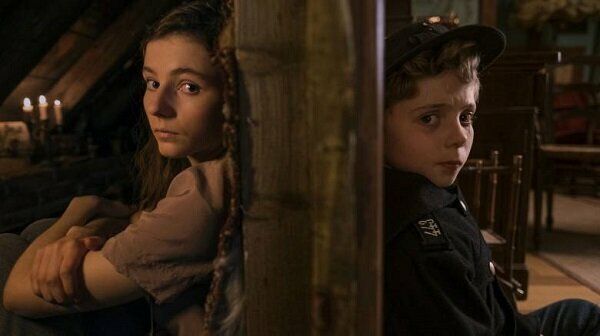
Elsewhere in the cast, few seemed to have recognized Thomasin McKenzie's role playing Elsa. The 19 year-old New Zealander really delivered for me. A strong female character, she's vulnerable yet with a will of iron under the surface. She made me really care about the outcome of the story.
Less positive for me is Rebel Wilson. Here she is marginally less annoying than I normally find her in that she's playing a deliberately annoying and unhinged character. But the role seemed largely redundant to me: it didn't add anything to the overall story (unlike Rockwell's - surprising - character arc).
If there was an Oscar for originality - and that WOULD be a good new award category - then this film would be a contender. It's certainly novel: amusing in places; disturbing in others. If you like your comedies on the edge and bit whacky - like "Death of Stalin" - then you will probably enjoy this. I'm not sure it's the best film of the year - and there are probably others I would swap into that Oscars nomination list - but it's still a well-made movie and a recommended watch.
(For the full graphical review, please check out One Mann's Movies at https://bob-the-movie-man.com/2020/01/16/one-manns-movies-film-review-jojo-rabbit-2020/ )
Perhaps to bolster his flagging self-esteem, Jojo has an imaginary friend - - Adolf Hitler (played by director Taika Waititi). Hitler provides him with sage - and sometimes foolish - advice. His mother (Scarlett Johansson), as well as obviously being hot and thus obtaining lustful looks from returning troops, is also kindly. She makes up for the absence of Jojo's father, due to the war, with the help of some play-acting and a sooty beard.
But, when alone in the house, Jojo hears noises from upstairs, his world - and his whole belief system - begins to unravel.
Comedies have tip-toed around the sensibilities of World War II in the past, most famously with Mel Brook's "The Producers". I don't think anyone's previously been brave enough to introduce the holocaust into the comedy mix. And - to a degree... we are NOT talking excessive bad taste here - the movie goes there. There's an underlying sharpness to some of the dialogue that - despite not being Jewish myself - nevertheless put my sensibilities on edge: the pit in hell 'set aside for Jews', for example, is filled with not only piranhas... but also bacon.
As a satire lampooning Antisemitism, much of the comedy is slapstick and the anti-Jewish sentiments expressed are deliberately ludicrous. And it's one of my issues I guess with the film. There are some good lines (Rebel Wilson's fanatical Nazi screaming "Let's burn some books" at the students) but some of the slapstick farce just didn't work for me. Sam Rockwell is great as a one-eyed ex-war hero looking for new challenges and exuberant costumes! But a lame gag from him about German Shepherds made me go "What? Really?". And this lessens the impact for me of the satire.
The second half of the film for me was far better, taking a much darker and edgier tone. There's a sudden turn in the film - brilliantly executed - that is truly shocking. This scene is somewhat reminiscent of one in that other great Holocaust comedy, "Schindler's List". It's understated, yet devastating. (Now, before seeing the film I'd heard from other reviews that the film "turned darker" and - based on the trailer - I'd kind of set in my mind what that would be. But I was wrong! So take this comment not as a spoiler, but as an anti-spoiler!).
As the war unravels for Germany, a late re-appearance by the imaginary Hitler is also memorable.
As the young star, Welsh kid Roman Griffith Davis - with no previous acting experience - turns in a star performance. Though to say that the performance ranks alongside the top 5 male performances of 2019 is, I think, overstepping the mark. Scarlett Johansson got a Best Supporting Actress nomination for her role. And I think this is deserved.
Elsewhere in the cast, few seemed to have recognized Thomasin McKenzie's role playing Elsa. The 19 year-old New Zealander really delivered for me. A strong female character, she's vulnerable yet with a will of iron under the surface. She made me really care about the outcome of the story.
Less positive for me is Rebel Wilson. Here she is marginally less annoying than I normally find her in that she's playing a deliberately annoying and unhinged character. But the role seemed largely redundant to me: it didn't add anything to the overall story (unlike Rockwell's - surprising - character arc).
If there was an Oscar for originality - and that WOULD be a good new award category - then this film would be a contender. It's certainly novel: amusing in places; disturbing in others. If you like your comedies on the edge and bit whacky - like "Death of Stalin" - then you will probably enjoy this. I'm not sure it's the best film of the year - and there are probably others I would swap into that Oscars nomination list - but it's still a well-made movie and a recommended watch.
(For the full graphical review, please check out One Mann's Movies at https://bob-the-movie-man.com/2020/01/16/one-manns-movies-film-review-jojo-rabbit-2020/ )
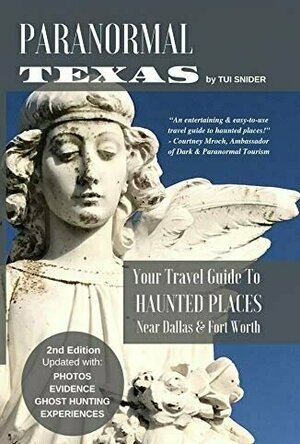
Those who know me know that I love the paranormal, mainly ghosts. When a chance came up to read Paranormal Texas by Tui Snider came about, I couldn't say no. As a Texas girl myself and a fan of all places ghostly, this seemed like the perfect book for me. I wasn't wrong!
Paranormal Texas by Tui Snider is a fantastic guidebook for those looking to chase ghosts in the great state of Texas, more specifically, towns and cities near Dallas and Fort Worth. I don't live near Dallas or Fort Worth, but I've been on vacation in and around there, and I will be taking future vacations in and around that area. In fact, I've been to two of the haunted locations featured in this book! I never even knew they were supposedly haunted at the time.
Tui Snider does a fantastic job of keeping readers interested in Paranormal Texas. She gives information about each place as well as local lore and/or personal encounters with each place. Tui also has a few urban legends in her book which are great for approaching locals with as long as they're into that sort of thing. Sometimes she gives the history behind each place which was my favorite thing. Personally, I would have liked to read more history about each place, but I was still happy nonetheless. What I really enjoyed was each place Tui mentioned wasn't a wall of text. It was concise and to the point. She also included photos of each place. These aren't photos of evidence though. The photos are just of the actual place itself which was a tad bit disappointing. I would have liked to see some photos of alleged evidence. However, Tui does have a website where you can look at paranormal photos, EVPs (electronic voice phenomenon), and more. (I'll go into detail about her website a little later.) All the photos are in black and white in my copy of Paranormal Texas. Mine is an ARC, so maybe the actual copies will have some colored photos.
One thing I really enjoyed about Paranormal Texas is that Tui Snider lists the address of each place, so you don't have to bother searching for it yourself. If it's a harder place to get to, Tui gives you directions of how best to get there. I thought this was a fantastic touch because when you want to look for ghosts, the last thing you want to do is waste time trying to find an address.
Another thing I am grateful for is how the book has each city listed alphabetically at the beginning and then each haunted location is listed for that city. This makes it a lot easier to find what city you're interested in to do some ghost exploring!
However, Paranormal Texas isn't just about haunted places in Texas. Tui Snider also writes about the techinal terms that come with ghost hunting which is great for those that are new to ghost hunting as well as how to be a respectful thrill seeker which has great information for even seasoned ghost hunters. I would advise not skipping the beginning of the book that has all this great advice simply because it will help enrich your reading experience with Paranormal Texas or any paranormal non-fiction book. Heck, it will probably even enrich your experience with even paranormal and supernatural fiction books!
Be sure to check out Tui Snider's online evidence database for Paranormal Texas which she mentions in her book. Like Paranormal Texas, she has each city listed alphabetically for you to listen and see supposed paranormal happenings. This is such a fantastic accompaniment to the book. It really makes the book come alive. It's like you're there! Definitely check out her online database. It will give you the chills. It's still a work in progress as Tui encourages readers to send in their own paranormal evidence as well, but still, it is great nonetheless.
Paranormal Texas is such a great guide for old and new ghost hunters alike. There is such a plethora of information within the pages. Trust me, not only are you learning about new ghost locations, but you are also being schooled on so much more. It's like a bonus lesson in history and ghost hunting, but one that is a lot of fun. I'd recommend leaving the lights on for this book. I'd definitely recommend Paranormal Texas by Tui Snider to those aged 16+ who love ghost stories, Texas, or those who just love to be spooked. You won't be disappointed!
--
(A special thank you to Tui Snider for providing me with a paperback ARC of Paranormal Texas in exchange for an honest and unbiased review.)
Paranormal Texas by Tui Snider is a fantastic guidebook for those looking to chase ghosts in the great state of Texas, more specifically, towns and cities near Dallas and Fort Worth. I don't live near Dallas or Fort Worth, but I've been on vacation in and around there, and I will be taking future vacations in and around that area. In fact, I've been to two of the haunted locations featured in this book! I never even knew they were supposedly haunted at the time.
Tui Snider does a fantastic job of keeping readers interested in Paranormal Texas. She gives information about each place as well as local lore and/or personal encounters with each place. Tui also has a few urban legends in her book which are great for approaching locals with as long as they're into that sort of thing. Sometimes she gives the history behind each place which was my favorite thing. Personally, I would have liked to read more history about each place, but I was still happy nonetheless. What I really enjoyed was each place Tui mentioned wasn't a wall of text. It was concise and to the point. She also included photos of each place. These aren't photos of evidence though. The photos are just of the actual place itself which was a tad bit disappointing. I would have liked to see some photos of alleged evidence. However, Tui does have a website where you can look at paranormal photos, EVPs (electronic voice phenomenon), and more. (I'll go into detail about her website a little later.) All the photos are in black and white in my copy of Paranormal Texas. Mine is an ARC, so maybe the actual copies will have some colored photos.
One thing I really enjoyed about Paranormal Texas is that Tui Snider lists the address of each place, so you don't have to bother searching for it yourself. If it's a harder place to get to, Tui gives you directions of how best to get there. I thought this was a fantastic touch because when you want to look for ghosts, the last thing you want to do is waste time trying to find an address.
Another thing I am grateful for is how the book has each city listed alphabetically at the beginning and then each haunted location is listed for that city. This makes it a lot easier to find what city you're interested in to do some ghost exploring!
However, Paranormal Texas isn't just about haunted places in Texas. Tui Snider also writes about the techinal terms that come with ghost hunting which is great for those that are new to ghost hunting as well as how to be a respectful thrill seeker which has great information for even seasoned ghost hunters. I would advise not skipping the beginning of the book that has all this great advice simply because it will help enrich your reading experience with Paranormal Texas or any paranormal non-fiction book. Heck, it will probably even enrich your experience with even paranormal and supernatural fiction books!
Be sure to check out Tui Snider's online evidence database for Paranormal Texas which she mentions in her book. Like Paranormal Texas, she has each city listed alphabetically for you to listen and see supposed paranormal happenings. This is such a fantastic accompaniment to the book. It really makes the book come alive. It's like you're there! Definitely check out her online database. It will give you the chills. It's still a work in progress as Tui encourages readers to send in their own paranormal evidence as well, but still, it is great nonetheless.
Paranormal Texas is such a great guide for old and new ghost hunters alike. There is such a plethora of information within the pages. Trust me, not only are you learning about new ghost locations, but you are also being schooled on so much more. It's like a bonus lesson in history and ghost hunting, but one that is a lot of fun. I'd recommend leaving the lights on for this book. I'd definitely recommend Paranormal Texas by Tui Snider to those aged 16+ who love ghost stories, Texas, or those who just love to be spooked. You won't be disappointed!
--
(A special thank you to Tui Snider for providing me with a paperback ARC of Paranormal Texas in exchange for an honest and unbiased review.)

Heather Cranmer (2721 KP) rated Winds of Fear (Fearless Series #3) in Books
Aug 4, 2020
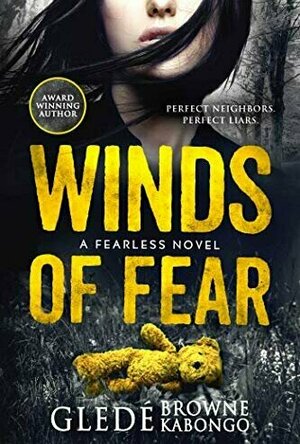
I have a thing about thrillers involving neighbors and false identities, so when I got the opportunity to read Winds of Fear by Glede Browne Kabongo, I jumped at the chance!
When Jenna and Charlie Payne move into the house next door, things start going bad for Abbie Rambally, especially after Jenna takes a special interest in Abbie's 10 year old son Lucas. Before long, Abbie starts suspecting that her neighbors aren't who they say they are and that their intentions could put her family in mortal danger.
The synopsis really sucked me in. I had to know what was up with Abbie's neighbors, so I dove into Winds of Fear right away. The pacing is fairly slow for the first half of the book as Kabongo sets up the backstory for each character. However, once I got to the second half of the novel, the pacing sped up, and I was hooked! I could not stop reading even though it was way past time for me to go to sleep. I felt like this was where the most action really happened and where the actually plot and the meat of the story was. Kabongo is heavily into describing each and every thing which was a bit tedious, but in the second half of the story, I was hooked on every word, so I didn't really mind. There were quite a few plot twists in Winds of Fear. In fact, every time I thought I had something figured out and felt smug about it, a plot twist would smack me right in the face! Though this book the third in the Fearless Series, I felt like it stands alone quite well without reading the first two books. Kabongo does a fantastic job of explaining what happened to Abbie (and her family) previously quite well. There is a fourth book that will be released in the series, but I found that all my questions were answered in Winds of Fear. However, I will be reading the next installment in the series because I want to know more about Abbie's life!
The characters in Winds of Fear were very fleshed out and well written thanks to all of Kabongo's backstory she added throughout the book. I enjoyed the character of Abbie although sometimes I felt like she was being a little too suspicious too early on after just meeting the Paynes...her paranoia just felt too rushed. However, Abbie was a very well written character besides that. I could feel how much she loved her kids, her husband, and her life. My heart went out to her when she was torn between her duties as a mother and advancing her career. I was beside myself when everything went down involving Lucas. Her pain and worry felt very realistic. I would have liked to see more of Ty, Abbie's husband. Ty came across as such a fantastic man. I couldn't help but love him myself after reading about him. His love for wife and children were obvious from the get-go. The Rambally children (Alexis, Blake, and Lucas) were all so smart and adorable. I just wanted to hug them all! I loved their close relationship and how they all wanted to help each other out. Blake and Lucas were fantastic with how inquisitive they were. I also loved Olivia (Liv). She seemed like such a sweet girl. I won't go into much more detail about her, but I was saddened that I didn't get to read more about her. Jenna and Charlie were also fantastic characters. I kept trying to figure out what they brought to the table and why they were so wrapped up with the Ramballys. Also, with the Iceman, I felt he really did live up to his nickname!
Trigger warnings for Winds of Fear include mentions of sexual assault (not graphic), drinking alcohol (although not to excess), violence, murder (not very graphic), kidnapping, and blackmail.
All in all, Winds of Fear is quite the psychological thriller. It's got relatable characters, an interesting plot, and it makes you try to guess just to be wrong. I would recommend Winds of Fear by Glede Browne Kabongo to those ages 18+ to those who love to be sucked into a good book!
--
(A special thank you to Xpresso Tours for providing me with an eBook of Winds of Fear by Glede Browne Kabongo in exchange for a fair and unbiased review.)
When Jenna and Charlie Payne move into the house next door, things start going bad for Abbie Rambally, especially after Jenna takes a special interest in Abbie's 10 year old son Lucas. Before long, Abbie starts suspecting that her neighbors aren't who they say they are and that their intentions could put her family in mortal danger.
The synopsis really sucked me in. I had to know what was up with Abbie's neighbors, so I dove into Winds of Fear right away. The pacing is fairly slow for the first half of the book as Kabongo sets up the backstory for each character. However, once I got to the second half of the novel, the pacing sped up, and I was hooked! I could not stop reading even though it was way past time for me to go to sleep. I felt like this was where the most action really happened and where the actually plot and the meat of the story was. Kabongo is heavily into describing each and every thing which was a bit tedious, but in the second half of the story, I was hooked on every word, so I didn't really mind. There were quite a few plot twists in Winds of Fear. In fact, every time I thought I had something figured out and felt smug about it, a plot twist would smack me right in the face! Though this book the third in the Fearless Series, I felt like it stands alone quite well without reading the first two books. Kabongo does a fantastic job of explaining what happened to Abbie (and her family) previously quite well. There is a fourth book that will be released in the series, but I found that all my questions were answered in Winds of Fear. However, I will be reading the next installment in the series because I want to know more about Abbie's life!
The characters in Winds of Fear were very fleshed out and well written thanks to all of Kabongo's backstory she added throughout the book. I enjoyed the character of Abbie although sometimes I felt like she was being a little too suspicious too early on after just meeting the Paynes...her paranoia just felt too rushed. However, Abbie was a very well written character besides that. I could feel how much she loved her kids, her husband, and her life. My heart went out to her when she was torn between her duties as a mother and advancing her career. I was beside myself when everything went down involving Lucas. Her pain and worry felt very realistic. I would have liked to see more of Ty, Abbie's husband. Ty came across as such a fantastic man. I couldn't help but love him myself after reading about him. His love for wife and children were obvious from the get-go. The Rambally children (Alexis, Blake, and Lucas) were all so smart and adorable. I just wanted to hug them all! I loved their close relationship and how they all wanted to help each other out. Blake and Lucas were fantastic with how inquisitive they were. I also loved Olivia (Liv). She seemed like such a sweet girl. I won't go into much more detail about her, but I was saddened that I didn't get to read more about her. Jenna and Charlie were also fantastic characters. I kept trying to figure out what they brought to the table and why they were so wrapped up with the Ramballys. Also, with the Iceman, I felt he really did live up to his nickname!
Trigger warnings for Winds of Fear include mentions of sexual assault (not graphic), drinking alcohol (although not to excess), violence, murder (not very graphic), kidnapping, and blackmail.
All in all, Winds of Fear is quite the psychological thriller. It's got relatable characters, an interesting plot, and it makes you try to guess just to be wrong. I would recommend Winds of Fear by Glede Browne Kabongo to those ages 18+ to those who love to be sucked into a good book!
--
(A special thank you to Xpresso Tours for providing me with an eBook of Winds of Fear by Glede Browne Kabongo in exchange for a fair and unbiased review.)

Purple Phoenix Games (2266 KP) rated Tales & Games: The Three Little Pigs in Tabletop Games
Aug 18, 2020
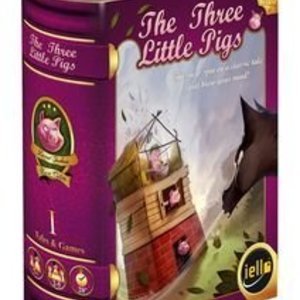
The Wolf always gets a bad rap. Think of all the stories you know that include an anthropomorphic wolf and tell me three that show The Wolf in a positive light. Can’t think of any? Me neither. But they need to eat to survive and it’s tough in these streets! errm, trees! Such is the plight of The Wolf in this one, as he is attempting to wrest the Little Pigs out of their hidey-holes so he can have a nice bacon dinner. And honestly, who can blame him? Bacon!
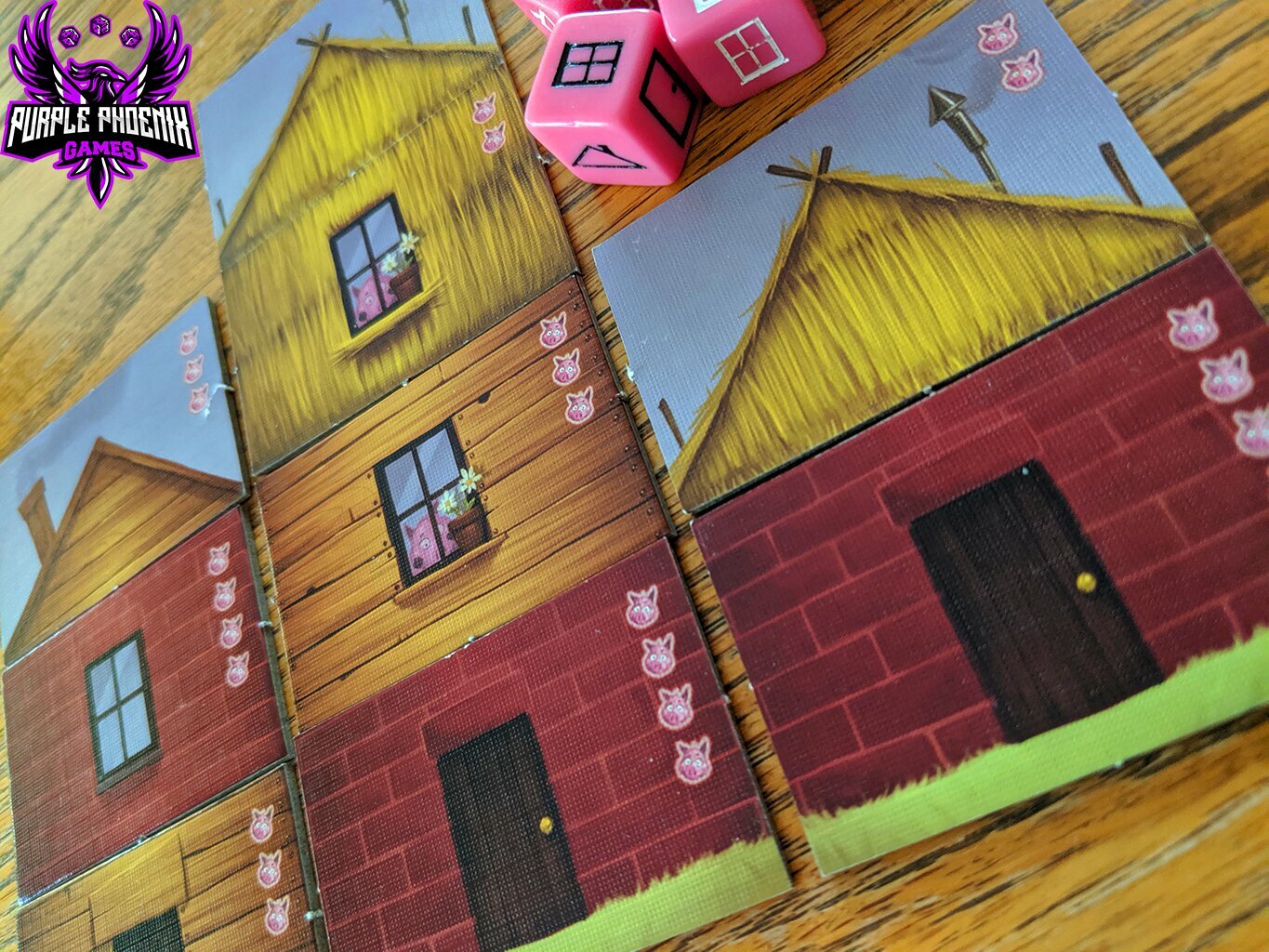
Tales & Games: The Three Little Pigs (which I will fondly refer to as 3LP for the remainder of this review) is a cute little family dice and take-that game about building houses for maximum points while avoiding The Wolf’s hungry advances. The winner of the game is the Little Piggy who has built the most complete structures using the best materials that afford them the most endgame points.
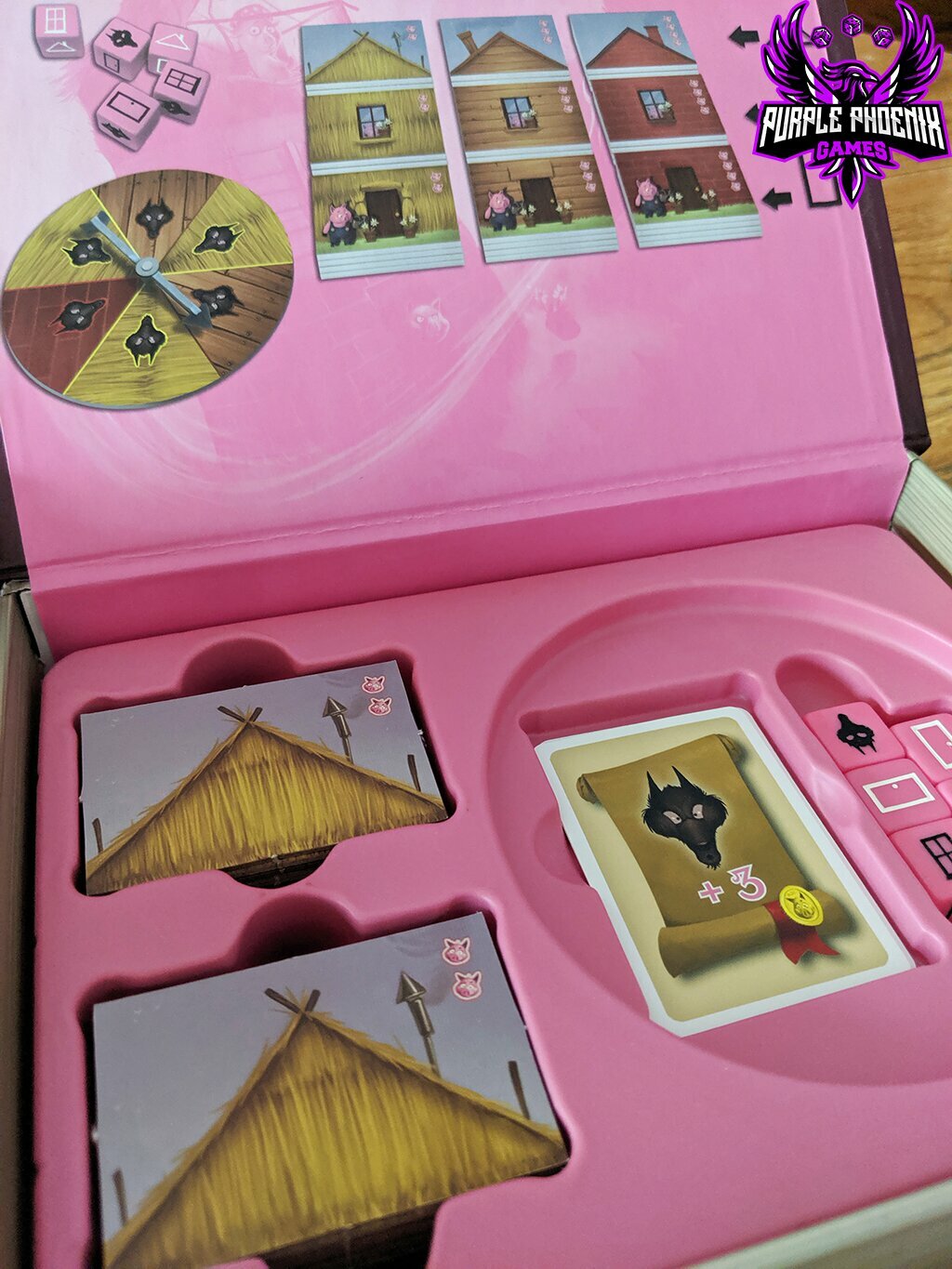
To setup, sort the building tiles by material type and house level type as shown inside the box cover. Place the dice and spinner nearby. Let the youngest or cutest player go first. The game is now ready to be played!
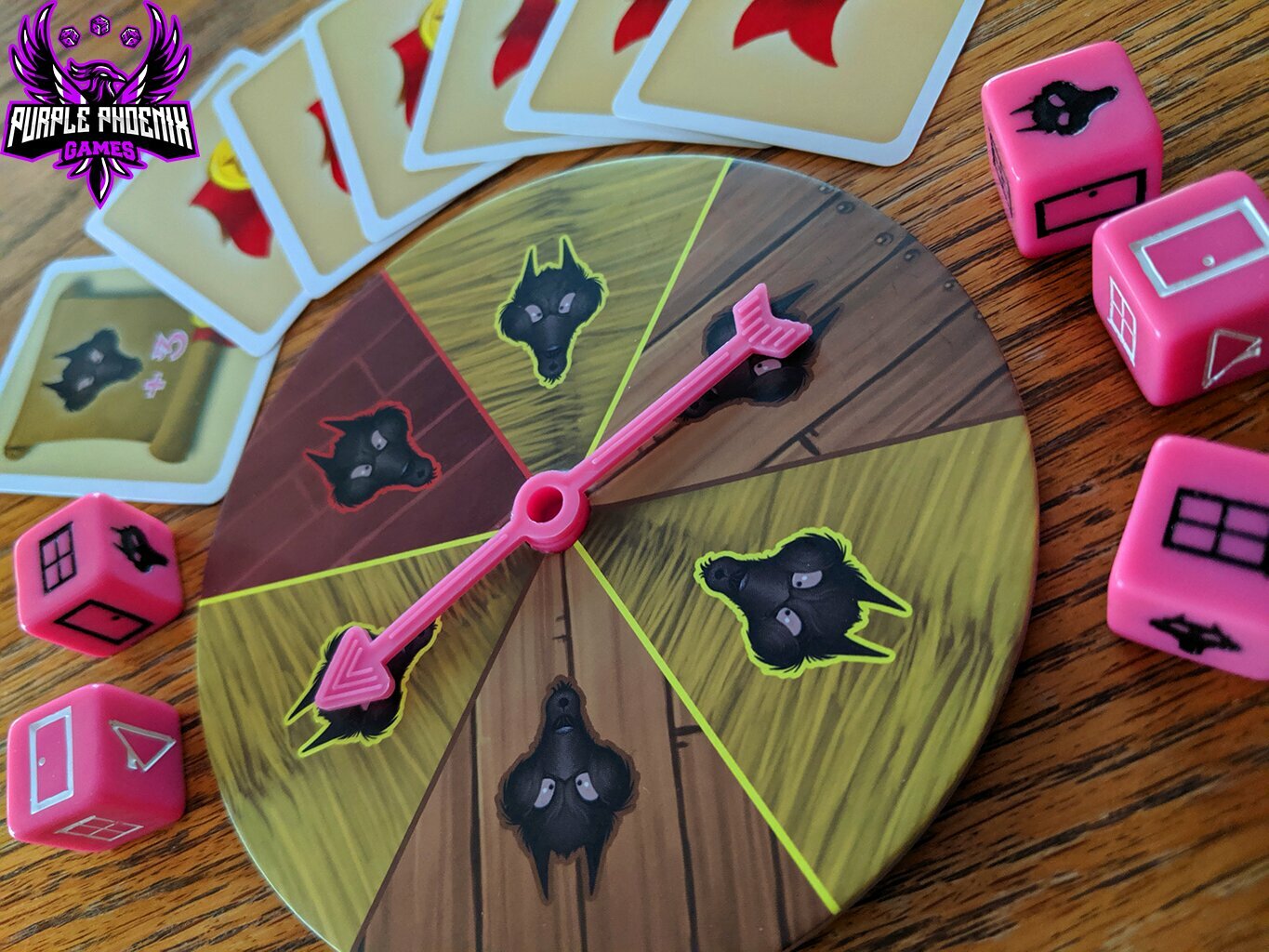
On a player’s turn they will roll all the dice Yahtzee-style (so with two re-roll attempts), and the remainder of the turn is based on what is rolled. Players are not required to re-roll, but must stop once two or more Wolf symbols are rolled, or after the second re-roll. The player may then use the dice to purchase house materials corresponding to what was rolled. If three doors are rolled, a player may purchase a straw door (which cost two door symbols) or a wooden door (which cost three door symbols). These house parts can be of mixed materials, so once the pieces have been purchased, house construction can then be done.
Should a player roll The Wolf, then the “breath” spinner will be spun. The player who rolled The Wolf dice will choose an opponent AND one of their houses to target. Spin the spinner and destroy all matching pieces in their house. Some children have issues with this, but hey, they should have built more brick sections! Play continues in this fashion taking turns rolling and purchasing and building until several stacks of house sections are gone (depending on player count). All incomplete houses are crumbled, and piggy faces on standing houses are scored to determine the victor! When playing with my kiddo I don’t use the bonus cards, but they are available if playing with older and more strategic players.
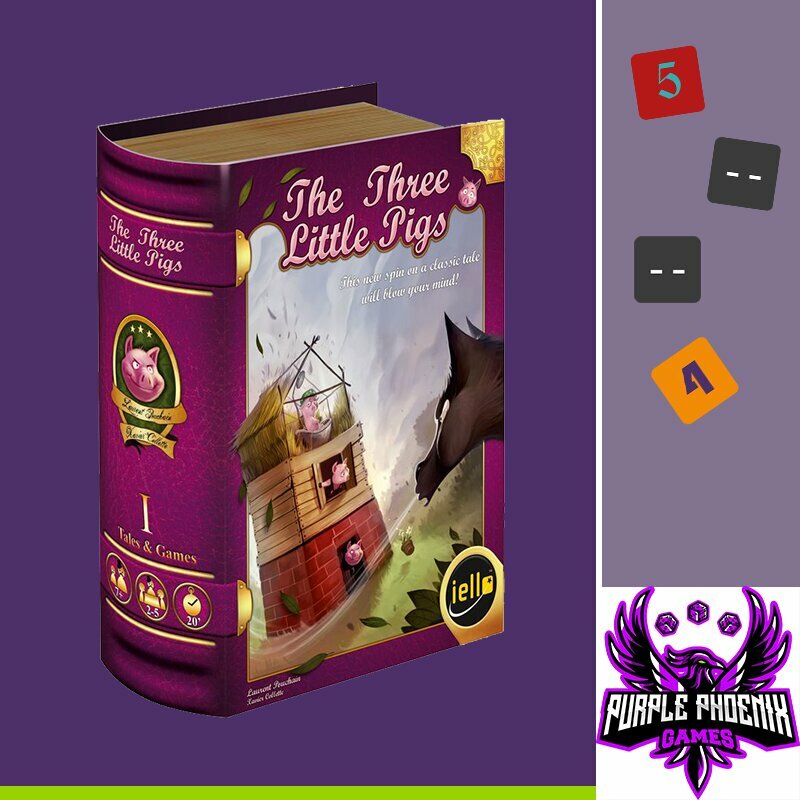
Components. As this is one of the famed (and first in the line) Tales & Games Bookshelf games, it has set a standard for the series. These games come in boxes that look like books on the outside, open like a book, and contain a story to be read as a prelude to the game, if wished. The box is very very cool, and the insert is pink and wonderfully designed. The house tiles are thick and colorful, and the pink dice are just a joy to roll. I love the components in this one!
So obviously this is a game really designed to target younger gamers. And though it says 7+ on the box, I have successfully played this with my 3 year old with zero issues. He loves it, and in turn, makes me love it too. Now, I will certainly not pull this out at any given Game Night with adults (unless we have gamer spouses or friends who have NEVER played modern games at all). However, I really do enjoy playing it with my son for now, and for super-newbies. It is colorful, light on rules, offers some choices, and of course, has a touch of luck and take-that. All this while still feeling like you are in the story of The Three Little Pigs. So I say, if you were ever on the fence with this one – get it. Play it with whomever you like and just enjoy it. It is light enough with just a touch of adultness to keep you smiling. But don’t invite your Twilight Imperium or Mage Knight friends. They won’t like it. We at Purple Phoenix Games know how to get down with the simpler games as well, so that’s why we give this one a blown-over 9 / 12.
Tales & Games: The Three Little Pigs (which I will fondly refer to as 3LP for the remainder of this review) is a cute little family dice and take-that game about building houses for maximum points while avoiding The Wolf’s hungry advances. The winner of the game is the Little Piggy who has built the most complete structures using the best materials that afford them the most endgame points.
To setup, sort the building tiles by material type and house level type as shown inside the box cover. Place the dice and spinner nearby. Let the youngest or cutest player go first. The game is now ready to be played!
On a player’s turn they will roll all the dice Yahtzee-style (so with two re-roll attempts), and the remainder of the turn is based on what is rolled. Players are not required to re-roll, but must stop once two or more Wolf symbols are rolled, or after the second re-roll. The player may then use the dice to purchase house materials corresponding to what was rolled. If three doors are rolled, a player may purchase a straw door (which cost two door symbols) or a wooden door (which cost three door symbols). These house parts can be of mixed materials, so once the pieces have been purchased, house construction can then be done.
Should a player roll The Wolf, then the “breath” spinner will be spun. The player who rolled The Wolf dice will choose an opponent AND one of their houses to target. Spin the spinner and destroy all matching pieces in their house. Some children have issues with this, but hey, they should have built more brick sections! Play continues in this fashion taking turns rolling and purchasing and building until several stacks of house sections are gone (depending on player count). All incomplete houses are crumbled, and piggy faces on standing houses are scored to determine the victor! When playing with my kiddo I don’t use the bonus cards, but they are available if playing with older and more strategic players.
Components. As this is one of the famed (and first in the line) Tales & Games Bookshelf games, it has set a standard for the series. These games come in boxes that look like books on the outside, open like a book, and contain a story to be read as a prelude to the game, if wished. The box is very very cool, and the insert is pink and wonderfully designed. The house tiles are thick and colorful, and the pink dice are just a joy to roll. I love the components in this one!
So obviously this is a game really designed to target younger gamers. And though it says 7+ on the box, I have successfully played this with my 3 year old with zero issues. He loves it, and in turn, makes me love it too. Now, I will certainly not pull this out at any given Game Night with adults (unless we have gamer spouses or friends who have NEVER played modern games at all). However, I really do enjoy playing it with my son for now, and for super-newbies. It is colorful, light on rules, offers some choices, and of course, has a touch of luck and take-that. All this while still feeling like you are in the story of The Three Little Pigs. So I say, if you were ever on the fence with this one – get it. Play it with whomever you like and just enjoy it. It is light enough with just a touch of adultness to keep you smiling. But don’t invite your Twilight Imperium or Mage Knight friends. They won’t like it. We at Purple Phoenix Games know how to get down with the simpler games as well, so that’s why we give this one a blown-over 9 / 12.
Alien Slave Masters: Part Two
10.0 Rate It
Book
When a distant planet’s ownership is in dispute, conquering aliens turn defiant human males into...
Dark Science Fiction Erotica MM
Kirk Bage (1775 KP) rated Knives Out (2019) in Movies
Jan 22, 2021
Murder mystery films tend to be more fun in theory and anticipation than they are to watch. It’s a genre that I very much enjoy and have indulged in over the years. Yet, if I look back in detail at it, I find that it is the books, especially those of Agatha Christie, that I like much more than anything lasting a couple of hours on the screen. There’s something about the mystery being rushed and squeezed into the cinema artform that is usually anti-climactic or even a full on let down.
Perhaps my favourite of the entire genre is a film that refuses to take itself seriously and is at once a pastiche of the multiple cliches that have accumulated over the years. And that film is, of course, the wonderfully camp, funny and charming 1985 romp Clue, starring Tim Curry and a slough of 80s B stars having the time of their lives. It isn’t a “good” film, it is a cult film, it’s joy being in its absolute lack of pretension or moral judgement. Like the board game that inspired it, it isn’t overly complicated or long, but has just enough cleverness, mirth and ambiance about it to always be a winner.
Rian Johnson’s take on the genre, Knives Out, is aware of these elements at all times, being above all things colourful, playful, arch and glib, but never convoluted or cerebral in an alienating way. He is something of a master at subverting a genre and wringing new life into it; take the invention of the teen noir in Brick, or the blend of assassin time travel sci-fi in Looper. He even gave an entire franchise a new breath of life by re-examining the use of humour and self referencing in Star Wars: The Last Jedi.
All of those previous films have as many detractors as mega fans, proving his style is devisive, for its audacity and its irreverence towards any idea of purism within an established model. And Knives Out is no exception to that. However, it may be the film of his that most people can agree on that they enjoyed, for one reason or another. I think it’s as interesting to ask why that is as it is to talk about the film itself… so, I will. At least, I’ll try to do both without losing my train of thought.
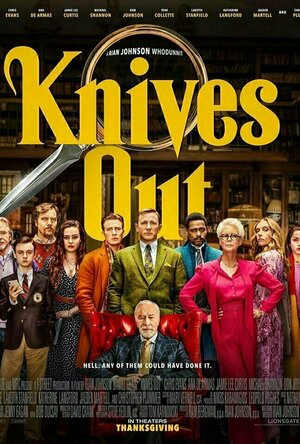
Firstly, it looks stunning; the palate of rich colours used in the poster and all marketing just make it look like something you want to immerse yourself in – every jacket, tie, dress, or piece of furniture is designed to precision, and it works like a dream of the genre you may have once had, as if it had been plucked directly from your subconscious. As in all good murder mysteries, the location, props and costumes should hold as much character as the actors, and the stately home of the Thrombey family certainly provides plenty of atmosphere in every texture and material on display.
Of course, the cast of characters is wonderfully put together with some inspired casting of familiar faces and actors you trust, such as Toni Collette and Michael Shannon, together with a few we don’t see enough of these days, such as Jamie Lee Curtis and Don Johnson, who both manage to create something as memorable as anything they did in their golden days. Add to the mix two bone fide action film superstars in Daniel Craig and Chris Evans, who leave the baggage of their most famous characters far behind and manage to convince you they are real actors again, the former with the aide of a jarring but hilarious Southern drawl, that grates at first but is a perfect choice on reflection.
Then there are the two lynchpins of this film’s ultimate success and joy: the exceptional legendary gravitas of 90 year old Christopher Plummer as the patriarch and victim at the centre of the intrigue, and the quite glorious revelation of Ana de Armas, whose charisma, beauty and skill in this delicately balanced role was the most impressive thing for me about the whole production. It may be Craig who is the ever present focus, as the detective tasked with solving the “crime”, but it is de Armas that you will remember most long after the credits roll.
As for the plot, well… I obviously can’t talk about it without ruining the whole thing. But, I can say that it isn’t far into the intricate web of motives, alibis and secrets before you start to sense this is going somewhere different, even unique. The examination of the relationships and personalities, and the extent to which they each demonstrate greed and selfishness is fascinating, superceding the crime that exists on the surface with a swamp of far seedier and unpleasant goings-on. Craig’s suave Benoit Blanc isn’t so much a detective here as a family therapist, or perhaps a supernatural presence in the style of the old classic, An Inspector Calls. Perhaps, it is suggested, no one completely escapes guilt and shame here… or do they? Are we looking for a murderer, or the only morally good person amidst a pack of dogs?
Another key element is how modern and unstuffy it feels, despite the country house and riches this is no play of manners, quite the opposite – no one here is on their best behaviour for the sake of decorum, and being upper class is an idea played with rather than enforced. The tea and cakes of the classic Christie, such as Murder on the Orient Express is replaced by smartphones and similar trappings, that identify it as definitely 2019 and no period piece. The concerns and themes are very much rooted in our present problems, and for that it engages and resonates in ways a costume drama just can’t do.
Upon finishing it for the first time, you may be thinking “sure, OK, I enjoyed that… but I’m not blown away here”. Then, as it sinks in over coming weeks, you find yourself recommending it to people, and thinking about how good it is in ways you didn’t initially think about. And that is surely why it was so embraced by the critics and paying public alike; it is a likeable, fun film, that can also stand some artistic scrutiny. It isn’t the smartest, or prettiest, or most meaningful film ever made, but it is enough of all three to make it an instant mini-classic, in my opinion.
I feel like there is maybe more to say about it, which is always a good sign, but that will do for now. I’d be happy to discuss it with anyone that feels the need. Or hear from anyone that didn’t like it! It would be interesting to hear that side of it, because I haven’t heard many negative comments on it at all. I don’t think I would defend it as a masterpiece to the end of the Earth, ‘cos it ain’t that good. I’m just hard pressed to find a serious fault. And it’s great when one of those sneaks up on you!
Perhaps my favourite of the entire genre is a film that refuses to take itself seriously and is at once a pastiche of the multiple cliches that have accumulated over the years. And that film is, of course, the wonderfully camp, funny and charming 1985 romp Clue, starring Tim Curry and a slough of 80s B stars having the time of their lives. It isn’t a “good” film, it is a cult film, it’s joy being in its absolute lack of pretension or moral judgement. Like the board game that inspired it, it isn’t overly complicated or long, but has just enough cleverness, mirth and ambiance about it to always be a winner.
Rian Johnson’s take on the genre, Knives Out, is aware of these elements at all times, being above all things colourful, playful, arch and glib, but never convoluted or cerebral in an alienating way. He is something of a master at subverting a genre and wringing new life into it; take the invention of the teen noir in Brick, or the blend of assassin time travel sci-fi in Looper. He even gave an entire franchise a new breath of life by re-examining the use of humour and self referencing in Star Wars: The Last Jedi.
All of those previous films have as many detractors as mega fans, proving his style is devisive, for its audacity and its irreverence towards any idea of purism within an established model. And Knives Out is no exception to that. However, it may be the film of his that most people can agree on that they enjoyed, for one reason or another. I think it’s as interesting to ask why that is as it is to talk about the film itself… so, I will. At least, I’ll try to do both without losing my train of thought.
Firstly, it looks stunning; the palate of rich colours used in the poster and all marketing just make it look like something you want to immerse yourself in – every jacket, tie, dress, or piece of furniture is designed to precision, and it works like a dream of the genre you may have once had, as if it had been plucked directly from your subconscious. As in all good murder mysteries, the location, props and costumes should hold as much character as the actors, and the stately home of the Thrombey family certainly provides plenty of atmosphere in every texture and material on display.
Of course, the cast of characters is wonderfully put together with some inspired casting of familiar faces and actors you trust, such as Toni Collette and Michael Shannon, together with a few we don’t see enough of these days, such as Jamie Lee Curtis and Don Johnson, who both manage to create something as memorable as anything they did in their golden days. Add to the mix two bone fide action film superstars in Daniel Craig and Chris Evans, who leave the baggage of their most famous characters far behind and manage to convince you they are real actors again, the former with the aide of a jarring but hilarious Southern drawl, that grates at first but is a perfect choice on reflection.
Then there are the two lynchpins of this film’s ultimate success and joy: the exceptional legendary gravitas of 90 year old Christopher Plummer as the patriarch and victim at the centre of the intrigue, and the quite glorious revelation of Ana de Armas, whose charisma, beauty and skill in this delicately balanced role was the most impressive thing for me about the whole production. It may be Craig who is the ever present focus, as the detective tasked with solving the “crime”, but it is de Armas that you will remember most long after the credits roll.
As for the plot, well… I obviously can’t talk about it without ruining the whole thing. But, I can say that it isn’t far into the intricate web of motives, alibis and secrets before you start to sense this is going somewhere different, even unique. The examination of the relationships and personalities, and the extent to which they each demonstrate greed and selfishness is fascinating, superceding the crime that exists on the surface with a swamp of far seedier and unpleasant goings-on. Craig’s suave Benoit Blanc isn’t so much a detective here as a family therapist, or perhaps a supernatural presence in the style of the old classic, An Inspector Calls. Perhaps, it is suggested, no one completely escapes guilt and shame here… or do they? Are we looking for a murderer, or the only morally good person amidst a pack of dogs?
Another key element is how modern and unstuffy it feels, despite the country house and riches this is no play of manners, quite the opposite – no one here is on their best behaviour for the sake of decorum, and being upper class is an idea played with rather than enforced. The tea and cakes of the classic Christie, such as Murder on the Orient Express is replaced by smartphones and similar trappings, that identify it as definitely 2019 and no period piece. The concerns and themes are very much rooted in our present problems, and for that it engages and resonates in ways a costume drama just can’t do.
Upon finishing it for the first time, you may be thinking “sure, OK, I enjoyed that… but I’m not blown away here”. Then, as it sinks in over coming weeks, you find yourself recommending it to people, and thinking about how good it is in ways you didn’t initially think about. And that is surely why it was so embraced by the critics and paying public alike; it is a likeable, fun film, that can also stand some artistic scrutiny. It isn’t the smartest, or prettiest, or most meaningful film ever made, but it is enough of all three to make it an instant mini-classic, in my opinion.
I feel like there is maybe more to say about it, which is always a good sign, but that will do for now. I’d be happy to discuss it with anyone that feels the need. Or hear from anyone that didn’t like it! It would be interesting to hear that side of it, because I haven’t heard many negative comments on it at all. I don’t think I would defend it as a masterpiece to the end of the Earth, ‘cos it ain’t that good. I’m just hard pressed to find a serious fault. And it’s great when one of those sneaks up on you!
Heather Cranmer (2721 KP) rated Tempestuous (Twisted Lit #1) in Books
Jun 7, 2018
(This review can be found on my blog, <a href="http://themisadventuresofatwentysomething.blogspot.com/">The (Mis)Adventures of a Twenty-Something Year Old Girl</a>, in September).
I read Exposure (Twisted Lit #2) first (review up in a couple of days), and while I enjoyed that one better, Tempestuous is still a good read. I can't comment on how much alike it is to The Tempest by Shakespeare because I've never read that play by Shakespeare.
Miranda Prospero used to be a popular girl, but after one of her ideas gets people in trouble, she becomes a social pariah. One night, while working at the hot dog stand in the mall, there's a horrible snowstorm, and everyoen is locked in the mall overnight including Miranda and her former friends and ex-boyfriend. As she plots revenge against them, there's also a series of break-ins going on at the mall. It doesn't take long for Miranda to realize that the thief is also locked in the mall. Miranda must learn what's important or else she may be in more trouble.
I love the cover! I love how plain it is, yet how artistic it is at the same time. The colors go together really well, and I love the little soda cup on the cover.
The title is fantastic because not only is this a retelling of The Tempest by Shakespeare, but it also describes the weather in the book as well as Miranda's life at the moment.
I thought the world building was alright and the setting fantastic. I've always wondered what it would be like to be stuck in a mall. I'd probably hate it, but I'd like to imagine it'd be like what Miranda's night was like. I just kind of found it hard to believe that people would just go into any closed shop willy nilly for supplies and loot. I also found it kind of hard to believe that key holders would just open their shops for people. I would've loved to have more back story on Miranda's fall from grace. I would've liked the book to open up with her being part of the popular crowd, and then read about her incident that lead her to be a social outcast, followed by the story I just read. Yes, it would make a longer book, but I think I would've found that super interesting.
The pacing is alright in this book. I didn't devour this book so to speak. I wasn't bored with it, and the pacing is by no means slow, I just didn't get as interested in it as I have with other books.
I like the whole plot about being stuck in a mall and wondering what's going to happen that night. There are many subplots like how Miranda reacts to her former friends and ex-boyfriend, her love life, her friendships and other decisions. I like how there was also the subplot involving a thief locked inside the mall with everyone. I must admit that I was trying to find out who the thief was (and getting it wrong) throughout the book. I only realized who the thief was when Miranda did.
I felt that the characters were written well. I could totally understand about Miranda wanting revenge on those who shamed her and bullied her. I'm not condoning revenge by no means, but I could relate to that feeling. I loved how down to Earth Miranda seemed and how much she cared for people. Caleb came across as being a little bit of a dork, but that's what I loved about him! His dorkiness was actually kind of cute! I also loved how Chad was athletic, but the authors didn't make him out to be some brainless jock. Chad was actually a very sweet and caring guy, and I loved him. My favorite character was Ariel though. I loved her naivety and innocence. I loved how she seemed to find beauty in everything. I just wanted to hug Ariel a lot throughout the book.
I enjoyed the dialogue. None of it felt forced which was good. Everything flowed smoothly, and I found myself even laughing at some of the dialogue (because it was meant to be funny, not because it was bad or anything). There are a few swear words in the book, but nothing major.
Overall, Tempestuous is a fun story that lets you live a night being stuck in a mall with it's likable characters, great dialogue and interesting plot.
I'd recommend this book to those aged 14+ who want to read something with characters that they can relate to.
I'd give Tempestuous (Twisted Lit #1) by Kim Askew & Amy Helmes a 3.75 out of 5.
(I received this book for free from the authors for a giveaway. I was not required to write a review).
I read Exposure (Twisted Lit #2) first (review up in a couple of days), and while I enjoyed that one better, Tempestuous is still a good read. I can't comment on how much alike it is to The Tempest by Shakespeare because I've never read that play by Shakespeare.
Miranda Prospero used to be a popular girl, but after one of her ideas gets people in trouble, she becomes a social pariah. One night, while working at the hot dog stand in the mall, there's a horrible snowstorm, and everyoen is locked in the mall overnight including Miranda and her former friends and ex-boyfriend. As she plots revenge against them, there's also a series of break-ins going on at the mall. It doesn't take long for Miranda to realize that the thief is also locked in the mall. Miranda must learn what's important or else she may be in more trouble.
I love the cover! I love how plain it is, yet how artistic it is at the same time. The colors go together really well, and I love the little soda cup on the cover.
The title is fantastic because not only is this a retelling of The Tempest by Shakespeare, but it also describes the weather in the book as well as Miranda's life at the moment.
I thought the world building was alright and the setting fantastic. I've always wondered what it would be like to be stuck in a mall. I'd probably hate it, but I'd like to imagine it'd be like what Miranda's night was like. I just kind of found it hard to believe that people would just go into any closed shop willy nilly for supplies and loot. I also found it kind of hard to believe that key holders would just open their shops for people. I would've loved to have more back story on Miranda's fall from grace. I would've liked the book to open up with her being part of the popular crowd, and then read about her incident that lead her to be a social outcast, followed by the story I just read. Yes, it would make a longer book, but I think I would've found that super interesting.
The pacing is alright in this book. I didn't devour this book so to speak. I wasn't bored with it, and the pacing is by no means slow, I just didn't get as interested in it as I have with other books.
I like the whole plot about being stuck in a mall and wondering what's going to happen that night. There are many subplots like how Miranda reacts to her former friends and ex-boyfriend, her love life, her friendships and other decisions. I like how there was also the subplot involving a thief locked inside the mall with everyone. I must admit that I was trying to find out who the thief was (and getting it wrong) throughout the book. I only realized who the thief was when Miranda did.
I felt that the characters were written well. I could totally understand about Miranda wanting revenge on those who shamed her and bullied her. I'm not condoning revenge by no means, but I could relate to that feeling. I loved how down to Earth Miranda seemed and how much she cared for people. Caleb came across as being a little bit of a dork, but that's what I loved about him! His dorkiness was actually kind of cute! I also loved how Chad was athletic, but the authors didn't make him out to be some brainless jock. Chad was actually a very sweet and caring guy, and I loved him. My favorite character was Ariel though. I loved her naivety and innocence. I loved how she seemed to find beauty in everything. I just wanted to hug Ariel a lot throughout the book.
I enjoyed the dialogue. None of it felt forced which was good. Everything flowed smoothly, and I found myself even laughing at some of the dialogue (because it was meant to be funny, not because it was bad or anything). There are a few swear words in the book, but nothing major.
Overall, Tempestuous is a fun story that lets you live a night being stuck in a mall with it's likable characters, great dialogue and interesting plot.
I'd recommend this book to those aged 14+ who want to read something with characters that they can relate to.
I'd give Tempestuous (Twisted Lit #1) by Kim Askew & Amy Helmes a 3.75 out of 5.
(I received this book for free from the authors for a giveaway. I was not required to write a review).