Search
Search results

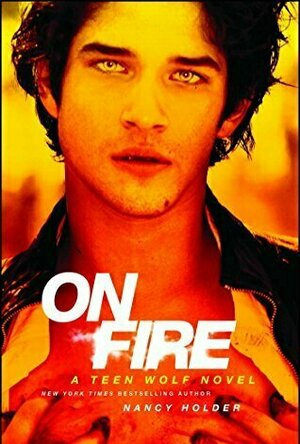
Hadley (567 KP) rated On Fire: a Teen Wolf Novel in Books
Feb 3, 2020

Favorite TV show (1 more)
Great side story
Nancy Holder is known in the literary world for her novel adaptations of TV shows, such as Buffy the Vampire Slayer and Smallville, which has made her the go-to author for popular teen shows. With her ability to mesh together a story with what is going on within the TV show, I'm not surprised that she was picked to adapt MTV's 'Teen Wolf' into a novel. Having only read this book by her, On Fire: a Teen Wolf Novel, is definitely a successful must-read for fans of the show.
Do you need to have watched the show to understand what is going on in the novel? Yes, because the book does backtrack, but unless you've watched at least season one, you will have no idea what is going on. But if you have watched the first season, On Fire will fill in the small gaps that was left out of the TV show's story without losing the characteristics of our favorite cast members.
This is a 'young adult' book, so you can expect the usual tropes like teen drama and romance - - - if you can get past that, the story can be enjoyable. The main characters are different enough to keep interest going, there are werewolves, and some men with guns. But I do have to say that I felt Allison's character was flat and boring in 'On Fire.'
The story gets underway when the main character, Scott, finds out that his girlfriend's best friend's boyfriend, Jackson, has gone missing. Scott and his girlfriend, Allison, decide to go look for him at the last place his phone's GPS blinked at, but Scott is using this just as an excuse to hang out with his girlfriend because Jackson is a sworn enemy of his. As I have said, if you haven't at least watched season one of MTV's Teen Wolf, you'll be pretty lost in the beginning of the story because there are no introductions to these characters, since it seems Holder was writing this specifically for fans of the TV show (I am a huge fan of the series, and highly recommend it to people who love mythical creatures, such as werewolves and banshees).
On the other side of the story, viewers of the show get to see Derek Hale and Kate Argent's backstory, which Derek is a werewolf and Kate is a werewolf hunter, the two had a quick romance, but it turned out to be a lie on Kate's side. This side of the story will make fans of the show happy because the series only gave hints towards the fake romance between the two characters, while Holder shows us exactly what happened. From Derek meeting Kate when he is only 17-years-old, and she older, to her burning the Hale household to the ground with most of Derek's family inside of it--- because she hunts werewolves, of course.
Meanwhile, both Derek and Scott have been having nightmares about an Alpha wolf, that seems to either want both of them dead or to join his pack. Worse of all, Scott and Derek both end up at the forest preserve that the dreams took place in, which both feel another wolf presence while being there. Since they both sense this, they start to wonder if Jackson's disappearance is a trap set by the Alpha.
During all of this, Jackson's girlfriend, Lydia, and his best friend Danny, are also searching for Jackson or any clue as to why he suddenly disappeared, which this has nothing to do with what actually happens to Jackson in the TV series. I think the best parts of this book are the scenes without Scott and Allison, who spend the majority of the time trying to make-out while doing a half-ass job searching for the lost friend. As I said before, if you can get past the teen romance, the story is actually really good. Especially my favorite character, Stiles, who had the best description in the entire book: "Life in his[Stiles] head was accompanied by the soundtrack of a small, eternal, dull ache, but word was that would go away after a few decades."
If you have watched the show, you'll be glad to know that this book isn't just an adaptation of season two--- this one has a different story in it that wasn't in the show. Without giving too much away, we get a different glimpse of Jackson's personality and problems he has dealt with much of his life. The book isn't a necessary read for fans, but it gives us a little bit more of the Teen Wolf world to read about, such as introductions of new characters (like a high school girl named Cassie), who never made it to the TV series. While reading this book, it can tempt readers to go back or even start watching the MTV series. I warn you, though, once you start watching, you won't be able to stop. Binge fest anyone?
There were a few inconsistencies, and a whole lot of typos--- whoever the editor was, was apparently not paying attention, but the story is good and the characters are unique. I recommend this to people who have watched the series, and to those who love mythical creatures. But I do wholeheartedly recommend you watch season one before attempting to read this novel, otherwise, you will be lost!
For more paranormal and fantasy book reviews, check out my blog at GoreAndTea.com
Do you need to have watched the show to understand what is going on in the novel? Yes, because the book does backtrack, but unless you've watched at least season one, you will have no idea what is going on. But if you have watched the first season, On Fire will fill in the small gaps that was left out of the TV show's story without losing the characteristics of our favorite cast members.
This is a 'young adult' book, so you can expect the usual tropes like teen drama and romance - - - if you can get past that, the story can be enjoyable. The main characters are different enough to keep interest going, there are werewolves, and some men with guns. But I do have to say that I felt Allison's character was flat and boring in 'On Fire.'
The story gets underway when the main character, Scott, finds out that his girlfriend's best friend's boyfriend, Jackson, has gone missing. Scott and his girlfriend, Allison, decide to go look for him at the last place his phone's GPS blinked at, but Scott is using this just as an excuse to hang out with his girlfriend because Jackson is a sworn enemy of his. As I have said, if you haven't at least watched season one of MTV's Teen Wolf, you'll be pretty lost in the beginning of the story because there are no introductions to these characters, since it seems Holder was writing this specifically for fans of the TV show (I am a huge fan of the series, and highly recommend it to people who love mythical creatures, such as werewolves and banshees).
On the other side of the story, viewers of the show get to see Derek Hale and Kate Argent's backstory, which Derek is a werewolf and Kate is a werewolf hunter, the two had a quick romance, but it turned out to be a lie on Kate's side. This side of the story will make fans of the show happy because the series only gave hints towards the fake romance between the two characters, while Holder shows us exactly what happened. From Derek meeting Kate when he is only 17-years-old, and she older, to her burning the Hale household to the ground with most of Derek's family inside of it--- because she hunts werewolves, of course.
Meanwhile, both Derek and Scott have been having nightmares about an Alpha wolf, that seems to either want both of them dead or to join his pack. Worse of all, Scott and Derek both end up at the forest preserve that the dreams took place in, which both feel another wolf presence while being there. Since they both sense this, they start to wonder if Jackson's disappearance is a trap set by the Alpha.
During all of this, Jackson's girlfriend, Lydia, and his best friend Danny, are also searching for Jackson or any clue as to why he suddenly disappeared, which this has nothing to do with what actually happens to Jackson in the TV series. I think the best parts of this book are the scenes without Scott and Allison, who spend the majority of the time trying to make-out while doing a half-ass job searching for the lost friend. As I said before, if you can get past the teen romance, the story is actually really good. Especially my favorite character, Stiles, who had the best description in the entire book: "Life in his[Stiles] head was accompanied by the soundtrack of a small, eternal, dull ache, but word was that would go away after a few decades."
If you have watched the show, you'll be glad to know that this book isn't just an adaptation of season two--- this one has a different story in it that wasn't in the show. Without giving too much away, we get a different glimpse of Jackson's personality and problems he has dealt with much of his life. The book isn't a necessary read for fans, but it gives us a little bit more of the Teen Wolf world to read about, such as introductions of new characters (like a high school girl named Cassie), who never made it to the TV series. While reading this book, it can tempt readers to go back or even start watching the MTV series. I warn you, though, once you start watching, you won't be able to stop. Binge fest anyone?
There were a few inconsistencies, and a whole lot of typos--- whoever the editor was, was apparently not paying attention, but the story is good and the characters are unique. I recommend this to people who have watched the series, and to those who love mythical creatures. But I do wholeheartedly recommend you watch season one before attempting to read this novel, otherwise, you will be lost!
For more paranormal and fantasy book reviews, check out my blog at GoreAndTea.com
A Bibliophagist (113 KP) rated Throne of Glass in Books
Feb 5, 2020 (Updated Feb 5, 2020)


Good start (2 more)
Good finish
Intial character introductions
Formulaic (1 more)
Celeana never does anything she says she can do
Something special ruined by the YA formula
This is another tough one to review, primarily because it started so good for me, then just ended as a whimper.
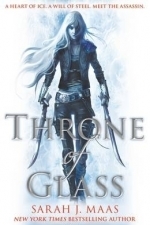
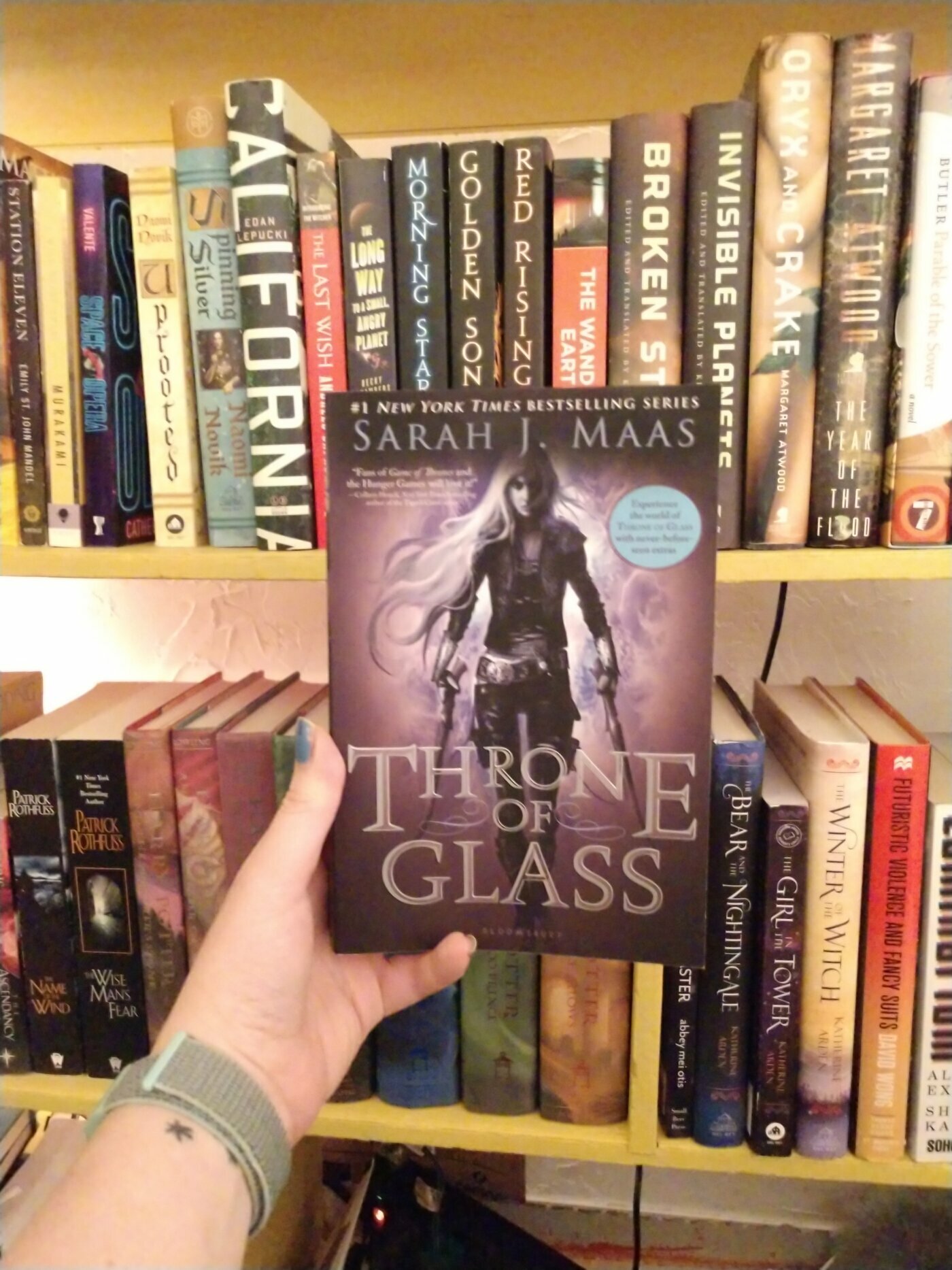
First of all, this was one of my "force myself out of my norm" picks. I forced myself to pick two popular books, that didn't interest me, and give them a chance. This was the biggest "no interest" pick. The cover alone is just so bad I was embarrassed to be buying it at the bookstore by the art school I work at. What if one of my Illustration students see, will I be deemed unworthy to teach them if I buy a book so ugly and anatomically incorrect? Like seriously, why is her torso so long. Is she just insanely tall? Is she hunched or does she have no neck? It's just... awful.
Also, it's a genre I don't gel well with, fantasy just isn't my jam, I get so mad that SciFi is always lumped in with Fantasy. So, the perfect choice I suppose.
When I first started, I texted my partner and told him "holy crap, I actually am enjoying this". I was shocked, surprised. So far the YA darling of a book wasn't stereotypically YA. The main character was deep and interesting and had a thick backstory. Yea they've already introduced two perfectly perfect love interested for her, but whatever, this is actually interesting.
The book follows the acclaimed assassin, Calaena, young, utterly gorgeous and snarky, deadly. In theory a textbook YA heroine. But she is far from a Mary Sue (in the beginning) her backstory is interesting and rich. She's hardened by a year in prison death labor camp. A camp she is offered freedom from if she accepts the Prince's offer; his father wants a "champion" (aka a dubious person to assassinate and otherwise do his dirty work) and she is the Prince's pick. Should she accept, she'll go against other noble's picks and participate in a competition proving their worth. The winner gets freedom and serves as the champion for X amount of years. Losers go back to whatever prison or hole they crawled out of. So while Celeana doesn't much want to be a lackey to some Princeling or King, she doesn't want to go back to the death labor camp either.
So if you can't tell already, enter love interest #1, the sassy, broody Prince Dorian. Perfect in all ways, except for birthright. Could someone like Celeana ever love him? Dun Dun DUnnnnn. Also enter love interest 2, captain of the guard Chaol, the prince's childhood friend, quiet, introverted, job-focused. Doesn't trust her at all, but could she break him down? What will happen if two best friends fall for the same saucy assassin? DUN DUN DUNNNN
So obviously, she accepts, and is taken to the great glass palace to await the competition, where we have a veritable Beauty and the Beast situation, she's provided lavish accommodation, beautiful dresses, and sadly starts to become a Mary Sue. But not quite yet, first, we get some actually really interesting story, hints at the world we're in, going through a once magical forest, with something in the night leaving flowers at the foot of Celeana's bed, hinting at perhaps her lineage being more magical than we think. We also get introduced to the competition, a lineup of stereotypical gruff dudes, with the bad guy being so obvious he might as well as a spotlight on him (unfortunately this book doesn't really have a twist). Also, enter love interest 3? I utilize the question mark because this one isn't really persued, but feels like it's meant to be something. A handsome, young, way too nice unsavory that she aligns herself with. No one knows who she is, and she goes under a pseudonym while in the palace, hoping to make people underestimate her. The first parts of the competition are interesting, the book is actually conscious of how out of shape she'd be, and takes pains to be detailed (sometimes overly detailed, like the page about her period, I'm in no means ashamed of my period, but the page literally did nothing but further the stereotype that we are completely immobile and need a day off while on it. I wish the author impowered Celeana by having her be in pain, but still be a badass).
As the competition progresses, however, competitors begin dying in gruesome ways, that aren't related to the competition. Concern rises, and whispers of the old magic are everywhere. Celeana now needs to survive this competition, survive whatever is killing her competitors, and solve the mystery happening in the castle. Oh and of course, figure out how to go to that ball and which boy she wants.
Unfortunately, after the first competition-related thing, this book started going downhill for me. Gone was this interest main character, and replaced was a stereotypical Mary Sue that forgets she's an assassin a lot. She rarely does anything Assasin like actually, beyond some internal dialogue in which she thinks about assasin things. It goes from describing the competition to suddenly being like "there were two more trials, Celeana rocked them" skipping ahead a glossing over the competition entirely, choosing instead to focus on the growing tension between her and the two boys, and dangling the very obvious bad guy in front of us as if we're going to be ever so surprised when we find out it's exactly who we thought it was. I want those trials, I want to know what happened and see her thoughts, something to remind me she's an assassin and not a giggling school girl more than ready for court life. Having stereotypical scenes of playing Billiards and Dorian holding her to show her how to do it. Don't even get me started on the Billiards, a fantasy book, using freak in billiards, make up a game for goodness sake, but to utilize a surprisingly modern game in a high fantasy setting made me laugh out loud for the wrong reasons. She gets a puppy, that hates everyone but her, befriends a badass princess (the most interesting thing in this book) and fights off some baddies. Too bad most of the focus was on the rushed, completely chemistry-free relationship between her and Dorian, they see each other like 4 times and are willing to give everything up for each other, it's painful. Honestly, even when I let my mind lapse into YA mode and allow myself to enjoy a fun YA romance, this is not how to do it. Also, Team Chaol all the way.
So the competition takes a considerable step back, and so does my interest. I would argue that the concept in this story is solid and interesting, but executed poorly, which is odd because the beginning proves to be the author can write well, it just feels like she second-guessed herself and decided to stop doing an actually interesting story and instead focus on being stereotypically YA. But there are little gems in here, an interesting world is hinted at, likable and interesting characters are glimpsed in the beginning before she lost interest in developing them. An undercurrent of well thought out mystery and magic. But all of these things took a backseat to fulfil the YA formula instead. I'm going to read the next book just to see if this world becomes more of the focus, but if it doesn't I'll have to stop, this series is just way too long to deal with the same formula over and over.
She almost got me, she was so close, I just wish this book had been consistent and focused on the plot. I wish she had let Celeana be the strong character she implied in the beginning rather than a stereotypical YA girl. I get she was fulfilling the life she never had, but in a situation where she needed to really be HER to get her freedom, it just doesn't feel like the appropriate time for wish fulfillment I wish, if there had to be romance, it had more oomf, made me feel things, made me care. Unfortunately, it didn't have these things, so this book was a bit of a flop for me. So I'm hoping, she'll prove me wrong in the second one, and let the story I see she's made and spent loving time on shine, rather than hide it underneath the guaranteed to sell formula plaguing young adult books.
First of all, this was one of my "force myself out of my norm" picks. I forced myself to pick two popular books, that didn't interest me, and give them a chance. This was the biggest "no interest" pick. The cover alone is just so bad I was embarrassed to be buying it at the bookstore by the art school I work at. What if one of my Illustration students see, will I be deemed unworthy to teach them if I buy a book so ugly and anatomically incorrect? Like seriously, why is her torso so long. Is she just insanely tall? Is she hunched or does she have no neck? It's just... awful.
Also, it's a genre I don't gel well with, fantasy just isn't my jam, I get so mad that SciFi is always lumped in with Fantasy. So, the perfect choice I suppose.
When I first started, I texted my partner and told him "holy crap, I actually am enjoying this". I was shocked, surprised. So far the YA darling of a book wasn't stereotypically YA. The main character was deep and interesting and had a thick backstory. Yea they've already introduced two perfectly perfect love interested for her, but whatever, this is actually interesting.
The book follows the acclaimed assassin, Calaena, young, utterly gorgeous and snarky, deadly. In theory a textbook YA heroine. But she is far from a Mary Sue (in the beginning) her backstory is interesting and rich. She's hardened by a year in prison death labor camp. A camp she is offered freedom from if she accepts the Prince's offer; his father wants a "champion" (aka a dubious person to assassinate and otherwise do his dirty work) and she is the Prince's pick. Should she accept, she'll go against other noble's picks and participate in a competition proving their worth. The winner gets freedom and serves as the champion for X amount of years. Losers go back to whatever prison or hole they crawled out of. So while Celeana doesn't much want to be a lackey to some Princeling or King, she doesn't want to go back to the death labor camp either.
So if you can't tell already, enter love interest #1, the sassy, broody Prince Dorian. Perfect in all ways, except for birthright. Could someone like Celeana ever love him? Dun Dun DUnnnnn. Also enter love interest 2, captain of the guard Chaol, the prince's childhood friend, quiet, introverted, job-focused. Doesn't trust her at all, but could she break him down? What will happen if two best friends fall for the same saucy assassin? DUN DUN DUNNNN
So obviously, she accepts, and is taken to the great glass palace to await the competition, where we have a veritable Beauty and the Beast situation, she's provided lavish accommodation, beautiful dresses, and sadly starts to become a Mary Sue. But not quite yet, first, we get some actually really interesting story, hints at the world we're in, going through a once magical forest, with something in the night leaving flowers at the foot of Celeana's bed, hinting at perhaps her lineage being more magical than we think. We also get introduced to the competition, a lineup of stereotypical gruff dudes, with the bad guy being so obvious he might as well as a spotlight on him (unfortunately this book doesn't really have a twist). Also, enter love interest 3? I utilize the question mark because this one isn't really persued, but feels like it's meant to be something. A handsome, young, way too nice unsavory that she aligns herself with. No one knows who she is, and she goes under a pseudonym while in the palace, hoping to make people underestimate her. The first parts of the competition are interesting, the book is actually conscious of how out of shape she'd be, and takes pains to be detailed (sometimes overly detailed, like the page about her period, I'm in no means ashamed of my period, but the page literally did nothing but further the stereotype that we are completely immobile and need a day off while on it. I wish the author impowered Celeana by having her be in pain, but still be a badass).
As the competition progresses, however, competitors begin dying in gruesome ways, that aren't related to the competition. Concern rises, and whispers of the old magic are everywhere. Celeana now needs to survive this competition, survive whatever is killing her competitors, and solve the mystery happening in the castle. Oh and of course, figure out how to go to that ball and which boy she wants.
Unfortunately, after the first competition-related thing, this book started going downhill for me. Gone was this interest main character, and replaced was a stereotypical Mary Sue that forgets she's an assassin a lot. She rarely does anything Assasin like actually, beyond some internal dialogue in which she thinks about assasin things. It goes from describing the competition to suddenly being like "there were two more trials, Celeana rocked them" skipping ahead a glossing over the competition entirely, choosing instead to focus on the growing tension between her and the two boys, and dangling the very obvious bad guy in front of us as if we're going to be ever so surprised when we find out it's exactly who we thought it was. I want those trials, I want to know what happened and see her thoughts, something to remind me she's an assassin and not a giggling school girl more than ready for court life. Having stereotypical scenes of playing Billiards and Dorian holding her to show her how to do it. Don't even get me started on the Billiards, a fantasy book, using freak in billiards, make up a game for goodness sake, but to utilize a surprisingly modern game in a high fantasy setting made me laugh out loud for the wrong reasons. She gets a puppy, that hates everyone but her, befriends a badass princess (the most interesting thing in this book) and fights off some baddies. Too bad most of the focus was on the rushed, completely chemistry-free relationship between her and Dorian, they see each other like 4 times and are willing to give everything up for each other, it's painful. Honestly, even when I let my mind lapse into YA mode and allow myself to enjoy a fun YA romance, this is not how to do it. Also, Team Chaol all the way.
So the competition takes a considerable step back, and so does my interest. I would argue that the concept in this story is solid and interesting, but executed poorly, which is odd because the beginning proves to be the author can write well, it just feels like she second-guessed herself and decided to stop doing an actually interesting story and instead focus on being stereotypically YA. But there are little gems in here, an interesting world is hinted at, likable and interesting characters are glimpsed in the beginning before she lost interest in developing them. An undercurrent of well thought out mystery and magic. But all of these things took a backseat to fulfil the YA formula instead. I'm going to read the next book just to see if this world becomes more of the focus, but if it doesn't I'll have to stop, this series is just way too long to deal with the same formula over and over.
She almost got me, she was so close, I just wish this book had been consistent and focused on the plot. I wish she had let Celeana be the strong character she implied in the beginning rather than a stereotypical YA girl. I get she was fulfilling the life she never had, but in a situation where she needed to really be HER to get her freedom, it just doesn't feel like the appropriate time for wish fulfillment I wish, if there had to be romance, it had more oomf, made me feel things, made me care. Unfortunately, it didn't have these things, so this book was a bit of a flop for me. So I'm hoping, she'll prove me wrong in the second one, and let the story I see she's made and spent loving time on shine, rather than hide it underneath the guaranteed to sell formula plaguing young adult books.

Hazel (1853 KP) rated My Sister's Keeper in Books
Dec 7, 2018
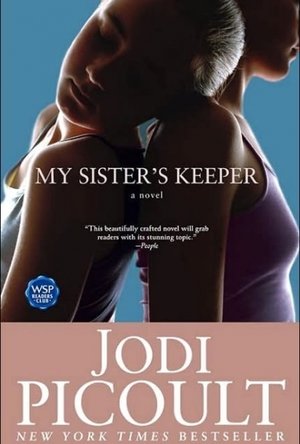

“If you use one of your children to save the life of another, are you being a good mother or a very bad one?”
<i>My Sister’s Keeper </i>was the first Jodi Picoult novel I read. (I have since read all Picoult’s books to date) I was not expecting much when I first picked it up, especially as I was reading it for a medical ethics module at college. Yet this book rekindled my love of reading and suddenly, after only reading one story, I was asking for Jodi Picoult books for my birthday.
Many people may be familiar with the storyline, even if they have not read the book, as <i>My Sister’s Keeper</i> shot to fame when the film version hit the cinemas. Thirteen-year-old Anna Fitzgerald was Rhode Islands first genetically engineered baby, created with the purpose of providing her older sister Kate with the means to survive acute promyelocytic leukemia. However over the next few years Kate relapses resulting in Anna going under numerous procedures, such as bone marrow extraction, in order to save Kate’s life. Now things have got so bad that Kate will die unless Anna gives up one of her kidneys, yet unwilling to do this Anna hires a lawyer, Campbell Alexander, to sue her parents for the rights of her own body.
From reading a synopsis the reader can already see that <i>My Sister’s Keeper</i> is going to be an emotional story, but what was it that made me love the author so much?
The story was told from six points of view: Anna, Jesse (older brother), Sara (mother), Brian (father), Campbell and Julie (guardian ad litem). Notice that Kate was not one of the narrators, which leads us to speculate from the very start that Anna wins the case and Kate dies. Despite the six main characters there is no antagonist – unless you count cancer – and in all of them the reader can find something relatable.
In one of the chapters, Jesse pronounces that Kate is the martyr, Anna the peacekeeper and himself the lost cause. With Anna we can recognize the struggle to follow the decisions laid down for us by other people – a time when we have no choice of our own. Jesse represents the times when we have been ignored and forgotten because of bigger or more important events, thus resulting in attention seeking behaviour. Brian, the firefighter, the man who wants to save everyone, cannot put out the metaphorical fire that is his family. Sara, whose narrative starts in the past rather than present day, shows us how easy it is to get wrapped up in one problem (or daughter), ignoring everything (or everyone) else.
One thing that is great about all Picoult’s novels is that they are not focused on one storyline. Granted this book is focused on the trial and Kate’s illness, but the inclusion of Campbell and Julia’s voices provide an interesting subplot. Julia is not exactly thrilled to discover that she will be working alongside Campbell, a person she knew from school that she had a difficult past with. Since then Julia has found herself unlucky in love and blames Campbell for this. Campbell on the other hand has been having trouble of his own and now needs a service dog with him at all times. Yet he is self conscious about people knowing the true reason behind this and often comes up with creative lies to stop people from asking questions. “Maybe if God gives you a handicap, he makes sure you’ve got a few extra doses of humor to take the edge off.”
Another reason Picoult’s books are so great is that the reader learns something every time. <i>My Sister’s Keeper</i> is full of medical and legal jargon, which may go over some people’s heads, but it is also bursting with random bits of knowledge, for example the way a fire should be treated, facts about astronomy and many other interesting details that the characters use as metaphors to describe their experiences.
Without taking into account Picoult’s novels and writing style as a whole, <i>My Sister’s Keeper</i> is a story that will stay in people’s hearts and minds for a long time. It is never revealed who the narrator of the prologue was, but we immediately assume that it is Anna and that she wants Kate to die. By the end, we are still unsure who the character was but if it was Anna we see it in a completely different light. This is not a book about whether it is ethical for Anna to be Kate’s donor; it is not a story about cancer. Instead it is a message about the right for each person to have choices in regards to their lives.
A warning to potential readers: this book could break your heart, shock you or leave you in tears. <i>My Sister’s Keeper</i> is full of irony. Some of that makes up part of the story line, for instance Jesse’s experimentation with arson – fires that are then put out by his father. But the biggest sense of irony, the biggest shock is the ending (FYI this is the complete opposite to the film ending). After everything that has been achieved, devastating circumstances result in the same conclusion that it would have had Anna sat back and done nothing. Yet this does not make it a pointless story, despite Anna’s actions almost tearing the family apart, it also wakes them from the stupor that Kate’s illness has put them in and makes them realise how precious everything else in their life is too.
I highly recommend this book to everyone, and if you have not read a Jodi Picoult novel before I strongly suggest you begin with this one. It is suitable for adult and adolescent readers, especially those who like to think about hypothetical, moral questions. <i>My Sister’s Keeper</i> definitely gets you questioning your own choices and actions within your own life and may even make you view the world slightly differently.
<i>My Sister’s Keeper </i>was the first Jodi Picoult novel I read. (I have since read all Picoult’s books to date) I was not expecting much when I first picked it up, especially as I was reading it for a medical ethics module at college. Yet this book rekindled my love of reading and suddenly, after only reading one story, I was asking for Jodi Picoult books for my birthday.
Many people may be familiar with the storyline, even if they have not read the book, as <i>My Sister’s Keeper</i> shot to fame when the film version hit the cinemas. Thirteen-year-old Anna Fitzgerald was Rhode Islands first genetically engineered baby, created with the purpose of providing her older sister Kate with the means to survive acute promyelocytic leukemia. However over the next few years Kate relapses resulting in Anna going under numerous procedures, such as bone marrow extraction, in order to save Kate’s life. Now things have got so bad that Kate will die unless Anna gives up one of her kidneys, yet unwilling to do this Anna hires a lawyer, Campbell Alexander, to sue her parents for the rights of her own body.
From reading a synopsis the reader can already see that <i>My Sister’s Keeper</i> is going to be an emotional story, but what was it that made me love the author so much?
The story was told from six points of view: Anna, Jesse (older brother), Sara (mother), Brian (father), Campbell and Julie (guardian ad litem). Notice that Kate was not one of the narrators, which leads us to speculate from the very start that Anna wins the case and Kate dies. Despite the six main characters there is no antagonist – unless you count cancer – and in all of them the reader can find something relatable.
In one of the chapters, Jesse pronounces that Kate is the martyr, Anna the peacekeeper and himself the lost cause. With Anna we can recognize the struggle to follow the decisions laid down for us by other people – a time when we have no choice of our own. Jesse represents the times when we have been ignored and forgotten because of bigger or more important events, thus resulting in attention seeking behaviour. Brian, the firefighter, the man who wants to save everyone, cannot put out the metaphorical fire that is his family. Sara, whose narrative starts in the past rather than present day, shows us how easy it is to get wrapped up in one problem (or daughter), ignoring everything (or everyone) else.
One thing that is great about all Picoult’s novels is that they are not focused on one storyline. Granted this book is focused on the trial and Kate’s illness, but the inclusion of Campbell and Julia’s voices provide an interesting subplot. Julia is not exactly thrilled to discover that she will be working alongside Campbell, a person she knew from school that she had a difficult past with. Since then Julia has found herself unlucky in love and blames Campbell for this. Campbell on the other hand has been having trouble of his own and now needs a service dog with him at all times. Yet he is self conscious about people knowing the true reason behind this and often comes up with creative lies to stop people from asking questions. “Maybe if God gives you a handicap, he makes sure you’ve got a few extra doses of humor to take the edge off.”
Another reason Picoult’s books are so great is that the reader learns something every time. <i>My Sister’s Keeper</i> is full of medical and legal jargon, which may go over some people’s heads, but it is also bursting with random bits of knowledge, for example the way a fire should be treated, facts about astronomy and many other interesting details that the characters use as metaphors to describe their experiences.
Without taking into account Picoult’s novels and writing style as a whole, <i>My Sister’s Keeper</i> is a story that will stay in people’s hearts and minds for a long time. It is never revealed who the narrator of the prologue was, but we immediately assume that it is Anna and that she wants Kate to die. By the end, we are still unsure who the character was but if it was Anna we see it in a completely different light. This is not a book about whether it is ethical for Anna to be Kate’s donor; it is not a story about cancer. Instead it is a message about the right for each person to have choices in regards to their lives.
A warning to potential readers: this book could break your heart, shock you or leave you in tears. <i>My Sister’s Keeper</i> is full of irony. Some of that makes up part of the story line, for instance Jesse’s experimentation with arson – fires that are then put out by his father. But the biggest sense of irony, the biggest shock is the ending (FYI this is the complete opposite to the film ending). After everything that has been achieved, devastating circumstances result in the same conclusion that it would have had Anna sat back and done nothing. Yet this does not make it a pointless story, despite Anna’s actions almost tearing the family apart, it also wakes them from the stupor that Kate’s illness has put them in and makes them realise how precious everything else in their life is too.
I highly recommend this book to everyone, and if you have not read a Jodi Picoult novel before I strongly suggest you begin with this one. It is suitable for adult and adolescent readers, especially those who like to think about hypothetical, moral questions. <i>My Sister’s Keeper</i> definitely gets you questioning your own choices and actions within your own life and may even make you view the world slightly differently.

Bob Mann (459 KP) rated Bad Boys for Life (2020) in Movies
Mar 9, 2020
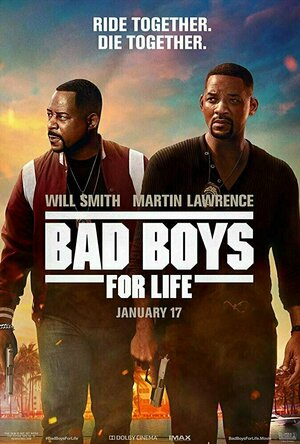

Welcome to Miami - again!
Will Smith seems to have been having a lacklustre period in his career. His genie from "Aladdin" got a rather lukewarm reception. And his last movie - "Gemini Man" - billed as a big summer blockbuster - failed to impress. True it wasn't a commercial disaster (raking in at the time of writing about 150% of budget), but it's still a film on a plane for me that, even if I'm bored, I'll say "nah" to.
Perhaps it's for this reason that Smith reached for an old and reliable property to dust off for another outing.
And, do you know, it's not half bad.
I only recently saw this one, right at the end of its UK cinema run, because frankly it appealed to me like being hit round the head with a cold fish. Martin Lawrence is an actor who just grates on me enormously. I'm sure he's a lovely chap; kind to animals; donates to charity; etc - but I generally just don't find him funny. (Here though he has a killer line about condom use that made me chuckle.) It feels to me like he is on implausible ground here re-treading the role of aging detective Marcus Burnett. One look at Burnett lumbering along and you would think "well, he'd never pass the medical" for the on-street role he's portrayed doing. His buddy is detective Mike Lowrey (Will Smith), who has a sordid past that is set to catch up on him.
Since we start the story in Colombia, where Isabel Aretas (Kate Del Castillo), the witchy wife of a notorious deceased drug baron, is sprung from prison by her son Armando (Jacob Scipio) in what I admit is a clever and novel way. The Aretas family is bent on revenge - - and a key target in their sites is Lowrey.
Burnett is newly a grandparent and hell-bent on retirement. But with Lowrey and his associates with a target on their backs, will there be one last chance to "Ride Together, Die Together"?
Not seen the first two movies? Not to worry! There are movies, like LOTR, where if you've missed the first two movies in the series you will be left in serious "WTF" territory in trying to watch the third. This is not one of those movies. The story is entirely self-contained, and refers to events never seen prior to the first film in the series.
But whether the movie is for you will depend on your tolerance for loud and brash visuals and music with the knob turned up to 12. Directors Adil and Bilall (Adil El Arbi and Bilall Fallah - Belgian film school buddies best known for the critically acclaimed 2015 feature "Black") - don't do anything by halves.
There is a scene in "Lost Series 3" in which Sawyer, Kate, and Alex have to bust young Karl out of the mysterious room 23 where he is being tortured by having his eyes kept open while watching a collage of images continually smashed into his eyeballs. This movie feels a little like that after a while.
This is not by any means a criticism that it's poorly done. There is some truly stunning cinematography of the Miami skyline by Belgian cinematographer Robrecht Heyvaert, including a 'pull-back' drone shot from a conversation on the top of a building that is quite AWESOME! And there are more than enough "fast action - then slo-mo - then fast again" shots to keep music-video junkies happy!
The music score by Lorne Balfe is also pumping, adding a dynamism to the frantic action scenes that keeps you entertained.
The screenplay by Chris Bremner, Peter Craig and Joe Carnahan is assuredly familiar: it's not going to win any prizes for originality. We've seen the cartel/revenge plotline played out in multiple movies over the years. And we've also seen the "buddy cops with aging partner taking retirement" angle from the "Lethal Weapon" series. This just sticks them together.
Will Smith and Martin Lawrence wise-crack their way through the comedy well-enough, though for me it never reaches the heights of the pairing of Smith and Tommy Lee Jones from MiB (or indeed Mel Gibson and Danny Glover from Lethal Weapon). Elsewhere we have Vanessa Hudgens as a cute cop, still trying to break through from "Disneyfication" into mainstream flicks. For one horrible moment, when I saw her name on the cast, I thought she might be the love interest to Smith. But no. That honour goes to Mexican beauty Paola Nuñez who, with only a 10 year age gap, becomes a less gag-worthy pairing. She plays a female leadership role (every 20's film now needs one) as the head of a new crime division.
Also good value is Joe Pantoliano reprising his role as Captain Howard - Lowrie's exasperated boss. Playing it by the numbers, every film like this has to have one!
Where the plot does add some interest is in a surprising scene mid-film and a twist that I didn't see coming. But this twist felt - in the context of the release date or the film - like a mistake (a "Spoiler Section" in my review on the One Mann's Movies web site discusses this).
All of this happens of course against a backdrop of a body count of bad guys being killed in ever more graphic and gory ways, while the good guys generally dodge every bullet, grenade and crashing helicopter heading their way.
It's that time of year when films are released to die. Where studios drop their movies that are never going to trouble the Academy and are not deemed worthy of summer or even late spring release. But they should have had more faith in this one, for it's not half bad. True, you may need a couple of paracetamols afterwards, but if your corneas and ear-drums can stand the pace, its not short on entertainment value.
(For the full graphical review, check out the One Mann's Movies link here - https://bob-the-movie-man.com/2020/03/08/one-manns-movies-film-review-bad-boys-for-life-2020/ ).
Perhaps it's for this reason that Smith reached for an old and reliable property to dust off for another outing.
And, do you know, it's not half bad.
I only recently saw this one, right at the end of its UK cinema run, because frankly it appealed to me like being hit round the head with a cold fish. Martin Lawrence is an actor who just grates on me enormously. I'm sure he's a lovely chap; kind to animals; donates to charity; etc - but I generally just don't find him funny. (Here though he has a killer line about condom use that made me chuckle.) It feels to me like he is on implausible ground here re-treading the role of aging detective Marcus Burnett. One look at Burnett lumbering along and you would think "well, he'd never pass the medical" for the on-street role he's portrayed doing. His buddy is detective Mike Lowrey (Will Smith), who has a sordid past that is set to catch up on him.
Since we start the story in Colombia, where Isabel Aretas (Kate Del Castillo), the witchy wife of a notorious deceased drug baron, is sprung from prison by her son Armando (Jacob Scipio) in what I admit is a clever and novel way. The Aretas family is bent on revenge - - and a key target in their sites is Lowrey.
Burnett is newly a grandparent and hell-bent on retirement. But with Lowrey and his associates with a target on their backs, will there be one last chance to "Ride Together, Die Together"?
Not seen the first two movies? Not to worry! There are movies, like LOTR, where if you've missed the first two movies in the series you will be left in serious "WTF" territory in trying to watch the third. This is not one of those movies. The story is entirely self-contained, and refers to events never seen prior to the first film in the series.
But whether the movie is for you will depend on your tolerance for loud and brash visuals and music with the knob turned up to 12. Directors Adil and Bilall (Adil El Arbi and Bilall Fallah - Belgian film school buddies best known for the critically acclaimed 2015 feature "Black") - don't do anything by halves.
There is a scene in "Lost Series 3" in which Sawyer, Kate, and Alex have to bust young Karl out of the mysterious room 23 where he is being tortured by having his eyes kept open while watching a collage of images continually smashed into his eyeballs. This movie feels a little like that after a while.
This is not by any means a criticism that it's poorly done. There is some truly stunning cinematography of the Miami skyline by Belgian cinematographer Robrecht Heyvaert, including a 'pull-back' drone shot from a conversation on the top of a building that is quite AWESOME! And there are more than enough "fast action - then slo-mo - then fast again" shots to keep music-video junkies happy!
The music score by Lorne Balfe is also pumping, adding a dynamism to the frantic action scenes that keeps you entertained.
The screenplay by Chris Bremner, Peter Craig and Joe Carnahan is assuredly familiar: it's not going to win any prizes for originality. We've seen the cartel/revenge plotline played out in multiple movies over the years. And we've also seen the "buddy cops with aging partner taking retirement" angle from the "Lethal Weapon" series. This just sticks them together.
Will Smith and Martin Lawrence wise-crack their way through the comedy well-enough, though for me it never reaches the heights of the pairing of Smith and Tommy Lee Jones from MiB (or indeed Mel Gibson and Danny Glover from Lethal Weapon). Elsewhere we have Vanessa Hudgens as a cute cop, still trying to break through from "Disneyfication" into mainstream flicks. For one horrible moment, when I saw her name on the cast, I thought she might be the love interest to Smith. But no. That honour goes to Mexican beauty Paola Nuñez who, with only a 10 year age gap, becomes a less gag-worthy pairing. She plays a female leadership role (every 20's film now needs one) as the head of a new crime division.
Also good value is Joe Pantoliano reprising his role as Captain Howard - Lowrie's exasperated boss. Playing it by the numbers, every film like this has to have one!
Where the plot does add some interest is in a surprising scene mid-film and a twist that I didn't see coming. But this twist felt - in the context of the release date or the film - like a mistake (a "Spoiler Section" in my review on the One Mann's Movies web site discusses this).
All of this happens of course against a backdrop of a body count of bad guys being killed in ever more graphic and gory ways, while the good guys generally dodge every bullet, grenade and crashing helicopter heading their way.
It's that time of year when films are released to die. Where studios drop their movies that are never going to trouble the Academy and are not deemed worthy of summer or even late spring release. But they should have had more faith in this one, for it's not half bad. True, you may need a couple of paracetamols afterwards, but if your corneas and ear-drums can stand the pace, its not short on entertainment value.
(For the full graphical review, check out the One Mann's Movies link here - https://bob-the-movie-man.com/2020/03/08/one-manns-movies-film-review-bad-boys-for-life-2020/ ).

Daniel Boyd (1066 KP) rated Hitman in Video Games
Oct 19, 2017 (Updated Oct 19, 2017)
Solid mechanics. (1 more)
Allows for player experimentation.
Story is garbage. (1 more)
Lack of cohesion.
Episodic Bloodshed
Before diving in, I feel like I should preface this review by pointing out that although this Hitman game was released episodically over the course of eight months, I bought the entire season digitally and played through all 6 levels consecutively. The main reason being; I am a big fan of the Hitman series, but wasn’t onboard with the stunted release schedule trend that this game was adhering to.
You can look at this game in two different ways. If you accept it as an adaption of the Hitman games that have preceded it, presented in a new format type for a new audience, then it’s great and it totally achieves what it set out to do. If like me, you were hoping for something more like the PS2 era games in the series, you will most likely be disappointed. Whether you love or loathe this new way that Hitman is being presented to us, I think it’s fair to say that it is certainly different to what we are used to.
At this point, after playing through the entire game over the last month or so, I have learned to accept it for what it is and came to the conclusion that it’s not the Hitman I remember from my preteen days and that’s okay. It is a different take on the series’ traditional underlying themes and mechanics, updated for a modern audience and even as a die hard, old school fan of the franchise, I can appreciate that.
My favourite thing about this game is that it allows you, as the player, to decide on the level of respect the game treats you with. What I mean by that is, if you have never touched a Hitman game, or even a stealth game before, this is a fantastic starting point. If you are looking for a my-first-premeditated-murder-simulator experience, this is the best recommendation I can think of. Just buy the entire season, boot up the game, play through each stage in order and on normal difficulty and follow the step by step prompts to take down each target. If you play this way, the game ends up functioning as a Wiki-how for any of the past games in the series and can even be used to train you to be better at stealth games in general. However, if you consider yourself a more of a hardcore, matter-of-fact assassin and want the most immersive and unencumbered version of the experience, you can totally have that also.
I know that it isn’t a popular opinion, but I enjoyed my time with Absolution, (the previous entry in the franchise,) however I agree with the overall belief that that game didn’t know what it wanted to be. This latest Hitman game knows exactly what it wants to be and executes what it sets out to do beautifully. Even if you aren’t a fan of the new way this game plays out, it is irrefutable to say that it doesn’t confidently accomplish its intention.
In addition, the technical elements of the game are fairly solid also. The gameplay is precise but fun, the gameplay graphics are pretty nice to look at and the cut-scene graphics are almost photorealistic. The level design functions well to compliment the tasks that you are assigned meaning, the use of lighting and strategic placement of weapons and items etc doesn’t seem too out of place. I experienced some cosmetic glitches and clipping during my time with the game, but never anything game-breaking. The only technical issue that severely hindered my experience was the online connectivity, or lack thereof. I can recall multiple times where I was in the middle of choosing my custom loadout before endeavouring on my next mission, only to be kicked out of the menu halfway through and told that connectivity to the server had been lost. This grew tedious after around the tenth time it happened and more than once caused me to put the controller down and stop playing for the night as multiple attempts to re-establish a connection were in vain.
Lastly, the story is unfortunately unremarkable; it is just a heartless, tacked on excuse for you to move from one setting to the next, but it functions as a justification for 47 to travel to the various locations where the missions take place. The only other downside to this experience was the feel of the game. This criticism is hard to put into words, but in the six missions; the process going in and out of each location as smoothly as possible, coupled with the focus on gameplay mechanics and the lack of cohesiveness to the story makes for a disjointed experience that I don’t think will stay with me over a significant amount of time other than thinking back and saying, “that stealth game had some really well implemented mechanics.” I don’t think that I will ever feel any real nostalgia for this game, nor will it stand out in my mind for anything other than its technical elements. Although the locations are vast and the opportunities the player can take advantage of are numerous, the game feels brief and somewhat unfinished once you complete it. You really get the feeling of this being part of an ongoing series, rather than a solid standalone game. The lack of any definitive beginning, middle and end sections to the game makes it feel rather unsatisfying once you reach the climax and causes the game overall to be more of a mesh of various missions clumsily thrown together, rather than a progressive chapter it 47’s career. The game I played immediately before Hitman, was Nier: Automata and that game managed to have both solid mechanics and some heart within it too. I know that 47 is supposed to be a cold, calculated, heartless killer, but that doesn’t mean that the games he stars in have to be heartless as well.
Overall, this is a solid stealth game and there is a lot of fun to be had here. Just know going in, if you are a long time Hitman fan, some things are going to be different. That doesn’t mean they will necessarily be bad, but you will certainly see a new spin being put on the tried and tested mechanics of past game in the franchise. If this is your first stealth game, then I would say that there is no better introduction into the genre, especially if you use the Opportunities menu. Unfortunately though, it does seem more like a variation of well made parts, rather than a solid, cohesive whole.
You can look at this game in two different ways. If you accept it as an adaption of the Hitman games that have preceded it, presented in a new format type for a new audience, then it’s great and it totally achieves what it set out to do. If like me, you were hoping for something more like the PS2 era games in the series, you will most likely be disappointed. Whether you love or loathe this new way that Hitman is being presented to us, I think it’s fair to say that it is certainly different to what we are used to.
At this point, after playing through the entire game over the last month or so, I have learned to accept it for what it is and came to the conclusion that it’s not the Hitman I remember from my preteen days and that’s okay. It is a different take on the series’ traditional underlying themes and mechanics, updated for a modern audience and even as a die hard, old school fan of the franchise, I can appreciate that.
My favourite thing about this game is that it allows you, as the player, to decide on the level of respect the game treats you with. What I mean by that is, if you have never touched a Hitman game, or even a stealth game before, this is a fantastic starting point. If you are looking for a my-first-premeditated-murder-simulator experience, this is the best recommendation I can think of. Just buy the entire season, boot up the game, play through each stage in order and on normal difficulty and follow the step by step prompts to take down each target. If you play this way, the game ends up functioning as a Wiki-how for any of the past games in the series and can even be used to train you to be better at stealth games in general. However, if you consider yourself a more of a hardcore, matter-of-fact assassin and want the most immersive and unencumbered version of the experience, you can totally have that also.
I know that it isn’t a popular opinion, but I enjoyed my time with Absolution, (the previous entry in the franchise,) however I agree with the overall belief that that game didn’t know what it wanted to be. This latest Hitman game knows exactly what it wants to be and executes what it sets out to do beautifully. Even if you aren’t a fan of the new way this game plays out, it is irrefutable to say that it doesn’t confidently accomplish its intention.
In addition, the technical elements of the game are fairly solid also. The gameplay is precise but fun, the gameplay graphics are pretty nice to look at and the cut-scene graphics are almost photorealistic. The level design functions well to compliment the tasks that you are assigned meaning, the use of lighting and strategic placement of weapons and items etc doesn’t seem too out of place. I experienced some cosmetic glitches and clipping during my time with the game, but never anything game-breaking. The only technical issue that severely hindered my experience was the online connectivity, or lack thereof. I can recall multiple times where I was in the middle of choosing my custom loadout before endeavouring on my next mission, only to be kicked out of the menu halfway through and told that connectivity to the server had been lost. This grew tedious after around the tenth time it happened and more than once caused me to put the controller down and stop playing for the night as multiple attempts to re-establish a connection were in vain.
Lastly, the story is unfortunately unremarkable; it is just a heartless, tacked on excuse for you to move from one setting to the next, but it functions as a justification for 47 to travel to the various locations where the missions take place. The only other downside to this experience was the feel of the game. This criticism is hard to put into words, but in the six missions; the process going in and out of each location as smoothly as possible, coupled with the focus on gameplay mechanics and the lack of cohesiveness to the story makes for a disjointed experience that I don’t think will stay with me over a significant amount of time other than thinking back and saying, “that stealth game had some really well implemented mechanics.” I don’t think that I will ever feel any real nostalgia for this game, nor will it stand out in my mind for anything other than its technical elements. Although the locations are vast and the opportunities the player can take advantage of are numerous, the game feels brief and somewhat unfinished once you complete it. You really get the feeling of this being part of an ongoing series, rather than a solid standalone game. The lack of any definitive beginning, middle and end sections to the game makes it feel rather unsatisfying once you reach the climax and causes the game overall to be more of a mesh of various missions clumsily thrown together, rather than a progressive chapter it 47’s career. The game I played immediately before Hitman, was Nier: Automata and that game managed to have both solid mechanics and some heart within it too. I know that 47 is supposed to be a cold, calculated, heartless killer, but that doesn’t mean that the games he stars in have to be heartless as well.
Overall, this is a solid stealth game and there is a lot of fun to be had here. Just know going in, if you are a long time Hitman fan, some things are going to be different. That doesn’t mean they will necessarily be bad, but you will certainly see a new spin being put on the tried and tested mechanics of past game in the franchise. If this is your first stealth game, then I would say that there is no better introduction into the genre, especially if you use the Opportunities menu. Unfortunately though, it does seem more like a variation of well made parts, rather than a solid, cohesive whole.

Eilidh G Clark (177 KP) rated The Panopticon in Books
May 13, 2017
This is my all time favouurite book.
Jenny Fagan stated in an interview in 2013 that prior to writing the novel The Panopticon (2012) she had one question, ‘is it possible to achieve autonomy?’ Fagan explores this question throughout her novel with the character of Anais Hendrix. I would also suggest that the author is metaphorically exploring whether Scotland can achieve autonomy as an independent nation. Autonomy, in relation to the individual, is self-governance- or being able to decide for oneself
At the beginning of the novel, the fifteen-year old Anais is governed by the state. In contemporary British society, a child under the age of sixteen, regardless of her social situation is, by law, governed by an adult/s. Anais has lived her life in the care system with the exception of a short period in which she lived with an adopted mother. It is for this reason that she is able to see society from outside of the family unit. By creating the motherless child, Fagan presents Anais as the ‘other’ from both a societal perspective- ‘communities dinnae like no-ones,’ and from the viewpoint of the protagonist, ‘What they really want is me dead,’ (TP, p.23). Without a family, and through a lack of legitimate information regarding her birth mother, Anais believes that she was created in a lab:
I’M AN experiment. I always have been, It’s a given, a liberty, a fact. They watch me. Not just in school or social-work reviews, courts or police cells – they watch everywhere. […] They’re there when I stare too long or too clearly, without flinching. […] They watch me, I know it, and I can’t find anywhere any more – where they can’t see, (TP, Prologue).
Note that in the above quotation, the protagonist describes her assumed identity as a ‘liberty’. Liberty, in this case, means freedom from the oppressive nature of the family. Although Anais desires the nurturing aspect of the family, ‘I just want my mum,’ (Tp, p.269), her lack of family exposes her to the nature of contemporary society as a constant monitoring of civilians. In the above quotation, the repetition of ‘they’ suggests that she feels outside of the norm. The most important aspect of the above quote however, is that it is told from the protagonist’s thoughts. While Fagan gives Anais a certain amount of autonomy through both the first-person narrator, and the vernacular, the reliability of the narrator is increased by presenting the characters inner thoughts. While this limited autonomy is important, full autonomy is restricted by age. Bever suggests that ‘the capacity for individuals to become autonomous seems radically dependent on the contingent historical circumstances and societies into which they are born. Anais’ awareness of herself as the ‘other’ allows her an insight into the oppressive role of society, which is normally hindered in childhood due to the role of the family and it’s teaching of norms and values.
The sense of otherness can also be looked at in regard to Scotland and its role within the UK. The UK is a family of four countries under one state. Regardless of Scotland’s devolution, it has still to comply with a large amount of UK policies. Scotland has different values and goals to that of the UK making it ‘other’. With a different cultural identity to its neighbours, many Scottish citizens are seeking independence to protect its dwindling identity, whilst for others, independence is political.
Anais’ awareness of social control causes her a feeling of shrinking. This, according to her social workers is an identity problem:
Fifty odd moves, three different names, born in a nuthouse to a nobody that was never seen again. Identity problem? I dinnae have an identity problem – I dinnae have an identity, (TP, p.99).
Anais’ reaction in the above statement describes her lack of knowledge of her ancestry. I would argue that her identity is forced upon her from the fifty-one times that she has moved home, the care system, the solitary time in which she was adopted, the relationships she has had - both female and male, her friends but more importantly, from the unreliable account of her birth from the monk in the metal institution. The lack of family does not alter the fact that she is alive, and that all the fragments of her past make up an identity. For Anais, ‘Families are overrated […] ‘I umnay fooled. Not by families,’(TP, p.63-64). Like Anais, Scotland’s identity is ambiguous. Independence will allow Scotland political autonomy, however, within a global economy, Scotland still has limited autonomy. As culturally ‘other’ however, Scotland has already achieved autonomy with or without a state through its language, its people and its traditions.
Fagan demonstrates the difficulty of total autonomy though Anais and the birthday game, a game in which she creates her own identity. When she turns sixteen years of age, Anais is free from societal care and flees from her imprisonment, ‘I am Frances Jones from Paris. I am not a face on a missing-person poster, I am not a number or a statistic in a file. I have no-one watching me, […] I−begin today,’ (TP, p.323-324). ‘I’ suggests singularity and is still opposite to ‘them’ or ‘we’. Autonomy is therefore, ambiguous; Anais is still living within the same system under a false identity, she is therefore, segregated from everyone that she knows. Moreover, by changing Anais’ name to a name that ‘means freedom.’ (TP, p.323), Fagan is pointing out the difference between freedom and autonomy. Freedom is an emotive word, and there are two concepts of freedom – freedom from, which in Anais’ situation means freedom from the system of observation. Freedom to, however, is more problematic as Anais can never be free from the neoliberal system of rules and law – as Scotland would see in the case of independence. I would therefore conclude that Anais/Scotland has always has limited autonomy through cultural identity and history. I believe autonomy can only reside within the system through cultural and individual imagination and not out with it.
What does this mean for Scotland? If Scotland is part of the global community, can it become an autonomous nation? Is there a solution or should Anais/Scotland accept that cultural autonomy is imagined or self-contained. Can a collective identity and imagination change the political system? Finally, can culture survive without independence?
Bibliography
Crupp, Tyler, ‘Autonomy and Contemporary Political Theory’, in Encyclopaedia of Political Theory, ed. Mark Bevor (London: Sage Publications, 2010)
Fagan, Jenni, The Panopticon (London: Windmill Books, 2013), p.6.
Windmill Books. (2013). Granta Best Young British Novelist Jenni Fagan, . accessed 22 November 2015. Published on Apr 16, 2013
At the beginning of the novel, the fifteen-year old Anais is governed by the state. In contemporary British society, a child under the age of sixteen, regardless of her social situation is, by law, governed by an adult/s. Anais has lived her life in the care system with the exception of a short period in which she lived with an adopted mother. It is for this reason that she is able to see society from outside of the family unit. By creating the motherless child, Fagan presents Anais as the ‘other’ from both a societal perspective- ‘communities dinnae like no-ones,’ and from the viewpoint of the protagonist, ‘What they really want is me dead,’ (TP, p.23). Without a family, and through a lack of legitimate information regarding her birth mother, Anais believes that she was created in a lab:
I’M AN experiment. I always have been, It’s a given, a liberty, a fact. They watch me. Not just in school or social-work reviews, courts or police cells – they watch everywhere. […] They’re there when I stare too long or too clearly, without flinching. […] They watch me, I know it, and I can’t find anywhere any more – where they can’t see, (TP, Prologue).
Note that in the above quotation, the protagonist describes her assumed identity as a ‘liberty’. Liberty, in this case, means freedom from the oppressive nature of the family. Although Anais desires the nurturing aspect of the family, ‘I just want my mum,’ (Tp, p.269), her lack of family exposes her to the nature of contemporary society as a constant monitoring of civilians. In the above quotation, the repetition of ‘they’ suggests that she feels outside of the norm. The most important aspect of the above quote however, is that it is told from the protagonist’s thoughts. While Fagan gives Anais a certain amount of autonomy through both the first-person narrator, and the vernacular, the reliability of the narrator is increased by presenting the characters inner thoughts. While this limited autonomy is important, full autonomy is restricted by age. Bever suggests that ‘the capacity for individuals to become autonomous seems radically dependent on the contingent historical circumstances and societies into which they are born. Anais’ awareness of herself as the ‘other’ allows her an insight into the oppressive role of society, which is normally hindered in childhood due to the role of the family and it’s teaching of norms and values.
The sense of otherness can also be looked at in regard to Scotland and its role within the UK. The UK is a family of four countries under one state. Regardless of Scotland’s devolution, it has still to comply with a large amount of UK policies. Scotland has different values and goals to that of the UK making it ‘other’. With a different cultural identity to its neighbours, many Scottish citizens are seeking independence to protect its dwindling identity, whilst for others, independence is political.
Anais’ awareness of social control causes her a feeling of shrinking. This, according to her social workers is an identity problem:
Fifty odd moves, three different names, born in a nuthouse to a nobody that was never seen again. Identity problem? I dinnae have an identity problem – I dinnae have an identity, (TP, p.99).
Anais’ reaction in the above statement describes her lack of knowledge of her ancestry. I would argue that her identity is forced upon her from the fifty-one times that she has moved home, the care system, the solitary time in which she was adopted, the relationships she has had - both female and male, her friends but more importantly, from the unreliable account of her birth from the monk in the metal institution. The lack of family does not alter the fact that she is alive, and that all the fragments of her past make up an identity. For Anais, ‘Families are overrated […] ‘I umnay fooled. Not by families,’(TP, p.63-64). Like Anais, Scotland’s identity is ambiguous. Independence will allow Scotland political autonomy, however, within a global economy, Scotland still has limited autonomy. As culturally ‘other’ however, Scotland has already achieved autonomy with or without a state through its language, its people and its traditions.
Fagan demonstrates the difficulty of total autonomy though Anais and the birthday game, a game in which she creates her own identity. When she turns sixteen years of age, Anais is free from societal care and flees from her imprisonment, ‘I am Frances Jones from Paris. I am not a face on a missing-person poster, I am not a number or a statistic in a file. I have no-one watching me, […] I−begin today,’ (TP, p.323-324). ‘I’ suggests singularity and is still opposite to ‘them’ or ‘we’. Autonomy is therefore, ambiguous; Anais is still living within the same system under a false identity, she is therefore, segregated from everyone that she knows. Moreover, by changing Anais’ name to a name that ‘means freedom.’ (TP, p.323), Fagan is pointing out the difference between freedom and autonomy. Freedom is an emotive word, and there are two concepts of freedom – freedom from, which in Anais’ situation means freedom from the system of observation. Freedom to, however, is more problematic as Anais can never be free from the neoliberal system of rules and law – as Scotland would see in the case of independence. I would therefore conclude that Anais/Scotland has always has limited autonomy through cultural identity and history. I believe autonomy can only reside within the system through cultural and individual imagination and not out with it.
What does this mean for Scotland? If Scotland is part of the global community, can it become an autonomous nation? Is there a solution or should Anais/Scotland accept that cultural autonomy is imagined or self-contained. Can a collective identity and imagination change the political system? Finally, can culture survive without independence?
Bibliography
Crupp, Tyler, ‘Autonomy and Contemporary Political Theory’, in Encyclopaedia of Political Theory, ed. Mark Bevor (London: Sage Publications, 2010)
Fagan, Jenni, The Panopticon (London: Windmill Books, 2013), p.6.
Windmill Books. (2013). Granta Best Young British Novelist Jenni Fagan, . accessed 22 November 2015. Published on Apr 16, 2013

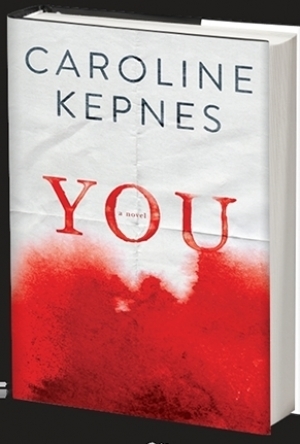
I first learned about you, Joe, when I sat one Sunday morning on Netflix and I could not keep my eyes off of the promo for this show about you fixating on a blonde woman. Naturally, I was intrigued and I had to learn about you, Joe, and how exactly you could see stalking as a way of getting close to someone and love them. I do wish you hadn't been a manager at a bookstore, Joe. I'm a booknerd, it was difficult to not like you, most of the time.
I watched your story and then I listened to your story. Joe, there are quite a few differences between the BookJoe and the NetflixJoe. Either way, Joe, I judge you harshly at each passing moment when you follow this girl, Guinevere Beck (can we just laugh at the irony that her name is Guinevere? If you haven't read King Author, you should) or stalk her using her old phone that she believed lost.
Just a little nit pick on my part, Netflix, Android and Apple DO NOT use the same cloud! They are ENTIRELY different companies with entirely different hardware. There was no way, NetflixJoe, that you could have seen the woman's emails or texts from an Android phone when she got a new phone that is an Apple. Rant over, now back to you, Joe.
BookJoe is more wordy and more story telling. Perhaps your warped mind may have believed Guinevere (Beck in both stories) might have flirted with you. This begs the question, what made her stand out from any other WOMAN who doesn't wear a bra (and don't state that you can't tell because you point that out about Beck every chance you got)? It couldn't have been the books she purchased as how you mentally made fun of the fact that she bought a certain book because the author was a relative of a celebrity.
I'll give you credit, NetflixJoe, while NetflixBeck was still a bit off with her procrastination and her obsessiveness with a crack head and drinking, she still grew some character and made for someone with potential. BookBeck, on the other hand, BookJoe, you really could have picked a much better person to stalk.
BookBeck is highly ditzy, a pushover, loves to drink (a lot!), and prefers casual encounters (which you found that out by going through her email) with other men, except you! She claims she wants to write, yet spends little if any time doing it, and while you do somewhat encourage her, it doesn't work. She just wants to say she wants to write, but not do it. And when she does write, and BookJoe you have stated this a little annoyance before, it's pure pornography.
BookJoe, I often pitied you because you are highly intelligent yet so stupid. BookBeck was all wrong for you and you spent all this time trying to make her right and doing it all the wrong way. Oh, Joe, you just couldn't take it. And you couldn't see it. So stupid, Joe.
Okay, as fun as that was, here's the remainder of the review without me talking to Joe. The show on Netflix was so hard to turn off because it was that intense. No, I DO NOT ship Beck and Joe. HE IS STILL A STALKER!! The show really showed that even the people who seem all nice and laid back CAN BE THE PERSON THAT IS DANGEROUS! The book does the same thing as well.
In the book, it's all told in Joe's point of view, and he could very well be not a very reliable narrator. All of it is told from what he sees and sometimes what he wishes he could see. At least on Netflix, though Joe narrates mostly, you're able to see the evidence instead of going off by his word. He also gives off of how delusional he really is when it comes to Beck. He makes himself BELIEVE that Beck is just suffering from daddy issues with all these men and he can help her and make her only want him.
The story itself was really well put together. The book will definitely not give you the shipping feels like Netflix seems to do for some people. Most of the time, I do just say out loud how stupid Joe really is and how he maybe he should move on. I wasn't lying when I said BookBeck was all those things. She really was. I actually did not like her character at all. To me, there wasn't much growth except for small things here and there, but for the most part, she just remained this person who had daddy issues and tried to do everything she could to NOT write. I'll give her credit for finding out about Joe and trying to figure out how to get away, but that's about it.
The show is a great watch cause the story is pretty good. If you want to see everything and not go by Joe, watch the show first. If you are curious as to how BookJoe started and became NetflixJoe, read this book first. Do you think he's a reliable narrator?
I have to point out the similarities with these characters that of King Arthur, however. I mentioned that earlier because Beck's first name is Guinevere. Think about it (if you've read King Arthur when you were in school).
Joe is Arthur - he manages a bookstore and reads. He fixates himself on a woman who apparently is so enchanting that he must have her no matter what.
Benji in retrospect is Merlin - He may be hooked on drugs and a total douche, but he WARNS Joe about Beck and that she is indeed crazy and not faithful. Joe does NOT listen.
Dr. Nicky is Lancelot - he is a therapist to both Joe and Beck (separately and without the other knowing) and he tries to guide Joe through his therapy, but in the end, he falls for Beck and they have an affair.
Beck IS GUINEVERE - Not at all the person she appears to be for Joe and winds up being entirely unfaithful and suffers for it.
**I haven't figured out Peach, but she's just crazy**
It is a two part series - I need a break from Joe before I think about reading the second book.
I watched your story and then I listened to your story. Joe, there are quite a few differences between the BookJoe and the NetflixJoe. Either way, Joe, I judge you harshly at each passing moment when you follow this girl, Guinevere Beck (can we just laugh at the irony that her name is Guinevere? If you haven't read King Author, you should) or stalk her using her old phone that she believed lost.
Just a little nit pick on my part, Netflix, Android and Apple DO NOT use the same cloud! They are ENTIRELY different companies with entirely different hardware. There was no way, NetflixJoe, that you could have seen the woman's emails or texts from an Android phone when she got a new phone that is an Apple. Rant over, now back to you, Joe.
BookJoe is more wordy and more story telling. Perhaps your warped mind may have believed Guinevere (Beck in both stories) might have flirted with you. This begs the question, what made her stand out from any other WOMAN who doesn't wear a bra (and don't state that you can't tell because you point that out about Beck every chance you got)? It couldn't have been the books she purchased as how you mentally made fun of the fact that she bought a certain book because the author was a relative of a celebrity.
I'll give you credit, NetflixJoe, while NetflixBeck was still a bit off with her procrastination and her obsessiveness with a crack head and drinking, she still grew some character and made for someone with potential. BookBeck, on the other hand, BookJoe, you really could have picked a much better person to stalk.
BookBeck is highly ditzy, a pushover, loves to drink (a lot!), and prefers casual encounters (which you found that out by going through her email) with other men, except you! She claims she wants to write, yet spends little if any time doing it, and while you do somewhat encourage her, it doesn't work. She just wants to say she wants to write, but not do it. And when she does write, and BookJoe you have stated this a little annoyance before, it's pure pornography.
BookJoe, I often pitied you because you are highly intelligent yet so stupid. BookBeck was all wrong for you and you spent all this time trying to make her right and doing it all the wrong way. Oh, Joe, you just couldn't take it. And you couldn't see it. So stupid, Joe.
Okay, as fun as that was, here's the remainder of the review without me talking to Joe. The show on Netflix was so hard to turn off because it was that intense. No, I DO NOT ship Beck and Joe. HE IS STILL A STALKER!! The show really showed that even the people who seem all nice and laid back CAN BE THE PERSON THAT IS DANGEROUS! The book does the same thing as well.
In the book, it's all told in Joe's point of view, and he could very well be not a very reliable narrator. All of it is told from what he sees and sometimes what he wishes he could see. At least on Netflix, though Joe narrates mostly, you're able to see the evidence instead of going off by his word. He also gives off of how delusional he really is when it comes to Beck. He makes himself BELIEVE that Beck is just suffering from daddy issues with all these men and he can help her and make her only want him.
The story itself was really well put together. The book will definitely not give you the shipping feels like Netflix seems to do for some people. Most of the time, I do just say out loud how stupid Joe really is and how he maybe he should move on. I wasn't lying when I said BookBeck was all those things. She really was. I actually did not like her character at all. To me, there wasn't much growth except for small things here and there, but for the most part, she just remained this person who had daddy issues and tried to do everything she could to NOT write. I'll give her credit for finding out about Joe and trying to figure out how to get away, but that's about it.
The show is a great watch cause the story is pretty good. If you want to see everything and not go by Joe, watch the show first. If you are curious as to how BookJoe started and became NetflixJoe, read this book first. Do you think he's a reliable narrator?
I have to point out the similarities with these characters that of King Arthur, however. I mentioned that earlier because Beck's first name is Guinevere. Think about it (if you've read King Arthur when you were in school).
Joe is Arthur - he manages a bookstore and reads. He fixates himself on a woman who apparently is so enchanting that he must have her no matter what.
Benji in retrospect is Merlin - He may be hooked on drugs and a total douche, but he WARNS Joe about Beck and that she is indeed crazy and not faithful. Joe does NOT listen.
Dr. Nicky is Lancelot - he is a therapist to both Joe and Beck (separately and without the other knowing) and he tries to guide Joe through his therapy, but in the end, he falls for Beck and they have an affair.
Beck IS GUINEVERE - Not at all the person she appears to be for Joe and winds up being entirely unfaithful and suffers for it.
**I haven't figured out Peach, but she's just crazy**
It is a two part series - I need a break from Joe before I think about reading the second book.
Purple Phoenix Games (2266 KP) rated Horrified: Universal Monsters Strategy Board Game in Tabletop Games
Aug 6, 2021
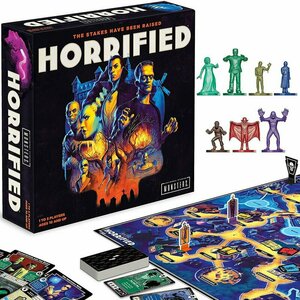
I was a child a long time ago. Okay, not THAT long ago, but I remember being frightened of a great many thing on TV: Michael Jackson’s “Thriller” music video, the TV show “V,” and so many others. I still to this day have not watched an entire old school Universal Studios Monster movie. However, I used to live in California for part of my childhood and my family had season passes to Universal Studios and we would go quite a lot, so I have always been familiar with the monsters. So when I saw a game was being crafted featuring these lovable, but in a nostalgic way, creatures I knew I just had to have it.
Horrified is a pickup and deliver, action points, cooperative game with dice and miniatures utilizing a variable setup. In it players take on the role of a hero in a monster movie – but not just A monster movie, but SEVERAL monsters will be haunting the town! It is the heroes’ goal to defeat the monsters before the Terror Marker reaches maximum or the heroes run out of time and the monsters take over the town.
To setup, place the board on the table and draw 12 Item tokens from the bag. Place these Items on the board in the specified location printed on the Item. Depending on how many players (for this review I will be using the Solo rules in the rule book) place the Terror Marker appropriately on the board – the photo above was taken before I realized that it starts on three in the Solo game. Choose the monsters to be faced and place their mats near the board. The rulebook states where the monster minis will start the game. Place the Frenzy token on the lowest Frenzy-numbered monster. Shuffle the Monster and Perk decks of cards separately and deal each player one Perk card. Each player chooses or is randomly dealt a character badge and places the standee in the appropriate location on the board. The game may now begin!
Players will be taking turns traveling the town, picking up Items, attempting to defeat the monsters per their defeat instructions on their mats, delivering villagers that randomly appear to their safe locations, and keeping the Terror Marker in the acceptable range. Each character has a certain number of actions that can be taken on their turns, but any Perk cards used are spent as a bonus action on the hero’s turn. The hero actions are: Move (one space along the lit pathways, even with a villager in tow), Guide (a villager one space away from the hero), Pick Up (Items from locations), Share (Items from player to player – not needed in a Solo game), Special Action (if the character being played has one on their badge), Advance (complete a task on the Monster mat to move one step closer to defeat), and Defeat (once all the tasks are complete and the player has enough Items to defeat the Monster at the same location). Once a hero has used up all their Action Points per their badge, it will be the Monster phase.
Monster phases begin with a draw from the Monster deck. Upon the card will be a number printed on the top which instructs players as to how many Items to draw and place from the bag. Next, players will read the text on the card and complete any instructions. Finally, the Monsters will strike. At the bottom of the card will be printed several icons pertaining to Monsters individually and also the Monster who happens to currently be Frenzied. These icons instruct players to move certain Monsters and if they share a space with a hero or villager, to roll the attack dice. One hit from a Monster defeats either a villager or hero (unless the hero discards any Item to block the attack). If a hero or villager is defeated, the Terror Marker moves up a space toward ultimate doom. Play then is passed to the players again. The game continues in this fashion until one of the game end conditions is met and the heroe(s) win or the Monsters succeed in their hostile haunted takeover.
Components. I’d like to start with the art. I love it. The art has a very 1930s Hollywood style and is simply beautiful. The colors are vibrant, where color is used, and the board is stunning. All of the cardboard components are top notch quality, and the Monster minis are fab. Obviously it would be great for all the heroes and villagers to have minis as well, but there is text printed on those standees that just can’t translate to a miniature. All in all, the components here are wonderful and high quality.
The gameplay is also wonderful and high quality. The solo game from which these photos are taken I randomly drew the Mayor character and decided to hit the town with Dracula, The Creature from the Black Lagoon, and The Invisible Man. That’s a Standard game in the rules. The Mayor is great because she is able to take five actions on her turn (plus Perks), but she has no special abilities. That is both a blessing and a curse and wonderfully balanced. I would say I finished the game needing just one or two more Monster cards to draw before all three baddies were defeated. But, that’s the difficulty of having three Monsters showing. With just two Monsters I would have won handily, but maybe would not have enjoyed it as much and written it off as too easy. Luckily I always learn games on normal standard difficulty first.
Traipsing around town picking up Items and ushering villagers to their safe spaces sounds relaxing, but when the Monsters are on your trail and ready to Strike it adds a layer of anxiety that is just delicious. I admit I probably spent too much time trying to save every villager and that’s partly why I failed at this one game. Also I miscalculated how many extra Items to have on hand when attempting to Advance the Monster tasks. Couple those with my strategy to concentrate on defeating one Monster at a time and, well, that’s a losing strategy it seems.
The gameplay is so much fun, and the components are so wonderful to play with, it’s really no surprise I enjoy this game as much as I do. I have purposely left out some rules for readers to enjoy discovering themselves, but this is a tight game with pressure from different fronts to complete objectives. It’s the kind of game where even with a loss you find yourself wanting to try again right away. And that’s a sing of an excellent game. Purple Phoenix Games gives this very high ratings, even as a solo experience. If you need more horror-style adventure games in your collection, please check out Horrified. It’s not really that scary to play, but you will certainly be haunted by your choices you make throughout the game.
Horrified is a pickup and deliver, action points, cooperative game with dice and miniatures utilizing a variable setup. In it players take on the role of a hero in a monster movie – but not just A monster movie, but SEVERAL monsters will be haunting the town! It is the heroes’ goal to defeat the monsters before the Terror Marker reaches maximum or the heroes run out of time and the monsters take over the town.
To setup, place the board on the table and draw 12 Item tokens from the bag. Place these Items on the board in the specified location printed on the Item. Depending on how many players (for this review I will be using the Solo rules in the rule book) place the Terror Marker appropriately on the board – the photo above was taken before I realized that it starts on three in the Solo game. Choose the monsters to be faced and place their mats near the board. The rulebook states where the monster minis will start the game. Place the Frenzy token on the lowest Frenzy-numbered monster. Shuffle the Monster and Perk decks of cards separately and deal each player one Perk card. Each player chooses or is randomly dealt a character badge and places the standee in the appropriate location on the board. The game may now begin!
Players will be taking turns traveling the town, picking up Items, attempting to defeat the monsters per their defeat instructions on their mats, delivering villagers that randomly appear to their safe locations, and keeping the Terror Marker in the acceptable range. Each character has a certain number of actions that can be taken on their turns, but any Perk cards used are spent as a bonus action on the hero’s turn. The hero actions are: Move (one space along the lit pathways, even with a villager in tow), Guide (a villager one space away from the hero), Pick Up (Items from locations), Share (Items from player to player – not needed in a Solo game), Special Action (if the character being played has one on their badge), Advance (complete a task on the Monster mat to move one step closer to defeat), and Defeat (once all the tasks are complete and the player has enough Items to defeat the Monster at the same location). Once a hero has used up all their Action Points per their badge, it will be the Monster phase.
Monster phases begin with a draw from the Monster deck. Upon the card will be a number printed on the top which instructs players as to how many Items to draw and place from the bag. Next, players will read the text on the card and complete any instructions. Finally, the Monsters will strike. At the bottom of the card will be printed several icons pertaining to Monsters individually and also the Monster who happens to currently be Frenzied. These icons instruct players to move certain Monsters and if they share a space with a hero or villager, to roll the attack dice. One hit from a Monster defeats either a villager or hero (unless the hero discards any Item to block the attack). If a hero or villager is defeated, the Terror Marker moves up a space toward ultimate doom. Play then is passed to the players again. The game continues in this fashion until one of the game end conditions is met and the heroe(s) win or the Monsters succeed in their hostile haunted takeover.
Components. I’d like to start with the art. I love it. The art has a very 1930s Hollywood style and is simply beautiful. The colors are vibrant, where color is used, and the board is stunning. All of the cardboard components are top notch quality, and the Monster minis are fab. Obviously it would be great for all the heroes and villagers to have minis as well, but there is text printed on those standees that just can’t translate to a miniature. All in all, the components here are wonderful and high quality.
The gameplay is also wonderful and high quality. The solo game from which these photos are taken I randomly drew the Mayor character and decided to hit the town with Dracula, The Creature from the Black Lagoon, and The Invisible Man. That’s a Standard game in the rules. The Mayor is great because she is able to take five actions on her turn (plus Perks), but she has no special abilities. That is both a blessing and a curse and wonderfully balanced. I would say I finished the game needing just one or two more Monster cards to draw before all three baddies were defeated. But, that’s the difficulty of having three Monsters showing. With just two Monsters I would have won handily, but maybe would not have enjoyed it as much and written it off as too easy. Luckily I always learn games on normal standard difficulty first.
Traipsing around town picking up Items and ushering villagers to their safe spaces sounds relaxing, but when the Monsters are on your trail and ready to Strike it adds a layer of anxiety that is just delicious. I admit I probably spent too much time trying to save every villager and that’s partly why I failed at this one game. Also I miscalculated how many extra Items to have on hand when attempting to Advance the Monster tasks. Couple those with my strategy to concentrate on defeating one Monster at a time and, well, that’s a losing strategy it seems.
The gameplay is so much fun, and the components are so wonderful to play with, it’s really no surprise I enjoy this game as much as I do. I have purposely left out some rules for readers to enjoy discovering themselves, but this is a tight game with pressure from different fronts to complete objectives. It’s the kind of game where even with a loss you find yourself wanting to try again right away. And that’s a sing of an excellent game. Purple Phoenix Games gives this very high ratings, even as a solo experience. If you need more horror-style adventure games in your collection, please check out Horrified. It’s not really that scary to play, but you will certainly be haunted by your choices you make throughout the game.

The Bandersnatch (199 KP) rated Dracula in Books
Nov 7, 2019
Dracula was written by author Bram Stoker during the late 1890's and is set around the character of Dracula and his attempt to move from Transylvania to England so he can spread the curse of the undead (I.e. the creation of more vampires). English solicitor Jonathan Harker who'd originally gone to Transylvania to be legal aide for Dracula stops him with the help of Van Helsing and others which ends the life of one of them – Quincey-, the book ends with a note from Jonathan Harker that several people lived happily married and Jonathan has a son nicknamed for Quincey.
Dracula was published in London in May 1897 by Archibald Constable & Company and was later copyrighted in the U.S in 1899 and published by Doubleday & McClure of New York. Despite having decent praise form reviewers it wasn't an immediate bestseller. Although the English newspaper the Daily Mail ranked Stoker's writing prowess in Dracula above that of Mary Shelly, Edgar Allen Poe and Emily Bronte's Wuthering heights. Unfortunately it didn't make Stoker that much money and he'd had to petition for a compassionate grant from the royal literary fund. When he died his widow was forced to sell his notes and outlines of the book at an auction in 1913. It was the unauthorised adaption of Nosferatu by F. W. Murnau in 1922 and the resulting legal battle made when Stokers widow took affront that the novels popularity began to grow.
Before writing Dracula Bram Stoker had been researching European folklore and stories of vampires having been most influenced by Emily Gerard's “Transylvania Superstitions” 1885 essay...which included content about the vampire myth. Some historians insist that Vlad iii Dracula (More commonly known as Vlad the impaler) was the model for Stokers count but there's been no supporting evidence to make that true. According to one expert Stoker only borrowed the barest minimum of information of the Wallachian tyrant and he's not even mentioned in Stokers notes. Stoker was a member of the London library during the 1890's where books by Sabine Baring-Gould, Thomas Browne, AF Crosse and Charles Boner are attributed to Stokers research. Stoker would later claim he'd had a nightmare caused by over-eating crab meat about a “Vampire king” rising from his grave. Whitby on the Yorkshire coast contributed its landscape since Bram Stoker often holidayed there during the summer.
Dracula wasn't Stokers first choice as title for the story since he cycled through The Dead Un-Dead then simply the Un-Dead the count wasn't even supposed to be Count Dracula having had the name Count Wampyr for several drafts before Stoker became intrigued by the name Dracula. After reading “An account of the principles of Wallachia and Moldavia with political observations relative to them” written by author William Wilkinson (Published in 1820). the descendants of Vlad ii of Wallachia took the name Dracula or Dracul after being invested in the Order of the Dragon in 1431. In the old Romanian language the word Dracul mean “the Dragon” and Dracula meant “Son of the Dragon”. Nowadays however Dracul means “the Devil”
Whilst Dracula is known as THE Vampire novel its not the first. Johan Wolfgang Von Goethe had his book the Bride of Corinth published in 1797, 1871's Carmilla (a story about a lesbian vampire) was written by Sheridan Le Frau and James Malcolm Rymer's penny dreadful series Venny the Vampire was a product from the mid Victorian period. Even John Polidori created an image of a vampyric aristocrat in his 1819 story The Vampyre when he spent a summer with Merry Shelly (creator of Frankenstein) and her poet husband Percy Bysshe Shelly and Lord Bryon in 1816.
I really love Dracula. It showed the madness, the ethereal quality and the ultimate danger of what a vampire could do. Like many other goth inclined teenagers trying to find their feet in the world Dracula definitely added its two cents to my self worth and love of all things macabre. The fact it was written by a Victorian writer has added a unusual depth to the story as only a Victorian writer could. The culture of the Vampire has become deep rooted and wide spread in its acceptance and Dracula has definitely spearheaded such a phenomenon.
Abraham “Bram” Stoker was Born in Dublin, Ireland on the 8th of November 1847, He was the third of seven children born to Abraham and Charlotte Stoker and was bedridden with an unknown illness until he recovered at seven. He started schooling at a private school run by the Reverend William Woods and grew up without serious illness. Stoker excelled at sports at Trinity College Dublin having graduated in 1870 with a BA (Bachelor of Arts). He was an Auditor of the College Historical Society and the president of the University Philosophical Society where his first paper was on Sensationalism in fiction and society.
Thanks to his friend Dr. Maunsell, Stoker became interested in the theatre as a student and whilst working for the Irish civil service he became a theatre critic for the Dublin evening mail where he attracted notice for the quality of his reviews. Stoker gave a favourable review of Henry Irving's adaption of Hamlet in December 1876, this prompted Irving to invite him to dinner where they ended up becoming friends. Stoker wrote The Crystal Cup which was published by the London society in 1872 and The chain of Destiny which was released in four parts in the Shamrock. Stoker also wrote the non-fiction book the duties of clerks of petty sessions in Ireland which was published in 1879.
Bram stoker married Florence Balcombe the daughter of a lieutenent-colonel in 1978 and they moved to London. Where Stoker ended up the Business manager of the Lyceum theatre as well as manager for Henry Irving- a position he held for 27 years. Despite being a very busy man Stoker ended up writing several novels (as well as Dracula) Including The Snakes pass in 1890, the lady of the shroud in 1909 and the lair of the white worm in 1911. when Henry Irving died in 1906 he published his personal reminiscences of Henry Irving. Stoker also managed productions at the Prince of Wales theatre.
Bram stoker died after a series of strokes in London on April 20th 1912, the cause of death is split between the possibility of Tertiary Syphilis or overwork. He was cremated and was placed in a display urn at Golders Green Crematorium in North London, he was later joined by the ashes of his Son Irving Noel Stoker in 1961, his wife Florence was meant to join them but her ashes were scattered at the Gardens of rest.
Stoker was honoured with a Google Doogle (the banner on goggles homepage) on November 8th 2012 commemorating the 165th anniversary of his birth. An annual festival in honour of Bram Stoker happens in Dublin, its supported by the Bram stoker estate and was/is usually funded by Dublin City Council and Failte Ireland.
My opinion of Bran stoker is that of a decent hard working man who loved life. Stoker epitomises the phrases of “a man on a mission” and “a man who hussles”. Having worked extremely hard both creatively as a novelist and business wise as a theatre manager Stoker pretty much showed that if you work hard you could pretty much do anything you set your mind to.
And there you have it a book for all the ages, definitely under the banner of AWESOME!!!.
Dracula was published in London in May 1897 by Archibald Constable & Company and was later copyrighted in the U.S in 1899 and published by Doubleday & McClure of New York. Despite having decent praise form reviewers it wasn't an immediate bestseller. Although the English newspaper the Daily Mail ranked Stoker's writing prowess in Dracula above that of Mary Shelly, Edgar Allen Poe and Emily Bronte's Wuthering heights. Unfortunately it didn't make Stoker that much money and he'd had to petition for a compassionate grant from the royal literary fund. When he died his widow was forced to sell his notes and outlines of the book at an auction in 1913. It was the unauthorised adaption of Nosferatu by F. W. Murnau in 1922 and the resulting legal battle made when Stokers widow took affront that the novels popularity began to grow.
Before writing Dracula Bram Stoker had been researching European folklore and stories of vampires having been most influenced by Emily Gerard's “Transylvania Superstitions” 1885 essay...which included content about the vampire myth. Some historians insist that Vlad iii Dracula (More commonly known as Vlad the impaler) was the model for Stokers count but there's been no supporting evidence to make that true. According to one expert Stoker only borrowed the barest minimum of information of the Wallachian tyrant and he's not even mentioned in Stokers notes. Stoker was a member of the London library during the 1890's where books by Sabine Baring-Gould, Thomas Browne, AF Crosse and Charles Boner are attributed to Stokers research. Stoker would later claim he'd had a nightmare caused by over-eating crab meat about a “Vampire king” rising from his grave. Whitby on the Yorkshire coast contributed its landscape since Bram Stoker often holidayed there during the summer.
Dracula wasn't Stokers first choice as title for the story since he cycled through The Dead Un-Dead then simply the Un-Dead the count wasn't even supposed to be Count Dracula having had the name Count Wampyr for several drafts before Stoker became intrigued by the name Dracula. After reading “An account of the principles of Wallachia and Moldavia with political observations relative to them” written by author William Wilkinson (Published in 1820). the descendants of Vlad ii of Wallachia took the name Dracula or Dracul after being invested in the Order of the Dragon in 1431. In the old Romanian language the word Dracul mean “the Dragon” and Dracula meant “Son of the Dragon”. Nowadays however Dracul means “the Devil”
Whilst Dracula is known as THE Vampire novel its not the first. Johan Wolfgang Von Goethe had his book the Bride of Corinth published in 1797, 1871's Carmilla (a story about a lesbian vampire) was written by Sheridan Le Frau and James Malcolm Rymer's penny dreadful series Venny the Vampire was a product from the mid Victorian period. Even John Polidori created an image of a vampyric aristocrat in his 1819 story The Vampyre when he spent a summer with Merry Shelly (creator of Frankenstein) and her poet husband Percy Bysshe Shelly and Lord Bryon in 1816.
I really love Dracula. It showed the madness, the ethereal quality and the ultimate danger of what a vampire could do. Like many other goth inclined teenagers trying to find their feet in the world Dracula definitely added its two cents to my self worth and love of all things macabre. The fact it was written by a Victorian writer has added a unusual depth to the story as only a Victorian writer could. The culture of the Vampire has become deep rooted and wide spread in its acceptance and Dracula has definitely spearheaded such a phenomenon.
Abraham “Bram” Stoker was Born in Dublin, Ireland on the 8th of November 1847, He was the third of seven children born to Abraham and Charlotte Stoker and was bedridden with an unknown illness until he recovered at seven. He started schooling at a private school run by the Reverend William Woods and grew up without serious illness. Stoker excelled at sports at Trinity College Dublin having graduated in 1870 with a BA (Bachelor of Arts). He was an Auditor of the College Historical Society and the president of the University Philosophical Society where his first paper was on Sensationalism in fiction and society.
Thanks to his friend Dr. Maunsell, Stoker became interested in the theatre as a student and whilst working for the Irish civil service he became a theatre critic for the Dublin evening mail where he attracted notice for the quality of his reviews. Stoker gave a favourable review of Henry Irving's adaption of Hamlet in December 1876, this prompted Irving to invite him to dinner where they ended up becoming friends. Stoker wrote The Crystal Cup which was published by the London society in 1872 and The chain of Destiny which was released in four parts in the Shamrock. Stoker also wrote the non-fiction book the duties of clerks of petty sessions in Ireland which was published in 1879.
Bram stoker married Florence Balcombe the daughter of a lieutenent-colonel in 1978 and they moved to London. Where Stoker ended up the Business manager of the Lyceum theatre as well as manager for Henry Irving- a position he held for 27 years. Despite being a very busy man Stoker ended up writing several novels (as well as Dracula) Including The Snakes pass in 1890, the lady of the shroud in 1909 and the lair of the white worm in 1911. when Henry Irving died in 1906 he published his personal reminiscences of Henry Irving. Stoker also managed productions at the Prince of Wales theatre.
Bram stoker died after a series of strokes in London on April 20th 1912, the cause of death is split between the possibility of Tertiary Syphilis or overwork. He was cremated and was placed in a display urn at Golders Green Crematorium in North London, he was later joined by the ashes of his Son Irving Noel Stoker in 1961, his wife Florence was meant to join them but her ashes were scattered at the Gardens of rest.
Stoker was honoured with a Google Doogle (the banner on goggles homepage) on November 8th 2012 commemorating the 165th anniversary of his birth. An annual festival in honour of Bram Stoker happens in Dublin, its supported by the Bram stoker estate and was/is usually funded by Dublin City Council and Failte Ireland.
My opinion of Bran stoker is that of a decent hard working man who loved life. Stoker epitomises the phrases of “a man on a mission” and “a man who hussles”. Having worked extremely hard both creatively as a novelist and business wise as a theatre manager Stoker pretty much showed that if you work hard you could pretty much do anything you set your mind to.
And there you have it a book for all the ages, definitely under the banner of AWESOME!!!.
Purple Phoenix Games (2266 KP) rated Gizmos in Tabletop Games
Apr 20, 2021
I have absolutely never been very good at science. At least not in school. So when I started reading the rule for Gizmos and found out it was set at a science fair I thought I was doomed. Well, turns out you don’t really need to know anything about science to enjoy this one or be decent at playing. So if you are like me and don’t remember anything besides the Mitochondria is the powerhouse of the cell, then read on about a great game called Gizmos.
Gizmos is a card drafting, energy collecting, engine building game about, well, building engines. Players will be attempting to draft machine parts from an offer pyramid and build them onto their master jalopy machine using energy marbles in order to chain actions together and maximize their turns. The victorious player is they that claims the most VP from cards and bonus VP tokens at the end of the game.
To setup, assemble the energy dispenser (the marble gumball machine looking component) and place it on the table. Fill it with all the marbles and marvel at the first six that come out into a chute display. Separate and shuffle the card decks by their backs and set out four cards of level I, three cards of level II and two cards of level III. Determine starting player and give them the starting tableau board. Each player will receive a tableau board, an energy ring, and a starting gizmo to be placed under the File section of their board. The game may now begin!
On a player’s turn they will be completing one action from the four actions printed on their player board: File, Pick, Build, and Research. The File action is used when a player chooses a card from the gizmo pyramid (from any level) and places it in their Archive – an imaginary area to the right (or even above I’ve found) their player board. At the beginning of the game players will be able to hold just one gizmo in their Archive, but as they draft and build Upgrades, this number can increase. When choosing the Pick action, the player will simply choose one of the energy marbles from the dispenser chute and place them in their energy ring. Initially rings are only able to hold five marbles, but this also can be increased on future builds. To Build a gizmo into a player’s machine, the player will spend a specific color and number of energy marbles printed on the chosen gizmo card to place the card into their player tableau. These gizmos could possibly be Upgrades, energy Converters, or upgrades to the File, Pick, and Build actions. Pay the energy marble to the dispenser supply. Players will choose to Research when they do not like the gizmos on display in the gizmo pyramid. Researching allows players to draw the top cards from any face-down level deck and choose one to either File or Build.
The game is super simple to this point, but this is where the true strategy and tactics come into play. Though there will always be nine gizmos on display during a player’s turn, the value of these gizmos are in how they are used in the player tableau. Yes each gizmo allows for some benefit, but successful players will be able to utilize these benefits to create chain reactions. When an action is spent to do a thing, gizmos in play in the tableau will sometimes link to the action, or to the placement of a certain type of card, or a certain energy type (color) of gizmo built. It is mastering these chain reactions that creates next-level strategizing and separates the players from the champions. Play continues on in this fashion until a player has built their fourth level III gizmo or their 16th gizmo in total. Count up VP from built gizmos and bonus tokens earned from built gizmos throughout the game to see who wins the science fair (is that what happens at science fairs? People win those, right?)!
Components. So the gizmo cards are fine, and the cardboard components are fine as well. The marbles are interesting and bubbled plastic (or resin, I told you I’m not great at science) and come in great colors. The true star component here is that energy marble dispenser. It is absolutely brilliant. The game comes with assembly instructions, thankfully, but once it’s built, it’s built forever. It packs neatly back into the box, and the insert is very very well done. The artwork on this is surprisingly secondary to me. In fact, I don’t really remember even looking at much of the artwork on the gizmo cards as I was playing because I concentrate so much more on the effects of the gizmos and trying to figure out my next move to really sit and gawk at the art. The iconography takes a little time to get used to, but once you have seen it in action for a few rounds, you catch on quickly. All in all, a fine set of components, but with the insert and dispenser, now a great set of components.
I adore this game! I love engine builders, and the chain reactions you can create with your gizmos are excellent and can be very powerful. You can try to generate tons of bonus VP from your gizmos, or concentrate on versatile energy marbles using a bunch of Converters, or simply go guns blazing on everything you can afford to try to blitz to 16 gizmos built. Whatever your play style, Gizmos can certainly allow you to play your way while giving you choices upon choices to make each turn.
With all these positives, I had to find a negative, right? Well, ok, yes, but it’s super minor to me here. I don’t really feel like the theme is very immersive. Not once have I felt like I am building a machine in order to win a science fair, but I do feel like I need to maximize my turn every time in order to grab more energy, or to build better Upgrades and Converters so I can grab any gizmo I want and build it right away. So, theme is there, but not at all strong.
Though the theme is just okay, the game play certainly is stellar. This one has everything I like in an engine building game, and has unique and interesting components. Would I like it more if the theme was different. I doubt it. The game play is just so good that the theme and artwork takes a back seat for me, and that’s super weird for me to type. Should you be looking for a great engine building game that looks awesome on the table, has cool components, and allows you to play differently every game, then go find yourself a copy of Gizmos. Purple Phoenix Games gives it an energetic 21 / 24. Now if only my 4-year-old could keep the energy marbles in the chute or the ring and not on the floor…
Gizmos is a card drafting, energy collecting, engine building game about, well, building engines. Players will be attempting to draft machine parts from an offer pyramid and build them onto their master jalopy machine using energy marbles in order to chain actions together and maximize their turns. The victorious player is they that claims the most VP from cards and bonus VP tokens at the end of the game.
To setup, assemble the energy dispenser (the marble gumball machine looking component) and place it on the table. Fill it with all the marbles and marvel at the first six that come out into a chute display. Separate and shuffle the card decks by their backs and set out four cards of level I, three cards of level II and two cards of level III. Determine starting player and give them the starting tableau board. Each player will receive a tableau board, an energy ring, and a starting gizmo to be placed under the File section of their board. The game may now begin!
On a player’s turn they will be completing one action from the four actions printed on their player board: File, Pick, Build, and Research. The File action is used when a player chooses a card from the gizmo pyramid (from any level) and places it in their Archive – an imaginary area to the right (or even above I’ve found) their player board. At the beginning of the game players will be able to hold just one gizmo in their Archive, but as they draft and build Upgrades, this number can increase. When choosing the Pick action, the player will simply choose one of the energy marbles from the dispenser chute and place them in their energy ring. Initially rings are only able to hold five marbles, but this also can be increased on future builds. To Build a gizmo into a player’s machine, the player will spend a specific color and number of energy marbles printed on the chosen gizmo card to place the card into their player tableau. These gizmos could possibly be Upgrades, energy Converters, or upgrades to the File, Pick, and Build actions. Pay the energy marble to the dispenser supply. Players will choose to Research when they do not like the gizmos on display in the gizmo pyramid. Researching allows players to draw the top cards from any face-down level deck and choose one to either File or Build.
The game is super simple to this point, but this is where the true strategy and tactics come into play. Though there will always be nine gizmos on display during a player’s turn, the value of these gizmos are in how they are used in the player tableau. Yes each gizmo allows for some benefit, but successful players will be able to utilize these benefits to create chain reactions. When an action is spent to do a thing, gizmos in play in the tableau will sometimes link to the action, or to the placement of a certain type of card, or a certain energy type (color) of gizmo built. It is mastering these chain reactions that creates next-level strategizing and separates the players from the champions. Play continues on in this fashion until a player has built their fourth level III gizmo or their 16th gizmo in total. Count up VP from built gizmos and bonus tokens earned from built gizmos throughout the game to see who wins the science fair (is that what happens at science fairs? People win those, right?)!
Components. So the gizmo cards are fine, and the cardboard components are fine as well. The marbles are interesting and bubbled plastic (or resin, I told you I’m not great at science) and come in great colors. The true star component here is that energy marble dispenser. It is absolutely brilliant. The game comes with assembly instructions, thankfully, but once it’s built, it’s built forever. It packs neatly back into the box, and the insert is very very well done. The artwork on this is surprisingly secondary to me. In fact, I don’t really remember even looking at much of the artwork on the gizmo cards as I was playing because I concentrate so much more on the effects of the gizmos and trying to figure out my next move to really sit and gawk at the art. The iconography takes a little time to get used to, but once you have seen it in action for a few rounds, you catch on quickly. All in all, a fine set of components, but with the insert and dispenser, now a great set of components.
I adore this game! I love engine builders, and the chain reactions you can create with your gizmos are excellent and can be very powerful. You can try to generate tons of bonus VP from your gizmos, or concentrate on versatile energy marbles using a bunch of Converters, or simply go guns blazing on everything you can afford to try to blitz to 16 gizmos built. Whatever your play style, Gizmos can certainly allow you to play your way while giving you choices upon choices to make each turn.
With all these positives, I had to find a negative, right? Well, ok, yes, but it’s super minor to me here. I don’t really feel like the theme is very immersive. Not once have I felt like I am building a machine in order to win a science fair, but I do feel like I need to maximize my turn every time in order to grab more energy, or to build better Upgrades and Converters so I can grab any gizmo I want and build it right away. So, theme is there, but not at all strong.
Though the theme is just okay, the game play certainly is stellar. This one has everything I like in an engine building game, and has unique and interesting components. Would I like it more if the theme was different. I doubt it. The game play is just so good that the theme and artwork takes a back seat for me, and that’s super weird for me to type. Should you be looking for a great engine building game that looks awesome on the table, has cool components, and allows you to play differently every game, then go find yourself a copy of Gizmos. Purple Phoenix Games gives it an energetic 21 / 24. Now if only my 4-year-old could keep the energy marbles in the chute or the ring and not on the floor…