
Search
Search results
Word BINGO
Education and Games
9.0 Rate It
App
The maker of the number 1 smash hit Math BINGO presents Word BINGO! Practice reading and spelling...

Purple Phoenix Games (2266 KP) rated Potion Explosion in Tabletop Games
Jan 6, 2020


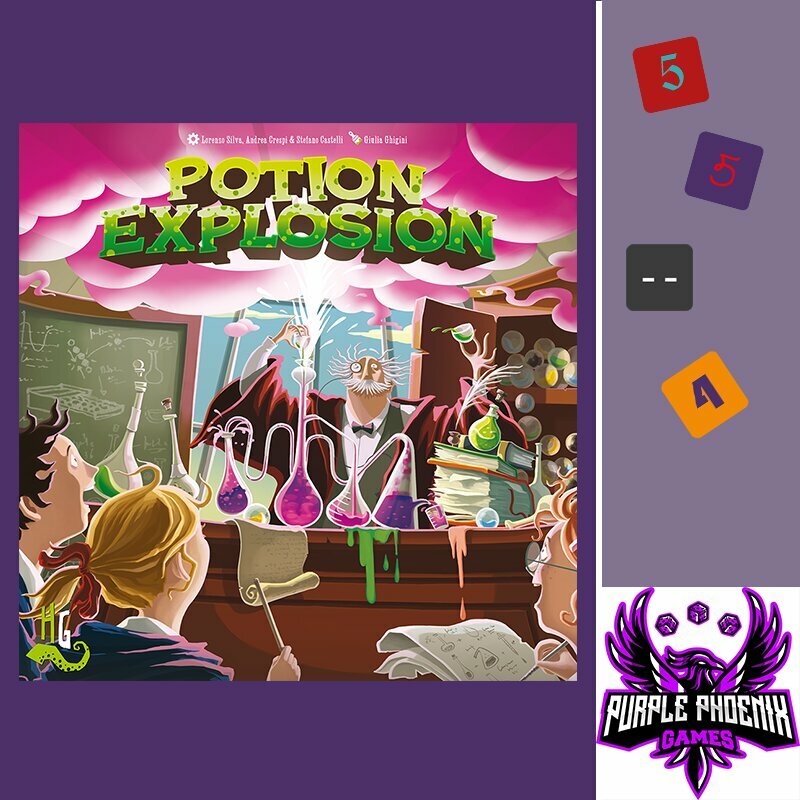
Your senior year at Horribilorum Sorcery Academy for Witty Witches and Wizards is almost at an end, but one thing stands between you and graduation – final exams! You’ve passed everything with flying colors, and now it’s time for your final exam in Potions class. Do you have what it takes to brew the most difficult and impressive potions? Or will amateur mistakes result in inaccurate recipes and ultimate failure? The time for studying is over, and the time for potion making is NOW!
Disclaimer: There are several expansions for this game. I do not have any of them, nor do I have any gameplay experience with any of them. If and when I do get them added into my base game, I will either amend this review or write a new one! – L
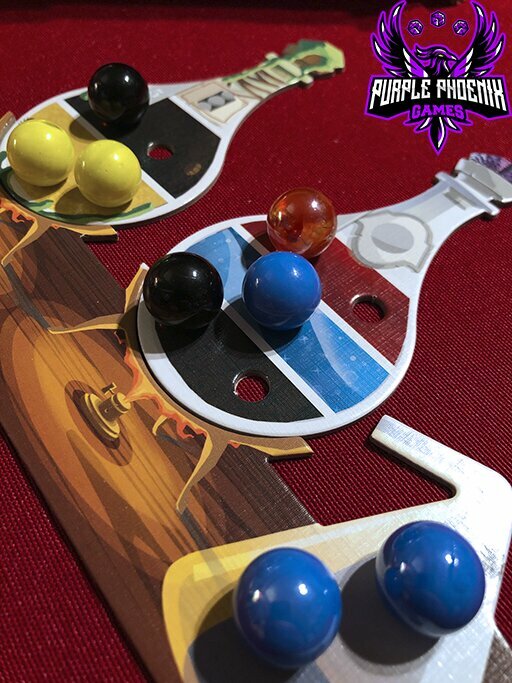
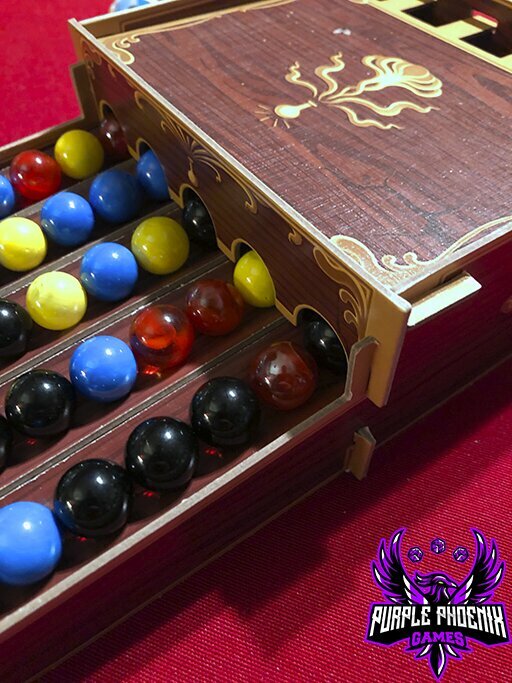
Potion Explosion is a game of set collection in which players are trying to complete potions for end-game VPs. To start the game, each player takes two beaker-shaped potion tiles to be kept in their desk (play area). On your turn, you will select one marble from the dispenser and play it to one of your potions. Easy enough. The marbles are housed in an angled dispenser, so when a marble is removed from one of the tracks, the rest roll down to fill in the gaps. Neat, right? But there’s a catch. If the marble you take causes two marbles of the same color to collide as they move down the dispenser, you have triggered an explosion! That means that you are allowed to take all marbles of the same color that were involved in the explosion on that same track. Sometimes, by removing all the marbles involved in an explosion, a second explosion may be triggered! In that case, you take all of those marbles as well!
Once you’ve taken a marble (or multiple, depending on any explosions), you immediately play those onto your active Potion Tiles. You have the option of keeping up to three marbles in the Ingredient Pool on your desk to be played in later turns. Extra marbles that cannot fit on your Potion Tiles or in your Ingredient Pool are returned to the dispenser. If you complete a potion on your turn, return its corresponding marbles to the dispenser and place the Potion Tile beneath your desk, to be scored at the end of the game. Then you select another Potion Tile from the available stacks to be added to your desk. You will always have two Potion Tiles on your desk. Your turn is now over, and play continues with the next player. The game ends when a certain number of Skill Tokens (earned for completing sets of 3 identical potions, or for completing sets of 5 different potions) have been awarded to players. Play continues until everyone has had the same amount of turns, and then VPs are counted. The player with the most VP is the winner!
I’ve got to lead this off by saying that one of the things I love most about Potion Explosion are the components. The Potion Tiles are nice and thick cardboard, and the marbles are just so much fun to fiddle with throughout the game. Yeah, I may accidentally roll some off the table every once in a while, but they’re a neat addition to the game. I’ve heard that the cardboard dispenser doesn’t hold up after many plays, but I have yet to see that issue, and know that lots of people are now 3D printing dispensers for themselves to circumvent this problem.
So how does it play? Potion Explosion is relatively fast to play, and requires more strategy than meets the eye. You’re selecting and playing marbles, but you’ve also got to keep an eye on any explosion possibilities. Maybe you need 4 blue marbles – are any of the dispenser tracks loaded with blues so that you could strategically trigger an explosion? Or is your neighbor really going for red marbles, so you trigger a red explosion just to keep those from them? The marble placement in the dispenser may be random, but your manipulation of the available marbles is not. Strategy is everything here, because one mistake in marble selection could end up handing your opponents the game.
I thoroughly enjoy Potion Explosion. It’s fast to teach, fast to learn, and fun to play with all ages! The mechanism of the marble dispenser is pretty neat, and it adds an extra element to the game. This game keeps me engaged the entire time because it is just so fun to watch the marbles moving down the tracks and potentially triggering multiple explosions. Although it requires good strategy, it’s a light enough game to give your a break in between some heavier brain-burners. If you haven’t had the opportunity to try Potion Explosion yet, I would highly recommend it. Purple Phoenix Games gives it a bubbling 14 / 18.
Disclaimer: There are several expansions for this game. I do not have any of them, nor do I have any gameplay experience with any of them. If and when I do get them added into my base game, I will either amend this review or write a new one! – L
Potion Explosion is a game of set collection in which players are trying to complete potions for end-game VPs. To start the game, each player takes two beaker-shaped potion tiles to be kept in their desk (play area). On your turn, you will select one marble from the dispenser and play it to one of your potions. Easy enough. The marbles are housed in an angled dispenser, so when a marble is removed from one of the tracks, the rest roll down to fill in the gaps. Neat, right? But there’s a catch. If the marble you take causes two marbles of the same color to collide as they move down the dispenser, you have triggered an explosion! That means that you are allowed to take all marbles of the same color that were involved in the explosion on that same track. Sometimes, by removing all the marbles involved in an explosion, a second explosion may be triggered! In that case, you take all of those marbles as well!
Once you’ve taken a marble (or multiple, depending on any explosions), you immediately play those onto your active Potion Tiles. You have the option of keeping up to three marbles in the Ingredient Pool on your desk to be played in later turns. Extra marbles that cannot fit on your Potion Tiles or in your Ingredient Pool are returned to the dispenser. If you complete a potion on your turn, return its corresponding marbles to the dispenser and place the Potion Tile beneath your desk, to be scored at the end of the game. Then you select another Potion Tile from the available stacks to be added to your desk. You will always have two Potion Tiles on your desk. Your turn is now over, and play continues with the next player. The game ends when a certain number of Skill Tokens (earned for completing sets of 3 identical potions, or for completing sets of 5 different potions) have been awarded to players. Play continues until everyone has had the same amount of turns, and then VPs are counted. The player with the most VP is the winner!
I’ve got to lead this off by saying that one of the things I love most about Potion Explosion are the components. The Potion Tiles are nice and thick cardboard, and the marbles are just so much fun to fiddle with throughout the game. Yeah, I may accidentally roll some off the table every once in a while, but they’re a neat addition to the game. I’ve heard that the cardboard dispenser doesn’t hold up after many plays, but I have yet to see that issue, and know that lots of people are now 3D printing dispensers for themselves to circumvent this problem.
So how does it play? Potion Explosion is relatively fast to play, and requires more strategy than meets the eye. You’re selecting and playing marbles, but you’ve also got to keep an eye on any explosion possibilities. Maybe you need 4 blue marbles – are any of the dispenser tracks loaded with blues so that you could strategically trigger an explosion? Or is your neighbor really going for red marbles, so you trigger a red explosion just to keep those from them? The marble placement in the dispenser may be random, but your manipulation of the available marbles is not. Strategy is everything here, because one mistake in marble selection could end up handing your opponents the game.
I thoroughly enjoy Potion Explosion. It’s fast to teach, fast to learn, and fun to play with all ages! The mechanism of the marble dispenser is pretty neat, and it adds an extra element to the game. This game keeps me engaged the entire time because it is just so fun to watch the marbles moving down the tracks and potentially triggering multiple explosions. Although it requires good strategy, it’s a light enough game to give your a break in between some heavier brain-burners. If you haven’t had the opportunity to try Potion Explosion yet, I would highly recommend it. Purple Phoenix Games gives it a bubbling 14 / 18.


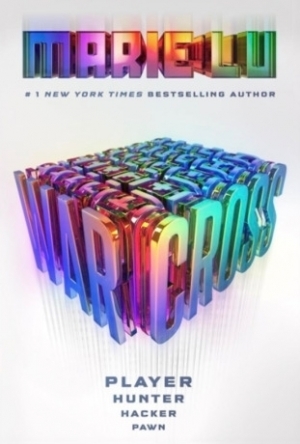

I didn't know too much about the premise before I started the book beyond frequent comparisons to Ready Player One and it being about a hacker/gamer - which I think was a good thing. I didn't go into it with any expectations (especially because I have never read Ready Player one) and came out fantastically entertained.
The world in which we find ourselves is a more advanced version of the one that we are familiar with. Virtual or augmented reality has made a technological leap due to the creation of Hideo Tanaka. The sleeker AR/VR glasses make the experience more user-friendly and the game Warcross has exploded across the globe. Each year there are Warcross Championships, which pit teams of the best players (and some wild cards) against one another.
Although Emika is a gamer and hacker she is forced to turn to a life of bounty hunting to support herself, and even that is not enough. She is days away from being kicked out of her apartment and with $13 to her name, she takes the biggest risk of her life and hacks the Warcross Championships. This one act flips her entire world upside down and sets the rest of the story in motion.
Emika is a very relatable character, despite her criminal record, incredible hacking skills, and ingenuity. She has an incredible love for her father, a strong backbone and the tenacity to do what is necessary. Emika's character has a nice balance so that she is not incompetent, but she is also not the perfect chosen one, she is an incredible hacker, but she is not infallible, etc.
Hideo, on the other hand, is a genius and innovator. At first glance, he seems aloof and professional, but there is a real person with emotions once you get to know him. I really enjoyed watching him open up over the course of the book and get more of his backstory. Lu brilliantly weaves the stories into both character's narratives so that we are able to see the events and people that made them who they are today.
The story was fast-paced and the Warcross games were so vibrantly described that it felt as if you were genuinely watching them. The world was slowly but surely populated, from the buildings and city streets we may be familiar with to the addition of virtual reality advertisements and signage, an underground black market, and more.
Even the game of Warcross itself was a really interesting aspect of the story. Although the game seems simple, there are limitless ways to manipulate and change the game as it is being played. It is an intense game similar to Capture the Flag, in that teams must capture the other's artifact but power-ups, changing landscapes and team members with special skills make the game infinitely more enjoyable to read about.
While the ending likely won't be a complete surprise, the overall motivations and events that lead up to the final pages will hit you hard. You're so invested in the characters and the world that any reveals will make you wonder (and need to know) what happens next. I definitely didn't want to leave the world that Lu had built, so I am incredibly pleased that there will be more books in this series. There is so much that she can add to the story, the world and I can't wait to see where she goes with it next.
I highly recommend this book to young adult/teen readers even you don't consider yourself a gamer or think you will relate. This is a very accessible book that many will enjoy (plus that cover is gorgeous, right?)
The world in which we find ourselves is a more advanced version of the one that we are familiar with. Virtual or augmented reality has made a technological leap due to the creation of Hideo Tanaka. The sleeker AR/VR glasses make the experience more user-friendly and the game Warcross has exploded across the globe. Each year there are Warcross Championships, which pit teams of the best players (and some wild cards) against one another.
Although Emika is a gamer and hacker she is forced to turn to a life of bounty hunting to support herself, and even that is not enough. She is days away from being kicked out of her apartment and with $13 to her name, she takes the biggest risk of her life and hacks the Warcross Championships. This one act flips her entire world upside down and sets the rest of the story in motion.
Emika is a very relatable character, despite her criminal record, incredible hacking skills, and ingenuity. She has an incredible love for her father, a strong backbone and the tenacity to do what is necessary. Emika's character has a nice balance so that she is not incompetent, but she is also not the perfect chosen one, she is an incredible hacker, but she is not infallible, etc.
Hideo, on the other hand, is a genius and innovator. At first glance, he seems aloof and professional, but there is a real person with emotions once you get to know him. I really enjoyed watching him open up over the course of the book and get more of his backstory. Lu brilliantly weaves the stories into both character's narratives so that we are able to see the events and people that made them who they are today.
The story was fast-paced and the Warcross games were so vibrantly described that it felt as if you were genuinely watching them. The world was slowly but surely populated, from the buildings and city streets we may be familiar with to the addition of virtual reality advertisements and signage, an underground black market, and more.
Even the game of Warcross itself was a really interesting aspect of the story. Although the game seems simple, there are limitless ways to manipulate and change the game as it is being played. It is an intense game similar to Capture the Flag, in that teams must capture the other's artifact but power-ups, changing landscapes and team members with special skills make the game infinitely more enjoyable to read about.
While the ending likely won't be a complete surprise, the overall motivations and events that lead up to the final pages will hit you hard. You're so invested in the characters and the world that any reveals will make you wonder (and need to know) what happens next. I definitely didn't want to leave the world that Lu had built, so I am incredibly pleased that there will be more books in this series. There is so much that she can add to the story, the world and I can't wait to see where she goes with it next.
I highly recommend this book to young adult/teen readers even you don't consider yourself a gamer or think you will relate. This is a very accessible book that many will enjoy (plus that cover is gorgeous, right?)

Mothergamer (1658 KP) rated the PC version of Portal 2 in Video Games
Apr 3, 2019
Is Portal 2 worth all the hype? The answer is a resounding yes! Valve really did their homework on making the sequel to Portal fun and interesting. Portal was one of the first person games that I could play because the camera didn't bob around and make me feel nauseous. I was pleased to see that the camera angles are excellent in first person once again and don't have that wobbly bobbing effect that always makes me ill.
There are new items in the game like hard light bridges, aerial faith plates, and propulsion gel. Each item is introduced carefully, allowing the player to become familiar with the items and how to use them. The puzzle rooms are amazingly designed, and while one puzzle may seem obvious to one person, it may not to another. There's no hard and fast learning curve with the difficulty levels of the puzzles and with the voice of GlaDos pouring often hilarious insults at you in a sing song computer voice make it entertaining.
The humor in Portal 2 is perfectly dark with great comedic timing and terrific voice acting especially from Stephen Merchant as Wheatley. You will often find yourself chuckling, but also find yourself having that unsettling feeling throughout the story as it progresses. The main story for Portal 2 is longer than the first one, and perhaps even better which is a great thing for a sequel game.
After you are done with the main story, you can play a co-op multiplayer stand alone story play through of the game featuring two droids Atlas and Peabody who are sent testing for GlaDos and the puzzles rely on them working well together as a team. This mode is a lot of fun with well balanced and greatly constructed puzzles.
Valve has outdone themselves with Portal 2, with great puzzles, game play, and story. If you haven't picked up Portal 2 yet, you definitely should. It promises a great gaming experience for old and new Portal fans alike. This is definitely a game that any gamer worth his or her salt should have in their collection.
There are new items in the game like hard light bridges, aerial faith plates, and propulsion gel. Each item is introduced carefully, allowing the player to become familiar with the items and how to use them. The puzzle rooms are amazingly designed, and while one puzzle may seem obvious to one person, it may not to another. There's no hard and fast learning curve with the difficulty levels of the puzzles and with the voice of GlaDos pouring often hilarious insults at you in a sing song computer voice make it entertaining.
The humor in Portal 2 is perfectly dark with great comedic timing and terrific voice acting especially from Stephen Merchant as Wheatley. You will often find yourself chuckling, but also find yourself having that unsettling feeling throughout the story as it progresses. The main story for Portal 2 is longer than the first one, and perhaps even better which is a great thing for a sequel game.
After you are done with the main story, you can play a co-op multiplayer stand alone story play through of the game featuring two droids Atlas and Peabody who are sent testing for GlaDos and the puzzles rely on them working well together as a team. This mode is a lot of fun with well balanced and greatly constructed puzzles.
Valve has outdone themselves with Portal 2, with great puzzles, game play, and story. If you haven't picked up Portal 2 yet, you definitely should. It promises a great gaming experience for old and new Portal fans alike. This is definitely a game that any gamer worth his or her salt should have in their collection.
Jon Hansen (9 KP) rated Quantum in Tabletop Games
May 2, 2019

Fun (6 more)
Replayable
Innovative
Easy to learn
Strategic
Deep
Visually Appealing
Out Of Print (1 more)
A little too strategic for older folks
Space Battle-Yahtzee
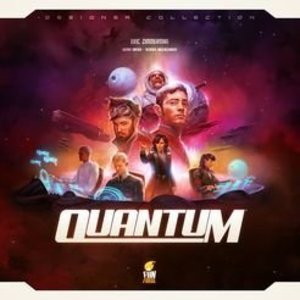
We rented Quantum from our local card shop, and ended up playing it every day. Its out of print, so it was a stroke of astounding luck that the shop was willing to sell it to us.
Quantum plays somewhat like risk, where you advance units to positions to capture objectives. The catch is that your units are dice- higher numbers can move further, but lower numbers are better in combat, and each has a special ability.
The game revolves around placing "Quantum Cubes", which your units build on planets. Each planet has a number and an amount of slots for quantum cubes to be placed, and to build a cube your units (which are literally dice) must add up the the number on the planet they are on.
Building quantum cubes allows you to select an "advancement card", which contain either permanent upgrades to your turns and abilities, or one-time powerful bonuses. All advancement cards feel meaningful and powerful, and which ones you select determine a lot of how your game will play out. You can "build" for combat, research, mobility, and even some weird other things like being able to change one of your dice once per turn either up one number or down one (and thus changing its abilities).
The game board is configurable tiles, so the "map" can be different each time, and support a faster or slower game, or more or less players (the game only comes with pieces for 4 players, but if you had the dice it wouldn't be hard to play extra with improvised pieces).
The game pacing is really well done; if all players know what they're doing, the race to place the final cube can be intense and exciting, as each player will end up with different strengths as they implement unique strategies to win.
We love quantum and have had a blast every time we've played it- we're expecting it to become a family favorite and for our copy to end up very well loved.
Quantum plays somewhat like risk, where you advance units to positions to capture objectives. The catch is that your units are dice- higher numbers can move further, but lower numbers are better in combat, and each has a special ability.
The game revolves around placing "Quantum Cubes", which your units build on planets. Each planet has a number and an amount of slots for quantum cubes to be placed, and to build a cube your units (which are literally dice) must add up the the number on the planet they are on.
Building quantum cubes allows you to select an "advancement card", which contain either permanent upgrades to your turns and abilities, or one-time powerful bonuses. All advancement cards feel meaningful and powerful, and which ones you select determine a lot of how your game will play out. You can "build" for combat, research, mobility, and even some weird other things like being able to change one of your dice once per turn either up one number or down one (and thus changing its abilities).
The game board is configurable tiles, so the "map" can be different each time, and support a faster or slower game, or more or less players (the game only comes with pieces for 4 players, but if you had the dice it wouldn't be hard to play extra with improvised pieces).
The game pacing is really well done; if all players know what they're doing, the race to place the final cube can be intense and exciting, as each player will end up with different strengths as they implement unique strategies to win.
We love quantum and have had a blast every time we've played it- we're expecting it to become a family favorite and for our copy to end up very well loved.
Purple Phoenix Games (2266 KP) rated BANG! The Dice Game in Tabletop Games
Jun 14, 2019
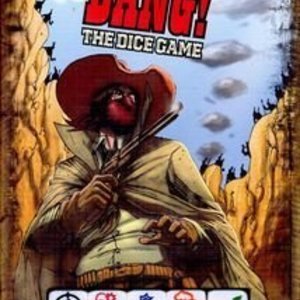

“I’m gonna bang you.” Taken out of context, one might be slapped for saying such things. While playing a rousing game of BANG! The Dice Game, it’s only too common. To “bang” someone (in this game) is to shoot them. With a gun. While Purple Phoenix Games does not condone violence or murder, you gotta admit that banging your friends with no risk of bodily harm is definitely exciting!
Okay, so at its Wild West heart, BANG! The Dice Game is just that: a dice game. Have you played Yahtzee! before? Or anything with the Yahtzee! mechanic? You know, you throw some dice, save one or more for scoring, and can re-roll up to twice more to try to get the desired result? Well now you know how to play BANG! The Dice Game – mostly.
What makes this different and more exciting than Yahtzee! is that everyone will have a special identity which affords them a special player power. It could be re-rolling a specific die face again, or minimizing damage from an attack. Add to that the fact that everyone is also dealt a role card to determine their team affiliation – Sheriff and Deputy, Outlaws, or the Renegade. The Sheriff wins if the bad guys are eliminated, the Deputy wins if the Sheriff survives, the Outlaws win if the Sheriff is eliminated, and the Renegade wins if they are the last one standing.
Now, I didn’t mention that there are “Indians” who could possibly shoot arrows at the players because it’s not politically correct, but this is set in the Old West, and that’s unfortunately what they called Native Americans, and that’s the terminology that is used in the game.
This game boasts a play experience that is fast, engaging on every turn (even the other players’), easy to learn, and just plain hilarious fun. Yes, you could be eliminated in a game, but games typically last like 15-20 minutes, so you don’t have to wait long to get back in the fight.
With easy, fast, and fun gameplay, an interesting theme to role play, and great components, Purple Phoenix Games gives this one a rootin’ tootin’ 13 / 18 (Josh hasn’t played it yet).
Okay, so at its Wild West heart, BANG! The Dice Game is just that: a dice game. Have you played Yahtzee! before? Or anything with the Yahtzee! mechanic? You know, you throw some dice, save one or more for scoring, and can re-roll up to twice more to try to get the desired result? Well now you know how to play BANG! The Dice Game – mostly.
What makes this different and more exciting than Yahtzee! is that everyone will have a special identity which affords them a special player power. It could be re-rolling a specific die face again, or minimizing damage from an attack. Add to that the fact that everyone is also dealt a role card to determine their team affiliation – Sheriff and Deputy, Outlaws, or the Renegade. The Sheriff wins if the bad guys are eliminated, the Deputy wins if the Sheriff survives, the Outlaws win if the Sheriff is eliminated, and the Renegade wins if they are the last one standing.
Now, I didn’t mention that there are “Indians” who could possibly shoot arrows at the players because it’s not politically correct, but this is set in the Old West, and that’s unfortunately what they called Native Americans, and that’s the terminology that is used in the game.
This game boasts a play experience that is fast, engaging on every turn (even the other players’), easy to learn, and just plain hilarious fun. Yes, you could be eliminated in a game, but games typically last like 15-20 minutes, so you don’t have to wait long to get back in the fight.
With easy, fast, and fun gameplay, an interesting theme to role play, and great components, Purple Phoenix Games gives this one a rootin’ tootin’ 13 / 18 (Josh hasn’t played it yet).

Hazel (1853 KP) rated The Calling (Endgame #1) in Books
Dec 7, 2018
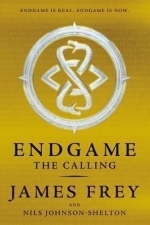

<i>This eBook was provided by the publisher via NetGalley in exchange for an honest review</i>
The result of collaboration between James Frey and Nils Johnson-Shelton is this first book in a dystopian series, <i>Endgame: The Calling</i>. Twelve teenage descendants of ancient cultures from across the world have been trained to represent humanity in a game that will determine the future of the world. The only way to win is to discover three keys and be the last player left alive. These young people are not just playing for their own lives for if they die their entire family line will be wiped out.
<i>Endgame: The Calling</i> focuses on discovering the first key, Earth Key. After meeting each other in China, each of the twelve is given a clue to solve that will help lead them in the right direction. Although there can only be one winner, a couple of the player decide to help each other out, but is there really anyone who can be trusted?
<i>Endgame</i> reminds me of <i>The Hunger Games</i> by Suzanne Collins but on a much larger scale, and also a more adult version. The entire planet is the games’ arena, which does not bode well for a lot of the world’s inhabitants. That is one of the things I disliked about this book, the unnecessary deaths of innocents. There was a lot of gruesome murder, which admittedly is the point of <i>Endgame</i>, but some of it was uncalled-for.
I did not particularly care for the writing style and formatting of the text. It was often confusing to work out who was saying or doing what. Another thing I did not like was that there was not an obvious protagonist. It is hard to know whether there is a particular character we should be rooting for or whether they should all be regarded as equal.
For a science fiction, dystopian novel <i>Endgame</i> is an interesting idea, fast paced and full of action. Unfortunately the events, names and puzzles leave the reader feeling bewildered, and the gruesome scenes rather disgusted.
Overall I think this book would appeal to an audience who loves a lot of brutal action and solving things. It requires the reader to be able to think rather than sit back and enjoy. Personally, I am not bothered about reading the next in the series.
The result of collaboration between James Frey and Nils Johnson-Shelton is this first book in a dystopian series, <i>Endgame: The Calling</i>. Twelve teenage descendants of ancient cultures from across the world have been trained to represent humanity in a game that will determine the future of the world. The only way to win is to discover three keys and be the last player left alive. These young people are not just playing for their own lives for if they die their entire family line will be wiped out.
<i>Endgame: The Calling</i> focuses on discovering the first key, Earth Key. After meeting each other in China, each of the twelve is given a clue to solve that will help lead them in the right direction. Although there can only be one winner, a couple of the player decide to help each other out, but is there really anyone who can be trusted?
<i>Endgame</i> reminds me of <i>The Hunger Games</i> by Suzanne Collins but on a much larger scale, and also a more adult version. The entire planet is the games’ arena, which does not bode well for a lot of the world’s inhabitants. That is one of the things I disliked about this book, the unnecessary deaths of innocents. There was a lot of gruesome murder, which admittedly is the point of <i>Endgame</i>, but some of it was uncalled-for.
I did not particularly care for the writing style and formatting of the text. It was often confusing to work out who was saying or doing what. Another thing I did not like was that there was not an obvious protagonist. It is hard to know whether there is a particular character we should be rooting for or whether they should all be regarded as equal.
For a science fiction, dystopian novel <i>Endgame</i> is an interesting idea, fast paced and full of action. Unfortunately the events, names and puzzles leave the reader feeling bewildered, and the gruesome scenes rather disgusted.
Overall I think this book would appeal to an audience who loves a lot of brutal action and solving things. It requires the reader to be able to think rather than sit back and enjoy. Personally, I am not bothered about reading the next in the series.

LeftSideCut (3776 KP) rated the PlayStation 4 version of Star Wars Jedi: Fallen Order in Video Games
Apr 7, 2020
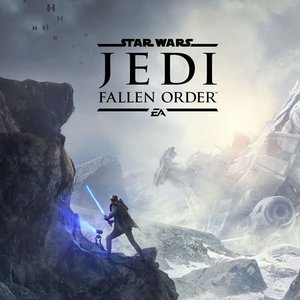
I don't have much negativity to direct at Star Wars Jedi: Fallen Order, it's a pretty solid single player adventure that expands on Star Wars lore to a competent degree, and had me absorbed for the most part.
For a start, the game looks amazing. The settings are full of colour one second, and then harsh and cold the next, as you traverse forest planets like Kashyyyk, before navigating through Empire facilities.
The game is set between Episodes 3 and 4 of the movie canon, and borrows asthethic elements from both the original and prequel trilogies. It's interesting to be in the middle of a universe that has recently seen the destruction of the Jedi Order.
The gameplay is also great. The exploration and parkour elements are reminiscent of the Uncharted series, but adds enough Force stuff to make it not feel stale, and the combat is thrilling. JFO is genuinely challenging at times, especially during boss battles. You have to approach each encounter with patience and some sort of plan, or you'll find yourself struggling. It's not to dissimilar from Dark Souls in that respect.
By the time I had finished the campaign, and went through areas again in my pursuit of Platinum, I had unlocked all skills, and combat became easier, at times, really giving you the feel of a Jedi Knight.
You can also build and edit your own lightsaber, which is a nice touch.
The story is ok, largely about finding a McGuffin to help restore the Jedi, but this is one of those games that is all about the journey. The characters you meet along the way are all fleshed out to an acceptable degree, and BD-1, your droid companion for the campaign, is endearing and feels essential to the way the story pans out.
My main criticism is that it didn't have a huge amount of replay value once I was done. After finishing the campaign, it didn't take a massive amount of time to mop up everything else, and that was that, but it's forgivable considering how tight and polished the rest of the game feels.
Star Wars Jedi: Fallen Order is another shining example of how important single player games are in an age where multiplayer games reign supreme. Go and play it.
For a start, the game looks amazing. The settings are full of colour one second, and then harsh and cold the next, as you traverse forest planets like Kashyyyk, before navigating through Empire facilities.
The game is set between Episodes 3 and 4 of the movie canon, and borrows asthethic elements from both the original and prequel trilogies. It's interesting to be in the middle of a universe that has recently seen the destruction of the Jedi Order.
The gameplay is also great. The exploration and parkour elements are reminiscent of the Uncharted series, but adds enough Force stuff to make it not feel stale, and the combat is thrilling. JFO is genuinely challenging at times, especially during boss battles. You have to approach each encounter with patience and some sort of plan, or you'll find yourself struggling. It's not to dissimilar from Dark Souls in that respect.
By the time I had finished the campaign, and went through areas again in my pursuit of Platinum, I had unlocked all skills, and combat became easier, at times, really giving you the feel of a Jedi Knight.
You can also build and edit your own lightsaber, which is a nice touch.
The story is ok, largely about finding a McGuffin to help restore the Jedi, but this is one of those games that is all about the journey. The characters you meet along the way are all fleshed out to an acceptable degree, and BD-1, your droid companion for the campaign, is endearing and feels essential to the way the story pans out.
My main criticism is that it didn't have a huge amount of replay value once I was done. After finishing the campaign, it didn't take a massive amount of time to mop up everything else, and that was that, but it's forgivable considering how tight and polished the rest of the game feels.
Star Wars Jedi: Fallen Order is another shining example of how important single player games are in an age where multiplayer games reign supreme. Go and play it.

The Championships, Wimbledon 2017
Sports, Entertainment and Stickers
App
The Official iOS App for The Championships, Wimbledon, the only tennis Grand Slam on grass. Live...

Dino Hunter: Deadly Shores
Games and Entertainment
App
Hunt or be hunted! Embark on the hunting expedition of a lifetime in pursuit of the ultimate game in...