
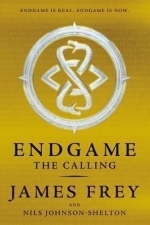
The Calling (Endgame #1)
7.0 Rate It
Book
Twelve thousand years ago, they came. They descended from the sky amid smoke and fire, and created...


The Next Factory of the World: How Chinese Investment Is Reshaping Africa
Book
China is now the biggest foreign player in Africa It's Africa's largest trade partner, the largest...

ChoiceBoard-Creator
Education and Games
App
ChoiceBoard Creator is the perfect app for creating customizable choice boards for the unique needs...
Bloons TD 6
Games
7.5
Rate It
App
The Bloons are back and better than ever! Get ready for a massive 3D tower defense game designed to...

Jaipur
7.6
Rate It
Tabletop Game
Jaipur, capital of Rajasthan. You are one of the two most powerful traders in the city. But...
Boardgames Cardgames FamilyGames

Firefly Adventures: Brigands and Browncoats
9.5 Rate It
Tabletop Game
Firefly: Adventures is a cooperative, mission based, skirmish-level game where the players use the...

Purple Phoenix Games (2266 KP) rated Similo: Spookies in Tabletop Games
Mar 11, 2022
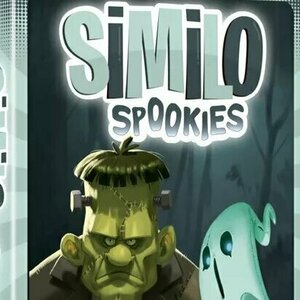

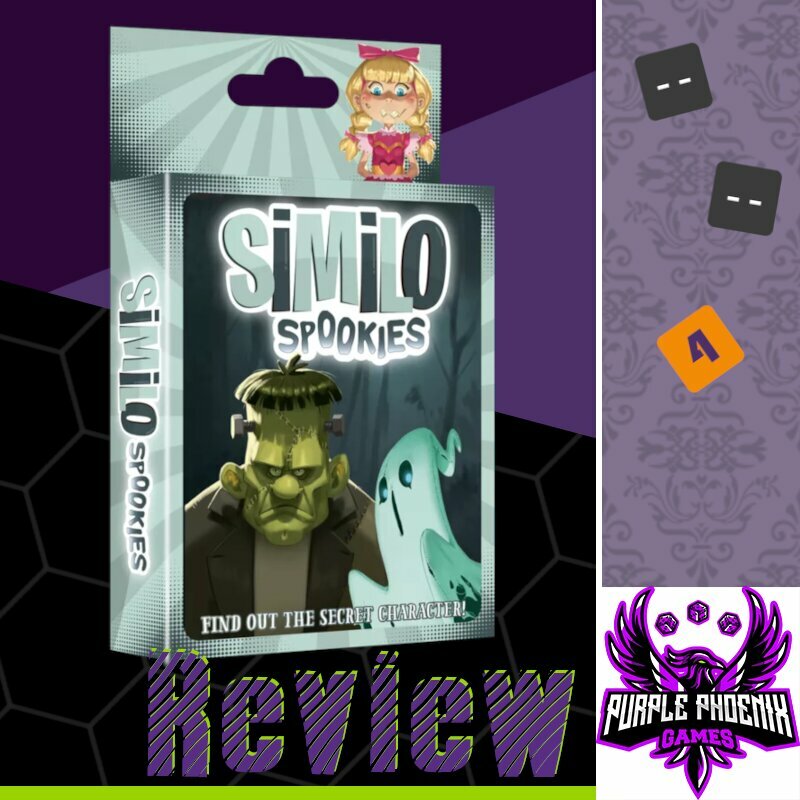
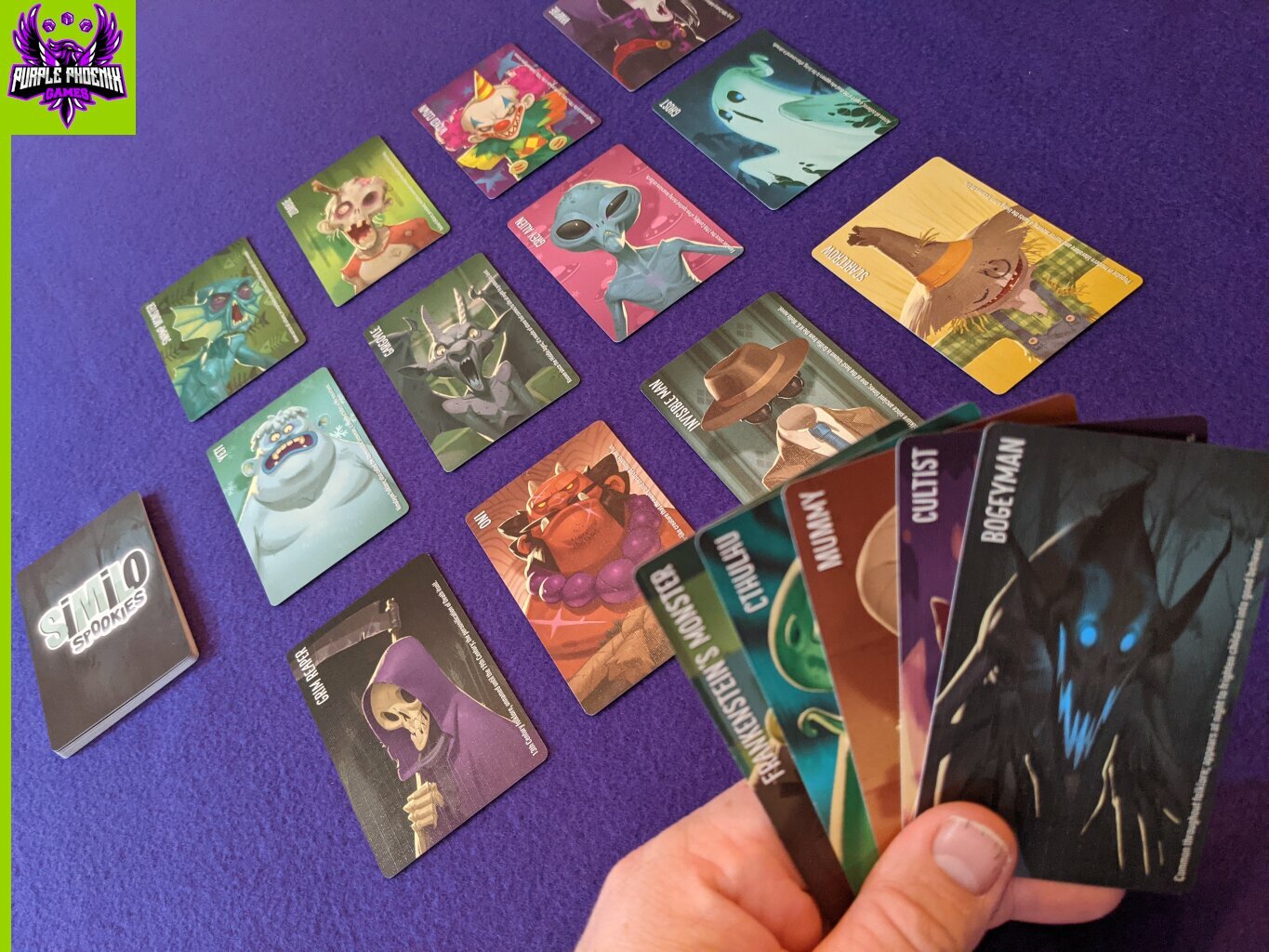
Similo: Spookies (which I will just call Similo from here on out, as they are all basically the same, but with different themes) is a party card game where one player knows information and attempts to persuade the other players to choose the correct character SILENTLY. One game lasts five rounds or less, and many times players will want to play multiple games in a row.
To setup, shuffle the deck of cards and place it face-down on the table. The player chosen to be the “Clue Giver” will then secretly look at the top card. This card will be the secret character for the entire game. Along with this card, the Clue Giver will draw an additional 11 cards and shuffle them. Next, lay out the 12 characters face-up in a 4×3 grid, so that all players can see. Finally, the Clue Giver draws another five cards to act as their starting hand of clues. The game may now begin in earnest!
The game lasts no more than five rounds, and each round is played mostly the same. During the first round the Clue Giver will place a card from their hand onto the table in either Portrait or Landscape mode (I know there are different words to describe these orientations, but they are failing me now). When a card is in Portrait mode, the Clue Giver is letting the players know that the secret character has similarities to the played card. Landscape placement means that the secret character has differences from the card played.
At the end of the first round, the other players must discuss and decide one card from the grid to remove from play, based on the Clue Giver’s information. If the card removed is the secret character (or at any time the secret character is removed in this way) the players all immediately lose the game. However, if the players have removed an appropriate character card, then the game moves to the second round. Each subsequent round is played exactly the same way, except the number of cards removed will match the round number being played. For example, during the third round three cards will be removed. The only exception here is the very last fifth round. During this round there will only be two cards remaining, and the players will need to choose the correct one to win the game. Win or lose, all players will most likely request to play another game with a different Clue Giver.
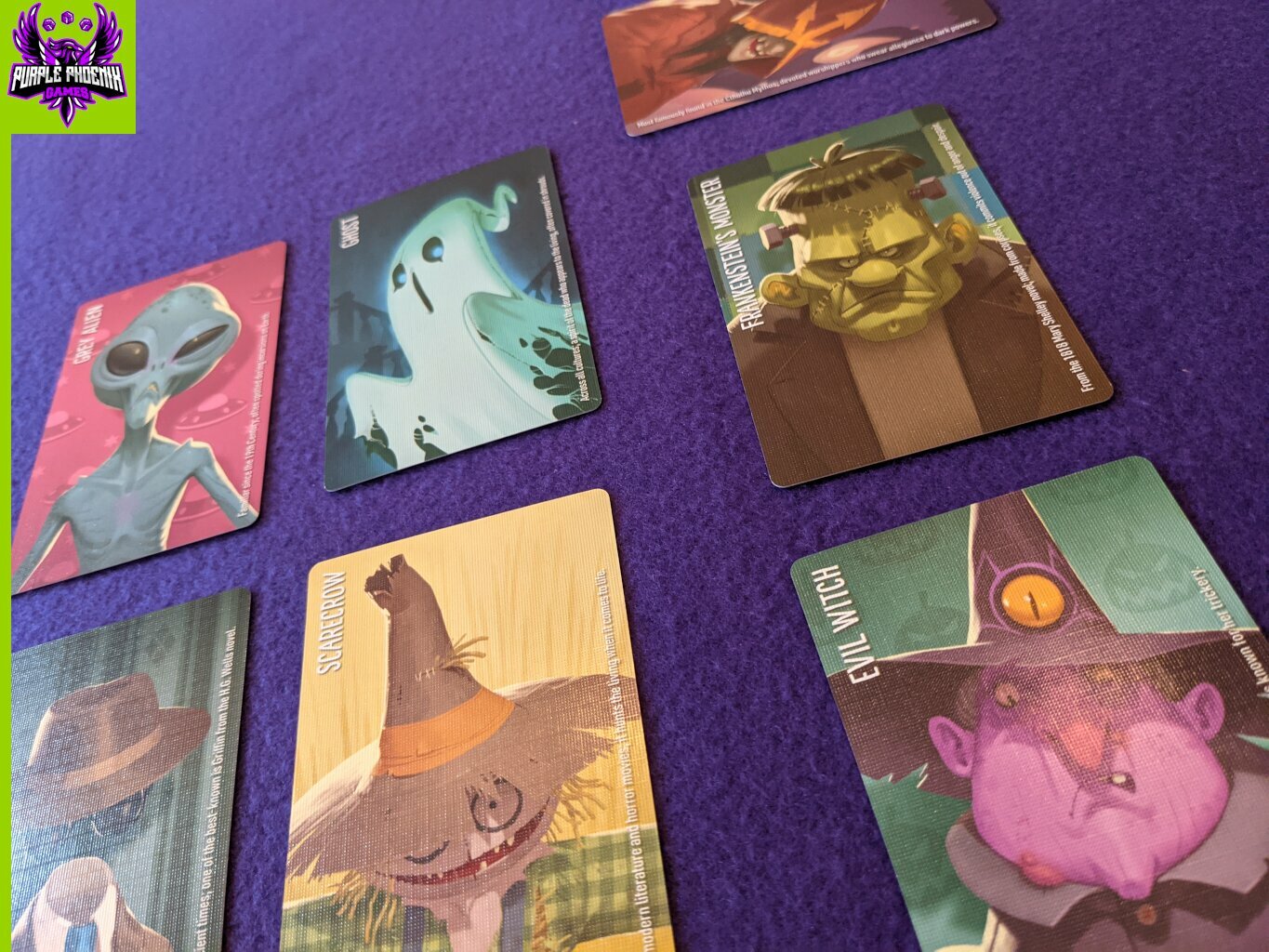
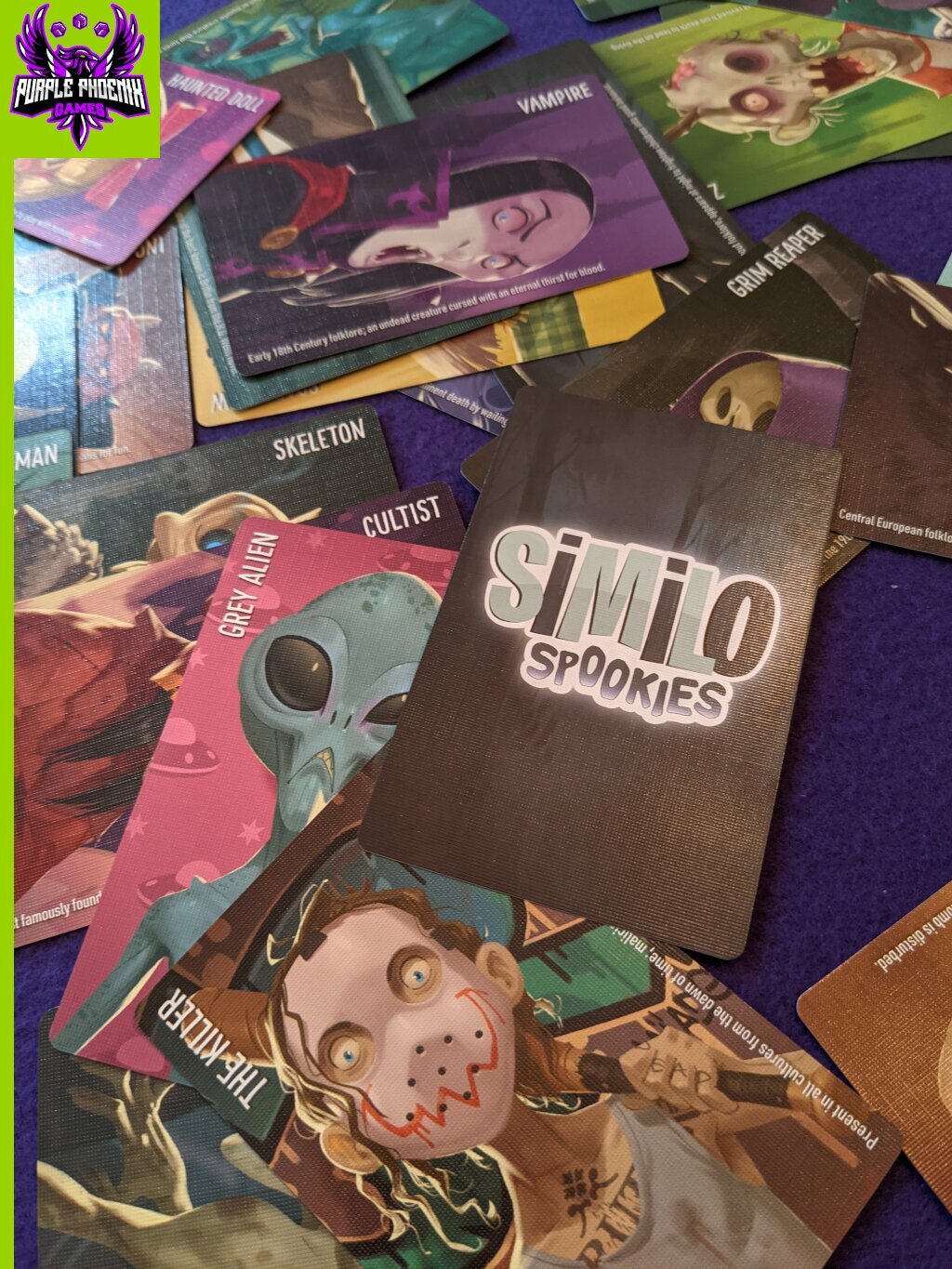
Components. This game is 30 cards in a tuckbox. The cards are all great quality with excellent linen finish. They each have the character’s name on the upper left corner and a small thematic quip on the lower right corner. The big thing here is the utterly amazing character art by Naiade (Seasons, Tokaido, Isla Dorada, etc). They are each so wonderfully illustrated, and they have to be, considering the entire game is based on the similarity or differences of each card. I was so very pleasantly surprised to see this beautiful set of cards pop out of the box when I opened it. Zero issues with components here.
This game is low-key a thinking person’s puzzle. How can I get the group to exclude one card specifically and throw away all the others? What the heck is this Clue Giver trying to tell us? What exactly is an Oni? With the right group of gamers, especially those that share many inside jokes and experiences, this could be a nightly hit. Now, determining the difference between Frankenstein’s Monster and a Zombie may be harder than you thought, so do be careful with those technicalities.
This one really reminds me of a much more compact version of Deception: Murder in Hong Kong. There is a silent Clue Giver in both trying to guide the other players to the right answer using cards. If I can get the same feeling from a game featuring 30 cards versus about 300 I might have a replacement situation on my hands here.
For its tiny table presence, excellent artwork, and overall game play, Purple Phoenix Games gives this one a bone-chilling 4 / 6. I know at this very second that my score is hanging in the balance. I want it to be a 5 so very badly, and I feel that it may actually get there, assuming I can play with larger groups of people and a variety of types of gamers. For now, I am happy with the 4 it is assigned. If you are like me and didn’t know you needed a smaller game in your collection that can give similo experiences to bigger boxes, give this one a shot.
Oh PS – You can also combine the different sets into a larger and more chaotic game. I’m not sure I have the huevos for that quite yet, but I think a good counterpart to this Halloween-themed set may be the Fables or Myths sets. Let me know if you have combined these two and if my hunch is correct. I’m going to go fanboy over Naiade’s art now.

Chris Sawin (602 KP) rated Free Guy (2021) in Movies
Dec 14, 2021 (Updated Dec 14, 2021)


Completely content with every day being exactly the same as the day before, Guy’s life is changed forever following a chance encounter with a ‘Sunglasses Person’ (the film’s term for player characters) named Molotov Girl (Jodie Comer).
An homage to Grand Theft Auto’s Vice City, with some elements from Fortnite sprinkled in for good measure, Free City is located within a video game of the same name, and boasts a population of various NPCs (non-player characters) as they go through their daily routines completely unaware that they’re stuck within the confines of a video game.
These NPCs cater to the whim of the Sunglasses People, who are seen as unapproachable heroes, but in actuality are just players from the real world who want to loot, steal, and cause chaos in order to achieve virtual richness in free city.
Ryan Reynolds’ real-life demeanor and sense of humor are so similar to his portrayal of Deadpool that almost anything Reynolds has done since 2016 has undoubtedly reminded you of The Merc With A Mouth.
To that end, in Free Guy, Reynolds’ narration of his own story, combined with the film’s explosive action, will definitely have filmgoers reminiscing about Marvel’s pair of R-rated X-men spin-offs – an inevitable circumstance of being a successful actor and allowing oneself to be typecast into roles similar to their most popular one.
While there are some laugh out loud moments in Free Guy, the “Oh, he found the button,” scene being the most notable, the film simply isn’t as funny as you think it’s going to be.
There’s no arguing that Free Guy is amusing to a certain extent, but its repeated gags and attempts at humor, more often than not, fall flat. Taika Waititi’s Antwan character, the man calling the shots when it comes to Free City’s game development, is a highlight of the film.
However, the promotional clip of Waititi’s outtakes released to hype the film, whose content supposedly made it into the film (spoiler alert: they didn’t), is better than any of Antwan’s actual lines of dialogue in the theatrical cut.
The cameos in Free Guy are some of the best surprises to stumble onto while seeing the film. They won’t be spoiled here, though some of them have been spoiled on the internet already, but there are a couple of really fun ones that are so much more entertaining if you go in not expecting them.
In fact, one of the lengthier such cameos, which extends across multiple scenes and features in several minutes of screen time, is a major source for hilarity in Free Guy.
The premise of Free Guy a A background character in a video game becomes sentient – is its most promising aspect. Guy, motivated by a desire to get more out of life than the daily routine he’s accustomed to, essentially betters himself simply because he wants to. In a way, it’s an I, Robot kind of concept burrito’d within a world that would fit within the walls of Ready Player One.
Surprisingly, given its filming before the outbreak of the pandemic, the film is also extremely relatable to how our reality is still under the thumb of an unpredictable coronavirus. Guy being trapped within the walls of Free City and wanting more out of life is an awfully similar sentiment to wanting everything back to normal after being stuck in months-long lockdowns.
Yet, Free Guy’s solid special effects, absurd humor, and surprisingly effective cameos are nearly derailed by how much time it devotes to the its love story.
Guy’s big awakening all comes down to finding the girl of his dreams, which then branches off into a different sort of relationship in the real world that was right under two character’s noses from the start. It feels like it was meant to be this sort of revelation in the film, but comes off as this, “Duh,” moment anyone besides the writers could have predicted.
Speaking of the film’s writing, the character of Mouser (Utkarsh Ambudkar) is so poorly written that it’s unbearable and exhausting.
A developer working alongside Antwan and Keys (Joe Kerry), Mouser comes off a rival to the later, acting like he can do Keys’ job better than Keys can and constantly breaking his balls from the moment he is introduced. Throughout the film, Mouser wants to do nothing more than whatever Antwan says, even if it’s morally reprehensible.
But, predictably, in the film’s final moments, Mouser is suddenly Keys’ best friend, wanting to do what’s right all for the sake of a happy ending.
Ultimately, while Free Guy has an amazing concept, it’s trapped within a massively underwhelming execution.
Admittedly, the film looks like it was an absolute blast to make, but also incredibly expensive. This tall budget, combined with public hesitancy to return to theaters and the Delta variant of COVID seemingly on the verge of backtracking all the progress we’ve made since the vaccine became readily available to the public, it makes you wonder if Free Guy has any sort of chance of making a respectable amount of money at the box office or even just breaking even.
Note: This was originally written when the film opened in theaters. Free Guy would go on to make $331.5 million on a $100-$125 million budget. A sequel is currently in the works.

Gareth von Kallenbach (980 KP) rated the PC version of Outriders in Video Games
Apr 10, 2021
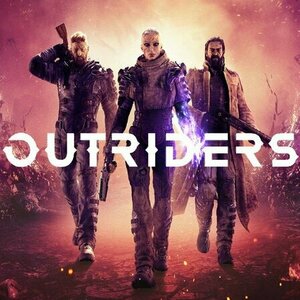
Seriously injured the player character is put in stasis and is awakened 31 years later to find what is left of humanity engaged in a violent Civil War with the player being their best chance for survival.
Thus begins Outriders; an ambitious game from People Can Fly and Square Enix which looks to combine action, combat, loot, and Science Fiction into a bold gaming experience.
Players can customize the look of their characters and must select a class such as Trickster, Pyromancer, Devastator, and Technomancer. The classes have specific abilities which as players gain experience, unlocks and allows them to select and use devastating powers as it seems the exposure to the storm has given the player character God-like abilities and has earned them the title of “Altered”. I selected the Devastator class and enjoyed being able to suspend and reflect incoming fire, add a protective barrier, produce spikes to impale enemies, crush enemies with a gravity-based attack, dash and smash, and my favorite; a propelled leap that reduced all in my landing area to a pulp. Each power has a cool-down timer after use but as the game is very customizable; players can unlock and assign new perks which can increase damage, duration, and more for their powers, weapons, and such.
The game had an extensive demo available pre-launch and this allowed me to get to know the screens to equip, modify, swap, or deconstruct gear as there is a huge variety of armor and weapons for players to use and modify.
While the menu system at times was confusing at first in terms of what the main mission was and what were numerous side missions and such; I was able to get things up to speed and with strategic capture points; players can always jump back to various locales.
Since the early missions involved being around the main base filled with trade and other options; I had figured it would play into the game going forward. However, as I went deeper into the game I found it easier to simply deconstruct or not gather loot that I did not want and simply equip better gear and weapons as they came my way.
The progress I had made in the demo also carried over onto the main game so long as you use the same platform for release that you did in the demo. This was great to experience as I did not have to replay the lengthy intro and setup nor the early missions.
With a crew of NPC characters along for the mission, the player will journey into dangerous zones each with their own unique biosphere and dangerous creatures and enemies who come at you in waves and can be overwhelming even with the ability to set the game difficulty.
Outriders is setup to be played with a party of characters and much has been made of the rough launch for the game which included server issues, cross-play problems, missing HUD Displays, and such hampered gamers. I was able to connect with a player I found in the forums for the game and he helped me through some battles that I could not figure out how anyone could be expected to complete on their own at the skill level they originated at.
Players can randomly join a party but did not have a clue where they would be in the story progress or how many were in a party, but it was very easy to resume a campaign where I left off should the party I joined be further ahead of or back of where I wished to be.
I did jump into a game that is done randomly and was able to get some higher-level gear and weapons which helped when I returned to my campaign, but in time I again found myself in need of help. One player had issues with getting in my game and then being booted as an example. The HUD display would vanish often which required a return to the lobby, sometimes multiple trips; to get it back. While it seems like no big deal and I worked my way through at times without it; not being able to see a mini-map, health, and if your powers were recharged does make it difficult.
The game offers lavish locales from snow-covered mountains to a jungle, desert, temples, and more. The enemies can be very challenging as I found the ones with guns to be easier at times than the wildlife which came in waves and could take all I had to bring down.
The graphics of the game are solid and the combat mechanics reminded me of a mix of Gears of War and The Division series as from a third-person perspective; players could take cover and shoot from a shelter, or wade on into the oncoming enemies and use the vast arsenal of pistols, machine guns, shotguns, and sniper rifles to win the day.
The numerous cut scenes dive the story forward and upon completion of the story; there is a mode where players can work to retrieve items. It was humbling to have weapons that reduced powerful enemies to mush do little more than annoy the enemies I encountered as it was clear that this mode was best suited for advanced gamers in a party.
A new patch arrived yesterday which seemed to resolve the issues I had with matchmaking, server connections, and the missing heads-up display. I was able to match up with another player where I was in the game and the two of us powered through the main missions as well as some side missions to complete the game. We did not have any in-game chat/communication but we were able to work well as a team. I would suggest using Discord or a similar service if you are looking to play with friends on PC or chat with console users.
While the launch was rough due to the numerous issues; they were addressed and the final result once patched is a deeply enjoyable action game that provides plenty of fun and challenges. Some may say waves of wildlife and enemies may become repetitive but the vast array of them as well as the varied locales, weapons, and powers had me hooked from start to finish.
I was a big fan of People Can Fly’s Bulletstorm game and have longed for a sequel ever since that game arrived. Here is hoping that Outriders will become a new franchise and we will see more content in the not too distant future.