Search
Search results
Gareth von Kallenbach (980 KP) rated the PC version of Call of Duty WWII in Video Games
Jun 19, 2019

The long running and very popular Call of Duty series has gone back to where it all began for the latest entry into the series. Call of Duty: WW2 returns the series to where the early games in the series were set and looks to restore its legacy as the best-selling series on the planet in doing so.
Last year’s Call of Duty: Infinite Warfare did not sell as well as other in the series had in recent years, and many fans were upset or divided over a futuristic setting that involved spaceships, energy weapons, and futuristic locations and technology.
It should be noted that the series has three developers working on games so developer Sledgehammer likely started work on the game before Call of Duty: Black Ops 3, and Call of Duty: Infinite Warfare shipped so the return to WW2 was something long in the planning.
The game opens with D-Day and players play as a young Private who is thrown headfirst into the conflict and learns the horrors of war as well as duty, honor, and sacrifice through his missions and interactions with members of his platoon.
Over the course of the missions, players will battle in highly-detailed maps and locales ranging from forests, bunkers, beaches, and bombed out cities as the Allies advance deeper and deeper into enemy held locales. The various locales for the game are so highly-detailed that they seem right out of a movie and would be a dream come true for location scouts looking for filming locations.
As anyone who has played a call of Duty game knows, they will be faced with waves of enemies to fight off as well as the usual stealth and vehicle missions. This time out there are a couple of driving missions as well as a clever one in a tank and one airborne fighter escort.
The attention to detail is very good as enemy Panzer tanks can take any fire from your tank head on, but have weaker armor in the bank which leads players to have to flank the enemy to survive.
Another new wrinkle is the health system which does not regenerate in the story mode and instead requires players to take cover and use a first aid kit in order to heal. The multiplayer portion does use a regenerative system so players can avoid any major disruptions in battle.
I really liked Josh Duhamel as the rough Sargent with a backstory. He was a very interesting character that kept me guessing as to his motivations and next moves as the story advanced.
Players could also call in ammo, mortar strikes, and health by requesting them from select members of their platoon. This could be tricky as when pinned down, having to move to another character to get needed items added to the challenge.
The weaponry was appropriate for the time and I had to adjust to slower load times, accuracy issues, and such with older tech, but it did give me a much greater level of immersion.
While I did enjoy the solo campaign, it did at times seem very familiar and as if I had seen and played some of it all before. I guess that is the trick with a series that has run as long as Call of Duty has as certain aspects of the gameplay are expected and while locations, weapons, locations, and characters may change, some things are going to be constant throughout the series.
The multiplayer aspects of the game really shine as not only are there numerous multiplayer modes, players can now pick a class such as Airborne, Recon, etc. which each have their own weapons and abilities and allow players to pick a division that best matches their abilities and gameplay style.
This comes in very handy in the new War mode where teams much battle one another to accomplish various objectives. Such as escorting tanks, protecting or stealing gas, and taking or defending key locales. My only issue is that this mode and many maps are camp fests where people with scoped rifles can easily hide in the back part of a map and pick off players as they spawn or enter the map. It seems far more pronounced in this game and leads to some frustrations. There is also the matter of iffy hit detection where players take half a clip from a machine gun point blank and yet can absorb them and one shit kill a player all while you unload on them.
There is also a very good Zombie mode where players take on wave after wave of undead soldiers as they attempt to get power restored and activate technology. The speed of the game is intense, the enemies numerous, and the ability to arm, armor up, and accessories your character is key as is having a good team around you.
As one person said that is Call of Duty and you know what you are in for if you have played any of the prior games. As such Call of Duty: World War 2 is not a radical new direction for the series, but rather a return to what made the series and is like slipping into a comfy pair of slippers after a long day., Familiar and comfortable and is in my opinion what the series needed.
http://sknr.net/2017/11/06/call-duty-ww2/
Last year’s Call of Duty: Infinite Warfare did not sell as well as other in the series had in recent years, and many fans were upset or divided over a futuristic setting that involved spaceships, energy weapons, and futuristic locations and technology.
It should be noted that the series has three developers working on games so developer Sledgehammer likely started work on the game before Call of Duty: Black Ops 3, and Call of Duty: Infinite Warfare shipped so the return to WW2 was something long in the planning.
The game opens with D-Day and players play as a young Private who is thrown headfirst into the conflict and learns the horrors of war as well as duty, honor, and sacrifice through his missions and interactions with members of his platoon.
Over the course of the missions, players will battle in highly-detailed maps and locales ranging from forests, bunkers, beaches, and bombed out cities as the Allies advance deeper and deeper into enemy held locales. The various locales for the game are so highly-detailed that they seem right out of a movie and would be a dream come true for location scouts looking for filming locations.
As anyone who has played a call of Duty game knows, they will be faced with waves of enemies to fight off as well as the usual stealth and vehicle missions. This time out there are a couple of driving missions as well as a clever one in a tank and one airborne fighter escort.
The attention to detail is very good as enemy Panzer tanks can take any fire from your tank head on, but have weaker armor in the bank which leads players to have to flank the enemy to survive.
Another new wrinkle is the health system which does not regenerate in the story mode and instead requires players to take cover and use a first aid kit in order to heal. The multiplayer portion does use a regenerative system so players can avoid any major disruptions in battle.
I really liked Josh Duhamel as the rough Sargent with a backstory. He was a very interesting character that kept me guessing as to his motivations and next moves as the story advanced.
Players could also call in ammo, mortar strikes, and health by requesting them from select members of their platoon. This could be tricky as when pinned down, having to move to another character to get needed items added to the challenge.
The weaponry was appropriate for the time and I had to adjust to slower load times, accuracy issues, and such with older tech, but it did give me a much greater level of immersion.
While I did enjoy the solo campaign, it did at times seem very familiar and as if I had seen and played some of it all before. I guess that is the trick with a series that has run as long as Call of Duty has as certain aspects of the gameplay are expected and while locations, weapons, locations, and characters may change, some things are going to be constant throughout the series.
The multiplayer aspects of the game really shine as not only are there numerous multiplayer modes, players can now pick a class such as Airborne, Recon, etc. which each have their own weapons and abilities and allow players to pick a division that best matches their abilities and gameplay style.
This comes in very handy in the new War mode where teams much battle one another to accomplish various objectives. Such as escorting tanks, protecting or stealing gas, and taking or defending key locales. My only issue is that this mode and many maps are camp fests where people with scoped rifles can easily hide in the back part of a map and pick off players as they spawn or enter the map. It seems far more pronounced in this game and leads to some frustrations. There is also the matter of iffy hit detection where players take half a clip from a machine gun point blank and yet can absorb them and one shit kill a player all while you unload on them.
There is also a very good Zombie mode where players take on wave after wave of undead soldiers as they attempt to get power restored and activate technology. The speed of the game is intense, the enemies numerous, and the ability to arm, armor up, and accessories your character is key as is having a good team around you.
As one person said that is Call of Duty and you know what you are in for if you have played any of the prior games. As such Call of Duty: World War 2 is not a radical new direction for the series, but rather a return to what made the series and is like slipping into a comfy pair of slippers after a long day., Familiar and comfortable and is in my opinion what the series needed.
http://sknr.net/2017/11/06/call-duty-ww2/
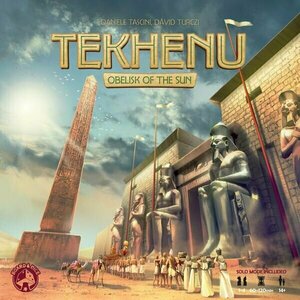
Tekhenu: Obelish of the Sun
Tabletop Game
Four millennia ago on the eastern bank of the Nile river was laid the foundation of the Temple of...
Mothergamer (1607 KP) rated the PC version of The Elder Scrolls Online Tamriel Unlimited in Video Games
Apr 3, 2019
Many of my friends kept telling me I should play Elder Scrolls Online because it was a lot of fun and set before the events of Skyrim. I told them I didn't have it yet, but eventually I would check it out. I liked that they followed in the steps of Guild Wars 2 by not having a monthly subscription, once you buy the game it's yours to play to your heart's content. I waited until it went on sale on Steam and got the collector's edition which included three DLCs and a horse mount. I was excited to create a new character and explore the world of Elder Scrolls Online. I actually made two characters both in the Nightblade job class a Dark Elf and a Wood Elf. You can have 8 character slots which is pretty nice. I may go and try out a Khajiit character later.
One of the many Khajit characters in the game.
The character creation is very user friendly with a variety of options. However, I once again wondered why there so many different variations of bald for the female characters. I suppose that just gives you a lot of options if that's your thing. I did like that there were plenty of longer hair options for the characters. Once my character creation was complete, I could not wait to start my adventure. I also had to pick which server to play on North American or European. I went with North American as the time difference doesn't really let me play with my European friends. Depending on which character you pick: Dark Elf, Wood Elf, High Elf, Khajit, Argonian, Nord, Breton, Redguard, or Orc you start the game that gives you a tutorial introduction for the game controls and then you have racial origin quests you can play. I play the game on PC so my controls were for the PC, but you can also play the game on PS4 and XboxOne. Once I finished the tutorial quest I was able to really begin exploring the world of Tamriel.
My Dark Elf ready for adventure!
One great thing that stands out is how easy the controls are to map and use. The user menu for items and quest logs is incredibly user friendly making the game feel nicely streamlined. There is literally tons to see and do in Elder Scrolls Online ranging from a myriad of side quests to origin story quests as well as the main story quests. Another thing I like is the dungeon system. While I like Final Fantasy 14, the one thing I really do not like is how many forced dungeon crawls there are. Elder Scrolls Online has made it so that if you want to do a dungeon you can or you can just skip it if it's not your thing.
There are actually seven different types of dungeons. You have the public dungeons which if you have the right character build, you can solo very easily. This dungeon is open to everyone so solo players can come in and explore and team up with people who are in there if they wish. Public dungeons are a bit more challenging than the other dungeons so in general a group definitely helps. Delves are solo dungeons pertinent to whichever quest you're on. Non-Veteran group dungeons are instanced dungeons that require a group of four and are normal mode and scale to the level of the group leader. Veteran dungeons are instanced as well, but they don't unlock until you're level 50 and they are a higher difficulty than the other dungeons. Trials are 12 person instances that are mainly for endgame content and require a solid group and teamwork. Craglorn delves are instanced dungeons that have you kill a specific bosses inside. Finally, there is the Dragonstar Arena which is a 4 person instance PVE (Player versus event) arena. This has 10 different levels where you work together to fight 5 waves of monsters in each level and a final boss at the end. This is a difficult level dungeon for experienced players.
Battling in a Delve.
There is chat of course and for the most part it's alright in the fact that you can learn about events or people looking for groups so you can team up for quests and dungeons. This also lets you know what guilds are out there recruiting. Other times I tend to turn off zone chat because there's only so many sexual innuendo and dick jokes I can take. For the most part I run around by myself doing quests and I always have fun doing them and I have done a few group dungeons which are fun as well. The community in Elder Scrolls Online is quite friendly from what I've experienced and there are a lot of players who are willing to help if you need it and give advice about the game and class builds. I've even had a few players trade gear with me to help my Nightblade characters be even better which was so nice of them. That alone has made my experience with Elder Scrolls Online even more enjoyable.
The different areas that I've explored so far are beautiful. Just exploring is a lot of fun in itself because each area is completely different so it's a lot of fun to just look around at everything. The music in the game is fantastic as well and sets a great atmosphere for the story and quests. The battles are fun and easy to navigate. Leveling doesn't feel like a chore and unlocking skills is simple to do and with enough skill points you can even morph your skills into more powerful abilities. Traveling is great too because once you unlock a way shrine you can fast travel to those spots that you have unlocked. It does cost some gold when you fast travel however, but with all the quests you get under your belt it's not that big a deal. Traveling on a mount is easy, you can just use a command that has your character whistle and your mount will appear so you can head to where you need to go.
My Wood Elf admiring the beautiful scenery.
There is PVP (player versus player) in the game. You can fight in Cyrodiil from level 10 and above. You can also challenge other players to a duel anywhere in Tamriel. If the person accepts your duel challenge, a flag appears and you fight in the designated area marked by the flag, if you leave that area it results in a forfeit. I tried it out once just to see what it was like (PVP is not my thing) and it was alright. For those who love PVP it is one more fun adventure thing you can do in the game.
You can do crafting in the game as well. There is an introductory quest to crafting that you get so you can learn about the craft you choose. There are six crafts to choose from: Blacksmith, Clothier, Alchemy, Enchanting, Provisioning, and Woodworking. The tutorial on how to do the crafts is easy to follow and once you get started it's easy to do. This is also a terrific way to make a bit of extra coin in the game for all the things you need such as gear and healing potions.
The one issue I have with Elder Scrolls Online is that there is no cross platform gaming. This means if you play on the PC, but your friends play on the PS4 or XboxOne consoles you can't play together. This means that PC players are on their own server and the console players are on their own separate server. I can understand a bit why they did it that way, but it kind of sucks that I can't play with my friends who are on the console platforms. In that regard, Final Fantasy 14 is winning because you can play with your friends across all platforms. Perhaps that may change in the future, but for now that's not the case.
Lack of cross platform gaming aside, Elder Scrolls Online is a great game. It's a fun adventure with a ton of content to explore and plenty of things to see and do. I'm glad I was able to check it out and I'm enjoying playing by myself and with other people. It's an MMORPG that offers a lot of great things in its game and gives a huge amount of freedom to the different play styles that people have allowing everyone to enjoy the game the way they wish. Now, I'm off to do some more adventuring in Tamriel!
One of the many Khajit characters in the game.
The character creation is very user friendly with a variety of options. However, I once again wondered why there so many different variations of bald for the female characters. I suppose that just gives you a lot of options if that's your thing. I did like that there were plenty of longer hair options for the characters. Once my character creation was complete, I could not wait to start my adventure. I also had to pick which server to play on North American or European. I went with North American as the time difference doesn't really let me play with my European friends. Depending on which character you pick: Dark Elf, Wood Elf, High Elf, Khajit, Argonian, Nord, Breton, Redguard, or Orc you start the game that gives you a tutorial introduction for the game controls and then you have racial origin quests you can play. I play the game on PC so my controls were for the PC, but you can also play the game on PS4 and XboxOne. Once I finished the tutorial quest I was able to really begin exploring the world of Tamriel.
My Dark Elf ready for adventure!
One great thing that stands out is how easy the controls are to map and use. The user menu for items and quest logs is incredibly user friendly making the game feel nicely streamlined. There is literally tons to see and do in Elder Scrolls Online ranging from a myriad of side quests to origin story quests as well as the main story quests. Another thing I like is the dungeon system. While I like Final Fantasy 14, the one thing I really do not like is how many forced dungeon crawls there are. Elder Scrolls Online has made it so that if you want to do a dungeon you can or you can just skip it if it's not your thing.
There are actually seven different types of dungeons. You have the public dungeons which if you have the right character build, you can solo very easily. This dungeon is open to everyone so solo players can come in and explore and team up with people who are in there if they wish. Public dungeons are a bit more challenging than the other dungeons so in general a group definitely helps. Delves are solo dungeons pertinent to whichever quest you're on. Non-Veteran group dungeons are instanced dungeons that require a group of four and are normal mode and scale to the level of the group leader. Veteran dungeons are instanced as well, but they don't unlock until you're level 50 and they are a higher difficulty than the other dungeons. Trials are 12 person instances that are mainly for endgame content and require a solid group and teamwork. Craglorn delves are instanced dungeons that have you kill a specific bosses inside. Finally, there is the Dragonstar Arena which is a 4 person instance PVE (Player versus event) arena. This has 10 different levels where you work together to fight 5 waves of monsters in each level and a final boss at the end. This is a difficult level dungeon for experienced players.
Battling in a Delve.
There is chat of course and for the most part it's alright in the fact that you can learn about events or people looking for groups so you can team up for quests and dungeons. This also lets you know what guilds are out there recruiting. Other times I tend to turn off zone chat because there's only so many sexual innuendo and dick jokes I can take. For the most part I run around by myself doing quests and I always have fun doing them and I have done a few group dungeons which are fun as well. The community in Elder Scrolls Online is quite friendly from what I've experienced and there are a lot of players who are willing to help if you need it and give advice about the game and class builds. I've even had a few players trade gear with me to help my Nightblade characters be even better which was so nice of them. That alone has made my experience with Elder Scrolls Online even more enjoyable.
The different areas that I've explored so far are beautiful. Just exploring is a lot of fun in itself because each area is completely different so it's a lot of fun to just look around at everything. The music in the game is fantastic as well and sets a great atmosphere for the story and quests. The battles are fun and easy to navigate. Leveling doesn't feel like a chore and unlocking skills is simple to do and with enough skill points you can even morph your skills into more powerful abilities. Traveling is great too because once you unlock a way shrine you can fast travel to those spots that you have unlocked. It does cost some gold when you fast travel however, but with all the quests you get under your belt it's not that big a deal. Traveling on a mount is easy, you can just use a command that has your character whistle and your mount will appear so you can head to where you need to go.
My Wood Elf admiring the beautiful scenery.
There is PVP (player versus player) in the game. You can fight in Cyrodiil from level 10 and above. You can also challenge other players to a duel anywhere in Tamriel. If the person accepts your duel challenge, a flag appears and you fight in the designated area marked by the flag, if you leave that area it results in a forfeit. I tried it out once just to see what it was like (PVP is not my thing) and it was alright. For those who love PVP it is one more fun adventure thing you can do in the game.
You can do crafting in the game as well. There is an introductory quest to crafting that you get so you can learn about the craft you choose. There are six crafts to choose from: Blacksmith, Clothier, Alchemy, Enchanting, Provisioning, and Woodworking. The tutorial on how to do the crafts is easy to follow and once you get started it's easy to do. This is also a terrific way to make a bit of extra coin in the game for all the things you need such as gear and healing potions.
The one issue I have with Elder Scrolls Online is that there is no cross platform gaming. This means if you play on the PC, but your friends play on the PS4 or XboxOne consoles you can't play together. This means that PC players are on their own server and the console players are on their own separate server. I can understand a bit why they did it that way, but it kind of sucks that I can't play with my friends who are on the console platforms. In that regard, Final Fantasy 14 is winning because you can play with your friends across all platforms. Perhaps that may change in the future, but for now that's not the case.
Lack of cross platform gaming aside, Elder Scrolls Online is a great game. It's a fun adventure with a ton of content to explore and plenty of things to see and do. I'm glad I was able to check it out and I'm enjoying playing by myself and with other people. It's an MMORPG that offers a lot of great things in its game and gives a huge amount of freedom to the different play styles that people have allowing everyone to enjoy the game the way they wish. Now, I'm off to do some more adventuring in Tamriel!
Gareth von Kallenbach (980 KP) rated the PC version of South Park: The Stick of Truth in Video Games
Jun 19, 2019
Following several delays after the collapse of THQ, Obsidian’s South Park: The Stick of Truth has been released to critical acclaim. Not only is the game the best adaptation of the hit animated series to date for gamers, the one could argue that it is the best videogame based on an animated series to ever be released. This is a pretty bold statement but the game backs it up time and time again with its engaging story, considerable gameplay length, and an abundance of laughs many of which are cringe worthy.
Playing is a new kid in town was tasked by his parents to go out and make friends, you quickly find yourself in the company of Cartman and his cronies who are busy playing a fantasy game involving the legendary Stick of Truth. Despite the fact that the stick is nothing more than a piece of wood, all manner of importance is placed upon it and when a rival faction steals it, it falls to the players to retrieve the stick and save the day.
Players will be accompanied by various characters in the game ranging from Butters to Stan, Kyle, Kenny, Jimmy, and Cartman he to whom have their own special abilities and combat technique. At various points in the game players may have to call upon a player in order to use their unique ability in order to solve one of the game’s many puzzles. The entire map of South Park is highly detailed and loaded with countless references to the show. Players are free to explore the town, interact with various characters, and embark on side quests that have no bearing on the story and are not required to complete the main part of the game.
The key is exploration as obtaining items which can be sold as a vital part of the game as health power ups in the form of snack foods and other supplements are essential to surviving the numerous combat opportunities in the game.
At first it took a little getting used to but being able to equip your characters in costumes and weapons in order to complete the quests and solve various puzzles is an essential part of the game.
While it is basically role-playing game at its heart, The Stick of Truth is essentially like being in a season of the show that happens to have a connected and continuous plot. There are numerous twists and turns and surprises in the game ranging from alien abductions, government conspiracies, venturing to Canada, and so much more.
Combat in the game usually involves two players and players who alternate between powering up attacking defensive abilities, using super moves which players can select and customize, and attacking with your primary or secondary weapons.
The game has a very elaborate social network is various characters who you friend along the way will offer hints and suggestions to you and being able to obtain items to power up your weapons is a hysterical and vital part of the game.
I have put in over 17 hours of gameplay into completing the main story the game and a few of the side quests but I have not completed all of the options that are available in the game. This gives you an idea of the scope of the game and thankfully the designers allow a rapid transit system courtesy of Timmy to help you traverse the map. The abundance of characters both featured in supporting from the series show up the game and there are countless nods to numerous other episodes including the classic Sexual Harassment Panda theme that brought a smile to my face when I heard blaring over the and offices PA system while I was exploring.
There are puzzles to solve the game most of which involve thinking outside the box although some are very straightforward. It is important to remember that when you are dealing with the town of South Park expecting the unexpected is par for the course so any game that would have you battle the Underpants Gnomes in a shrunken state while your parents graphically consummate their marriage above you should give you an idea about humor in the game.
The game is not in any way politically correct, for children, or for those easily offended, but if you’re a fan of the series you know what to expect and the game delivers it in droves. The laughs are numerous and hysterical as abs constantly shocked just how far certain sequences would be taken but delighted nonetheless.
There were a few minor glitches now and then but nothing that severely hampered my gameplay experience other than a few graphical drops and legs now and then on the PC version of the game. For me this was a small price to pay as the PC version is completely uncensored and does not have any of the cards that were required for the console version of the game.
The mouse and keyboard while effective are not the intended control system for the game so I would suggest that players may want to consider using a game pad or at the least, prepare themselves for certain scenes that are going to involve button mashing and other console standards.
The graphics, sound, and music, of the game are on par with the best the show has offered and as I indicated earlier, the storyline is one of the best that has ever been done for South Park episode and is not to be missed.
Not only is the game one of the best surprises of the year but I can honestly say that it is an early contender for some game of the year awards which is surprising as one announced, I think people had interest but yet modest expectations for what the finished product would be like. It is been a long time since I’ve had this many laughs in a movie, television show, or game, as well as this much enjoyment.
South Park: The Stick of Truth is one of the best gaming releases the year and is not to be missed.
http://sknr.net/2014/03/31/south-park-the-stick-of-truth/
Playing is a new kid in town was tasked by his parents to go out and make friends, you quickly find yourself in the company of Cartman and his cronies who are busy playing a fantasy game involving the legendary Stick of Truth. Despite the fact that the stick is nothing more than a piece of wood, all manner of importance is placed upon it and when a rival faction steals it, it falls to the players to retrieve the stick and save the day.
Players will be accompanied by various characters in the game ranging from Butters to Stan, Kyle, Kenny, Jimmy, and Cartman he to whom have their own special abilities and combat technique. At various points in the game players may have to call upon a player in order to use their unique ability in order to solve one of the game’s many puzzles. The entire map of South Park is highly detailed and loaded with countless references to the show. Players are free to explore the town, interact with various characters, and embark on side quests that have no bearing on the story and are not required to complete the main part of the game.
The key is exploration as obtaining items which can be sold as a vital part of the game as health power ups in the form of snack foods and other supplements are essential to surviving the numerous combat opportunities in the game.
At first it took a little getting used to but being able to equip your characters in costumes and weapons in order to complete the quests and solve various puzzles is an essential part of the game.
While it is basically role-playing game at its heart, The Stick of Truth is essentially like being in a season of the show that happens to have a connected and continuous plot. There are numerous twists and turns and surprises in the game ranging from alien abductions, government conspiracies, venturing to Canada, and so much more.
Combat in the game usually involves two players and players who alternate between powering up attacking defensive abilities, using super moves which players can select and customize, and attacking with your primary or secondary weapons.
The game has a very elaborate social network is various characters who you friend along the way will offer hints and suggestions to you and being able to obtain items to power up your weapons is a hysterical and vital part of the game.
I have put in over 17 hours of gameplay into completing the main story the game and a few of the side quests but I have not completed all of the options that are available in the game. This gives you an idea of the scope of the game and thankfully the designers allow a rapid transit system courtesy of Timmy to help you traverse the map. The abundance of characters both featured in supporting from the series show up the game and there are countless nods to numerous other episodes including the classic Sexual Harassment Panda theme that brought a smile to my face when I heard blaring over the and offices PA system while I was exploring.
There are puzzles to solve the game most of which involve thinking outside the box although some are very straightforward. It is important to remember that when you are dealing with the town of South Park expecting the unexpected is par for the course so any game that would have you battle the Underpants Gnomes in a shrunken state while your parents graphically consummate their marriage above you should give you an idea about humor in the game.
The game is not in any way politically correct, for children, or for those easily offended, but if you’re a fan of the series you know what to expect and the game delivers it in droves. The laughs are numerous and hysterical as abs constantly shocked just how far certain sequences would be taken but delighted nonetheless.
There were a few minor glitches now and then but nothing that severely hampered my gameplay experience other than a few graphical drops and legs now and then on the PC version of the game. For me this was a small price to pay as the PC version is completely uncensored and does not have any of the cards that were required for the console version of the game.
The mouse and keyboard while effective are not the intended control system for the game so I would suggest that players may want to consider using a game pad or at the least, prepare themselves for certain scenes that are going to involve button mashing and other console standards.
The graphics, sound, and music, of the game are on par with the best the show has offered and as I indicated earlier, the storyline is one of the best that has ever been done for South Park episode and is not to be missed.
Not only is the game one of the best surprises of the year but I can honestly say that it is an early contender for some game of the year awards which is surprising as one announced, I think people had interest but yet modest expectations for what the finished product would be like. It is been a long time since I’ve had this many laughs in a movie, television show, or game, as well as this much enjoyment.
South Park: The Stick of Truth is one of the best gaming releases the year and is not to be missed.
http://sknr.net/2014/03/31/south-park-the-stick-of-truth/
Purple Phoenix Games (2266 KP) rated Munchkin in Tabletop Games
Jan 6, 2020
A “Munchkin,” in gamer terms, is someone who is only out to better themselves with treasure and power at the expense of everyone else in their adventuring party. That rings so very true in the Munchkin line of games, as you are trying to be the first to gain 10th Level in a VERY loosely-based RPG setting. OG vanilla Munchkin (pictured above) was my first entry into hobby board gaming. Many many games later I ask myself: How has this system of games aged for me as my gaming tastes have changed? Let’s see.
In Munchkin games, you are trying to become the first player to reach 10th Level. That’s the goal. You take on the persona of a 1st Level basic human (no Starbucks jokes please) who will be adventuring with a party of your opponents through a dungeon. You will be kicking down doors, fighting monsters, placing curses on your fellow party members, and buffing yourself with cards featuring funny art and punny references. Your party mates are also trying to achieve 10th Level and will do everything they can to block your progress, so be prepared!
DISCLAIMER: This review is not for a specific game within the Munchkin universe, but for the system as a whole. All Munchkin games will pretty much use similar, if not exactly the same, rules to play the game with minor variations and different theming. I will be using The Good, The Bad, and The Munchkin for my review as it is one of the two versions I still own of the franchise. Also, I will not be detailing every rule in the book(s), but giving a brief overview of how the game plays. -T
Setup is easy: shuffle the deck of Door cards and the deck of Treasure cards. Deal cards to the players for their opening hands and keep the included die handy.
Your turn consists of just a few phases: Open a Door, Look for Trouble, Loot the Room, and Charity. To Open a Door, flip over the top card of the Door deck. If it is a monster you must fight it or run. If not a monster, you can move on to the next phase. If it IS a monster, prepare for combat. Combat is simple in that you add up all your bonuses from your gear cards you have attached to your character and try to beat the strength of the monster. Your party mates can screw with you during combat by adding strength to the monster or adding monsters to the fight to make it a more difficult encounter. If you win, you gain a Level on the spot. Some monsters are worth even more than one Level. If you did not encounter a monster, you will add the non-monster card you drew to your hand and you may Look for Trouble by playing a monster card from your hand to initiate a combat. This fight will work the same way and you will be susceptible to pile-ons as before. You may Loot the Room if you defeated a monster on your turn by drawing Treasure cards equal to the printed reward on the bottom of the monster card you defeated. If you defeated the monster yourself, unaided, these are drawn in secret. If you were given help by your mates then you may have to split up the loot per any agreements made. These cards are usually very advantageous to you so they are usually very valuable to others as they attempt to steal away your goods. If you did not fight a monster yet this turn, you may draw another secret card from the Door deck to add to your hand. Should your hand size climb above your limit (dictated by your Race card, if any) you will slide into the Charity phase to relieve your hand of extra cards. Give all excess cards to the player of lowest Level, or split them among those that share the lowest Level. It is now the next player’s turn and you continue play until someone reaches 10th Level.
Components. It’s a bunch of cards and one die. The cards are of okay quality. Nothing to write home about. The die is nice with one of the faces having the Munchkin logo head imprinted on it. It will also have a color scheme that matches the version of Munchkin you are playing, so it’s easy to match them back up if they become integrated with each other. Overall, the components are fine, but not wonderful. That’s probably why these are pretty inexpensive to purchase.
Okay, so like I said earlier the original vanilla Munchkin was the first hobby board game I ever purchased. My friends and family had no idea hobby games existed, so there was actually a pretty steep learning curve for us. Once we figured it out, however, we began to play it a ton and really love it! The cards are cute, the game play is pretty easy if you have played hobby games before, and the puns kept us rolling for a good while. There was a time when I owned every version of Munchkin in circulation and we never even played half of them. Seeing this I got rid of them through BGG Auctions. I have The Good, The Bad, and The Munchkin and Munchkin Zombies right now and I feel that will be plenty for me from here on out – unless they make a Doctor Who or Firefly set or something /*checks warehouse23 to find out if these are available/.
Do I still love Munchkin? No, not really. I LIKE it, but I don’t really want to play it all the time any more. Why? Well, as my gamer experience increases and I level up, my game tastes also level up. I see why people enjoy and even love this game system. I myself loved it for a time. But there are better games out there that accomplish the same feelings without being as sophomoric and have better choices to be made. Will I still play these games? Heck yeah! If someone asks to play a Munchkin game I am all in. I have different tastes and preferences now, but I’m no snob. Just come prepared, because I won’t go easy on you.
We at Purple Phoenix Games give this family of titles a backstabby 16 / 24.
In Munchkin games, you are trying to become the first player to reach 10th Level. That’s the goal. You take on the persona of a 1st Level basic human (no Starbucks jokes please) who will be adventuring with a party of your opponents through a dungeon. You will be kicking down doors, fighting monsters, placing curses on your fellow party members, and buffing yourself with cards featuring funny art and punny references. Your party mates are also trying to achieve 10th Level and will do everything they can to block your progress, so be prepared!
DISCLAIMER: This review is not for a specific game within the Munchkin universe, but for the system as a whole. All Munchkin games will pretty much use similar, if not exactly the same, rules to play the game with minor variations and different theming. I will be using The Good, The Bad, and The Munchkin for my review as it is one of the two versions I still own of the franchise. Also, I will not be detailing every rule in the book(s), but giving a brief overview of how the game plays. -T
Setup is easy: shuffle the deck of Door cards and the deck of Treasure cards. Deal cards to the players for their opening hands and keep the included die handy.
Your turn consists of just a few phases: Open a Door, Look for Trouble, Loot the Room, and Charity. To Open a Door, flip over the top card of the Door deck. If it is a monster you must fight it or run. If not a monster, you can move on to the next phase. If it IS a monster, prepare for combat. Combat is simple in that you add up all your bonuses from your gear cards you have attached to your character and try to beat the strength of the monster. Your party mates can screw with you during combat by adding strength to the monster or adding monsters to the fight to make it a more difficult encounter. If you win, you gain a Level on the spot. Some monsters are worth even more than one Level. If you did not encounter a monster, you will add the non-monster card you drew to your hand and you may Look for Trouble by playing a monster card from your hand to initiate a combat. This fight will work the same way and you will be susceptible to pile-ons as before. You may Loot the Room if you defeated a monster on your turn by drawing Treasure cards equal to the printed reward on the bottom of the monster card you defeated. If you defeated the monster yourself, unaided, these are drawn in secret. If you were given help by your mates then you may have to split up the loot per any agreements made. These cards are usually very advantageous to you so they are usually very valuable to others as they attempt to steal away your goods. If you did not fight a monster yet this turn, you may draw another secret card from the Door deck to add to your hand. Should your hand size climb above your limit (dictated by your Race card, if any) you will slide into the Charity phase to relieve your hand of extra cards. Give all excess cards to the player of lowest Level, or split them among those that share the lowest Level. It is now the next player’s turn and you continue play until someone reaches 10th Level.
Components. It’s a bunch of cards and one die. The cards are of okay quality. Nothing to write home about. The die is nice with one of the faces having the Munchkin logo head imprinted on it. It will also have a color scheme that matches the version of Munchkin you are playing, so it’s easy to match them back up if they become integrated with each other. Overall, the components are fine, but not wonderful. That’s probably why these are pretty inexpensive to purchase.
Okay, so like I said earlier the original vanilla Munchkin was the first hobby board game I ever purchased. My friends and family had no idea hobby games existed, so there was actually a pretty steep learning curve for us. Once we figured it out, however, we began to play it a ton and really love it! The cards are cute, the game play is pretty easy if you have played hobby games before, and the puns kept us rolling for a good while. There was a time when I owned every version of Munchkin in circulation and we never even played half of them. Seeing this I got rid of them through BGG Auctions. I have The Good, The Bad, and The Munchkin and Munchkin Zombies right now and I feel that will be plenty for me from here on out – unless they make a Doctor Who or Firefly set or something /*checks warehouse23 to find out if these are available/.
Do I still love Munchkin? No, not really. I LIKE it, but I don’t really want to play it all the time any more. Why? Well, as my gamer experience increases and I level up, my game tastes also level up. I see why people enjoy and even love this game system. I myself loved it for a time. But there are better games out there that accomplish the same feelings without being as sophomoric and have better choices to be made. Will I still play these games? Heck yeah! If someone asks to play a Munchkin game I am all in. I have different tastes and preferences now, but I’m no snob. Just come prepared, because I won’t go easy on you.
We at Purple Phoenix Games give this family of titles a backstabby 16 / 24.
Purple Phoenix Games (2266 KP) rated Soul Raiders in Tabletop Games
Jul 5, 2021
Check out that cover art! Amazing! If there is one thing that will certainly help my enjoyment of any game, it is definitely great art and components. Yes, I want the game to play well, but if it also looks great, that merely sends it soaring for me. While Soul Raiders has great art in spades, will I equally love the gameplay? Spoiler: yeah, it’s a pretty good game!
Soul Raiders is a storytelling role-playing game for up to four players. Each player takes the role of an aspiring Soul Raider tasked with saving the realms from the influence of evil. The game is played over several sessions that all affect the overarching plot of the narrative, but this preview version simply allows players to learn the game mechanics through a prologue scenario.
DISCLAIMER: We were provided a prototype copy of this game for the purposes of this review. These are preview copy components, and I do not know for sure which final components will be different from these shown. Also, it is not my intention to detail every rule in the game, as there are just too many. You are invited to download the rulebook, back the game through the Kickstarter campaign, or through any retailers stocking it after fulfillment. -T
To setup, follow the instructions in the rulebook. There are too many to list here. Once setup, the play area may look similar to the photo below.
As there are 36 pages in the preliminary rulebook, I am unable to detail everything in this preview. However, I can give an overall gameplay feeling.
Players control pawns (standees in this version, but plastic minis in the final) that will adventure on Location tiles that spawn baddies, traps, and other elements. Each round played has no turn structure; players can take their actions however they like in any order, and sometimes players will take actions simultaneously. Once all players have taken their actions, the baddies will attack (though some attack immediately upon spawning in a Location as well).
Combat is resolved through clever chaining card play. The cards drawn to the players’ hand are multi-use and can be combined with others in hand to pull off complex combos. All players will have access to melee combat cards, movement cards, and also magic spell cards. Utilizing the cards efficiently, as well as leveraging each players’ inherent strengths, can make or break combats and skill checks throughout the game.
In addition to the myriad combats players will face, they will also be able to encounter events, special characters, and traps. Many times these will result in skill checks or other card shedding activities in order to progress the story.
Throughout the game a tracker board constantly keeps players aware of the current vitae of the party (collective health), threat level, and active events. Players will also be using personalized player boards to keep track of their deck of cards, active engaged enemies, and status tokens. Each character has special talents different from each other, and the final game will have at least four characters, whereas this version has two.
If the players can navigate the game efficiently and quickly enough to satisfy the win conditions, then victory is to be shared. However, if you, like me, are still trying to figure out how to win, the game ships with an interesting session saving ability so you can pick up where you left off with any combination of players and characters.
Components. Again, this is a preview copy of the game, and not everything is final. That said, I can see the direction this game is going, and if it results in a successful Kickstarter campaign, I foresee me praising the publisher for their excellent components. Most of the art seems complete, and the character art is so amazing. In contrast, I feel the landscape art doesn’t necessarily match the intensity and details given in the character art. It just feels out of place in an otherwise excellently-illustrated game.
The gameplay, however, felt very fresh and familiar at the same time. I have played several games where the players’ card decks offer multi-use cards in much the same fashion, and here in Soul Raiders, the cards can be played for their numeric values or their special abilities. What I like about this is the ability to use the cards in hand to pull off sweeping combos of insane damage, or to really nail the lockpicking difficulty checks. There will be times the heroes will need to be engaged in combat with four or more enemies, and having certain spells that can wipe out most of them with one card is always very satisfying.
Movement has largely been neglected in my plays of Soul Raiders, as I haven’t found a great way to make it sing as a card type. Players will need to use movement to travel from one Location card to others, but there are also mechanics in place for the heroes to flee away from battles. I have yet to feel the need to flee from battle. I also have yet to truly understand the need for a big selling point for the game – character invisibility. Yes, I can see how being invisible would be a great benefit, but I rarely had the ability cards in hand to use it properly or effectively. I am told, though, that the game will ship with both a normal character mini and a transparent mini to indicate when they are invisible. So there’s that.
All in all I really do enjoy the storytelling gameplay of Soul Raiders. I think this intro prologue scenario has piqued my interest and triggered my desire to play more in the story. I hope that some adjustments will be made to make invisibility and fleeing more important aspects of the game, but for now I am ignoring them almost systematically. That said, if you are looking for a new game with a great theme and some pretty good mechanics, I invite you to check out the Kickstarter campaign launching very soon. I think this would be a great one to have in a collection, especially as I can see it being infinitely expandable with new books of scenarios and small expansion packs with new heroes, etc.
Soul Raiders is a storytelling role-playing game for up to four players. Each player takes the role of an aspiring Soul Raider tasked with saving the realms from the influence of evil. The game is played over several sessions that all affect the overarching plot of the narrative, but this preview version simply allows players to learn the game mechanics through a prologue scenario.
DISCLAIMER: We were provided a prototype copy of this game for the purposes of this review. These are preview copy components, and I do not know for sure which final components will be different from these shown. Also, it is not my intention to detail every rule in the game, as there are just too many. You are invited to download the rulebook, back the game through the Kickstarter campaign, or through any retailers stocking it after fulfillment. -T
To setup, follow the instructions in the rulebook. There are too many to list here. Once setup, the play area may look similar to the photo below.
As there are 36 pages in the preliminary rulebook, I am unable to detail everything in this preview. However, I can give an overall gameplay feeling.
Players control pawns (standees in this version, but plastic minis in the final) that will adventure on Location tiles that spawn baddies, traps, and other elements. Each round played has no turn structure; players can take their actions however they like in any order, and sometimes players will take actions simultaneously. Once all players have taken their actions, the baddies will attack (though some attack immediately upon spawning in a Location as well).
Combat is resolved through clever chaining card play. The cards drawn to the players’ hand are multi-use and can be combined with others in hand to pull off complex combos. All players will have access to melee combat cards, movement cards, and also magic spell cards. Utilizing the cards efficiently, as well as leveraging each players’ inherent strengths, can make or break combats and skill checks throughout the game.
In addition to the myriad combats players will face, they will also be able to encounter events, special characters, and traps. Many times these will result in skill checks or other card shedding activities in order to progress the story.
Throughout the game a tracker board constantly keeps players aware of the current vitae of the party (collective health), threat level, and active events. Players will also be using personalized player boards to keep track of their deck of cards, active engaged enemies, and status tokens. Each character has special talents different from each other, and the final game will have at least four characters, whereas this version has two.
If the players can navigate the game efficiently and quickly enough to satisfy the win conditions, then victory is to be shared. However, if you, like me, are still trying to figure out how to win, the game ships with an interesting session saving ability so you can pick up where you left off with any combination of players and characters.
Components. Again, this is a preview copy of the game, and not everything is final. That said, I can see the direction this game is going, and if it results in a successful Kickstarter campaign, I foresee me praising the publisher for their excellent components. Most of the art seems complete, and the character art is so amazing. In contrast, I feel the landscape art doesn’t necessarily match the intensity and details given in the character art. It just feels out of place in an otherwise excellently-illustrated game.
The gameplay, however, felt very fresh and familiar at the same time. I have played several games where the players’ card decks offer multi-use cards in much the same fashion, and here in Soul Raiders, the cards can be played for their numeric values or their special abilities. What I like about this is the ability to use the cards in hand to pull off sweeping combos of insane damage, or to really nail the lockpicking difficulty checks. There will be times the heroes will need to be engaged in combat with four or more enemies, and having certain spells that can wipe out most of them with one card is always very satisfying.
Movement has largely been neglected in my plays of Soul Raiders, as I haven’t found a great way to make it sing as a card type. Players will need to use movement to travel from one Location card to others, but there are also mechanics in place for the heroes to flee away from battles. I have yet to feel the need to flee from battle. I also have yet to truly understand the need for a big selling point for the game – character invisibility. Yes, I can see how being invisible would be a great benefit, but I rarely had the ability cards in hand to use it properly or effectively. I am told, though, that the game will ship with both a normal character mini and a transparent mini to indicate when they are invisible. So there’s that.
All in all I really do enjoy the storytelling gameplay of Soul Raiders. I think this intro prologue scenario has piqued my interest and triggered my desire to play more in the story. I hope that some adjustments will be made to make invisibility and fleeing more important aspects of the game, but for now I am ignoring them almost systematically. That said, if you are looking for a new game with a great theme and some pretty good mechanics, I invite you to check out the Kickstarter campaign launching very soon. I think this would be a great one to have in a collection, especially as I can see it being infinitely expandable with new books of scenarios and small expansion packs with new heroes, etc.
Purple Phoenix Games (2266 KP) rated Shadows of Kilforth: A Fantasy Quest Game in Tabletop Games
Sep 3, 2020
Have you ever sat down to read a rulebook and had to split it up into several reading sessions? I have multiple times. This happened just recently when I sat down to learn Shadows of Kilforth. Granted, I have two kids that take up the majority of my time and they provide plenty of adorable distraction, but even still, this absolute unit of a rulebook took me a good few days to actually finish. Was the time and effort worth it in the end? Yes. Absolutely. Keep reading.
Shadows of Kilforth is subtitled, “A Fantasy Quest Game.” Right there in the title you find out exactly what you are up against in the very foreboding but unassumingly-sized box. A game set in a fantasy world that is focused on questing. I have to admit up front that this review will be treated a little differently as the rulebook is hefty and nobody wants to read a thorough rules essay on Shadows. So I will give you a very high-level overview of the main steps and then give you my thoughts on how it all works together.
DISCLAIMER: We were provided a copy of this game for the purposes of this review. This is a retail copy of the game, so what you see in these photos is exactly what would be received in your box. I do not intend to cover every single rule included in the rulebook, but will describe the overall game flow and major rule set so that our readers may get a sense of how the game plays. For more in depth rules, you may purchase a copy online or from your FLGS. -T
Shadows of Kilforth is essentially a card and dice RPG-esque adventure game with an Asian-style theme but set in a fantasy world where locations will be devastated into gloom (building upon the first in the series Gloom of Kilforth). The players, as the heroes, have the daunting task of journeying throughout Kilforth’s 25 locations to collect items, allies, spells, and titles to overcome main quests and subquests before every location falls into gloom. These quests usually have the players gathering specific card types to satisfy and complete. Once main player storyline quests, called Sagas, are completed the hero levels up and when they complete their fourth quest in their main Saga they may attempt their Finale and then may finally assault the big boss, the Ancient.
Each turn players have Action Points (AP) to spend on doing different actions: movement, discovering rumours (yes, I know it’s the Queen’s English), confrontations, and regaling a Saga chapter, among several others. Some actions are free actions, called Deeds. These include resolving loot tokens, assaulting an ancient, exchanging items between players, and several others. By using combinations of Actions and Deeds players will be able to travel around collecting those items, allies, and so forth needed to complete their Saga chapters.
To complete objectives and quests, players will typically be rolling dice to meet requirements on the cards. This, as all role-players know, can be either supremely lucky or incredibly and predictably debilitating. Skill checks are abundant in Shadows and diversifying characters may or may not have advantages by being able to complete Fight, Study, Sneak, and Influence tests. Players will win if they can complete their Sagas and defeat the Ancient before all of the locations fall into gloom, signaling the end of the game.
All this, again, is very high-level and there are many intricacies in Shadows that I just cannot go over for the sake of time and the health of my typing fingers. But, the game can be played solo, cooperatively, or competitively. So depending on the mode of play and number of players Shadows can range from a 45 minute foray to multi-hour epics. This is why I have played this solo with one character for my plays.
Components. Shadows of Kilforth is very card-heavy, but also includes other goodies. The cards themselves are firstly quite numerous, but also good quality. I can see myself sleeving this and loving every minute of that process. Aside from the cards, the game includes standees for player pieces on the card map, wooden components to track HP, AP, Fate, Obstacles, Gold, Hidden characters, great swirly 6d6, and also cardboard chits for Loot tokens. I haven’t even mentioned the art yet and that may be the most stunning component in this game! I LOVE a game with great art, and Shadows has simply amazing art. This is not usually my style of game art either, but it is so pleasing and everything makes sense and gets me immersed in the game. Everything provided is wonderful quality and an absolute joy to use during play.
Ok so like always, we place our ratings graphic right at the top of our posts so our readers can see right away what we think of the game. As you can tell, I love Shadows of Kilforth. It has essences of so many games I enjoy pieced together in a very attractive and captivating package. The movement and subsequent destruction of map-cards are reminiscent of Forbidden Island/Desert and Tiny Epic Defenders, which I really love (don’t hate – it’s a good game). The gathering of select card types and returning to a location to complete feels like fetch quests in MMORPGs (Final Fantasy XI being my main squeeze for many years). Obviously dice skill checks and level ups from tabletop RPGs are in there as well.
Shadows is just such a great collection of mechanics that I love that I can see myself playing this game over and over and over. Caveat: I will never play this any way other than absolutely solo. My first play, yes a learning session, was just shy of two hours from setup to tear-down. Adding players will increase game length, and playing with AP-prone friends is a no-go for me on Shadows; I had to reference both the excellent provided cheat sheet and the rulebook throughout the play but I eventually got the hang of it and was able to fly through. I may play this solo but with multiple characters cooperatively someday, but I do not wish to play this with other people. Ever.
So here’s my final thought. Shadow of Kilforth is a beefy game, but is well worth the time and effort to learn and play a couple times before passing judgment. It has everything I love in a game and I can’t stop thinking about it. I want to play all the different Race/Class combinations and just dunk on all the Ancients. If only my dice didn’t hate me so much. I will certainly be keeping this one forever, and if you are a fan of fantasy themed adventure card games with heavy use of dice and cool components, DEFINITELY take a look at Shadows of Kilforth. As I am the only one who has played this, I speak for the team in saying Purple Phoenix Games gives this one a 6 / 6. Treat yoself to this one, folks.
Shadows of Kilforth is subtitled, “A Fantasy Quest Game.” Right there in the title you find out exactly what you are up against in the very foreboding but unassumingly-sized box. A game set in a fantasy world that is focused on questing. I have to admit up front that this review will be treated a little differently as the rulebook is hefty and nobody wants to read a thorough rules essay on Shadows. So I will give you a very high-level overview of the main steps and then give you my thoughts on how it all works together.
DISCLAIMER: We were provided a copy of this game for the purposes of this review. This is a retail copy of the game, so what you see in these photos is exactly what would be received in your box. I do not intend to cover every single rule included in the rulebook, but will describe the overall game flow and major rule set so that our readers may get a sense of how the game plays. For more in depth rules, you may purchase a copy online or from your FLGS. -T
Shadows of Kilforth is essentially a card and dice RPG-esque adventure game with an Asian-style theme but set in a fantasy world where locations will be devastated into gloom (building upon the first in the series Gloom of Kilforth). The players, as the heroes, have the daunting task of journeying throughout Kilforth’s 25 locations to collect items, allies, spells, and titles to overcome main quests and subquests before every location falls into gloom. These quests usually have the players gathering specific card types to satisfy and complete. Once main player storyline quests, called Sagas, are completed the hero levels up and when they complete their fourth quest in their main Saga they may attempt their Finale and then may finally assault the big boss, the Ancient.
Each turn players have Action Points (AP) to spend on doing different actions: movement, discovering rumours (yes, I know it’s the Queen’s English), confrontations, and regaling a Saga chapter, among several others. Some actions are free actions, called Deeds. These include resolving loot tokens, assaulting an ancient, exchanging items between players, and several others. By using combinations of Actions and Deeds players will be able to travel around collecting those items, allies, and so forth needed to complete their Saga chapters.
To complete objectives and quests, players will typically be rolling dice to meet requirements on the cards. This, as all role-players know, can be either supremely lucky or incredibly and predictably debilitating. Skill checks are abundant in Shadows and diversifying characters may or may not have advantages by being able to complete Fight, Study, Sneak, and Influence tests. Players will win if they can complete their Sagas and defeat the Ancient before all of the locations fall into gloom, signaling the end of the game.
All this, again, is very high-level and there are many intricacies in Shadows that I just cannot go over for the sake of time and the health of my typing fingers. But, the game can be played solo, cooperatively, or competitively. So depending on the mode of play and number of players Shadows can range from a 45 minute foray to multi-hour epics. This is why I have played this solo with one character for my plays.
Components. Shadows of Kilforth is very card-heavy, but also includes other goodies. The cards themselves are firstly quite numerous, but also good quality. I can see myself sleeving this and loving every minute of that process. Aside from the cards, the game includes standees for player pieces on the card map, wooden components to track HP, AP, Fate, Obstacles, Gold, Hidden characters, great swirly 6d6, and also cardboard chits for Loot tokens. I haven’t even mentioned the art yet and that may be the most stunning component in this game! I LOVE a game with great art, and Shadows has simply amazing art. This is not usually my style of game art either, but it is so pleasing and everything makes sense and gets me immersed in the game. Everything provided is wonderful quality and an absolute joy to use during play.
Ok so like always, we place our ratings graphic right at the top of our posts so our readers can see right away what we think of the game. As you can tell, I love Shadows of Kilforth. It has essences of so many games I enjoy pieced together in a very attractive and captivating package. The movement and subsequent destruction of map-cards are reminiscent of Forbidden Island/Desert and Tiny Epic Defenders, which I really love (don’t hate – it’s a good game). The gathering of select card types and returning to a location to complete feels like fetch quests in MMORPGs (Final Fantasy XI being my main squeeze for many years). Obviously dice skill checks and level ups from tabletop RPGs are in there as well.
Shadows is just such a great collection of mechanics that I love that I can see myself playing this game over and over and over. Caveat: I will never play this any way other than absolutely solo. My first play, yes a learning session, was just shy of two hours from setup to tear-down. Adding players will increase game length, and playing with AP-prone friends is a no-go for me on Shadows; I had to reference both the excellent provided cheat sheet and the rulebook throughout the play but I eventually got the hang of it and was able to fly through. I may play this solo but with multiple characters cooperatively someday, but I do not wish to play this with other people. Ever.
So here’s my final thought. Shadow of Kilforth is a beefy game, but is well worth the time and effort to learn and play a couple times before passing judgment. It has everything I love in a game and I can’t stop thinking about it. I want to play all the different Race/Class combinations and just dunk on all the Ancients. If only my dice didn’t hate me so much. I will certainly be keeping this one forever, and if you are a fan of fantasy themed adventure card games with heavy use of dice and cool components, DEFINITELY take a look at Shadows of Kilforth. As I am the only one who has played this, I speak for the team in saying Purple Phoenix Games gives this one a 6 / 6. Treat yoself to this one, folks.
Purple Phoenix Games (2266 KP) rated Lonely Undead in Tabletop Games
May 24, 2021
“I’m so hungry I could eat a horse.” Now, this is an acceptable saying that one might utter flippantly to anyone around them. However, “I’m so lonely I could bite the town Mayor” is generally something that would raise some eyebrows or nervous smiles from eavesdroppers. But why, I ask. Why are we okay with eating horses but not simply biting another human? Probably because of laws. I get that. But sometimes you just need a friend. Someone… like you.
Lonely Undead is a hand management, grid movement, zombie adventure game for one to four players with a super crazy theme. In it, players are Zs looking to make some friends in the neighborhood, but most unturnt neighbors are keeping their distance. So what’s a Z to do? Go bite and infect people so they can be friends forever, of course!
DISCLAIMER: We were provided a prototype copy of this game for the purposes of this review. These are preview copy components, and I do not know for sure if the final components will be any different from these shown. Also, it is not my intention to detail every rule in the game, as there are just too many. This preview will be highlighting the co-op mode with two players. You are invited to download the rulebook, back the game through the Kickstarter campaign, or through any retailers stocking it after fulfillment. -T
To setup, lay out the board somewhere on the table (thankfully the rules do not specify where, so go ahead and be a bit off-center this time). Zs (the players) all start in “Dead Center” of the board. The rulebook indicated how to construct the Living deck, and each deck of different types of cards should be shuffled and put in their place either on the board or just off it. For sake of ease, use the rulebook’s suggested placement of Living (so, NOT the Zs) tokens. Each player receives or chooses a Z to embody, receives two Aid cards, four Limbs, and the game is setup and ready to begin!
Lonely Undead is played over a series of rounds, with each round consisting of two phases: Z Phase and Town Phase. During the Z Phase, the active player will have four actions they may take from the following choices: Movement, Draw an Aid Card, Equip a Card, Sound Check, Attack, and Bite. Each Z has their own unique card with their special actions and other stats. A Z may move up to their Movement amount,including diagonally, for one action.
Aid Cards are very helpful to Zs, and for an action a Z may Draw an Aid Card to their hand. Aid Cards could be stat modifiers, or other special actions available to be used. Some Aid Cards are free to use, but if that text is not on the card, a Z will need to spend an action to Equip a Card to their Z.
When the Z is adjacent to a Living token, they must Sound Check it in order to identify the kind of Living they are stalking. To do this a Z rolls the Chance Die and applies any modifier rolled to their base stat on their card for hearing. This is compared against the Living card that is drawn to see if the Living notices the hunting Z. If the Z is successful in this Sound Check (winning all ties), then the Z may continue with their turn. If the Z fails the check, however, the Z will suffer the consequence detailed on the Living’s card. Once the Living has been identified through a Sound Check (successfully or not), the Z may next Attack the Living by rolling the Chance Die again and applying the modifier to the base attack stat. If successful, the Z flips the Living token over to reveal the injured side, notating that the Living does not need to be Sound Checked again, and is ripe for the bitening. If the Z fails an Attack, though, they will suffer any consequences detailed on the Living’s card. When a Living is injured, they are vulnerable to a Z’s Bite. The Z will roll the special Bite die in an attempt to meet their Bite range on the Z’s character card. A successful Bite means the Z collects a friend and moves that much closer to victory! A failed Bite means the Z must place a color-matched Bite token on the Living standee to signify they cannot be Bitten by that same Z again.
Once a Z has taken their turn, they will draw a Reaction card from its pile. Reactions could be either beneficial to the Z, or could be very very bad news. Some Reaction cards bring Dogs into the game, and these Dogs chase and bite the Zs that drew them. Every Dog bite causes damage to the Z and after all their Limbs are gone, they are perma-dead and out of the game. Other Reactions could cause a Car to zoom down the street, mowing over anything in their path (Zs, Dogs, Living, etc).
In the cooperative mode, players work together to gain 15 friends before 10 Living perish and are placed on the Death Toll tracker. Every two Living tokens on the Death Toll tracker forces the players to draw and enact a Death Toll card. Once the win condition is met the players win!
Components. Again, this is a prototype copy of the game, so components will probably be a bit different in the final version. That said, I do have some opinions here. Firstly, there are a LOT of components included in this game. I am sure that they will all receive some kind of improvement in the final copy, so I will not comment on quality. I was able to play the prototype several times and had no problems with the components doing their job. I do have a comment on the art style. It’s just not my favorite. Now, this is obviously personal opinion, and it certainly does does not turn me off from the game at all. I just need to get it out to the aether that a different art style or genre may fit the game a bit better.
That all said, I THOROUGHLY enjoyed all my plays of Lonely Undead. Once the turns start cookin, you just don’t want to stop playing. Yes, there are random events or spawns that cause some chaos for our heroes, chief of which are the Dogs. Those little buggers will chase you all over town to get that juicy bite off and take one of your Limbs. I hate to say this, but there were many times I hoped to draw a Car card so that it could run over the Dogs (now, in real life I love dogs, but they are perfectly annoying in Lonely Undead). The variety of Z special powers lead to interesting combinations when playing co-op or competitively. However, I honestly prefer the co-op mode here.
In co-op, players are (obviously) working together to Bite and infect as many Living as they possibly can. This makes for some strategic placement between players, as well as combat tactics when Livings are clustered together in a building. Perhaps one Z is better at handling Officers, while another can more easily prey upon Livings from outside areas. Being able to set strategies and tactics by working together has made for some very excellent gaming experiences.
I’m going to be honest, as I always try to do. When I opened up Lonely Undead and saw the art style, I was a bit turned off. But, as I learned the game and played through it several times, I grew to really enjoy the game. I think it’s a great example of taking a tired theme and breathing a bit of new life into it. Yes, zombies are trying to eat people, but typically in zombie games the players are working AGAINST the zombies, not AS the zombies. I think this is a very clever spin. I have certainly and purposefully left out a few rules as surprises for gamers who decide to back this one, and I would recommend that you at least check out the Kickstarter campaign. This may not be for everyone, and even if the art doesn’t change, it is definitely for me. Kudos to Shelby Matussak and Dead Lemon Games for a fine first entry into the gaming world.
CHOMP!
Lonely Undead is a hand management, grid movement, zombie adventure game for one to four players with a super crazy theme. In it, players are Zs looking to make some friends in the neighborhood, but most unturnt neighbors are keeping their distance. So what’s a Z to do? Go bite and infect people so they can be friends forever, of course!
DISCLAIMER: We were provided a prototype copy of this game for the purposes of this review. These are preview copy components, and I do not know for sure if the final components will be any different from these shown. Also, it is not my intention to detail every rule in the game, as there are just too many. This preview will be highlighting the co-op mode with two players. You are invited to download the rulebook, back the game through the Kickstarter campaign, or through any retailers stocking it after fulfillment. -T
To setup, lay out the board somewhere on the table (thankfully the rules do not specify where, so go ahead and be a bit off-center this time). Zs (the players) all start in “Dead Center” of the board. The rulebook indicated how to construct the Living deck, and each deck of different types of cards should be shuffled and put in their place either on the board or just off it. For sake of ease, use the rulebook’s suggested placement of Living (so, NOT the Zs) tokens. Each player receives or chooses a Z to embody, receives two Aid cards, four Limbs, and the game is setup and ready to begin!
Lonely Undead is played over a series of rounds, with each round consisting of two phases: Z Phase and Town Phase. During the Z Phase, the active player will have four actions they may take from the following choices: Movement, Draw an Aid Card, Equip a Card, Sound Check, Attack, and Bite. Each Z has their own unique card with their special actions and other stats. A Z may move up to their Movement amount,including diagonally, for one action.
Aid Cards are very helpful to Zs, and for an action a Z may Draw an Aid Card to their hand. Aid Cards could be stat modifiers, or other special actions available to be used. Some Aid Cards are free to use, but if that text is not on the card, a Z will need to spend an action to Equip a Card to their Z.
When the Z is adjacent to a Living token, they must Sound Check it in order to identify the kind of Living they are stalking. To do this a Z rolls the Chance Die and applies any modifier rolled to their base stat on their card for hearing. This is compared against the Living card that is drawn to see if the Living notices the hunting Z. If the Z is successful in this Sound Check (winning all ties), then the Z may continue with their turn. If the Z fails the check, however, the Z will suffer the consequence detailed on the Living’s card. Once the Living has been identified through a Sound Check (successfully or not), the Z may next Attack the Living by rolling the Chance Die again and applying the modifier to the base attack stat. If successful, the Z flips the Living token over to reveal the injured side, notating that the Living does not need to be Sound Checked again, and is ripe for the bitening. If the Z fails an Attack, though, they will suffer any consequences detailed on the Living’s card. When a Living is injured, they are vulnerable to a Z’s Bite. The Z will roll the special Bite die in an attempt to meet their Bite range on the Z’s character card. A successful Bite means the Z collects a friend and moves that much closer to victory! A failed Bite means the Z must place a color-matched Bite token on the Living standee to signify they cannot be Bitten by that same Z again.
Once a Z has taken their turn, they will draw a Reaction card from its pile. Reactions could be either beneficial to the Z, or could be very very bad news. Some Reaction cards bring Dogs into the game, and these Dogs chase and bite the Zs that drew them. Every Dog bite causes damage to the Z and after all their Limbs are gone, they are perma-dead and out of the game. Other Reactions could cause a Car to zoom down the street, mowing over anything in their path (Zs, Dogs, Living, etc).
In the cooperative mode, players work together to gain 15 friends before 10 Living perish and are placed on the Death Toll tracker. Every two Living tokens on the Death Toll tracker forces the players to draw and enact a Death Toll card. Once the win condition is met the players win!
Components. Again, this is a prototype copy of the game, so components will probably be a bit different in the final version. That said, I do have some opinions here. Firstly, there are a LOT of components included in this game. I am sure that they will all receive some kind of improvement in the final copy, so I will not comment on quality. I was able to play the prototype several times and had no problems with the components doing their job. I do have a comment on the art style. It’s just not my favorite. Now, this is obviously personal opinion, and it certainly does does not turn me off from the game at all. I just need to get it out to the aether that a different art style or genre may fit the game a bit better.
That all said, I THOROUGHLY enjoyed all my plays of Lonely Undead. Once the turns start cookin, you just don’t want to stop playing. Yes, there are random events or spawns that cause some chaos for our heroes, chief of which are the Dogs. Those little buggers will chase you all over town to get that juicy bite off and take one of your Limbs. I hate to say this, but there were many times I hoped to draw a Car card so that it could run over the Dogs (now, in real life I love dogs, but they are perfectly annoying in Lonely Undead). The variety of Z special powers lead to interesting combinations when playing co-op or competitively. However, I honestly prefer the co-op mode here.
In co-op, players are (obviously) working together to Bite and infect as many Living as they possibly can. This makes for some strategic placement between players, as well as combat tactics when Livings are clustered together in a building. Perhaps one Z is better at handling Officers, while another can more easily prey upon Livings from outside areas. Being able to set strategies and tactics by working together has made for some very excellent gaming experiences.
I’m going to be honest, as I always try to do. When I opened up Lonely Undead and saw the art style, I was a bit turned off. But, as I learned the game and played through it several times, I grew to really enjoy the game. I think it’s a great example of taking a tired theme and breathing a bit of new life into it. Yes, zombies are trying to eat people, but typically in zombie games the players are working AGAINST the zombies, not AS the zombies. I think this is a very clever spin. I have certainly and purposefully left out a few rules as surprises for gamers who decide to back this one, and I would recommend that you at least check out the Kickstarter campaign. This may not be for everyone, and even if the art doesn’t change, it is definitely for me. Kudos to Shelby Matussak and Dead Lemon Games for a fine first entry into the gaming world.
CHOMP!
Soccer Star 2017 Top Leagues
Games and Entertainment
App
It’s the last match of the League and you are in a drawn. It’s your turn to choose the destiny...
Deezer: Music Player & Radio
Music and Entertainment
App
Discover the music you love with Deezer. With access to millions of tracks, create endless playlists...