
Entertainment Editor (1988 KP) rated Santorini in Tabletop Games
Mar 7, 2018



One of the things we really wanted to do was to visit one of the Greek Isles. At the top of my list was Santorini
Unfortunately, with the limited time we had, we could only make it to one island — Mykonos. Don’t get me wrong, we loved visiting Mykonos. I just wish we could have seen more. And ever since then I’ve longed for a visit to Santorini.
Well, playing the Santorini board game by Roxley Game Laboratory has only whetted my appetite to visit the popular Greek Isle even more!
I’ll tell you straight out that the game is fantastic!
Reviewer: Trent
See the full review here: http://www.theboardgamefamily.com/2017/04/santorini-board-game-review/

Big Jock: The Real Jock Wallace
Book
Jock Wallace wasn't just one of Scotland's outstanding football managers - he was a legend. A...

1966: My World Cup Story
Bobby Charlton and Bernard Hill
Book
In 1966 England won the World Cup at Wembley. Sir Bobby Charlton, England's greatest ever player,...


The Goonies: Never Say Die
Tabletop Game
It's our time, down here. Embark on a perilous adventure full of dangerous booby traps and...


Heat's Night
5.0 Rate It
Book
Hunger. Need. The Florida wilderness whispers the primal words and a modern man and woman hear them....
Dark BDSM Bondage Contemporary Romance Erotic

Purple Phoenix Games (2266 KP) rated Awkward Guests in Tabletop Games
Aug 6, 2020
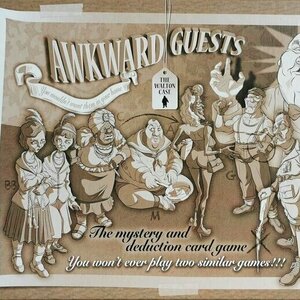
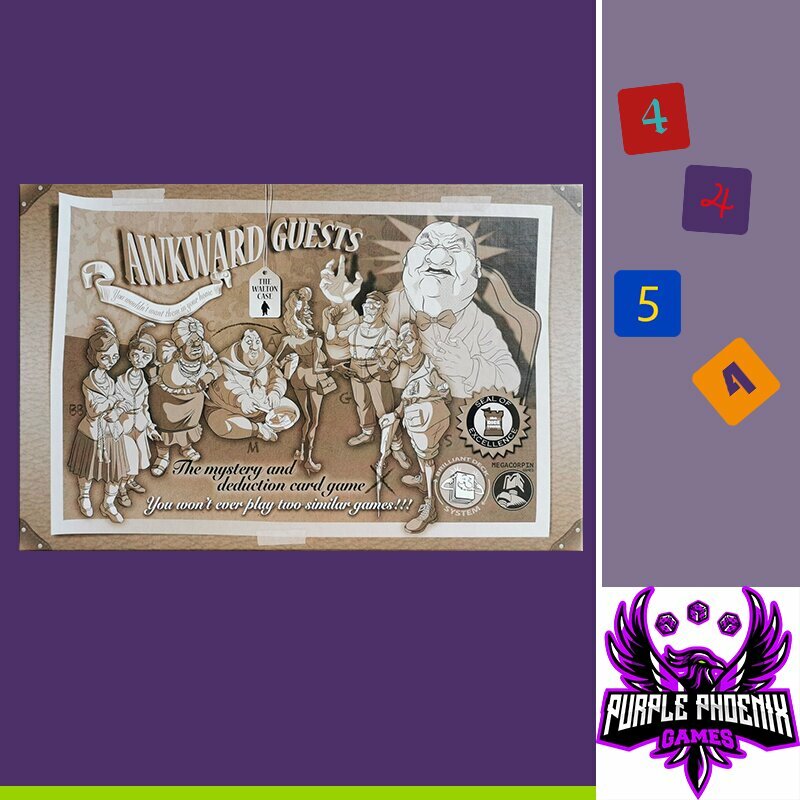
Mr. Walton has been murdered! You have been called in to investigate and get to the bottom of this gruesome mystery. By interrogating the suspects and the household staff, searching for clues, and examining the crime scene, you must decide WHO the killer is, WHY did they commit the murder, and HOW it was done. There may or may not even be an accomplice that needs to be caught too. Put your deduction skills to the test as you work to be the first investigator to solve the case!
Disclaimer: I do not intend to rehash the entire rulebook in this review, but rather give a general overview of the rules and gameplay. To read the entire rulebook, check out the game at your FLGS or directly from the publisher! -L
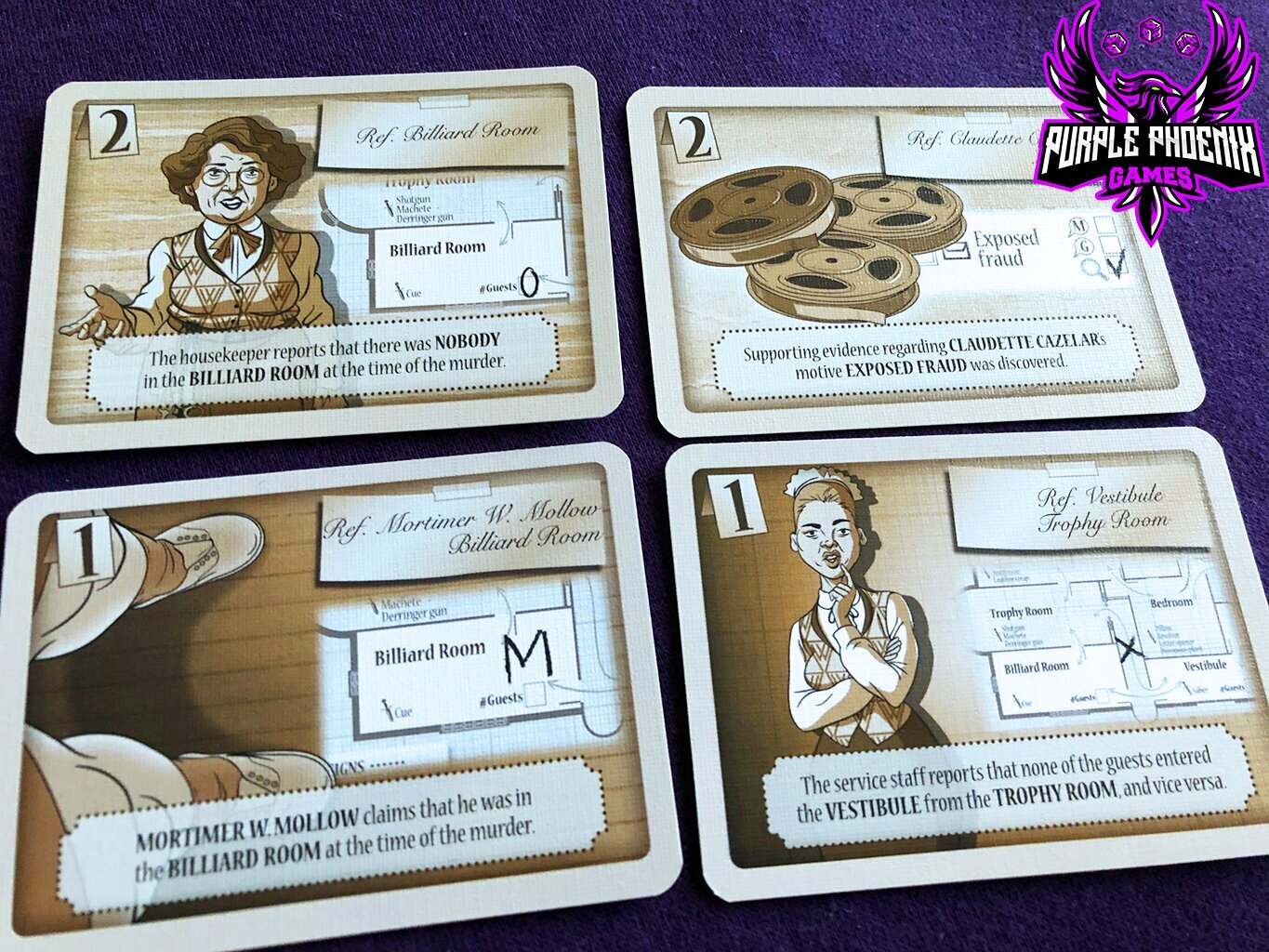
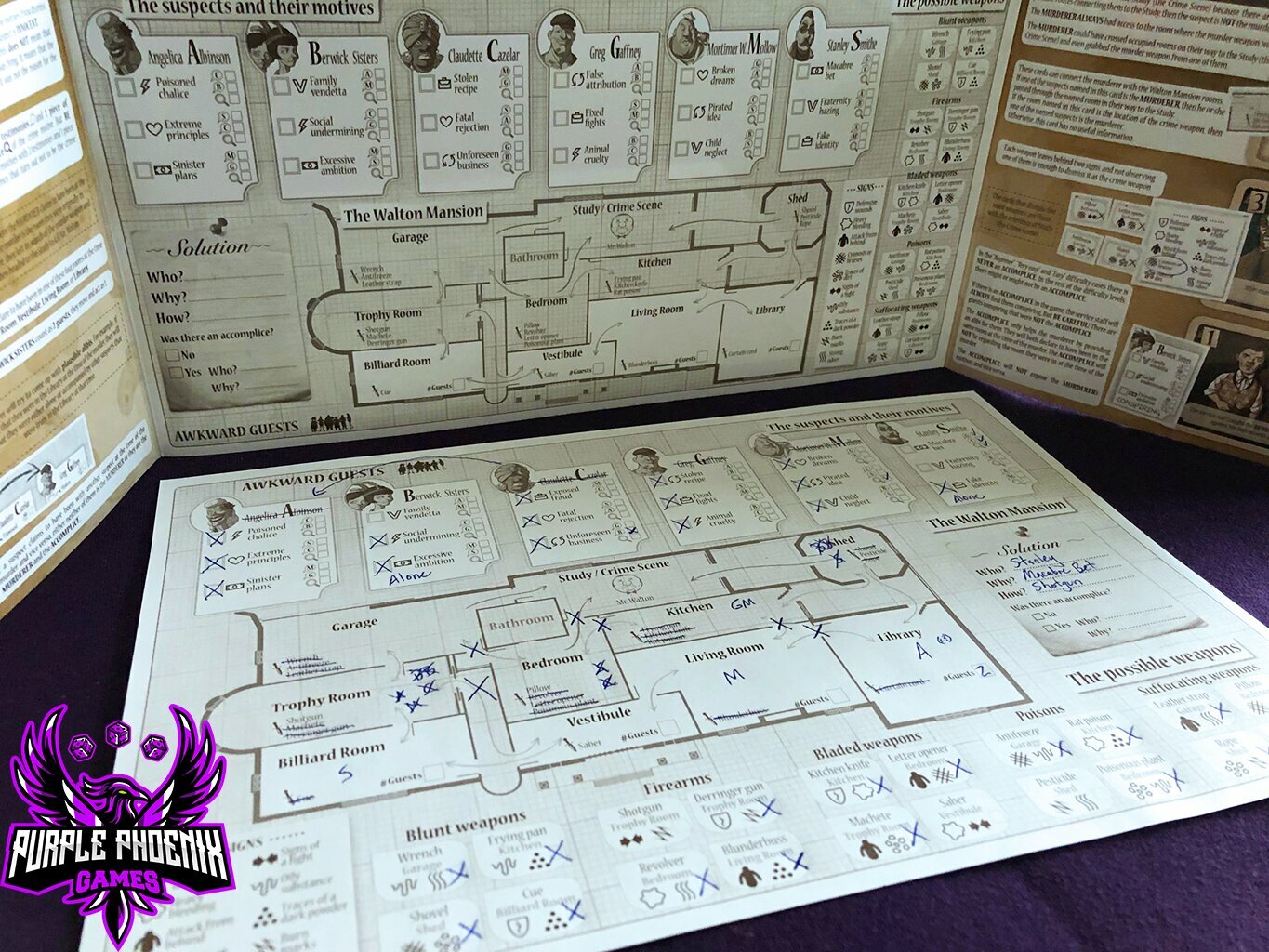
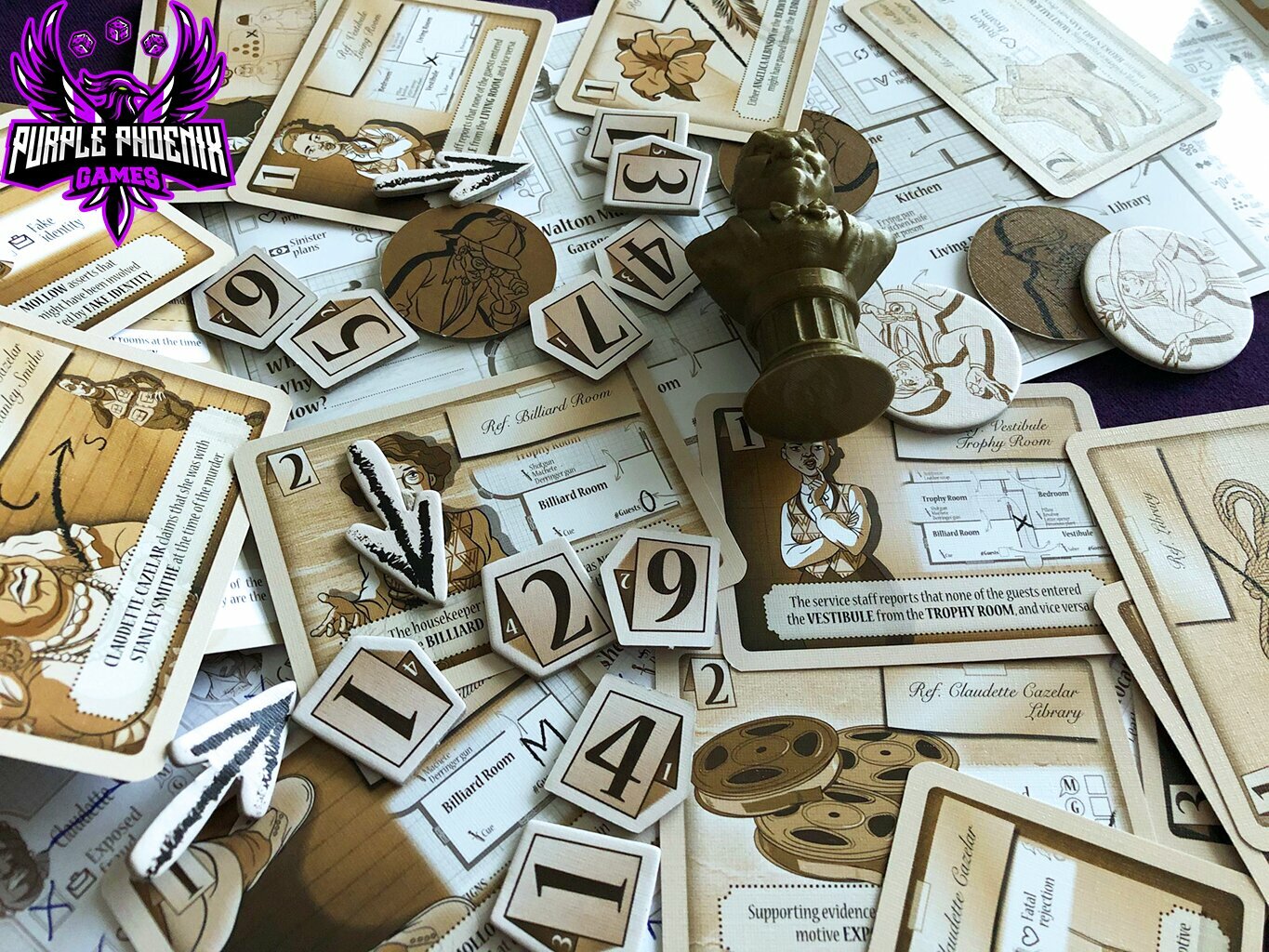
Awkward Guests is a card game of hand management, trading, and deduction in which the players are trying to be the first player to solve the murder of Mr. Walton. The game is actually pretty simple to play. To start, each player receives a hand of 6 cards and a case tracking sheet. The cards will have one or more references (case information) on them, as well as a value of 1-3 points, depending on the reliability of the information presented on the card. On your turn, you will ask for information about two different references in which you are interested. The other players will then look through their cards, and offer some or all that pertain to the chosen references in trade to the active player. The active player may then choose a player with whom to trade, giving that player any number of cards, as long as their value equals or exceeds the value of the cards received in trade. Look at your new cards, make notes on your case tracking sheet, and play continues to the next player. After all players have inquired and traded cards, players have the opportunity to solve the mystery. You must know WHO, HOW, and WHY, and possibly the identity of the ACCOMPLICE depending on case difficulty, in order to solve the mystery. If nobody is ready to solve, everyone discards their hand down to 3, and draws new cards to a hand size of 6. A new round then begins, and play continues until one player successfully solves the mystery.
When you get down to it, Awkward Guests is easy to learn and play. It mostly consists of trading cards to learn information. That’s it. And that’s what makes it a great game, in my opinion. Although it feels more involved than regular Clue, the gameplay itself is very similar and that familiarity is reassuring. One thing that elevates Awkward Guests above Clue is the fact that it requires so much more strategy than original Clue. In Clue, when asking for information, you are asking 1 specific opponent for information, and they have to provide it if they have it. In Awkward Guests, you are able to ask all opponents for information, and they can offer as much or as little information as they want. It increases the amount of strategy required to play, and takes it from a simple grid movement memory game, to one that encourages deduction and compromise. Since players are trading cards, you never know who is holding what cards at any given time, and that makes it harder to pinpoint the information you may need. You can’t just memorize another player’s hand of cards, because on any given turn that hand has completely changed. Along those lines as well, you have to decide what information you are willing to trade, in hopes of receiving useful information in return. You don’t want to just trade back the same cards to the same players in an effort to stunt their investigation, because that could deter them from trading with you in the future. You have to decide when is the right time to trade, and what information you are willing to hand to your opponents, because you need to be receiving new information as well.
Another brilliant thing about Awkward Guests is the amount of replayability. Each case uses a different combination of cards, and with so many cards, that means that thousands of different game decks could be generated and played as individual cases. The game design and card system boasts a possible total of 3,600 case solutions, each reached through these different card deck combinations. No matter how many times you play, it is almost guaranteed that you will never play the same case twice. That being said, the biggest downside of Awkward Guests for me is the actual game setup and teardown. Each case deck requires certain cards, so that means to set up, you have to search through all 243 cards and pull out only those required for the selected case. And then after the game, you must sort them all back into their correct order. That just takes a bit of time, and makes it a game that can’t just be played on the fly.
One other downside for me when playing Awkward Guests are the player screens. Each player receives a screen to block their case tracking sheet from opponents. As you learn information, you write it on your sheet to help keep track of your notes and accusations throughout the game. The player screens are also reference sheets, providing much gameplay information to alleviate the need to reference the rulebook at every turn. The downside is that there is just SO MUCH information in the player screens. It is quite overwhelming, and honestly, makes the game seem more complicated and confusing than it really is. I appreciate the effort to provide that cheat-sheet, but it needs to be majorly edited and redacted to be truly useful.
Let’s talk components. The game comes with some high quality double-sided case tracking sheets, and nice sturdy cards and cardboard components. It’s pretty simple, but really gets the job done effectively. The artwork is pretty basic and the color scheme is mostly monochromatic. It may not be the most exciting game to look at, but the lack of colors makes it feel appropriately thematic.
Overall, Awkward Guests is a good step-up game from Clue. It requires strategy, deduction, and even though the game is ultimately competitive, selective cooperation is a key to success. As a huge fan of Clue as a child, I can definitely say that I am a fan of Awkward Guests as an adult. Originally printed in a different language, this game was brought to Kickstarter with an English version in 2018, and I am certainly thankful that the decision was made to reprint it in English! If you like deduction games with a twist, I would absolutely recommend giving this one a shot. Purple Phoenix Games gives Awkward Guests a mysterious 17 / 24.

Shadow Kingdoms of Valeria
8.0 Rate It
Tabletop Game
For years the humans, elves, and dwarves have been slowly encroaching on your territories and...