Search

Search only in certain items:

40x40

Noomi Rapace recommended Raging Bull (1980) in Movies (curated)
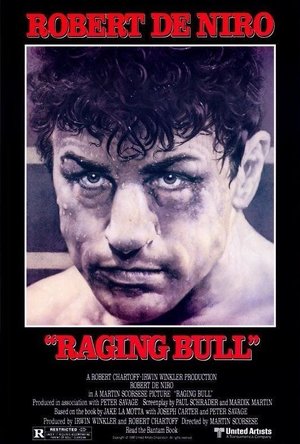
 
Raging Bull (1980)
Raging Bull (1980)
1980 | Drama

"Of course, I love Raging Bull. And I love The Godfather. [Laughs] Maybe I need to find something a little fresher. But Raging Bull, you can always feel when an actor kind of goes into — I don’t know Robert De Niro, but I kind of get this feeling that he went really deep into it, and that the character and he melded together. I can feel like he’s not pretending. He’s actually living it. That’s always something that hits me, and I forget about the outside world; it’s almost like the movie I’m watching takes over and becomes my reality. I’ve seen Raging Bull so many times and it feels so pure and real. It’s beautiful and sexy and rough, and there’s so much pain in it at the same time. I think it always attracts me, you know, with people struggling and people fighting and people wanting to become something, wanting to change their lives or change who they are; people fighting with their own demons. For me, that’s such a beautiful example of that — someone who was really focused on being something, and becoming something, and how hard it is and how much you need to fight."

Source
  
Irréversible (2002)
Irréversible (2002)
2002 | Drama, International

"I always defend this movie. Some people hate it. I love it, although I am not in a rush to watch the first half again… There is a scene near the end of the film where it is just Monica Bellucci and Vincent Cassel lounging around their apartment. One of those lazy days you have with a partner. They were a real life couple and that chemistry shoots through to the film. You can tell they are madly in love. I always break into tears at this moment. It puts everything you’ve seen prior into heartbreaking context. The film is a tragedy told in reverse. I think it’s brilliant because by the design of its structure, it makes you think about the tragedy more than if you were just experiencing it in chronological order. Instead of getting to the end of the film and rooting for our protagonist to bash this guys head in, we get to the end of the film and think about how pointless all that pain and violence was and how heartbreaking it is that the violence destroyed this pure love."

Source
  
40x40

Graham Lewis recommended Marcus Garvey by Burning Spear in Music (curated)

 
Marcus Garvey by Burning Spear
1975 | Reggae
9.0 (3 Ratings)
Album Favorite

"What a great singer, what a great record. I was living in West London in Notting Hill when I heard this. It felt like the time I was living in. I think it's an extraordinary production, the whole piece, and it doesn't matter whether you believe that it is politics, propaganda or poetry, the voice I think is just incredible. I take it as all three... it depends on de 'erb man. It'd be so addictive to play bass like that, so I've always avoided it. Roundabout '76, '77, it was like hearing Blue Beat in shebeens in Notting Hill. That was understanding something else, detuned basses, that was all about sonics. And then the act of actually playing something so melodic would seem even more perverse. It really informs electronic music. Physically it is really enjoyable to play bass - there's a similar element to playing sport, that sense of coordination and being involved in an activity with other people. There were times when, and particularly on our 'Drill' marathons, you really do get beyond pain and an outer body experience, which is of course indescribable, and that's exciting."

Source
  
Paths of Glory (1957)
1957 | Classics, Drama, War

"If 1956’s The Killing set the scene for a visionary new director, Paths of Glory, released a year later confirms it. Adapted from a novel that had
 appeared two decades earlier, the film has gained stature over the years. It is the
 darkest evocation of war ever filmed; you feel the pain, the fear and discomfort
 experienced by French soldiers engaged in a meaningless, suicidal battle with
 a faceless German enemy. The cast of American actors convincingly portray
 heartless French officers and outnumbered enlisted men. Kirk Douglas gives his best performance as Colonel Dax, as does Adolphe Menjou as Dax’s antagonist, General Broulard. You can see Kubrick’s early influences,
 Orson Welles and Max Ophüls, in his camerawork and editing style, but the
 film is totally original and powerful, and even has a touch of
 sentimentality in the final sequence. The famous tracking shots in the trenches
 accompanied by the constant drumbeat of bombs and artillery will remain in your memory long after you’ve experienced the film. The contrast between the
 high-living generals and the downtrodden soldiers is also a constant reminder
 of the folly and inequity of war."

Source