
Search
Search results

Gareth von Kallenbach (980 KP) rated Doctor Sleep (2019) in Movies
Nov 7, 2019
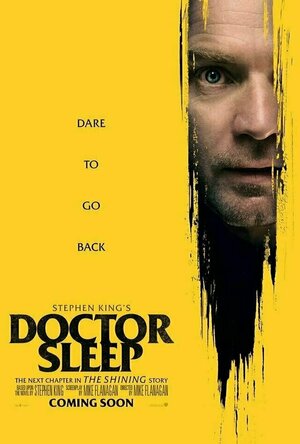

Some nightmares you wake up from, wipe the sweat from your brow, and go back to wonderful slumber as though it never occurred. Others follow you in both your sleep and waking hours. For Dan Torrance (Ewan McGregor) the nightmare that began at the Overlook Hotel in Stephen King’s best-selling novel (and movie directed by Stanley Kubrick) The Shining continue to follow him through his childhood years. With the help of a friendly spirit (Carl Lumbly) Dan learns how to contain the malevolent spirits that followed him from his nightmarish experience, but at almost the cost of his sanity. Falling back on his fathers’ previous crutch, Dan drinks and fights his demons away every night, consumed by a different type of spirit to manage the pain and fear that he has been running from.
Dan is about to hit rock bottom when he encounters a man who has certainly suffered with his own demons in the past, who offers him a place to stay, a job, and an escape from the alcohol that held him in his own personal hell for several years. After eight years of sobriety he strikes up a psychic pen-pal friendship with a young girl named Abra Stone (Kyliegh Curran), who shares his powers. His wish to push his “shining” deep down inside him, and not let it come out is interrupted when Abra witnesses a murder of a young boy. Using her gift, she uncovers a group of beings so evil, that their desire for immortality requires them to snuff out the lives of those who share the same special gift as Dan and Abra. Dan and Abra must join forces, and let their lights shine, if they are to defeat this evil and save themselves and others like them in the process.
Doctor Sleep is the long-awaited sequel to The Shining released (on film at least) back in 1980. While the original film was lauded by most and reviled by some in the way that Stanley Kubrick brought the story to life, it serves as the backdrop to this sequel. Blending reshoots of the original film (using the current actors) as flash backs, it provides the necessary background to those who may have never had the opportunity to see the original, and visual reminders to those who have. While artistically the film doesn’t hold a shine to the original, it tells a far more consumable story, with less focus on the imagery and symbolism in each shot then Stanly Kubrick’s masterpiece.
The bond between Ewan McGregor and upcoming star Kyliegh Curran is not only believable but magical. The chemistry that the two share both in separate scenes and together show the tight bond they certainly must have felt on set. The movie is blessed with an entire cast of supporting characters, that bring the believability and professionalism to the big screen. Rebecca Ferguson, as our duos’ primary adversary Rose the Hat, provides an outstanding performance. Surrounded by her fellow shine-pires, Grandpa Flick (Carel Struycken), Snakebite Andi (Emily Alyn Lind) and Crow Daddy (Zahn McClarnon) to name just a few, the group reminds me of The Lost Boys in their cunning and hunger.
Doctor Sleep is not a scary movie, at least not when it’s put beside The Shining. While it has scary moments, this is a movie about putting aside your fear and challenging evil, regardless of the cost. Dan must put the past behind him and dig deep within himself to find his purpose and with this purpose will come a lot of loss, but acceptance at the same time. The movie begins a little slow and picks up midway through. While the battle against many of the shine-pires may feel a little hollow at first, it’s nothing to what will compare with the ultimate climax between good and evil.
Fans of the Stanley Kubrick film will see lots of familiar locations and costumes throughout the two-and-a-half-hour show. Even the re-created scenes share the same visual imagery and spectacle, just as if it was simply a re-master. I actually liked that they reshot the pivotal scenes and characters, while no one can perfectly mimic the master of Jack Nicholson, I felt that Henry Thomas did an amazing job in his portrayal of the young Jack Torrance. Alex Essoe portrayed an outstanding Wendy Torrance, a role that was masterfully played by Shelley Duvall back in the day.
With the magnitude of Stephen King movies (and series) being released in the recent years, it could easily feel as if we have all been teleported back to the 80’s. There have been some homeruns in recent years (and some foul balls), but Doctor Sleep easily ranks up there as one of the better of the Stephen King movies to be released in recent memory. While the movie is much more action-oriented and doesn’t deliver on the sheer terror of the original, it suits the story, and does a commendable way of bringing closure to some of Stephen King’s more notable characters. Both fans and non-fans of the original will find a lot to like, and for those looking for more story (and less artistry) will be extremely pleased with the way director Mike Flanagan (The Haunting of Hill House series / Hush) brings this rendition to the screen. So, let your light shine and go see Doctor Sleep.
Dan is about to hit rock bottom when he encounters a man who has certainly suffered with his own demons in the past, who offers him a place to stay, a job, and an escape from the alcohol that held him in his own personal hell for several years. After eight years of sobriety he strikes up a psychic pen-pal friendship with a young girl named Abra Stone (Kyliegh Curran), who shares his powers. His wish to push his “shining” deep down inside him, and not let it come out is interrupted when Abra witnesses a murder of a young boy. Using her gift, she uncovers a group of beings so evil, that their desire for immortality requires them to snuff out the lives of those who share the same special gift as Dan and Abra. Dan and Abra must join forces, and let their lights shine, if they are to defeat this evil and save themselves and others like them in the process.
Doctor Sleep is the long-awaited sequel to The Shining released (on film at least) back in 1980. While the original film was lauded by most and reviled by some in the way that Stanley Kubrick brought the story to life, it serves as the backdrop to this sequel. Blending reshoots of the original film (using the current actors) as flash backs, it provides the necessary background to those who may have never had the opportunity to see the original, and visual reminders to those who have. While artistically the film doesn’t hold a shine to the original, it tells a far more consumable story, with less focus on the imagery and symbolism in each shot then Stanly Kubrick’s masterpiece.
The bond between Ewan McGregor and upcoming star Kyliegh Curran is not only believable but magical. The chemistry that the two share both in separate scenes and together show the tight bond they certainly must have felt on set. The movie is blessed with an entire cast of supporting characters, that bring the believability and professionalism to the big screen. Rebecca Ferguson, as our duos’ primary adversary Rose the Hat, provides an outstanding performance. Surrounded by her fellow shine-pires, Grandpa Flick (Carel Struycken), Snakebite Andi (Emily Alyn Lind) and Crow Daddy (Zahn McClarnon) to name just a few, the group reminds me of The Lost Boys in their cunning and hunger.
Doctor Sleep is not a scary movie, at least not when it’s put beside The Shining. While it has scary moments, this is a movie about putting aside your fear and challenging evil, regardless of the cost. Dan must put the past behind him and dig deep within himself to find his purpose and with this purpose will come a lot of loss, but acceptance at the same time. The movie begins a little slow and picks up midway through. While the battle against many of the shine-pires may feel a little hollow at first, it’s nothing to what will compare with the ultimate climax between good and evil.
Fans of the Stanley Kubrick film will see lots of familiar locations and costumes throughout the two-and-a-half-hour show. Even the re-created scenes share the same visual imagery and spectacle, just as if it was simply a re-master. I actually liked that they reshot the pivotal scenes and characters, while no one can perfectly mimic the master of Jack Nicholson, I felt that Henry Thomas did an amazing job in his portrayal of the young Jack Torrance. Alex Essoe portrayed an outstanding Wendy Torrance, a role that was masterfully played by Shelley Duvall back in the day.
With the magnitude of Stephen King movies (and series) being released in the recent years, it could easily feel as if we have all been teleported back to the 80’s. There have been some homeruns in recent years (and some foul balls), but Doctor Sleep easily ranks up there as one of the better of the Stephen King movies to be released in recent memory. While the movie is much more action-oriented and doesn’t deliver on the sheer terror of the original, it suits the story, and does a commendable way of bringing closure to some of Stephen King’s more notable characters. Both fans and non-fans of the original will find a lot to like, and for those looking for more story (and less artistry) will be extremely pleased with the way director Mike Flanagan (The Haunting of Hill House series / Hush) brings this rendition to the screen. So, let your light shine and go see Doctor Sleep.

Connor Sheffield (293 KP) rated The Crow (1994) in Movies
Apr 19, 2017

Close to the source material (2 more)
Great Cast
A powerful and emotional film
A Powerful Classic
The Crow is one of my all time favourite films as well as one of my all time favourite graphic novels.
This Gothic, fantasy action film has a tragic story that's powerful to behold as we witness what the power of revenge can do to a person. However, this isn't your typical revenge plot, because SPOILERS!
Eric Draven, portrayed by the incredible Brandon Lee (son of Bruce Lee), is actual brought back from the dead as an avenging angel, after he and his fiance were murdered by a group of thugs on Devils Night (the night before Halloween).
If you've read the graphic novel you'll know just how great this film is, and the only downside to it is knowing it was Brandon Lee's last after an accident that happened on set.
However, the film sticks close to the source material, especially since James O'Barr, the creator of the characters and the graphic novel worked closely with the cast and crew of the film to ensure it was done correctly.
The tone of the film is, for obvious reasons, dark but there is still humour in it which lightens the mood and gives you a sense of Eric Draven's mind because let's face it, coming back from the dead with the ability to heal any wound, and the opportunity to get revenge on those who wronged you, it's enough to send a sensible man insane, and we see that shine through Brandon Lee performance with jokes and laughter, whilst still remaining eerily dark and twisted. When the bad guys realise he heals any wounds and can't die...You can see how much Eric enjoys seeing the fear grow in their faces, and as the strong unfolds we learn that the group of thugs who committed the crime, were just pawns to a bigger villain leading a crime syndicate in the city.
We see emotion as Eric tries to find out the truth of what really happened that night, and why he and his fiance lost their lives, and we see him trying to connect to his past through Sarah, a young girl that he and his fiance looked after and cared for. We also see the truth unfold through Officer Albrecht who was in charge of the investigation.
The characters are all brilliantly written, from Sarah's childhood innocence becoming a more mature sense of realising that the world can't always be a happy place, to Eric's lust for revenger and being sidetracked by emotions of his former life, trying to remain a good person whilst committing these acts of murder for revenge.
The music in the film really fits the scenes and the feel of the entire story with bands like The Cure, Pantera, Rage Against The Machine and Stone Temple Pilots among others, its soundtrack is brilliantly dark.
Also the main aspect that you have to love is Brandon Lee in the crow makeup and clothing. He looks menacing, he looks like he has a lust for revenge, most importantly he looks badass! One of the greatest comic book characters in film that I have ever seen, and whilst I was a little wary of the talks to remake this film in 2016/2017, I would be curious to see the character brought to life again and given a fresh look but I don't know if anyone can beat Brandon Lee in that portrayal because he looks incredible.
This film is dark, powerful, moving and poetic and will remain one of my top 5 films of all time. Maybe even top 3.
I highly recommend this film to anyone who enjoys a comic book movie, especially if you like movies with action and drama with a Gothic overtone.
R.I.P Brandon Lee (1965-1993)
This Gothic, fantasy action film has a tragic story that's powerful to behold as we witness what the power of revenge can do to a person. However, this isn't your typical revenge plot, because SPOILERS!
Eric Draven, portrayed by the incredible Brandon Lee (son of Bruce Lee), is actual brought back from the dead as an avenging angel, after he and his fiance were murdered by a group of thugs on Devils Night (the night before Halloween).
If you've read the graphic novel you'll know just how great this film is, and the only downside to it is knowing it was Brandon Lee's last after an accident that happened on set.
However, the film sticks close to the source material, especially since James O'Barr, the creator of the characters and the graphic novel worked closely with the cast and crew of the film to ensure it was done correctly.
The tone of the film is, for obvious reasons, dark but there is still humour in it which lightens the mood and gives you a sense of Eric Draven's mind because let's face it, coming back from the dead with the ability to heal any wound, and the opportunity to get revenge on those who wronged you, it's enough to send a sensible man insane, and we see that shine through Brandon Lee performance with jokes and laughter, whilst still remaining eerily dark and twisted. When the bad guys realise he heals any wounds and can't die...You can see how much Eric enjoys seeing the fear grow in their faces, and as the strong unfolds we learn that the group of thugs who committed the crime, were just pawns to a bigger villain leading a crime syndicate in the city.
We see emotion as Eric tries to find out the truth of what really happened that night, and why he and his fiance lost their lives, and we see him trying to connect to his past through Sarah, a young girl that he and his fiance looked after and cared for. We also see the truth unfold through Officer Albrecht who was in charge of the investigation.
The characters are all brilliantly written, from Sarah's childhood innocence becoming a more mature sense of realising that the world can't always be a happy place, to Eric's lust for revenger and being sidetracked by emotions of his former life, trying to remain a good person whilst committing these acts of murder for revenge.
The music in the film really fits the scenes and the feel of the entire story with bands like The Cure, Pantera, Rage Against The Machine and Stone Temple Pilots among others, its soundtrack is brilliantly dark.
Also the main aspect that you have to love is Brandon Lee in the crow makeup and clothing. He looks menacing, he looks like he has a lust for revenge, most importantly he looks badass! One of the greatest comic book characters in film that I have ever seen, and whilst I was a little wary of the talks to remake this film in 2016/2017, I would be curious to see the character brought to life again and given a fresh look but I don't know if anyone can beat Brandon Lee in that portrayal because he looks incredible.
This film is dark, powerful, moving and poetic and will remain one of my top 5 films of all time. Maybe even top 3.
I highly recommend this film to anyone who enjoys a comic book movie, especially if you like movies with action and drama with a Gothic overtone.
R.I.P Brandon Lee (1965-1993)

Fun & engaging read
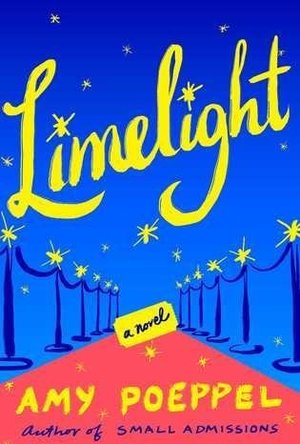
Allison and her family move to New York City from Dallas for her husband, Michael's, job. At first, Allison is excited--ready for the glitz and glamour of the city. Instead, she finds herself and her family (including her three children) living in a cramped small apartment within a high-rise building. She has no friends and no one to confide in and shortly after moving, she loses her job. Things go from bad to worse when she hits an empty parked car outside her son Jack's school--right in front of the judgemental eyes of all the other mothers. The note Allison leaves leads her to a fancy penthouse, which she finds occupied by young pop star, Carter Reid. Allison doesn't see Carter as a pop star, however: she sees an abandoned kid, friendless, without parents, and about to ruin his career by backing out of the Broadway musical in which he agreed to star. Somehow, Allison becomes involved in Carter's life and as she does, she finally finds a reason to embrace New York.
This was such a fun book and such an engaging read. Now, at first, Allison is adrift in New York and in the beginning of the book, I was so frustrated with the abuse she took from Carter that I was a bit annoyed with the story. But Poeppel gets you past that pretty quick. The entire book is humorous, as it's filled with funny moments with Allison, her family, and the cast of supporting characters. Howard, a security guard Allison helps tutor, particularly shines, as does Owen, Carter's butler. Poeppel is very adept at capturing the individual voice of each of her characters. I loved Allison's kids, too. I fell for her eldest daughter, Charlotte, because I could have been her 20 years ago (geez I'm old), but teenage Megan and funny, quirky Jack were awesome too. The characters truly become like family.
Even if Allison frustrated me at times, with her coddling of Carter, I certainly found her relatable. The fact that she wasn't a morning person, her love for her children yet inability to always know what was happening in their lives, and her closeness with her own mom. She comes across as a real person, and I was incredibly impressed at how well she handled Carter and the celebrity world. The theme of family runs across the book--not just Allison's family, but how the disparate characters in the novel become their own family, and you really find yourself rooting for Carter because of it.
And, indeed, the magic of the book is how it transforms Carter. In the beginning, I couldn't believe anyone would like this kid, but as you read on... well, let's just say you will be rooting for Carter Reid. Poeppel captures Carter so precisely--his mannerisms, his dialect, his voice--it's amazing. It's easy to picture him, and he grows on you, for sure. By the end of the novel, you may feel a little misty. Sure, it's sometimes easy to see where things may be going, but that's OK, because it is such a rather enjoyable ride to be on. Plus, you never know exactly what wrench Carter is going to throw in Allison's carefully laid plans.
Overall, I really enjoyed this one. It started off a little slow, and I was initially frustrated with Carter's behavior (and Allison's acceptance of it). However, the book then takes off, and I was quickly immersed in the well-written characters and the arc of the story. It's such a fun book in so many ways--and touching too--plus there's a celebrity aspect that gives it an enjoyable twist, and you often feel like you're in NYC on a Broadway set. Definitely an enjoyable read.
This was such a fun book and such an engaging read. Now, at first, Allison is adrift in New York and in the beginning of the book, I was so frustrated with the abuse she took from Carter that I was a bit annoyed with the story. But Poeppel gets you past that pretty quick. The entire book is humorous, as it's filled with funny moments with Allison, her family, and the cast of supporting characters. Howard, a security guard Allison helps tutor, particularly shines, as does Owen, Carter's butler. Poeppel is very adept at capturing the individual voice of each of her characters. I loved Allison's kids, too. I fell for her eldest daughter, Charlotte, because I could have been her 20 years ago (geez I'm old), but teenage Megan and funny, quirky Jack were awesome too. The characters truly become like family.
Even if Allison frustrated me at times, with her coddling of Carter, I certainly found her relatable. The fact that she wasn't a morning person, her love for her children yet inability to always know what was happening in their lives, and her closeness with her own mom. She comes across as a real person, and I was incredibly impressed at how well she handled Carter and the celebrity world. The theme of family runs across the book--not just Allison's family, but how the disparate characters in the novel become their own family, and you really find yourself rooting for Carter because of it.
And, indeed, the magic of the book is how it transforms Carter. In the beginning, I couldn't believe anyone would like this kid, but as you read on... well, let's just say you will be rooting for Carter Reid. Poeppel captures Carter so precisely--his mannerisms, his dialect, his voice--it's amazing. It's easy to picture him, and he grows on you, for sure. By the end of the novel, you may feel a little misty. Sure, it's sometimes easy to see where things may be going, but that's OK, because it is such a rather enjoyable ride to be on. Plus, you never know exactly what wrench Carter is going to throw in Allison's carefully laid plans.
Overall, I really enjoyed this one. It started off a little slow, and I was initially frustrated with Carter's behavior (and Allison's acceptance of it). However, the book then takes off, and I was quickly immersed in the well-written characters and the arc of the story. It's such a fun book in so many ways--and touching too--plus there's a celebrity aspect that gives it an enjoyable twist, and you often feel like you're in NYC on a Broadway set. Definitely an enjoyable read.

Kristy H (1252 KP) rated Sailing Lessons in Books
Mar 18, 2019
Interesting characters & enjoyable read
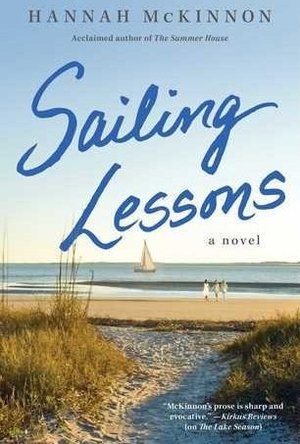
The Bailey sisters grew up on Cape Cod--and overall, they are fairly close. The sisters are particularly bonded by the fact that their father, Caleb, left when they were small, after a traumatic incident that affected each sister in their own way. Wren remained on the island and is now raising her daughter, Lucy, while juggling an attempt to open a small business. Her older sister, Shannon, is a perfectionist leading a picture-perfect Cape life with her husband and three children: at least that's how it appears. As for the youngest, Piper, who barely even remembers her father: she fled to Boston, where she's spent years pursuing educational degrees she isn't sure she wants. And her love life? Don't ask. The girls' mother, Lindy, has settled down on the island with her second husband, Hank. All in all, everyone has a routine. But Caleb disturbs all that when he sends a letter, asking to return and see the girls again. Each sister responds differently to his return, and each much confront their own past--and present--in light of Caleb's presence.
I really enjoyed this book, and I found myself quite enraptured by its characters. I'm a sucker for some island-themed fiction (I'd love to go to the Cape or Nantucket someday, though I'll be so sad when everyone there isn't grappling with family issues and/or falling in love at first sight!). This was one of the books that I read at the right time, as I needed a story I could escape into. I started it while I was on "vacation" (a trip to Great Wolf Lodge with six-year-old twins - you determine if this counts as a vacation), and I found myself wishing I could transport myself to a beach somewhere to finish it.
The characters in this tale are simply interesting and fascinating. I don't know how else to say it, except I liked them, you know? OK, it took a little while to warm up to Shannon, but I could definitely relate to bits of her anxious characteristics. But I especially loved Wren and Hank. I could just picture them so easily, and I was rooting for them the entire way. (I sort of want Hank to be my Dad now.) Even Caleb was an intriguing sort of guy in his own way.
"He'd been given a talent for capturing images and a woman whom he'd loved with a fierceness that he could never seem to capture. And he'd lost it all."
So, yes, there's a bit of predictability to this one, but there's a comfortableness to it that I really liked (and needed). And there were definitely some pieces I didn't always see coming, too. Plus, I was so caught up in the characters that I was along for the ride, no matter what. They were well-written, and I was invested in their lives, which is a sign of good women's fiction, in my opinion. I had a bit of a dysfunctional childhood myself, so maybe I could relate well to this one; it just worked well for me.
"'Memory has weight. We carry it around with us in our baskets.' It had sounded lovely to her ears as a kid, this bountiful collection: a bushel of fruit, a bouquet of flowers. But as she grew, it took on a new meaning. There were days Shannon wished to set her basket of memories down; days she wished to abandon it altogether."
Overall, I really enjoyed this book. Interesting characters, easy-moving plot--it was just a good read. I was actually a little sad to say goodbye to the sisters and their clan by the end.
I really enjoyed this book, and I found myself quite enraptured by its characters. I'm a sucker for some island-themed fiction (I'd love to go to the Cape or Nantucket someday, though I'll be so sad when everyone there isn't grappling with family issues and/or falling in love at first sight!). This was one of the books that I read at the right time, as I needed a story I could escape into. I started it while I was on "vacation" (a trip to Great Wolf Lodge with six-year-old twins - you determine if this counts as a vacation), and I found myself wishing I could transport myself to a beach somewhere to finish it.
The characters in this tale are simply interesting and fascinating. I don't know how else to say it, except I liked them, you know? OK, it took a little while to warm up to Shannon, but I could definitely relate to bits of her anxious characteristics. But I especially loved Wren and Hank. I could just picture them so easily, and I was rooting for them the entire way. (I sort of want Hank to be my Dad now.) Even Caleb was an intriguing sort of guy in his own way.
"He'd been given a talent for capturing images and a woman whom he'd loved with a fierceness that he could never seem to capture. And he'd lost it all."
So, yes, there's a bit of predictability to this one, but there's a comfortableness to it that I really liked (and needed). And there were definitely some pieces I didn't always see coming, too. Plus, I was so caught up in the characters that I was along for the ride, no matter what. They were well-written, and I was invested in their lives, which is a sign of good women's fiction, in my opinion. I had a bit of a dysfunctional childhood myself, so maybe I could relate well to this one; it just worked well for me.
"'Memory has weight. We carry it around with us in our baskets.' It had sounded lovely to her ears as a kid, this bountiful collection: a bushel of fruit, a bouquet of flowers. But as she grew, it took on a new meaning. There were days Shannon wished to set her basket of memories down; days she wished to abandon it altogether."
Overall, I really enjoyed this book. Interesting characters, easy-moving plot--it was just a good read. I was actually a little sad to say goodbye to the sisters and their clan by the end.
Kristy H (1252 KP) rated Let Me Lie in Books
Mar 14, 2018
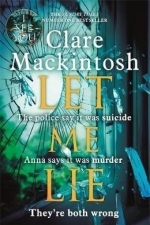
Slow-building shocking thriller
Anna Johnson is still reeling from the suicide of her father, Tom, when her mother, Caroline, dies as well, in a suicide that copies that of Tom's. A year later, Anna is grief-stricken, parenting a young baby, and trying to put together the pieces of her life. She lives in her parents' old home, surrounded by memories of their life together. On the anniversary of her mother's death, Anna receives a suspicious note that prompts her to dig into her parents' past and their deaths. She quickly discovers that nothing is as it seems--not their suicides, nor the happy childhood memories she holds so dear.
I really love Clare Mackintosh; her first novel, I Let You Go, is one of my favorites, and she's one of those authors I follow on Twitter and find very relatable. So I was very excited to finally get a chance to read this one. I'm still in awe of Mackintosh--who spent twelve years in the police force--and her writing talent. She has such a talent for creating some of her characters. And boy, can she really shock you with a plot twist.
I must first preface that if you have issues or triggers with suicide, this might be one to skip. Having lost a loved one to suicide, I can tell you that this can be a little hard to read. But Mackintosh treats the subject very delicately; she also presents us with a character with BPD, and I thought her treatment of mental illness was very well-done.
The novel is told mainly from Anna's point of view and that of a former police detective, Murray, who gets involved with her case. We do get snippets from someone else--we are left to imagine to try to figure out who it is, when they are speaking, and what has happened to them. Once Anna receives the note questioning her mother's suicide, she takes it to the police, where Murray--an investigator/detective now relegated to desk duty post-retirement--starts looking into it, which is a bit against the rules. This doesn't matter to us, because unless you have no heart, you'll immediately love Murray. He was the star of the story, to me, and I immediately adored him. He's also a great detective and a wonderful force in the book. (Can we have another story with Murray, please, Ms. Mackintosh?)
The book is ominous, creepy, and and tense, as the story slowly builds to its conclusion. It's not a fast-paced thriller, per se, but I was definitely fascinated in what had happened to Anna's parents. I was kept guessing for good chunks of the book, which I certainly appreciated. There are a bunch of twists and turns, several of which had me quite surprised. I just love how Mackintosh can throw you off track and then shock you quite convincingly.
For me, part of this book was a little far-fetched, and I thought Anna acted a little odd at times -- though in her defense, the poor girl is put through a lot. The book is best if you roll with the surprises and just enjoy them. Even better, you have Murray, who offers a touching character (his interactions with his wife are beyond lovely and show a deftness in writing that is quite impressive) as well as superbly-written detective. The book was compelling; nearing the end, I kept going "what? what did he find? who?!" so I know it was effective in creating suspense. It's also creepy at times and surprising until the end. Well-done. 4 stars.
I received a copy of this novel from the publisher and Edelweiss in return for an unbiased review. More at http://justacatandabookatherside.blogspot.com/.
I really love Clare Mackintosh; her first novel, I Let You Go, is one of my favorites, and she's one of those authors I follow on Twitter and find very relatable. So I was very excited to finally get a chance to read this one. I'm still in awe of Mackintosh--who spent twelve years in the police force--and her writing talent. She has such a talent for creating some of her characters. And boy, can she really shock you with a plot twist.
I must first preface that if you have issues or triggers with suicide, this might be one to skip. Having lost a loved one to suicide, I can tell you that this can be a little hard to read. But Mackintosh treats the subject very delicately; she also presents us with a character with BPD, and I thought her treatment of mental illness was very well-done.
The novel is told mainly from Anna's point of view and that of a former police detective, Murray, who gets involved with her case. We do get snippets from someone else--we are left to imagine to try to figure out who it is, when they are speaking, and what has happened to them. Once Anna receives the note questioning her mother's suicide, she takes it to the police, where Murray--an investigator/detective now relegated to desk duty post-retirement--starts looking into it, which is a bit against the rules. This doesn't matter to us, because unless you have no heart, you'll immediately love Murray. He was the star of the story, to me, and I immediately adored him. He's also a great detective and a wonderful force in the book. (Can we have another story with Murray, please, Ms. Mackintosh?)
The book is ominous, creepy, and and tense, as the story slowly builds to its conclusion. It's not a fast-paced thriller, per se, but I was definitely fascinated in what had happened to Anna's parents. I was kept guessing for good chunks of the book, which I certainly appreciated. There are a bunch of twists and turns, several of which had me quite surprised. I just love how Mackintosh can throw you off track and then shock you quite convincingly.
For me, part of this book was a little far-fetched, and I thought Anna acted a little odd at times -- though in her defense, the poor girl is put through a lot. The book is best if you roll with the surprises and just enjoy them. Even better, you have Murray, who offers a touching character (his interactions with his wife are beyond lovely and show a deftness in writing that is quite impressive) as well as superbly-written detective. The book was compelling; nearing the end, I kept going "what? what did he find? who?!" so I know it was effective in creating suspense. It's also creepy at times and surprising until the end. Well-done. 4 stars.
I received a copy of this novel from the publisher and Edelweiss in return for an unbiased review. More at http://justacatandabookatherside.blogspot.com/.

Hazel (1853 KP) rated A Piece Of The World in Books
May 30, 2018
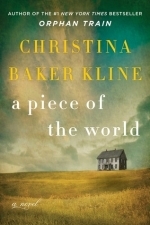

I received this book for free through Goodreads First Reads.
Until reading Christina Baker Kline’s note at the end of the book, it is impossible to guess that it is based on real people, although, admittedly, it is a little strange to name the main character after oneself. In fact, A Piece of the World is written around a single painting in the Museum of Modern Art, New York: Christina’s World (1948) by Andrew Wyeth, a man who appears and paints this work in the story.
Baker Cline researched thoroughly into the background story of the painting. Christina Olson, the main character of this book, was a real person who posed for Wyeth as he painted this striking picture. Although the overall story is a work of fiction, the dates and key characters are biographically accurate. Beginning in 1939, the narrative weaves too and fro, from Christina’s present day to her childhood and back again. Christina is an ageing woman who can barely walk and lives in a dilapidated cottage with her brother on a hill in the village of Cushing, Maine. Having lived in this state for so long, it is a welcome surprise to be visited by the young Andrew Wyeth who falls in love with the cottage and regularly comes to work on his canvases in their upper rooms. Through their peaceful relationship and flashbacks to her past, Christina’s character development is investigated and knitted together to explain why she has become this recluse on a hill.
Christina had problems from a very young age. After almost dying from a fever, she developed an undiagnosed degenerative disease that slowly ate away at the nerves in her arms and legs. Today, neurologists believe this to be Charcot-Marie-Tooth disease but there were no doctors able to provide this diagnosis at the time. Christina suffered aches and pains growing up and could barely walk in a straight line. Her determination to keep going is admirable and makes her a strong female protagonist.
One day in her early twenties, Christina meets a boy who pays her the kind of attention that she has never received before. Believing his promises that they will be together forever, she dares to dream of having a normal life. The reader, however, knows that the future Christina is alone with only her brother for company, making it heartbreaking to read of their developing romance knowing that it is not going to last.
There is no “happy-ever-after” to this story, nor is there a sad ending. It is an account of a woman who had been dealt a raw deal in life but continued getting on despite it. The end result, the painting Christina’s World, shows Christina as she sees herself. She may not be able to walk but she is still a woman; she made the most of her childhood, she never complained. This painting is her “letter to the World that never wrote to [Her].”
A Piece of the World is a powerful novel about purpose and determination. Christina may not have had a typical, successful life or become famous but she had her daily achievements: crawling through a field for an hour to visit a friend, cooking dinners despite not being able to stand up, carrying on after the end of a romantic relationship …
Written as gracefully as the brushstrokes of a painting with elements of Emily Dickinson thrown in here and there, A Piece of the World is a beautiful piece of work. It is something that can be enjoyed as you are mentally drawn into the storyline, leaving you wondering what happens to Christina and her brother after the completion of the painting. It is a novel the author can be proud of.
Until reading Christina Baker Kline’s note at the end of the book, it is impossible to guess that it is based on real people, although, admittedly, it is a little strange to name the main character after oneself. In fact, A Piece of the World is written around a single painting in the Museum of Modern Art, New York: Christina’s World (1948) by Andrew Wyeth, a man who appears and paints this work in the story.
Baker Cline researched thoroughly into the background story of the painting. Christina Olson, the main character of this book, was a real person who posed for Wyeth as he painted this striking picture. Although the overall story is a work of fiction, the dates and key characters are biographically accurate. Beginning in 1939, the narrative weaves too and fro, from Christina’s present day to her childhood and back again. Christina is an ageing woman who can barely walk and lives in a dilapidated cottage with her brother on a hill in the village of Cushing, Maine. Having lived in this state for so long, it is a welcome surprise to be visited by the young Andrew Wyeth who falls in love with the cottage and regularly comes to work on his canvases in their upper rooms. Through their peaceful relationship and flashbacks to her past, Christina’s character development is investigated and knitted together to explain why she has become this recluse on a hill.
Christina had problems from a very young age. After almost dying from a fever, she developed an undiagnosed degenerative disease that slowly ate away at the nerves in her arms and legs. Today, neurologists believe this to be Charcot-Marie-Tooth disease but there were no doctors able to provide this diagnosis at the time. Christina suffered aches and pains growing up and could barely walk in a straight line. Her determination to keep going is admirable and makes her a strong female protagonist.
One day in her early twenties, Christina meets a boy who pays her the kind of attention that she has never received before. Believing his promises that they will be together forever, she dares to dream of having a normal life. The reader, however, knows that the future Christina is alone with only her brother for company, making it heartbreaking to read of their developing romance knowing that it is not going to last.
There is no “happy-ever-after” to this story, nor is there a sad ending. It is an account of a woman who had been dealt a raw deal in life but continued getting on despite it. The end result, the painting Christina’s World, shows Christina as she sees herself. She may not be able to walk but she is still a woman; she made the most of her childhood, she never complained. This painting is her “letter to the World that never wrote to [Her].”
A Piece of the World is a powerful novel about purpose and determination. Christina may not have had a typical, successful life or become famous but she had her daily achievements: crawling through a field for an hour to visit a friend, cooking dinners despite not being able to stand up, carrying on after the end of a romantic relationship …
Written as gracefully as the brushstrokes of a painting with elements of Emily Dickinson thrown in here and there, A Piece of the World is a beautiful piece of work. It is something that can be enjoyed as you are mentally drawn into the storyline, leaving you wondering what happens to Christina and her brother after the completion of the painting. It is a novel the author can be proud of.

Louise (64 KP) rated Whisper to Me in Books
Jul 2, 2018


***This review may contain spoilers***
I won this book in a Goodreads giveaway, which let me tell you I was so pleased, I mean who doesn’t like free books?
First off, I need to mention how beautiful the cover is, the colours are amazing (I am a fan of pinks and purples) and the summer evening with fairground in the background just makes you feel like this is going be an epic summer read with loads of fluffyness…..How wrong was I! This book is DARK!
This book is told as a massive email, 535 pages long! I feel sorry for the guy she is writing to.
The story follows Cassie, she is writing an email to this boy that she met over the summer and tries to explain the reasons behind her actions and to hopefully win him back. The seaside resort that Cassie lives in always brings tourists and Teens looking for summer work, for the past couple of years there have been prostitutes/escorts that go missing but no evidence is left so the killer is at large.In Cassie’s favourite spot at the beach she finds a human foot washed up, after the shock of this discovery she starts hearing a voice inside her head, she is convinced it’s one of the prostitutes and starts investigating and taking matters into her own hands. Along the way she meets this guy and they start hanging out, but she is unable to reveal her secret.
I am going to start off by saying that I didn’t enjoy this book and there are several reasons. I hate having to write negative reviews as this author has taken a lot of time to write this and make a success of it but there were too many flaws for my liking.
First off the book is way to long for a contemporary, it could have easily been 200 pages less,there was a lot of waffle.
I didn’t like the characters!The father suffered from PTSD after being in the Navy SEALS, but to me he felt abusive and really harsh and scary, he was so protective of Cassie and would have these sudden outbursts that I actually feared for her. Cassie was really timid, a bit of a pushover. The guy she has a romance with (you never find out his name) is boring and dull.
HA HA, that brings me on to the romance. It was awful, it was awkward but not in a good way,in a cringe OMG why you doing this way. There was no spark, no angst..nada.
It uses *****for the swear words and that got really tedious in the end and sometimes I didn’t even know what swear word to use,you can fill in the blanks yourself.
Moving on to the things I liked, I enjoyed the focus on the mental health aspect, Cassie is diagnosed with some type of Schizophrenia and she has two different forms of treatment, she has a psychiatrist who just wants to pump drugs in her to solve the problem and then she has cognitive behavioural therapy and you can tell the difference between the good therapist and the bad one. I have read quite a few books about mental health like Depression, Bi-polar and anxiety but none with hearing voices so it was interesting to read something different.
The writing was good it was told in different formats and had some sarcasm and was definitely easy to read.
The ending, I was so damn disappointed with the ending! nothing got resolved, I literally felt I had been robbed. It was like Lake got bored and finished the story early and didn’t tie the ends.
I originally gave this book a 2.5 stars but after reflecting on this I have lowered it to 1.5-2 stars and one of those stars is for the cover.
I won this book in a Goodreads giveaway, which let me tell you I was so pleased, I mean who doesn’t like free books?
First off, I need to mention how beautiful the cover is, the colours are amazing (I am a fan of pinks and purples) and the summer evening with fairground in the background just makes you feel like this is going be an epic summer read with loads of fluffyness…..How wrong was I! This book is DARK!
This book is told as a massive email, 535 pages long! I feel sorry for the guy she is writing to.
The story follows Cassie, she is writing an email to this boy that she met over the summer and tries to explain the reasons behind her actions and to hopefully win him back. The seaside resort that Cassie lives in always brings tourists and Teens looking for summer work, for the past couple of years there have been prostitutes/escorts that go missing but no evidence is left so the killer is at large.In Cassie’s favourite spot at the beach she finds a human foot washed up, after the shock of this discovery she starts hearing a voice inside her head, she is convinced it’s one of the prostitutes and starts investigating and taking matters into her own hands. Along the way she meets this guy and they start hanging out, but she is unable to reveal her secret.
I am going to start off by saying that I didn’t enjoy this book and there are several reasons. I hate having to write negative reviews as this author has taken a lot of time to write this and make a success of it but there were too many flaws for my liking.
First off the book is way to long for a contemporary, it could have easily been 200 pages less,there was a lot of waffle.
I didn’t like the characters!The father suffered from PTSD after being in the Navy SEALS, but to me he felt abusive and really harsh and scary, he was so protective of Cassie and would have these sudden outbursts that I actually feared for her. Cassie was really timid, a bit of a pushover. The guy she has a romance with (you never find out his name) is boring and dull.
HA HA, that brings me on to the romance. It was awful, it was awkward but not in a good way,in a cringe OMG why you doing this way. There was no spark, no angst..nada.
It uses *****for the swear words and that got really tedious in the end and sometimes I didn’t even know what swear word to use,you can fill in the blanks yourself.
Moving on to the things I liked, I enjoyed the focus on the mental health aspect, Cassie is diagnosed with some type of Schizophrenia and she has two different forms of treatment, she has a psychiatrist who just wants to pump drugs in her to solve the problem and then she has cognitive behavioural therapy and you can tell the difference between the good therapist and the bad one. I have read quite a few books about mental health like Depression, Bi-polar and anxiety but none with hearing voices so it was interesting to read something different.
The writing was good it was told in different formats and had some sarcasm and was definitely easy to read.
The ending, I was so damn disappointed with the ending! nothing got resolved, I literally felt I had been robbed. It was like Lake got bored and finished the story early and didn’t tie the ends.
I originally gave this book a 2.5 stars but after reflecting on this I have lowered it to 1.5-2 stars and one of those stars is for the cover.

Ivana A. | Diary of Difference (1171 KP) rated Hippie in Books
Nov 26, 2018



Full review on www.diaryofdifference.com
Hippie is the autobiography by Paulo Coelho, told in third person. This is a story about people that travel the world, wear funny clothes and flowers in their hairs, and believe in peace, love and freedom.
I have read many of Coelho’s books, even since I was a teenage girl. And all of them share something in common – the path of finding yourself. After reading Hippie, I believe that this is the the best one that covers this subject quite perfectly.
‘’He was a human being, with all the fragility that entails, he didn’t understand everything that happened in his life, but he truly wished to believe he was travelling in search of the light.’’
The book is a story of two people, Paulo and Karla. Paulo, a Brazilian guy, searching for freedom and travels. Karla, a lady born and living in Amsterdam, wanting to find herself so badly in the world. When she hears that a hippie bus is going all the way to Nepal, she is willing to go if she meets her ideal companion.
‘’She wished they could see her for her beauty, but all anyone ever saw was the hurricane, and they never sought shelter from it. They preferred to flee to safer ground.’’
Their adventure begins in such an adorable way, only hippies can relate to. Their search for what they want and need feeds with every stop and every destination. A beautiful story about friendship, love and travel.
I actually wished that they had spoken more about the travels and less about some individual stories that didn’t quite correlate to the plot. I also wished that they actually reached out the final destination the way they are supposed to (this was not a spoiler).
‘’Our travels teach us everything we need to know for the rest of our lives, as long as there’s no need to explain this to our parents.’’
Even though a sad end, it is a realistic story about a way of life before, where people loved to be free, and were free to find love, in a world of peace, love, marijuana and travels. A place where no one cares what you look like.
Right now, hippies are a normal thing, people that we all secretly enjoy reading about, and listening to their stories, but in the past, these people fought so hard to change the system of how people’s minds worked, the system people were stuck in, to make people realise that they have the freedom to believe in anything they think is right, to do anything that makes them happy, to be happy, and share this with the world. To live in a world full of happiness, love, peace, to travel and see places, discover places and people, see new cultures, explore people’s minds and customs.
‘’The sun had come out, as though to say that finally the Renaissance was making a return, to change everyone’s habits and customs – and one day very soon, people would no longer depend on the opinions of others but rather on their own ways of seeing life.’’
The one thing that I couldn’t enjoy was the constant religion mentioning in this book. All religions were mentioned, and with such intensity, that peace and love and freedom and the hippie meaning started to be in relation to religion, which is something I personally don’t want to put together. I am aware that lots of hippies believe in God in their own way, but I also think that love and peace should gather them together as a group, not religion. And this point was clearly states a lot of times throughout the book. Not enjoyable, at least for me.
For all of you out there, the hippies, the ordinary people that love travelling, love, life, happiness, music – this is a book for you. Another amazing Paulo Coelho novel, full of wisdom and quotes to underline.
Hippie is the autobiography by Paulo Coelho, told in third person. This is a story about people that travel the world, wear funny clothes and flowers in their hairs, and believe in peace, love and freedom.
I have read many of Coelho’s books, even since I was a teenage girl. And all of them share something in common – the path of finding yourself. After reading Hippie, I believe that this is the the best one that covers this subject quite perfectly.
‘’He was a human being, with all the fragility that entails, he didn’t understand everything that happened in his life, but he truly wished to believe he was travelling in search of the light.’’
The book is a story of two people, Paulo and Karla. Paulo, a Brazilian guy, searching for freedom and travels. Karla, a lady born and living in Amsterdam, wanting to find herself so badly in the world. When she hears that a hippie bus is going all the way to Nepal, she is willing to go if she meets her ideal companion.
‘’She wished they could see her for her beauty, but all anyone ever saw was the hurricane, and they never sought shelter from it. They preferred to flee to safer ground.’’
Their adventure begins in such an adorable way, only hippies can relate to. Their search for what they want and need feeds with every stop and every destination. A beautiful story about friendship, love and travel.
I actually wished that they had spoken more about the travels and less about some individual stories that didn’t quite correlate to the plot. I also wished that they actually reached out the final destination the way they are supposed to (this was not a spoiler).
‘’Our travels teach us everything we need to know for the rest of our lives, as long as there’s no need to explain this to our parents.’’
Even though a sad end, it is a realistic story about a way of life before, where people loved to be free, and were free to find love, in a world of peace, love, marijuana and travels. A place where no one cares what you look like.
Right now, hippies are a normal thing, people that we all secretly enjoy reading about, and listening to their stories, but in the past, these people fought so hard to change the system of how people’s minds worked, the system people were stuck in, to make people realise that they have the freedom to believe in anything they think is right, to do anything that makes them happy, to be happy, and share this with the world. To live in a world full of happiness, love, peace, to travel and see places, discover places and people, see new cultures, explore people’s minds and customs.
‘’The sun had come out, as though to say that finally the Renaissance was making a return, to change everyone’s habits and customs – and one day very soon, people would no longer depend on the opinions of others but rather on their own ways of seeing life.’’
The one thing that I couldn’t enjoy was the constant religion mentioning in this book. All religions were mentioned, and with such intensity, that peace and love and freedom and the hippie meaning started to be in relation to religion, which is something I personally don’t want to put together. I am aware that lots of hippies believe in God in their own way, but I also think that love and peace should gather them together as a group, not religion. And this point was clearly states a lot of times throughout the book. Not enjoyable, at least for me.
For all of you out there, the hippies, the ordinary people that love travelling, love, life, happiness, music – this is a book for you. Another amazing Paulo Coelho novel, full of wisdom and quotes to underline.

Darren (1599 KP) rated Aloha (2015) in Movies
Jun 20, 2019



Story: Aloha starts Brian Gilcrest (Cooper) who dreams of going into space but his dreams go sour after teaming up with billionaire Carson Welch (Murray) before getting a chance to go back to Hawaii. He is now a representative for Carson due to a war injury who has to deal with his ex-girlfriend Tracy (McAdams) but has to follow orders from captain Allison Ng (Stone), while meeting back up with former friends.
Brian working for Carson as he wants to introduce a space program to Hawaii but first Brian needs to negotiate with the locals. All this while Brian ends up in the middle of a love triangle with Allison and Tracy.
Aloha is a film that just never pulled my attention, be it the bland characters slow moving love triangle or whatever Carson was meant to be doing. I personally am not sure what was meant to be happening, everything that did happen just seemed to be very slow moving and offering nothing to really root for. You simply jut didn’t care what was happening. (2/10)
Actor Review
Bradley Cooper: Brain is an injured war veteran who has sided with billionaire Carson to look into making space travel happen, he has to return to Hawaii where he ends up having to see his ex-girlfriend and be followed around by the golden soldier of the local military. He is here to help create a deal to make space travel in Hawaii. Bradley gives a very average performance not getting a chance to show his real talent. (5/10)brian
Emma Stone: Allison is the most prized soldier of General Dixon who has to show Brian around, she admires him and doesn’t want you to forget she is a quarter Hawaii. While many people criticised the character created she was one of the better things in this film. (6/10)allison
Rachel McAdams: Tracy is the ex-girlfriend of Brian who lives on Hawaii with her new husband and family, when the two get to spend time together they get the closure they never really got. Rachel gives a plain performance that really doesn’t seem to do much. (4/10)
Bill Murray: Carson is the billionaire who is looking to make his own space program on the island of Hawaii and he give Brian one last chance to prove himself to him. Bill tries to bring his quirkiness to this role without really pulling it off. (5/10)
Support Cast: Aloha has the standard attempted comedic actors trying to pull this off but they had little to work with.
Director Review: Cameron Crowe – Cameron has given us some great films in the past but now he has managed to give us his worst. (2/10)
Comedy: Aloha doesn’t have many laughs at all can hardly be called a comedy. (2/10)
Romance: Aloha tries to give us an engaging love triangle but doesn’t really succeed to make us care enough. (3/10)
Settings: Aloha tries to give our location something special with the idea of putting it all on Hawaii for the beautiful setting and doesn’t even get that right. (3/10)
Suggestion: Aloha is one too miss this year, if anyone says to watch just say no. (Just Say No)
Best Part: The end.
Worst Part: It is over an Hour and half.
Funniest Scene: Woody and Brian’s ‘Conversation’.
Believability: No (0/10)
Chances of Tears: No (0/10)
Chances of Sequel: Please God No.
Post Credits Scene: I didn’t both to look.
Oscar Chances: No
Box Office: $20 Million
Budget: $37 Million
Runtime: 1 Hour 45 Minutes
Tagline: Sometimes you have to say goodbye before you can say hello.
Overall: Just watch paint dry it will be more entertaining.
https://moviesreview101.com/2015/11/07/emma-stone-weekend-aloha-2015/
Brian working for Carson as he wants to introduce a space program to Hawaii but first Brian needs to negotiate with the locals. All this while Brian ends up in the middle of a love triangle with Allison and Tracy.
Aloha is a film that just never pulled my attention, be it the bland characters slow moving love triangle or whatever Carson was meant to be doing. I personally am not sure what was meant to be happening, everything that did happen just seemed to be very slow moving and offering nothing to really root for. You simply jut didn’t care what was happening. (2/10)
Actor Review
Bradley Cooper: Brain is an injured war veteran who has sided with billionaire Carson to look into making space travel happen, he has to return to Hawaii where he ends up having to see his ex-girlfriend and be followed around by the golden soldier of the local military. He is here to help create a deal to make space travel in Hawaii. Bradley gives a very average performance not getting a chance to show his real talent. (5/10)brian
Emma Stone: Allison is the most prized soldier of General Dixon who has to show Brian around, she admires him and doesn’t want you to forget she is a quarter Hawaii. While many people criticised the character created she was one of the better things in this film. (6/10)allison
Rachel McAdams: Tracy is the ex-girlfriend of Brian who lives on Hawaii with her new husband and family, when the two get to spend time together they get the closure they never really got. Rachel gives a plain performance that really doesn’t seem to do much. (4/10)
Bill Murray: Carson is the billionaire who is looking to make his own space program on the island of Hawaii and he give Brian one last chance to prove himself to him. Bill tries to bring his quirkiness to this role without really pulling it off. (5/10)
Support Cast: Aloha has the standard attempted comedic actors trying to pull this off but they had little to work with.
Director Review: Cameron Crowe – Cameron has given us some great films in the past but now he has managed to give us his worst. (2/10)
Comedy: Aloha doesn’t have many laughs at all can hardly be called a comedy. (2/10)
Romance: Aloha tries to give us an engaging love triangle but doesn’t really succeed to make us care enough. (3/10)
Settings: Aloha tries to give our location something special with the idea of putting it all on Hawaii for the beautiful setting and doesn’t even get that right. (3/10)
Suggestion: Aloha is one too miss this year, if anyone says to watch just say no. (Just Say No)
Best Part: The end.
Worst Part: It is over an Hour and half.
Funniest Scene: Woody and Brian’s ‘Conversation’.
Believability: No (0/10)
Chances of Tears: No (0/10)
Chances of Sequel: Please God No.
Post Credits Scene: I didn’t both to look.
Oscar Chances: No
Box Office: $20 Million
Budget: $37 Million
Runtime: 1 Hour 45 Minutes
Tagline: Sometimes you have to say goodbye before you can say hello.
Overall: Just watch paint dry it will be more entertaining.
https://moviesreview101.com/2015/11/07/emma-stone-weekend-aloha-2015/
Hazel (1853 KP) rated A Piece Of The World in Books
Dec 14, 2018
<i>I received this book for free through Goodreads First Reads.</i>
Until reading Christina Baker Kline’s note at the end of the book, it is impossible to guess that it is based on real people, although, admittedly, it is a little strange to name the main character after oneself. In fact, <i>A Piece of the World</i> is written around a single painting in the Museum of Modern Art, New York: <i>Christina’s World</i> (1948) by Andrew Wyeth, a man who appears and paints this work in the story.
Baker Cline researched thoroughly into the background story of the painting. Christina Olson, the main character of this book, was a real person who posed for Wyeth as he painted this striking picture. Although the overall story is a work of fiction, the dates and key characters are biographically accurate. Beginning in 1939, the narrative weaves too and fro, from Christina’s present day to her childhood and back again. Christina is an ageing woman who can barely walk and lives in a dilapidated cottage with her brother on a hill in the village of Cushing, Maine. Having lived in this state for so long, it is a welcome surprise to be visited by the young Andrew Wyeth who falls in love with the cottage and regularly comes to work on his canvases in their upper rooms. Through their peaceful relationship and flashbacks to her past, Christina’s character development is investigated and knitted together to explain why she has become this recluse on a hill.
Christina had problems from a very young age. After almost dying from a fever, she developed an undiagnosed degenerative disease that slowly ate away at the nerves in her arms and legs. Today, neurologists believe this to be <i>Charcot-Marie-Tooth</i> disease but there were no doctors able to provide this diagnosis at the time. Christina suffered aches and pains growing up and could barely walk in a straight line. Her determination to keep going is admirable and makes her a strong female protagonist.
One day in her early twenties, Christina meets a boy who pays her the kind of attention that she has never received before. Believing his promises that they will be together forever, she dares to dream of having a normal life. The reader, however, knows that the future Christina is alone with only her brother for company, making it heartbreaking to read of their developing romance knowing that it is not going to last.
There is no “happy-ever-after” to this story, nor is there a sad ending. It is an account of a woman who had been dealt a raw deal in life but continued getting on despite it. The end result, the painting <i>Christina’s World</i>, shows Christina as she sees herself. She may not be able to walk but she is still a woman; she made the most of her childhood, she never complained. This painting is her “letter to the World that never wrote to [Her].”
<i>A Piece of the World</i> is a powerful novel about purpose and determination. Christina may not have had a typical, successful life or become famous but she had her daily achievements: crawling through a field for an hour to visit a friend, cooking dinners despite not being able to stand up, carrying on after the end of a romantic relationship …
Written as gracefully as the brushstrokes of a painting with elements of Emily Dickinson thrown in here and there, </i>A Piece of the World</i> is a beautiful piece of work. It is something that can be enjoyed as you are mentally drawn into the storyline, leaving you wondering what happens to Christina and her brother after the completion of the painting. It is a novel the author can be proud of.
<imgsrc="https://www.moma.org/media/W1siZiIsIjE2NTQ1NyJdLFsicCIsImNvbnZlcnQiLCItcmVzaXplIDIwMDB4MjAwMFx1MDAzZSJdXQ.jpg?sha=33c151dba7f8de4c"width="100"height="40"alt="ChristinasWorld"/>;
Until reading Christina Baker Kline’s note at the end of the book, it is impossible to guess that it is based on real people, although, admittedly, it is a little strange to name the main character after oneself. In fact, <i>A Piece of the World</i> is written around a single painting in the Museum of Modern Art, New York: <i>Christina’s World</i> (1948) by Andrew Wyeth, a man who appears and paints this work in the story.
Baker Cline researched thoroughly into the background story of the painting. Christina Olson, the main character of this book, was a real person who posed for Wyeth as he painted this striking picture. Although the overall story is a work of fiction, the dates and key characters are biographically accurate. Beginning in 1939, the narrative weaves too and fro, from Christina’s present day to her childhood and back again. Christina is an ageing woman who can barely walk and lives in a dilapidated cottage with her brother on a hill in the village of Cushing, Maine. Having lived in this state for so long, it is a welcome surprise to be visited by the young Andrew Wyeth who falls in love with the cottage and regularly comes to work on his canvases in their upper rooms. Through their peaceful relationship and flashbacks to her past, Christina’s character development is investigated and knitted together to explain why she has become this recluse on a hill.
Christina had problems from a very young age. After almost dying from a fever, she developed an undiagnosed degenerative disease that slowly ate away at the nerves in her arms and legs. Today, neurologists believe this to be <i>Charcot-Marie-Tooth</i> disease but there were no doctors able to provide this diagnosis at the time. Christina suffered aches and pains growing up and could barely walk in a straight line. Her determination to keep going is admirable and makes her a strong female protagonist.
One day in her early twenties, Christina meets a boy who pays her the kind of attention that she has never received before. Believing his promises that they will be together forever, she dares to dream of having a normal life. The reader, however, knows that the future Christina is alone with only her brother for company, making it heartbreaking to read of their developing romance knowing that it is not going to last.
There is no “happy-ever-after” to this story, nor is there a sad ending. It is an account of a woman who had been dealt a raw deal in life but continued getting on despite it. The end result, the painting <i>Christina’s World</i>, shows Christina as she sees herself. She may not be able to walk but she is still a woman; she made the most of her childhood, she never complained. This painting is her “letter to the World that never wrote to [Her].”
<i>A Piece of the World</i> is a powerful novel about purpose and determination. Christina may not have had a typical, successful life or become famous but she had her daily achievements: crawling through a field for an hour to visit a friend, cooking dinners despite not being able to stand up, carrying on after the end of a romantic relationship …
Written as gracefully as the brushstrokes of a painting with elements of Emily Dickinson thrown in here and there, </i>A Piece of the World</i> is a beautiful piece of work. It is something that can be enjoyed as you are mentally drawn into the storyline, leaving you wondering what happens to Christina and her brother after the completion of the painting. It is a novel the author can be proud of.
<imgsrc="https://www.moma.org/media/W1siZiIsIjE2NTQ1NyJdLFsicCIsImNvbnZlcnQiLCItcmVzaXplIDIwMDB4MjAwMFx1MDAzZSJdXQ.jpg?sha=33c151dba7f8de4c"width="100"height="40"alt="ChristinasWorld"/>;