
Search
Search results

Tyler Fletcher (8 KP) rated Artemis Fowl (2020) in Movies
Jun 14, 2020


Character development (1 more)
Forgettable story
Another Live-Action Disney Adaption Bomb
Contains spoilers, click to show
What is it about fantasy novels that makes them so difficult to translate effectively to the silver screen? It’s not impossible – J.K. Rowling’s Harry Potter series and Peter Jackson’s The Lord of the Rings adaptations are proof that it can be done. More often than not, however, the result is as limp and truncated as Kenneth Branagh’s Artemis Fowl – a few standout moments set adrift in a sea of underdeveloped characters, incomplete backstory elements, and abbreviated world building. Although the problem lies primarily in the difficulties associated with condensing an epic tale into a short-ish movie, the lack of elegance with which that is accomplished makes Artemis Fowl a failure for anyone hoping for the next great fantasy film.
The treatment accorded to Artemis Fowl (the movie condenses elements from the first two volumes of an eight-novel cycle into a single film) recalls a Disney misfire from more than three decades ago. Although The Black Cauldron was animated, it suffered from many of the same problems evident in Artemis Fowl: an oversimplification of the backstory, a rushed narrative with poorly realized characters, and a overall lack of faithfulness to the source material. The Black Cauldron worked better because it at least had a clean ending. Artemis Fowl suffers by trying to both provide a credible stopping point (in case there are no additional films) and offering a lead-in to additional adventures (in case there are additional films).
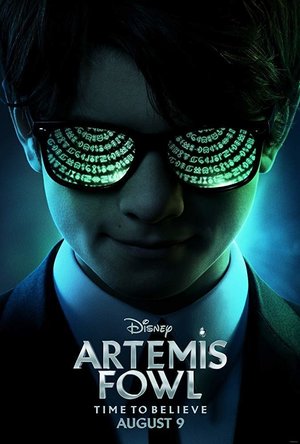
In the books, 12-year old Artemis (played by Ferdia Shaw, the grandson of Robert Shaw) is presented as an anti-hero (although, over the course of the saga, his villainous attributes fade to be replaced by heroic ones). Here, he’s more of a misunderstood boy-genius whose role as the protagonist is never in question. All of his edges have been smoothed out. The story focuses on Artemis’ efforts to locate and rescue his father, Artemis Fowl Sr. (Colin Farrell), an infamous art thief who has been kidnapped by the twisted evil fairy Opal Koboi. Her ransom for releasing him is that Artemis must locate and obtain a powerful McGuffin. He is joined in his efforts by Lower Elements Police (LEP) fairy police officer Holly Short (Lara McDonnell), giant dwarf Mulch Diggums (Josh Gad), and strongman Domovoi Butler (Nonso Anozie).
Artemis Fowl diverges considerably from the two books that form its basis, Artemis Fowl and Artemis Fowl and the Arctic Incident. Although author Eoin Colfer reportedly “approved” the changes, they push the film into an alternate universe from the one occupied by the novels. Even with the pruning of subplots and condensation of the narrative, 100 minutes is too short to tell the story effectively. None of the characters are well-developed, including Artemis. The boy’s relationship with Holly Short evolves with whiplash-inducing rapidity – one moment, they’re enemies (actually, she’s his prisoner), the next they’re friends. The film’s frenetic pace might work for ADD viewers and preteens but there’s no time for world-building or anything more than the most basic exposition. As a result, Artemis Fowl feels rushed to the point of being exhausting and strangely confusing despite the relatively straightforward storyline.
Kenneth Branagh was undoubtedly selected to direct the film based on his success with two earlier Disney properties: the live-action Cinderella and Marvel’s Thor. Perhaps because Branagh had no input into the screenplay (which was completed before he came on board), the movie lacks the complex psychological qualities he normally brings to his films. Visually, Artemis Fowl is impressive. However, although the fairy world of Haven is beautifully rendered, it appears all-too-briefly. The film’s most impressive sequence, a throwdown with a seemingly invincible troll, is a standout by any definition, but it represents only about five minutes of screen time and there’s nothing else that comes close – not even the muted climax.
As is often the case, Branagh’s presence at the top results in some impressive names in the cast. The young leads are newcomers – this is Ferdia Shaw’s first movie (and it shows – his performance is occasionally wooden) and Lara McDonnell’s third (she’s better, evidencing an indomitable pluckiness) – but the rest of the cast is populated with veterans. Josh Gad, another Disney regular, has the most openly comedic role of the film as Mulch Diggums. Colin Farrell is called on for limited duty as Artemis’ mostly-absent father. Nonso Anozie, who has a history with Branagh, plays Artemis’ protector and advisor. Finally, Judi Dench adds a dose of class as Holly’s no-nonsense boss.
It has taken Artemis Fowl nearly 20 years to traverse the route from page to screen and one senses that neither fans nor newcomers will be especially pleased with the end result. Recognizing that the film faced rough seas, Disney postponed the movie’s originally planned August 2019 release to May 2020 then, when the coronavirus made that impossible, the studio elected to shift the film to its Disney+ platform. Although partially a face-saving gesture (Artemis Fowl would likely have had a similar box office reception to Disney’s underwhelming 2018 release, The Nutcracker and the Four Realms), it at least allows the film to find a large audience in a low-pressure situation.
The bottom line seems to be that, while Disney has shown an aptitude for making many different kinds of movies, fantasy epics aren’t among them. This is one genre the Magic Kingdom should perhaps avoid, leaving such properties to studios that have shown better success (such as Warner Brothers). Artemis Fowl could have been the beginning of a movie franchise but, based on the first installment, it’s more likely a one-and-done outing. Disney can't quite get away from the John Carters can they?
THIS FILM IS AN EXCEPTIONAL BOMB
The treatment accorded to Artemis Fowl (the movie condenses elements from the first two volumes of an eight-novel cycle into a single film) recalls a Disney misfire from more than three decades ago. Although The Black Cauldron was animated, it suffered from many of the same problems evident in Artemis Fowl: an oversimplification of the backstory, a rushed narrative with poorly realized characters, and a overall lack of faithfulness to the source material. The Black Cauldron worked better because it at least had a clean ending. Artemis Fowl suffers by trying to both provide a credible stopping point (in case there are no additional films) and offering a lead-in to additional adventures (in case there are additional films).
In the books, 12-year old Artemis (played by Ferdia Shaw, the grandson of Robert Shaw) is presented as an anti-hero (although, over the course of the saga, his villainous attributes fade to be replaced by heroic ones). Here, he’s more of a misunderstood boy-genius whose role as the protagonist is never in question. All of his edges have been smoothed out. The story focuses on Artemis’ efforts to locate and rescue his father, Artemis Fowl Sr. (Colin Farrell), an infamous art thief who has been kidnapped by the twisted evil fairy Opal Koboi. Her ransom for releasing him is that Artemis must locate and obtain a powerful McGuffin. He is joined in his efforts by Lower Elements Police (LEP) fairy police officer Holly Short (Lara McDonnell), giant dwarf Mulch Diggums (Josh Gad), and strongman Domovoi Butler (Nonso Anozie).
Artemis Fowl diverges considerably from the two books that form its basis, Artemis Fowl and Artemis Fowl and the Arctic Incident. Although author Eoin Colfer reportedly “approved” the changes, they push the film into an alternate universe from the one occupied by the novels. Even with the pruning of subplots and condensation of the narrative, 100 minutes is too short to tell the story effectively. None of the characters are well-developed, including Artemis. The boy’s relationship with Holly Short evolves with whiplash-inducing rapidity – one moment, they’re enemies (actually, she’s his prisoner), the next they’re friends. The film’s frenetic pace might work for ADD viewers and preteens but there’s no time for world-building or anything more than the most basic exposition. As a result, Artemis Fowl feels rushed to the point of being exhausting and strangely confusing despite the relatively straightforward storyline.
Kenneth Branagh was undoubtedly selected to direct the film based on his success with two earlier Disney properties: the live-action Cinderella and Marvel’s Thor. Perhaps because Branagh had no input into the screenplay (which was completed before he came on board), the movie lacks the complex psychological qualities he normally brings to his films. Visually, Artemis Fowl is impressive. However, although the fairy world of Haven is beautifully rendered, it appears all-too-briefly. The film’s most impressive sequence, a throwdown with a seemingly invincible troll, is a standout by any definition, but it represents only about five minutes of screen time and there’s nothing else that comes close – not even the muted climax.
As is often the case, Branagh’s presence at the top results in some impressive names in the cast. The young leads are newcomers – this is Ferdia Shaw’s first movie (and it shows – his performance is occasionally wooden) and Lara McDonnell’s third (she’s better, evidencing an indomitable pluckiness) – but the rest of the cast is populated with veterans. Josh Gad, another Disney regular, has the most openly comedic role of the film as Mulch Diggums. Colin Farrell is called on for limited duty as Artemis’ mostly-absent father. Nonso Anozie, who has a history with Branagh, plays Artemis’ protector and advisor. Finally, Judi Dench adds a dose of class as Holly’s no-nonsense boss.
It has taken Artemis Fowl nearly 20 years to traverse the route from page to screen and one senses that neither fans nor newcomers will be especially pleased with the end result. Recognizing that the film faced rough seas, Disney postponed the movie’s originally planned August 2019 release to May 2020 then, when the coronavirus made that impossible, the studio elected to shift the film to its Disney+ platform. Although partially a face-saving gesture (Artemis Fowl would likely have had a similar box office reception to Disney’s underwhelming 2018 release, The Nutcracker and the Four Realms), it at least allows the film to find a large audience in a low-pressure situation.
The bottom line seems to be that, while Disney has shown an aptitude for making many different kinds of movies, fantasy epics aren’t among them. This is one genre the Magic Kingdom should perhaps avoid, leaving such properties to studios that have shown better success (such as Warner Brothers). Artemis Fowl could have been the beginning of a movie franchise but, based on the first installment, it’s more likely a one-and-done outing. Disney can't quite get away from the John Carters can they?
THIS FILM IS AN EXCEPTIONAL BOMB

Gareth von Kallenbach (980 KP) rated Klang in Video Games
Jun 19, 2019


Klang is a Rhythm/Platformer game and it’s the debut of the developer studio called Tinimations. The environments, visuals, story and gameplay aspects were done by one person named Tom-Ivar Arntzen while the music was done by the EDM composer bLiNd.
The Story:
The premise here is very simple. You assume the role of a tuneblade-wielding elite rave warrior called Klang who wants to free himself from the shackles of a Zeus-like figure named Soundlord Sonus. And so the game begins. There is barely any Story here and it isn’t the focus of the game and it doesn’t contribute to the game whatsoever and if the story is removed entirely, you will barely notice any difference. So if you are the type who plays a game for the story in it or a game that is accompanied by a good premise, then this game isn’t for you. The game focuses mostly on its gameplay aspects.
The Visuals:
The visuals of the game look very beautiful with its Tron-inspired aesthetics. Klang’s design is colorful and stylish. The environment looked gorgeous with all the vibrant neon colors popping out on the screen while you’re playing but on rare occasions, they can be distracting and a bit too much when there are so many things happening at once.
The Sound:
This is one of those games that are worth buying a quality headset or a subwoofer for because the sound design is excellent and the composer bLiNd did a marvelous job with it. Listening to the music with a normal headset or your TV’s sound system doesn’t do it justice. And the way the music and the beat sync with what’s on screen are perfect. The soundtrack is most definitely the best aspect of the game.
The gameplay:
The game mechanics tries to blend rhythm game mechanics and platform game mechanics into one game. That means instead of only pressing buttons that appears on the screen like you normally do in Rhythm games, you also have to traverse the levels by jumping and sliding while pressing the buttons in order to get through the stage.
The controls are fairly simple. Like most 2D games, you use the left thumbstick to move the character left and right and you use the Right thumbstick in one of the eight directions when the icon that looks like a slice of Pizza appears on the screen in one of those eight directions to deflect the incoming attacks. And you use LT to jump and RT to slide throughout the levels.
While blending those game mechanics works very well on most stages, they can also be overwhelming and frustrating at times. For instance, there is a place where you have to dodge lasers by jumping between 5 platforms that falls when the lasers make contact with them (They come back up after a few seconds) so you will have to jump left and right fast and all that combined with rhythm gameplay. It gets very confusing because there are so many things happening at once on the screen and you don’t know whether you should focus on deflecting the attacks or focus on the lasers. One mistake and you are dead so that made it a bit frustrating and annoying instead of challenging. There is a thin line between a game that put your skills to the test and a game that simply frustrates you to cover its flaws.
Unfortunately, I felt like this is the latter because the game itself is very short and if I hadn’t died in the game over 300 times, it would have lasted me an hour. So I felt like the difficulty spike was there just to mask the game’s short length which brings me to the final point in the review.
Difficulty, Length and Replay Value:
The game has three difficulty levels. Easy, Normal and Nightcore Mode. The higher the difficulty, the higher rank you can achieve when you finish a stage. On Easy mode, B Rank is the max possible rank, Normal mode, S Rank is the max possible rank and on Nightcore Mode, SSS Rank is the max possible rank. Also the higher the difficulty, the faster the game music sounds, and the faster the button prompts on screen moves
I started the game on Normal mode it took me 3 hours and 311 deaths to finish. Once you finish the game for the first time, you unlock the hardest mode in the game which is called NightCore mode where everything moves so fast and that includes the music.
In terms of Replay Value, there isn’t much to do after you finish all the stages except for collecting Pirate Tokens which are the in-game collectables that allow you to unlock the game’s Soundtrack in a special level where you can hear them without replaying the other levels just to hear that awesome track.
And you can also replay the game on Nightcore mode if you want to get the highest rank possible in the game. And if you are the Achievement Hunter type then you will find that getting all the achievements will be very time consuming. For instance, there is an achievement that requires you not to die even once throughout the whole game and that is excruciatingly difficult. So, if you are a completionist, then the game will last you for quite a while.
But if you are not, then you won’t find much to do here after you finish its short story mode because it doesn’t have much to offer after that.
Conclusion:
Klang is a great game but its short amount of content and sometimes overwhelmingly difficult levels can put you off. So for that, I give Klang 4/5. Great concept but if the gameplay was more fun and rewarding, and it had more content and unlockables, it would have been a superb game. And I give the developer Tom-Ivar Arntzen SSS for effort and for trying to innovate and do something new with the genre and I am definitely interested to see what he is going to do next.
http://sknr.net/2016/09/23/klang/
The Story:
The premise here is very simple. You assume the role of a tuneblade-wielding elite rave warrior called Klang who wants to free himself from the shackles of a Zeus-like figure named Soundlord Sonus. And so the game begins. There is barely any Story here and it isn’t the focus of the game and it doesn’t contribute to the game whatsoever and if the story is removed entirely, you will barely notice any difference. So if you are the type who plays a game for the story in it or a game that is accompanied by a good premise, then this game isn’t for you. The game focuses mostly on its gameplay aspects.
The Visuals:
The visuals of the game look very beautiful with its Tron-inspired aesthetics. Klang’s design is colorful and stylish. The environment looked gorgeous with all the vibrant neon colors popping out on the screen while you’re playing but on rare occasions, they can be distracting and a bit too much when there are so many things happening at once.
The Sound:
This is one of those games that are worth buying a quality headset or a subwoofer for because the sound design is excellent and the composer bLiNd did a marvelous job with it. Listening to the music with a normal headset or your TV’s sound system doesn’t do it justice. And the way the music and the beat sync with what’s on screen are perfect. The soundtrack is most definitely the best aspect of the game.
The gameplay:
The game mechanics tries to blend rhythm game mechanics and platform game mechanics into one game. That means instead of only pressing buttons that appears on the screen like you normally do in Rhythm games, you also have to traverse the levels by jumping and sliding while pressing the buttons in order to get through the stage.
The controls are fairly simple. Like most 2D games, you use the left thumbstick to move the character left and right and you use the Right thumbstick in one of the eight directions when the icon that looks like a slice of Pizza appears on the screen in one of those eight directions to deflect the incoming attacks. And you use LT to jump and RT to slide throughout the levels.
While blending those game mechanics works very well on most stages, they can also be overwhelming and frustrating at times. For instance, there is a place where you have to dodge lasers by jumping between 5 platforms that falls when the lasers make contact with them (They come back up after a few seconds) so you will have to jump left and right fast and all that combined with rhythm gameplay. It gets very confusing because there are so many things happening at once on the screen and you don’t know whether you should focus on deflecting the attacks or focus on the lasers. One mistake and you are dead so that made it a bit frustrating and annoying instead of challenging. There is a thin line between a game that put your skills to the test and a game that simply frustrates you to cover its flaws.
Unfortunately, I felt like this is the latter because the game itself is very short and if I hadn’t died in the game over 300 times, it would have lasted me an hour. So I felt like the difficulty spike was there just to mask the game’s short length which brings me to the final point in the review.
Difficulty, Length and Replay Value:
The game has three difficulty levels. Easy, Normal and Nightcore Mode. The higher the difficulty, the higher rank you can achieve when you finish a stage. On Easy mode, B Rank is the max possible rank, Normal mode, S Rank is the max possible rank and on Nightcore Mode, SSS Rank is the max possible rank. Also the higher the difficulty, the faster the game music sounds, and the faster the button prompts on screen moves
I started the game on Normal mode it took me 3 hours and 311 deaths to finish. Once you finish the game for the first time, you unlock the hardest mode in the game which is called NightCore mode where everything moves so fast and that includes the music.
In terms of Replay Value, there isn’t much to do after you finish all the stages except for collecting Pirate Tokens which are the in-game collectables that allow you to unlock the game’s Soundtrack in a special level where you can hear them without replaying the other levels just to hear that awesome track.
And you can also replay the game on Nightcore mode if you want to get the highest rank possible in the game. And if you are the Achievement Hunter type then you will find that getting all the achievements will be very time consuming. For instance, there is an achievement that requires you not to die even once throughout the whole game and that is excruciatingly difficult. So, if you are a completionist, then the game will last you for quite a while.
But if you are not, then you won’t find much to do here after you finish its short story mode because it doesn’t have much to offer after that.
Conclusion:
Klang is a great game but its short amount of content and sometimes overwhelmingly difficult levels can put you off. So for that, I give Klang 4/5. Great concept but if the gameplay was more fun and rewarding, and it had more content and unlockables, it would have been a superb game. And I give the developer Tom-Ivar Arntzen SSS for effort and for trying to innovate and do something new with the genre and I am definitely interested to see what he is going to do next.
http://sknr.net/2016/09/23/klang/

Kirk Bage (1775 KP) rated Bohemian Rhapsody (2018) in Movies
Mar 3, 2020


In the search for a way to watch the 92nd Academy Awards live from Hollywood tonight I was led to a subscription for Now TV, which is basically the online platform for Sky Cinema. And there I found all the missing films I had yet to see from last year that aren’t available “free” on Amazon Prime or Netflix. I should really have worked it out before now that a free trial might be available, having assumed that a Sky subscription was beyond my means at the moment. Imagine my excitement to not only secure the Oscars but a 7 day pass to catch up on some big titles. It’s the small things in life…
Having made a 20 strong watch list, I wasted no time in heading straight for the Queen biopic, Bohemian Rhapsody, winner of 4 awards last February, including one for Rami Malek as Freddy Mercury that I applauded very loudly at the time, without having seen it, due to my love for him as Elliot Alderson in my favourite TV show of the last 5 years, the incredible and mindbendingly brilliant Mr. Robot.
My connection to Queen as a fan isn’t an especially strong one; I have always thought they were fine, and enjoyed their biggest hits as much as anyone. But it is the story, charisma and undeniable singing talent of Mercury that attracts me. From the opening scenes it is apparent that what we are going to get here is a fairly straightforward, by the numbers recounting of events, punctuated by some serious tunes and some glorious 70s fashions. Having read that this was the main criticism of it going in, it really didn’t bother me at all to find it wasn’t going to make bolder artistic and dramatic choices. It was very much about sitting back and enjoying the show!
In fact, there is something comforting and unchallenging about its format that I liked. The pattern of abc that is a) some background to Freddy’s life, b) a build up to how they came across their big hits, and c) a rendition of that hit, didn’t strike me as cheap, but rather unpretentious and to the point. The whole thing clipped along nicely with very little dead air; Malek is a joy to watch in every moment; the clothes and scenery of the 70s and later 80s is a treat; and the music stands for itself, with you often forgetting how good the tunes are until you hear them in this context.
Of course, at times it is almost laughable how well known facts and details are crow-barred into the narrative, with some of the darker elements glossed over, as if this were almost a Disney retelling. But, again, it doesn’t matter, because as an entertainment it is all so enjoyable. Not to say the dark side of the story isn’t touched upon, because it is to an extent, just that it is clear this is a celebration of a life and a talent, not an exposé. Which is fine. As with the superior Walk The Line, and the recently inferior Rocketman, we know a seedier story of Johnny Cash and Elton John exists, but we accept that revelling in the genius of the music is more fun than trawling through the trash.
Malek is a wonder to behold! It has to be said. Once you (and he) get used to the false teeth and bite down on the energy and drive of Mercury, it is impossible to take your eyes off him! He handles the dramatic moments and nuance of this fragile mind with ease, but it is the performances that stand out: his movement is so fluid and accurate that you forget at times you aren’t watching archive footage, which is some trick! Gwilym Lee and Ben Hardy as Brian May and Roger Taylor are also to be praised for this, despite having less to do. With Joseph Mazzello as John Deacon largely merging into the background inoffensively, much as his real life counterpart did.
There is some solid support too. Lucy Boynton is completely charming if largely uninteresting; Tom Hollander quietly steals several scenes as the lawyer who doesn’t just work for them but idolises them as much as any fan; and an unrecognisable Mike Myers is a lot of fun as the manager who missed out on the vision and lives to regret it. Honourable mention also to Allen Leech as the villain of the piece, who walks the tightrope of cartoonish nastiness with some skill, serving the story well in the latter half.
My favourites parts were, unsurprisingly, the genesis and evolution of the big tunes, which was invariably very satisfying. Love of My Life, We Will Rock You, We are the Champions and of course Bohemian Rhapsody are treated like holy texts, with fascinating detail and a reverence that never seems over-egged. Building to the climax of Live Aid; a twenty minute segment at the end of the film that brings a genuine lump to the throat. The magnitude of the event and its natural energy are so well realised, every minor foible of the film up to that point are forgiven, and you walk away from it feeling elated and glad that this moment exists in music history.
Artistically, it isn’t a movie to get too caried away about, but the art of creating a spectacle that pleases on a basic, uncomplicated level is. Director Bryan Singer knows a trick or two, and the trick here is what is left out. There just isn’t a moment to be bored, and I find myself wishing that films of this kind took a leaf out of that book more often. In conclusion, I think this movie will endure the test of time, which is a lot more than most biopic genre films can say. But who wants to live forever anyway?
Having made a 20 strong watch list, I wasted no time in heading straight for the Queen biopic, Bohemian Rhapsody, winner of 4 awards last February, including one for Rami Malek as Freddy Mercury that I applauded very loudly at the time, without having seen it, due to my love for him as Elliot Alderson in my favourite TV show of the last 5 years, the incredible and mindbendingly brilliant Mr. Robot.
My connection to Queen as a fan isn’t an especially strong one; I have always thought they were fine, and enjoyed their biggest hits as much as anyone. But it is the story, charisma and undeniable singing talent of Mercury that attracts me. From the opening scenes it is apparent that what we are going to get here is a fairly straightforward, by the numbers recounting of events, punctuated by some serious tunes and some glorious 70s fashions. Having read that this was the main criticism of it going in, it really didn’t bother me at all to find it wasn’t going to make bolder artistic and dramatic choices. It was very much about sitting back and enjoying the show!
In fact, there is something comforting and unchallenging about its format that I liked. The pattern of abc that is a) some background to Freddy’s life, b) a build up to how they came across their big hits, and c) a rendition of that hit, didn’t strike me as cheap, but rather unpretentious and to the point. The whole thing clipped along nicely with very little dead air; Malek is a joy to watch in every moment; the clothes and scenery of the 70s and later 80s is a treat; and the music stands for itself, with you often forgetting how good the tunes are until you hear them in this context.
Of course, at times it is almost laughable how well known facts and details are crow-barred into the narrative, with some of the darker elements glossed over, as if this were almost a Disney retelling. But, again, it doesn’t matter, because as an entertainment it is all so enjoyable. Not to say the dark side of the story isn’t touched upon, because it is to an extent, just that it is clear this is a celebration of a life and a talent, not an exposé. Which is fine. As with the superior Walk The Line, and the recently inferior Rocketman, we know a seedier story of Johnny Cash and Elton John exists, but we accept that revelling in the genius of the music is more fun than trawling through the trash.
Malek is a wonder to behold! It has to be said. Once you (and he) get used to the false teeth and bite down on the energy and drive of Mercury, it is impossible to take your eyes off him! He handles the dramatic moments and nuance of this fragile mind with ease, but it is the performances that stand out: his movement is so fluid and accurate that you forget at times you aren’t watching archive footage, which is some trick! Gwilym Lee and Ben Hardy as Brian May and Roger Taylor are also to be praised for this, despite having less to do. With Joseph Mazzello as John Deacon largely merging into the background inoffensively, much as his real life counterpart did.
There is some solid support too. Lucy Boynton is completely charming if largely uninteresting; Tom Hollander quietly steals several scenes as the lawyer who doesn’t just work for them but idolises them as much as any fan; and an unrecognisable Mike Myers is a lot of fun as the manager who missed out on the vision and lives to regret it. Honourable mention also to Allen Leech as the villain of the piece, who walks the tightrope of cartoonish nastiness with some skill, serving the story well in the latter half.
My favourites parts were, unsurprisingly, the genesis and evolution of the big tunes, which was invariably very satisfying. Love of My Life, We Will Rock You, We are the Champions and of course Bohemian Rhapsody are treated like holy texts, with fascinating detail and a reverence that never seems over-egged. Building to the climax of Live Aid; a twenty minute segment at the end of the film that brings a genuine lump to the throat. The magnitude of the event and its natural energy are so well realised, every minor foible of the film up to that point are forgiven, and you walk away from it feeling elated and glad that this moment exists in music history.
Artistically, it isn’t a movie to get too caried away about, but the art of creating a spectacle that pleases on a basic, uncomplicated level is. Director Bryan Singer knows a trick or two, and the trick here is what is left out. There just isn’t a moment to be bored, and I find myself wishing that films of this kind took a leaf out of that book more often. In conclusion, I think this movie will endure the test of time, which is a lot more than most biopic genre films can say. But who wants to live forever anyway?

Nicola Jane (6 KP) created a post
May 7, 2019 (Updated May 7, 2019)
Gareth von Kallenbach (980 KP) rated the PC version of Outriders in Video Games
Apr 10, 2021

Once Patched: Outriders Is A Fun And Engaging Adventure Which Provides Plenty Of Action
With the Earth deemed unsalvageable and with mounting natural disasters, humanity plans to send colony ships to the distant planet of Enoch in an effort to save humanity. After 86 years in space, an elite unit known as Outriders land to pave the way and soon finds themselves under attack by rival security forces and a deadly and bizarre storm that has decimated the Outriders.
Seriously injured the player character is put in stasis and is awakened 31 years later to find what is left of humanity engaged in a violent Civil War with the player being their best chance for survival.
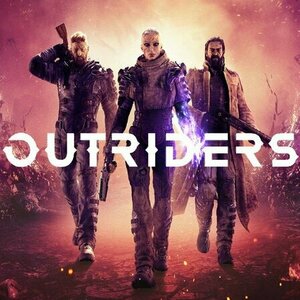
Thus begins Outriders; an ambitious game from People Can Fly and Square Enix which looks to combine action, combat, loot, and Science Fiction into a bold gaming experience.
Players can customize the look of their characters and must select a class such as Trickster, Pyromancer, Devastator, and Technomancer. The classes have specific abilities which as players gain experience, unlocks and allows them to select and use devastating powers as it seems the exposure to the storm has given the player character God-like abilities and has earned them the title of “Altered”. I selected the Devastator class and enjoyed being able to suspend and reflect incoming fire, add a protective barrier, produce spikes to impale enemies, crush enemies with a gravity-based attack, dash and smash, and my favorite; a propelled leap that reduced all in my landing area to a pulp. Each power has a cool-down timer after use but as the game is very customizable; players can unlock and assign new perks which can increase damage, duration, and more for their powers, weapons, and such.
The game had an extensive demo available pre-launch and this allowed me to get to know the screens to equip, modify, swap, or deconstruct gear as there is a huge variety of armor and weapons for players to use and modify.
While the menu system at times was confusing at first in terms of what the main mission was and what were numerous side missions and such; I was able to get things up to speed and with strategic capture points; players can always jump back to various locales.
Since the early missions involved being around the main base filled with trade and other options; I had figured it would play into the game going forward. However, as I went deeper into the game I found it easier to simply deconstruct or not gather loot that I did not want and simply equip better gear and weapons as they came my way.
The progress I had made in the demo also carried over onto the main game so long as you use the same platform for release that you did in the demo. This was great to experience as I did not have to replay the lengthy intro and setup nor the early missions.
With a crew of NPC characters along for the mission, the player will journey into dangerous zones each with their own unique biosphere and dangerous creatures and enemies who come at you in waves and can be overwhelming even with the ability to set the game difficulty.
Outriders is setup to be played with a party of characters and much has been made of the rough launch for the game which included server issues, cross-play problems, missing HUD Displays, and such hampered gamers. I was able to connect with a player I found in the forums for the game and he helped me through some battles that I could not figure out how anyone could be expected to complete on their own at the skill level they originated at.
Players can randomly join a party but did not have a clue where they would be in the story progress or how many were in a party, but it was very easy to resume a campaign where I left off should the party I joined be further ahead of or back of where I wished to be.
I did jump into a game that is done randomly and was able to get some higher-level gear and weapons which helped when I returned to my campaign, but in time I again found myself in need of help. One player had issues with getting in my game and then being booted as an example. The HUD display would vanish often which required a return to the lobby, sometimes multiple trips; to get it back. While it seems like no big deal and I worked my way through at times without it; not being able to see a mini-map, health, and if your powers were recharged does make it difficult.
The game offers lavish locales from snow-covered mountains to a jungle, desert, temples, and more. The enemies can be very challenging as I found the ones with guns to be easier at times than the wildlife which came in waves and could take all I had to bring down.
The graphics of the game are solid and the combat mechanics reminded me of a mix of Gears of War and The Division series as from a third-person perspective; players could take cover and shoot from a shelter, or wade on into the oncoming enemies and use the vast arsenal of pistols, machine guns, shotguns, and sniper rifles to win the day.
The numerous cut scenes dive the story forward and upon completion of the story; there is a mode where players can work to retrieve items. It was humbling to have weapons that reduced powerful enemies to mush do little more than annoy the enemies I encountered as it was clear that this mode was best suited for advanced gamers in a party.
A new patch arrived yesterday which seemed to resolve the issues I had with matchmaking, server connections, and the missing heads-up display. I was able to match up with another player where I was in the game and the two of us powered through the main missions as well as some side missions to complete the game. We did not have any in-game chat/communication but we were able to work well as a team. I would suggest using Discord or a similar service if you are looking to play with friends on PC or chat with console users.
While the launch was rough due to the numerous issues; they were addressed and the final result once patched is a deeply enjoyable action game that provides plenty of fun and challenges. Some may say waves of wildlife and enemies may become repetitive but the vast array of them as well as the varied locales, weapons, and powers had me hooked from start to finish.
I was a big fan of People Can Fly’s Bulletstorm game and have longed for a sequel ever since that game arrived. Here is hoping that Outriders will become a new franchise and we will see more content in the not too distant future.
Seriously injured the player character is put in stasis and is awakened 31 years later to find what is left of humanity engaged in a violent Civil War with the player being their best chance for survival.
Thus begins Outriders; an ambitious game from People Can Fly and Square Enix which looks to combine action, combat, loot, and Science Fiction into a bold gaming experience.
Players can customize the look of their characters and must select a class such as Trickster, Pyromancer, Devastator, and Technomancer. The classes have specific abilities which as players gain experience, unlocks and allows them to select and use devastating powers as it seems the exposure to the storm has given the player character God-like abilities and has earned them the title of “Altered”. I selected the Devastator class and enjoyed being able to suspend and reflect incoming fire, add a protective barrier, produce spikes to impale enemies, crush enemies with a gravity-based attack, dash and smash, and my favorite; a propelled leap that reduced all in my landing area to a pulp. Each power has a cool-down timer after use but as the game is very customizable; players can unlock and assign new perks which can increase damage, duration, and more for their powers, weapons, and such.
The game had an extensive demo available pre-launch and this allowed me to get to know the screens to equip, modify, swap, or deconstruct gear as there is a huge variety of armor and weapons for players to use and modify.
While the menu system at times was confusing at first in terms of what the main mission was and what were numerous side missions and such; I was able to get things up to speed and with strategic capture points; players can always jump back to various locales.
Since the early missions involved being around the main base filled with trade and other options; I had figured it would play into the game going forward. However, as I went deeper into the game I found it easier to simply deconstruct or not gather loot that I did not want and simply equip better gear and weapons as they came my way.
The progress I had made in the demo also carried over onto the main game so long as you use the same platform for release that you did in the demo. This was great to experience as I did not have to replay the lengthy intro and setup nor the early missions.
With a crew of NPC characters along for the mission, the player will journey into dangerous zones each with their own unique biosphere and dangerous creatures and enemies who come at you in waves and can be overwhelming even with the ability to set the game difficulty.
Outriders is setup to be played with a party of characters and much has been made of the rough launch for the game which included server issues, cross-play problems, missing HUD Displays, and such hampered gamers. I was able to connect with a player I found in the forums for the game and he helped me through some battles that I could not figure out how anyone could be expected to complete on their own at the skill level they originated at.
Players can randomly join a party but did not have a clue where they would be in the story progress or how many were in a party, but it was very easy to resume a campaign where I left off should the party I joined be further ahead of or back of where I wished to be.
I did jump into a game that is done randomly and was able to get some higher-level gear and weapons which helped when I returned to my campaign, but in time I again found myself in need of help. One player had issues with getting in my game and then being booted as an example. The HUD display would vanish often which required a return to the lobby, sometimes multiple trips; to get it back. While it seems like no big deal and I worked my way through at times without it; not being able to see a mini-map, health, and if your powers were recharged does make it difficult.
The game offers lavish locales from snow-covered mountains to a jungle, desert, temples, and more. The enemies can be very challenging as I found the ones with guns to be easier at times than the wildlife which came in waves and could take all I had to bring down.
The graphics of the game are solid and the combat mechanics reminded me of a mix of Gears of War and The Division series as from a third-person perspective; players could take cover and shoot from a shelter, or wade on into the oncoming enemies and use the vast arsenal of pistols, machine guns, shotguns, and sniper rifles to win the day.
The numerous cut scenes dive the story forward and upon completion of the story; there is a mode where players can work to retrieve items. It was humbling to have weapons that reduced powerful enemies to mush do little more than annoy the enemies I encountered as it was clear that this mode was best suited for advanced gamers in a party.
A new patch arrived yesterday which seemed to resolve the issues I had with matchmaking, server connections, and the missing heads-up display. I was able to match up with another player where I was in the game and the two of us powered through the main missions as well as some side missions to complete the game. We did not have any in-game chat/communication but we were able to work well as a team. I would suggest using Discord or a similar service if you are looking to play with friends on PC or chat with console users.
While the launch was rough due to the numerous issues; they were addressed and the final result once patched is a deeply enjoyable action game that provides plenty of fun and challenges. Some may say waves of wildlife and enemies may become repetitive but the vast array of them as well as the varied locales, weapons, and powers had me hooked from start to finish.
I was a big fan of People Can Fly’s Bulletstorm game and have longed for a sequel ever since that game arrived. Here is hoping that Outriders will become a new franchise and we will see more content in the not too distant future.