
Sophia (Bookwyrming Thoughts) (530 KP) rated A Wicked Thing (A Wicked Thing, #1) in Books
Jan 23, 2020



My all-time favorite Disney movie (in VCR) – along with Pocahontas and Mulan, to which there are literally zilch retellings to my knowledge – while growing up was <i>Sleeping Beauty</i>. I even reenacted it... for fun and on my own (expected of a four or five year old).
And perhaps it is also one of the most difficult tales to be retold. There's a princess who has a curse placed on her that she would prick her finger on the spindle of a spinning wheel before her sixteenth birthday and die – not entirely too much to take a spin on, is there?
No pun intended.
Much as I give props to Rhiannon Thomas for taking <i>Sleeping Beauty</i> on another path, <i>A Wicked Thing</i> is certainly not a book I would enjoy even for the pleasure of reading. In fact, truth be told in maybe a harsh way, <i>A Wicked Thing</i> was funny. And while funny typically means a good thing, I honestly had a field day reading the first three chapters in between chess matches and poking fun at the book (aka making sassy comments that will make no appearance whatsoever in this review aside from a big basket of mozzarella sticks).
<i>A Wicked Thing</i> is almost a sequel to the original <i>Sleeping Beauty</i>. Some time has passed, and then the prince kisses Aurora – all that jazz is pretty much the same aside from maybe happily ever after, to which I won't bother finding out. Perhaps there <i>is</i> a happily ever after by the end of the book – I'm still not going to go and find out because I'm too focused on making it to at least the top 10 in the class now that I'm extremely close to it.
But let's start with the prince kisses Aurora. She wakes up and screams. It probably makes sense to scream when you wake up to a random stranger hovering above your face and actually kissed you. Honestly, a pretty fantastic opening scene – and I'm serious – aside from the part where the "boy" (we don't know he's a prince YET) says, "I did it. I actually did it."
Then I get a sled and start laughing gleefully (read: found it absolutely amusing) while sliding down a hill (read: continuing the book just see how it all plays out because I haven't found reasons to throw this aside yet and then I do).
Prince Rodric, the "boy," is pathetic. The <i>royal family</i>, in my opinion, is a little pathetic and cheesy. Are they actually pathetic? Perhaps not when you really get to know them and perhaps they're marvelous rulers and the people love them oh-so-dearly, but from the little bit of the book that I read and met the royal family, I find myself disappointed. Particularly disappointed in Rodric the princeling because he will obviously make a huge appearance throughout the rest of the book and I've got to at least like the main characters to enjoy the book.
The dear prince blushes <i>at almost every single sentence he speaks to Aurora</i>. I'm pretty sure the amount of blushes will be the equal amount of election commercials soon (Vote for me! Vote for me!).
<blockquote>He stopped and blushed again.</blockquote>
Princeling probably stutters as well, and is most likely a descendant of Romeo.
<blockquote>“I mean, you always look beautiful. But you look especially beautiful tonight. Is what I mean.”</blockquote>
The king is overly cheery, and while there seems to be a probable reason (my son woke up a slumbering princess!), "overly cheery" really means "exuberantly happy-go-lucky."
<blockquote>“Please send out the heralds. A little extra pomp and circumstance, if you please. It is hardly a normal day.”</blockquote>
No... definitely not a normal day. That much I'll agreee with. But isn't celebrating as soon as Aurora wakes up a little overboard? The chick just woke up from a hundred plus years of slumber and everything literally comes crashing down over on her head upside down! I'm not sure Aurora appreciated that – she was quite confuzzled when she woke up (whoa... what's going on here?!) and even protested a little (not that anyone heard her).
Betsy the maid babbles in excitement and is worse than the king.
<blockquote>“I was so honored, Princess, when they asked me to assist you. I never expected it! But then, I never expected you’d be standing here, if you don’t mind me saying. Not that I didn’t think Rodric could be your true love, because of course he’s wonderful, but it always seemed too much like a dream to ever happen while I was here. Things will be amazing, now, you’ll see. Everyone loves you already. How could they not?”</blockquote>
Reasonable babbling of excitement, seeing as she's a humble servant.
But she and everyone else aside from Aurora is also a little naïve with the assumption that everything is going to be fantastic and happily ever after Aurora and Rodric marry, simply based a fairy tale.
Aurora, however, might have been a character that I would actually like had I continued the book. But by that point in the novel, when Rodric and Aurora are first dining together, I was quite cheesed (it was the constant blushing and cheeriness). While I normally feel guilty for throwing a book aside really early, I don't think I feel too guilty in <i>A Wicked Thing's</i> case.
<a href="https://bookwyrmingthoughts.com/dnf-arc-review-wicked-thing-by-rhiannon-thomas/"; target="_blank">This review was originally posted on Bookwyrming Thoughts</a>

Eavesdrop: Scary Chat Stories
Book and Entertainment
App
Short on time? Love reading short stories? How about funny stories, or even horror stories? If you...

BookblogbyCari (345 KP) rated Sapiens: A Brief History of Humankind in Books
Aug 5, 2018

The book is an overview of homo-sapiens as a species, and how we have changed over the ages, and what we have done, before finally touching on where we are going. As such the book is a cross-pollination of history, sociology, and economics.
As you may expect from a book with such a broad scope, there are some sweeping statements, and rather than being a neutral dispassionate account, Harari makes his opinions very evident. However rather than being irritating, I feel this makes for a more entertaining read.
The book begins by introducing the theme of homo-sapiens in the context of the presence of the other human species that used to exist. He then goes on to describe the cognitive and agricultural revolutions. Then it’s the establishment of patriarchal social hierarchies across the world, largely based on historical conventions. Next Harari states that the purpose of religion is to unify fragile societies with superhuman legitimacy.
Harari then moves on to the scientific revolution, describing how an admission of ignorance by Europeans, along with a desire to discover and conquer new lands was key to the movement.
The conversation moves swiftly then to economics, using the fact that a bank can loan £10 for every £1 it has, to argue that our economics is based on trust in the future. Harari states that a country’s credit rating is more important than its actual resources. Harari describes capitalism and consumerism as being 2 sides of the same coin with two commandments: rich must invest, rest of us must buy. Consumerism, he says, aims to convince people that indulgence is good and frugality is self-oppression.
Harari also argues that, now, instead of relying on local communities the individual relies on the market or the state. Parental authority no longer sacred, he says, and state intervenes. And so when Harari asks if we are any happier now than when we were hunter-gatherers, he argues that our rise of wealth is offset by the disintegration of community life.
Harari also speaks of ecological degradation and our tendency to treat other species as a means to an end, for example, the farming of cow's and chickens has cut years off the lives of both, since they are killed as soon as they reach their maximum weight.
In the final chapter, Harari speculates on the future of mankind. With improvements in medical knowledge comes new ethical conundrums, he says. How will we handle the options of genetic engineering? What will the advent of artificial intelligence mean for humanity?
In my book club, we found that the book generated a lot of talking points. What would the world be like now, had the other species of humans survived? Why have so many cultures across history and the world had patriarchal hierarchies? Can societies improve over time, or is one style better than another? Can communism be considered a religion? Are human rights really just a figment of our collective imagination?
Whilst not everyone in my book club enjoyed the book equally, I would say that it’s as enlightening as it is thought provoking. By the end, it was hard to argue with the author's conclusion that homo-sapiens are like dissatisfied and irresponsible gods.

iMessenger - Real Communication for iPhone
Social Networking and Utilities
App
iMessenger 1.2 has a completely new MMS system. Your contacts have to be on the latest to receive...

Joe Julians (221 KP) rated Artemis in Books
Feb 17, 2018


Artemis isn't a bad book and there's plenty of things to enjoy here. The moon based setting complete with it's changes in gravity and Kenyan set up make for an interesting read. There's a ton I want to know about Artemis and Weir does a great job in bringing this place to life. But it feels like there could have been more explored here and it's like the surface is only just being scratched.
With his central character, Jazz, we basically have another version of the lead from The Martian. The same wise cracks are there, but whereas with Mark Watney the wise cracking feels natural- here it feels forced. It doesn't help that Weir decided to write this from the perspective of Jazz, a Muslim woman. Some of the worst aspects of the book are based on that decision. Some of the dialogue here is appalling- embarrassing even. There were many moments I just groaned at how childish some of the things he makes Jazz say are. This doesn't feel like a woman talking. Instead it feels like what it is- a man trying to write as a woman but failing. Which is a shame as Jazz is an interesting character and one I could at times enjoy spending time with- other times though I couldn't stand her. Characters are a problem across the whole story really. Side characters feel under developed and there wasn't really anyone that I could single out as a highlight- none of them felt natural.
There's issues with the story itself too. This is essentially a heist story, but the heist is actually the least interesting part of Artemis. Rarely did I find myself invested in what was going on and this actually got worse as things went on. The first half of Artemis did a good job at setting things up, it's just a shame that as the story started building towards a climax- it lost momentum at the exact moment it should be gaining it.
Also, the science talk. Weir loves science, that's obvious. But here it at times feels like he is showing off to prove how much he knows. I don't actually think he was, but I quickly started to faze out when he went into details about how something works as it came so hot on the heels of a previous explanation of something else. I'm also so bored of welding now that I don't want to ever hear the word again.
I feel like I'm being a tad harsh here by focusing on the negatives. I do want to stress this book isn't bad. I may have got bored and frustrated on occasion I did however for the most part enjoy it. As I said Artemis is a great place and the city is one that I would love to have him explore in future installments. And while Jazz and a lot of the things she said did irritate me, there were flashes of brilliance with the character. I think personally I would like a second book to focus on someone new, but if Weir could sort the dialogue and some of her more annoying traits out- I'd happily spend more time with her.

Dana (24 KP) rated Fairest - Levana's Story in Books
Mar 23, 2018
As much as I love the Lunar Chronicles series, I did not enjoy reading this book. Yes, we got backstory into Levana's life and (finally) are told what she actually looks like, but she is not a likable character in the slightest. I was expecting some sort of redeemable quality for the character and got nothing. It is hard for me to believe that any villain has absolutely zero things that can be said are good, but Levana is one of them.
She is painted as this self involved, self-loathing, overly power hungry character who has no feelings except what she thinks is love. This, again, is hard to imagine. I mean, I understand (but do not condone) her lack of feelings toward her parents. They were not there for her at all as a child and basically let Channary get away with physically maiming her little sister. But still, she didn't feel anything toward them when they were brutally murdered and actually fantasized about doing it herself? Like, what the hell?
And then there comes her very abusive relationship with her "husband." First off, disguising yourself as his wife, that's weird, but then doing it after that wife dies, only weeks after she died, that's messed up. Then taking away his agency, his ability to say no, by manipulating him mentally, come on! Really? And getting jealous that he actually loves his daughter and wanting her to suffer for it. This girl has issues!
And to top it all off, trying to get Selene murdered by "accident" only to take her throne and have the gall to stand up at the podium at both Selene's and Channary's funeral smug as hell because she gets to be queen now? I can't believe that someone would be that heartless.
Channary, for all of her messed up qualities, is even given some amount of redemption in her love for Selene. It was only really revealed eight years after she was murdered, but still, it is something that shows she is at least part human in her emotions. Even though she is a pretty bad character, I kind of like Channary?!? Out of the two sisters, she is the most "real" in her ability to act like a person.
I also like getting the backstory of Winter so I can know what to expect and understand why she acts as she does before I start reading her book. It is interesting to know that she, Selene, and Jacin were really close as children and that Selene's death hit her so hard. I also like that we got to meet her mother, Solstice, because she was a freaking angel and should not have died. Ugh. But then, Selene wouldn't have had any friends growing up because Levana would have shut that down so fast.
Overall, I was disappointed with this book. Especially since all of the other ones have been so great. It is hard to see characters who are just so bad with no redeeming qualities. It makes me think less of the story, in a way, because it is not making that character as deep as they can be. I am going to read the rest of the series, because I love the other characters, but this one was kind of a let down.

Night Reader Reviews (683 KP) rated The Gilded Wolves (The Gilded Wolves #1) in Books
Jan 9, 2020
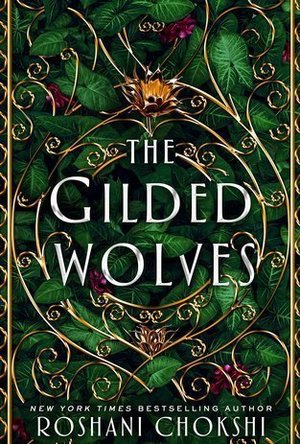
Séverin was striped of his title as heir to a House in the Order of Babel for an unknown reason after his parents died in a fire. Séverin was approached by Hypnos after stealing an artifact from him. Hypnos blackmails Séverin to agree to steal a diffrent item from House Kore. In order to do this Séverin enlists the help of his friends Zofia, Laila, and Enrique. His adopted brother Tristan also helps out but openly shows his distrust of Hypnos.
After successfully retrieving the item in question from House Kore the friends are shocked to discover that they are not quite done. The Fallen House has risen and is trying to awaken a Babel Fragment. Thd Fallen Housr needs a few things that the firends have in order to achieve their goal, but the friends can not allow the Fallen House to succeed. Now the friends must try to stop this awakening
or civilization as they know it might be changed forever.
What I liked best was how all the characters teemed up together with Hypnos to achieve their goals. At times the Da Vinci Code feeling of the book while the friends solve puzzles was enjoyable. What I liked least was that it felt like more detail in the back story was needed. Forging for example, why can only some people do it? The idea that Babel Fragments somehow allow people to use God's power to manipulate objects was not explained very well. Plus there is the fact that I could not decide on the age range of the main characters. Sometimes they appear to be adults and at othertimes they were more like children, barely even teens.
For the target readers of this book anyone could read it. Middle school students with a high reading level would be able to handle this book with very few problems. The book is even about average size so I don't think that would even be an issue for someone who likes reading. I give this
book a 2 out of 4 with the hope that a second book will be released. If there is no second book in the works than this book only deserves a 1. I would not call it a complete waste of time, but it was close.
Upon finishing the book there were too many concepts important to the background of the story that did not get enough attention. I do not enjoy it or recommend books that still have me questioning aspects that build the foundation of the story by the time it ends.
https://www.facebook.com/nightreaderreviews
Monkey Junior: kids learn to read English, Spanish
Education
App
Monkey Junior is currently #1 popular learn to read program with millions of happy learners and...
Trolls: Poppy's Party - Read and Sing-Along Book
Book and Education
App
An all new bonding and learning activity based on DreamWorks Animation's TROLLS. A fun and musical...

Glassdoor Job Search
Business and Productivity
App
Find a job you love and get hired using Glassdoor job search. Access the latest job listings from...