
Search
Search results

Trigger Warnings: Child abuse, child neglect, homelessness, mention of drug use, rape, suicide, homophobia, prison/juvie
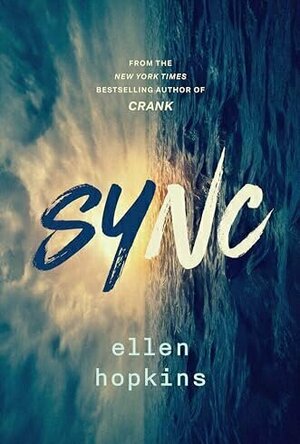
Twins Storm and Lake have always been in sync growing up - until they get separated within the foster care system. Storm’s been through juvie but his current foster dad and his girlfriend are helping him find a normal life again - until an incident makes him lose control again. Lake likes girls, but her bible loving foster parents would immediately kick her out if they find out - so she and her foster sibling, Parker, must keep their relationship secret. Both twins have rough patches ahead and both fight to come out on the other side.
Sooo, I’ve never read an Ellen Hopkins book - at least that I can remember anyway. I did NOT keep track of books I read until I was in my late 20’s… That being said, I feel like I would remember the emotional damage that probably would have been done with her books, especially with how I feel after finishing this one.
Hopkins didn’t shy away from the hard topics. Doing so allowed me to feel every emotion alongside the twins as they were. I’ve recently really gotten into novel-in-verse books and it absolutely makes me understand how poetry can really hit your gut with just so few words; Hopkins didn’t have to go into detail about what things looked like for you to understand what was going on.
The ending was bittersweet because I didn’t want it to be over, but at the same time, Hopkins finished it beautifully without needing the words. God, this book is going to stay with me for quite some time. I’m going to think of Storm and Lake and hope they’re doing okay.
Overall, this book will grab your heart and twist it tight, absolutely leaving an imprint when it finally releases you on the last page. Even though it’s a 400+ page novel, it reads quickly and one could probably finish it in one setting. The only reason I hadn’t was because I started it super late at night and then had plans the following morning.
*Thank you Nancy Paulsen Books and BookishFirst for an advance copy of this book in exchange for an honest review
Twins Storm and Lake have always been in sync growing up - until they get separated within the foster care system. Storm’s been through juvie but his current foster dad and his girlfriend are helping him find a normal life again - until an incident makes him lose control again. Lake likes girls, but her bible loving foster parents would immediately kick her out if they find out - so she and her foster sibling, Parker, must keep their relationship secret. Both twins have rough patches ahead and both fight to come out on the other side.
Sooo, I’ve never read an Ellen Hopkins book - at least that I can remember anyway. I did NOT keep track of books I read until I was in my late 20’s… That being said, I feel like I would remember the emotional damage that probably would have been done with her books, especially with how I feel after finishing this one.
Hopkins didn’t shy away from the hard topics. Doing so allowed me to feel every emotion alongside the twins as they were. I’ve recently really gotten into novel-in-verse books and it absolutely makes me understand how poetry can really hit your gut with just so few words; Hopkins didn’t have to go into detail about what things looked like for you to understand what was going on.
The ending was bittersweet because I didn’t want it to be over, but at the same time, Hopkins finished it beautifully without needing the words. God, this book is going to stay with me for quite some time. I’m going to think of Storm and Lake and hope they’re doing okay.
Overall, this book will grab your heart and twist it tight, absolutely leaving an imprint when it finally releases you on the last page. Even though it’s a 400+ page novel, it reads quickly and one could probably finish it in one setting. The only reason I hadn’t was because I started it super late at night and then had plans the following morning.
*Thank you Nancy Paulsen Books and BookishFirst for an advance copy of this book in exchange for an honest review

Debbiereadsbook (1839 KP) rated Judging Duke (Liverpool Boys #4) in Books
Jun 21, 2024
Well done, Alex, seriously well done.
Independent reviewer for BookSirens, I was gifted my copy of this book.
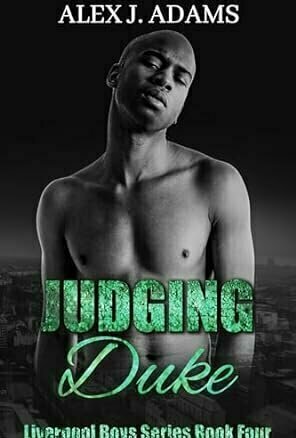
This is book 4 in the Liverpool Boys series. I STRONGLY recommend you read the previous three books before this one. It will give you a better picture of this group of men, and how they came to be in Liverpool and be friends. This *CAN* be read as a stand alone book, but I personally think you would get more out of it, if you read the others first.
I *AGAIN* quote my review for Ziggy : Well done, Alex, seriously well done.
Ziggy and Beau are dark, very dark reads and Liam's was a much lighter one. This book sits somewhere between them.
There are dark moments: what happened to Duke when he left for Liverpool wasn't easy reading. But I LOVED that we were kept waiting for the full story! You try to piece the clues together, and I got them wrong, and I thoroughly lost it for Duke when he tells Simon what happened. I cried, a lot, for Duke and I really didn't think I was going to for a time. I cried for the others too, so it was only fair!
Simon hasn't had a good time: slipping into porn wasn't his plan, but his brother, Robbie, needed the care only that sort of money could give him. The hatred he carries for Duke, after Robbie's accident was jumping off the page, but he does get over it, in spectacular fashion!
I loved that they talked, you know? Really talked about things and once the air was cleared, they jumped into a relationship that no one saw coming.
I loved that we were able to catch up with Ziggy and Mark; Beau and Kwan also take part here and while Liam and John are mentioned, they don't take part here.
A very fitting end, that sees all 4 boys happy and settled and so much in the love they never thought possible, given their histories.
I can't quite say Ms Adams saved the best for last, cos Ziggy will forever hold that spot but it's a close run thing!
Be mindful of the triggers.
5 full and shiny stars, but wish I could give more!
*same worded review will appear elsewhere
This is book 4 in the Liverpool Boys series. I STRONGLY recommend you read the previous three books before this one. It will give you a better picture of this group of men, and how they came to be in Liverpool and be friends. This *CAN* be read as a stand alone book, but I personally think you would get more out of it, if you read the others first.
I *AGAIN* quote my review for Ziggy : Well done, Alex, seriously well done.
Ziggy and Beau are dark, very dark reads and Liam's was a much lighter one. This book sits somewhere between them.
There are dark moments: what happened to Duke when he left for Liverpool wasn't easy reading. But I LOVED that we were kept waiting for the full story! You try to piece the clues together, and I got them wrong, and I thoroughly lost it for Duke when he tells Simon what happened. I cried, a lot, for Duke and I really didn't think I was going to for a time. I cried for the others too, so it was only fair!
Simon hasn't had a good time: slipping into porn wasn't his plan, but his brother, Robbie, needed the care only that sort of money could give him. The hatred he carries for Duke, after Robbie's accident was jumping off the page, but he does get over it, in spectacular fashion!
I loved that they talked, you know? Really talked about things and once the air was cleared, they jumped into a relationship that no one saw coming.
I loved that we were able to catch up with Ziggy and Mark; Beau and Kwan also take part here and while Liam and John are mentioned, they don't take part here.
A very fitting end, that sees all 4 boys happy and settled and so much in the love they never thought possible, given their histories.
I can't quite say Ms Adams saved the best for last, cos Ziggy will forever hold that spot but it's a close run thing!
Be mindful of the triggers.
5 full and shiny stars, but wish I could give more!
*same worded review will appear elsewhere

Lindsay (1818 KP) rated Now That I Know You (Tree of Life #5) in Books
Mar 13, 2025
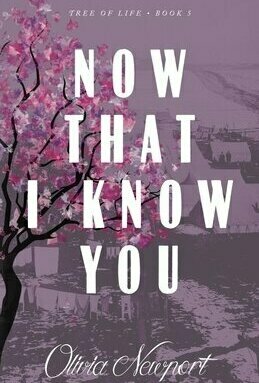
We have been reintroduced to Jillian and Nolan. Her father and I were introduced to her so-called fourth cousin, Cate Buttler, on her mother's side. We also know Drew is mentioned, who seems to be now dating Jillian.
How will Jillian feel about this new cousin from the Perisi family? Who is Cate Buttler, and is she related to Jillian Duffy? Cate seems to persist in Jillian helping her and understanding her, but she comes unannounced. Can Jillian help her?
The plot gets ticker as we get started. The book takes time to travel back to 1913, in Pueblo, Colorado, to begin the family history story. The book does go back to the present again. We will get this throughout, and it is interesting. We meet Carrick and Ela.
We are introduced to a few more characters in 1913. They are Caterina, her husband Geppetto, and her son Giuseppe (Peppy). We also got the name Salvatore as an uncle's name. We jump to September 19, 1913, and learn about Parisi's family history through the eyes of Caterina. When she reads about the strike, she starts to worry about her friend Chiara, who is sick with a child. Chiara's husband is a miner who works for a mining company. Will she bring her friend Chiara and her husband home to stay?
We also learn that Parisi worked for Carrick and Ela Kyps, the ranch owners, in 1913. But will they survive and bring home their friends? Caterina seems to Ela that she does not like the coming strike. They offer or ask her to go and get her friend Chiara. Will they find and bring them home?
Jillian is getting ready to head south to meet up with her Cate Butler, who says she is a cousin and asks what career Cate has and why she might or is asking for Jillian's help. Nolan is still home when she comes down to eat. Jillian wants to know if her dad won't be coming. He has to deal with Court and meetings. However, Drew will be meeting her. Nolan seems to be getting calls that he does not want his daughter to overhear. Jillian still wished he was coming with her. What is this call about, or about his court meeting in Denver? Will Jillian get clues about Cate Butler or any other clues about her mother's side of the family history?
How will Jillian feel about this new cousin from the Perisi family? Who is Cate Buttler, and is she related to Jillian Duffy? Cate seems to persist in Jillian helping her and understanding her, but she comes unannounced. Can Jillian help her?
The plot gets ticker as we get started. The book takes time to travel back to 1913, in Pueblo, Colorado, to begin the family history story. The book does go back to the present again. We will get this throughout, and it is interesting. We meet Carrick and Ela.
We are introduced to a few more characters in 1913. They are Caterina, her husband Geppetto, and her son Giuseppe (Peppy). We also got the name Salvatore as an uncle's name. We jump to September 19, 1913, and learn about Parisi's family history through the eyes of Caterina. When she reads about the strike, she starts to worry about her friend Chiara, who is sick with a child. Chiara's husband is a miner who works for a mining company. Will she bring her friend Chiara and her husband home to stay?
We also learn that Parisi worked for Carrick and Ela Kyps, the ranch owners, in 1913. But will they survive and bring home their friends? Caterina seems to Ela that she does not like the coming strike. They offer or ask her to go and get her friend Chiara. Will they find and bring them home?
Jillian is getting ready to head south to meet up with her Cate Butler, who says she is a cousin and asks what career Cate has and why she might or is asking for Jillian's help. Nolan is still home when she comes down to eat. Jillian wants to know if her dad won't be coming. He has to deal with Court and meetings. However, Drew will be meeting her. Nolan seems to be getting calls that he does not want his daughter to overhear. Jillian still wished he was coming with her. What is this call about, or about his court meeting in Denver? Will Jillian get clues about Cate Butler or any other clues about her mother's side of the family history?

Ali A (82 KP) rated How To Succeed in Witchcraft in Books
Sep 27, 2022


Trigger Warnings: Grooming, prejudice, racism
Shay Johnson is a junior at T.K. Anderson Magical Magnet School and has done everything she possibly can to win the full-ride Brockton Scholarship - her ticket into the university of her dreams. Her only real competition is Ana Alvarez, but Shay also knows if she can impress Mr.B, the drama teacher and head of the scholarship committee, she’ll have an upper leg.
When Mr.B “persuades” Shay into being in the school’s racially diverse musical, in their no-so-diverse school, she agrees, and lands the leading role. But Ana is right behind her playing the second female lead. With the start of rehearsals, Shay realizes Ana isn’t the intense enemy she’s always thought she was… perhaps, she would be a friend, or more?
But when Shay gets asked by Mr.B to do some one-on-one practicing for the musical, she finds herself on the receiving end of Mr.B’s unpleasant and unwanted attention. When Shay learns she’s not the first witch to experience his inappropriate behavior, she must decide if she’ll come forward. But, will speaking out cancel her opportunity for the scholarship - her future?
This book deals with a lot of hard topics: grooming, prejudice, abuse of power, racism. I feel like Aislinn Brophy did a good job in writing the predatory actions that Mr.B was doing with Shay - every time something between them happened, it made my skin crawl.
I did enjoy the enemy-to-lovers storyline; or should I say misunderstandings-to-lovers storyline? It was cute and adorable and nothing drastically changed afterwards (besides more cuteness).
Though the title I feel like the title is a little deceiving, I still liked that magic was a part of the world here, but that magic doesn’t fix everything. Even in a world where you can fly around on brooms and make potions to help you wake up, the world is still far from perfect.
Overall, this is a magic-filled book that dives into where one draws the line on what they will allow to happen in order to get something they’ve worked so hard for their entire life. A good read for the witchy season coming up, but also a good read for the message behind it.
*Thank you G.P. Putnam’s Sons Books for Young Reads and BookishFirst for a copy of this book in exchange for an honest review
Shay Johnson is a junior at T.K. Anderson Magical Magnet School and has done everything she possibly can to win the full-ride Brockton Scholarship - her ticket into the university of her dreams. Her only real competition is Ana Alvarez, but Shay also knows if she can impress Mr.B, the drama teacher and head of the scholarship committee, she’ll have an upper leg.
When Mr.B “persuades” Shay into being in the school’s racially diverse musical, in their no-so-diverse school, she agrees, and lands the leading role. But Ana is right behind her playing the second female lead. With the start of rehearsals, Shay realizes Ana isn’t the intense enemy she’s always thought she was… perhaps, she would be a friend, or more?
But when Shay gets asked by Mr.B to do some one-on-one practicing for the musical, she finds herself on the receiving end of Mr.B’s unpleasant and unwanted attention. When Shay learns she’s not the first witch to experience his inappropriate behavior, she must decide if she’ll come forward. But, will speaking out cancel her opportunity for the scholarship - her future?
This book deals with a lot of hard topics: grooming, prejudice, abuse of power, racism. I feel like Aislinn Brophy did a good job in writing the predatory actions that Mr.B was doing with Shay - every time something between them happened, it made my skin crawl.
I did enjoy the enemy-to-lovers storyline; or should I say misunderstandings-to-lovers storyline? It was cute and adorable and nothing drastically changed afterwards (besides more cuteness).
Though the title I feel like the title is a little deceiving, I still liked that magic was a part of the world here, but that magic doesn’t fix everything. Even in a world where you can fly around on brooms and make potions to help you wake up, the world is still far from perfect.
Overall, this is a magic-filled book that dives into where one draws the line on what they will allow to happen in order to get something they’ve worked so hard for their entire life. A good read for the witchy season coming up, but also a good read for the message behind it.
*Thank you G.P. Putnam’s Sons Books for Young Reads and BookishFirst for a copy of this book in exchange for an honest review
Debbiereadsbook (1839 KP) rated Constitution Check (Dungeons and Dating #4) by Katherine McIntyre in Books
Sep 24, 2022

i love this series!
Independent reviewer for Archaeolibrarian, I was gifted my copy of this book.
This is book 4 in the Dungeons & Dating book, and while not strictly necessary to have read the other three before this, I STRONGLY recommend you do. Not least because they are ALL five star reads, from me. But I would probably say read book 3, at least. Something happens in that book that leads into this one, and you get an inkling as to what Kelly is living through.
Ms McIntyre never ceases to amaze me, she can flip on a penny and it takes you a while to catch up with that little nugget of info, or this little comment that someone says. I have to slow my reading down to pay great attention, and I love that I have to.
Both Tabby and Kelly appear in previous books, although I couldn't place Tabby til there was something said here. (see above!)
Both girls are suffering in one way or another, but it takes a long time for them to open up to each other, to us. The clues are all there, they really are, but I didn't put the pieces together for Tabby, not straight away. I did for Kelly, because the signs were there in book 3.
Its not an easy read, given what Kelly went through, but it is extremely well written. Emotional reading, I had a tear or too. When Kelly finally lets Tabby in and vice versa, I cried, I really did.
Its steamy too! And while it IS steamy, it takes a back step, I think, to the emotions involved for these girls.
All the other pairings take part here, given as they all work together at the cafe, and we meet Eli, Tabby's cousin. He is one of the leads in the next book along with Arjun.
I read this in one sitting, stayed up way past my bedtime and was entirely unrepentant of that fact! I bloody loved it!
I love that McIntyre can flip from MM to MF and then to FF. Quite a skill to deliver each, but to be able to deliver them ALL?? Amazing. Please keep them coming!!
5 full and shiny stars
*same worded review will appear elsewhere
This is book 4 in the Dungeons & Dating book, and while not strictly necessary to have read the other three before this, I STRONGLY recommend you do. Not least because they are ALL five star reads, from me. But I would probably say read book 3, at least. Something happens in that book that leads into this one, and you get an inkling as to what Kelly is living through.
Ms McIntyre never ceases to amaze me, she can flip on a penny and it takes you a while to catch up with that little nugget of info, or this little comment that someone says. I have to slow my reading down to pay great attention, and I love that I have to.
Both Tabby and Kelly appear in previous books, although I couldn't place Tabby til there was something said here. (see above!)
Both girls are suffering in one way or another, but it takes a long time for them to open up to each other, to us. The clues are all there, they really are, but I didn't put the pieces together for Tabby, not straight away. I did for Kelly, because the signs were there in book 3.
Its not an easy read, given what Kelly went through, but it is extremely well written. Emotional reading, I had a tear or too. When Kelly finally lets Tabby in and vice versa, I cried, I really did.
Its steamy too! And while it IS steamy, it takes a back step, I think, to the emotions involved for these girls.
All the other pairings take part here, given as they all work together at the cafe, and we meet Eli, Tabby's cousin. He is one of the leads in the next book along with Arjun.
I read this in one sitting, stayed up way past my bedtime and was entirely unrepentant of that fact! I bloody loved it!
I love that McIntyre can flip from MM to MF and then to FF. Quite a skill to deliver each, but to be able to deliver them ALL?? Amazing. Please keep them coming!!
5 full and shiny stars
*same worded review will appear elsewhere

ClareR (6256 KP) rated The Hunting Moon in Books
Dec 12, 2023

When will I learn to check that books are a one off or the second in a series? I mean, it was a couple of chapters in before I realised something was off, but I have to admit that I quickly filled in the gaps, and it didn’t spoil my listening pleasure. I really enjoyed this.
The world of Hemlock Falls is an interesting one - shut off from the non-magical, they look down on them somewhat, but still feel compelled to keep them (and themselves) safe from the nightmares in the forest separating the two peoples.
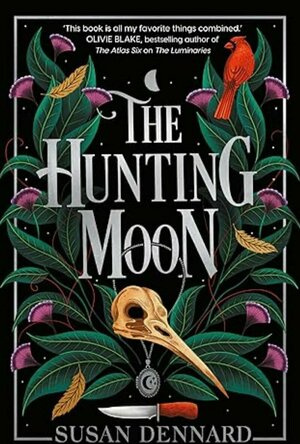
We join Winnie Wednesday after she has passed the hunter trials, her family has been welcomed back into the Luminaries after being cast aside by them for some reason (in book 1, I believe!), and Winnie is now a local celebrity. Not that she’s enjoying it very much. She’s worried that everyone is passing her attacker off as a werewolf, and she’s pretty certain that it’s another creature called a Whisperer. And the Whisperer is still killing hunters every night.
There’s a bit of romance as well - Jay Friday, who seems to have his own problems that he doesn’t want anyone to know about, is making advances to Winnie, and she doesn’t mind one bit. He’s a nice boy (I sound like a mum here, I cannot deny I am one).
I listened to this on Bolinda Audio through NetGalley, and the narrator, Caitlin Davies reads the story so well. There’s nothing quite like a good narrator, adding value to a story and bringing a world to life. The feelings of the characters were conveyed so effectively that I felt fully involved.
I think this opens up a whole argument as to whether books should be sectioned off into age groups. I mean, this is YA, so aimed at 12-18, and I can’t for the life of me understand why? Perhaps I’m a simple soul. OK, there’s no sex, but I’ll be honest - I don’t want to read about sex all the time. It can get a bit boring (controversial, perhaps, but there’s my opinion!). And YA seems to do fantasy and science fiction SO WELL!!
So I’m off to read The Luminaries and fill in some gaps, because I loved this second in what I assume will be a trilogy.
The world of Hemlock Falls is an interesting one - shut off from the non-magical, they look down on them somewhat, but still feel compelled to keep them (and themselves) safe from the nightmares in the forest separating the two peoples.
We join Winnie Wednesday after she has passed the hunter trials, her family has been welcomed back into the Luminaries after being cast aside by them for some reason (in book 1, I believe!), and Winnie is now a local celebrity. Not that she’s enjoying it very much. She’s worried that everyone is passing her attacker off as a werewolf, and she’s pretty certain that it’s another creature called a Whisperer. And the Whisperer is still killing hunters every night.
There’s a bit of romance as well - Jay Friday, who seems to have his own problems that he doesn’t want anyone to know about, is making advances to Winnie, and she doesn’t mind one bit. He’s a nice boy (I sound like a mum here, I cannot deny I am one).
I listened to this on Bolinda Audio through NetGalley, and the narrator, Caitlin Davies reads the story so well. There’s nothing quite like a good narrator, adding value to a story and bringing a world to life. The feelings of the characters were conveyed so effectively that I felt fully involved.
I think this opens up a whole argument as to whether books should be sectioned off into age groups. I mean, this is YA, so aimed at 12-18, and I can’t for the life of me understand why? Perhaps I’m a simple soul. OK, there’s no sex, but I’ll be honest - I don’t want to read about sex all the time. It can get a bit boring (controversial, perhaps, but there’s my opinion!). And YA seems to do fantasy and science fiction SO WELL!!
So I’m off to read The Luminaries and fill in some gaps, because I loved this second in what I assume will be a trilogy.

Merissa (14190 KP) rated The Hidden (The Secret Tales #4) in Books
Oct 2, 2026


THE HIDDEN is the fourth book in The Secret Tales series, and the first one about a new set of characters, although they are still linked to the first three books. I don't think you have to read them as this stands by itself nicely, but for deeper insight into various characters, you may want to. Plus, they're great reads.
Amalie is at home in Mere Manor. She's never 'come out' to the Ton, and is happy that way. She has her dogs and her horse. What more could she want? Apart from her parents still being alive and her brother back from who knows where, that is. Her aunt and uncle live with her, as she will only receive her inheritance when she turns twenty-five, which is still three years away. Her peaceful life begins to go awry when she is held hostage when someone holds up the Post Office. Not all of it is bad, though, as she meets Dr Richard Cartwell.
This was a great read, and I loved how Claire was in it, even if it was only for a short while. Amalie is a good-hearted woman who refuses to allow the rules of the time to run her life. She will do as her heart wishes because, after all, she lives out in the wilds of Devon. Richard was definitely her perfect partner, in that he only obeyed the rules as and when it suited his purposes. He was both caring and compassionate, while still having that protective vibe over Amalie. One thing he didn't do was stifle her.
The mystery side of things was well-written. None of it came as a surprise apart from Lydia, but I was content to just read and let things develop in their own time, rather than trying to guess ahead. I was still left with questions at the end, but it was more about various happenings or characters than the mystery itself.
I'm so glad we're getting Jenny and Alex's story next, and I can't wait to continue with this series. Definitely recommended by me.
** The same worded review will appear elsewhere. **
* A copy of this book was provided to me with no requirements for a review. I voluntarily read this book; the comments here are my honest opinion. *
Merissa
Archaeolibrarian
Oct 2, 2026
Amalie is at home in Mere Manor. She's never 'come out' to the Ton, and is happy that way. She has her dogs and her horse. What more could she want? Apart from her parents still being alive and her brother back from who knows where, that is. Her aunt and uncle live with her, as she will only receive her inheritance when she turns twenty-five, which is still three years away. Her peaceful life begins to go awry when she is held hostage when someone holds up the Post Office. Not all of it is bad, though, as she meets Dr Richard Cartwell.
This was a great read, and I loved how Claire was in it, even if it was only for a short while. Amalie is a good-hearted woman who refuses to allow the rules of the time to run her life. She will do as her heart wishes because, after all, she lives out in the wilds of Devon. Richard was definitely her perfect partner, in that he only obeyed the rules as and when it suited his purposes. He was both caring and compassionate, while still having that protective vibe over Amalie. One thing he didn't do was stifle her.
The mystery side of things was well-written. None of it came as a surprise apart from Lydia, but I was content to just read and let things develop in their own time, rather than trying to guess ahead. I was still left with questions at the end, but it was more about various happenings or characters than the mystery itself.
I'm so glad we're getting Jenny and Alex's story next, and I can't wait to continue with this series. Definitely recommended by me.
** The same worded review will appear elsewhere. **
* A copy of this book was provided to me with no requirements for a review. I voluntarily read this book; the comments here are my honest opinion. *
Merissa
Archaeolibrarian
Oct 2, 2026

Heather Cranmer (2721 KP) rated When Patty Went Away in Books
Jun 7, 2018

(This review can be found on my blog <a href=http://themisadventuresofatwentysomething.blogspot.com/">The (Mis)Adventures of a Twenty-Something Year Old Girl</a>.
The blurb intrigued me a lot. This was a book I really wanted to read. However, I was a bit disappointed when I finally got a chance to read it.
The title definitely fits the book for at least the second half. (I'll go into more detail about that later). The title reminds me of someone who checks out of reality though.
I like the serene look of the cover. I don't really know how it ties into the book though. The cover made me think more of a holiday romance type.
I can't really fault the world building. I thought it was done rather well and very believable. From a historic viewpoint, the facts and events were all correct. It was interesting that Ms. Burt chose to narrate through the point of view of a man. She did a great job of making it work though. There was one or two times I felt a bit confused, but I put it down to just a personal thing like maybe I wasn't paying as much attention as I should've been. The only thing that bothered me was when the narrator of the book would suddenly start talking about a memory. It was too sudden, and I didn't know if it was happening in present time or if it was indeed a memory. I felt as if a memory could've had a better introduction so the audience was aware that it happened at another time in the book.
I felt that the pacing was too slow for about the first two-thirds of the book. It seemed to drone on and on about a topic I wasn't that interested in (farming). I realize that Ms. Burt was setting up a back story, but there was too much focus on the whole farming aspect of the book and not about Patty disappearing as the title and the blurb would suggest. Once the main character goes to Montreal, the pacing picks up decently, and it becomes a book that I had a hard time putting down.
The whole story line was a bit weak, I felt. First off, it reads like two books. The first two-thirds of the book is about a family who has lost their farm due to a bad storm. The reader then takes a journey into finding out how this family struggles to survive without their means of income. I found it a bit tedious because I don't really care about farming, and this book used a lot of farming terminology. The last third of the book is when Jack goes to Montreal to look for Patty. This explores the seedy side of Montreal (which could be just about anywhere) and prostitution involving runaways. I thought the story line was strong during this bit.
I felt that Jack was a well developed character and very likable. It was easy to feel what he was feeling and to feel sorry for him with all that he was going through. Molly is a strict God fearing woman. However, I felt that there was too much focus on her being overweight which was uncalled for. I didn't really like how Christianity was portrayed when it came to Molly. I'm sure there are people in the world like her, but there were times when I just felt a bit offended. I would've loved to know more about Patty and Edie as individuals. I just felt like they didn't get enough time throughout the book, Patty especially. I found it a bit hard to care about Edie and Patty especially as I felt like I didn't have enough information on them to care.
The dialogue fit this book very well. However, I think a lot of people will struggle with the farming terminology and have a hard time relating to the whole farm scenario. As I've said before, this book reads like two books in one. To further prove my point, even the dialogue is different. During the whole family losing their farm scenario, the language isn't vulgar nor is there any swearing (that I could remember). Once Jack gets to Montreal, the language turns a bit vulgar, and there is some swearing.
Overall, When Patty Went Away is just an alright read. The plot could've been better and the merging of ideas could've been smoother. Saying that, the main character is very likable and the world building was good.
I'd recommend this book to those 18+ who know something about farming or those who want a book that will last awhile.
<b>I'd give When Patty Went Away by Jeannie Burt a 2.5 out of 5.</b>
(I received a free paperback of this book from LibraryThing for free in exchange for a fair and honest review).
The blurb intrigued me a lot. This was a book I really wanted to read. However, I was a bit disappointed when I finally got a chance to read it.
The title definitely fits the book for at least the second half. (I'll go into more detail about that later). The title reminds me of someone who checks out of reality though.
I like the serene look of the cover. I don't really know how it ties into the book though. The cover made me think more of a holiday romance type.
I can't really fault the world building. I thought it was done rather well and very believable. From a historic viewpoint, the facts and events were all correct. It was interesting that Ms. Burt chose to narrate through the point of view of a man. She did a great job of making it work though. There was one or two times I felt a bit confused, but I put it down to just a personal thing like maybe I wasn't paying as much attention as I should've been. The only thing that bothered me was when the narrator of the book would suddenly start talking about a memory. It was too sudden, and I didn't know if it was happening in present time or if it was indeed a memory. I felt as if a memory could've had a better introduction so the audience was aware that it happened at another time in the book.
I felt that the pacing was too slow for about the first two-thirds of the book. It seemed to drone on and on about a topic I wasn't that interested in (farming). I realize that Ms. Burt was setting up a back story, but there was too much focus on the whole farming aspect of the book and not about Patty disappearing as the title and the blurb would suggest. Once the main character goes to Montreal, the pacing picks up decently, and it becomes a book that I had a hard time putting down.
The whole story line was a bit weak, I felt. First off, it reads like two books. The first two-thirds of the book is about a family who has lost their farm due to a bad storm. The reader then takes a journey into finding out how this family struggles to survive without their means of income. I found it a bit tedious because I don't really care about farming, and this book used a lot of farming terminology. The last third of the book is when Jack goes to Montreal to look for Patty. This explores the seedy side of Montreal (which could be just about anywhere) and prostitution involving runaways. I thought the story line was strong during this bit.
I felt that Jack was a well developed character and very likable. It was easy to feel what he was feeling and to feel sorry for him with all that he was going through. Molly is a strict God fearing woman. However, I felt that there was too much focus on her being overweight which was uncalled for. I didn't really like how Christianity was portrayed when it came to Molly. I'm sure there are people in the world like her, but there were times when I just felt a bit offended. I would've loved to know more about Patty and Edie as individuals. I just felt like they didn't get enough time throughout the book, Patty especially. I found it a bit hard to care about Edie and Patty especially as I felt like I didn't have enough information on them to care.
The dialogue fit this book very well. However, I think a lot of people will struggle with the farming terminology and have a hard time relating to the whole farm scenario. As I've said before, this book reads like two books in one. To further prove my point, even the dialogue is different. During the whole family losing their farm scenario, the language isn't vulgar nor is there any swearing (that I could remember). Once Jack gets to Montreal, the language turns a bit vulgar, and there is some swearing.
Overall, When Patty Went Away is just an alright read. The plot could've been better and the merging of ideas could've been smoother. Saying that, the main character is very likable and the world building was good.
I'd recommend this book to those 18+ who know something about farming or those who want a book that will last awhile.
<b>I'd give When Patty Went Away by Jeannie Burt a 2.5 out of 5.</b>
(I received a free paperback of this book from LibraryThing for free in exchange for a fair and honest review).

So Pretty
I received this book for free through Goodreads First Reads.
“Effortless inspiration for a happier life.” It has been scientifically proven that gratitude can be beneficial to both mental and physical wellbeing. It is also acknowledged that being thankful is difficult for many people due to negative circumstances or pessimistic personalities. Gratitude is a little, hardback book by writer and graphic designer, Dani DiPirro, whose purpose is to encourage the reader to show and feel more gratitude in their lives. In a way, this is a self-help book.
Using quotes, written insights and activity suggestions, DiPirro guides the reader through a number of situations in which one can be grateful. The author’s insights are sensitive but to the point, suggesting that everyone faces these problems, and does not isolate individuals. The quotes help to emphasise the points she makes and the activities are simple and relevant.
The activities themselves are nothing to be afraid of; they are not strenuous or difficult, they merely require you to think or complete a task that does not require you to go out of your way: “ Reflect on the last time you experienced compassion or forgiveness.”
The book itself is simply yet beautifully designed. The red colour theme makes it feel bright and positive; however will be more attractive to women than it would be to men. The print is large, clear and easy to read; suitable for all ages and backgrounds.
Although roughly 130 pages, it only takes ten minutes to read from cover to cover. However, this is not the intention of the author. To get the most out of the book, each section/task should be tackled individually in order to experience the outcome you are hoping for: feeling a sense of gratitude. This is a book that you can return to time and time again, whether you feel motivated or need a little pick me up.
At the back of the book DiPirro has provided lists of top ten ways to be grateful in different environments. These are useful for when you are experiencing problems in the home, or at work, and need help stepping back and seeing the bigger picture.
Overall, Gratitude is a lovely, inexpensive guide to help people gain a more positive outlook on life. There are also other books in this series that focus on different areas of life that people struggle with; e.g. forgiveness and living in the moment. Gratitude is the ideal book to give as a gift to a loved one, or even to keep on your own bookshelf or bedside table, accessible when needed.
“Effortless inspiration for a happier life.” It has been scientifically proven that gratitude can be beneficial to both mental and physical wellbeing. It is also acknowledged that being thankful is difficult for many people due to negative circumstances or pessimistic personalities. Gratitude is a little, hardback book by writer and graphic designer, Dani DiPirro, whose purpose is to encourage the reader to show and feel more gratitude in their lives. In a way, this is a self-help book.
Using quotes, written insights and activity suggestions, DiPirro guides the reader through a number of situations in which one can be grateful. The author’s insights are sensitive but to the point, suggesting that everyone faces these problems, and does not isolate individuals. The quotes help to emphasise the points she makes and the activities are simple and relevant.
The activities themselves are nothing to be afraid of; they are not strenuous or difficult, they merely require you to think or complete a task that does not require you to go out of your way: “ Reflect on the last time you experienced compassion or forgiveness.”
The book itself is simply yet beautifully designed. The red colour theme makes it feel bright and positive; however will be more attractive to women than it would be to men. The print is large, clear and easy to read; suitable for all ages and backgrounds.
Although roughly 130 pages, it only takes ten minutes to read from cover to cover. However, this is not the intention of the author. To get the most out of the book, each section/task should be tackled individually in order to experience the outcome you are hoping for: feeling a sense of gratitude. This is a book that you can return to time and time again, whether you feel motivated or need a little pick me up.
At the back of the book DiPirro has provided lists of top ten ways to be grateful in different environments. These are useful for when you are experiencing problems in the home, or at work, and need help stepping back and seeing the bigger picture.
Overall, Gratitude is a lovely, inexpensive guide to help people gain a more positive outlook on life. There are also other books in this series that focus on different areas of life that people struggle with; e.g. forgiveness and living in the moment. Gratitude is the ideal book to give as a gift to a loved one, or even to keep on your own bookshelf or bedside table, accessible when needed.

Hazel (1853 KP) rated The Relic Guild in Books
May 30, 2017

Illegal Magic
I received this book for free through Goodreads First Reads.
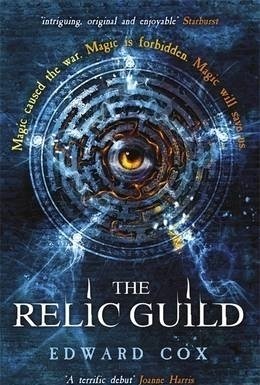
Edward Cox invents a new magical world in his epic fantasy novel The Relic Guild. Magic is a thing of the past. Since a great war forty years previously, magic has been banned. Back in the day the Relic Guild was made up of people with various magical abilities – empaths, illusionists, changelings – but a great war got rid of all those with magic, all but three that is. Marney, Samuel and Van Bam are the only surviving agents of the Relic Guild. In their old age they have not needed to use their abilities that much until evidence that a particular infamous Genii, Fabian Moor, did not perish as he was thought to have done. Moor kidnaps Marney leaving Old Man Sam and Van Bam to hunt him down with the help of a young changeling, Peppercorn Clara, who, until now, had been hiding her illegal magical gift.
It took a long time to get into the novel and understand what was going on. It was confusing as to who was good and who was bad at the very beginning, which did not help in understanding the events occurring. Approximately half way through the pace picked up and became a lot more exciting and easier to engage with. It helped that the narrative alternated between the present and forty years earlier. By providing an insight into history of the Relic Guild the current situation began to make more sense.
Oddly the book begins with an epilogue. Initially I wondered whether that was intentional – maybe parts of the story were to be told backwards – however, on finishing the final chapter it appears that, perhaps, it was an error. There were also a few other mistakes that were obviously missed during the proof readings.
The ending of the story strongly implies that there is more to come. This felt a little annoying as there was no conclusion to, what felt like, an extremely long and slow starting book. I am undecided whether I would want to read a sequel; whilst it would be nice to find out how the situation is resolved, it was not the easiest of books to read. It was also difficult to visualize the setting, particularly the constant reference to a labyrinth.
Overall it was a bit of a disappointment. The blurb set it up to be a really gripping storyline but in reality it was confusing and hard going.
Edward Cox invents a new magical world in his epic fantasy novel The Relic Guild. Magic is a thing of the past. Since a great war forty years previously, magic has been banned. Back in the day the Relic Guild was made up of people with various magical abilities – empaths, illusionists, changelings – but a great war got rid of all those with magic, all but three that is. Marney, Samuel and Van Bam are the only surviving agents of the Relic Guild. In their old age they have not needed to use their abilities that much until evidence that a particular infamous Genii, Fabian Moor, did not perish as he was thought to have done. Moor kidnaps Marney leaving Old Man Sam and Van Bam to hunt him down with the help of a young changeling, Peppercorn Clara, who, until now, had been hiding her illegal magical gift.
It took a long time to get into the novel and understand what was going on. It was confusing as to who was good and who was bad at the very beginning, which did not help in understanding the events occurring. Approximately half way through the pace picked up and became a lot more exciting and easier to engage with. It helped that the narrative alternated between the present and forty years earlier. By providing an insight into history of the Relic Guild the current situation began to make more sense.
Oddly the book begins with an epilogue. Initially I wondered whether that was intentional – maybe parts of the story were to be told backwards – however, on finishing the final chapter it appears that, perhaps, it was an error. There were also a few other mistakes that were obviously missed during the proof readings.
The ending of the story strongly implies that there is more to come. This felt a little annoying as there was no conclusion to, what felt like, an extremely long and slow starting book. I am undecided whether I would want to read a sequel; whilst it would be nice to find out how the situation is resolved, it was not the easiest of books to read. It was also difficult to visualize the setting, particularly the constant reference to a labyrinth.
Overall it was a bit of a disappointment. The blurb set it up to be a really gripping storyline but in reality it was confusing and hard going.