Search

Search only in certain items:

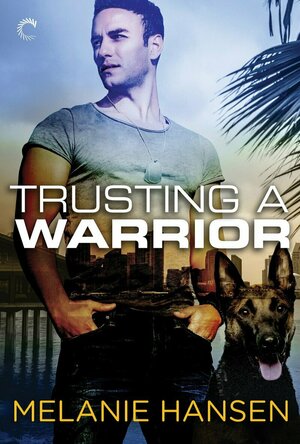
Trusting a Warrior (Loving a Warrior #3)
Melanie Hansen | 2020 | Contemporary, Romance
10
10.0 (1 Ratings)
Book Rating
Hansen can grab you, by the heart strings, and drag you kicking and screaming through every single emotion known to man
Independent reviewer for Archaeolibrarian, I was gifted my copy of this book.

This is book 3 in the Loving A Warrior, and I STRONGLY suggest you read both books one, Loving A Warrior, and book 2, Keeping A Warrior, before you read this one. There is much referenced here that is not fully recapped. And you know, cos I said so! Both are 5 star reads.

As is this one!

Lani meets Geo on possibly the worst day of her life. Geo's ain't much better. Together they begin to navigate a relationship, while dealing with a huge amount of grief at the death of their loved ones.

Hansen has a knack of roping you in, pulling you close, and not letting you go. She can grab you, by the heart strings, and drag you kicking and screaming through every single emotion known to man, and then expect you to write a coherent review after!

I mean, I loved this book, I really did. It carries some difficult story lines, but again, Ms Hansen delivers them in a way that you cannot fault. Grief is a fickle thing, and everyone deals with that differently. I know, my sister and I dealt with my mother and father's death very different, but there is no right or wrong way. Here, Lani's grief is a decade old, but she still suffers. Geo's is much fresher, and it's HIS pain that hit me the most.

I have no personal experience of war, or those who serve. I can only imagine the horrors that are presented on a daily basis. It's to be expected that some will struggle with that, but put on a "brave face" The way Hansen describes Geo's grief and his own spiral downwards is heartbreaking, it really is. Only his relationship with Lani saves him.

I loved how the others in this series; Matt and Shane and Rhys and Devon, play a huge part here. I loved that Devon and Lani become such good friends, even if Lani is Rhys' ex.

What I want to know now, Ms Hansen, is this! Will we be privvy to want happened in Keeping A Warrior, and here, to Matt and Shane?? Cos let me tell ya, I does NEEEEEEEEEEEEEEED to know! We get an inkling of what Matt suffers here, but not enough. So, please, write a followup!

Love, love LOVED the epilogue! And I loved Bosch, Geo's military dog.

I can't, in any honesty, give this book any less than. . .

5 stars

**same worded review will appear elsewhere**

  
The Gate (1987)
The Gate (1987)
1987 | Horror
Gremlins meets Explorers in some good 80's fun!
After a lightning storm, a major tree get uprooted in the suburban back yard of Glen and his sometimes nice big sister, Al. Glen and his best friend Terry proceed to investigate and discover some cool geode stones. At the same time, Glen and Al's parents are going away and leaving the teen and pre-teens home alone (doesn't this always happen in 80's movies).

All seems well enough until the boys split the geode and it spurts out some ancient writing that Glen reads aloud. Al decides to have a party while her parents are away (go figure) where Glen is levitated during a mini seance. Terry discovers during one of his headbanging sessions some of these events coincidentally are said to open a demonic gate where strange creatures can emerge, torment those they find and ravage the Earth.

The three protagonists decide to try and close the "gate" by reading ancient text and Bible verses. This proves successful and small, feisty demons begin to appear and creep into their house. After several run ins, more unusual things start happening within the home, possibly as a precursor for something even bigger on the horizon.

The teens must formulate a plan to dispose of their new house-guests before it is too late!


Funny that Glen is played by a very young Stephen Dorff in his very first role. He reminds me of a young Ethan Hawke in Explorers as his nerd friend Terry reminds me of River Phoenix in the same film.

The movie is cheesy with dated special and optical effects that modern audiences might get annoyed by or find lame and of poor quality. The small demons are more funny than they are scary, but I still enjoyed seeing them on screen. I actually thought it was stop motion animation similar to a Ray Harryhausen film like Clash of the Titans, but they were actually actors in demon costumes and then shot in forced perspective to make them seem smaller.

The movie is only 85 minutes and the plot does take a little while to get going. The first half of the movie is more like every 80's movie you have ever seen with dated hairstyles, clothing and dialogue, but once the demon stuff manifests it becomes more interesting.

Even though PG-13 with some semi scary moments, the movie does seem the style of Gremlins meaning maybe aiming more for a younger audience rather than being excessively disgusting or graphic.

Hopefully you can put aside the elements I mentioned that aren't up to today's standards and enjoy the cute, interesting story this film inhabits. I surely did.

  
    Final Draft Writer

    Final Draft Writer

    Productivity and Business

    (0 Ratings) Rate It

    App

    The makers of Final Draft – the #1-selling screenwriting software in the world – now bring you...

    theSkimm

    theSkimm

    News and Education

    (0 Ratings) Rate It

    App

    theSkimm App is giving you all the news and information you need to know and helping you plan ahead....

    RTA

    RTA

    Music and Utilities

    (0 Ratings) Rate It

    App

    A Real Time Analyzer for the iPhone, iPad and iPod Touch. Test your speakers, tune your room, do...

Sticky For You (The Rhubarb Effect #1)
JP Sayle, Sue Brown | 2024 | LGBTQ+, Paranormal, Romance
8
8.0 (1 Ratings)
Book Rating
Tim is a live wire and he likes to sing!
Independent reviewer for Archaeolibrarian, I was gifted my copy of this book.

Did you ever read a book, and think "What the ever loving heck did I just read??" (only, you know, more sweary words than some review sites will allow!) Well, this is such a book!

Max moves to Valentine Growville with his odd little pride and immediately feels at home. Meeting Tim, his mate, knocked him for six. I mean, Max is an Alpha lion and Tim is. . .well . .Tim is rhubarb. A rhubarb omega. Can they make this work?

It's so much fun, it really is and I laughed a lot, A LOT reading this book and I rarely react out loud when reading, (listening is a whole 'nother matter, though!)

Max is an Alpha of a pride of lions, bulls, llamas and other things that I forget already but they all have a love of rhubarb. Moving to Growville was a necessity, since they got hounded out their last pride. Tim is.. . . excitable! He really is a bit of a live-wire and he likes to sing. Especially once he realises he is Max' mate and Max can hear him in his head. Singing becomes the easiest way to woo Max and I have to admit, I found myself singing along with those songs that Tim sang, but changed some words for to make it fit better for him and Max.

It's steamy . . but in a kinda weird way. The way rhubarb mate is a little offputting, I will admit, but now I know what to expect, I'll be better prepared.

It is a lot of fun, it really is, right up to the point where things go wrong for Tim, but if he had just talked to Max, it could all have been avoided.

And also the point where the real monsters come to town. But that was not explained, and you have to piece the clues already thrown at you to figure out who they are. I'm fairly certain, but with Sayle at the helm, one can never be too sure!

I loved the references to fingerlings!

I love Sayle, you know I do, and I've read some Brown before, with 4 and 5 star reads from her on my shelves. How they came up with this idea, I have no clue, but it really was a fun read! The setting is set nicely for book two, and I see now whay the whole of Max' pride love rhubarb!

Will it win any literary awards? Nope, but I don't care cos I thoruoghly enjoyed it!

4 very funny stars

*same worded review will appear elsewhere
  
Orbital Conflict
Orbital Conflict
2019 | Card Game, Science Fiction
Building your space station. Space combat. Space investors. If these ideas interest you and you are intrigued to know how they work in a board game setting, read on. If you don’t care about head-to-head space stations obliterating each other and jockeying for position as the best bet in the cosmos, discontinue reading.

Orbital Conflict is a player versus player (PvP) card game in which the winner is the player showing the most VPs on their cards at game end. It is a game where placement of cards and orientation of cards is paramount in creating a space station that can dole out damage, take a ton of damage, or hybridizes offense and defense using resources granted from off-station investors.

DISCLAIMER: We were provided a copy of this game for the purposes of this review. These are final components, and the game is available from the publisher and other online retail stores. Also, I do not intend to explicitly cover every rule for the game, but to give an idea of game flow and play. -T

To setup the game (in this case a 1v1 head-to-head bout) shuffle all the cards with the white back together and deal each player a hand of five. Shuffle the smaller investor cards to form a draw pile. Give the starting player the Initiative card and you are ready to start!

The game follows a simple game flow following three phases per round: Draw, Main, Combat. During the Draw phase, the player with the Initiative card (I’ll call them the active player) will draw two cards from the white-backed deck (which I will just call cards). Then the other player will draw two cards as well. The active player then draws two investor cards for themselves and places them in front of their play area as possible investors to claim. The other player does the same. If there are any cards containing discard abilities that a player would like to play during the Draw phase, and the discard text reads they may do so during the Draw phase or any phase, they may play them and follow the discard instructions now.

Once done, the game moves on to the Main phase. During this phase the active player will play any cards they wish that are appropriate for this phase, and then the other player will do the same. During this phase players will be playing cards from hand (and as many as they would like) to add on to their space station, activate modules that were previously deactivated, claim investor cards, and prepare for the next game phase. Space stations can be added to via modules. Modules can be single cards, or multiple splayed cards. As you can see in the photo above cards have icons to the left of the white barrier and some will also have icons to the right. Depending on how a card is added to a module certain icons may be covered and therefore inactive. When adding a card to a module (called an extension) the player decides if they want to add the card to the right of the splay, thus covering up icons to the right of the barrier of the covered card, or under the stack to the left of the splay. Additionally, players may flip any card over to have the back showing, which will provide icons usable in a station module. There are restrictions for playing cards, but I will let you discover those on your own.

The game follows a simple game flow following three phases per round: Draw, Main, Combat. During the Draw phase, the player with the Initiative card (I’ll call them the active player) will draw two cards from the white-backed deck (which I will just call cards). Then the other player will draw two cards as well. The active player then draws two investor cards for themselves and places them in front of their play area as possible investors to claim. The other player does the same. If there are any cards containing discard abilities that a player would like to play during the Draw phase, and the discard text reads they may do so during the Draw phase or any phase, they may play them and follow the discard instructions now.

Once done, the game moves on to the Main phase. During this phase the active player will play any cards they wish that are appropriate for this phase, and then the other player will do the same. During this phase players will be playing cards from hand (and as many as they would like) to add on to their space station, activate modules that were previously deactivated, claim investor cards, and prepare for the next game phase. Space stations can be added to via modules. Modules can be single cards, or multiple splayed cards. As you can see in the photo above cards have icons to the left of the white barrier and some will also have icons to the right. Depending on how a card is added to a module certain icons may be covered and therefore inactive. When adding a card to a module (called an extension) the player decides if they want to add the card to the right of the splay, thus covering up icons to the right of the barrier of the covered card, or under the stack to the left of the splay. Additionally, players may flip any card over to have the back showing, which will provide icons usable in a station module. There are restrictions for playing cards, but I will let you discover those on your own.
  
TC
The Coldest Girl in Coldtown
8
8.8 (5 Ratings)
Book Rating
Actual rating: 3.5. Rounded to 4.

I don’t really tend to read a lot of vampire books anymore, especially when they’ve been labeled young adult. Holly Black’s The Coldest Girl in Coldtown is definitely an exception to that habit. I needed a break from flipping pages and wanted to get in a little bit of time gaming. When I saw The Coldest Girl in Coldtown available for an immediate audio book borrow from OverDrive, I decided to give it a shot. I’d heard of Holly Black, even if I hadn’t read any of her work.
 
Black’s novel takes vampirism and spreads it in the same manner that most post-apocalyptic novels spread the infectious diseases that create zombies. Vampires are romanticized, as they often are, especially in young adult books, and in this case, they no longer live in the shadows; rather, they have taken up residence in government organized areas known as Coldtowns. Those that have been infected with the vampire virus are also holed up within the walls of this cities, and there’s no shortage of food, because people are dying to get in.
 
Waking up after passing out at a party, the main character, a young woman named Tana, finds herself amidst a massacre: people she knows have been slaughtered by vampires. The only survivors are her, an ex-boyfriend, and a strange boy. Her ex is infected, and the boy is a vampire. Deciding to turn him in for a bounty, and worried that her ex will become a vampire himself, the trio travel to Coldtown. It isn’t long before Tana finds herself caught up in what could loosely be described as vampire politics. Amongst betrayal, she must persevere in order to guarantee her own survival.
 
The majority of the story is told from Tana’s perspective, with a few chapters written in Gavriel, the vampire’s, and another one, maybe two, from her younger sister’s, Pearl’s, point-of-view. These changes exist solely to expound on certain events that have led the characters to where they are, such as Gavriel’s past — which is, undoubtedly, one of my favorite parts of the book. Each chapter also begins with an excerpt, usually from a poem that deals with death, the undead, or vampires.
 
Voices make a huge impact on listening to audio books, especially for me. If I can’t stand the voice, I will not finish the book more than likely. In the case of The Coldest Girl in Coldtown, the narrator, Christine Lakin, is absolutely amazing. Her voice is pleasant to listen to, and there is a clear difference between the way each of the characters speak.
 
The Coldest Girl in Coldtown isn’t among my favorite reads, perhaps because I prefer the more traditional approaches to vampires, but it is, undoubtedly, an fun journey. If you like your vampires a bit on the softer side of the spectrum, this one is definitely worth picking up.