

WRC The Official Game
Games
App
*****THE RALLY SIMULATION***** WRC The Official Game, the standard for off-road racing games, is...

Weaphones: Firearms Simulator Volume 1
Games and Entertainment
App
Welcome to the world of Weaphones, the ultimate firearms simulator for your iPhone, iPod and iPad. ...
postapocalypticplayground (27 KP) rated Caraval in Books
Jan 9, 2018
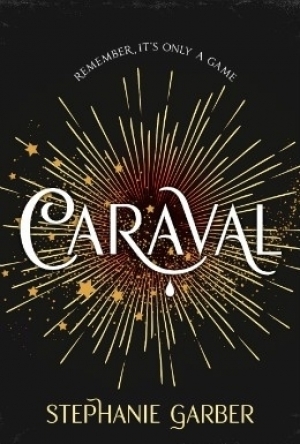

Sailed away to Master Legends Island, Scarlet must play the game of Caraval and the stakes are higher than she ever thought. Not everything is real and everything has a price, can Scarlett complete the game and get back to Trisda before her father knows she has gone and before her wedding day? Or will the secrets of Caraval pull her in too deep?
I went into Caraval a little sceptical, I had heard mixed reviews from friends but I wanted to love it as the story sounded amazing, thankfully I wasn’t disappointed. In a book where I was constantly told that not everything is real I found myself second guessing everything, trying to figure out the clues along with Scarlett. The Caraval itself is wonderful and vibrant but yet a little sinister if you scratch the surface, I almost felt transported to a Victorian era where the currency is secrets rather than coin. There are a ton of twists in this tale and I have to say that I struggled a little to keep up at times. My only quibble is that it did get quite ridiculous as the story progressed and I was longing for a little stability in the story. There are however, some genius bits that I loved especially around some of the forms of payment.
I found it a struggle to put this down, for the most part it was the kind of read that I didn’t have to think about as I flew through the pages and apart from the odd moments of wading through treacle I found myself utterly caught up in the world, my heart racing against the clock just as Scarlett’s did. I would totally recommend giving this a read, it’s not 100% up to the hype, but I’m glad I read it and I think it may end up in that rare pile of books that I have that I would want to read again!

Heather Cranmer (2721 KP) rated The Cutting Room Floor in Books
Jun 7, 2018

When I read the synopsis of this book, I was definitely intrigued. When the opportunity arrived to review this book, I decided I'd take a chance on it. While I wasn't overly impressed with the book, it was still an alright read.
The title suits the book well. The chapters titles are written like a script and sometimes include blocking directions. (If you're not familiar with drama terms, you may want to look that up). The main characters are drama geeks as well.
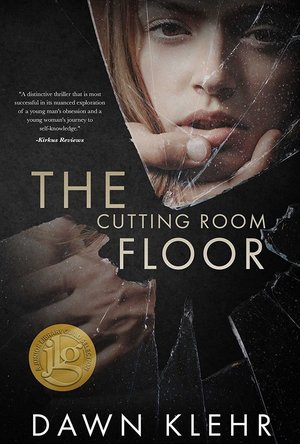
I do like the cover! It's definitely eye catching, and it made me want to pick this book up.
I didn't really have a problem with the world building. I felt like the world building was done rather well except I didn't like how Riley seemed to find every girl she came across as hot. That just doesn't happen in real life, yet it happened to Riley in this book.
I felt like the pacing was a bit slow in this book. At times I was debating with whether or not I should carry on. However, there are some parts of this book where the pacing does pick up, especially towards the end., so not all hope is lost.
I found the plot line to be interesting enough. I was a drama geek in school, so the plot suited me. There was the whole muder mystery thing with Riley's favorite teacher, Riley's confusion about her sexuality, and Dez's stalker crush on Riley going on. I definitely wanted to know how things would play out.
I thought the characters were written fairly well. As I've said before, I didn't like how the author made it seem like Riley was hot for every girl she came across. Saying that, I did like Riley though. Everything about her (minus liking every girl) felt real, and her confusion was very realistic. I didn't like Dez. I felt he was way too controlling when it came for Riley and that he was super selfish. In fact, I'd even go as far as calling him scary. He was always there for Riley but only because he was a stalker. There's not one thing I liked about Dez.
The dialogue flowed smoothly, and all interactions between characters felt realistic. There is some swearing in this book, but it's not over the top.
Overall, The Cutting Room Floor is a decent read. The pacing could do with some work as it does come across as a bit dull some of the time. However, the plot itself is interesting.
I'd recommend this book to those aged 14+ who want a book to read to help them pass the time.
<b>I'd give The Cutting Room Floor by Dawn Klehr a 3.5 out of 5.</b>
(I was provided with a free paperback of this title from the author in exchange for a fair and honest review).

Emma @ The Movies (1786 KP) rated All Is True (2018) in Movies
Jun 22, 2019 (Updated Sep 25, 2019)
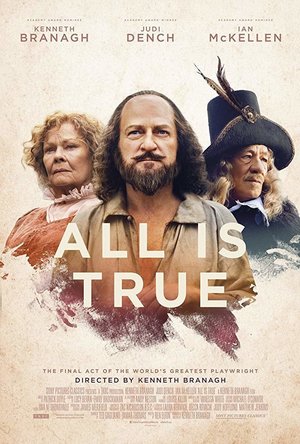

Regardless of that feeling I was excited to see Judy Dench and Ian McKellen in action, it was also a nice surprise to see Ben Elton's name on it... I'm not sure how that had escaped my notice.
Even with those redeeming features I was left bored? Disappointed? No, definitely bored.
I know lots of different snippets about Shakespeare. Whether they're true or not always seems to be up for debate but there are plenty of facts out there. One of the things I had never heard before was this film's addition of the Shakespeare/Wriothesley friendship. By this point I was already feeling disengaged so adding it in pushed me even closer to the edge. I was actually annoyed to be presented with something completely unknown. I know that's mad.
The story as a whole wasn't going to be action-packed and therefore a little slower paced, but everything we were presented with didn't seem connected to anything else. One of the notes I made just said "nothing seems to have a real purpose" and I don't think that opinion changed by the time the film ended. I didn't understand the ultimate point of this film, I know it's about the end of his life and yet... *quizzical shrug*.
You say Ben Elton and you think Blackadder and The Thin Blue Line, at least I do. He's built for comedy and in this there just isn't any and it shows. Everything feels bland and is punctuated with silences that bring the awkwardness of the characters right out into the audience. Unfortunately a real awkwardness and not an "I identify with this character" one.
As for the star-studded cast, I enjoyed Judi Dench's performance the most but even that can't bring up the score on this for me. McKellen gave a fantastic performance but it didn't feel like it belonged in this film, it felt like he was acting in a Shakespeare play and not in a film about Shakespeare.
Had you taken Dench and McKellen out there would have been very little in this film to stop it from sliding into obscurity.
What you should do
I can't recommend this one, I wouldn't even bother when it appears on TV. It does have its audience somewhere though, as I and several other people heaved a sigh of relief when it ended the little old lady across the aisle exclaimed "ooooh weren't that lovely!"
Movie thing you wish you could take home
I would like to take home the two hours of my life I spent on this film, if that's possible?

Phil Leader (619 KP) rated Emperor of Thorns in Books
Nov 12, 2019
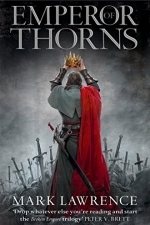


The story takes place a year after the second book, with Jorg on his way to the 4 yearly vote to see if a new emperor can be chosen. This time it is a vote he intends to win, whatever it takes. And with Jorg that doesn't rule out a lot of options. The reader would suspect from the first two books that he is entirely selfish in his ambitions. However we see in the now expected flashback sections that a lot more hangs in the balance than another 4 years of squabbling. Jorg is the only one aware of the peril that threatens the world, and is apparently the only one ruthless enough to avoid it.
There are plenty of set pieces and Jorg is as unpredictable, nasty and single minded as ever. There are a couple of excellent examples of Jorg style diplomacy - which naturally involves anybody disagreeing with him being efficiently killed. Somehow despite having got used to this character through the previous two novels, he still has the capacity to surprise and shock. Yes he has matured and Lawrence has done a sterling job to keep Jorg and the events he instigates fresh and interesting.
The main thread involves travelling across the Hundred Kingdoms, and is essentially one long protracted chase scene, culminating in the vote for emperor. There are some very tense scenes - it should be clear by now that anybody is expendable in Jorg's world and there is a real sense of danger in the encounters.
The 'flashback' thread occurs 5 years before and takes up the story from the flashback thread in King of Thorns. Jorg gets to see more of the world, and crucially to find out more about the mysterious Builders and their artefacts. Once again each thread unwinds and impacts on the other and each is a compelling tale in its own right.
The writing is clean and stylish, plenty of descriptions of both stunning scenery and brutal violence, each given their own space on the page without being overworked. The story moves on in both threads with real pace - there is a lot of ground to cover, both thematically and geographically but Lawrence doesn't put a foot (or word) wrong and there are the usual dashes of black humour throughout.
Overall a stunning (and perfect) end to the trilogy. It's rare to find a story that ties everything up so neatly, with threads from all three of the books coming into play. It's also refreshing to find an author who is not afraid to finish a story and not leave it open for more and more (potentially weaker) stories.
A five star end to a five star trilogy, highly recommended

Transport Tycoon
Games and Entertainment
7.0 Rate It
App
Build the ultimate transport empire! Take control of your own fledgling transport company, and use...

Revenge of gangsters shooting 2016– Real Sniper shooting story
Games
App
Show your fury & Get ready to take revenge this time as a gangster from police. It’s enough for...

Strawberry Shortcake Sweet Shop – Candy Maker
Entertainment and Games
App
Budge Studios™ presents Strawberry Shortcake Sweet Shop! Strawberry Shortcake has invited all of...

Casino.com - Premium Slots Roulette & Blackjack
Games and Entertainment
App
>>>> DOWNLOAD FOR A DOUBLE-YOUR-MONEY WELCOME BONUS AND 200 FREE SPINS*<<<< Casino.com are...