

Stocks Live+ Stock Market Game
Finance and Business
App
** See why Apple selected Stocks Live in App Store Essentials Money Management ** - The Best Stock...

iGrand Piano for iPad
Music and Entertainment
App
THE CONCERT QUALITY PIANO APP UPDATED FOR AUDIOBUS AND INTER-APP AUDIO WITH NEW EXPANSION PACK, EQ...

Pro Metronome - Tempo,Beat,Subdivision,Polyrhythm
Music and Education
App
Pro Metronome - The best metronome app. Period. Featured in Apple's WWDC 2014 showcase "Apps We...

Novation Launchpad
Music and Games
App
Want to make and remix music? If you love electronic music, you’ll love Launchpad. Enter an...

VoiceMap: GPS Audio Tours with Offline Maps
Travel and Entertainment
App
Experience the magic of GPS audio walks, cycles, drives and even boat rides with VoiceMap tours in...

Global Navigator Pro - Best outdoor offline map and navigation
Navigation and Travel
App
Outdoor maps and navigation best choice! Create your own offline maps for hiking, travel, driving,...

Stock Master: realtime stocks
Finance and Games
App
Stock Master is designed to bring you a streamlined mobile stock market experience. Whether you are...

Bob Mann (459 KP) rated Johnny English Strikes Again (2018) in Movies
Sep 28, 2021
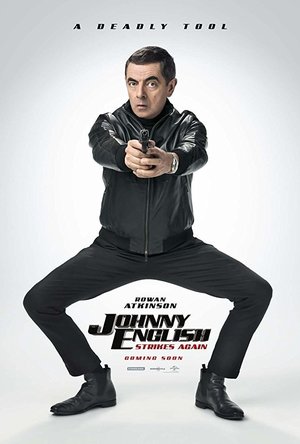


So it was that 2003’s Johnny English was a refreshing novelty. Roll forwards 15 years (via 2011’s “Johnny English Reborn”) and the concoction needs… you know… actual JOKES.
For “Johnny English Strikes Again” is unfortunately a pretty lame affair.
The Plot
Johnny English (Atkinson) is retired from MI7 and living life as a Geography teacher at a public school. Aside from teaching them about sheep farming in Australia and magma, English delights in teaching his young pupils the tricks of the spy trade: “You’re looking particularly beautiful tonight”, with a twinkle and a vodka martini in hand. “You’re looking particularly beautiful tonight” repeats the class.
But the quiet life of English is about to end, since a cyber-attack has exposed all of MI7’s current agents and the Prime Minister (Emma Thompson) needs to re-hire a retired agent who is currently ‘off the grid’. But noone – friend or foe – is safe when the bumbling English and his faithful helper Bough (Ben Miller) go back into the field.
The Turns
As UK comedy professionals, Atkinson and Miller deliver their English/Bough schtick serviceably enough. The brilliant Emma Thompson though is woefully underused as a straight-woman, being asked to do little more than an exasperated Theresa May impersonation.
If you need a sexy and sophisticated femme fatale for a Bond spoof, what better than a real ex-Bond girl? So the extremely sexy and sophisticated Olga Kurylenko (Camille from “Quantum of Solace”) plays Ophelia Bhuletova, which sounds much funnier when pronounced by Atkinson. And a very good job she does too.
The Review
To emphasise the positive for a moment, the film is suitably glossy, which are table stakes for a spy caper like this or Austin Powers.
But the script by William Davies (who did the previous Johnny Englishes, but nothing much since “Reborn”) doesn’t deliver any real laugh-out-loud moments. My hopes were raised when the “pensioner interviews” happened and Charles Dance, Edward Fox and Michael Gambon turned up. Great, I thought… having the old timers play off Atkinson will be fun. But unfortunately they were nothing but cameos and (although one of the film’s comedy highlights) they came and went in the blink of an eye.
Elsewhere the film relied too much on a few running jokes: ostensibly the need for health and safety in MI7, where guns are rather frowned upon, given their potential to caused injury or worse. A ‘virtual reality’ training mission also delivers smiles but outstays its welcome.
The film is a first-time feature for TV-comedy director David Kerr.
Final thoughts
There are films which are wildly offensive. There are films that are just plain bad. This is neither: it is as Douglas Adams might have described it as “Mostly Harmless”. But to get any more than the rating I have given it, a comedy film has to make me laugh and this one failed miserably. It’s a watchable TV film for a rainy afternoon, but not worth heading out to the cinema to watch.
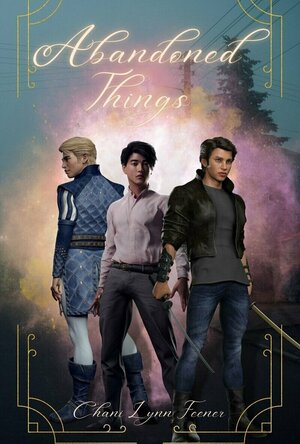
Abandoned Things
10.0 Rate It
Book
Frankie is a fifth-year college student with a secret. He's the writer and creator of the popular...
MM Science Fiction Fantasy Enemies to Lovers Romance

Natalia (73 KP) rated Detroit: Become Human in Video Games
Dec 17, 2018


While the messages weaved into the game may not be ones people wanted or enjoyed, it can't be denied that the high-risk choices and the way we see glimpses into a wider world around these certainly engage any player. All of your choices seem high stake. Choices you make are timed, and there's no telling if they will have a completely unexpected outcome in the long-run of the story, and even if they don't, at the moment they feel like the most important choices you will ever make. Sure, some choices end up being, ultimately, pointless, but that seems to be a way that reflects life - you will make choices that seem incredibly important, but in the end, have no major result.
The game also follows three separate storylines - all of which do cross at some point within the game - and each has its charms. The most known story is the one following Connor, an android working in the DPD, but the other two focus on characters of seemingly varying importance: Kara, an android in charge of taking care of her owns daughter Alice, and Markus, an android who is charged with helping an elderly man live his day-to-day life as an artist. Within the game, however, these characters hold a similar kind of importance, perhaps due to the fact you play from their perspectives, or perhaps because you will personally gain an attachment to each characters bonds, motivations and lives as androids in a pivotal point in time for this fictional universe.
It's virtually impossible for me to review this game without mentioning the artistic efforts that went into it. Primarily, I mean the art direction and soundtrack. I'm a fan of 2D Indie games as much as the next person, just as I am a fan of the stylized graphics of the Borderlands universe and the art styles of visual novels, but something about how Detroit teeters on the edge of the uncanny valley in the best way possible speaks to how it's trying to reflect the real world. The depth of field in the game is fantastic, and small details are given their deserved attention to make a player feel as though they are watching a real-world story going on in front of them as they play. The music is certainly something that never fails for me in video games (looking at the Sonic games for influencing my love for video game music) but it completely excels in Detroit. Each story has its own collection of songs and a theme - musical loops that repeat throughout the majority of the songs in their sections to boot - and this truly helps with the experience. The way the music helps create an atmosphere, and how it fits almost perfectly into the actions going on, moves you. I don't know how else I can say this, really. Tempo changes, intensity and volume all come together to immerse you into what is happening on screen and have yet to jar me at all from my experience.
I've already mentioned the effect of the music on your mood, but what links well into this is the representation in the game - literally and symbolically. Literally, you see a diverse cast of characters that, despite most of them being androids, provide more proportional race-representation than actual films. Symbolically though, there is a much deeper idea of the past, present and future shown in the game. Perhaps this is me digging a whole lot further than necessary. I wouldn't be surprised. To avoid making this reviews very much filled with spoilers I'll have to talk in a vaguely cryptic way. Throughout Kara's story, there is a sense of being attached to the past, and this is amplified by the tracks that pair with the gameplay, truly making me cry no matter how many times I've seen a similar scene play out before me in a previous run of the game. This same link is shown with Connor and Markus, who link into the present and the past respectively. Unless I want to give away major plot points, I'll have to end my exploration of that little theory there, but if you are planning on playing through, or perhaps doing it again, it may be a good idea to look out for these themes. When you keep them in mind, they seem to pop up all over.
I know plenty of people have a problem with the pacing of the game, which can be quite understandable. Some scenes are long, some bursts of action seem unnecessary and stick around for a while longer than you may want them to, but this doesn't put as much of a damper on playing as it would seem. Pacing is an issue plenty of games have, and it seems perfectly fine to me in Detroit.
This is certainly turning into a much longer review than I had expected to give. I think to wrap this all up I can say that I have an overwhelmingly positive view of this game. Certainly, if you have enough interest in the game to be looking at reviews, this game is for you. I would recommend this for anyone looking for a unique gaming experience.