Another Escape: Designing the Modern Guest House: No. 2
Book
Another Escape: Designing the Modern Guest House II, features a wide array of guest houses from...

Green Building Illustrated
Francis D. K. Ching and Ian Shapiro
Book
Green Building Illustrated is a must-read for students and professionals in the building industry....

Rainwater Park: Stormwater Management and Utilization in Landscape Design
Book
Provides a definitive statement on stormwater management and rainwater recycling in urban park...

Successful Key Account Management in a Week: Be a Brilliant Key Account Manager in Seven Simple Steps
Book
Key account management just got easier 'This little book is a real gem' Professor Malcolm McDonald...
Learn Objective-C on the Mac: for OS X and iOS
Scott Knaster, Mark Dalrymple and Waqar Malik
Book
Learn to write apps for some of today's hottest technologies, including the iPhone and iPad (using...

Security and Usability
Lorrie Faith Cranor and Simson Garfinkel
Book
Human factors and usability issues have traditionally played a limited role in security research and...
From Brain to Mind: The Developmental Journey from Mimicry to Creative Thought Through Experience and Education
Book
Finalist for Foreword Magazine's 2011 Book of the YearWith his knack for making science intelligible...

The Oxford English Literary History: Volume 1: 1000-1350: Conquest and Transformation
Book
The Oxford English Literary History is the new century's definitive account of a rich and diverse...

Matthew Krueger (10051 KP) rated House of Frankenstein (1944) in Movies
Jun 18, 2020 (Updated Jun 18, 2020)
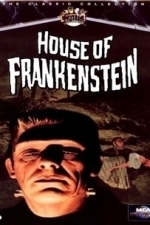


This "monster rally" approach would continue in the following film, House of Dracula, as well as the 1948 comedy Abbott and Costello Meet Frankenstein.
The plot: After escaping from prison, the evil Dr. Niemann (Boris Karloff) and his hunchbacked assistant, Daniel (J. Carrol Naish), plot their revenge against those who imprisoned them. For this, they recruit the powerful Wolf Man (Lon Chaney), Frankenstein's monster (Glenn Strange) and even Dracula himself (John Carradine). Niemann pursues those who wrong him, sending each monster out to do his dirty work. But his control on the monsters is weak at best and may prove to be his downfall.
Frankenstein Meets the Wolf Man (1943) had been the first on-screen pairing of two Universal Studios monsters, but The House of Frankenstein was the first multi-monster movie. Early drafts of the story reportedly involved more characters from the Universal stable, including the Mummy, the Ape Woman, the Mad Ghoul, and possibly the Invisible Man. Working titles—which included Chamber of Horrors (a reference to Lampini's travelling horror show) and The Devil's Brood—emphasized the multi-monster nature of the story.
The multi-monster approach, which emphasized box office appeal over continuity, was used in House of Dracula the following year and later in Abbott and Costello Meet Frankenstein. The House of Frankenstein marked Glenn Strange's debut as the monster. Strange, a former cowboy, had been a minor supporting player in dozens of low-budget Westerns over the preceding 15 years. He reprised the role in House of Dracula and Abbott and Costello Meet Frankenstein, and cemented the popular image of the monster as shambling, clumsy, and inarticulate. Boris Karloff, who had moved on from playing the monster to playing the mad scientist, reportedly coached Strange on how to play the role.
Some continuity errors are evident in the finished film. After Dracula is thrown from the carriage, he looks over to where his coffin has landed; in a close-up, part of his mustache is gone. Also, when Talbot transforms into the Wolf Man for the final time, his hands lack fur.
Karloff's performance in this film is his last in Universal's classic horror cycle.
Its a fun entertaining movie starring the uninversal monsters.