

Adobe Photoshop Sketch
Productivity and Social Networking
App
Draw with the power of the Photoshop painting engine and a variety of built-in brushes, pencils,...

Adobe Illustrator Draw
Productivity and Social Networking
App
Winner of the Tabby Award for Creation, Design and Editing! Create vector artwork with image and...

Adobe Comp CC
Productivity and Photo & Video
App
Voted “App Store Best of 2015” by Apple! Lay out an idea with real assets like photos, text,...

LumaFusion
Music and Photo & Video
App
LumaFusion is the most powerful multi-track video editor ever created for mobile devices. Used by...
videoediting bestvideoeditingapp professionalleveleditingapp

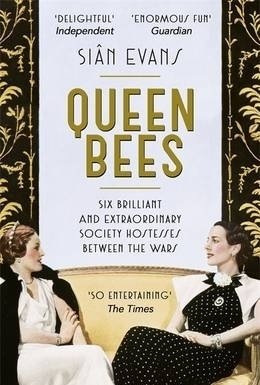

A spectacle of celebrity, talent and burning ambition, Queen Bees combines the biographical stories of six ambitious women who helped to shape the standards of British society between the two world wars. Londoner Siân Evans is a cultural historian who has previously worked with the Victoria and Albert Museum, National Trust and Design Museum, and takes great lengths to thoroughly research into her written subject in order to portray a highly accurate insight to the lives of historical figures. Due to the non-existent political status of women in the early 1900s, the women featured in this book are virtually unknown today, yet they had a great impact during the 20s and 30s and helped to shape the Britain of today.
Although not necessarily born into it, circumstances such as marriage meant these six women were regarded as upper class. In no particular order, the names impacting on the social revolution and thus featured in Queen Bees are as follows: Lady Nancy Astor, the first female MP; Lady Sybil Colefax, who became a friend of Edward VIII; Lady Emerald Cunard, also connected with the royal family; Mrs. Ronnie Greville, a rather formidable woman; Lady Edith Londonderry, the founder of the Women’s Legion; and Laura Corrigan, the youngest of the set. Evans talks the reader through these women’s careers as professional hostesses as they compete to throw the better party, entertaining famous writers and actors as well as members of royalty, both national and foreign.
What is perhaps the most interesting, and indeed the most worth learning, is the way a couple of these women altered the future of the British monarchy. Without their interference the future George VI would never have married Elizabeth Bowes-Lyon, and without their involvement in the relationship between Edward VIII and Wallis Simpson, George VI would never have come to the throne. This is such an important aspect of British history that has been widely left out and ignored. Without these hostesses influence we would all be experiencing a slightly different life.
In terms of the actual writing, Siân Evans manages fairly well to engage the reader as she relates the factual story in a more or less chronological way. A slight issue is the quick, often undetected, move from one woman to the next, resulting in a lot of confusion about who is who particularly at the beginning of the book. A lot of the narrative features other key figures from the same period and often moves away from the main characters, which, whilst interesting, is not what the reader necessarily expected from a book whose title Queen Bees suggested it was only going to be about the women’s lives.
Footnotes, quotes and extracts from letters and diaries help to make the book appear reliable, factual and believable. Some of the content, without back up, would have seemed rather fanciful or exaggerated. Queen Bees can be read as a source of entertainment or as a citation for historical research. What is found within these pages is a more unbiased account of the early twentieth century than would be found in numerous male dominated history textbooks.
Mature readers of all ages are likely to gain something from reading Queen Bees – pleasure, knowledge etc., however it is most likely to appeal to the contemporary feminist. With this in mind, be aware that the six hostesses were not feminists of their time; they were not involved in Suffragette movements and were fairly content to live off money earned by their husbands or fathers. Yet, on the other hand, they impacted on the future of Britain as much as the male politicians of the time. Highly political in content, Queen Bees is worth reading to discover our own history, but be prepared for initial confusion over who is who and rather lengthy paragraphs.
A spectacle of celebrity, talent and burning ambition, <i>Queen Bees</i> combines the biographical stories of six ambitious women who helped to shape the standards of British society between the two world wars. Londoner Siân Evans is a cultural historian who has previously worked with the <i>Victoria and Albert Museum, National Trust </i>and <i>Design Museum</i>, and takes great lengths to thoroughly research into her written subject in order to portray a highly accurate insight to the lives of historical figures. Due to the non-existent political status of women in the early 1900s, the women featured in this book are virtually unknown today, yet they had a great impact during the 20s and 30s and helped to shape the Britain of today.
Although not necessarily born into it, circumstances such as marriage meant these six women were regarded as upper class. In no particular order, the names impacting on the social revolution and thus featured in <i>Queen Bees</i> are as follows: Lady Nancy Astor, the first female MP; Lady Sybil Colefax, who became a friend of Edward VIII; Lady Emerald Cunard, also connected with the royal family; Mrs. Ronnie Greville, a rather formidable woman; Lady Edith Londonderry, the founder of the Women’s Legion; and Laura Corrigan, the youngest of the set. Evans talks the reader through these women’s careers as professional hostesses as they compete to throw the better party, entertaining famous writers and actors as well as members of royalty, both national and foreign.
What is perhaps the most interesting, and indeed the most worth learning, is the way a couple of these women altered the future of the British monarchy. Without their interference the future George VI would never have married Elizabeth Bowes-Lyon, and without their involvement in the relationship between Edward VIII and Wallis Simpson, George VI would never have come to the throne. This is such an important aspect of British history that has been widely left out and ignored. Without these hostesses influence we would all be experiencing a slightly different life.
In terms of the actual writing, Siân Evans manages fairly well to engage the reader as she relates the factual story in a more or less chronological way. A slight issue is the quick, often undetected, move from one woman to the next, resulting in a lot of confusion about who is who particularly at the beginning of the book. A lot of the narrative features other key figures from the same period and often moves away from the main characters, which, whilst interesting, is not what the reader necessarily expected from a book whose title <i>Queen Bees</i> suggested it was only going to be about the women’s lives.
Footnotes, quotes and extracts from letters and diaries help to make the book appear reliable, factual and believable. Some of the content, without back up, would have seemed rather fanciful or exaggerated. <i>Queen Bees</i> can be read as a source of entertainment or as a citation for historical research. What is found within these pages is a more unbiased account of the early twentieth century than would be found in numerous male dominated history textbooks.
Mature readers of all ages are likely to gain something from reading <i>Queen Bees</i> – pleasure, knowledge etc., however it is most likely to appeal to the contemporary feminist. With this in mind, be aware that the six hostesses were not feminists of their time; they were not involved in Suffragette movements and were fairly content to live off money earned by their husbands or fathers. Yet, on the other hand, they impacted on the future of Britain as much as the male politicians of the time. Highly political in content, <i>Queen Bees </i>is worth reading to discover our own history, but be prepared for initial confusion over who is who and rather lengthy paragraphs.

WeVideo video & photo editor
Photo & Video and Business
App
WeVideo’s free video editor for iPhone and iPad is the easiest, fastest and most fun way to...

Vintage Design Logo Maker - Poster & Logo Creator
Business and Productivity
App
••• We are over 6000 5-star rates in the US Store alone, thanks for your support! •••...

Bob Mann (459 KP) rated Phantom Thread (2017) in Movies
Sep 29, 2021
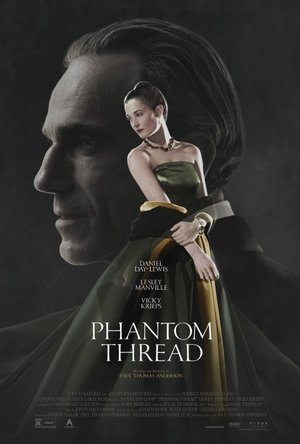


Reynolds Woodcock is the craftsman behind a world-renowned 1950’s fashion house, in demand from the elite classes and even royalty. He has a magnetic personality, is overtly self-confident, obsessive, a cruel bully and treats his girlfriends as chattels that he can tire of and dismiss from his life without a backward glance. Trying to keep the business and Reynolds on track, with ruthless efficiency, is his sister Cyril (Leslie Manville, “Maleficent“).
Looking for his next conquest during a trip to his seaside residence, he reels in blushing young waitress Alma (Vicky Krieps, “The Colony”). But he gets more than he bargains for.
This is a really exquisite and gentle film. Aside from some dubious fungi-related practices, there is no violence, no sex and – aside from about half a dozen well-chosen F-words – limited swearing (of which more below). This is a study of the developing relationship between the two protagonists, with little in the way of plot. Sounds dull? Far from it. This is two hours that flew by.
What it also features is (yet) another example of extremely strong women asserting their power. A scene (well trailed in Manville’s award snippets) where Cyril firmly puts Reynolds back in his box is brilliant: a real turning of tables with Woodcock meekly falling into line. And Alma makes for an incredibly rich and complicated character, one of the most interesting female roles I’ve seen this year so far.
It’s a stellar acting performance from Day-Lewis, and while Oldman fully deserves all of his award kudos for “Darkest Hour”, Day-Lewis delivers the goods without any of the make-up. It feels like Day-Lewis is a long way down the betting odds this year because “he always gets one”. He certainly gets my vote ahead of all of the other three nominees.
Kreips – not an actress I know – also brilliantly holds her own, and if it wasn’t such a strong female field this year she could well have been nominated.
Also worthy of note is the pervasive piano score by (suprisingly) Radiohead’s Jonny Greenwood. It’s really lovely and counterpoints the rest of the classical score nicely. Its BAFTA and Oscar nominations are both well deserved (though I would expect the Oscar to follow the BAFTA steer with “The Shape of Water“).
All in all, this is a real tour de force by writer/director Paul Thomas Anderson (“Inherent Vice”, “There Will Be Blood”). How much I enjoyed this film was a surprise to me, since I have no interest in the “fashion industry” (as my family will no doubt be quick to point out!) and I went to see this more out of ‘duty’ based on its Oscar buzz than because I really wanted to see it.
The big curiosity is why exactly the BBFC decided that this film was worthy of a 15 certificate rather than a 12A. Their comments on the film say “There is strong language (‘f**k’), as well as milder terms including ‘bloody’ and ‘hell’. Other issues include mild sex references and scenes of emotional upset. In one scene, a woman’s nipples are visible through her slip while she is measured for a dress.” For a 12A, the board say “The use of strong language (for example, ‘f***’) must be infrequent”. I didn’t count the f-words… but as I said I don’t think it amounts to more than a half-dozen. Is that “frequent”? And – SHOCK, HORROR… visible covered nipples you say?! Lock up your teenagers! When you look at the gentleness of this film versus the violence within “Black Panther”, you have to question this disparity.

Kyera (8 KP) rated Cress (The Lunar Chronicles, #3) in Books
Jan 31, 2018
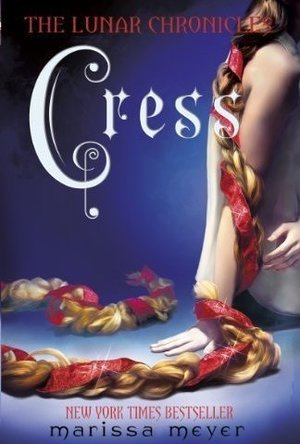

Whether I agree or not, many people find that Scarlet is their least favorite book in the series. As a result, I worry that they may not continue with the series at that point which would be a major mistake. Cress is an absolutely fantastic book and will hit you in the feels more times than I can count.
While they may not be my OTP, Cresswell is probably in my top five or 10 favorite ships. I've never really sat down and tried to figure it out. It's like trying to figure out which puppies in an entire room full of puppies are the cutest. Impossible. As much as I love Wolflet and Kaider, there is just that extra something that Cress and Thorne have.
For those familiar with the Disney movie, Tangled, their relationship is very similar (in my opinion). I absolutely adore the two of them together. While Thorne is a bit of a player, confident, a wanted criminal... he goes on this major character arc over the course of the series. Cress has this romanticized, hero view of him and he realizes that he wants to live up to that image.
I laughed so hard when Thorne barreled into the hallway yelling Cress and then ran right past the room. It both tugged at my heartstrings so much and made me roll my eyes. One of my favourite lines was "You came for me" because it just shows the new, unsure feelings between them while simultaneously showing that they're much deeper than either truly realizes yet. My heart melted.
It is fantastic to see how the characters grow and evolve over the course of the series. Kai starts out as a prince and completely unprepared for his responsibilities. He is thrust into his role much sooner than anticipated and he has to grow up really quickly. He has the weight of an entire people on his shoulders.
All Cinder ever wanted was to be a normal person and she finds out that her life is even more abnormal than she realized. Not only is she a cyborg, but she's Lunar. Not only is she a Lunar, but she's royalty. She has just as much if not more on her shoulders than Kai does. She is the one that people have been putting all of their hopes and dreams on for over a decade.
Cress has been stuck in a satellite by herself with no human interaction for a large portion of her life. Her whole life she had to escape into fictional stories in her own head because of her real life. She never learned to stand up for herself and she's not used to the real world. It was nice to see little elements of her bravery throughout the story despite the fact that that is not her nature.
Sadly, we don't really get to see any development from Scarlet or Wolf. Their stories in Cress are relatively non-existent. Despite the fact that they were the focus of the second book, I do think that it was a negative for me that one of the main pairs was essentially completely overlooked in this book. At the same time, I also have that feeling for Winter and Jacin in regards to the first two books and most of the third. We get little glimpses of them and spend a small amount of time with Jacin, but overall I don't feel like I know their characters whatsoever.
The author does continue the world building but the writing is predominantly focused on the characters and the plot. There are some really nice glimpses into small villages or communities in other places than we're used to. I think it is a nice blend between story and world so that these books are very accessible. It's not heavy world building that might make readers hesitant to dive into such rich, dense worlds (like high fantasy might be).
Overall, I think this is a fabulous novel and I would highly recommend the entire series to people even if science-fiction is not normally what you gravitate towards.