
Search

Debbiereadsbook (1821 KP) rated In Safe Hands in Books
Mar 19, 2019 (Updated Sep 29, 2019)
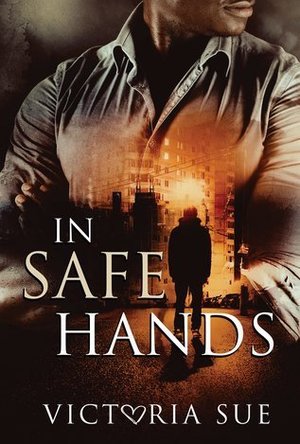

love love LOVED this one!
Independent reviewer for Divine Magazine, I was gifted my copy of this book.
Mav is. . . .broken, and thinks fixing things is downing a bottle of Jack. Crashing on his sister's sofa isn't doing him or her any favours. When Jamie calls him out to do something for her, Mav really has to dig deep to get out of his stupor. Meeting the new client, however, does wonders. Deacon needs some help. After a scandal last year left him penniless, he can't afford to pay for the protection he needs. someone is out to get him, and the bodies keep piling up. Mav needs to up his game, and when the threat comes to a 2 year old child, Deacon's niece, both Mav and Deacon know they would do anything to keep her safe, even if it means Mav breaks Deacon's heart.
I am, personally, not in a good place. Not a BAD place, just not doing so well and my reading is suffering. I said I would read this before the poop hit the fan, and I was concerned I would not be able to give this book my full attention, or worse, not be able to finish it at all.
BUT!!!
I bloody LOVED this book!
Mav is, by his own admission, one drink short of becoming an alcoholic. His sister takes him in, and he's drowning his sorrows every night. Losing his career, and his leg, after a helicopter was bombed while he was the pilot has soured Mav to life and he just wants to be left alone. His sister, Jamie, ain't having none of it! She ropes him into talking to a possible new client, while she attends another job for her private investigations business. Deacon, lead singer of a boy band who was spectacularly disgraced last, is the client. A reporter twisted some truths, and Deacon's life came crashing down around his ears. He lost custody of his niece. Now, no one believes him, that someone is following him. When things escalate to a break in at his flat, and said reporter turns up dead, the police start to take notice. All the while, as Deacon continues to fall, Mav holds him up, keeps him close.
I loved that things crept up on Deacon and Mav, the feelings they begin to have for each other. It's not that thunderbolt and lightning thing: more a sweeping rain storm that starts off as drizzle then increases in it's intensity til neither Mav nor Deacon can deny it any longer. Loved that, after the initial shock of seeing Mav's face, Deacon is like: okay, scars make you, YOU. Mav is concerned about the other scars, the ones on his leg and residual and again, Deacon is not at all bothered. It makes Mav see that maybe, just maybe, they can make it work.
I must admit, I had an inkling who might be doing what they were doing to Deacon, very early on. Something they said set off bells and it was great being able to watch it all unfold. I have no idea WHAT this person said, I really don't, but something they said went ding ding ding and when Mav puts the pieces together, oh my! That man's alpha-protect-whats0mine instinct went into massive overdrive! Loved that, when it all went down, Mav and Deacon both knew, with just a look, that they might not come out of this alive.
LOVED that the baddie gets a voice!
Mav and Deacon's story carries some difficult topics: drug abuse, alcohol abuse, PTSD, murder (in some detail from the baddie!) All difficult topics, but very well written, and the research shows. I was particularly impressed with the research into Mav's accident, his injuries and what he went through after losing his leg. That doesn't always come across in a way a lay person such as myself can fully comprehend, but Ms Sue nailed it here!
This book may well have been the one to kick start my ability to write a coherent review, or at least I think it makes sense!
5 full and shiny stars!
Michael Pauley narrates.
Having READ this book previously, what I was particularly looking for was the baddie’s voice. When I read it, something they said made my brain go ding, ding, fire alarm in the head, ding and I KNEW that this person was the baddie. HERE, in audio, I wanted to see if I could pick up just WHAT they said to make all the alarms go.
And I got . . . nothing. The voice gave nothing away! Pauley NAILED that, he really did! So, while I was glad I didn’t get what they said to set me off, I’m also a little miffed 😊
As for Deacon and Mav, Pauley nailed those guys too! Mav’s voice is deep and dark, much like the man. I had a whole different voice in my head when I was reading, but once Mav speaks with the voice Pauley gave him, I knew mine was all kinds of wrong and Pauley’s was the RIGHT voice for Mav. My voice for Deacon was very much like Pauley’s for him, though.
Pauley’s reading voice works very well for my shitty hearing, rolling deep and clear and even. There was no dipping for the voices, even when they were very emotional. The emotions still came across very well, just sometimes, when characters get particularly emotional, the voices dip slightly, but not here.
Michael Pauley is a firm favourite of a narrator and coupled with Victoria Sue’s work?? It can only get. . .
5 stars
**same worded review will appear elsewhere**
Mav is. . . .broken, and thinks fixing things is downing a bottle of Jack. Crashing on his sister's sofa isn't doing him or her any favours. When Jamie calls him out to do something for her, Mav really has to dig deep to get out of his stupor. Meeting the new client, however, does wonders. Deacon needs some help. After a scandal last year left him penniless, he can't afford to pay for the protection he needs. someone is out to get him, and the bodies keep piling up. Mav needs to up his game, and when the threat comes to a 2 year old child, Deacon's niece, both Mav and Deacon know they would do anything to keep her safe, even if it means Mav breaks Deacon's heart.
I am, personally, not in a good place. Not a BAD place, just not doing so well and my reading is suffering. I said I would read this before the poop hit the fan, and I was concerned I would not be able to give this book my full attention, or worse, not be able to finish it at all.
BUT!!!
I bloody LOVED this book!
Mav is, by his own admission, one drink short of becoming an alcoholic. His sister takes him in, and he's drowning his sorrows every night. Losing his career, and his leg, after a helicopter was bombed while he was the pilot has soured Mav to life and he just wants to be left alone. His sister, Jamie, ain't having none of it! She ropes him into talking to a possible new client, while she attends another job for her private investigations business. Deacon, lead singer of a boy band who was spectacularly disgraced last, is the client. A reporter twisted some truths, and Deacon's life came crashing down around his ears. He lost custody of his niece. Now, no one believes him, that someone is following him. When things escalate to a break in at his flat, and said reporter turns up dead, the police start to take notice. All the while, as Deacon continues to fall, Mav holds him up, keeps him close.
I loved that things crept up on Deacon and Mav, the feelings they begin to have for each other. It's not that thunderbolt and lightning thing: more a sweeping rain storm that starts off as drizzle then increases in it's intensity til neither Mav nor Deacon can deny it any longer. Loved that, after the initial shock of seeing Mav's face, Deacon is like: okay, scars make you, YOU. Mav is concerned about the other scars, the ones on his leg and residual and again, Deacon is not at all bothered. It makes Mav see that maybe, just maybe, they can make it work.
I must admit, I had an inkling who might be doing what they were doing to Deacon, very early on. Something they said set off bells and it was great being able to watch it all unfold. I have no idea WHAT this person said, I really don't, but something they said went ding ding ding and when Mav puts the pieces together, oh my! That man's alpha-protect-whats0mine instinct went into massive overdrive! Loved that, when it all went down, Mav and Deacon both knew, with just a look, that they might not come out of this alive.
LOVED that the baddie gets a voice!
Mav and Deacon's story carries some difficult topics: drug abuse, alcohol abuse, PTSD, murder (in some detail from the baddie!) All difficult topics, but very well written, and the research shows. I was particularly impressed with the research into Mav's accident, his injuries and what he went through after losing his leg. That doesn't always come across in a way a lay person such as myself can fully comprehend, but Ms Sue nailed it here!
This book may well have been the one to kick start my ability to write a coherent review, or at least I think it makes sense!
5 full and shiny stars!
Michael Pauley narrates.
Having READ this book previously, what I was particularly looking for was the baddie’s voice. When I read it, something they said made my brain go ding, ding, fire alarm in the head, ding and I KNEW that this person was the baddie. HERE, in audio, I wanted to see if I could pick up just WHAT they said to make all the alarms go.
And I got . . . nothing. The voice gave nothing away! Pauley NAILED that, he really did! So, while I was glad I didn’t get what they said to set me off, I’m also a little miffed 😊
As for Deacon and Mav, Pauley nailed those guys too! Mav’s voice is deep and dark, much like the man. I had a whole different voice in my head when I was reading, but once Mav speaks with the voice Pauley gave him, I knew mine was all kinds of wrong and Pauley’s was the RIGHT voice for Mav. My voice for Deacon was very much like Pauley’s for him, though.
Pauley’s reading voice works very well for my shitty hearing, rolling deep and clear and even. There was no dipping for the voices, even when they were very emotional. The emotions still came across very well, just sometimes, when characters get particularly emotional, the voices dip slightly, but not here.
Michael Pauley is a firm favourite of a narrator and coupled with Victoria Sue’s work?? It can only get. . .
5 stars
**same worded review will appear elsewhere**

Bob Mann (459 KP) rated The Front Runner (2018) in Movies
Sep 28, 2021
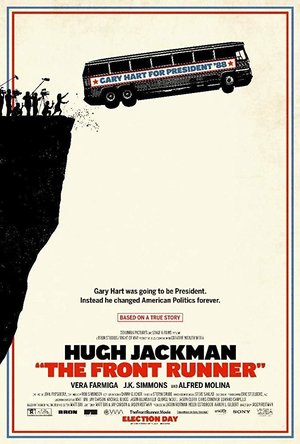


Candidate for a downfall.
We can all probably rattle off some of the classics movies with US politics as their backdrop. For me, “All the President’s Men”; “Primary Colors”; and “Frost/Nixon” might make that list. In the next tier down there are many great drama/thrillers – “Miss Sloane“; “The Post“; “The Ides of March”; “The American President”; “JFK” – and even some pretty funny comedies – “Dave” and “My Fellow Americans” for example. It’s actually quite difficult to think of many films on the subject that are outright dire, proving it remains a fertile ground for film-makers.
“The Front Runner” fortunately avoids this last category, but it’s certainly not good enough to make it into the ‘classics’ list either.
A true story.
The film is based on the true-story of US presidential hopeful Gary Hart (Hugh Jackman) and if you are NOT aware of the historical background then you might want to skip the rest of this review – and indeed all others – so you can see the film first and let the history come as a surprise to you.
Hart was younger than most candidates: good-looking, floppy-haired and refreshingly matter of fact in his dealings with the public and the press. Any interviews had to be about his politics: not about his family life with wife Lee (Vera Farmiga) and teenage daughter Andrea (Kaitlyn Dever).
Unfortunately, Hart has a weakness for a pretty face (or ten) and his marriage is rocky as a result: “Just don’t embarrass me” is Lee’s one requirement. His “nothing to hide” line to an intelligent Washington Post reporter – AJ Parker (a well cast Mamoudou Athie) – leads to a half-arsed stake-out by Miami Herald reporters and incriminating pictures linking Hart to a Miami pharmaceutical saleswoman Donna Rice (Sara Paxton). As the growing press tsunami rises, and his campaign manager (J.K. Simmons) gets more and more frustrated with him, can his candidacy survive and will his (now very much embarrassed) wife stick by him?
The turns.
Hugh Jackman is perfectly cast here; very believable as the self-centred, self-righteous and stubborn politician. But this central performance is surrounded by a strong team of supporting players. Vera Farmiga is superb as the wounded wife. Sara Paxton is heartbreaking as the intelligent college girl unfairly portrayed as a “slapper” by the media. The scenes between her and Hart-staffer Irene (Molly Ephraim), trying desperately to support her as best she can, are very nicely done. J.K Simmons as campaign manager Bill Dixon is as reliable as ever. And Alfred Molina turns up as the latest film incarnation of The Post’s Ben Bradlee – surely one of the most oft portrayed real-life journalists in film history.
“What did they just say”?
The biggest cause of dissatisfaction I have with the film is with the sound mixing. Was this a deliberate act by director Jason Reitman, to reflect the chaotic nature of political campaigning? Whether it was deliberate or not, much of the film’s dialogue – particularly in the first 30 minutes of the film – is drowned out by background noise. Sometimes I just longed for subtitles!
Just a little bit dull.
The screenplay, by Matt Bai (from his source book), Jay Carson (a Clinton staffer) and director Jason Reitman might align with the history, but the big problem is that the story’s just a little bit dull, particularly by today’s levels of scandal. This suffers the same fate as “House of Cards” (even before the Kevin Spacey allegations) in that the shocking realities of the Trump-era have progressively neutered the shock-factor of the fiction: to the point where it starts to become boring. Here, only once or twice does the screenplay hit a winning beat: for me, it was the scenes between Donna Rice and Irene Kelly and the dramatic press conference towards the end of the film. The rest of the time, the screenplay was perfectly serviceable but nothing spectacular.
When is a politician’s personal life private?
A core tenet of the film is Hart’s view that politics should be about the policies and not about the personality. Looking at the subject nowadays, it’s clearly a ridiculously idealistic viewpoint. Of course it matters. Politicians need to be trusted by their constituents (yeah, like that’s the case in the UK and the US at the moment!) and whether or not they slap their wives around or sleep with farm animals is clearly a material factor in that relationship. But this was clearly not as much the case in the 70’s as it is today, and the suggestion is that the Hart case was a turning point and a wake-up call to politicians around the world. (An interesting article by the Washington Post itself points out that this is also a simplistic view: that Hart should have been well aware of the dangerous game he was playing.)
Fidelity in politics.
Do you think that powerful politicos are driven to infidelity because they are powerful? Or that it is a characteristic of men who have the charisma to become political leaders in the first place? Such was the discussion my wife and I had in the car home after this film. Nature or political nurture? I’m still not sure.
It’s worth pointing out that to this day both Hart and Rice (interestingly, an alleged ex-girlfriend of Eagles front-man Don Henley) stick to their story that they never had sex.
Final thoughts.
The film’s perfectly watchable, has great acting, but is a little bit of a non-event. The end titles came and I thought “OK, that’s that then”…. nothing more. If you’re a fan of this style of historical political film then you probably won’t be disappointed by it; if not, probably best to wait and catch this on the TV.
“The Front Runner” fortunately avoids this last category, but it’s certainly not good enough to make it into the ‘classics’ list either.
A true story.
The film is based on the true-story of US presidential hopeful Gary Hart (Hugh Jackman) and if you are NOT aware of the historical background then you might want to skip the rest of this review – and indeed all others – so you can see the film first and let the history come as a surprise to you.
Hart was younger than most candidates: good-looking, floppy-haired and refreshingly matter of fact in his dealings with the public and the press. Any interviews had to be about his politics: not about his family life with wife Lee (Vera Farmiga) and teenage daughter Andrea (Kaitlyn Dever).
Unfortunately, Hart has a weakness for a pretty face (or ten) and his marriage is rocky as a result: “Just don’t embarrass me” is Lee’s one requirement. His “nothing to hide” line to an intelligent Washington Post reporter – AJ Parker (a well cast Mamoudou Athie) – leads to a half-arsed stake-out by Miami Herald reporters and incriminating pictures linking Hart to a Miami pharmaceutical saleswoman Donna Rice (Sara Paxton). As the growing press tsunami rises, and his campaign manager (J.K. Simmons) gets more and more frustrated with him, can his candidacy survive and will his (now very much embarrassed) wife stick by him?
The turns.
Hugh Jackman is perfectly cast here; very believable as the self-centred, self-righteous and stubborn politician. But this central performance is surrounded by a strong team of supporting players. Vera Farmiga is superb as the wounded wife. Sara Paxton is heartbreaking as the intelligent college girl unfairly portrayed as a “slapper” by the media. The scenes between her and Hart-staffer Irene (Molly Ephraim), trying desperately to support her as best she can, are very nicely done. J.K Simmons as campaign manager Bill Dixon is as reliable as ever. And Alfred Molina turns up as the latest film incarnation of The Post’s Ben Bradlee – surely one of the most oft portrayed real-life journalists in film history.
“What did they just say”?
The biggest cause of dissatisfaction I have with the film is with the sound mixing. Was this a deliberate act by director Jason Reitman, to reflect the chaotic nature of political campaigning? Whether it was deliberate or not, much of the film’s dialogue – particularly in the first 30 minutes of the film – is drowned out by background noise. Sometimes I just longed for subtitles!
Just a little bit dull.
The screenplay, by Matt Bai (from his source book), Jay Carson (a Clinton staffer) and director Jason Reitman might align with the history, but the big problem is that the story’s just a little bit dull, particularly by today’s levels of scandal. This suffers the same fate as “House of Cards” (even before the Kevin Spacey allegations) in that the shocking realities of the Trump-era have progressively neutered the shock-factor of the fiction: to the point where it starts to become boring. Here, only once or twice does the screenplay hit a winning beat: for me, it was the scenes between Donna Rice and Irene Kelly and the dramatic press conference towards the end of the film. The rest of the time, the screenplay was perfectly serviceable but nothing spectacular.
When is a politician’s personal life private?
A core tenet of the film is Hart’s view that politics should be about the policies and not about the personality. Looking at the subject nowadays, it’s clearly a ridiculously idealistic viewpoint. Of course it matters. Politicians need to be trusted by their constituents (yeah, like that’s the case in the UK and the US at the moment!) and whether or not they slap their wives around or sleep with farm animals is clearly a material factor in that relationship. But this was clearly not as much the case in the 70’s as it is today, and the suggestion is that the Hart case was a turning point and a wake-up call to politicians around the world. (An interesting article by the Washington Post itself points out that this is also a simplistic view: that Hart should have been well aware of the dangerous game he was playing.)
Fidelity in politics.
Do you think that powerful politicos are driven to infidelity because they are powerful? Or that it is a characteristic of men who have the charisma to become political leaders in the first place? Such was the discussion my wife and I had in the car home after this film. Nature or political nurture? I’m still not sure.
It’s worth pointing out that to this day both Hart and Rice (interestingly, an alleged ex-girlfriend of Eagles front-man Don Henley) stick to their story that they never had sex.
Final thoughts.
The film’s perfectly watchable, has great acting, but is a little bit of a non-event. The end titles came and I thought “OK, that’s that then”…. nothing more. If you’re a fan of this style of historical political film then you probably won’t be disappointed by it; if not, probably best to wait and catch this on the TV.

Gareth von Kallenbach (980 KP) rated Climax (2018) in Movies
Jul 2, 2019


If you’re going to see this film, it likely won’t be a huge surprise to you. Those that will buy a ticket already know who Gaspar Noé is and what he’s all about. Films like Irreversible and Enter the Void have defined him as an artist of scandal, evil and the extreme. Climax follows directly in the footsteps of those films, but at this point it does leave us wondering if there’s any room for growth in this writer/director or if we’ll just continue to get more of the same until we’re sufficiently numb to his offerings.
The setting for Noé’s latest tour of human horrors is the final rehearsal of a French dance troupe set to tour internationally. The film begins with the final scene of the movie and the ending credits. Then, just as your confusion has built to appropriate levels, things actually begin with videotaped interviews of all 22 members in an attempt to give you some semblance of character introduction. Shown on an older TV, the screen is surrounded by books and plays focused on ultra-negative philosophical views and subjects such as schizophrenia and suicide. So, despite the rather upbeat and optimistic responses of the prospective dancers, the tone is already being set for the madness that is about to commence.
From there we are taken to the big dance number. A ten-minute single shot involving the entire cast choreographed to 90’s EDM music. While this scene felt a little bit long, it did nearly as much to introduce the characters as the audition tapes shown earlier. Each dancer has a unique style and flair that executes a certain character development. Once the dance is complete it feels like the movie finally begins and the cast starts their post-rehearsal party. The soiree involves dancing (of course), drinking (homemade sangria) and some minor cocaine use. But it mostly consists of quick shots between different cast members taking part in some intergroup gossip. We are treated to one more (non-choreographed) dance scene with each individual showing their talents in a circle of their comrades, then we break again for more conversation. As the party continues on everyone starts to feel a little bit funny. They quickly deduce that the sangria has been spiked with LSD, but cannot determine who drugged them.
And this is where the hour-long journey into hell embarks from. The realization that they have been drugged seems to worry them very little, but does instantly turn them all against each other. The effects of the LSD ramp up rather quickly and as the cast members descend into madness the audience is treated to a myriad of trauma and depravity including: rape, incest, self-mutilation, child electrocution and an attempted abortion via a swift kick to the stomach. None of this should be any surprise to someone familiar with Noé’s work. But if this is your first experience with his particular brand of filmmaking, then be prepared to leave no perverted stone unturned.
One of the most impressive things about this film is how little preparation actually went into it. The entire film was shot in 15 days and edited to completion in only 3 months after that in order to meet the Cannes festival deadline. In addition, it was shot with a mere 5 pages of script. The majority of the film consists of both dancing and psychotic undulations inspired by web videos of people high on crack, ecstasy and acid which were hand-selected by Noé. So, despite the assumed need for structure that comes with extended tracking shots such as these, the whole movie is (surprisingly) mostly ad-libbed. Only the opening dance scene is choreographed with all of the remaining ones being the result of the how the dancers chose to express themselves through dance.
In the end you’ll be left wondering if all of the shock and awe that’s been served to you actually meant something, or if it was simply sensory overload for the sake of itself. And that’s where the movie really falls short. If Noé had meant for any sort of deeper meaning in this film, it was ultimately lost to extreme subtlety. I did my best to find the clever allegory here (French history and culture, biblical stories, etc.) and I admittedly fell short. “Birth is a unique opportunity. Life is an impossible collective. Death is an extraordinary experience,” read three title cards which flash throughout the journey of Climax. Although these sayings are poetic and beautiful, they seem to have little or loose application to the actual storyline.
The strongest feelings in this film are not evoked from any sort of meaning or fable-style lesson. They come from the distress and disgust brought about by the actions of the characters and, more so, the beautifully executed cinematography. Every filming technique meant to cause discomfort is present here including: long tracking shots, inverted imagery, black screen with nonlinear sounds and subliminal images. The application and combination of all of these effects means that much credit for this film should most likely go to Noé’s DP, Benoit Debie.
Fundamentally, the judgement for a Gaspar Noé film exists on a different scale than any other film. And while that concept can be new and exciting when the first shocking film debuts, you quickly realize that subsequent ones have to continue to push the boundaries that were originally broken. Otherwise you run the risk of becoming stale. We may have gotten to that point now with Noé. Climax brings very little new shock to the table for a director who has developed his reputation as a purveyor of wickedness. Those who attend this movie will be looking for him to push their horror to new levels, but will likely end up unfulfilled. Although the lack of a new frontier doesn’t remove all of the value for the film, Noé has made implicit promises through his other work which he has failed to deliver upon with Climax.
The setting for Noé’s latest tour of human horrors is the final rehearsal of a French dance troupe set to tour internationally. The film begins with the final scene of the movie and the ending credits. Then, just as your confusion has built to appropriate levels, things actually begin with videotaped interviews of all 22 members in an attempt to give you some semblance of character introduction. Shown on an older TV, the screen is surrounded by books and plays focused on ultra-negative philosophical views and subjects such as schizophrenia and suicide. So, despite the rather upbeat and optimistic responses of the prospective dancers, the tone is already being set for the madness that is about to commence.
From there we are taken to the big dance number. A ten-minute single shot involving the entire cast choreographed to 90’s EDM music. While this scene felt a little bit long, it did nearly as much to introduce the characters as the audition tapes shown earlier. Each dancer has a unique style and flair that executes a certain character development. Once the dance is complete it feels like the movie finally begins and the cast starts their post-rehearsal party. The soiree involves dancing (of course), drinking (homemade sangria) and some minor cocaine use. But it mostly consists of quick shots between different cast members taking part in some intergroup gossip. We are treated to one more (non-choreographed) dance scene with each individual showing their talents in a circle of their comrades, then we break again for more conversation. As the party continues on everyone starts to feel a little bit funny. They quickly deduce that the sangria has been spiked with LSD, but cannot determine who drugged them.
And this is where the hour-long journey into hell embarks from. The realization that they have been drugged seems to worry them very little, but does instantly turn them all against each other. The effects of the LSD ramp up rather quickly and as the cast members descend into madness the audience is treated to a myriad of trauma and depravity including: rape, incest, self-mutilation, child electrocution and an attempted abortion via a swift kick to the stomach. None of this should be any surprise to someone familiar with Noé’s work. But if this is your first experience with his particular brand of filmmaking, then be prepared to leave no perverted stone unturned.
One of the most impressive things about this film is how little preparation actually went into it. The entire film was shot in 15 days and edited to completion in only 3 months after that in order to meet the Cannes festival deadline. In addition, it was shot with a mere 5 pages of script. The majority of the film consists of both dancing and psychotic undulations inspired by web videos of people high on crack, ecstasy and acid which were hand-selected by Noé. So, despite the assumed need for structure that comes with extended tracking shots such as these, the whole movie is (surprisingly) mostly ad-libbed. Only the opening dance scene is choreographed with all of the remaining ones being the result of the how the dancers chose to express themselves through dance.
In the end you’ll be left wondering if all of the shock and awe that’s been served to you actually meant something, or if it was simply sensory overload for the sake of itself. And that’s where the movie really falls short. If Noé had meant for any sort of deeper meaning in this film, it was ultimately lost to extreme subtlety. I did my best to find the clever allegory here (French history and culture, biblical stories, etc.) and I admittedly fell short. “Birth is a unique opportunity. Life is an impossible collective. Death is an extraordinary experience,” read three title cards which flash throughout the journey of Climax. Although these sayings are poetic and beautiful, they seem to have little or loose application to the actual storyline.
The strongest feelings in this film are not evoked from any sort of meaning or fable-style lesson. They come from the distress and disgust brought about by the actions of the characters and, more so, the beautifully executed cinematography. Every filming technique meant to cause discomfort is present here including: long tracking shots, inverted imagery, black screen with nonlinear sounds and subliminal images. The application and combination of all of these effects means that much credit for this film should most likely go to Noé’s DP, Benoit Debie.
Fundamentally, the judgement for a Gaspar Noé film exists on a different scale than any other film. And while that concept can be new and exciting when the first shocking film debuts, you quickly realize that subsequent ones have to continue to push the boundaries that were originally broken. Otherwise you run the risk of becoming stale. We may have gotten to that point now with Noé. Climax brings very little new shock to the table for a director who has developed his reputation as a purveyor of wickedness. Those who attend this movie will be looking for him to push their horror to new levels, but will likely end up unfulfilled. Although the lack of a new frontier doesn’t remove all of the value for the film, Noé has made implicit promises through his other work which he has failed to deliver upon with Climax.
Bob Mann (459 KP) rated The Post (2017) in Movies
Sep 29, 2021
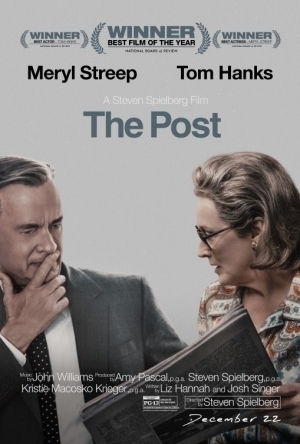

Landing the Hindenburg in a Thunderstorm.
What a combination: Streep, Hanks, Spielberg, Kaminski behind the camera, Williams behind the notes. What could possibly go wrong?
Nothing as it turns out. After, for me, the disappointment of “The BFG” here is Spielberg on firm ground and at the height of his game.
It’s 1971 and the New York Times is in trouble for publishing what became known as “The Pentagon Papers”: a damning account of multiple administration’s dodgy dealings around the Vietnam War, put together by Robert McNamara (Bruce Greenwood, “Star Trek: Into Darkness“) and meant for “posterity” – not for publication! Watching from the sidelines with frustration at their competitor’s scoop are the Washington Post’s editor Ben Bradlee (Tom Hanks, “Bridge of Spies“, “Inferno“) and the new owner Kay Graham (Meryl Streep, “Florence Foster Jenkins“, “Suffragette“). With immaculate timing, Graham is taking the paper public, so needs the newspaper embroiled in any sort of scandal like a hole in the head. But with the US First Amendment under pressure, will Graham and Bradlee put their business and their freedom at risk by publishing and being damned?
Bradlee (Tom Hanks) and Graham (Meryl Streep) in the Washington Post’s newsroom.
Both of the leads play characters that are quite strikingly out of character from their normal roles.
In a seamingly endless run of ‘kick-ass’ women in the movie driving seat, here I expected Streep to be in full “Iron Lady” mode, but in fact she starts the film as quite the opposite: nervous, timid, vascillating. For although the story is about “The Washington Post” and “The Pentagon Papers”, the real story is about Graham herself (Liz Hannah’s script is actually based on Graham’s autobiography). In many ways it’s about a woman, in a male world, overcoming her fear and finding her own voice. As has been demonstrated in many recent films (“Hidden Figures” for example) the working world for woman has changed so markedly since the 60’s and 70’s that it’s almost impossible to relate to these chavenistic attitudes. Graham is repeatedly downtrodden as “not good enough” by her underlings within earshot, and then thanks them “for their frankness”. When the women folk retire at dinner, to let the men-folk talk politics, Graham meekly goes with them. Even her father, for God’s sake, left the newspaper not to her but to her (now late) husband! It’s no surprise then that she is coming from a pretty low base of self-confidence, and her journey in the film – as expertly played by Streep – is an extraordinarily rousing one.
The real deal: Ben Bradlee and Kay Graham.
Hanks, normally the guy you’d most like to invite round for dinner (@tomhanks if you happen to be reading this sir, that’s a genuine invitation… we make a mean lasagne here!) also plays somewhat outside of his normal character here. As Bradlee, he is snappy, brusque and businesslike. Although I don’t think he could ever quite match the irascibility of the character’s portrayal by Jason Robards in the classic “All the President’s Men” – who could? – its a character with real screen presence.
The similarities with Alan J Pakula’s 1976 classic Watergate movie – one of my personal favourites – don’t stop there. The same sets that were once populated by Redford and Hoffman are gloriously reproduced with Spielberg and Janusz Kaminski delivering great tracking shots through the newsroom. (Watch out for Sacha Spielberg – daughter of Stephen and Kate Capshaw – who also turns up there delivering a package).
The scoop revealed: Odenkirk, Hanks and David Cross get the low-down.
The supporting cast includes Sarah Paulson (so memorable in “The Trial of O.J. Simpson”) as Bradlee’s wife Tony, Bradley Whitford (“The West Wing”, “Get Out“) and Tracy Letts (“The Big Short“) as two of Graham’s board advisors and Jesse Plemons (“The Program“, “Bridge of Spies“) as the lead legal advisor. Particularly impressive though is Bob Odenkirk (“Breaking Bad”) as Ben Bagdikian, Bradlee’s lead investigative reporter on the case: all stress, loose change and paranoia in his dealings with the leaky Daniel Ellsberg (Matthew Rhys).
Bagdikian (Bob Odenkirk) ordering a drink for himself and his travelling companion.
In a memorable piece of casting Richard Nixon is played by…. Richard Nixon. Although a silluohetted Curzon Dobell stalks the Oval office, the ex-president’s original phone recordings are played on the soundtrack. (There, I knew those recordings would be useful for something… thank heavens he kept them all!)
The film also demonstrates in fascinating style the newsprint business of yesteryear. When I click a button on my PC and a beautifully laser-printed page streams out of my Epson printer, it still seems like witchcraft to me! But it is extraordinary to think that newspapers in those days were put together by typesetters manually building up the pages from embossed metal letters laboriously slotted into a frame. Brilliantly evocative.
Ellsberg (Matthew Rhys) takes a risk.
If Spielberg has a fault, it is one of sentimentality – something that is pointed out in Susan Lacy’s superb HBO documentary on Spielberg (something I have yet to write a review on, but if you like Spielberg you should definitely seek out). Here he falls into that trap again, with an unnecessary bedroom scene between Graham and her daughter tipping the screenplay into mawkishness. It’s unnecessary since we don’t need the points raised rammed down our throats again. It’s something repeated in a rather bizarre final scene with Graham walking down the steps of the supreme court with admiring woman – only woman – watching her. These irritations tarnish for me what could have been a top-rated film.
But the movie is an impressive watch and older viewers, and anyone interested in American political history will, I think, love it. The film, especially with its nice epilogue, did make me immediately want to come home and put “All the President’s Men” on again… which is never a bad thing. Highly recommended.
Nothing as it turns out. After, for me, the disappointment of “The BFG” here is Spielberg on firm ground and at the height of his game.
It’s 1971 and the New York Times is in trouble for publishing what became known as “The Pentagon Papers”: a damning account of multiple administration’s dodgy dealings around the Vietnam War, put together by Robert McNamara (Bruce Greenwood, “Star Trek: Into Darkness“) and meant for “posterity” – not for publication! Watching from the sidelines with frustration at their competitor’s scoop are the Washington Post’s editor Ben Bradlee (Tom Hanks, “Bridge of Spies“, “Inferno“) and the new owner Kay Graham (Meryl Streep, “Florence Foster Jenkins“, “Suffragette“). With immaculate timing, Graham is taking the paper public, so needs the newspaper embroiled in any sort of scandal like a hole in the head. But with the US First Amendment under pressure, will Graham and Bradlee put their business and their freedom at risk by publishing and being damned?
Bradlee (Tom Hanks) and Graham (Meryl Streep) in the Washington Post’s newsroom.
Both of the leads play characters that are quite strikingly out of character from their normal roles.
In a seamingly endless run of ‘kick-ass’ women in the movie driving seat, here I expected Streep to be in full “Iron Lady” mode, but in fact she starts the film as quite the opposite: nervous, timid, vascillating. For although the story is about “The Washington Post” and “The Pentagon Papers”, the real story is about Graham herself (Liz Hannah’s script is actually based on Graham’s autobiography). In many ways it’s about a woman, in a male world, overcoming her fear and finding her own voice. As has been demonstrated in many recent films (“Hidden Figures” for example) the working world for woman has changed so markedly since the 60’s and 70’s that it’s almost impossible to relate to these chavenistic attitudes. Graham is repeatedly downtrodden as “not good enough” by her underlings within earshot, and then thanks them “for their frankness”. When the women folk retire at dinner, to let the men-folk talk politics, Graham meekly goes with them. Even her father, for God’s sake, left the newspaper not to her but to her (now late) husband! It’s no surprise then that she is coming from a pretty low base of self-confidence, and her journey in the film – as expertly played by Streep – is an extraordinarily rousing one.
The real deal: Ben Bradlee and Kay Graham.
Hanks, normally the guy you’d most like to invite round for dinner (@tomhanks if you happen to be reading this sir, that’s a genuine invitation… we make a mean lasagne here!) also plays somewhat outside of his normal character here. As Bradlee, he is snappy, brusque and businesslike. Although I don’t think he could ever quite match the irascibility of the character’s portrayal by Jason Robards in the classic “All the President’s Men” – who could? – its a character with real screen presence.
The similarities with Alan J Pakula’s 1976 classic Watergate movie – one of my personal favourites – don’t stop there. The same sets that were once populated by Redford and Hoffman are gloriously reproduced with Spielberg and Janusz Kaminski delivering great tracking shots through the newsroom. (Watch out for Sacha Spielberg – daughter of Stephen and Kate Capshaw – who also turns up there delivering a package).
The scoop revealed: Odenkirk, Hanks and David Cross get the low-down.
The supporting cast includes Sarah Paulson (so memorable in “The Trial of O.J. Simpson”) as Bradlee’s wife Tony, Bradley Whitford (“The West Wing”, “Get Out“) and Tracy Letts (“The Big Short“) as two of Graham’s board advisors and Jesse Plemons (“The Program“, “Bridge of Spies“) as the lead legal advisor. Particularly impressive though is Bob Odenkirk (“Breaking Bad”) as Ben Bagdikian, Bradlee’s lead investigative reporter on the case: all stress, loose change and paranoia in his dealings with the leaky Daniel Ellsberg (Matthew Rhys).
Bagdikian (Bob Odenkirk) ordering a drink for himself and his travelling companion.
In a memorable piece of casting Richard Nixon is played by…. Richard Nixon. Although a silluohetted Curzon Dobell stalks the Oval office, the ex-president’s original phone recordings are played on the soundtrack. (There, I knew those recordings would be useful for something… thank heavens he kept them all!)
The film also demonstrates in fascinating style the newsprint business of yesteryear. When I click a button on my PC and a beautifully laser-printed page streams out of my Epson printer, it still seems like witchcraft to me! But it is extraordinary to think that newspapers in those days were put together by typesetters manually building up the pages from embossed metal letters laboriously slotted into a frame. Brilliantly evocative.
Ellsberg (Matthew Rhys) takes a risk.
If Spielberg has a fault, it is one of sentimentality – something that is pointed out in Susan Lacy’s superb HBO documentary on Spielberg (something I have yet to write a review on, but if you like Spielberg you should definitely seek out). Here he falls into that trap again, with an unnecessary bedroom scene between Graham and her daughter tipping the screenplay into mawkishness. It’s unnecessary since we don’t need the points raised rammed down our throats again. It’s something repeated in a rather bizarre final scene with Graham walking down the steps of the supreme court with admiring woman – only woman – watching her. These irritations tarnish for me what could have been a top-rated film.
But the movie is an impressive watch and older viewers, and anyone interested in American political history will, I think, love it. The film, especially with its nice epilogue, did make me immediately want to come home and put “All the President’s Men” on again… which is never a bad thing. Highly recommended.

Jordan Binkerd (567 KP) rated Gideon's Angel in Books
Aug 15, 2019

Note: this review is transposted from my personal review blog, and so was originally written several years ago. I figured if I reposted it here, someone might actually read it….
I received my copy of Gideon’s Angel through the Goodreads FirstReads program. This in no way influences my review, except to ensure that I was able to get ahold of this book and thus review it. I have to say, I really enjoyed this one. I want to describe it as “steampunk,” but my understanding is that steampunk is usually set in the 1800s (or at least that level of tech and society) whereas this work is firmly set in 1653. If there’s already a term for pseudo-historical fiction with a fantasy touch set in that timeframe, I apologize for not knowing what it is and using it accordingly.
Things are not going well for Richard Treadwell. The English Civil War is over, the King’s Cavaliers lost to the forces of Parliament and Oliver Cromwell, and Charles I has been executed. Treadwell has managed to escape the destruction of his cause, and has spent the past eight years in exile in France, performing a delicate balancing act between loyalty to his exiled king* and his employer, Cardinal Mazarin. When Mazarin informs him that someone is using the forces of Hell to tip the balance in their favor and asks him to spy on the exile court to find out if it is one of the king’s supporters, Treadwell decides that it’s time to get out of Paris. He accepts a mission for one of the king’s more militant supporters that will take him back to his beloved England–to lead a Royalist uprising, one last try to oust Cromwell and his Puritan cronies. Treadwell has other business to tend to as well, including a wife who by now probably considers herself a widow. Unfortunately for Treadwell’s simple worldview, it soon becomes clear that Cromwell’s power is the only thing preventing the more radical Puritan elements from running roughshod over the whole country. Worse still, a demon from the pits of Hell has appeared to a radical Puritan sect masquerading as an angel of light and ordering the death of Cromwell so that the Kingdom of God may be fulfilled. Now instead of assassinating Cromwell Treadwell will be forced to save him–if he can find a way to fight the forces of Hell, gain some allies in his quest, and avoid d’Artagnan, a young Musketeer dispatched by the Cardinal to bear him back to Paris….
I really enjoyed this book. It’s not exactly “high literature,” but I think I’ve very well established that I care far more about a work’s entertainment value than whatever it is critics look for. The world Beal creates here feels very real, slipping in background historical information without making you feel like you’ve been lectured. Some readers will probably wish for more background on the English Civil War, and that’s fine. If they care that much, there are numerous good books on the subject. If they don’t, there’s a Wikipedia article that should give you a good rundown on what happened. Beal manages to evoke seventeenth-century London in all its grimy glory, much as it would have actually been aside from the fact that all the magic we dismiss as superstition is actually going on behind the scenes. Moreover, this magic very much resembles what you would find depicted in the folklore of the era without obvious modern embellishment. I’m not really all that well versed in the history of the Freemasons, so I can’t accurately speak to how they were portrayed here except to say that I very much doubt their claim to date back to the builders of the pyramids. Then again, I doubt they have the tools to summon demons too, so maybe I shouldn’t be too critical. Secondary characters generally proved to be interestingly complex, especially Billy Chard, but I am seeing criticism of how the female characters in the book act. They aren’t weak characters by any means, but they are constrained by their roles in society. Treadwell’s wife has pragmatically joined her fate to that of the officer who took over Treadwell’s land when he was banished and is pregnant with his child. Is she weak for this? Or is she a strong female doing what she has to in order to protect what is left of her family? Treadwell’s Parisian mistress follows him to England rather than stay in Paris and face the scandal of their liasion alone. Weak, for needing Treadwell by her side? Or strong, for following him into whatever dangers he may be facing? Finally, Isabelle decides to follow her father and the rest of Treadwell’s band into battle against the forces of Darkness, deciding that it would be better to fall by his side than live on without him. Possibly a sign of weakness, but look at her situation realistically. She and her father were driven from Spain for their Jewish heritage, her mother dying along the way. Jews do not fare well in the Christian world of the seventeenth century, not even in England. The lot of a young woman alone in the world is already hard enough in this time without adding the burden of religious and ethnic persecution. She would have no respectable means of supporting herself, and could conceivably find herself forced into prostitution–on her own if she was lucky, as no more than a slave if she was not. Is preferring death in battle to such a fate a sign of weakness or of strength? She certainly has no trouble speaking her mind, and in fact berates Treadwell severely for endangering her father when they first meet. I suppose I can understand where some people would find these characters and their portrayal to be weak and sexist, but I respectfully disagree. I submit that instead they are strong characters reacting realistically to a world where women are not treated equally–in fact, I would have more of a problem with them if they demonstrated anachronistic modern sensibilities.** The ending was a little deus ex machina, but on the whole I didn’t mind. I would say that I want to read a sequel, but I don’t think the author could come up with anything to top this in terms of personal impact on the characters–Treadwell’s internal conflict between hating Cromwell and having to save him is very well done, and I fear Beal would prove unable to find something equally interesting as a follow up. We never really got to find out what happened to Treadwell back during the Thirty Years War that introduced him to the world of angels and demons, so I could see maybe writing that up….I’d buy it, anyway.
CONTENT: R-rated language, occasionally harsh but I would argue not gratuitous. Moderately explicit sexual content, as you would expect from a work in this vein.*** A fair amount of violence, from both man and demon. Not usually too gory in its description. There is also a good deal of occult content, as the villains are summoning a demon they believe to be an angel. This demon’s lesser minions dog Treadwell and his friends, and there are multiple encounters with them. One is implied to be a golem, others appear as strange amalgamations of beast(s) and man. For me, this is adequately balanced by the recognition that, as powerful as the forces of Darkness are, God is far more powerful than they. Bottom line: if you’re mature enough to handle the other content, I don’t believe the occult elements should prove to be an issue.
*Charles I was executed, while his son Charles II went into exile. Just in case you were concerned with the historical accuracy of the book. So far as I can tell, this is pretty accurate. You know, aside from the demons and fictional characters roaming London…..
**Please understand, I’m neither defending nor endorsing the inequality of the seventeenth century. Neither is Clifford Beal, for that matter. I’m simply pointing out that it was how it was, and this was the world the characters would have come from. I’m all for equality, but to whitewash history and pretend it was different from it was….that way lies dangerous waters.
***This evokes more than anything a supernatural-tinged Alexandre Dumas novel for me….and you know how bawdry his musketeers could be when they wanted to be.
Original post: https://jordanbinkerd.wordpress.com/2013/10/24/review-gideons-angel-by-clifford-beal/
I received my copy of Gideon’s Angel through the Goodreads FirstReads program. This in no way influences my review, except to ensure that I was able to get ahold of this book and thus review it. I have to say, I really enjoyed this one. I want to describe it as “steampunk,” but my understanding is that steampunk is usually set in the 1800s (or at least that level of tech and society) whereas this work is firmly set in 1653. If there’s already a term for pseudo-historical fiction with a fantasy touch set in that timeframe, I apologize for not knowing what it is and using it accordingly.
Things are not going well for Richard Treadwell. The English Civil War is over, the King’s Cavaliers lost to the forces of Parliament and Oliver Cromwell, and Charles I has been executed. Treadwell has managed to escape the destruction of his cause, and has spent the past eight years in exile in France, performing a delicate balancing act between loyalty to his exiled king* and his employer, Cardinal Mazarin. When Mazarin informs him that someone is using the forces of Hell to tip the balance in their favor and asks him to spy on the exile court to find out if it is one of the king’s supporters, Treadwell decides that it’s time to get out of Paris. He accepts a mission for one of the king’s more militant supporters that will take him back to his beloved England–to lead a Royalist uprising, one last try to oust Cromwell and his Puritan cronies. Treadwell has other business to tend to as well, including a wife who by now probably considers herself a widow. Unfortunately for Treadwell’s simple worldview, it soon becomes clear that Cromwell’s power is the only thing preventing the more radical Puritan elements from running roughshod over the whole country. Worse still, a demon from the pits of Hell has appeared to a radical Puritan sect masquerading as an angel of light and ordering the death of Cromwell so that the Kingdom of God may be fulfilled. Now instead of assassinating Cromwell Treadwell will be forced to save him–if he can find a way to fight the forces of Hell, gain some allies in his quest, and avoid d’Artagnan, a young Musketeer dispatched by the Cardinal to bear him back to Paris….
I really enjoyed this book. It’s not exactly “high literature,” but I think I’ve very well established that I care far more about a work’s entertainment value than whatever it is critics look for. The world Beal creates here feels very real, slipping in background historical information without making you feel like you’ve been lectured. Some readers will probably wish for more background on the English Civil War, and that’s fine. If they care that much, there are numerous good books on the subject. If they don’t, there’s a Wikipedia article that should give you a good rundown on what happened. Beal manages to evoke seventeenth-century London in all its grimy glory, much as it would have actually been aside from the fact that all the magic we dismiss as superstition is actually going on behind the scenes. Moreover, this magic very much resembles what you would find depicted in the folklore of the era without obvious modern embellishment. I’m not really all that well versed in the history of the Freemasons, so I can’t accurately speak to how they were portrayed here except to say that I very much doubt their claim to date back to the builders of the pyramids. Then again, I doubt they have the tools to summon demons too, so maybe I shouldn’t be too critical. Secondary characters generally proved to be interestingly complex, especially Billy Chard, but I am seeing criticism of how the female characters in the book act. They aren’t weak characters by any means, but they are constrained by their roles in society. Treadwell’s wife has pragmatically joined her fate to that of the officer who took over Treadwell’s land when he was banished and is pregnant with his child. Is she weak for this? Or is she a strong female doing what she has to in order to protect what is left of her family? Treadwell’s Parisian mistress follows him to England rather than stay in Paris and face the scandal of their liasion alone. Weak, for needing Treadwell by her side? Or strong, for following him into whatever dangers he may be facing? Finally, Isabelle decides to follow her father and the rest of Treadwell’s band into battle against the forces of Darkness, deciding that it would be better to fall by his side than live on without him. Possibly a sign of weakness, but look at her situation realistically. She and her father were driven from Spain for their Jewish heritage, her mother dying along the way. Jews do not fare well in the Christian world of the seventeenth century, not even in England. The lot of a young woman alone in the world is already hard enough in this time without adding the burden of religious and ethnic persecution. She would have no respectable means of supporting herself, and could conceivably find herself forced into prostitution–on her own if she was lucky, as no more than a slave if she was not. Is preferring death in battle to such a fate a sign of weakness or of strength? She certainly has no trouble speaking her mind, and in fact berates Treadwell severely for endangering her father when they first meet. I suppose I can understand where some people would find these characters and their portrayal to be weak and sexist, but I respectfully disagree. I submit that instead they are strong characters reacting realistically to a world where women are not treated equally–in fact, I would have more of a problem with them if they demonstrated anachronistic modern sensibilities.** The ending was a little deus ex machina, but on the whole I didn’t mind. I would say that I want to read a sequel, but I don’t think the author could come up with anything to top this in terms of personal impact on the characters–Treadwell’s internal conflict between hating Cromwell and having to save him is very well done, and I fear Beal would prove unable to find something equally interesting as a follow up. We never really got to find out what happened to Treadwell back during the Thirty Years War that introduced him to the world of angels and demons, so I could see maybe writing that up….I’d buy it, anyway.
CONTENT: R-rated language, occasionally harsh but I would argue not gratuitous. Moderately explicit sexual content, as you would expect from a work in this vein.*** A fair amount of violence, from both man and demon. Not usually too gory in its description. There is also a good deal of occult content, as the villains are summoning a demon they believe to be an angel. This demon’s lesser minions dog Treadwell and his friends, and there are multiple encounters with them. One is implied to be a golem, others appear as strange amalgamations of beast(s) and man. For me, this is adequately balanced by the recognition that, as powerful as the forces of Darkness are, God is far more powerful than they. Bottom line: if you’re mature enough to handle the other content, I don’t believe the occult elements should prove to be an issue.
*Charles I was executed, while his son Charles II went into exile. Just in case you were concerned with the historical accuracy of the book. So far as I can tell, this is pretty accurate. You know, aside from the demons and fictional characters roaming London…..
**Please understand, I’m neither defending nor endorsing the inequality of the seventeenth century. Neither is Clifford Beal, for that matter. I’m simply pointing out that it was how it was, and this was the world the characters would have come from. I’m all for equality, but to whitewash history and pretend it was different from it was….that way lies dangerous waters.
***This evokes more than anything a supernatural-tinged Alexandre Dumas novel for me….and you know how bawdry his musketeers could be when they wanted to be.
Original post: https://jordanbinkerd.wordpress.com/2013/10/24/review-gideons-angel-by-clifford-beal/