
Search

Lyndsey Gollogly (2893 KP) rated Tenacity ( Rise of Iliri book 5) in Books
Feb 1, 2022


Contains spoilers, click to show
❗️❗️❗️ spoiler in last paragraph!‼️‼️
20 of 230
Kindle
Tenacity ( Rise of Iliri book 5)
By Auryn Hadley
WAR, HEARTBREAK, MORE WAR... AND A NEW FRIEND
In the fifth heart-stopping tale of her epic fantasy series The Rise of the Iliri, Auryn Hadley interjects a compelling sci-fi action fantasy with an emotionally charged reverse harem romance, setting the heart-warming experience of everyday community against the heart-wrenching reality of war - and the loss it causes. A jarring emotional roller coaster, Tenacity tells the age-old tale of pure love amidst a struggle between good and evil - but with a heaping dose of the light-hearted, cross-cultural birds and bees. This one has plenty of laughs. And plenty of heartbreak.
Slowly, region by region, the Lieutenant Salryc Luxx and her elite Black Blades are pushing forward and liberating an enslaved nation from the emperor's reign of terror. But the battle's not without consequence.
While scoping out the quiet remains of a fallen town - too quiet, actually - they discover scores of slaughtered families. But they also discover life: a young girl, locked in a cage below a tavern. No one is certain exactly what she is. She has unusual streaks of red, blonde, and white hair, and two different-colored eyes. She's fluent in iliri language, and she's terrified. So terrified that when an officer approaches to unlock her, her fear burns a hole in his armor.
The girl's name is Shaden. She's too young to know what exactly her talents are, or how to control them, but she's powerful. Immediately recognizing Sal as the fabled Kaisae, she trusts only Sal. Meanwhile, as the Black Blades continue their assault on a city thought to be impenetrable, Shaden manages to harness her power to help keep her newfound family of warriors safe. But for Sal's part, Shaden triggers difficult emotional memories of her own enslavement as a girl. And her longing to free anyone she can
With every win, Sal is bombarded by the thanks of those she rescued, and the disdain of those whose families she could not save. She can't sleep, she can't eat ... but she cannot stop fighting, either.
Victory is near. The Emperor is losing. He knows this. He knows Sal's responsible, and he knows exactly how to destroy her - go after those she loves most.
There’s me going a long nicely really enjoying the book and being back with Sal and her guys the Bam!!!! Not only does Balaec get killed in front of her she has to watch the dogs eat him! My heart broke this was a character death I won’t forget in a hurry poor Sal. Poor black blades. This was another brilliant book from a series I absolutely love! I just need to hide this one in the freezer (if you know you know) .
20 of 230
Kindle
Tenacity ( Rise of Iliri book 5)
By Auryn Hadley
WAR, HEARTBREAK, MORE WAR... AND A NEW FRIEND
In the fifth heart-stopping tale of her epic fantasy series The Rise of the Iliri, Auryn Hadley interjects a compelling sci-fi action fantasy with an emotionally charged reverse harem romance, setting the heart-warming experience of everyday community against the heart-wrenching reality of war - and the loss it causes. A jarring emotional roller coaster, Tenacity tells the age-old tale of pure love amidst a struggle between good and evil - but with a heaping dose of the light-hearted, cross-cultural birds and bees. This one has plenty of laughs. And plenty of heartbreak.
Slowly, region by region, the Lieutenant Salryc Luxx and her elite Black Blades are pushing forward and liberating an enslaved nation from the emperor's reign of terror. But the battle's not without consequence.
While scoping out the quiet remains of a fallen town - too quiet, actually - they discover scores of slaughtered families. But they also discover life: a young girl, locked in a cage below a tavern. No one is certain exactly what she is. She has unusual streaks of red, blonde, and white hair, and two different-colored eyes. She's fluent in iliri language, and she's terrified. So terrified that when an officer approaches to unlock her, her fear burns a hole in his armor.
The girl's name is Shaden. She's too young to know what exactly her talents are, or how to control them, but she's powerful. Immediately recognizing Sal as the fabled Kaisae, she trusts only Sal. Meanwhile, as the Black Blades continue their assault on a city thought to be impenetrable, Shaden manages to harness her power to help keep her newfound family of warriors safe. But for Sal's part, Shaden triggers difficult emotional memories of her own enslavement as a girl. And her longing to free anyone she can
With every win, Sal is bombarded by the thanks of those she rescued, and the disdain of those whose families she could not save. She can't sleep, she can't eat ... but she cannot stop fighting, either.
Victory is near. The Emperor is losing. He knows this. He knows Sal's responsible, and he knows exactly how to destroy her - go after those she loves most.
There’s me going a long nicely really enjoying the book and being back with Sal and her guys the Bam!!!! Not only does Balaec get killed in front of her she has to watch the dogs eat him! My heart broke this was a character death I won’t forget in a hurry poor Sal. Poor black blades. This was another brilliant book from a series I absolutely love! I just need to hide this one in the freezer (if you know you know) .
Hazel (1853 KP) rated Summer Days and Summer Nights: Twelve Summer Romances in Books
Dec 17, 2018

<i>This ARC was provided by the publisher via NetGalley in exchange for an honest review </i>
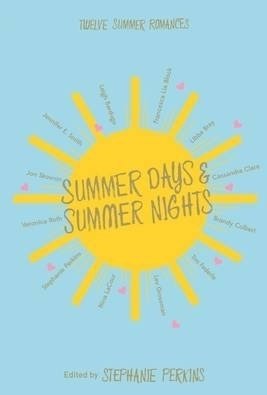
Stephanie Perkins, the best selling author of <i>Anna and the French Kiss</i> has compiled a second anthology of short stories. Twelve selected tales have been included from a variety of young adult authors including: Libba Bray, Veronica Roth, Cassandra Clare and Jennifer E. Smith. For those that have read Perkins’ previous anthology, <i>My True Love Gave To Me</i>, the concept is the same. Twelve love stories set in, as the title, <i>Summer Days and Summer Nights</i>, strongly suggests, the summer.
What can be expected from all the stories in this collection is that they fit snuggly into the Romance genre of young adult fiction. The way the authors decided to tackle this, however, was up to their own interpretations. Thus, the final outcome is a selection of works that fall into a variety of categories: fantasy, contemporary, LGBT, horror, sci-fi etc.
As a result there are a number of different character types and storylines, suggesting that there is bound to be something for everyone. There are lovey-dovey stories, heart-wrenching stories, exciting action stories, implying that there will be at least one you will favour, and hopefully make purchase worthwhile.
It is not merely love that can be found between these pages, so if you are, like me, not overly impressed with teenage love stories, there are other themes to focus on. Many of the main characters are nearing the end of their schooling and thinking about the future: college, perhaps. Readers discover, and possibly relate to, their hopes, doubts and fears of what is to come. Yet while these thoughts are buzzing in their heads they are also trying to enjoy their summers, some with summer jobs, others hanging out with friends. Alongside all of this are darker issues of depression, cancer and parents divorcing; events that many teenagers unfortunately have to deal with. So, throughout all the make-ups and break-ups, there is so much more going on under the surface.
It is always difficult to decide what age range “Young Adult” refers to. Some may assume it is anyone in their teens, however in the case of <i>Summer Days and Summer Nights</i> I would label it a book for older teenagers, those of similar ages to the characters depicted: sixteen to nineteen. This is due to the slightly adult themes of a few of the stories and the amount of swearing many of the authors resort to.
Unfortunately for me, I did not find a perfect story within this collection. There were some I enjoyed more than others; likewise there were some I was not keen on at all. It is for this reason I have only given a rating of three stars. I do not want to put prospective readers off however as this is merely a case of personal preferences and not a true reflection of the authors’ exceptional writing skills.
Stephanie Perkins, the best selling author of <i>Anna and the French Kiss</i> has compiled a second anthology of short stories. Twelve selected tales have been included from a variety of young adult authors including: Libba Bray, Veronica Roth, Cassandra Clare and Jennifer E. Smith. For those that have read Perkins’ previous anthology, <i>My True Love Gave To Me</i>, the concept is the same. Twelve love stories set in, as the title, <i>Summer Days and Summer Nights</i>, strongly suggests, the summer.
What can be expected from all the stories in this collection is that they fit snuggly into the Romance genre of young adult fiction. The way the authors decided to tackle this, however, was up to their own interpretations. Thus, the final outcome is a selection of works that fall into a variety of categories: fantasy, contemporary, LGBT, horror, sci-fi etc.
As a result there are a number of different character types and storylines, suggesting that there is bound to be something for everyone. There are lovey-dovey stories, heart-wrenching stories, exciting action stories, implying that there will be at least one you will favour, and hopefully make purchase worthwhile.
It is not merely love that can be found between these pages, so if you are, like me, not overly impressed with teenage love stories, there are other themes to focus on. Many of the main characters are nearing the end of their schooling and thinking about the future: college, perhaps. Readers discover, and possibly relate to, their hopes, doubts and fears of what is to come. Yet while these thoughts are buzzing in their heads they are also trying to enjoy their summers, some with summer jobs, others hanging out with friends. Alongside all of this are darker issues of depression, cancer and parents divorcing; events that many teenagers unfortunately have to deal with. So, throughout all the make-ups and break-ups, there is so much more going on under the surface.
It is always difficult to decide what age range “Young Adult” refers to. Some may assume it is anyone in their teens, however in the case of <i>Summer Days and Summer Nights</i> I would label it a book for older teenagers, those of similar ages to the characters depicted: sixteen to nineteen. This is due to the slightly adult themes of a few of the stories and the amount of swearing many of the authors resort to.
Unfortunately for me, I did not find a perfect story within this collection. There were some I enjoyed more than others; likewise there were some I was not keen on at all. It is for this reason I have only given a rating of three stars. I do not want to put prospective readers off however as this is merely a case of personal preferences and not a true reflection of the authors’ exceptional writing skills.
Sophia (Bookwyrming Thoughts) (530 KP) rated Sky Without Stars (System Divine, #1) in Books
Jan 23, 2020

<b><i>I received this book for free from Publisher in exchange for an honest review. This does not affect my opinion of the book or the content of my review.</i></b>
<h2><strong>I totally skipped over <em>Sky Without Stars</em> at first.</strong></h2>
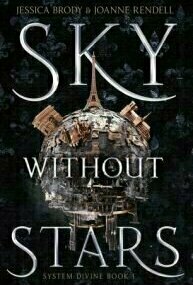
Hello, I'm confessing that I scrolled straight past <em>Sky Without Stars</em> until someone said the words, "<em>Les Misérables</em> in space."
Then all the grabby hands came out because <em>I love that movie</em> AND I love space??? And I sure as hell am not going to read 1000+ pages of the classic. <s>Hahaha, required reading scarred me.</s>
<h2><em><strong>Sky Without Stars</strong></em><strong> has the feel of <em>Les Misérables.</em></strong></h2>
It's been like 5+ years since I <em>watched</em> the movie so I don't remember much from the movie aside from the French revolution. I also recall having a fascination with Éponine, who I don't recall having much screentime. Despite not remembering much from the musical, <em>Sky Without Stars</em> gave off the vibes and had many elements frequently nodding to the classic.
<h3><strong>The different perspectives worked in favor.</strong></h3>
This whopping novel is divided between three different characters who will all eventually play a role in the brewing revolution on Laterre. With such a long length, having one perspective could have easily bogged down the story and be boring. But having three characters who each brought their own perspective and struggles? I enjoyed learning about each of them while reading <em>Sky Without Stars</em>.
<strong>Chatine:</strong> Chatine, based on Éponine (I think?), is by far my favorite perspective out of the three. She dresses up as a boy to go about her life in the Frets because she feels being a girl would put her at a disadvantage (and it really would). With the goal of leaving Laterre one day, she goes about her life stealing on the streets to save up for the passage.
<strong>Alouette:</strong> Y'all, I hated Cosette for some reason but I adore Alouette??? Brody and Rendell give Cosette a very nice upgrade here in <em>Sky Without Stars</em> that fit into the timeframe here! Alouette, despite not knowing much of her past and living underground, is curious and crafty as she occasionally navigates aboveground.
<strong>Marcellus:</strong> Poor Marcellus is divided between believing his grandfather as he's always had growing up or his now-deemed-traitor former governess. Despite being the least interesting perspective I read, I enjoy seeing his internal conflict and want to know what he will do in later books.
<h3><strong>There's apparently a love triangle.</strong></h3>
Younger me found the revolution too fascinating to care about trivial things such as romance. Lo and behold, I didn't even notice the love triangle until near the end, whoops. However, romance is a minor aspect of <em>Sky Without Stars,</em> and I found myself more swept away by the world.
<h2><strong>A lot of worldbuilding on Laterre.</strong></h2>
Drop yourselves into a rocket ship and let's go soaring into space because the worldbuilding is A+! Sometimes I found myself overwhelmed because I am a character development and fast-paced action person in books. However, I think it's well worth going through nearly 600 pages of mostly setup. Brody and Rendell will sweep you away to another world while bringing in elements from the original.
<h2><strong>Solid beginning to a series.</strong></h2>
<em>Sky Without Stars</em> is a solid start as a first novel, and I enjoyed seeing Brody's and Rendell's take on <em>Les Misérables</em>! This book is perfect for those who are fans of the musical or enjoy a good sci-fi with a brewing rebellion on another planet.
<a href="https://bookwyrmingthoughts.com/sky-without-stars-by-jessica-brody-and-joanne-rendell/"; target="_blank">This review was originally posted on Bookwyrming Thoughts</a>
<h2><strong>I totally skipped over <em>Sky Without Stars</em> at first.</strong></h2>
Hello, I'm confessing that I scrolled straight past <em>Sky Without Stars</em> until someone said the words, "<em>Les Misérables</em> in space."
Then all the grabby hands came out because <em>I love that movie</em> AND I love space??? And I sure as hell am not going to read 1000+ pages of the classic. <s>Hahaha, required reading scarred me.</s>
<h2><em><strong>Sky Without Stars</strong></em><strong> has the feel of <em>Les Misérables.</em></strong></h2>
It's been like 5+ years since I <em>watched</em> the movie so I don't remember much from the movie aside from the French revolution. I also recall having a fascination with Éponine, who I don't recall having much screentime. Despite not remembering much from the musical, <em>Sky Without Stars</em> gave off the vibes and had many elements frequently nodding to the classic.
<h3><strong>The different perspectives worked in favor.</strong></h3>
This whopping novel is divided between three different characters who will all eventually play a role in the brewing revolution on Laterre. With such a long length, having one perspective could have easily bogged down the story and be boring. But having three characters who each brought their own perspective and struggles? I enjoyed learning about each of them while reading <em>Sky Without Stars</em>.
<strong>Chatine:</strong> Chatine, based on Éponine (I think?), is by far my favorite perspective out of the three. She dresses up as a boy to go about her life in the Frets because she feels being a girl would put her at a disadvantage (and it really would). With the goal of leaving Laterre one day, she goes about her life stealing on the streets to save up for the passage.
<strong>Alouette:</strong> Y'all, I hated Cosette for some reason but I adore Alouette??? Brody and Rendell give Cosette a very nice upgrade here in <em>Sky Without Stars</em> that fit into the timeframe here! Alouette, despite not knowing much of her past and living underground, is curious and crafty as she occasionally navigates aboveground.
<strong>Marcellus:</strong> Poor Marcellus is divided between believing his grandfather as he's always had growing up or his now-deemed-traitor former governess. Despite being the least interesting perspective I read, I enjoy seeing his internal conflict and want to know what he will do in later books.
<h3><strong>There's apparently a love triangle.</strong></h3>
Younger me found the revolution too fascinating to care about trivial things such as romance. Lo and behold, I didn't even notice the love triangle until near the end, whoops. However, romance is a minor aspect of <em>Sky Without Stars,</em> and I found myself more swept away by the world.
<h2><strong>A lot of worldbuilding on Laterre.</strong></h2>
Drop yourselves into a rocket ship and let's go soaring into space because the worldbuilding is A+! Sometimes I found myself overwhelmed because I am a character development and fast-paced action person in books. However, I think it's well worth going through nearly 600 pages of mostly setup. Brody and Rendell will sweep you away to another world while bringing in elements from the original.
<h2><strong>Solid beginning to a series.</strong></h2>
<em>Sky Without Stars</em> is a solid start as a first novel, and I enjoyed seeing Brody's and Rendell's take on <em>Les Misérables</em>! This book is perfect for those who are fans of the musical or enjoy a good sci-fi with a brewing rebellion on another planet.
<a href="https://bookwyrmingthoughts.com/sky-without-stars-by-jessica-brody-and-joanne-rendell/"; target="_blank">This review was originally posted on Bookwyrming Thoughts</a>

TheDefunctDiva (304 KP) rated The Fly (1986) in Movies
Mar 13, 2021 (Updated Mar 15, 2021)
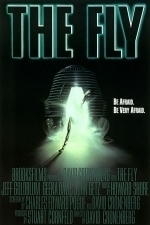
Come Fly With Me...
Contains spoilers, click to show
The Fly, Directed by David Cronenberg, 1986
To the victor go the spoils. To the reader, go the spoilers.
We watched The Fly the other night. I observed, with fond amusement, that the energetic and quirky Jeff Goldblum always seems to star as himself. In this film, he plays a scientist named Seth Brundle. His offbeat handsomeness pairs well with the pale beauty of Geena Davis, who stars alongside him as journalist Veronica Quaife. As the two characters hit it off, I tried to ignore the fact that Goldblum’s character came off as somewhat creepy.
Then we were introduced to Veronica’s ex-boyfriend, who is also her boss. Stathis, played by John Getz, is unhinged. His performance was exaggerated, almost a caricature. He presents himself as the pinnacle alpha-male. Talk about a stalker. His attempts to control Veronica, and his jealousy, were epic. I commented that the scariest thing about this movie was Veronica’s ex. Little did I know what the rest of the film had in store.
Seth, an undiscovered genius, has invented a transporter. Seth shows Veronica how his invention works by transporting her stocking from one pod to another. Veronica wants to publish a story about it, but Seth insists that his technology is not ready. Seth and Veronica become involved, and she helps document his experiments.
Later, things get hairy. Naturally, they want to see if the pods are capable of transporting living beings. Instead of experimenting on a bug, or a mouse, or a smaller creature, they attempt to transport a full-sized monkey.
Suffice to say, things do not go well. Kudos to the special effects team for creating that pile of retch.
More modifications are made, and another monkey survives the transportation trip.
The romance grows between Seth and Veronica. I had a hard time buying into the chemistry between Goldblum and Davis. They both seemed a little distant. Regardless, the love story pushes forward. There is even talk of the pair going away together “like an old married couple.” Then Veronica’s boss throws a wrench in the mix. Veronica is forced to deal with his antics. Seth, who is also a bit of a jealous type, gets drunk and sends himself through the transporter, since the monkey seemed fine.
Then there comes the stuff of nightmares. Seth isn’t himself. He is immediately charged with manic energy. He performs quite an impressive gymnastics routine (thank you, stunt Goldblum).Veronica is clearly distraught that her boyfriend is losing it.
The physical metamorphosis begins. Seth develops weird, wiry hairs protruding from a cut on his back. His sex drive goes wonky, and when he alienates Veronica, he finds a random lady from a bar to sleep with. His complexion worsens dramatically. He discovers that his machine has melded his genetic information with the DNA of a fly that was in the pod of the transporter with him. THE DNA FUSED AT A MOLECULAR LEVEL. This, my dear viewers, is not good. Not the sort of thing you can get addressed at your nearest urgent care clinic.
Things get worse, and incredibly gross, from there. Fingernails fall off and bug juice oozes. The makeup and special effects departments did an extremely convincing job. I felt incredibly bad for this seemingly highly intelligent man. My boyfriend kept calling for a flame thrower.
Veronica tries to help, and is empathetic. But watching your newfound love deteriorate so rapidly, and being powerless to help, is extremely traumatic. Davis brought her A-game to this portion of the performance. And, true to the sci-fi soap opera plot, she discovers that she is pregnant with Seth’s baby.
I don’t want to spoil the ending for you. But do you imagine this story ends well? I had hope. But it was squashed like a bug. If you have the stomach for good, old-fashioned movie gore, and you like Weird Science with a touch of Bad Romance, this film is for you.
To the victor go the spoils. To the reader, go the spoilers.
We watched The Fly the other night. I observed, with fond amusement, that the energetic and quirky Jeff Goldblum always seems to star as himself. In this film, he plays a scientist named Seth Brundle. His offbeat handsomeness pairs well with the pale beauty of Geena Davis, who stars alongside him as journalist Veronica Quaife. As the two characters hit it off, I tried to ignore the fact that Goldblum’s character came off as somewhat creepy.
Then we were introduced to Veronica’s ex-boyfriend, who is also her boss. Stathis, played by John Getz, is unhinged. His performance was exaggerated, almost a caricature. He presents himself as the pinnacle alpha-male. Talk about a stalker. His attempts to control Veronica, and his jealousy, were epic. I commented that the scariest thing about this movie was Veronica’s ex. Little did I know what the rest of the film had in store.
Seth, an undiscovered genius, has invented a transporter. Seth shows Veronica how his invention works by transporting her stocking from one pod to another. Veronica wants to publish a story about it, but Seth insists that his technology is not ready. Seth and Veronica become involved, and she helps document his experiments.
Later, things get hairy. Naturally, they want to see if the pods are capable of transporting living beings. Instead of experimenting on a bug, or a mouse, or a smaller creature, they attempt to transport a full-sized monkey.
Suffice to say, things do not go well. Kudos to the special effects team for creating that pile of retch.
More modifications are made, and another monkey survives the transportation trip.
The romance grows between Seth and Veronica. I had a hard time buying into the chemistry between Goldblum and Davis. They both seemed a little distant. Regardless, the love story pushes forward. There is even talk of the pair going away together “like an old married couple.” Then Veronica’s boss throws a wrench in the mix. Veronica is forced to deal with his antics. Seth, who is also a bit of a jealous type, gets drunk and sends himself through the transporter, since the monkey seemed fine.
Then there comes the stuff of nightmares. Seth isn’t himself. He is immediately charged with manic energy. He performs quite an impressive gymnastics routine (thank you, stunt Goldblum).Veronica is clearly distraught that her boyfriend is losing it.
The physical metamorphosis begins. Seth develops weird, wiry hairs protruding from a cut on his back. His sex drive goes wonky, and when he alienates Veronica, he finds a random lady from a bar to sleep with. His complexion worsens dramatically. He discovers that his machine has melded his genetic information with the DNA of a fly that was in the pod of the transporter with him. THE DNA FUSED AT A MOLECULAR LEVEL. This, my dear viewers, is not good. Not the sort of thing you can get addressed at your nearest urgent care clinic.
Things get worse, and incredibly gross, from there. Fingernails fall off and bug juice oozes. The makeup and special effects departments did an extremely convincing job. I felt incredibly bad for this seemingly highly intelligent man. My boyfriend kept calling for a flame thrower.
Veronica tries to help, and is empathetic. But watching your newfound love deteriorate so rapidly, and being powerless to help, is extremely traumatic. Davis brought her A-game to this portion of the performance. And, true to the sci-fi soap opera plot, she discovers that she is pregnant with Seth’s baby.
I don’t want to spoil the ending for you. But do you imagine this story ends well? I had hope. But it was squashed like a bug. If you have the stomach for good, old-fashioned movie gore, and you like Weird Science with a touch of Bad Romance, this film is for you.

Haley Mathiot (9 KP) rated Soul Catcher (The Outsider #1) in Books
Apr 27, 2018
Soul Catcher by Leigh Bridger
Genre: Sci-fi, Romance
ISBN: 9780982175682
Rating: 4
Livia hasn't had a perfect life—in fact she hasn't even had a good life. It all started when her father died when she was young, then got worse when her mother and baby brother died in a fire that she may or may not have started. She also starts painting pictures of evil horrible demons in her sleep, and is forced to burn the pictures and ban them… but one demon escapes, and comes for her.
She finds out that he had been pursuing her in every life—she's been reincarnated? what?—and has killed her every time for the past 200+ years. She also finds out that she has a soul mate, (who jumped into the body that the demon had used to hurt her, and now she can't look at him without getting sick) but has hidden herself from him in almost every life, subconsciously, because of something that happened in the past. She and Ian set off to find answers and to kill the pig-faced demon… for good this time. But this time ends up being the most dangerous life she's ever lived.
Soul Catcher was an addicting read. I would have read it in one sitting if I'd been allowed. It actually stuck with me all night and I'm pretty sure I dreamed about it.
I liked the philosophy of the world that Livia lived in. There were soul jumpers, like Ian and Dante, who could jump into any body he needed to be in at the time. There were soul catchers like her, who could banish dark spirits and talk to the light ones. The plot itself was very complex, and every chapter added something new to the story. One thing that made Soul Catcher stand out was how Livia and Ian's love grew. It wasn't immediate you're-my-soul-mate-you're-perfect-for-me kind of love. It was a lot more real than that. Livia starts by trying to avoid him at all costs, but ends up having to go on a trip with him to find out about their pasts. You could say they "bonded," or you could say that Ian finally got to her—even while he was in the body she hated passionately—either way, their love was real enough to be believable.
I really liked Livia, even though she had her downfalls and her insecurities. She was definitely the bad-ass heroine we know and love: slightly sarcastic, very obnoxious, stubborn as an ox, and head over heels in love but unwilling to admit it because she sees it as a weakness. Ian was a great character: he'd have to be to put up with Livia. He'd do anything for her, is dying for her to love him, thinks she is the most beautiful girl in the world—and even bends so low as to trick her into kissing him (she didn't appreciate that.). But he's all light-hearted, fun to be around, with a sexy Irish accent.
I really liked the ending. The whole story had good humor and good comic relief, but the ending was sweet, cute, and funny. It pulled everything together nicely, and left you with a smirk on your face. I say take it to the beach with an umbrella and lemonade. Or whatever other drink you like best.
Content/recommendation: some sex and sexual references, heavy language, ages 18+
~ Haleyknitz
Genre: Sci-fi, Romance
ISBN: 9780982175682
Rating: 4
Livia hasn't had a perfect life—in fact she hasn't even had a good life. It all started when her father died when she was young, then got worse when her mother and baby brother died in a fire that she may or may not have started. She also starts painting pictures of evil horrible demons in her sleep, and is forced to burn the pictures and ban them… but one demon escapes, and comes for her.
She finds out that he had been pursuing her in every life—she's been reincarnated? what?—and has killed her every time for the past 200+ years. She also finds out that she has a soul mate, (who jumped into the body that the demon had used to hurt her, and now she can't look at him without getting sick) but has hidden herself from him in almost every life, subconsciously, because of something that happened in the past. She and Ian set off to find answers and to kill the pig-faced demon… for good this time. But this time ends up being the most dangerous life she's ever lived.
Soul Catcher was an addicting read. I would have read it in one sitting if I'd been allowed. It actually stuck with me all night and I'm pretty sure I dreamed about it.
I liked the philosophy of the world that Livia lived in. There were soul jumpers, like Ian and Dante, who could jump into any body he needed to be in at the time. There were soul catchers like her, who could banish dark spirits and talk to the light ones. The plot itself was very complex, and every chapter added something new to the story. One thing that made Soul Catcher stand out was how Livia and Ian's love grew. It wasn't immediate you're-my-soul-mate-you're-perfect-for-me kind of love. It was a lot more real than that. Livia starts by trying to avoid him at all costs, but ends up having to go on a trip with him to find out about their pasts. You could say they "bonded," or you could say that Ian finally got to her—even while he was in the body she hated passionately—either way, their love was real enough to be believable.
I really liked Livia, even though she had her downfalls and her insecurities. She was definitely the bad-ass heroine we know and love: slightly sarcastic, very obnoxious, stubborn as an ox, and head over heels in love but unwilling to admit it because she sees it as a weakness. Ian was a great character: he'd have to be to put up with Livia. He'd do anything for her, is dying for her to love him, thinks she is the most beautiful girl in the world—and even bends so low as to trick her into kissing him (she didn't appreciate that.). But he's all light-hearted, fun to be around, with a sexy Irish accent.
I really liked the ending. The whole story had good humor and good comic relief, but the ending was sweet, cute, and funny. It pulled everything together nicely, and left you with a smirk on your face. I say take it to the beach with an umbrella and lemonade. Or whatever other drink you like best.
Content/recommendation: some sex and sexual references, heavy language, ages 18+
~ Haleyknitz
Re-Read Update:
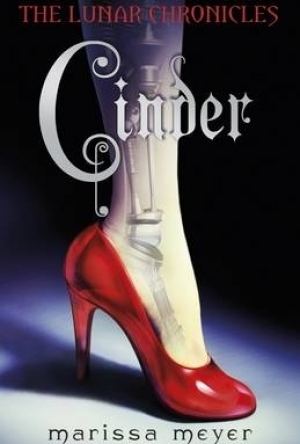
I am in love with this series, all over again. I have been wanting to re-read this series for a while and my recent-ish read of Wires and Nerve reignited my love of this series. It had been a while since I was in the world and I had forgotten how much I loved these books.
I love fairytales and Marissa Meyer’s retellings of the classic tales we’ve all grown up with are fantastic. She turns the mousey girl from the original fairytale into a relatable character that we fall in love with. Cinderella is not one of my favourite fairytales because I prefer my heroines to have a little more spunk and backbone, but Cinder is just perfect.
Kai is one of those characters that is just so good. He is incredibly kind to Cinder, even when he believes that she is just a mechanic with a grease mark on her forehead, despite his station in life generally lending itself to an air of superiority. Prince Kai only wants what is best for his people and the Commonwealth, willing to sacrifice himself for their well-being if need be. He is definitely one of my favourite male characters, although if I’m being honest I probably have a lot of those.
Most importantly, we meet Iko the droid with the faulty personality chip that we couldn’t fall in love with more. Her loyalty and pure desire to just be a person are heartwarming. (And also sad, because she is a droid and not treated like a person by anyone but Cinder.)
We don’t see much of the world that Cinder lives in beyond New Beijing aside from small, throwaway comments. The world building that is done though is vivid and allows the reader to see the city grow in their mind. As this is a re-read, I am also aware that the world building is expanded extensively over the course of the novels and can understand the more rudimentary foundation being laid here.
I appreciated the effortless melding of elements from the classic fairytale into this unique science fiction world. It is wonderfully done and the story is well written. I would highly recommend this series to young adult/teen readers who enjoy fairytale retellings, science fiction, and intricate, interconnected stories.
_
This is one of the books that I saw on display at my local library and completely judged the book by its cover. I didn't know what it was about, but it looked interesting and I put it on my mental TBR list. Many years later, I have finally gotten a chance to read it (and the rest of the series.) This book was completely worth the wait. As a fan of fairytale retellings, like Beastly by Alex Flinn, I had high hopes for this book. It gave the reader wonderful little homages to the classic fairytale while weaving the story through a world and characters all its own.
The world building in this novel, while not expansive was wonderfully done. As a reader, I could imagine Cinder meandering down the dingy, packed streets of New Beijing while Kai fretted over his father in the ornate, sprawling palace. There were a number of important characters and none of them were overlooked. You were able to learn about their personalities, histories, or relationships in a way that gave each depth.
Recommended for anyone who liked YA, romance, fairytales, sci-fi, or good books.
I am in love with this series, all over again. I have been wanting to re-read this series for a while and my recent-ish read of Wires and Nerve reignited my love of this series. It had been a while since I was in the world and I had forgotten how much I loved these books.
I love fairytales and Marissa Meyer’s retellings of the classic tales we’ve all grown up with are fantastic. She turns the mousey girl from the original fairytale into a relatable character that we fall in love with. Cinderella is not one of my favourite fairytales because I prefer my heroines to have a little more spunk and backbone, but Cinder is just perfect.
Kai is one of those characters that is just so good. He is incredibly kind to Cinder, even when he believes that she is just a mechanic with a grease mark on her forehead, despite his station in life generally lending itself to an air of superiority. Prince Kai only wants what is best for his people and the Commonwealth, willing to sacrifice himself for their well-being if need be. He is definitely one of my favourite male characters, although if I’m being honest I probably have a lot of those.
Most importantly, we meet Iko the droid with the faulty personality chip that we couldn’t fall in love with more. Her loyalty and pure desire to just be a person are heartwarming. (And also sad, because she is a droid and not treated like a person by anyone but Cinder.)
We don’t see much of the world that Cinder lives in beyond New Beijing aside from small, throwaway comments. The world building that is done though is vivid and allows the reader to see the city grow in their mind. As this is a re-read, I am also aware that the world building is expanded extensively over the course of the novels and can understand the more rudimentary foundation being laid here.
I appreciated the effortless melding of elements from the classic fairytale into this unique science fiction world. It is wonderfully done and the story is well written. I would highly recommend this series to young adult/teen readers who enjoy fairytale retellings, science fiction, and intricate, interconnected stories.
_
This is one of the books that I saw on display at my local library and completely judged the book by its cover. I didn't know what it was about, but it looked interesting and I put it on my mental TBR list. Many years later, I have finally gotten a chance to read it (and the rest of the series.) This book was completely worth the wait. As a fan of fairytale retellings, like Beastly by Alex Flinn, I had high hopes for this book. It gave the reader wonderful little homages to the classic fairytale while weaving the story through a world and characters all its own.
The world building in this novel, while not expansive was wonderfully done. As a reader, I could imagine Cinder meandering down the dingy, packed streets of New Beijing while Kai fretted over his father in the ornate, sprawling palace. There were a number of important characters and none of them were overlooked. You were able to learn about their personalities, histories, or relationships in a way that gave each depth.
Recommended for anyone who liked YA, romance, fairytales, sci-fi, or good books.
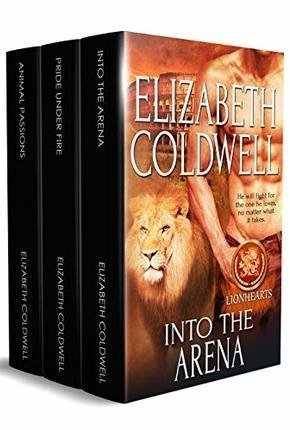
Lionhearts: Part Two Box Set
8.0 Rate It
Book
Into the Arena He will fight for the one he loves, no matter what it takes. Cesare Bianco is a...
Adult Paranormal Romance M_M
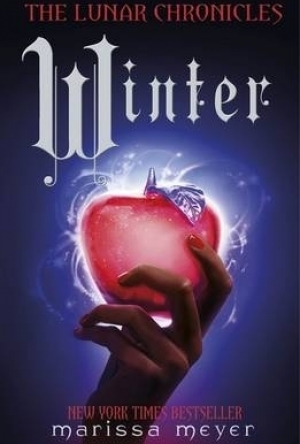

Update: Winter is the final book in the Lunar Chronicles series (although the story does continue in graphic novel form.) It is definitely one of my favourite conclusions, as the story wraps up well and is satisfying. The reader is not left with myriad plot holes and questions. As this is the fourth book in the series, you need to read the first three before delving into this one otherwise you will be confused and majorly spoiled.
The world building continued even in this book and most importantly we were shown Luna. Before that, they story took place predominantly on Earth in either the European Union, the African Republic or the Eastern Commonwealth. Once transported to Luna, readers were better able to get a sense of the disparity between the Lunar Aristocracy and the rest of Luna's citizens. The palace and surrounding area of Artemisia are ornately decorated whereas the outer sectors live in squalor. The stunning contrast is reminiscent of our own world and gives us a glimpse into the change that needs to happen.
Although this story was supposed to delve deeper into Winter and Jacin's relationship (which it did) I felt that it was overshadowed by the overarching plot. It was really nice to see the two interact and Jacin's character be developed more. He can seem cold and removed most of the time, but his demeanor completely changes when he is around Winter. He cares about her so much and will do anything to ensure her well-being. My one criticism about the book is that these two didn't receive the same relationship development and story time as the other three pairings.
You fall in love with these characters and follow them on their journey from mechanic to revolutionary, criminal to captain, or even unsure to (mildly) confident. They feel real and make their way into your heart. Iko was her usual precious self and I was so happy to see her woven more into the story. You don't want to see their stories end and thankfully they don't because the author is continuing the series in graphic novel form.
I would highly recommend this series to young adult/teen readers even if science fiction or fairytale retellings aren't usually your thing. They're so fantastically written that I think they appeal to broad range of readers and genres.
Original Review: I read the entire series over the course of four days, novellas included. That is how wonderful it is. As a fan of fairytale retellings, like Beastly by Alex Flinn, I had high hopes for this series and it did not disappoint. It gave the reader wonderful little homages to the classic fairytales while weaving the story through a world and characters all its own.
The world building in this novel was wonderfully done. As a reader, I could imagine the Lunar Palace as a place of opulence while those in the lower districts lived in poverty. There were a number of important characters and none of them were overlooked. You were able to learn about their personalities, histories, or relationships in a way that gave each depth. Each character had a unique personality and strength in the group. from fiery Scarlet to shy Cress and from flirty Thorn to tortured Wolf.
Sometimes conclusions to series just don't stand up to their legacy, but this was not one of those books. The author gave the reader everything they desired, climactic action scenes, wrapping up story threads while opening the door to future adventures, and leaving the reader satisfied. There's nothing worse than reading an amazing series that you become wholly invested in and then being utterly disappointed by the conclusion.
Recommended for anyone who liked YA, romance, fairytales, sci-fi, or really good books/series that you won't regret reading.
The world building continued even in this book and most importantly we were shown Luna. Before that, they story took place predominantly on Earth in either the European Union, the African Republic or the Eastern Commonwealth. Once transported to Luna, readers were better able to get a sense of the disparity between the Lunar Aristocracy and the rest of Luna's citizens. The palace and surrounding area of Artemisia are ornately decorated whereas the outer sectors live in squalor. The stunning contrast is reminiscent of our own world and gives us a glimpse into the change that needs to happen.
Although this story was supposed to delve deeper into Winter and Jacin's relationship (which it did) I felt that it was overshadowed by the overarching plot. It was really nice to see the two interact and Jacin's character be developed more. He can seem cold and removed most of the time, but his demeanor completely changes when he is around Winter. He cares about her so much and will do anything to ensure her well-being. My one criticism about the book is that these two didn't receive the same relationship development and story time as the other three pairings.
You fall in love with these characters and follow them on their journey from mechanic to revolutionary, criminal to captain, or even unsure to (mildly) confident. They feel real and make their way into your heart. Iko was her usual precious self and I was so happy to see her woven more into the story. You don't want to see their stories end and thankfully they don't because the author is continuing the series in graphic novel form.
I would highly recommend this series to young adult/teen readers even if science fiction or fairytale retellings aren't usually your thing. They're so fantastically written that I think they appeal to broad range of readers and genres.
Original Review: I read the entire series over the course of four days, novellas included. That is how wonderful it is. As a fan of fairytale retellings, like Beastly by Alex Flinn, I had high hopes for this series and it did not disappoint. It gave the reader wonderful little homages to the classic fairytales while weaving the story through a world and characters all its own.
The world building in this novel was wonderfully done. As a reader, I could imagine the Lunar Palace as a place of opulence while those in the lower districts lived in poverty. There were a number of important characters and none of them were overlooked. You were able to learn about their personalities, histories, or relationships in a way that gave each depth. Each character had a unique personality and strength in the group. from fiery Scarlet to shy Cress and from flirty Thorn to tortured Wolf.
Sometimes conclusions to series just don't stand up to their legacy, but this was not one of those books. The author gave the reader everything they desired, climactic action scenes, wrapping up story threads while opening the door to future adventures, and leaving the reader satisfied. There's nothing worse than reading an amazing series that you become wholly invested in and then being utterly disappointed by the conclusion.
Recommended for anyone who liked YA, romance, fairytales, sci-fi, or really good books/series that you won't regret reading.
A Bibliophagist (113 KP) rated The Toll (Arc of a Scythe, #3) in Books
Feb 5, 2020
Characters (3 more)
Worldbuilding
Plot
Pacing
A fantasic finale
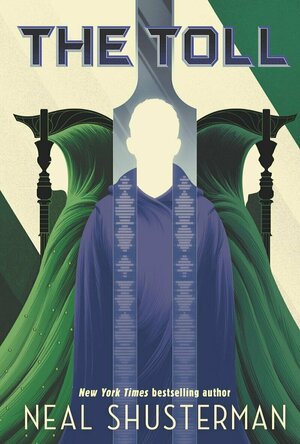
After the amazing cliffhanger of Thunderhead, I rushed to pick up this because I just HAD TO KNOW. This cover is even prettier, they really nailed this series (sans the transformers font) and I hope it inspires more YA books to hire illustrators and not photo manip garbage. I'm an Illustrator though, so I'm biased. This review will have spoilers for Thunderhead, so don't read if you haven't read that!
The Toll picks up immediately after Thunderhead. Goddard has returned the MidMerica, no one knows that he was demoted to apprentice and with the death of Scythe Curie he stands uncontested for replacing Xenocrates. Anastasia and Rowan rest at the bottom of the ocean, and Goddard has made the site a site of remembrance to avoid any evidence being drudged up. The sinking of Endura is also squarely blamed on Rowan, and the world suffers as the Thunderhead punishes everyone, marking them unsavory. Cutting off communication with all but one, our former unsavory, Greyson.
With the rise of Goddard, the Schism amongst the Scythedom widens. He seizes more power, overturns rules and makes new ones and slowly starts taking control of other nations. Dubbing himself the Overblade. The story arches over 3 years post Thunderhead, and we jump around a little bit. During the three years Goddard continues to take a chokehold on the world, Greyson suddenly finds himself a living god amongst the tonists and humanity, as the only one able to speak to the thunderhead, he takes on the role of the Tonist's mythological figure, The Toll. Acting as a go-between, and manipulating those around him to fulfill the Thunderhead's goals.
Meanwhile, Faraday continues his search for the land of nod, making serious headway and discovering something that makes the Thunderhead uncertain. So the Thunderhead starts making plans. Faraday finds himself stranded with his helper, far away from the Scythedom, the Thunderhead and the horrible things that have been happening far away. He knows nothing of the fate of Marie, Goddard, Citra, Rowan, or the world. Finally, in the third year since the sinking of Endura, Rowan and Citra are raised from the depths, squirreled away by the Amazonian Scythes before Goddard knows they aren't dead. Being raised from the dead did wonders for Goddard's cause, so can Anastaisa's return do wonders for the plight of the old guard? But first Anastasia must plan and play her cards right, digging deep in the Thunderheads back brain to piece together mysteries long since written off and uncover the secrets of the Scythedom.
This book was really good, and a very satisfying finale to the series. The already rich worldbuilding is made richer by his choice to cut the world off from the Thunderhead, showing us what happens when people lose their connection to the world. He believably shows the influence one charismatic politician can have, and how easy it is for things to fall into disarray. You can tell he had a gameplan when he wrote these books, because everything comes together just right, not loose ends, everything had a purpose. Characters are tested, grow and develop. New parts of the world are further explored, completing the picture he begun in the other two books. I thoroughly enjoyed his take on the age-old sci-fi trope of "How does the benevolent computer protect humans from themselves". Well written, and elevated, especially in terms of other YA fiction. Shusterman really wrote a fantastic series. Once again, the romance is understated, but the emotions run deep enough at this point to pull at your heartstrings and make you believe in their love, even if it came from somewhat unbelievable beginnings.
This series is well worth the read, and a breath of fresh air in an otherwise stale and formulaic YA world.
The Toll picks up immediately after Thunderhead. Goddard has returned the MidMerica, no one knows that he was demoted to apprentice and with the death of Scythe Curie he stands uncontested for replacing Xenocrates. Anastasia and Rowan rest at the bottom of the ocean, and Goddard has made the site a site of remembrance to avoid any evidence being drudged up. The sinking of Endura is also squarely blamed on Rowan, and the world suffers as the Thunderhead punishes everyone, marking them unsavory. Cutting off communication with all but one, our former unsavory, Greyson.
With the rise of Goddard, the Schism amongst the Scythedom widens. He seizes more power, overturns rules and makes new ones and slowly starts taking control of other nations. Dubbing himself the Overblade. The story arches over 3 years post Thunderhead, and we jump around a little bit. During the three years Goddard continues to take a chokehold on the world, Greyson suddenly finds himself a living god amongst the tonists and humanity, as the only one able to speak to the thunderhead, he takes on the role of the Tonist's mythological figure, The Toll. Acting as a go-between, and manipulating those around him to fulfill the Thunderhead's goals.
Meanwhile, Faraday continues his search for the land of nod, making serious headway and discovering something that makes the Thunderhead uncertain. So the Thunderhead starts making plans. Faraday finds himself stranded with his helper, far away from the Scythedom, the Thunderhead and the horrible things that have been happening far away. He knows nothing of the fate of Marie, Goddard, Citra, Rowan, or the world. Finally, in the third year since the sinking of Endura, Rowan and Citra are raised from the depths, squirreled away by the Amazonian Scythes before Goddard knows they aren't dead. Being raised from the dead did wonders for Goddard's cause, so can Anastaisa's return do wonders for the plight of the old guard? But first Anastasia must plan and play her cards right, digging deep in the Thunderheads back brain to piece together mysteries long since written off and uncover the secrets of the Scythedom.
This book was really good, and a very satisfying finale to the series. The already rich worldbuilding is made richer by his choice to cut the world off from the Thunderhead, showing us what happens when people lose their connection to the world. He believably shows the influence one charismatic politician can have, and how easy it is for things to fall into disarray. You can tell he had a gameplan when he wrote these books, because everything comes together just right, not loose ends, everything had a purpose. Characters are tested, grow and develop. New parts of the world are further explored, completing the picture he begun in the other two books. I thoroughly enjoyed his take on the age-old sci-fi trope of "How does the benevolent computer protect humans from themselves". Well written, and elevated, especially in terms of other YA fiction. Shusterman really wrote a fantastic series. Once again, the romance is understated, but the emotions run deep enough at this point to pull at your heartstrings and make you believe in their love, even if it came from somewhat unbelievable beginnings.
This series is well worth the read, and a breath of fresh air in an otherwise stale and formulaic YA world.

Heather Cranmer (2721 KP) rated Broken Symmetry in Books
Jun 7, 2018
(This review can be found on my blog <a href=http://themisadventuresofatwentysomething.blogspot.com/">The (Mis)Adventures of a Twenty-Something Year Old Girl</a> at the end of October).
The blurb to this book sounded super intriguing, and I knew right away that I had to read it. Luckily, I was right about it being intriguing even if the blurb was a little off.
Blair Adams' dad disappeared 12 years ago without a trace. One day, he mysteriously shows up coughing up blood and making no sense in what he says. He tells Blair that she was the one that actually vanished for 12 years, not him. When Blair's father dies suddenly, Blair makes it her mission to find out what happened to him. She decides to start interning where her father worked to try to make sense of everything. There, she finds out she has two extra sets of chromosomes and that she can crossover into a reflection by using a mirror. However, nothing is as straightforward as it may seem, and Blair may just meet the same fate as her father.
The title is definitely interesting. After reading the blurb, the title stood out to me more. I think Broken Symmetry is a fantastic choice for a title as this is what the book's main focus is.
I think the cover is pretty but boring. It doesn't really give its readers a clue as to what the book is going to be about other then some girl is going to be in it. I wish this would've had a more sci-fi feel to it. I would've also have liked to see something about mirrors or reflections as this is what the book focuses on.
The world building is decent enough although I couldn't get a real picture of it with all that scientific jargon which just confused me more than anything. There's also one scene in the book that involves a severed appendage and to save you from some mini spoilers, let's just say that it didn't seem medically possible due to how much time had elapsed. However, I'm not a doctor so maybe I'm wrong. Also, when the characters would cross over into a mirror, shouldn't their reflection have been right there on the other side? Perhaps I'm just over thinking things.
I definitely enjoyed the pacing! I felt that it takes off right way and just gets faster and faster. I was totally hooked the whole time! I couldn't wait to finish this book to see what would happen next although I was disappointed when it did end because I was totally enjoying it.
The plot was definitely grabbed my attention. I like the whole idea of being able to enter a parallel universe just by going through a mirror. It's a little bit scary to think about though. I kept wondering if I was just a reflection, so the plot line is one that certainly makes you think. I also enjoyed the sub-plot going on between Blair and Damian. There's not a hardcore romance sub-plot between the two, but there's definitely some romance in this book. I must mention that there's a couple of plot twists in this book. One was fairly easy to figure out especially as Blair kept being told that she was the one thing that didn't belong. The other twist was a bit more difficult for me to figure out.
I loved, loved, loved the characters! I loved how Blair went from the pretty, popular girl to hardcore girl fairly quickly just to find out what happened to her father. I loved her sarcasm and wit. She was super funny, and I just all around enjoyed reading about her. I also liked Damian with his sarcasm and wit that was enough to match Blair's. I loved his devil may care attitude about crossing over, but I would've liked to learn more about his back story such as how and why he ended up where he did. Mr. Donovan was also an interesting character. He came across as a caring father figure and mentor. He seemed very intelligent as well. I would've liked to read more about Amy though. I actually found her a bit fascinating.
As for the dialogue, it was extremely confusing due to all the scientific jargon. Most of the time, I ended up not really understanding what was going on because of it. I know Mr. Donovan is a scientist and supposed to be very intelligent, but the majority of the readers aren't going to understand all that scientific lingo. I was really surprised Blair understood it because I didn't understand one word of it really. Other then all the scientific mumbo jumbo, the dialogue is very interesting. I loved the banter between Blair and Damian the most. There are a few swear words in this book as well.
Overall, Broken Symmetry by Dan Rix is a truly interesting albeit scary read. It does leave you thinking what if" long after you've finished read it. I think if there wasn't so much scientific wording used, this could've been a 5 star read, but unfortunately, the dialogue is what lets it down a bit.
I'd recommend this book to those aged 15+ who like to ponder over things as well as those that want to get immersed in an interesting read.
(I won this book in paperback form through the Goodreads First Reads Program).
The blurb to this book sounded super intriguing, and I knew right away that I had to read it. Luckily, I was right about it being intriguing even if the blurb was a little off.
Blair Adams' dad disappeared 12 years ago without a trace. One day, he mysteriously shows up coughing up blood and making no sense in what he says. He tells Blair that she was the one that actually vanished for 12 years, not him. When Blair's father dies suddenly, Blair makes it her mission to find out what happened to him. She decides to start interning where her father worked to try to make sense of everything. There, she finds out she has two extra sets of chromosomes and that she can crossover into a reflection by using a mirror. However, nothing is as straightforward as it may seem, and Blair may just meet the same fate as her father.
The title is definitely interesting. After reading the blurb, the title stood out to me more. I think Broken Symmetry is a fantastic choice for a title as this is what the book's main focus is.
I think the cover is pretty but boring. It doesn't really give its readers a clue as to what the book is going to be about other then some girl is going to be in it. I wish this would've had a more sci-fi feel to it. I would've also have liked to see something about mirrors or reflections as this is what the book focuses on.
The world building is decent enough although I couldn't get a real picture of it with all that scientific jargon which just confused me more than anything. There's also one scene in the book that involves a severed appendage and to save you from some mini spoilers, let's just say that it didn't seem medically possible due to how much time had elapsed. However, I'm not a doctor so maybe I'm wrong. Also, when the characters would cross over into a mirror, shouldn't their reflection have been right there on the other side? Perhaps I'm just over thinking things.
I definitely enjoyed the pacing! I felt that it takes off right way and just gets faster and faster. I was totally hooked the whole time! I couldn't wait to finish this book to see what would happen next although I was disappointed when it did end because I was totally enjoying it.
The plot was definitely grabbed my attention. I like the whole idea of being able to enter a parallel universe just by going through a mirror. It's a little bit scary to think about though. I kept wondering if I was just a reflection, so the plot line is one that certainly makes you think. I also enjoyed the sub-plot going on between Blair and Damian. There's not a hardcore romance sub-plot between the two, but there's definitely some romance in this book. I must mention that there's a couple of plot twists in this book. One was fairly easy to figure out especially as Blair kept being told that she was the one thing that didn't belong. The other twist was a bit more difficult for me to figure out.
I loved, loved, loved the characters! I loved how Blair went from the pretty, popular girl to hardcore girl fairly quickly just to find out what happened to her father. I loved her sarcasm and wit. She was super funny, and I just all around enjoyed reading about her. I also liked Damian with his sarcasm and wit that was enough to match Blair's. I loved his devil may care attitude about crossing over, but I would've liked to learn more about his back story such as how and why he ended up where he did. Mr. Donovan was also an interesting character. He came across as a caring father figure and mentor. He seemed very intelligent as well. I would've liked to read more about Amy though. I actually found her a bit fascinating.
As for the dialogue, it was extremely confusing due to all the scientific jargon. Most of the time, I ended up not really understanding what was going on because of it. I know Mr. Donovan is a scientist and supposed to be very intelligent, but the majority of the readers aren't going to understand all that scientific lingo. I was really surprised Blair understood it because I didn't understand one word of it really. Other then all the scientific mumbo jumbo, the dialogue is very interesting. I loved the banter between Blair and Damian the most. There are a few swear words in this book as well.
Overall, Broken Symmetry by Dan Rix is a truly interesting albeit scary read. It does leave you thinking what if" long after you've finished read it. I think if there wasn't so much scientific wording used, this could've been a 5 star read, but unfortunately, the dialogue is what lets it down a bit.
I'd recommend this book to those aged 15+ who like to ponder over things as well as those that want to get immersed in an interesting read.
(I won this book in paperback form through the Goodreads First Reads Program).